Castles old and new

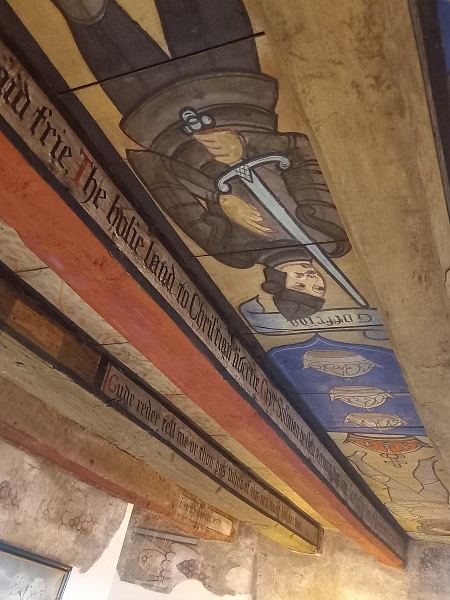
Google informs me that Scotland has over 2,000 castles, of which 1,500 are still standing, or there are significant remains. Therefore I was never going to do more than scratch the surface on my quest to visit more of them after I left Speyside. I had naively thought that at least I could do most of the ones in the area around the Tarland campsite, there is actually a castle trail in the area as there are so many, but only managed a few in the week I was there. Lots to do when I go back!

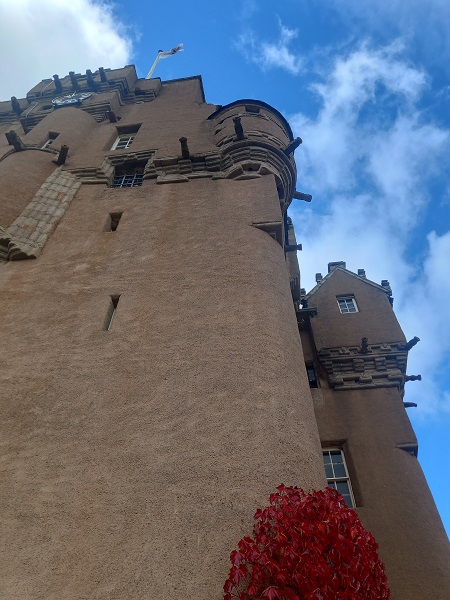
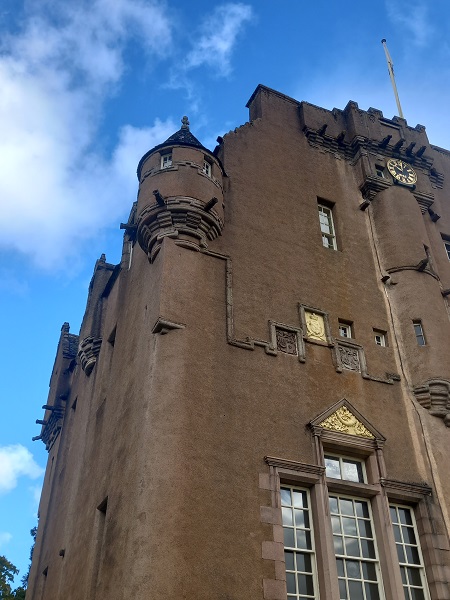
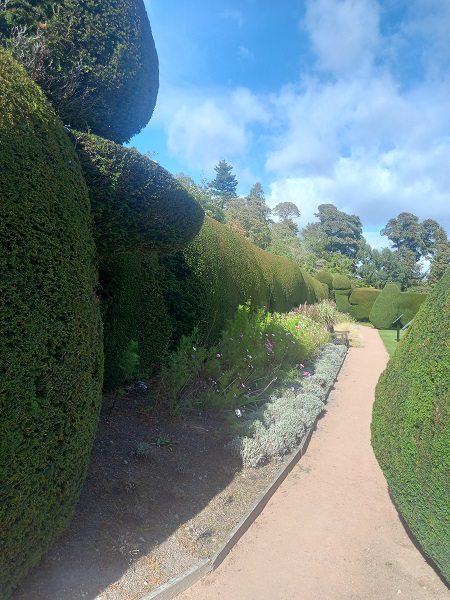
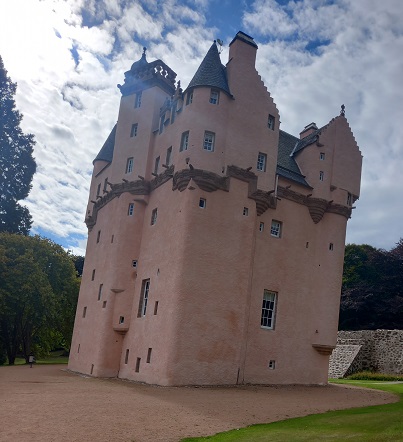
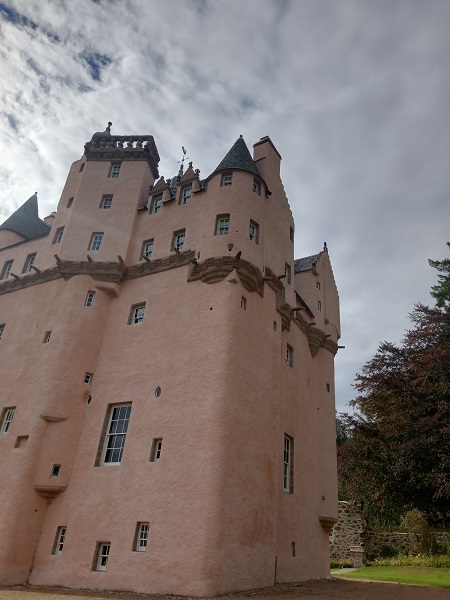
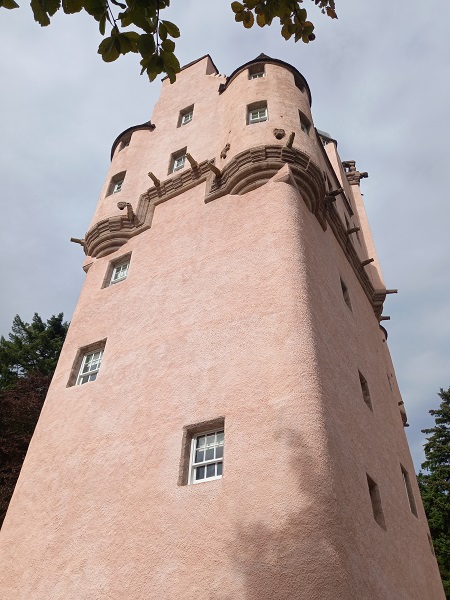
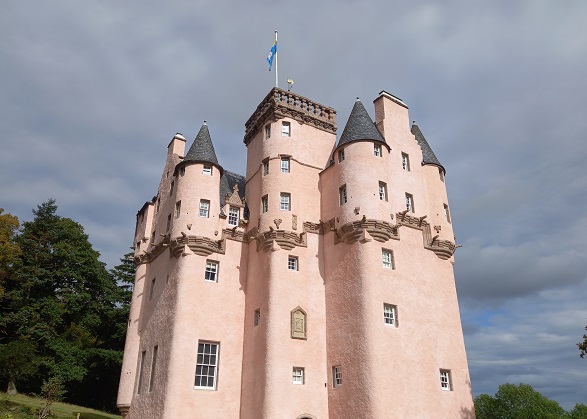
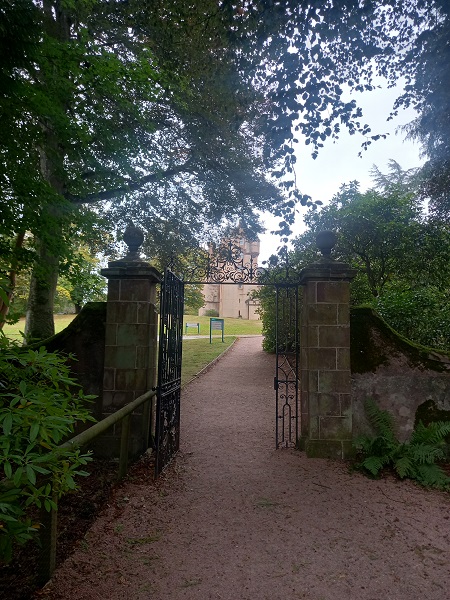
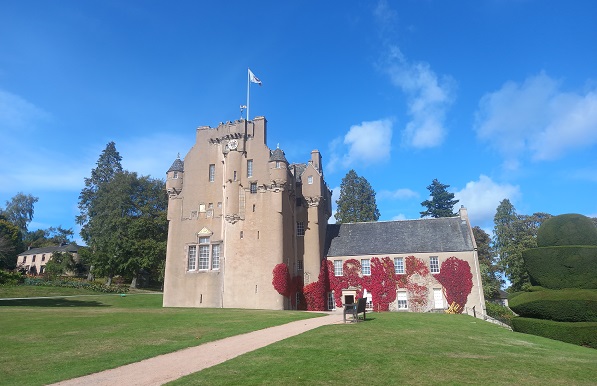
Scottish castles are really unique, as many of them have a very distinctive architectural style, and lots are pink, or greyish pink in hue. They really do have a Disney castle feel, and none more so than the beautiful Craigievar Castle Sadly this was one of the ones that I didn’t get a chance to see inside, as most of them only allow guided tours, and by the time I got there, all were booked up for theafternoon before I had to head to the campsite.

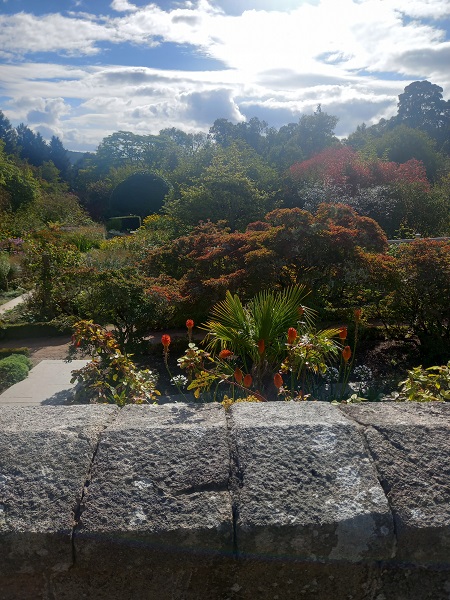
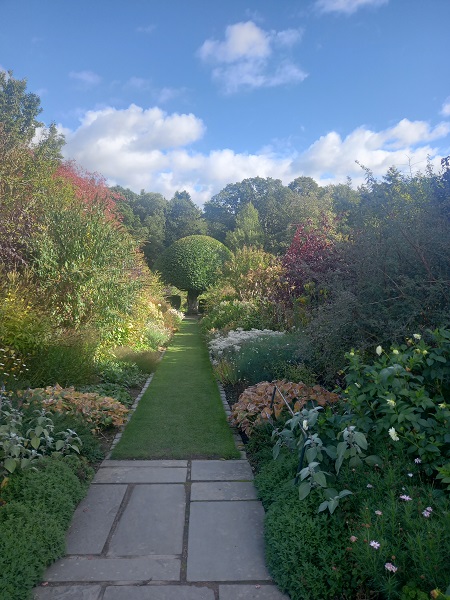
It was a beautiful day for a wander though, and the grounds and surrounding area is just stunning. Not that there are many parts of Scotland that aren’t, except perhaps the motorways around Glasgow, which confused me a lot!

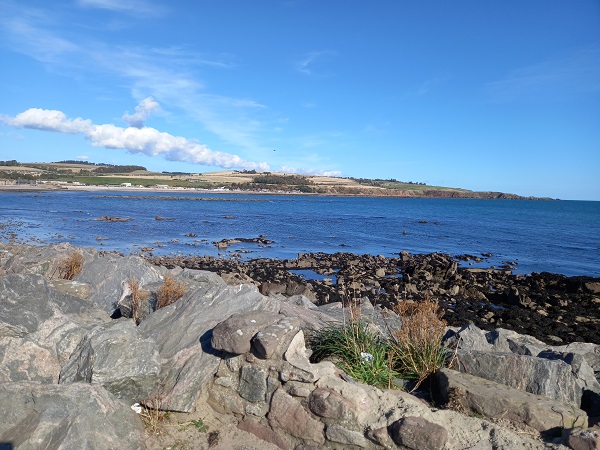
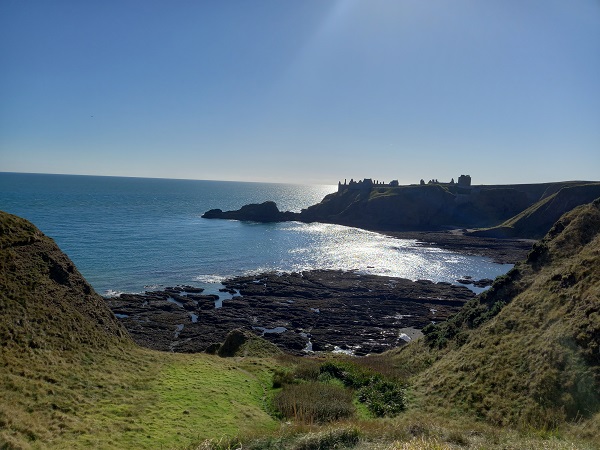
After leaving Tarland I headed back to the coast, to Stonehaven. I mentioned in a previous post that it had been too windy to walk along the coast to Slains Castle, but this was an absolutely gorgeous day, perfect for a walk along the coastal path to see the dramatic ruins of Dunnottar.

I am collecting photos that I particularly love to be printed onto canvas eventually, and I think this will have to be added to that collection. Such an amazing landscape, and I was so lucky to see it in such beautiful weather.

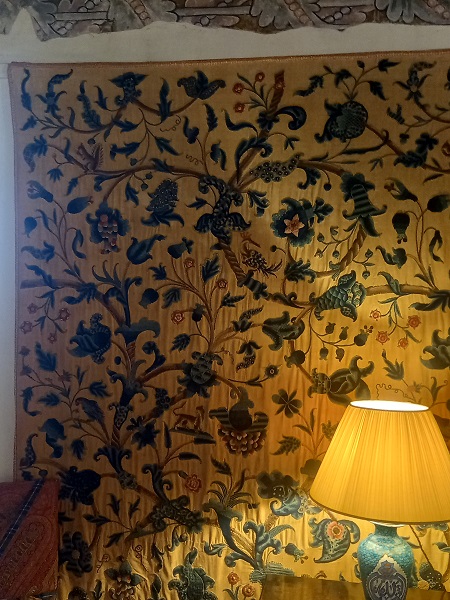
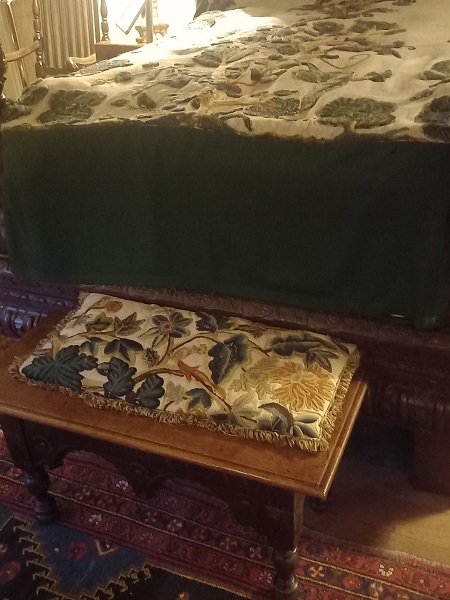
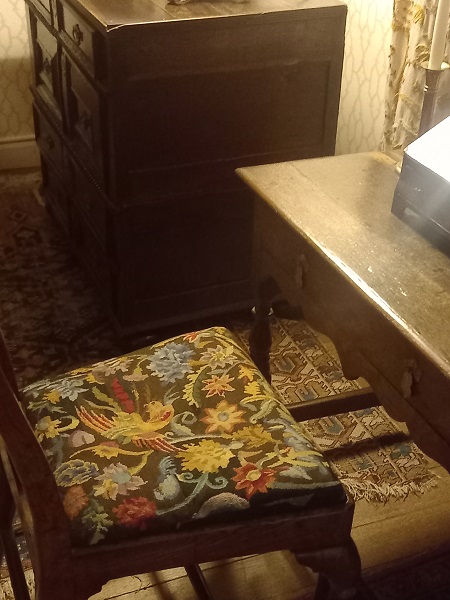
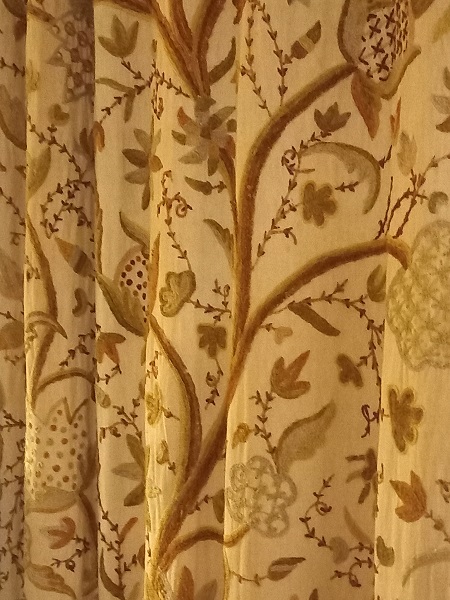
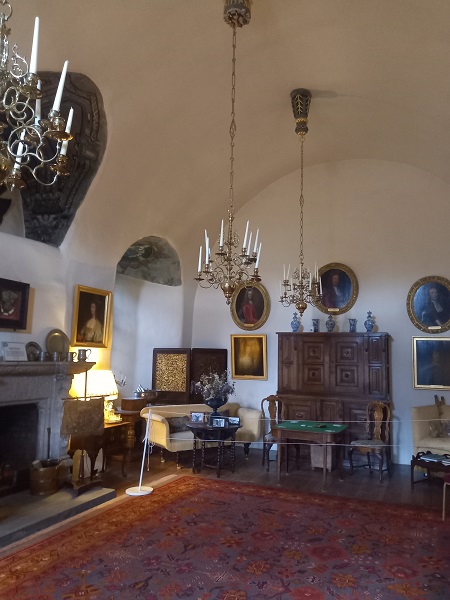
As well as the castles there are so many beautiful baronial houses, and after leaving the Grampian Aire I went to Leith Hall Dating from the mid 1600s, it has been extensively remodelled and is now mainly Georgian inside. Again I had an excellent guided tour of the house, memorable for several curiosities as well as the wealth of textile treasure.

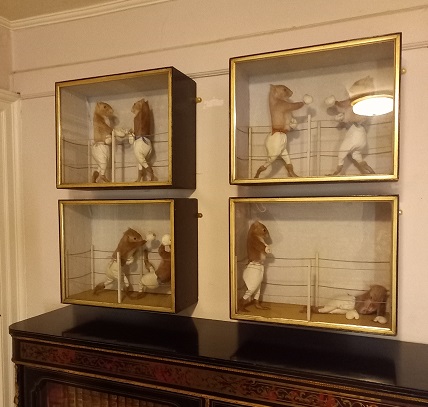
If you visit any heritage house you will come across taxidermy, a favourite pastime of the Victorian collectors, but Leith has a very special display, of boxing squirrels!

This has to rate as the most unusual piece of taxidermy that I have ever seen. No clear idea of the provenance, but I can only assume they were specially commissioned.

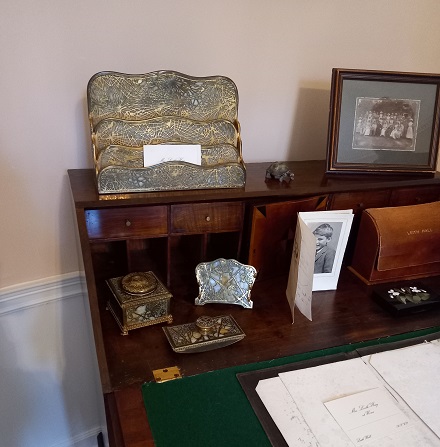
Sometimes there are just little things that really catch your eye as well, not only for their beauty, but imagining how they were acquired, and the recipient using them. I like to imagine that this beautiful desk set was a very special gift, and that happy hours were spent here writing letters and journals.

Another really interesting find was this gift of a photo montage of all of the tenants of the estate, given to General Leith Hay in 1902. A fascinating piece of social history, and one that is great for anyone tracing family history in the area, as many of these people wouldn’t have necessarily have had other photos taken of themselves.

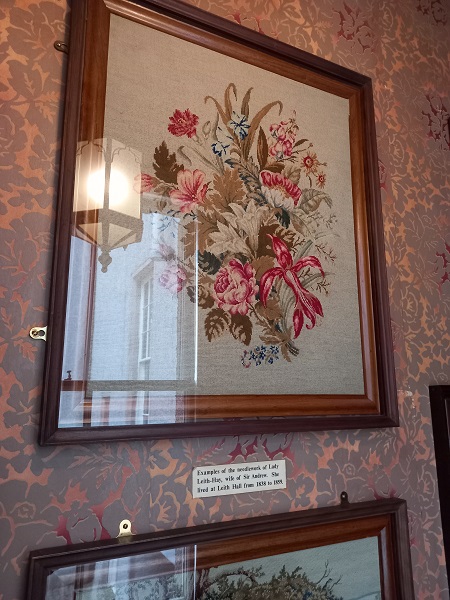
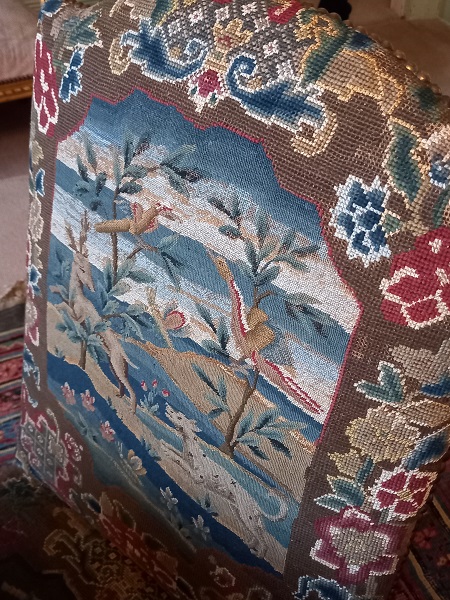
One of the members of the Leith Hay family was a very keen needlewoman, and one of the corridors was lined with needlepoint pictures, all from kits popular in Victorian times. There musty have been at least twenty of these, along with all the fire screens and chairs. I know I have marvelled at this before, but how many hours of work does this represent!

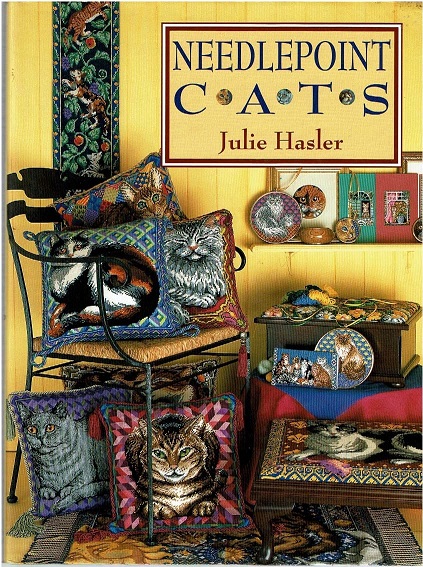
I have been thinking about doing some needlepoint again, not that I need another crafting project ! However I used to love it, so am on the hunt for a nice kit that I can do for the caravan.

Someone was clearly a keen collector of embroidery as well, as there was this display case. Sorry for the poor picture, but there is a Georgian waistcoat, as well as shoes and bags.

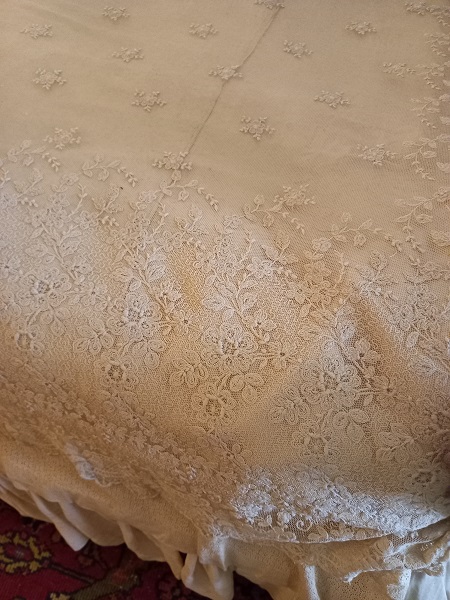
There were also some beautiful bedspreads, in crochet and lace work.

I have been spending some time here working on my crochet skills, and have successfully made my first hat! After so many years of struggling crochet seems to have just clicked in my brain, which I am very happy about. Pictures of that and other recent makes soon. I have also been doing some writing, so feel like I’ve had a very productive week.

It is a balmy 23 degrees this weekend, and I am looking forward to another lovely week of social activities. We have a packed programme of coach trips to visit Christmas lights, and Christmas celebrations starting this Friday, and I had better finish making the Christmas gifts as there are only 18 days to go! My poker skills are coming along nicely as well, I won 9 hands last night and came 4th out of 8 players, so very happy with that.

Until next time, take care, have fun and thanks for visiting.

Scottish, and Spanish, sunshine!

Admittedly not all of my weeks after leaving the campsite were beautifully sunny, but the majority of the time I was still blessed with amazing weather, so I was very lucky. Part of my route planning was trying to visit as many National Trust for Scotland properties as I could. There are so many in the areas around Aberdeen, so I could do the interiors of properties on the less sunny days.

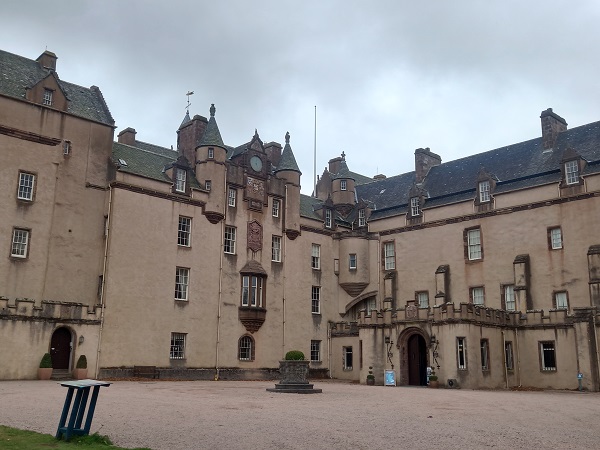
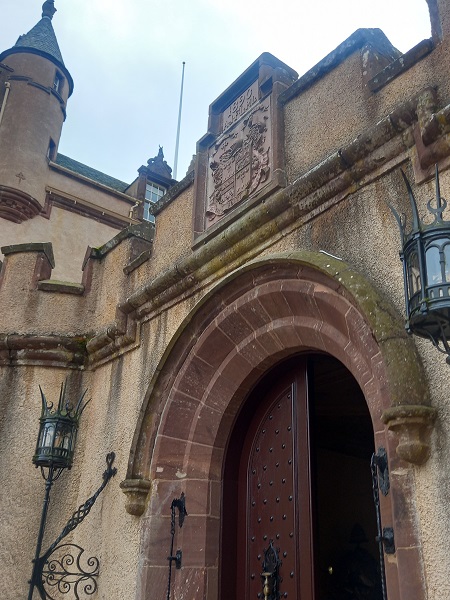
Fyvie Castle visit was on a bit of a grey day, the exterior reflected this, looking very somber. Like many Scottish castles, there are a number of towers that have been added to over the years, which gives them this very distinctive look.

Most of the castles I visited you joined a tour, rather than it being a self guided visit, and while I often prefer to be alone, usually as I need more time to look at the textiles than everyone else 😉 the tour guide was really interesting and knowledgeable, and really made the place come alive.

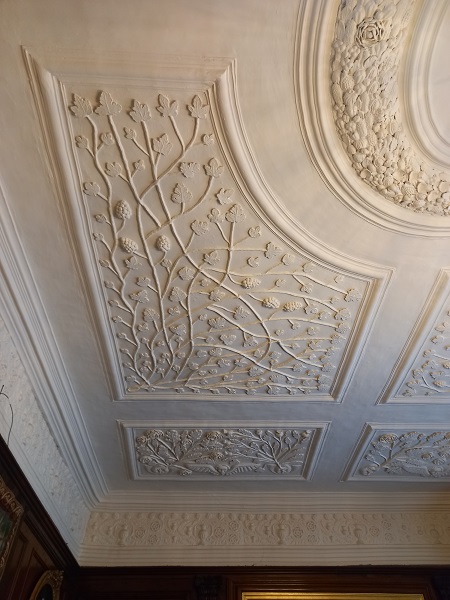
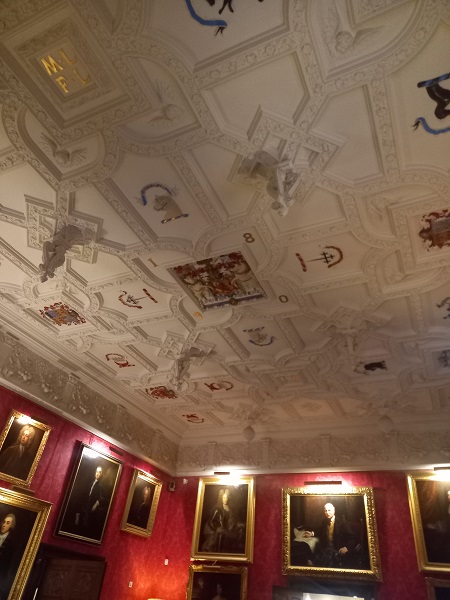
Even though it looks fairly modern from the outside, and the beautiful plaster ceilings are reproduction, rather than original Jacobean, it has a long history. Charles 1st spent time there as a young boy, and Charles 3rd, our current king, had his 70th birthday party there.

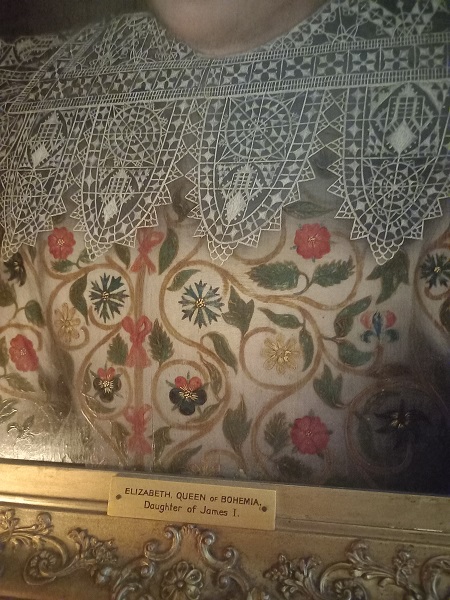
There were some great textile treasures there. I have seen so many different interpretations of this embroidered jacket, there is an original one in the V and A museum in London, known as the Layton Jacket, after its owner. This one belonged to the daughter of James 1st of England, Elizabeth of Bohemia, so dates from the same period.

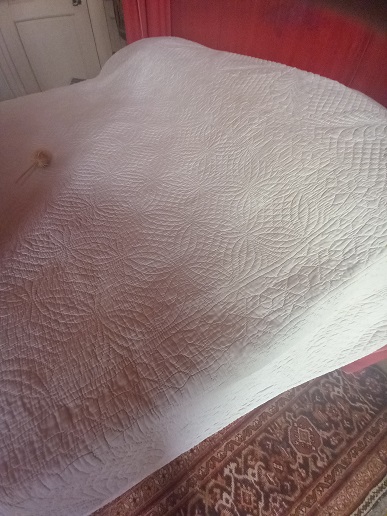
There was also a gorgeous, and very pristine, whitework bedspread featuring the Scottish thistle, no provenance, but I would imagine a member of the family.

On a more modern note there were a set of co-ordinating needlepoint cushions in one of the lounges which all used the same colourway, and which were so pretty.

There was so much needlepoint on my tours of the castles and houses, and while it is so time consuming, I am really tempted to make a cushion at some point. I gave up needlepoint for cross stitch when my children were small, due to time constraints, but am tempted to try it again!

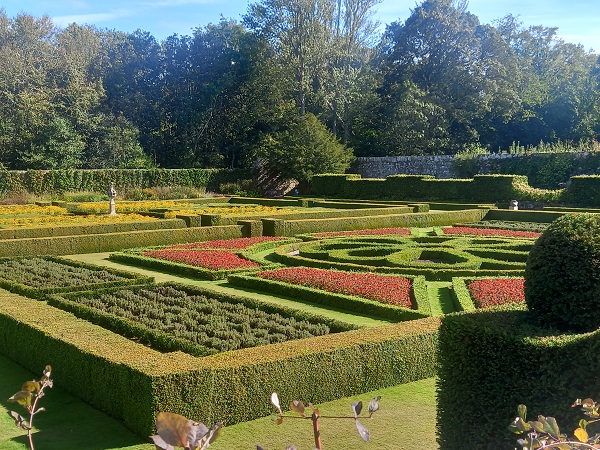
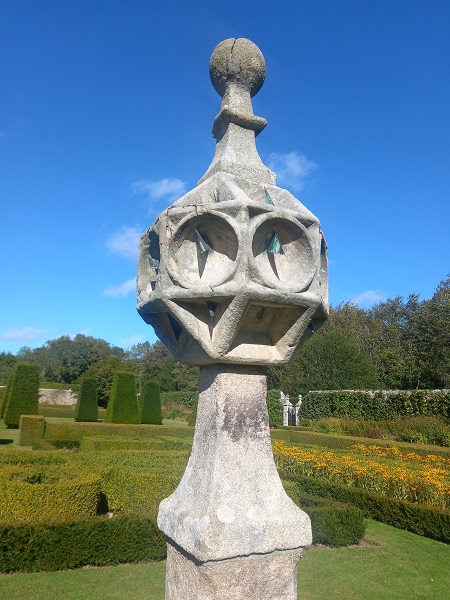
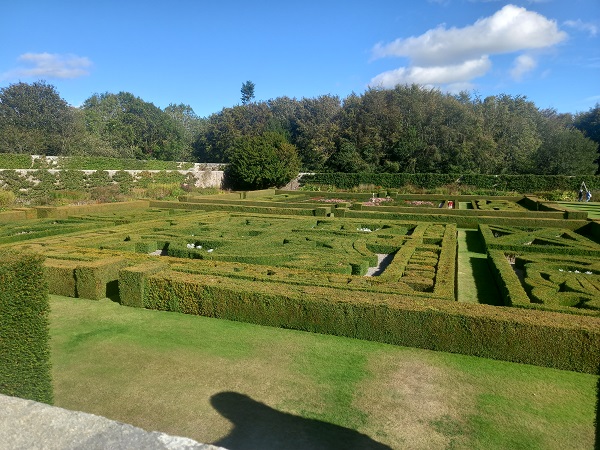
The following day the sunshine was restored so I went to Pitmedden Garden, not only a very good example of different types of planned gardens, but also home to some very interesting sundials. The gardens date from the late 1600s, when the ‘new’ technology of sundials was very popular, and reflects both the historic layout of the parterre gardens, and more modern interpretations featuring less structured planting.

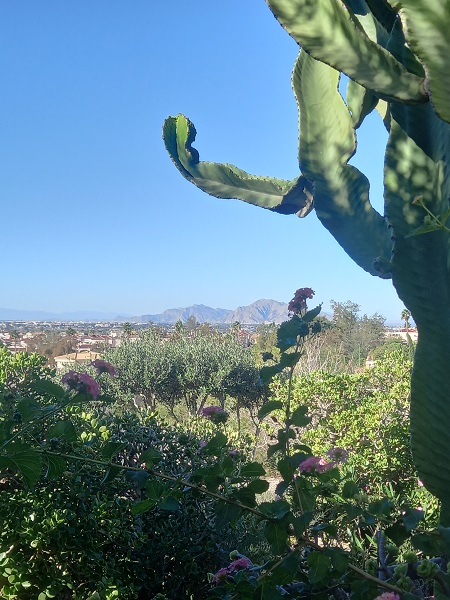
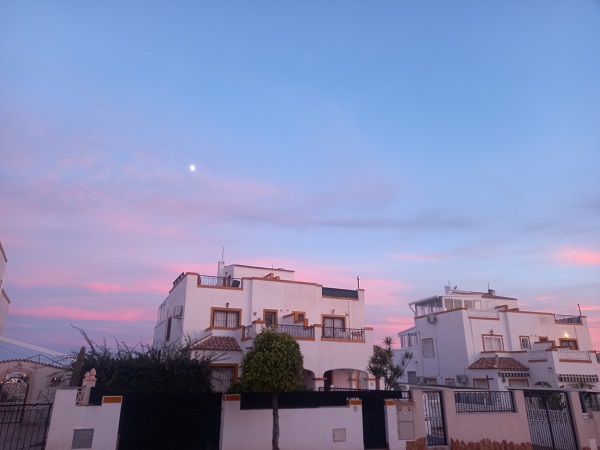
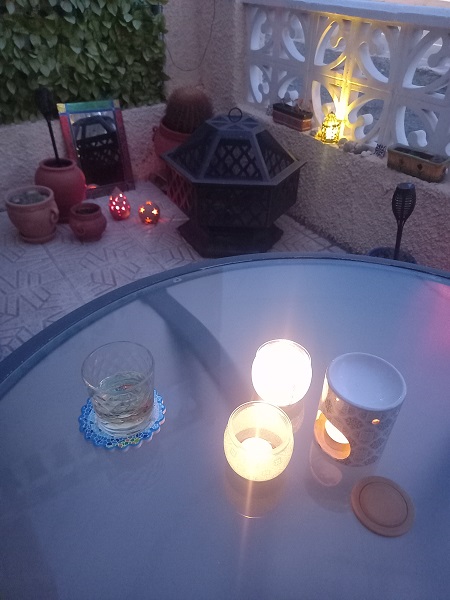
It was a very beautiful and relaxing place to spend the afternoon. I am now back in Spain, so have been enjoying the autumn sunshine here. It is a very nice 22 degrees today, I have replanted all my pots so that I have some colour on the terrace, and am back to my favourite way of spending the early evenings. The sunsets have been so gorgeous this week, such pink skies, and I have been lighting my candles and enjoying a glass or two of wine and a good book.

I have just updated the reading journal that I started when I retired, and I have read 354 books in the last 4 and a bit years, that equates to 88.5 a year, or 1.7 a week, although I read far faster in Spain than I do anywhere else. I just love it, and have so many happy hours of reading on the terrace planned for the next few months.

I will be going on a few day trips with my Mum, but the next few months are all about relaxing, crafting and writing, as well as some cycling. It is lovely to be back, especially after 6 months away. This is the longest that I have spent away from the house since I bought it 19 years ago, and I really appreciate having this lovely place to live. I am looking forward to next year so much, being back in Lotte the caravan, and Katy, but it is lovely to have my own bathroom, and my sewing machine!

Hope you are all having a lovely life, see you next time, and thanks for visiting.

Rest and relaxation

It may sound strange to say that I needed a bit of quiet time this summer, but after all of the excitement of Scotland and the van life festival, I really needed a quiet couple of weeks.

For the first week I chose to visit an area that I have driven past many times, on the M1. We would see the signs for, ‘The National Forest’, and be a little confused, as there seemed to be few trees. However staying at the Conkers Caravan and Camping Club site, right next to the visitor centre, gave me a chance to explore the area, and find out more about it.

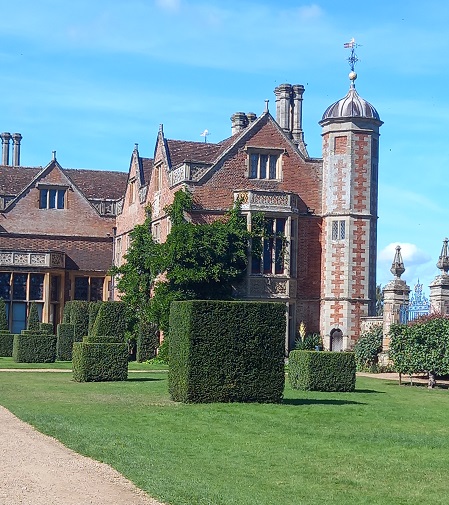
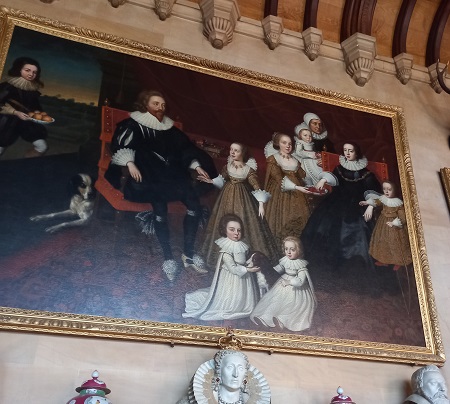
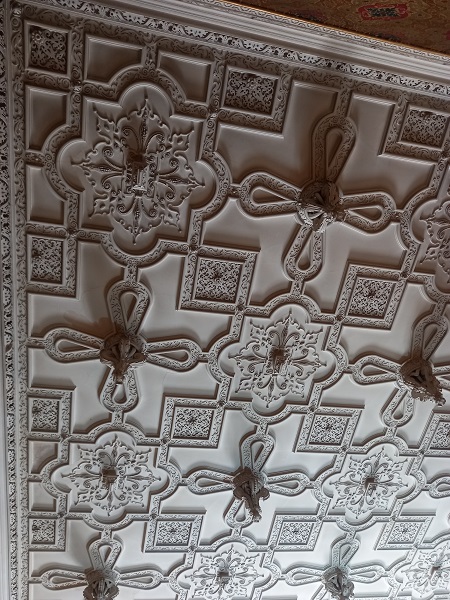
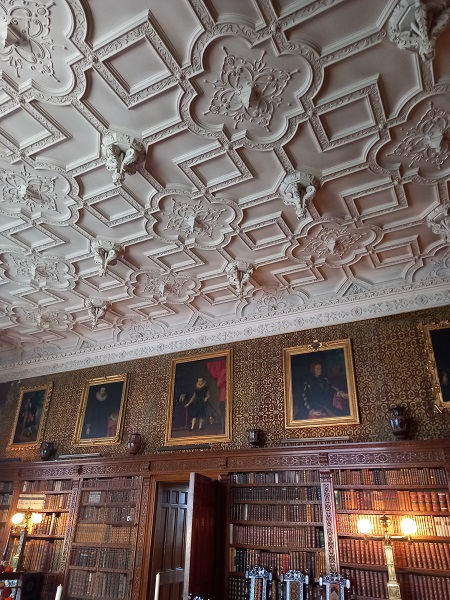
On the way from Stratford I stopped off at Charlecote Park. I have visited before, however it was a lovely sunny day, so great for a wander in the deer park, and I don’t need any excuse to admire amazing plasterwork ceilings!

As far as textile treasures there were some beautiful needlepoint chairs, six contrasting designs on marquetry wood bases in the library.

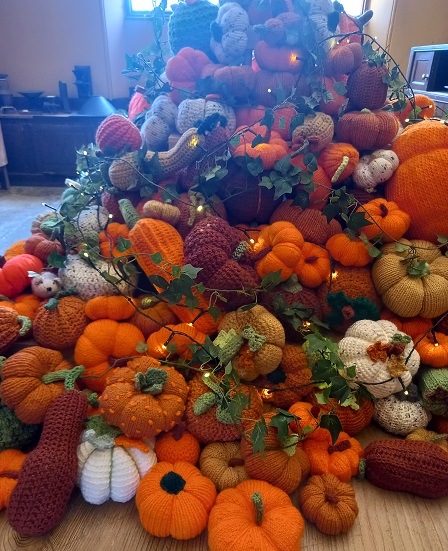
The house volunteers, along with local community textile groups, had created a stunning pumpkin display in the kitchen.

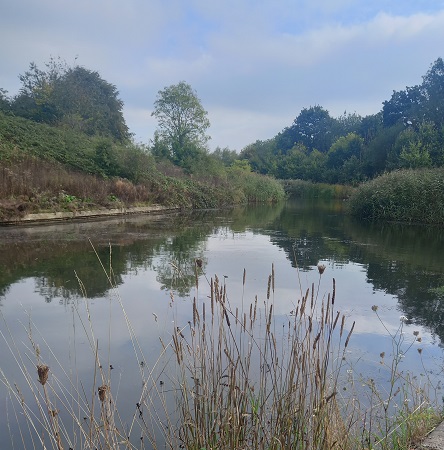
The National Forest is actually an environmental charity, working across a 200 square mile area of the Midlands, helping to reclaim industrial land, repair the effects of industrialisation, and develop tourism and sustainable businesses in the area. The area is centred around Burton on Trent, Ashby de la Zouche, and Coalville, all important centres of industrial development in the 18th and 19th centuries. The area has a well developed canal network, and you know how I love canals!

The Conkers site is a small, spacious and quiet one, and after a day of doing the washing, tidying the van and sitting in the sun reading, I went off on walks the following two days.

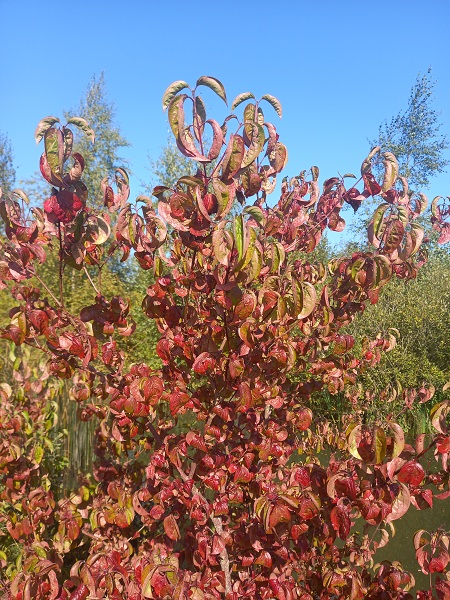
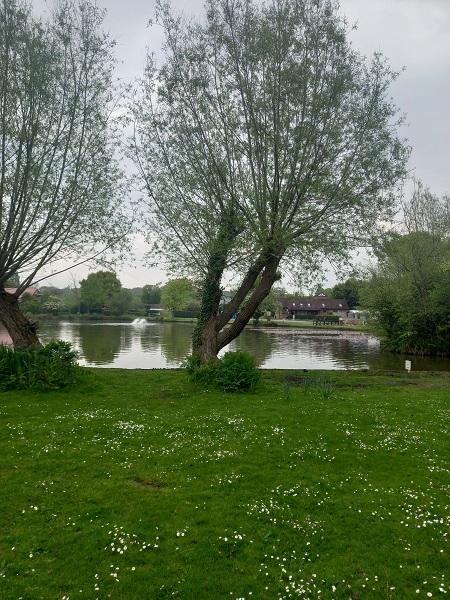
My first walk took me to some local ponds, a lot of wildlife habitats have been created in between former industrial areas, and these were now part of a fishing complex and a caravan site. Lots of beautiful autumn colours, and some squirrels!

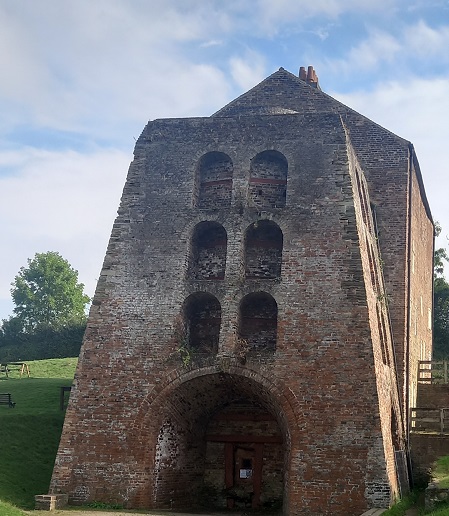
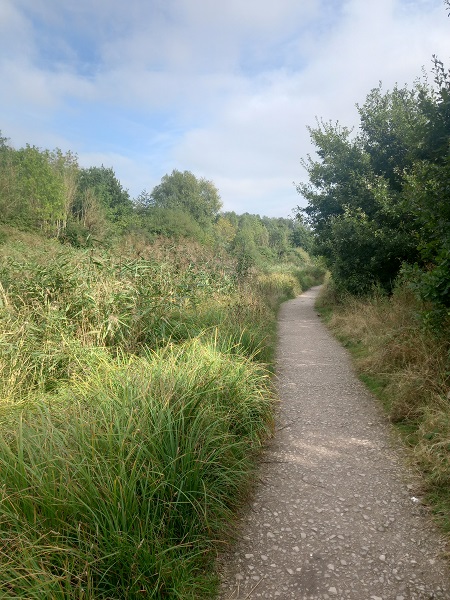
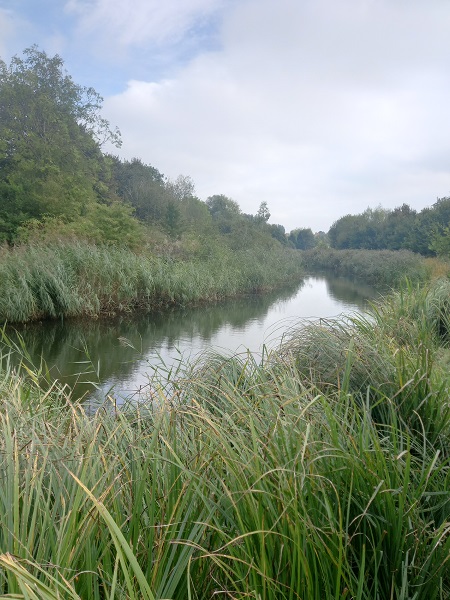
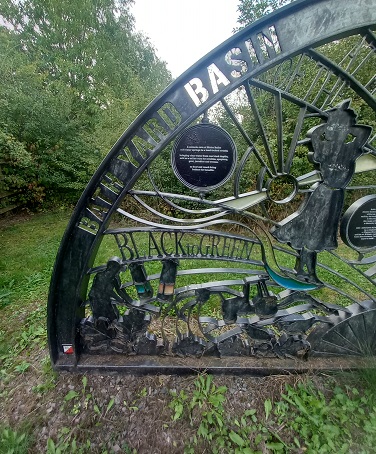
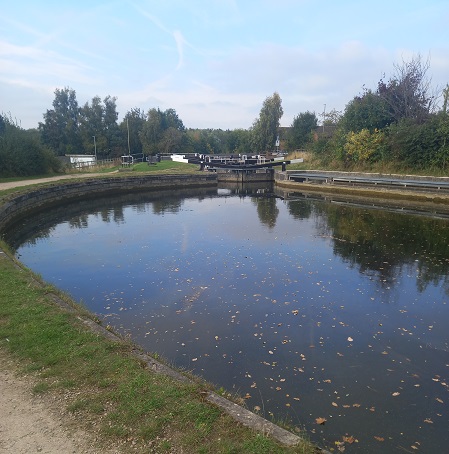
The second walk followed the path of the canal, through the Moira Basin, to the Moira Furnace, a lime and coal furnace which is now a museum. I love the way that the heritage has been preserved and the paths have been made accessible, and there were lots of walkers and cyclists around as it was such gorgeous weather. The Moira Furnace complex also has a small craft workshops area and café.

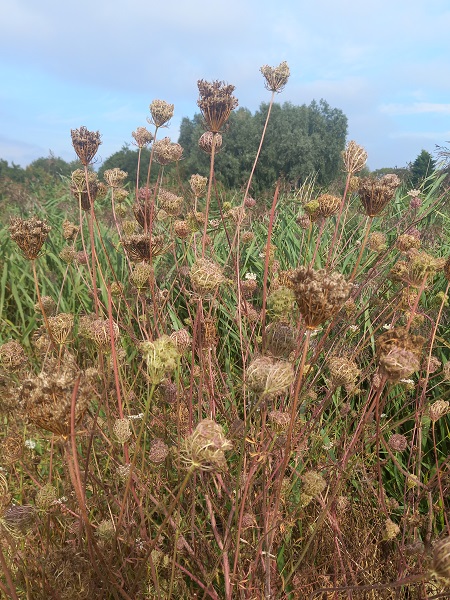
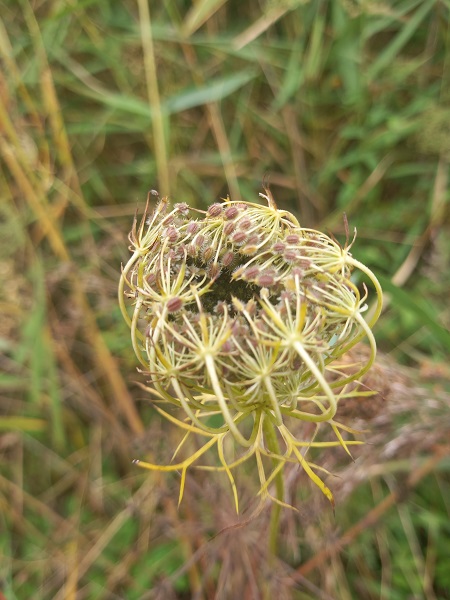
I have become fascinated by seed pods along the canal banks, and have taken so many pictures of them this summer.

This one I intend to print off and frame, I just love the way that the pods are curling in on themselves for autumn.

Then it was off back up north to Huddersfield, for our 42nd year reunion with friends who I was at Polytechnic with. A fantastic time, catching up in the pub on Friday with someone I haven’t seen for about 20 years, and then a bbq and night round the fire with other friends on the Saturday. Such a brilliant two days, and I am so grateful to have good friendships that have lasted this long. We already have this year’s reunion date in the calendar.

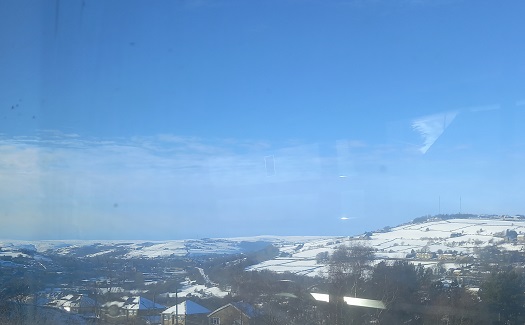
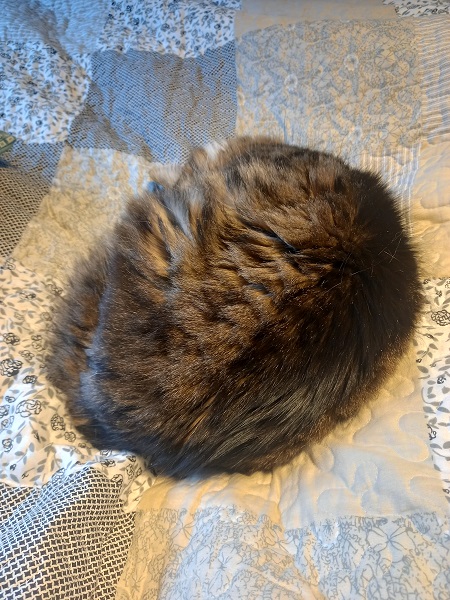
I am now back in Marsden, house sitting for one of the furriest cats on the planet, the adorable Frankie, and having my dose of winter. It was a very snowy when I flew back, so we were a little delayed, and the Colne Valley looked very pretty for a few days.

Sadly the snow has gone, and we are back to dull and damp, but I am having such a good time catching up with friends, and booking all of this year’s accommodation and flights, that it hasn’t mattered. I have a lovely warm house to stay in, and very importantly BBC I Player so I have been able to watch all of last year’s Sewing Bee 😉

It is amazing that it is nearly the end of January already, time seems to whizz by. It is lovely to be here in the UK at the moment, but I will be leaving again in a couple of weeks, for more adventures. My aim is get all of the summer/ and autumn blog posts completed before I leave, as I then have seven weeks of travel before my return to Spain in April. I have been very efficient and have sorted everything out until this time next year, because of some great bargains available at the moment, so fingers crossed 2025 will be as wonderful as the last three years, in fact it is set to be even more exciting.

Until next time then, have fun, take care, stay safe and thanks for visiting.

Time travelling with textiles

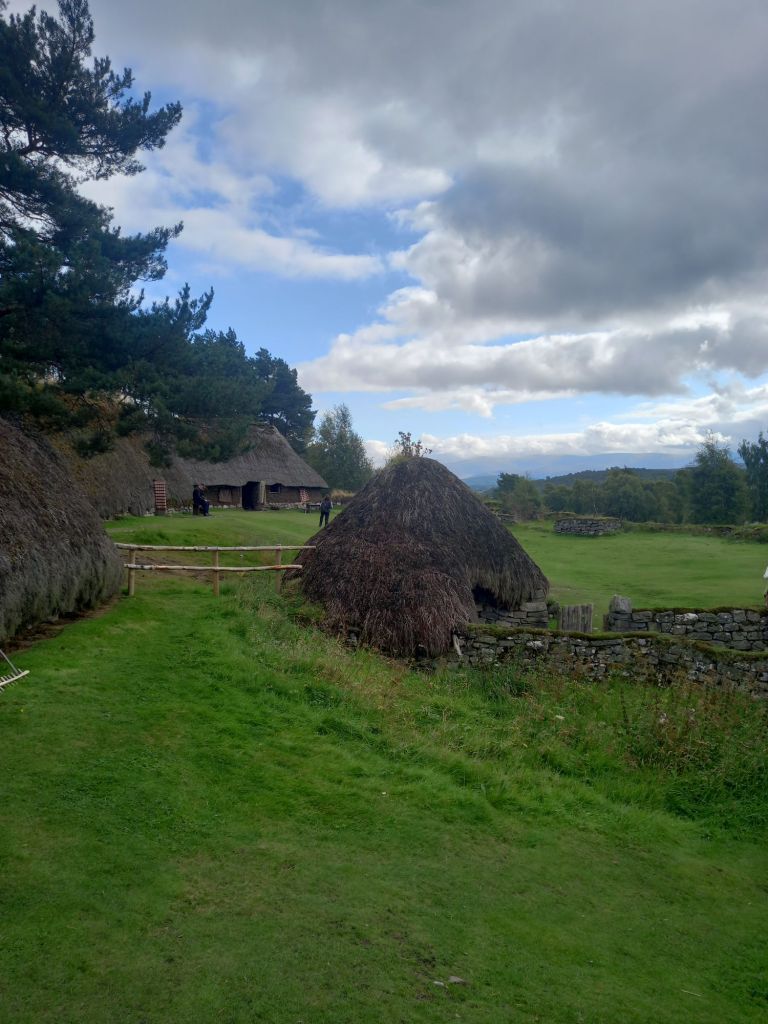
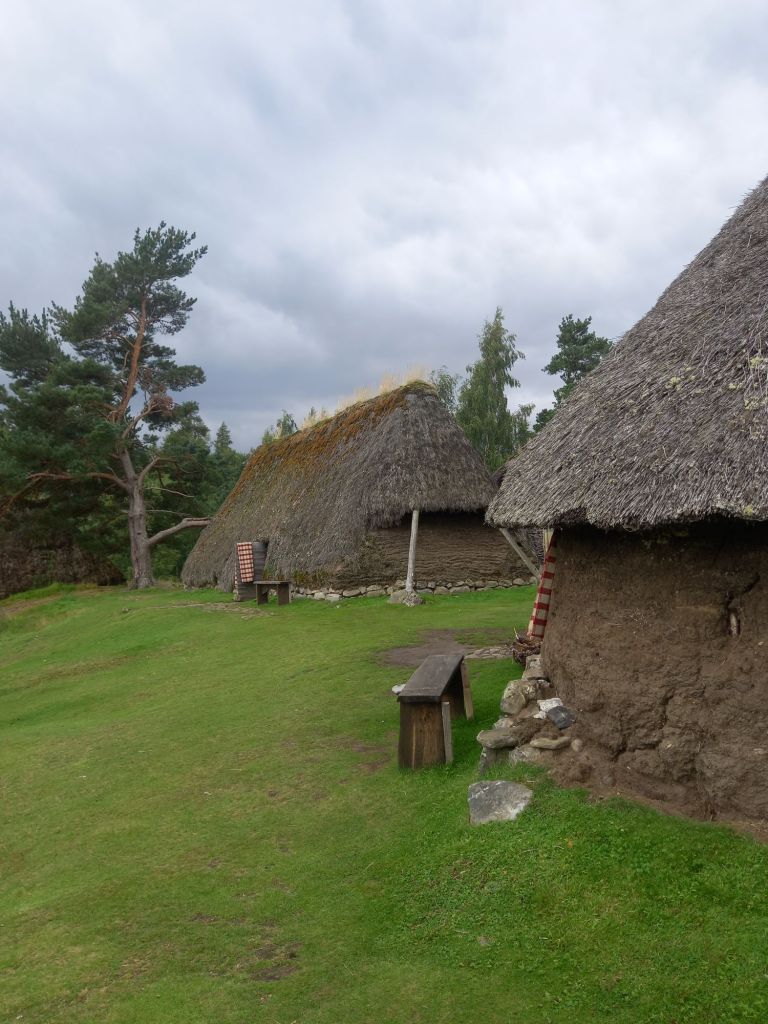
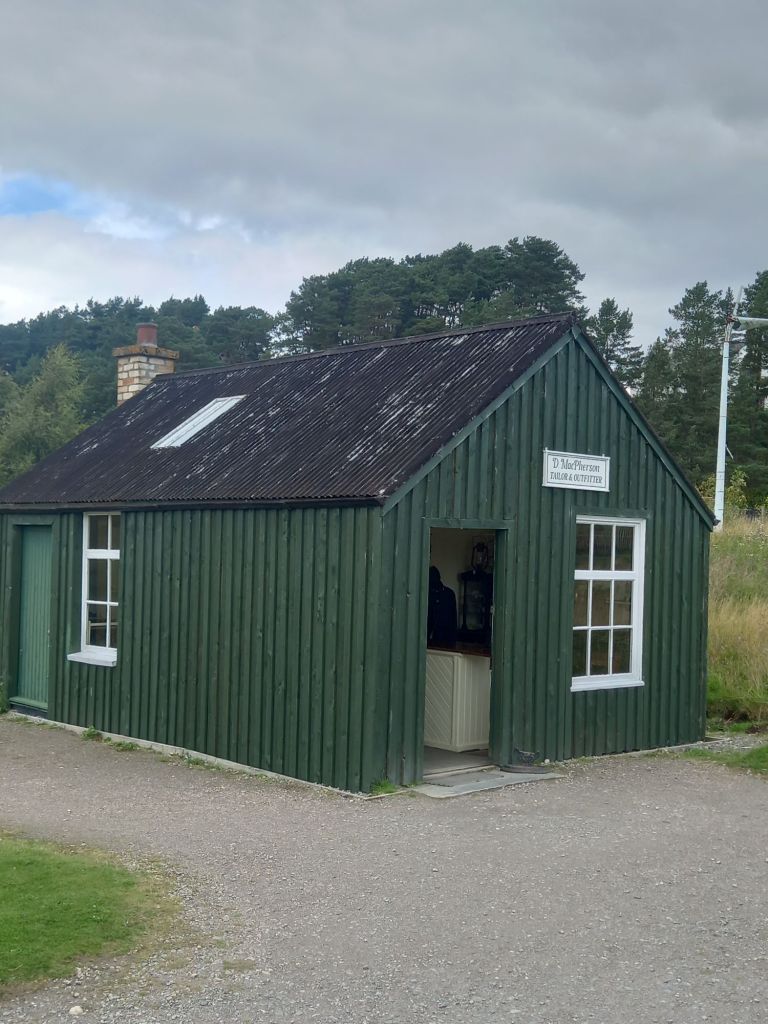
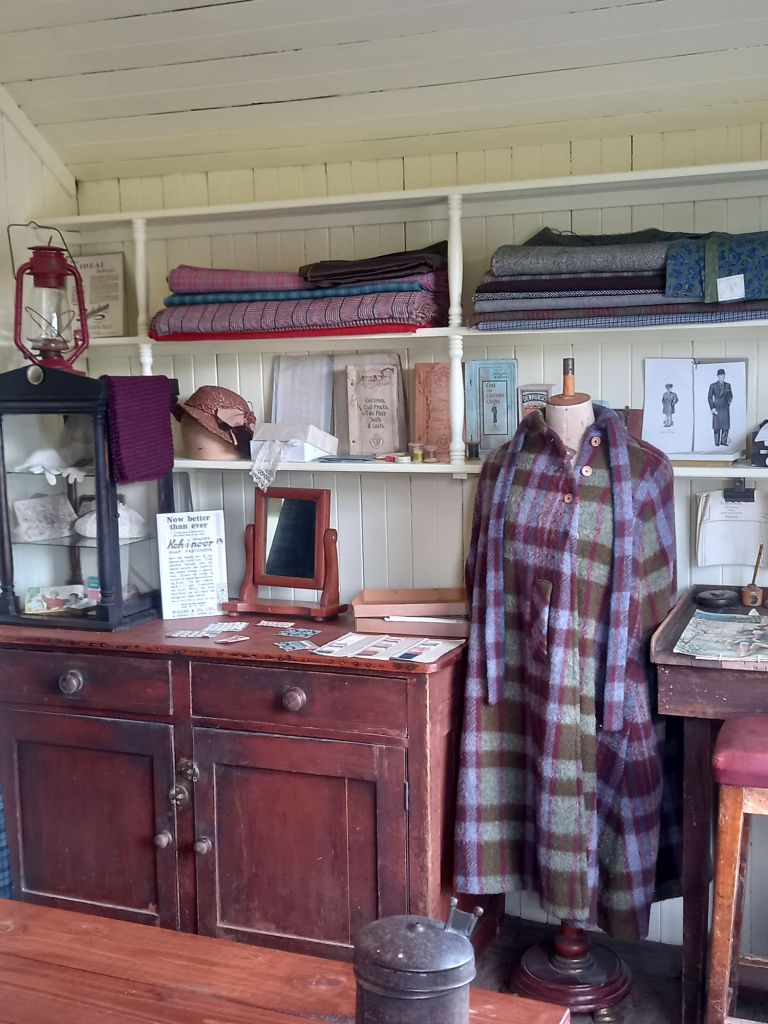
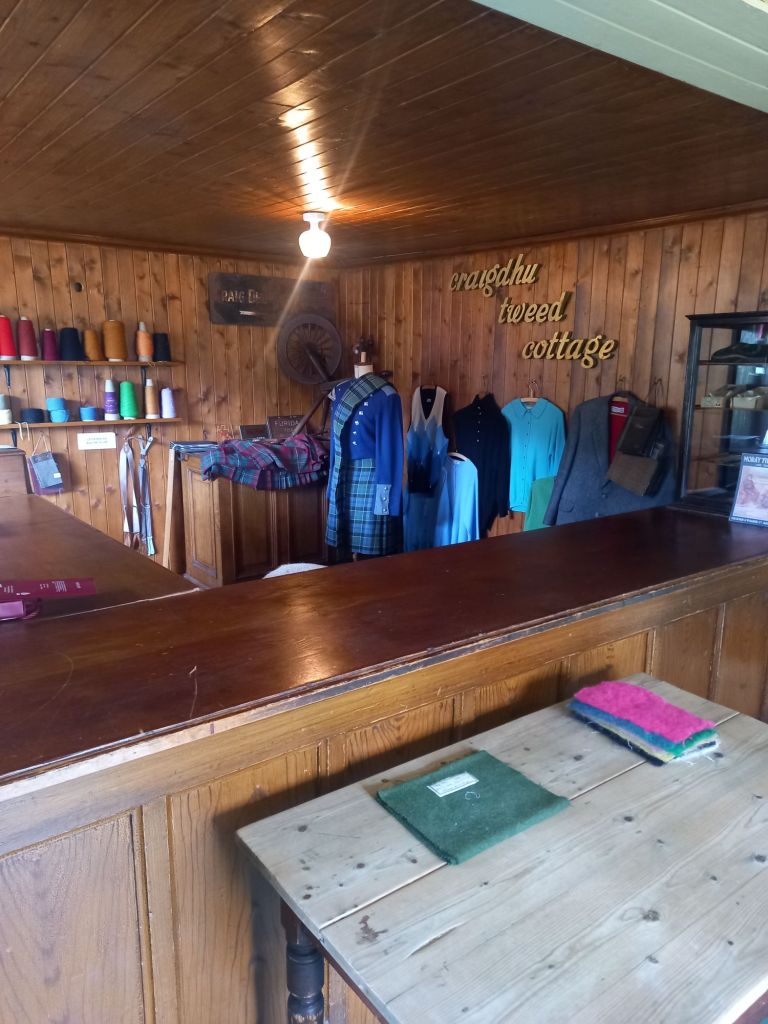
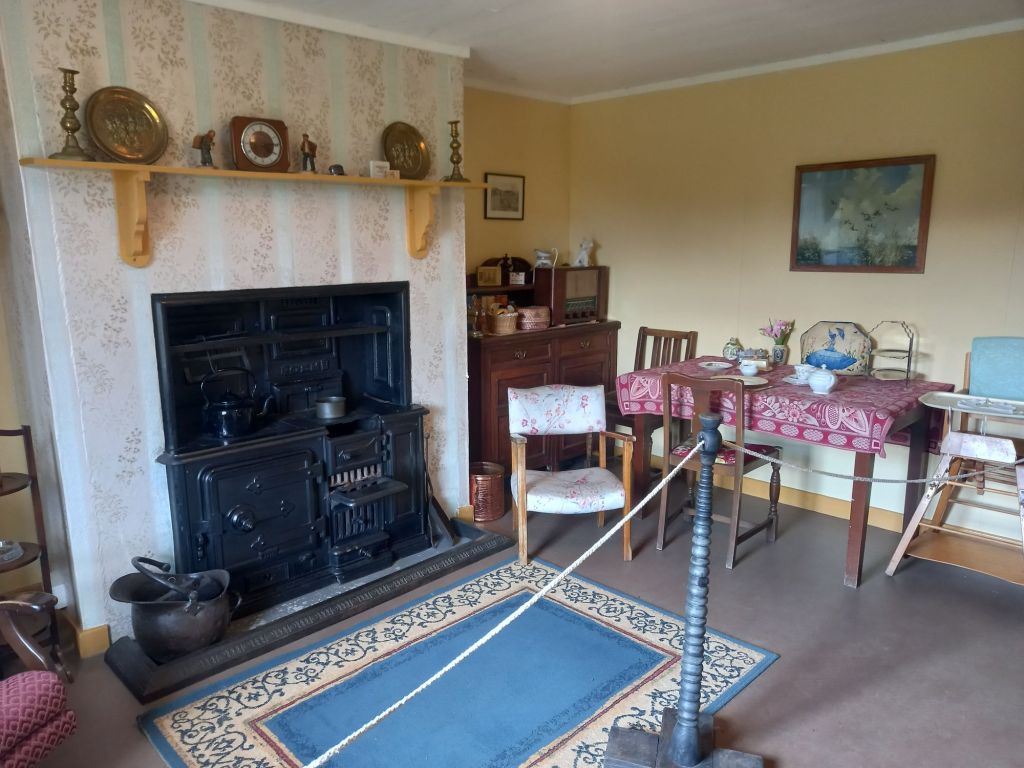
For me, one of the most exciting things about my recent visit to the Highland Life Folk Museum was the way that the textile heritage of the area was represented.

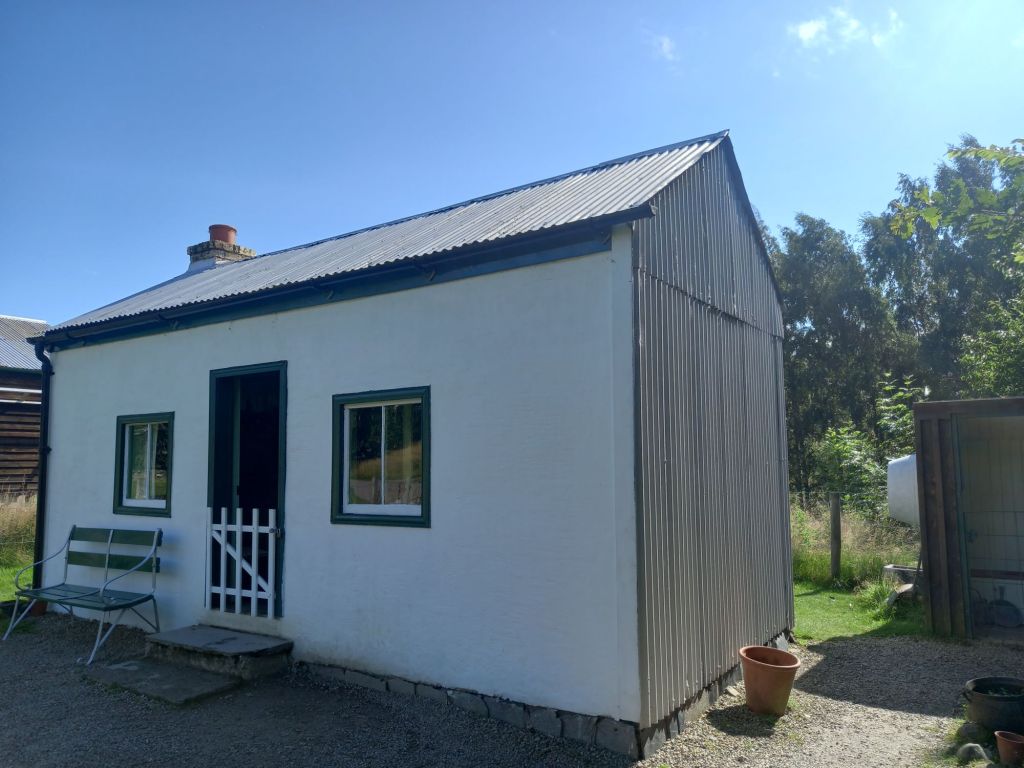
The museum extends for about a mile, and consists of a reconstruction of a 1730s township, and then existing buildings dating from the 1800s to the 1940s that have been moved and rebuilt.

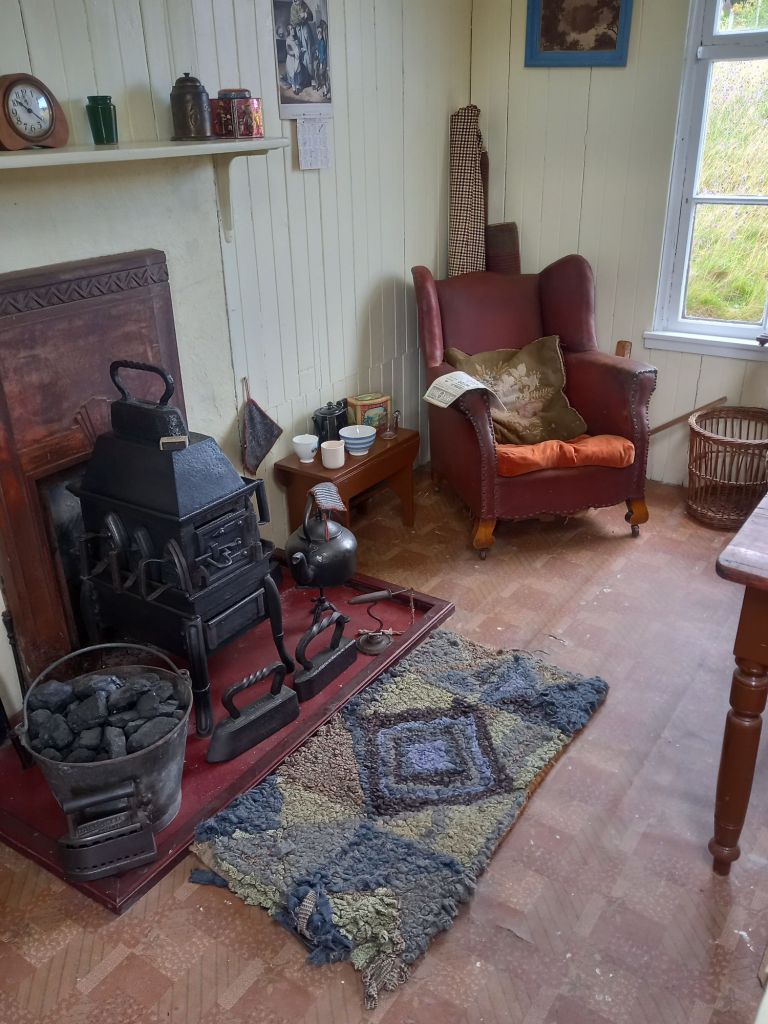
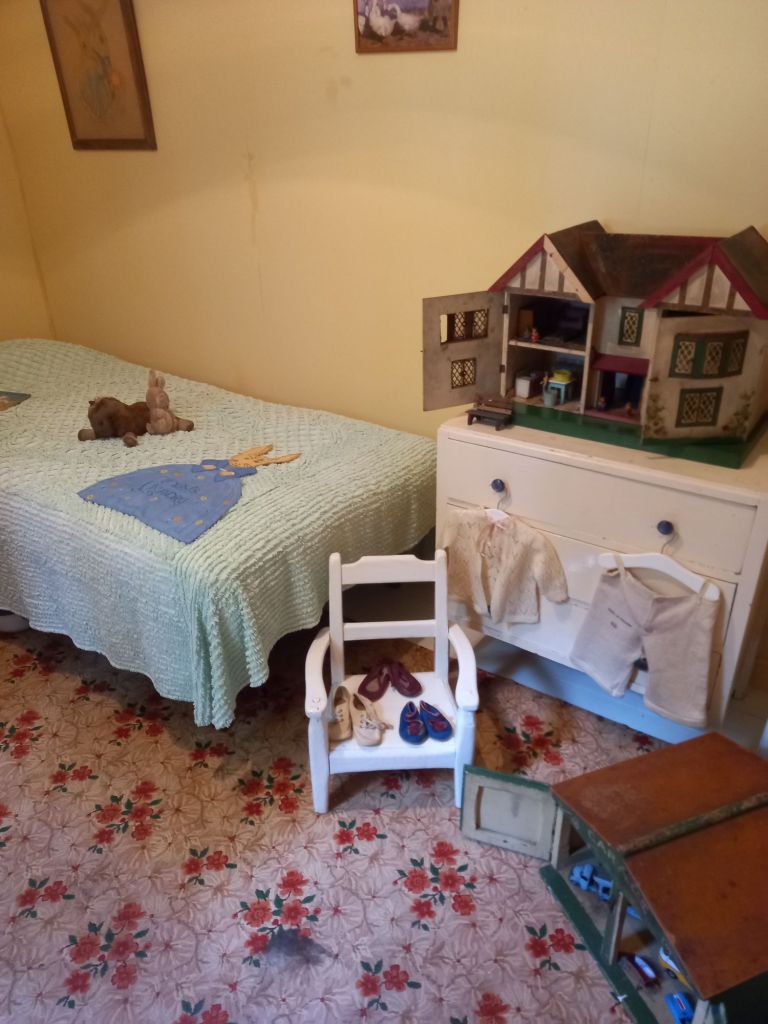
This means that unlike a standard museum, or a Trust property, the houses and contents are a snapshot of one particular period, rather than an accumulation of artifacts over the family’s ownership of the house.

I’m not sure if all of the textiles in each house originally belonged to it  but each gives a unique insight into the life, and textiles of the era.

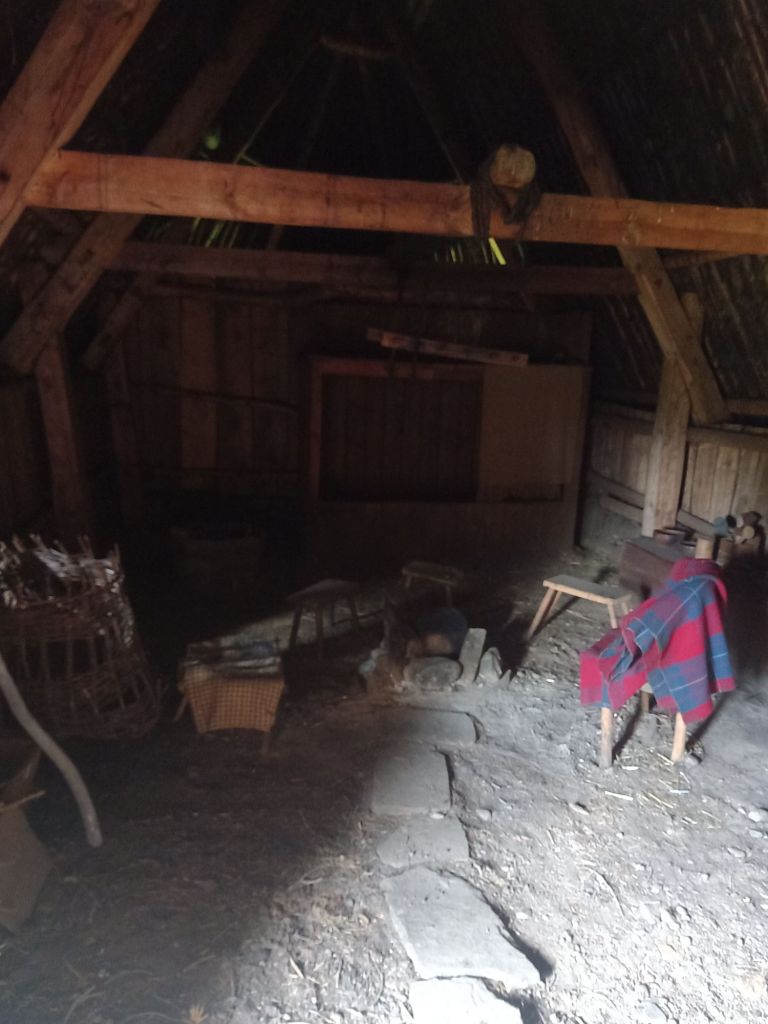
I have talked before about the importance of textiles in portraying aspects of daily life, and it is really obvious here. The 1730s houses are about survival, keeping the people, and animals who shared them, safe and warm, especially in the winter days.

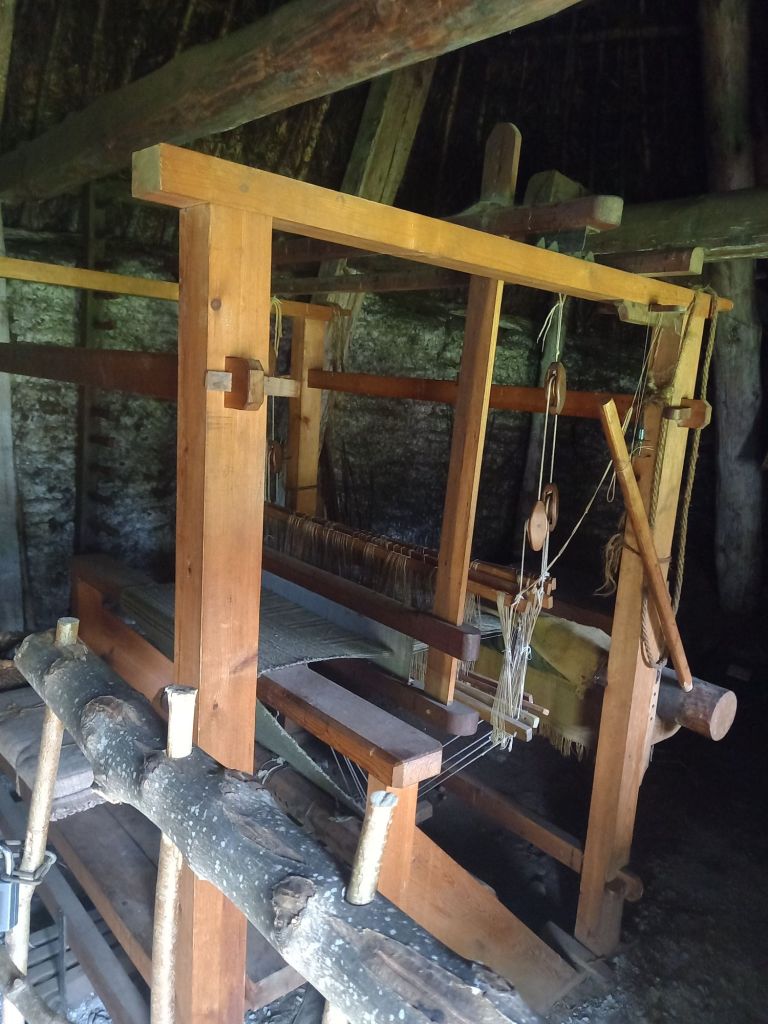
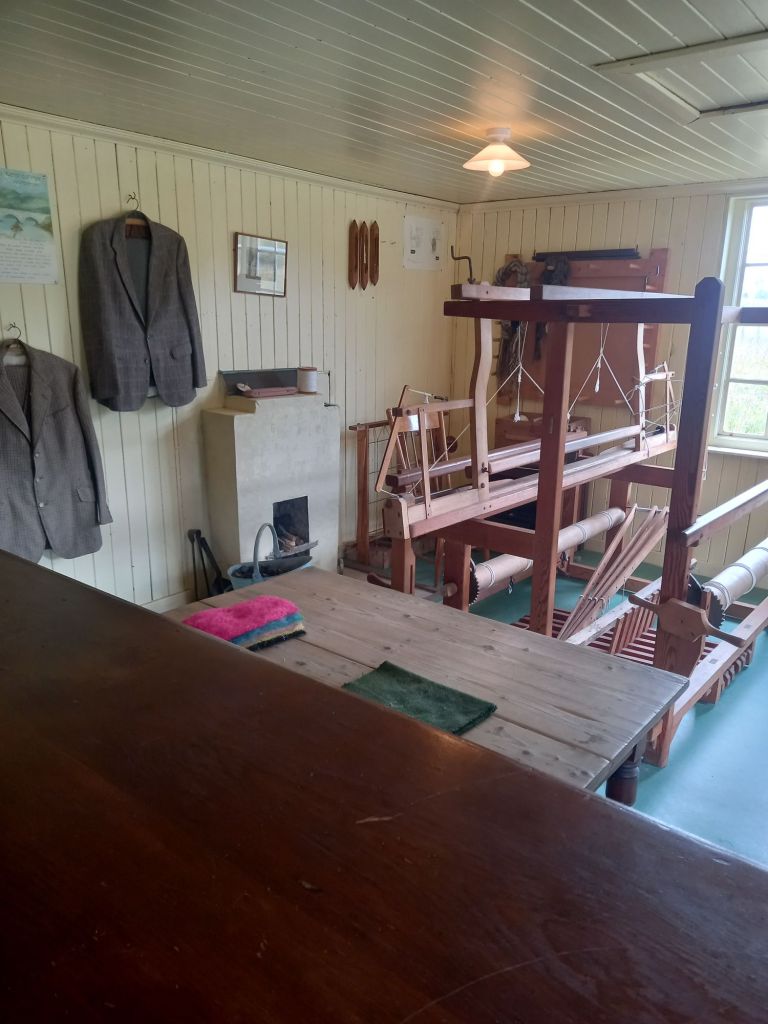
Textiles here are functional, spinning and weaving them yourself the only way to get them, and a continual set of tasks within the community. 

One of the displays showed the multifunctionality of the original tartan cloth, garment, cloak and blanket, all in one handy length.

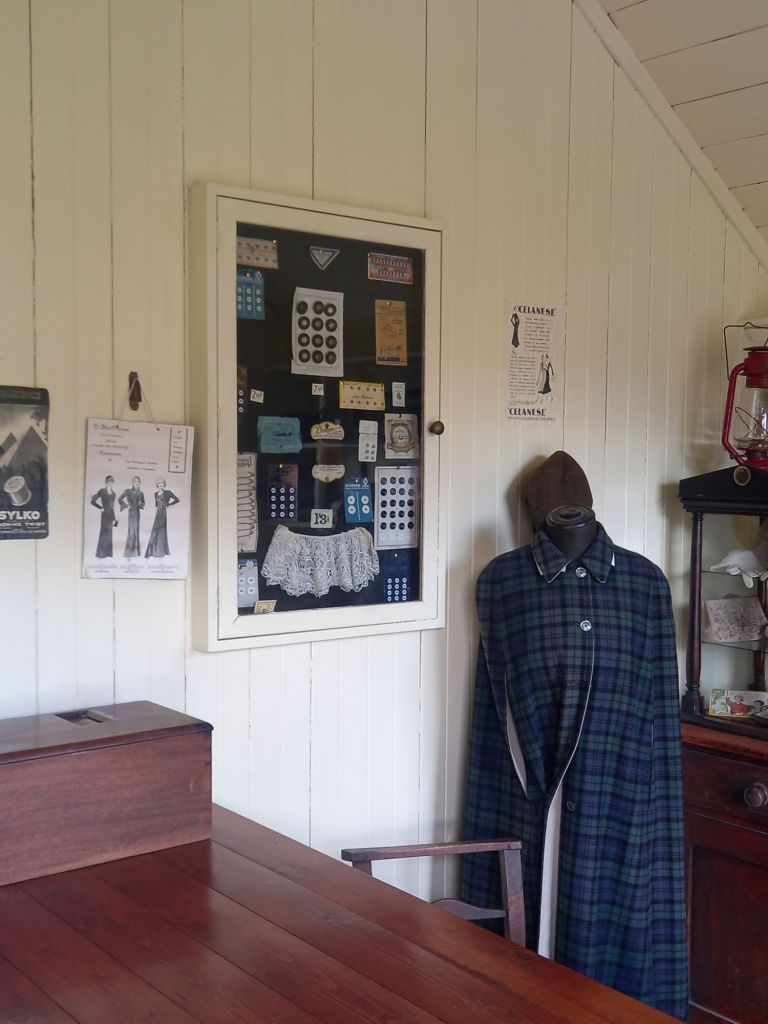
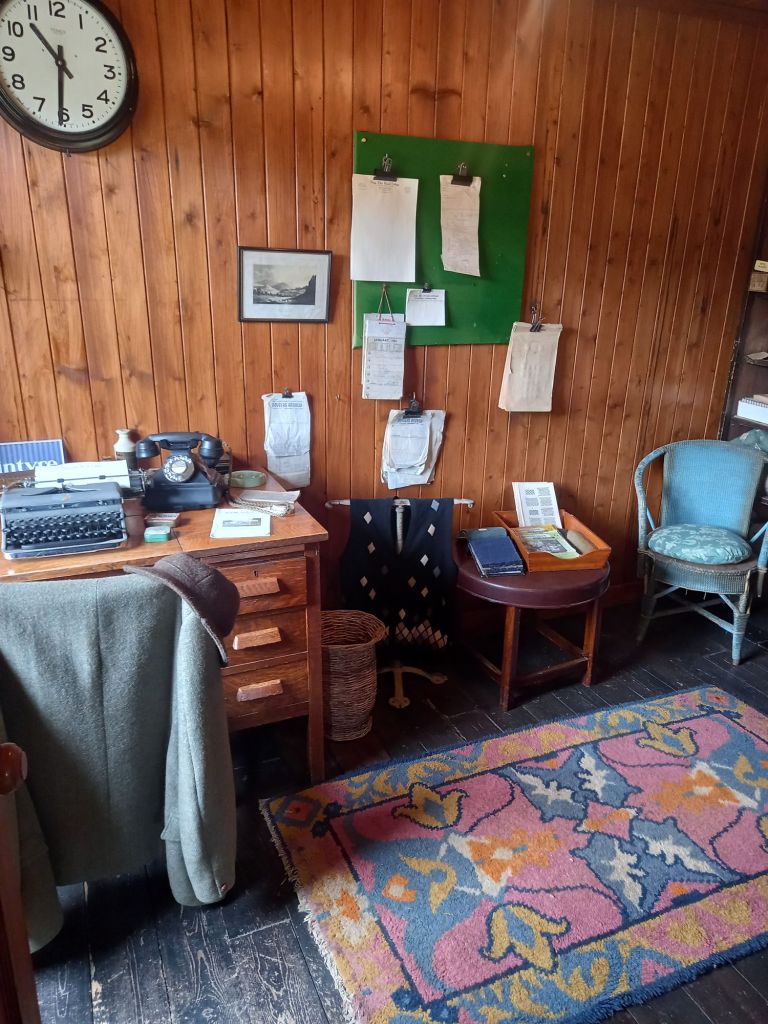
As life starts to get less pressured, and as job roles diversify, you have the separate businesses devoted to clothing.These buildings originally stood in the nearby town of Newtonmore.

The tailors and dressmakers, aided by the invention of the sewing machine. The idea of having lots of clothes for different purposes,  the ability to own more than one of things, and the luxury of not having to make it yourself.

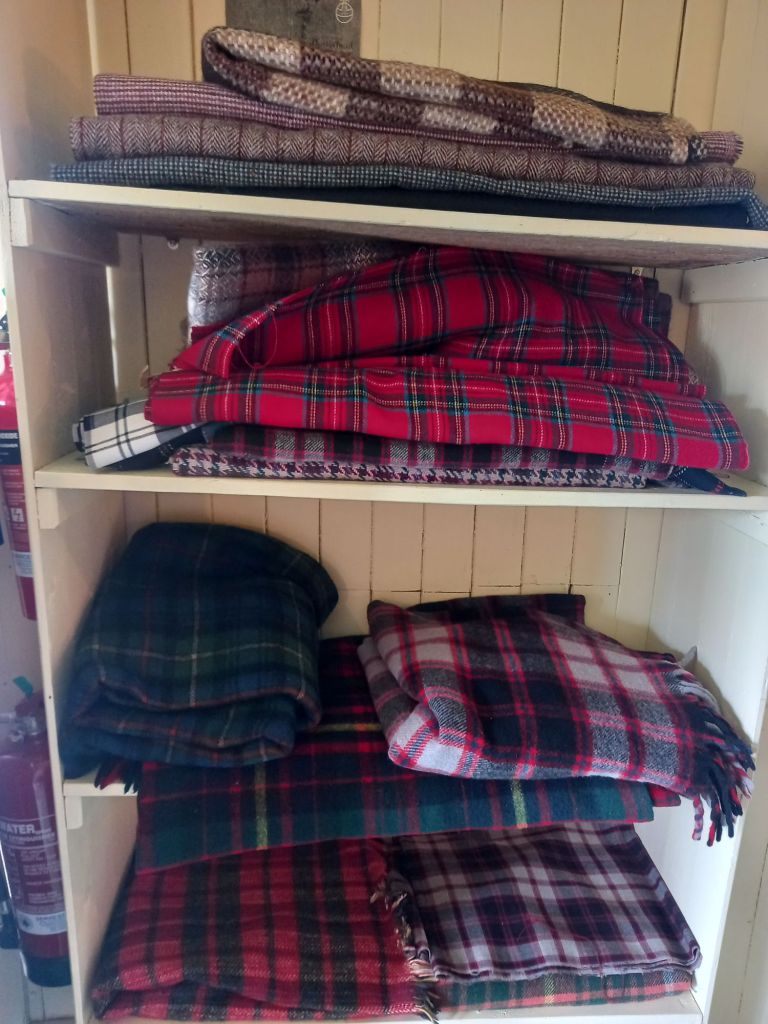
Clothing as status, the well tailored tweed suit, the modern kilt in clan tartans, all things uniquely associated with Scotland, and exported all over the world.

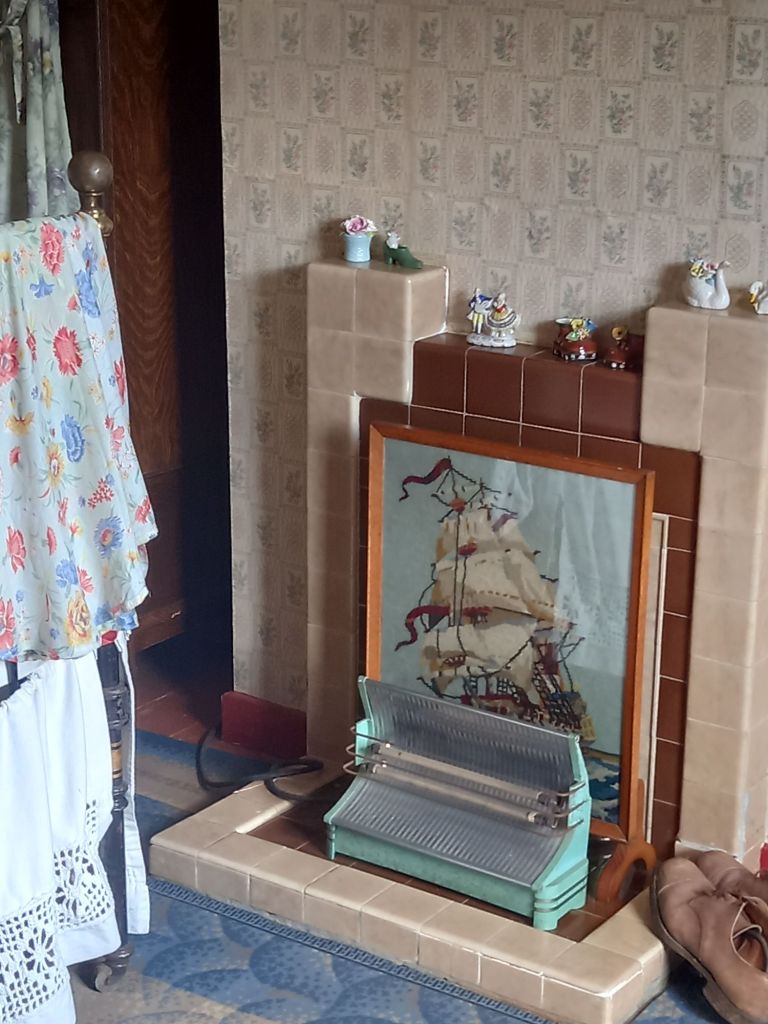
In the later period houses, those of the leisure classes, with time to spend on the ‘decorative arts’, textiles to show your skill, to make your home look nice.

An endless succession of tablecloths, tray covers, anti maccassars, fire screens and cushions. All created in the home with materials bought from specialist suppliers. A way to pass time with friends, or while listening to the radio.

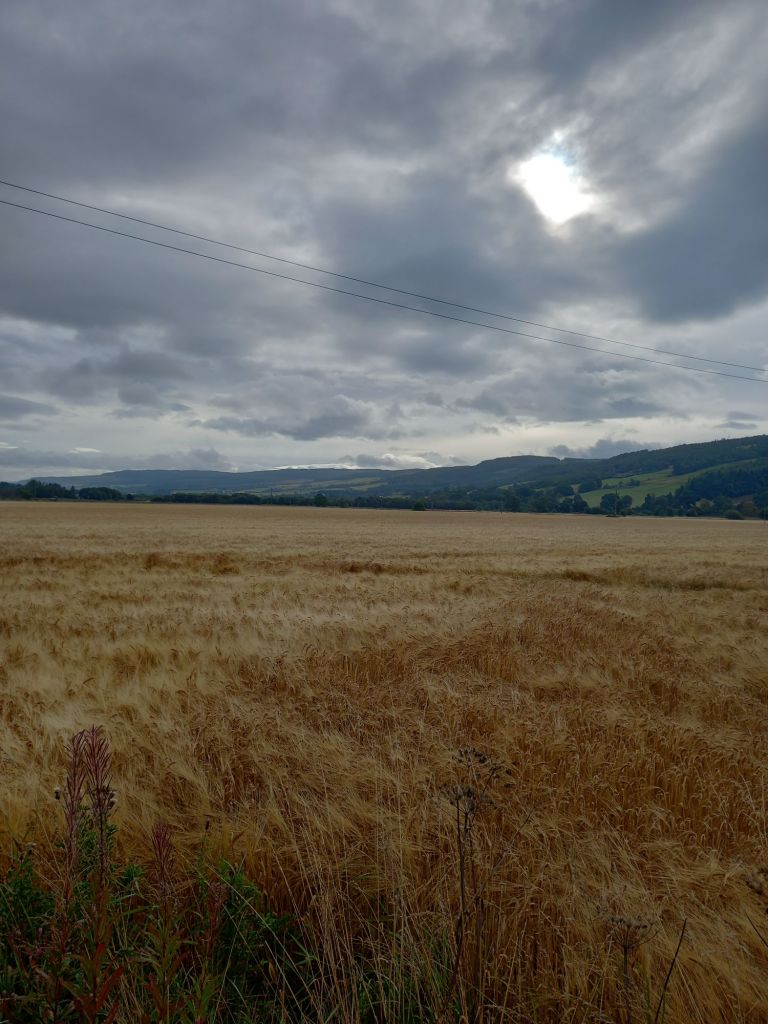
It was marvellous place to visit, and one of my very favourite ways to spend the day. I was also exceptionally lucky that the weather was gorgeous, and the scenery stunning. Loved the three varieties of Highland Cow, just enjoying the sun and their grass.

I ended the day at a new aire, in Aberfeldy, just sitting watching the clouds as usual, and listening to the birds flying over the fields.

I have a few more posts to share with you about Scotland, it seems such a long time ago that I left, although it’s only a week. Hopefully,  good WiFi allowing, I can share more next week, as I am making my way to the final few campsites of this trip.

In the meantime, have fun, take care, stay safe and thanks for visiting.

The joys of England

It is definitely true that often we need to go away, or step back, to really understand and appreciate things. My life now gives me much more time, and distance, and as I travel more, I get to really think about all of the similarities and differences in each place.

One of the exercises I used to do with my teacher trainee students, many of whom were migrants to the UK, was to get them to think about things that define being British, and within that specific things for each country within the UK. Many of them would be teaching migrants, and often teaching them how to pass the UK citizenship test, which contains lots of questions about life in the UK. They used to come up with all sorts of answers, like fish and chips, the Union flag, bulldog spirit etc, and it was always a fun and useful exercise to get them talking about their home, and how it differed from where they grew up.

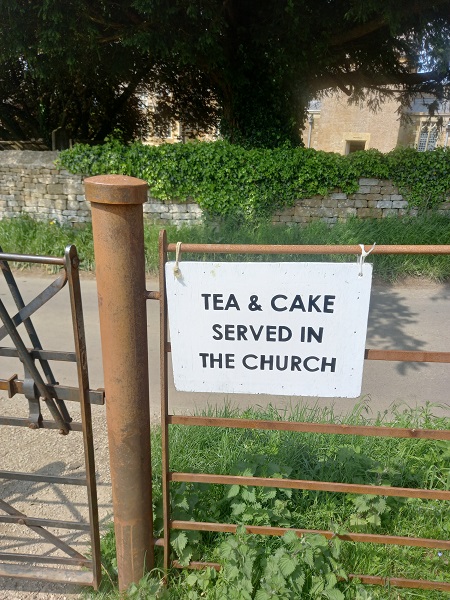
As I mentioned in my last post, the Cotswolds is an area that many people feel exemplifies England, the cottages, the farmland etc. It was while I was visiting one of the Trust houses there that I came across this sign, which to me just typifies one of the joys of English life.

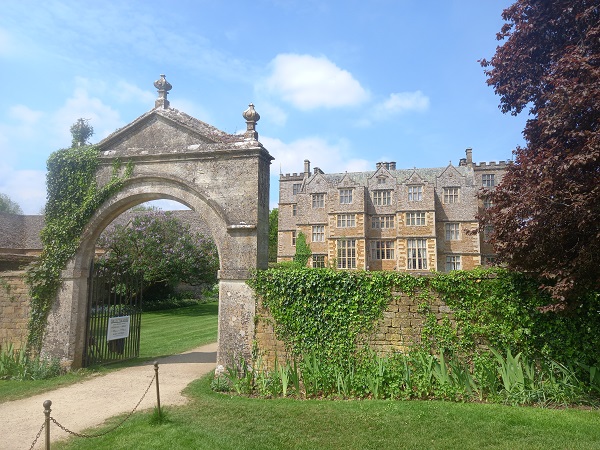
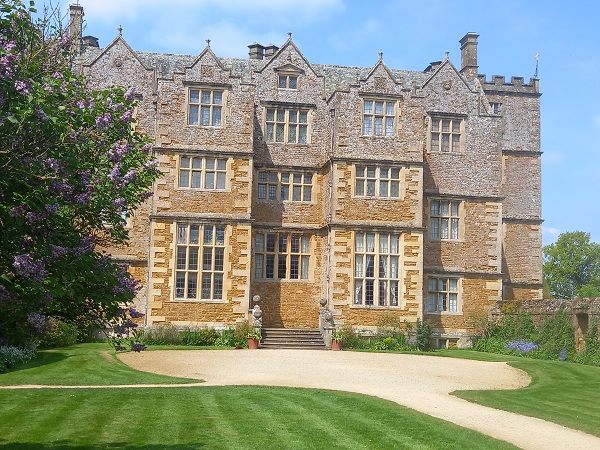
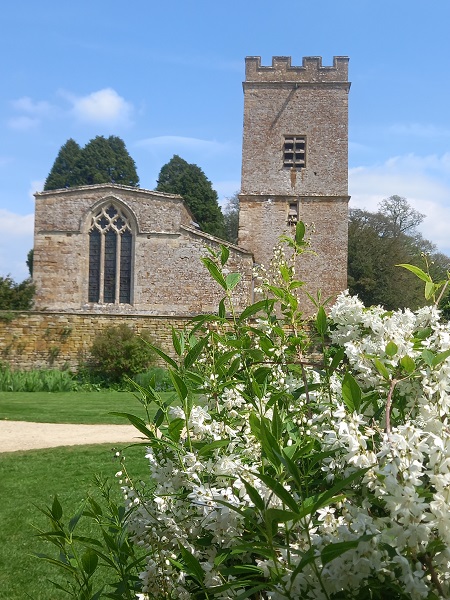
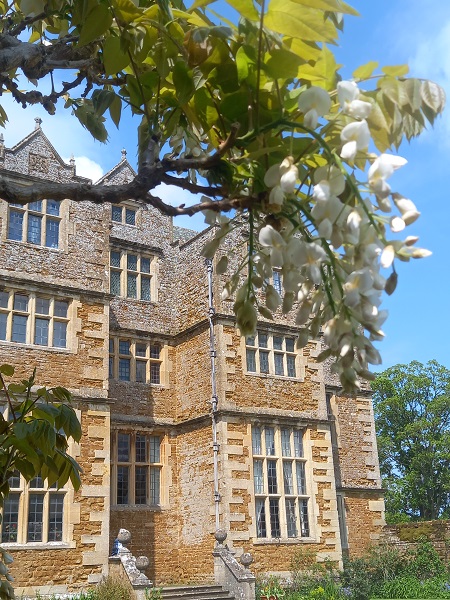
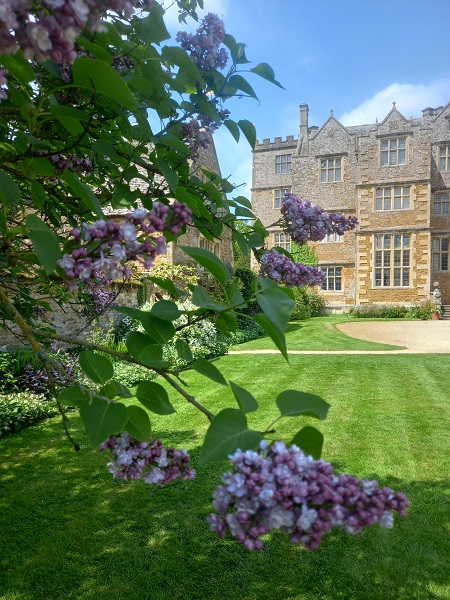
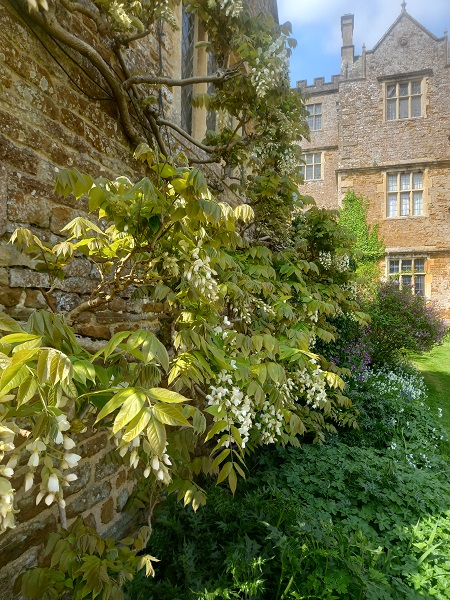
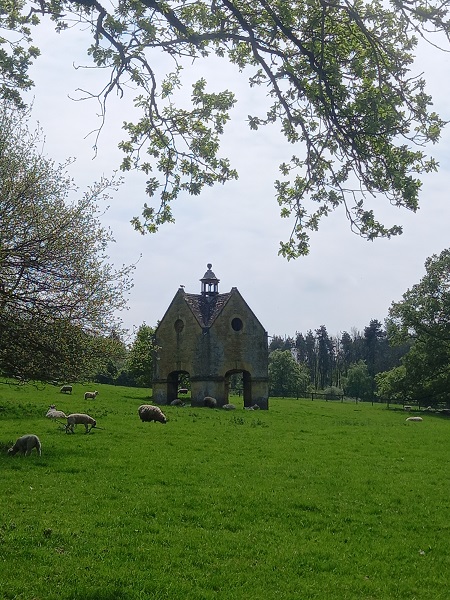
It conjures up a whole host of images, the parish church, flower festivals, the UK’s love of a good cuppa, our habit of, ‘putting the kettle on’, whenever there is a crisis or an awkward situation to deal with. The tea and cake in question was served from the church next to Chastleton, arguably one of the most beautiful houses I have ever visited, just stunning.

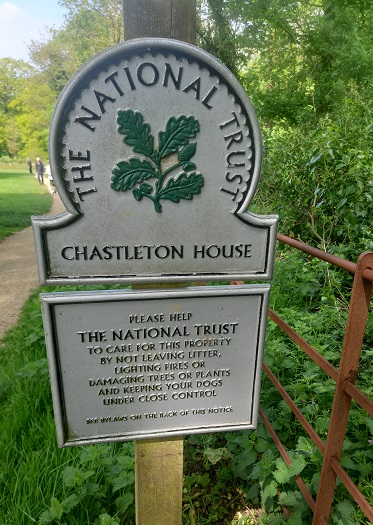
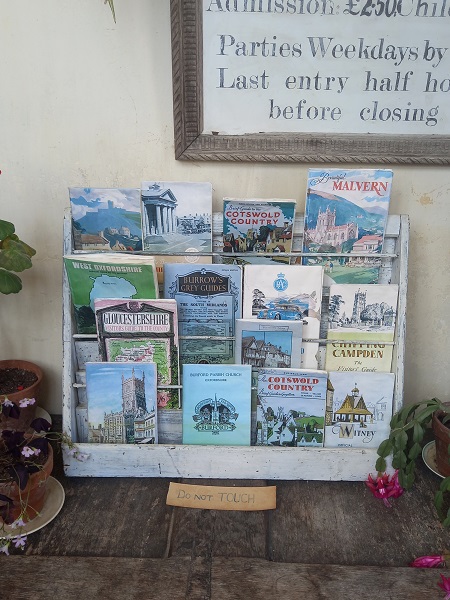
I love the old Trust property signs as well, so glad that so many of them have been kept.

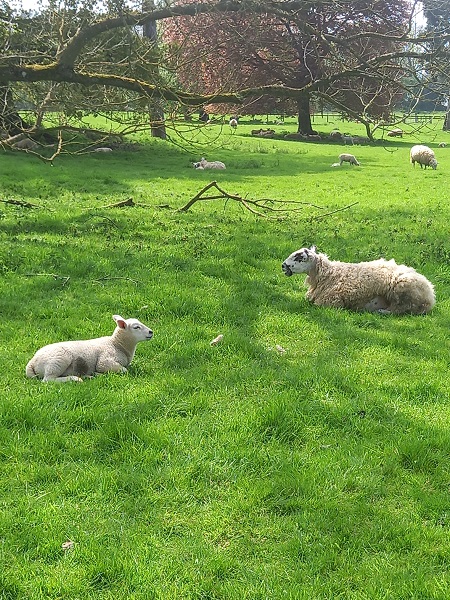
There was a lovely walk through the grounds down from the car park, with lots of cute lambs sunning themselves.

The refreshments were being organised by volunteers from the local primary school, and all profits went to the school, so it was a lovely way of meeting the need for a tea room, and supporting a good cause. I do usually partake of tea and a scone at Trust properties, but this time had an excellent coffee and walnut cake.

Chastleton is one of the Trust properties that has not been restored, things have been fixed to stop further damage, but like Calke Abbey and other places, the property was in too much of a state of decay when it passed to the Trust in 1991. It was owned by branches of the same family throughout its history, although it was rented out at times, and thus refurbished a little. It is portrayed as it was when the last owner lived there, Barbara Clutton – Brock, who after her husband died in 1976, spent 15 years living there, alone apart from her 20 cats and a parrot.

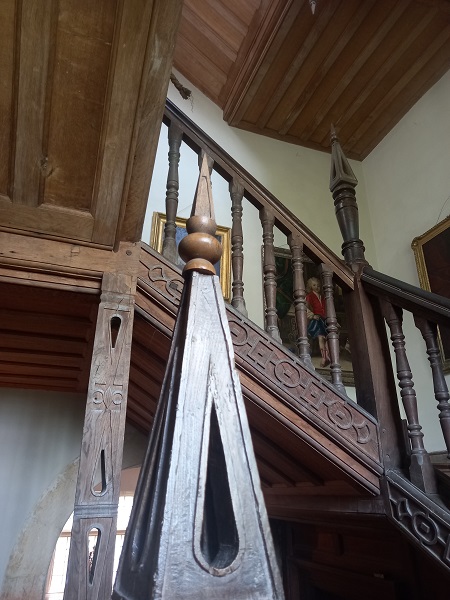
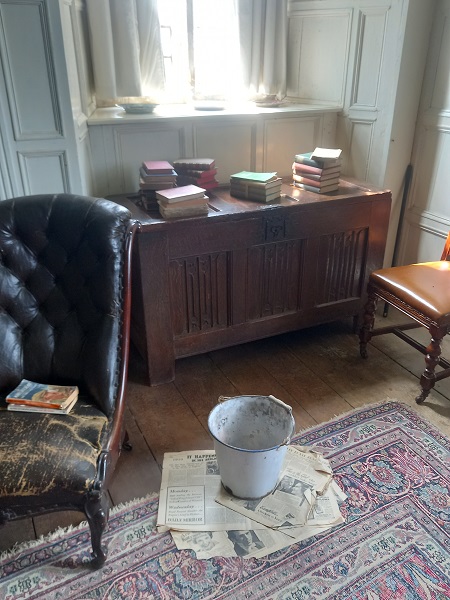
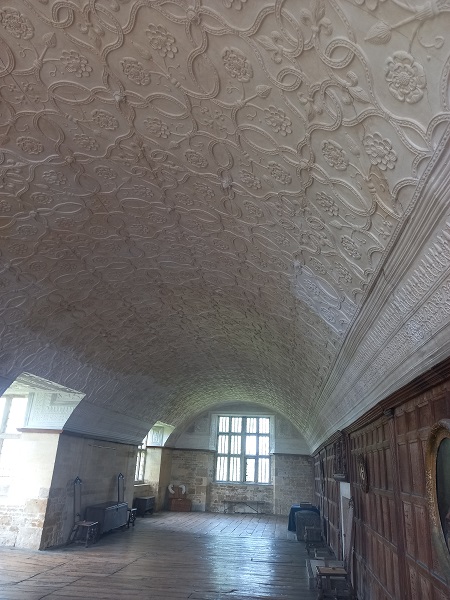
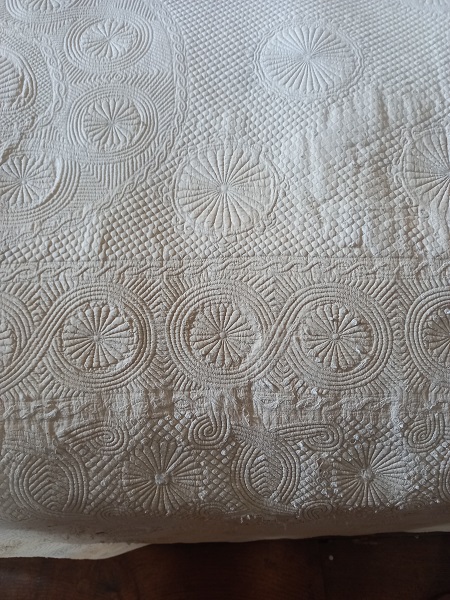
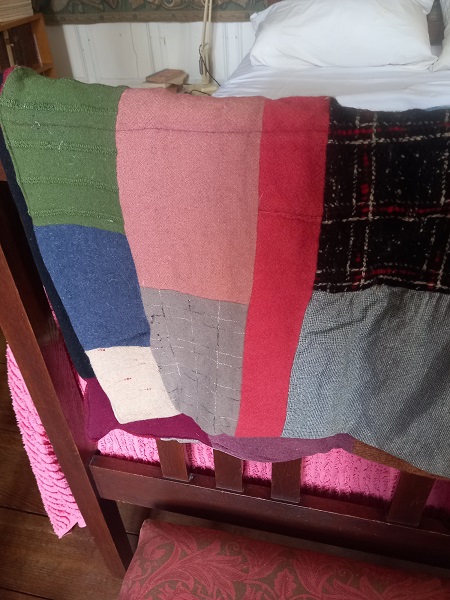
The house dates from the early 1600s, so is full of wonderful Tudor architecture, including a barrel ceilinged upper chamber. However, again, it is the touches like the wool quilt, made of scraps to keep the occupant of the bedroom hung with fine tapestries warm, and the bucket to collect the drips from the leaking ceiling, that bring life in the house to reality.

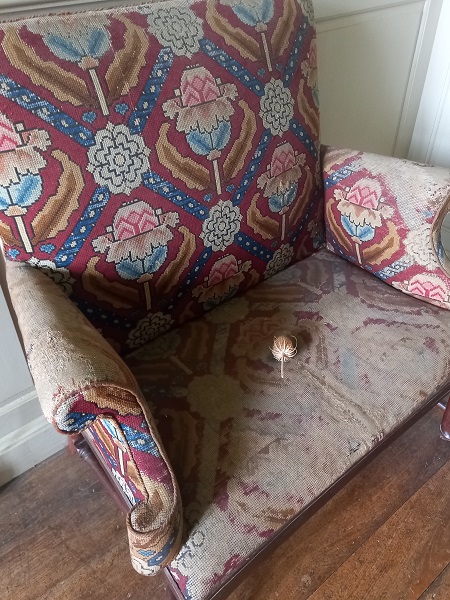
I love the fact that this chair was so well used that most of the needlepoint has worn away.

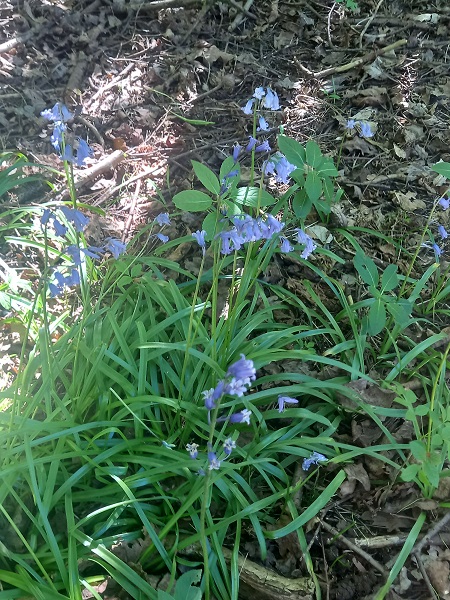
The rest of the week was very warm, as I have previously mentioned, so I spent some time just going for shady walks to admire the beautiful countryside, and the carpets of bluebells throughout the woods. Despite the fact that I have so many other places to visit, I would love to come back to this area again, there are still so many lovely things to see here.

On the journey back to Ellen’s, before my flight home to Spain, I was able to stop off at two further Trust Properties. Upton House, in Warwickshire, is a Georgian house, which was extended and remodelled in the 1930s by a member of the Shell Oil family, Walter Samuel. It was one of many houses that the family owned, and was used to house his extensive collection of art.

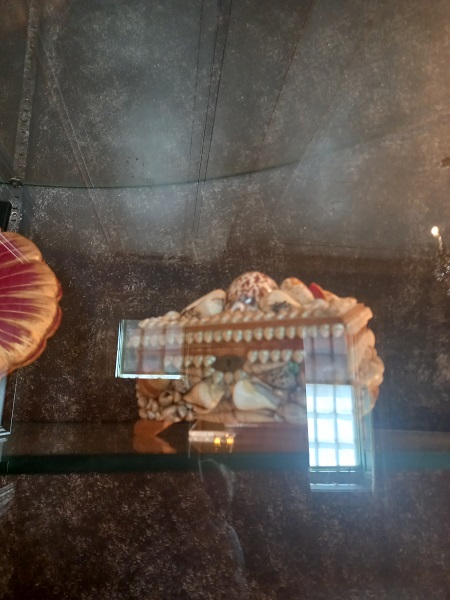
One of the interesting facts I found out here, was that the Shell Oil company started out as a curios business, importing shells and decorative objects that the Victorians loved. Apologies for the poor picture, but you can see one of these in a cabinet in the photos below.

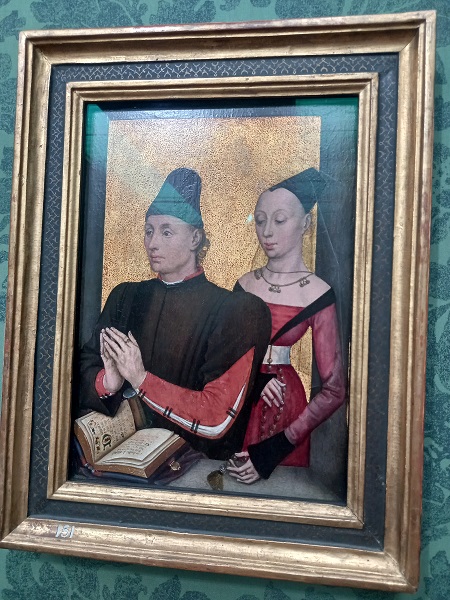
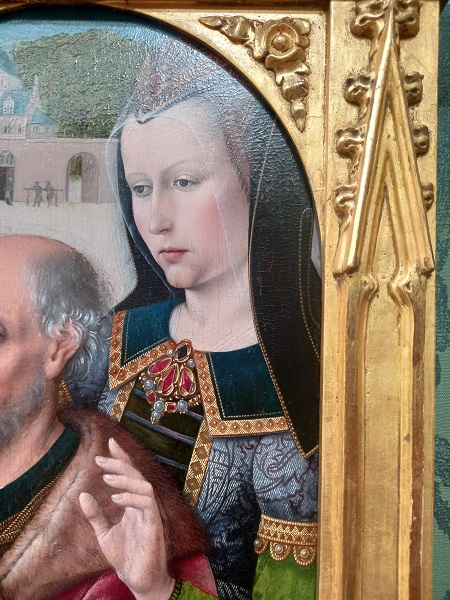
Of particular interest to me were all of the gorgeous medieval and Tudor era pictures in one of the galleries. I was talking to one of the volunteers about how we use these for costume research for re-enactment.

This dress in particular has a really unusual neckline and jewellery. The painting dates from the late 1400s.

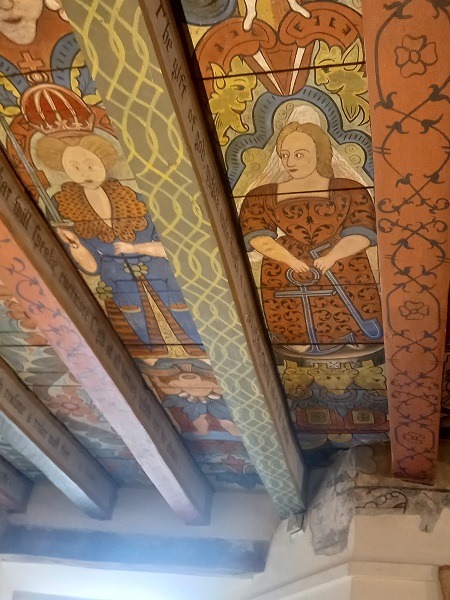
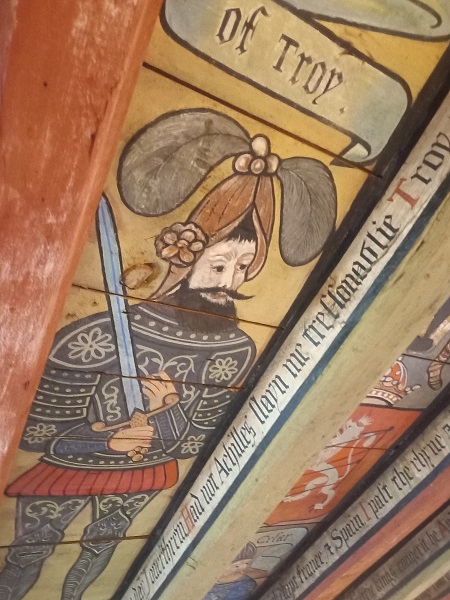
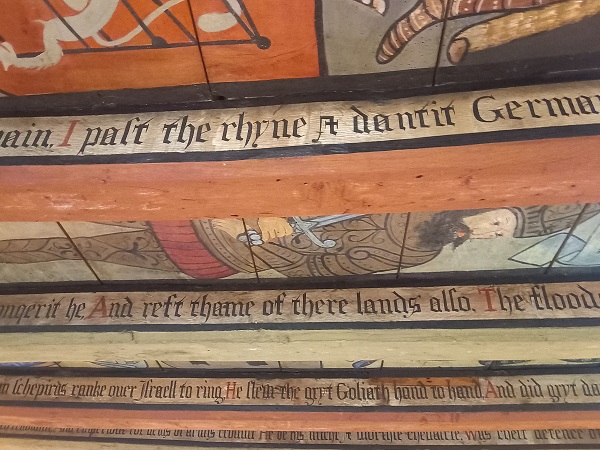
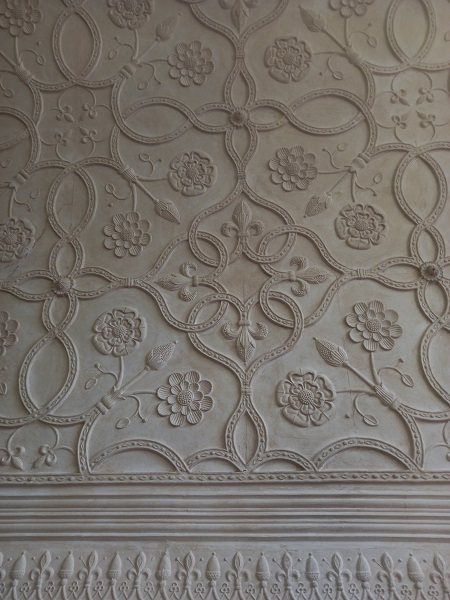
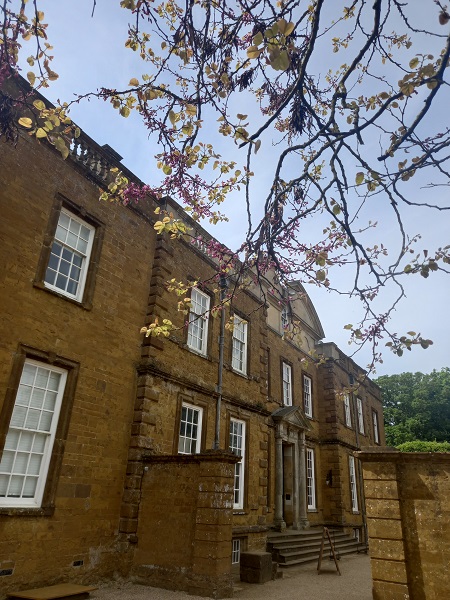
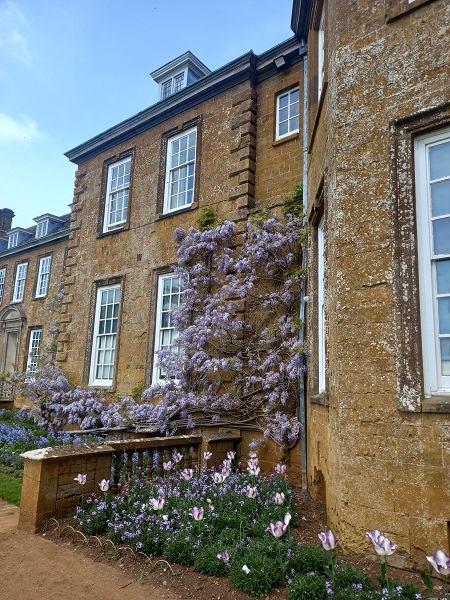
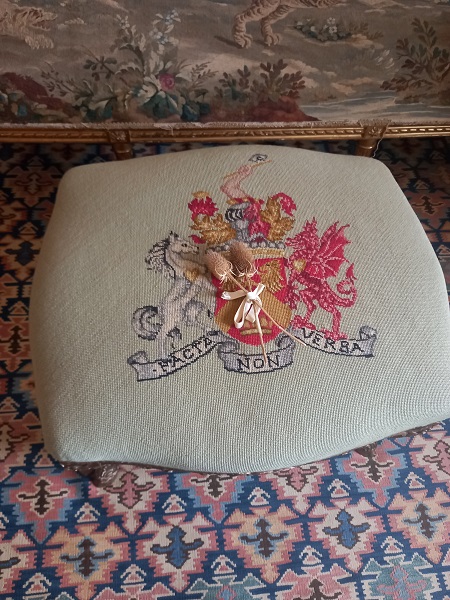
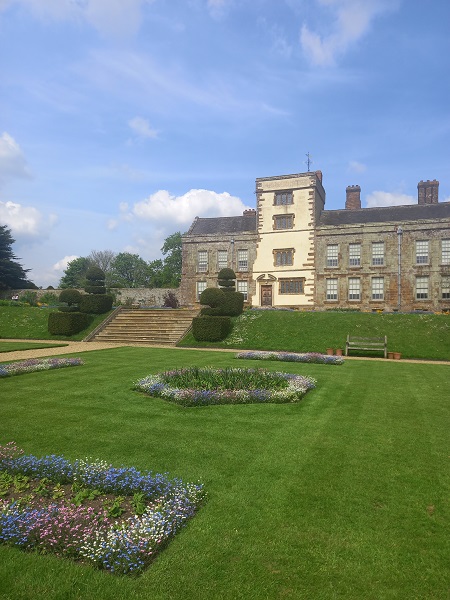
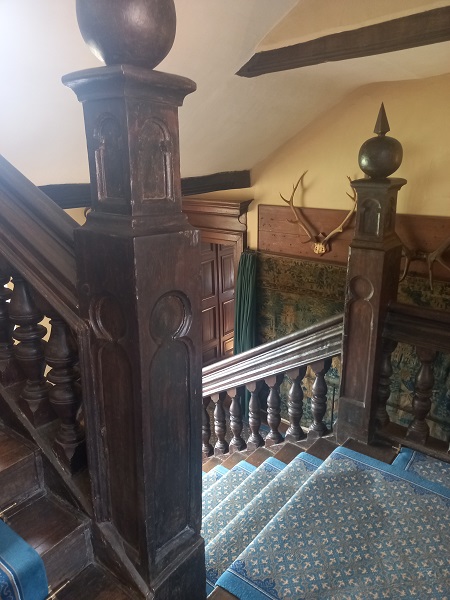
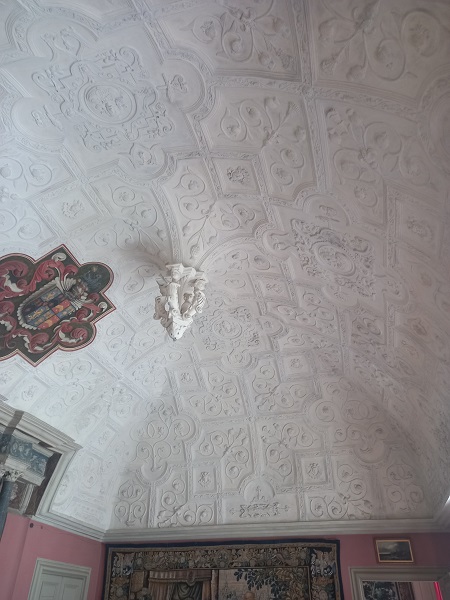
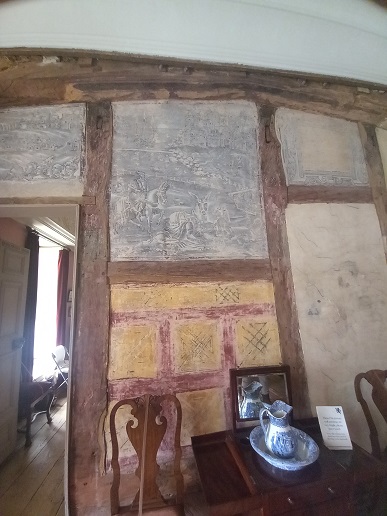
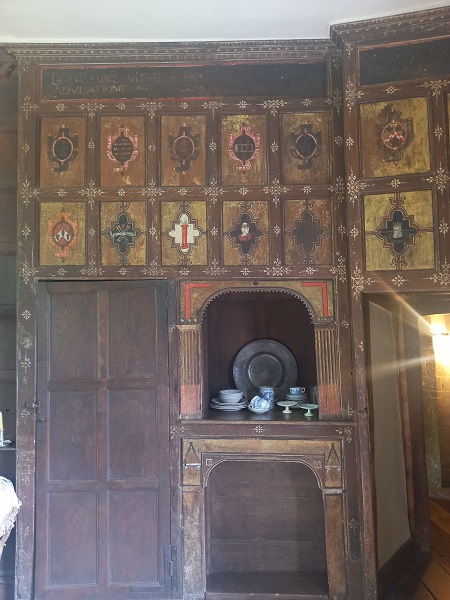
My last house of the week was another gorgeous Tudor one, that has remained in the same family for all of its 400 years. Canons Ashby in Northamptonshire was built by the Drydens, and has one of best plaster ceilings I have ever seen, especially for small house. There were also some really unusual wall painting in one of the bedrooms, and restored heraldic painting in the servants hall.

I have made a list of all the Trust properties that I have ever visited, I am now up to 95, out of over 500, so it will take me a while to see them all. These include the nature reserves and coastal areas as well. I believe that I get excellent value from my membership, and absolutely love exploring all of these places. There is always something unexpected at every property, whether it be needlework or some fascinating fact.

I have now caught up with all of the travel posts from 2024, so now it is time to catch up with the last of Cordoba, and life here in Spain, before my travels start again in a couple of weeks. Until next time then, have fun, take care, stay safe and thanks for visiting.

Home is where the needlework is

I had chosen to break up the journey back from the shuttle to my sister’s in Worcester with a brief stay in Surrey, so had to pick from a number of lovely Trust houses in the area, as there are so many there. Its not an area I have ever visited before, but is definitely on my wish list to go back to, along with Sussex, and the rest of Kent that I didn’t have time to visit last autumn. It is just so beautiful in that part of the country, a very different beauty from my lovely Yorkshire, so green and wooded and just so pretty.

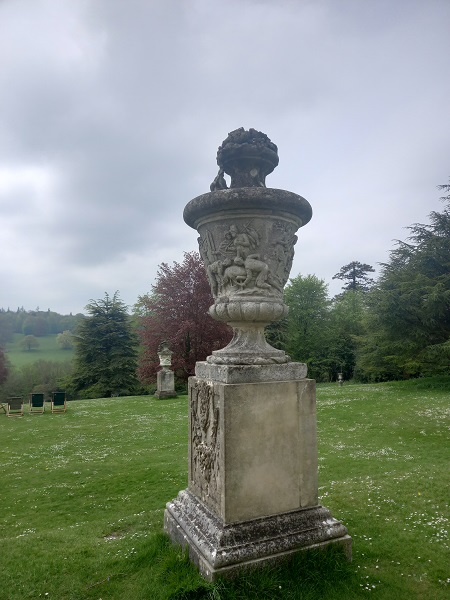
The first stop, on the way to my campsite was Polesden Lacy, which is in a stunning location with views across to the neighbouring hills.

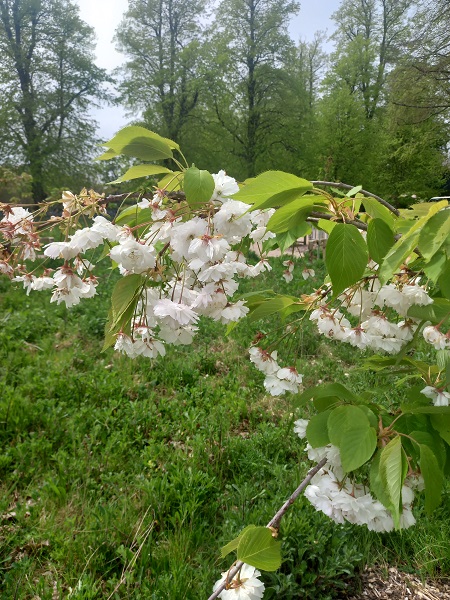
I was also thrilled to see some rhododendron, my first for about three years. I used to love seeing them in the spring in Marsden, usually they have all gone when I get back in June. They are such beautiful flowers, and it was brilliant to see cowslips and blossom as well.

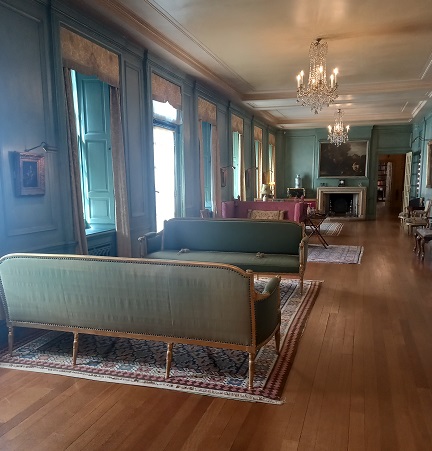
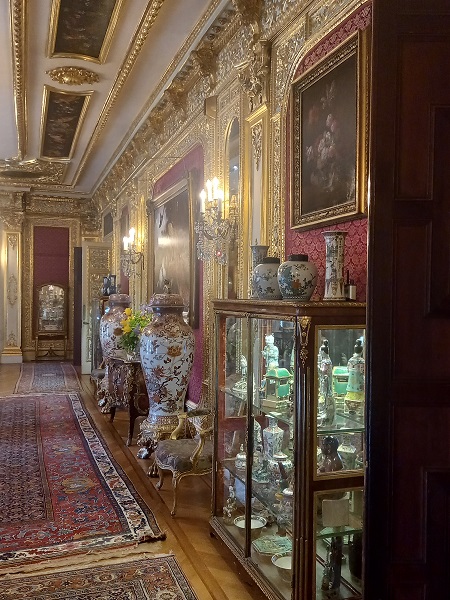
This beautiful house was used as a party house, not a home, and this is reflected in the way that the house was decorated. It had very much an art gallery feel, with some gorgeous paintings, and a very well constructed Tudor style corridor and plaster ceiling. The ballroom shows you the kind of opulence that the guests enjoyed.

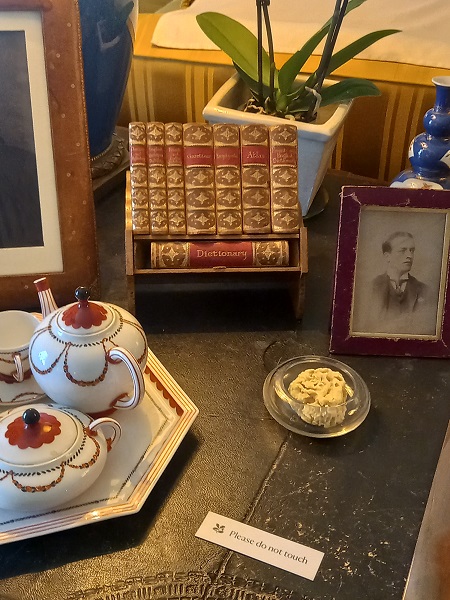
However it was the little personal touches that I liked best. The writing desk with its set of dictionary and thesaurus, along with the sponge for wetting your stamps, and the seating diagram for dinner. Those give you a real sense of who was there, a sense of the place, which is what the Trust aim to do, rather than just be a collection of beautiful things.

I had one night at the Horsley Camping and Caravan Club site, this used to be a fishing lake for a large house, and was used as a recovery camp after the war, when the soldiers used the lake for swimming as well. I love the way that the Club preserve the history of their sites, many have links with WW2, and have been army camps or hospitals.

I was in a lovely little woodland camping area, and in the morning was able to watch two woodpeckers while I ate my breakfast. There were also lots of ducks and some baby geese had just hatched.

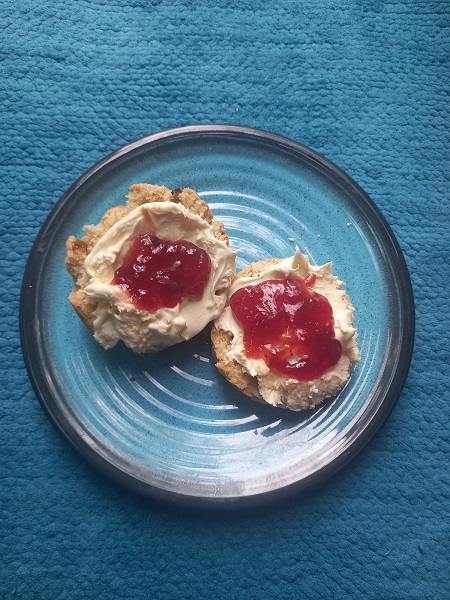
I have recently bought some new plates for my van, I had been looking for some nicer ones since last year, when my friend Sharon joined me in Mablethorpe in a rented van that had lovely plates. When in Yorkshire we found some similar ones and we split the set of four. I am very pleased how well they co-ordinate with the little rug in the van, and the National Trust rhubarb and rosemary scone that I got as a take out from Polesden Lacy was delicious!

The following day was a bit damp as well, so I only stopped at one house on the way to Worcester, but had a lovely drive through Oxfordshire, past Henley and along the River Thames. My chosen house for that day was the Tudor Greys Court, and it was such a contrast to Polesden.

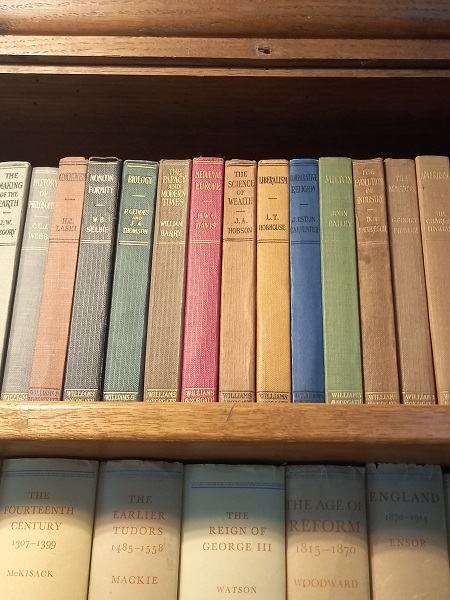
Bought by the Brunner family because they loved the view, the house and outbuildings, along with a walled garden, were just full of personal touches, including some wonderful books in the library.

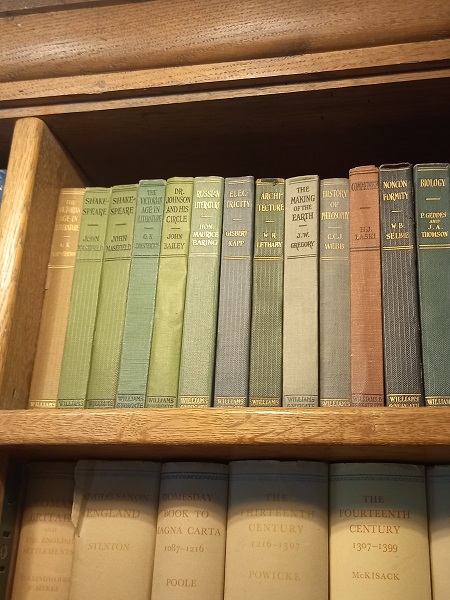
These aren’t the most beautiful of books but such a lovely eclectic set, with titles such as Nonconformity, The Making of the Earth, and Russian Literature, they look like a wonderful read!

The best thing about the house was the wonderful amount of needlepoint there, done by Lady Brunner. I especially loved the blue and pink rose design that she had clearly taken from the fabric used in the bedroom. There were so many lovely pieces, cushions, rugs and a hat pin pincushion in her bedroom.

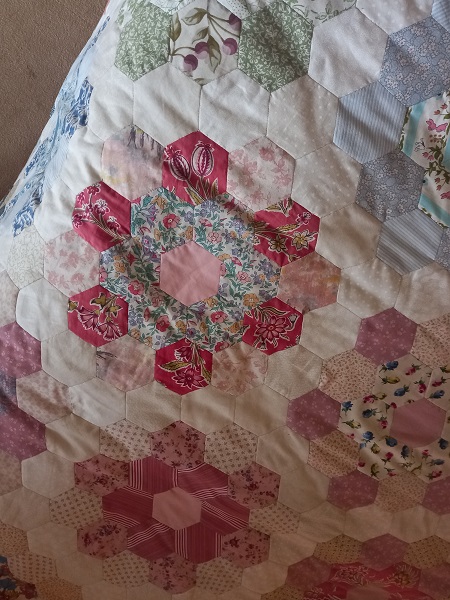
It was a really gorgeous property, and also very much a home, full of little treasures such as the quilt made by a volunteer that was on one of the beds, and the cupboards still full of the housekeeping supplies they had used. Although I love visiting the grand stately homes, this one has to one of my favourites, not least because I know who made all of these wonderful things.

I spent the weekend after that at my sister’s, celebrating my great niece’s 2nd birthday, which was lovely. I have never seen a child so excited about candles on a cake! Then it was off for another adventure, and another new campsite, which I will tell you all about next time. Until then take care, have fun, stay safe, and thanks for visiting.

I do love a good social history museum!

Although I spend a large amount of my time visiting historic houses, full of very grand furniture and amazing portraiture, I equally love museums that capture ordinary life. I feel that it is a vital part of what museums are there for, not only ordinary life 500 years ago, but also 50 years ago. This vital role means that the visitors can connect with what they say, older people like me recalling childhood experiences, and younger ones appreciating how much life has changed.

I had been really looking forward to visiting Norwich, some years ago I went to a fantastic conference at Leeds University, full of presentations about medieval life, several of which were about places in Norwich. This was in 2019, before the world stopped for so long, and I have been meaning to visit ever since. When I met up with Jules at Sheringham, the van lifer who I first met in the Peak District last year, who has an identical van to mine, she had some great tips for me as well.

The first day I went to the castle museum. Most of this is a traditional museum with lots of glass cases full of stuffed animals, and archaeological finds, although they also had some themed galleries. It was amazing to see the finds from the Snettisham Hoard. To think that they were made about 2000 thousand years ago is incredible, and the craftsmanship is beautiful.

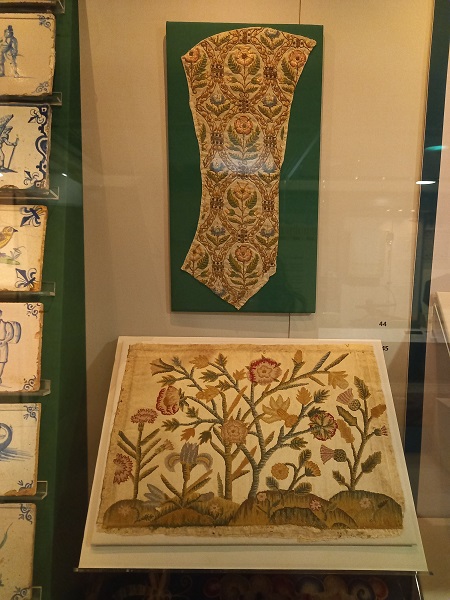
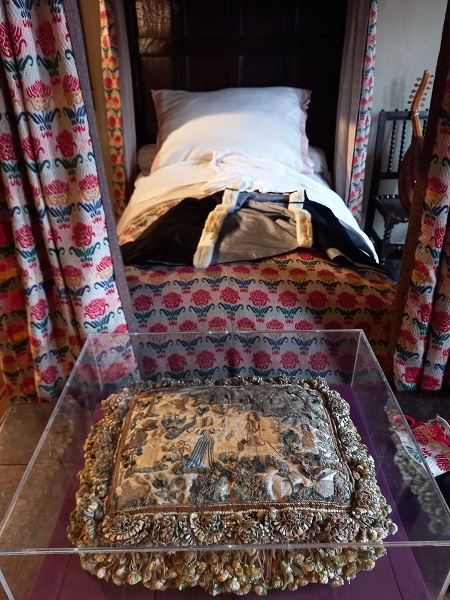
The museum also had some good decorative arts galleries with textile treasures in. I particularly love this Tudor embroidered sleeve.

There were several samplers, and this one was unusual, as it is a darning stitches sampler. Most are representing a variety of stitches but this is the first darning one I have seen.

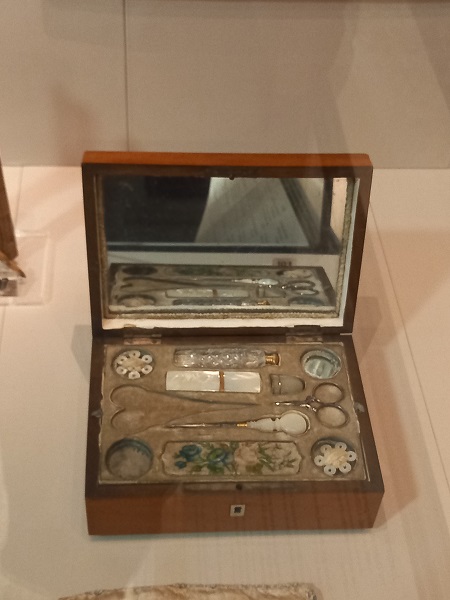
There were some great needlework tools on display, including this beautiful case with mother of pearl thread winders. I love to think of the owner sitting stitching using this and wonder where the other pieces ended up. The knitting needle holders were also really interesting, they are designed to be attached to a belt.

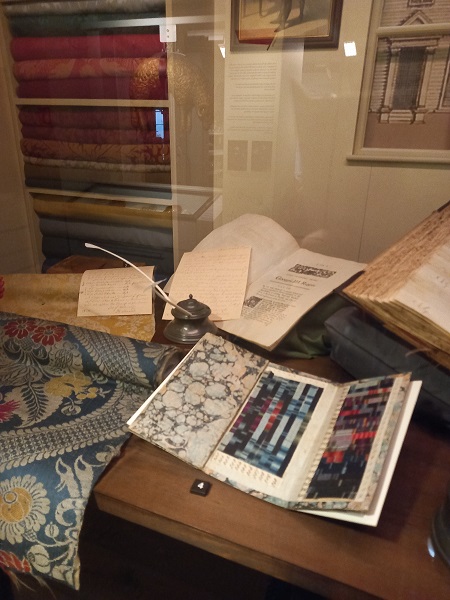
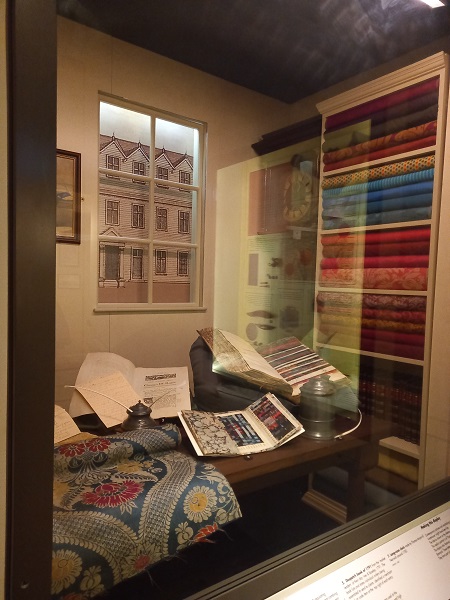
The second museum was the excellent Museum of Norwich, housed in the centre of the city in the Bridewell, a building which has had many uses including workhouse and prison. What I particularly loved about this museum was the themed rooms and the displays. This one below shows a fabric shop from the late 1700s. The original sample books are in the display room, and outside there is a reproduction one , (last photo), that you can study in depth. Absolutely fascinating for a textile nerd like me!

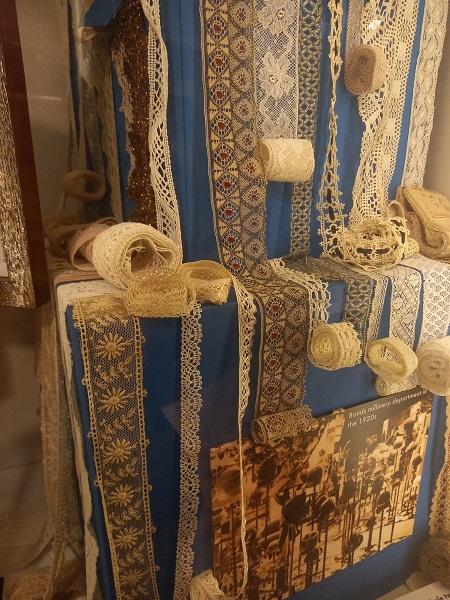
They also had some dressmakers and haberdashery shops set up. The bottom right picture shows the, ‘change card’, from a local department store, that was given in the form of safety pins, rather than coins. An interesting take on the phrase, ‘pin money’.

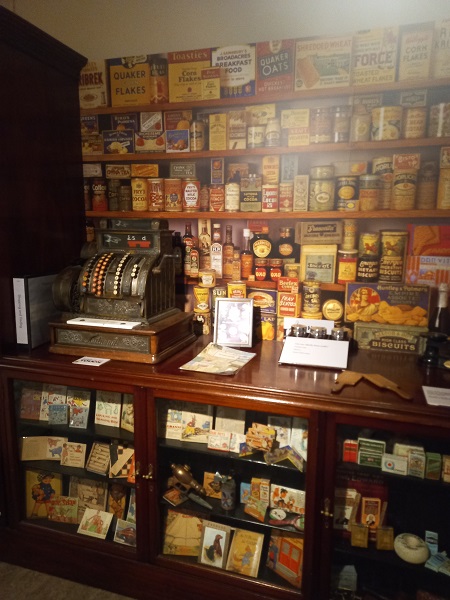
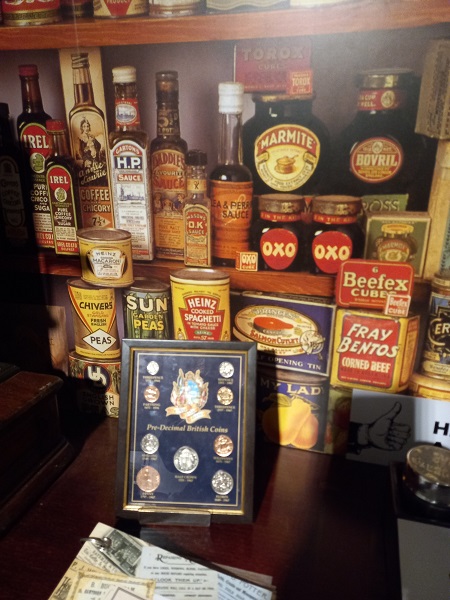
The grocery shop was fascinating, not least to see how much, or how little the packaging had changed for things. They also had a display of pre-decimalisation coins, which I remember very well from my childhood. I used to get sixpence a week pocket money, thruppence to spend on sweets and the rest to save for my annual seaside holiday.

They also had a whole pharmacy set up. This collection was made by a practising pharmacist, John Newstead, over a number of years, as he wanted to preserve the wonderful things such as the jars and drawer labels as shops were modernised from the 1960s. It is accompanied by a really interesting video about how pharmacists would make medicine for people pre the NHS. It is interesting to reflect that pharmacies now have a much wider role, more like they did originally, in healthcare, rather than just dispensing medicine.

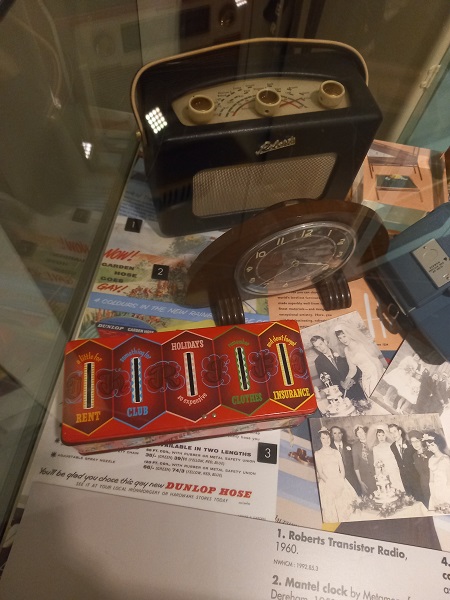
The final section had some great reminders of childhood for me. I used to help my Mum mince meat using a Spong mincer like the one on the right in this first photo, and remember my family allocating money for each aspect of savings, I am not sure we had a tin like this but I’m sure we had something. This must be fascinating for the school children that visit who possibly rarely see cash being used in this way anymore.

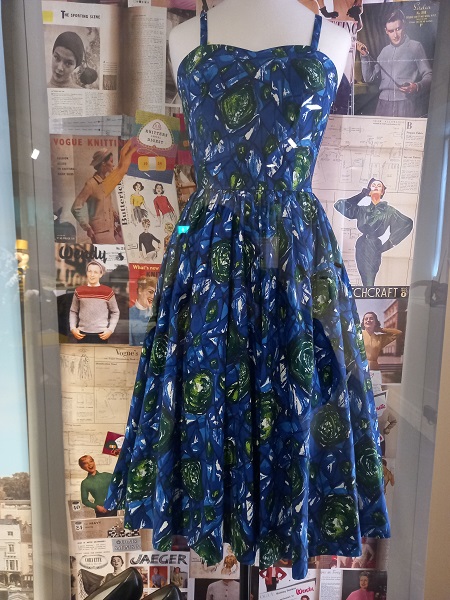
There was also a lovely display of sewing related items, I particularly liked the embroidery set in the first case. So many great gifts for future home makers 😉 and a very good summary of what interests were meant to be for girls in the 1950s and 60s.

My third museum was Strangers’ Hall, so named as many refugees lived in the area at one time. This building dates from the 1320s and is now the museum of domestic life. Each of the rooms has a different historical era, and as expected a wealth of wonderful textiles.

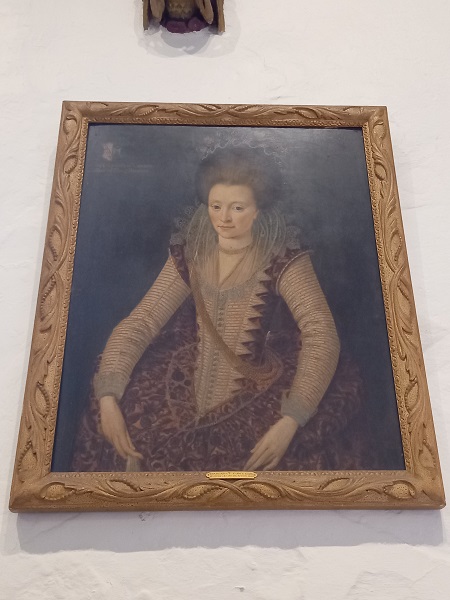
The first part of the house is the Great Hall, with some gorgeous costume portraits.

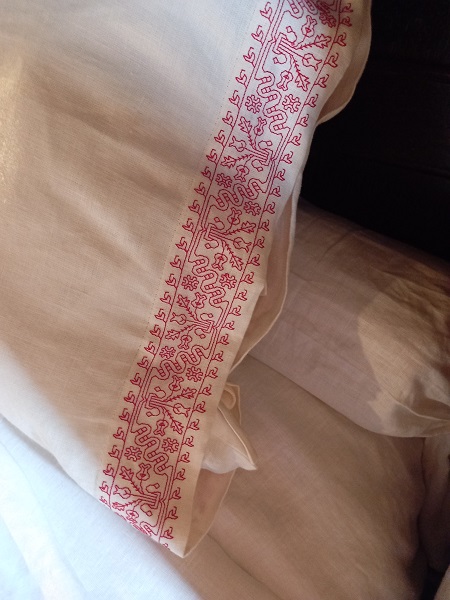
I was particularly impressed with the level of care taken in the interpretation and reproduction of the textile displays, as in this 17th century bedroom, where reproduction bed hangings and a redwork pillowcase complement the historic pieces.

I had a very interesting talk with the head curator at the end of my visit, and she showed me the detailed files of research they have on everything they do. I think what makes this museum so fascinating is that as you move through the different rooms you get a real sense of how people lived in them. The contrast between the dark wood and table carpets of the Jacobean era, and the Georgian decor is really evident.

It reminds me of when IKEA stores first opened in the UK and we were all encouraged to ,’chuck out our chintz’, and go for the very simple clean lines of Scandi style. I did have a house that was almost completely furnished by IKEA at one point, before I went back to my love of colour and lots of different textures.

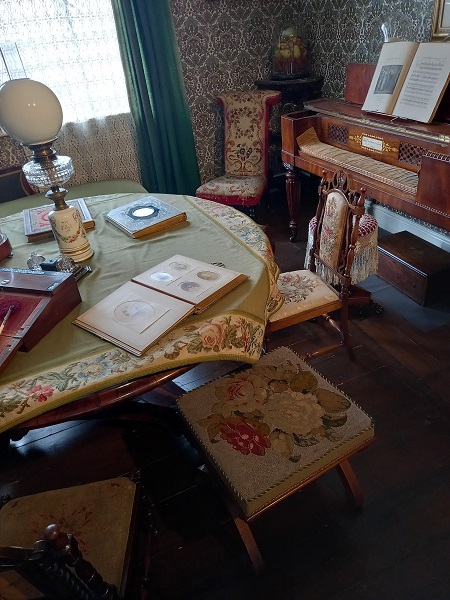
My favourite room was the Victorian parlour, partly because of the sheer amount of needlepoint in there 🙂 So many wonderful pieces all crammed together. I particularly loved the embroidered book covers. I can just imagine groups of stitchers sitting around a table like this, sharing needlepoint patterns and deciding on their next projects.

I appreciate why some things have to be kept in glass cases, it must be a conservation nightmare to cope with all the dust in these rooms, but it so nice to see things in situ and get a sense of people’s lives with these objects. As proved in my previous post, there is no guarantee that the glass case is going to be safe from things like pesky wasps anyway!

I stayed at the Norwich Caravan and Camping Club site, partly chosen as it was within walking distance of a bus stop into the city. By coincidence, as I drove into the site, I spotted another almost identical van to mine, and the owner Terri, came to say hello the next day and gave me a quick tour of her van. She has a modified boot jump and uses curtains so it was very interesting to see her set up. Her van is on the right below.

I am starting to finalise my plans for next year’s travel. I am leaving Spain in 5 weeks, and am going to be doing a combination of UK visiting friends and family and warmer weather destinations. One of the things that I have just booked though is a ticket for another van life show, next September. I couldn’t make it this year, but am really looking forward to meeting many more micro camper owners and sharing designs and stories. I have had such an amazing year of travel, and meeting lots of different people in all types of vans, tents and caravans. It has been brilliant, everything I dreamed of for my retirement. I am so lucky to be able to have this life.

I have also made a list of all of the blog posts I am going to do about the summer’s adventures and there are another 19 to go. That should take me nicely up to when my adventures start again! Thanks to everyone who follows me, likes, and comments, it is very, very much appreciated.

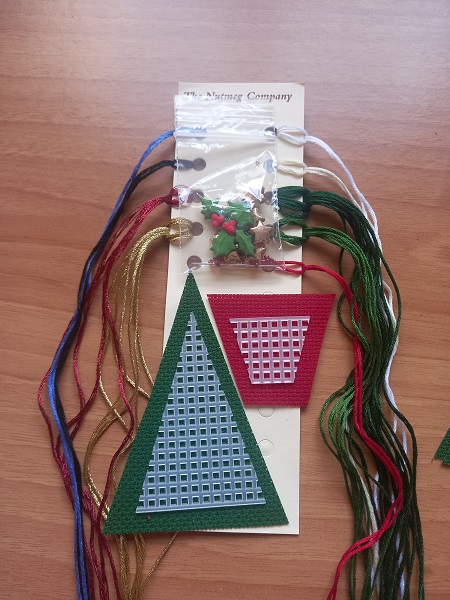
Although I have missed the date, (again!), I have just had my 16th blogaversay. It is appropriate that my very first post, as to be expected from the 2nd Dec 2007 was about Christmas ornaments, as that is what I am going to be stitching this afternoon, before going on a coach trip to see the Christmas lights in Alicante. I now have around 1700 visitors every month and 437 subscribers! This is my 938th post, so we will have to have a big celebration when I get to 1000 sometime next year.

Meanwhile I hope that you are all well and enjoying life, whatever you are doing have fun, take care, stay safe, and thanks a million for visiting!
Well worth the twenty year wait!
I am very pleased to tell you that I did get to view the Marian Hangings at Oxburgh Hall, later on in the month that I was in Norfolk. You may recall that I took a trip with my friend from Spain, Linda, when I was camping at Sandringham, only to find a notice at the entrance to the hall saying that they had gone for conservation.

No-one knew at the time when the hangings would be available, as they were waiting to hear from the textile conservation team at the Victoria and Albert Museum in London. The hangings are in their care, but are loaned to Oxburgh.

Later in the month, when I had moved on round the coast, my lovely friends Allison and Alistair, who were one of the reasons that I went to Sandringham, as they are working on the neighbouring site as wardens during the summer, visited the hall, and sent me a photo of the hangings. They were back! Or so I thought. I was able to fit in another visit to Oxburgh on the way back to Huddersfield for my reunion.

When I arrived at the hall, the volunteer greeting me asked if I had been before and told her about how sad I had been about not seeing the hangings the previous visit. It turns out that they had not been removed from the property. There had been an infestation of wasps, who had built a nest inside the glass casing that houses the hangings! The team from the V and A were going to take the hangings away at a later date, but were very busy, and as the damage was thankfully minor, the house staff had been able to open the room again.

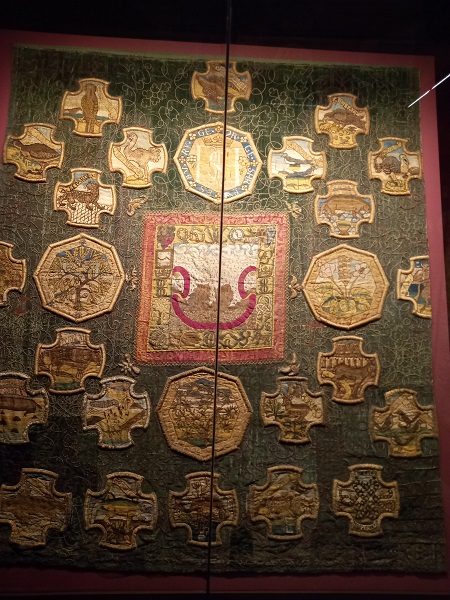
It was a very lucky escape for the hangings, and I am so grateful to be able to see them. These are one of the most significant pieces of needlework in the UK, not only because of their age, but because of their provenance.

That they were stitched by Mary Queen of Scots is interesting enough, but that they were stitched during her captivity in England, designed by her and Bess of Hardwick, and that we know so much about these two women, their needlework, and their inspiration for the designs, is hugely significant. Because of their importance, a lot of research has been done about them.

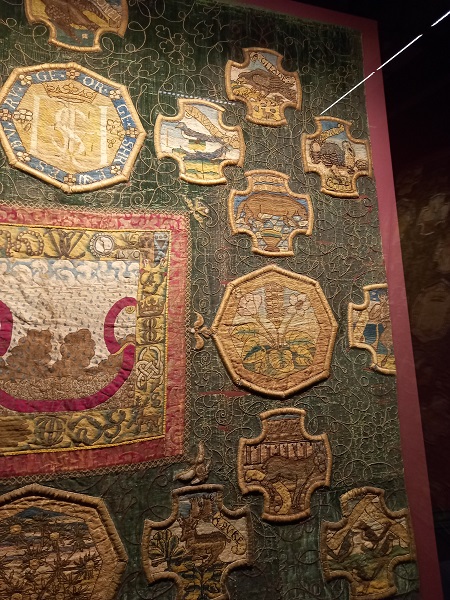
The hangings at Oxburgh are the companion set of embroideries to the needlework at Hardwick. Those at Hardwick are not attached to background fabric. Many of them are framed in screens, and this work was done by Evelyn Cavendish, the last owner of the house before it was given to the Trust. In total there are over 100 embroidered pieces between the two locations, and it is thought that they were originally meant to be assembled on one piece of cloth.

There may have been other people stitching these pieces as well as Mary and Beth, it is known that Mary had embroiders with her, and Bess employed embroiders as well. What is certain is that the overall project is very much about the two women, their lives and experiences. Thus it forms a very significant record of, not only their skills, but their challenges and inspirations.

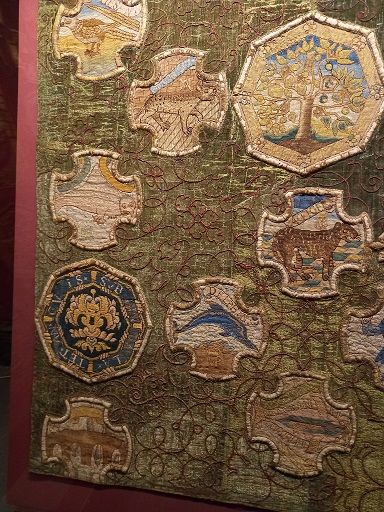
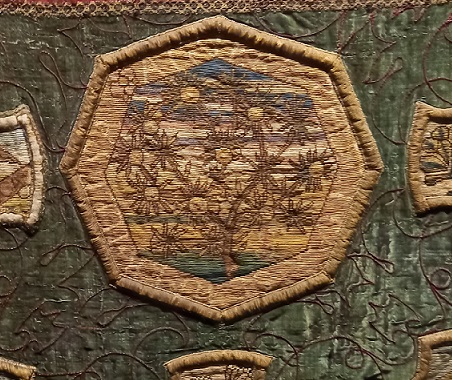
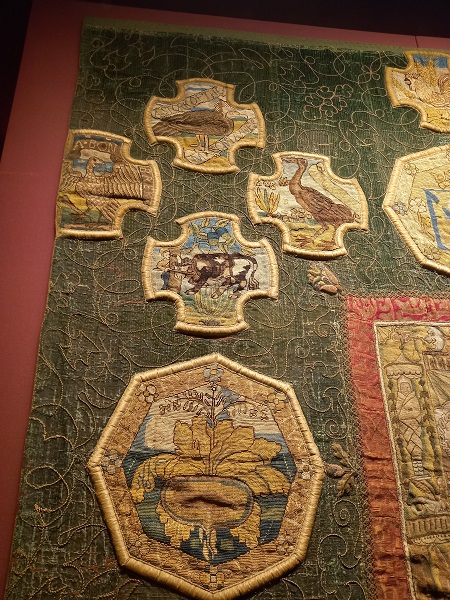
So many of the pieces are symbolic, and portray both icons that we would recognise, such as animals from illustrations, and tales such as those from Aesop’s Fables. Others are more complex, and textile historians have been left to try and unpick their meaning. Many of the pieces have mottos, or have been designed to portray something specific, particularly in Mary’s work, where recurring themes of imprisonment and loss are evident.

It is thought that this choice of a dolphin or delphin is linked to her marriage to the Dauphin of France, as the words are similar. In the piece she has ‘signed’ herself as MR with a crown, even though at that point she had lost her crown in both France and Scotland.

While she was working on these needleworks during the early years of her guardianship by Bess and her husband, George Talbot, Earl of Shrewsbury, Mary was clearly reflecting on the traumas that had brought her to her current situation, and how she could maybe get back to Scotland, her son, and her throne. Sadly that was never to happen, and after many years imprisoned in England, she was executed at Fotheringhay Castle.

I love this quote from the book.

‘In the sixteenth century, women’s writing and embroidery were seen as interchangeable, each a medium of female thought and emotion, each carrying the ‘hand’ of their author’.

I think that is true of women’s textile work in any era, the pieces we make are chosen to express ourselves in different ways, to convey our favourite colours and designs, to celebrate and to commemorate, and to pass on our love to the recipients.

It is thought that Bess’s granddaughter, Aletha Talbot, stitched the pieces to the bed hangings. This means that they are not in the order that the original stitchers intended them to be in, and does mean some of the cruciform pieces have been cut off to fit the hangings, as you can see here.

The hangings arrived at Oxburgh in 1761, when Mary Browne married Richard Bedingfield, but no-one knows how she got them. It is fascinating to think where they might have been in the years since Mary’s death, and how easily they could have been lost forever. They were used as bed hangings until the sale of the house in 1950.

As you know if you are a regular reader here, I am working on my first novel, which is set around Hardwick Hall and one of Bess’s companion needleworks. So I am particularly interested in these pieces. I have read many articles about them, as well as biographies of Bess, and done some other study online, such as this excellent free course from Future Learn, The Life and Afterlife of Mary Queen of Scots. I can recommend this as being a really good exploration of Mary’s life, if you are interested.

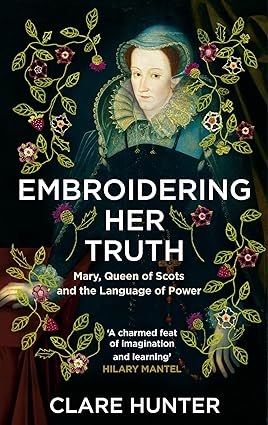
My latest read, which I am absolutely loving for its detail about Mary’s textiles, is by Clare Hunter and is called Embroidering her Truth: Mary Queen of Scots and the language of Power. This is an excellent read, with a wealth of detail about Mary’s life, clothing and needlework.

I also have Clare’s other book, Threads of Life: A History of the World Through the Eye of a Needle which I am looking forward to reading next.

There is also another book about Mary’s embroidery by Michael Bath, called Emblems for a Queen, but at £167 on Amazon, I will have to try and find a library copy somewhere!

We have had a very lovely couple of workshops at my sewing group, I posted about the ribbon flower one last time, and this week I led one using fabric applique before embroidery, based on the wonderful designs by Jenny of Elefantz. It was brilliant to see everyone enjoying themselves, and sharing our skills, I am so lucky to have met this very talented group of women. We have more workshops planned before Christmas as well so I will have to slot in a catch up post with all of the textile happenings in Spain in between the summer catch ups.

I hope that you have all a good week, and are not too cold where you are. Friends are posting snowy pictures from Yorkshire and I am glad not be trying to negotiate getting out of the village to get to work, as I used to have to do at this time of year! See you all again soon, meanwhile have fun, take care, stay safe and thanks for visiting.

More Jacobean splendour, and a crafting update

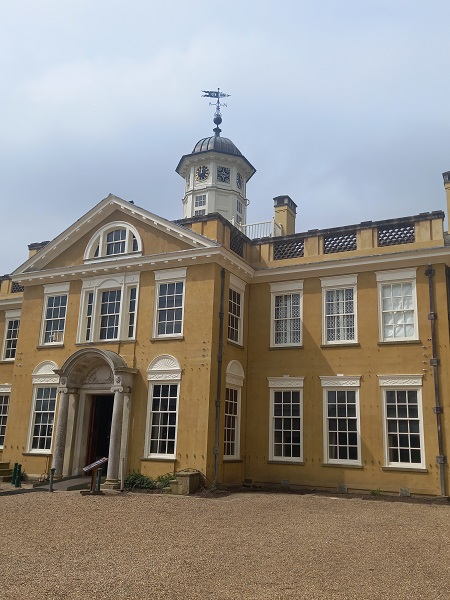
There are many houses that I have visited that look very similar to each other. Sometimes, as with Hardwick and Wollaton Hall, as well as Gawthorpe, it is because they were designed by the same architect, Smythson. Others are similar as they were built in a style that was fashionable at the time.

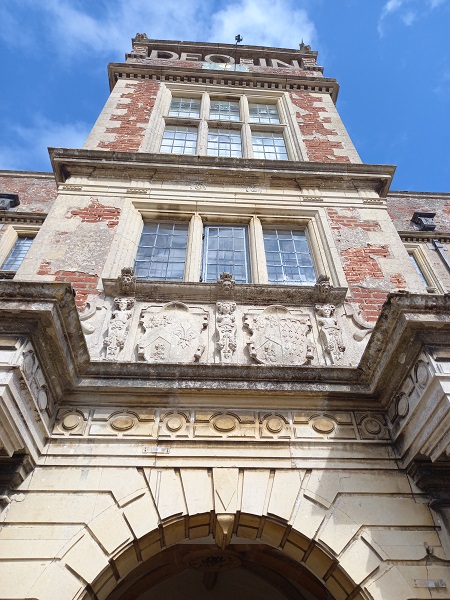
To me, Felbrigg Hall, near Norwich, looks very similar to Hardwick, particularly the top of the original façade.

You may notice, if you are familiar with Latin, that the carving on the top of the hall reads differently to how you might expect it to. We are familiar with, ‘Gloria in Excelsis Deo’, partly from the hymn of that name. The phrase means, ‘Glory to God in the highest’. The carving at the top of the house reads, ‘Gloria Deo in Excelsis’. I am not sure why this is, and neither was the guide. it may be that was a more familiar phrase when the house was built.

The hall was extended, so it has a very different feel at the rear, far more Baroque in style. The original part of the hall was my favourite, partly due to the stunning ceilings again. I am not sure if this one was originally Jacobean, or from the remodel they had later but it it very beautiful.

The hall was full of books, and beautiful works of art, collected by the family on their travels, and they had remodelled rooms to display their collections of stained glass and art, as in this room, specifically decorated to look like an art gallery.

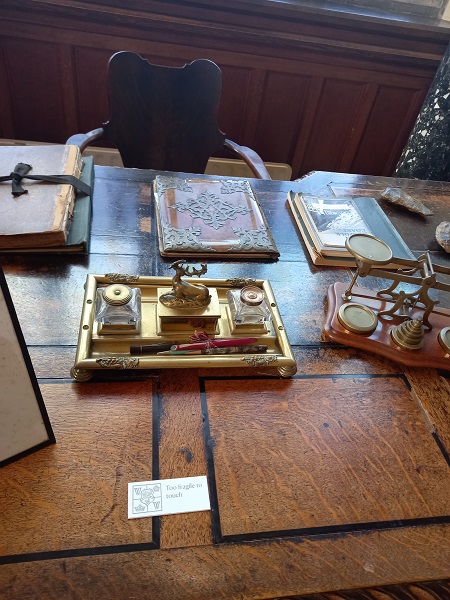
The last squire of Felbrigg, Robert Wyndham Ketton-Cremer was a keen historian, and I thought that one of the loveliest things in the house was his desk.

I particularly love that book with the beautiful cover. I have visited so many fantastic places this summer, but have had to stop myself from buying notebooks at every one, I already have too many unused, but I do love a gorgeous notebook. I can just imaging him sitting in his sunny study writing using that gorgeous inkwell.

I love the human touches in these houses. More than the grand paintings, or the splendid architecture, the thought of someone sitting in the rooms, and appreciating them, is wonderful. As Robert had no heirs, and his younger brother died in WW2, he made sure that the house was safe by passing it on to the Trust in 1941. There are also gorgeous gardens, including a very colourful kitchen garden.

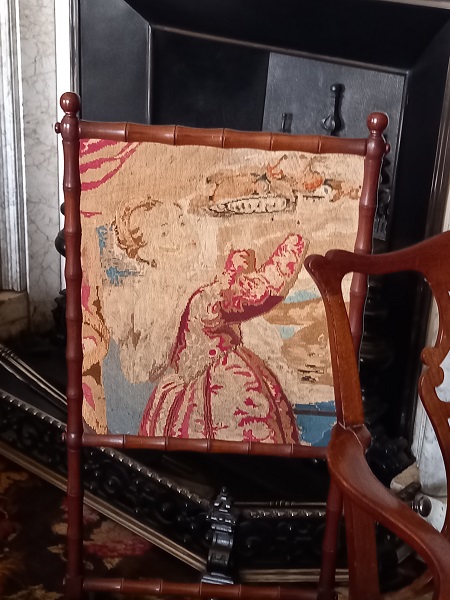
As for textile treasures, I think the prize has to go to these two lovely fire screens in one of the library areas, now sadly faded, but what hours of work must have gone into these.

They look like the sort of thing that would have been bought in kit form, possibly late 1800s, but I am guessing as there was no provenance. They have a look of the kind of paintings people saw on their Grand Tours, then replicated for use in their houses.

I had an amazing time in Cordoba last week, so many things to show you, but I must stick with the timeline and finish the UK posts before I even get to the wonders of France and Spain. It is now probably only little day trips in Katy until end of Jan, so I will have plenty of time for updates on a more regular basis. Katy is loving being in the sunshine, and driving around La Marina, and I am loving the freedom to travel to all those places that are too far for my bike.

I have been busy with some finishes. I have finally put together a set of reindeer for a friend who really loved the ones I did for the fundraiser last year. These I have named Rudy and Ruby.

This year’s fundraiser will be a knitted mouse, I have been knitting dresses while I have been away, so just some shoes to finish and the making up to do.

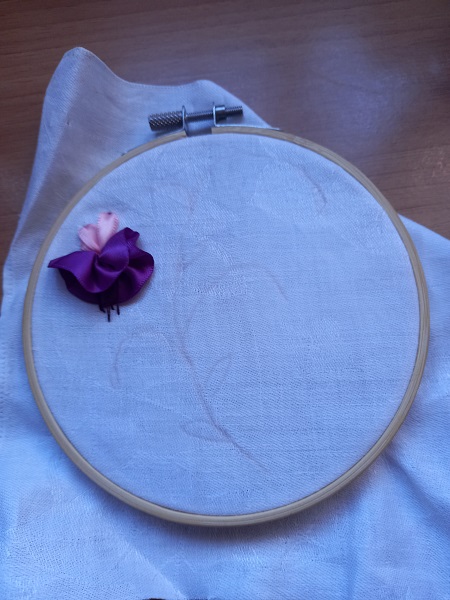
It has been great to be back at my knitting and sewing groups and catching up with everyone, and practising my Spanish again! We have had the first of a few workshops that we are having this ‘term’, a ribbon embroidery one led by Vivien. I didn’t get it finished, but am pleased with what I did.

I am running another embroidery workshop next week, this time with added bits of fabric applique. The lovely thing is that a couple of people who have never embroidered before the last one really enjoyed it, and have been doing lots more over the summer. These are Lynne’s mandala designs which are fantastic, especially as she had never stitched before. She has used children’s colouring books and traced the designs, as they are a great source of inspiration.

It is still sunny and warm here as well, unseasonably so as it has been around 24 degrees this week. Apologies to all my UK friends and family who are freezing, damp and cold!

I had a very nice, and unexpected visitor last week before going to Cordoba, a fellow van owner, and solo traveller, Debbie, who I met in the summer at a festival in Worcester. She was in my area, on her way to Morocco, so she spent a few days parked up at my house, enjoying, and hiding from, the 29 degrees we had that week. It was brilliant to see her, and I am following her adventures now, as she has just arrived in Morocco. That has been one of the very best things about my travels this summer, meeting so many other people who enjoy van life as I do. Being at home is great, but I still have very itchy feet 😉

I need to stay in one place for a while though, if only to have time to plan the next trips! I will be back soon with more of my textile related adventures in Norfolk. Hope you are all having a good time, wherever you are. Have fun, take care, stay safe and thanks for visiting.

Bridgerton settings and the case of the missing hangings

I had planned to visit Belton House anyway en route to Norfolk, but was even more keen after Ellen told me it was used in the recent Bridgerton prequel about Queen Charlotte and King George.

I loved that series, not only for the costumes, which are always fabulous, but also loved the sets. I am one of those people who always wants to know where things are filmed. Thank God for Google so I can find things and add them to my list of places to visit.

Ellen’s friend, Nancy, was actually there while they were filming as she used to work there. The location they used was the beautiful conservatory, which became George’s observatory.

This is located at the back of the gorgeous Italian garden behind the house.

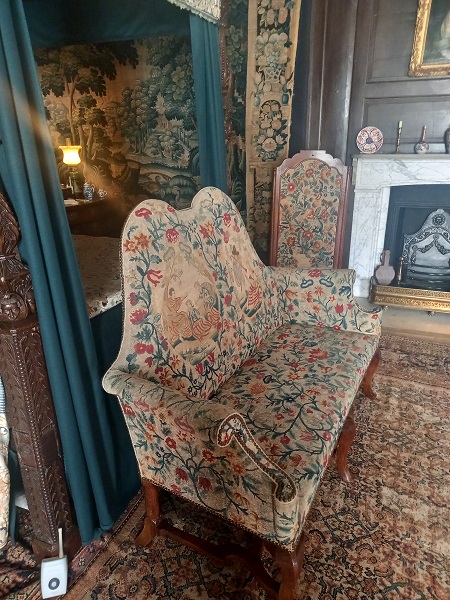
Inside there were some beautiful examples of furniture, including my favourite, needlepoint chairs, and as is common with these era houses, a Chinese bedroom.

One of the main reasons for visiting Norfolk apart from a reunion with some former work colleagues, was to visit Oxburgh Hall. I have wanted to go for about 20 years, ever since first visiting Hardwick, as this is where the companion stitching to the ones there by Bess and Mary Queen of Scots are. Except ….

I had met up with my friend Linda from Spain, who was staying nearby with relatives. We did have a very lovely day out, despite the lack of hangings! It is a stunning moated property and it has been beautifully restored.

There were some very gorgeous Elizabethan era portraits, I love the lace in these. The whole house was so ornate with painted ceilings and leather wallpaper.

I will have to try and organise another visit to see the hangings, hopefully before another 20 years is up!

The rest of the week at Sandringham was very peaceful, I spent a lot of time with my friends which was lovely and quite emotional. Sadly the School of Education, where I worked for 20 years, has been closed and many people have lost their jobs. I feel so sad for my colleagues, who have always worked so hard and wish them all the best for the future.

I will be back soon with more of lovely Norfolk, it has been so nice to have time to explore and I have been lucky to have mainly very good weather. Until next time have fun, take care, stay safe and thanks for visiting.