Some very different kinds of ironwork

One of the reasons that I love living in Spain,  and visiting Spanish cities, is all the amazing ironwork on the balconies. All of our houses have some kind of protective grilles on the windows, and these and the gates are often quite ornate.

This is often a feature of the country houses I visit as well, with grand staircases and balconies, and I love all of the amazing artistry that can be created out of metal.  Having seen blacksmiths at many medieval events I am always in awe of their work.

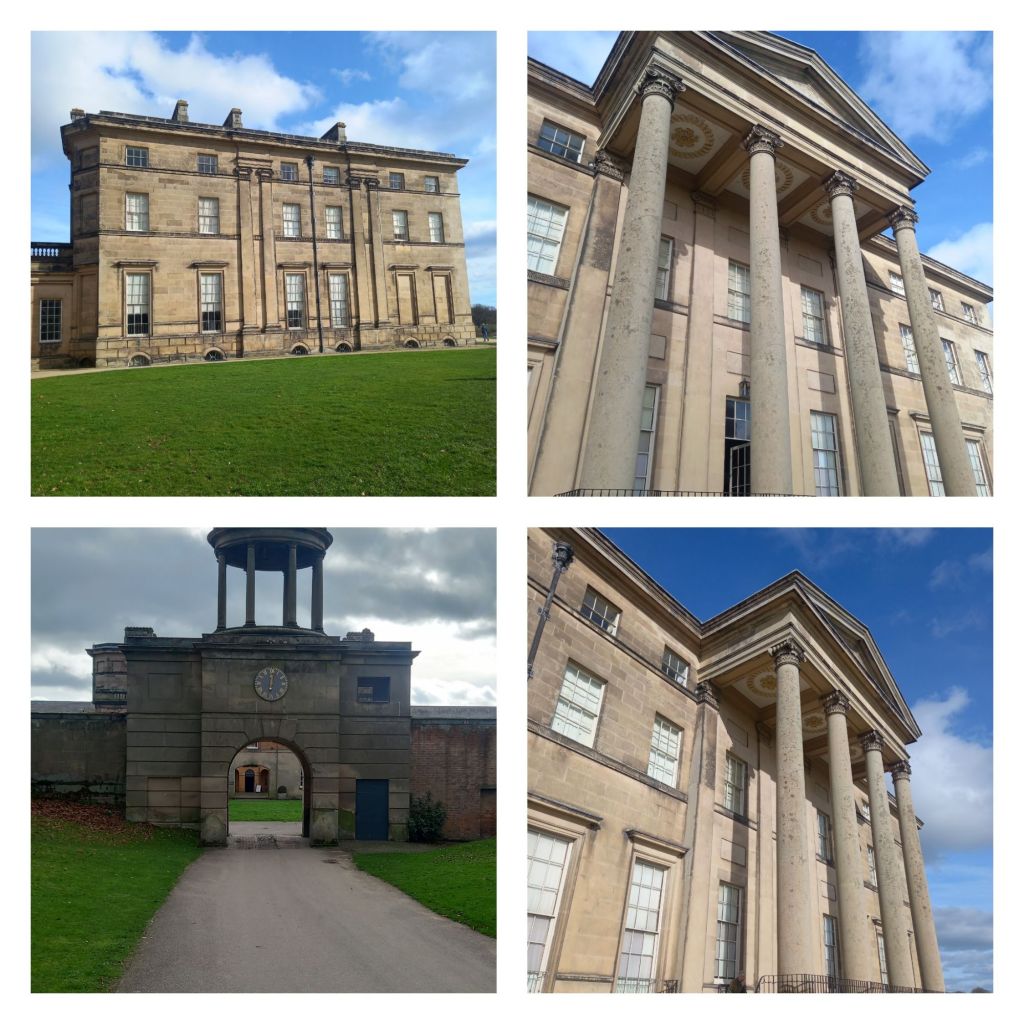
One of my days on the way to Scotland, via  a visit to a friend in Wales, involved driving through Shropshire,  a county I need to spend more time in as it is so beautiful.  I drove from Ellen’s across to Attingham Park firstly, another Trust house that has been on my wishlist for a long time.

It is no coincidence that this area is famous for its metalwork, with the heritage centred around Ironbridge and its famous crossing by Thomas Telford, such a wealth of industrial heritage.

The owners of Attingham must have been well aware of the developments in industry only a few miles away. Though their house reflects the arts more than industry, the house, built in 1785, epitomises the era so well.

Thomas Telford, a Scot born in 1757, would have been at the peak of his career as an engineer.  It was in Shropshire that he made his name as an engineer, working on canals there.

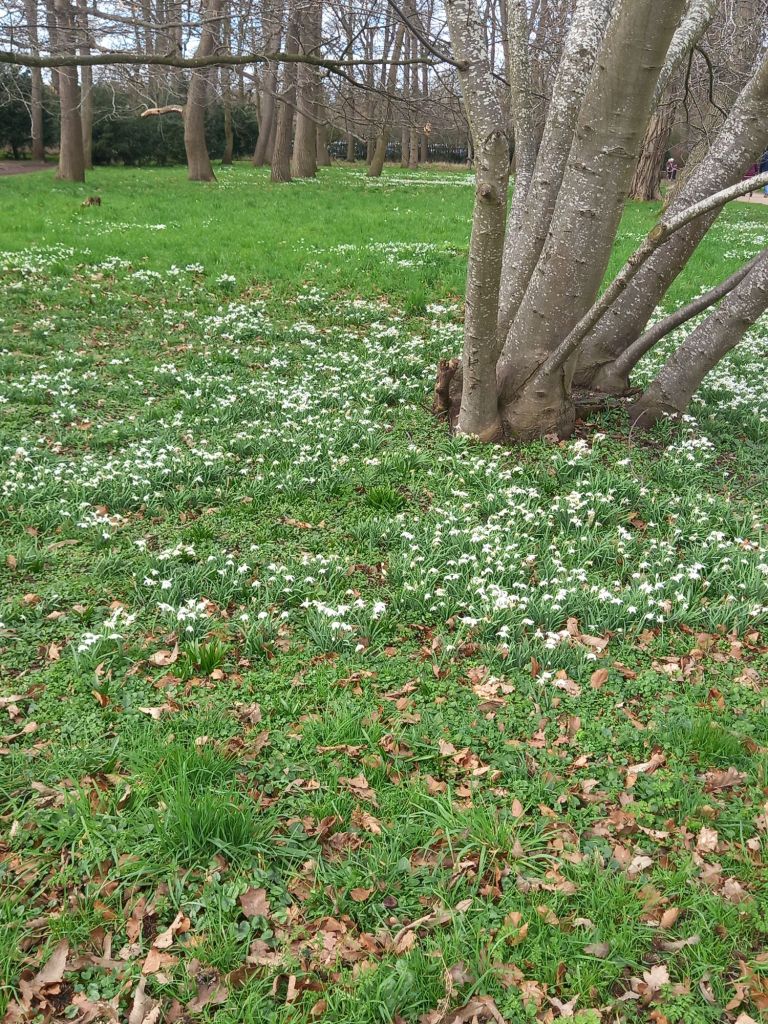
It was a beautiful day for a visit, I was very lucky to have a sunny February day, and all the snowdrops were in bloom.

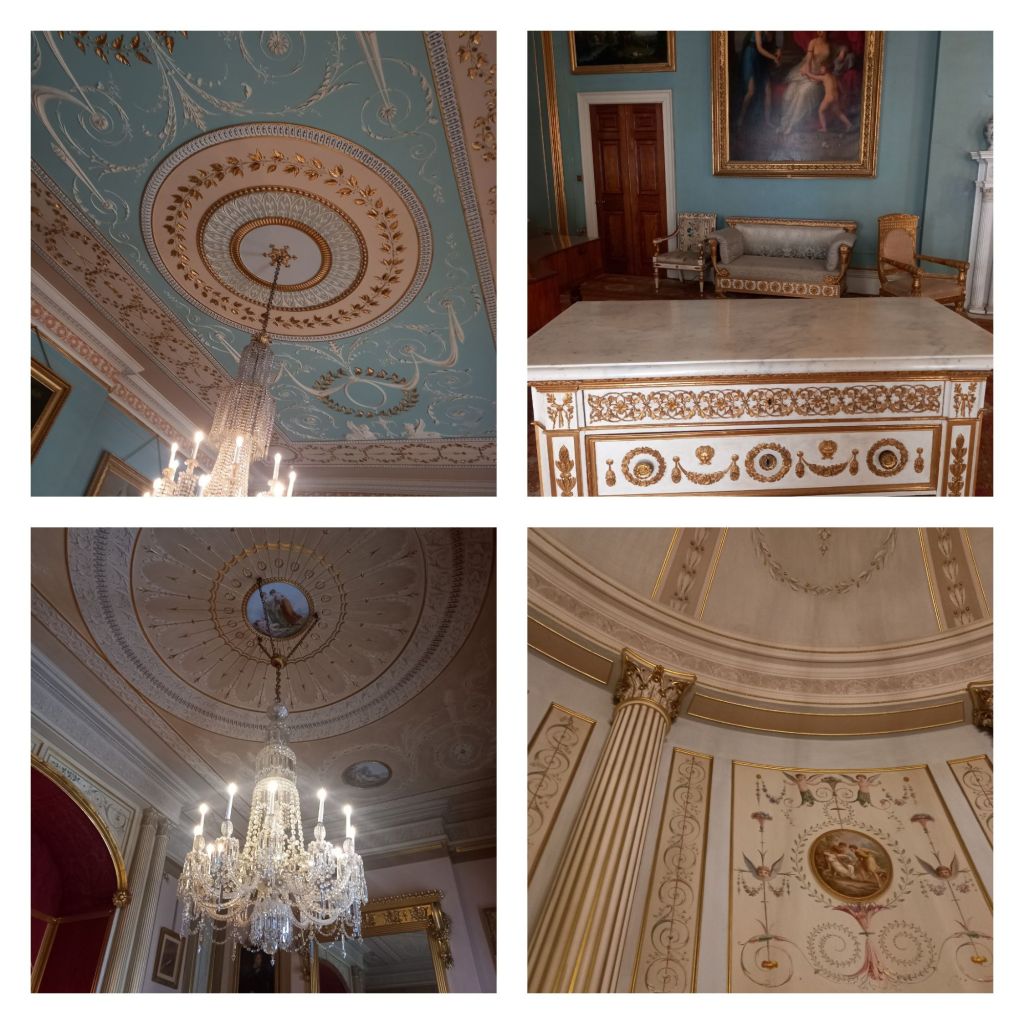
The interior of the house was beautiful,  with some stunning decoration. This blue and gold room was one of my favourites.

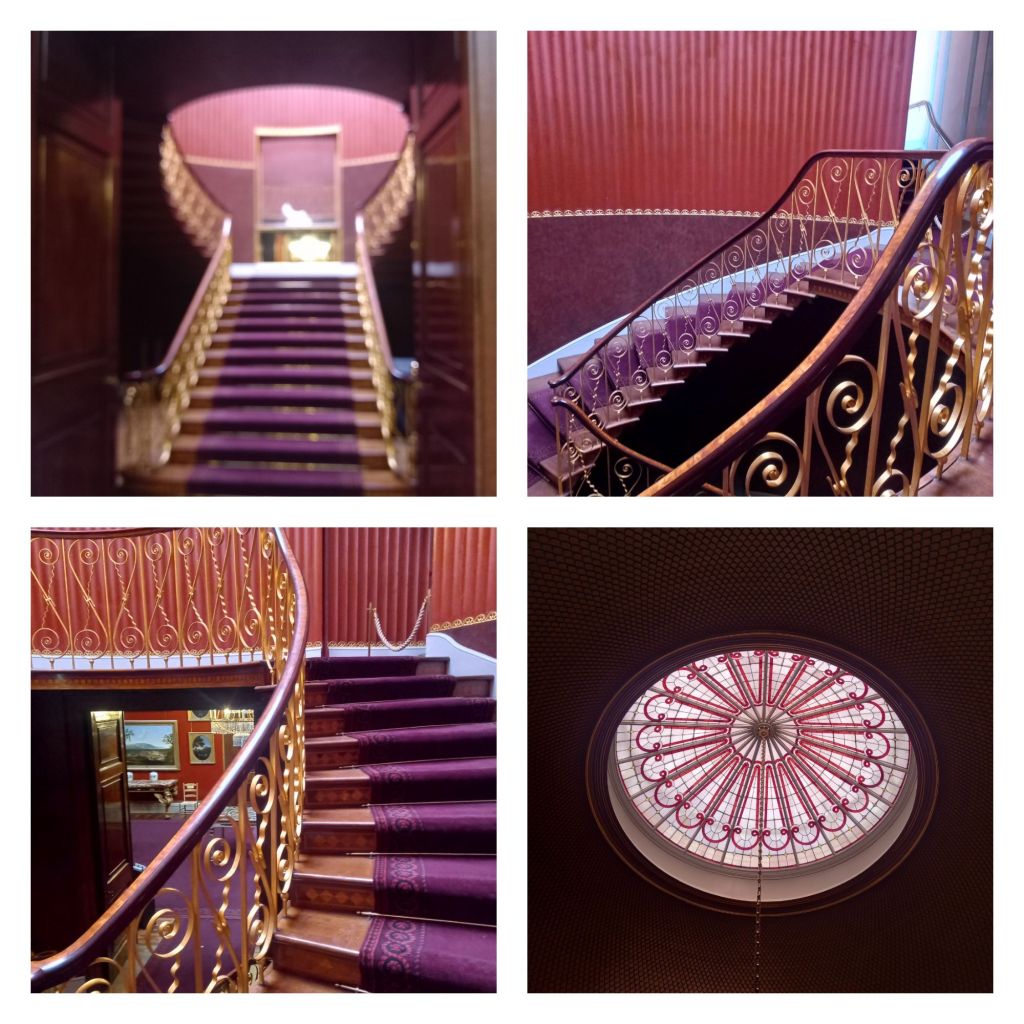
I loved the art gallery space though, built for entertaining with an impressive ironwork staircase to the upper floor, showcasing a wonderful window.

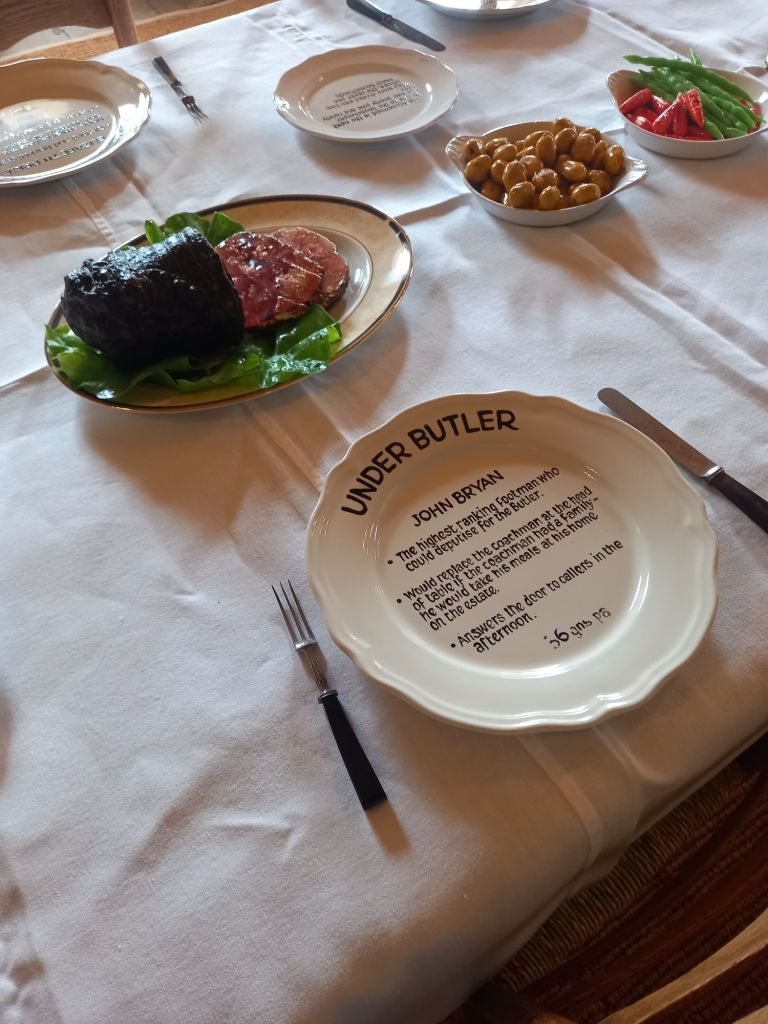
The servants’ quarters were also interesting, I really liked the interpretation via the dining table, showing wages and duties.

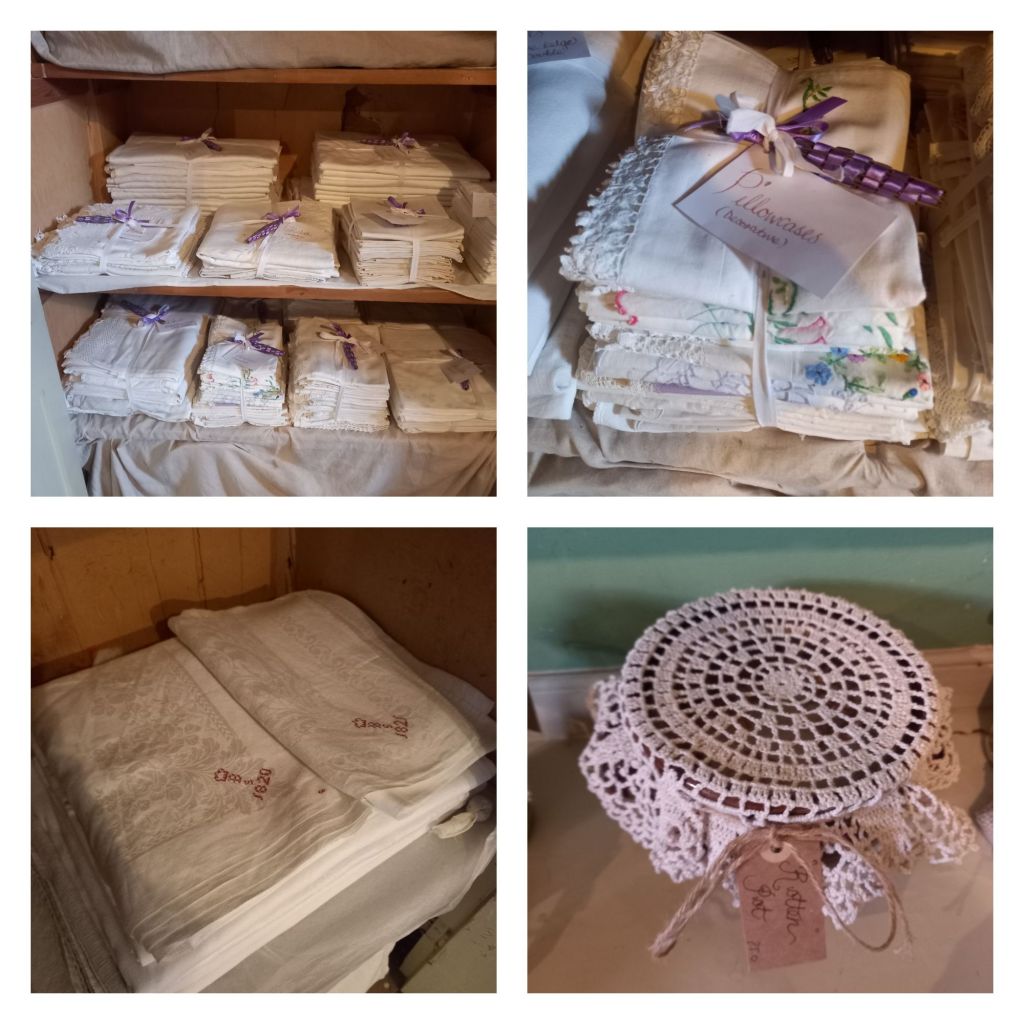
They also had the very best organisation of the linen cupboard. Look at these beautiful pieces all carefully folded, with ribboned lavender. 

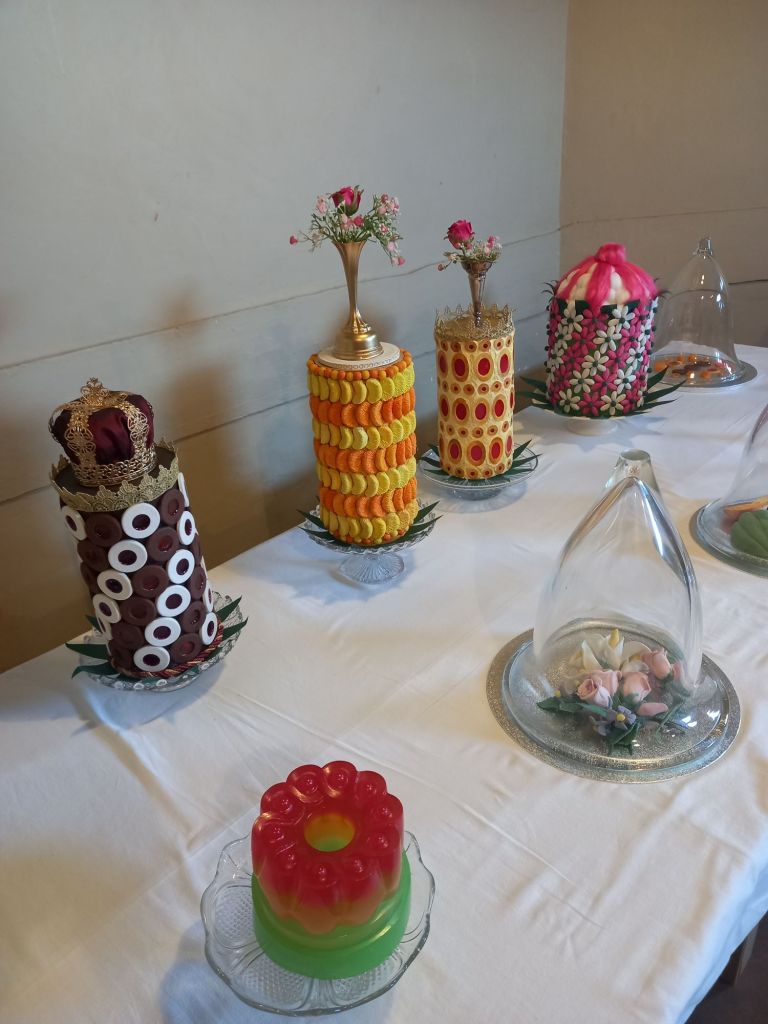
I loved the recreations of the ornate desserts as well. The house had a dedicated chef just to make these.

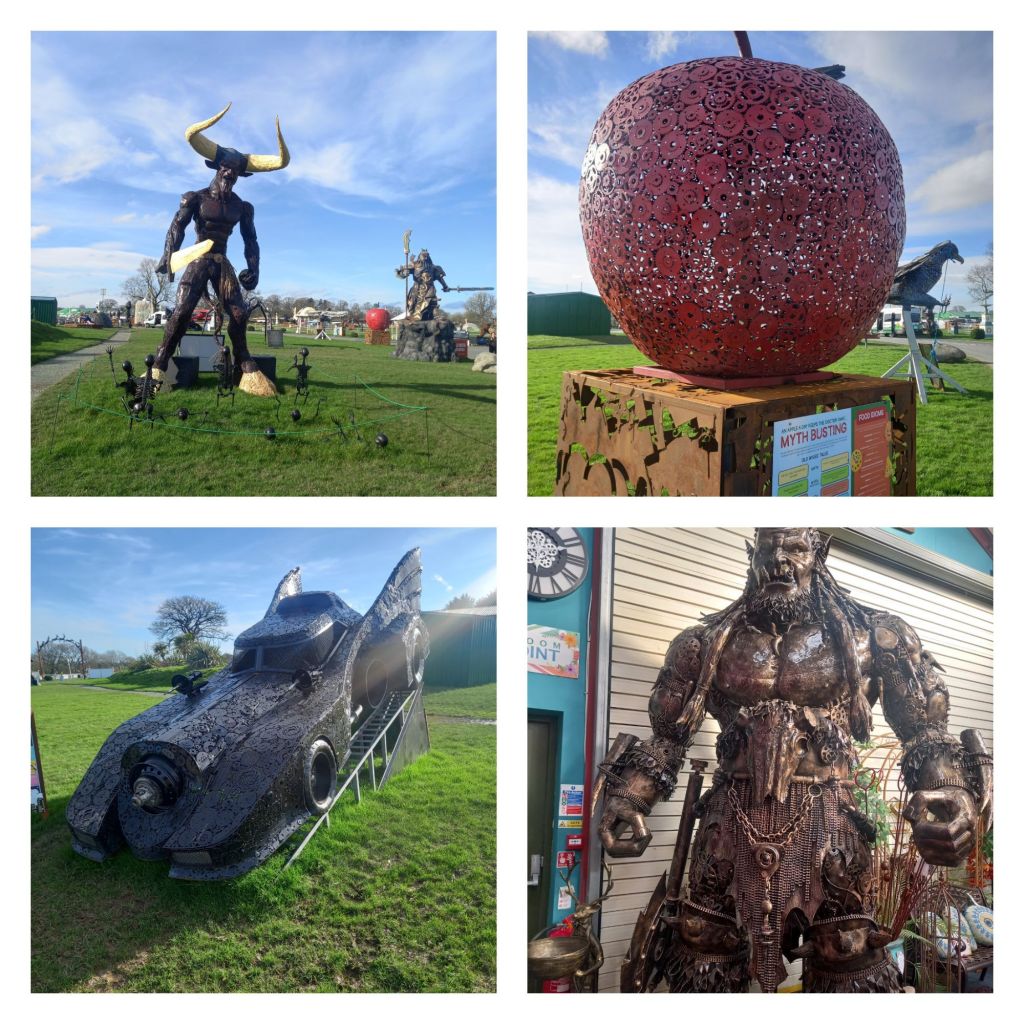
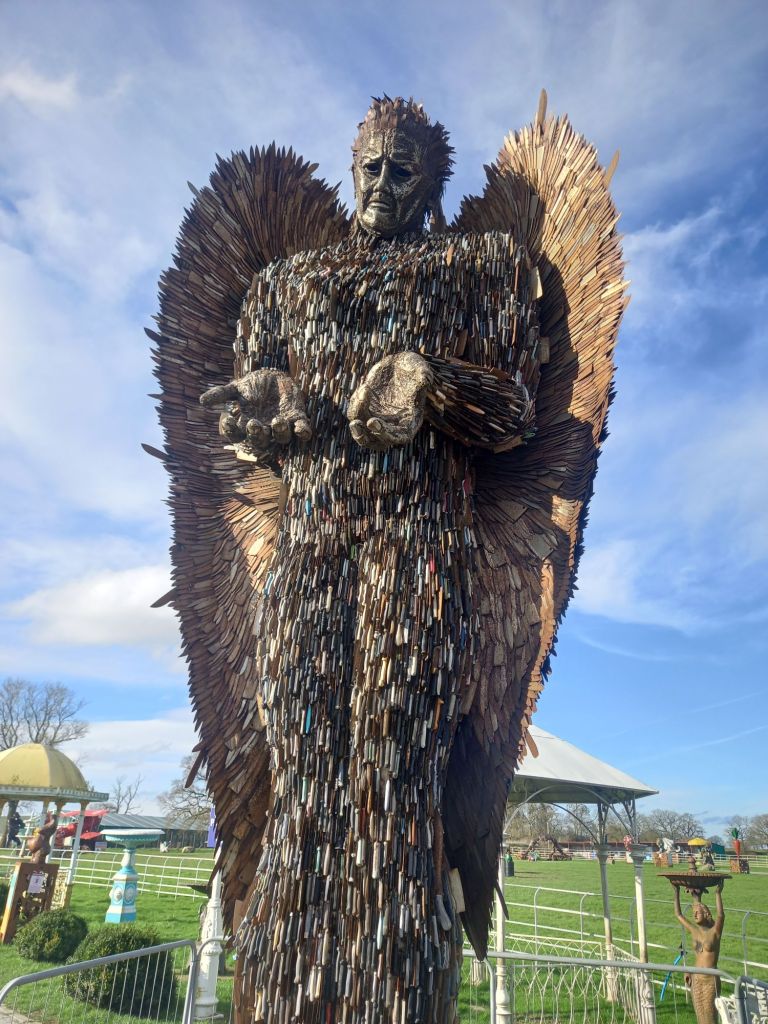
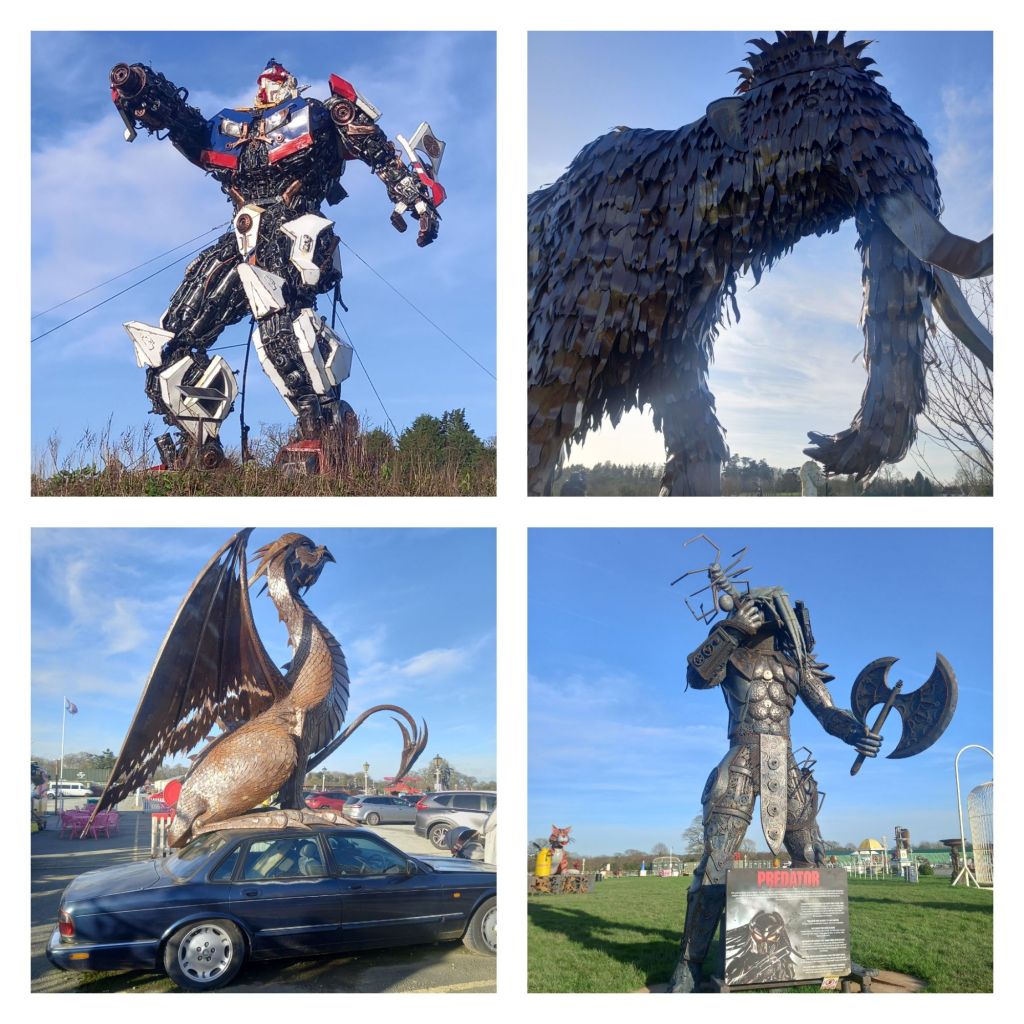
My second stop was somewhere that I have had pinned on my map for a while. It is an open air gallery, based at the British Ironwork Centre, near Oswestry. 

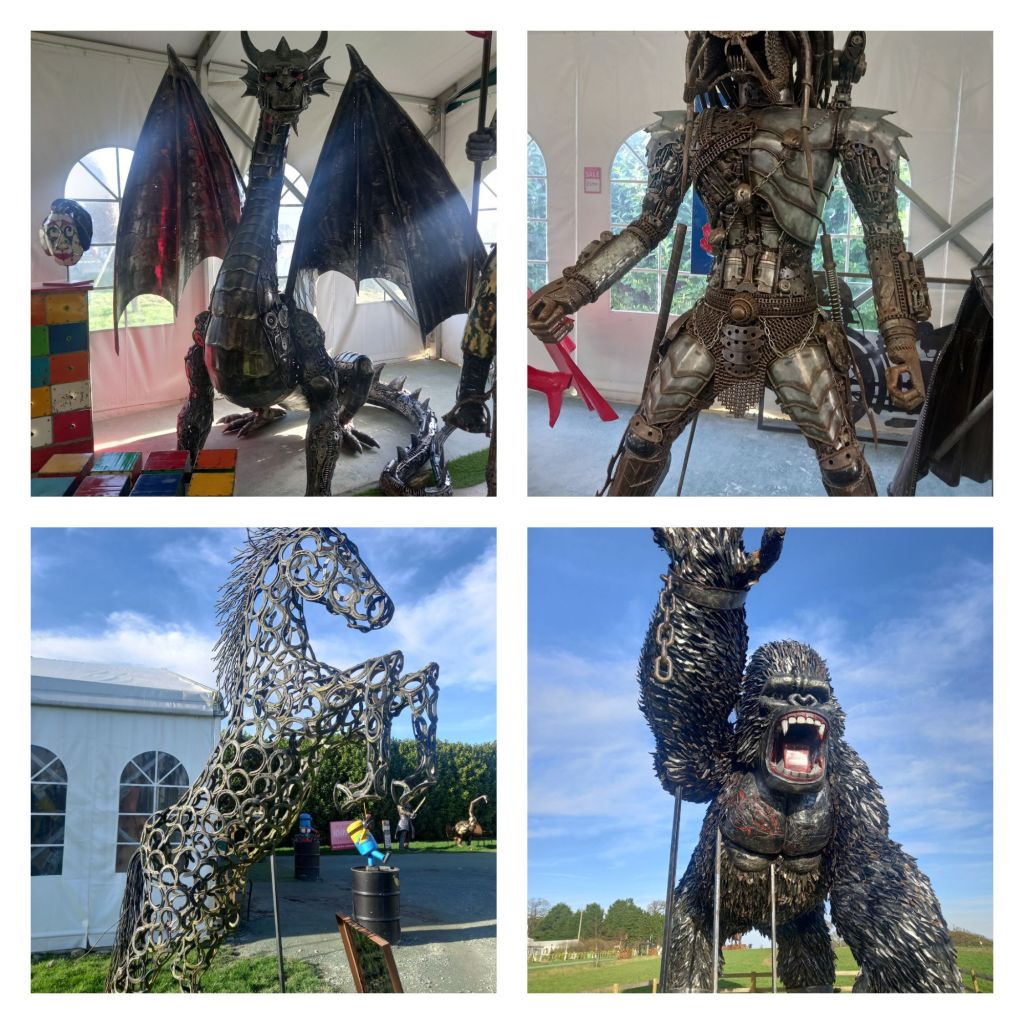
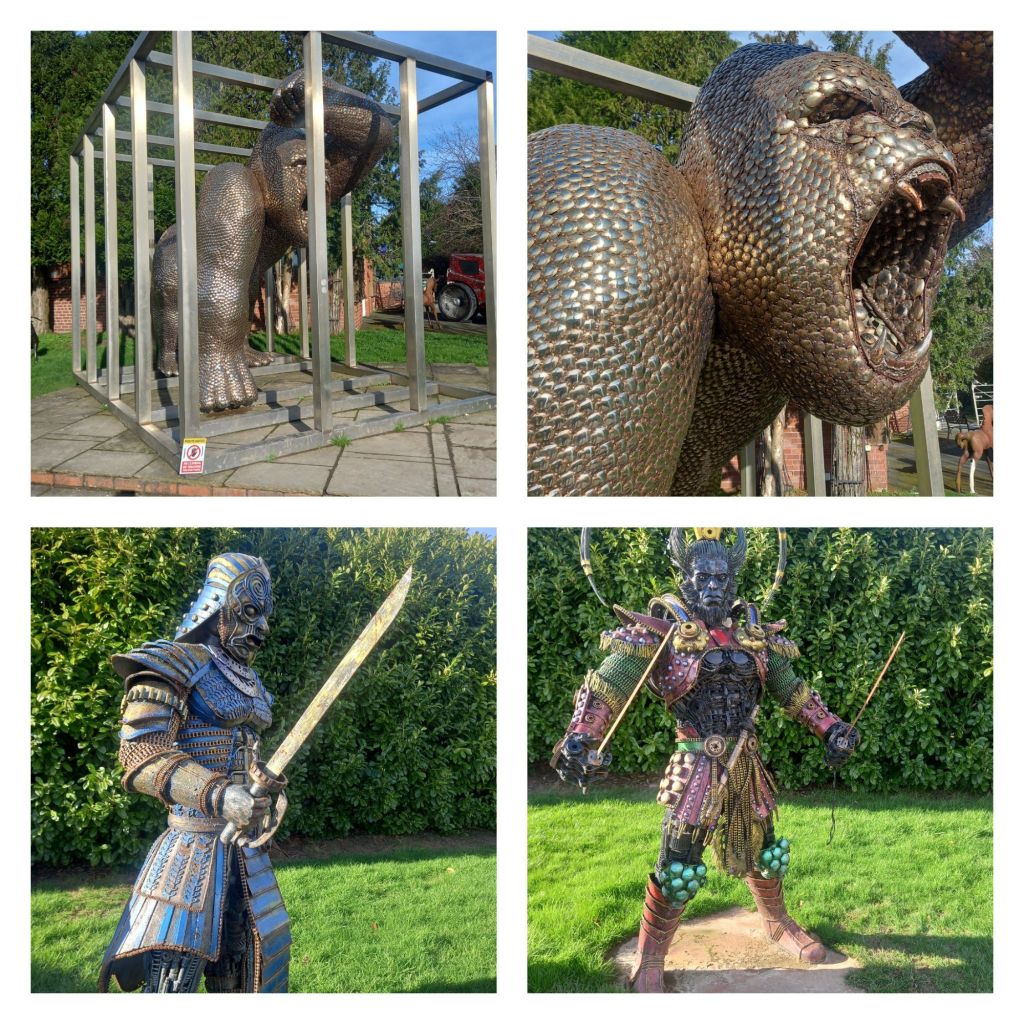
They have the most incredible pieces, mostly made from recycled materials, showcasing ironwork as you have never seen it before.

The scale of some of the pieces is incredible, and the work that goes into them just amazing.  This gorilla is made from teaspoons.

I had seen the Knife Angel some years ago, when it was on display in Worcester.  Made from knives donated during a weapons amnesty, it has been toured to raise awareness of knife crime in the UK.

Most of the pieces have a message, there is a strong theme of environmental responsibility throughout the artworks, which makes it a fantastic place to visit.

Life here on the campsite continues to be very busy, we have been full for weeks, although it has been a little quieter this week. I have also had two visitors, so feeling very blessed that people will come all this way to see me, and the wonders of Scotland of course!

The weather has been very variable, from 24 degrees for my first visitor,  to 12 and raining for my second. We have still been out enjoying ourselves though, just needed our big coats!

I am also meeting some other friends this afternoon who are in the area, then will be making the most of the rest of my day off doing some weeding in my garden, if the rain holds off!

Hope you are having fun whatever you are doing, take care and

Fashion Icons

Although I wouldn’t consider myself a follower of current fashion trends, mainly due to living most of my life in camping trousers and fleeces 😉 I am interested in historically inspired trends, and of course in historic fashion itself.

I have enjoyed researching medieval fashions as as re-enactor, and Victorian ones for Steampunk costumes. I really enjoy interpreting things for my own dressmaking, and so the second exhibition we saw in London was brilliant due to its combination of the old and the new.

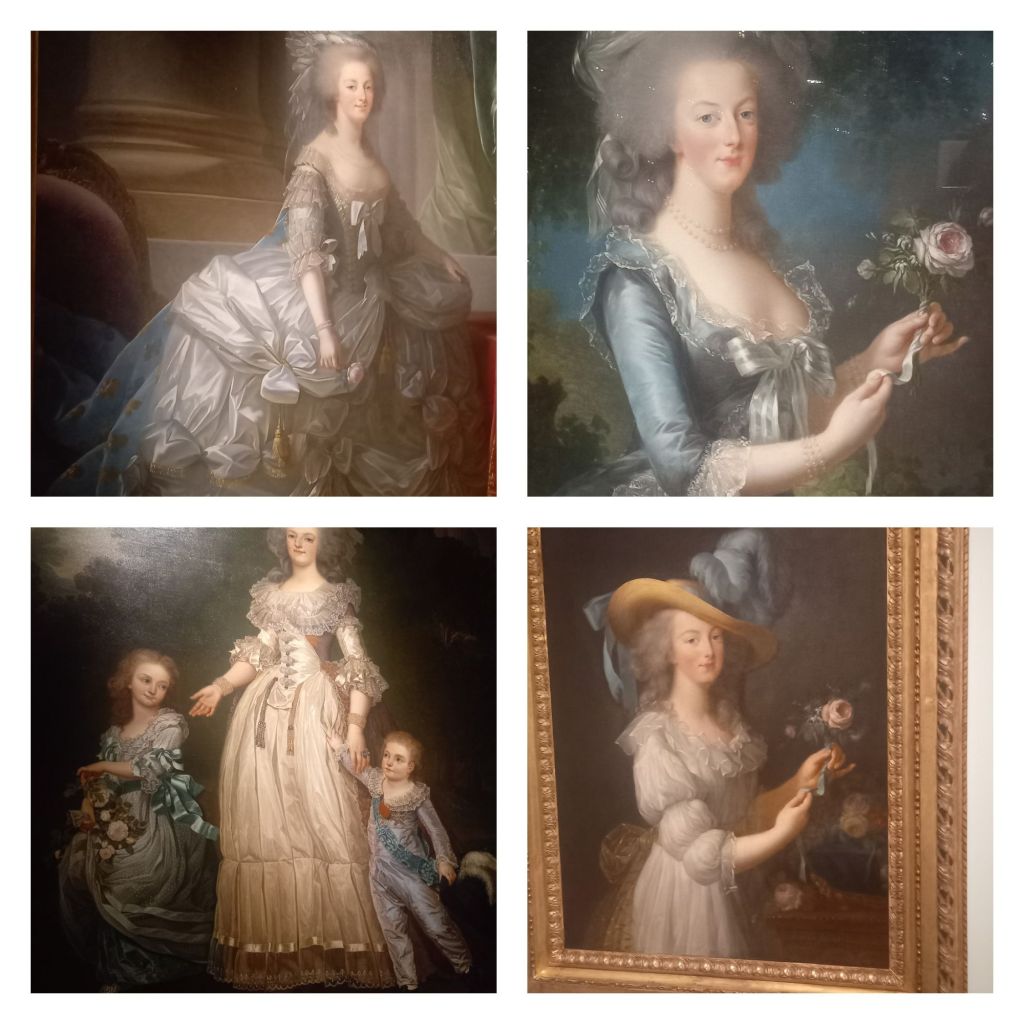
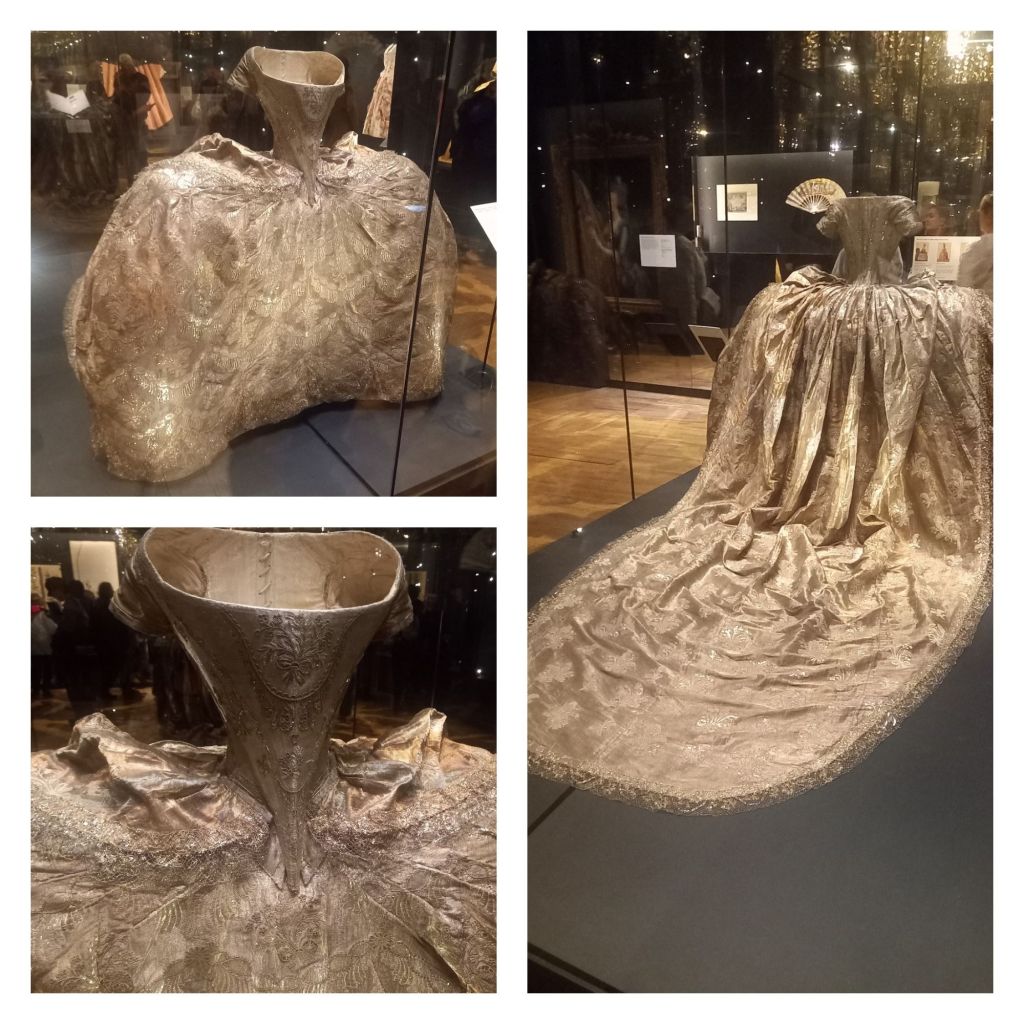
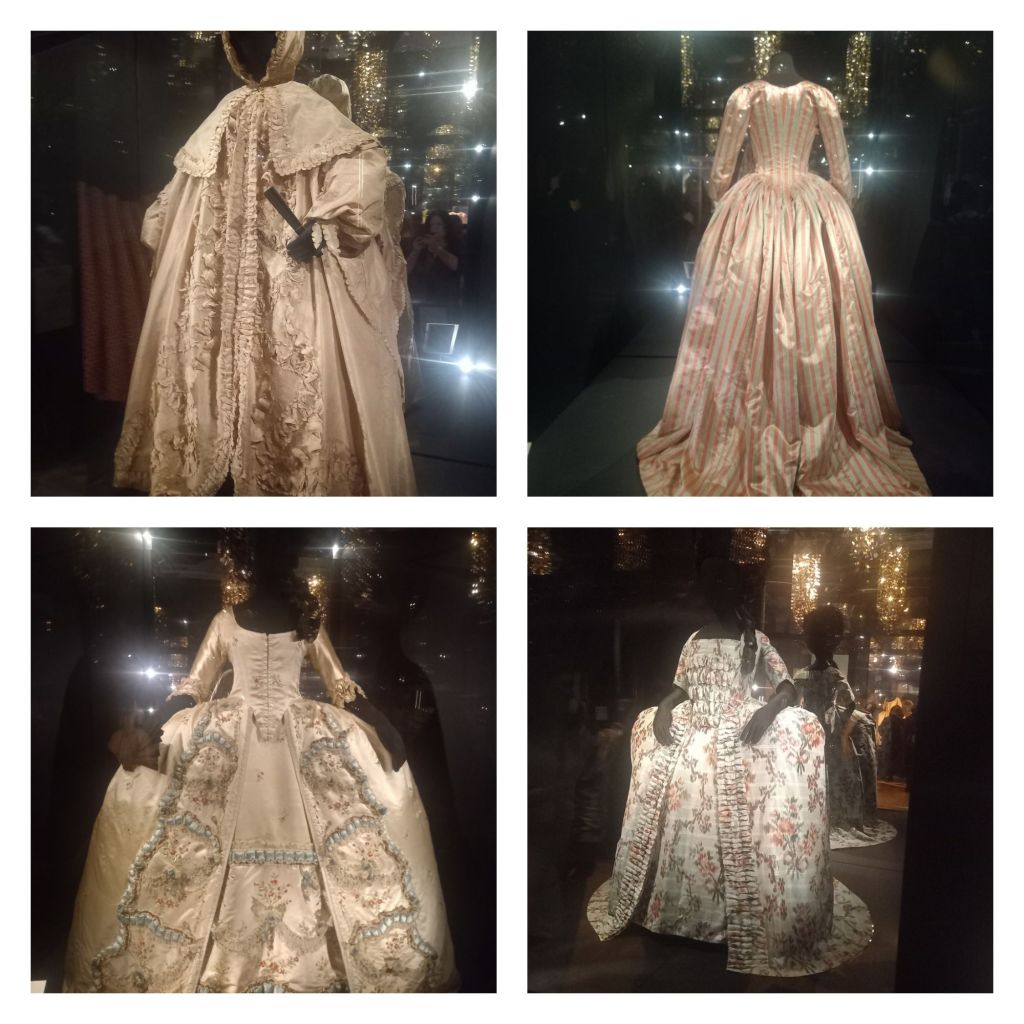
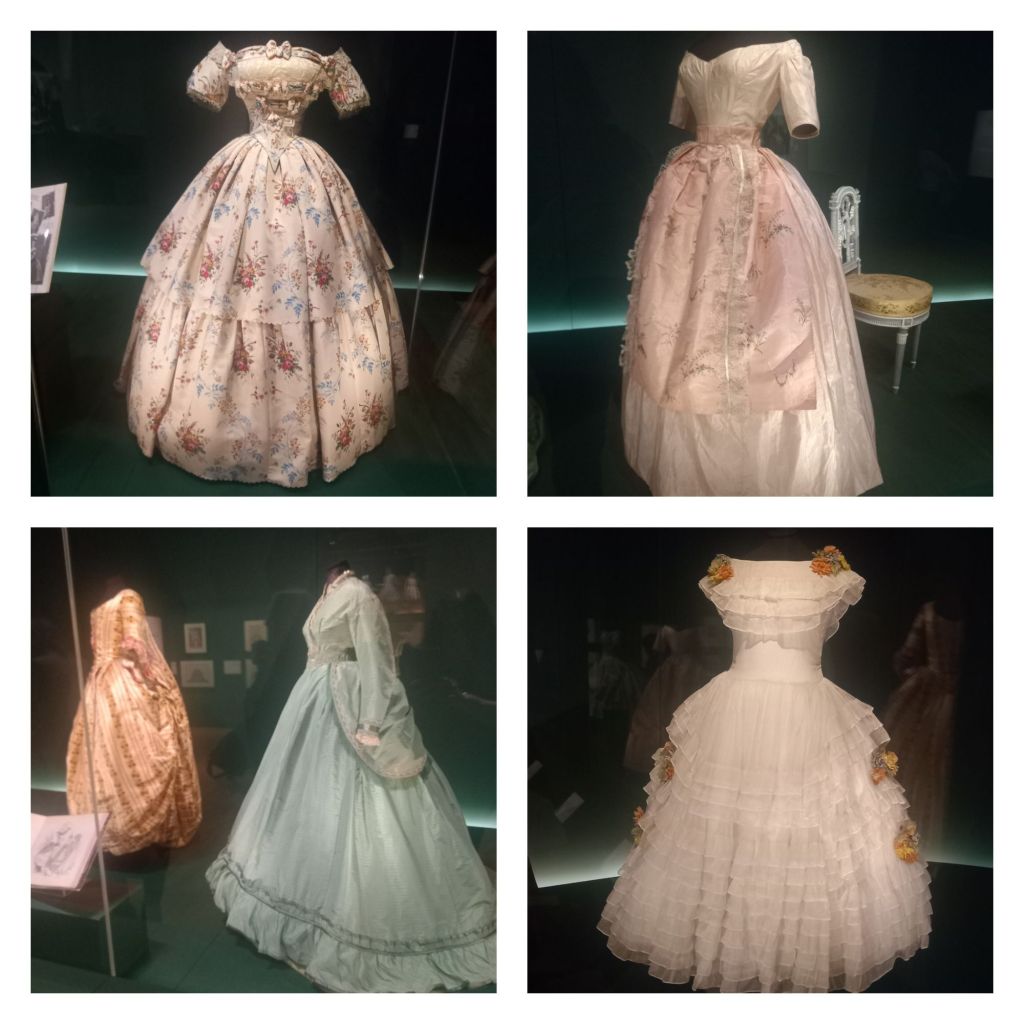
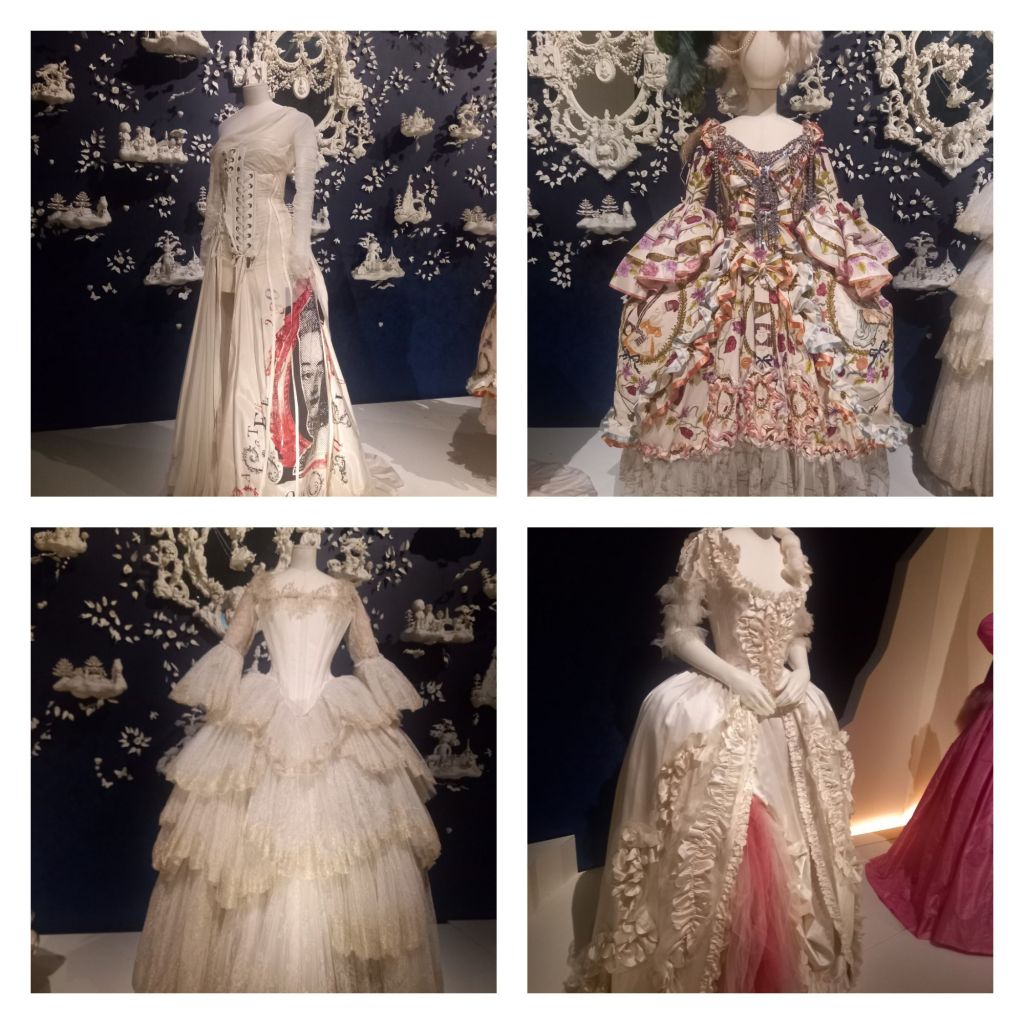
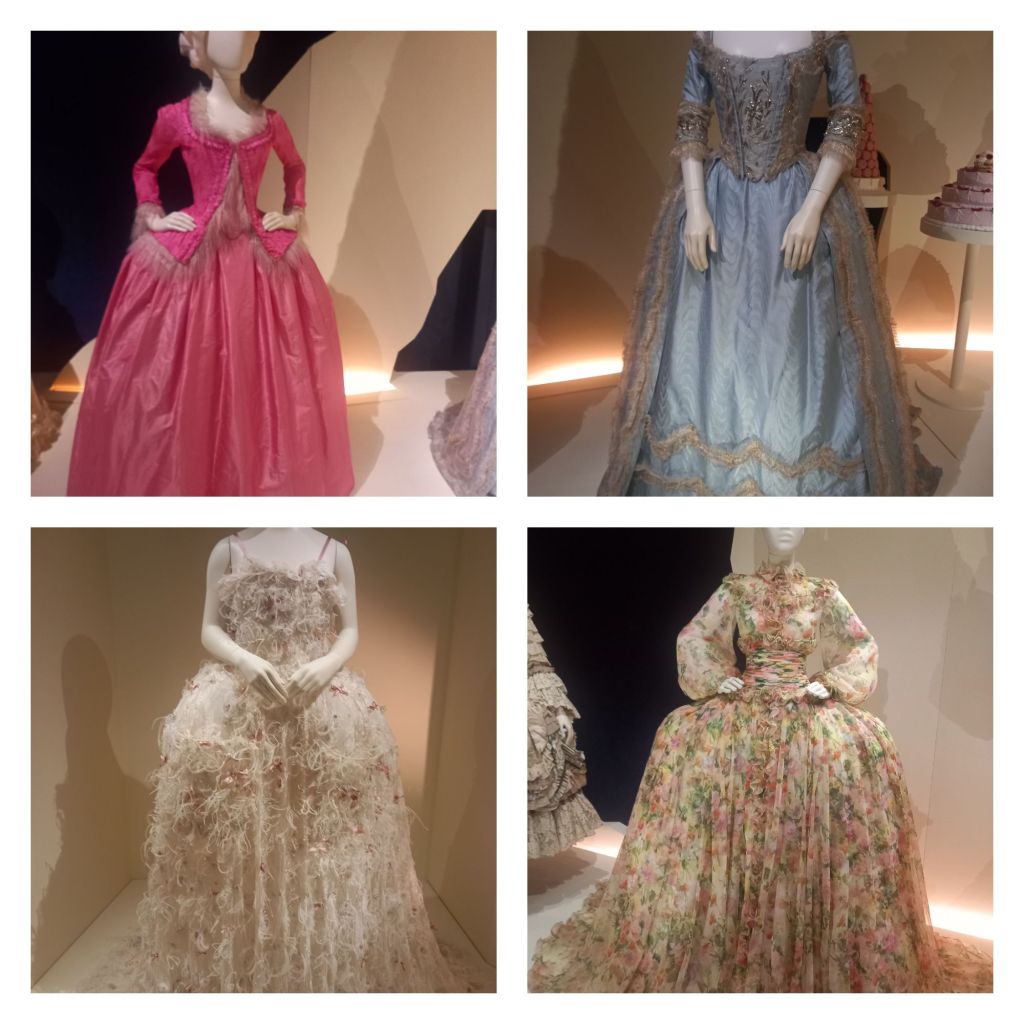
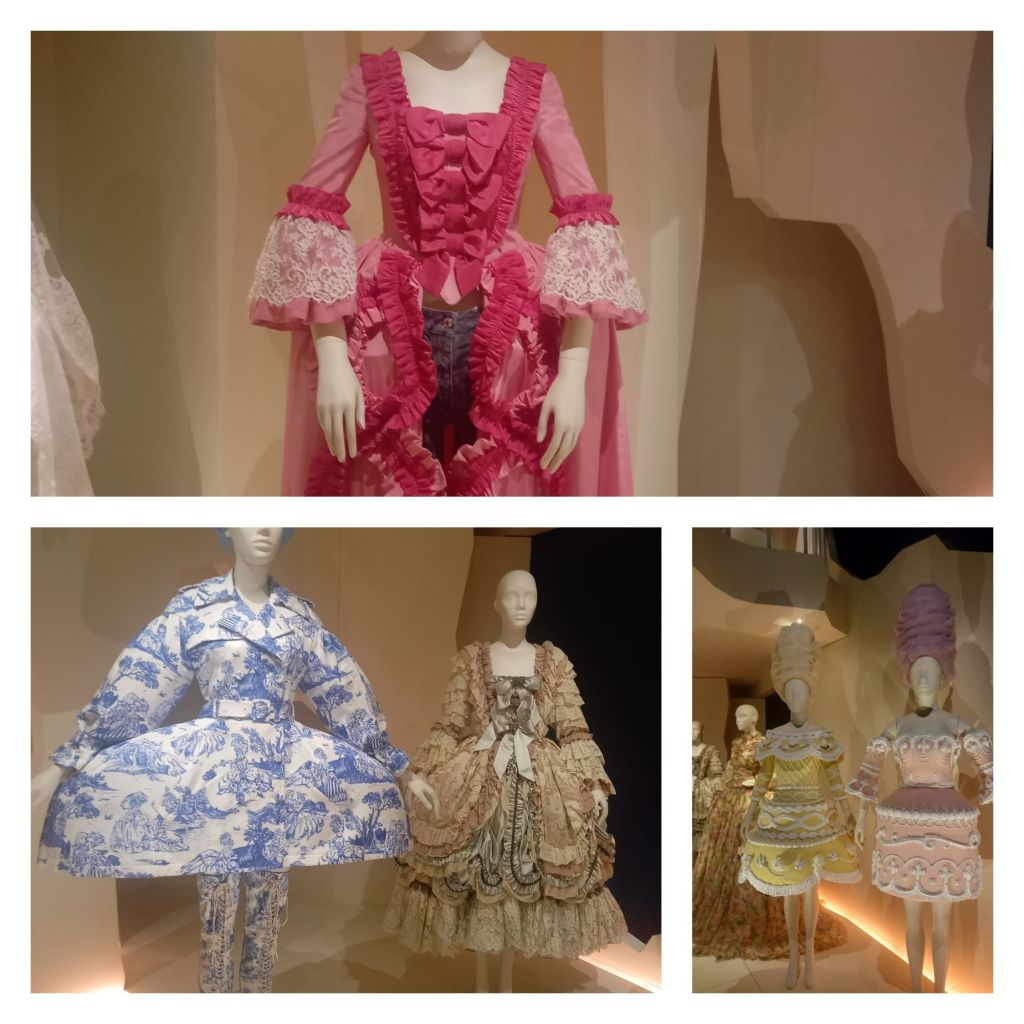
Entitled, ‘Marie Antoinette Style’, the exhibition covered historical fashion, but also how the queen’s clothing had been remade, for various films, but also used as inspiration for costume balls, and current fashions. All of this was cleverly interwoven with the story of her life, and a look at how the garments and accessories were made. 

It was a really well curated exhibition, and I’m glad we bought tickets early, as it was sold out very soon after it opened.

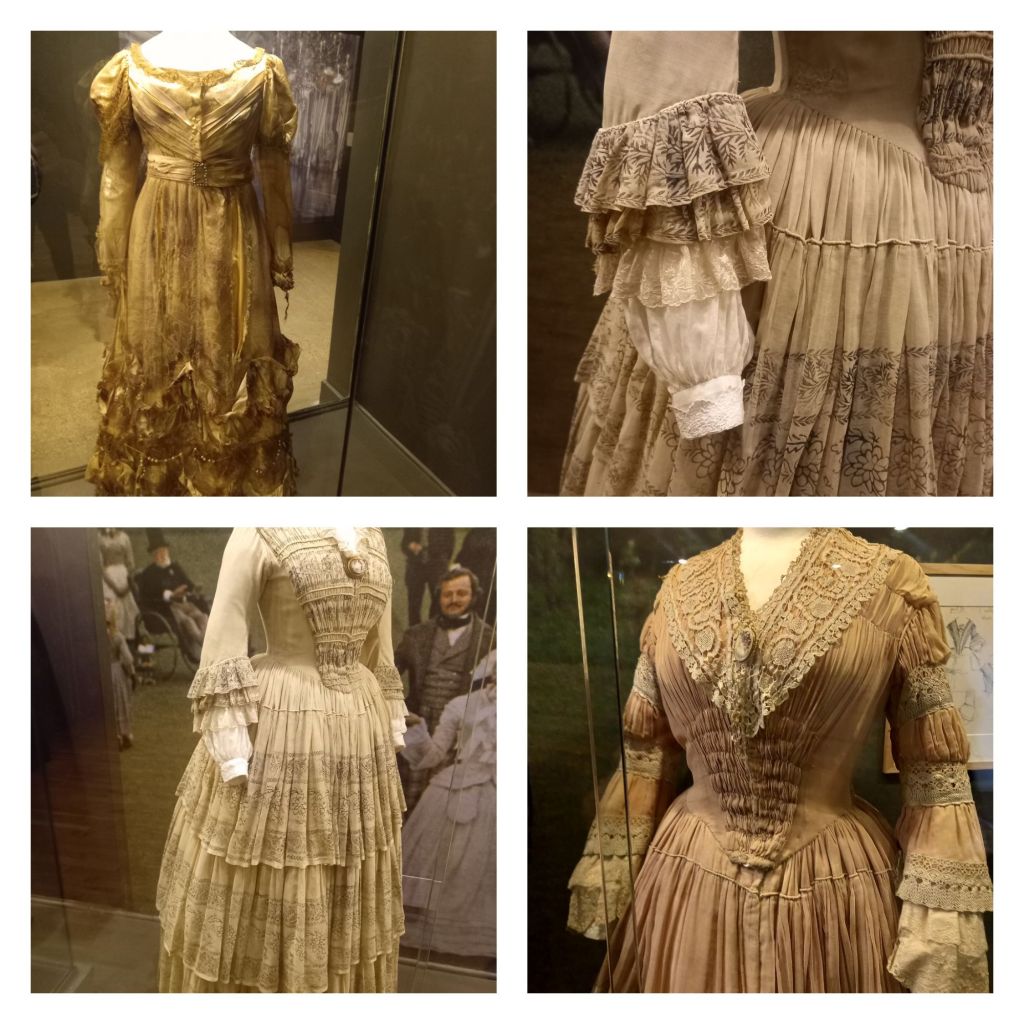
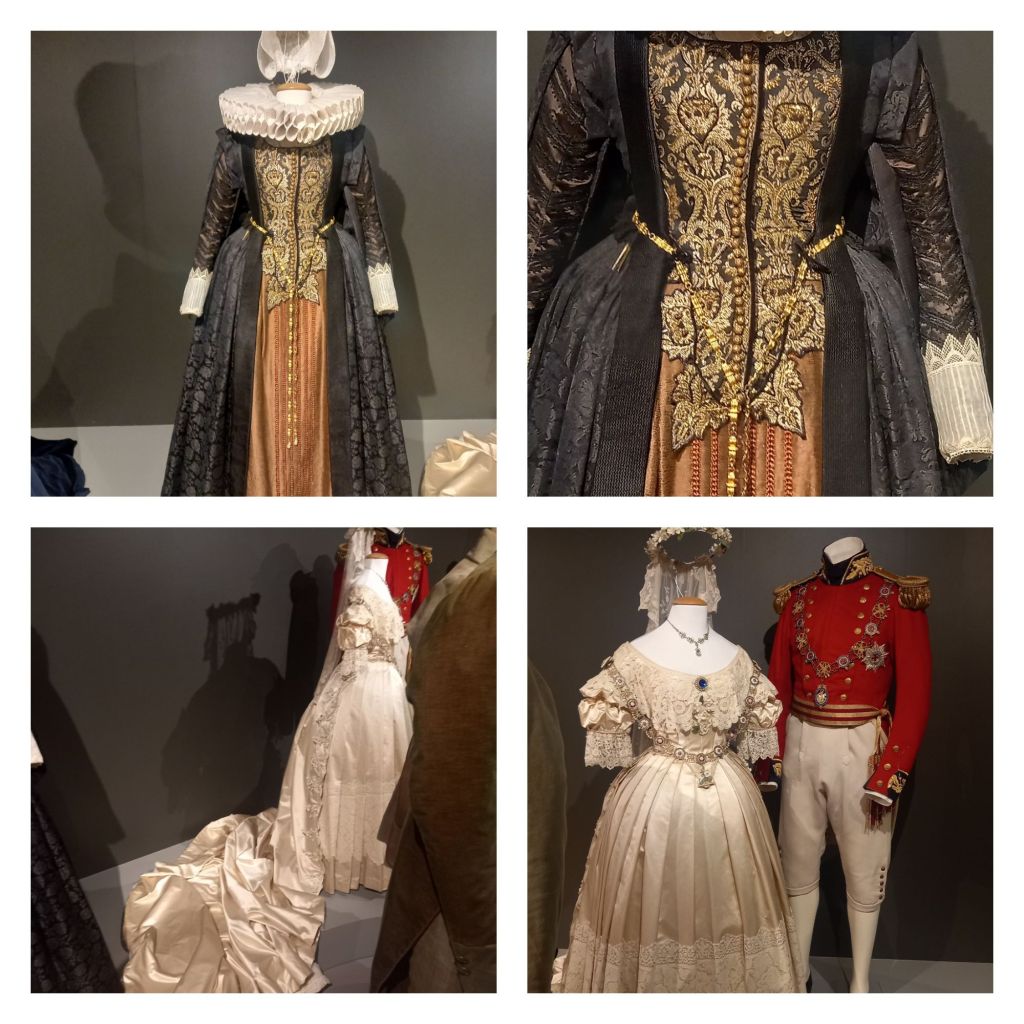
The initial section was full of the most gorgeous examples of historic fashion, including this stunning wedding dress. None of the queen’s original garments survive, so this section was from various different museums.

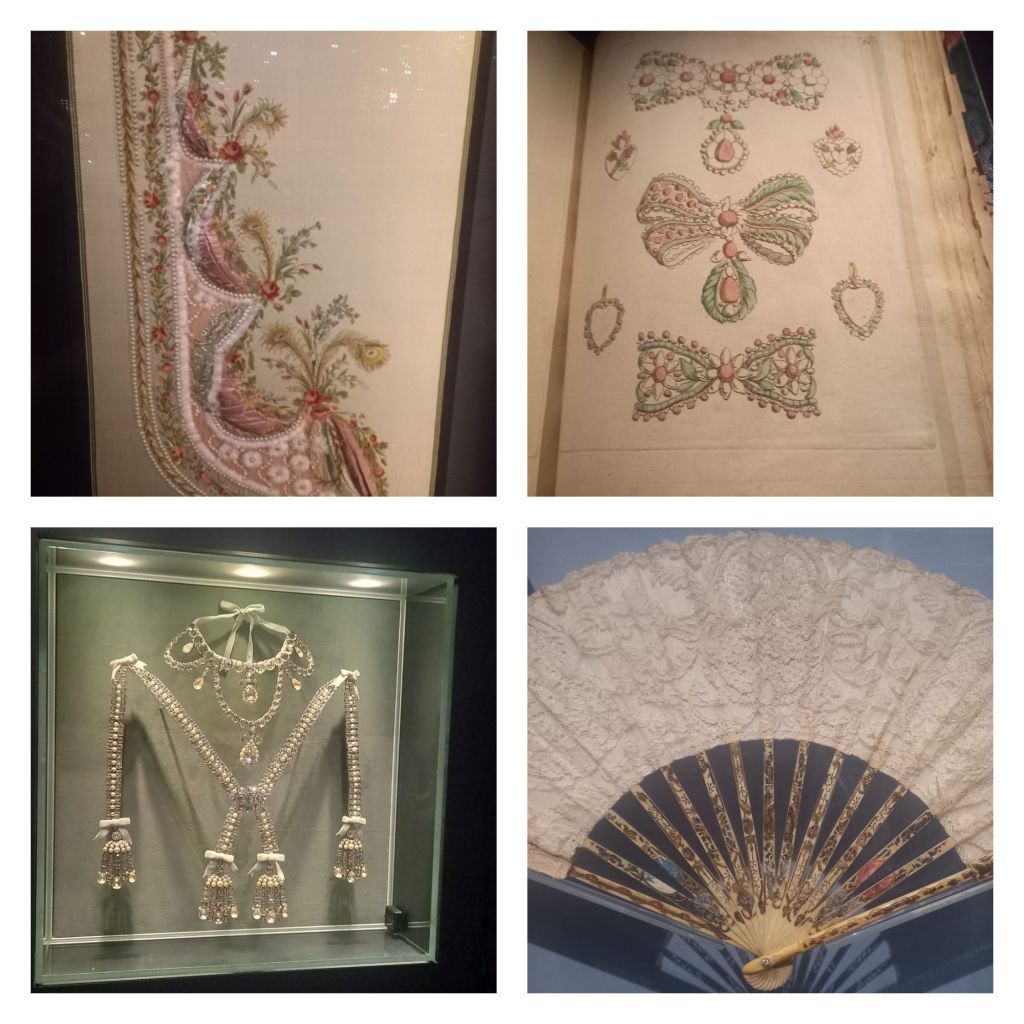
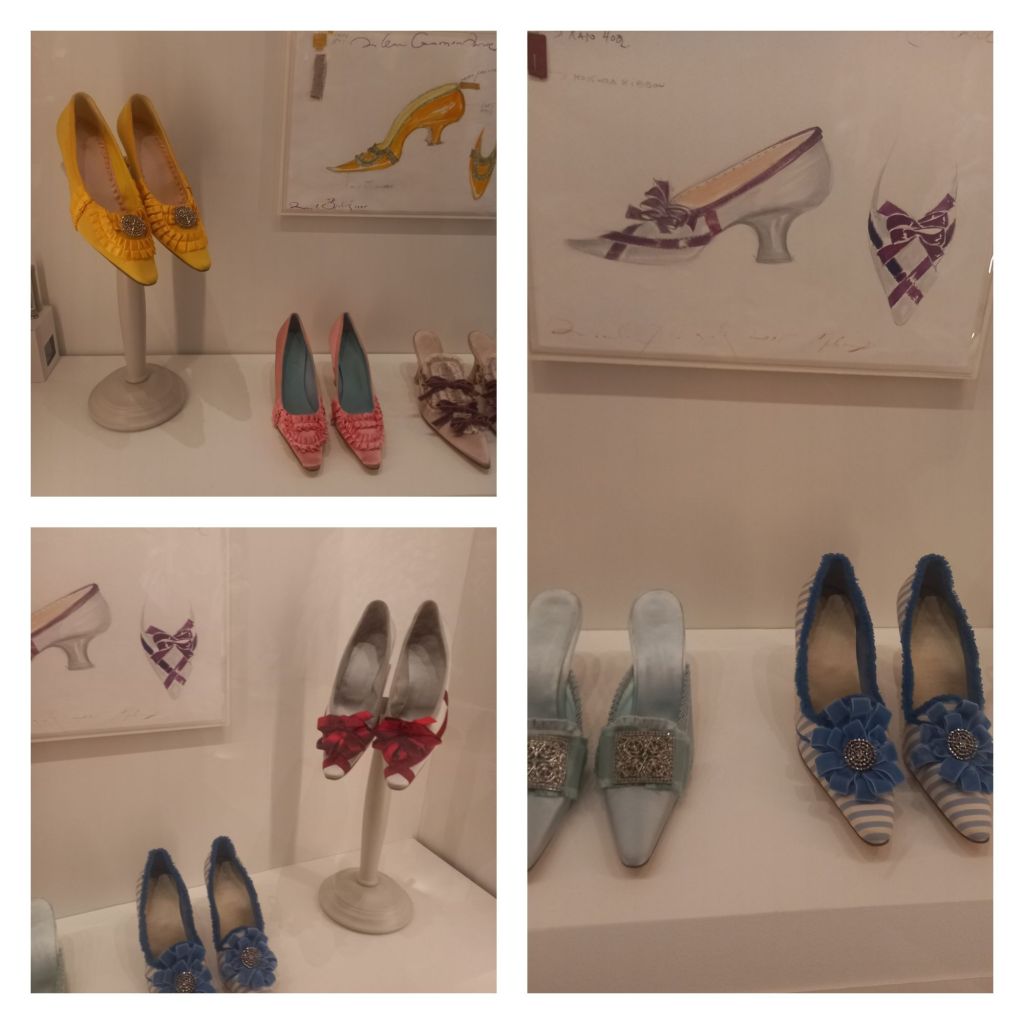
What was equally fascinating was the section on jewellery, fans and shoes, including some of the original designs.

I loved the Manalo shoes based on her style. Even though I mainly live in flip flops and safety boots these days I do like a pretty shoe!

The second half of the exhibition looked at some of the recreations of her clothing,  dating from the 19th century, and how the fashions had been interpreted by various modern designers for catwalk shows.

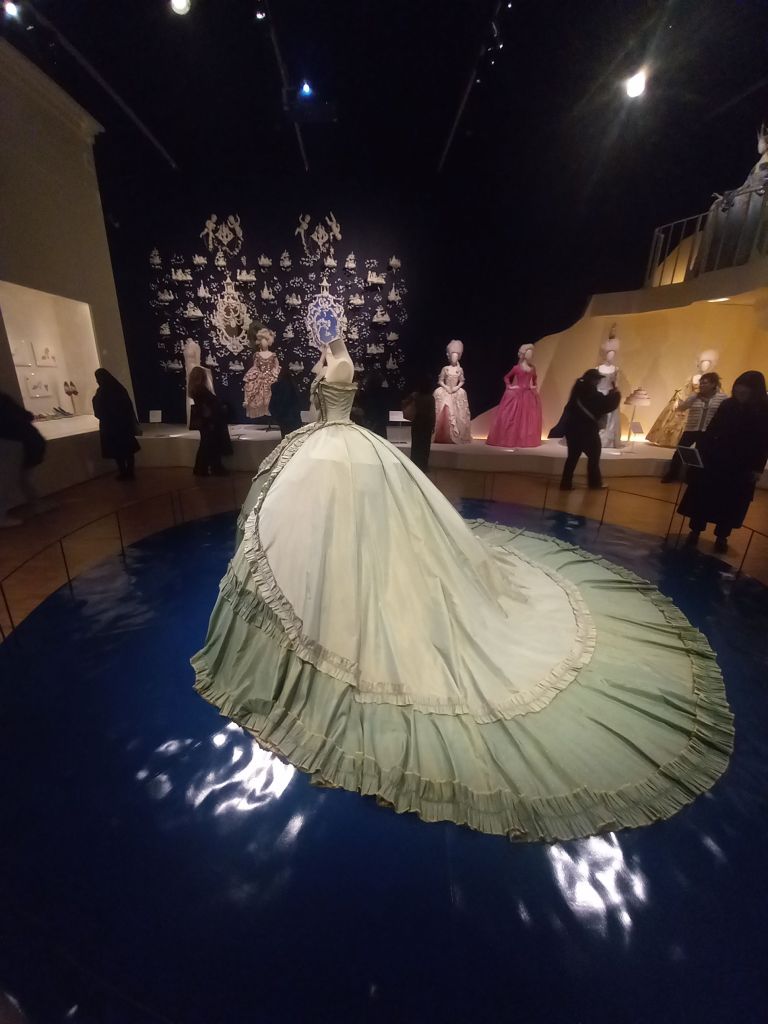
This was also supported by scenes from films about her life showing the movie costumes in action. The green dress in the centre of the room was just stunning, so a marvel of fabric engineering.

A really interesting exhibition, and so well put together.

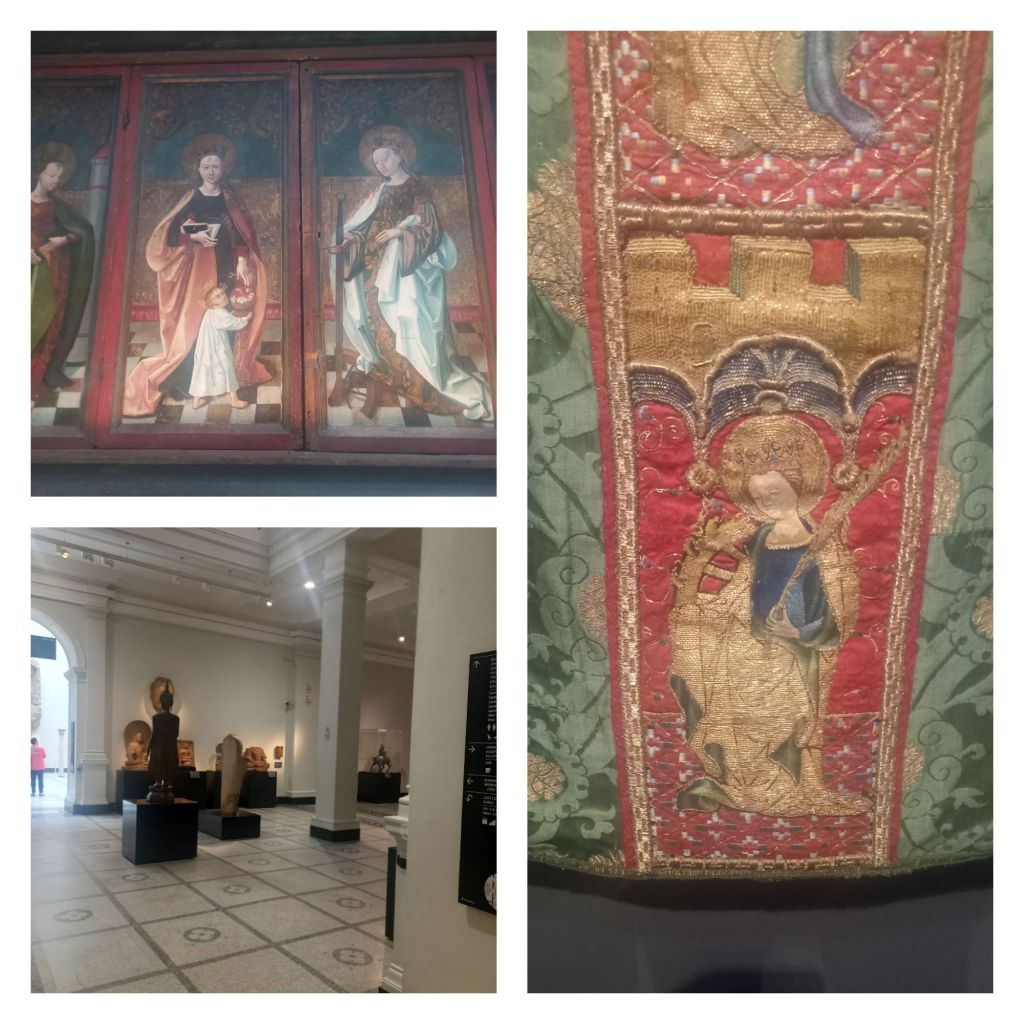
We then had for a quick wander around the medieval art section before it was time to leave to head back to Ellen’s.

I am hoping to spend a bit more time in London next year, there are so many more museums I want to revisit, so may do that early March when I return from Spain.

Life here on site continues to be very busy, we have had some stunning weather and some dreadful stuff, often all in the same day as is normal for Scotland. I will share some of the loveliness with you in the next post, before continuing to document life before I got here.

Meanwhile take care, have fun and thanks for visiting.
London life

I am taking advantage of the fact that we actually have four bars of signal today to bring you an update on my trip to London with my lovely daughter, Ellen, at the end of February. 

Things seem to be improving on the connectivity front, it is one of the few disadvantages of living here that 21st century conveniences can’t be taken for granted.

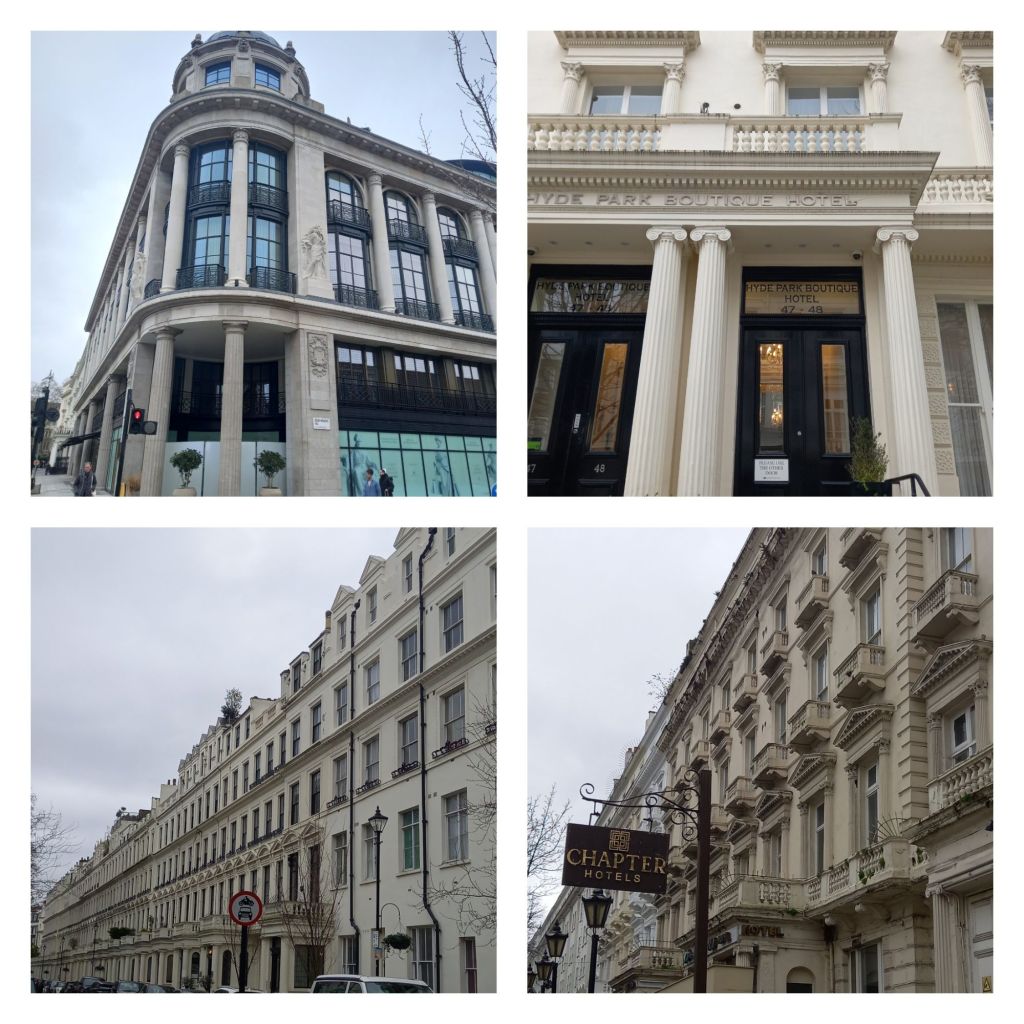
Ellen and I planned our trip last year as we saw that there were two historic fashion exhibitions on at the same time. We had a wonderful weekend enjoying city life, with a hotel in the beautiful Bayswater Road area, delicious meals out, and lots of wonderful clothes. 

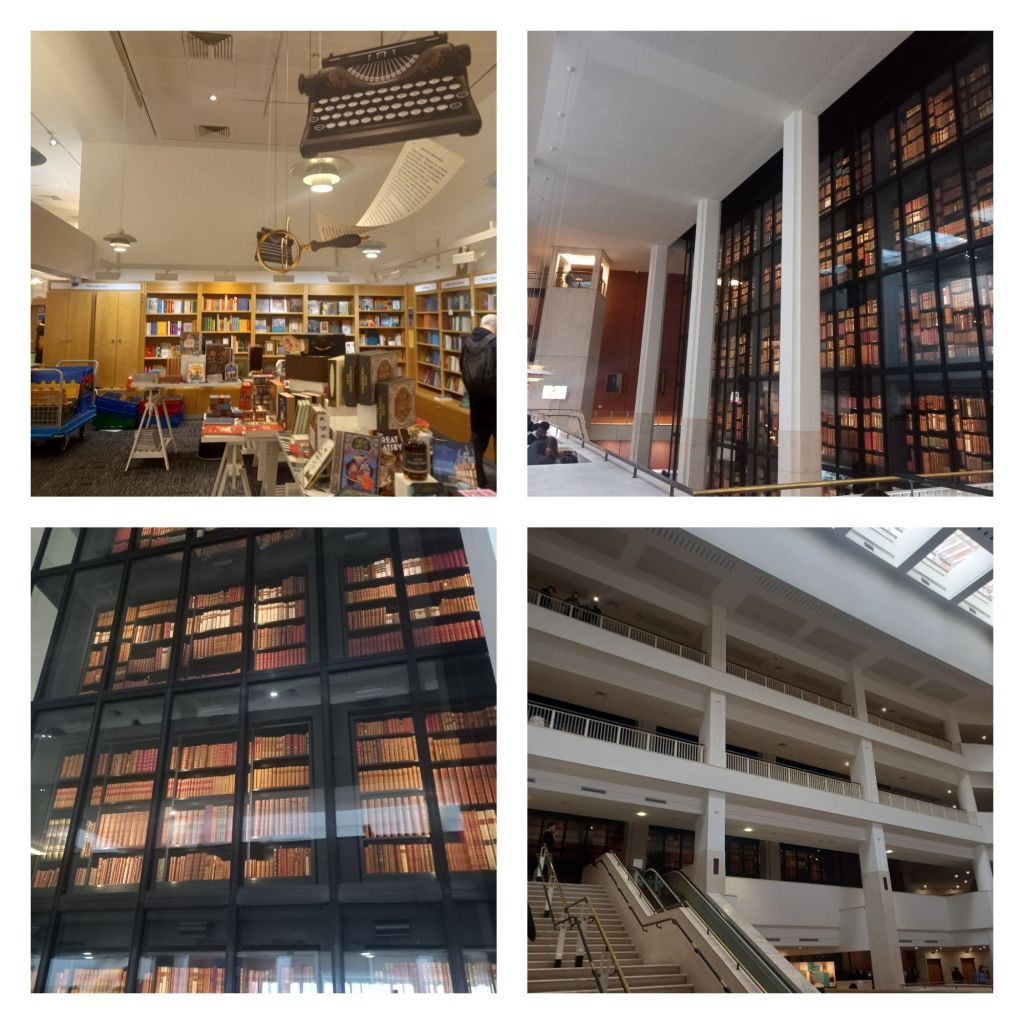
On Friday we had chance to do a quick visit to the wonderful British Library before going to our hotel. It is such a beautiful building, and as we both love books so much, a really inspiring place.

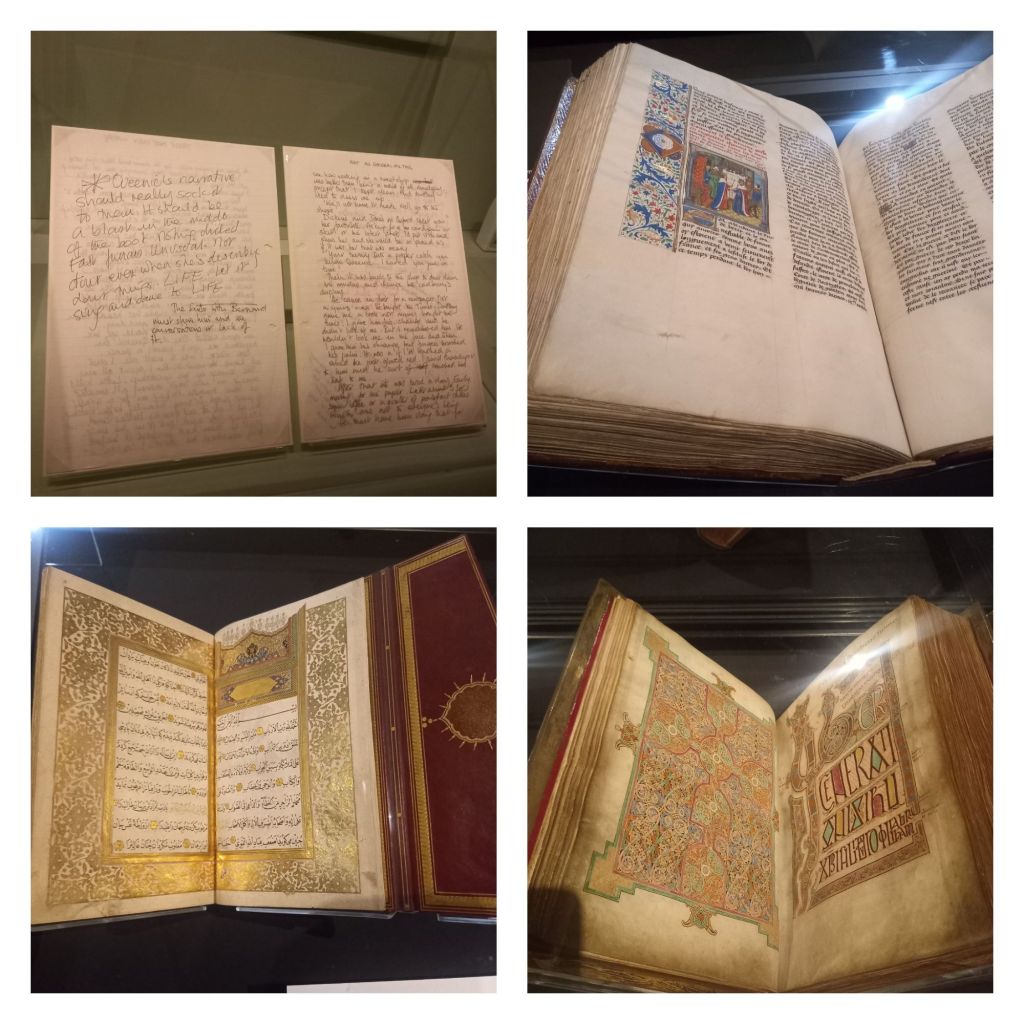
We had a visit to the Treasures Collection, full.of significant texts, from annotated writings to illustrated religious texts.

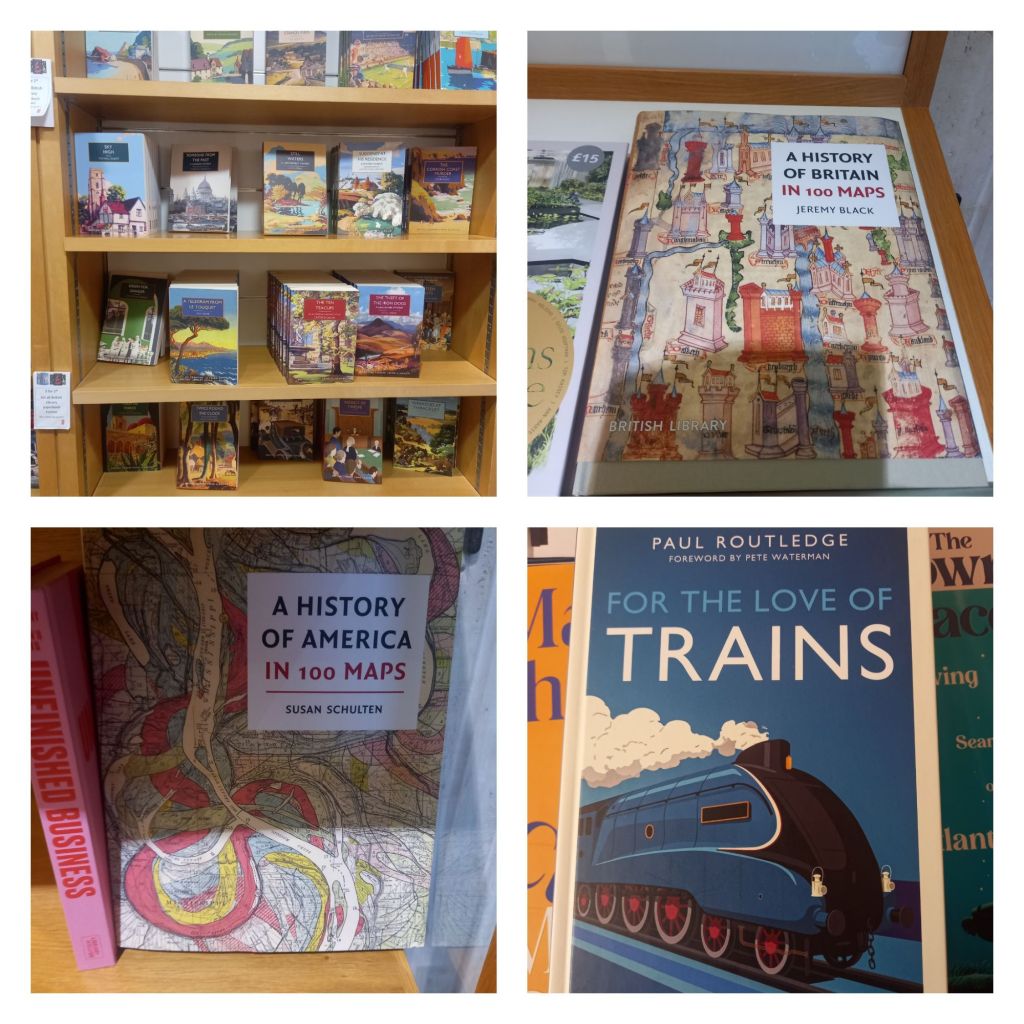
So many gorgeous things in the bookshop. I really want these map books, when I have space on my bookshelves.

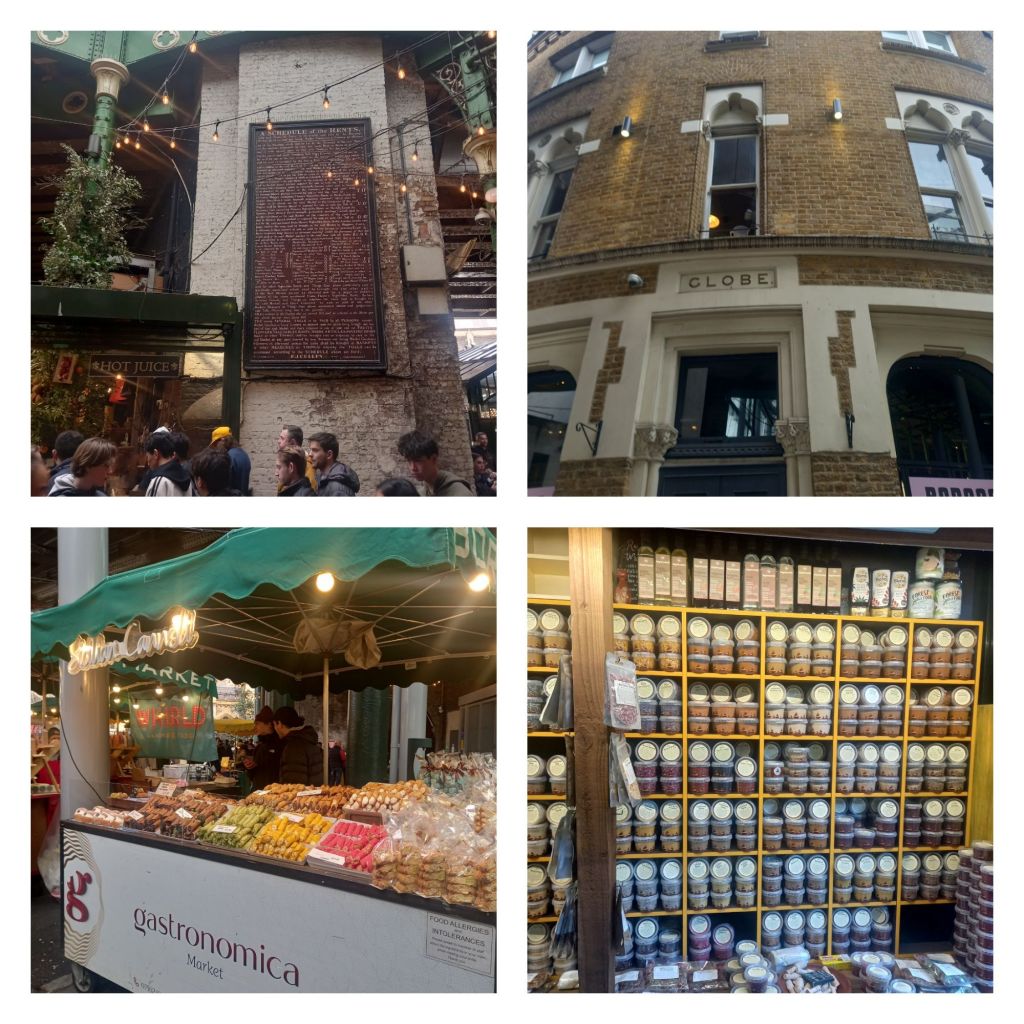
Saturday morning was a quick trip to Borough Market, where we bought gluten free treats, and I stocked up on spices for the caravan from this amazing stall.

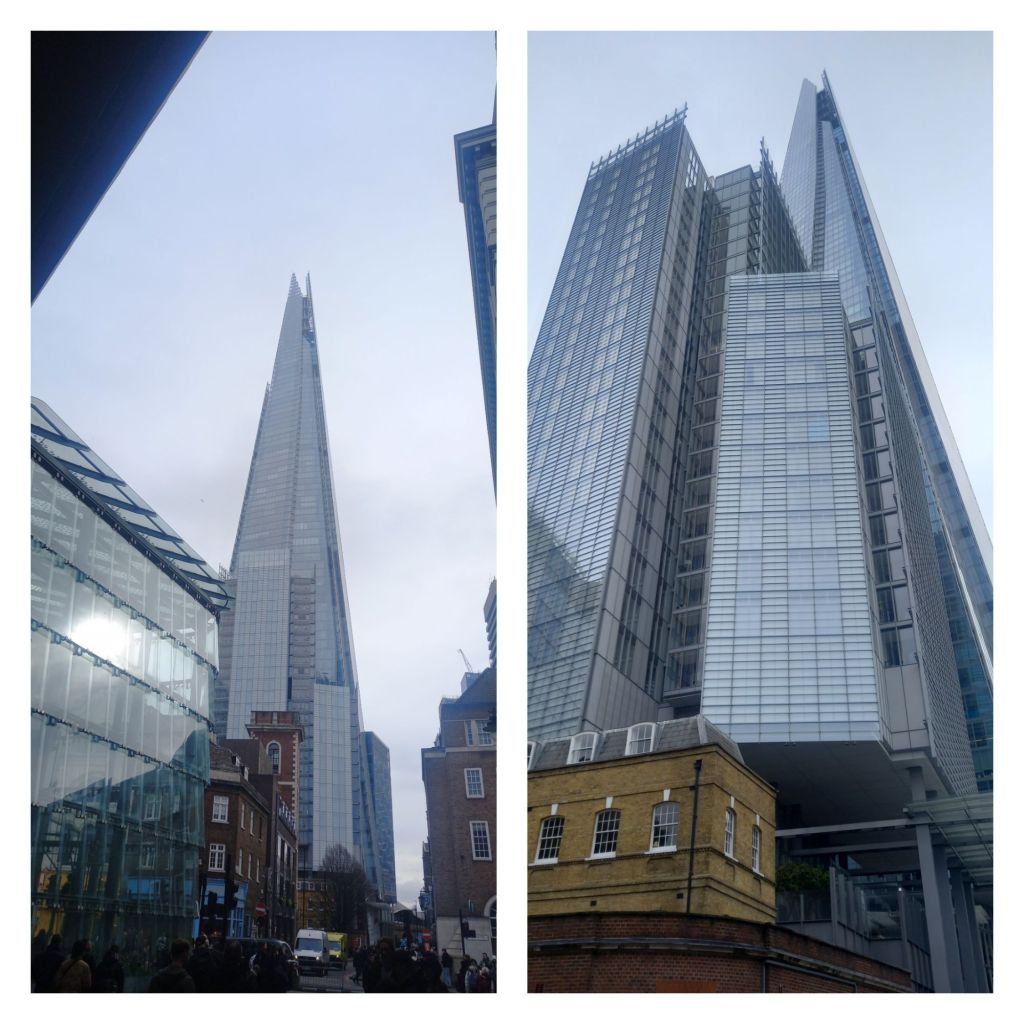
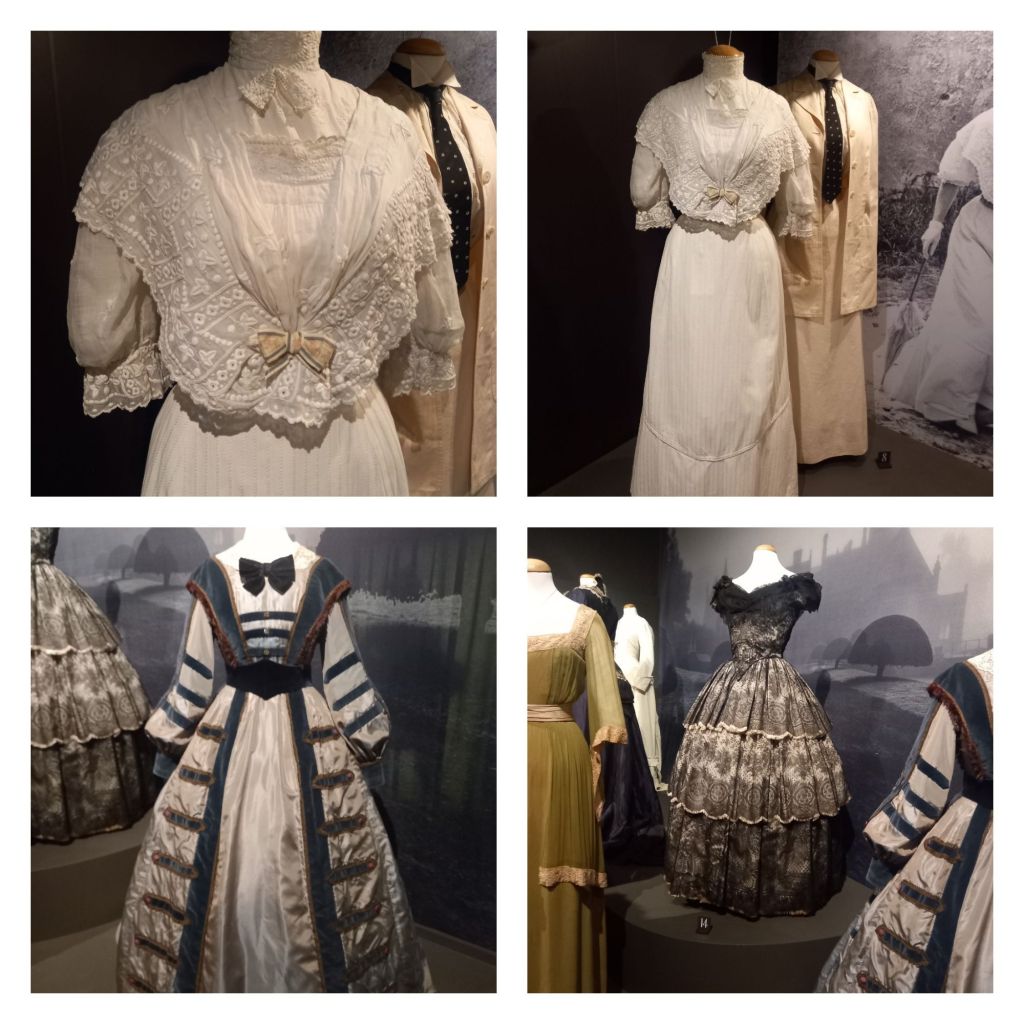
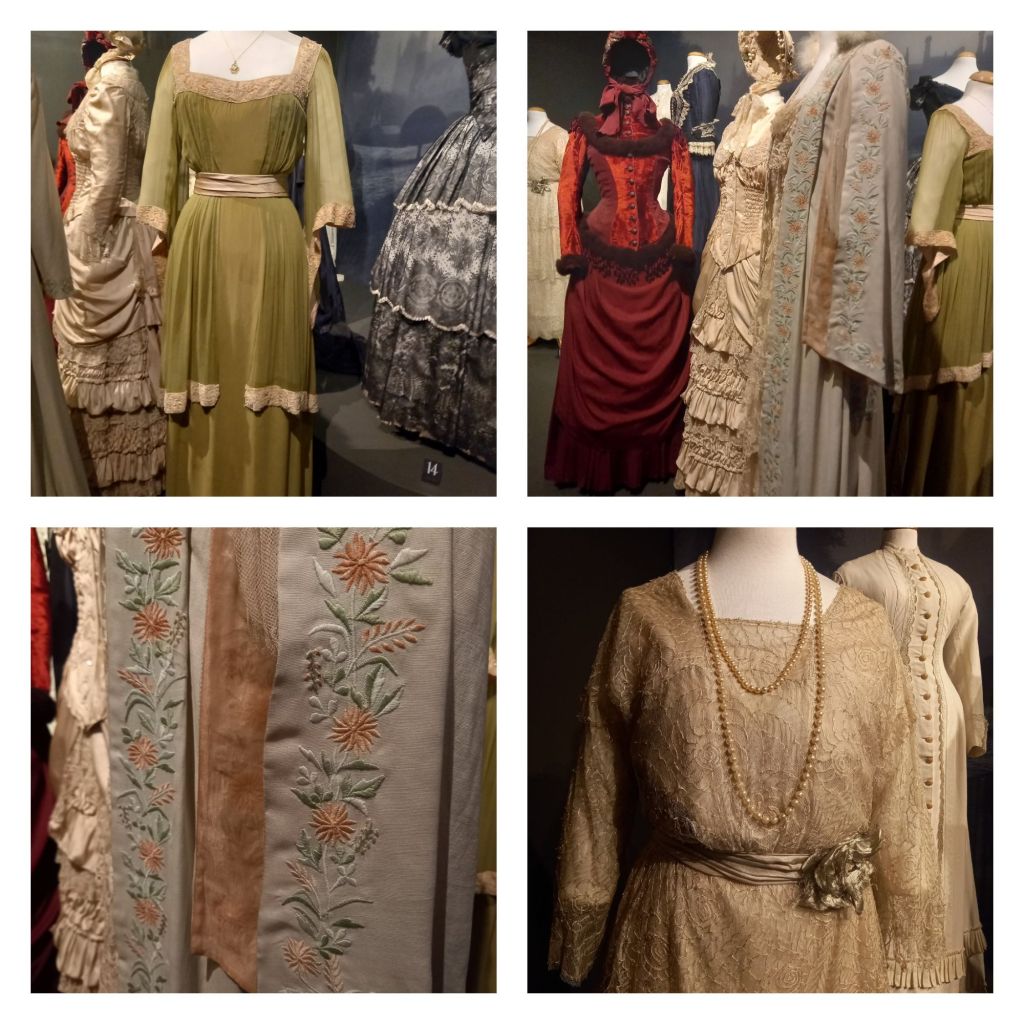
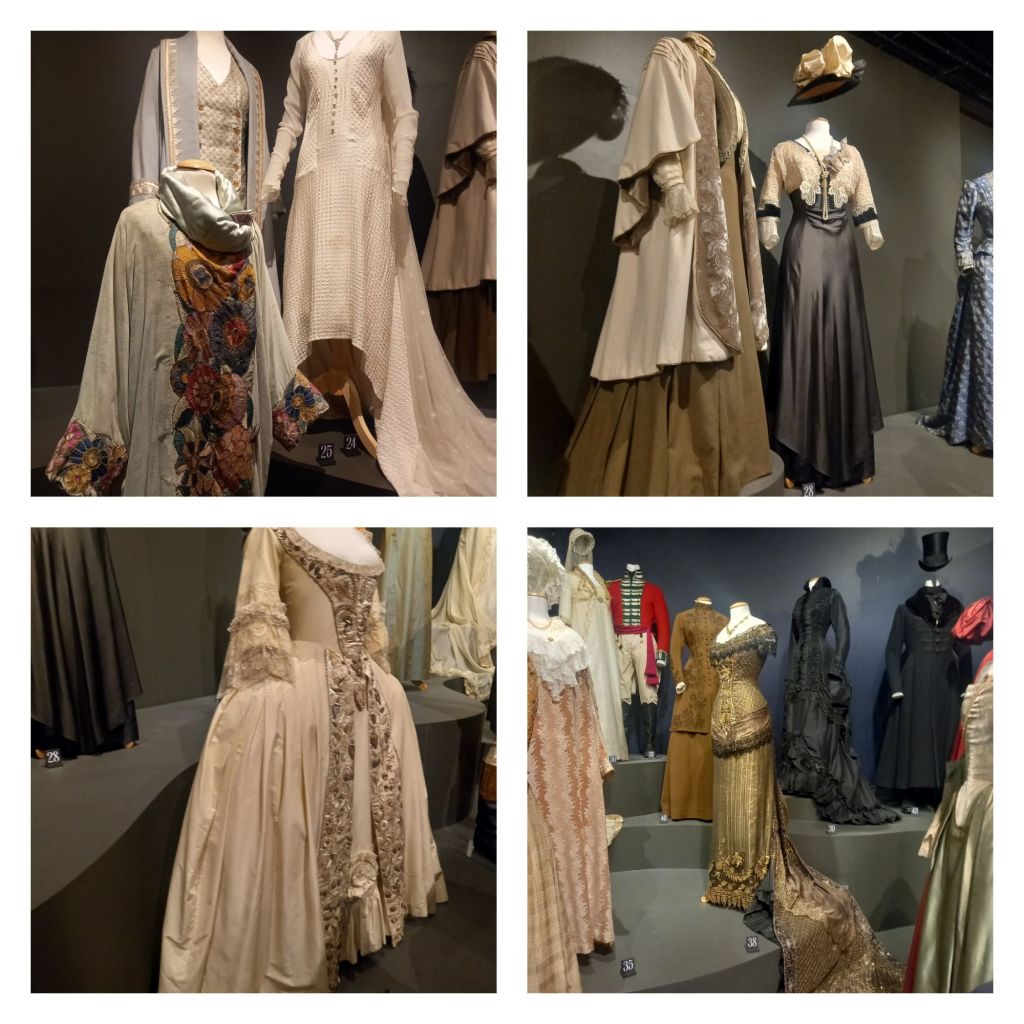
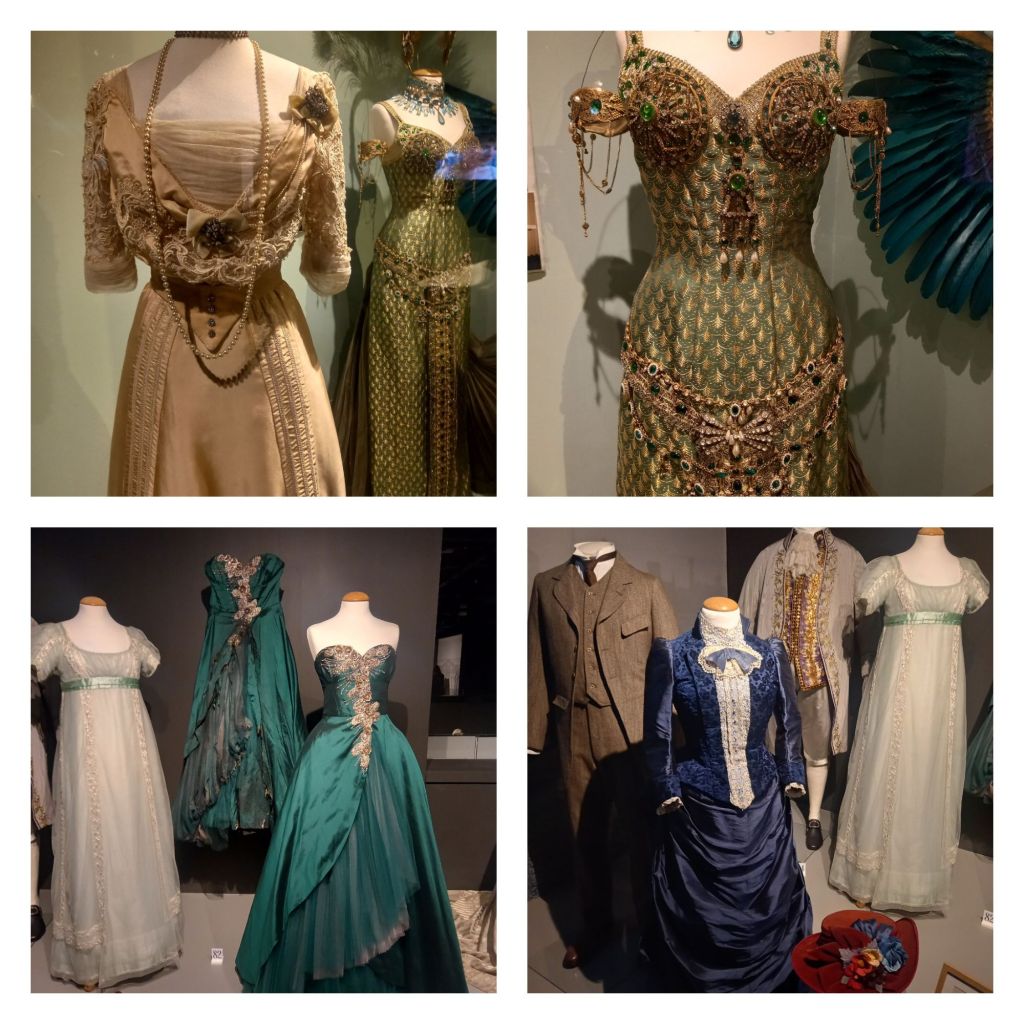
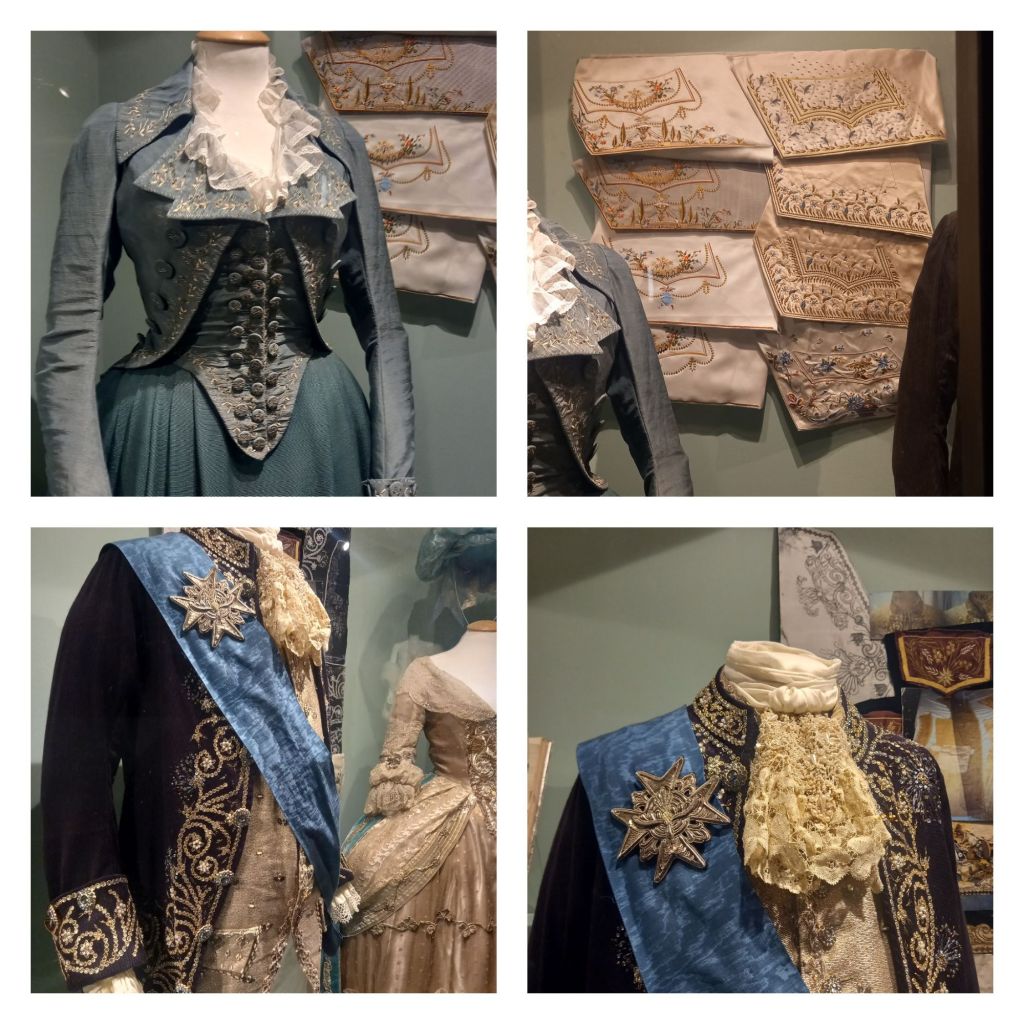
Then it was a walk past the Shard to the Fashion and Textile Museum, for an exhibition about the company Cosprop. They have been supplying film and TV productions since the 1970s, using a combination of vintage clothing and reconstructed garments.

It would take too long to list all of the films and TV shows they had costumes for but think Victoria, lots of Jane Austen, and virtually every single other big historical movie filmed in the last 50 years.

So many amazing things, and to see them close up was such a treat. 

It is difficult to say which was my favourite, however I do adore Georgian waistcoats, the embroidery is so stunning. These were such amazingly detailed reproductions, taking inspiration from original panels.

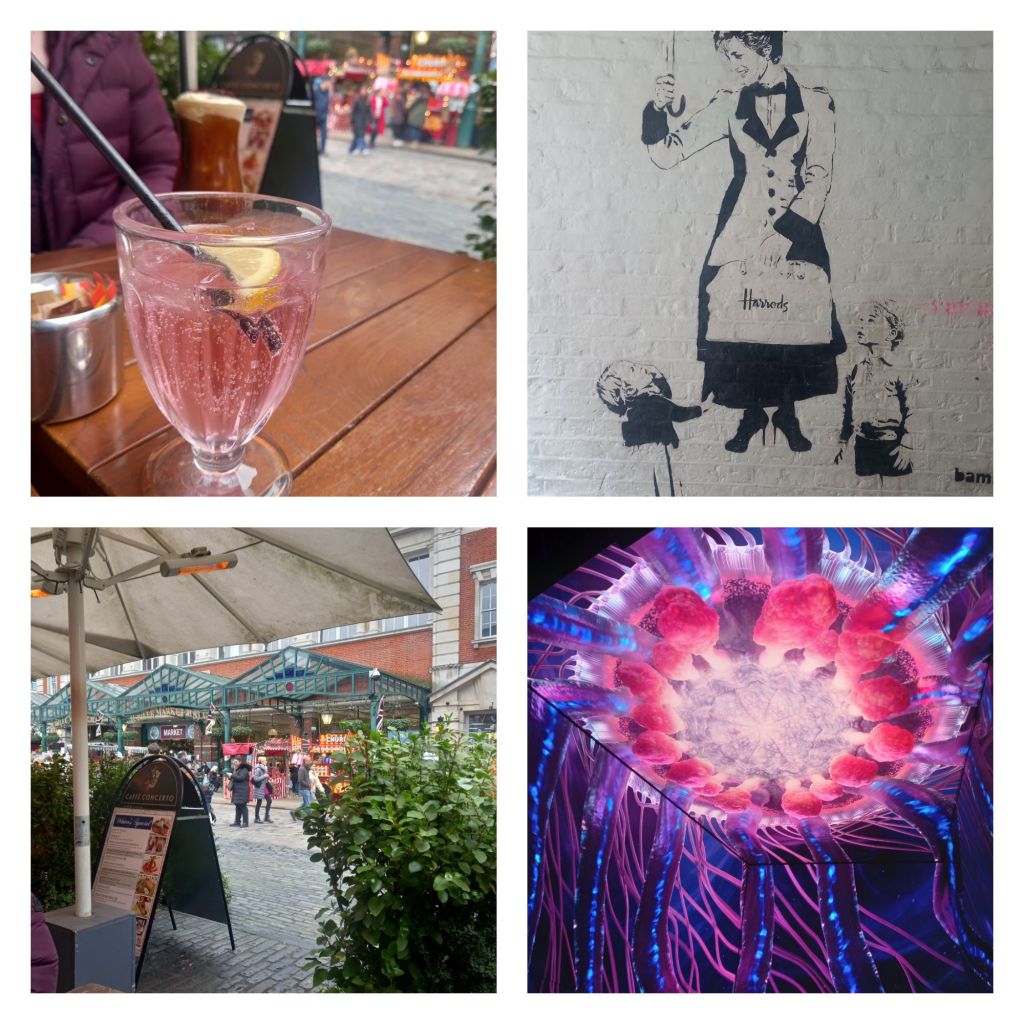
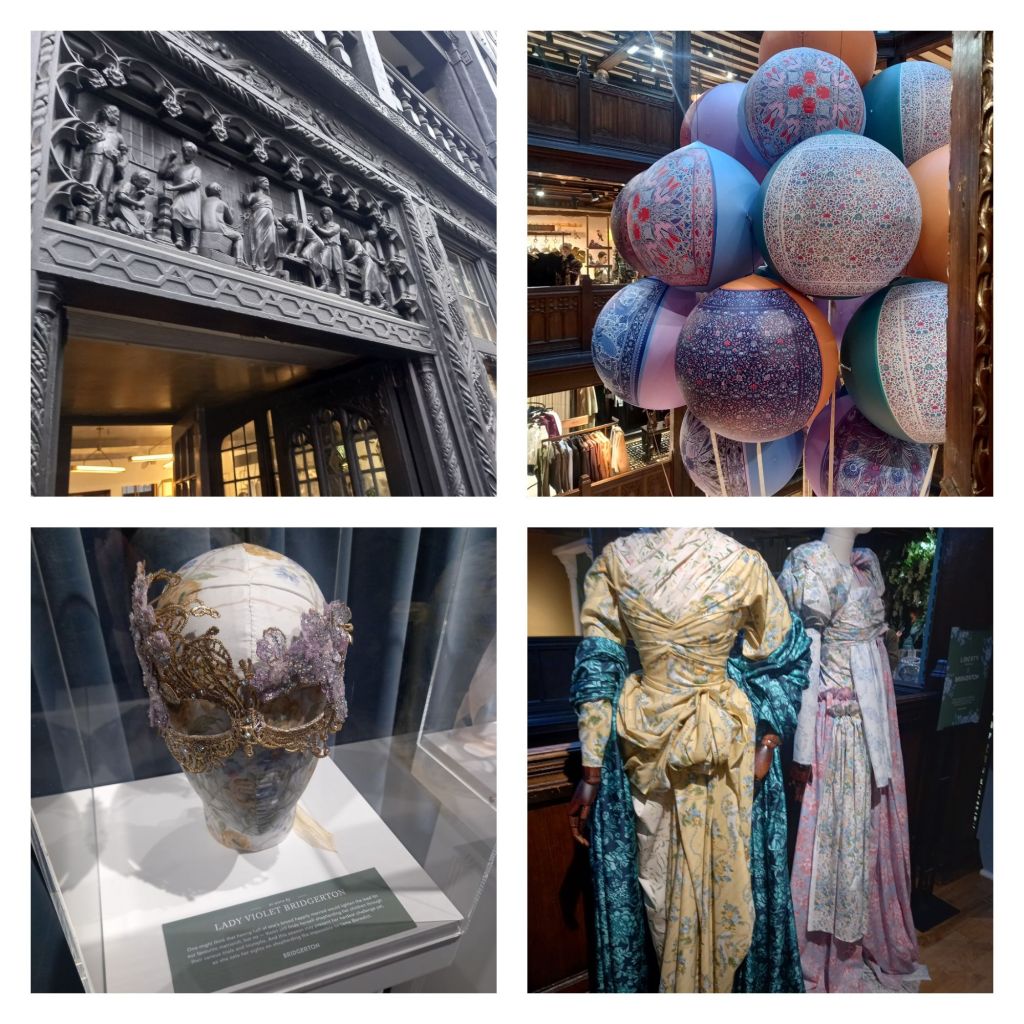
A quick visit to Covent Garden for refreshments, seeing a Bansky and an art installation featuring a jellyfish on the way, and we ended the day at Liberty for cocktails.

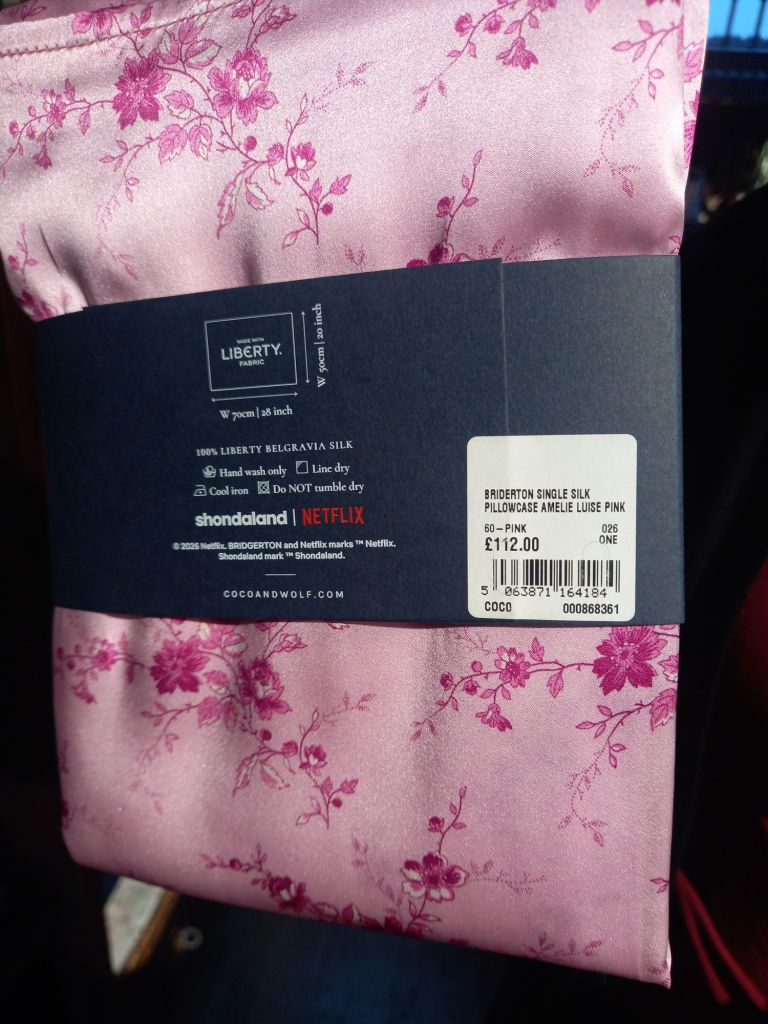
They had a new range inspired by Bridgerton, and although I am never going to pay that much for a pillowcase, it was lovely to see the fabrics, and Lady Bridgerton’s mask from the ball.

Fingers crossed the internet will remain good so I can be back soon with part two of London life, the one where we visit the V and A.

I am so happy that I can do all these brilliant trips  and that my life is full of such diverse adventures. 

Hopefully see you soon, take care, have fun and thanks for visiting.
Moral dilemmas

The world of heritage and history is full of dilemmas. What should be displayed, how should stories be told, and how do we deal with the past that doesn’t fit current sensibilities?

I have been to many museums that have tried to address these things, the Pitt-Rivers in Oxford being a particularly good example. Often they will adopt the approach of explaining why these things were popular or acceptable at the time.

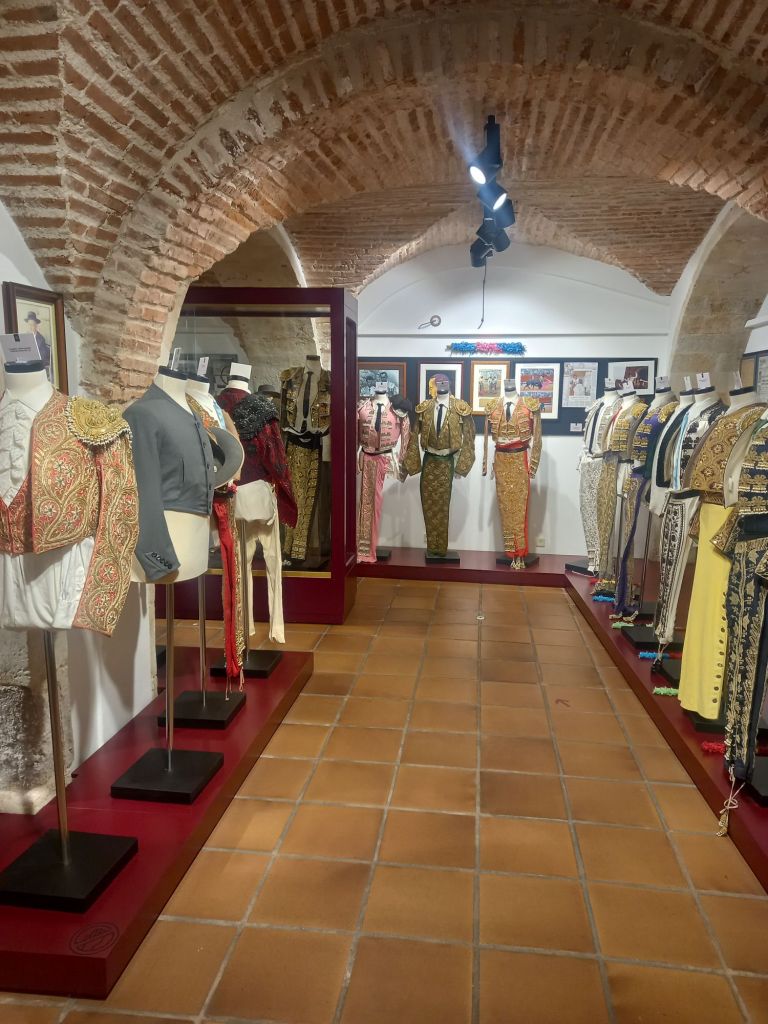
Whilst we were in Salamanca we came across a small museum that presented us with small dilemma.  The museum was dedicated to bull fighting. Always a contentious subject, but a very large part of Spanish culture. Should we go?

In the end we did, I knew that it would be full of the most amazing embroidery, and I am not of the opinion that things should be ignored because they are difficult. I would never go and watch a bull fight, but was interested to know more.

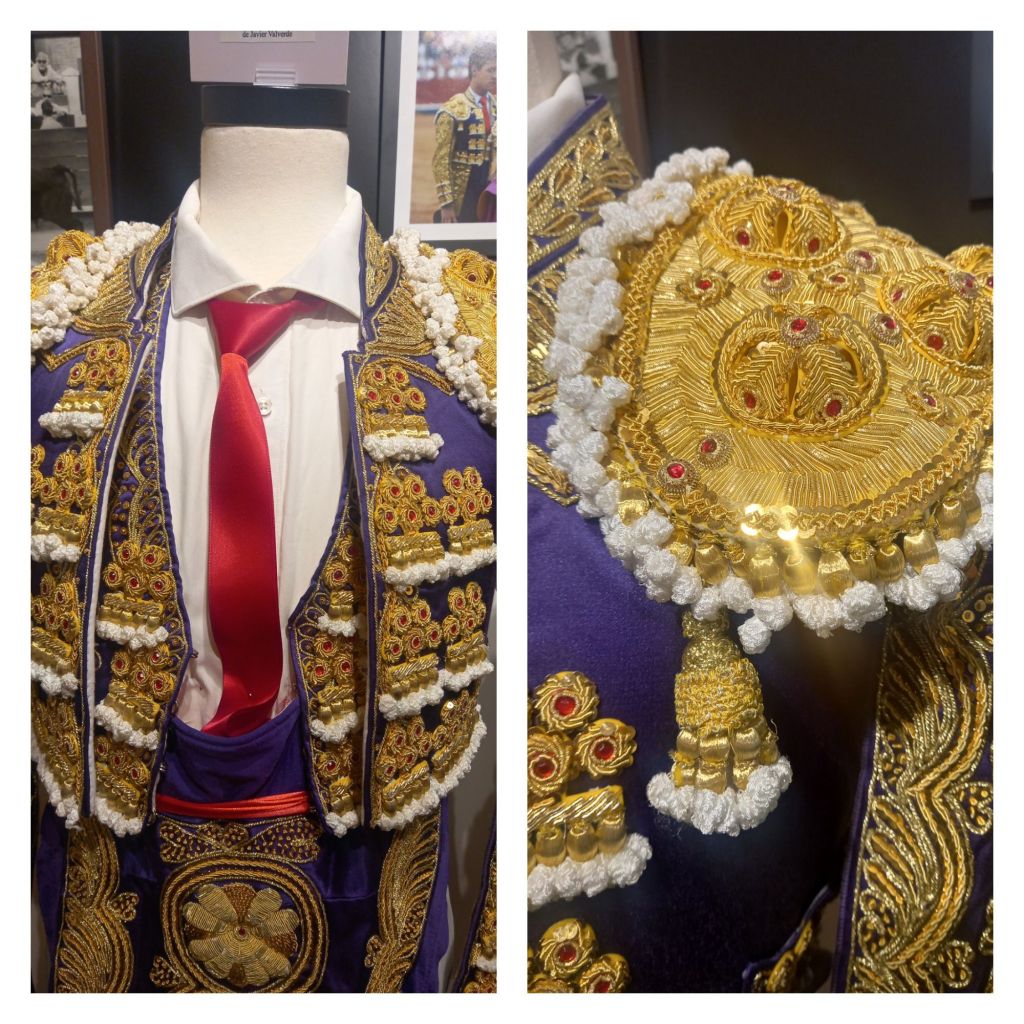
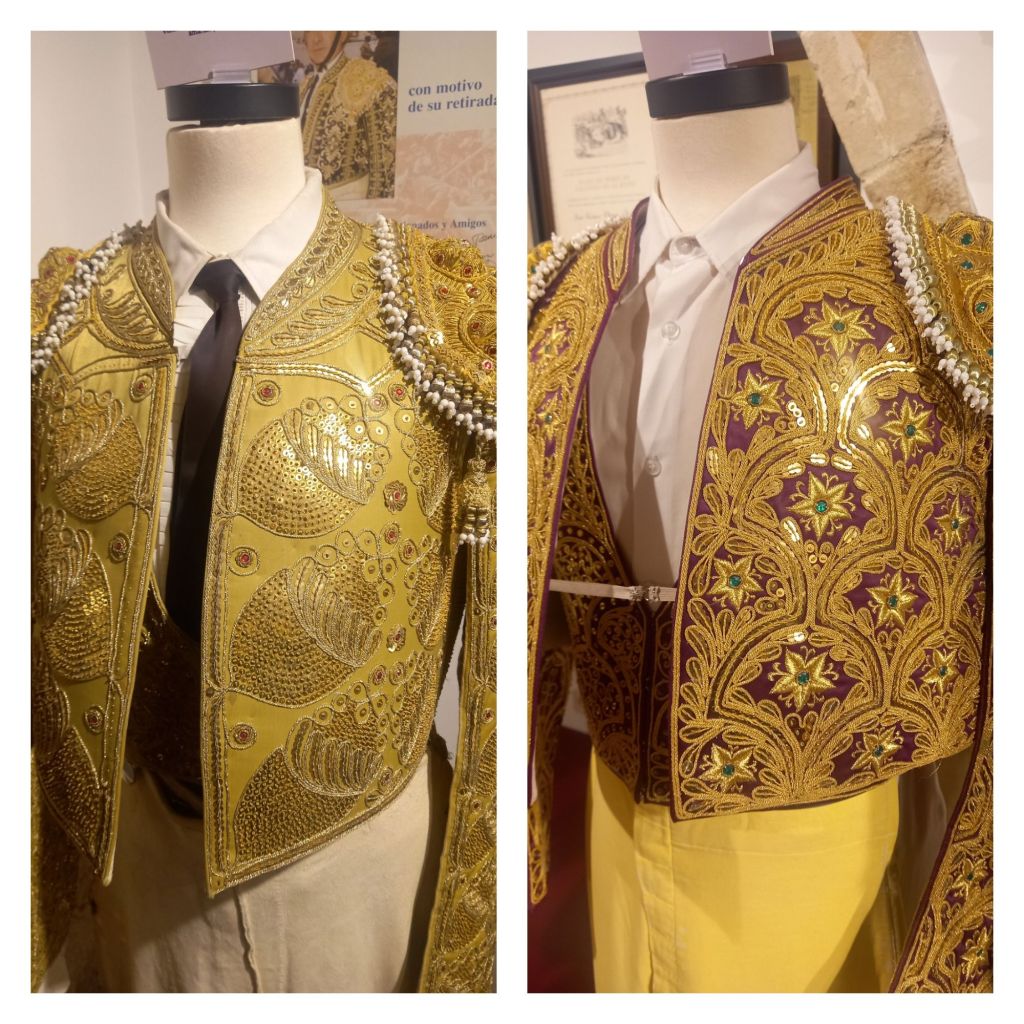
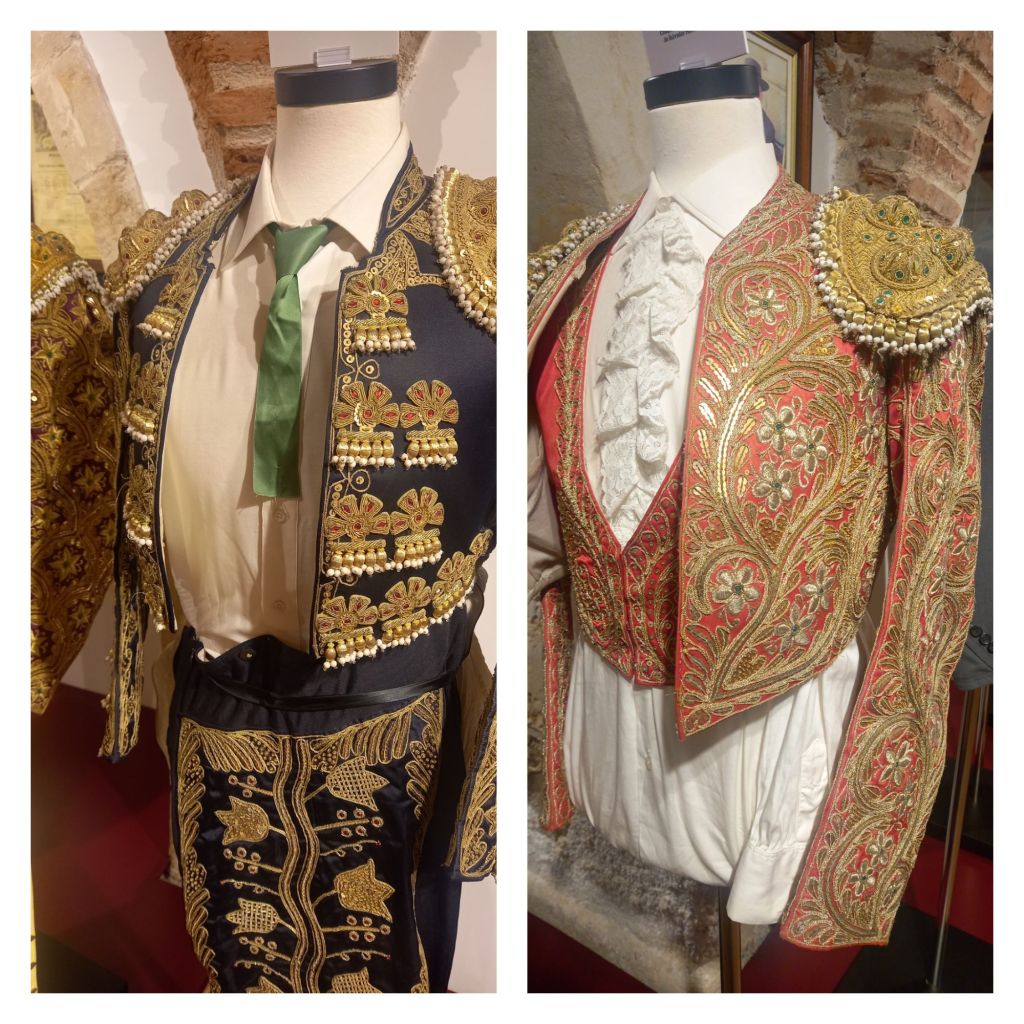
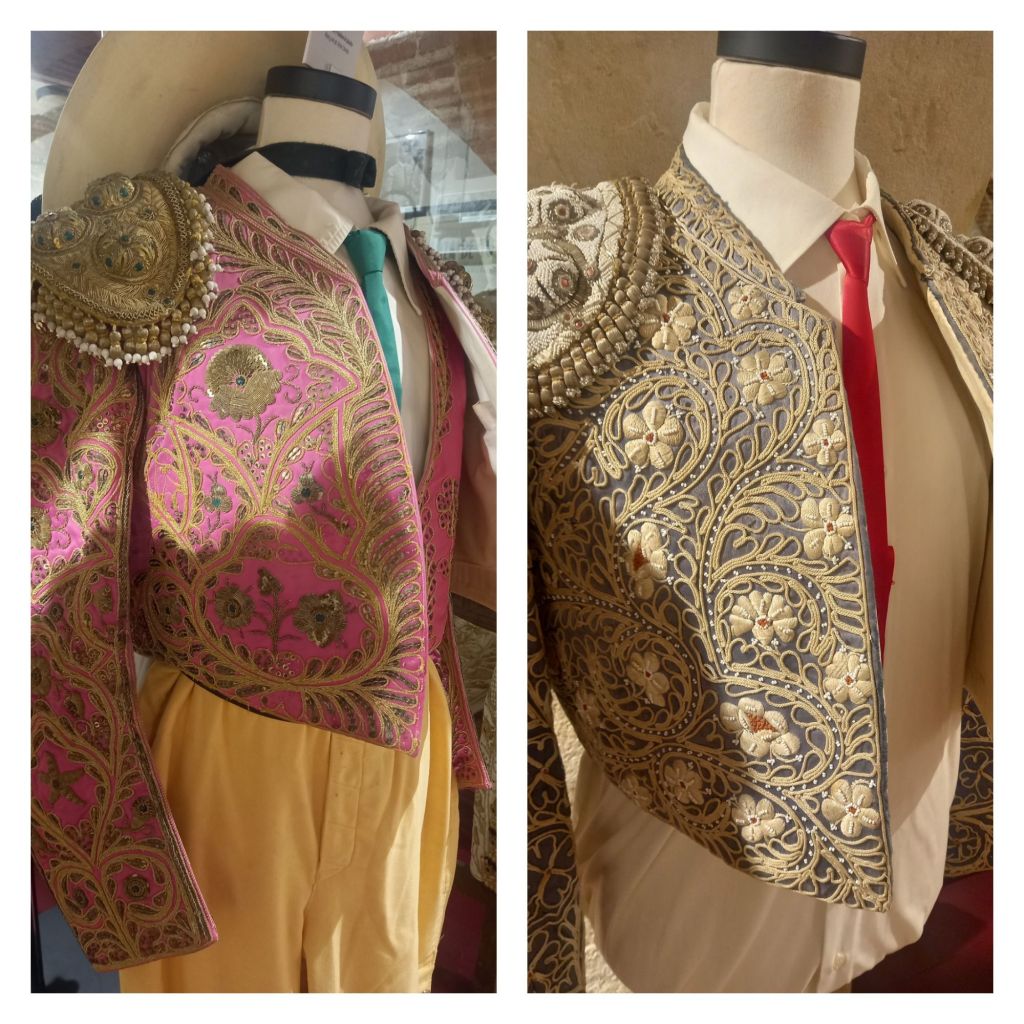
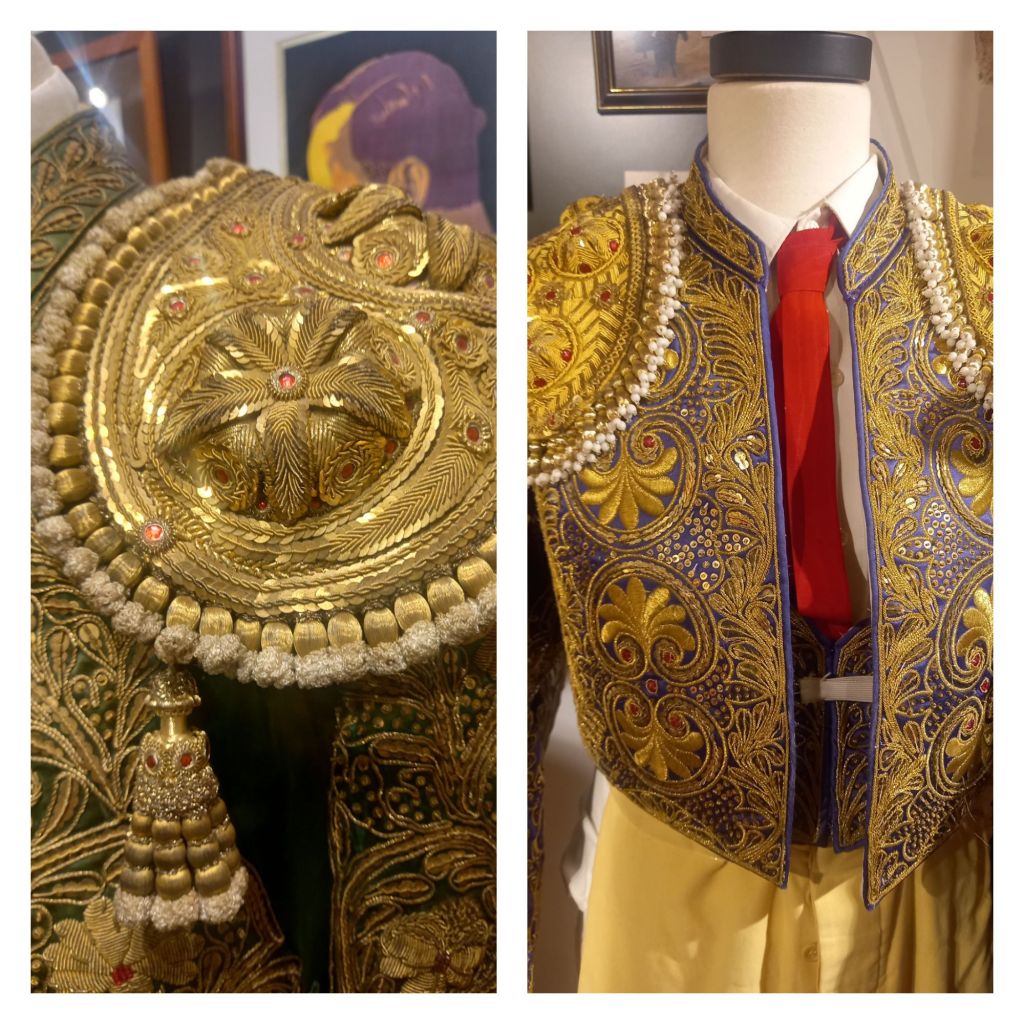
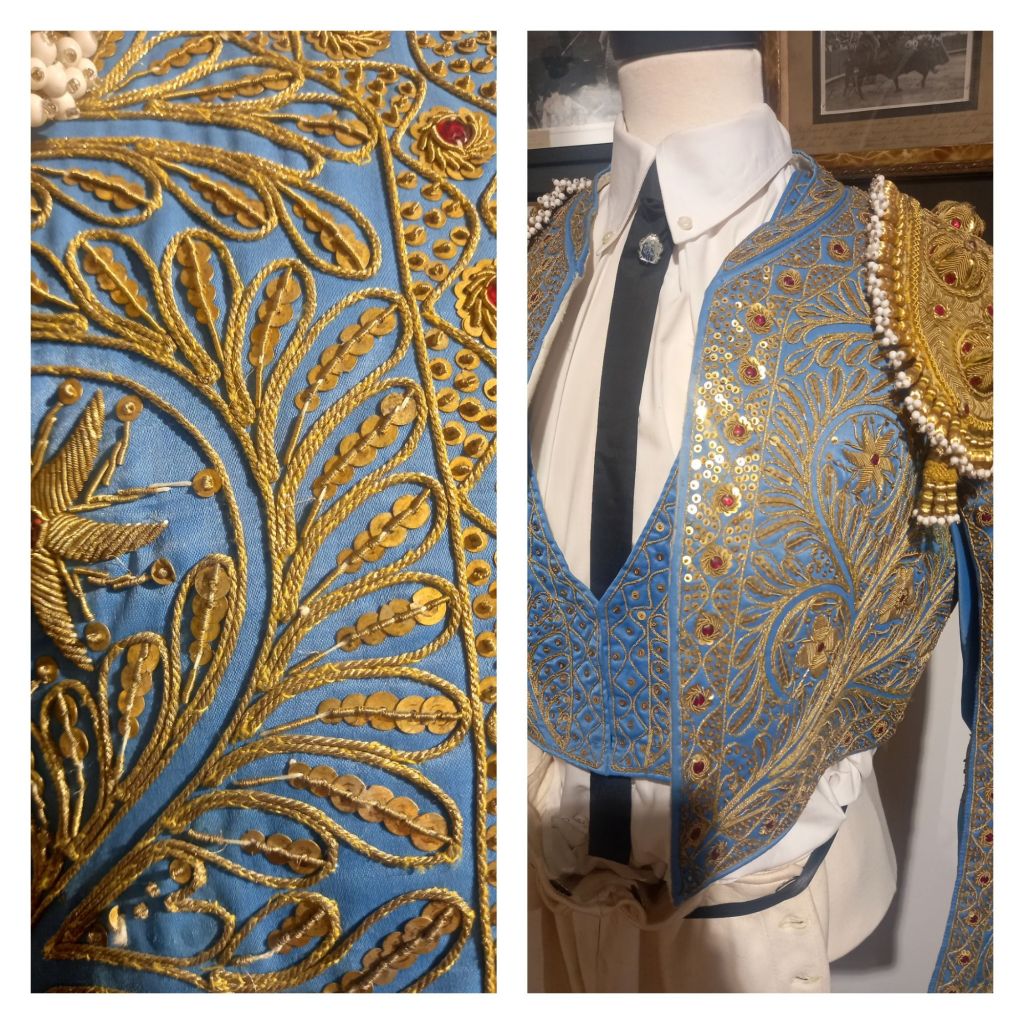
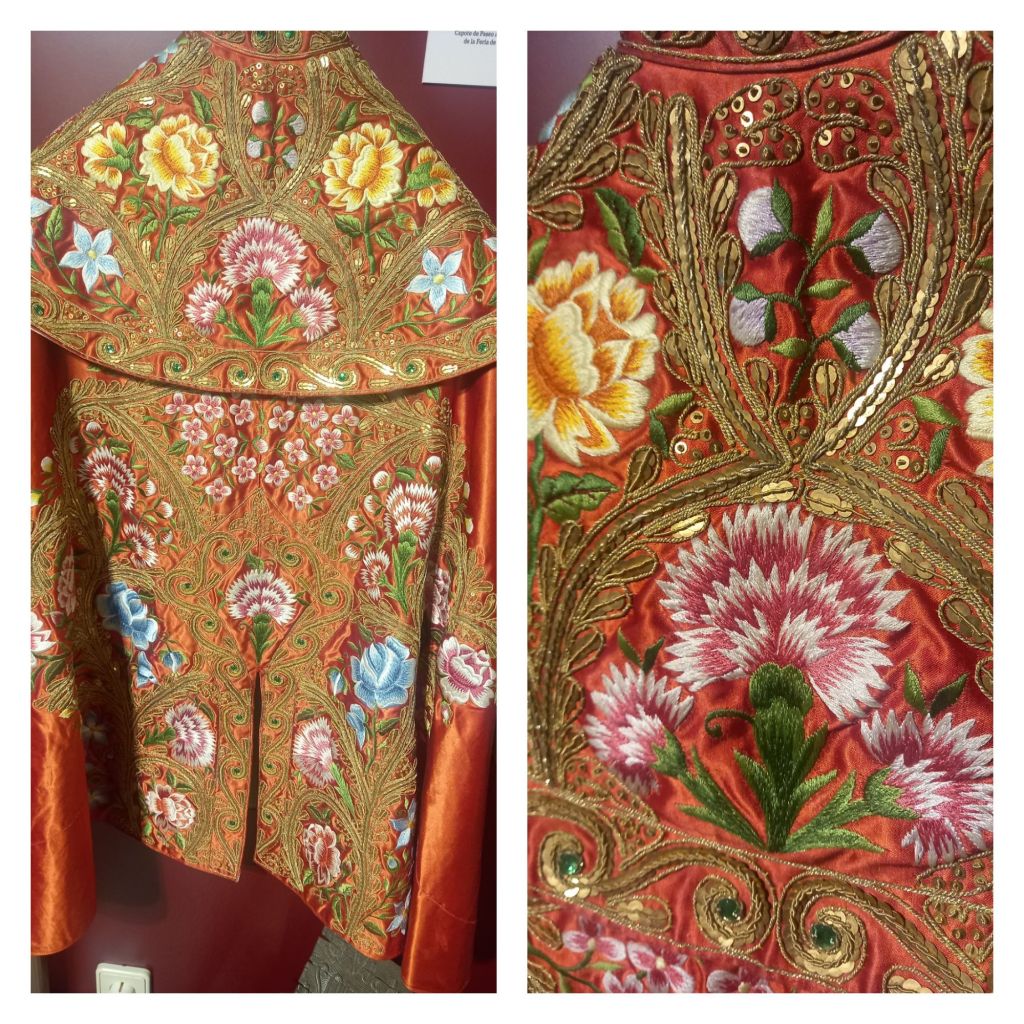
The displays of matador costumes were stunning. Spain does embroidery and gold work for costumes, such as the Moors and Christians, and the Semana Santa festivals, to such a high standard. 

It is particularly impressive as these costumes would be seen from a distance, rather than close up. The level of detail is amazing.

It was also notable that most of them were really small. There were costumes dating back to the 1940s, and they reminded me a lot of the stature of horse racing jockeys.

It was a very unique experience.  As with visiting historic houses and their stags,  the mounted bull heads were sad to see,  but the overall interpretation was very good.

It did address some of the contention around bull fights, and was very interesting in terms of learning more about the history, and the particular role of bull fighting in Salamanca. 

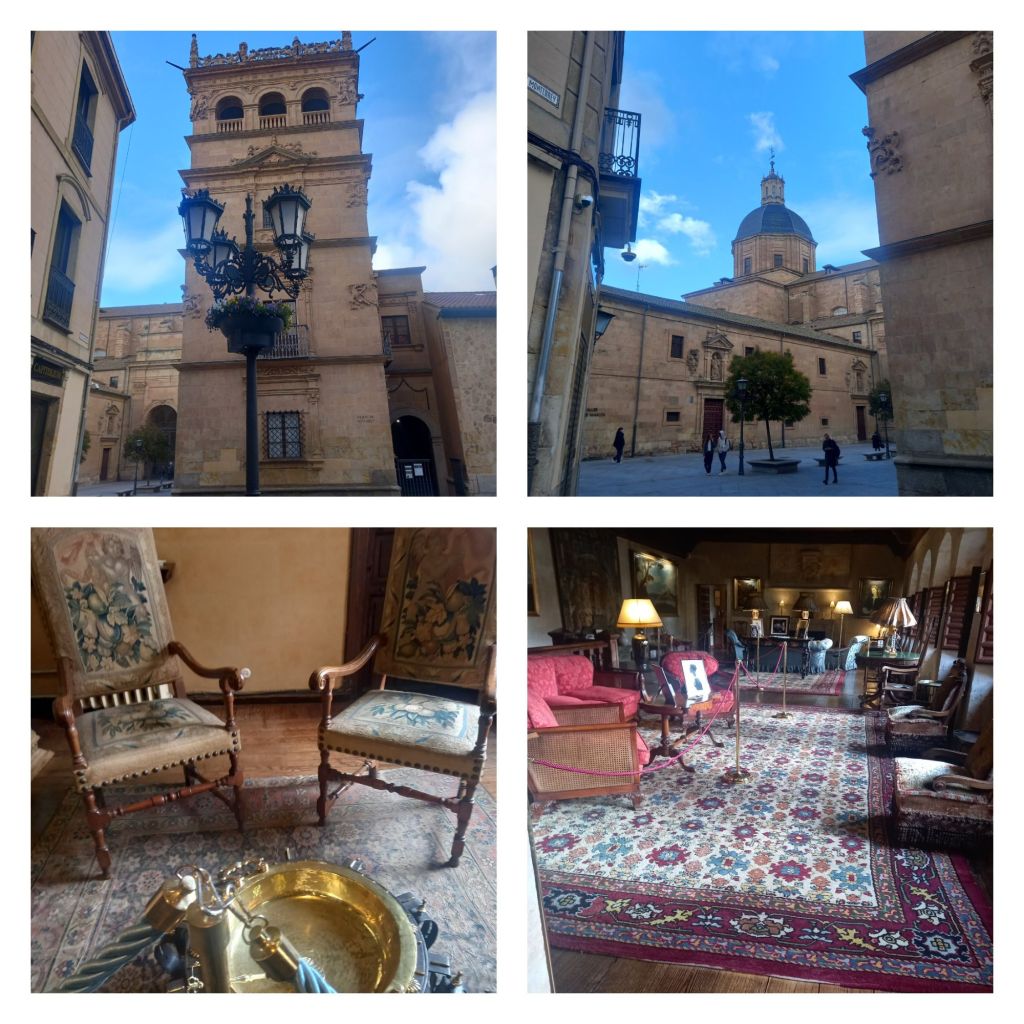
We also visited a nearby palace owned by the Dukes of Alba. As palaces go it was very much a liveable family home, the sort of place you could imagine, or dream about being in. It had beautiful views over the city from the living quarters as well, and a lovely bell tower.

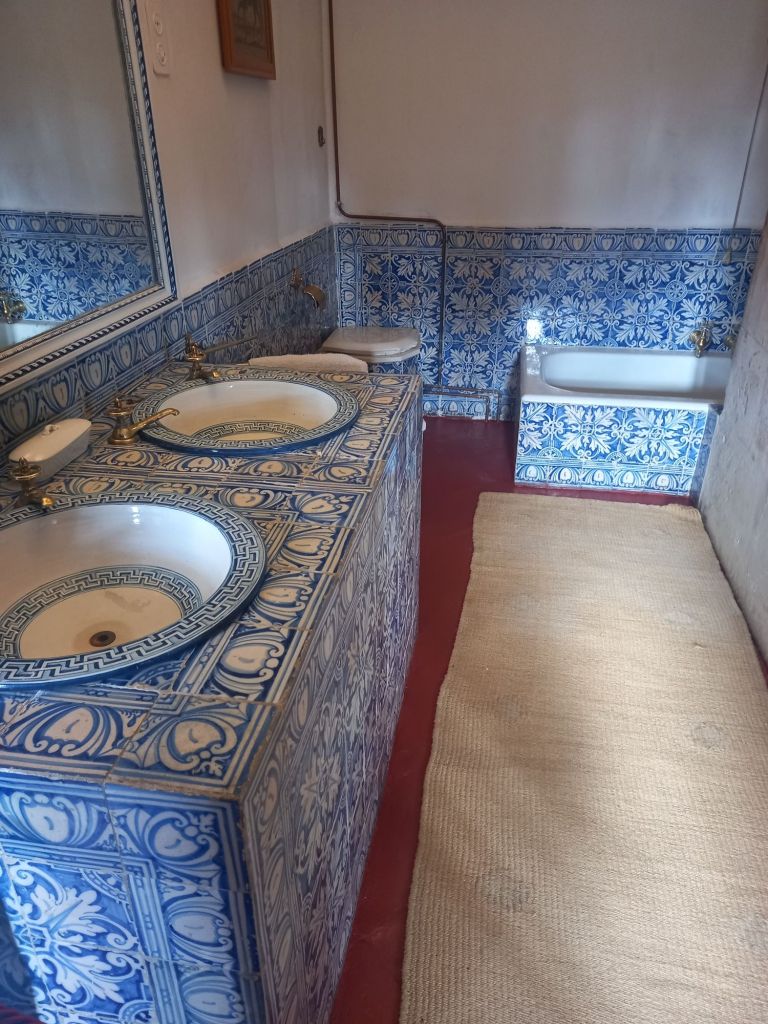
There was also the most gorgeous tiled bathroom, complete with fully tiled toilet!

Salamanca is definitely one of my favourite cities. It has such a quiet charm, with so much to see. I know there are many other stunning Spanish cities to visit, but this one comes highly recommended.

Mum and I will hopefully be doing another city break in December, all will be revealed nearer the time, as this is somewhere we have tried to go before, and failed!

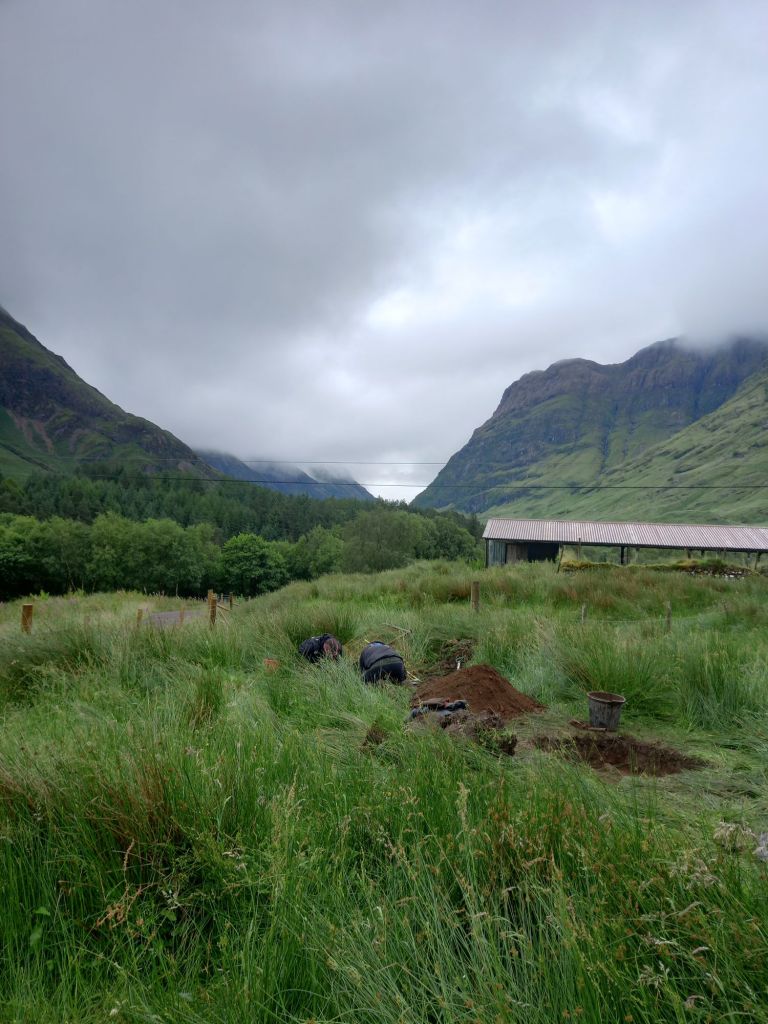
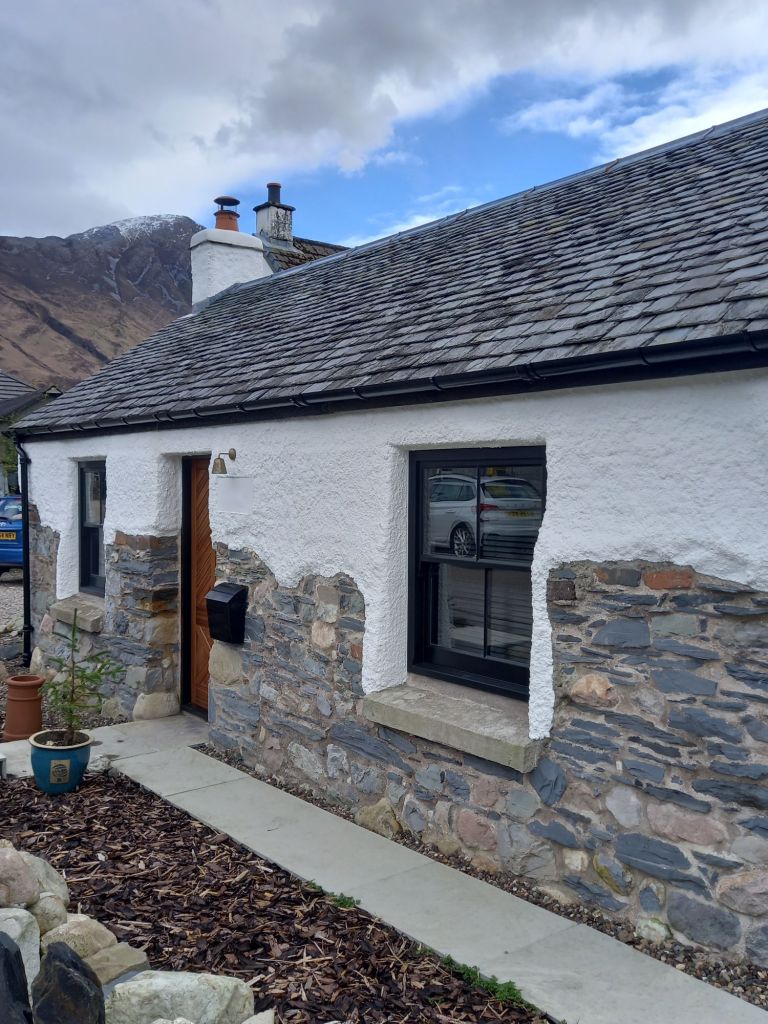
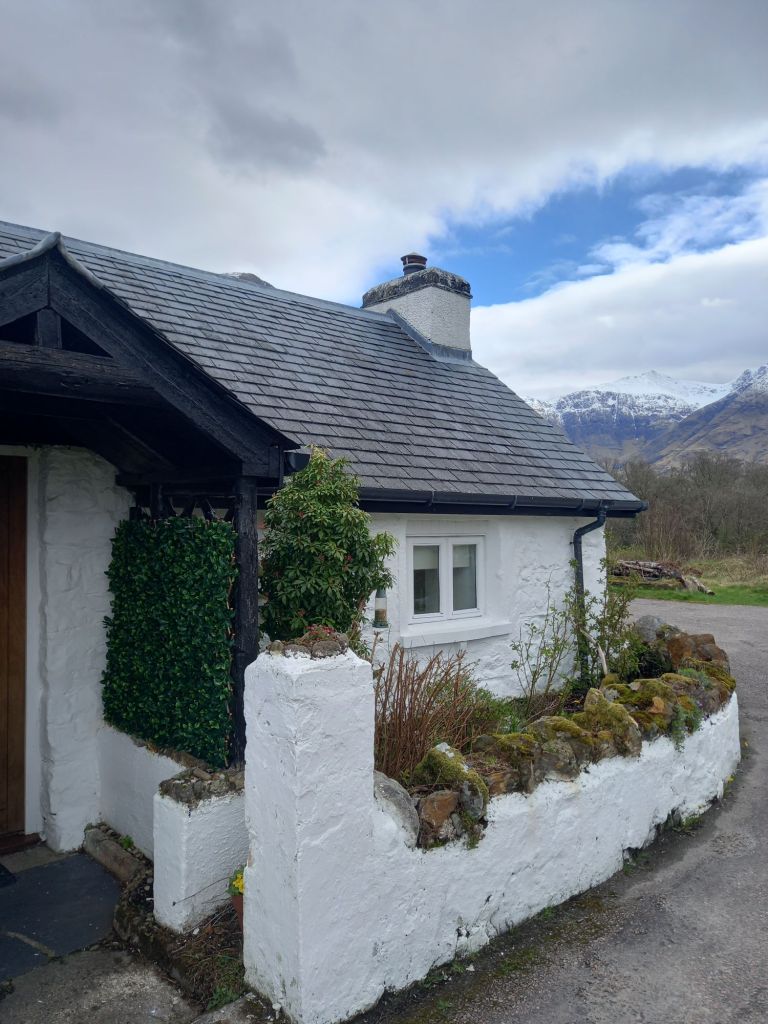
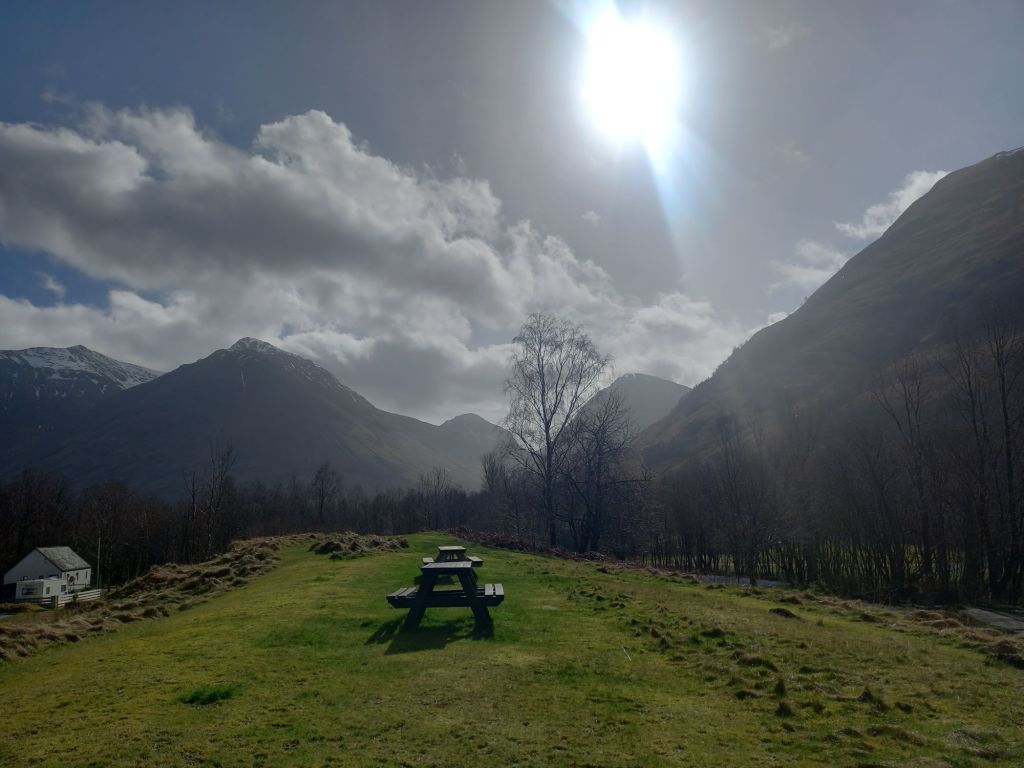
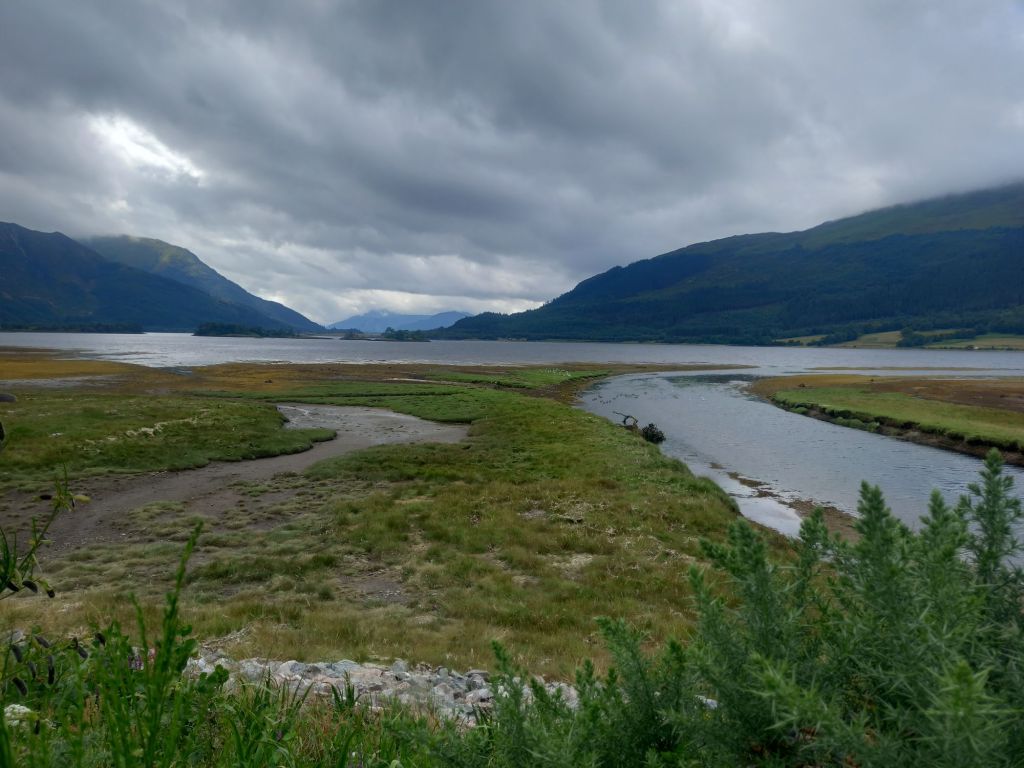
I am now safely installed at my new site for the 2026 season at Glencoe. Have had a fantastic few days working with my new team, and am really looking forward to the campsite opening next week.

I have lots to share about my Scottish adventures so far, but this is a little taste of where I will be spending the summer.

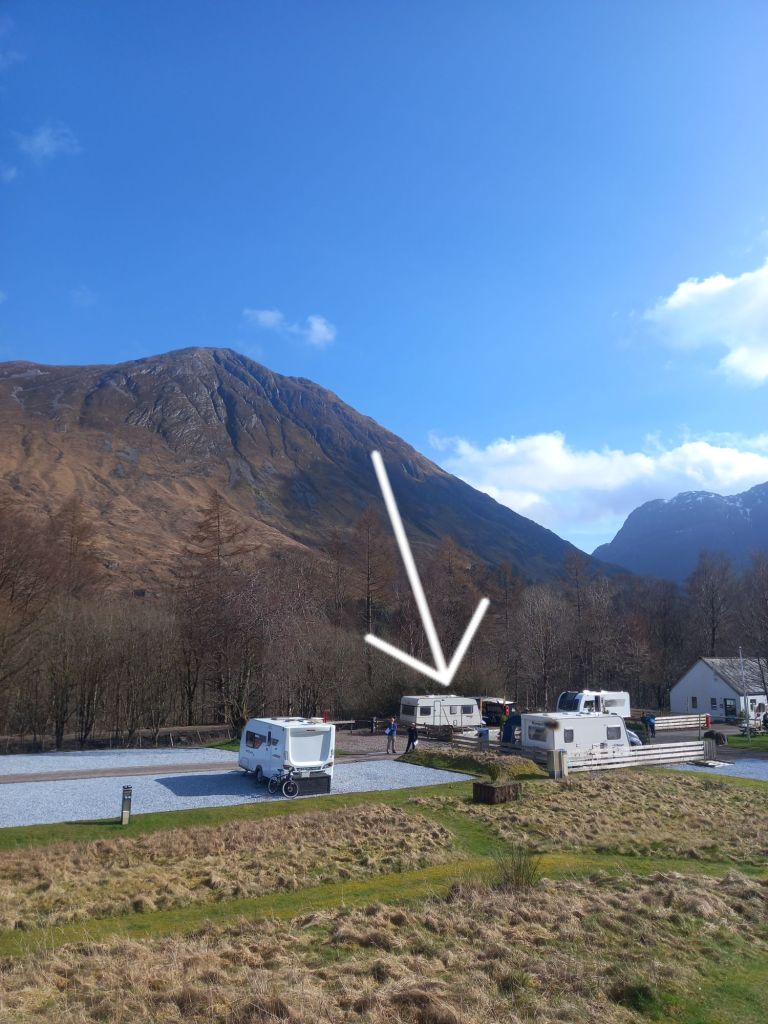
Here is Lotte the caravan in her new home, and this is the view from the campsite. It has been beautiful weather so we having been having lunch on this bench.

You can understand why I am so happy, given that mountains are my favourite things!

Thanks for visiting, and see you soon.

Symmetry and shadows

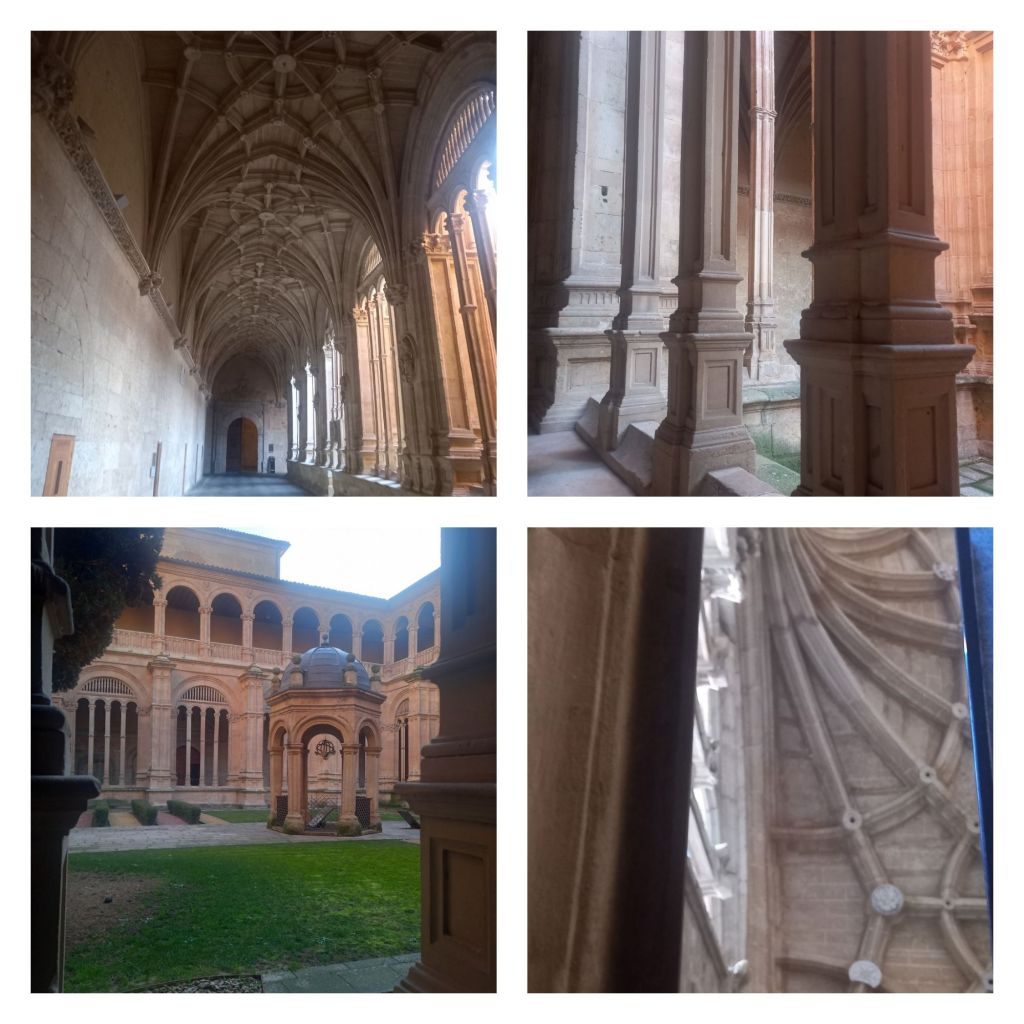
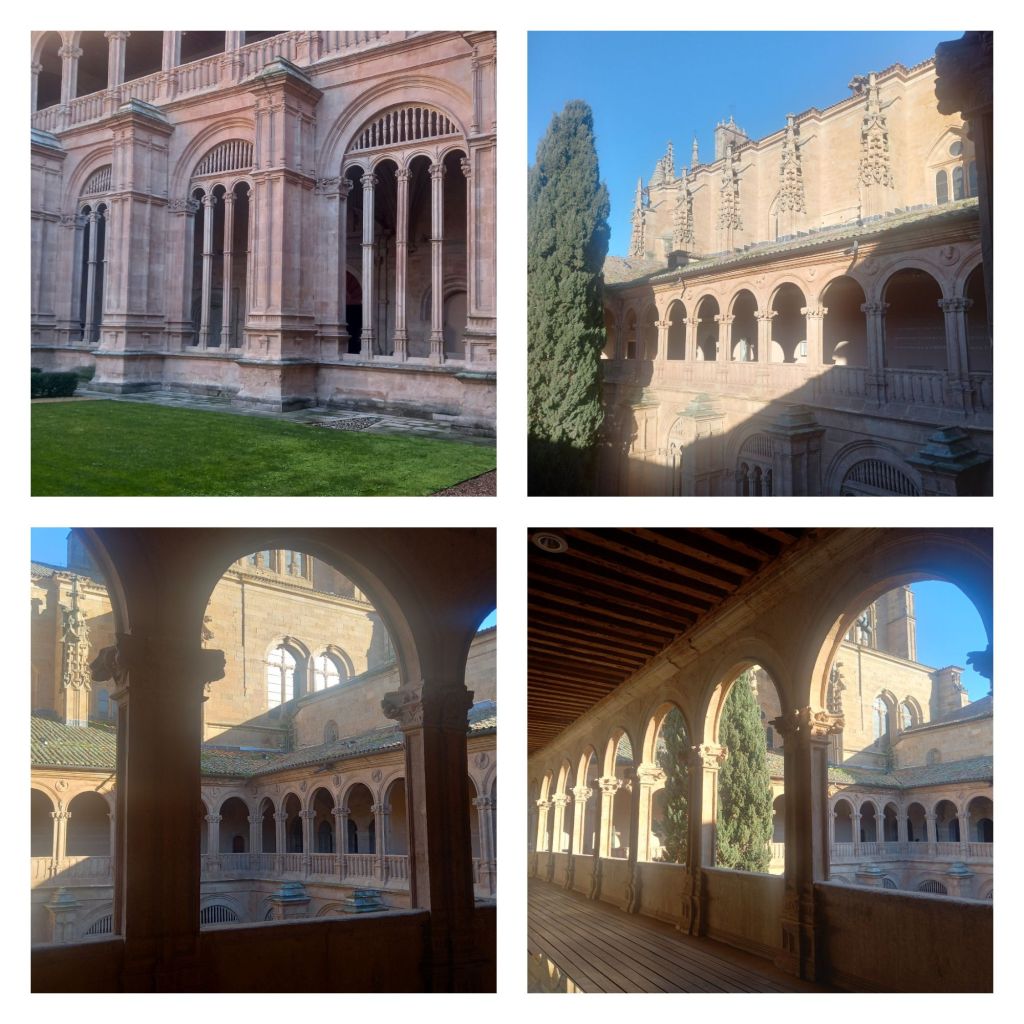
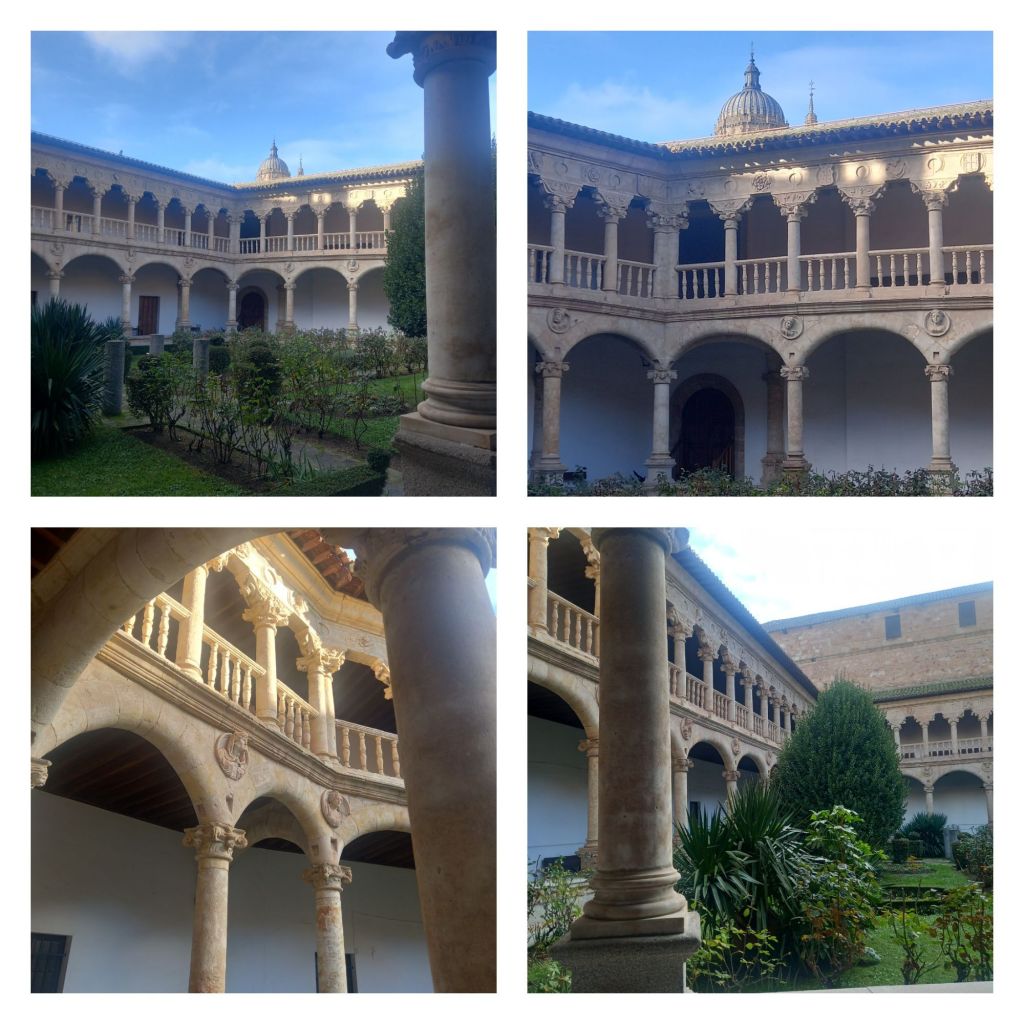
I love cloisters, to me they are one of the most impressive forms of architecture.  The pillars, the ceiling decorations, amazing stonework that looks effortless, but must have been so difficult to achieve.

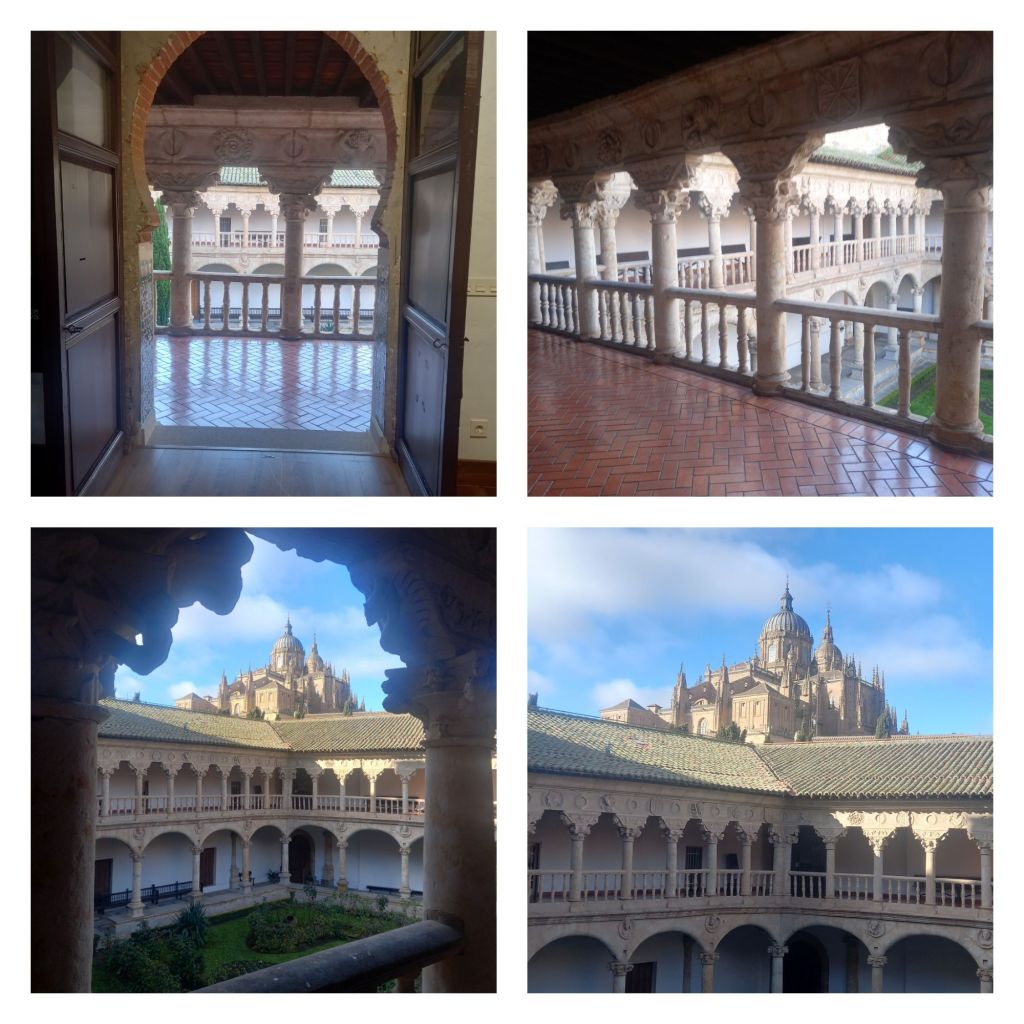
I love the way the light hits the stone, the different perspectives you get as you walk around, and the contrast between sun and shadow.

We visited two beautiful cloisters on our second day in Salamanca. The first was in the convent attached to the church of San Estaban, itself an absolutely stunning building. 

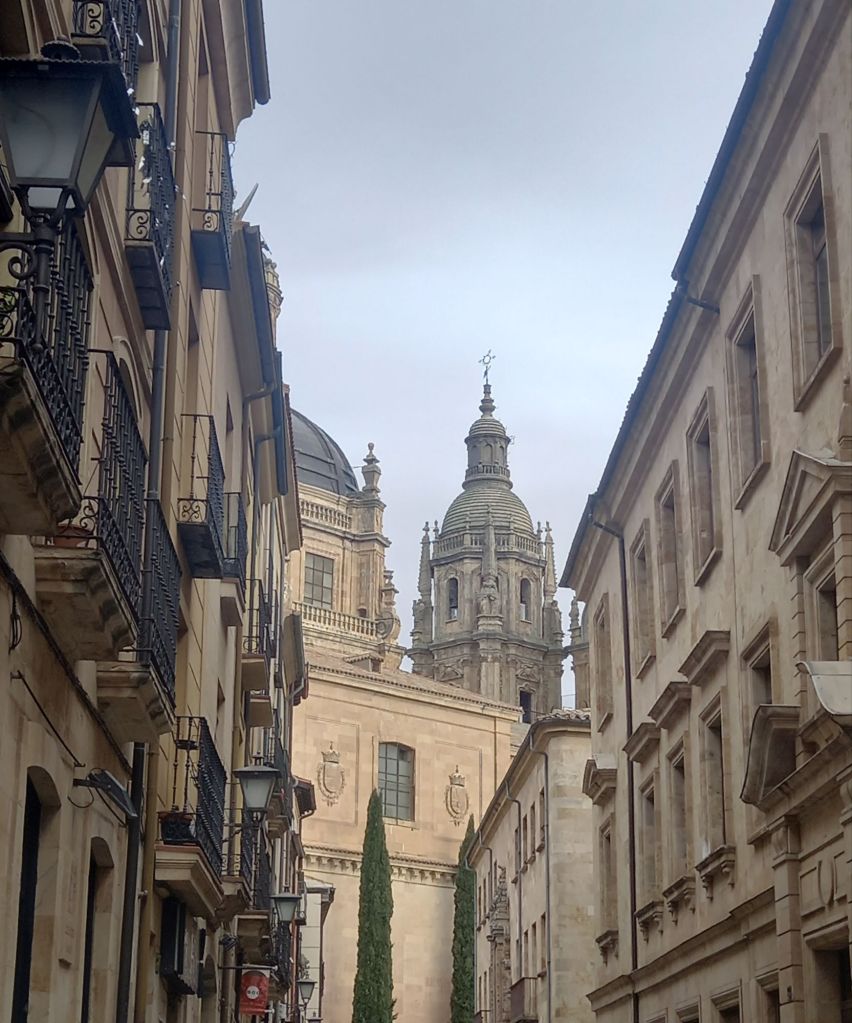
The second was the Convent of the Duenas, virtually next door. Not only were the buildings themselves so incredible, the views they gave across to the nearby cathedral were also wonderful.

I spent a lot of time just framing shots, there are definitely some here that I will want to print off and frame in future.

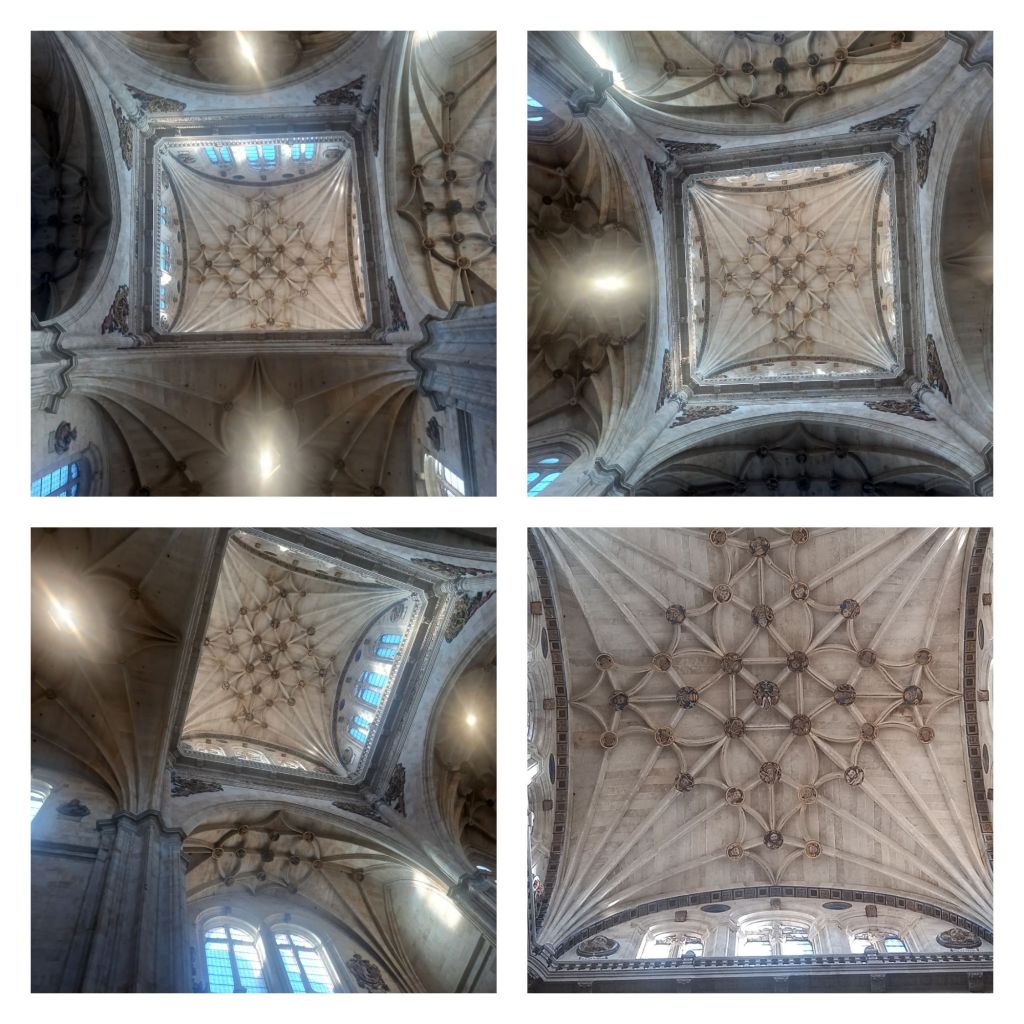
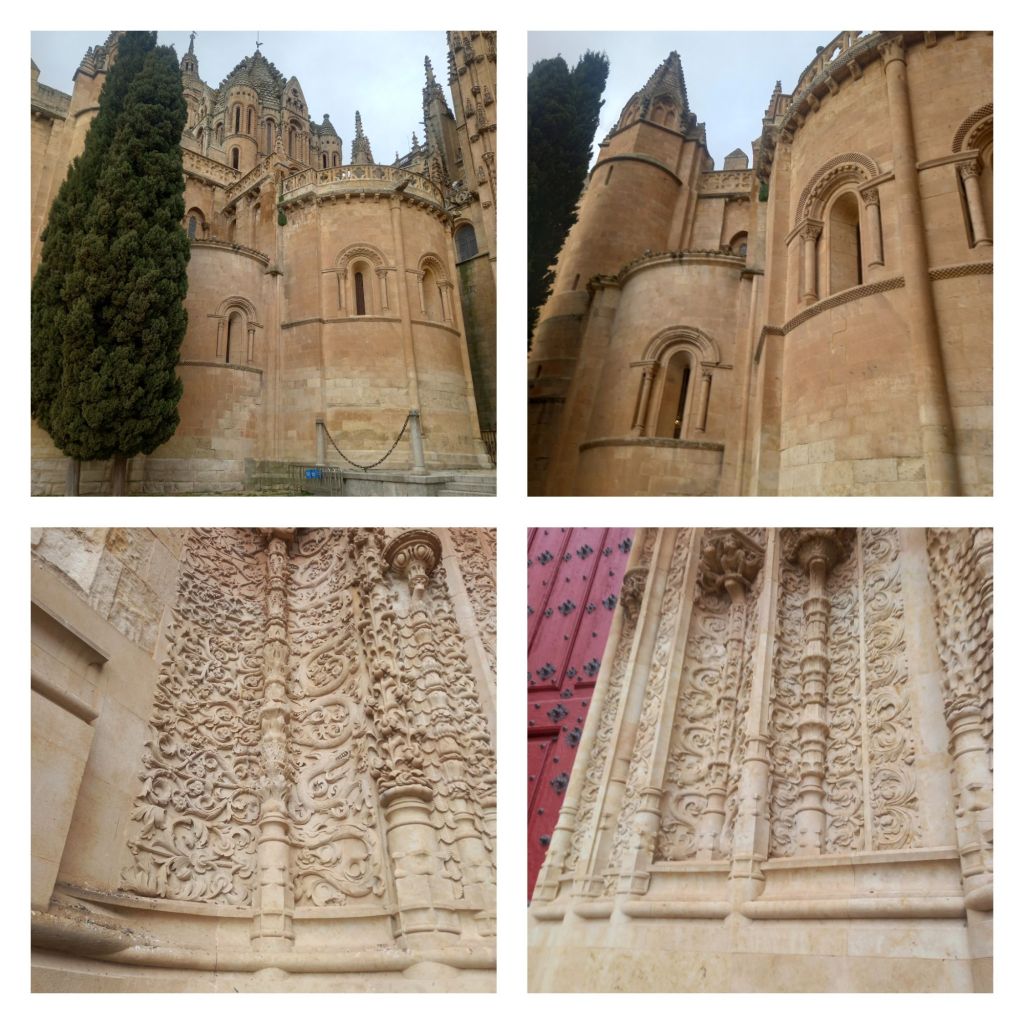
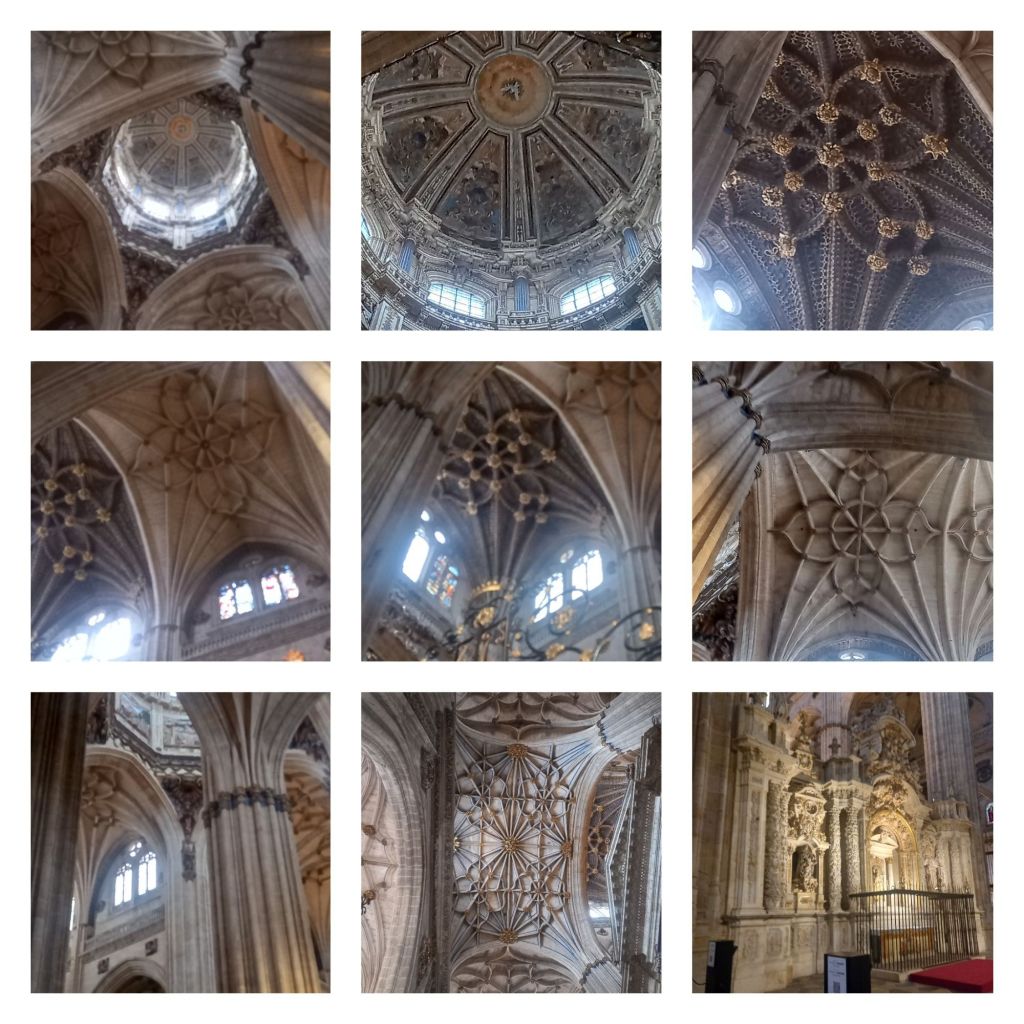
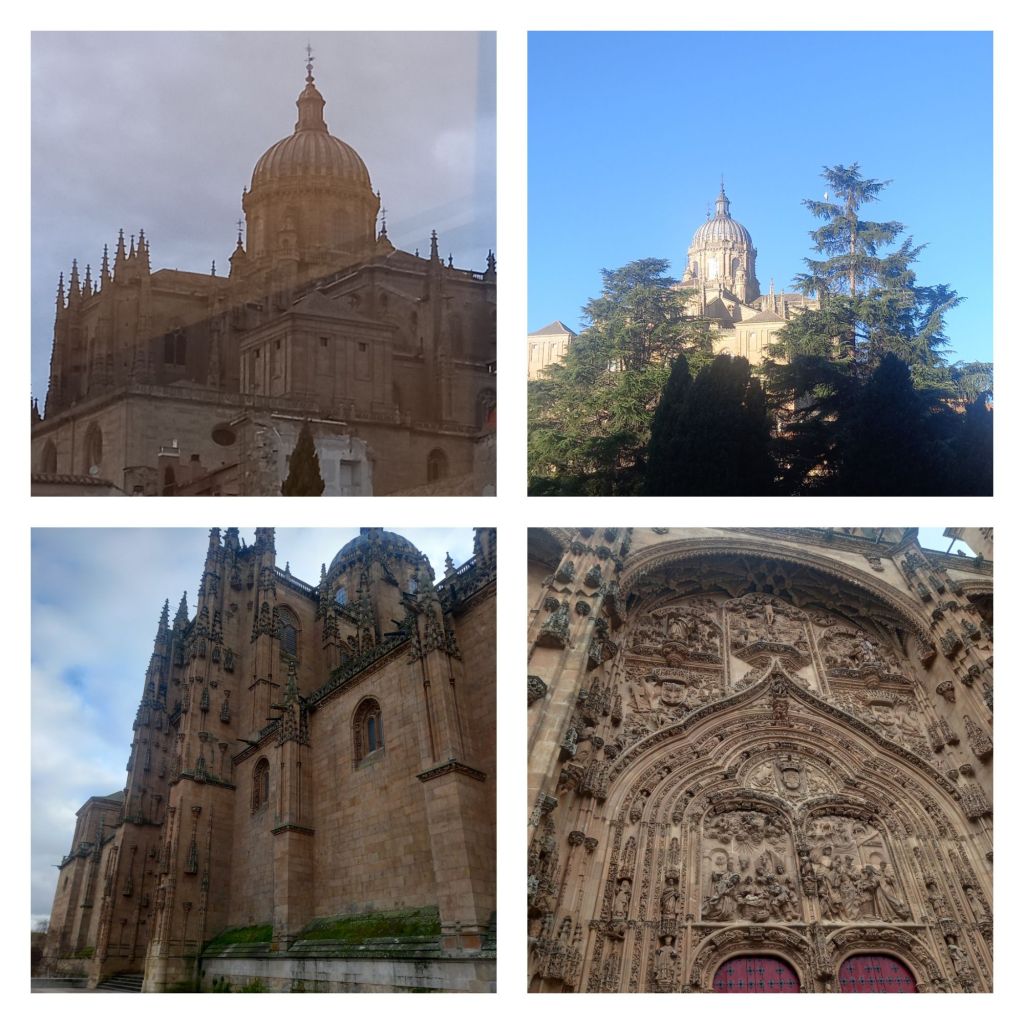
The cathedral dominates the skyline of Salamanca, and it is the most incredible example of the stonemasons’ art. There are actually two cathedrals built next to each other, an older medieval one, and the later gothic building.

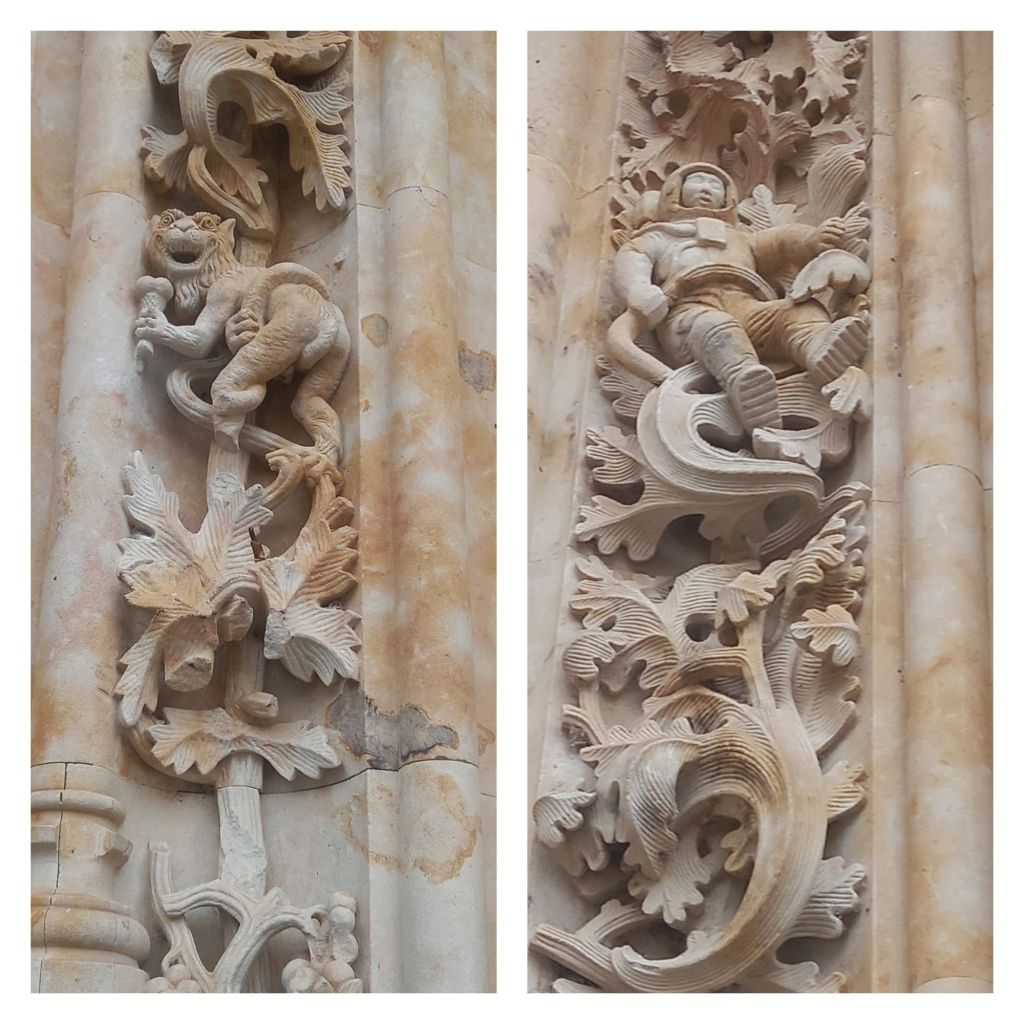
There is something else in the stone work that you have to search for here, an astronaut carved as part of the renovations in the late 1980s. We eventually found it on the fourth door we looked at! I love this little creature on the left as well.

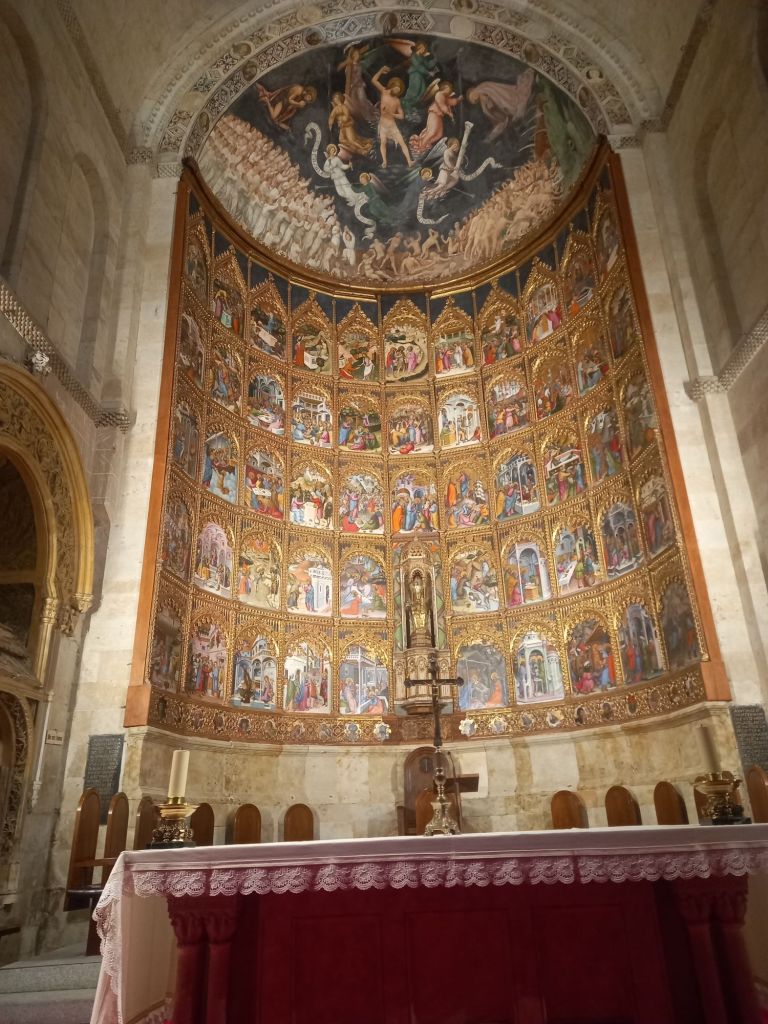
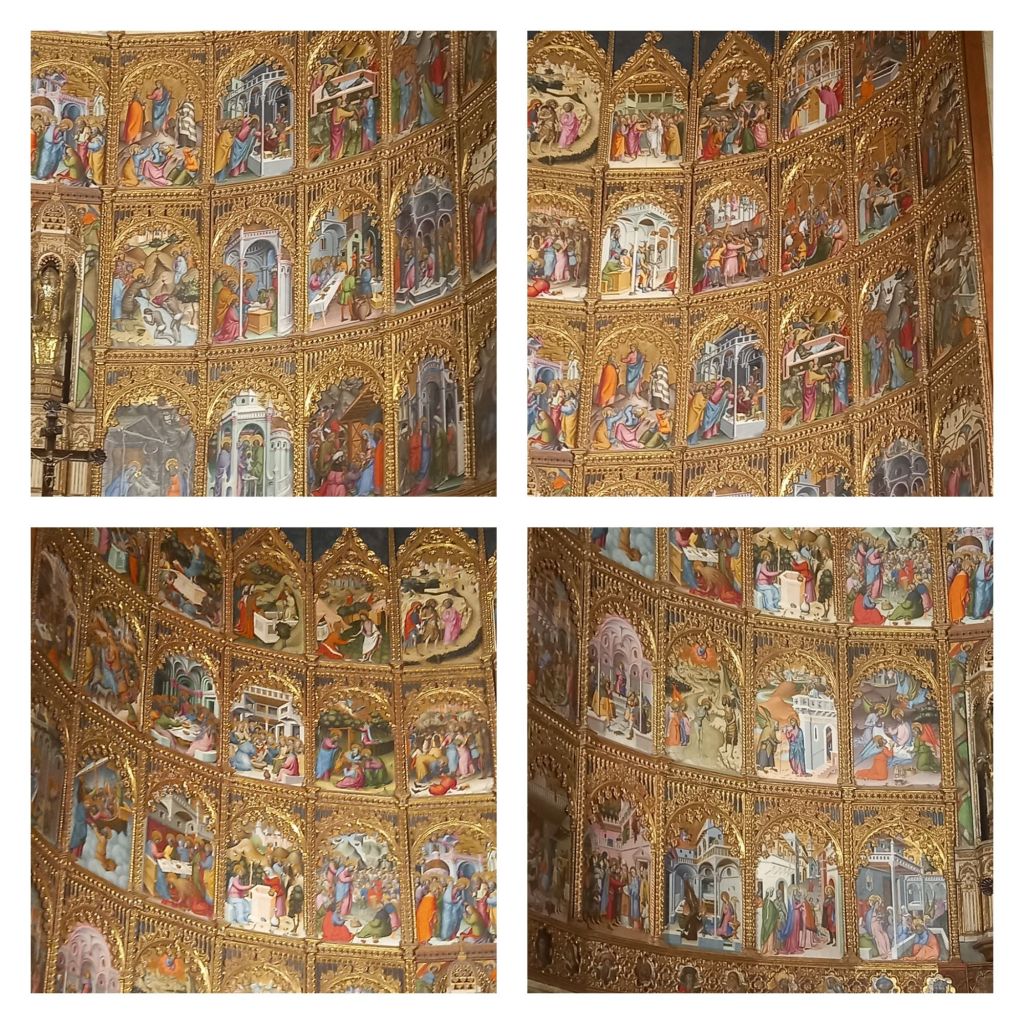
Although the newer cathedral was beautiful, it was the older one that had the best piece of religious architecture.  Probably the most wonderful altar I have ever seen.

I couldn’t get any closer to take more detailed photos but this is an amazing piece of art.

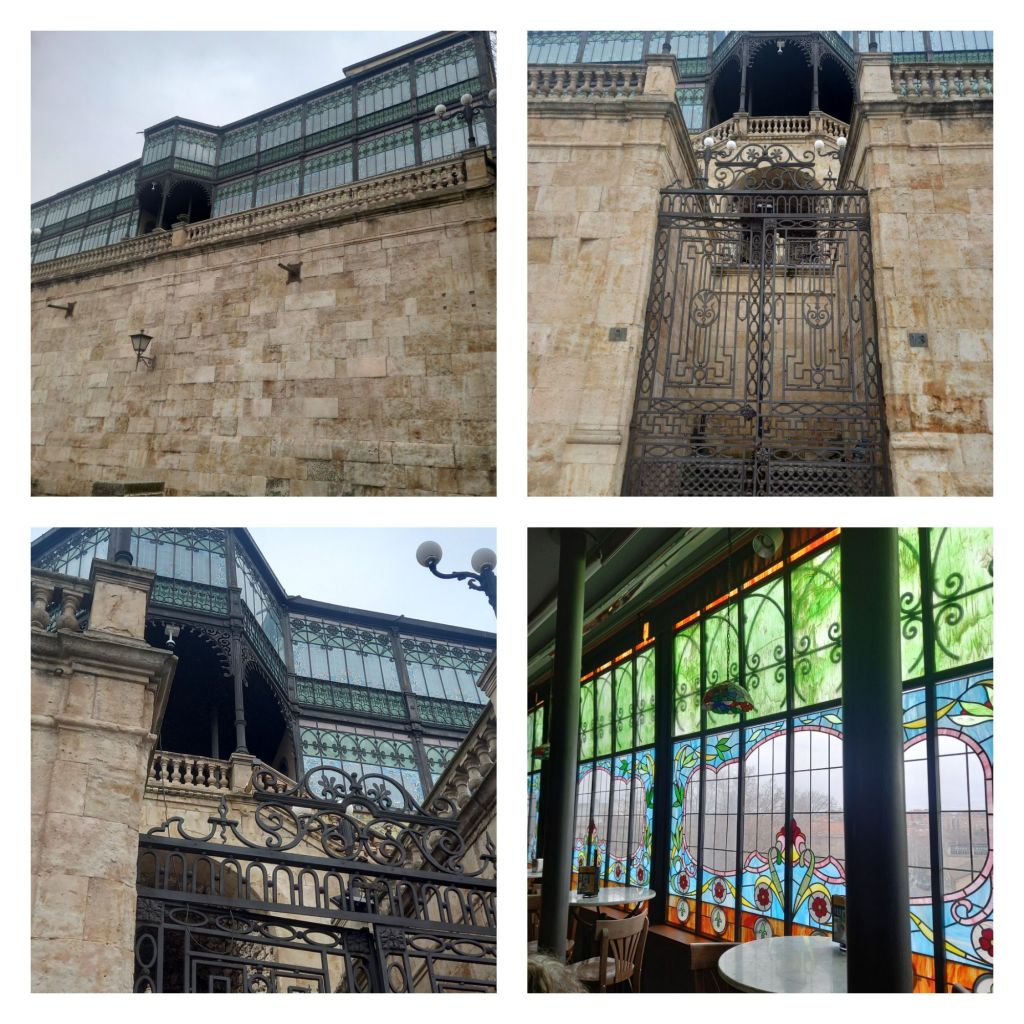
We finished our trip with a visit to the Art Noveau house, once a private dwelling and now an art museum.  No interior photos of the exhibitions allowed, but here is the exterior and the beautiful restaurant. I do keep coming back to this period, as I do so love it.

Medieval will always be one of my favourites for its richness, but there is something so lovely about the lines and form in this period.

I have one more post about Salamanca to share with you, then I can show you some of the wonderful things I have seen since I got back to the UK. It was such an interesting city to visit, full of just so many beautiful places, and of course wonderful doors!

Until then, thanks as always for visiting.

The stonemasons of Salamanca

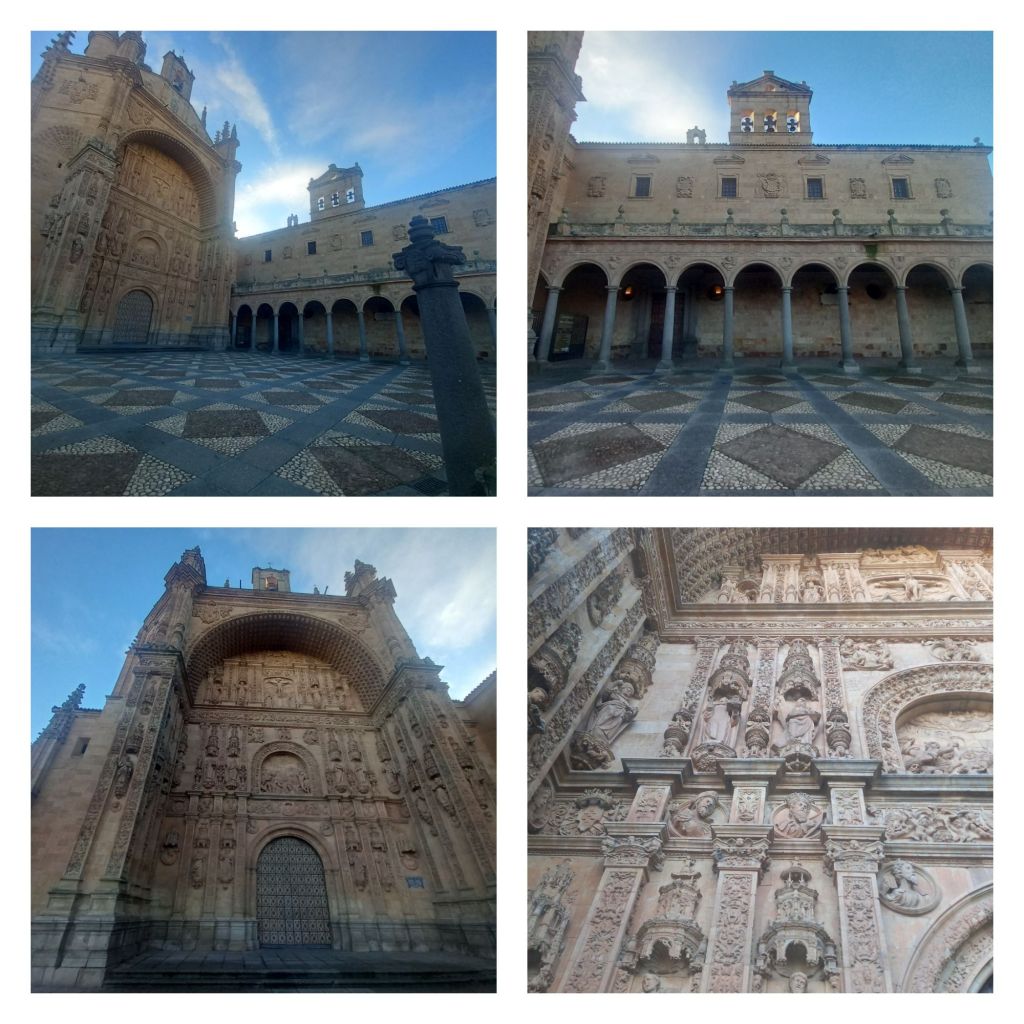
I have written before about the wonderful work of stonemasons, but every time I visit a city where there are medieval marvels, such as in Salamanca, I am amazed once more.

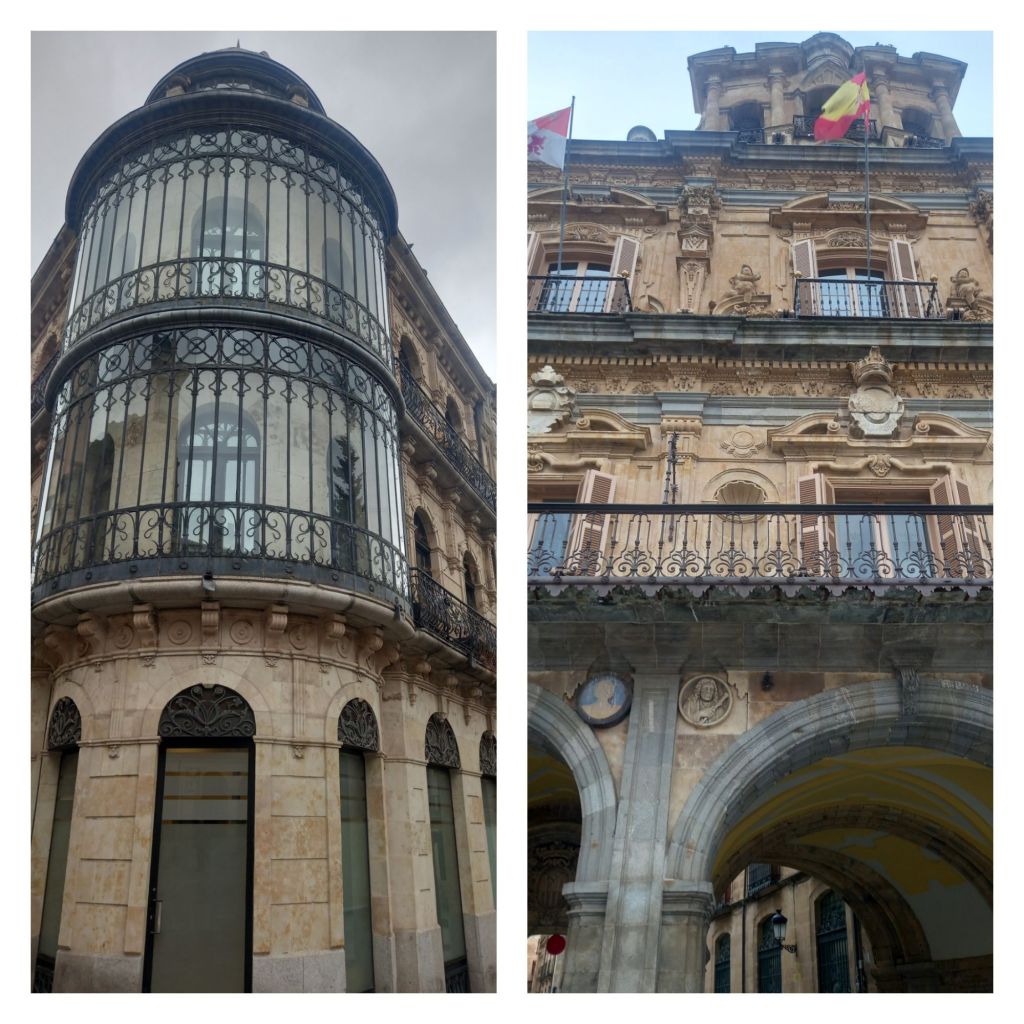
The sheer volume of stone work in this beautiful city is unbelievable, from the cathedral to the many monasteries and churches. Add to that the beauty of just the, ‘ordinary’, buildings, and you have an incredible city.

It is not one that many people visit though. It has been on my Mum’s wishlist for a long time, and I was aware of it through its educational history, but it is not a tourist hot spot like many of the southern Spanish cities, such as Cordoba and Granada.

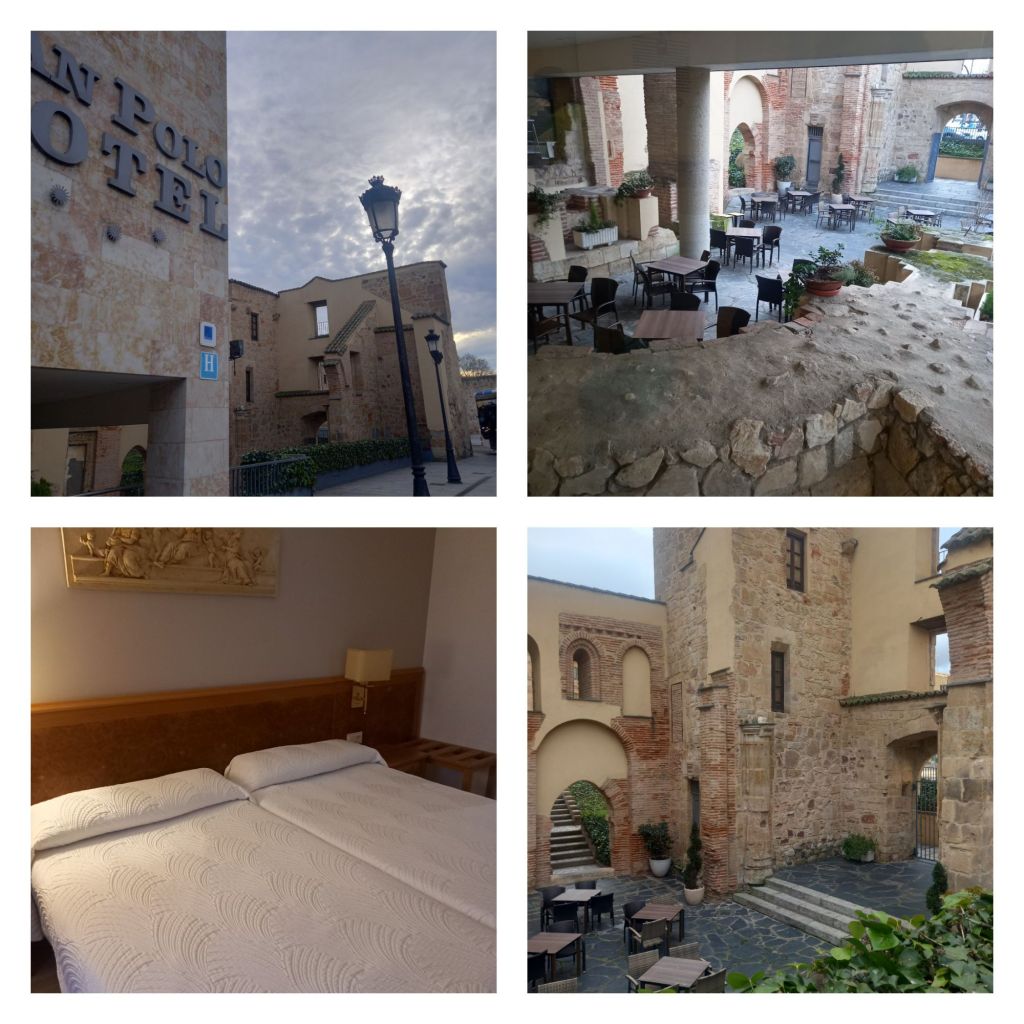
We went in January, by train from Alicante.  Spanish trains are wonderful, so clean, comfortable and reliable, and very cheap! We stayed at a beautiful hotel, the San Polo, built on the ruins of an old church, and right opposite the cathedral. It was like staying in an archaeological dig.

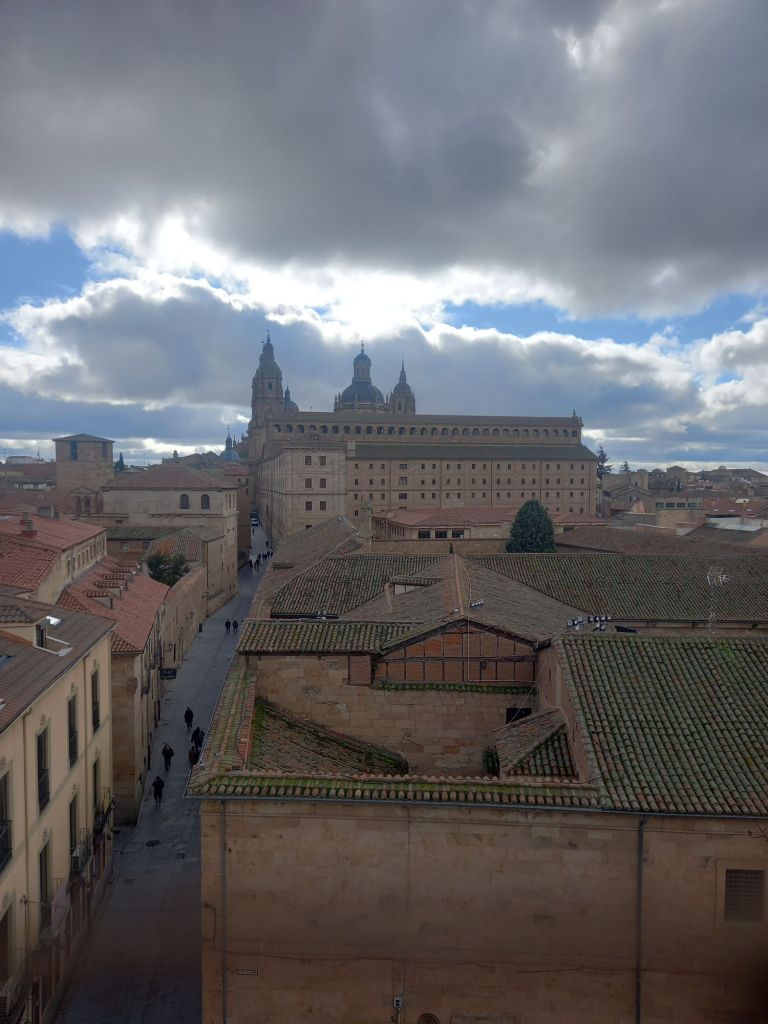
This top photo on the left below is the view from our room. We didn’t visit the cathedral on the first day though, as the weather forecast was better that day, so we did the city wandering that day.

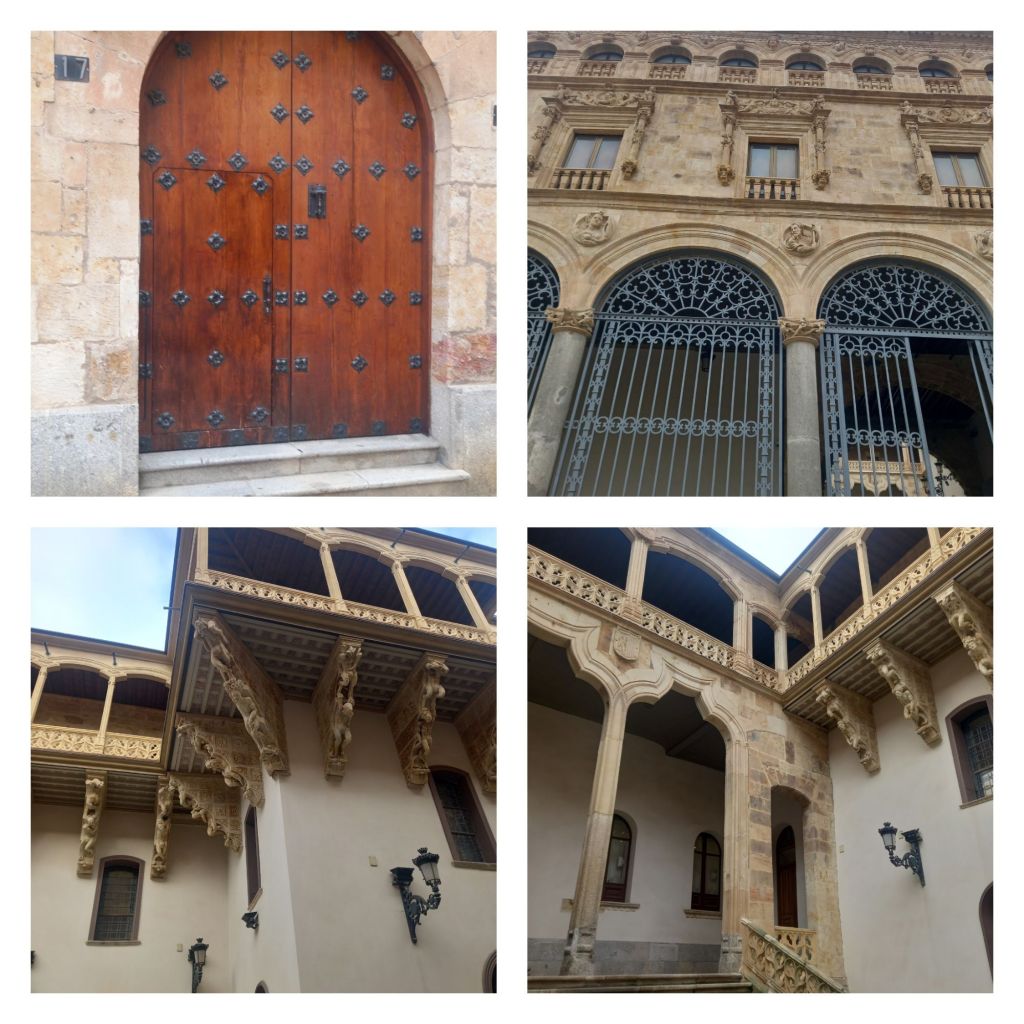
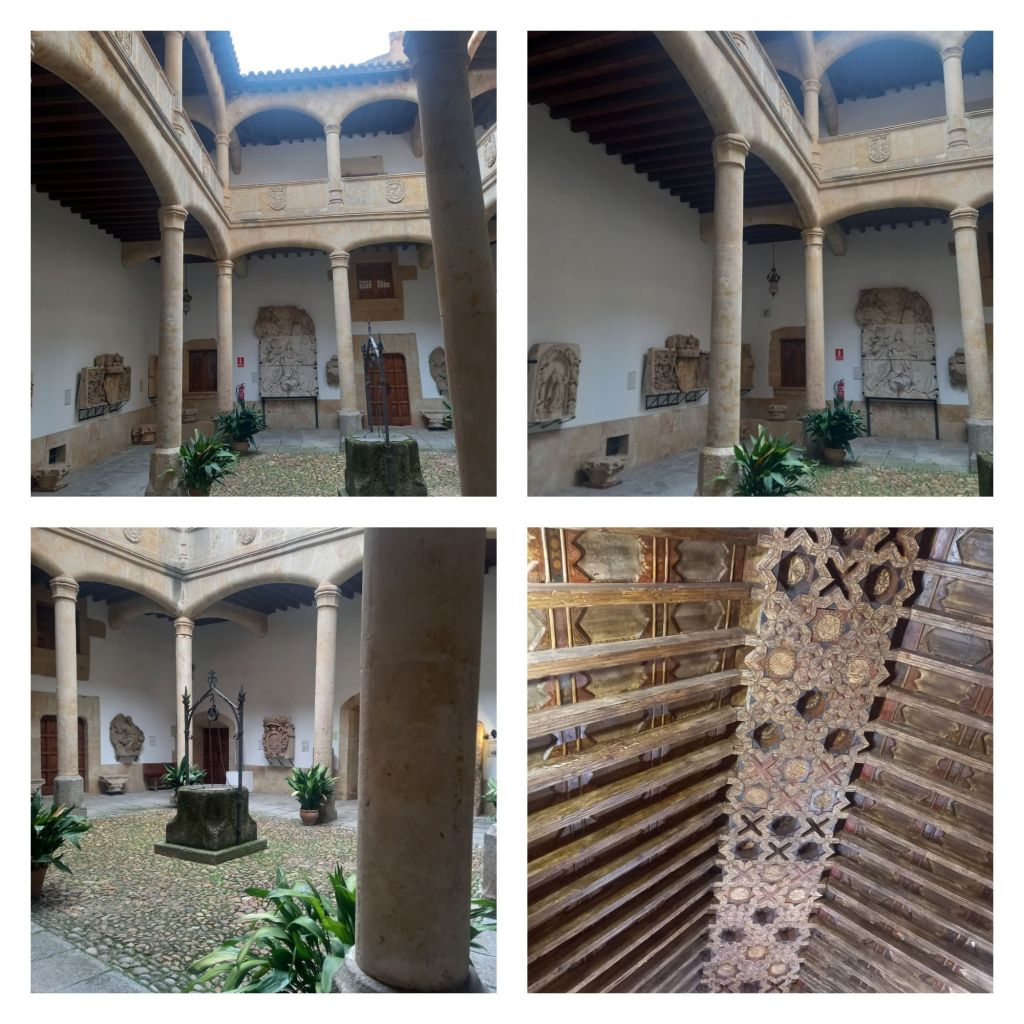
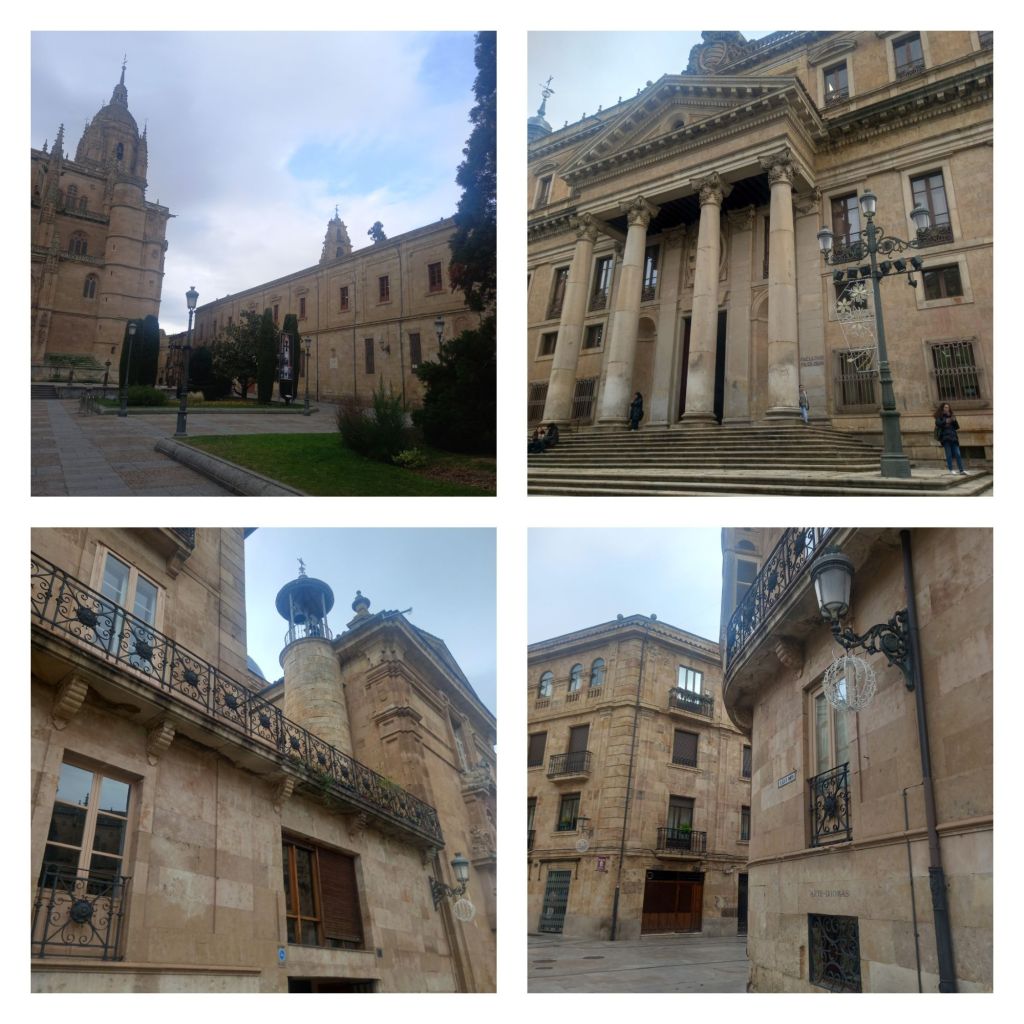
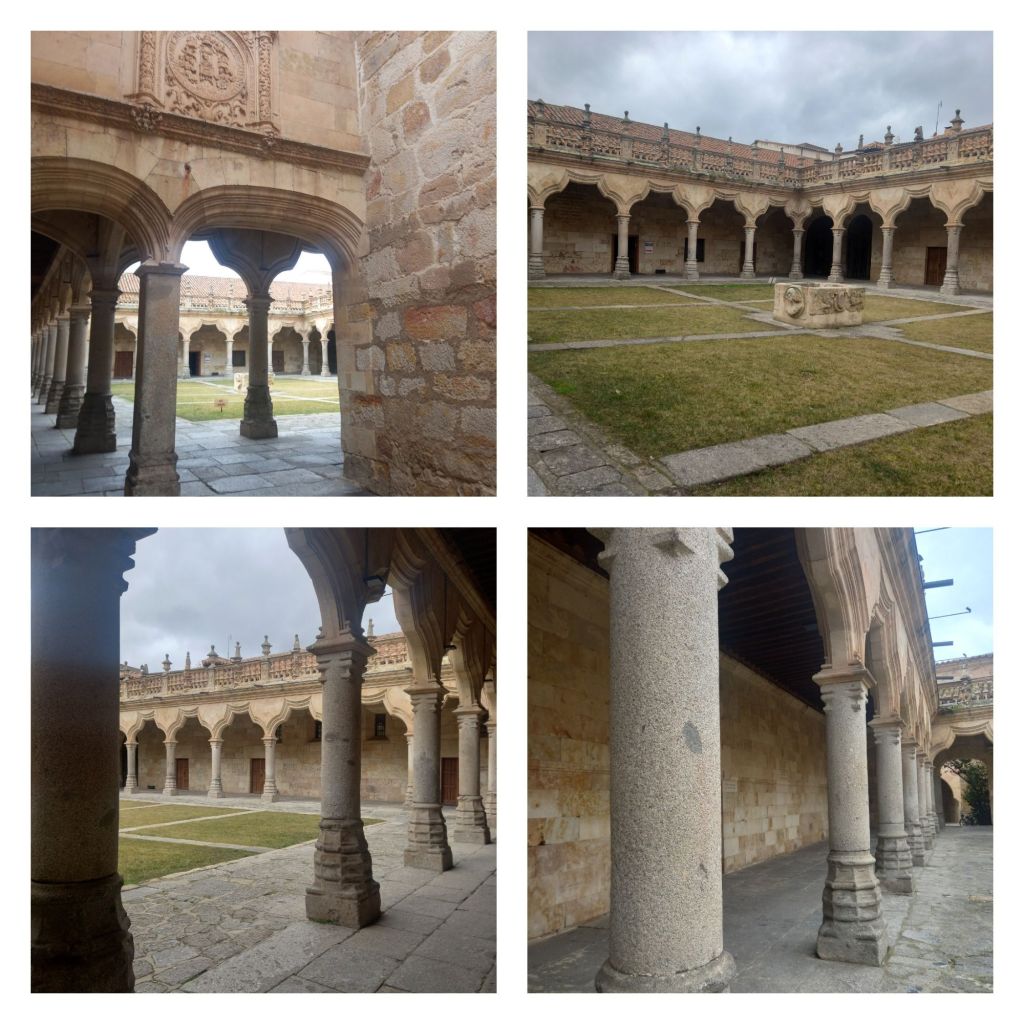
The city museum is housed in an old palace, surprisingly similar to the ones in cities like Cordoba. I had not expected the same type of architecture as this is usually a design used for very hot climates. Northern Spain is more temperate, but there were similar patios and cloisters everywhere.

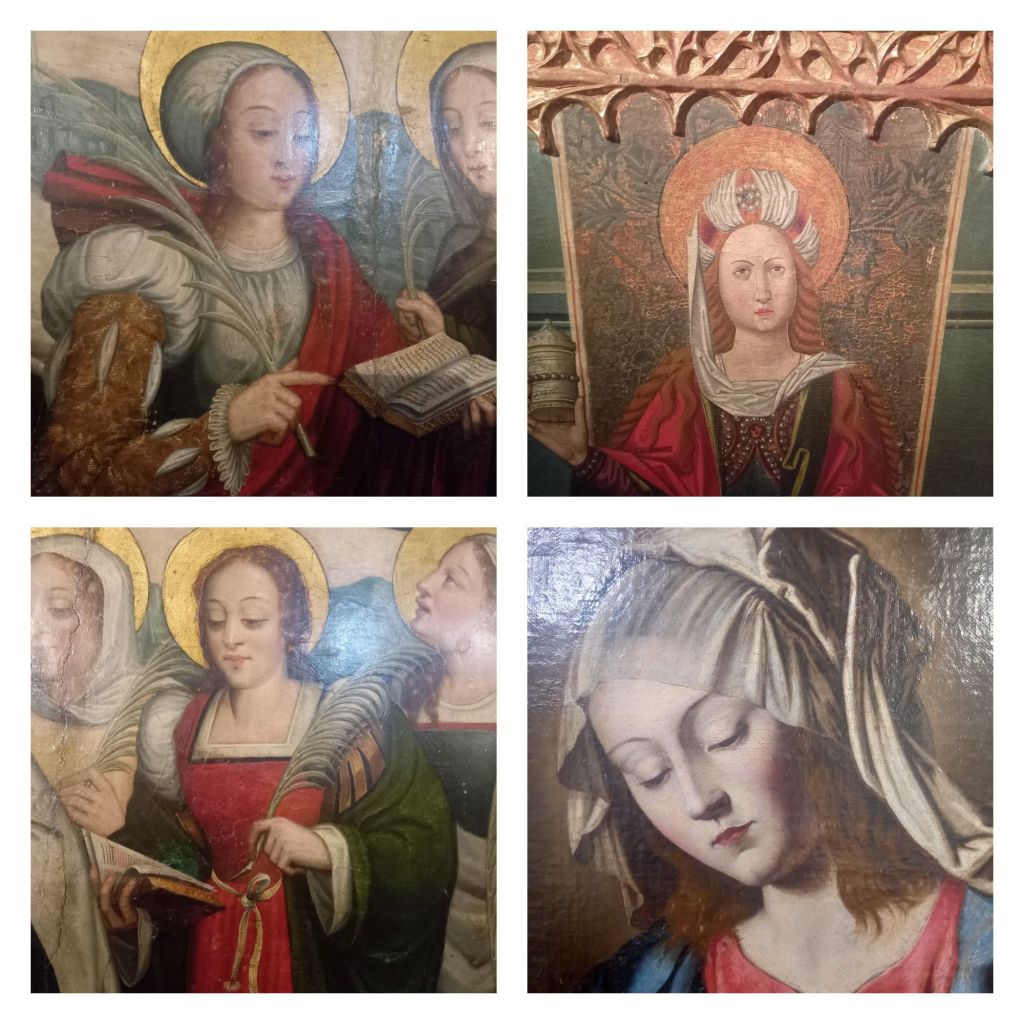
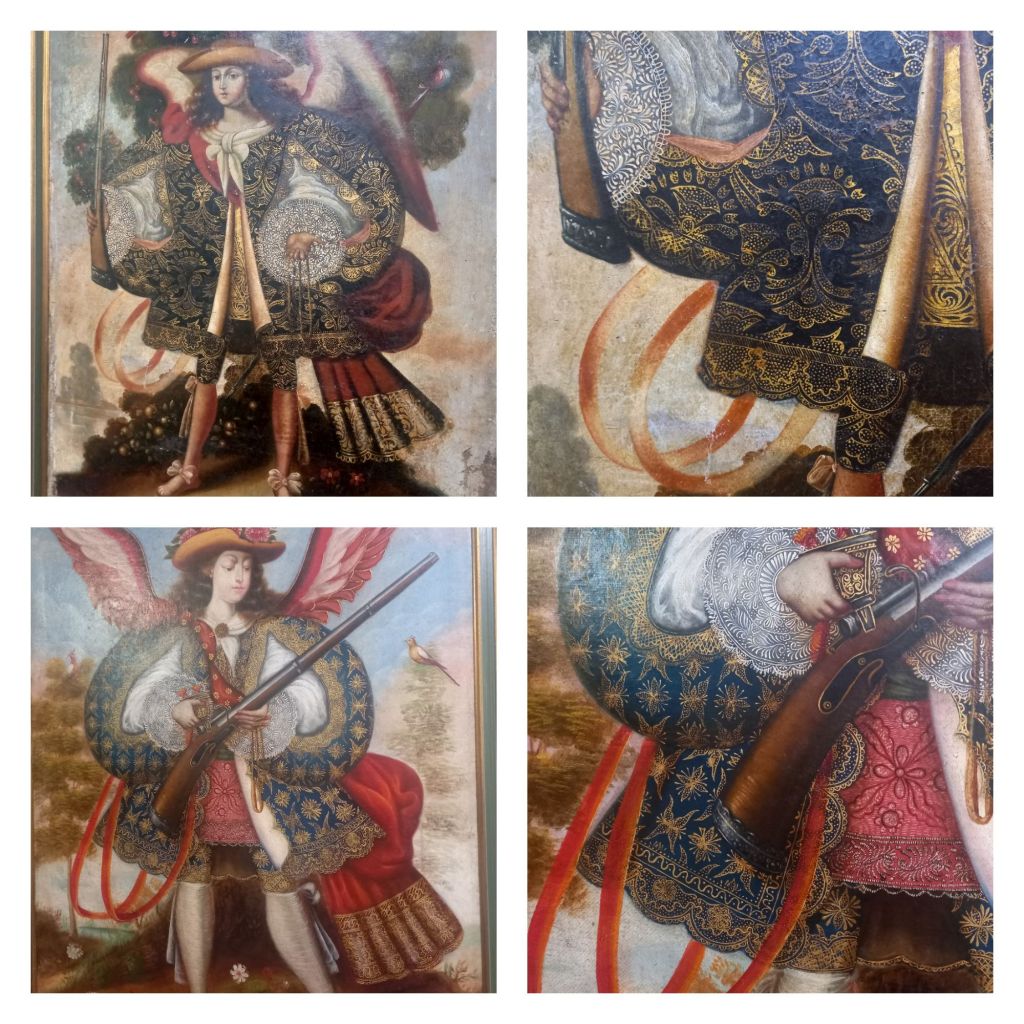
I have seen a lot of religious art on my travels, but these were exquisite.

I think my favourites were definitely the gun wielding angels! I have not seen anything like that before, and the painting of the fabric was so detailed.

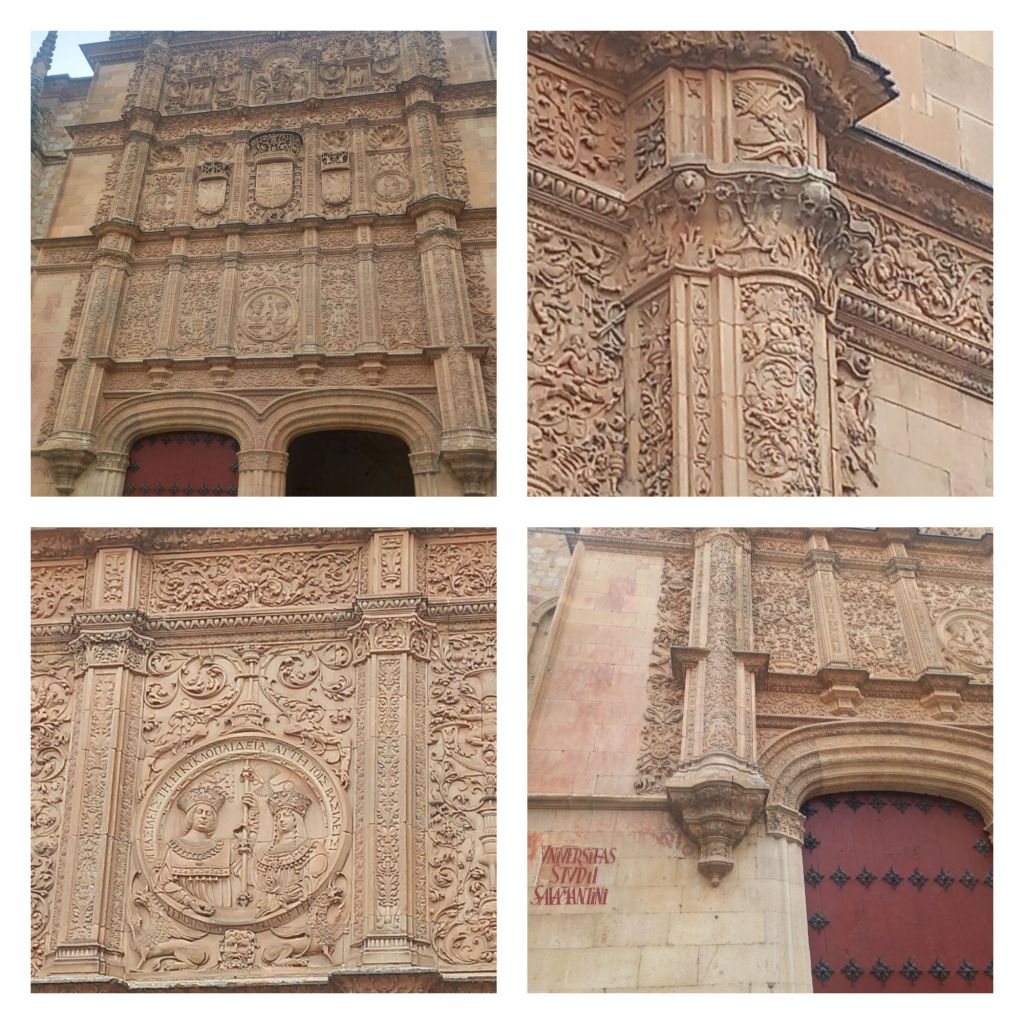
The university dates from the 13th century and has a wealth of gorgeous buildings, some of which are former palaces, and medieval cloisters.

It is a tradition to go and look for the Salamanca frog, part of one of the carved doorways, and we found it almost straight away. This is supposed to bring you good luck.

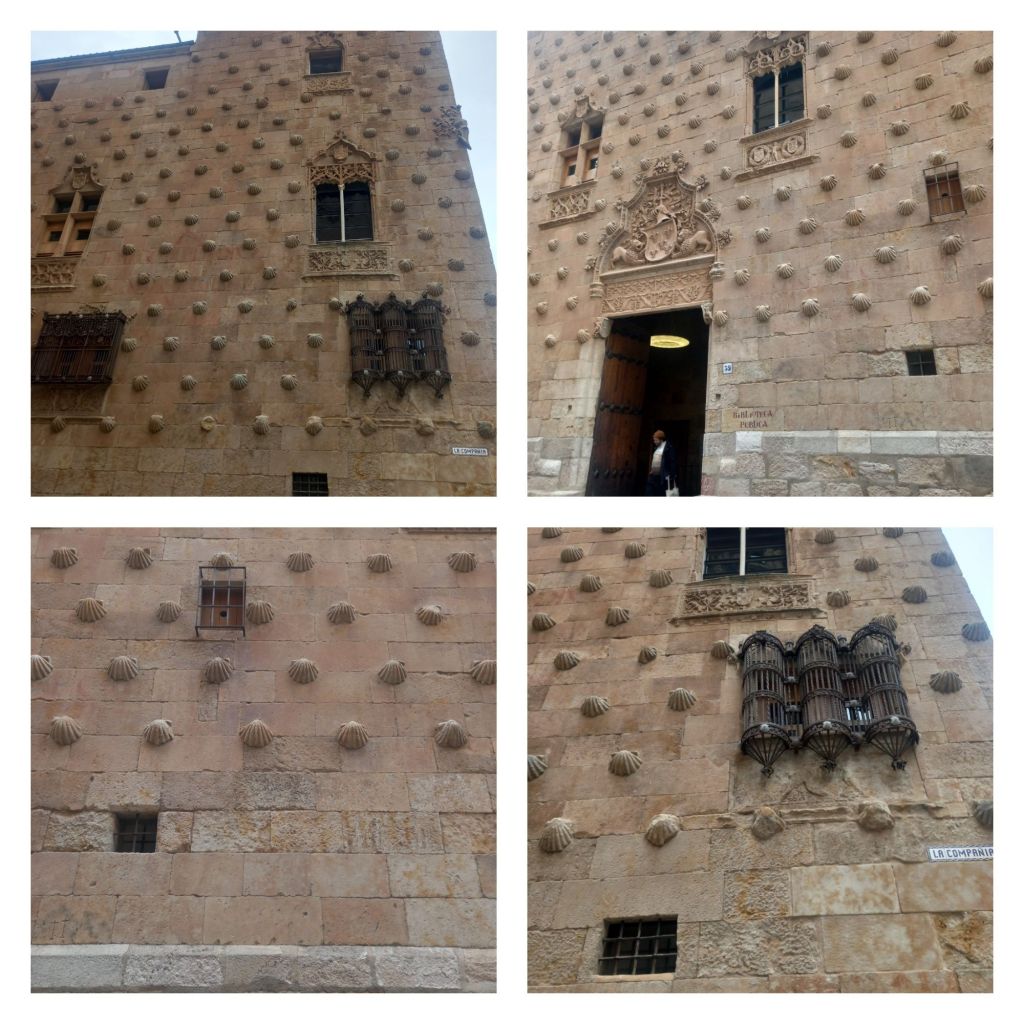
We also wanted to see the shell building, another palace which is now the public library.  I have never seen anything like it, so unusual, with such beautiful iron work.

I took so many photos, and we visited so many incredible buildings, that I am going to have to split this trip over a few posts.

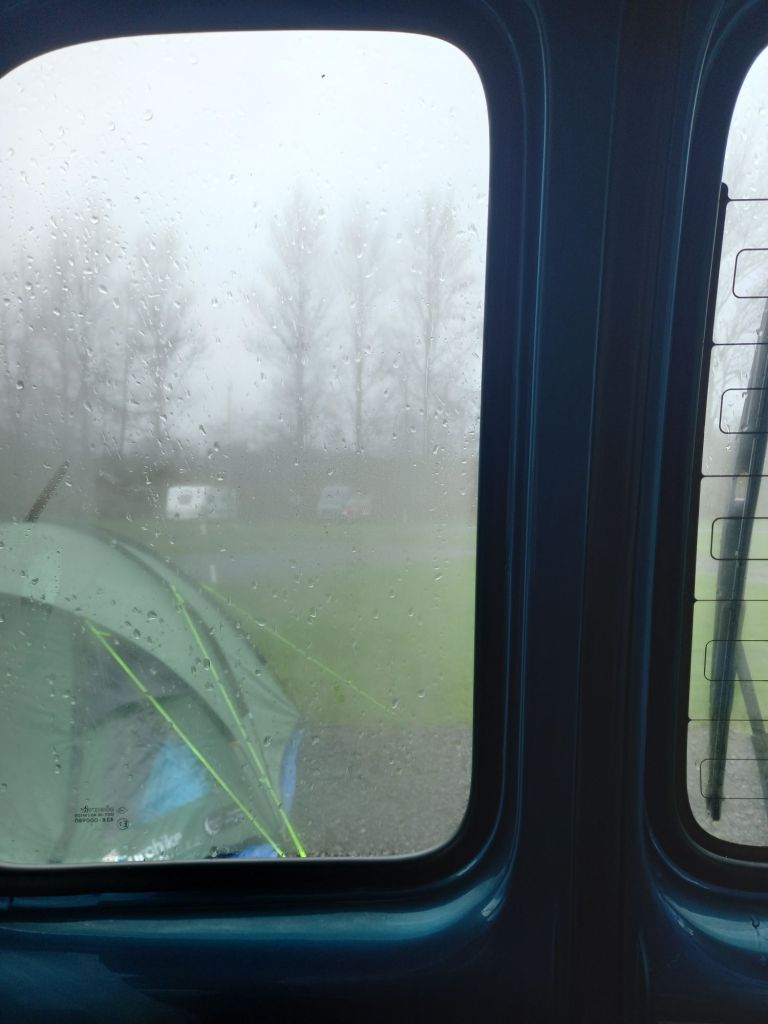
My plans have changed slightly, and I am now spending more time at the Scone Campsite near Perth. This means, combined with some lovely Scottish rain, that I am having some additional R and R today, before moving on at the weekend.

This is my current view, with my new tent being tested for its waterproofing, so I am enjoying a day of reading and crochet 😉

Nice weather will hopefully be resumed tomorrow, and the forecast for the weekend is better, meaning I can hopefully visit some more Trust properties at the weekend.

I hope that you are all enjoying whatever you are doing, and will see you all again soon. Thanks for visiting.

A different kind of textile heritage

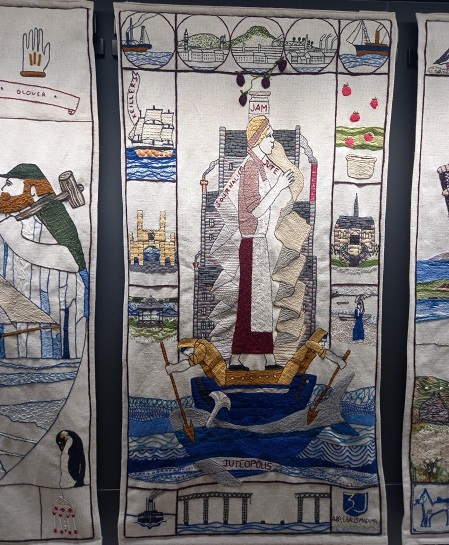
Although I love visiting historic houses such as the many castles in Scotland, I also really enjoy industrial textile heritage as well. I have posted before about some of the textile heritage that is represented in the Great Tapestry of Scotland, and mentioned Dundee in particular, celebrating the city’s nickname of, ‘Juteopolis’.

I have friends from Yorkshire who have lived near Dundee for many years, and on my second visit to them this summer I took the chance to see some more of the things that they had been telling me about. Dundee was famous for three Js, Jam, Journalism and Jute, and on my last visit we went to Arbroath and saw the many strawberry greenhouses there, that go to make the famous jams. This time it was the turn of the jute production.

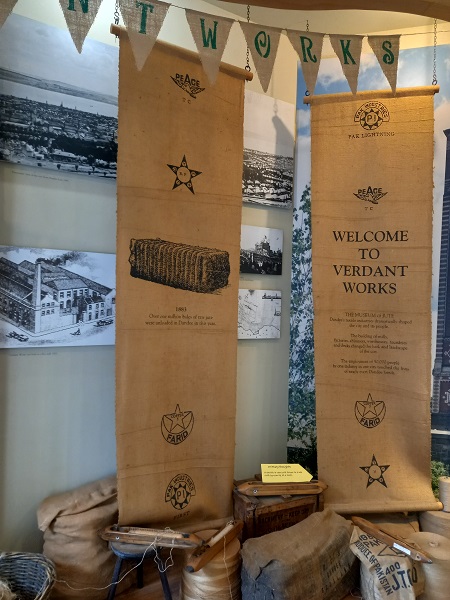
The Verdant Works is a fascinating museum, in the heart of the city, it is housed in an old jute factory. The name suggests greenery, somewhere lush and beautiful, and this is anything but. A beautifully restored building, but you can only imagine how dirty and dusty it was when production was at its peak.

What I love about textile heritage, is that it permeates every aspect of our lives. You’ve probably never thought about jute, but it was once one of the most important materials for making the bags that transported everything. At its height in the late 1800s the industry employed 50,000 people, and brought many migrant workers to live in the city.

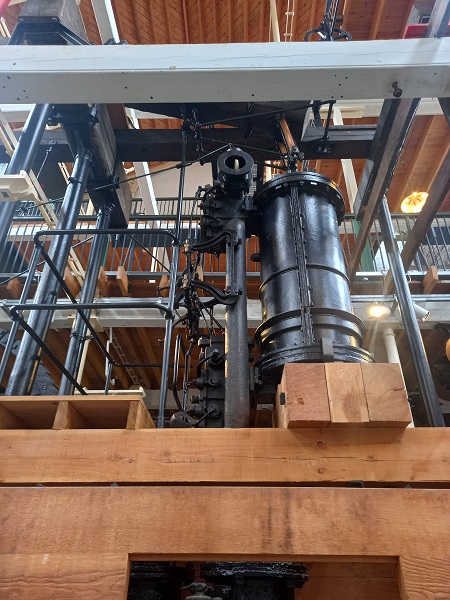
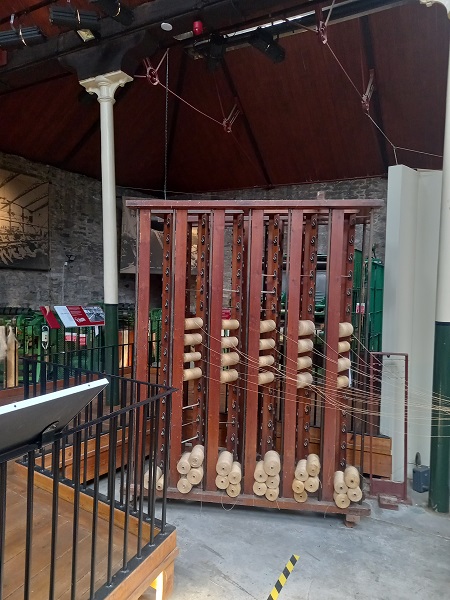
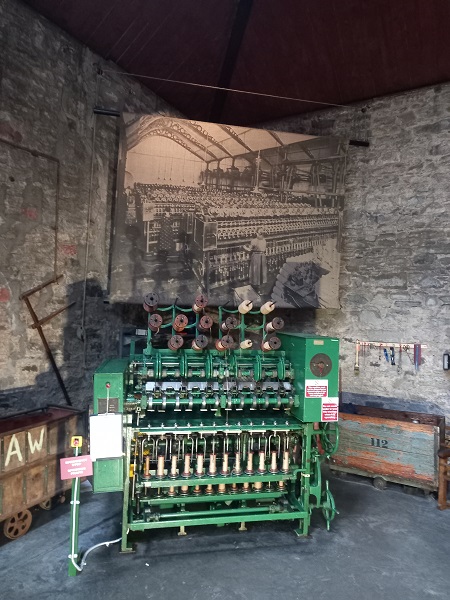
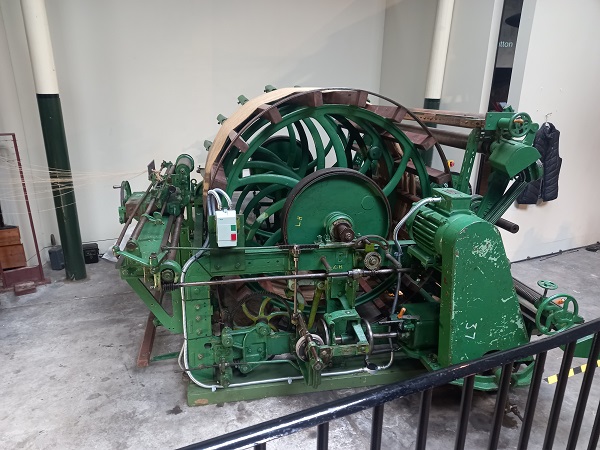
What was particularly interesting about the museum was the focus on the engineering. A lot of the displays are video based, so I don’t have much in the way of photos, but it was fascinating seeing all of the stages of jute production, and thinking about the many engineers that were needed to build and maintain these machines. The main hall is given over to reproductions of some of the earliest engines that helped shape the Industrial Revolution.

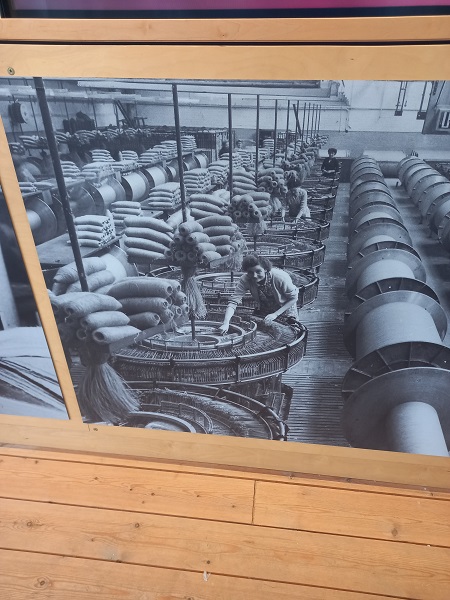
As with most industrialised textile production, it was a female dominated workforce in terms of the labour handling the many bobbins and weaving machines needed to produce the jute, and male dominated for the engineering and foremen. This led to Dundee having a reputation for being led by strong women, with lots of links to early equality campaigns.

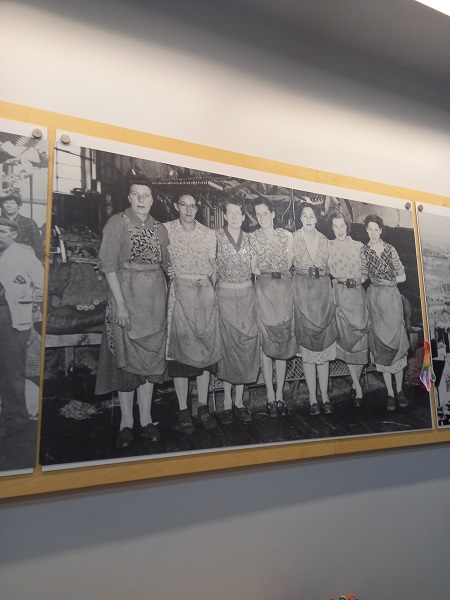
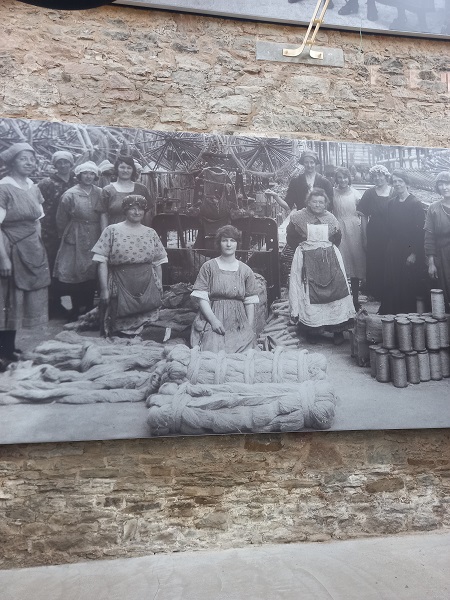
I loved the many pictures of the women who worked there, in their jute aprons and flowered overalls. Just sobering to think about the very hard lives that they had, a world away from the women embroidering the gorgeous needlepoint cushions at Fyvie Castle!

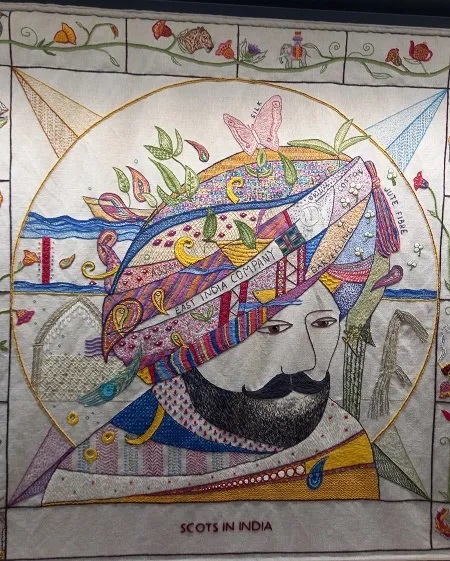
There were also links with the Empire, as the jute was imported from India, and you may remember this beautiful panel from The Great Tapestry celebrating those links as well. A really fascinating museum for anyone interested in social history, and I would really recommend a visit.

While looking for background information for this post I came across another tapestry, this time just concentrating on the history of Dundee, the exhibition was at the V and A in the city, and has sadly finished, however there is another fantastic representation of the industry in stitches here.

Being the first post of 2026, and having missed my blogaversary in December, and my all important 1,000 post celebration as well, I thought I would end with a little reflection on Stitches of Time. This is post number 1,024, over the last just over 18 years. My 1,000 post was actually one about travels in Spain, published in Feb 2025. The very first post, as I think I have mentioned before, was about Christmas ornaments, published in Dec 2007.

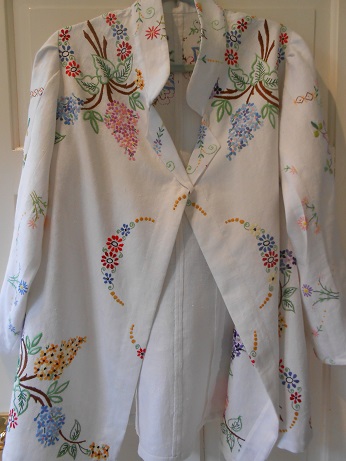
My most viewed post every month is usually the one about my tablecloth jacket, which is lovely as it is one of my all time favourite makes, and has been worn so many times.

It is difficult to gives stats for how many people have visited my blog since it started, as there was a change in the way the figures were collected in 2021, but since then I have had 89,100 visitors, which is absolutely amazing! My top three countries that visitors come from are the USA, UK and Australia, but I actually have had visitors in that time from 165 countries, which is incredible :-0

So a huge thank you to all of you for your visits, likes, comments, and general appreciation of my sharing my life and loves. Hope that you have a very good 2026 and that you and your loved ones are safe, well and happy.

Until next time, thanks for visiting, each and every one of you lovely people!

A different kind of history

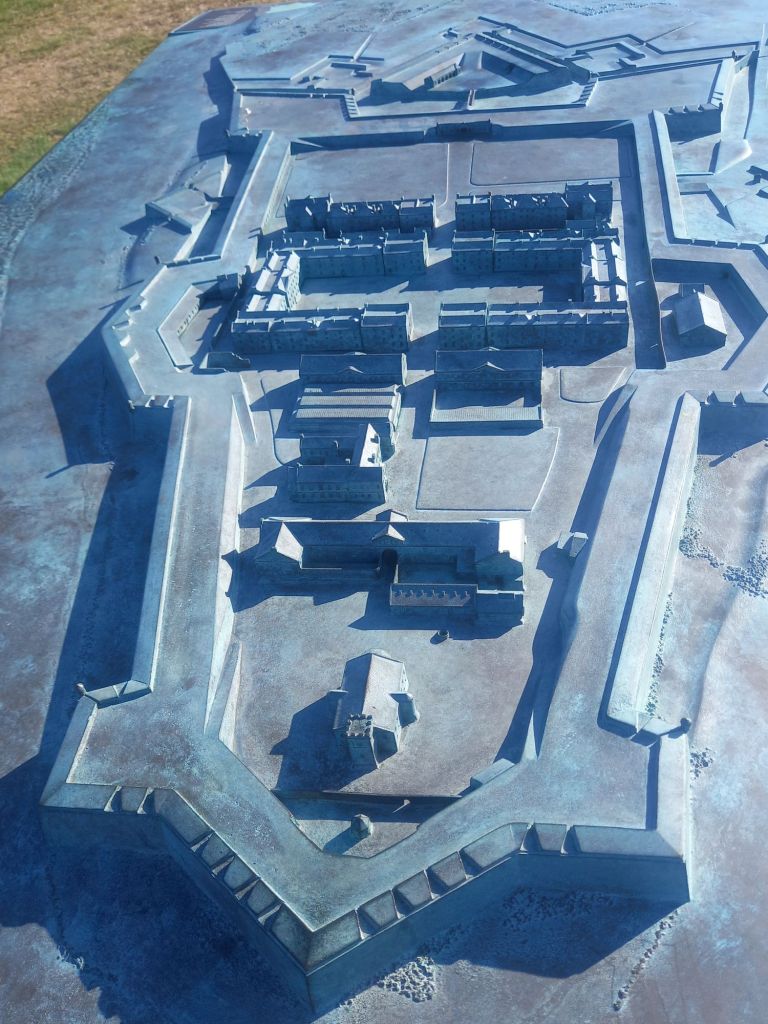
As you know, I love visiting historic houses and castles, preferably with lots of lovely textiles. However I also enjoy different types of historic buildings, and though I wouldn’t consider myself particularly into military history, I do love star forts.

These were popular during the Napoleonic era, as their design makes them able to defend against attack more robustly.

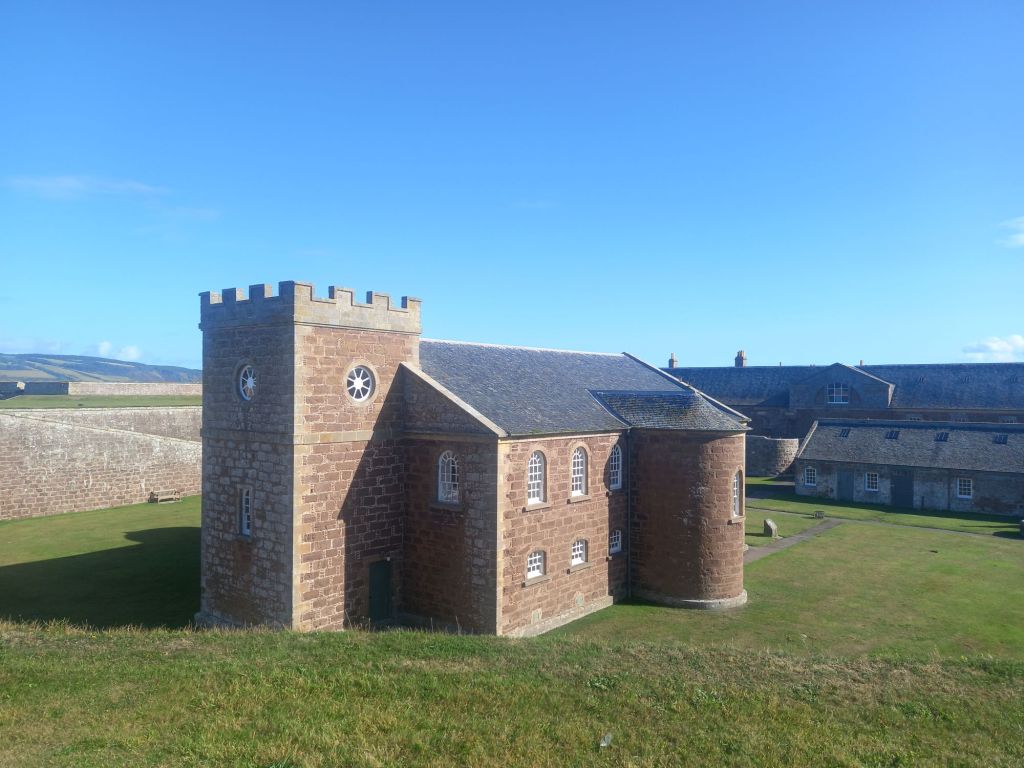
I have visited quite a few in Spain, and on the way back from Rosemarkie went to Fort George, on the Moray Firth not far from Inverness. This is more of an elongated star, but still has the distinctive pointed outer ramparts.

Although it was built in 1746, after the Battle of nearby Culloden, to house troops to suppress the Jacobite Rebellion, by the time it was finished it was no longer needed for that. It9 is still a working army base, as well as being a historic tourism attraction, and the site of the Highlanders Museum.

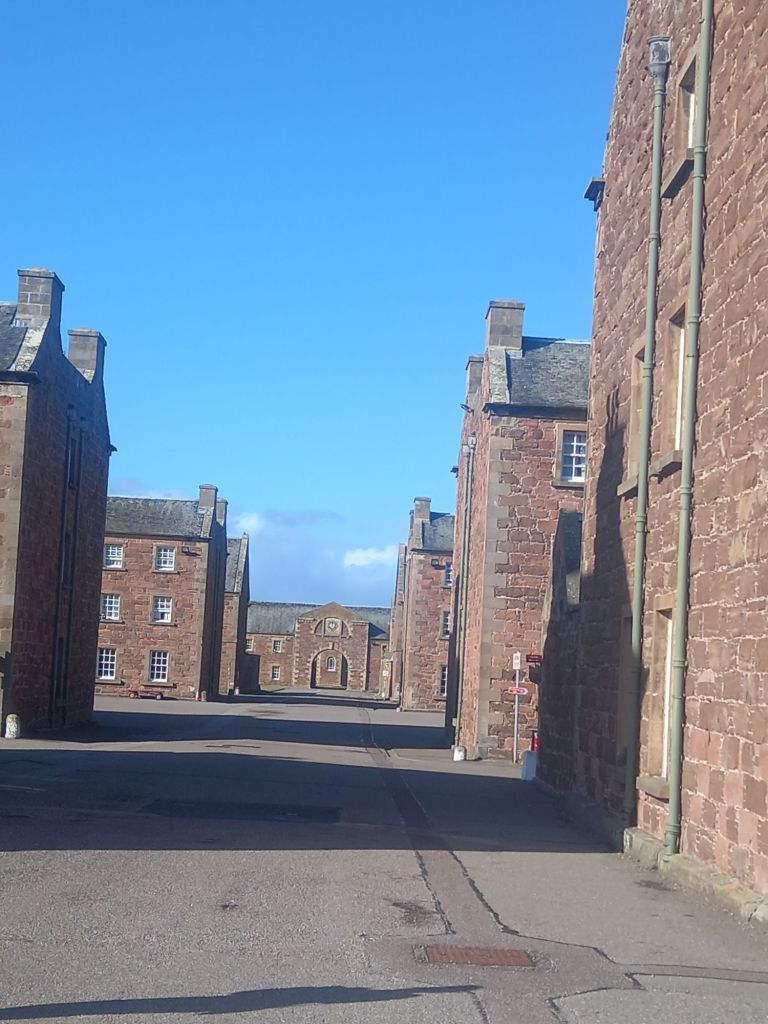
It was quite strange seeing the modern mess, cars parked outside the barrack blocks, and groups of young recruits doing their morning runs, with backpacks, around the ramparts, in and amongst all the visitors.

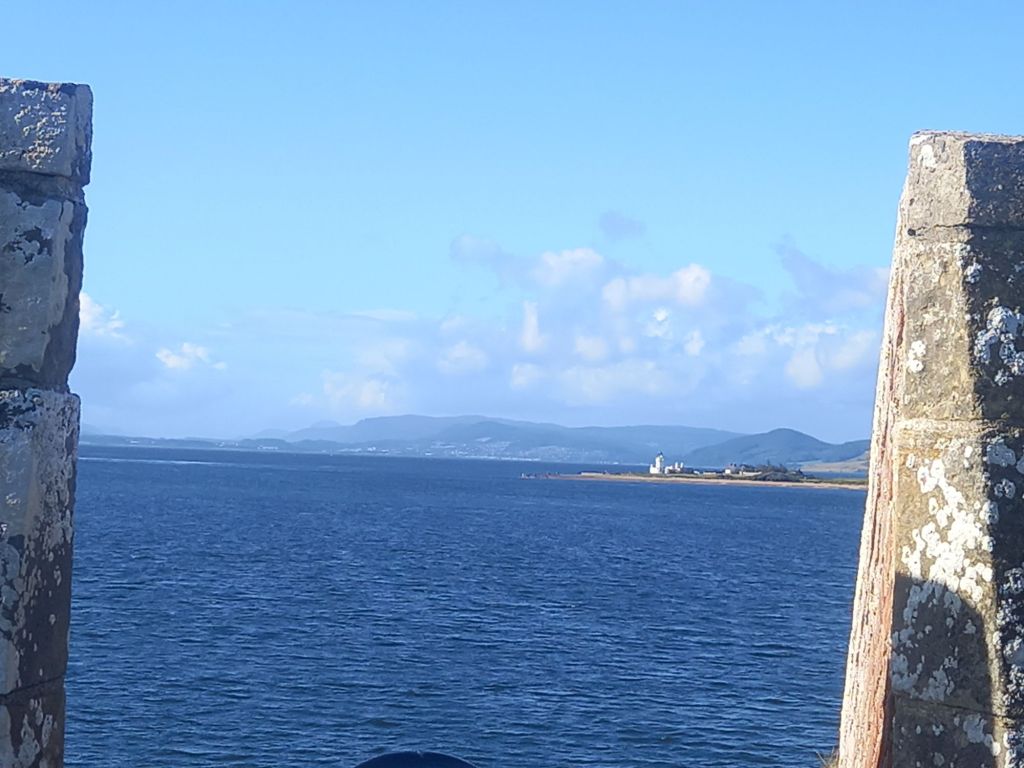
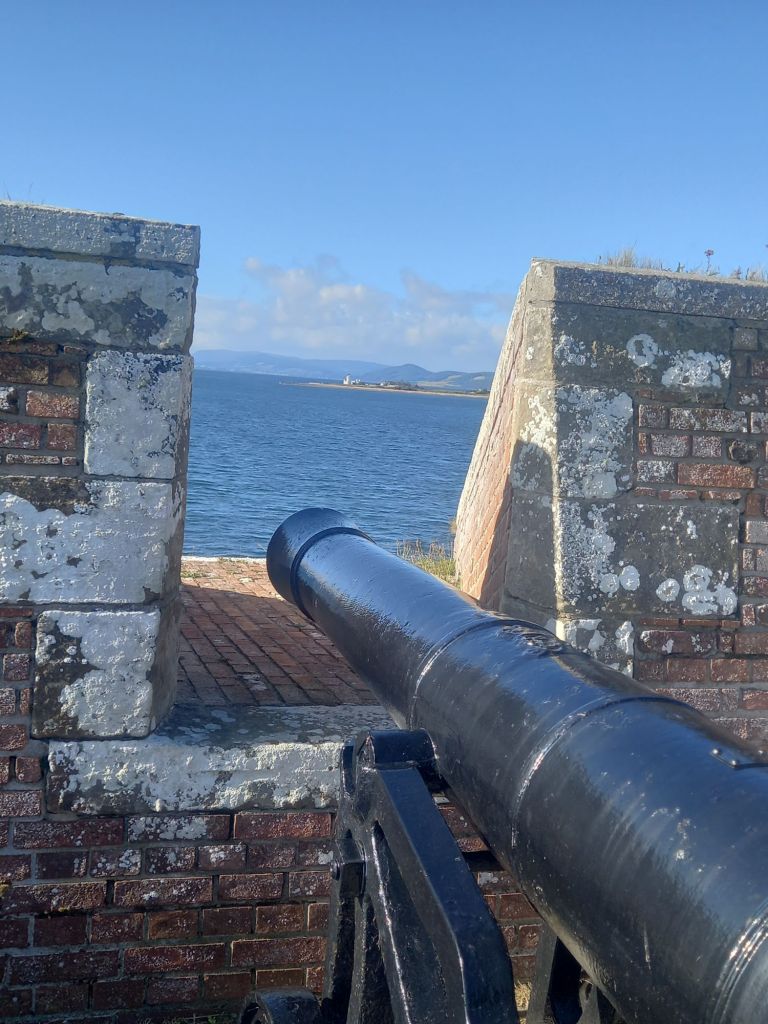
It has an amazing location on the coast, directly opposite the Rosemarkie campsite, in the photo below you can just see the lighthouse I walked to when I was there. It also famous for dolphin spotting.

It was a really interesting visit, there is some interpretation in one of the barrack blocks, showing aspects of soldiers’ lives throughout the different eras.

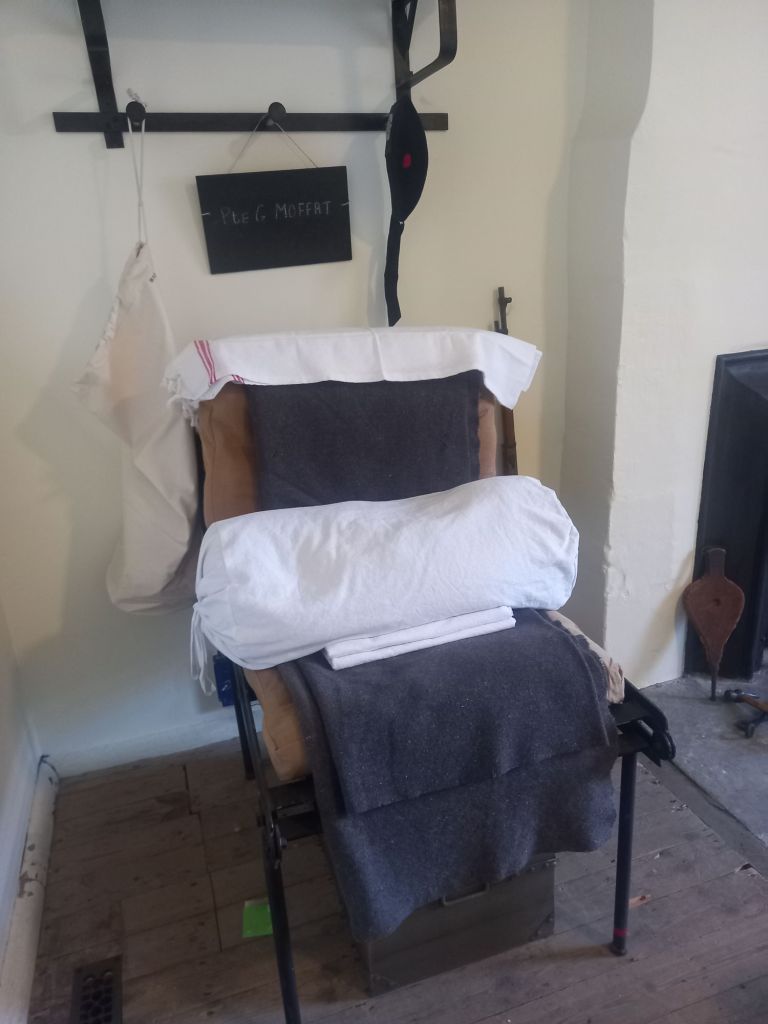
These folding beds were really interesting,  this is from one of the rooms for single men in the early 1900s.

At one point in its early usage, wives and children used to live in the rooms with the men, four families to a room, which was also used for cooking.

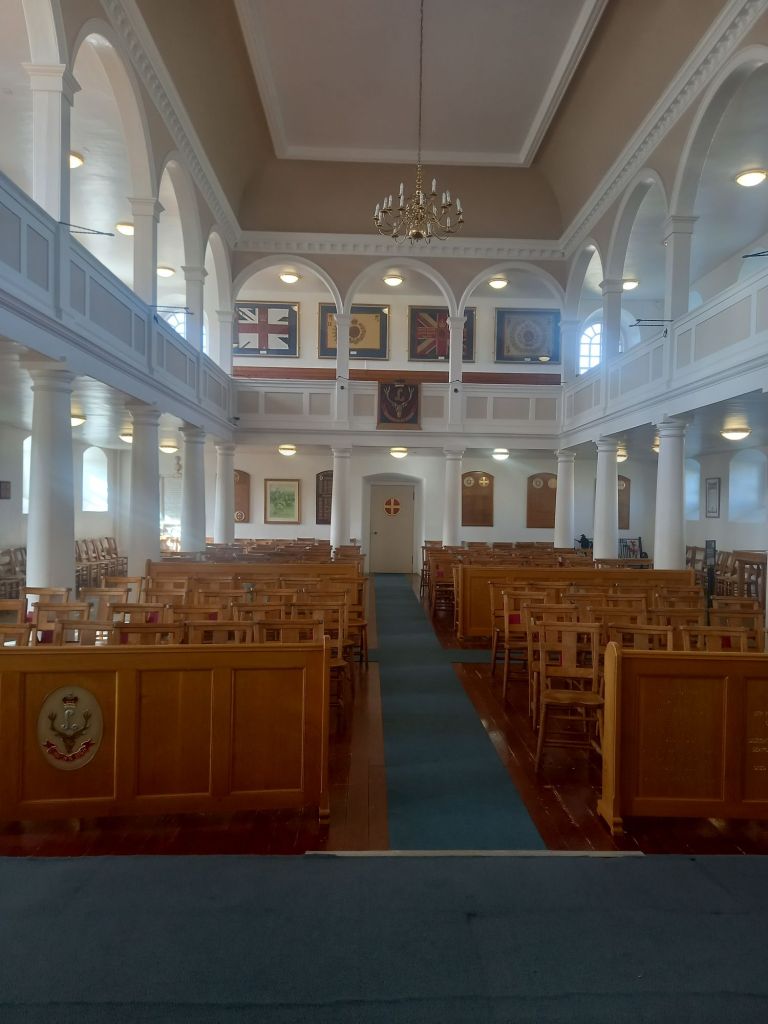
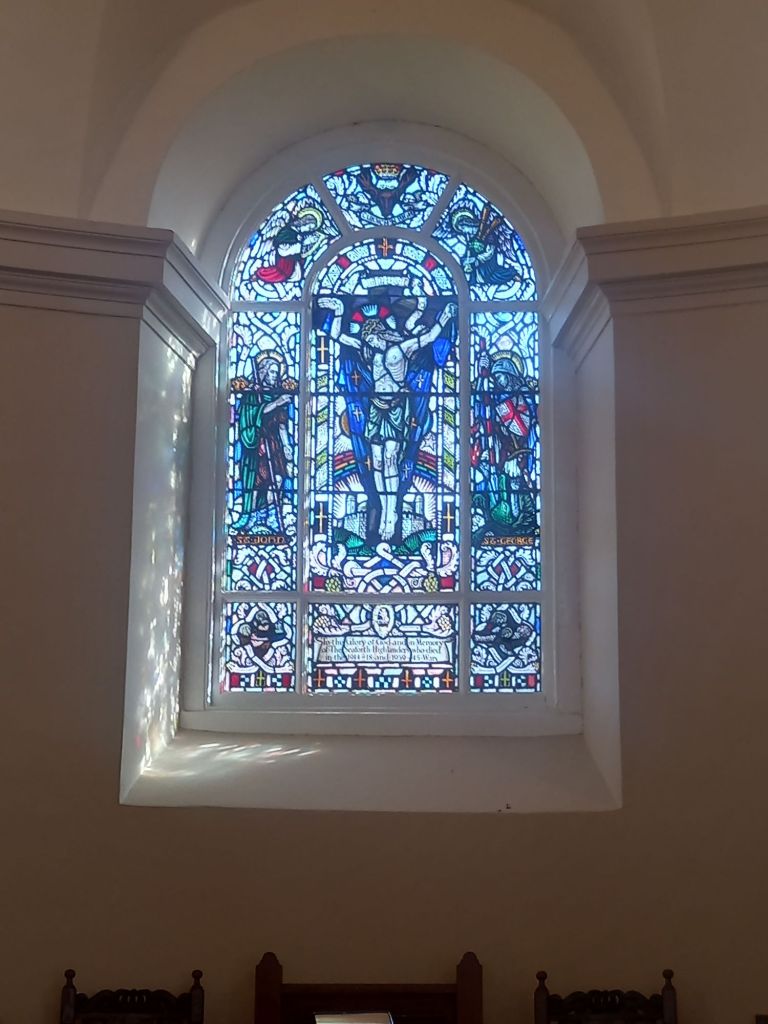
There is also a beautiful Chapel, the last building to be completed, and a nearby exhibition about Scottish gardens.

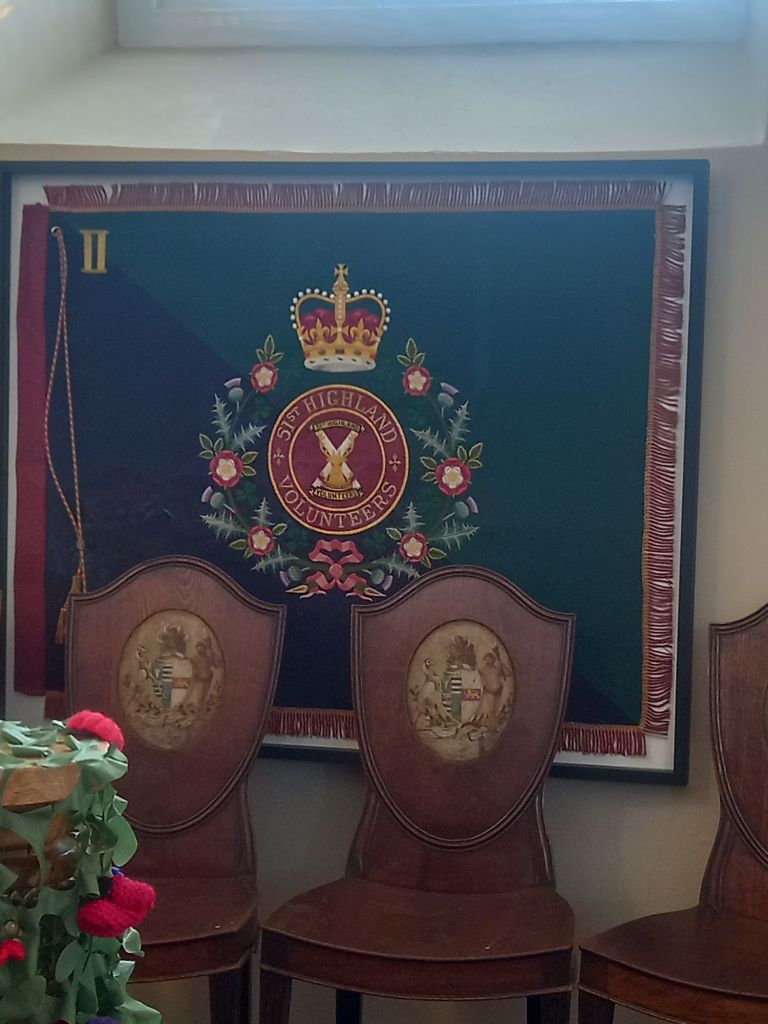
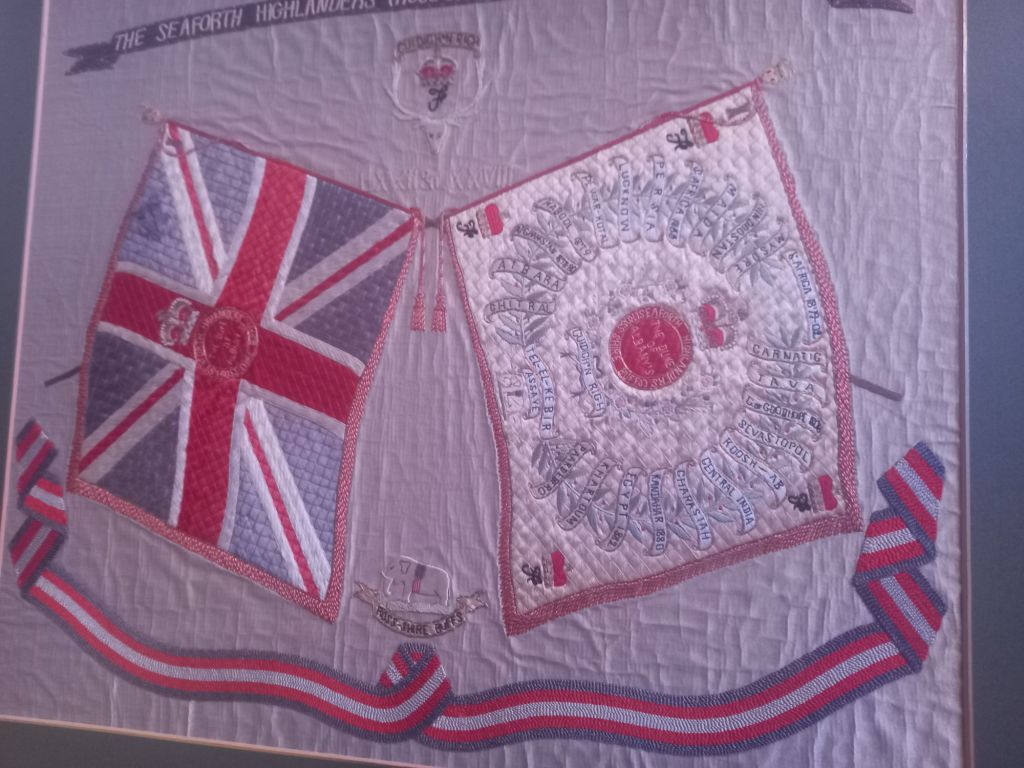
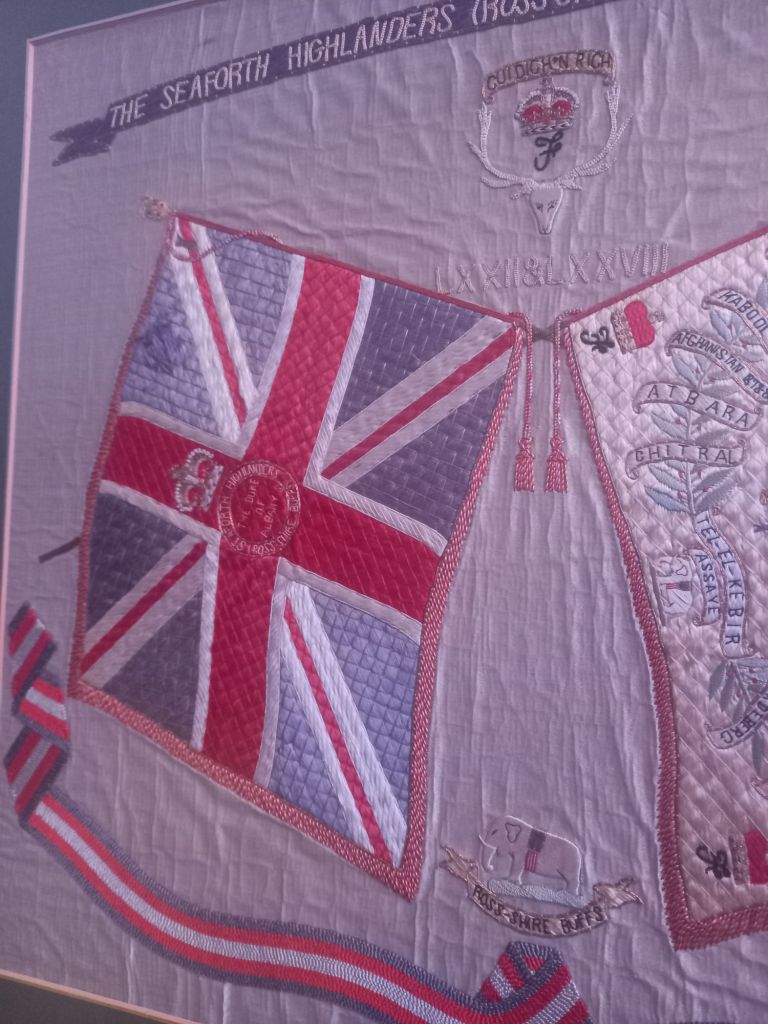
Of course there were textiles as well, the modern poppy tributes in the Chapel, as well as beautiful flags and banners there and in the museum.

A really excellent place to visit, for its location, and the sheer scale of the construction, especially when you consider when it was built. It took 22 years to complete and I can only imagine how that was done in the 1700s without the mechanisation we have now. 

The exterior walls and ramparts are so impressive, and it was fantastic to see a fort in almost the same condition as when it was first built, as the restoration really helps you visualise what it was like for those early soldiers. 

Well worth a visit, if you are ever in the area, sadly no dolphins when I went, but amazing views.

I have been on the Yorkshire coast again, just a little further south than the previous site, and still enjoying the fabulous walks in the area. Such an incredible environment, which I will share in a future post.

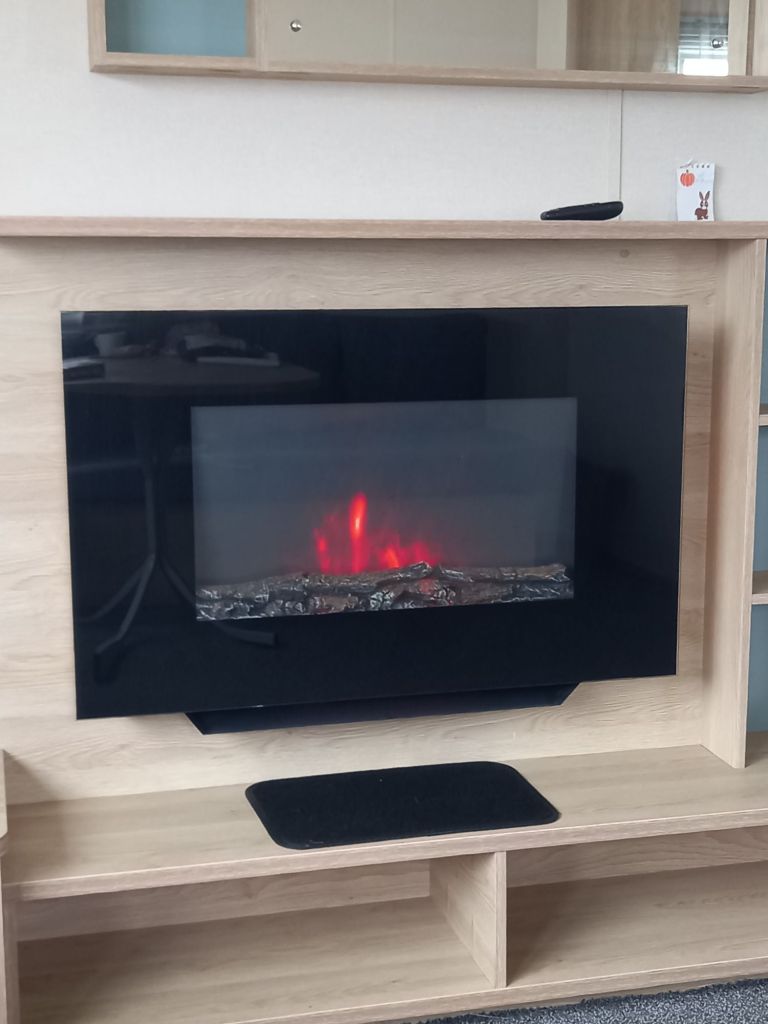
I have also enjoyed being back in the luxury of a static caravan, which is very nice after a few nights in the tent. I have a very lovely fake fire keeping me warm! However I am now in Wales on my final camping trip of the year, with my sister.

Until next time, have fun and thanks for visiting. 
Minarets and museums

Antalya Old Town is full of the minarets of mosques, and towers dating from pre 20th century development of the city. This gives it is a beautiful skyline, especially against the blue.

I have peeked into most of the mosques, but they are very much working places of worship, rather than for tourists, and although visitors are welcome, I have not wanted to intrude.

Ramadan starts tomorrow, and in the main city park there are lots of stalls being set up, and a funfair. I am not sure if this is for the celebration at the end of Ramadan, or something that happens for the busy spring and summer period, as it is a popular tourist destination.

At the back of the Old Town is an area with one of the biggest mosques, with a very large fluted minaret, called the Yivlimnare Mosque, which you can see in the bottom left photo above. There is also a very beautifully restored mosque and tomb complex, which is now a museum about Dervish culture.

This area is still being redeveloped and also contains the remains of one of the madrassas, or religious schools. All that is left is this carved gateway.

I have spent most of the last few days here visiting museums. Although small, they have been beautifully set out, and have contained lots of my favourite kinds of displays, textiles. They are housed in original mansions within the Old Town, so have been restored to show some of what family life would have been for people who lived here.

The Ethnography Museum is right next to the port. Housed in two buildings there are really interesting displays of crafts such as weaving and woodcarving.

It reminded me seeing the tablet weaving cards in the top left photo below, that I did try and get to grips with this for medieval re-enactment, but never managed. These are useful for weaving strips which can be used for straps, or sewn together to made bags or saddles.

The loom is being used for a tufted carpet rather than a woven one, and you can see the individual knots of different colours on the warp.

These socks, which are knitted on five needles look very much like the ones my Norwegian friend in Spain knits, it must be so tricky doing patterns in the round, I can barely manage rib!

One of my favourite displays was this one showing a house bathroom, with the many different sorts of taps used. The household would also use the public hammams, so would take their soap and loofahs in a tin with them. Its little things like this that really bring daily life home to you, that little container and the old soaps, a simple thing but so relevant.

The gardens between the houses had a collection of Ottaman era tombstones. I saw some of the these when I was in Larnaca in Cyprus, at the fort. The men’s ones are those with turbans, and the women’s are decorated with floral shapes. If they died unmarried they were made to look like veils at the top. They are so gorgeously carved with different complex motifs.

The textile display was small but had some goldwork and embroidery displays.

This whitework was really interesting. There appears to be a combination of stitching and pulled work, much like Hardangar, which is very much associated with Northern Europe.
This white and goldwork robe shows so clearly the problems of looking after old textiles.

The museum answered the question of why I’ve not seen much in the way of tilework here. Even in the older restored houses it is absent. As it was so much a feature of decoration in other Islamic countries I have visited, I was surprised not to see more of it. The museum’s ceramics display stated that due to the ceramics experts keeping their methods secret, much of the craft had died out here.

There is certainly a lot of beautiful ceramic ware for sale here, but it is very similar to what we have in Spain, so may be made elsewhere. I am trying to resist the urge to buy more of these bowls, just gorgeous!

The other museum belongs to the University here, again really well restored, and displaying life in the courtyard houses of Anatolia.

I love these paintings of the port, no date but I am assuming late 1800s, before any modern development.

Although I couldn’t get any very clear pictures, there was a display of an embroidery frame with a box of thread next to it.

Much of the embroidery I saw was on very fine materials, often gold and metal work on silks and fine linens, such as veils and gowns, so I assume a lot of it was frame based.

This picture is dated 1931, a woman and her friends. Possibly they are dressed for a wedding as the information was about wedding rituals.

There was also quite a lot of regular count work, that looked very reminiscent of cross stitch, but on evenweave, and some vibrant examples of flowers.

As well as the focused visits much of my time has just been wandering again, noticing little things about the architecture. I have discovered even more lovely windows and doors 😉

There are so many gorgeous little things that people probably don’t even see unless they look up. Like these carved supports for the windows, and the way that the roofs nearly touch in some places. It must make restoration really tricky here. I thought the same in Morocco, everything must have to be done with such care.

I have also had a little wander around the more tourist focused area, up at the top of the Old Town. Antalya is definitely the place to come if you want jewellery, I have never seen so many jewellery shops, and there are also some amazing sweet shops.

With those, and the incredible bakeries and cake shops you could end up eating something different every day for a month. There are so many varieties of sweet stuff here, baklava, rice puddings, meringues, as well as so much Turkish Delight of all shapes and colours.

I stopped one day for a coffee just because I loved the cups it was being served in, so detailed. I’m not a huge coffee fan, and when I do drink it I have it very milky, so the little cubes of Turkish Delight were much appreciated. It was so strong ;-0

The other thing that has amazed me about Antalya is the sheer amount of bridal shops here, selling the most amazing gowns. There is one street near my hotel with about 30 shops. Most are white or cream dresses, but there are some more traditional colours displayed as well. If you are wedding shopping come and do it here, I saw one shop advertising bride AND groom outfits for £500 in total 😉

The detail in the beading is amazing, so you can guess what I’m going to be making next for my Barbies!

I only have two days left here. There is one more museum to see, and I shall have a last wander round the port to look at the mountains. The weather is going to be glorious tomorrow, 20 degrees, so you may well find me with a cold beer in a bar overlooking the harbour. I shall really miss these mountains. Turkiye you have been brilliant, and I am looking forward to more of your joys on future visits.

I do have a few more mountains coming up in the next few months though, and am excited that next week I am reunited with Katy, and we are on the road again. It seems forever since we were adventuring, and we are going somewhere that holds a very special place in my heart. I have been before, but not to some of the area, so am very excited. All will be revealed in a couple of weeks!

Until then, as always, have fun, take care, stay safe and thanks for visting.
Coming home

Even though I no longer live in the area, I still consider Yorkshire, and the Peak District home. It is the place that I have spent the most time in, and I just love the countryside. It is also so nice to return to catch up with friends. At the end of the summer I chose to spend my last two weeks camping in the Yorkshire Dales, and the Staffordshire Peak District, between Buxton and Leek.

The first site was a Camping and Caravanning Club certified location, one of the smaller sites, for usually up to 5 vans. They are privately owned, often farm sites and I wanted to try one out. It was a stunning location, in the village of Buckden, not far from Kettlewell, and right in the middle of the Yorkshire Dales National Park. The park celebrated its 70th anniversary in November 2024, and has always been one of my favourite places to camp. When my children were younger we used to come here all the time.

The certified location was on Heber Farm, with some very cute animals and a friendly cat host. As it was very quiet in the out of season October week that I was there I ended up on the farm campsite section, rather than the certified location in another field a few minutes away, so I could be near the facilities. The owners, Gill and Gary, were really welcoming and I loved staying there. Not only was it a fantastic campsite, with a facilities pod, and a few glamping pods as well, it is right on the Dales Way.

As always it was lovely to meet with other campers, a few walkers and mountain bikers were still around, and I met some lovely fellow outdoor enthusiasts. As I mentioned in my last post, I needed a quiet couple of weeks, and as the weather was variable enjoyed lots of time just reading and stitching my final Christmas ornaments, as well as some walks. I love the walk signs along the routes, both old and new.

I did go to Malham Cove on a beautiful sunny day, the drive there was so gorgeous and I am getting much more used to single track roads now! By the time I got there it had got a little duller, but I didn’t mind. I spent far too much time taking photos of the clouds, and just watching the weather change. I love the contrasts within a few minutes when you are walking, sparkling water to thundery skies, just magic!

My last site was one of the first that I ever stayed at in 2022, Leek Caravanning and Camping Club. This has to be one of my favourite sites, situated on one of my favourite roads for driving, the A53, from Buxton to Leek. Just stunning views, particularly the first stretch when you can see across to Chrome and Parkhouse Hills, known as the Dragon’s Back due to their unusual shape.

That week was spent looking at the clouds a lot. I remember that this site had the most beautiful clouds and sunsets last time, and it didn’t disappoint this time.

I was able to visit a few of the places that I have had on my wishlist for a while, such as Ilam and Dovedale. It was the most stunning autumn day, really warm and the walk was just brilliant, one my best days of 2024. I was just so happy to have been spending another summer doing what I love, and still enjoying living out of a Renault Kangoo and travelling. I can’t wait to get back to this life in March.
Ilam Hall is now a Youth Hostel, but the grounds are open and there is an excellent National Trust tea room or two, so I treated myself to a cream tea after the hike over to Dovestones.

The houses in Ilam village are just gorgeous, it was rebuilt as a model village styling itself on a Swiss village.

Another trip was to Rudyard Lake. Rudyard Kipling’s parents met there, and so he was named after the location. The lake is a reservoir built to serve the canals, but has been used for pleasure trips since the Victorian era, and there was some really good interpretation about the history, as well as some very friendly squirrels!

I also had a very exciting research trip to the Chatsworth House archives. I had contacted them earlier in the year to see if I could access some diaries that I know Evelyn, Duchess of Devonshire, the last owner of Hardwick Hall, kept when she was restoring the tapestries. I was told I wasn’t able to access the diaries, due to the 100 year privacy rule, but there was a small notebook they had listed detailing some of her textiles.

When I got there I was told that when they opened the archive box with the notebook in, they found two folders that they hadn’t known about. They were full of Evelyn’s notes about her restoration work at Hardwick, detailing visits from museum conservators, and the compromises that she was having to make trying to care for all the textiles there with little money.

It was absolutely amazing, and the best thing was that it fits perfectly into the timeline I am writing about. It was such a magical moment, and I am so thrilled that I found them. I haven’t done much writing recently but hopefully can catch up over the next couple of months with some writing retreats whilst travelling.
My final trip that week was into the town of Leek, as I had spotted that the local museum had an embroidery exhibition. Although only small, it was a fascinating display. Leek was at one point famous for silk production, like its neighbour Macclesfield. There were many silk mills in the town, and the wife of the owner of one of them, Elizabeth Wardle, as well as being the mother of 14 children, 9 of whom survived infancy, also set up the Leek Embroidery Society.
The organisation produced embroidery for clients, and designed and sold kits. They had some examples of the work, which was stunning, excuse the reflections from the glass cases.

The Leek silk mills specialised in the production of Tusser silk, which is made from the cocoons of the moths, and is a much coarser silk. It was a really fascinating display, and the museum is well a worth a visit, for that and its other textile treasures.

There was also an architectural trail through the town, celebrating the Victorian heritage of buildings such as the Nicholson Institute. This was built to house a library, and training school for textile workers, with friezes above the windows celebrating the various skills. The town has links with William Morris, who worked with many local mill owners. One of the original rows of weavers’ cottages has been turned into a covered arcade with craft shops, cafes and galleries. A really lovely textile filled afternoon.

I will leave you with a quote from one of the displays at Rudyard Lake. One of my favourite poems is by Rudyard Kipling, and it is one which has inspired my love of travel and meeting people from other cultures. It is called, ‘In the Neolithic Age’, and contains the lines, ‘Still the world is wondrous large, seven seas from marge to marge, and it holds a vast of various kinds of man. And the wildest dreams of Kew, are the facts of Kathmandu, and the crimes of Clapham chaste in Martaban.’ I remember having that on my bedroom wall, and vowing that one day I would visit those places. Not got to Martaban, which is in Mayanmar, yet, but maybe someday.

This quote really sums up the way I live my life now. I am so looking forward to more adventures in 2025, the first of which start next week. I am going to visit somewhere that has been on my wish list for a very long time, and am very excited to tell you all about it. There will be mountains, sea, and definitely textiles, which I know doesn’t narrow it down much for me, but all will be revealed in a couple of weeks 😉

Meanwhile I am finishing my second cat sit of the year, poor Dave the cat has been desperate to sit on my lap this afternoon, and keeps giving me upset stares, so will have to go and give him a cuddle now.

See you all again soon. Until then have fun, take care, stay safe and thanks for visiting.