Walking by the sea

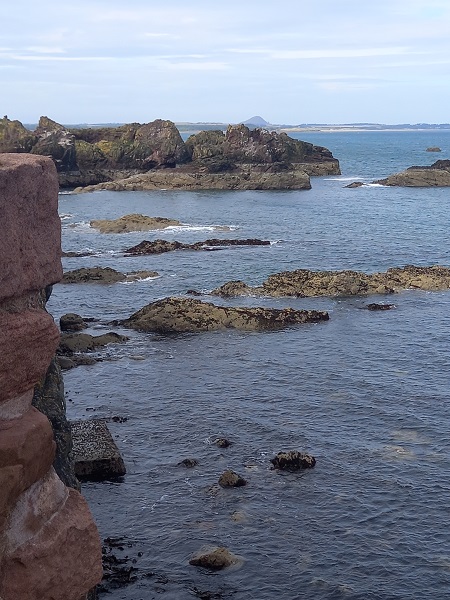
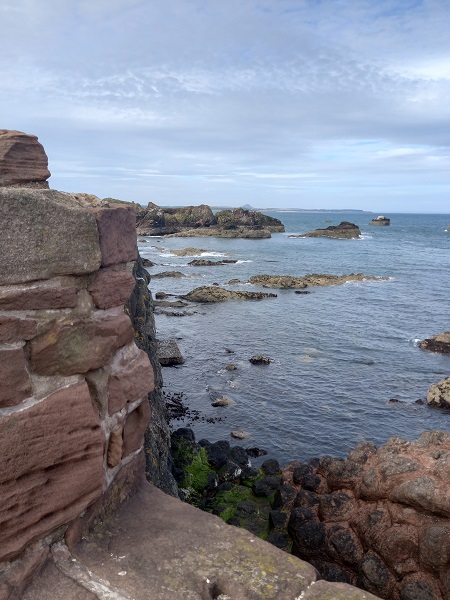
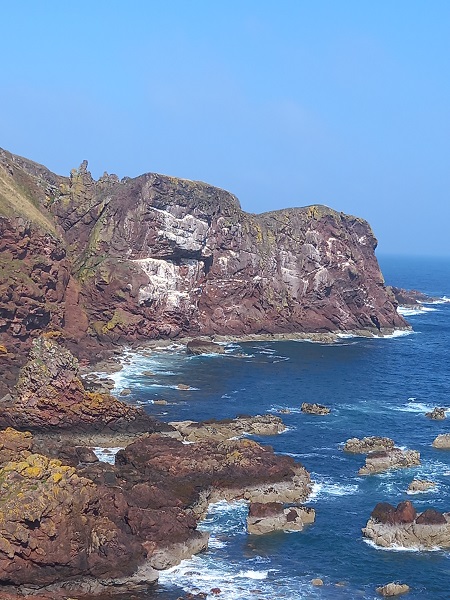
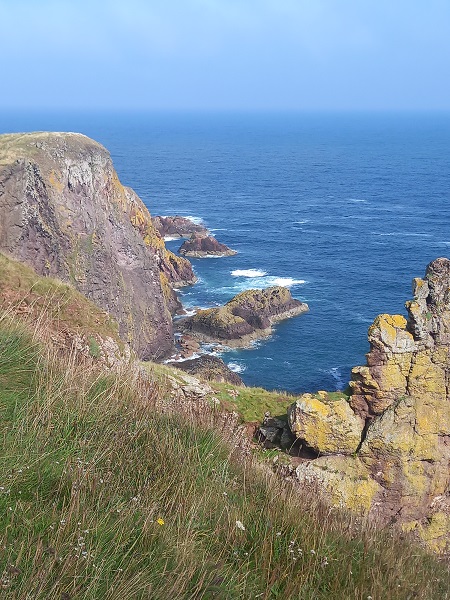
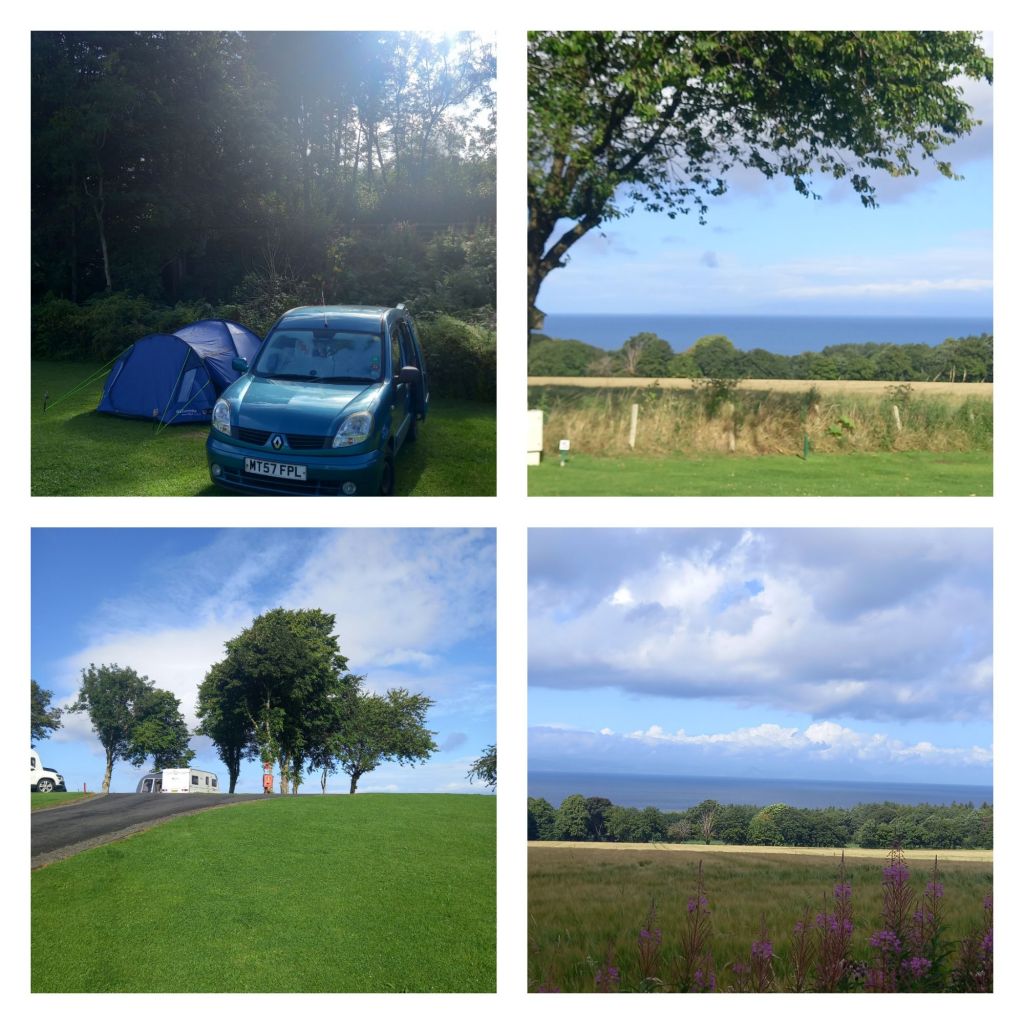
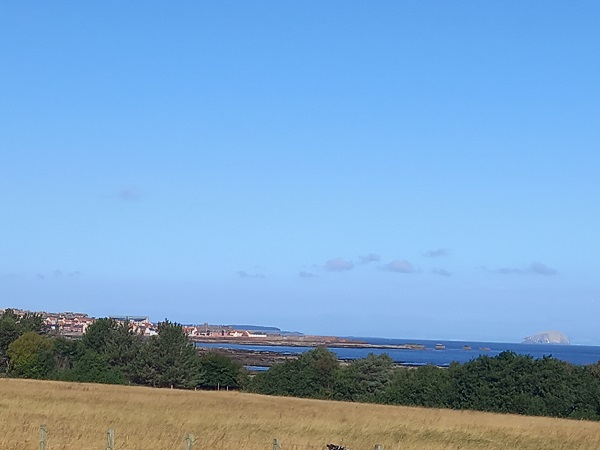
Although I have visited Northumberland quite a few times, I had never visited the coast above Berwick, and so was really excited to stay at the Dunbar Caravan and Camping Club site. The location was gorgeous, on the cliff top just outside the town, with amazing views over the Firth of Forth and Bass Rock. These pictures really don’t do it justice, but I had an excellent pitch overlooking the coast.

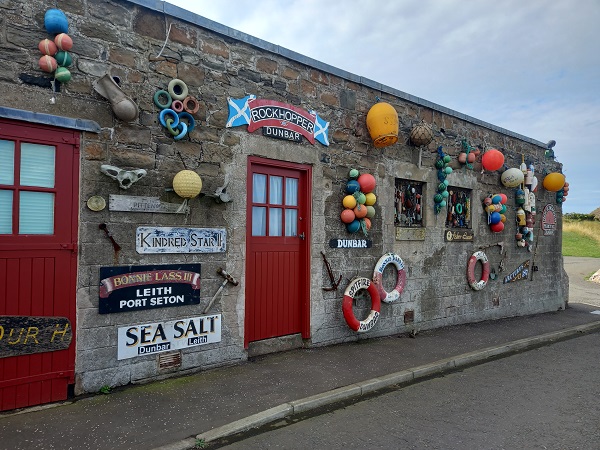
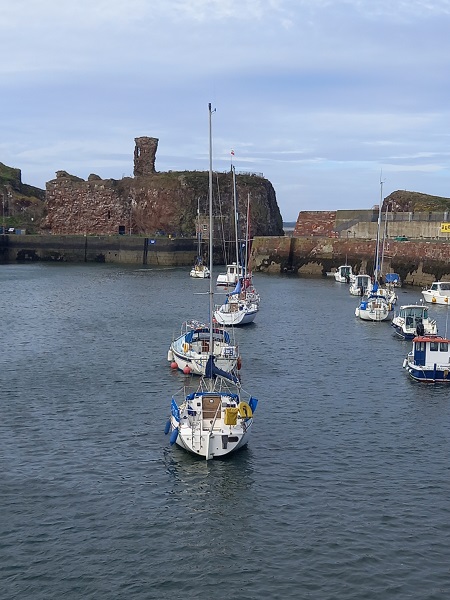
Dunbar is a very nice little town. On one of the days I went for a wander, and in the small town museum, which was previously a tower house and the town jail, found another connection with my muse, Mary Queen of Scots. Dunbar Castle, now sadly in ruins, was where she was taken when she was abducted by the Earl of Bothwell. The harbour and the rocky coast are just gorgeous, and the Battery there has been restored.

The town is also the birthplace of the naturalist John Muir, who moved from there to the USA at the ago of 11. He was instrumental in persuading the American government to dedicate National Parks, such as Yosemite, which he loved, and has been a huge influence over land preservation and protection in Scotland as well.

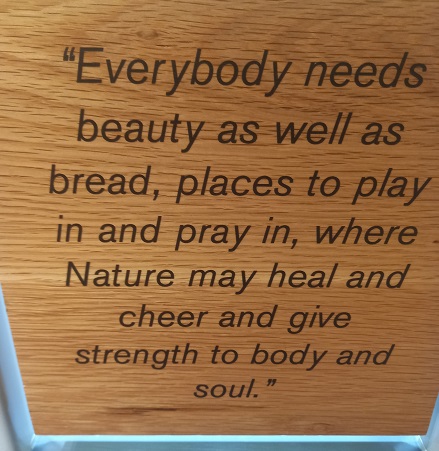
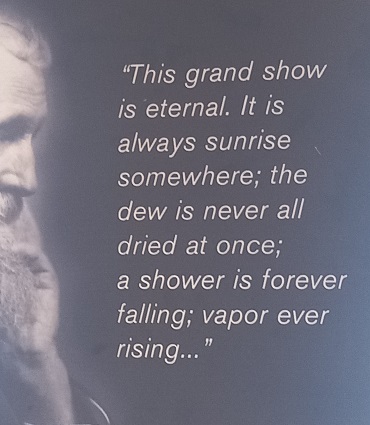
The museum was such an inspiring place, these quotes from his writing sum up so much of how I feel about my life outdoors. I have been lucky enough to live near beautiful wild parts of England, and now spend so much time exploring all the other amazing places in the UK and beyond. Somehow a beautiful sunrise, or sunset, makes everything wonderful, even if there is bad weather that day, all is forgiven when you see those sights.

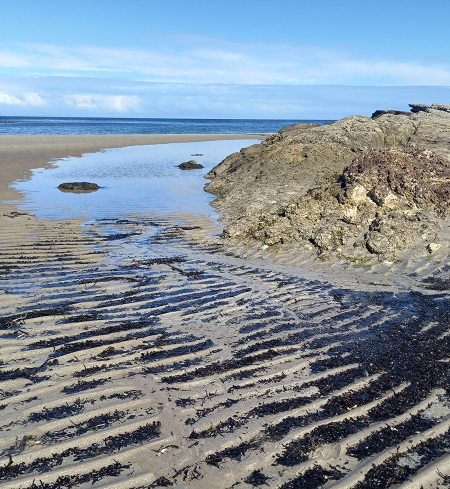
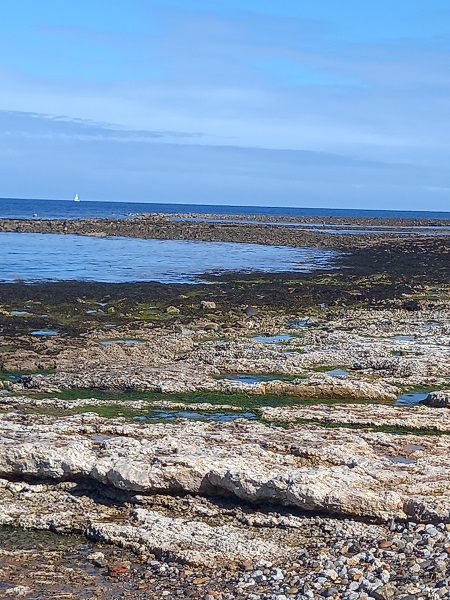
On my first day at Dunbar, which was gorgeously warm, I went for a walk along the coast to Whitesands Bay, and the Barr Ness Lighthouse. Not only was the sea so blue, but the rock pools amazingly green, looking like craters on another planet. All this picturesque beauty was perfectly set off by a little white sailboat on the horizon.
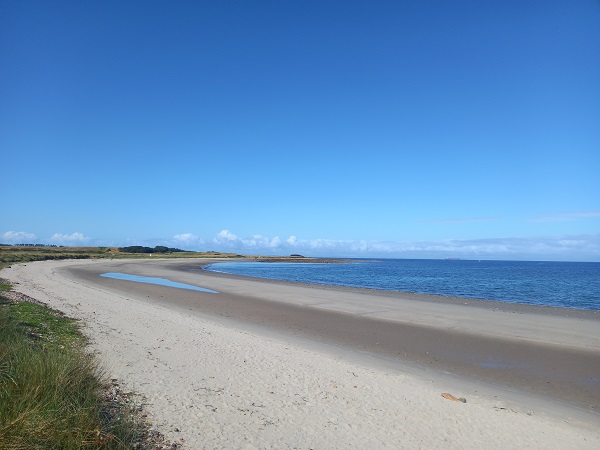
One of the things I love about solo travel is the people you meet. I am often asked if I get lonely, but I have so many lovely conversations with people on my travels, I never feel alone. I met a very friendly woman while buying an ice cream at the little café at Whitesands, who was telling me how she had been ill for a number of years, and was just starting to get her fitness back, walking parts of the coast from her home in Edinburgh.

That just fits so well with what John Muir said, and something that I can so relate to. I still marvel at how much better I feel these days, how I can walk for miles, and although I am often aching at the end, it’s the good ache of a challenging walk, rather than the terrible pain I used to be in.

I was also lucky enough to have a fine day to visit St Abbs, although there was a heavy sea mist at the campsite, the Heritage Coastal path was stunning.
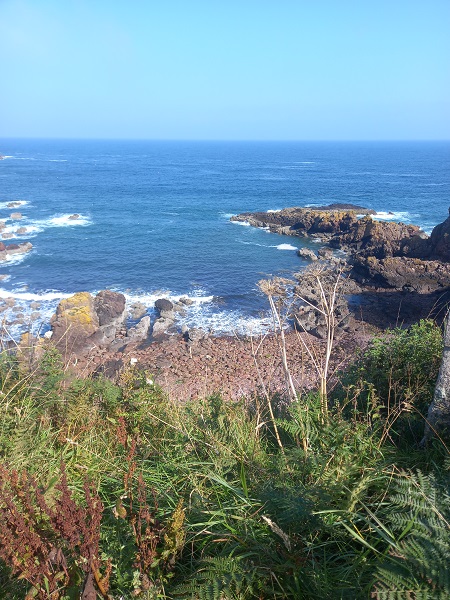
Again I met some lovely people, a couple of students from Poland, who asked me to take their picture, and the owner of the Post Office, when I stopped for ice cream, who was telling me about when the filming for the Avengers movie took place. The village was used as the set for New Asgard in Endgame, and still has signs up saying, ‘twinned with New Asgard’.

One of the most touching things was this small sculpture outside the visitor centre, of families looking out to sea for their loved ones, something that must have been a constant worry on this rocky coast.
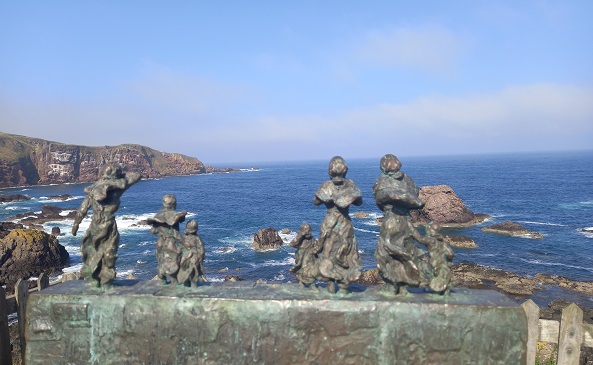
I was there for 6 days, not really enough time as always, and it is definitely an area I would love to return to, as with all of Scotland. So many beautiful parts of the coast still to see! However I was on a tight timeline that week, as I needed to go south for a very exciting event. I will tell you about that a little later, as my next post will be about a visit to a textile wonder, not that from the Dunbar site, that is so amazing it needs a whole post to tell you about.

I have been back in Spain for 10 days now. I went visiting my brother here last week, and am away next week with Mum, so will still have lots to show you from here, once I finish blogging about all the summer adventures. It is lovely to be back, weirdly I am not sleeping well yet in the comfy double bed, after all my time on the road, but am looking forward to spending lots of time with friends and family here, as well as my sewing machine! I have a Barbie wardrobe to make in the next month for our Christmas Fair fundraiser.

I hope that you have all been having a good few weeks. Have fun, take care, stay safe, thanks for visiting, and see you all again soon.

Mary, and engineering marvels

As I mentioned in my last post I had two stops before getting to my very exciting park up in Falkirk. Both had connections with Mary, Queen of Scots,which is not unusual given that we are in Scotland, but both were unexpected. 

When we were visiting historic places when the children were young, we often used to joke that she had slept everywhere we went. She did certainly move around a lot, particularly when she was under imprisonment during the last 17 years of her life.

When I was last at my current campsite, two years ago, I went to Buxton for the day and was surprised to find another, ‘Mary slept here’ plaque on one of the town’s historic hotels. Apparently she had complained that imprisonment was making her ill, so she had been taken to Buxton for the spa waters.

The first stop was Falkland Palace, in the beautiful village of Falkland.  It was a very wet day, and there were no interior pictures allowed, but Mary used to visit regularly, and play tennis on the court there that is still in existence. 

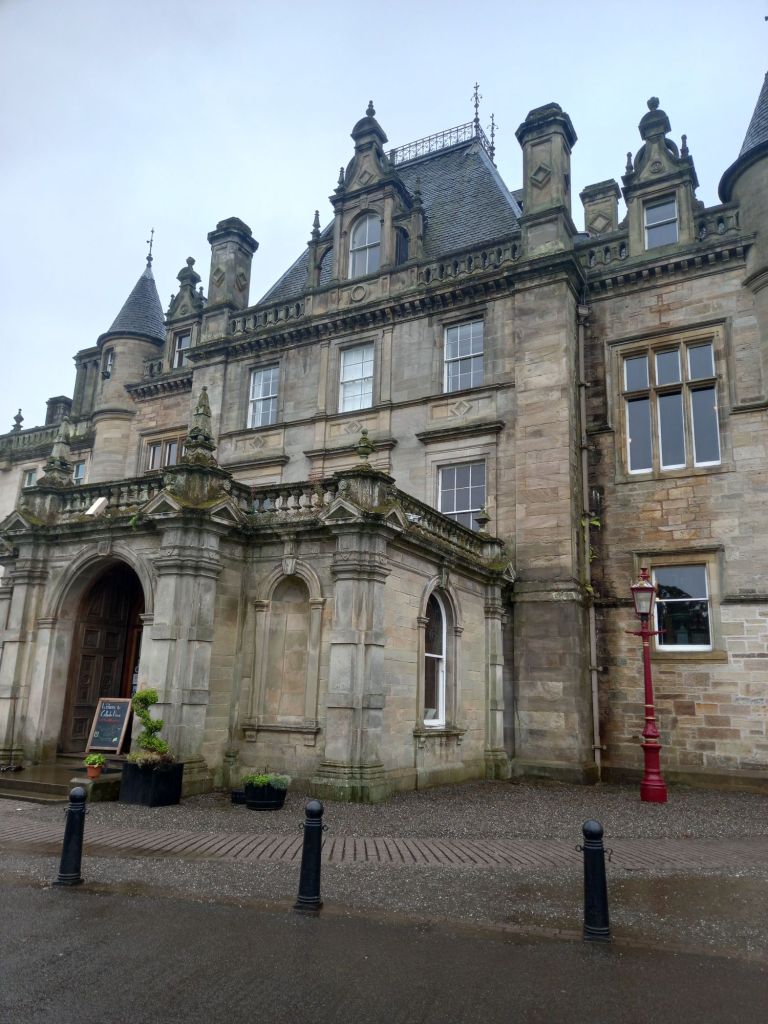
I had been going to visit my stops in central Falkirk that afternoon, but torrential rain meant that I diverted to Callendar House, a gorgeous building which is now the local museum. 

Not only was it a stunning building, modified many times from its original tower house, but it was also owned by a family with very strong connections to Mary. When she left for France, as she was engaged to the Dauphin  she took with her four ladies in waiting, all called Mary. One of them was Mary Livingston, daughter of the family.

It is so fascinating to come across these links, particularly as all of this is part of what I am writing in my novel. In a strange way I feel as if my travels are constantly linking with the book, even if I am not planning it. There was a photo of one of the embroideries I saw last year in Norfolk as part of their interpretation.  I am doing as much writing as I can on the road as well, mainly for the other books, but am determined to finish book one when I get back to Spain.
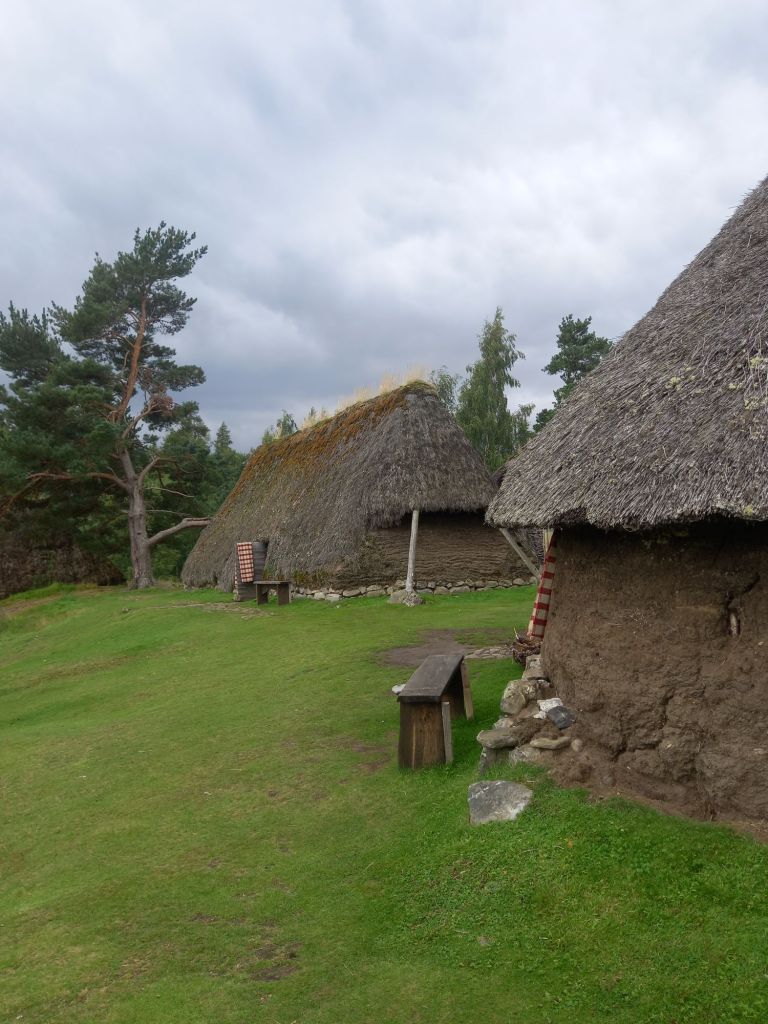
This is a photo of the whole house in its autumn beauty, from one of the tourist adverts.  There is also a country park surrounding the house, with Roman ruins as well.

I have been reminded a lot of my job while I have been travelling recently, I have driven past lots of places that I visited doing placement visits, and recently we had a reunion, so I was back in Huddersfield again.

The parts of my job that I really enjoyed were the research ones, and writing, even the doctorate…though not the deadlines! It is lovely to be able to use all that now. I was never going to retire and just sit doing nothing, I’m just not that person.
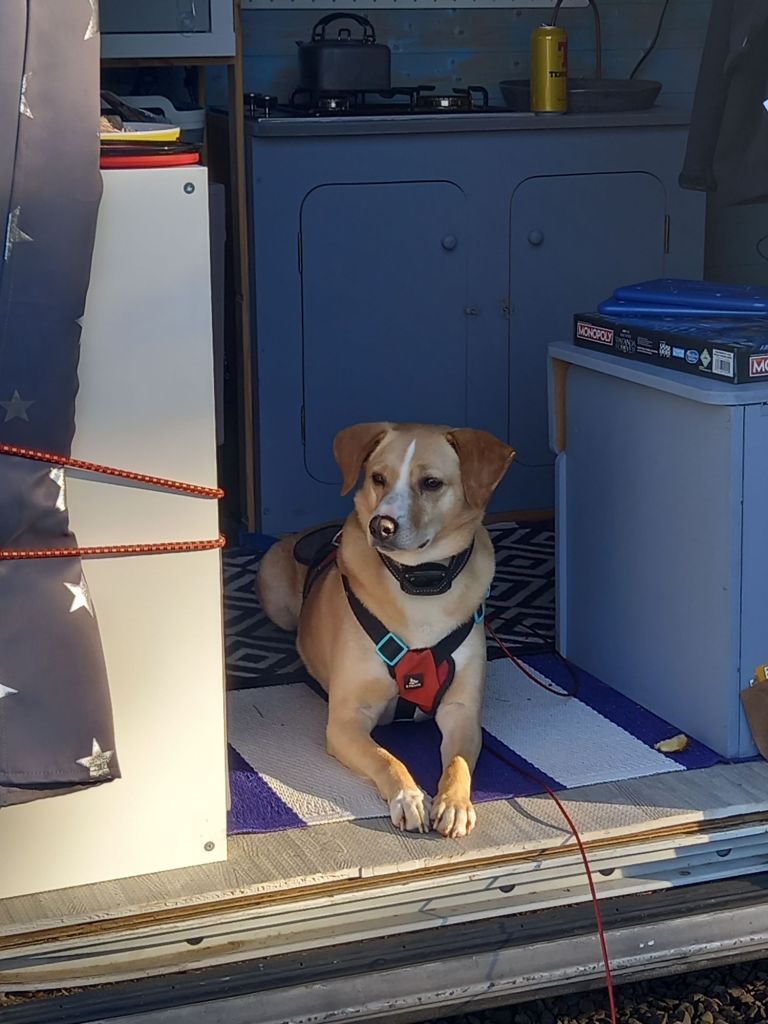
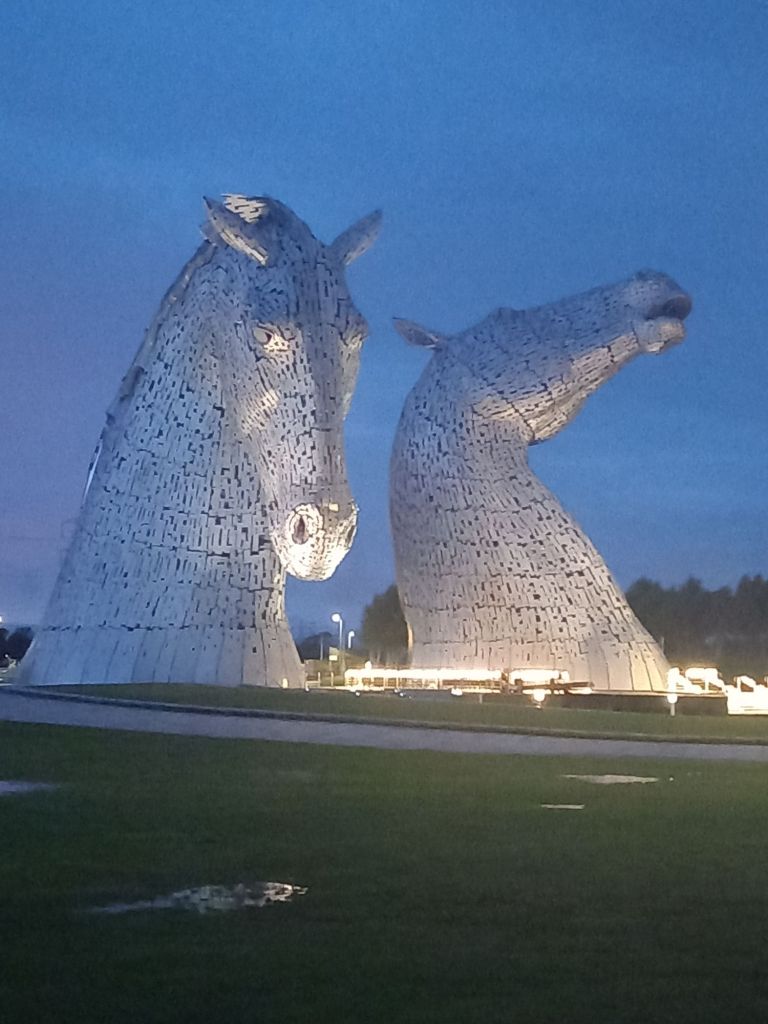
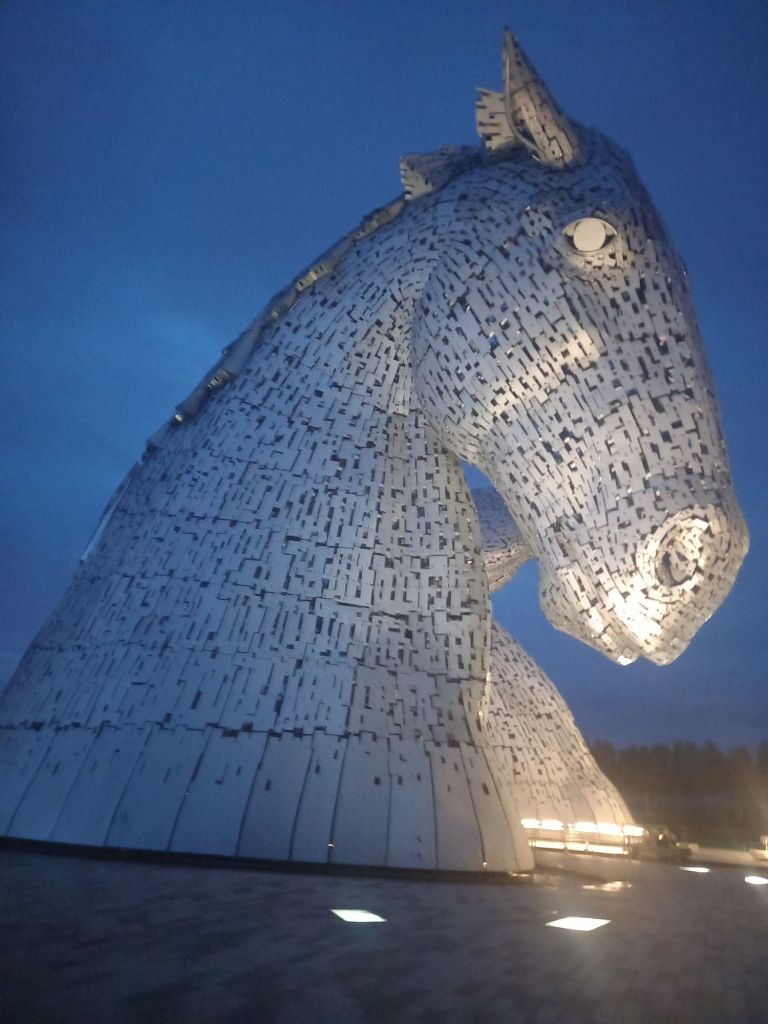
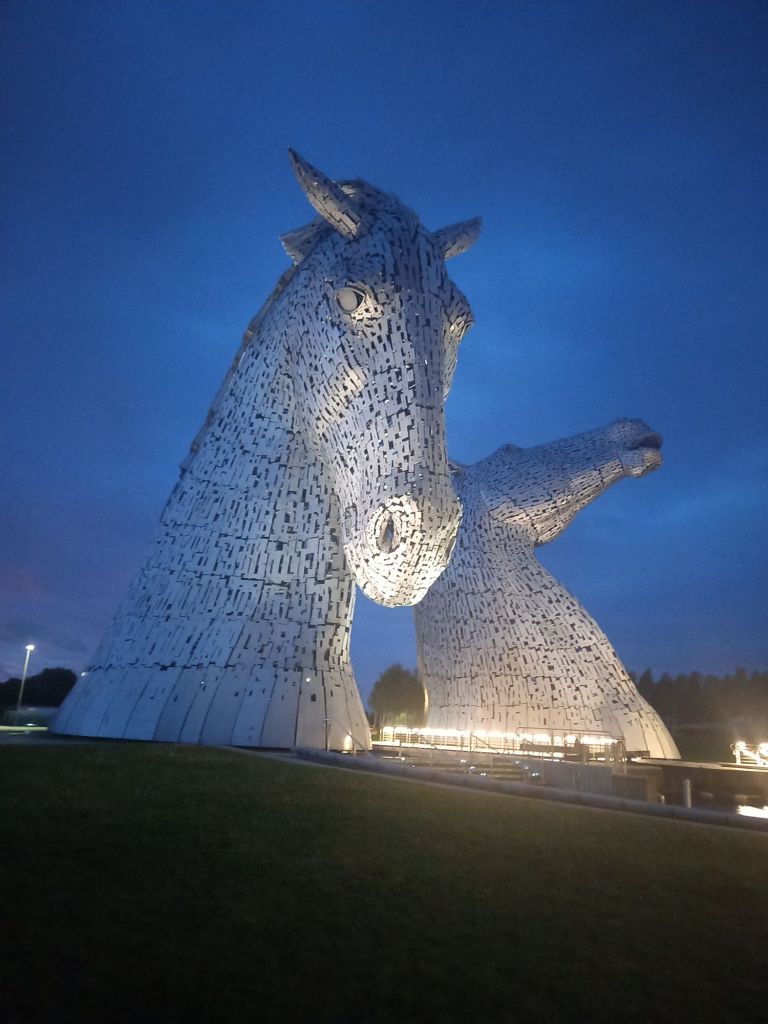
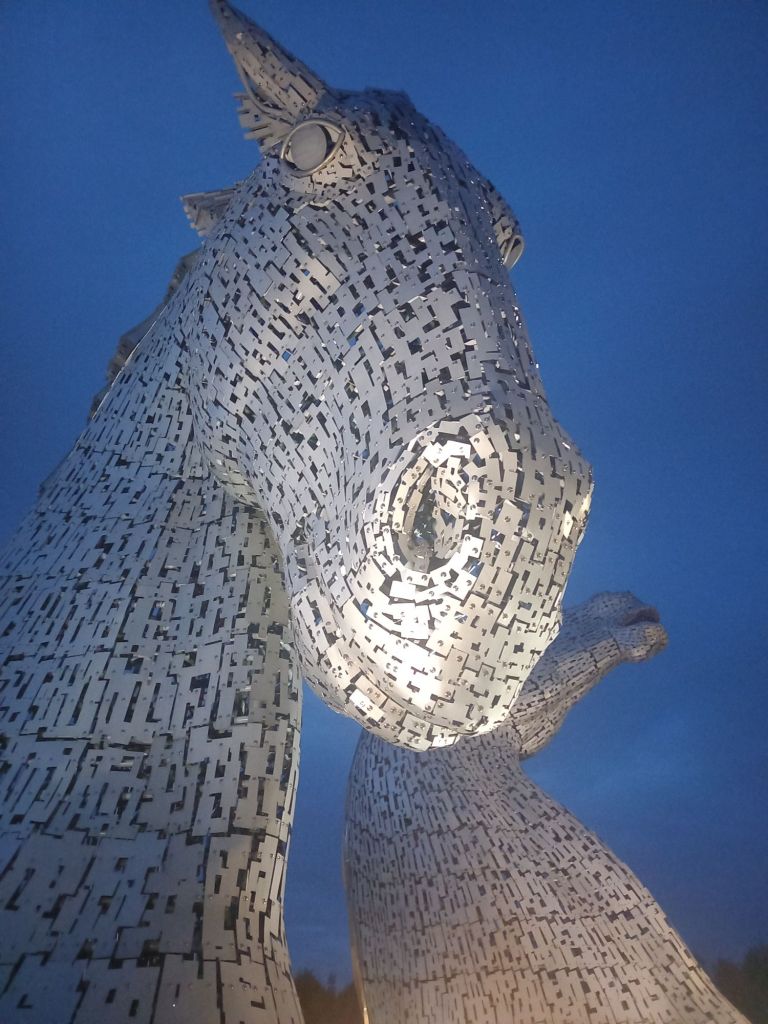
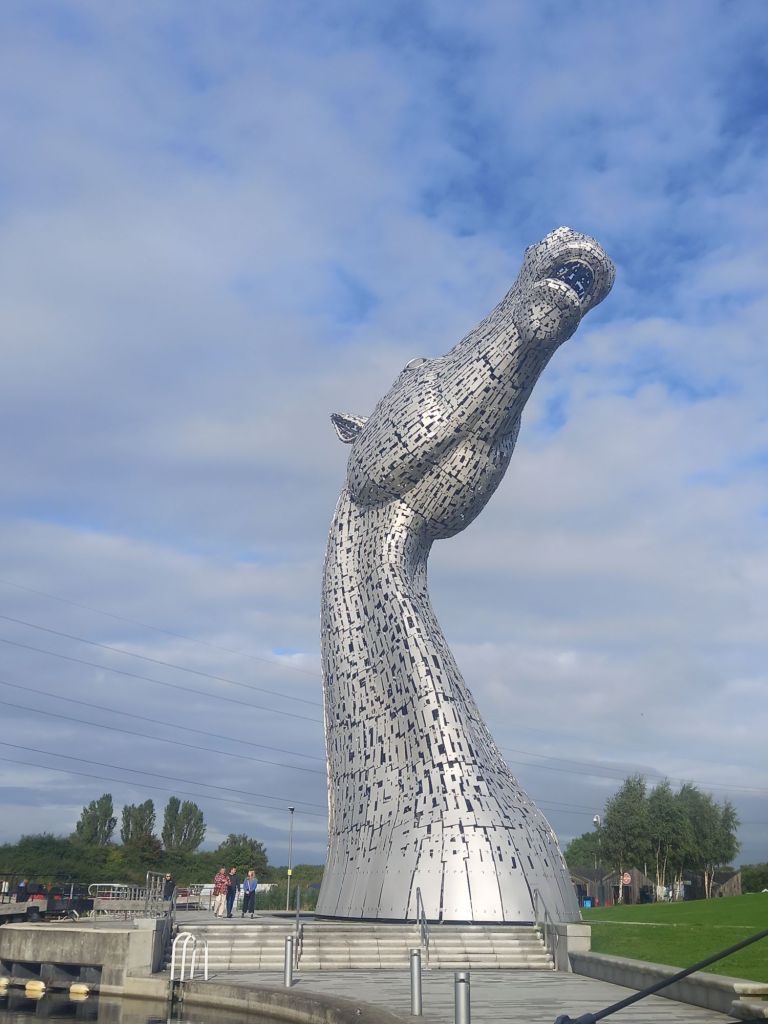
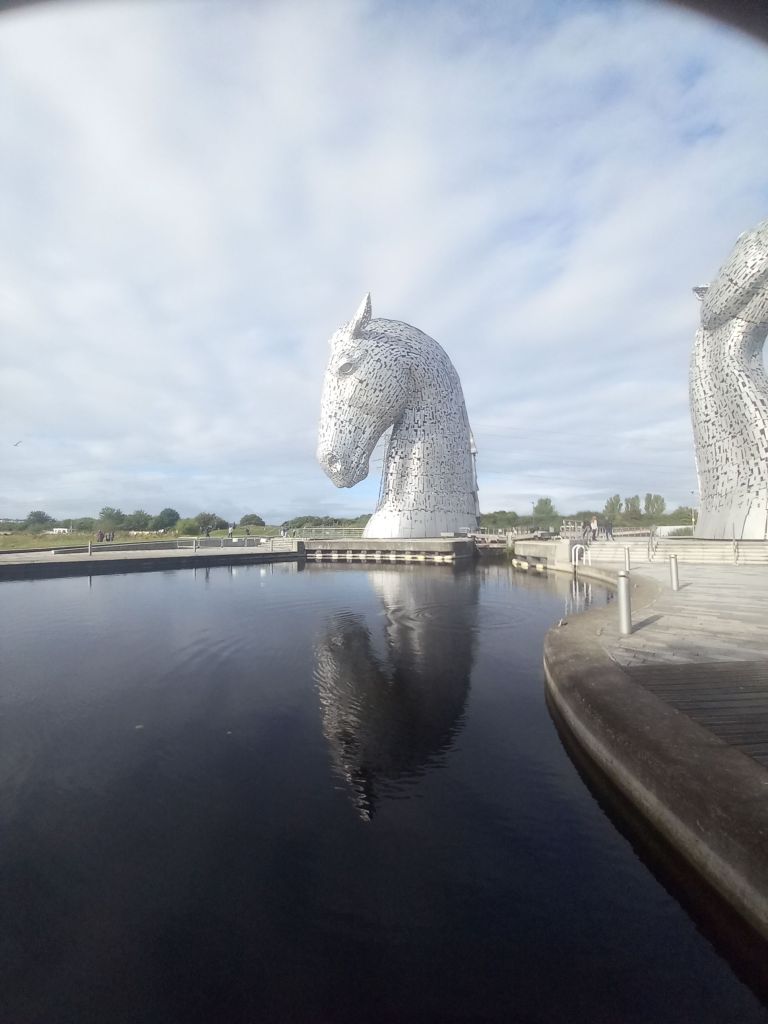
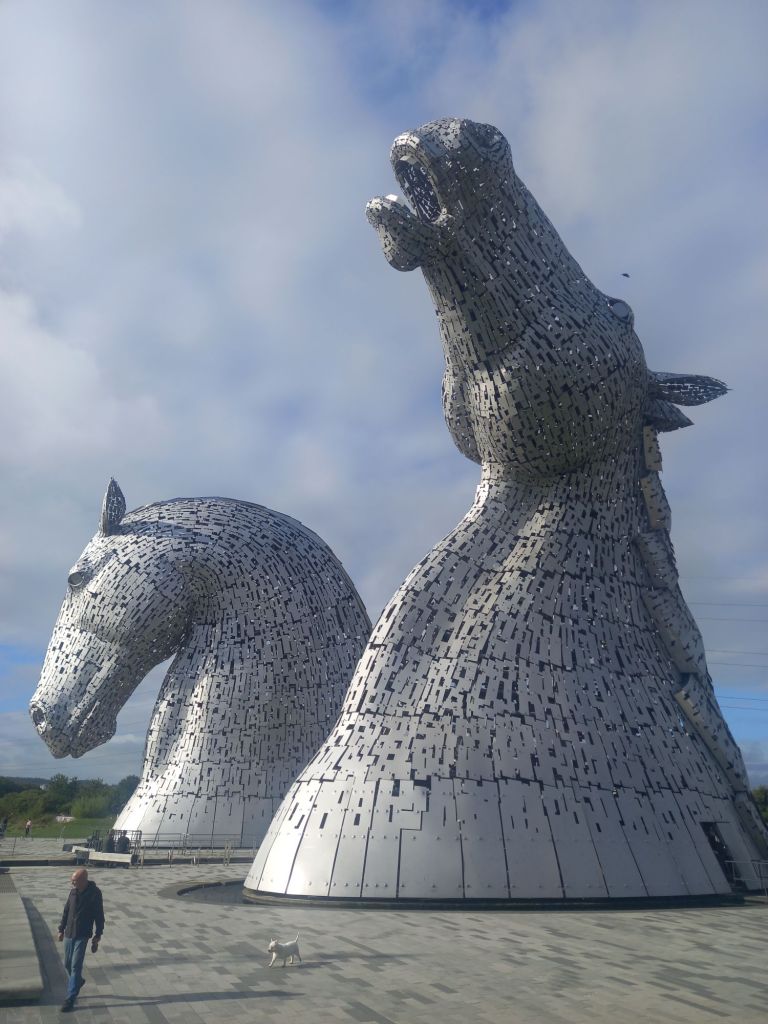
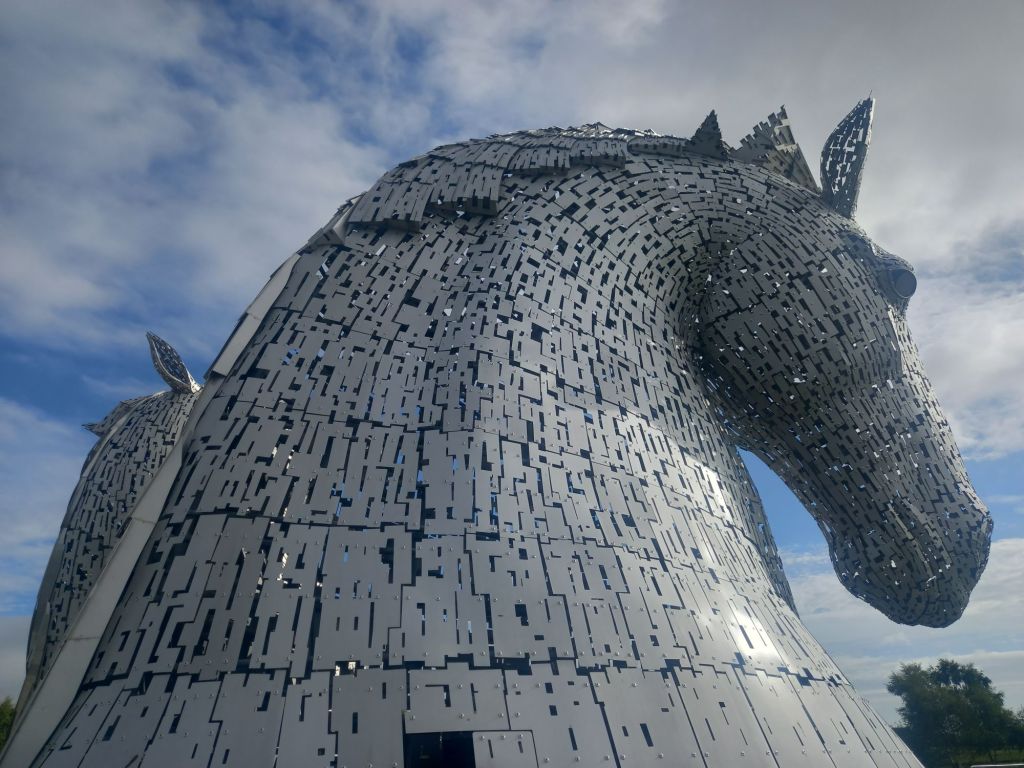
My exciting park up for that night was at the Kelpies! Sadly the interior lights were off for maintenance, so they were only floodlit at night, but they still looked amazing. I visited again first thing in the morning.  This was an excellent park up, it cost £12.50, with 24 hour access to toilets, and a free coffee at the visitor centre, which really made it only £9.50 for the stay.

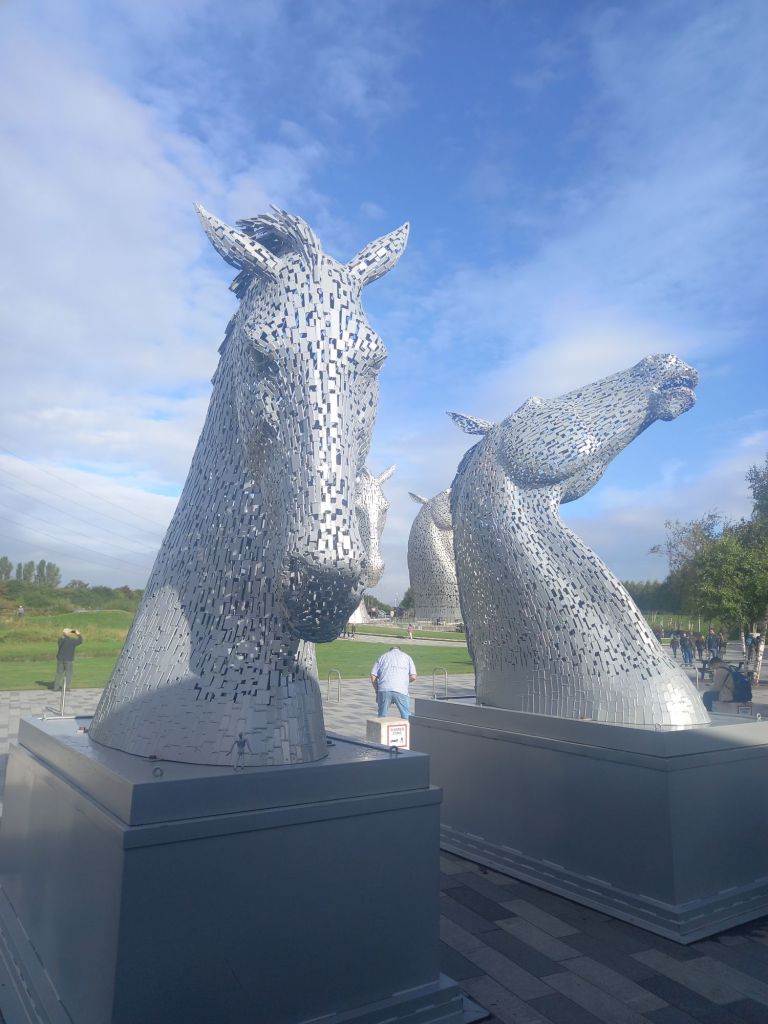
The first two photos below are of the small scale models that were built before the actual ones.

My favourite photo above, Kelpie and clouds. This is not my photo below, it was at the visitor centre, but isn’t it stunning?

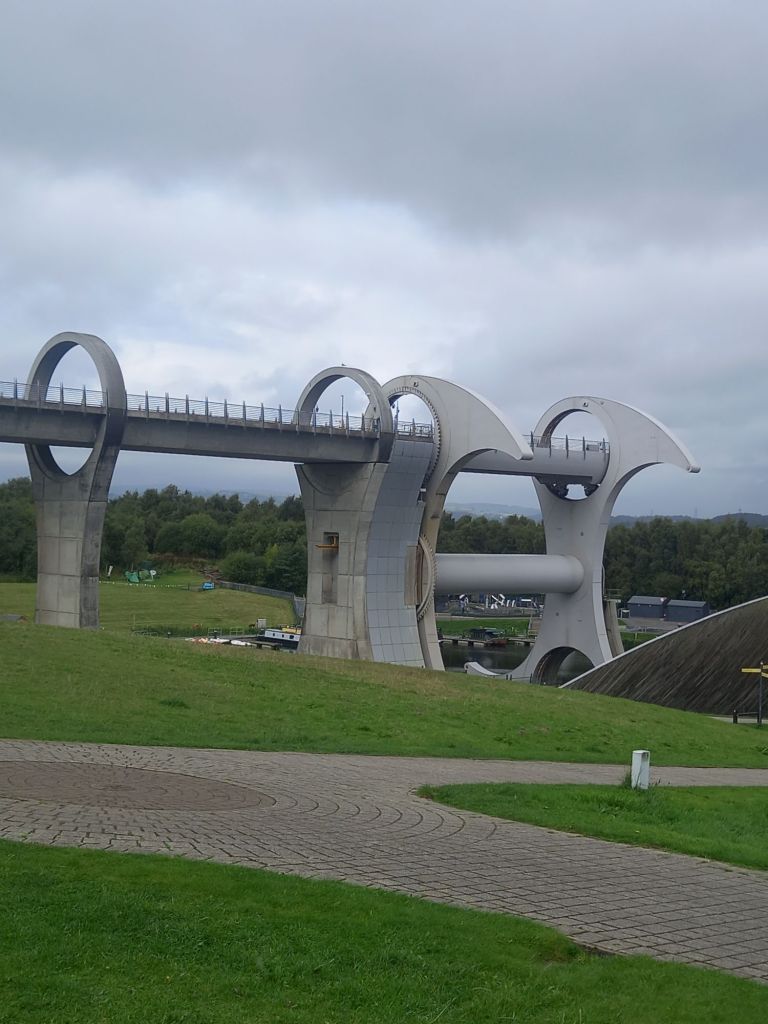
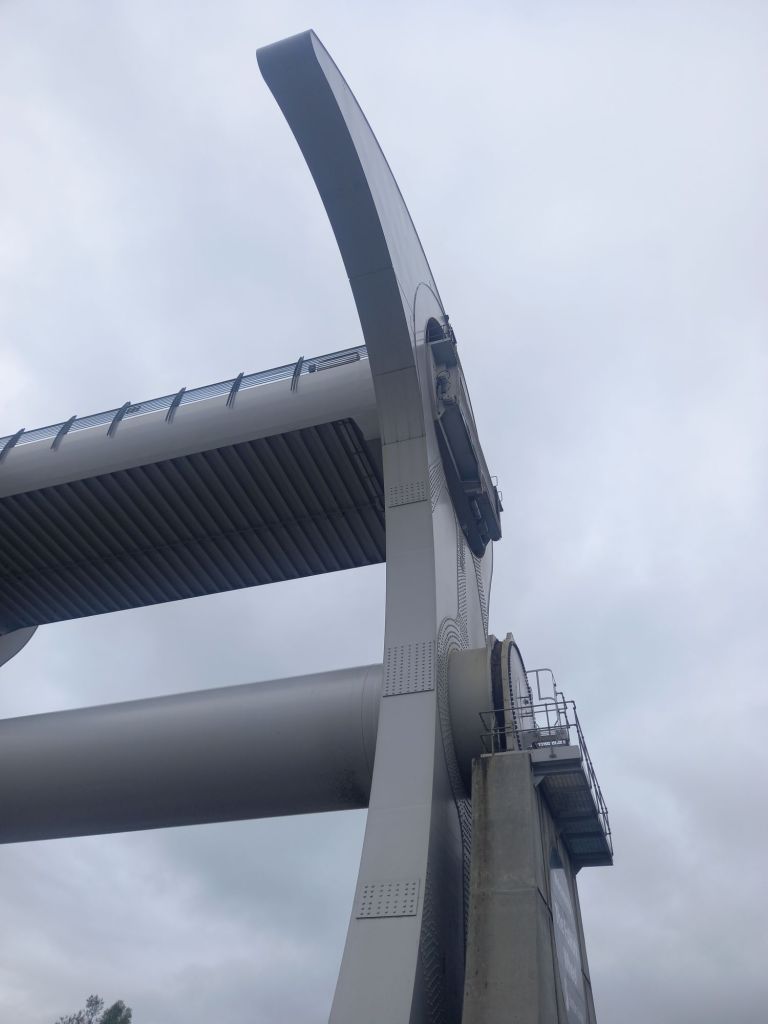
After the Kelpies, the excitement continued with a visit to the Falkirk Wheel! You will know from previous posts that I love canal history and to see this live was incredible. 

The wheel replaced 11 locks, built in the 18th century, which used to take boats a day to go through.  I was thinking about the original engineers and builders of the canal, and how amazed they would be to see this. Photo below from the tourist advert as well.

You can also stay in the Wheel car park overnight, and it gets lit up as well. So many exciting and different places for van life in Scotland. 

I am currently on the last week of my trip, I haven’t had good WiFi or signal for the last few weeks, so I have many more posts to share. From Falkirk I moved on to my last stop in Scotland, the gorgeous Dunbar, which I will tell you all about next time.

Until then have fun, take care, stay safe and thanks for visiting.

Time travelling with textiles

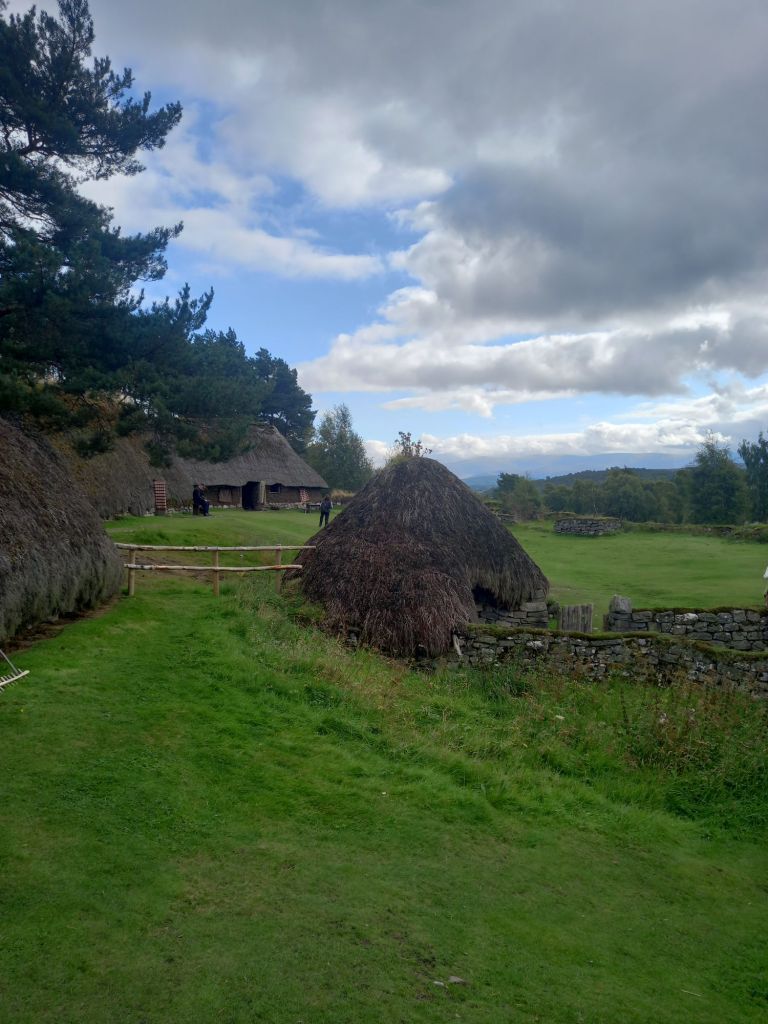
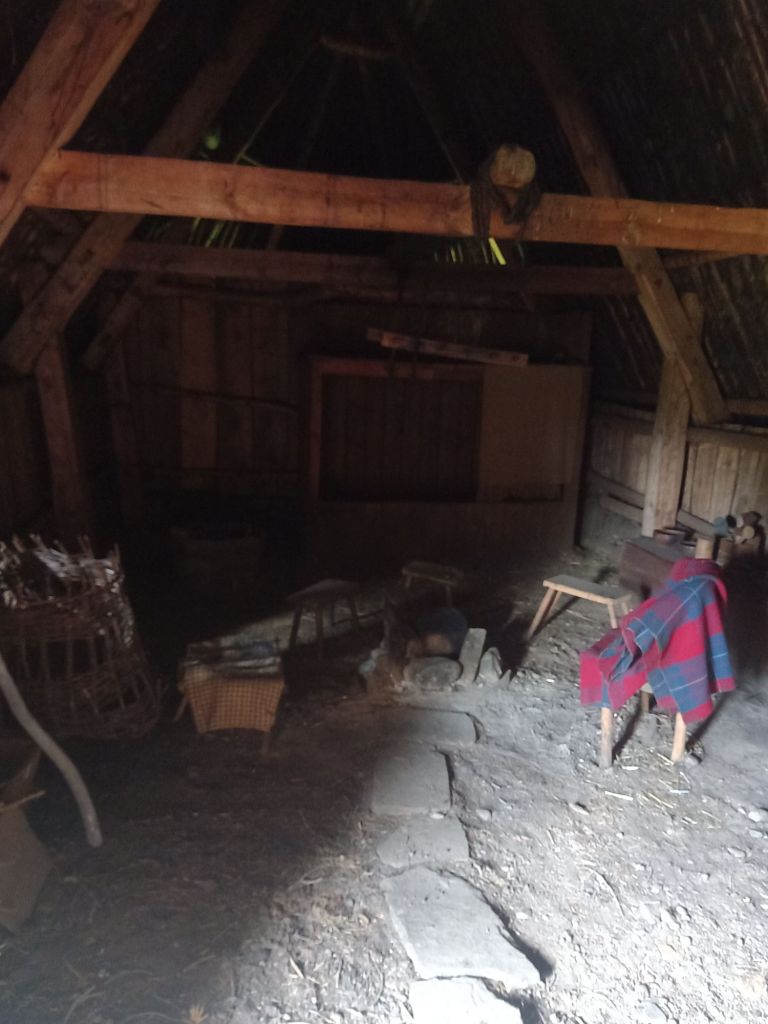
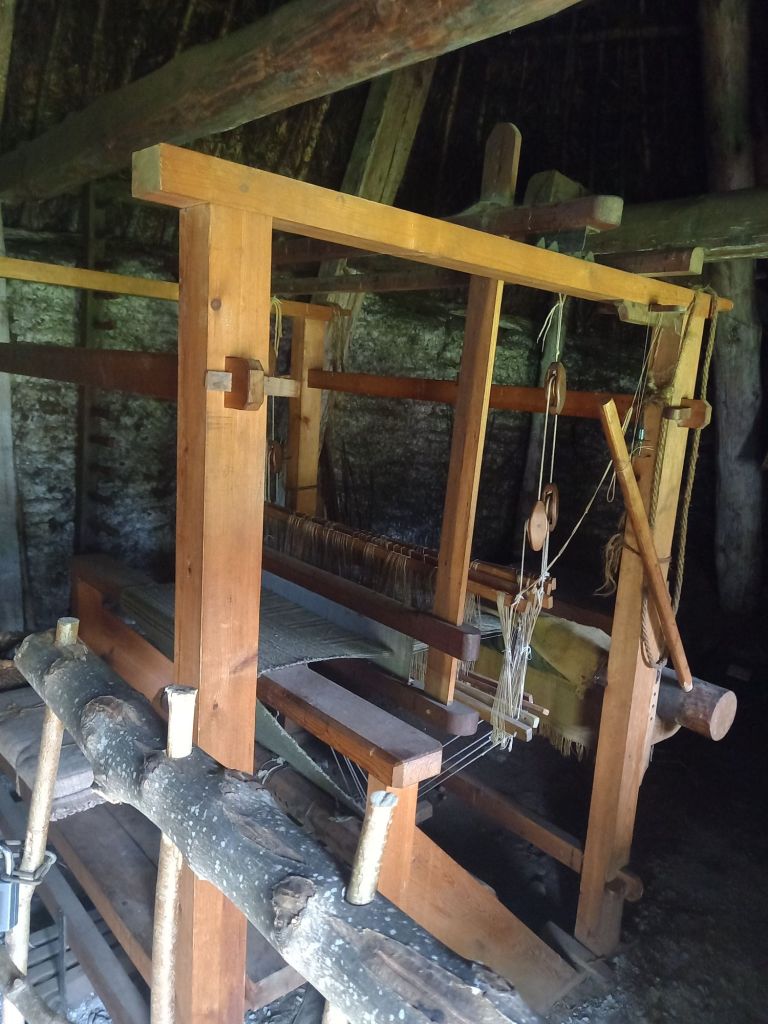
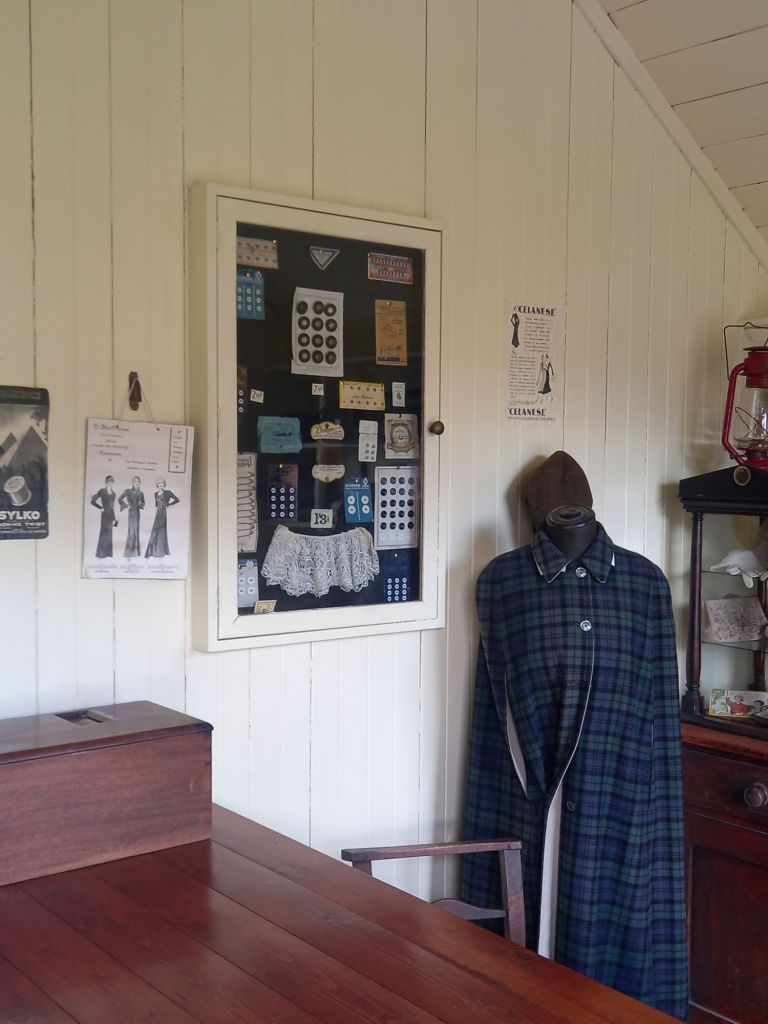
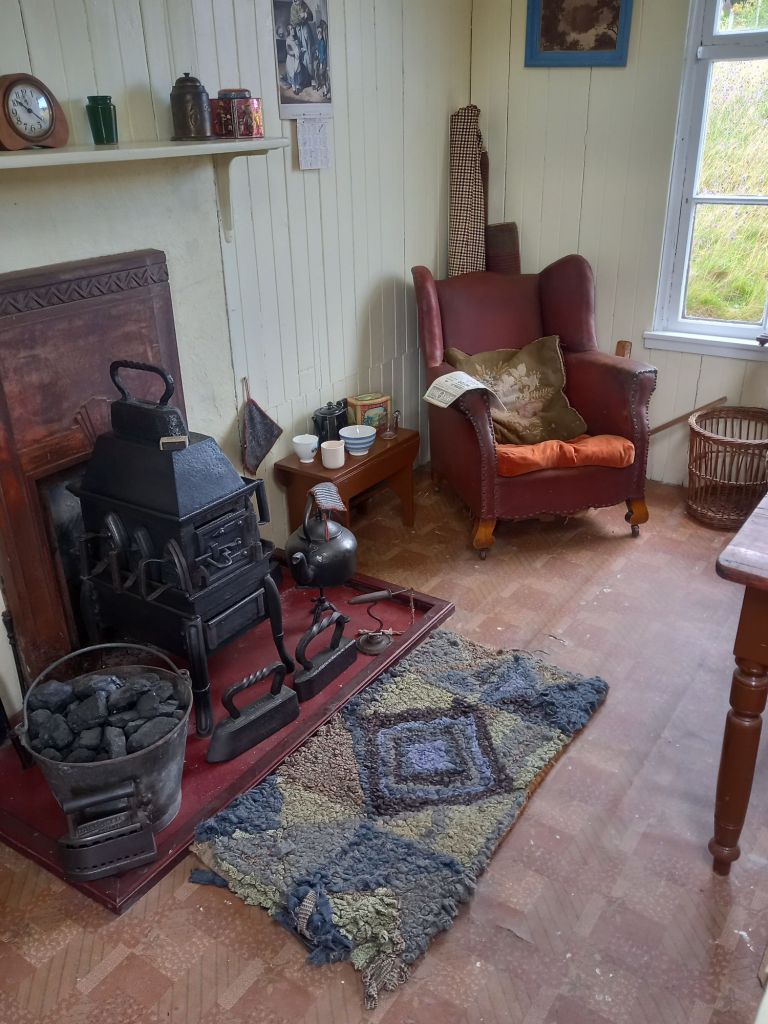
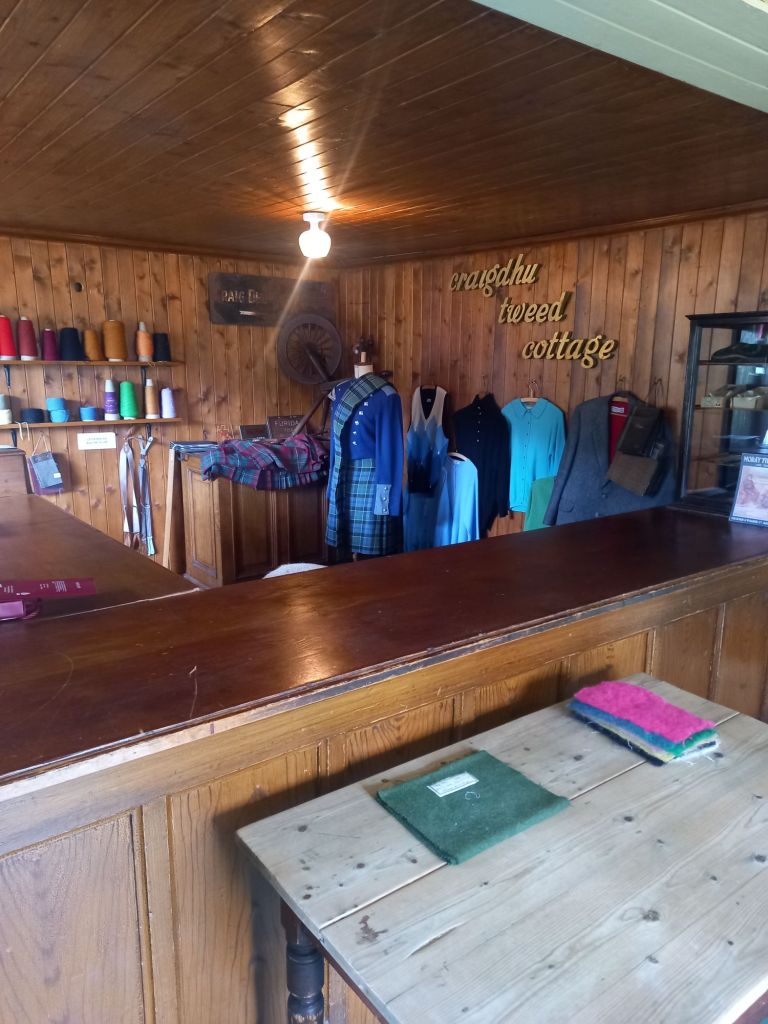
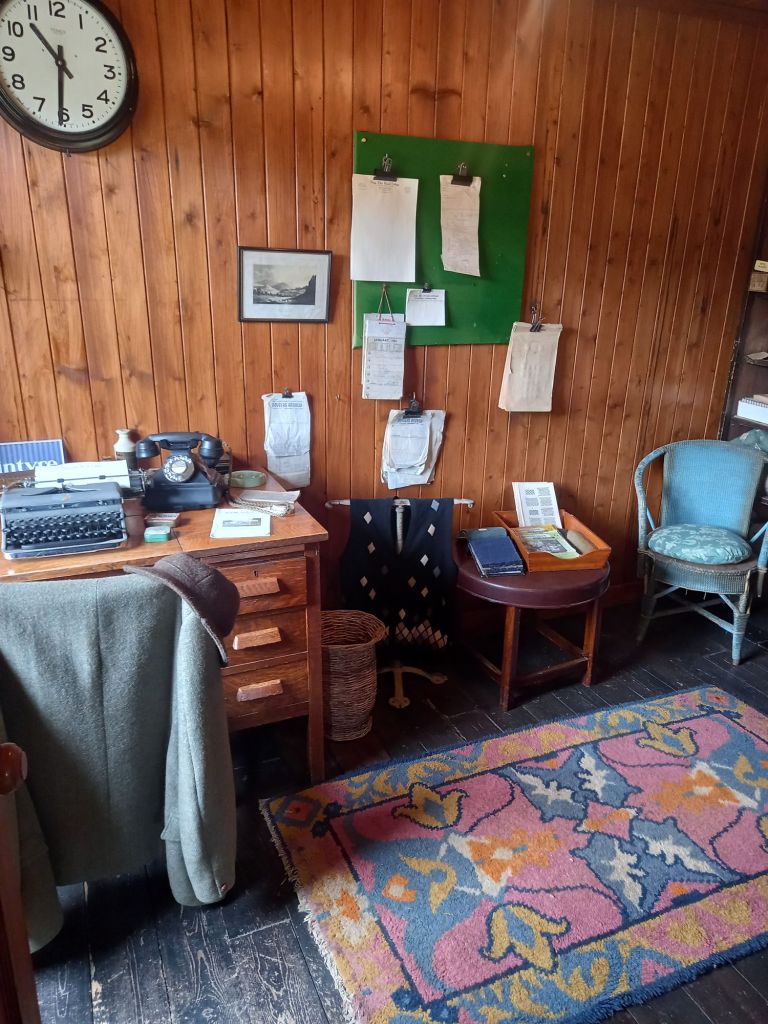
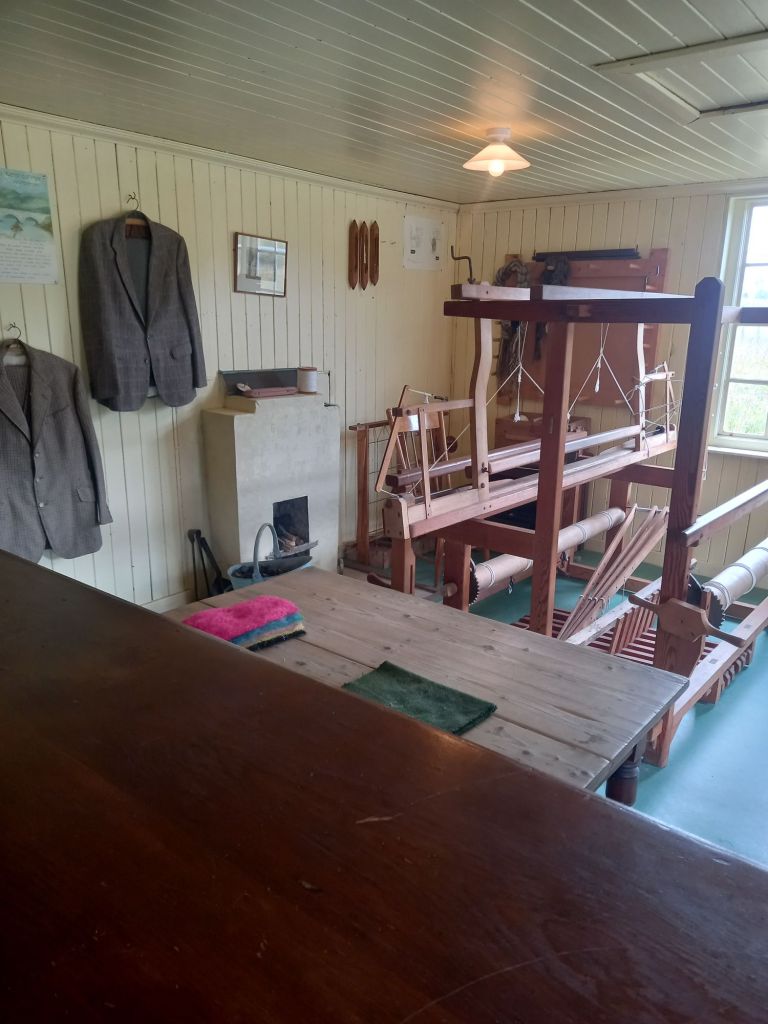
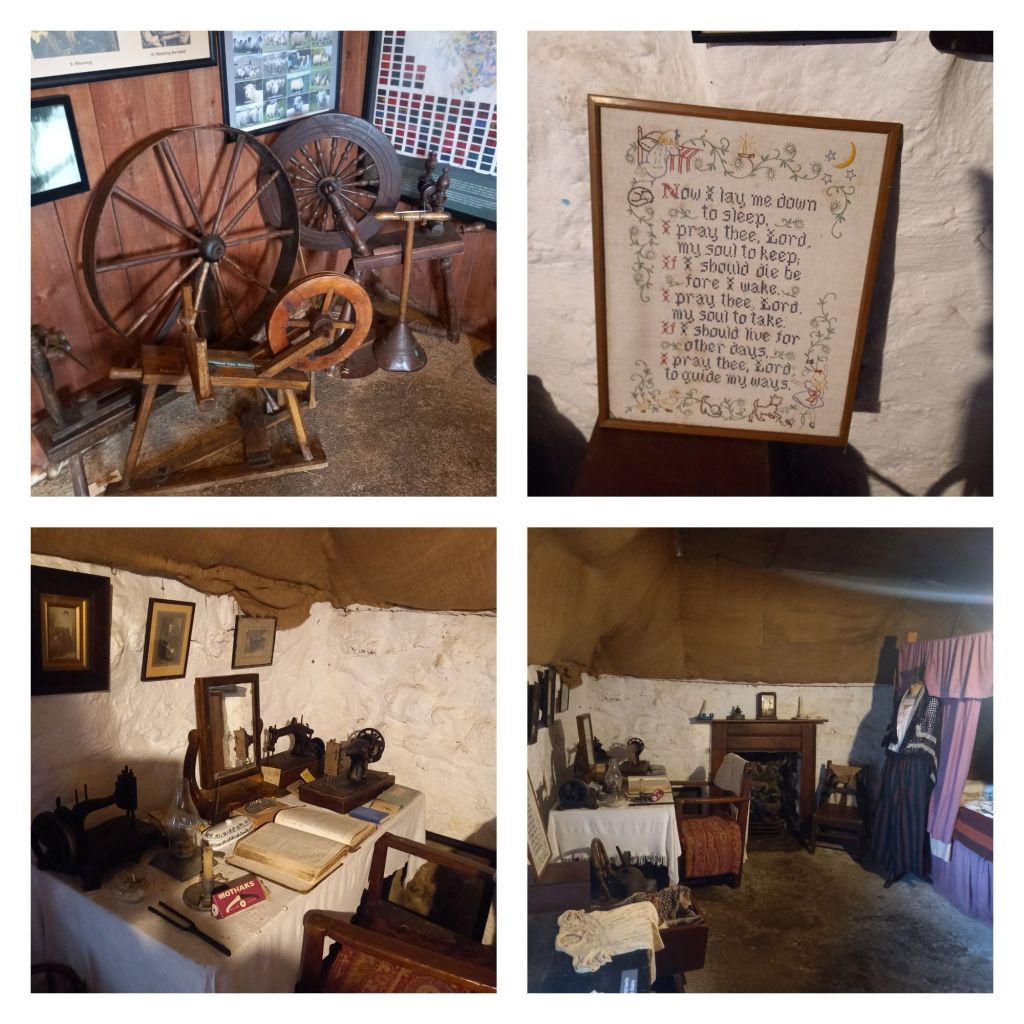
For me, one of the most exciting things about my recent visit to the Highland Life Folk Museum was the way that the textile heritage of the area was represented.

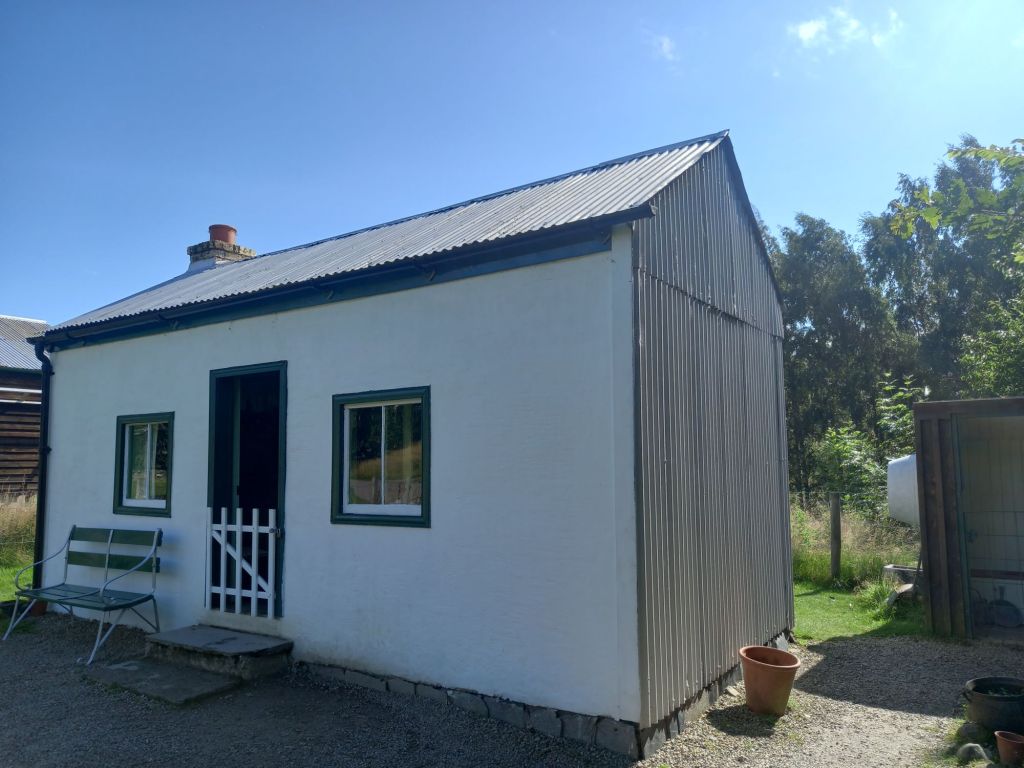
The museum extends for about a mile, and consists of a reconstruction of a 1730s township, and then existing buildings dating from the 1800s to the 1940s that have been moved and rebuilt.

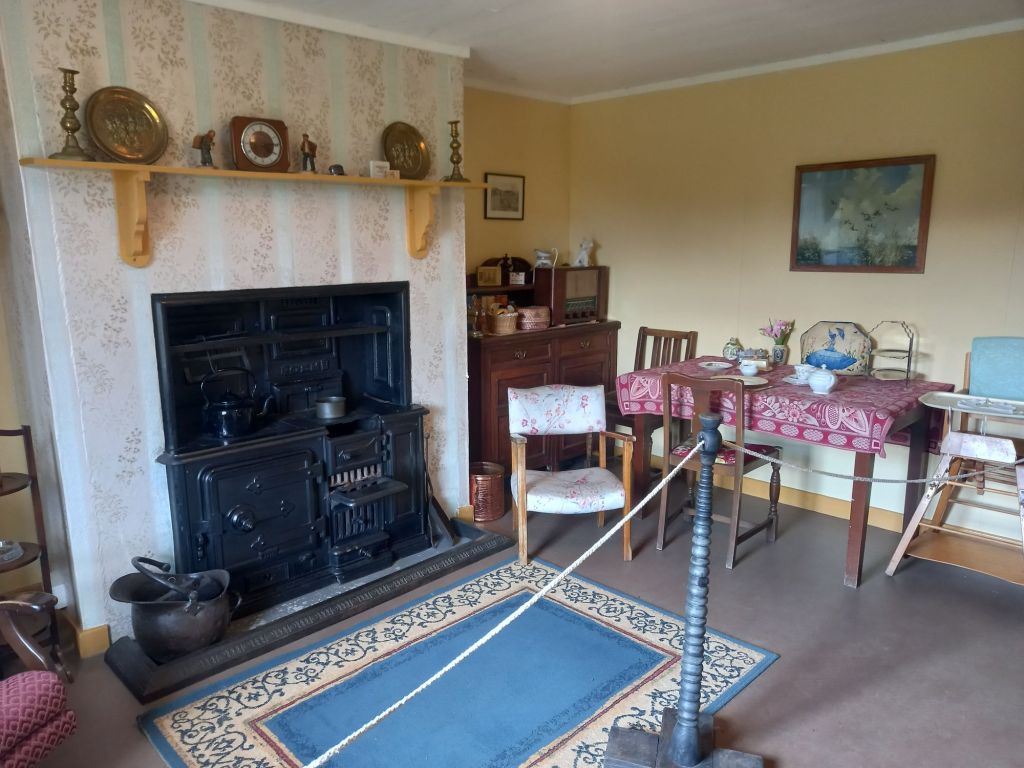
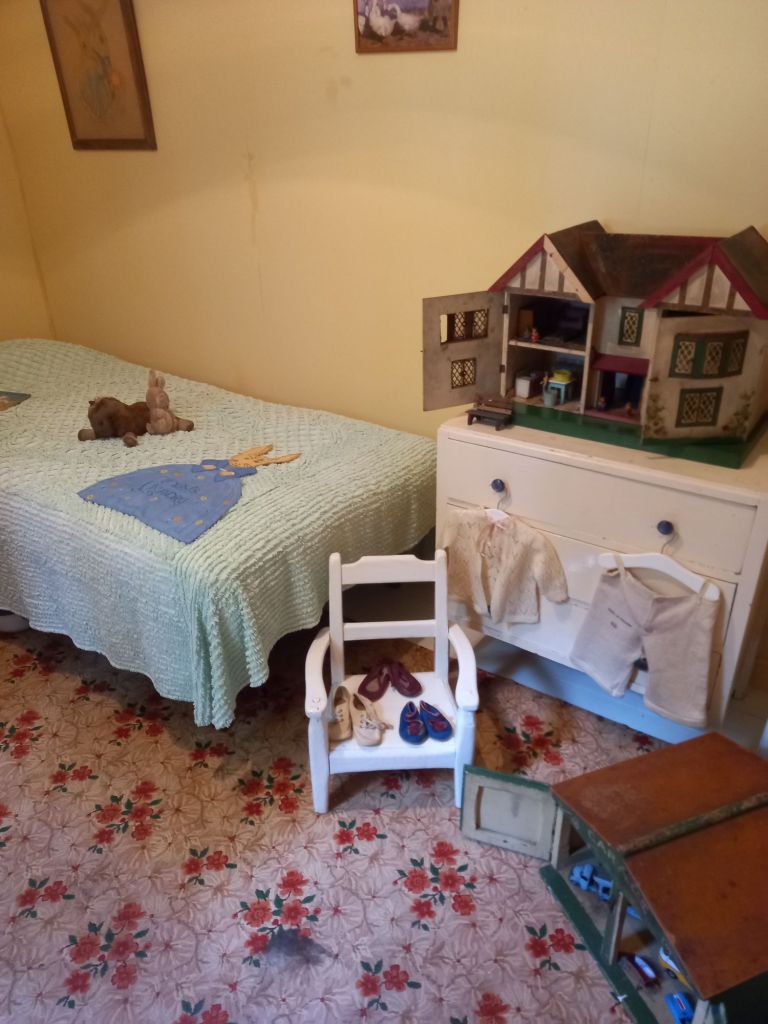
This means that unlike a standard museum, or a Trust property, the houses and contents are a snapshot of one particular period, rather than an accumulation of artifacts over the family’s ownership of the house.

I’m not sure if all of the textiles in each house originally belonged to it  but each gives a unique insight into the life, and textiles of the era.

I have talked before about the importance of textiles in portraying aspects of daily life, and it is really obvious here. The 1730s houses are about survival, keeping the people, and animals who shared them, safe and warm, especially in the winter days.

Textiles here are functional, spinning and weaving them yourself the only way to get them, and a continual set of tasks within the community. 

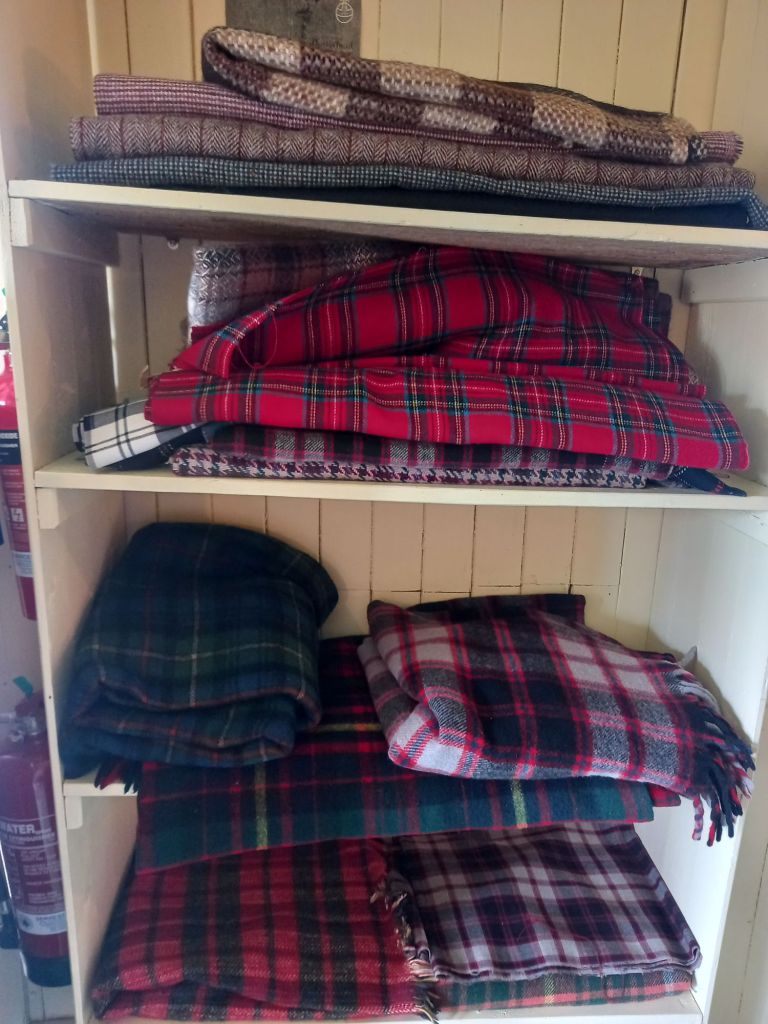
One of the displays showed the multifunctionality of the original tartan cloth, garment, cloak and blanket, all in one handy length.

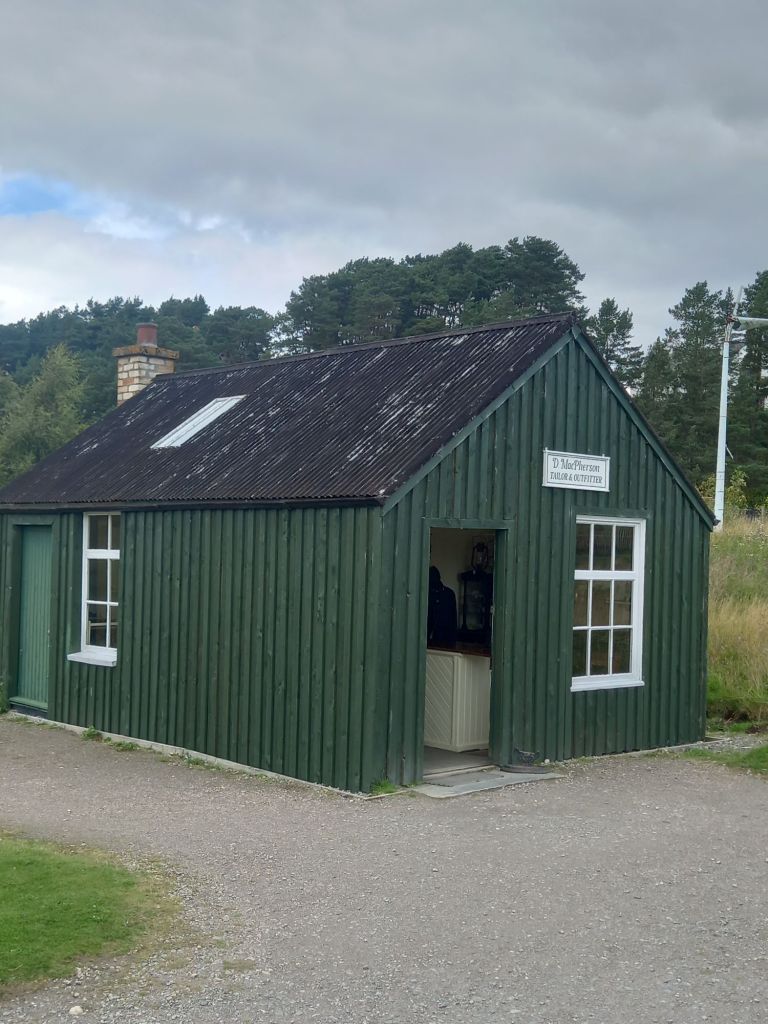
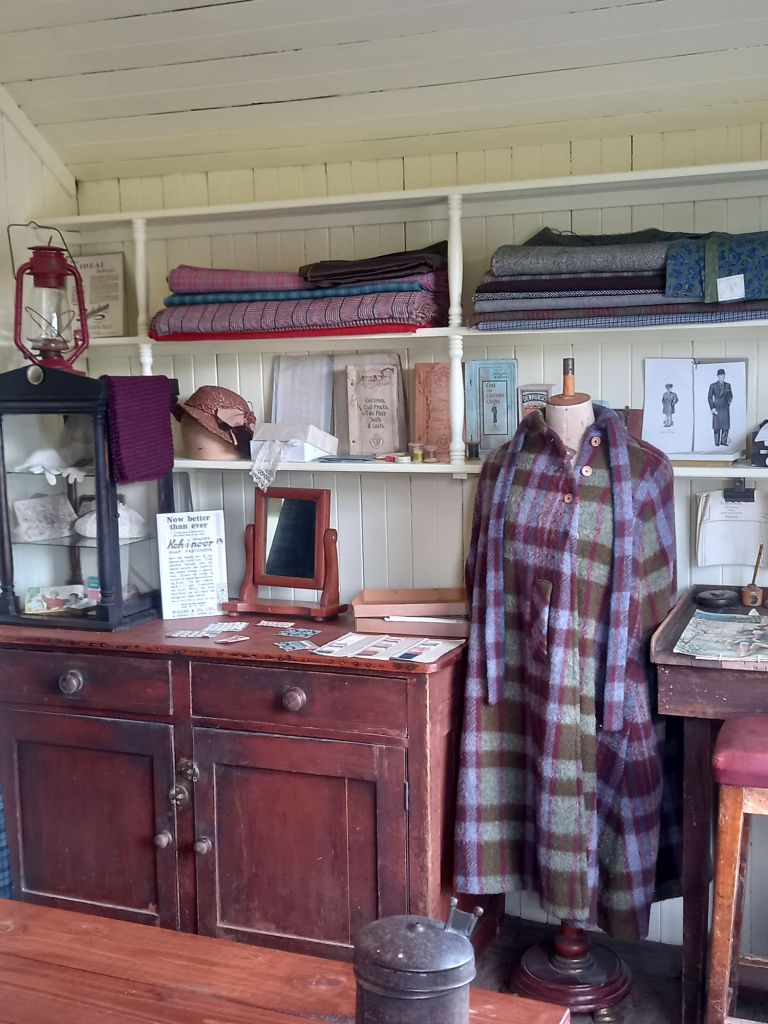
As life starts to get less pressured, and as job roles diversify, you have the separate businesses devoted to clothing.These buildings originally stood in the nearby town of Newtonmore.

The tailors and dressmakers, aided by the invention of the sewing machine. The idea of having lots of clothes for different purposes,  the ability to own more than one of things, and the luxury of not having to make it yourself.

Clothing as status, the well tailored tweed suit, the modern kilt in clan tartans, all things uniquely associated with Scotland, and exported all over the world.

In the later period houses, those of the leisure classes, with time to spend on the ‘decorative arts’, textiles to show your skill, to make your home look nice.

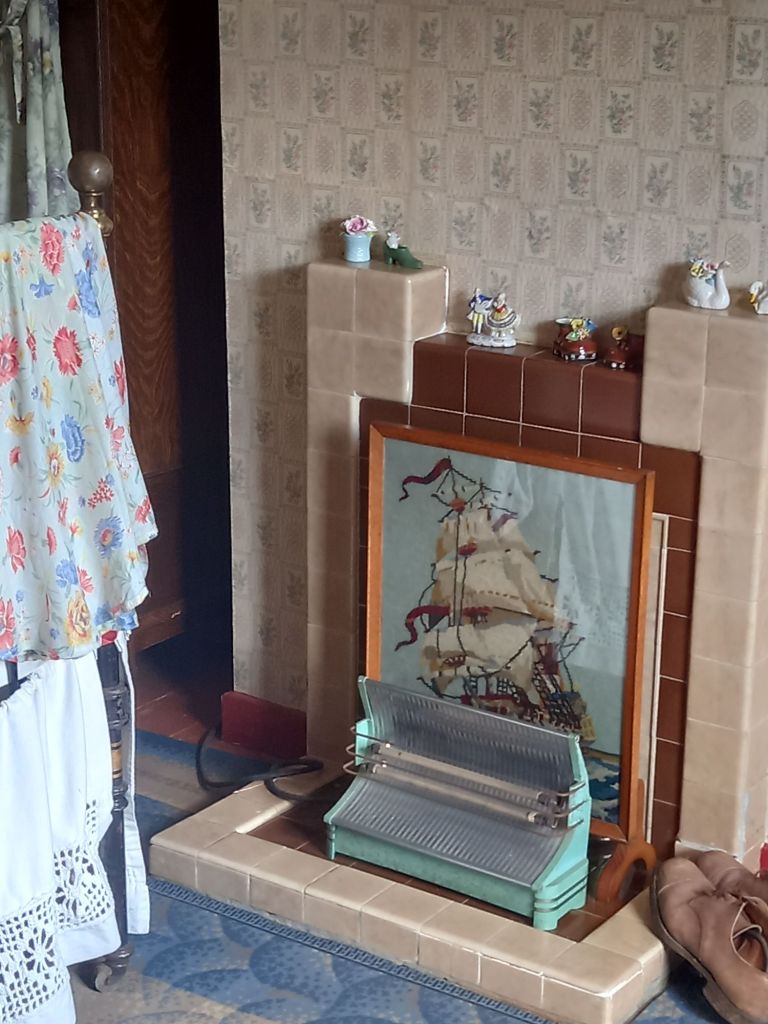
An endless succession of tablecloths, tray covers, anti maccassars, fire screens and cushions. All created in the home with materials bought from specialist suppliers. A way to pass time with friends, or while listening to the radio.

It was marvellous place to visit, and one of my very favourite ways to spend the day. I was also exceptionally lucky that the weather was gorgeous, and the scenery stunning. Loved the three varieties of Highland Cow, just enjoying the sun and their grass.

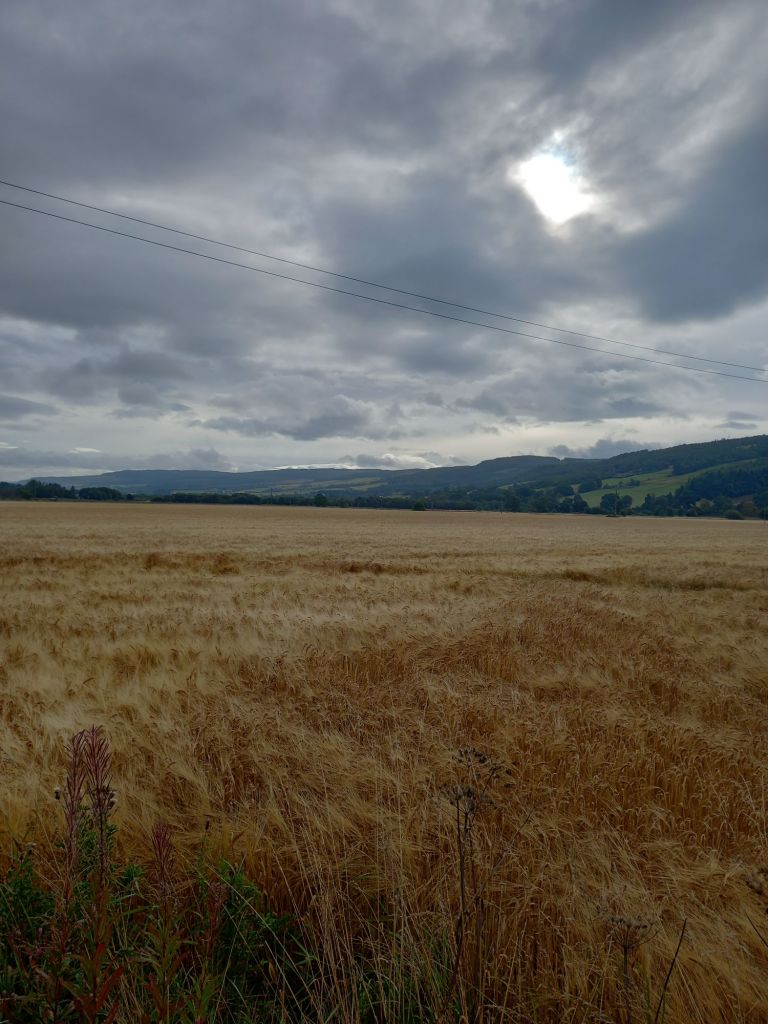
I ended the day at a new aire, in Aberfeldy, just sitting watching the clouds as usual, and listening to the birds flying over the fields.

I have a few more posts to share with you about Scotland, it seems such a long time ago that I left, although it’s only a week. Hopefully,  good WiFi allowing, I can share more next week, as I am making my way to the final few campsites of this trip.

In the meantime, have fun, take care, stay safe and thanks for visiting.

Seeing rainbows

This is my last day on the Isle of Skye. I have been staying at a wonderful campsite, right next to the Cuillin mountains, called Sligachan.

I spotted this site last time we were here, two years ago and decided to stay, which was a great choice. We are right next to Sligachan Bridge and these amazing mountains, so I have had a chance to do lots of arty photos.  

Not only is it a fabulous location, the staff are so lovely and friendly and helpful. We have had the tail end of a hurricane mid week, so although I pitched my tent when I arrived, I took it down the following day, as there were 40mph winds forecast.  They were fine with me staying in the van.

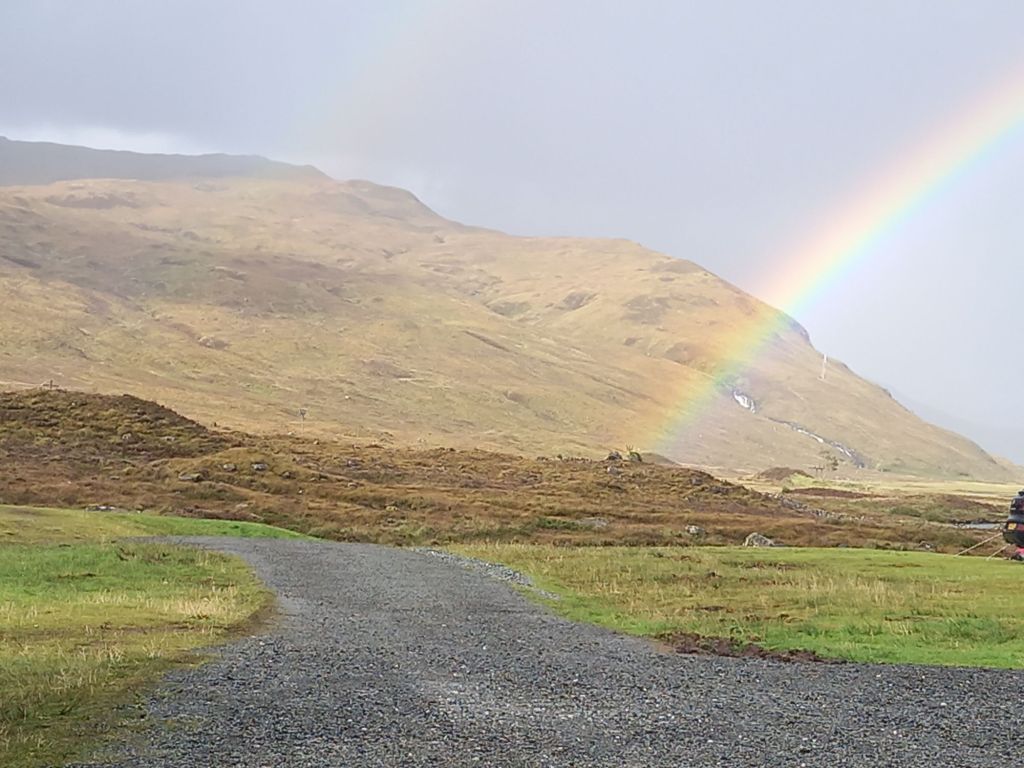
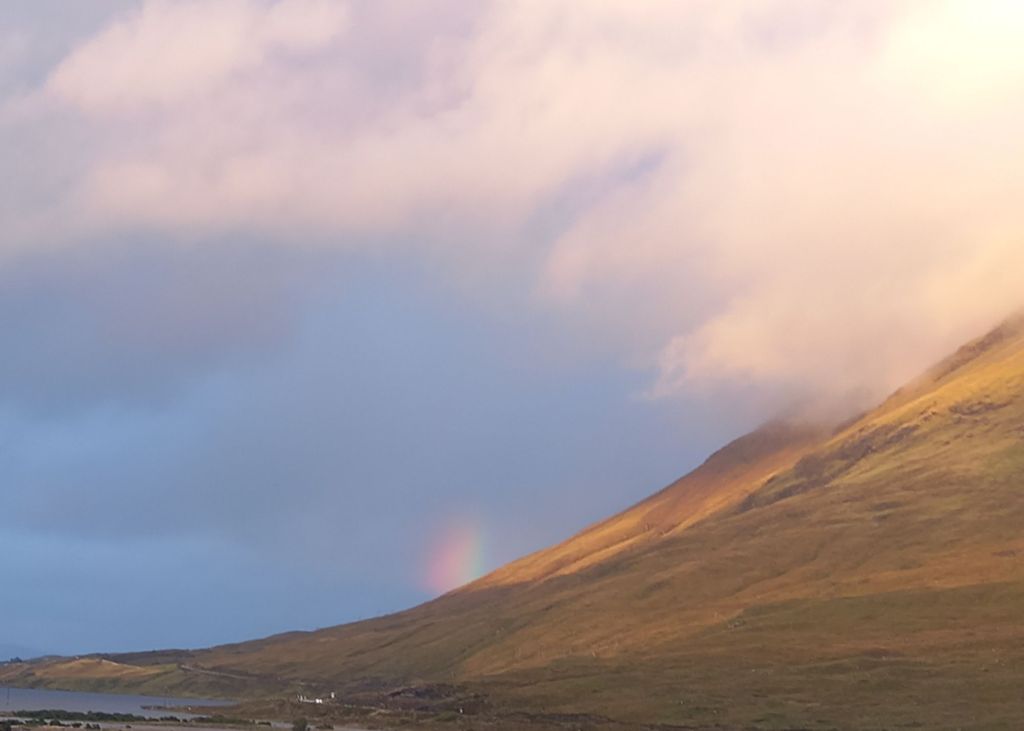
It has been a fantastic location for rainbows, I have never seen so many in one place. There must be something about the mountains behind the site, and the loch in front, that makes it the perfect place.

The weather has been mixed, but enough sunny days to go and explore, and some gorgeous sunrises and sunsets as well.

Last time Jacky and I came we did all the famous stuff on Skye, so I have spent my time just exploring the less visited parts in the north of the island.

I have been out to Portnalong, to Carbost, Uig and had a quick visit to the capital, Portree.

I visited an iron age broch, with views over Oransay, and the Skye Museum of Island Life.

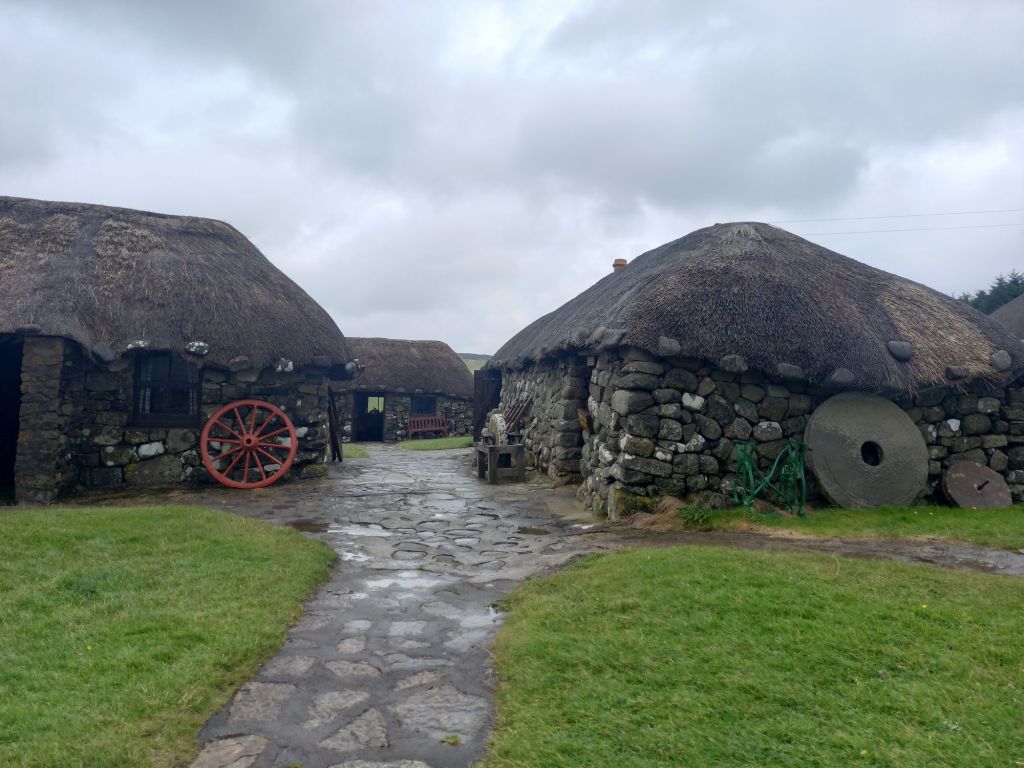
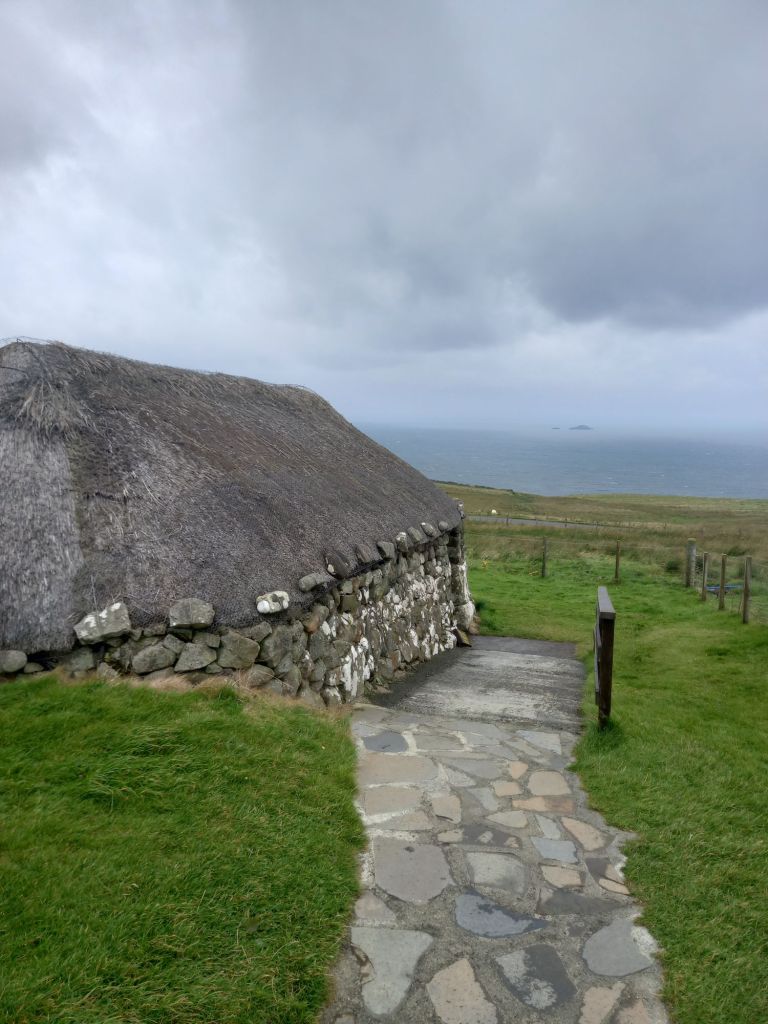
The museum is located in a more remote part of the island, 6 miles along a bumpy single track road, and really gives you a sense of how cut off people were living there. There are a mix of preserved, and reconstructed houses of crofters.

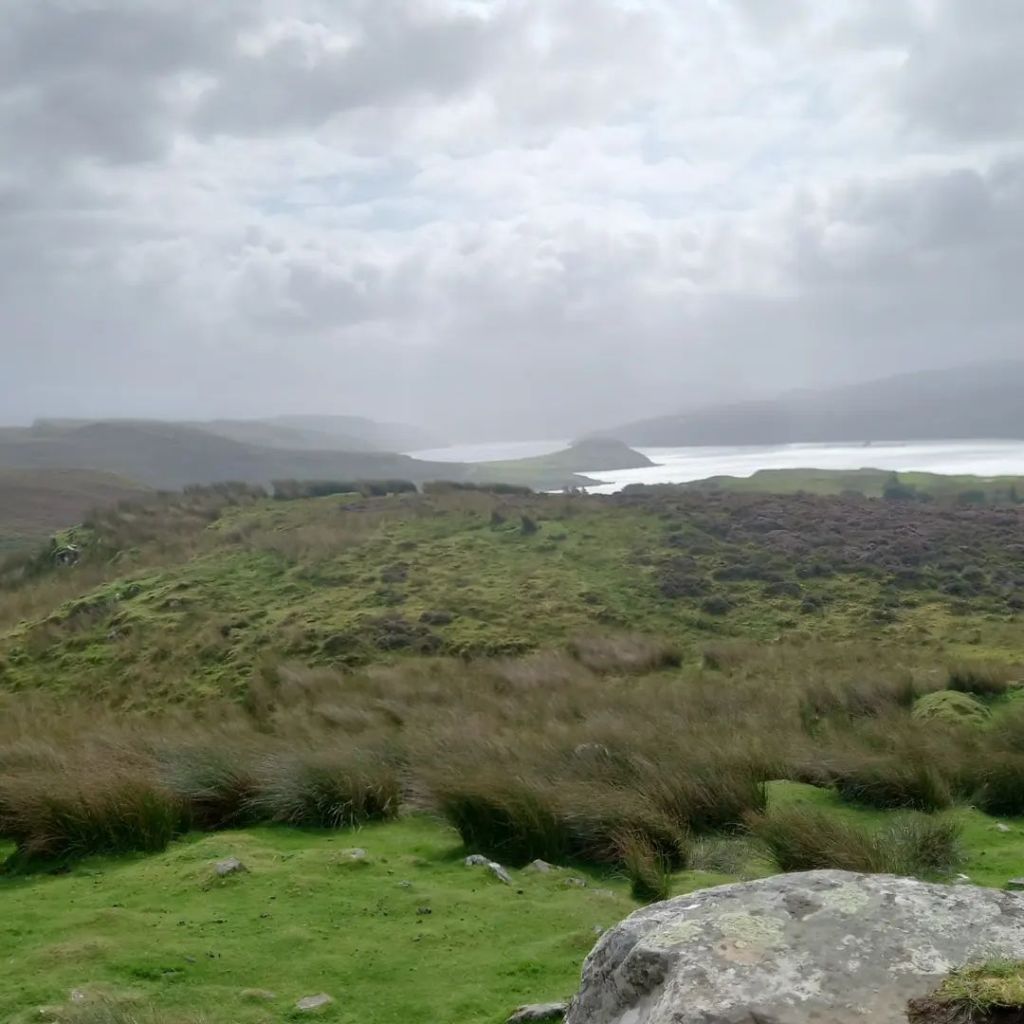
Even now, with a car, it is trek to get there, but there are still lots of houses there, with amazing views over the cliffs. One of the most significant pieces of information was that children living in these crofts would usually not visit Portree, a 25 mile walk, until they were 12, and old enough to cope with the journey. 

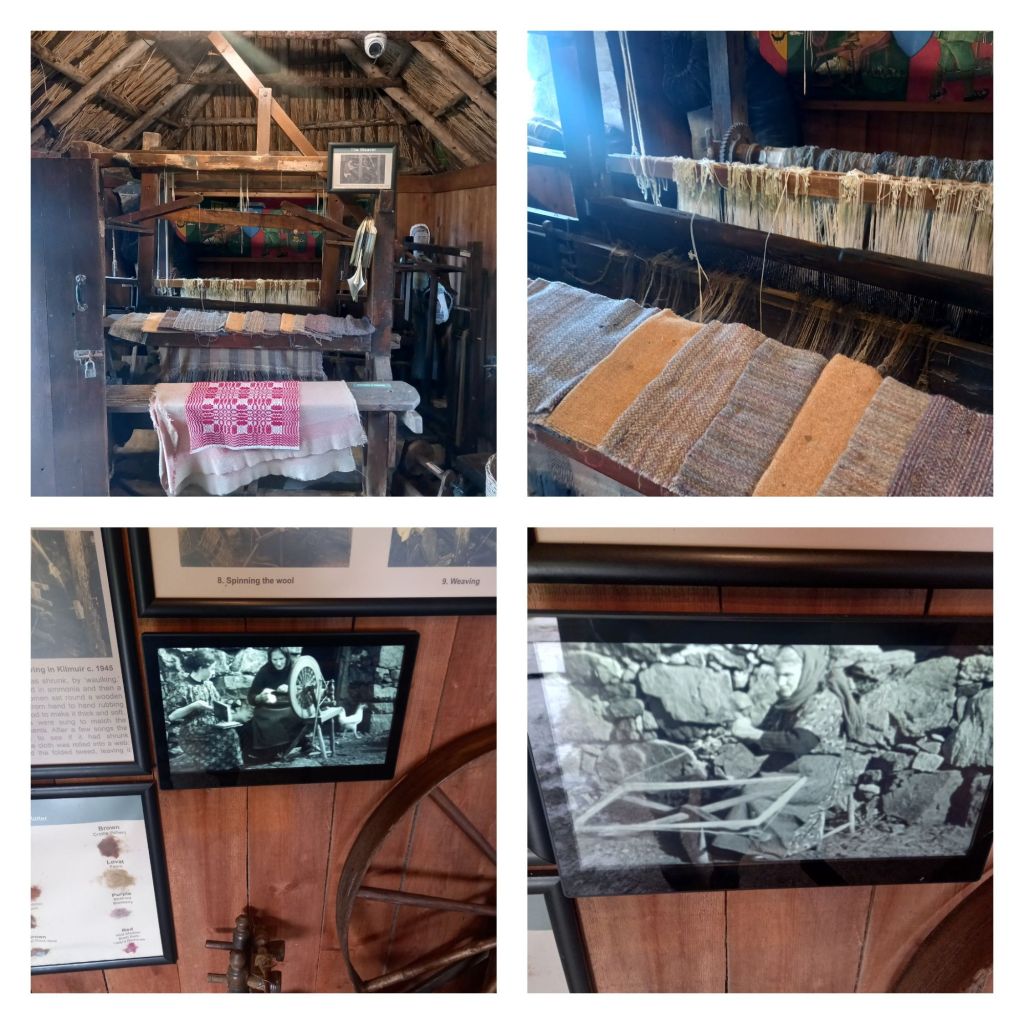
As well as the artefacts, including some great textiles, there were photos and archive film of people living there in the 1930s, which was the best bit. All textiles were made at home, from flax grown in the croft, and wool from their sheep.

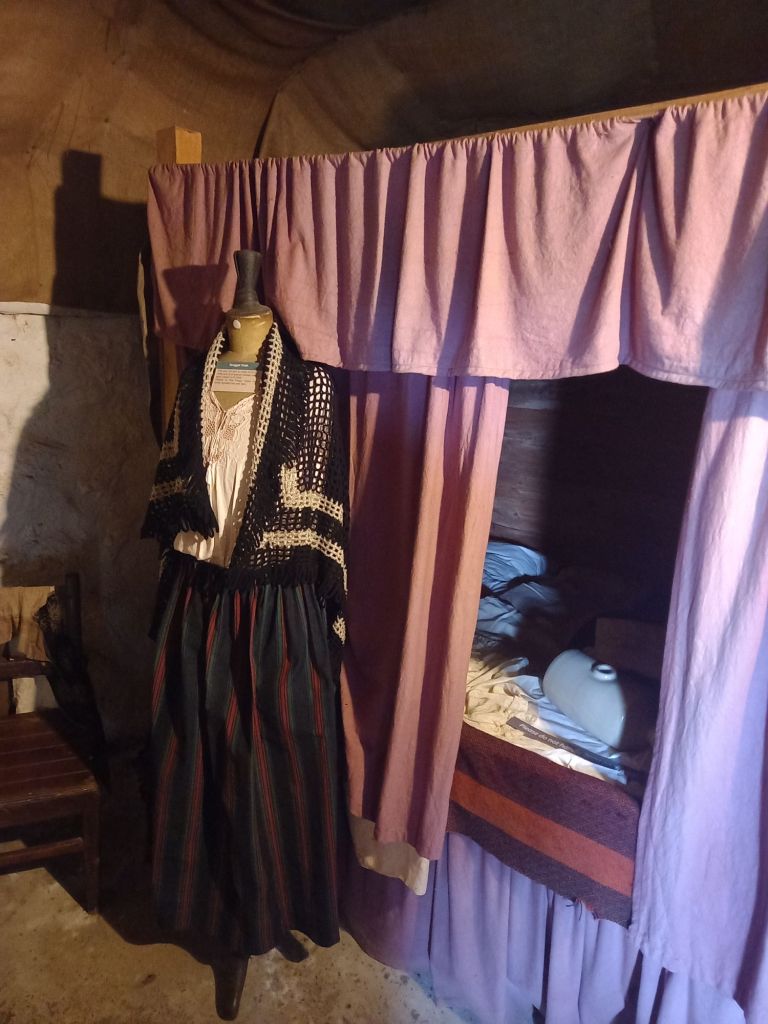
This croft was home to a family with 10 children, accommodated in two box beds, with their parents in a small bed off the living room.

A fantastic place, and well worth visiting for a taste of real Skye life.

I have also been following a YouTube channel called, ‘Living  the Skye Life’, run by an artist and musician, Sarah and Willie, who relocated here two years ago. It is a really interesting exploration of 21st century life here, and gave me lots of ideas of different places to explore.

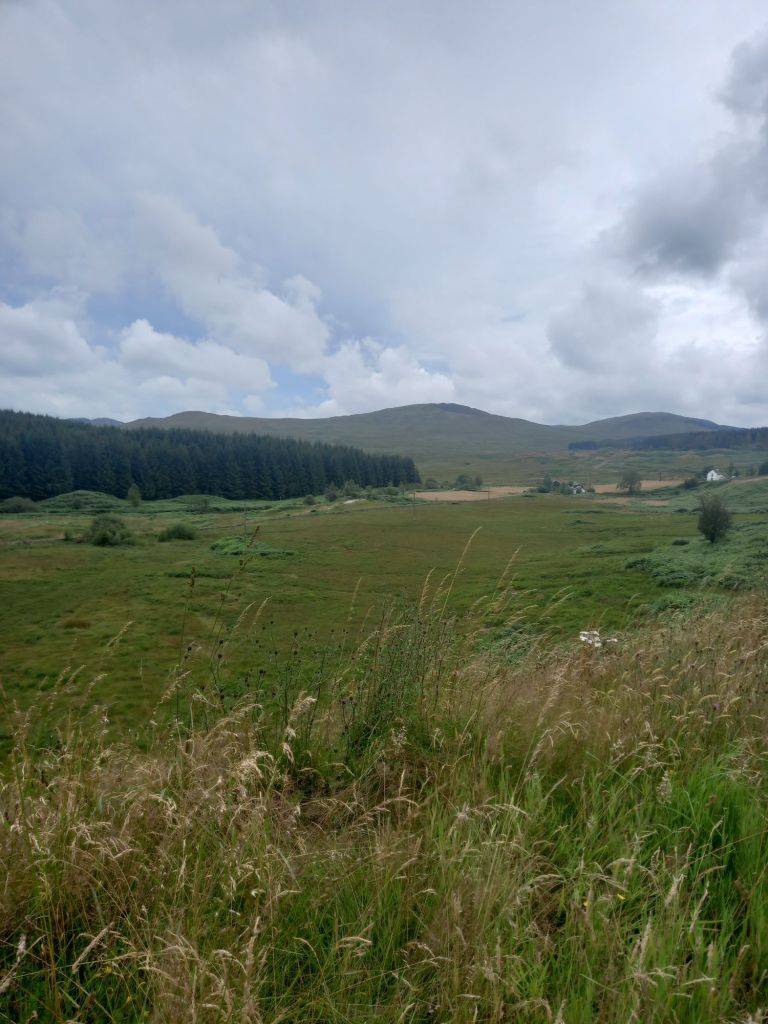
Tomorrow I leave to go west, I am heading for the Cairngorms, which I am very excited about. I have some park ups for the next few nights, and will hopefully be visiting more canals!

Until next time, have fun, take care, stay safe, and thanks for visiting.

Camping at the castle

I have been lucky enough to camp at many castles in my time as a re-enactor. There is something very special about waking up within the ancient walls, and wondering about all the people that have previously been there.

This campsite is not actually in the castle though, but in the grounds. I am now at Culzean Castle on the West Coast of Scotland again, after having said goodbye to my sister last weekend.

The site is small and absolutely gorgeous, located with sea views across to Arran, and Ailsa Craig, and I am just spending so much time looking at the views and watching the clouds over Arran.

Jacky and I had a beautiful last park up at Craig’s Croft Aire, near Castle Douglas, where we saw lots of red kites, and other birds. Sadly no red squirrels yet, despite going up to their hide. They are clearly very shy.

We had been to a very remote nature reserve for the afternoon after leaving the Mull of Galloway, one near an amazing aquaduct called the Big Water of Fleet.

I had wanted to go there since I saw it on someone’s You Tube channel. It was an excellent walk across the structure, with stunning views. I feel like I am just going to keep saying that in every blog post, but it is so true.

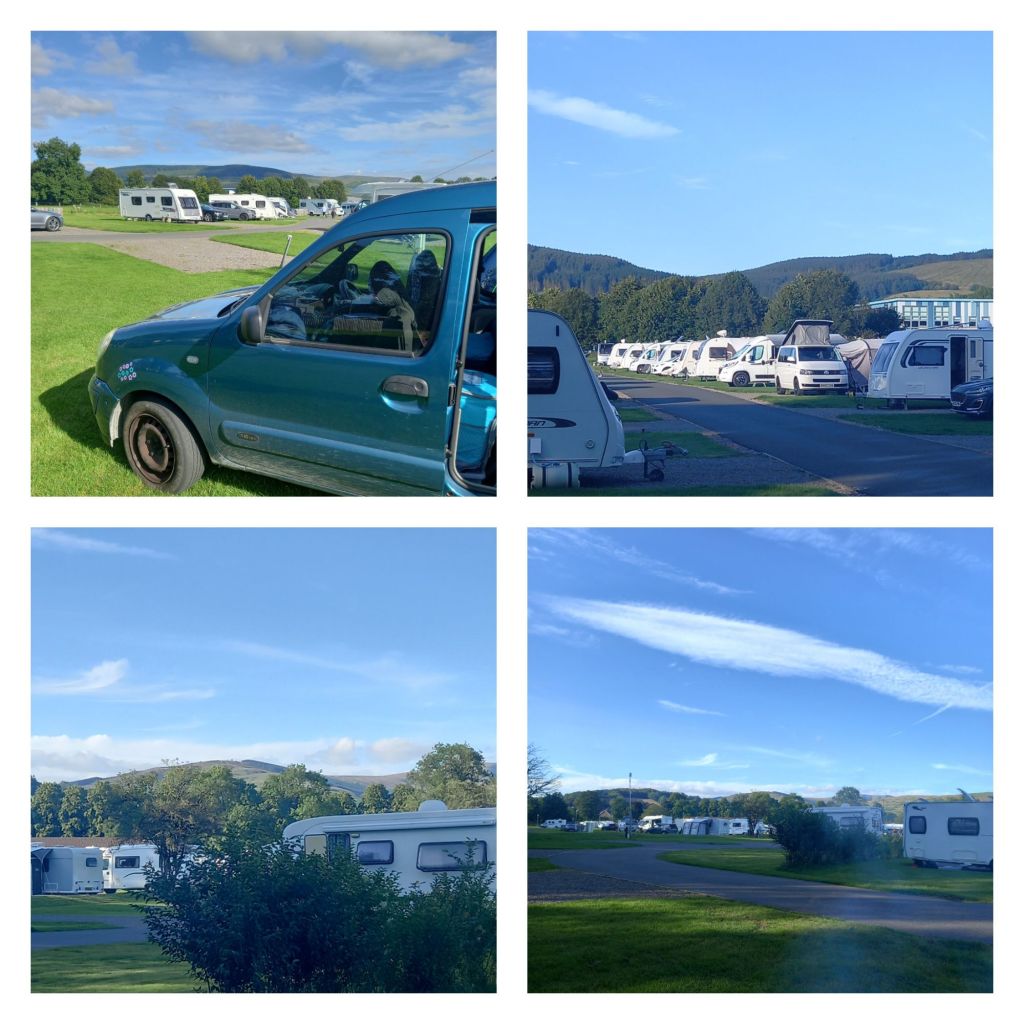
We then moved on to a campsite for the final four days together.  It was located in the very cute little town of Moffat, just off the M74, and again had some wonderful views.

We had a very nice time there with two bbqs, two delicious wood fired pizzas, and lots of sitting staring at the blue sky. We have been so lucky with the weather  virtually no rain at all.

Ryan, my sister’s dog, really enjoyed his holiday, he loves being in the van.

Our first day, we just went on a short  riverside walk, part of the Annandale Trail. 

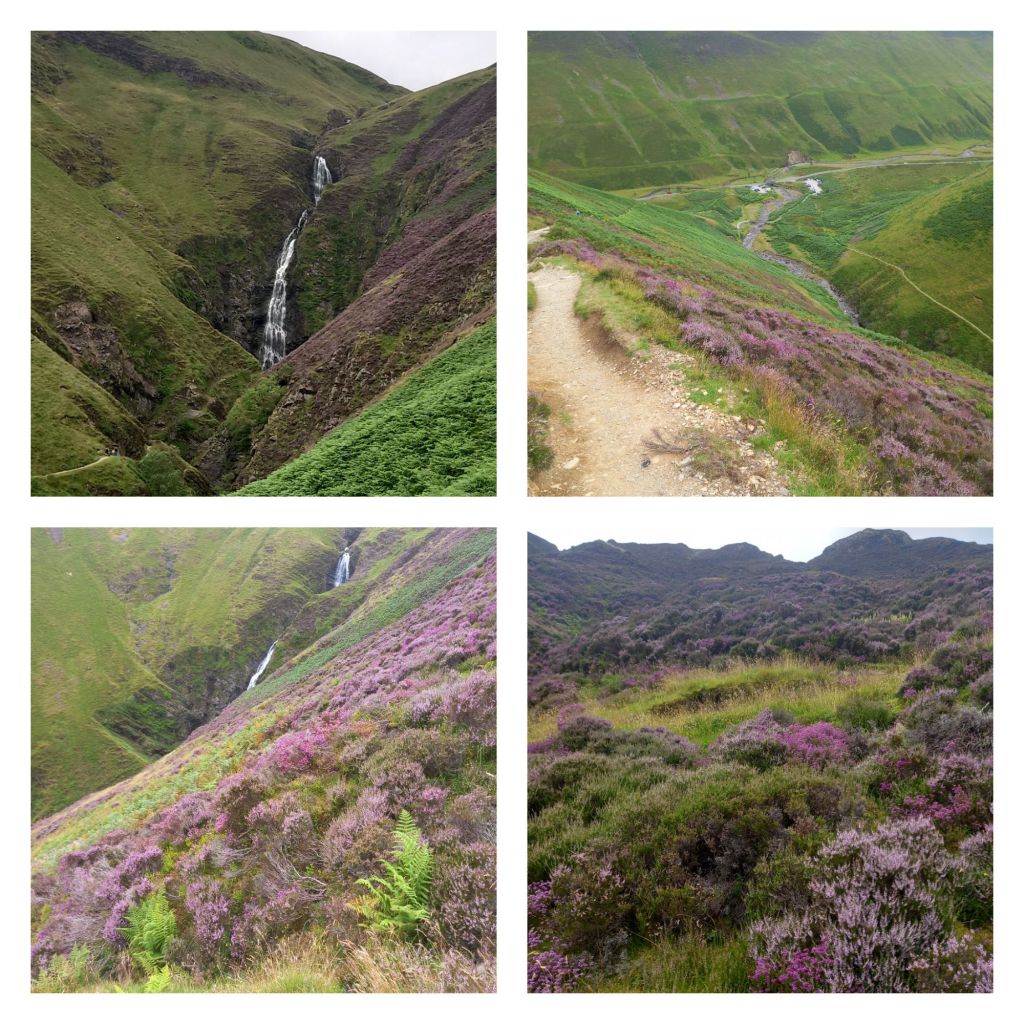
On day two, it was an epic trek up to Grey Mare’s Tail waterfall. It is about 20 mins from Moffatt, in a beautiful valley.

The guidance says that this is only a 5km walk, however it felt like twice that as the ascent is very steep. You can just about see Jacky’s van in the top right photo above to show how high we were, and that was only halfway.

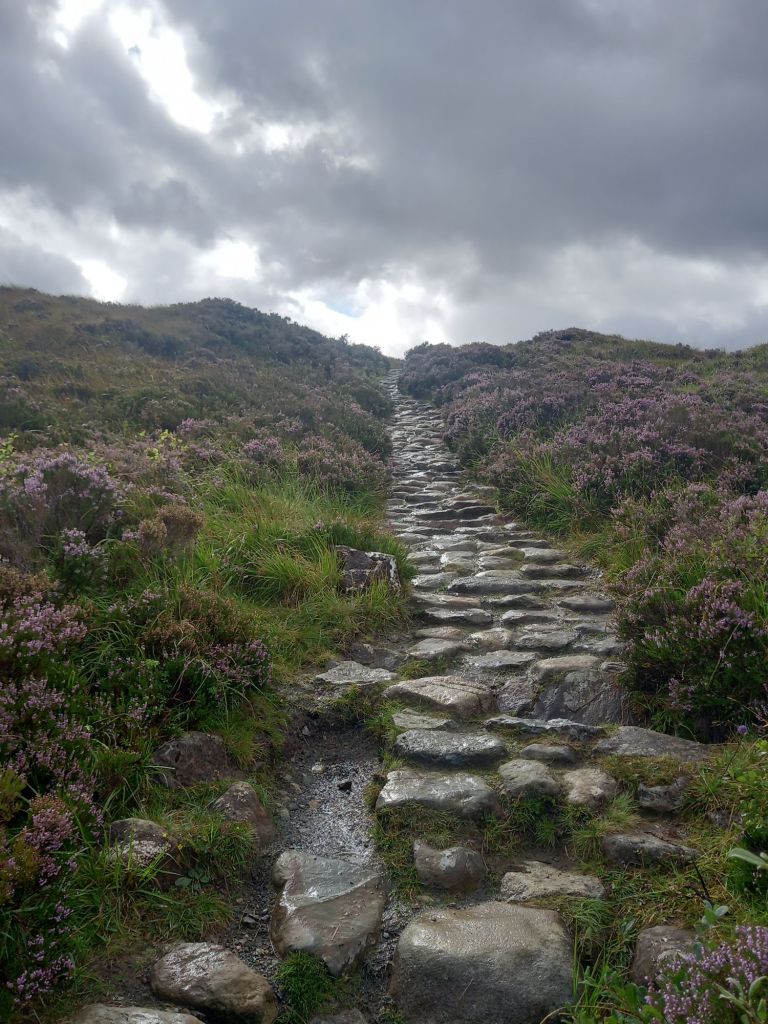
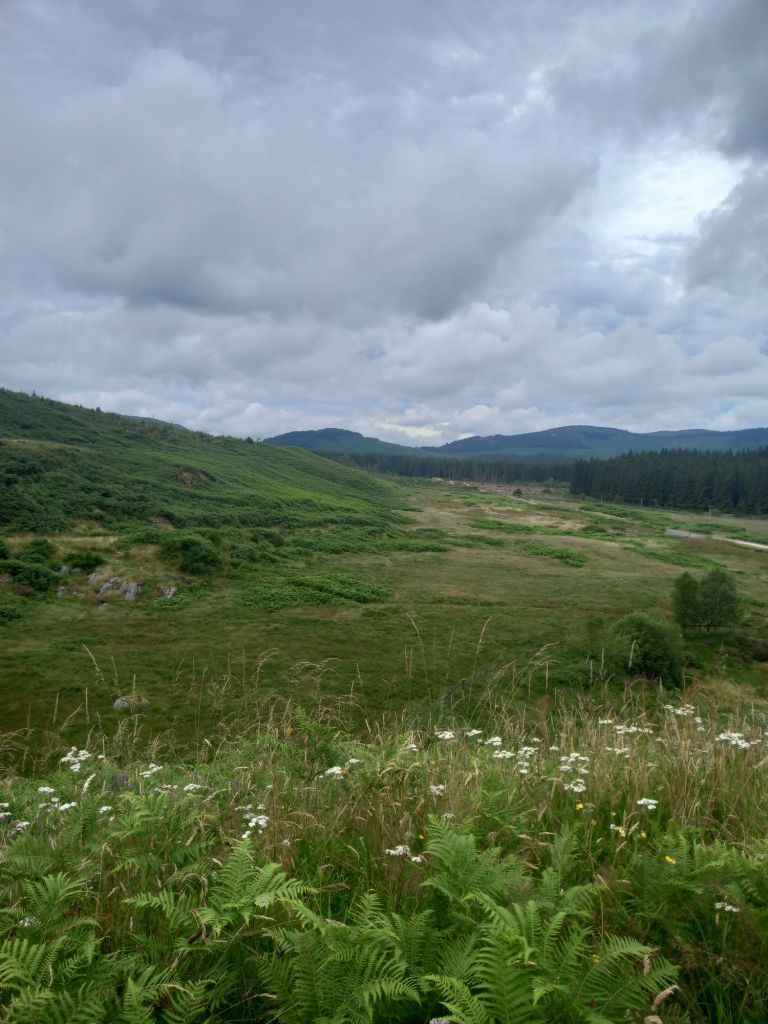
Once at the top it is a long walk to Loch Skean  but well worth it when you get there. Just quintessential Scottish beauty.

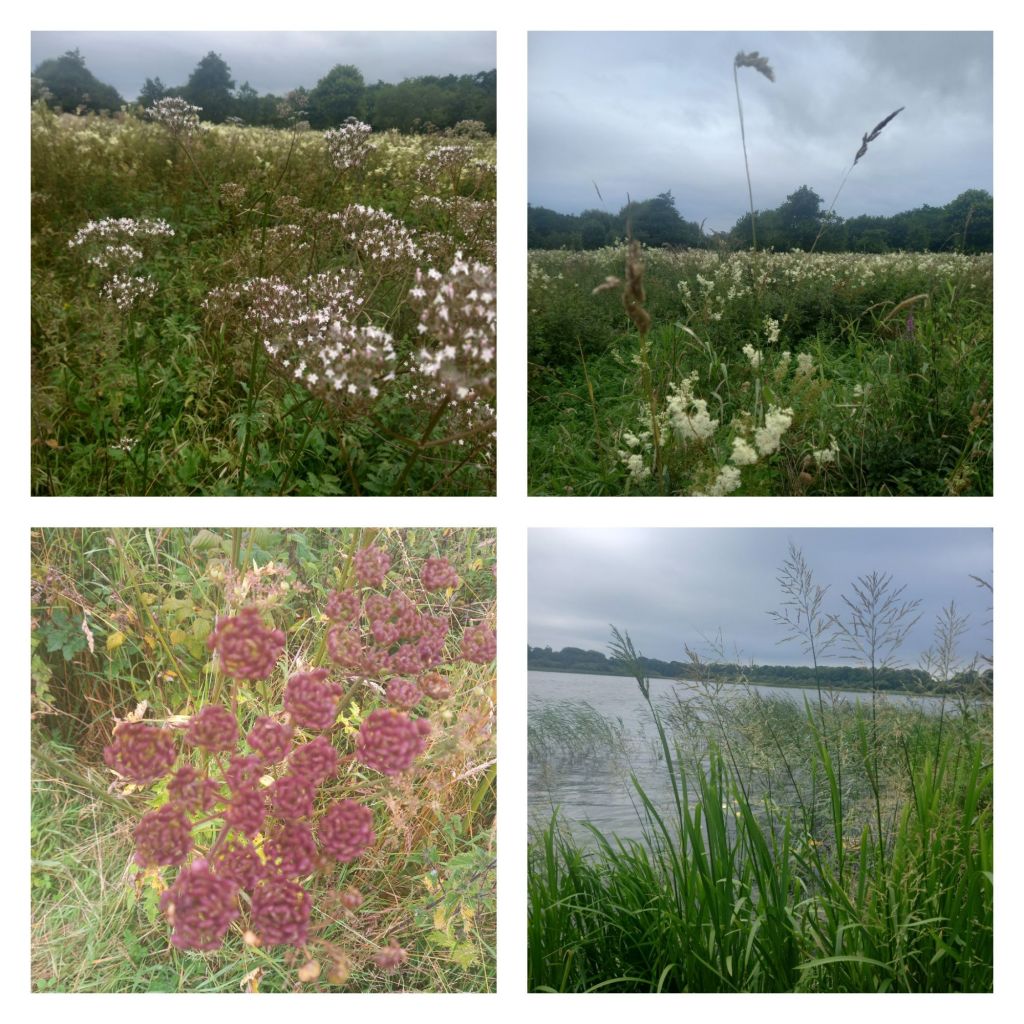
Our knees needed a rest the following day, so it was just a little 5km on the flat, around Lochmaben Nature Reserve. 

After Jacky went back to Worcester, I had a quiet weekend doing my vanlife chores, reading, and visiting the little local museum. As always there was a plethora of interesting things including these lovely old promotional posters, and some textile treasures.

I am at Culzean for the rest of this week, and have already explored some of the castle grounds, there is a country park attached so there is a lot to see. I will share that all with you next time.

Then I am off to spend the weekend with my friend Sue, who recently visited me in Spain, at her house in Scotland.  Another old frend is coming too, so we shall have an excellent time catching up.

Then it is further north, to my next campsite at one of the most iconic Scottish locations. There will be some stunning views from there as well 😉

Until next time, have fun, take care, stay safe and thanks for visiting.

Cordoba, palaces and patios

Cordoba is famous for many things, the mosque of course, but also for its many patios, decorated with potted plants. They hold a patio festival each year, in May, where you can wander round and see all of the displays in bloom, but there were still many around when we visited in November. I think this was a perfect time for a visit, as it was not too hot, or too crowded as it can be during the festivals.

We spent a lot of time, as always, just wandering looking at the gorgeous architecture.

As with architecture designed for use in hot countries, the enclosed patio is an all important feature. As I mentioned in my posts about Morocco, the interior patio functions as a cool space to enjoy water features, and as a garden. We tend to think of a patio as an outside space, a bit of the garden in the UK, usually just paved, but in Cordoba the patio is an art form, with its own unique architecture and decoration.

One of the many palaces we visited was the Palacio Viana, famous for having 11 patios of different sizes, from the grand entertaining space, to small quiet ones full of beautiful blooms and little fountains or wells. In addition to the patios, you can also tour the house, no pictures allowed, but it was a wonderful insight into the life of the wealthy family who owned the palace.

We also visited the Alcazar, or palace of the Christian Monarchs, not only a palace filled with mosaics that have been excavated locally, but also the wonderful gardens that Spain is famous for, complete with a statue of Isabel and Ferdinand meeting with Christopher Columbus.

Many of the palaces are now museums, and we had a very enjoyable last afternoon in the art museum. The paintings were full of such amazing detail, I love the way that the artists can represent the drape of textiles, and the light on buildings in these paintings, such talent!

It was there we discovered a brilliant artist who we had never heard of before, Julio Romero de Torres, who has a whole museum dedicated to his art. There were no photos allowed, but I found these two on Google.

He was born, and worked, in Cordoba, painting mainly women in the 1920s and his work is stunning it its detail. I love the sense of life in Cordoba that you get from his work. The painting on the left, La Fuensanta, was once on the Spanish 100 peseta note.

We also visited a small museum devoted to Arab culture, which was the place that inspired me to choose Morocco as my destination for this winter. It was full of the most beautiful artwork, and as you know from my posts about Morocco, it is one of my favourite decorative forms.

There was a stunning flower display in the small courtyard water feature as well.

There was also a quick visit to the Jewish museum nearby, housed in another beautiful patio house and lovingly restored, with a very informative exhibition about Jewish life in Cordoba. This included some gorgeous goldwork on dresses, similar to that we had seen on the painting in the art museum.

As always there were amazing doors, but what struck me about Cordoba was how heavy and defensive they looked, all were solid wood, many were studded and looked very much like the sort of thing that was built to withstand invasion, rather than the more decorative ones that are in other cities.

A wonderful city, and I am so glad we made it, a year after the original trip was planned. We have just booked another trip for this autumn, to visit the last of the great cities of the south, Jerez and Cadiz, so I am very much looking forward to that.

There is less than a week now until I return to the UK, so my next post will be my last from here, and will be a quick catch up on all my crafting, with some very exciting, in personal crafting terms, things to show you! Until then have fun, take care, stay safe and thanks for visiting.

The old and the new, the textile edition

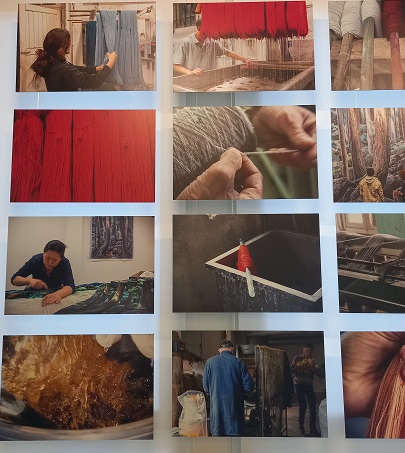
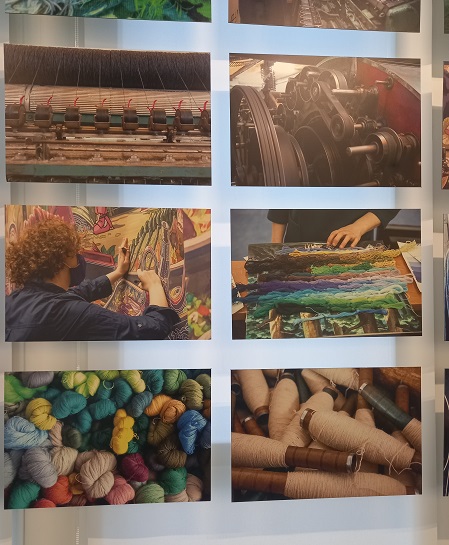
It was while I was at my friend Cate’s checking my route on the map, that I realised I was going to pass very close to the town of Aubusson. For anyone who is into textiles, you will recognise the name as being famous for thousands of tapestries, made in this town and the nearby ones, and they had a museum! So of course I had to go and visit.

Aubusson tapestry was designated in 2009 as one of the Intangible Cultural Heritage of Humanity aspects, and the museum is just a small part of the preservation of the heritage, along with preservation of other aspects of the craft, and exhibitions in the area.

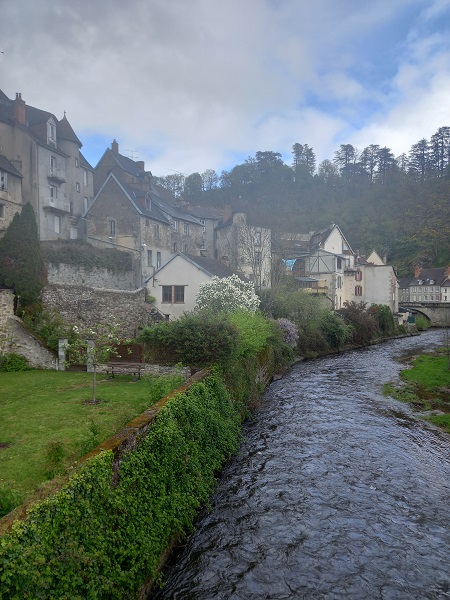
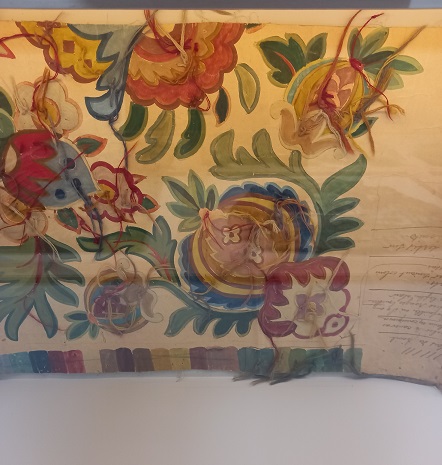
Aubusson itself is a very gorgeous little town, with an essential river running through it. As in my home village in Yorkshire, once famed for its woollen mills, access to water is vital for the industry, and you could still see the mills around the river area, as well as the buildings that now house the original designs, or cartoons, for the tapestries.

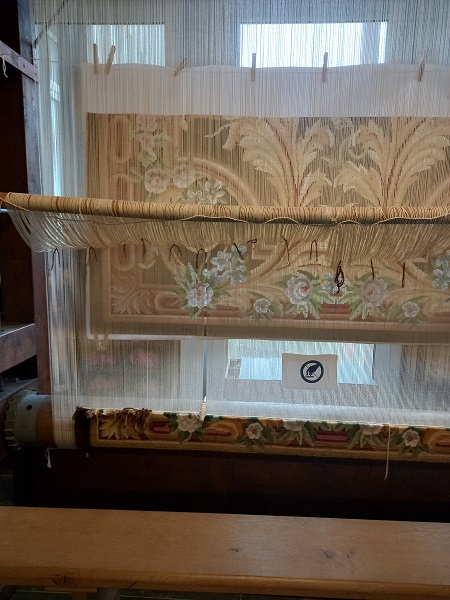
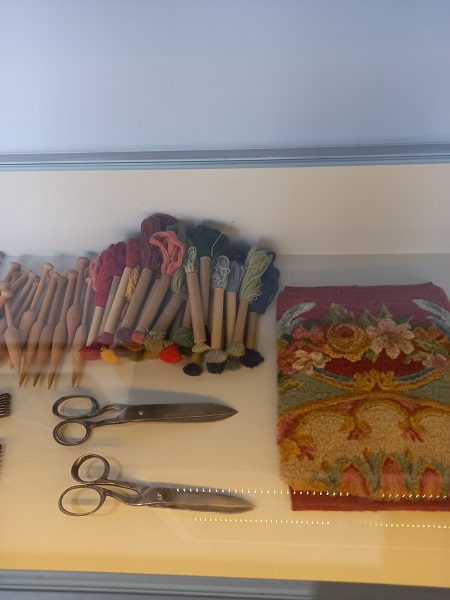
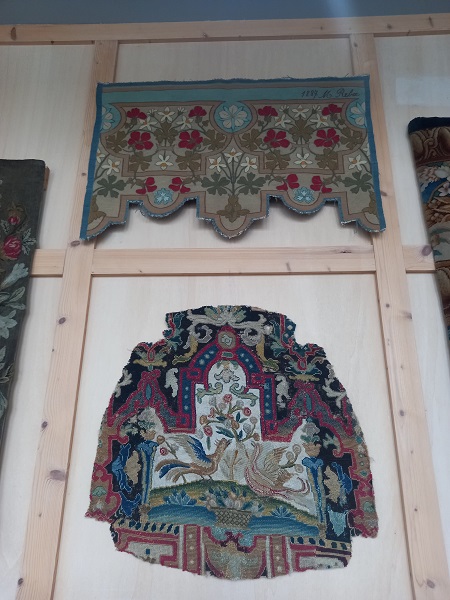
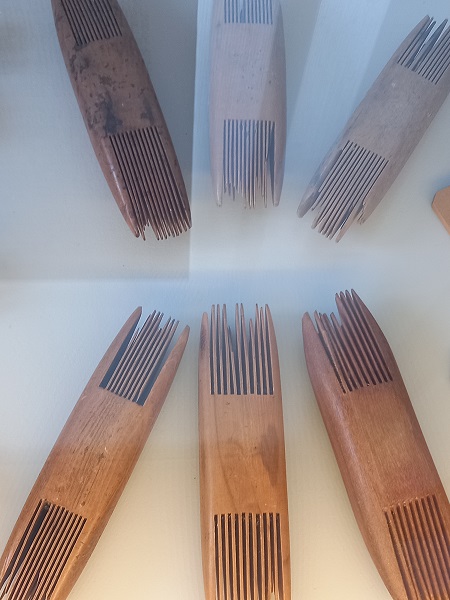
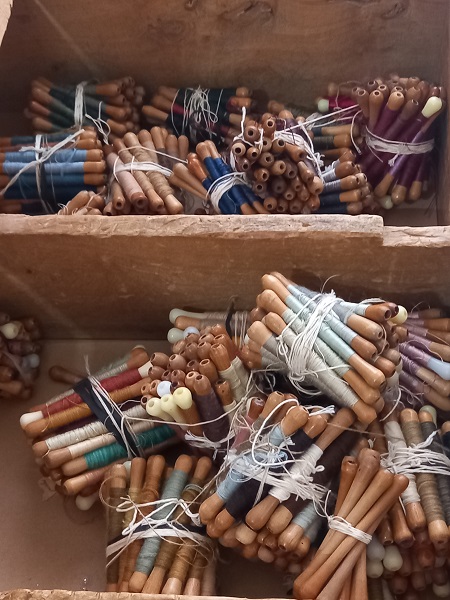
As well as examples of the heritage of the weaving, apologies as they were understandably in low lit, glass cases. so no good photos, what was really interesting was the focus on the process of weaving, and the tools of the weavers.

Tapestry has never been one of my favourite textile forms, I think because most of the ones that I encounter in National Trust properties and castles are faded, and the subject matter is generally not that interesting to me. However I have always appreciated the huge amount of time and effort it takes to create these woks of art.

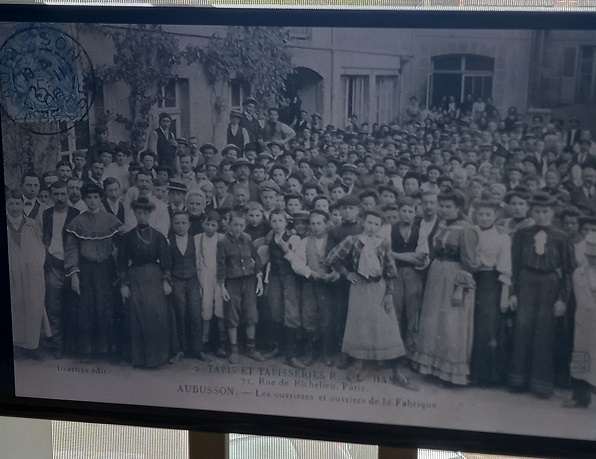
It was especially lovely to see photos of the weavers, both from the display of the historical archives, and the weavers working on current projects.

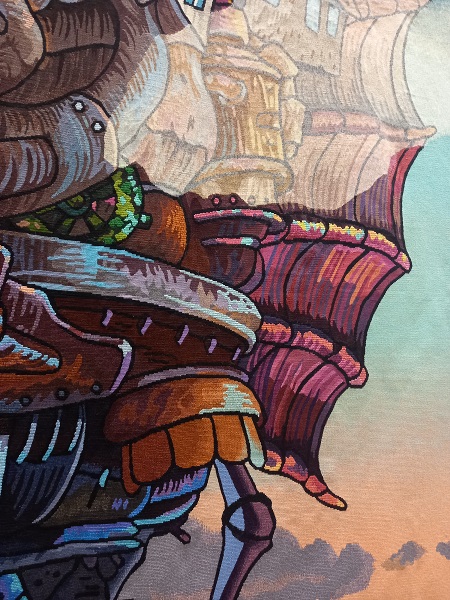
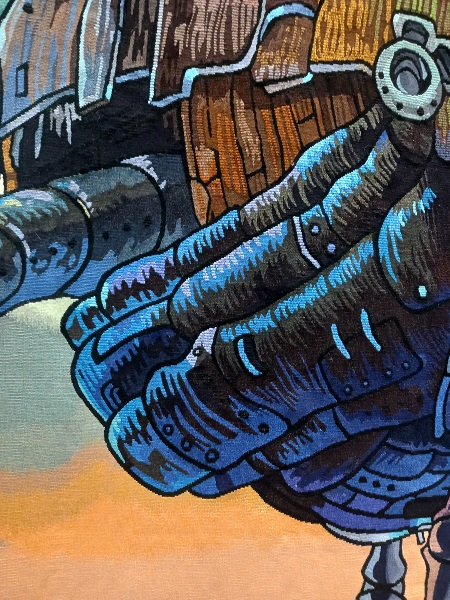
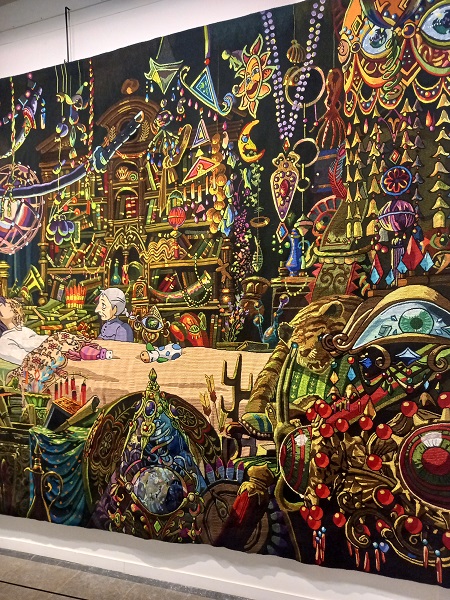
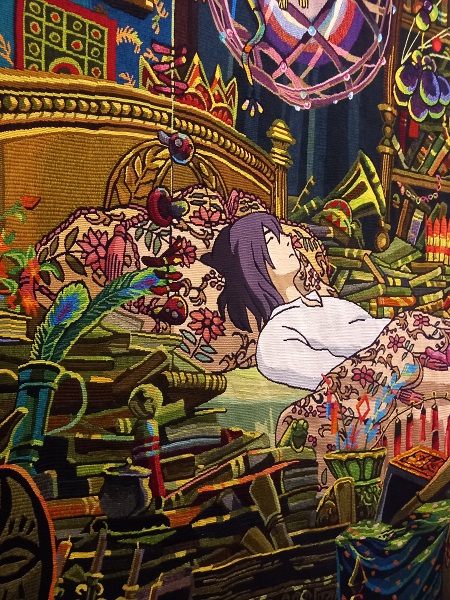
They had two exhibitions of modern weaving, which were really impressive. The first was of illustrations from a Japanese artist called Hayao Miyazaki. I am familiar with these, through my son Jake’s interest in anime, and these were illustrations from a film called The Moving Castle.

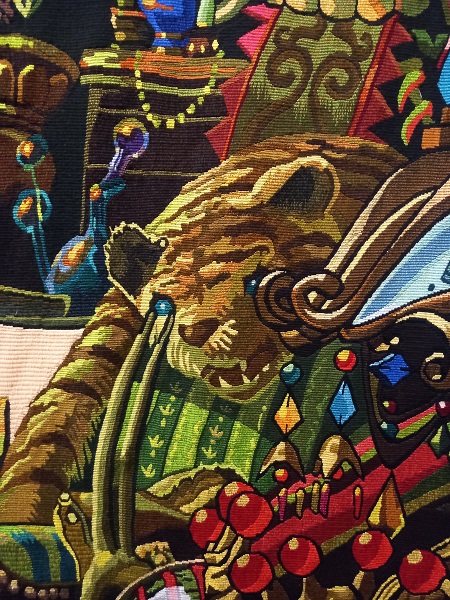
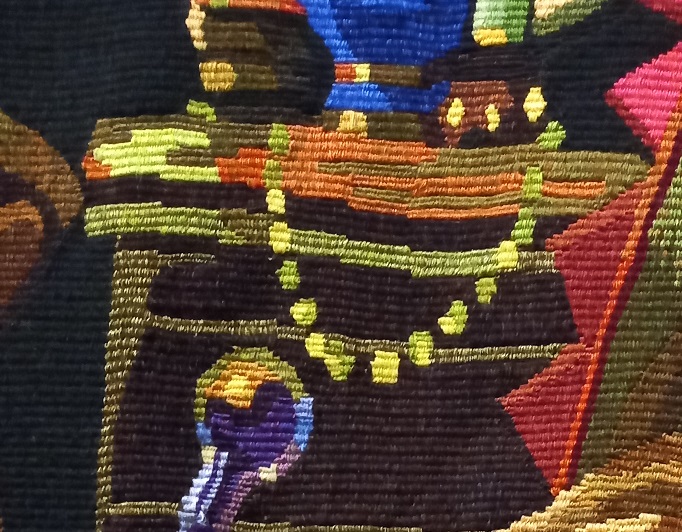
The level of detail here is amazing, the colours are so rich and the way that they have been blended is stunning, look at how the cloud has been woven over the other colours here. Just amazing work.

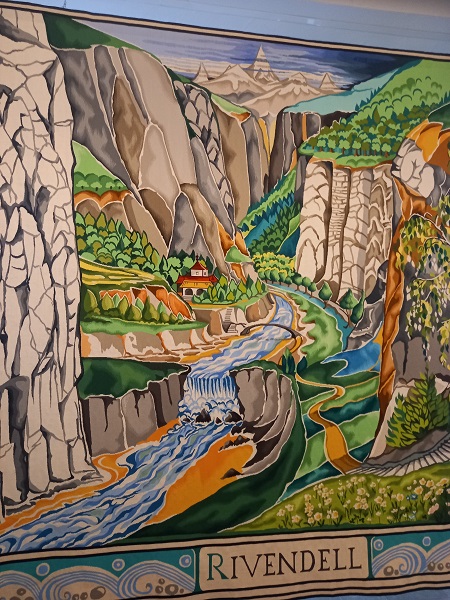
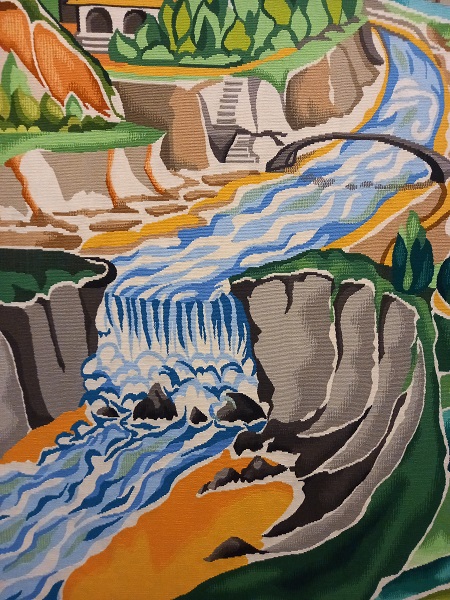
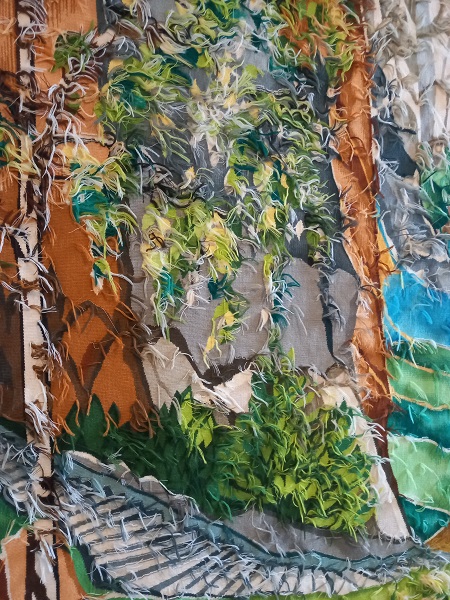
The other exhibition focused on illustrations by Tolkein, again such beautiful colours. It was also really interesting to see the back of the Rivendell piece.

Seeing these modern pieces really makes you realise how stunning places like Hardwick Hall must have looked when their tapestries were first hung in the 1600s.

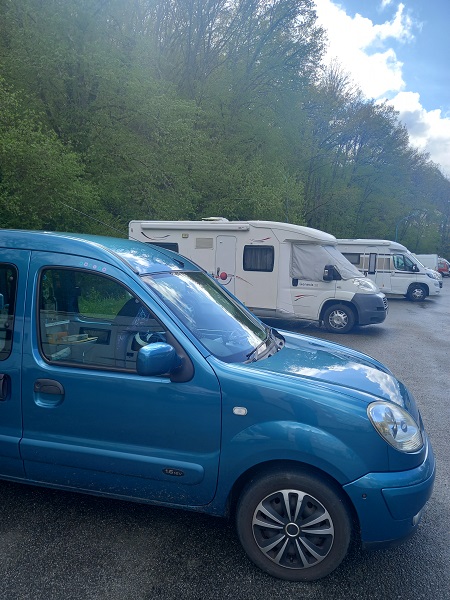
Abusson also offered a free park up, in a car park just outside the town, with free water, free electric, and a lovely backdrop of woods and a little stream, so Katy and I spent a peaceful night there, once again very grateful for the foresight of French tourist boards.

A lovely, and totally unexpected day, and I am so pleased that I managed to visit. My next post will be about another unexpected visit as well, to somewhere that had been on my wish list for around 20 years.

I have had a great week with Sue and Ange, here in Spain. We have had lots of pool time, delicios tapas, and been to visit Cartagena, one of my favourite local cities. They are now in Granada for a few days, visiting the Alhambra, and I will see them briefly before they return to the UK. Meanwhile I have a fox outfit to finish knitting before they get back, there was a major error with a pair of dungarees so they have had to be unravelled, and knitted again ;-(

I will be back soon with the next unplanned stop en route. Until then have fun, take care, stay safe and thanks for visiting.

The work of so many hands

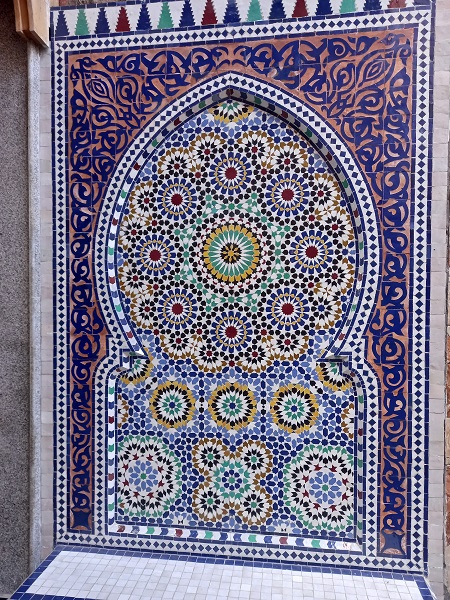
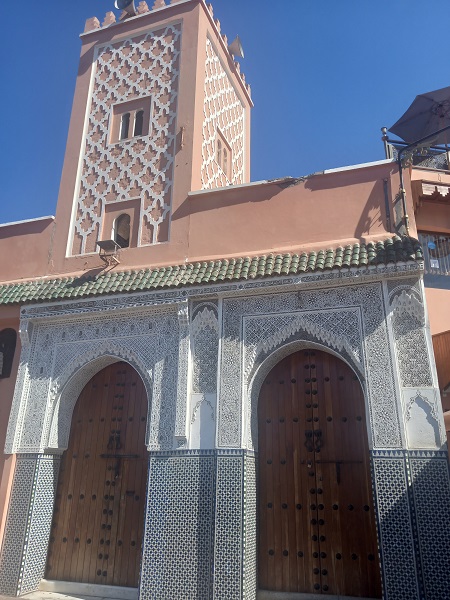
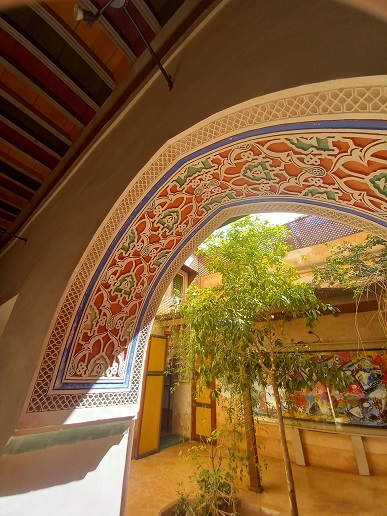
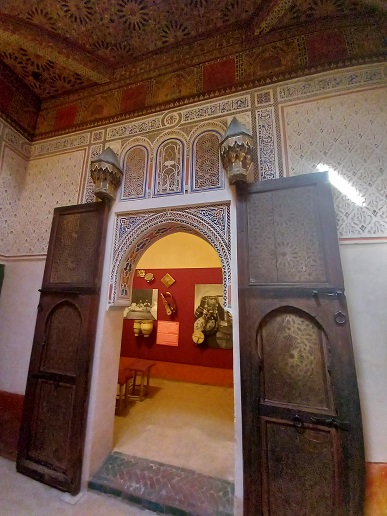
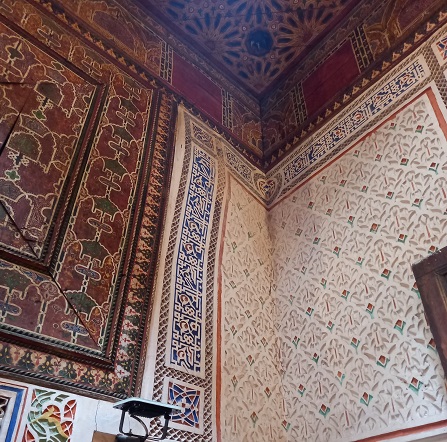
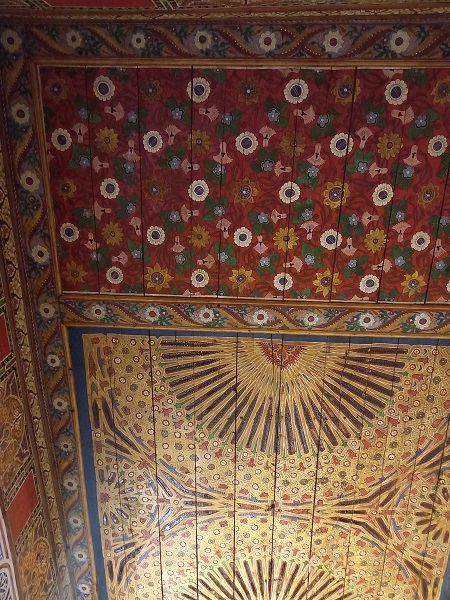
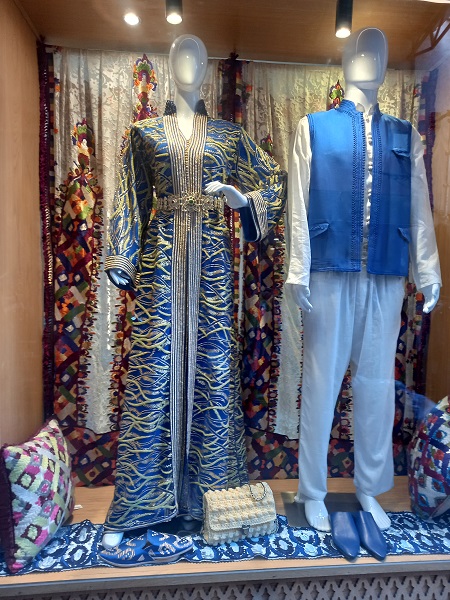
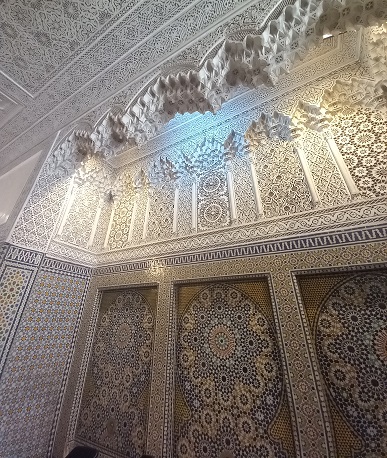
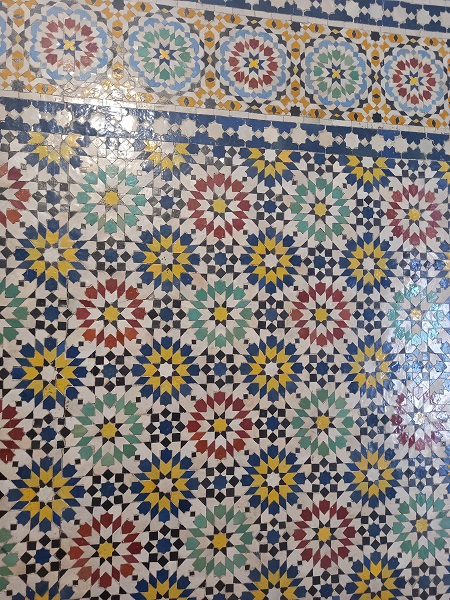
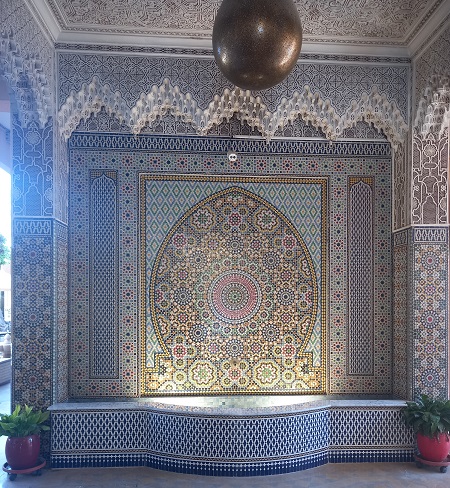
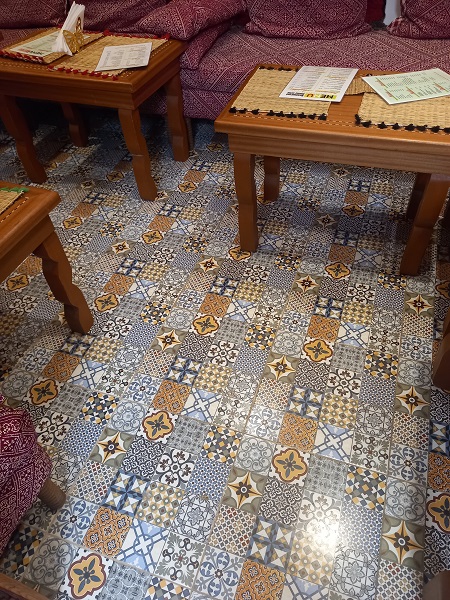
The lasting impression from Morocco is a culture with just so much rich adornment. So many beautiful wood carvings on doors and ceilings, incredible plasterwork, endless mosaics, decorated shoes, beautiful clothes, an absolute riot of colour and pattern that is breath taking and bedazzling. Now back in England it all seems a bit plain in comparison, and although it is lovely to be here, I am missing the tiles and the gorgeousness of it all.

Marrakesh was a great way to end the tour. I did originally wonder if I should have done it the other way round, and ended up at the peaceful seaside resorts of Essouria and Agadir, but on reflection am happy with the way it turned out. Morocco is a place of so much colour, and noise and vibrancy, (and traffic!), that it was probably better to ease into it.

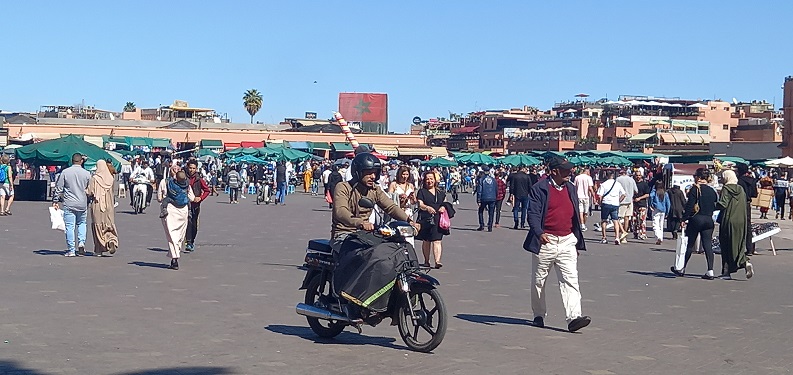
Most days in Marrakesh I visited the Jemaa el – Fnaa Square in the centre of the city. I have been before and knew that it is the lively heart of the medina, with so many stalls, and restaurants, and entertainers of all sorts. It is noisy and chaotic and wonderful!

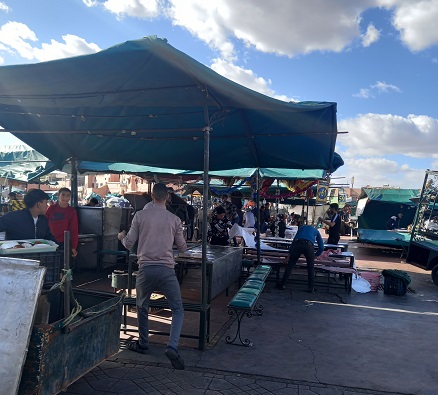
As well as all the daytime offerings, such as the horse carriages and the many cafes and juice bars, every evening from around 4pm a whole extra set of temporary food stalls get built, such a lot of work each day. I sat one of the days with another cup of delicious tea just watching all of the frantic activity.

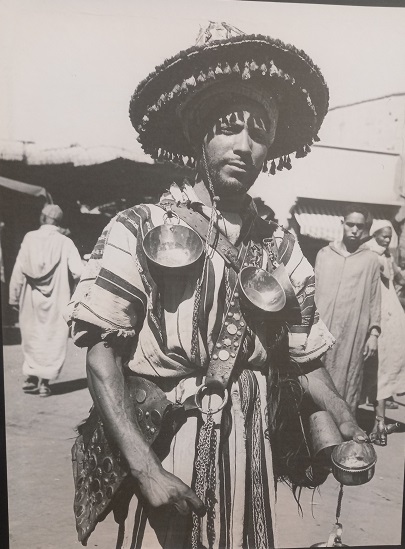
I love the contrast in the last photo above of the traditional water sellers, who pose for pictures, and the silver ‘statue’ performer.

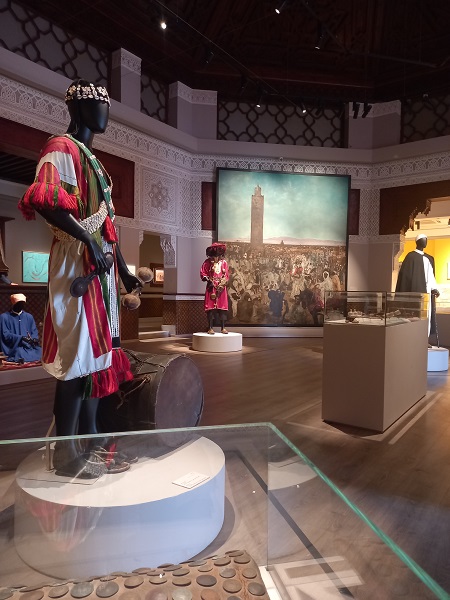
This trip I also went to the museum at one side of the square, which is housed in the old Moroccan National Bank building, constructed in 1927.

I didn’t realise that the square has been in existence since the 1600s, and has always been used as as place for musicians, storytellers and entertainers of all types. It was a lovely museum, mostly using old photos and film to document the life of the square, and really interesting.

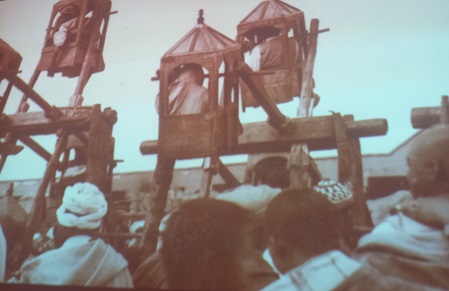
This water seller was photographed in 1966. I also saw these little roundabout seats in the woodwork museum in Fes, but am not sure when they date from.

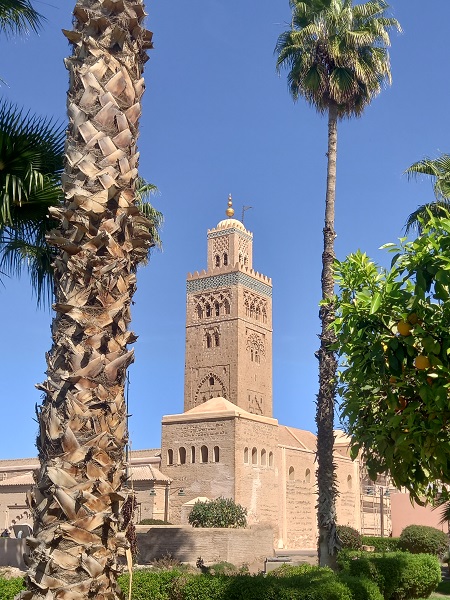
Near the square is the Koutoubia Mosque, thankfully it only sustained minor damage in the 2023 earthquake, and is being restored. It has parks and fountains all around it, so I usually had my lunch there.

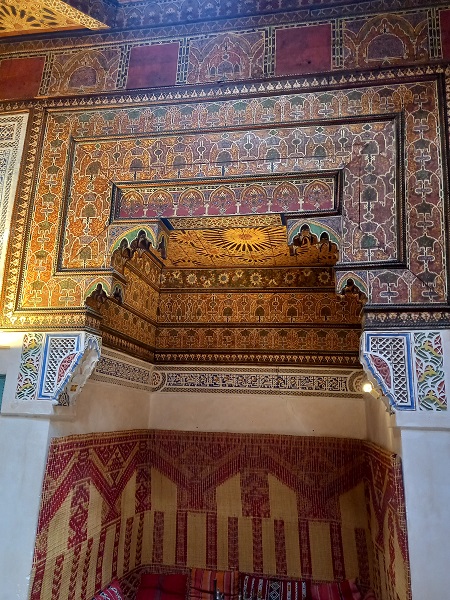
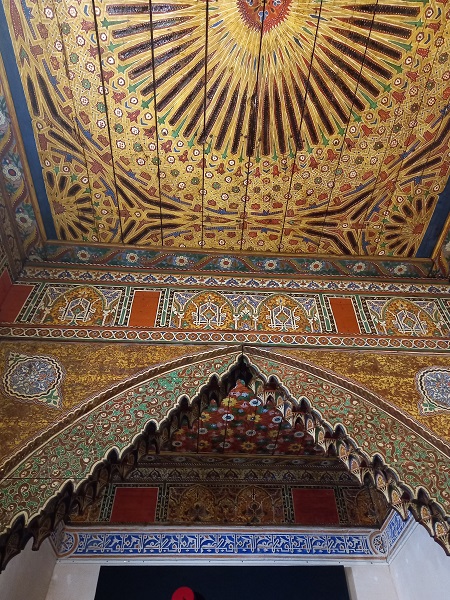
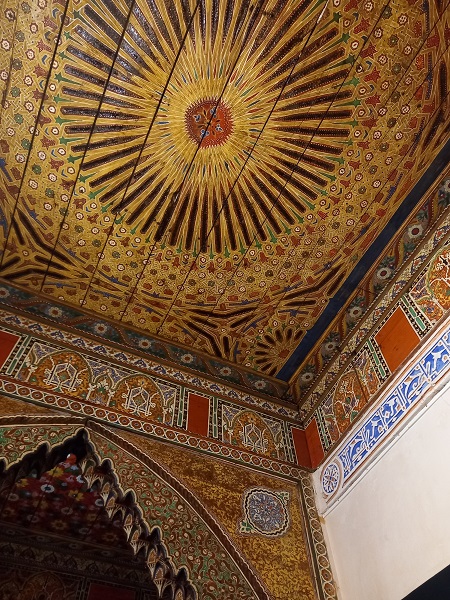
The other museum I visited linked in really well to the Jemma El-Fnaa one, the Mouassine Music Museum is in another beautifully restored mansion, which dates from the 16th century.

If I thought the lower floors were impressive, that was nothing compared to the guest apartment on the upper floor. They hold music sessions here every Monday evening.

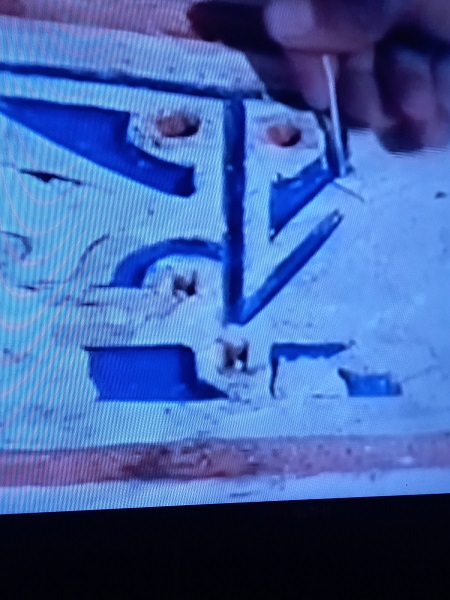
The building has been extensively restored and there were some really good videos showing the work. Apologies for the slightly grainy pictures, but this is when they were scraping off all of the plaster that had been put over the wall frieze, and cleaning the paintwork.

It is so brilliant to see so many skilled people being able to restore the buildings as well, there must be so much to do here, with so many wonderful places that need TLC.

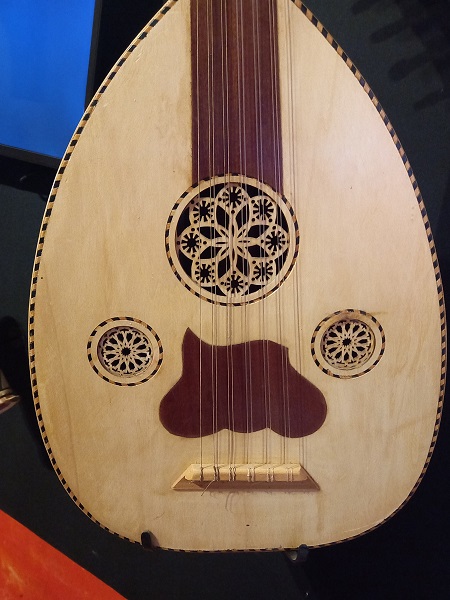
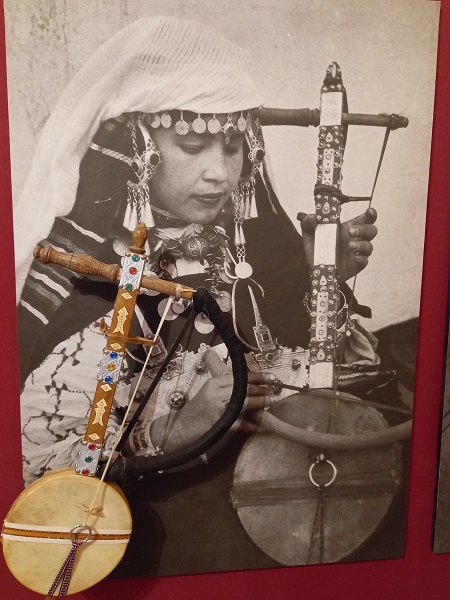
There were excellent displays of instruments, but more importantly for me, lots of videos and photos of people playing them, and dancing and a great focus on the dress of the performers.

These facial tattoos, in the second photo, are fascinating. These are from some of the women in the Atlas hill tribes.

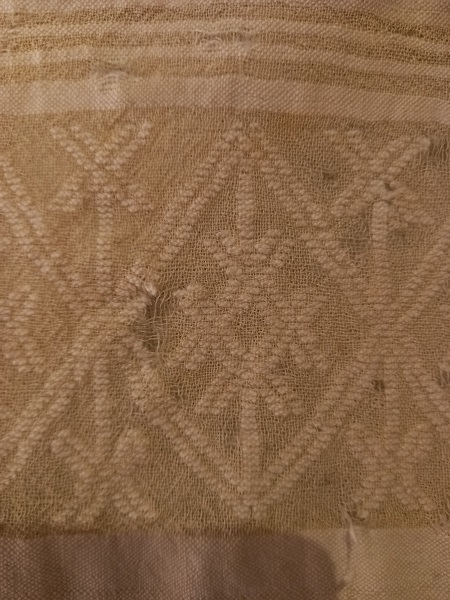
Although there was not much in the way of textiles in either museum, I did find a little bit. This gorgeous shawl had very delicate whitework embroidery. The main history museum is closed at the moment, so I expect there would have been more there.

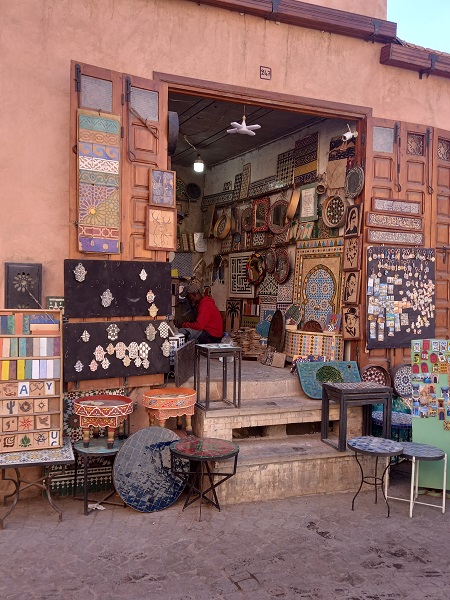
I did see quite a few shops selling traditional embroidery and textile goods as I wandered through the medina, as well as more modern kaftan shops. I was also very excited to see a little zellige workshop in the medina near my riad. I stood and watched the artisan chipping the tiles for a little while.

In the same way that the Hassan 2nd mosque in Casablanca is supporting training of current artisans, there is an artisan’s centre in Marrakesh, just outside the medina. It is an amazing building and contains workshops as well as places to buy the wonderful creations.

Of course I must finish my Moroccan series of blogs posts with revealing the taxi colour for Marrakesh ! It is a creamy yellow.

I think in this city there must be one taxi for every three people, I have never seen so many in my life. That does make it really easy to get around, though most of the time I enjoyed walking. You can’t stop and take door photos as easily from a taxi can you 😉

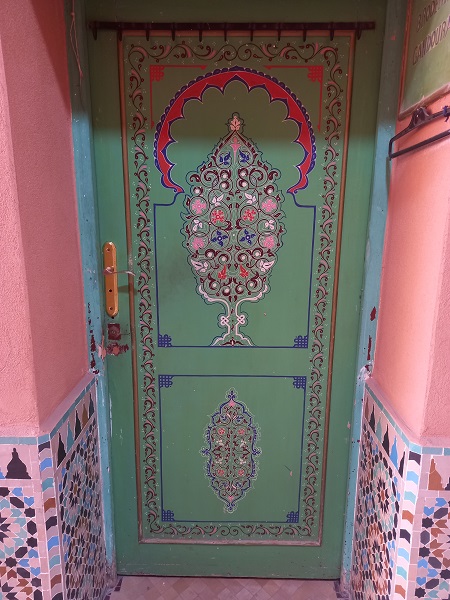
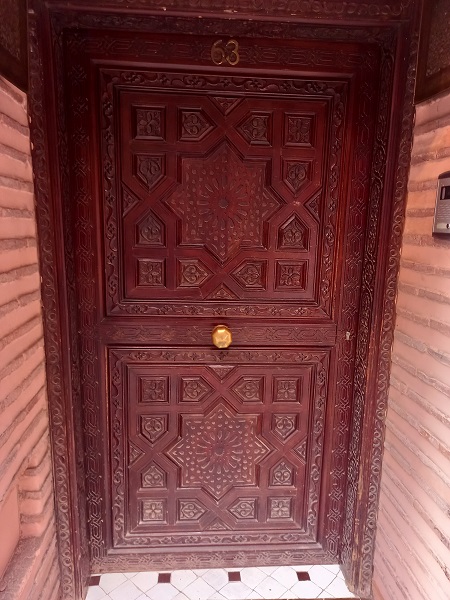
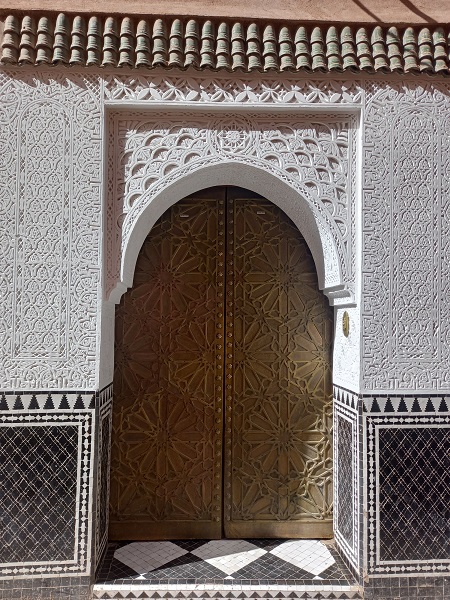
I shall finish this post with some of the wonderful doors from my last few days of wandering in the medina.

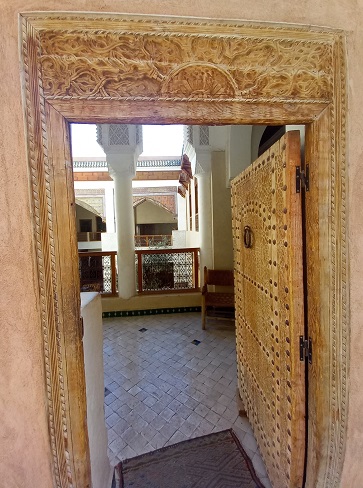
I was really thrilled to find this lovely old door open, and was able to peek inside at an amazing riad. I think it was still being restored, but what a palace!

It has been such a privilege to be able to visit this country, to see where all the inspiration for the places that I love in Spain come from, and to find out more about its history. I have really enjoyed the visit and would love to go back, albeit next time with a bigger suitcase and a lottery win to spend on lamps 😉

I have had a lovely couple of days with Ellen. She came back from her month in Europe the day I left for Morocco. She visited Spain, Switzerland, France, Belgium and The Netherlands in her time away, everything from mountain cable cars, medieval Alsace towns, and chocolate museums, as well as a quick trip to Disneyland Paris where she met up with her friends. She loved everything and is now planning another month in Asia for later in the year. I am so proud of her for being a confident solo traveller and having such amazing adventures.

I am off again tomorrow, to Scotland, to spend a few days with my friend Sue, can’t wait as I am so looking forward to seeing her, and the beauty of Scotland again. I will be back next weekend, so until then, have fun, take care, stay safe, and thanks for visiting.

Aladdin’s Cave

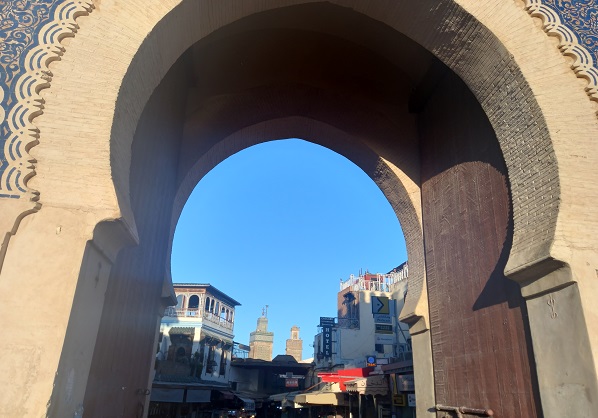
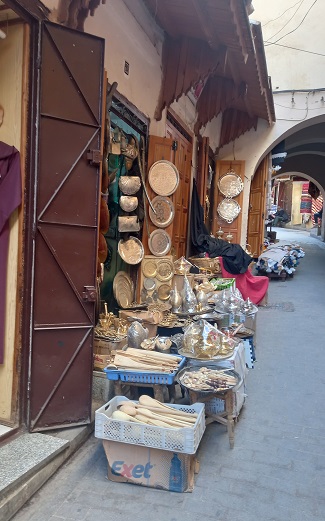
It may sound like a cliché, but the medina here in Fes is like going into a wonderful world of treasures. The first part of the street that I am on is mainly food, with piles of sticky sweets, all wrapped in cling film to stop them toppling over, stalls selling spiced olives, and lots and lots of sweets and nuts.

There are also many butchers, and you can tell the chicken is fresh as there are live ones in cages at the back of the stalls. It’s not a place for those who don’t like to think about where their food comes from!

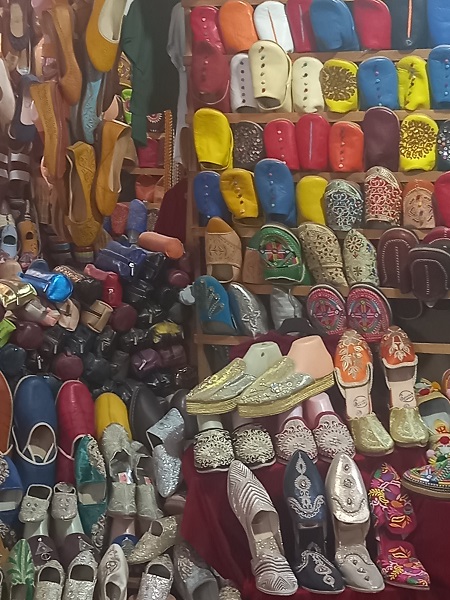
Further in and you start to see the leatherwork, the pottery and carpet stalls, and the shoe stalls. I have never seen so many pairs of decorated slippers ever, they are beautiful with crystals and embroidery.

Luckily I have such poor feet I haven’t been tempted. With my dodgy knees and tendon issues I need to wear things that feel like slippers and have support at the back, but I can dream about lounging around in palaces on couches looking as if I am from an Arabian Nights’ tale.

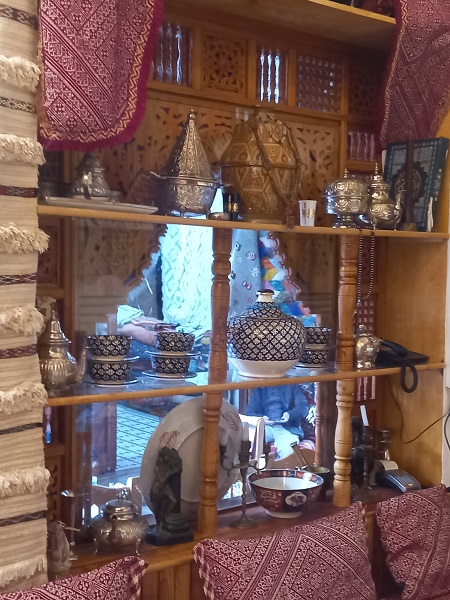
There are so many little food and drink places as well, and on every wander I have to stop for a mint tea, usually served in a gorgeous little teapot here, rather than by the glass as in Tangier.

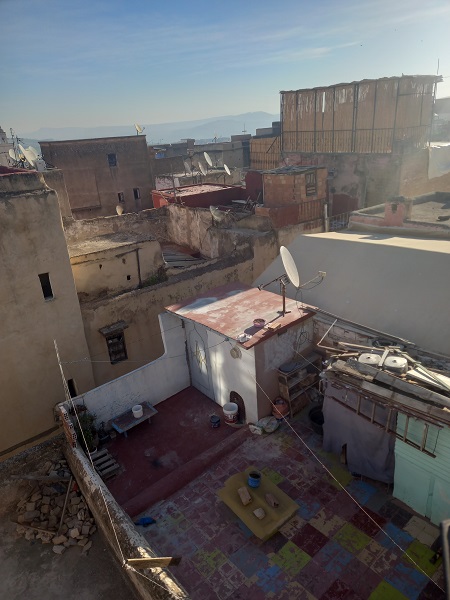
I have eaten twice in this restaurant with views overlooking the tops of the medina, a jumble of towers and walls, and buildings with terraces which are other restaurants and riads. There are lots of cats living on the roofs, and this one was very interested in my chicken skewers!

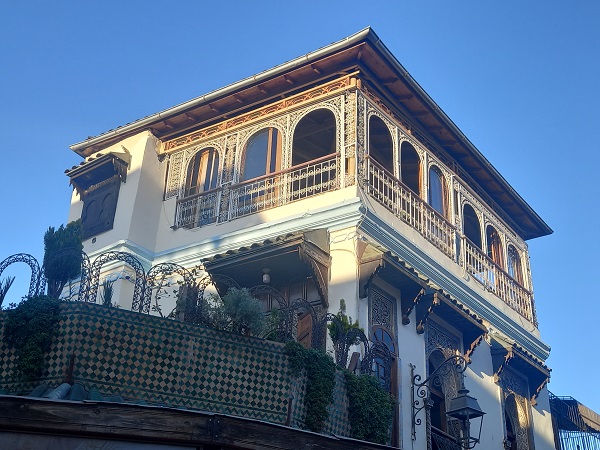
From my riad terrace I can see the buildings at all different heights, some restored, some crumbling. Working in town planning must be a nightmare here, especially as the World Heritage Site designation will limit what can be done. As with all the other cities that I have visited there is so much restoration taking place here.

I managed to have a peek into this doorway where there are some amazing pillars, it looks as if another one of the palaces here are being restored.

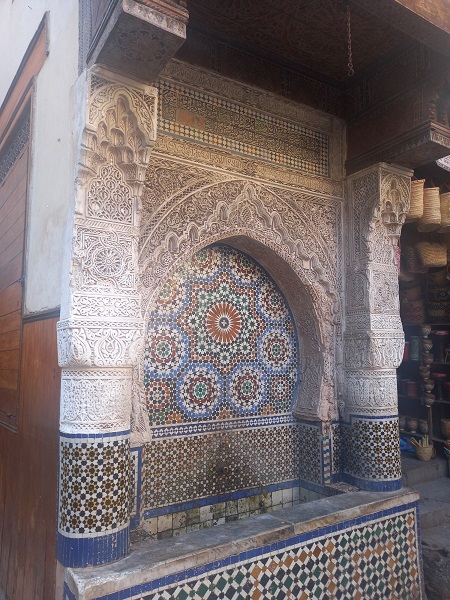
On one of my wanders I managed, eventually, to find my way to the Museum of Woodwork, housed in an old trading inn. The wonderful tiled and decorated public water fountain outside was provided by the inn.

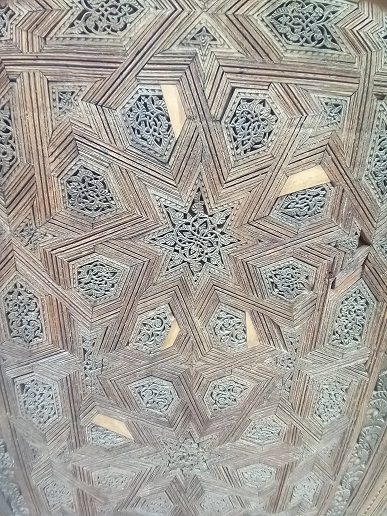
The Nejjarine Museum is in the carpenters’ area, and houses displays of both functional and decorative woodwork. I wasn’t able to take pictures of the exhibits, such as the highly decorated doors, windows and chests, but as you can imagine they were stunning. The museum itself showcases the balconies made with ‘mouchearabie’ woodwork, which is formed of geometric patterns and is used for window shutters and room partitions.

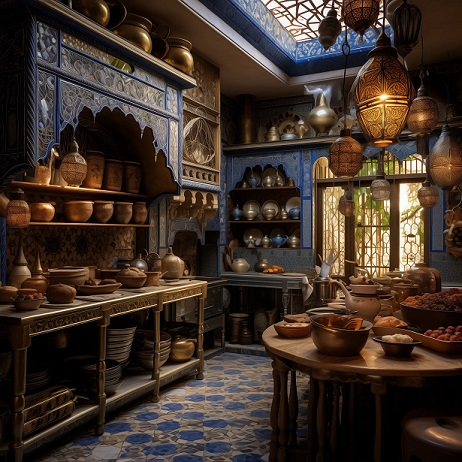
I did find this picture of a modern kitchen shelf for spices, there were lots of these in the museum and they were so beautiful.

While searching I also came across this Moroccan inspired kitchen, if only I had a bigger house I would love this, the woodwork is so gorgeous.

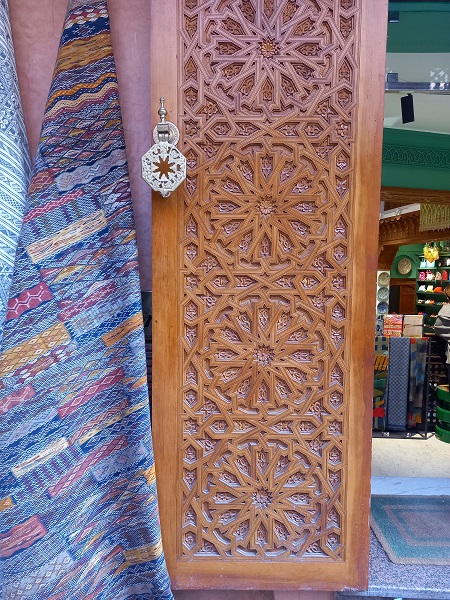
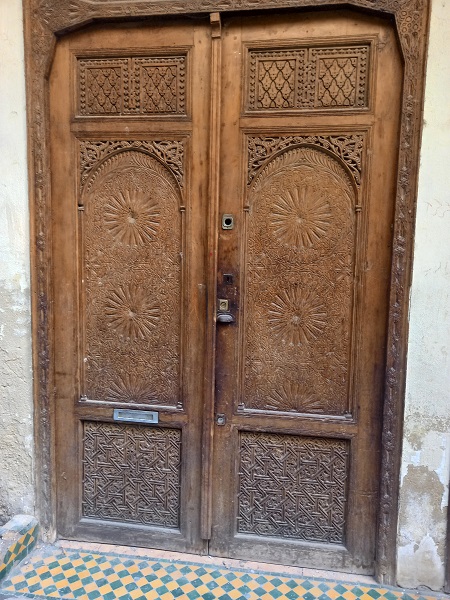
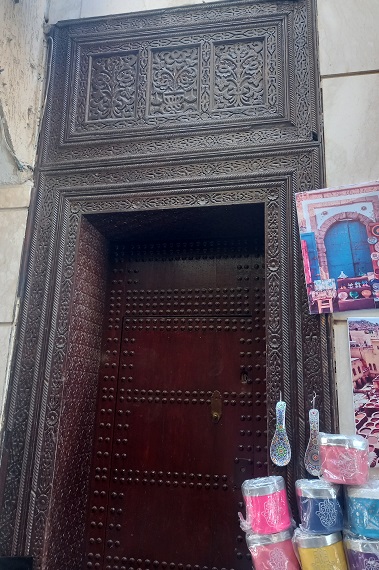
There were a few ornate wooden doors as well. Much of the wall space beside the little shops is covered with goods so the doors aren’t visible, but I found these in a side street.

As this is very much a place where local people live and work there are mosques along the small streets and two madrassas, Islamic schools, and one of the oldest universities in the world, founded in the 9th century by a woman.

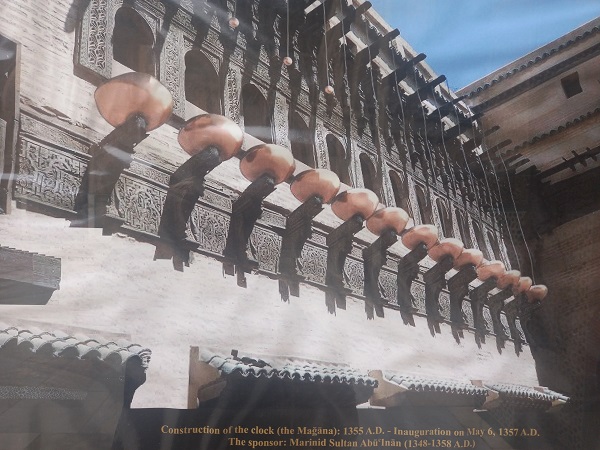
My riad was next door to a 14th century water clock. It was built to drop metal balls into bowls below on the hour, and is part of the nearby madrassa. It is not currently working but may be restored at some point if the historians can work out exactly how to do that.

This picture in the madrassa shows the clock with the bowls and the balls suspended from their chains. When they dropped into the bowl the noise indicated another hour.

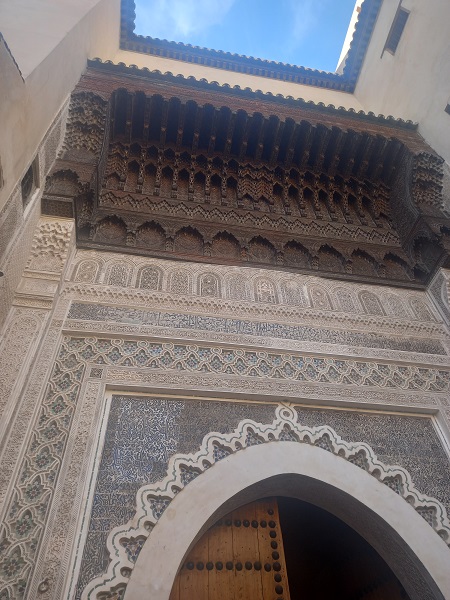
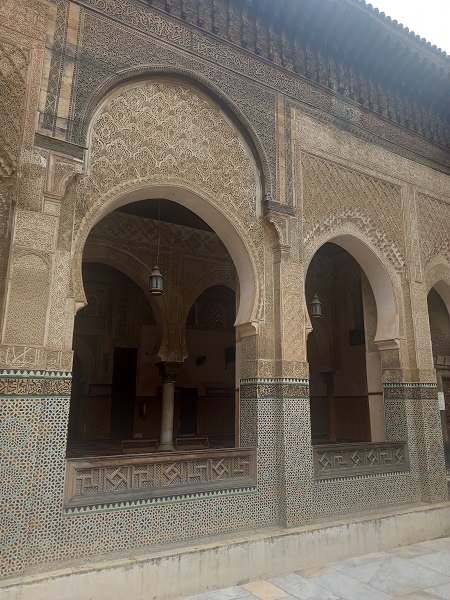
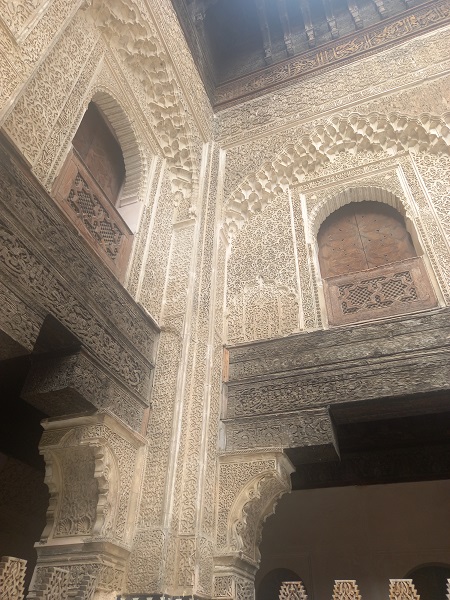
The madrassa was beautiful, I remember going to to see the one in Marrakesh which is similar. It was built in the mid 1300s, and has been restored, but even so it is looking marvellous considering all the wood and gypsum plasterwork is exposed to the elements.

There were some good examples of the ‘mouchearabie’ screens here on the passageways. Such incredible work by those craftspeople, I am in awe of their skills.

I am so glad that I was able to stay here in the medina, it was lovely walking back and forth every day and seeing this amazing place, definitely one of the most wonderfully colourful and interesting places that I have visited in Morocco.

Oh, and the answer to the question everyone wants to know, the petit taxis here are red, as they are in Casablanca. That may well be because Casablanca and Fes were both considered as capitals of Morocco, before Rabat was designated as the official capital. That leaves only Marrakesh to go and from my vague recollections from 13 years ago, they may have been green. All will be revealed soon!

I will see you soon with the other delights of Marrakesh! Until then have fun, take care, stay safe and thanks for visiting.

Other people’s history

I am always very interested in visiting museums in other countries partly to get a sense of how they interpret events that I know about, and obviously have my own perspective on. This is somewhat based on what I have been taught at school, and I know there are huge gaps in my knowledge of world history, but also about seeing things from my little island perspective.

To me, it is fascinating to read the interpretation in these museums, to give a wider understanding of how things are seen by other countries, as it makes travel all the more interesting. On my visit to New York last January, I was really impressed by the way that migration was dealt with at the Ellis Island museum. It is such a delicate subject, but such a huge part of the USA’s history. Here in Morocco I thought that the Tangier history timeline I saw was very diplomatic, pointing out the advantages of having Tangier as an international city, when basically it meant it was occupied and controlled by other people for so long.

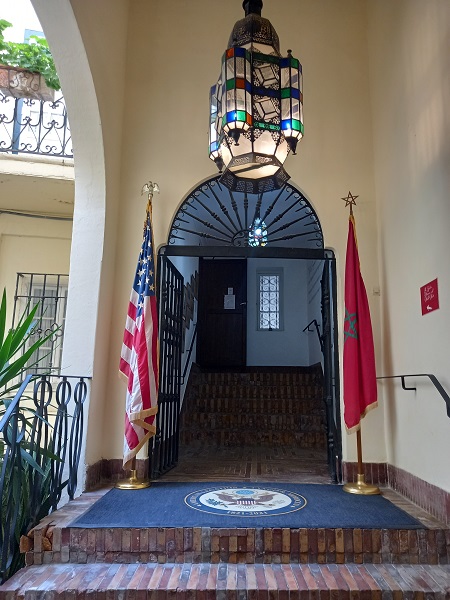
One of the Tangier museums I visited was the American Legation Museum, housed in what was the old American Consul building, until it moved in the early 1960s. I didn’t realise that Morocco was the first nation to recognise the USA in 1777, when of course England was still in shock from having lost her ‘colonies’ in the American War of Independence.

The then Sultan of Morocco, Moulay Sulelman gave the USA the legation building in 1821, following the two countries signing a treaty of peace and friendship in 1786. The building is still owned by the USA and has had a long and varied history.

There were some very interesting maps in one of the rooms. I am not sure of its date but this one has Morocco labelled as Barbary, with underneath Desert of Barbary, and below that Negroland. I love the little insights that old maps give us.

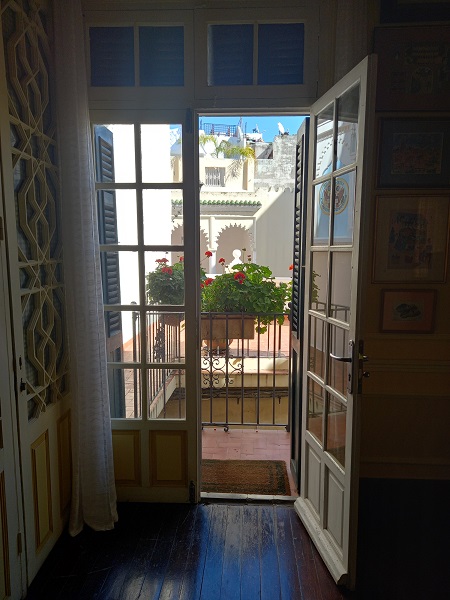
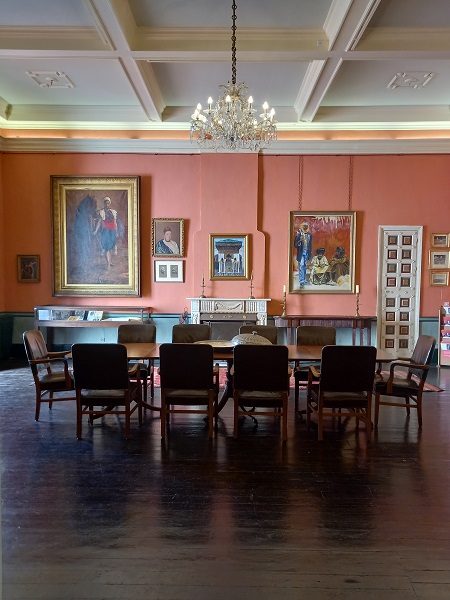
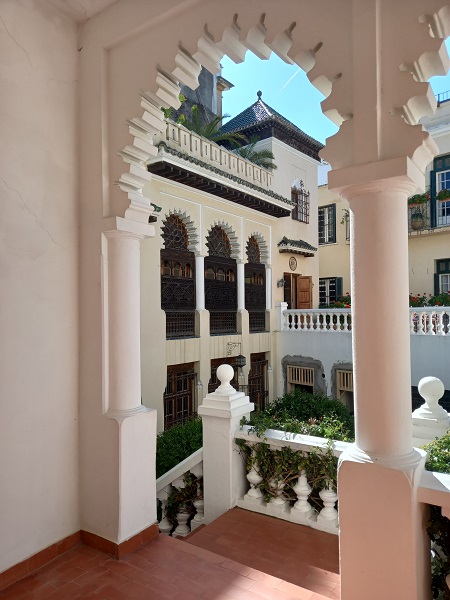
It was fascinating to see the different aspects of décor of the building, parts of it still have its very early 19th century feel and look. Other parts, which were gifted as the legation grew, have a traditional Arab feel in their architecture and décor. The two sides are joined by a beautiful patio and garden.

The museum houses many collections linked with the political and diplomatic relations between the two countries, but also art and artefacts collected and created by Americans who settled in Morocco.

Thus, it is a very unique collection of the relationship between both the countries in a formal sense, and of the people who lived in Morocco, and came to love it, Many of them were artists or writers and so the collection is really varied.

It was brilliant to see some of the collection of old photos of Tangier, these were taken by amateur photographers, among them a French soldier called Paul Servant, and they are all digitized in an archive. The museum is now used as a centre for the study of Morocco by US universities. I have walked past both of these places in the photos below regularly while I’ve been here.

After it closed as a legation it was firstly used as an Arabic language training school for diplomats, then as a base for the Peace Corps volunteers who came to Morocco to work with development projects. One of my favourite bits of the timeline was this.

As an ex adult Literacy tutor it is heart-warming to see that the organisation has been helping local women become literate in Arabic for so long.

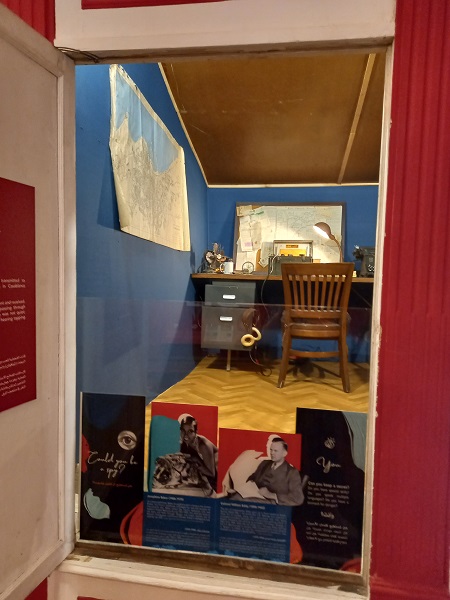
The legation was also used as the secret headquarters for Operation Torch during World War Two, when American and Allied soldiers landed in Morocco to free it from German occupation. The messaging machine was hidden in this cupboard, but apparently could be heard from neighbouring rooms!

A brilliant museum, so interesting, and very different to others that I have visited. It is great that it is still very much a working organisation, offering a very wide variety of projects.

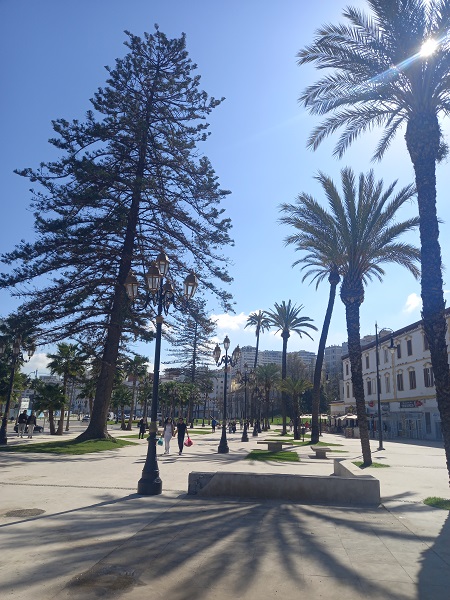
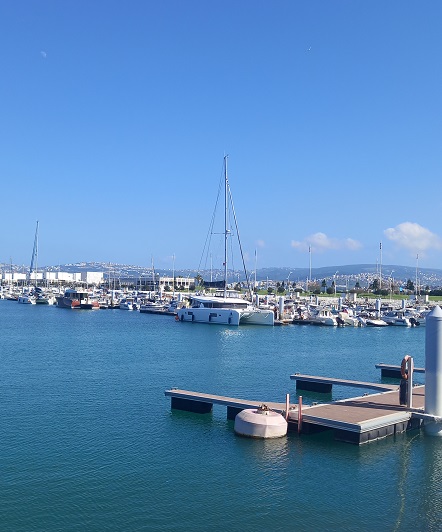
After the museum I wandered down to the seafront. This is where the newer part of Tangier starts, which looks very much like any other Mediterranean seaside city.

You can really tell it had a strong Spanish influence, with the marina, the palm tree promenades, orange trees, and the yellow and white buildings, you could be in any of cities near my house.

On my final day I went to the headland behind the medina, there are some amazing villas and lovely parks up here and this is where the Royal Palace is, though not open to the public, and far away behind locked gates.

I actually went to this area to visit the Tombs of the Phoenicians archaeological site, which also gives an amazing view over Tangier and the Straits of Gibraltar. You could see the start of the Rif mountains just behind the hills.

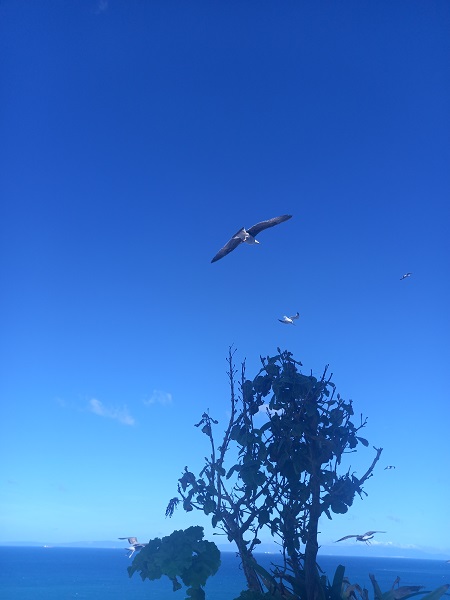
Such amazing blues in these photos, so much lovely blue on the trip, I love it!

There is a very popular café on the headland, Café Hafa, so I stopped for another mint tea and watched the seagulls wheeling around for a while, with a backdrop of the Spanish mainland.

Tangier has definitely been one of my favourite cities on my Moroccan tour, it has a very unique vibe and a gorgeous location.

However, I am now in Fes, which is equally amazing. I only arrived yesterday, after a fascinating train ride through lots of rolling green farmland, so have only done a tiny bit of exploring as yet. I am staying in a wonderful Riad so I will show you that, and the medina here in my next post. Until then, have fun, take care, stay safe and thanks for visiting.