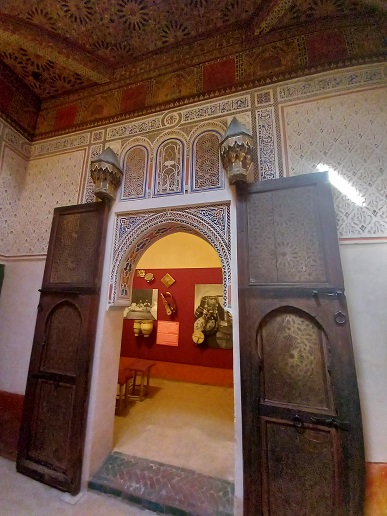
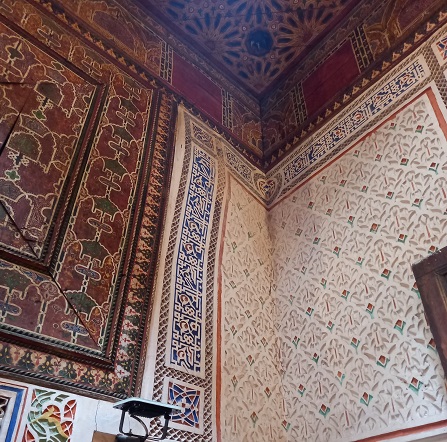
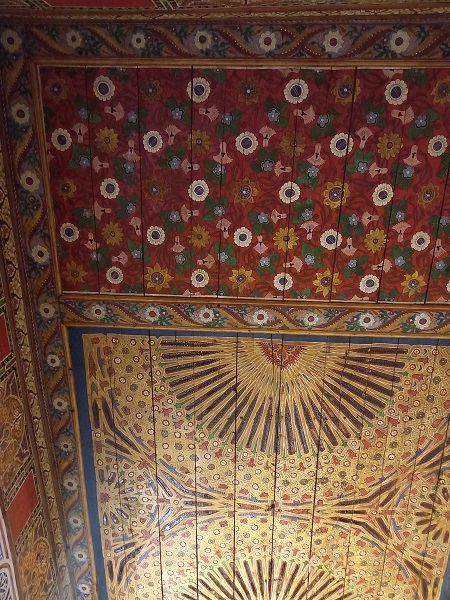
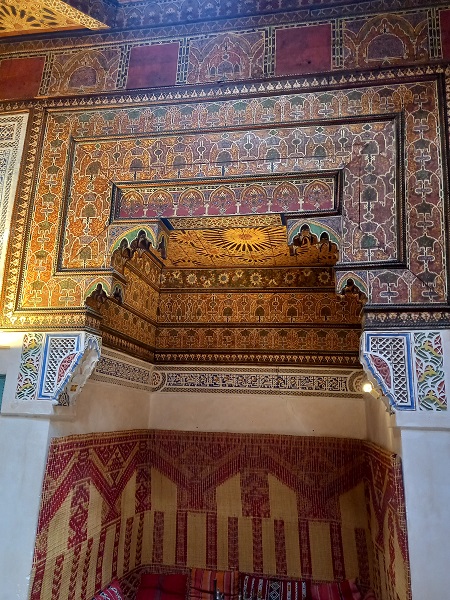
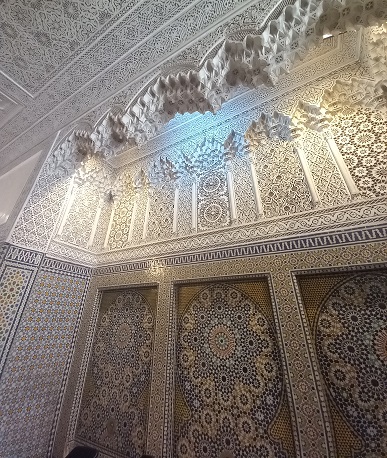
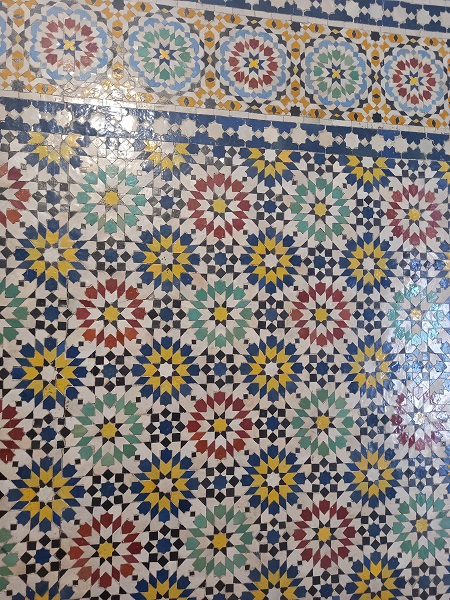
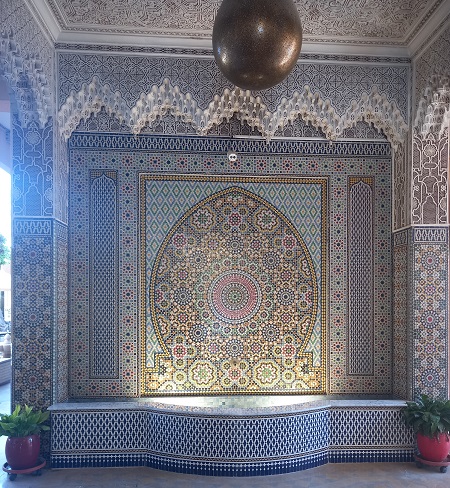
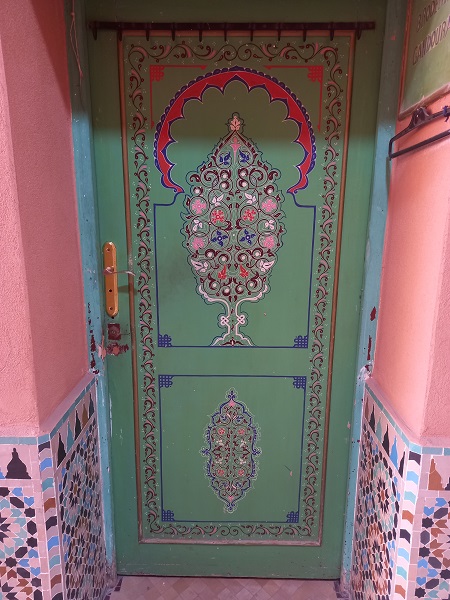
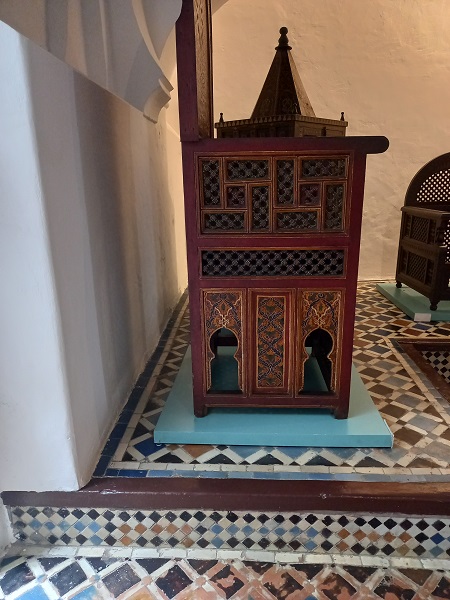
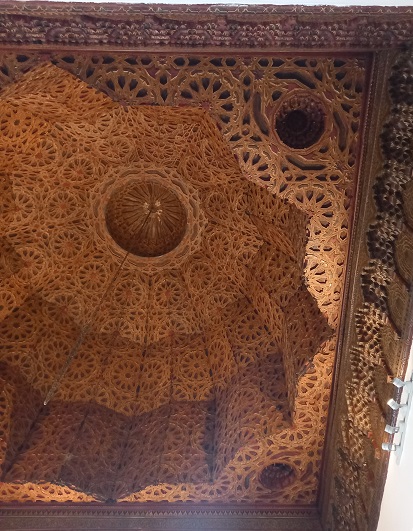
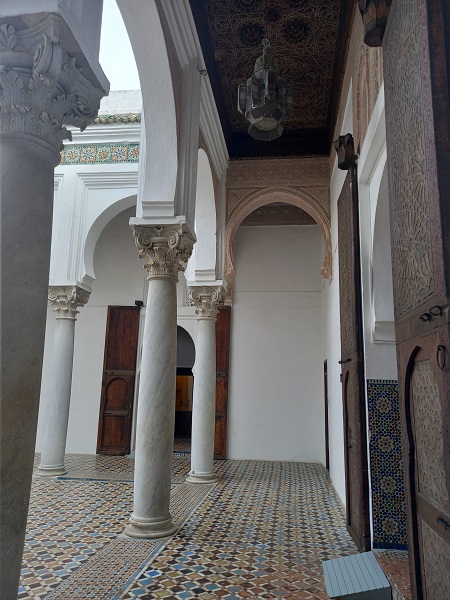
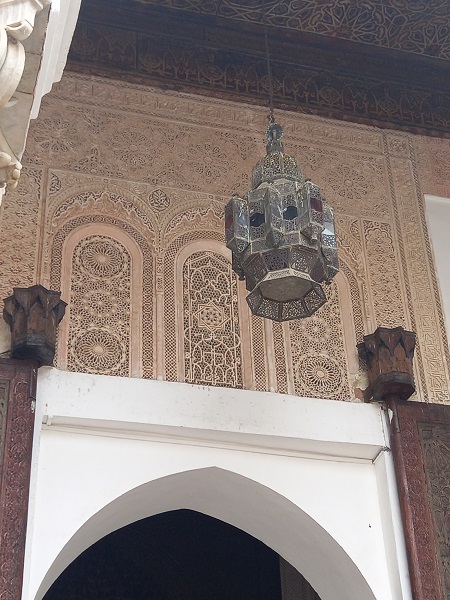
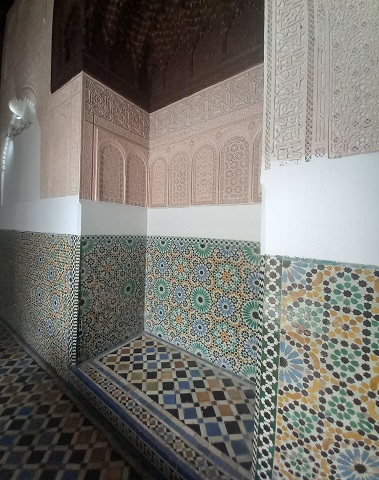
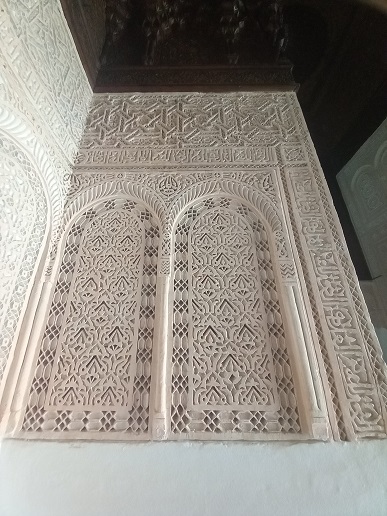
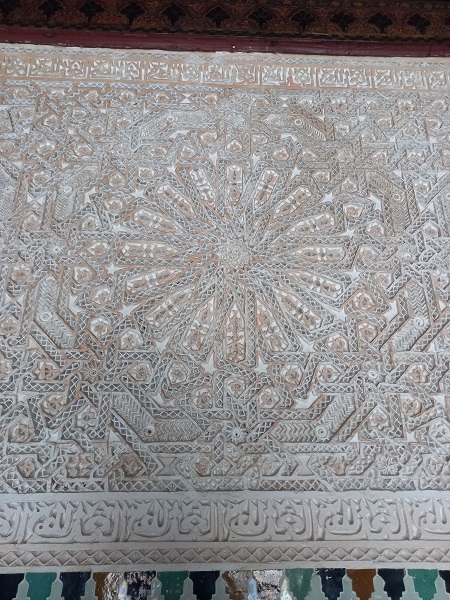
The work of so many hands

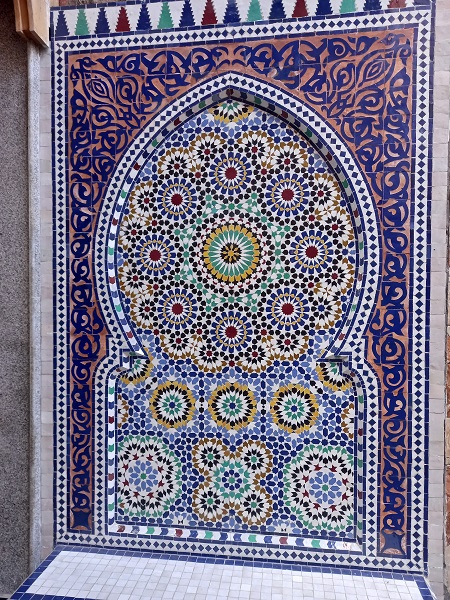
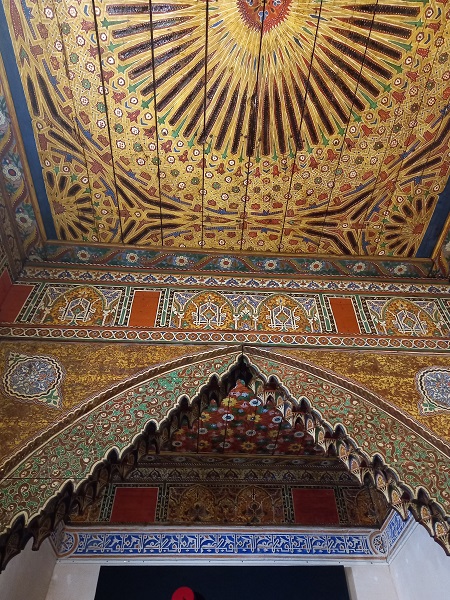
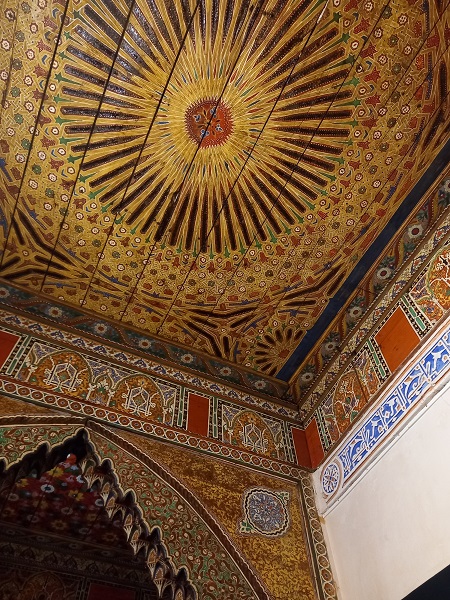
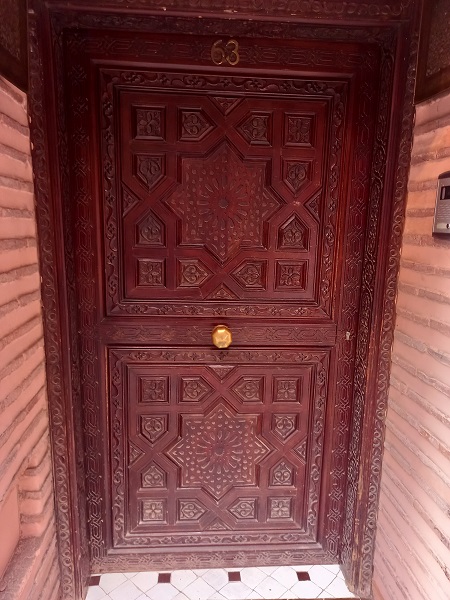
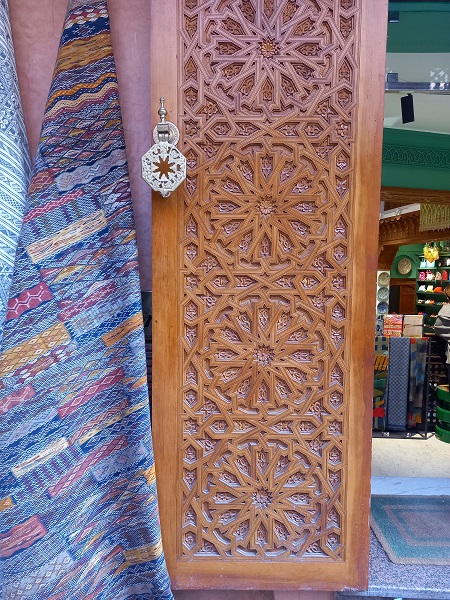
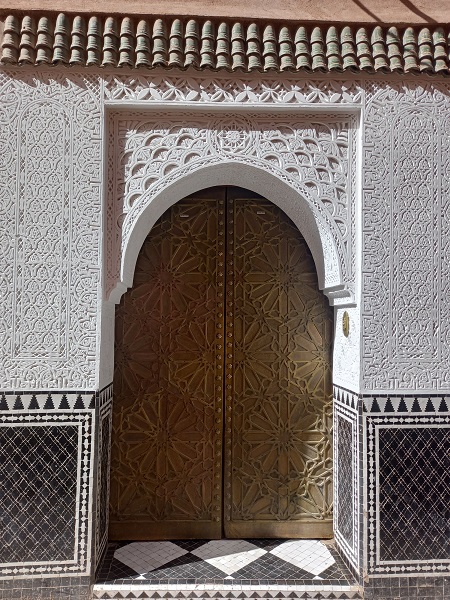
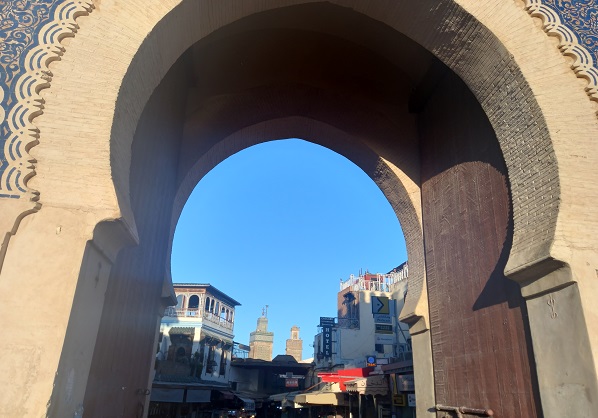
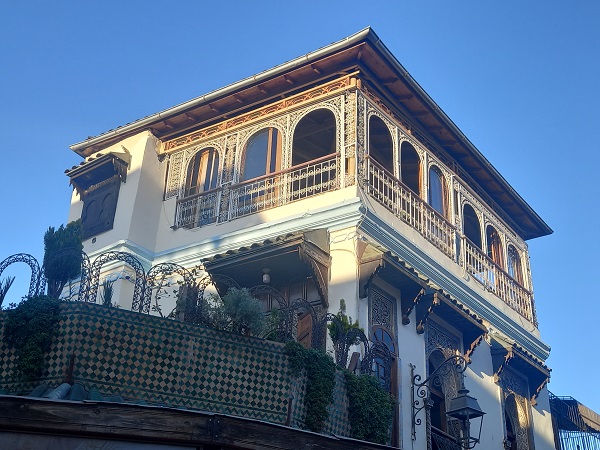
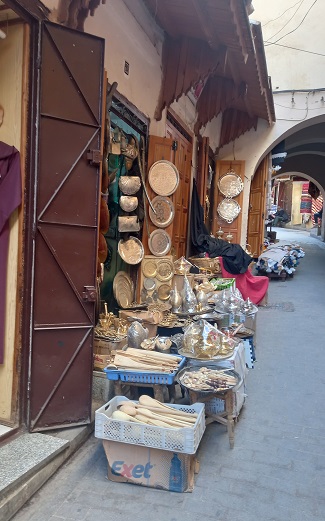
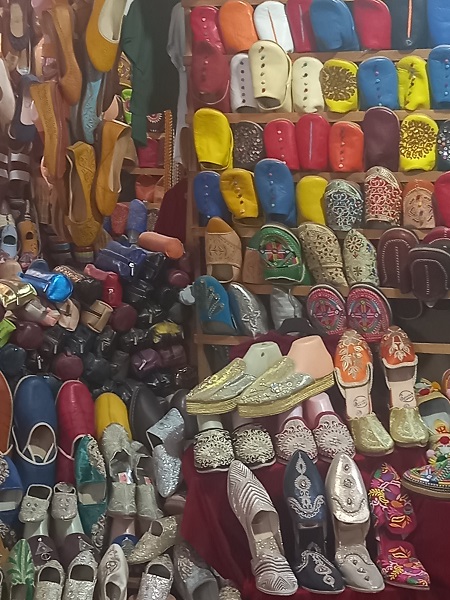
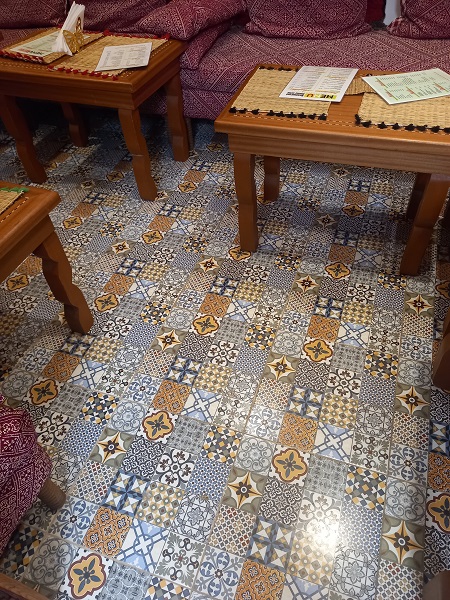
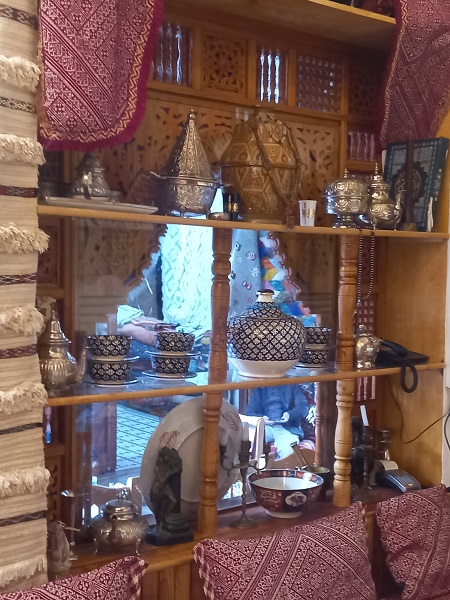
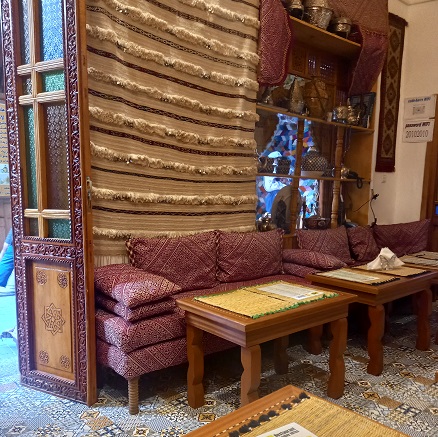
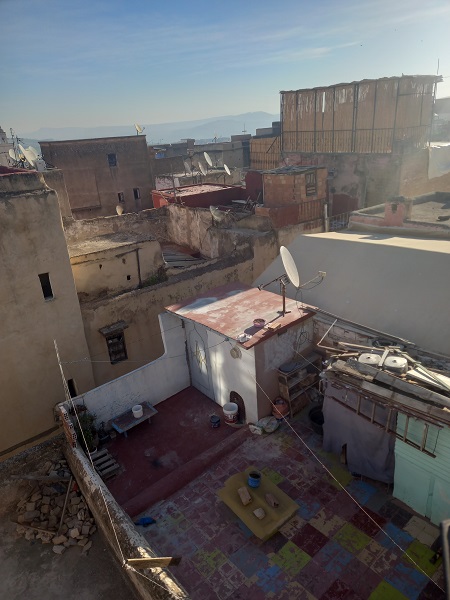
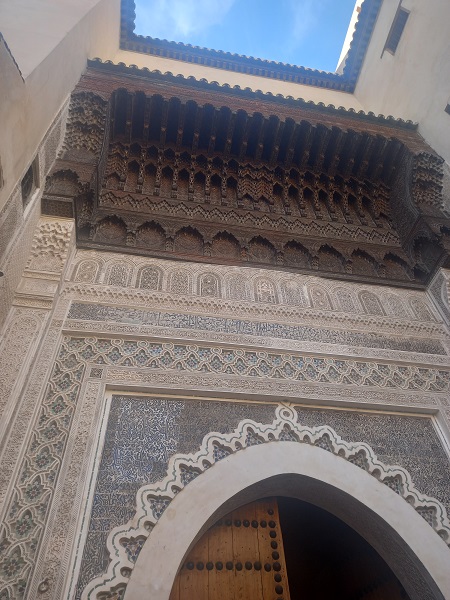
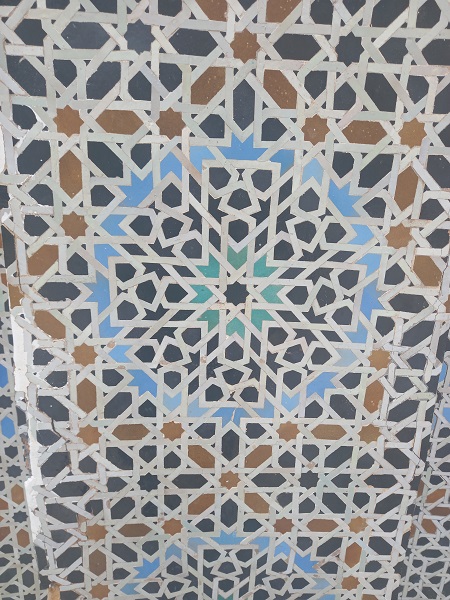
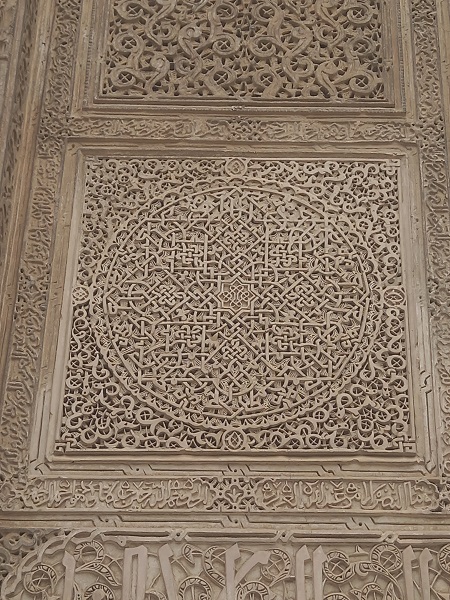
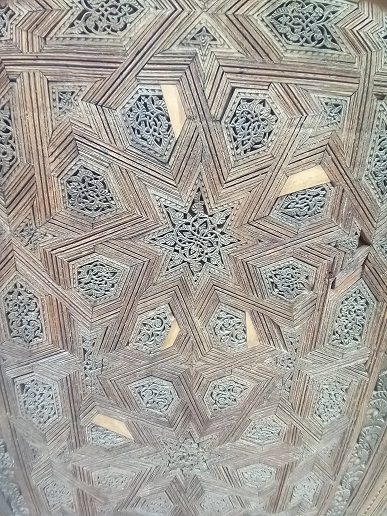
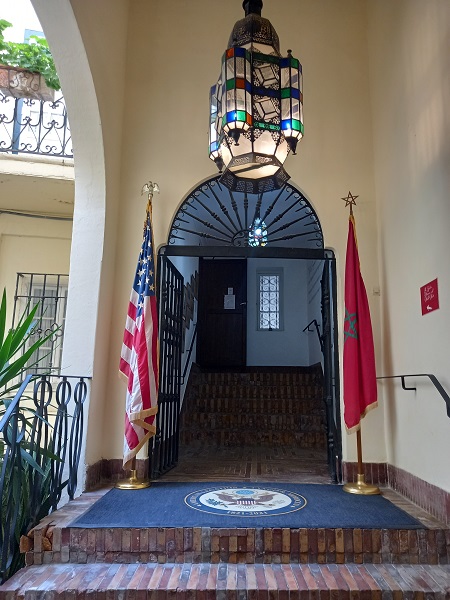
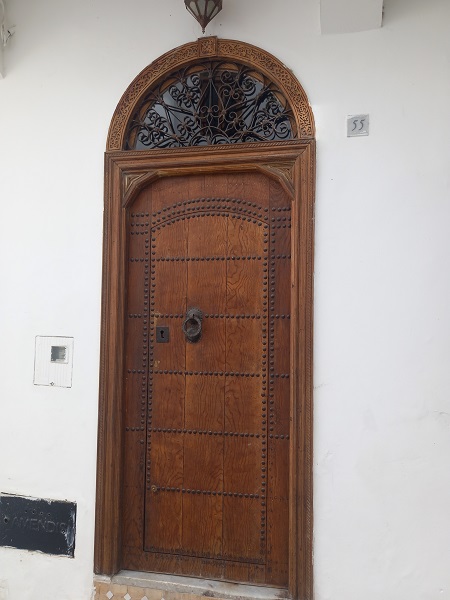
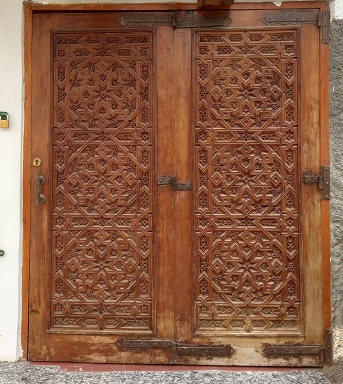
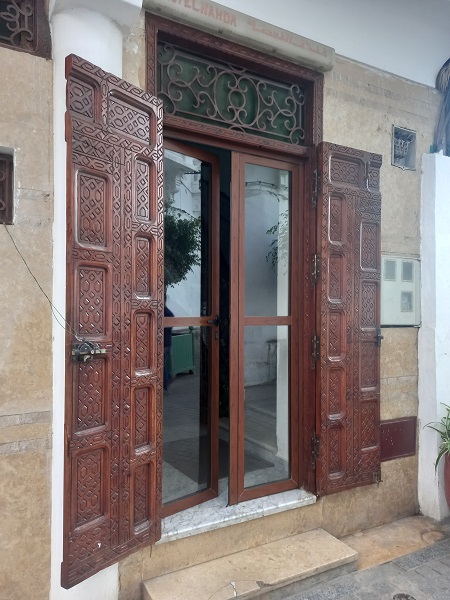
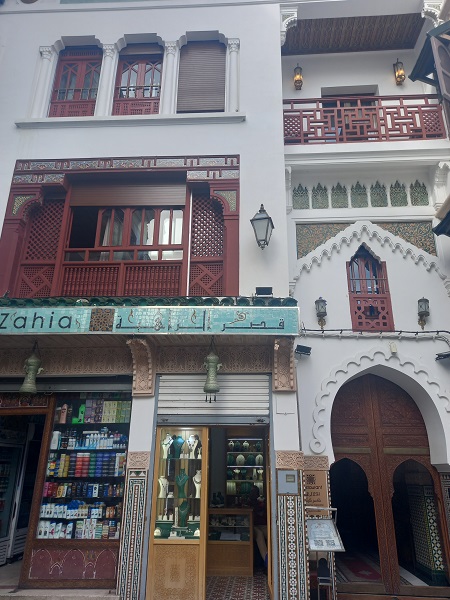
The lasting impression from Morocco is a culture with just so much rich adornment. So many beautiful wood carvings on doors and ceilings, incredible plasterwork, endless mosaics, decorated shoes, beautiful clothes, an absolute riot of colour and pattern that is breath taking and bedazzling. Now back in England it all seems a bit plain in comparison, and although it is lovely to be here, I am missing the tiles and the gorgeousness of it all.

Marrakesh was a great way to end the tour. I did originally wonder if I should have done it the other way round, and ended up at the peaceful seaside resorts of Essouria and Agadir, but on reflection am happy with the way it turned out. Morocco is a place of so much colour, and noise and vibrancy, (and traffic!), that it was probably better to ease into it.

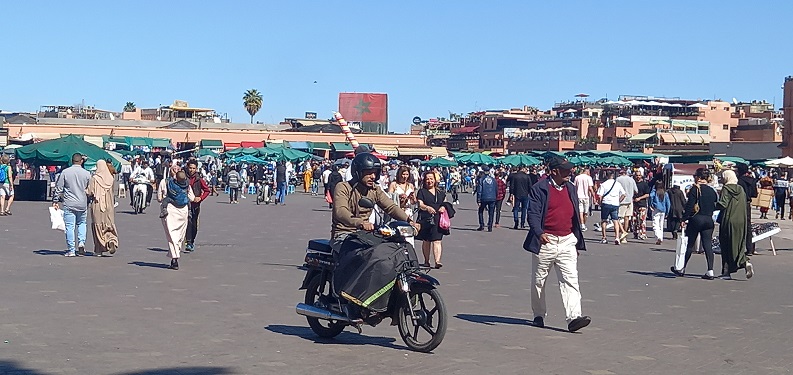
Most days in Marrakesh I visited the Jemaa el – Fnaa Square in the centre of the city. I have been before and knew that it is the lively heart of the medina, with so many stalls, and restaurants, and entertainers of all sorts. It is noisy and chaotic and wonderful!

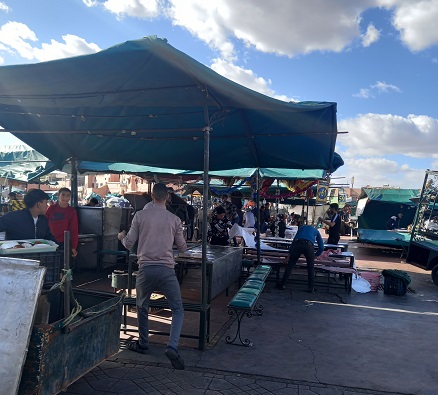
As well as all the daytime offerings, such as the horse carriages and the many cafes and juice bars, every evening from around 4pm a whole extra set of temporary food stalls get built, such a lot of work each day. I sat one of the days with another cup of delicious tea just watching all of the frantic activity.

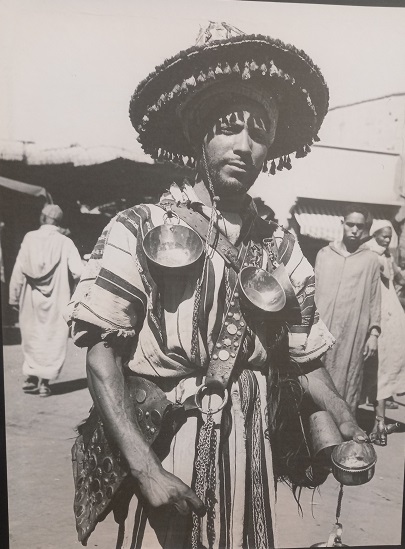
I love the contrast in the last photo above of the traditional water sellers, who pose for pictures, and the silver ‘statue’ performer.

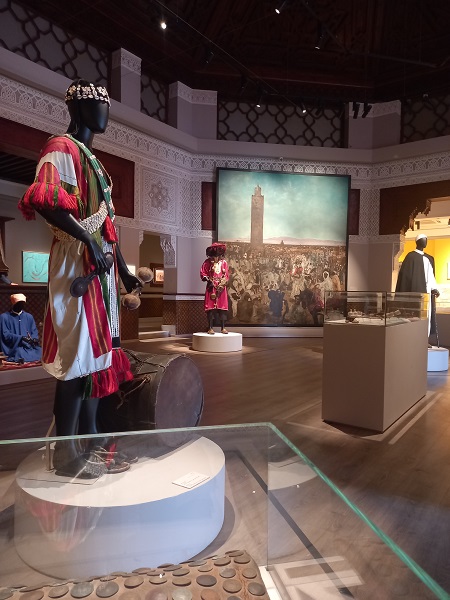
This trip I also went to the museum at one side of the square, which is housed in the old Moroccan National Bank building, constructed in 1927.

I didn’t realise that the square has been in existence since the 1600s, and has always been used as as place for musicians, storytellers and entertainers of all types. It was a lovely museum, mostly using old photos and film to document the life of the square, and really interesting.

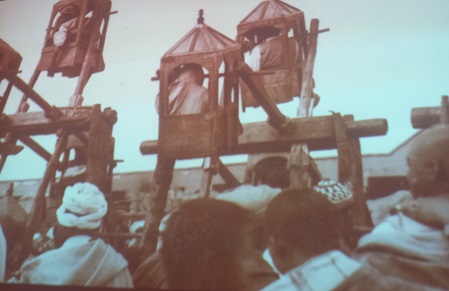
This water seller was photographed in 1966. I also saw these little roundabout seats in the woodwork museum in Fes, but am not sure when they date from.

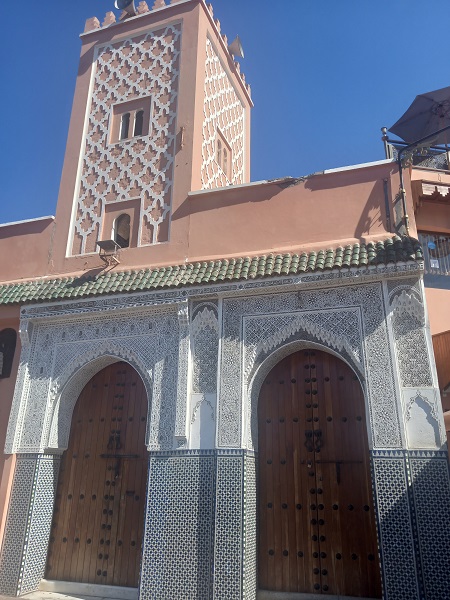
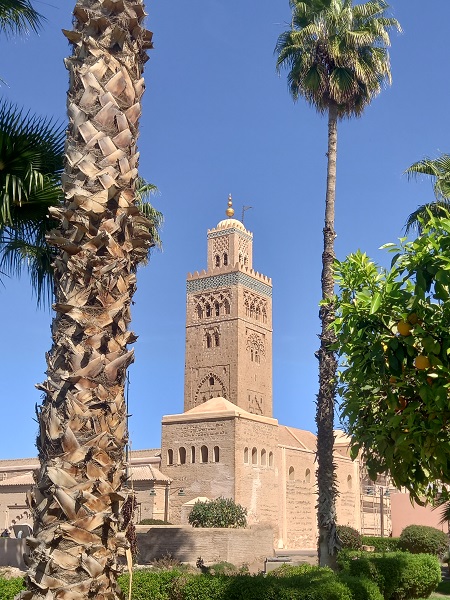
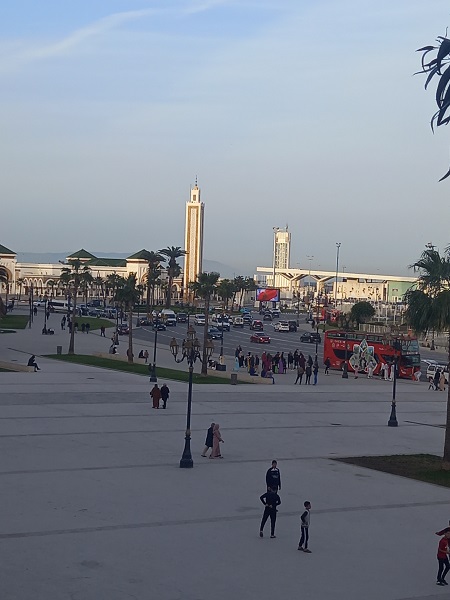
Near the square is the Koutoubia Mosque, thankfully it only sustained minor damage in the 2023 earthquake, and is being restored. It has parks and fountains all around it, so I usually had my lunch there.

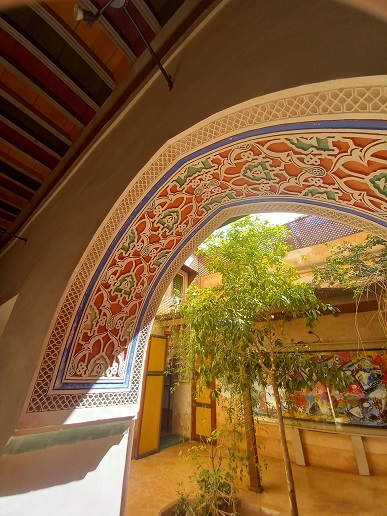
The other museum I visited linked in really well to the Jemma El-Fnaa one, the Mouassine Music Museum is in another beautifully restored mansion, which dates from the 16th century.

If I thought the lower floors were impressive, that was nothing compared to the guest apartment on the upper floor. They hold music sessions here every Monday evening.

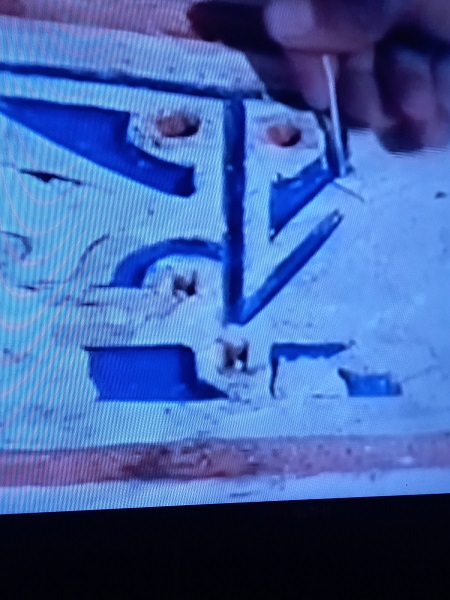
The building has been extensively restored and there were some really good videos showing the work. Apologies for the slightly grainy pictures, but this is when they were scraping off all of the plaster that had been put over the wall frieze, and cleaning the paintwork.

It is so brilliant to see so many skilled people being able to restore the buildings as well, there must be so much to do here, with so many wonderful places that need TLC.

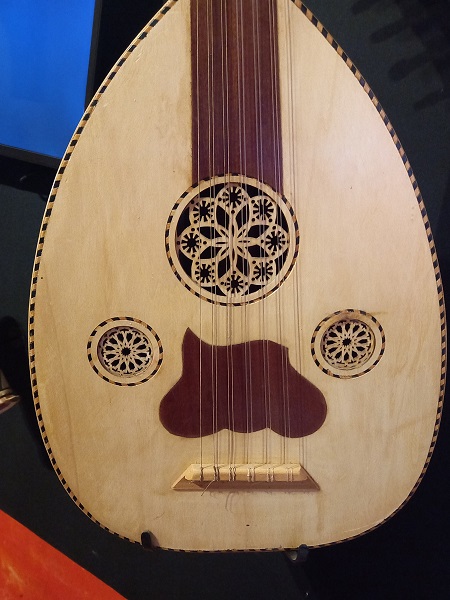
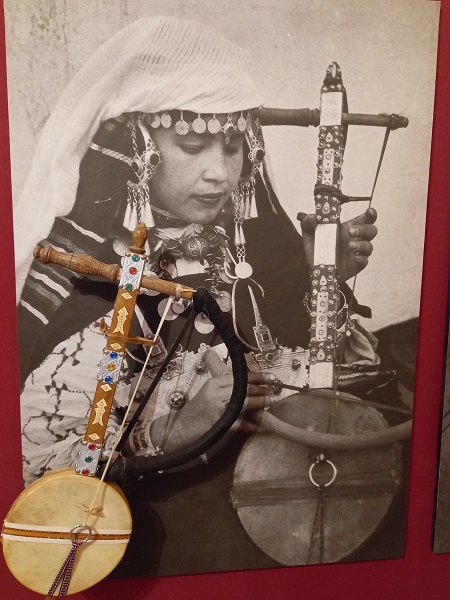
There were excellent displays of instruments, but more importantly for me, lots of videos and photos of people playing them, and dancing and a great focus on the dress of the performers.

These facial tattoos, in the second photo, are fascinating. These are from some of the women in the Atlas hill tribes.

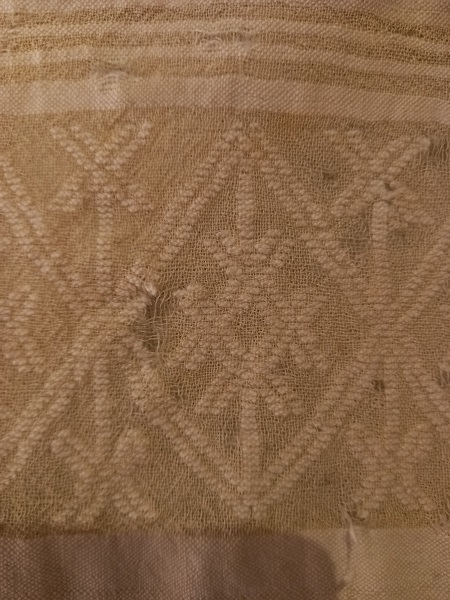
Although there was not much in the way of textiles in either museum, I did find a little bit. This gorgeous shawl had very delicate whitework embroidery. The main history museum is closed at the moment, so I expect there would have been more there.

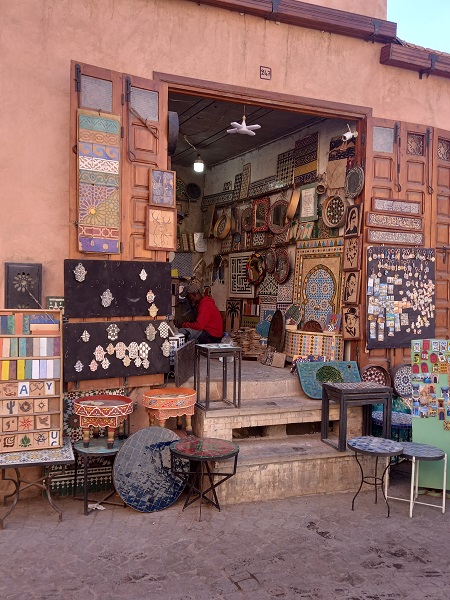
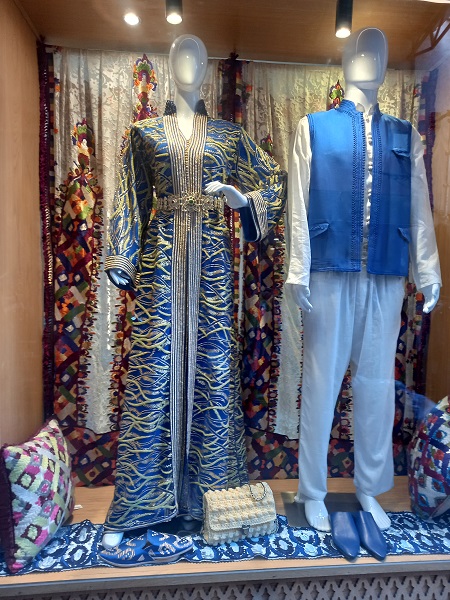
I did see quite a few shops selling traditional embroidery and textile goods as I wandered through the medina, as well as more modern kaftan shops. I was also very excited to see a little zellige workshop in the medina near my riad. I stood and watched the artisan chipping the tiles for a little while.

In the same way that the Hassan 2nd mosque in Casablanca is supporting training of current artisans, there is an artisan’s centre in Marrakesh, just outside the medina. It is an amazing building and contains workshops as well as places to buy the wonderful creations.

Of course I must finish my Moroccan series of blogs posts with revealing the taxi colour for Marrakesh ! It is a creamy yellow.

I think in this city there must be one taxi for every three people, I have never seen so many in my life. That does make it really easy to get around, though most of the time I enjoyed walking. You can’t stop and take door photos as easily from a taxi can you 😉

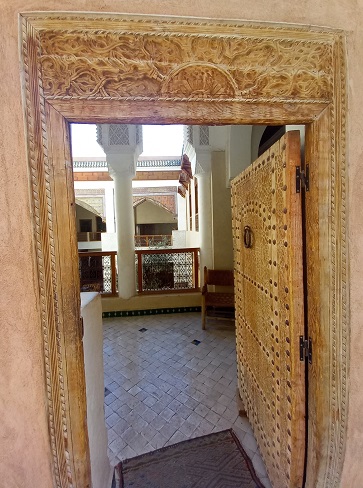
I shall finish this post with some of the wonderful doors from my last few days of wandering in the medina.

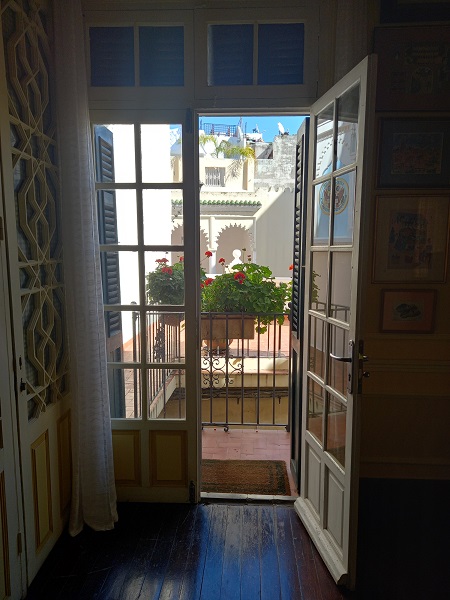
I was really thrilled to find this lovely old door open, and was able to peek inside at an amazing riad. I think it was still being restored, but what a palace!

It has been such a privilege to be able to visit this country, to see where all the inspiration for the places that I love in Spain come from, and to find out more about its history. I have really enjoyed the visit and would love to go back, albeit next time with a bigger suitcase and a lottery win to spend on lamps 😉

I have had a lovely couple of days with Ellen. She came back from her month in Europe the day I left for Morocco. She visited Spain, Switzerland, France, Belgium and The Netherlands in her time away, everything from mountain cable cars, medieval Alsace towns, and chocolate museums, as well as a quick trip to Disneyland Paris where she met up with her friends. She loved everything and is now planning another month in Asia for later in the year. I am so proud of her for being a confident solo traveller and having such amazing adventures.

I am off again tomorrow, to Scotland, to spend a few days with my friend Sue, can’t wait as I am so looking forward to seeing her, and the beauty of Scotland again. I will be back next weekend, so until then, have fun, take care, stay safe, and thanks for visiting.

Aladdin’s Cave

It may sound like a cliché, but the medina here in Fes is like going into a wonderful world of treasures. The first part of the street that I am on is mainly food, with piles of sticky sweets, all wrapped in cling film to stop them toppling over, stalls selling spiced olives, and lots and lots of sweets and nuts.

There are also many butchers, and you can tell the chicken is fresh as there are live ones in cages at the back of the stalls. It’s not a place for those who don’t like to think about where their food comes from!

Further in and you start to see the leatherwork, the pottery and carpet stalls, and the shoe stalls. I have never seen so many pairs of decorated slippers ever, they are beautiful with crystals and embroidery.

Luckily I have such poor feet I haven’t been tempted. With my dodgy knees and tendon issues I need to wear things that feel like slippers and have support at the back, but I can dream about lounging around in palaces on couches looking as if I am from an Arabian Nights’ tale.

There are so many little food and drink places as well, and on every wander I have to stop for a mint tea, usually served in a gorgeous little teapot here, rather than by the glass as in Tangier.

I have eaten twice in this restaurant with views overlooking the tops of the medina, a jumble of towers and walls, and buildings with terraces which are other restaurants and riads. There are lots of cats living on the roofs, and this one was very interested in my chicken skewers!

From my riad terrace I can see the buildings at all different heights, some restored, some crumbling. Working in town planning must be a nightmare here, especially as the World Heritage Site designation will limit what can be done. As with all the other cities that I have visited there is so much restoration taking place here.

I managed to have a peek into this doorway where there are some amazing pillars, it looks as if another one of the palaces here are being restored.

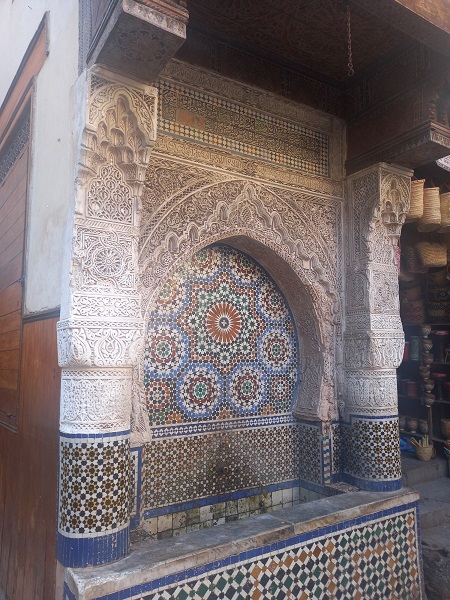
On one of my wanders I managed, eventually, to find my way to the Museum of Woodwork, housed in an old trading inn. The wonderful tiled and decorated public water fountain outside was provided by the inn.

The Nejjarine Museum is in the carpenters’ area, and houses displays of both functional and decorative woodwork. I wasn’t able to take pictures of the exhibits, such as the highly decorated doors, windows and chests, but as you can imagine they were stunning. The museum itself showcases the balconies made with ‘mouchearabie’ woodwork, which is formed of geometric patterns and is used for window shutters and room partitions.

I did find this picture of a modern kitchen shelf for spices, there were lots of these in the museum and they were so beautiful.

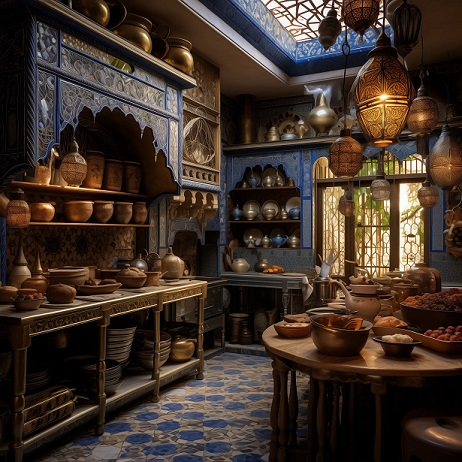
While searching I also came across this Moroccan inspired kitchen, if only I had a bigger house I would love this, the woodwork is so gorgeous.

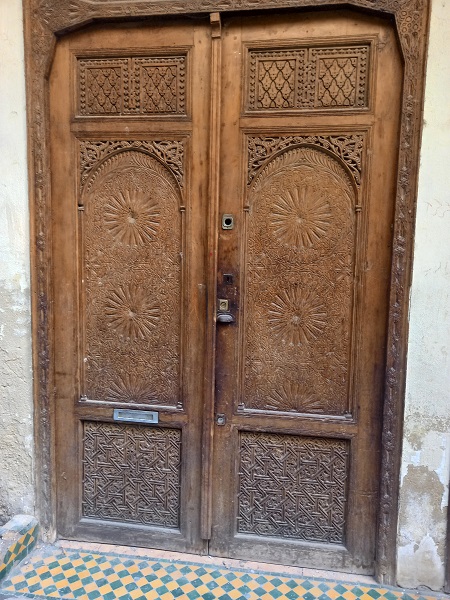
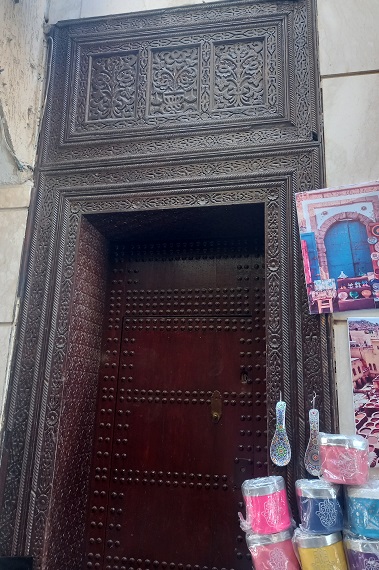
There were a few ornate wooden doors as well. Much of the wall space beside the little shops is covered with goods so the doors aren’t visible, but I found these in a side street.

As this is very much a place where local people live and work there are mosques along the small streets and two madrassas, Islamic schools, and one of the oldest universities in the world, founded in the 9th century by a woman.

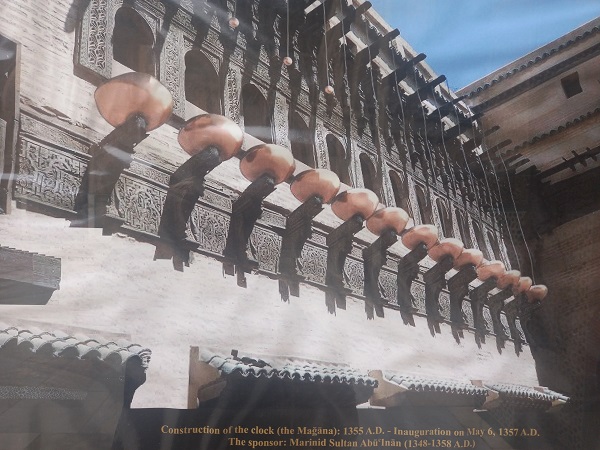
My riad was next door to a 14th century water clock. It was built to drop metal balls into bowls below on the hour, and is part of the nearby madrassa. It is not currently working but may be restored at some point if the historians can work out exactly how to do that.

This picture in the madrassa shows the clock with the bowls and the balls suspended from their chains. When they dropped into the bowl the noise indicated another hour.

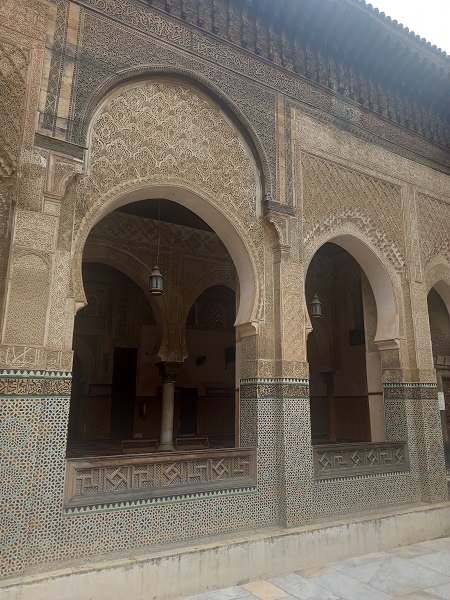
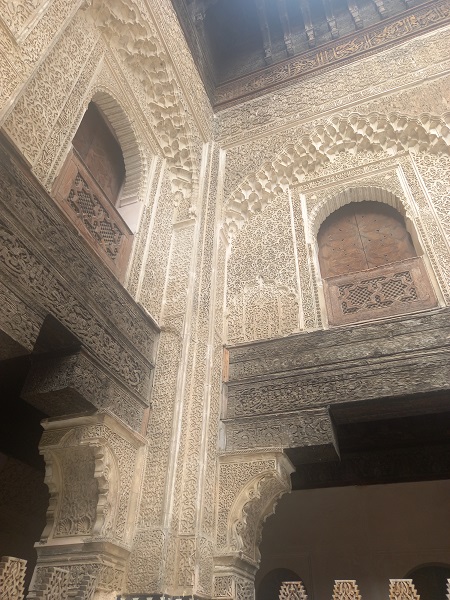
The madrassa was beautiful, I remember going to to see the one in Marrakesh which is similar. It was built in the mid 1300s, and has been restored, but even so it is looking marvellous considering all the wood and gypsum plasterwork is exposed to the elements.

There were some good examples of the ‘mouchearabie’ screens here on the passageways. Such incredible work by those craftspeople, I am in awe of their skills.

I am so glad that I was able to stay here in the medina, it was lovely walking back and forth every day and seeing this amazing place, definitely one of the most wonderfully colourful and interesting places that I have visited in Morocco.

Oh, and the answer to the question everyone wants to know, the petit taxis here are red, as they are in Casablanca. That may well be because Casablanca and Fes were both considered as capitals of Morocco, before Rabat was designated as the official capital. That leaves only Marrakesh to go and from my vague recollections from 13 years ago, they may have been green. All will be revealed soon!

I will see you soon with the other delights of Marrakesh! Until then have fun, take care, stay safe and thanks for visiting.

Other people’s history

I am always very interested in visiting museums in other countries partly to get a sense of how they interpret events that I know about, and obviously have my own perspective on. This is somewhat based on what I have been taught at school, and I know there are huge gaps in my knowledge of world history, but also about seeing things from my little island perspective.

To me, it is fascinating to read the interpretation in these museums, to give a wider understanding of how things are seen by other countries, as it makes travel all the more interesting. On my visit to New York last January, I was really impressed by the way that migration was dealt with at the Ellis Island museum. It is such a delicate subject, but such a huge part of the USA’s history. Here in Morocco I thought that the Tangier history timeline I saw was very diplomatic, pointing out the advantages of having Tangier as an international city, when basically it meant it was occupied and controlled by other people for so long.

One of the Tangier museums I visited was the American Legation Museum, housed in what was the old American Consul building, until it moved in the early 1960s. I didn’t realise that Morocco was the first nation to recognise the USA in 1777, when of course England was still in shock from having lost her ‘colonies’ in the American War of Independence.

The then Sultan of Morocco, Moulay Sulelman gave the USA the legation building in 1821, following the two countries signing a treaty of peace and friendship in 1786. The building is still owned by the USA and has had a long and varied history.

There were some very interesting maps in one of the rooms. I am not sure of its date but this one has Morocco labelled as Barbary, with underneath Desert of Barbary, and below that Negroland. I love the little insights that old maps give us.

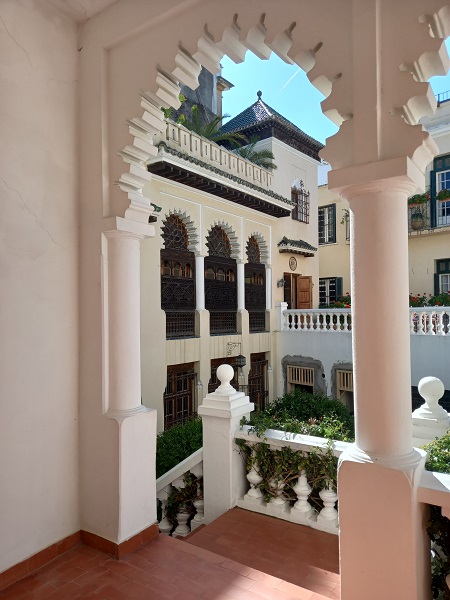
It was fascinating to see the different aspects of décor of the building, parts of it still have its very early 19th century feel and look. Other parts, which were gifted as the legation grew, have a traditional Arab feel in their architecture and décor. The two sides are joined by a beautiful patio and garden.

The museum houses many collections linked with the political and diplomatic relations between the two countries, but also art and artefacts collected and created by Americans who settled in Morocco.

Thus, it is a very unique collection of the relationship between both the countries in a formal sense, and of the people who lived in Morocco, and came to love it, Many of them were artists or writers and so the collection is really varied.

It was brilliant to see some of the collection of old photos of Tangier, these were taken by amateur photographers, among them a French soldier called Paul Servant, and they are all digitized in an archive. The museum is now used as a centre for the study of Morocco by US universities. I have walked past both of these places in the photos below regularly while I’ve been here.

After it closed as a legation it was firstly used as an Arabic language training school for diplomats, then as a base for the Peace Corps volunteers who came to Morocco to work with development projects. One of my favourite bits of the timeline was this.

As an ex adult Literacy tutor it is heart-warming to see that the organisation has been helping local women become literate in Arabic for so long.

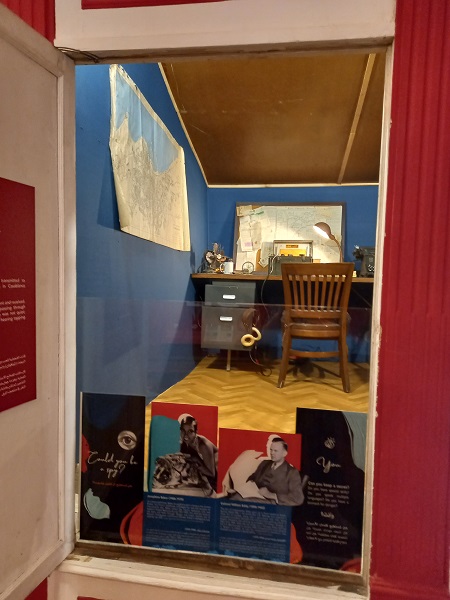
The legation was also used as the secret headquarters for Operation Torch during World War Two, when American and Allied soldiers landed in Morocco to free it from German occupation. The messaging machine was hidden in this cupboard, but apparently could be heard from neighbouring rooms!

A brilliant museum, so interesting, and very different to others that I have visited. It is great that it is still very much a working organisation, offering a very wide variety of projects.

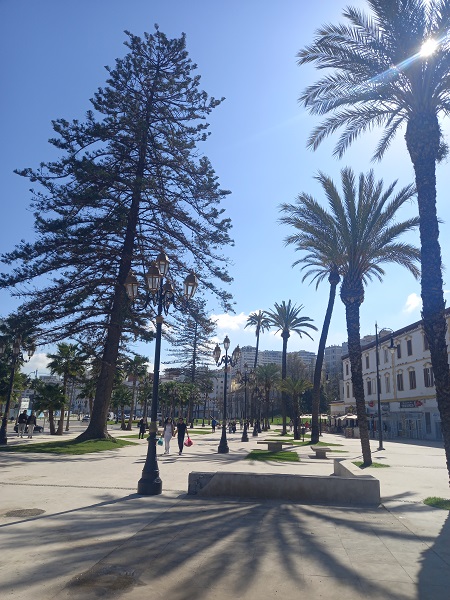
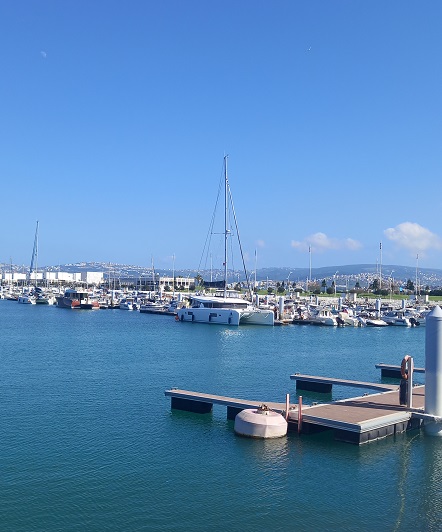
After the museum I wandered down to the seafront. This is where the newer part of Tangier starts, which looks very much like any other Mediterranean seaside city.

You can really tell it had a strong Spanish influence, with the marina, the palm tree promenades, orange trees, and the yellow and white buildings, you could be in any of cities near my house.

On my final day I went to the headland behind the medina, there are some amazing villas and lovely parks up here and this is where the Royal Palace is, though not open to the public, and far away behind locked gates.

I actually went to this area to visit the Tombs of the Phoenicians archaeological site, which also gives an amazing view over Tangier and the Straits of Gibraltar. You could see the start of the Rif mountains just behind the hills.

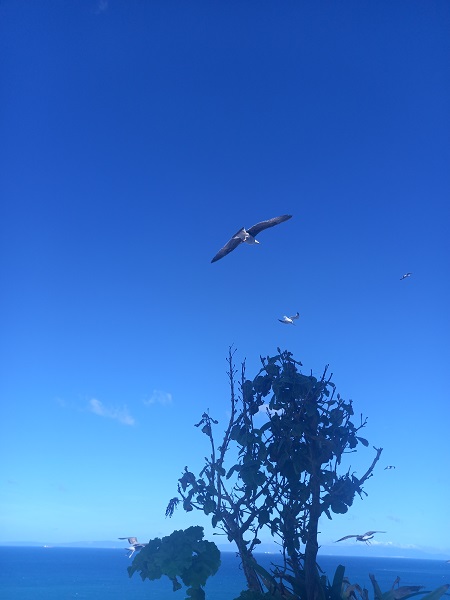
Such amazing blues in these photos, so much lovely blue on the trip, I love it!

There is a very popular café on the headland, Café Hafa, so I stopped for another mint tea and watched the seagulls wheeling around for a while, with a backdrop of the Spanish mainland.

Tangier has definitely been one of my favourite cities on my Moroccan tour, it has a very unique vibe and a gorgeous location.

However, I am now in Fes, which is equally amazing. I only arrived yesterday, after a fascinating train ride through lots of rolling green farmland, so have only done a tiny bit of exploring as yet. I am staying in a wonderful Riad so I will show you that, and the medina here in my next post. Until then, have fun, take care, stay safe and thanks for visiting.

An accidental visit to a modern art museum!

I mentioned in the last post that I was really looking forward to visiting several museums while in Tangier. So I set off a couple of days ago, Google maps in hand, for a walk around the fortified medina to find the Kasbah museum.

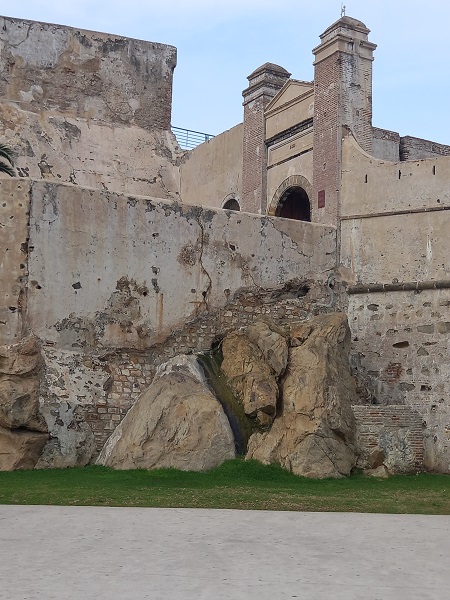
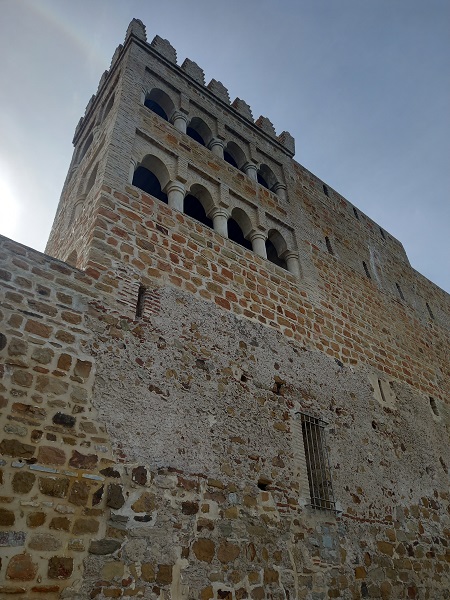
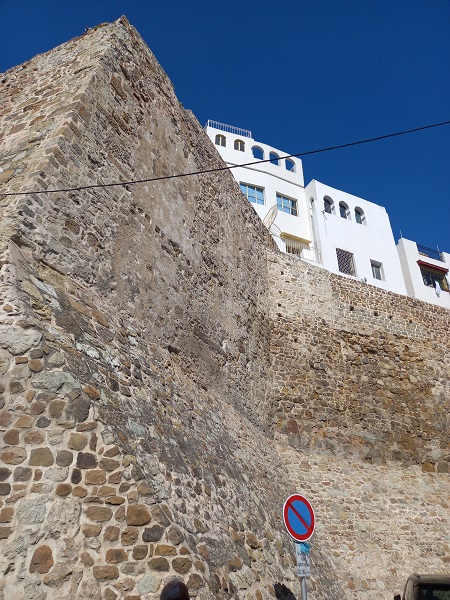
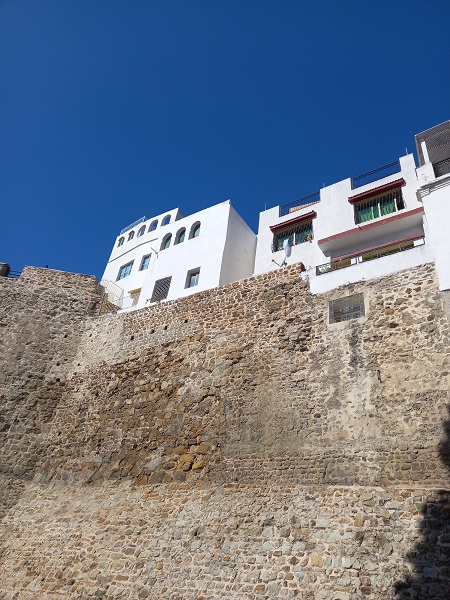
The walls here are incredible. I know I said the ones in Avila were amazing, and they were, but these are stunning as they are so irregular, and have been repaired, extended and built upon in the following centuries since they were first built.

They are partly medieval, from the creation of the original medina, with gates dated from the 1200s to 1300s. They were enhanced by the Portuguese, who added lots of towers and guns, and also extended by Charles 2nd of England, when he briefly owned Tangier as part of Catherine of Braganza’s dowry.

They now have their own interpretation centre and access has been built for modern visitors to the steepest parts, which give great views over the port. There is also a small medieval palace built into one part, at the start of the Kasbah, which is where I was aiming for.

I especially like the way that the more modern houses incorporate the wall structure into them, having stairs, doors and windows through the original bricks.

Having found my location the museum was closed for lunch, which was not on the Google info, but I took the opportunity to go and have a wander around the Kasbah.

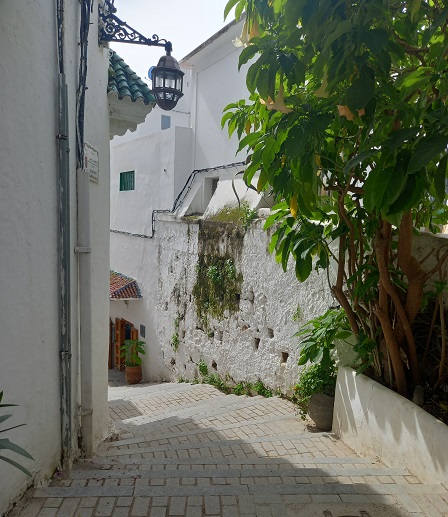
This area has been extensively restored and there is lots of work still going on in the middle of it. It must be a real challenge for everyone, trying to demolish and restore in these tight spaces. I have seen lots of carts used for delivery, and the builders are doing a brilliant job, it’s looking gorgeous .

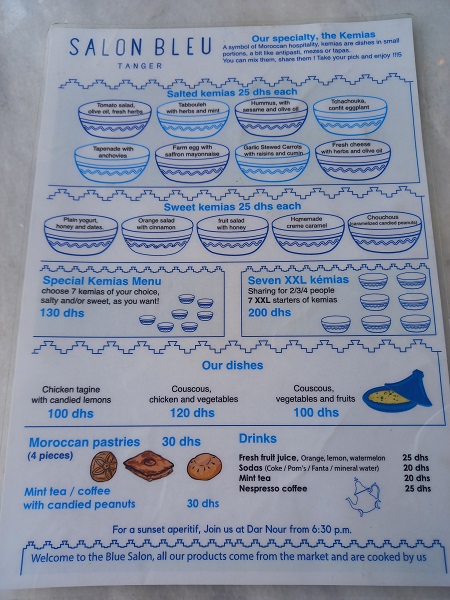
I ended up having lunch at a very nice little café overlooking Kasbah square. I had only gone in for a cup of delicious mint tea, but when I saw the menu, with all the little kemmias, Moroccan versions of tapas, I ordered those as well.

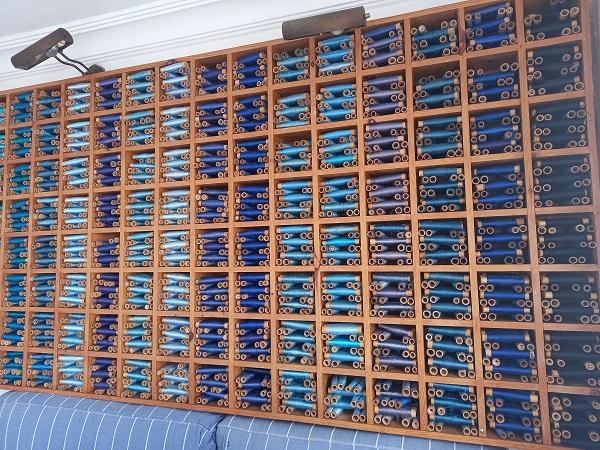
It wasn’t until I was sat down that I noticed the wall behind me was full of spools of silk, which made the most gorgeous display. I had noticed a few weavers’ shops in the area so think this was a reference to their trade.

Back to the museum, and went straight into an exhibition of contemporary art so wasn’t sure that I was in the right place. It also didn’t look very much like a palace, but I thought it might have been stripped to be a gallery.

I have to confess I am not a fan of most modern art. I did have a good wander round, and there were a couple of interesting, and very thought provoking pieces relating to war and conflict in the region. There were no photos allowed so I can’t show you any of it.

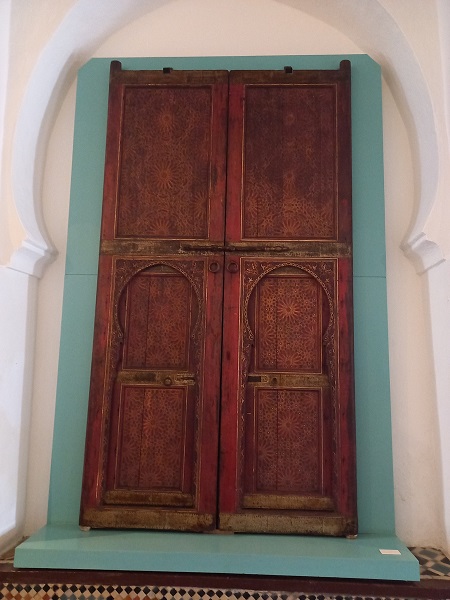
However, I was quite relieved when the nice custodian pointed me in the right direction of the other half of the museum. The art side is based in a former prison, which although architecturally interesting, was not what I’d come for 😉 First thing I came across was some lovely old doors!

Peace and harmony restored in my little heart I was very happy to see some more amazing examples of Islamic art from the 12th and 14th centuries when the Sultan’s Palace was originally built. There is a small exhibition of archaeological finds as well.

The central courtyard of the palace was especially stunning, of course very like the Alhambra and the Real Alcazar in Seville,on a smaller scale. They all date from the same periods, and the Spanish palaces would have probably been built by craftsman who came from here.

I had a happy wander back to the hotel, collecting a few more door photos on the way 😉

I leave Tangier tomorrow, which I will be very sad about as it is a wonderful place. It is such an elegant and beautiful city. The location is so gorgeous, as you will see in the next post when I show you more of the stunning views here. However I am off to Fes, cultural capital of Morocco, so I’m sure I will find things to keep me happy there!

I will be back as soon as I can, looking forward to seeing you all then. Have fun, take care, stay safe and thanks for visiting.

A sense of history

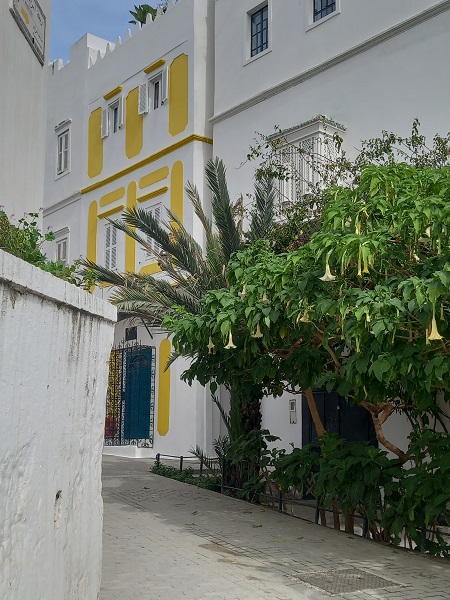
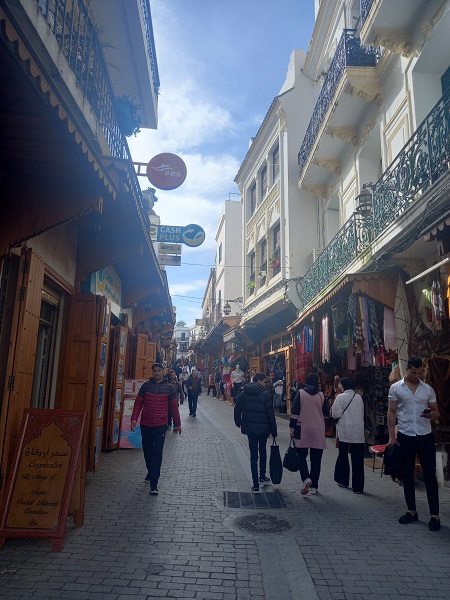
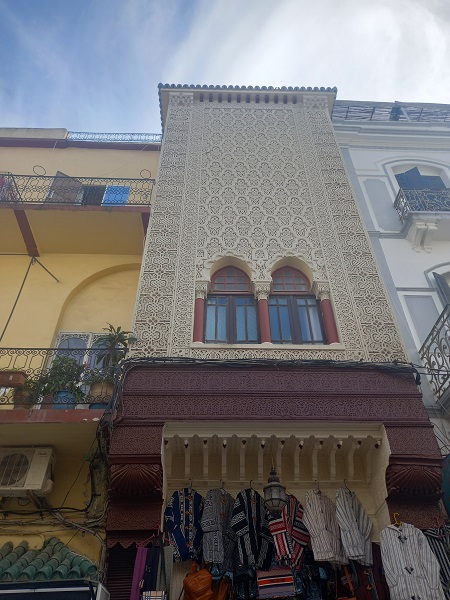
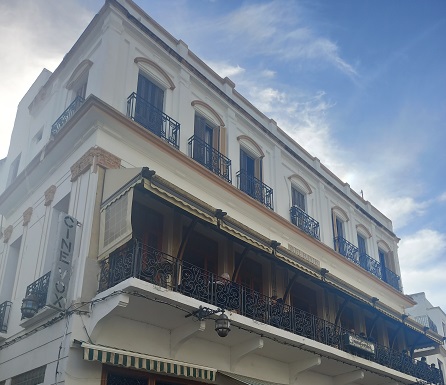
This is my third day in Tangiers, and it is very different to Casablanca. I am staying in the heart of the medina, which is very Spanish inspired, all around me are yellow and white buildings. However the medina itself looks very similar to others in terms of its gates, walls, and lots of little shops with wooden porches.

I am going on another wander later today so will take more pictures of the walls for you. It was a bit mizzly and grey yesterday so I have not done much scenic photography yet.

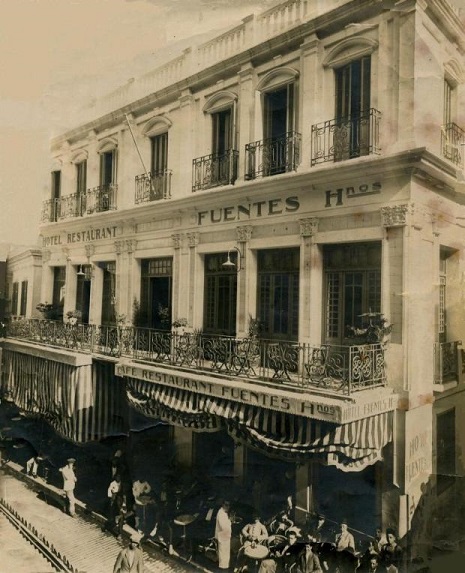
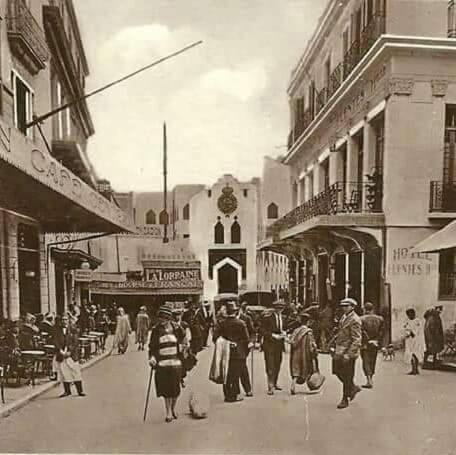
I actually partly chose where to stay, the Hotel Fuentes, as they had these photos on their description. The Petit Socco which is the little square where my hotel is hasn’t changed much since the 1920s when these pictures were taken. They have a café downstairs which looks like it could have made a fabulous ballroom.

As you can see the hotel has hardly changed at all, and I enjoyed my breakfast on the terrace yesterday people and cat watching.

There are far more tourist shops now though, but the medina is still lovely. There has been a lot of restoration, and there are gorgeous cafes and restaurants, and lots of jewellery shops, among other souvenirs. I am trying to be really good and remind myself that I have at least six Moroccan candle holders at home, but it is very difficult!

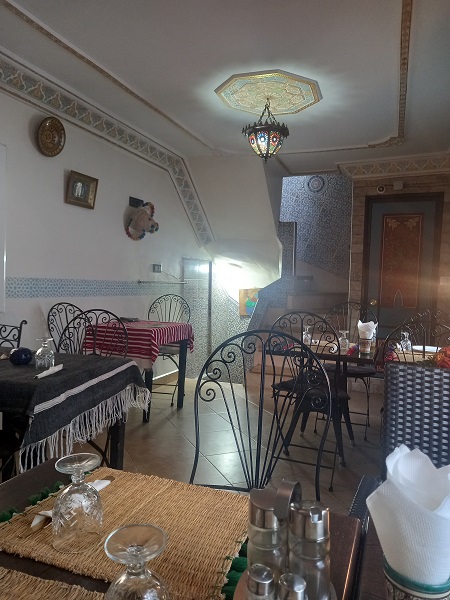
This is the place, Restaurant Al Maimouni, just inside the medina walls, that I ate in on the first evening, which I may just have chosen for its beautiful tiles. Look at that gorgeous cutlery as well! The tapas was a delicious olives and Arab soft cheese dish.

This is a city with a fascinating history and you can really feel it here. Casablanca is so modern, and although there is a modern city here at the other side, the older areas are still very thriving, whereas in Casablanca they didn’t seem to be. I expect that is due to tourism, it is clearly far more of an international tourist destination, and I have seen people of more nationalities here than in any city I have visited so far.

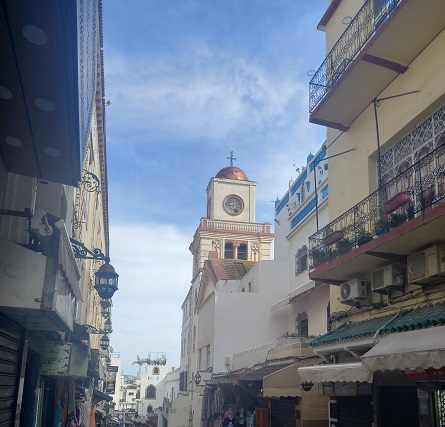
This very much reflects the history of the city, Tangier has been owned, occupied, shared by so many different countries in its lifetime. The photo above shows the tower of the Spanish mission, and a little further down the street is the main mosque.

It was actually given to England as part of Catherine of Braganza’s dowry when she married Charles 2nd, at the time it was occupied by the Portuguese. England built fortifications and used it as a defensive port.

In the late 1800s it was the diplomatic capital of Morocco, and in 1923 it became known as the Tangier International Zone, administered by France, Spain and the UK. From then on until Moroccan independence in 1956 it developed a reputation that Wikipedia describes wonderfully!

In the 1940s until 1956 when the city was an International Zone, the city served as a playground for eccentric millionaires, a meeting place for secret agents and a variety of crooks and a mecca for speculators and gamblers, an Eldorado for the fun-loving ‘Haute-Volee’. During the Second World War the Office of Strategic Services operated out of Tangier for various operations in North Africa.’

I have not seen any of the above so far, but it definitely has a vibe to it that is very different to other cities. The setting is also beautiful, it in a city built on hills, and I can see the Spanish coast from here! Pity I am not allowed back in until April 9th 😦

I think the other thing that helps with the sense of history for me, is that there are so many museums. As you know I love visiting museums and am looking forward to seeing three here. They are all housed in historic buildings as well, which is a double dose of history!

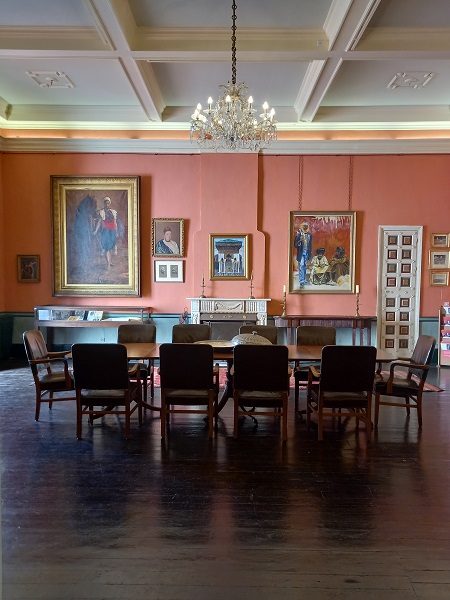
My first visit was to the old French Consulate building, now the Musee Dar Niabla, just a short walk from my hotel in the medina. It has been beautifully restored from its very sad former state as pictured here.

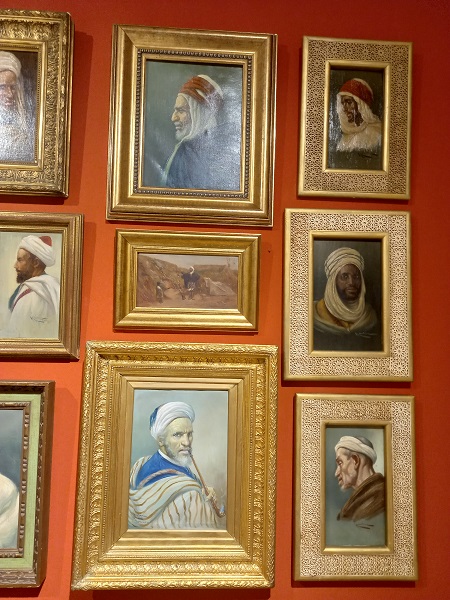
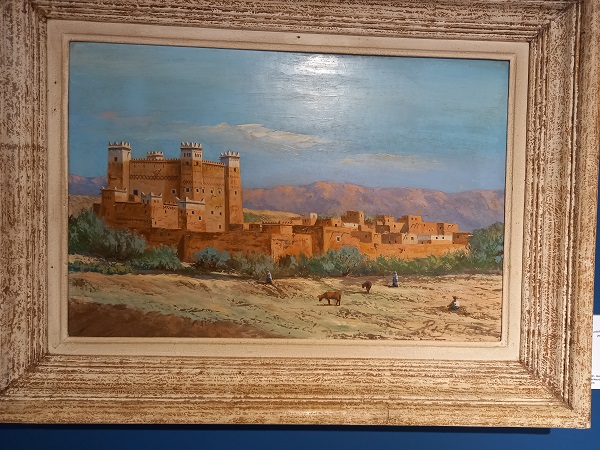
The museum has a really interesting timeline of Tangier’s history on the ground floor, and is also an art gallery. Tangier has attracted many artists and writers in its history, and they currently have a selection of portraits and landscapes by international artists. They are not only lovely to look at, but beautifully framed.

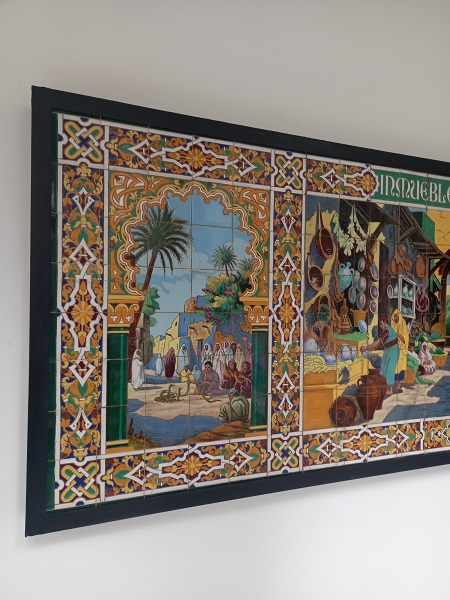
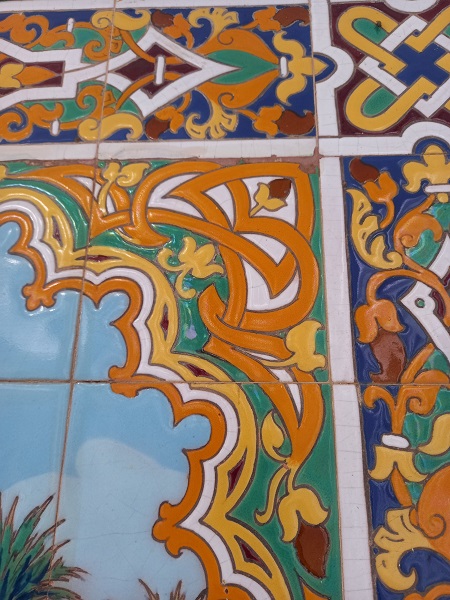
They also have some ceramic panels, depicting scenes of Tangier life. You may remember that I posted about zellige (or zellij) which is the mosaic style used in the mosque and my last hotel. This grew in popularity in the 1900s, but is incredibly time consuming to make. The solution was to create zellige style enamelled tiles like these, which are faster and cheaper. I have seen them before in many Spanish buildings, and didn’t realise the connections.

I am off for a wander around the port area soon, and to museum number two. In between I will of course have to stop off for more delicious Moroccan tea, and a spot of people watching while imagining myself here in the glamour and intrigue of the past!

Oh and in answer to my question about petit taxi colours, here they are all turquoise with a yellow stripe. Guesses for Fes and Marrakesh please!

See you all again soon. Until then have fun, take care, stay safe and thanks for visiting.

Carved in stone

Leaving San Sebastian meant negotiating rush hour traffic on the ring road which was good experience for the next part of the trip, as the Spain part involved mainly city visits. It was only a 10 minute drive out to the motorway though, and on to Burgos.

By this point I was really confident with motorway driving, and as Spain doesn’t have many tolls I didn’t have to stop and do my convoluted yoga to pay at the booths! Sadly the weather was poor driving though the mountains, the views were good, but would have been spectacular if I could have seen more.

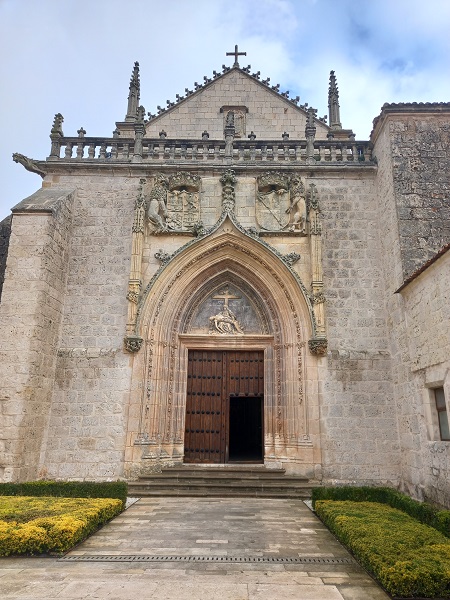
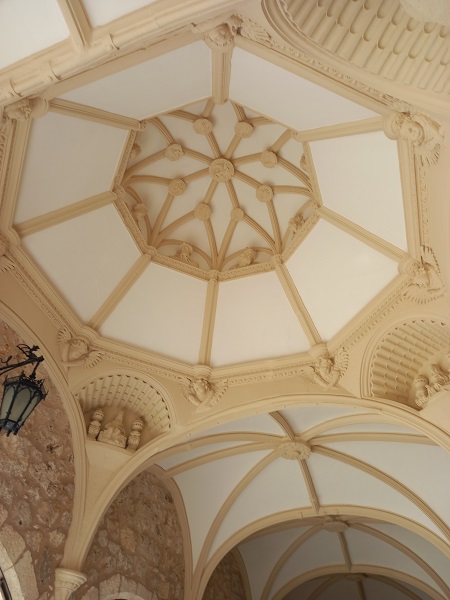
Burgos was another one of my pre-planned stays, but again I altered what I was doing, this time due to the weather. I will tell you more about accommodation later but first on to the beautiful bits. I had come to Burgos to see the cathedral, and to this particular campsite on the outskirts of the city, to see the monastery of the Carthusian monks, the Cartuja Miraflores, just a short walk from the campsite. It was one of the most beautiful, and incredible religious places that I have ever visited, and if you are a regular reader you’ll know that I visit a lot of religious places.

Not only was the monastery itself very beautiful, it is still a working community and there was a lovely video about the monks’ life which ended with the blessing, ‘God be with you on your travels’, which I felt was very appropriate for me. Making this visit, and hearing that just made me so very grateful to be able to now drive, for the trip to have gone well, and for me to have had the opportunity to leave work and spend my time travelling.

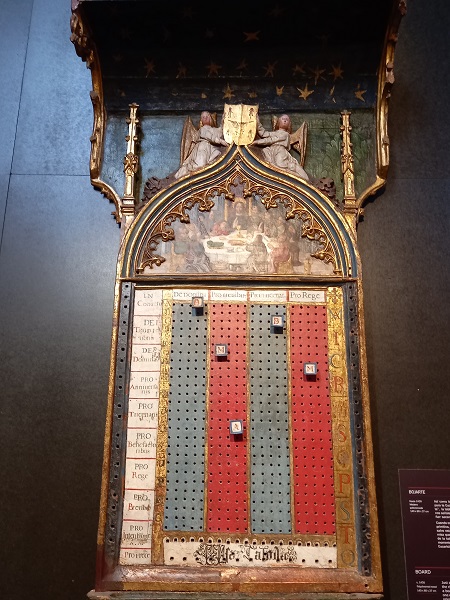
There was a very interesting insight into monastic life. This board dates from the 15th century and shows which duties each of the principal monks had during the services of each day.

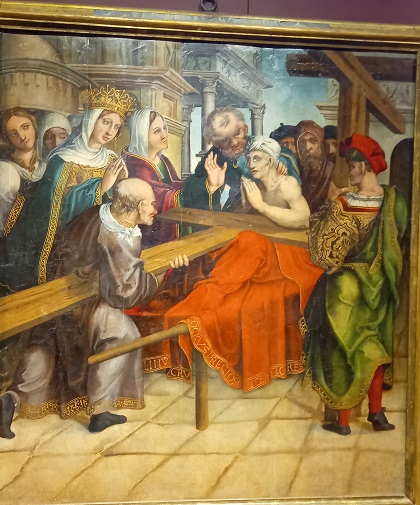
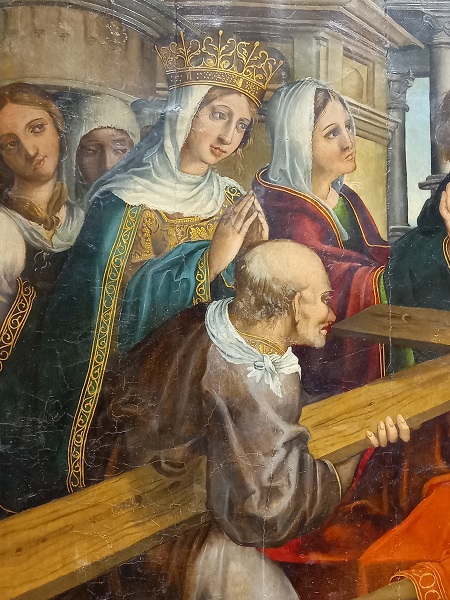
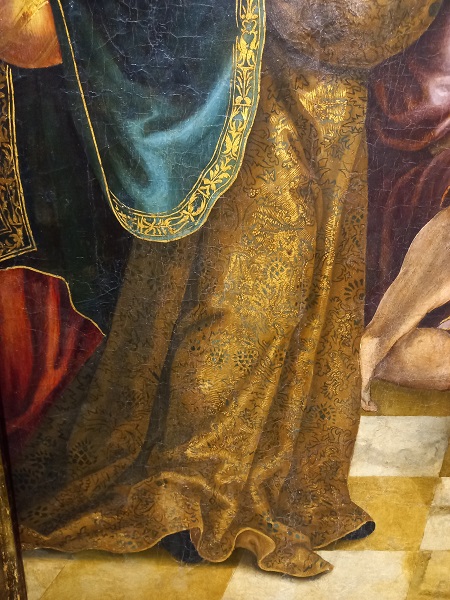
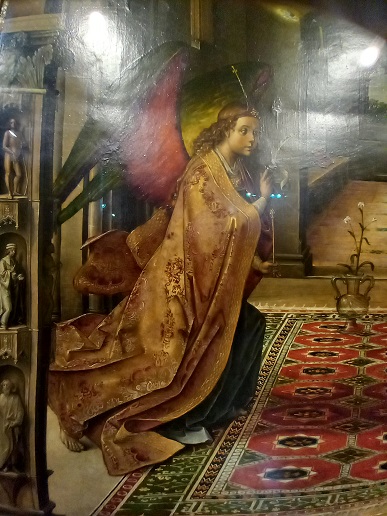
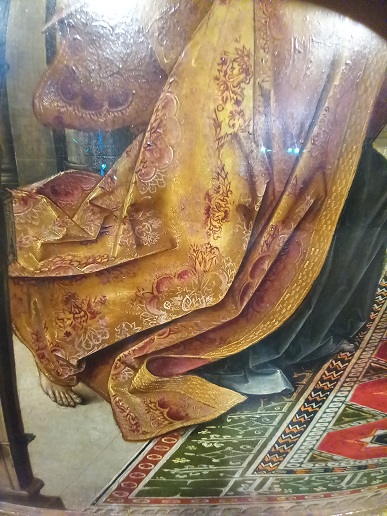
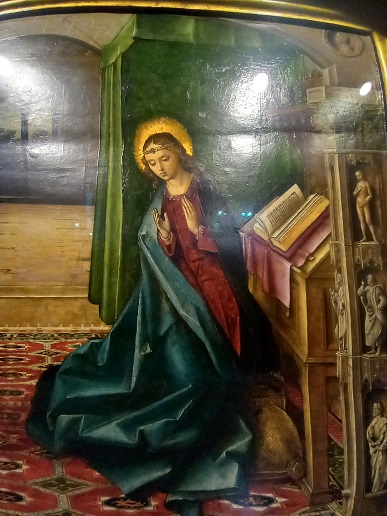
The little museum there also had some beautiful paintings. Some of which related to the quest of Queen Helena, mother of Constantine, the first Holy Roman Emperor, to find the true cross used in Jesus’s crucifixion. I cam across stories of Helena last year in Cyprus, and of the relics of the cross she left at a monastery there. The detail in the paintings was incredible, I loved her robes. There was also a beautiful version of The Annunciation, one of my favourite religious paintings.

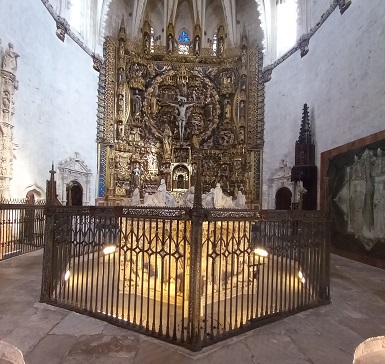
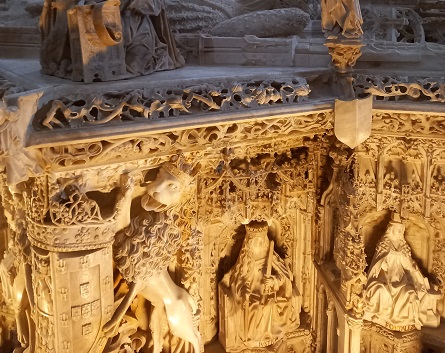
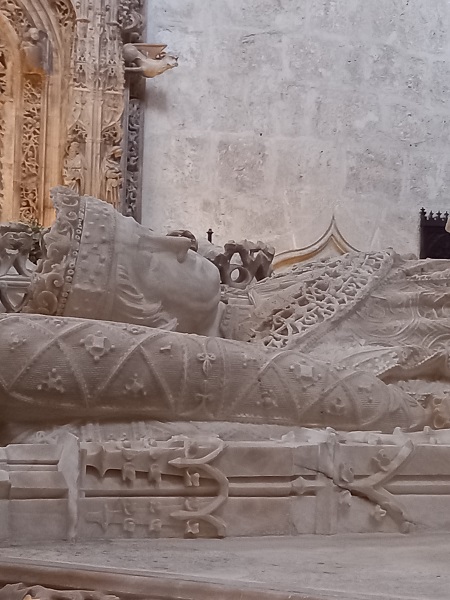
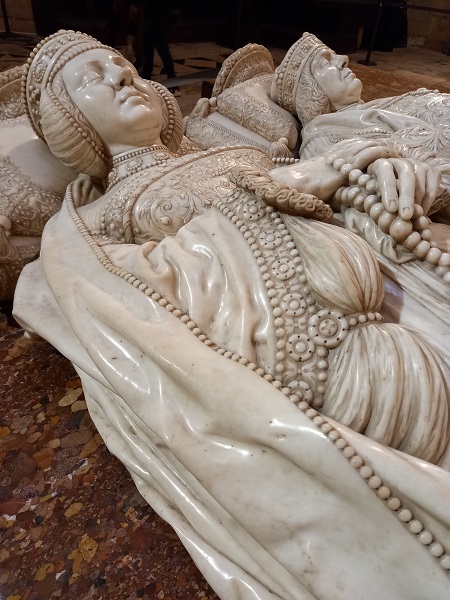
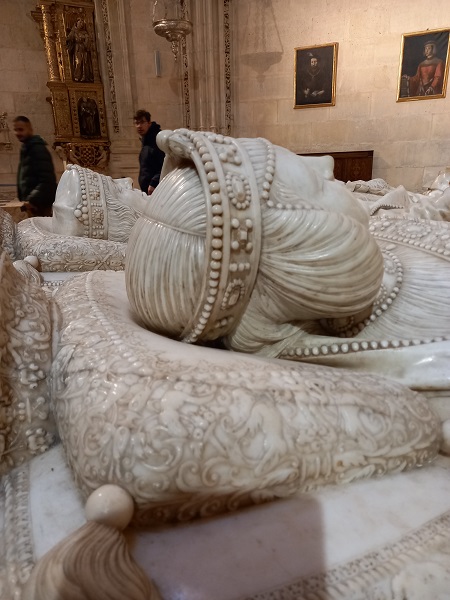
An amazing surprise was the tomb of Isabella of Castile’s parents, John and Isabella of Portugal, and of her brother Alfonso. Because they were buried there Isabella became a patron of the monastery and that helped it survive some very turbulent years, including being ransacked by Napoleon’s army.

This tomb was amazing, the detail in the marble was incredible. All around the tomb were heraldic emblems, including these amazing lions. I couldn’t get close enough to get many good pictures of the clothing they were wearing but the carving was stunning.

There is a large photo of an arial view of the tomb next to it, so you can see more of the detail.

I was able to get closer to Alfonso’s tomb, which has the most wonderful detail on his robes and hat.

As the weather was really bad the first day in Burgos I had stayed in my lovely warm cabin, just watching the rain lash down. The campsite, Fuentes Blancas, was situated near the river in a country park, so my original plan had been to visit the monastery on the first afternoon, then walk the 4km into the city the following day. I had a brilliant time at the campsite, the cabin was very luxurious after all that living in Katy for months. I also had a very nice evening at the restaurant where I shared a bottle of wine and travel stories with an Irish couple.

This very much relates to what I said in the last post about solo travels. They said they would not have talked to me if I’d have been with someone, but were intrigued as to what I was doing travelling alone. The cabin would have cost about £90 for the two nights, but thanks to my rewards from Booking.com for all of my travels in Cyprus I only paid £35.

I still really wanted to visit the city, and the weather forecast was better for the following day, so decided to look for a park up, found a free one just outside the city on a bus route, and went there for a third night in Burgos. I set off early morning on the Saturday so that traffic would be less, and after a few wrong turns found the space. It is basically a very large car park, next to a sports centre, with water, waste disposal and bins, and there were lots of vans there.

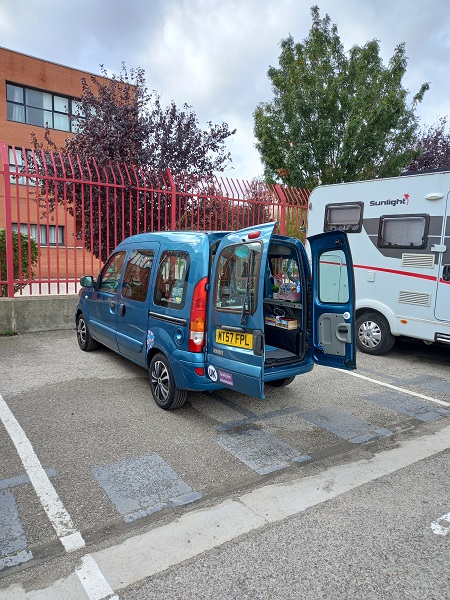
There is a dedicated van area, but people were also parked all over the car park, again police patrol regularly. Here I had very nice chats, (in Spanish), with a Spanish woman who was travelling full-time, and, (in English), with a Frenchman named Pascal, who insisted on me taking a photo of him with my van to send to his friend as he said it was so cute! There were such a variety of vans there, I was parked opposite fab yellow overland truck. Generally I didn’t see much variety in the types of vans on this trip, they were all mostly standard motorhomes, so Katy did always stand out.

The bus to the city was only a short walk away and thanks to Google maps I found it easily. Buses in Spain are really cheap, this was just over a euro each way and drops you right in the centre. Just a short walk over the river and I was at the cathedral.

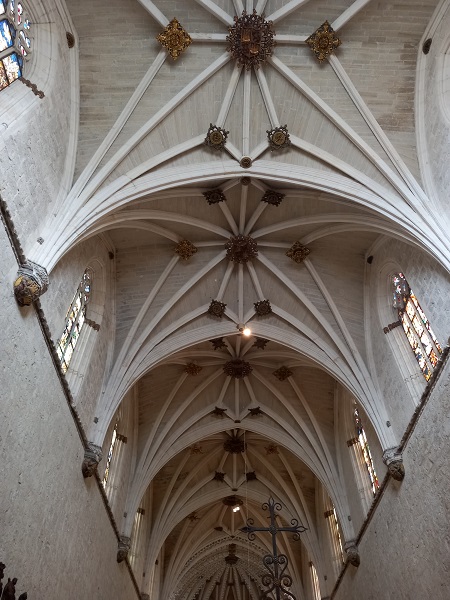
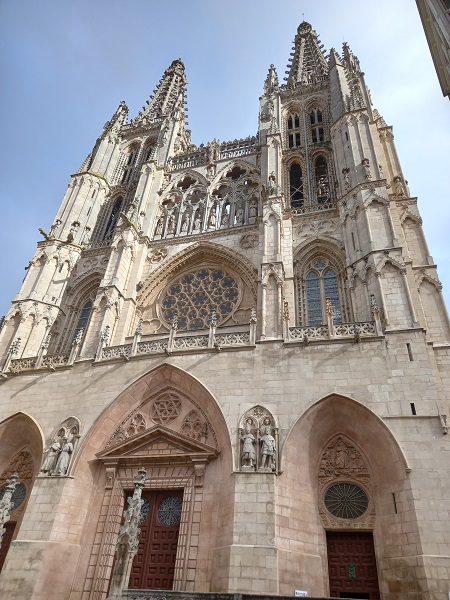
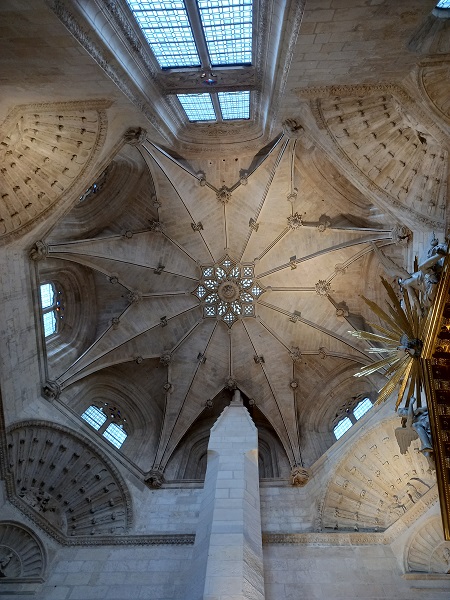
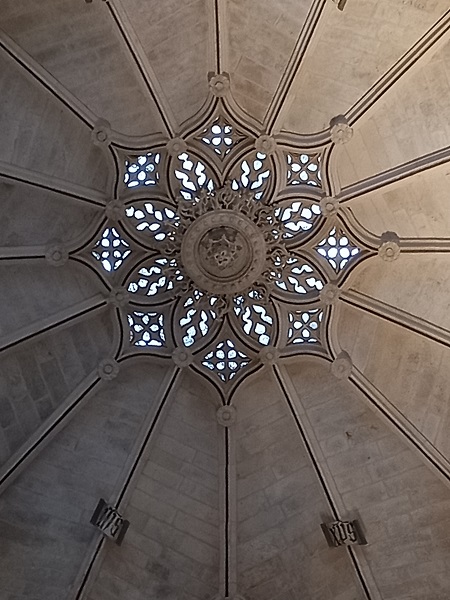
This really was a stunning one, I had wanted to visit particularly to see the tower, which is incredible. the stone work on the ceiling is just breath taking. It is a UNESCO world heritage site, and one of my wish lists is to visit all of Spain’s world and national heritage sites. I am doing quite well so far 😉

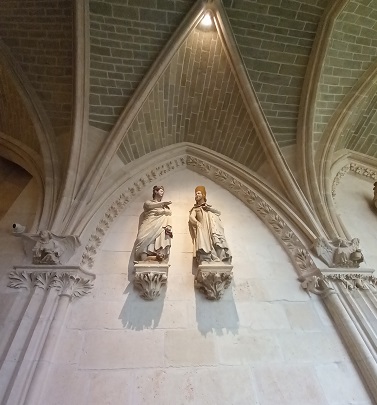
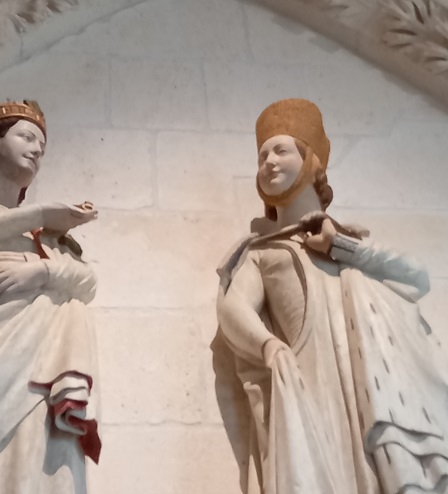
The carvings all the way round the cathedral have such incredible detail. Whenever I visit places like this I just think of the thousands of craftsmen who worked on these places, and how their work has, hopefully, been so appreciated by everyone who has seen it. They are true geniuses to have been able to make this beauty out of stone.

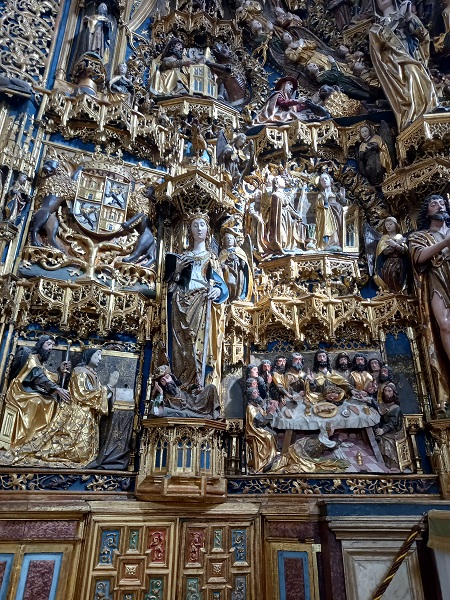
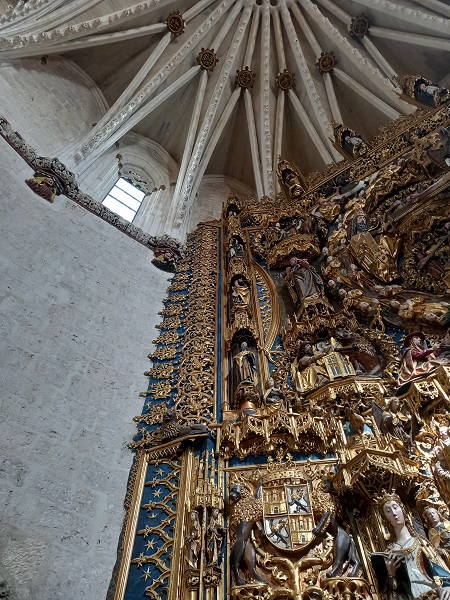
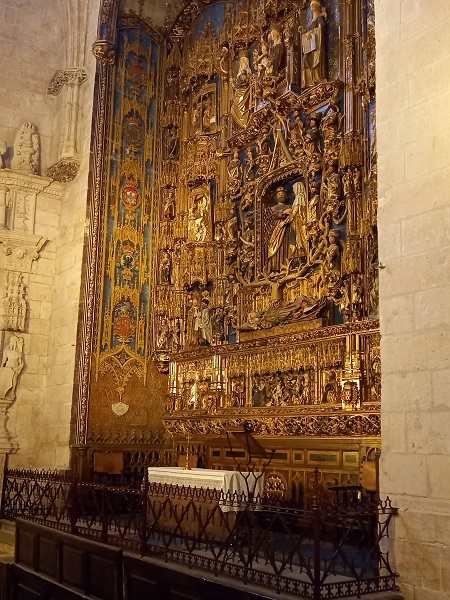
There were also beautiful wooden carvings, intricately done, and painted and guilded.

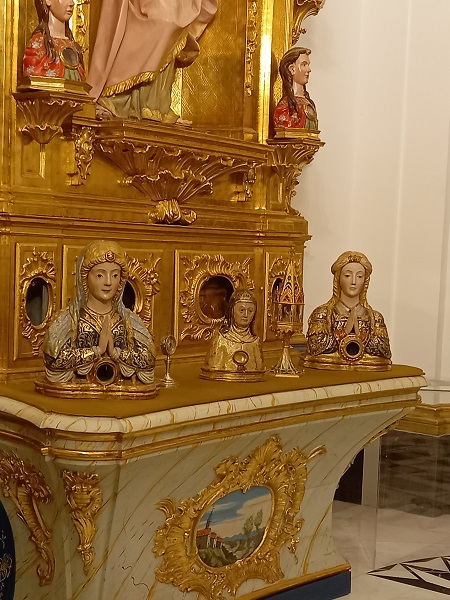
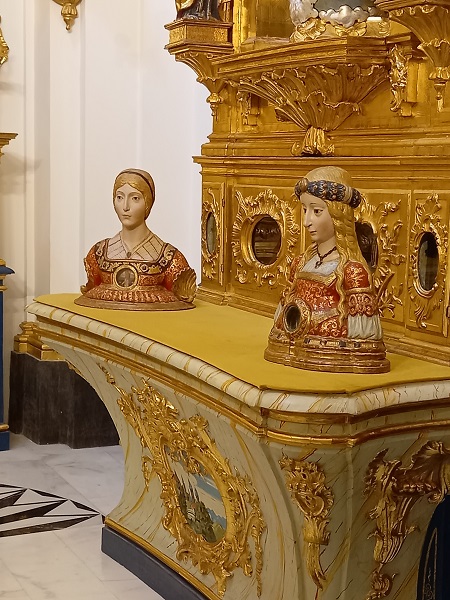
I came across some unusual reliquaries as well, these are in the form of female saints, which I’ve not seen before.

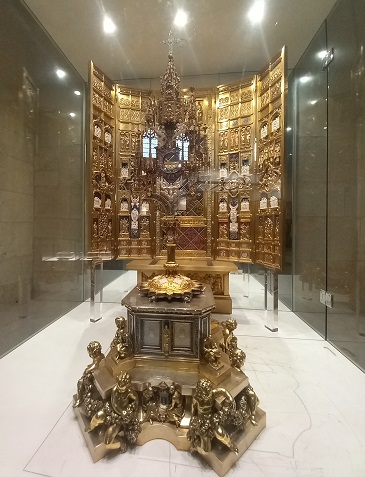
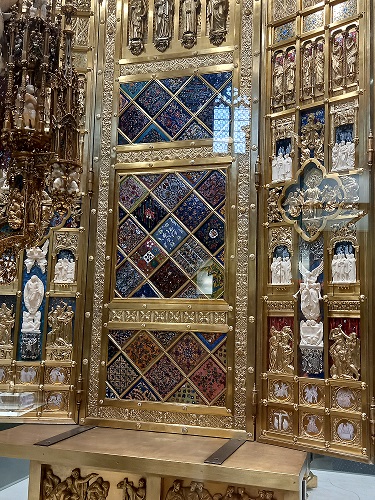
This very large reliquary was decorated with squares of enamel, which I’ve not seen much of before in this kind of floral design.

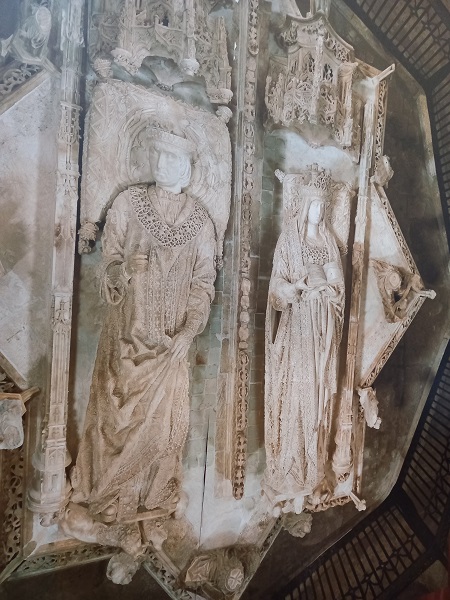
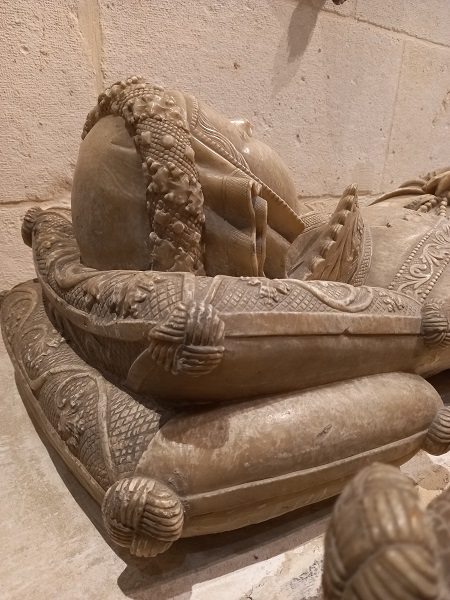
There were also some more stunningly detailed effigies on the tombs, the first set of these pictures is from the cathedral, they are of Pedro Hernandez de Velasco, Constable of Castile, and his wife, Maria de Mendoza. He died in 1492 so I assume the effigy is from around that time.

The two pictures above are from the Burgos museum that I visited later, and are of Don Gomez Manrique and Dona Sancha de Rojas, dating from the mid 15th century.

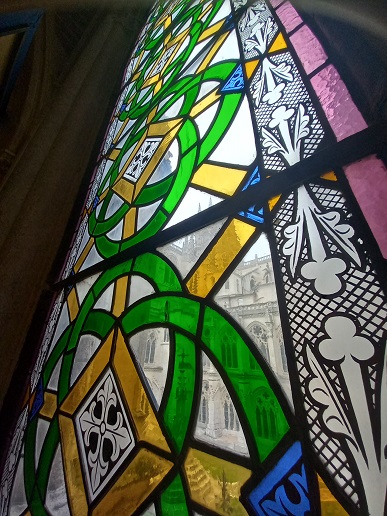
The cloisters were quite plain, though with some interesting statues and lovely stained glass, so I took some arty pictures of the cathedral through the windows.

I had a quick wander around the city after visiting the museum, which had an inner courtyard laid out like a Roman villa. The city square was pretty, and the city gate was amazing, with again wonderful carving.

I came across this gorgeous bronze statue in one of the streets, the woman is crocheting, so I had to take a few close up pictures. I have been crocheting with Ellen while she was in Spain and have been improving, thanks to her excellent tuition, so will show the results when I do a catch up crafting post next week.

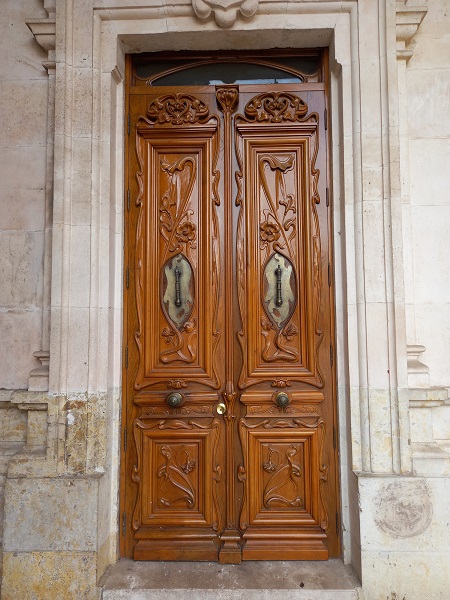
And of course there were beautiful doors, I had missed my Spanish doors. They are always so gorgeous.

A really amazing few days. There are so many cities in this area that I want to visit so it was hard to choose but I’m very glad I included Burgos. In the next post I will be moving further south, through more amazing countryside, and some of the best cities I have ever been to. Come back soon for more stunning architecture! Until then have fun, take care, stay safe and thanks for visiting.

Crossing the border and a change of plans

I mentioned to you in the last post that I had been following Billy and Leanne on Instagram. Originally when I was looking at places to stay around the border I couldn’t find anything really useful. Because of this I had decided to stay on the French coast, then head into Spain and just get an overnight park up somewhere, before going to a previously booked campsite near Burgos.

However, Billy and Leanne had stayed at San Sebastian, a city that I had really wanted to visit, and as the weather forecast wasn’t great for the next few days I decided to head for the hills, well the mountains, cross the border a day earlier than planned, and get to the park up in San Sebastian that they had mentioned. Luckily they warned us that it was popular, being the only one in this area. After a brilliant drive on the motorway, where I could see the start of the Pyrenees, and by now having mastered the art of using tolls on my own from the wrong driver’s side 😉 a mere hour and a half later I was in Spain at the park up!

It was a good move to arrive early, as when I got there at 10.30 there were only four places left out of forty five. This is a really cheap aire, only 4 euros a night, and you can stay as long as you want so it gets very busy. It is also very near the Santander ferry, so there are lots of people using it as an overnight stop before or after their trip. I decided to stay two nights here, as there was so much that I wanted to see, and I had the time before the next stop. It was great have another two night stop, when I plan my next trip in Europe I will definitely look at driving further, and staying longer at each place, now I know I can do it.

The police also patrol the aire regularly to check that everything is ok, something which was a very nice feature of all the cheap, or free aires that I stayed in whilst in Spain. None of these places had barriers so it gives a feeling of extra security, particularly if you have an expensive motorhome. I don’t think anyone would want to steal Katy, lovely as she is, but sadly thefts of these are on the increase.

The first people I met were a couple from England, who had just come from the ferry, and I was able to help them and a couple of others with the slightly complex, multilingual payment machine. It was nice to pay back for all the help I have had with barriers and make good use of my Spanish! The aire has water and waste disposal and there are lots of bars and restaurants nearby. It is basically a car park at the back of the University campus, and is 20 minutes walk from the city centre.

In the van next to me on the left in the above photo were a really friendly Irish couple who insisted on giving me some of the stew they had made for tea. Van life people are so kind, and although the places were the focus for the trip, the people I met really made it great.

A lot of people have told me I’m very brave to travel on my own, especially in Europe, but what I have found is that being a solo traveller isn’t lonely. I talk to people every day, and I actually think that people are more likely to speak to you if you are on your own. There is always a chat with others about where you are going, and good tips of places to see or stay, so I never felt isolated, even though I was on the road for four months in total.

I spent most of the first day just walking to and from the city centre, along the splendid promenade. My Mum came to San Sebastian as a teenager with her family, and came back with my aunt a few years ago. She had always talked about how beautiful it was and it was brilliant to see some more of a very different part of Spain. I really enjoyed my trip to Galicia last June, and would love to come back to this region of Spain.

Not only the natural landscape, with the curving bay, the small islands and surrounding hills are stunning, but also the architecture in the city centre. I love these grand Spanish buildings with their balconies and ornamentation. And always such gorgeous streetlamps!

The old town was brilliant, full of little bars and gift shops so I had a happy wander there for a while, and my first tapas for months in a busy little bar, which was delicious. I was particularly fascinated by the signs everywhere. The Basque language is very different to the standard Spanish that I’ve been learning, so much so that I couldn’t understand any of it.

San Sebastian is part of the Basque area of Spain, and there have been many attempts to make it a separate country. It is an autonomous community at present. I remember hearing about these conflicts as a teenager, but there has been a ceasefire since 2011. Basque culture still remains very different to that of the rest of Spain, and, like Galicia, it does feel very different from where I live. It was really interesting to go from France to Spain in a day by road and see the change as you crossed the border, not just little things like speed limits, but architecture and the general feel of the area.

I visited the ethnographic museum on the second day, it is housed in a former monastery, so there were some great cloisters and the original church had been kept as it was, but used as a gallery.

There were some fascinating displays of traditional Basque headwear. As far as I could make out, most of these were just made of twisted linen. There is more information, and some modern recreations at this blog post.

The other thing I really liked was the textiles section. As well as displays of embroidery, and tools, there were some really fascinating photos of the women who spun linen, and the way they lived. I loved this, and think it brings these skills to life so much better than just having a case full of spindles. It gives acknowledgement to the hard work, and the skill of these women, something you know that I am passionate about.

Of course there were some church visits as well, it wouldn’t be me without a few very ornate churches, with their incredible altar pieces. I have lots more very wonderful ecclesiastical art coming in the next few posts as well. The rest of locations in Spain were very much about city visits with amazing cathedrals and castles so come back soon for those.

I really loved San Sebastian, it is probably a place that many people don’t stop at, as there are so many other wonderful places along that coast, but if you are there, do stay, just make sure if you want a space in the aire to get there early!

I have been doing lots of writing and knitting while I am here at Ellen’s, and really enjoying myself just relaxing. I am also spending time planning the next few months of adventures, which start again in just over a week! I am going to attempt to catch up with all the blog posts about the European trip before then. I can then hopefully start sharing my adventures from a very different place! I will have my laptop with me there, and wifi, as I am staying in hotels and apartments, so blogging will be a lot easier than from the road.

I will be back in a few days with the second Spanish city of my trip, until then have fun, take care, stay safe and thanks for visiting.

I do love a good social history museum!

Although I spend a large amount of my time visiting historic houses, full of very grand furniture and amazing portraiture, I equally love museums that capture ordinary life. I feel that it is a vital part of what museums are there for, not only ordinary life 500 years ago, but also 50 years ago. This vital role means that the visitors can connect with what they say, older people like me recalling childhood experiences, and younger ones appreciating how much life has changed.

I had been really looking forward to visiting Norwich, some years ago I went to a fantastic conference at Leeds University, full of presentations about medieval life, several of which were about places in Norwich. This was in 2019, before the world stopped for so long, and I have been meaning to visit ever since. When I met up with Jules at Sheringham, the van lifer who I first met in the Peak District last year, who has an identical van to mine, she had some great tips for me as well.

The first day I went to the castle museum. Most of this is a traditional museum with lots of glass cases full of stuffed animals, and archaeological finds, although they also had some themed galleries. It was amazing to see the finds from the Snettisham Hoard. To think that they were made about 2000 thousand years ago is incredible, and the craftsmanship is beautiful.

The museum also had some good decorative arts galleries with textile treasures in. I particularly love this Tudor embroidered sleeve.

There were several samplers, and this one was unusual, as it is a darning stitches sampler. Most are representing a variety of stitches but this is the first darning one I have seen.

There were some great needlework tools on display, including this beautiful case with mother of pearl thread winders. I love to think of the owner sitting stitching using this and wonder where the other pieces ended up. The knitting needle holders were also really interesting, they are designed to be attached to a belt.

The second museum was the excellent Museum of Norwich, housed in the centre of the city in the Bridewell, a building which has had many uses including workhouse and prison. What I particularly loved about this museum was the themed rooms and the displays. This one below shows a fabric shop from the late 1700s. The original sample books are in the display room, and outside there is a reproduction one , (last photo), that you can study in depth. Absolutely fascinating for a textile nerd like me!

They also had some dressmakers and haberdashery shops set up. The bottom right picture shows the, ‘change card’, from a local department store, that was given in the form of safety pins, rather than coins. An interesting take on the phrase, ‘pin money’.

The grocery shop was fascinating, not least to see how much, or how little the packaging had changed for things. They also had a display of pre-decimalisation coins, which I remember very well from my childhood. I used to get sixpence a week pocket money, thruppence to spend on sweets and the rest to save for my annual seaside holiday.

They also had a whole pharmacy set up. This collection was made by a practising pharmacist, John Newstead, over a number of years, as he wanted to preserve the wonderful things such as the jars and drawer labels as shops were modernised from the 1960s. It is accompanied by a really interesting video about how pharmacists would make medicine for people pre the NHS. It is interesting to reflect that pharmacies now have a much wider role, more like they did originally, in healthcare, rather than just dispensing medicine.

The final section had some great reminders of childhood for me. I used to help my Mum mince meat using a Spong mincer like the one on the right in this first photo, and remember my family allocating money for each aspect of savings, I am not sure we had a tin like this but I’m sure we had something. This must be fascinating for the school children that visit who possibly rarely see cash being used in this way anymore.

There was also a lovely display of sewing related items, I particularly liked the embroidery set in the first case. So many great gifts for future home makers 😉 and a very good summary of what interests were meant to be for girls in the 1950s and 60s.

My third museum was Strangers’ Hall, so named as many refugees lived in the area at one time. This building dates from the 1320s and is now the museum of domestic life. Each of the rooms has a different historical era, and as expected a wealth of wonderful textiles.

The first part of the house is the Great Hall, with some gorgeous costume portraits.

I was particularly impressed with the level of care taken in the interpretation and reproduction of the textile displays, as in this 17th century bedroom, where reproduction bed hangings and a redwork pillowcase complement the historic pieces.

I had a very interesting talk with the head curator at the end of my visit, and she showed me the detailed files of research they have on everything they do. I think what makes this museum so fascinating is that as you move through the different rooms you get a real sense of how people lived in them. The contrast between the dark wood and table carpets of the Jacobean era, and the Georgian decor is really evident.

It reminds me of when IKEA stores first opened in the UK and we were all encouraged to ,’chuck out our chintz’, and go for the very simple clean lines of Scandi style. I did have a house that was almost completely furnished by IKEA at one point, before I went back to my love of colour and lots of different textures.

My favourite room was the Victorian parlour, partly because of the sheer amount of needlepoint in there 🙂 So many wonderful pieces all crammed together. I particularly loved the embroidered book covers. I can just imagine groups of stitchers sitting around a table like this, sharing needlepoint patterns and deciding on their next projects.

I appreciate why some things have to be kept in glass cases, it must be a conservation nightmare to cope with all the dust in these rooms, but it so nice to see things in situ and get a sense of people’s lives with these objects. As proved in my previous post, there is no guarantee that the glass case is going to be safe from things like pesky wasps anyway!

I stayed at the Norwich Caravan and Camping Club site, partly chosen as it was within walking distance of a bus stop into the city. By coincidence, as I drove into the site, I spotted another almost identical van to mine, and the owner Terri, came to say hello the next day and gave me a quick tour of her van. She has a modified boot jump and uses curtains so it was very interesting to see her set up. Her van is on the right below.

I am starting to finalise my plans for next year’s travel. I am leaving Spain in 5 weeks, and am going to be doing a combination of UK visiting friends and family and warmer weather destinations. One of the things that I have just booked though is a ticket for another van life show, next September. I couldn’t make it this year, but am really looking forward to meeting many more micro camper owners and sharing designs and stories. I have had such an amazing year of travel, and meeting lots of different people in all types of vans, tents and caravans. It has been brilliant, everything I dreamed of for my retirement. I am so lucky to be able to have this life.

I have also made a list of all of the blog posts I am going to do about the summer’s adventures and there are another 19 to go. That should take me nicely up to when my adventures start again! Thanks to everyone who follows me, likes, and comments, it is very, very much appreciated.

Although I have missed the date, (again!), I have just had my 16th blogaversay. It is appropriate that my very first post, as to be expected from the 2nd Dec 2007 was about Christmas ornaments, as that is what I am going to be stitching this afternoon, before going on a coach trip to see the Christmas lights in Alicante. I now have around 1700 visitors every month and 437 subscribers! This is my 938th post, so we will have to have a big celebration when I get to 1000 sometime next year.

Meanwhile I hope that you are all well and enjoying life, whatever you are doing have fun, take care, stay safe, and thanks a million for visiting!

Unexpected textiles treasures in Upton

I have just come back from my second music festival of the summer. I went to the Upton Blues Festival last weekend. I then had a couple of nights at a campsite near Malvern before joining my sister, and some other friends from one of my Facebook campervan groups, at App Fest near Tewkesbury.

The Upton Festival is a free one which takes place all around the town, similar to the Jazz Festival in Marsden. You just pay for camping and the field accommodates 7,000 campers. Katy is in there somewhere!

Both festivals were really good and there was much dancing. We were also pretty lucky with the weather as the summer has been very mixed here. I have also made new friends and seen lots more lovely vans.

Upton on Severn is a beautiful little town on the river. I visited Stourport on Severn in March and this is not far away.

There are the lovely black and white timbered buildings that this area is famous for and lots of Georgian splendour as well. The area developed through river trade and was an important trade centre in those days.There are still barges on the river today.

As it was a bit damp on Saturday I went and visited the small Tudor House Museum and I am so glad I did. This is a treasure trove of a museum, run by volunteers and has a very mixed collection, all donated by local people. It thus reflects the history of the town, but also their particular interests.

The most fascinating for me was a large lace collection, donated by a local collector. Nothing is know of its provenance but there was a wealth of machine made Stefi lace. This is made by machining on a background fabric, which is then chemically dissolved, as you would with some types of embroidery.

Such beautiful collars here. I had not heard of this type of lace before but it was very popular in the late 1800s.

There was also a recreation of a local tailor’s shop, this was full of the tools of the trade from its heyday. I love to see this type of social history preserved and it is all the more special for being of local origin.

There were some very creative displays of buttons and Haberdashery.

A wonderful museum and well with visiting if you are ever in this area. The volunteers who run it are so lovely as well and there are lots of other shops in Upton worth a visit as well.

I am on the way to the Evesham Re-enactment event, but wanted to come to Hereford to see some more Trust properties and visit more of the cute Tudor villages in the area. The forecast is mixed for the rest of the week so it may be mainly indoor visits, however I am sure I will find some lovely things to show you.

I hope you are not suffering from excessive heat, or too much rain, or any other extreme weather. It has been useful for me to try life on Katy in worse weather, as much of last year was a heat wave or very nice and sunny.

I am pleased to report that things are still working well. I will have been on the road for a month at the weekend. I still love it, on rainy days I just sit under the new lap quilt and read. I seem to have magically acquired a lot of new books, no idea how that happened 😳 🤔

I will return next week as I am cat sitting at Jacky’s. I also need to give Katy a good clean as she has been in a lot of muddy fields and she is going to be in the show field at the next festival in two weeks time.

Until then have fun, take care, stay safe and thanks for visiting.

Lesser known Venice, and floor to ceiling awe

As I mentioned in my previous posts we were able to see lots of things that people maybe miss in Venice, including some of the lesser known museums.

Our museum pass included the gorgeous Palazzo Mocenigo, which houses The Study Centre for the History of Textiles, as you can imagine a prime location for me! The palace itself was beautiful with some wonderful paintings of scenes from Venetian life with such a focus on costume.

However, the most amazing thing was the small room with 18th century embroidered waistcoats. We just came round a corner to see all of this splendour!

These are just incredible, especially when you consider the hours that each must have taken to embroider.

They also had a small display of kimonos, proving again that culture spreads so rapidly through fashion. These were in a section about casual wear around the house.

We also visited Casa Goldoni, which is the house of one of the most famous 19th century playwrights, Carlo Goldoni. This was a small museum but very interesting, including this sack back dress, particularly the lace on the dress which referenced back to our previous museum visit at Burano. Goldoni wrote about fashion in some of his plays which makes him a great source for textile historians and he was referenced in the Burano Lace Museum’s interpretation.

It was also great to see inside what is a fairly typical Venetian house with its internal ground floor courtyard and stairs leading to the living area.

As well as Burano we visited the island of Murano, which is famous for glass making. The museum there was excellent, with fascinating displays of how they make the millefiori glass, using tiny tubes of individual colours. Again there was very good use of video in the museum’s interpretation.

There was also an art exhibition, by Simon Berger, called Shattering Beauty. I am not usually a fan of modern art but this was absolutely stunning, not only in the technique used of carefully breaking glass to create faces, but also in the inspiration for the technique, which came when he saw a shattered windscreen from a car accident. I loved the way he had thought about the images and the use of the cubes and reflection, so you got to see yourself at the same time.

Other wanders included a trip to the Arsenale, which takes up a large proportion of the island. This was the old shipyard, which is still in operation today as a naval base.

Many of the paintings that we saw earlier in the week featured this area, and the incredible amount of ship building that was done here, which made Venice such an important naval power. This is a painting done by one of my favourite artists, Canaletto, that I found on Wikipedia, which shows you how it would have looked in 1793.

Although you can’t go inside, you can wander all around the walls and appreciate the scale of the place. This map from All About Learn, dated 1797, is wonderful for its detail of all of the vessels being built there.

On our last day we took the number 1 vaporetto out to its final stop, the island of Lido. We had seen this from across the bay all week, and I really wanted to go and visit.

It has a completely different feel to the other islands of Venice, there are long sandy beaches and lots of gorgeous hotels and houses on wide streets. We loved it and would encourage you to go if you can to see a different side of the city.

Our final visit was to the very famous, and much visited, St Peter’s Basilica. It is a truly remarkable building, the scale of the gold mosaics and architecture just incomparable.

The floors also fascinated me, their sheer complexity and attention to detail was stunning, so much inspiration as well for textile creation!

Venice, you were wonderful, thank you. I probably will not go back, just because there are about a million other cities I need to visit, but you are beautiful and unique, and I hope that going forward tourism does not have too a severe impact on your future.

I shall be back in a few days hopefully, with an update on what I have been doing here. It has been a very busy, but lovely week, temperatures are around 30 degrees so there have been plenty of visits to the pool in and amongst my textile endeavours. Until then have fun, take care, stay safe and thanks for visiting.