Time travelling with textiles

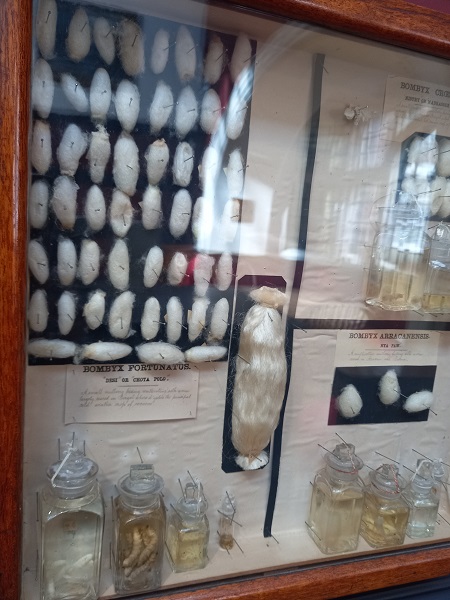
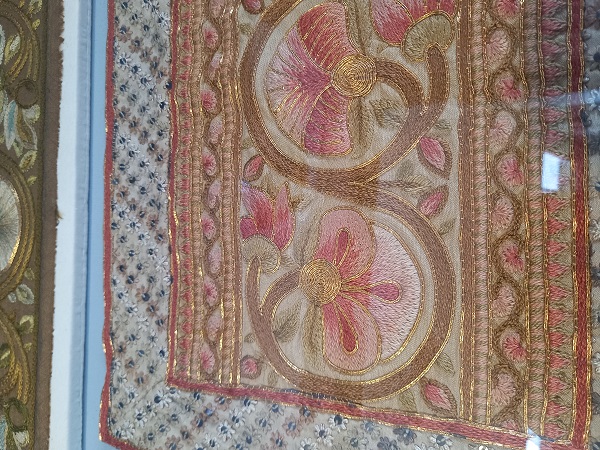
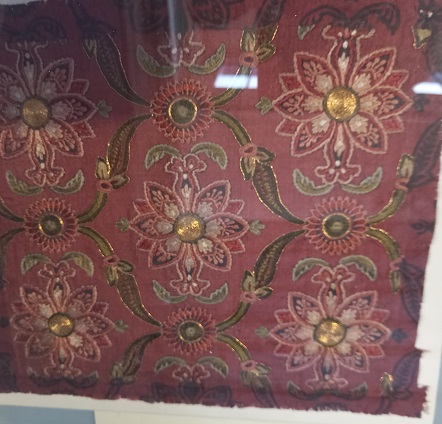
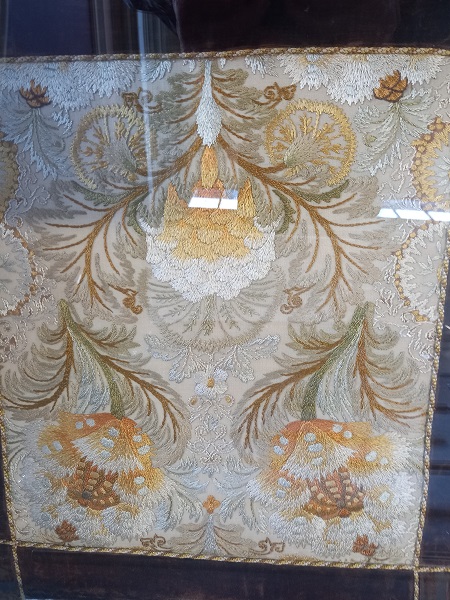
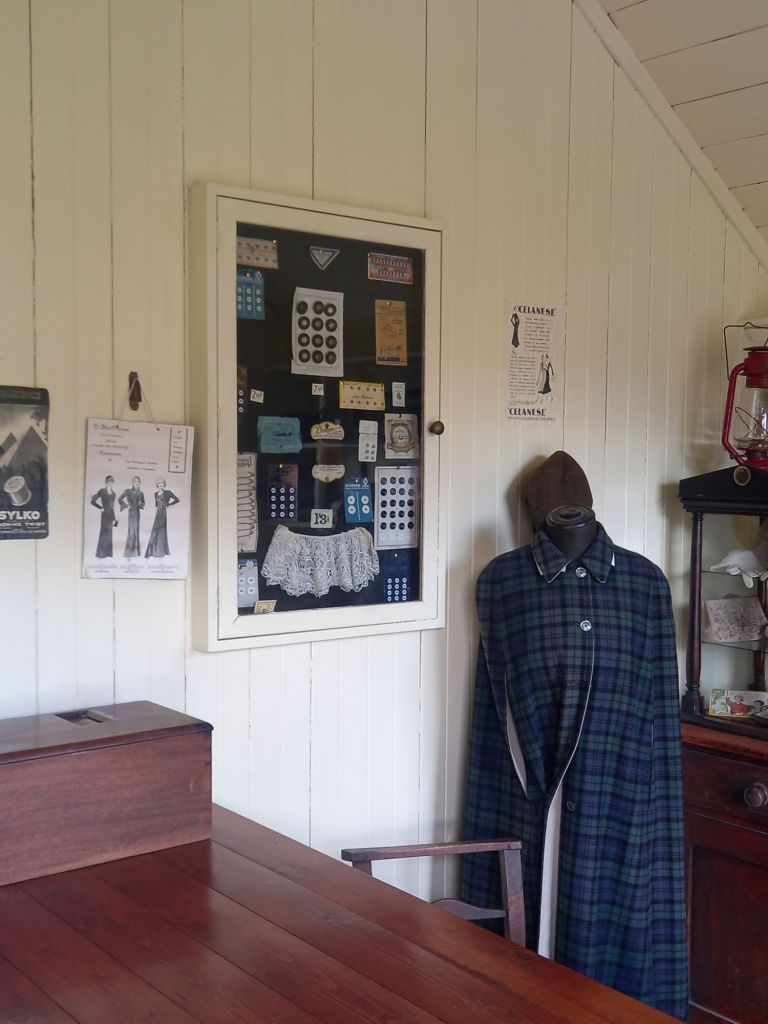
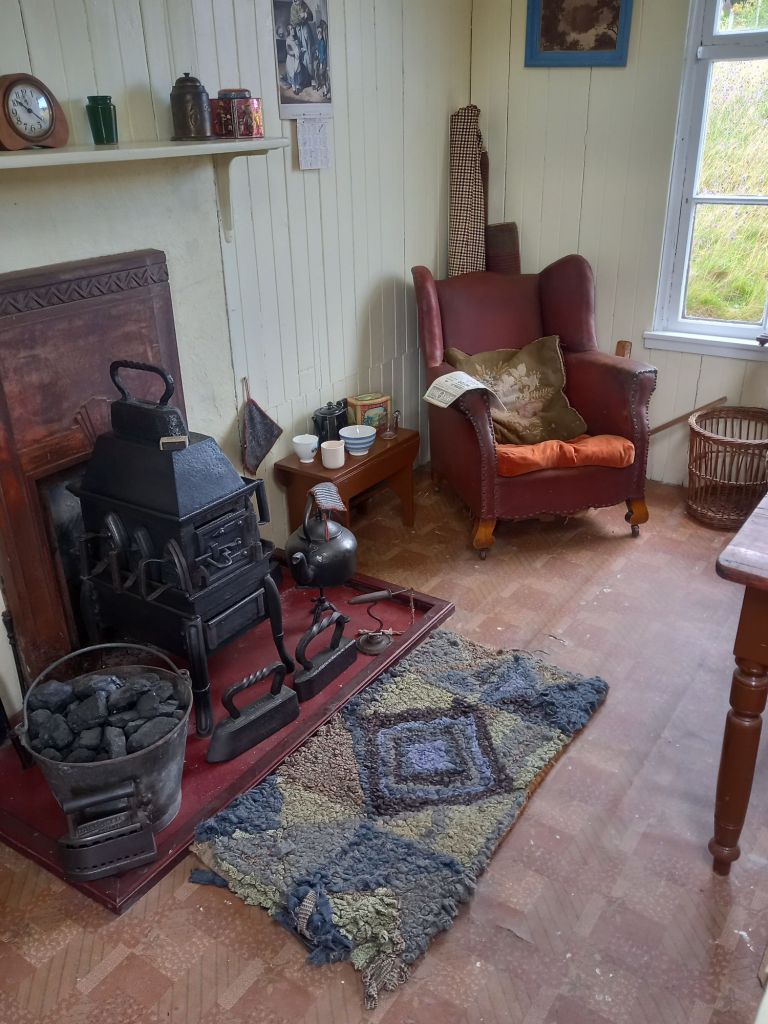
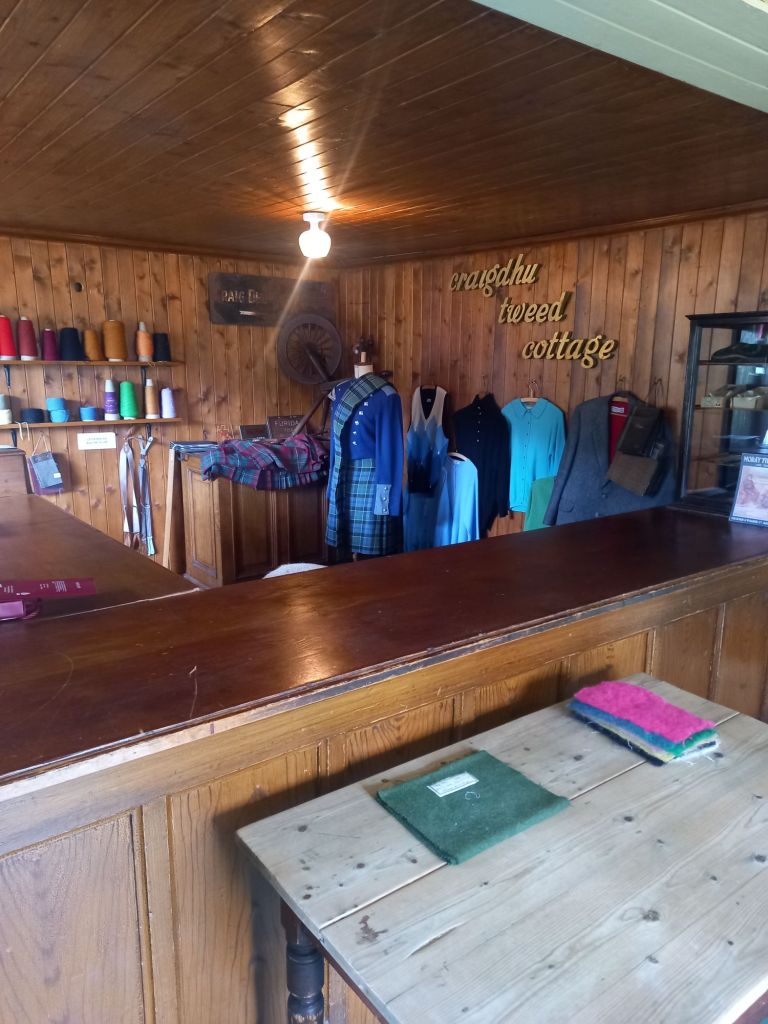
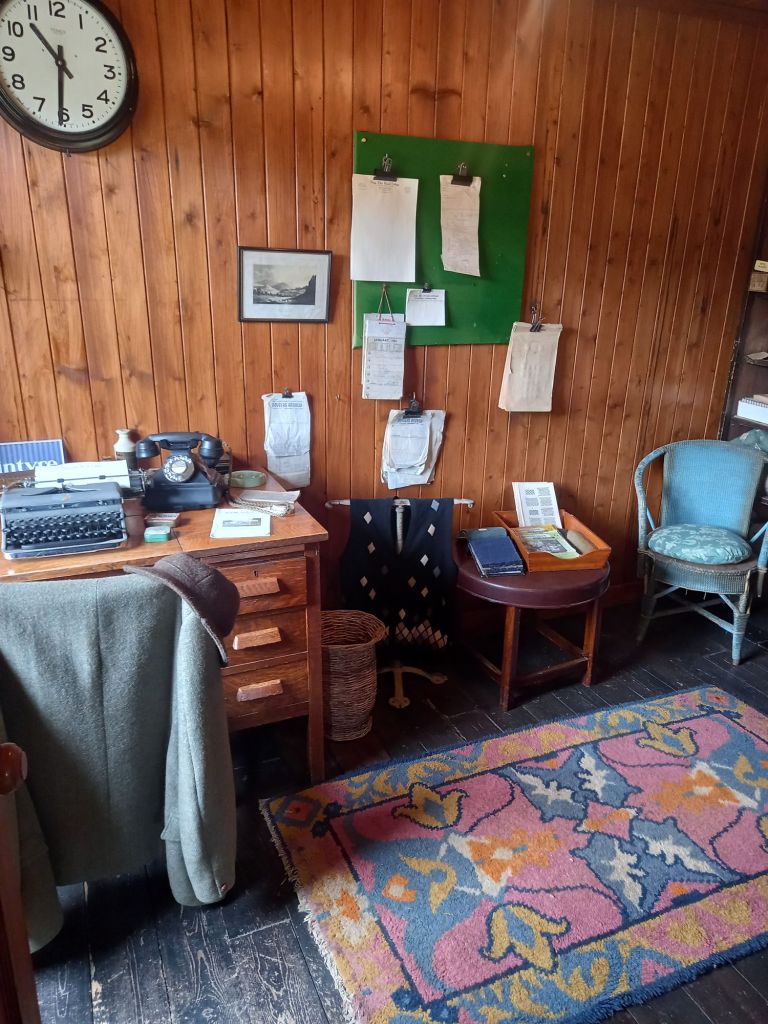
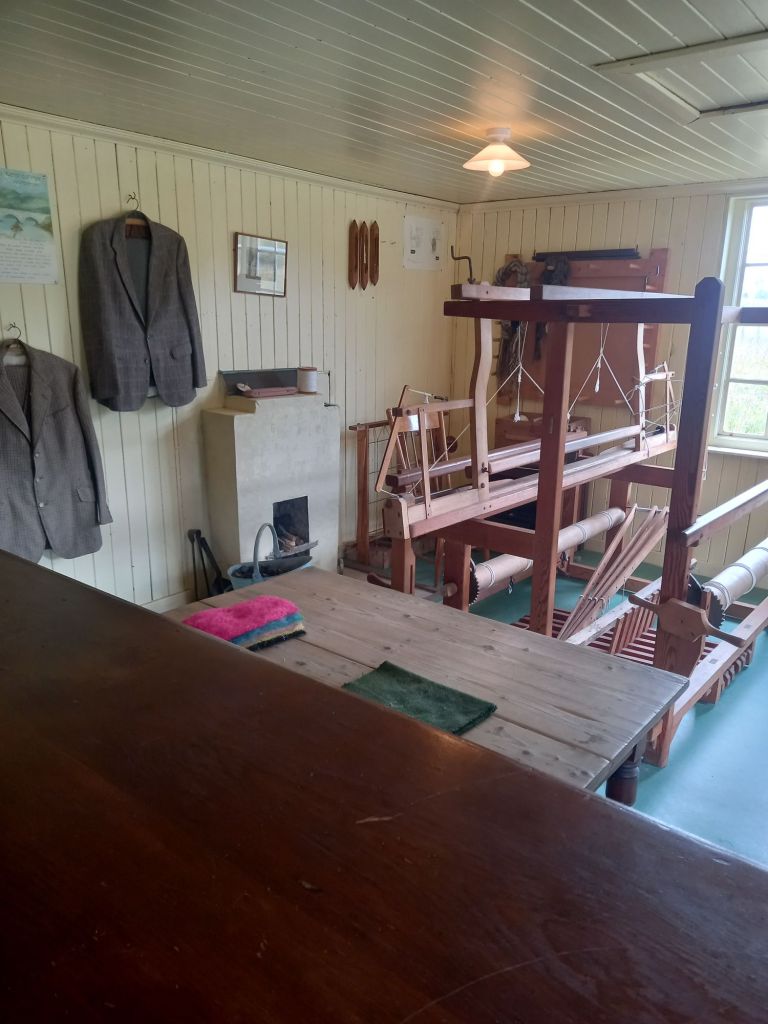
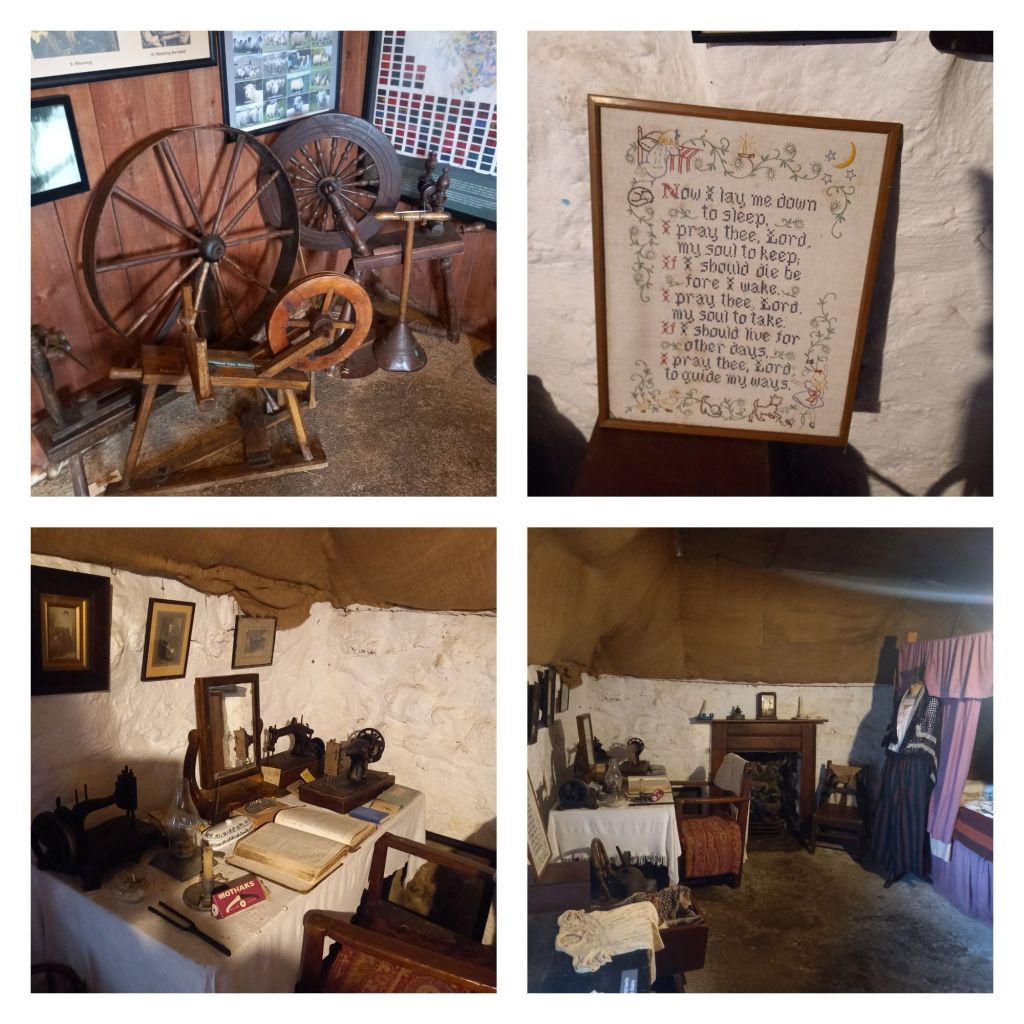
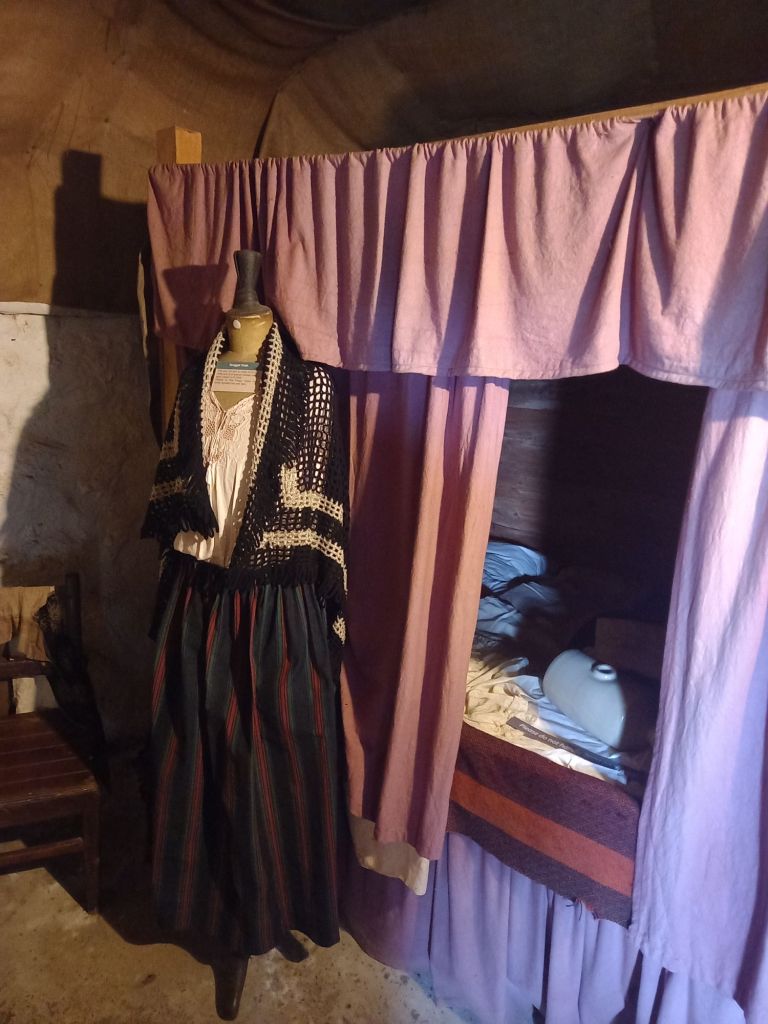
For me, one of the most exciting things about my recent visit to the Highland Life Folk Museum was the way that the textile heritage of the area was represented.

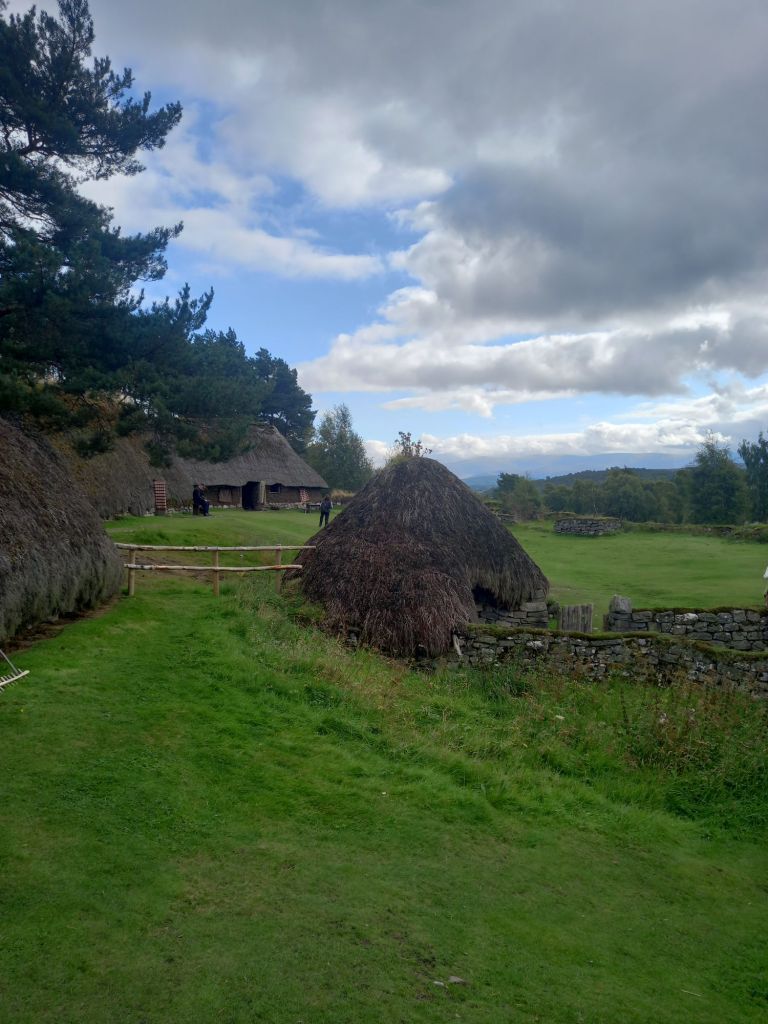
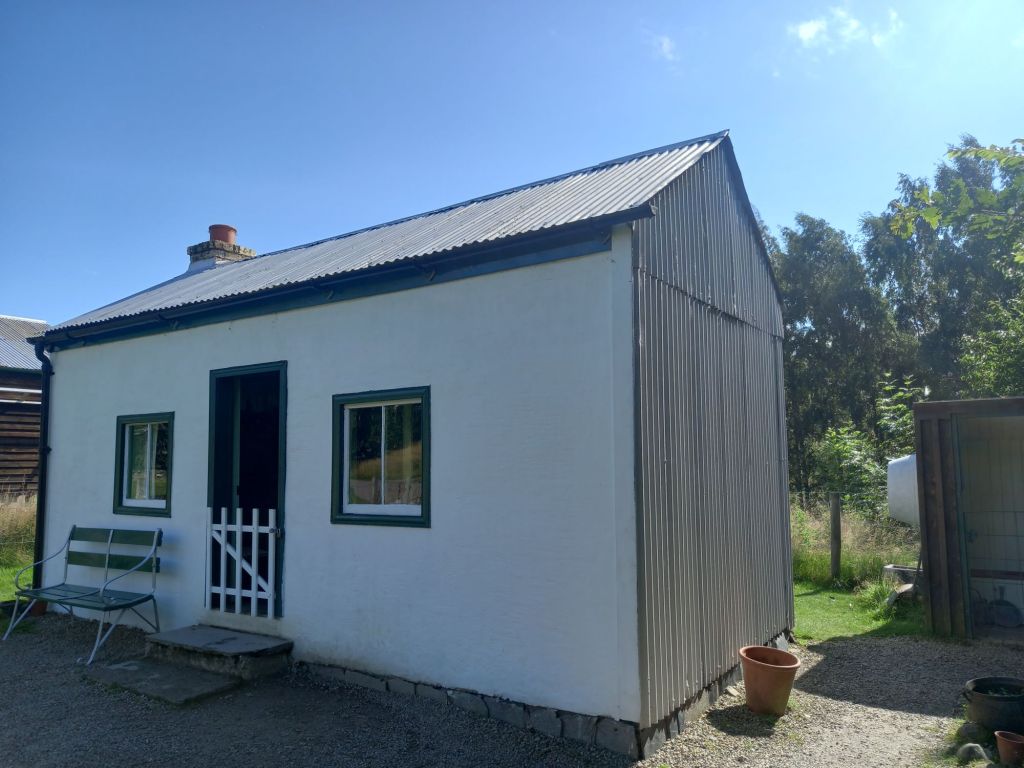
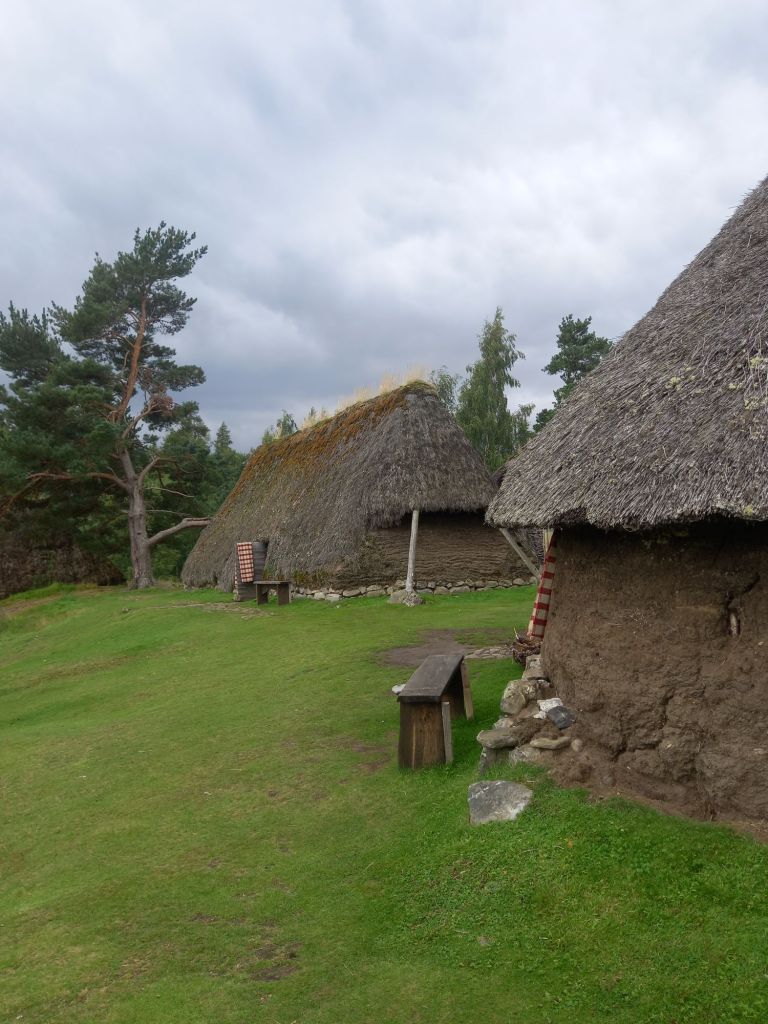
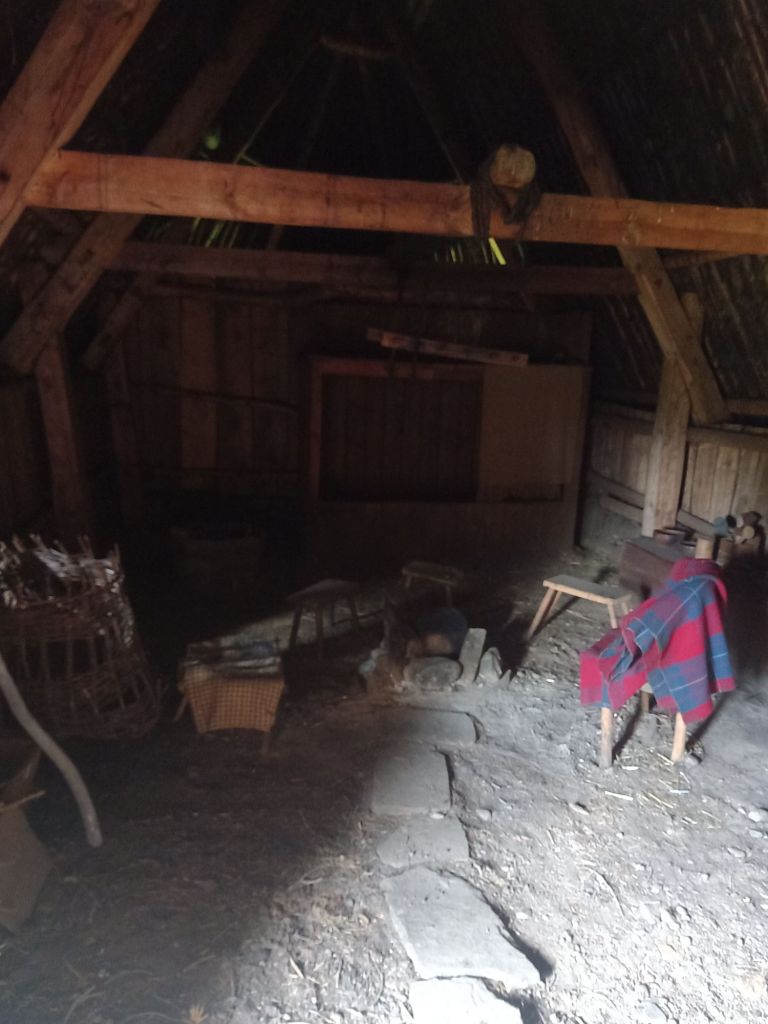
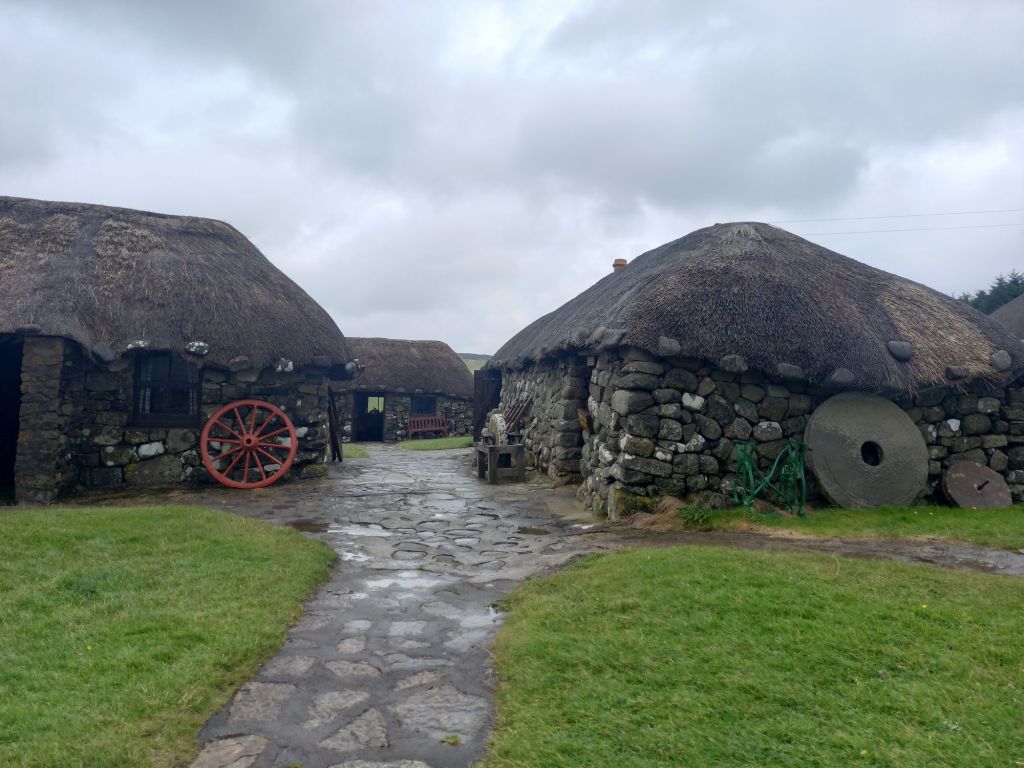
The museum extends for about a mile, and consists of a reconstruction of a 1730s township, and then existing buildings dating from the 1800s to the 1940s that have been moved and rebuilt.

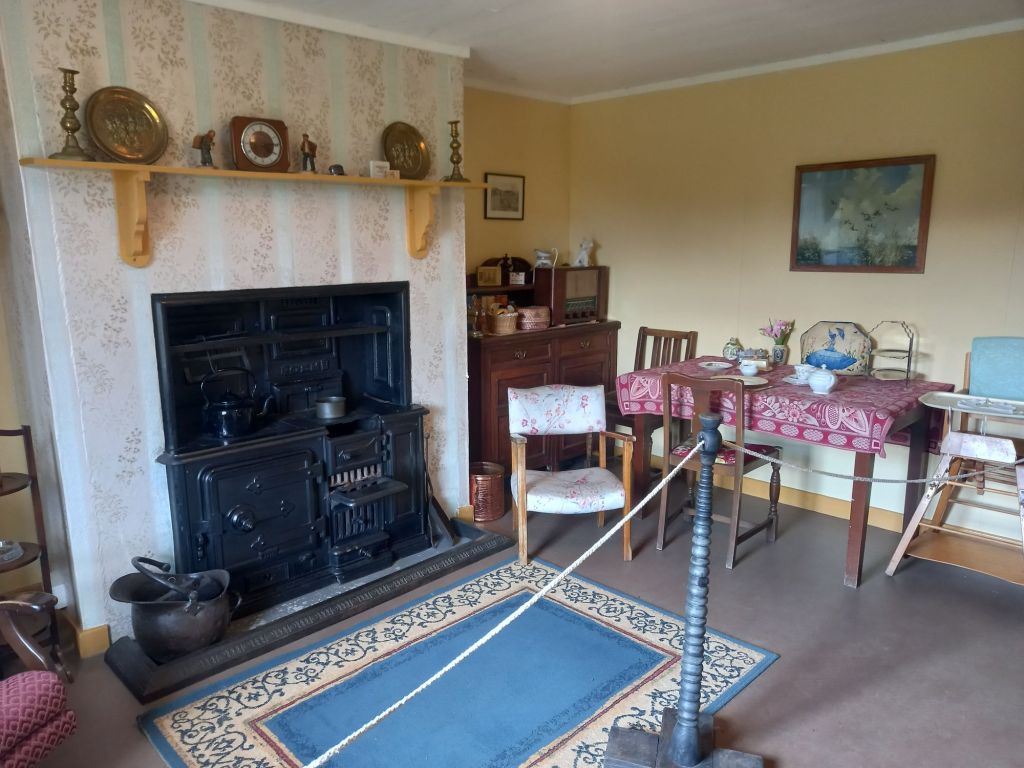
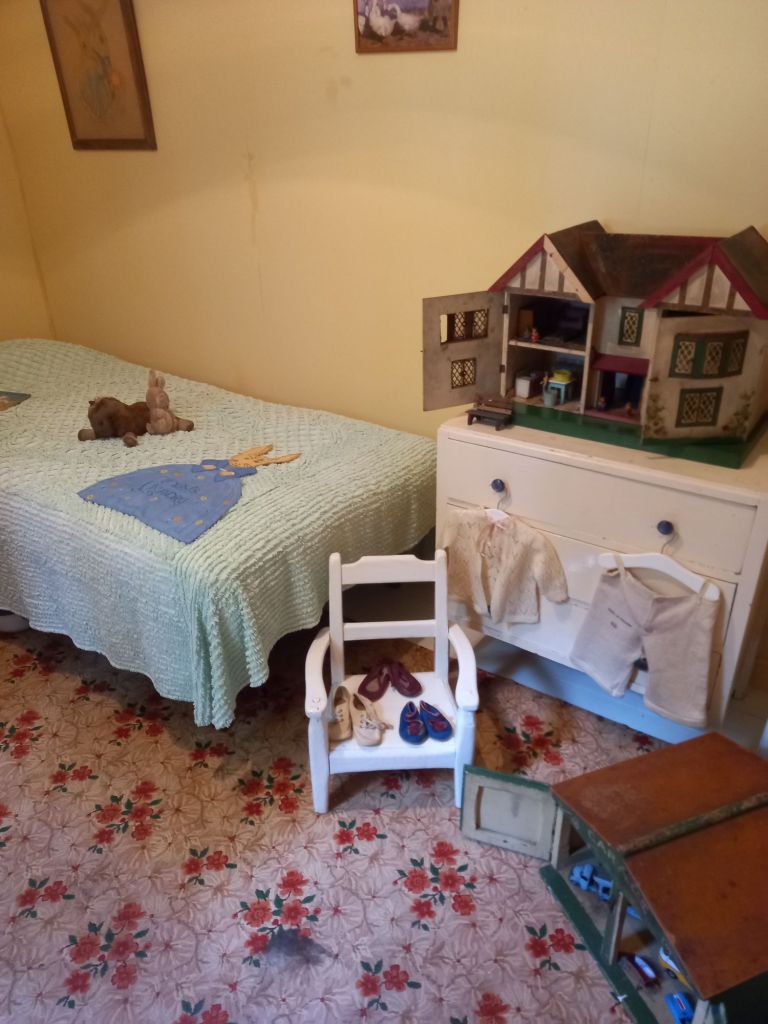
This means that unlike a standard museum, or a Trust property, the houses and contents are a snapshot of one particular period, rather than an accumulation of artifacts over the family’s ownership of the house.

I’m not sure if all of the textiles in each house originally belonged to it  but each gives a unique insight into the life, and textiles of the era.

I have talked before about the importance of textiles in portraying aspects of daily life, and it is really obvious here. The 1730s houses are about survival, keeping the people, and animals who shared them, safe and warm, especially in the winter days.

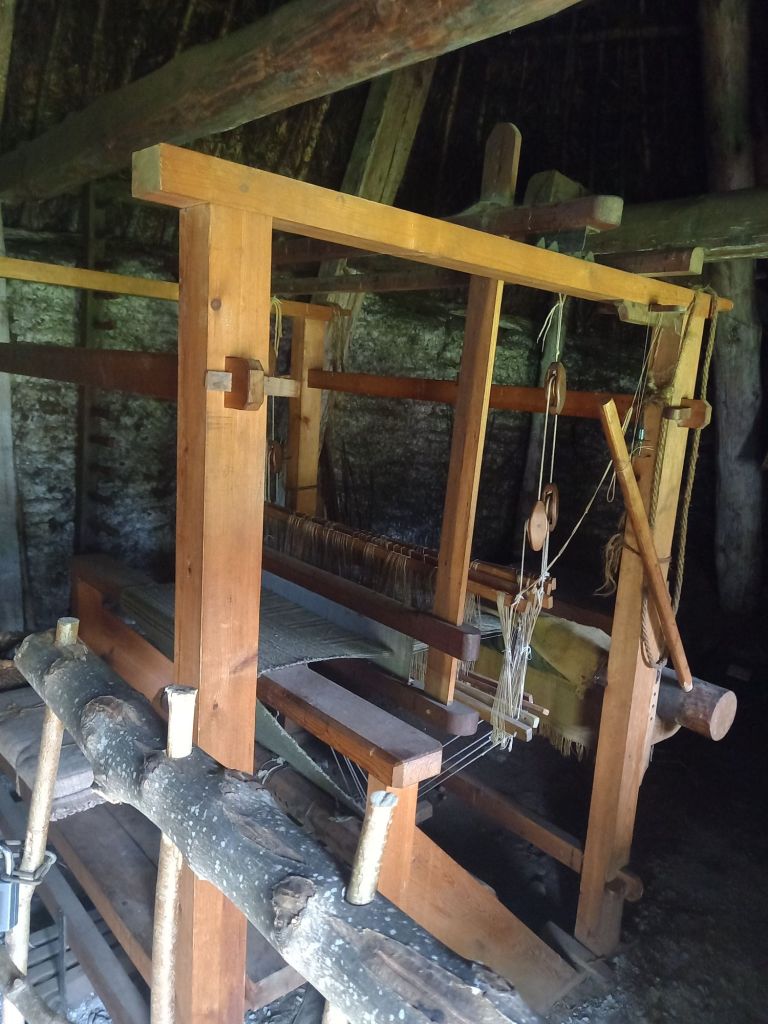
Textiles here are functional, spinning and weaving them yourself the only way to get them, and a continual set of tasks within the community. 

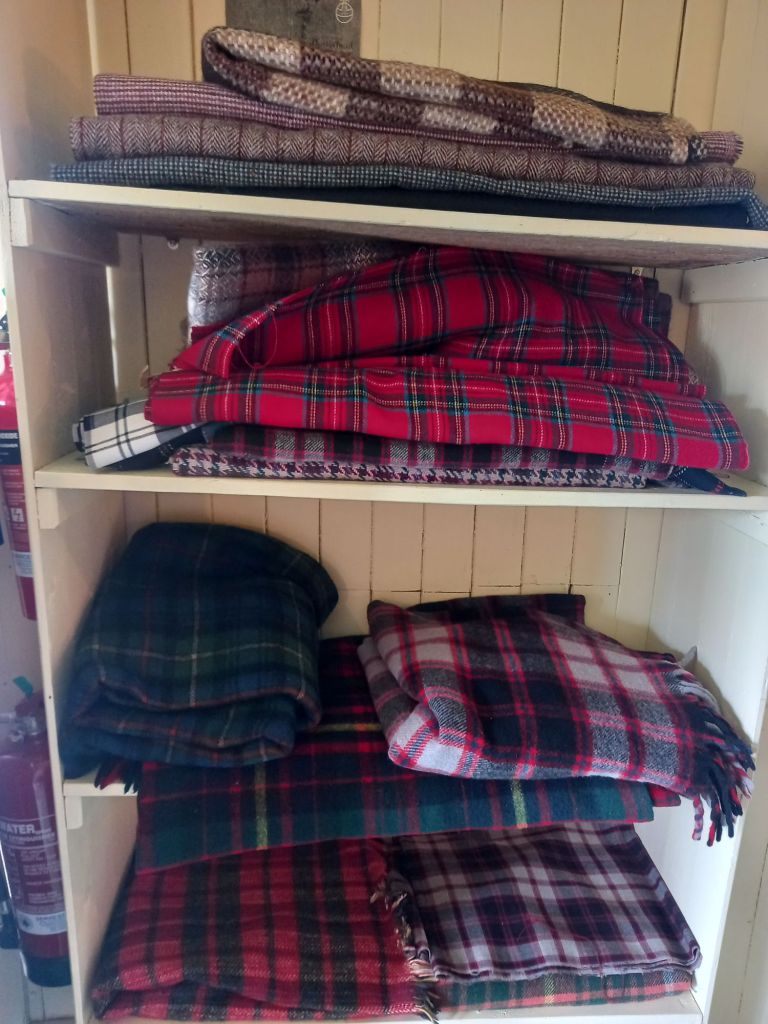
One of the displays showed the multifunctionality of the original tartan cloth, garment, cloak and blanket, all in one handy length.

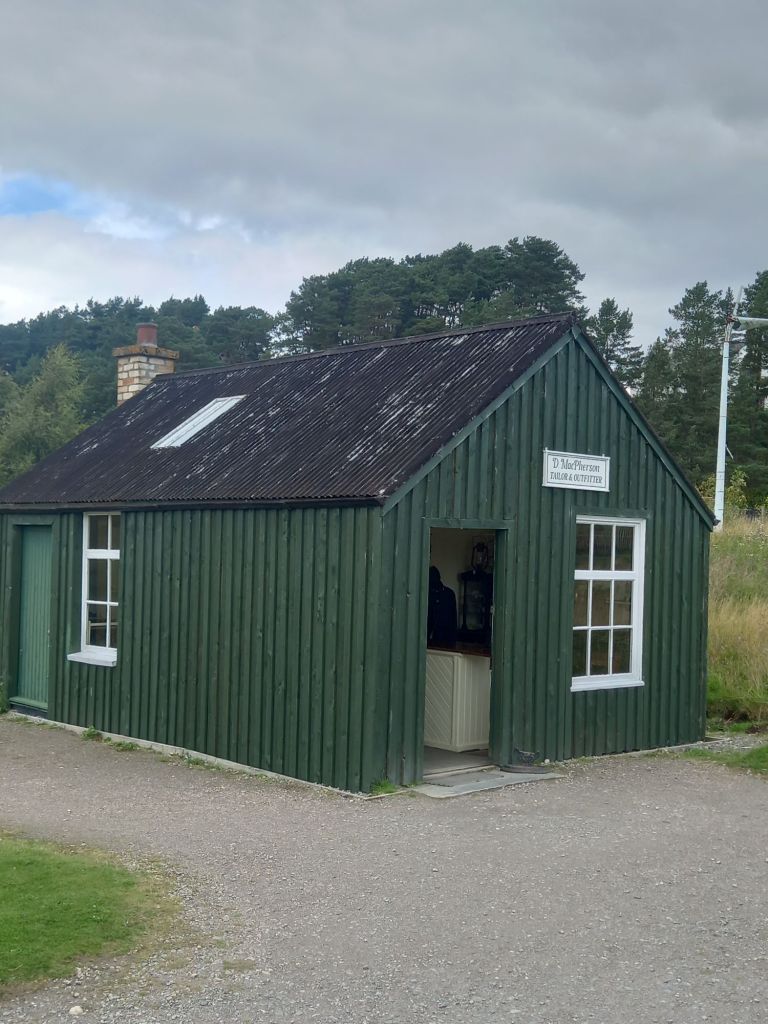
As life starts to get less pressured, and as job roles diversify, you have the separate businesses devoted to clothing.These buildings originally stood in the nearby town of Newtonmore.

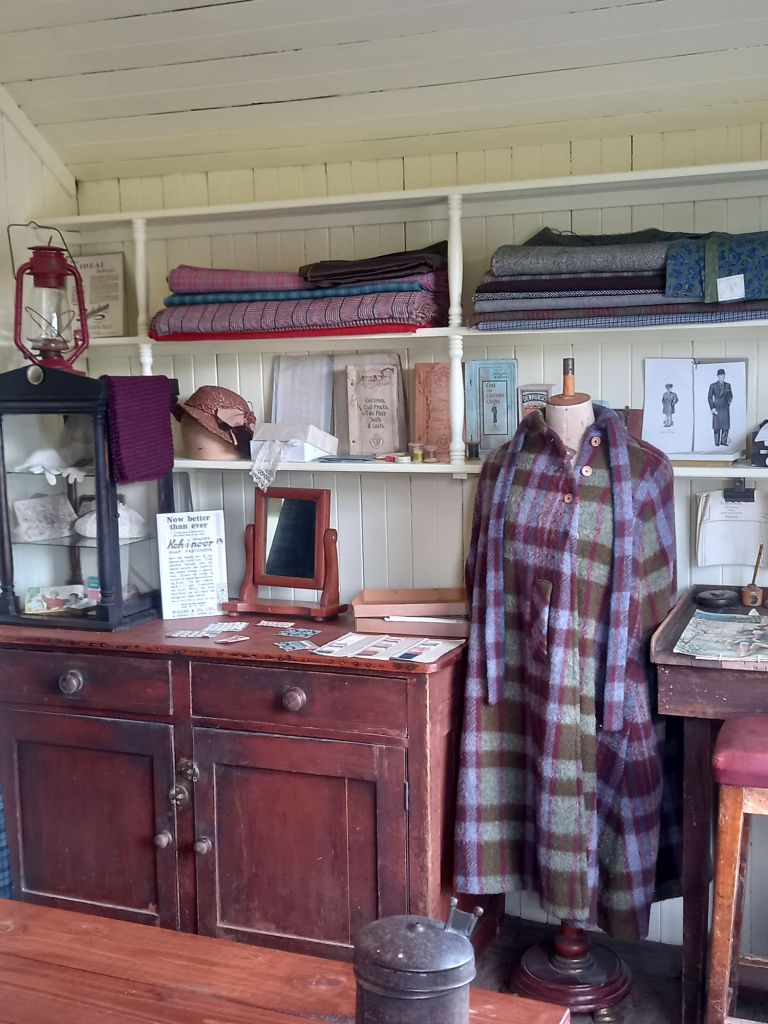
The tailors and dressmakers, aided by the invention of the sewing machine. The idea of having lots of clothes for different purposes,  the ability to own more than one of things, and the luxury of not having to make it yourself.

Clothing as status, the well tailored tweed suit, the modern kilt in clan tartans, all things uniquely associated with Scotland, and exported all over the world.

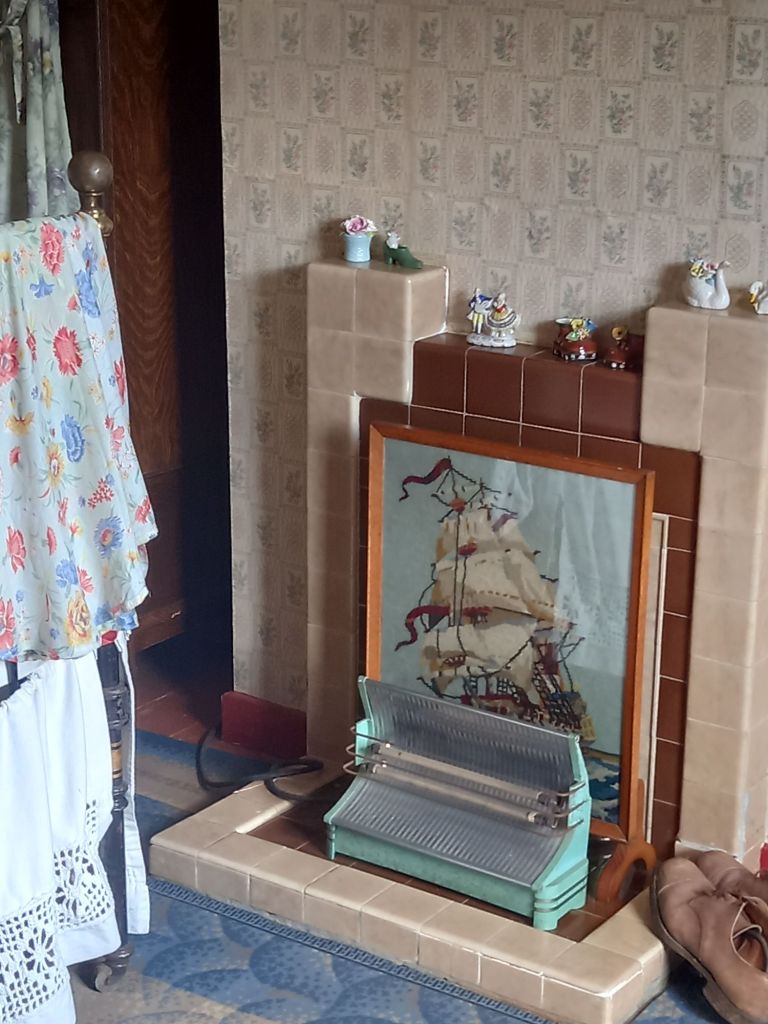
In the later period houses, those of the leisure classes, with time to spend on the ‘decorative arts’, textiles to show your skill, to make your home look nice.

An endless succession of tablecloths, tray covers, anti maccassars, fire screens and cushions. All created in the home with materials bought from specialist suppliers. A way to pass time with friends, or while listening to the radio.

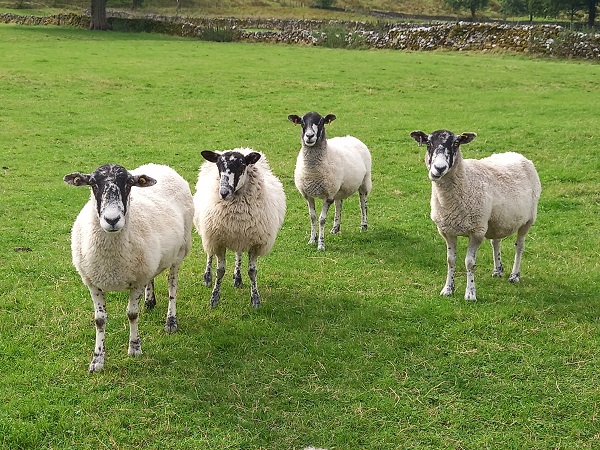
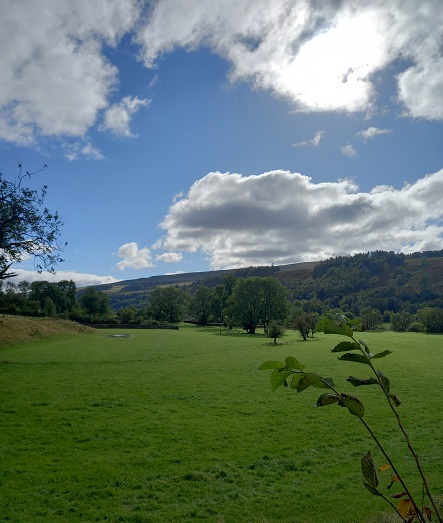
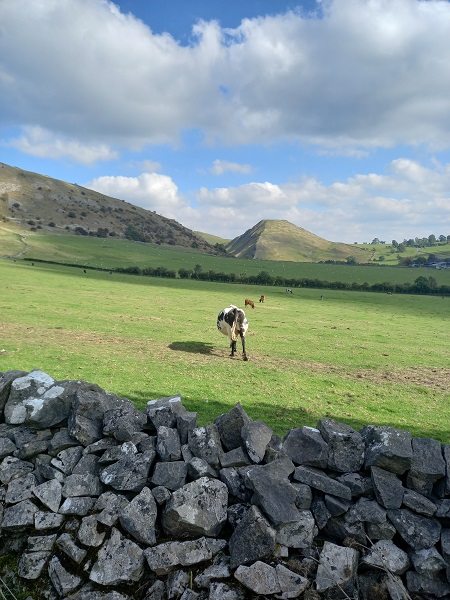
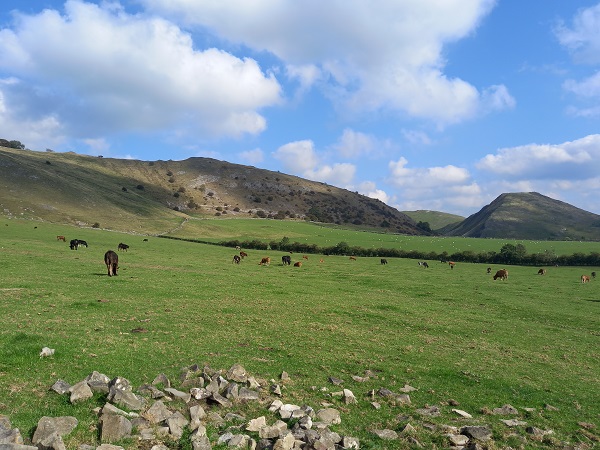
It was marvellous place to visit, and one of my very favourite ways to spend the day. I was also exceptionally lucky that the weather was gorgeous, and the scenery stunning. Loved the three varieties of Highland Cow, just enjoying the sun and their grass.

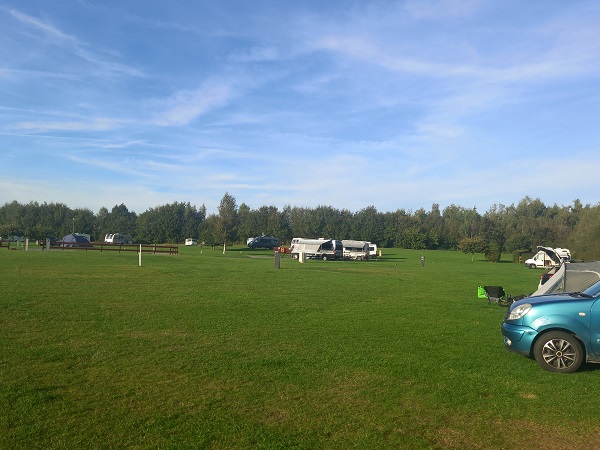
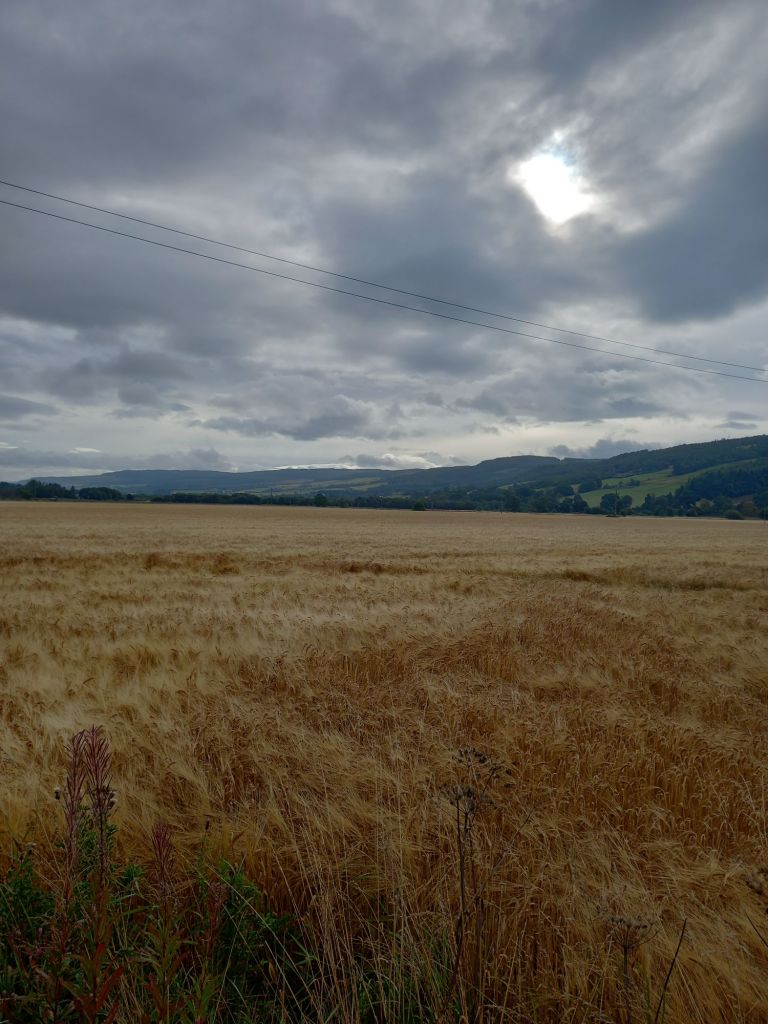
I ended the day at a new aire, in Aberfeldy, just sitting watching the clouds as usual, and listening to the birds flying over the fields.

I have a few more posts to share with you about Scotland, it seems such a long time ago that I left, although it’s only a week. Hopefully,  good WiFi allowing, I can share more next week, as I am making my way to the final few campsites of this trip.

In the meantime, have fun, take care, stay safe and thanks for visiting.
Seeing rainbows

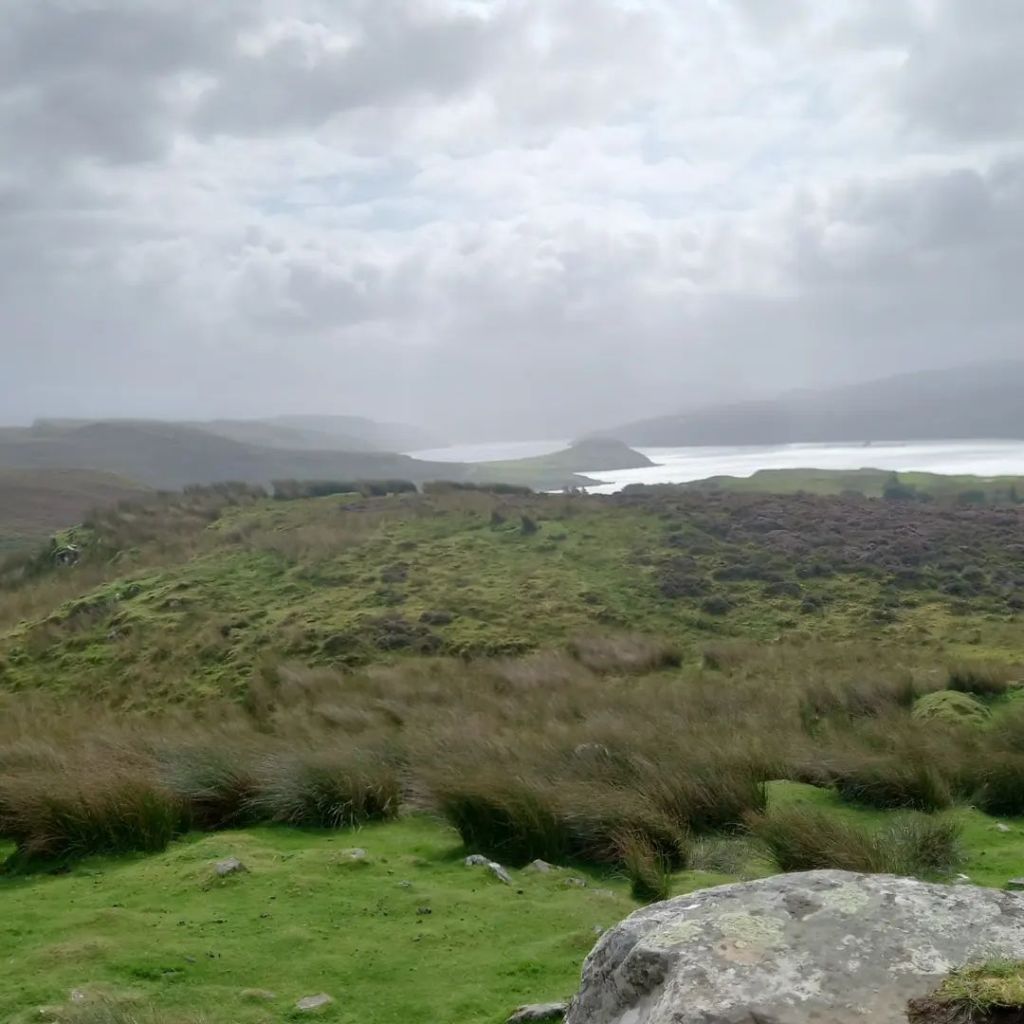
This is my last day on the Isle of Skye. I have been staying at a wonderful campsite, right next to the Cuillin mountains, called Sligachan.

I spotted this site last time we were here, two years ago and decided to stay, which was a great choice. We are right next to Sligachan Bridge and these amazing mountains, so I have had a chance to do lots of arty photos.  

Not only is it a fabulous location, the staff are so lovely and friendly and helpful. We have had the tail end of a hurricane mid week, so although I pitched my tent when I arrived, I took it down the following day, as there were 40mph winds forecast.  They were fine with me staying in the van.

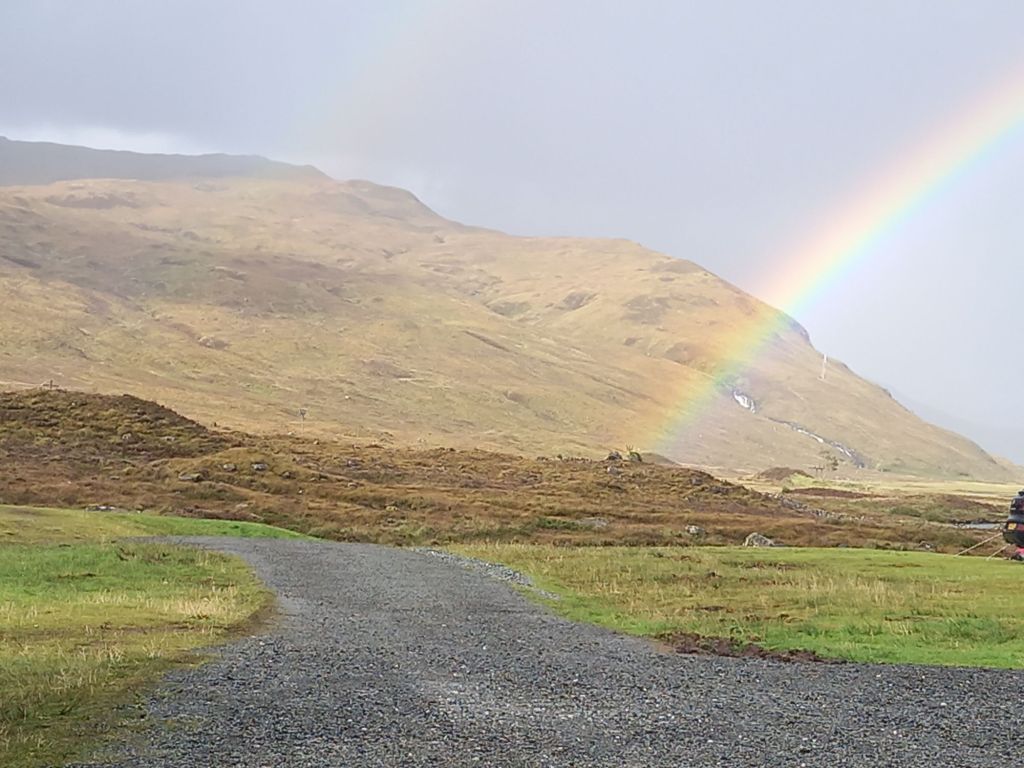
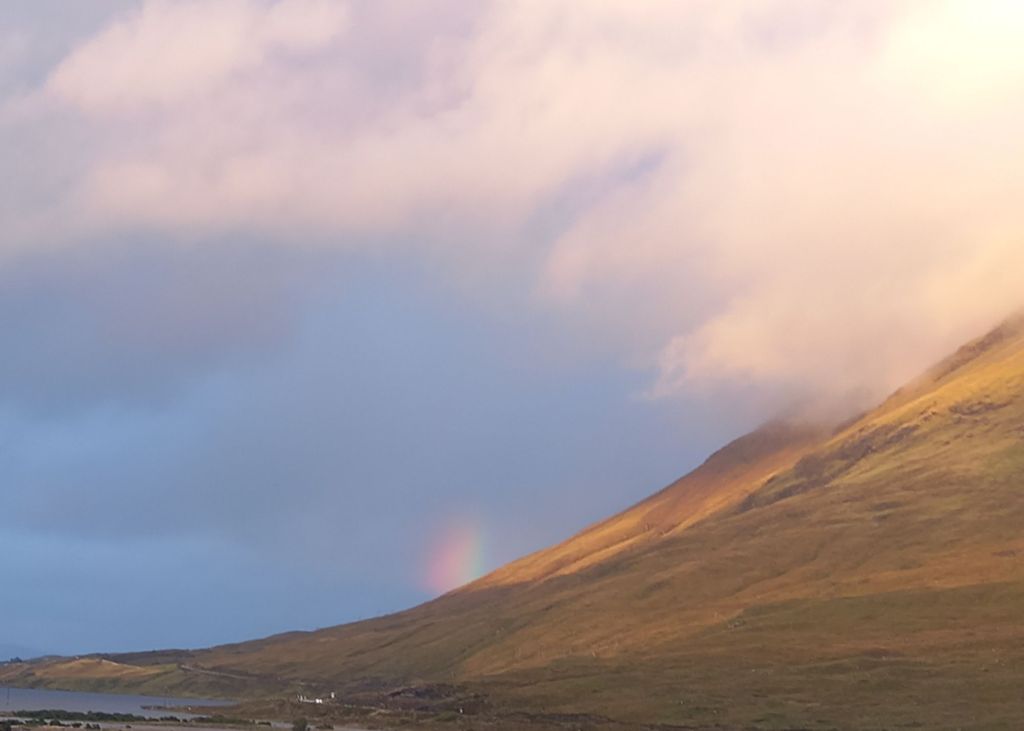
It has been a fantastic location for rainbows, I have never seen so many in one place. There must be something about the mountains behind the site, and the loch in front, that makes it the perfect place.

The weather has been mixed, but enough sunny days to go and explore, and some gorgeous sunrises and sunsets as well.

Last time Jacky and I came we did all the famous stuff on Skye, so I have spent my time just exploring the less visited parts in the north of the island.

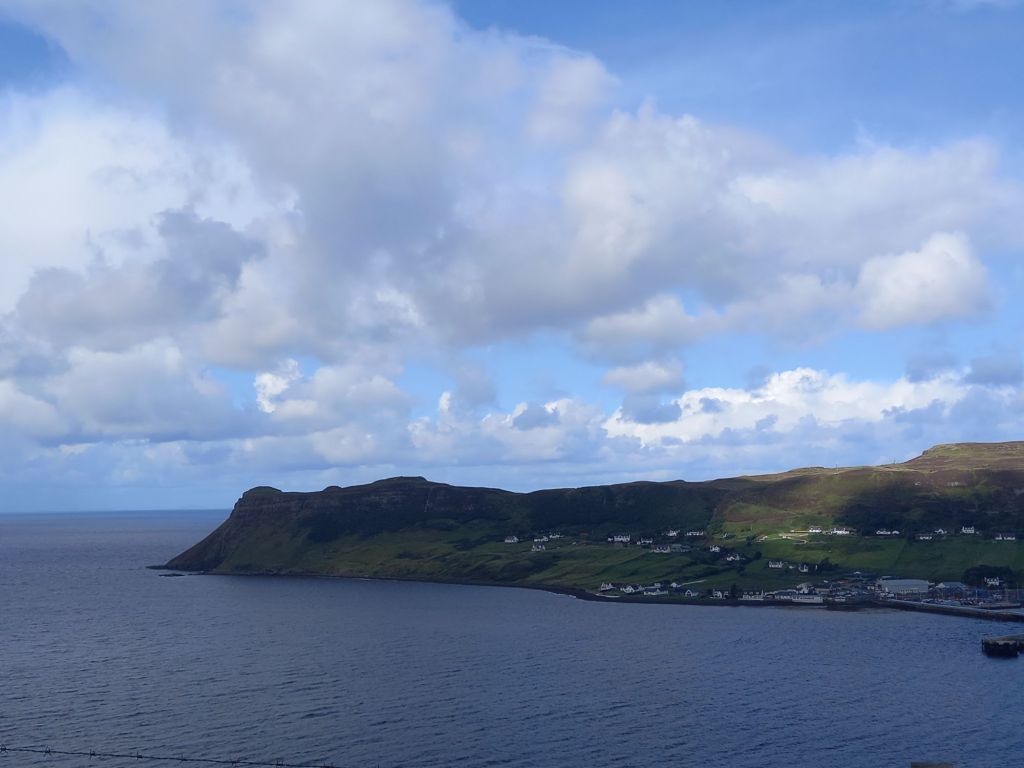
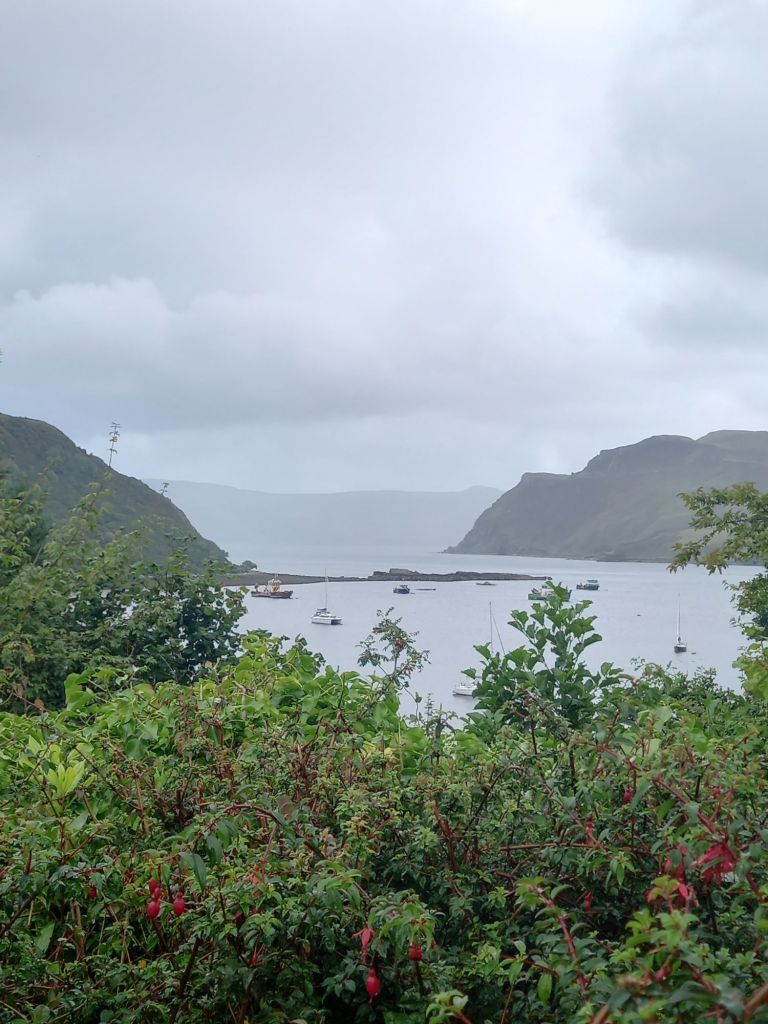
I have been out to Portnalong, to Carbost, Uig and had a quick visit to the capital, Portree.

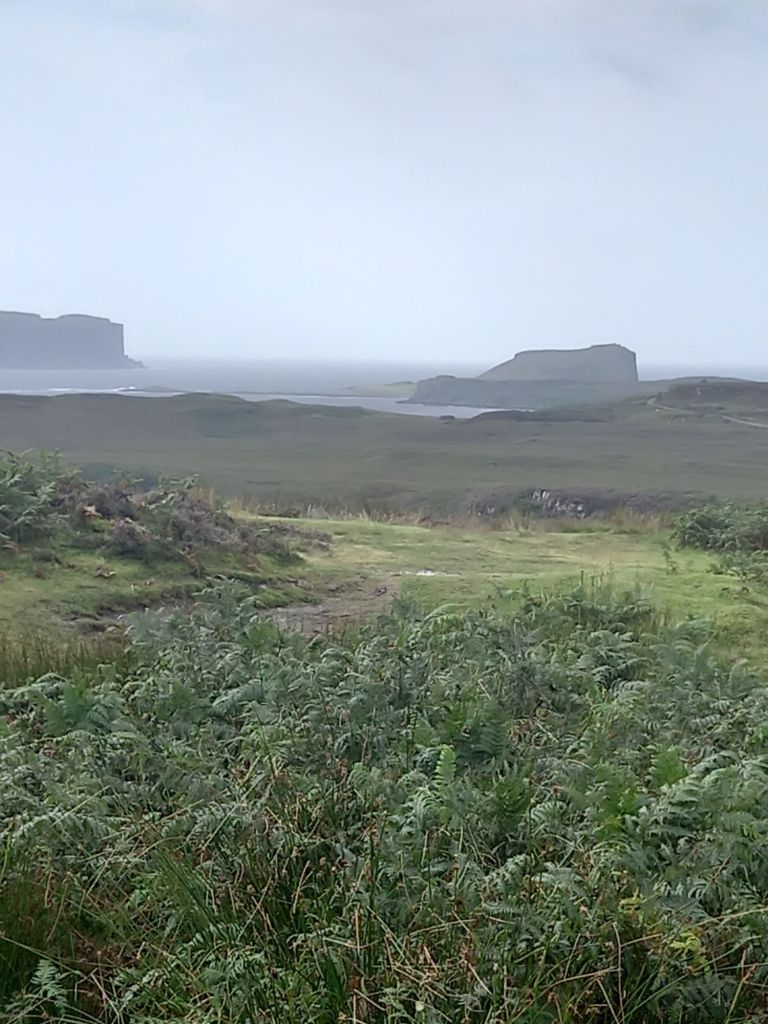
I visited an iron age broch, with views over Oransay, and the Skye Museum of Island Life.

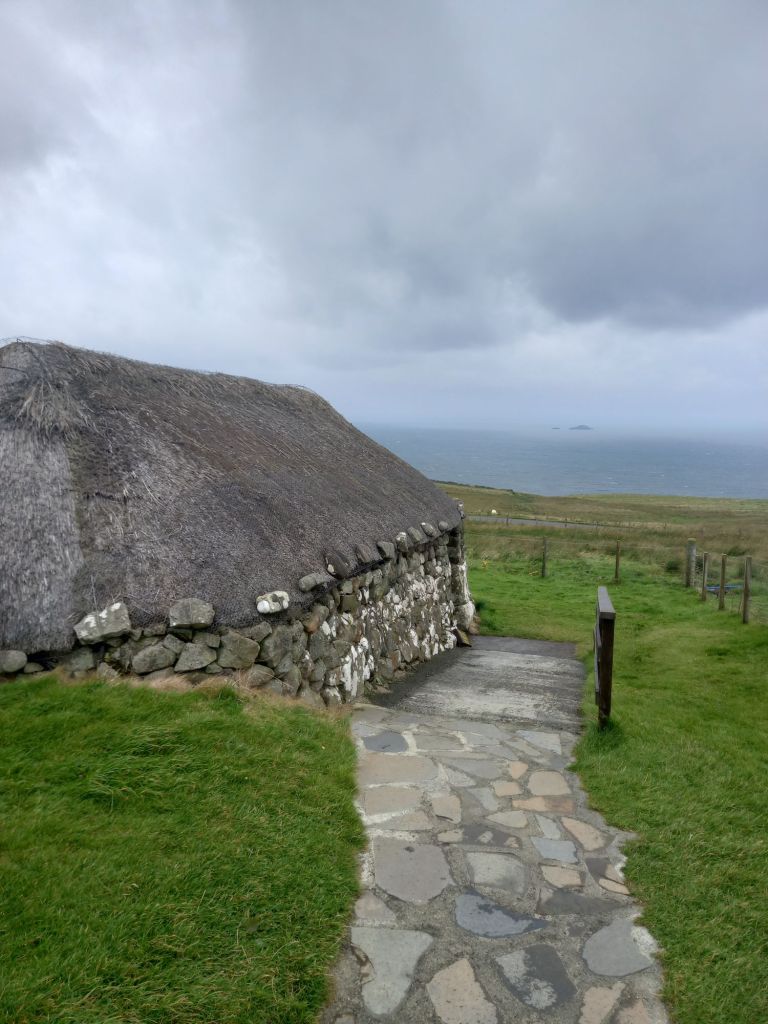
The museum is located in a more remote part of the island, 6 miles along a bumpy single track road, and really gives you a sense of how cut off people were living there. There are a mix of preserved, and reconstructed houses of crofters.

Even now, with a car, it is trek to get there, but there are still lots of houses there, with amazing views over the cliffs. One of the most significant pieces of information was that children living in these crofts would usually not visit Portree, a 25 mile walk, until they were 12, and old enough to cope with the journey. 

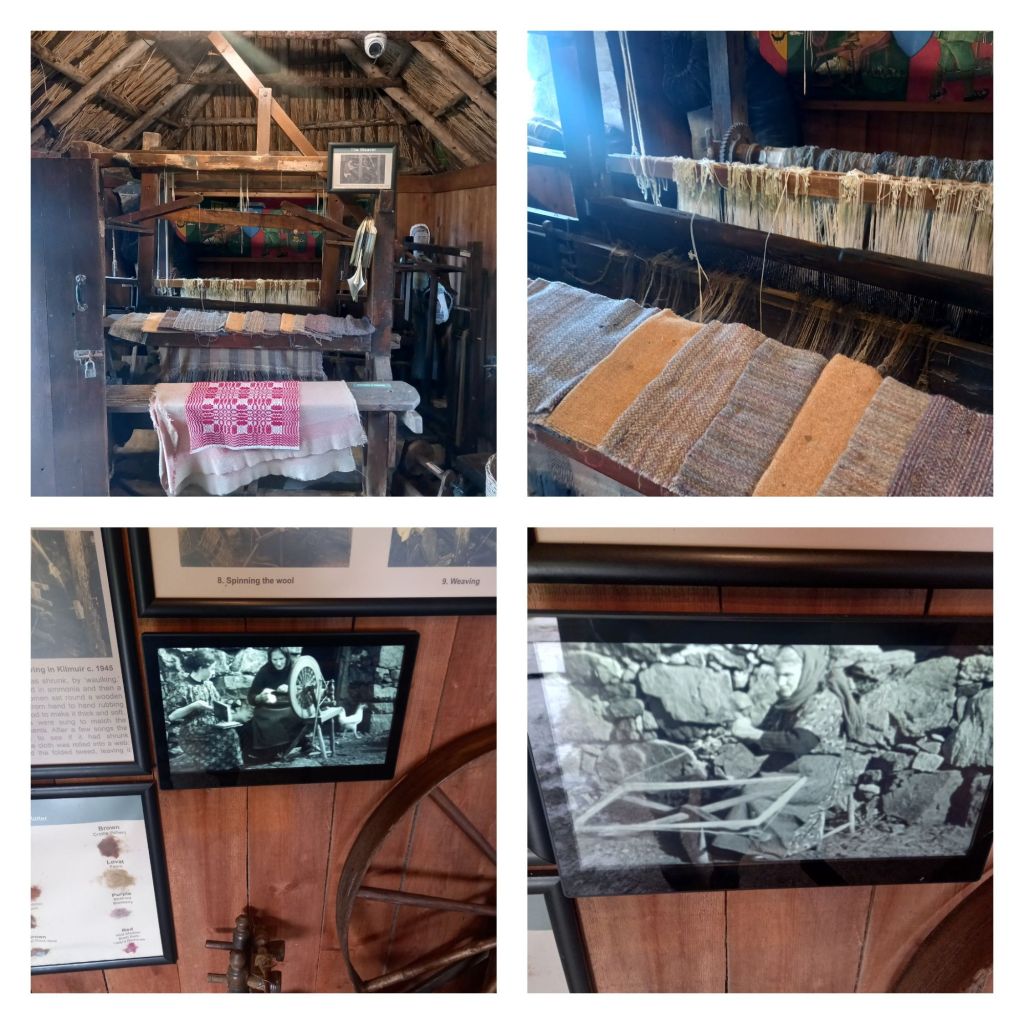
As well as the artefacts, including some great textiles, there were photos and archive film of people living there in the 1930s, which was the best bit. All textiles were made at home, from flax grown in the croft, and wool from their sheep.

This croft was home to a family with 10 children, accommodated in two box beds, with their parents in a small bed off the living room.

A fantastic place, and well worth visiting for a taste of real Skye life.

I have also been following a YouTube channel called, ‘Living  the Skye Life’, run by an artist and musician, Sarah and Willie, who relocated here two years ago. It is a really interesting exploration of 21st century life here, and gave me lots of ideas of different places to explore.

Tomorrow I leave to go west, I am heading for the Cairngorms, which I am very excited about. I have some park ups for the next few nights, and will hopefully be visiting more canals!

Until next time, have fun, take care, stay safe, and thanks for visiting.

The joys of England

It is definitely true that often we need to go away, or step back, to really understand and appreciate things. My life now gives me much more time, and distance, and as I travel more, I get to really think about all of the similarities and differences in each place.

One of the exercises I used to do with my teacher trainee students, many of whom were migrants to the UK, was to get them to think about things that define being British, and within that specific things for each country within the UK. Many of them would be teaching migrants, and often teaching them how to pass the UK citizenship test, which contains lots of questions about life in the UK. They used to come up with all sorts of answers, like fish and chips, the Union flag, bulldog spirit etc, and it was always a fun and useful exercise to get them talking about their home, and how it differed from where they grew up.

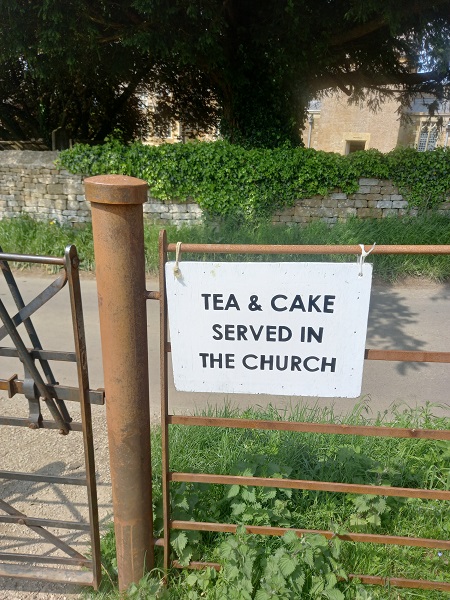
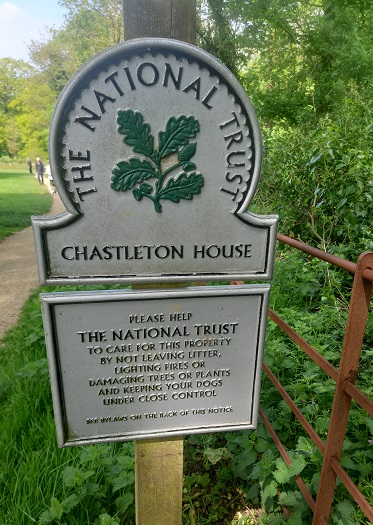
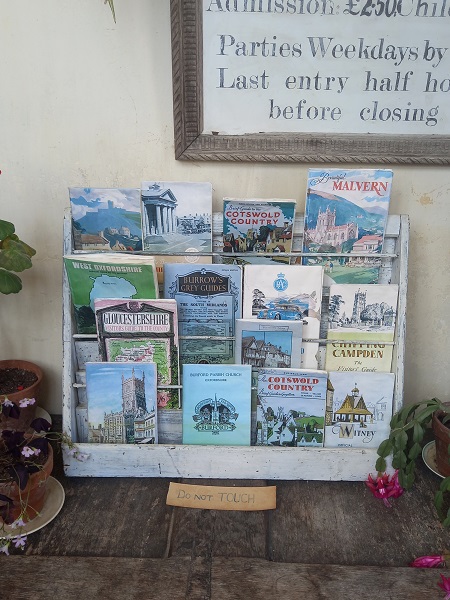
As I mentioned in my last post, the Cotswolds is an area that many people feel exemplifies England, the cottages, the farmland etc. It was while I was visiting one of the Trust houses there that I came across this sign, which to me just typifies one of the joys of English life.

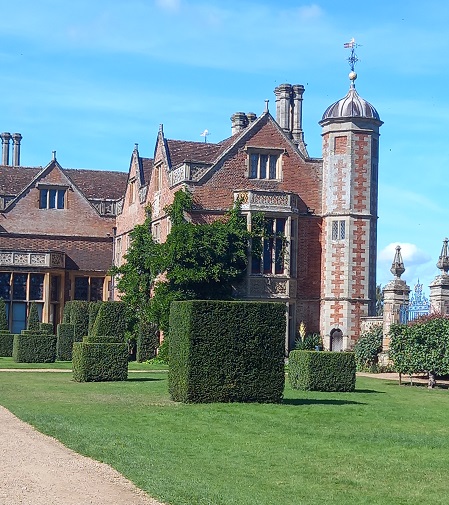
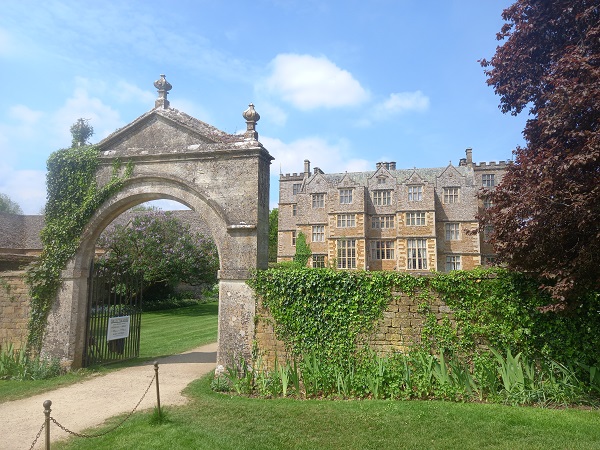
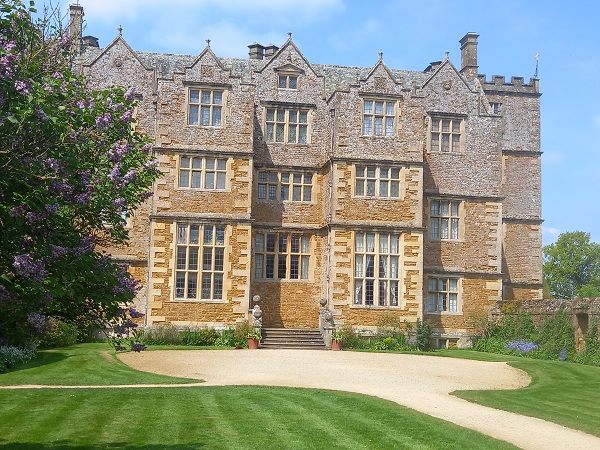
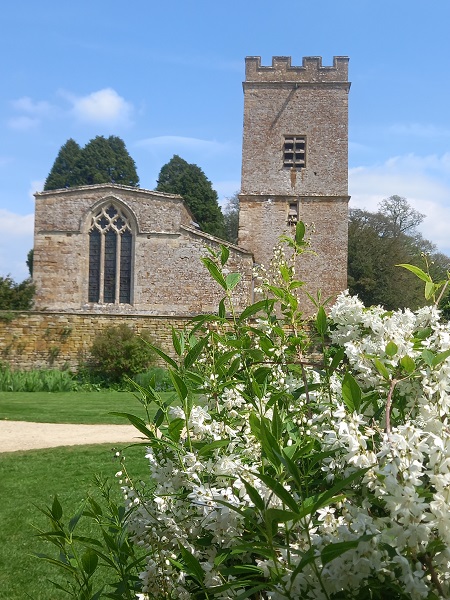
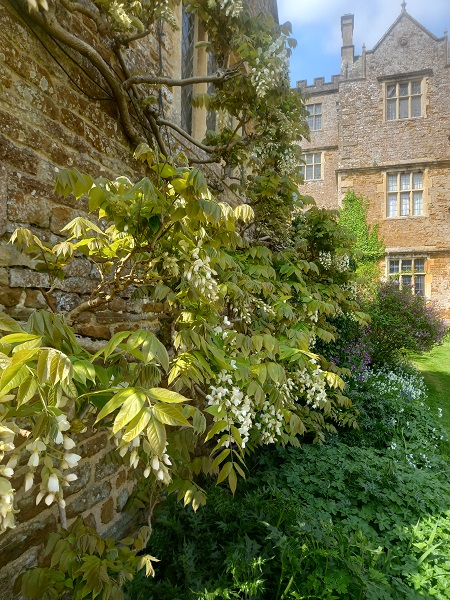
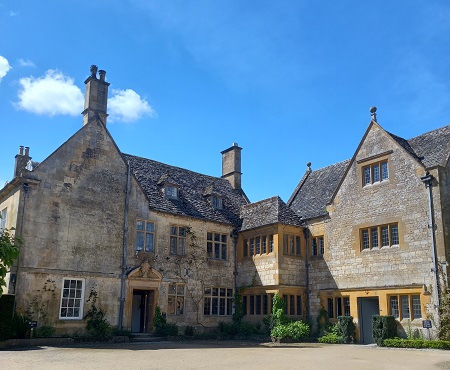
It conjures up a whole host of images, the parish church, flower festivals, the UK’s love of a good cuppa, our habit of, ‘putting the kettle on’, whenever there is a crisis or an awkward situation to deal with. The tea and cake in question was served from the church next to Chastleton, arguably one of the most beautiful houses I have ever visited, just stunning.

I love the old Trust property signs as well, so glad that so many of them have been kept.

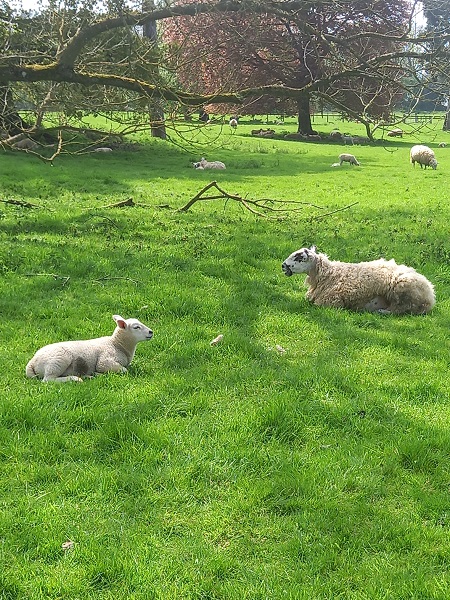
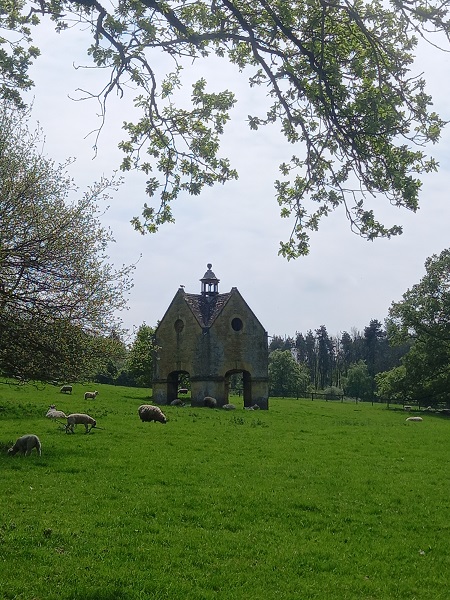
There was a lovely walk through the grounds down from the car park, with lots of cute lambs sunning themselves.

The refreshments were being organised by volunteers from the local primary school, and all profits went to the school, so it was a lovely way of meeting the need for a tea room, and supporting a good cause. I do usually partake of tea and a scone at Trust properties, but this time had an excellent coffee and walnut cake.

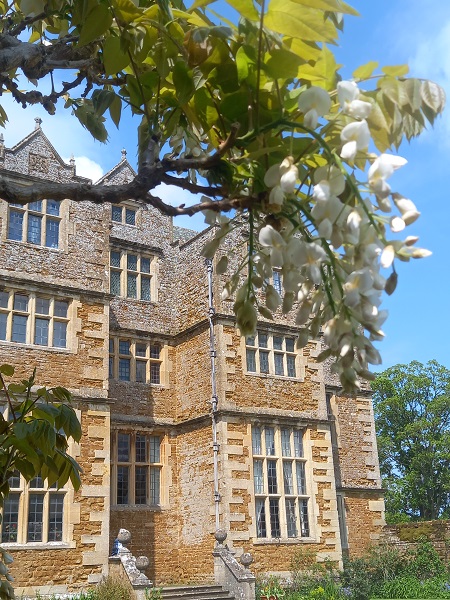
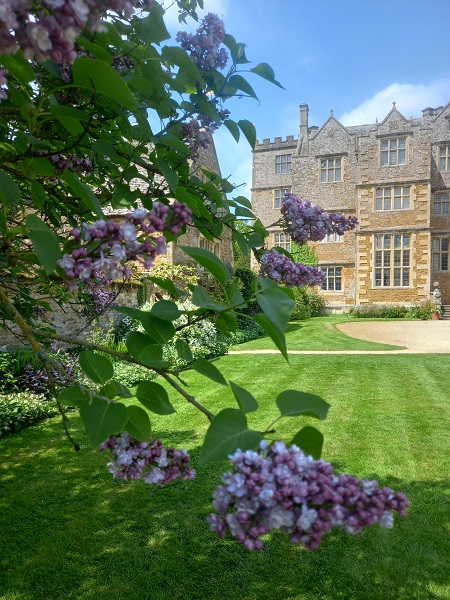
Chastleton is one of the Trust properties that has not been restored, things have been fixed to stop further damage, but like Calke Abbey and other places, the property was in too much of a state of decay when it passed to the Trust in 1991. It was owned by branches of the same family throughout its history, although it was rented out at times, and thus refurbished a little. It is portrayed as it was when the last owner lived there, Barbara Clutton – Brock, who after her husband died in 1976, spent 15 years living there, alone apart from her 20 cats and a parrot.

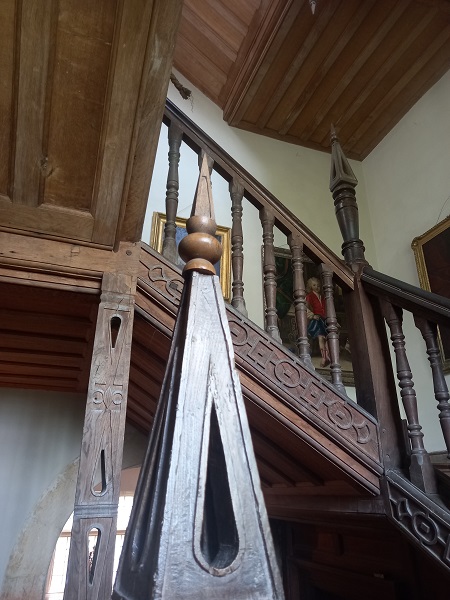
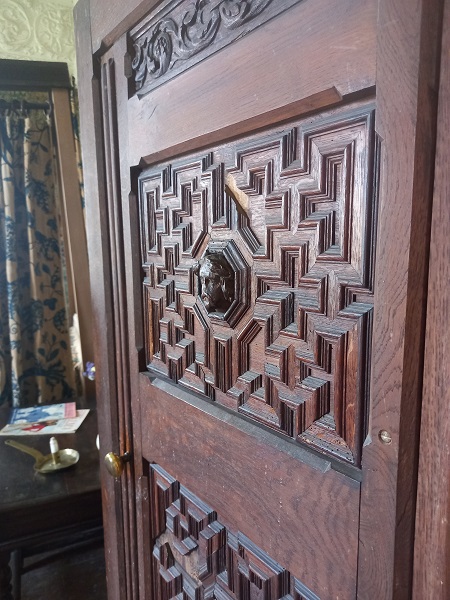
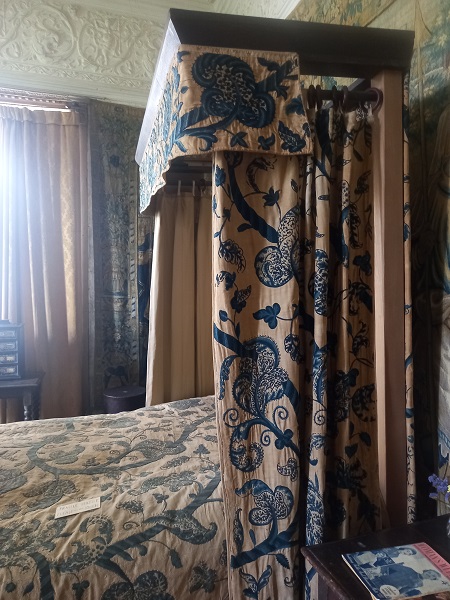
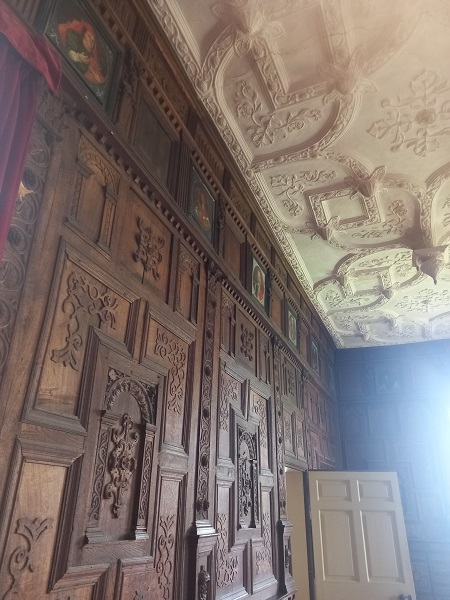
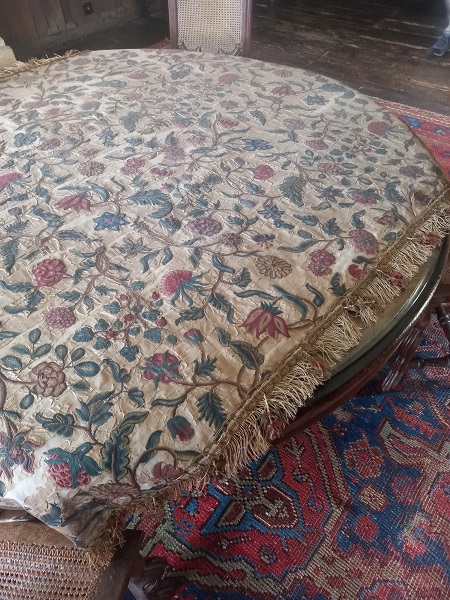
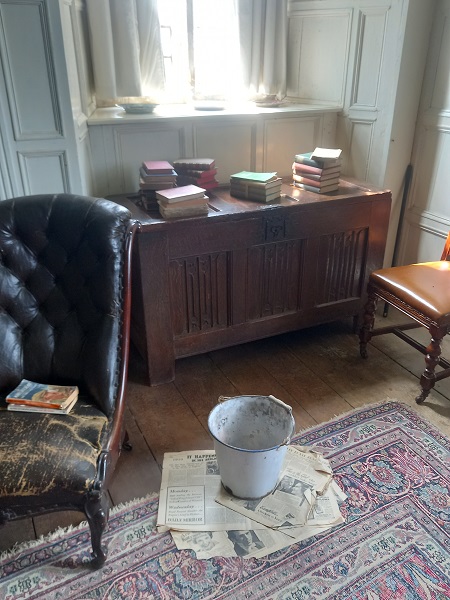
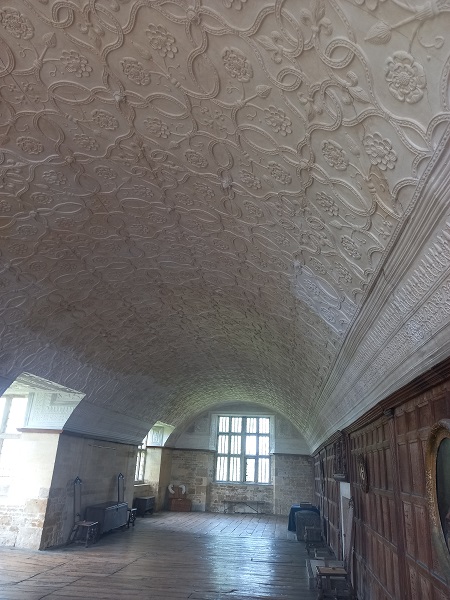
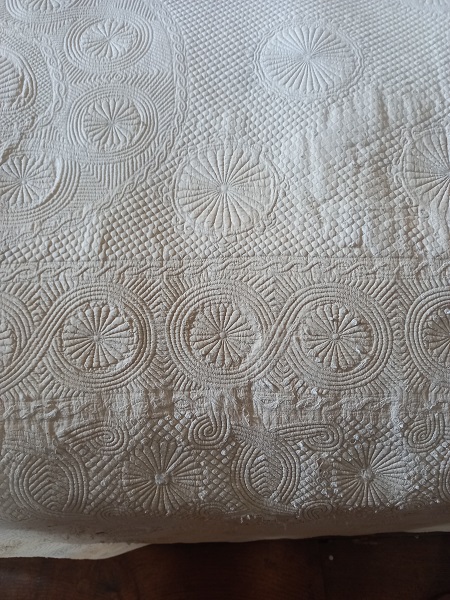
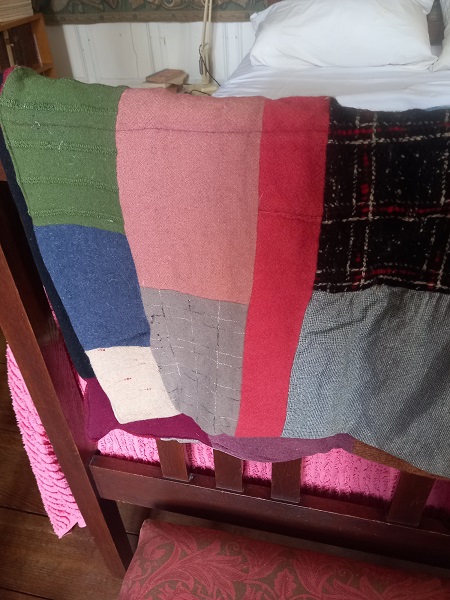
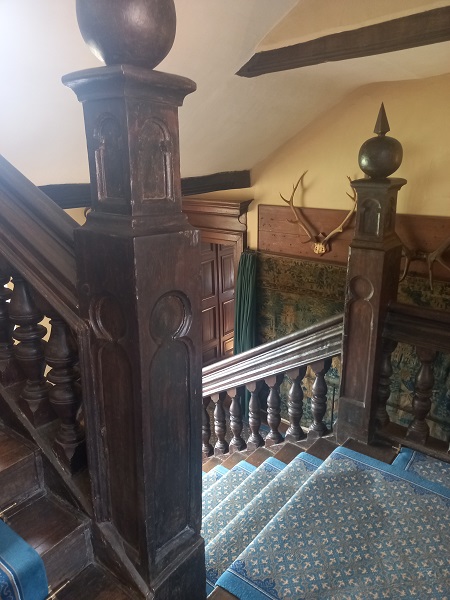
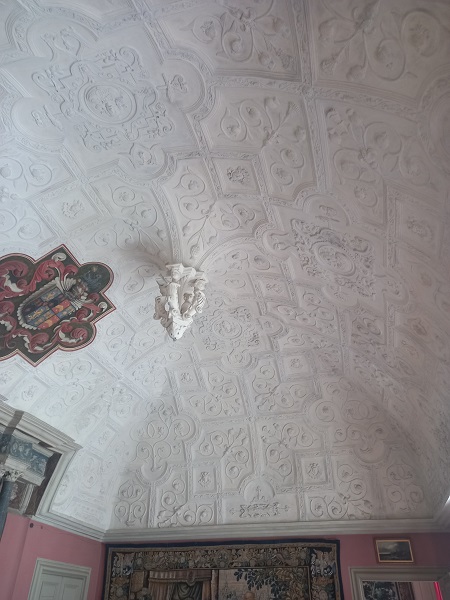
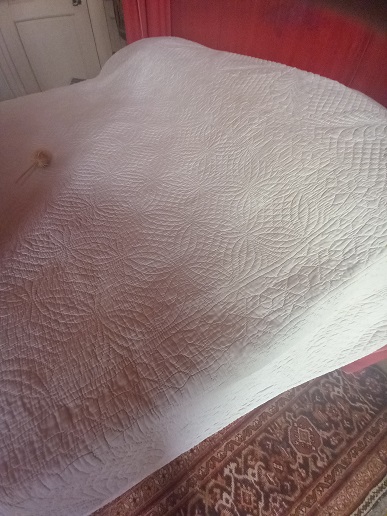
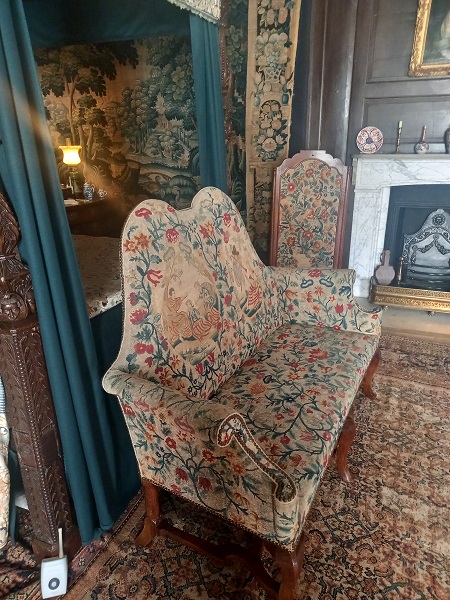
The house dates from the early 1600s, so is full of wonderful Tudor architecture, including a barrel ceilinged upper chamber. However, again, it is the touches like the wool quilt, made of scraps to keep the occupant of the bedroom hung with fine tapestries warm, and the bucket to collect the drips from the leaking ceiling, that bring life in the house to reality.

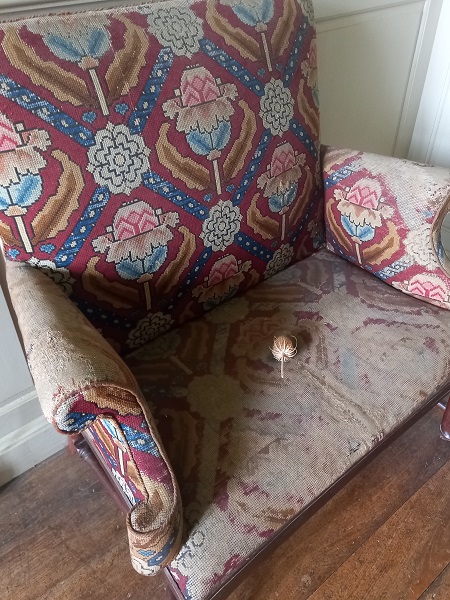
I love the fact that this chair was so well used that most of the needlepoint has worn away.

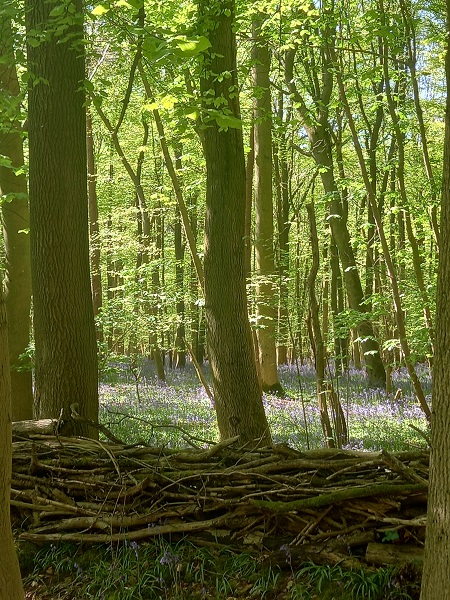
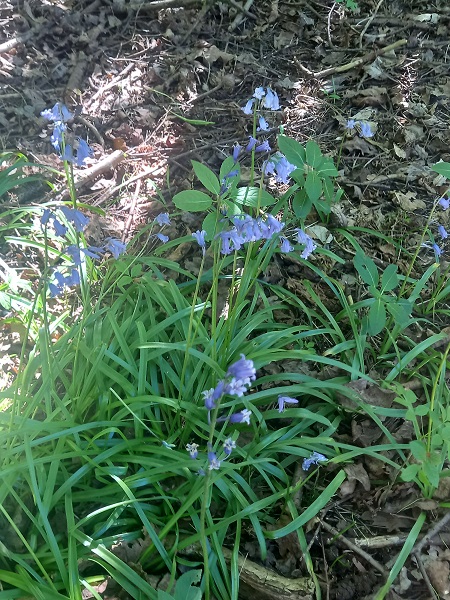
The rest of the week was very warm, as I have previously mentioned, so I spent some time just going for shady walks to admire the beautiful countryside, and the carpets of bluebells throughout the woods. Despite the fact that I have so many other places to visit, I would love to come back to this area again, there are still so many lovely things to see here.

On the journey back to Ellen’s, before my flight home to Spain, I was able to stop off at two further Trust Properties. Upton House, in Warwickshire, is a Georgian house, which was extended and remodelled in the 1930s by a member of the Shell Oil family, Walter Samuel. It was one of many houses that the family owned, and was used to house his extensive collection of art.

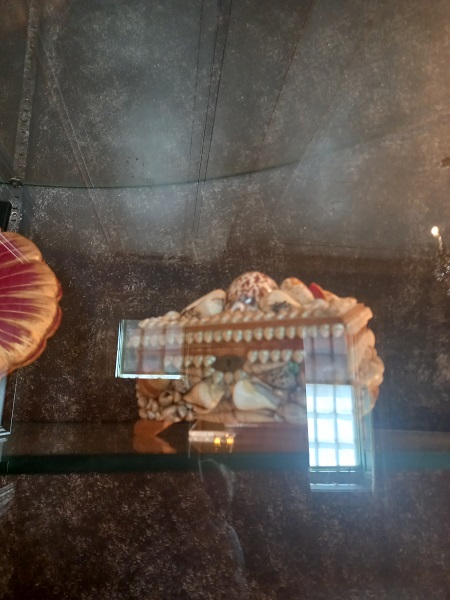
One of the interesting facts I found out here, was that the Shell Oil company started out as a curios business, importing shells and decorative objects that the Victorians loved. Apologies for the poor picture, but you can see one of these in a cabinet in the photos below.

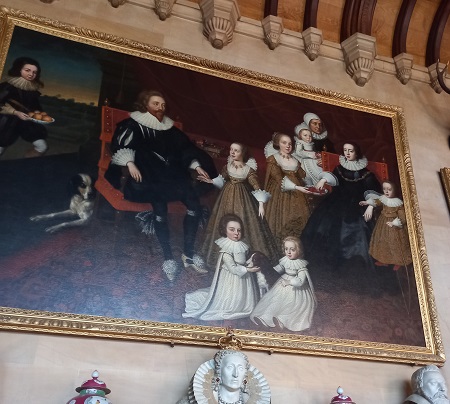
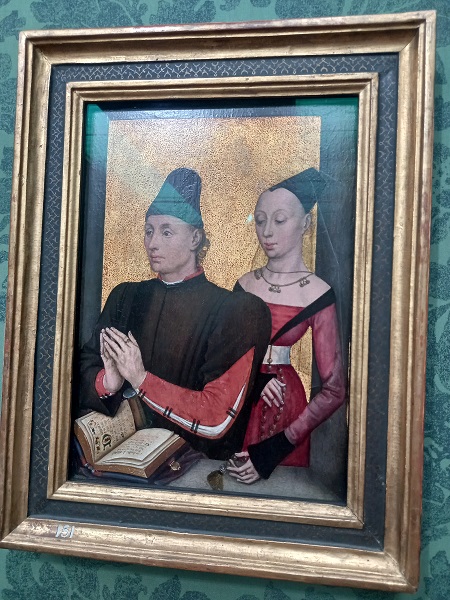
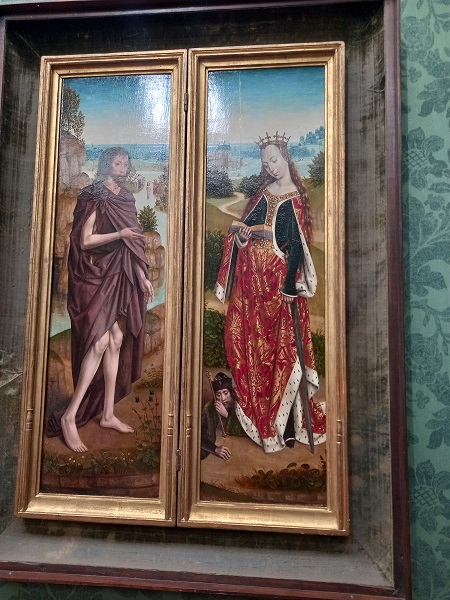
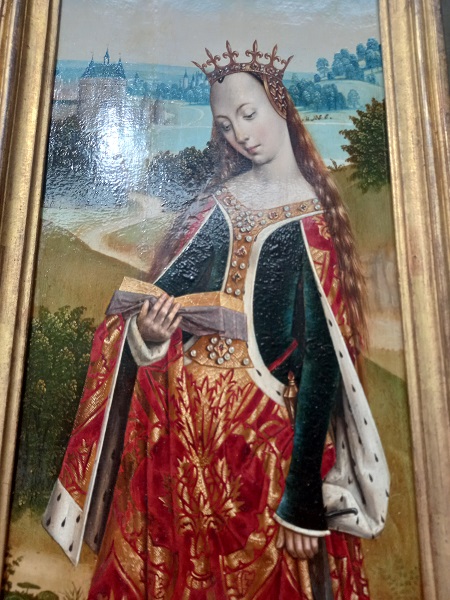
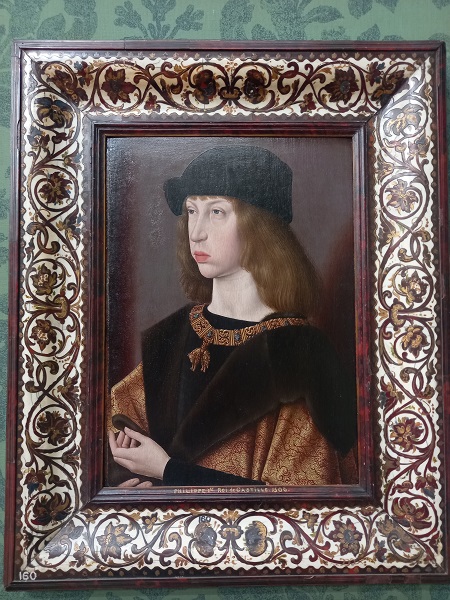
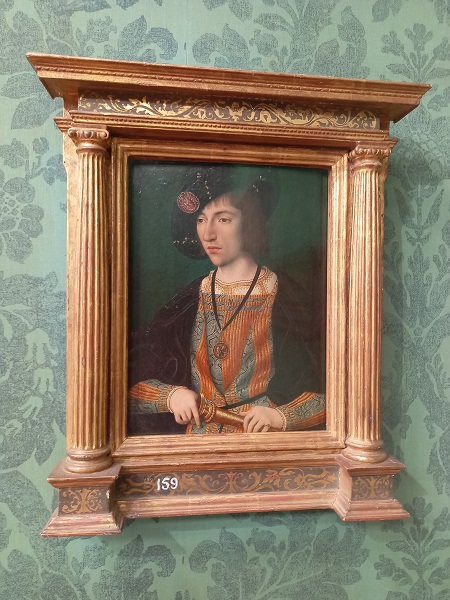
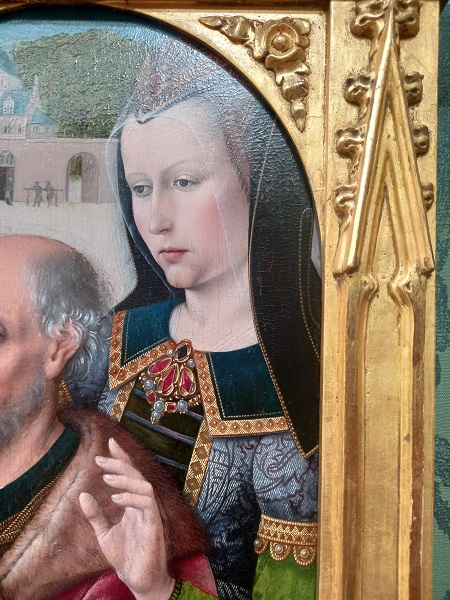
Of particular interest to me were all of the gorgeous medieval and Tudor era pictures in one of the galleries. I was talking to one of the volunteers about how we use these for costume research for re-enactment.

This dress in particular has a really unusual neckline and jewellery. The painting dates from the late 1400s.

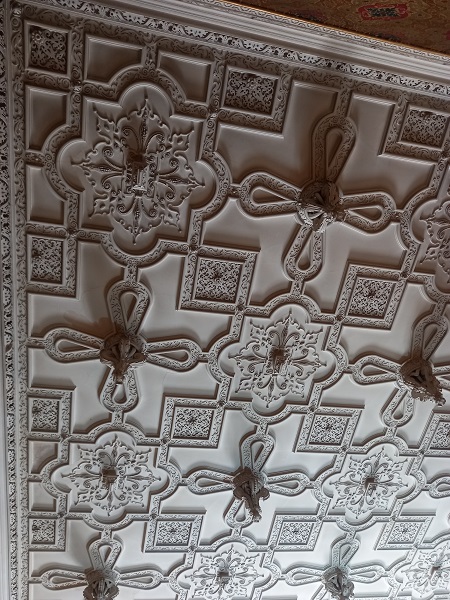
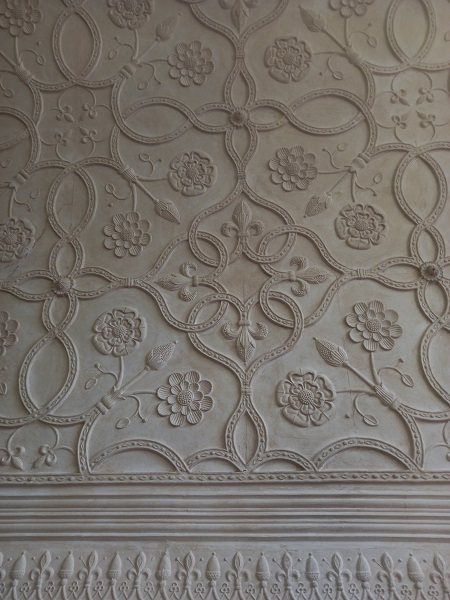
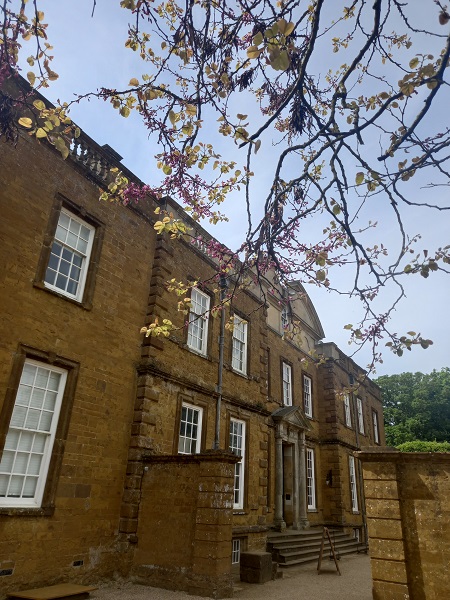
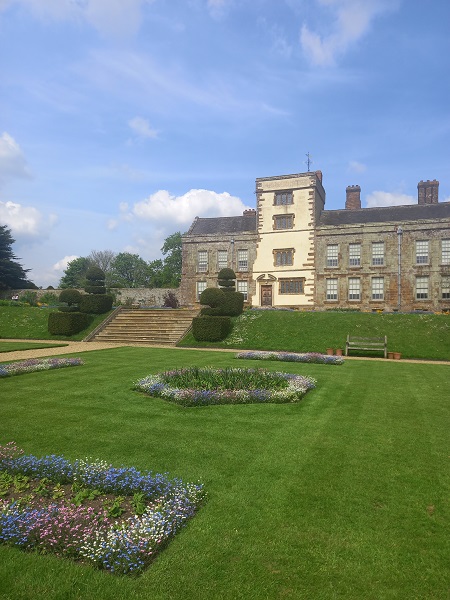
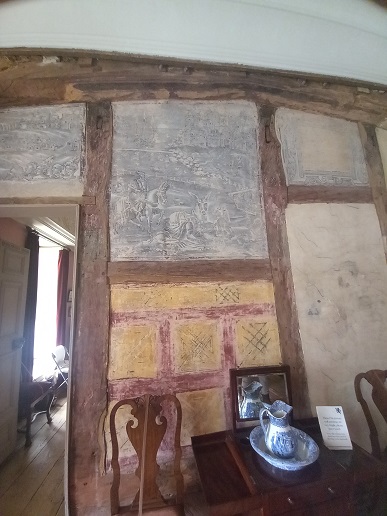
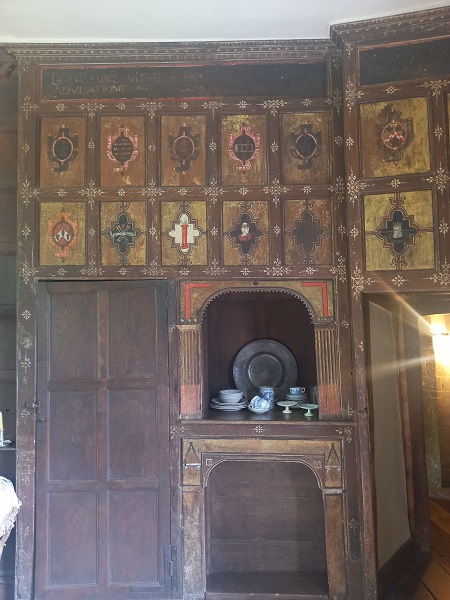
My last house of the week was another gorgeous Tudor one, that has remained in the same family for all of its 400 years. Canons Ashby in Northamptonshire was built by the Drydens, and has one of best plaster ceilings I have ever seen, especially for small house. There were also some really unusual wall painting in one of the bedrooms, and restored heraldic painting in the servants hall.

I have made a list of all the Trust properties that I have ever visited, I am now up to 95, out of over 500, so it will take me a while to see them all. These include the nature reserves and coastal areas as well. I believe that I get excellent value from my membership, and absolutely love exploring all of these places. There is always something unexpected at every property, whether it be needlework or some fascinating fact.

I have now caught up with all of the travel posts from 2024, so now it is time to catch up with the last of Cordoba, and life here in Spain, before my travels start again in a couple of weeks. Until next time then, have fun, take care, stay safe and thanks for visiting.

The green, green grass of home

My next stop was to revisit some of the places that I used to go as a child. I grew up in the south west of England, in a town called Cheltenham, famous for its Regency architecture, (think Bridgerton sets), and for holding the Gold Cup horse race. Like most children, I didn’t really appreciate the place very much, I never really felt as if I fitted in very well, moving to Yorkshire definitely felt more ‘me’.

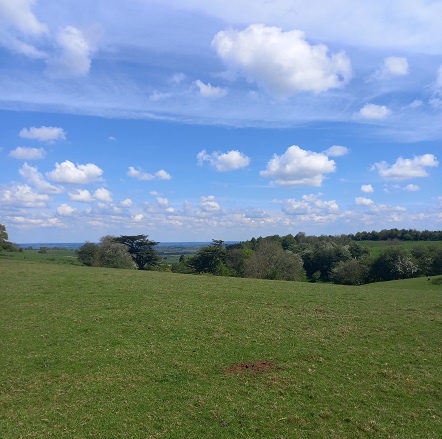
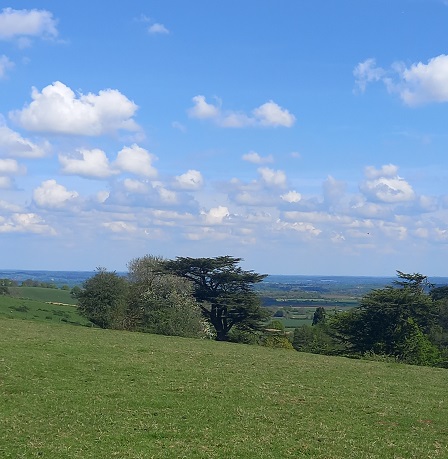
However the area is very beautiful, and as the Cotswolds kept coming up on my Instagram feed, I decided to spend my camping time there, before coming back to Spain. I was very lucky with the weather, the week was mostly very sunny, so much so that I got sunburnt, and I was able to visit some stunning places. The Cotswolds have a lot of natural beauty, quintessentially English with rolling hills and lots of farmland.

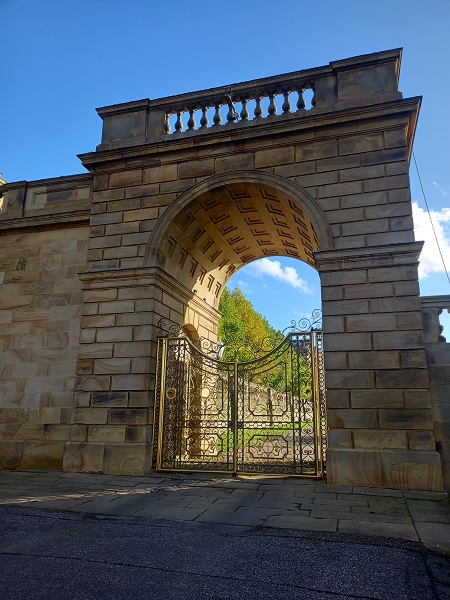
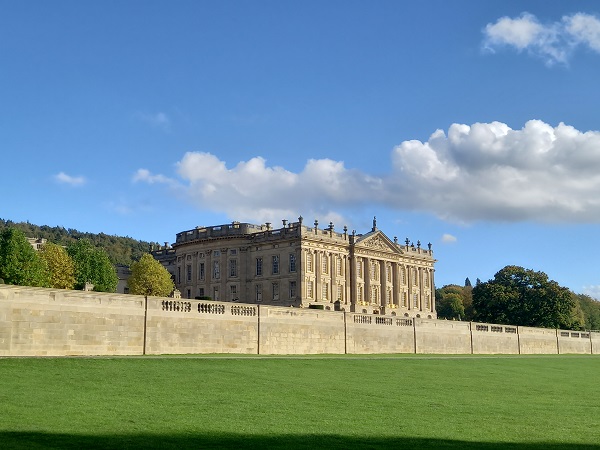
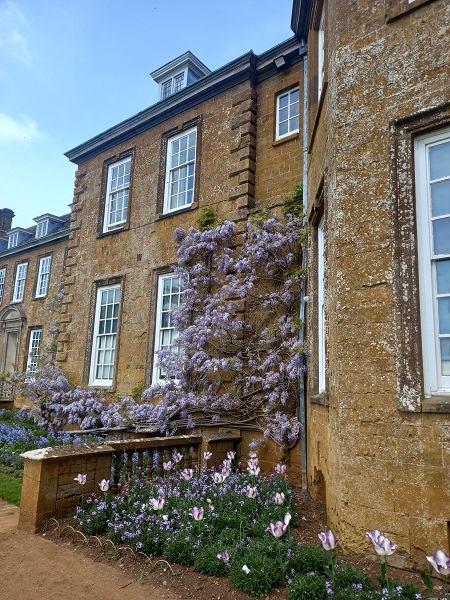
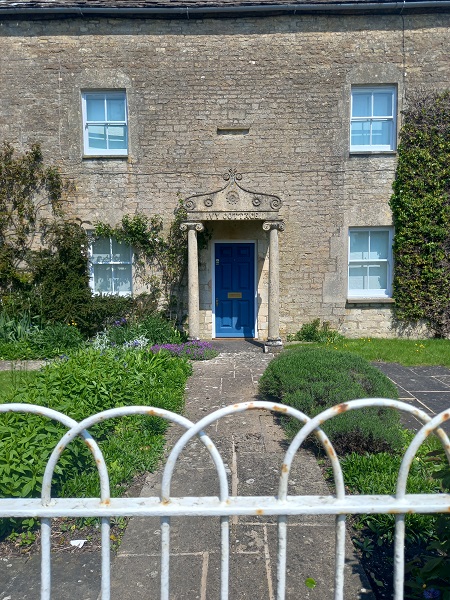
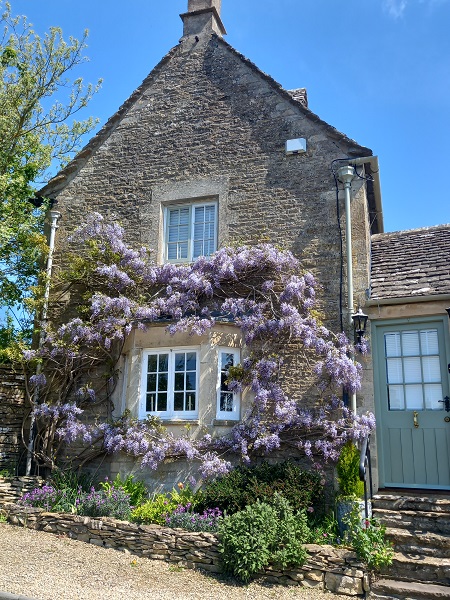
However, the area is also famous for the beautiful houses built of the local stone, which is a gorgeous honey colour. There are so many cute villages here, it was hard to chose where to visit. The Trust has so many properties in the area, and I tried to see as many as I could in the week.

My first stop was Hidcote, famous for its garden more than the house.

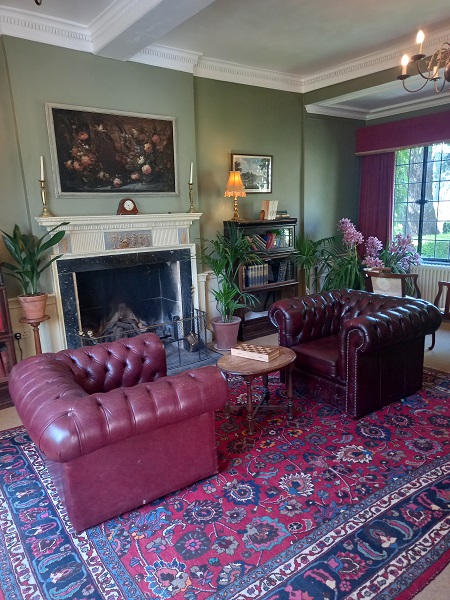
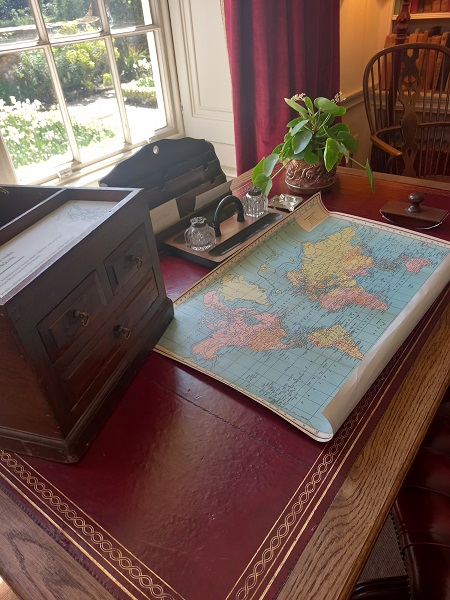
Lawrence Johnston, who created it in the early 1900s, was a passionate gardener and plant collector, who travelled widely to collect specimens. There are only a few rooms open in the house, but it looks like a gorgeous place to sit and plan your travels, aided by your map of the world, complete with the Empire in red!

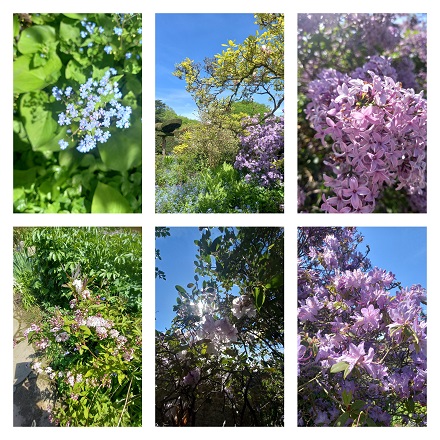
It was such a brilliant day to visit, the garden looked stunning, and I just loved all the delicate rhododendrons and lilacs everywhere.

Even though I love living in Spain, one of the things I do miss are the seasonal plants you get in England. We have the most wonderful cactuses, and bougainvillea year round, but there is something very special about spring plants that only have a short life.

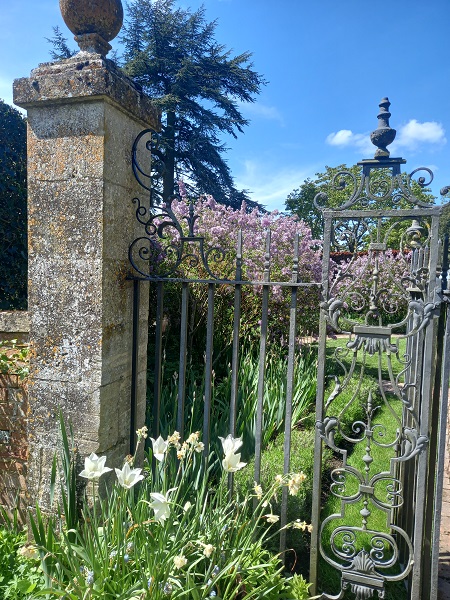
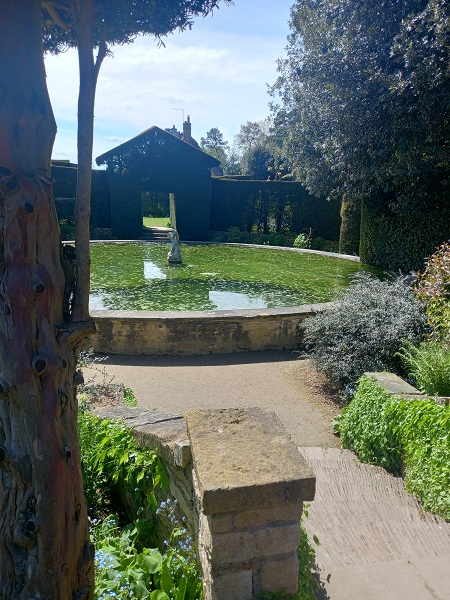
Like many gardens, Hidcote has a series of different areas, with gorgeous walls, gates and architectural features.

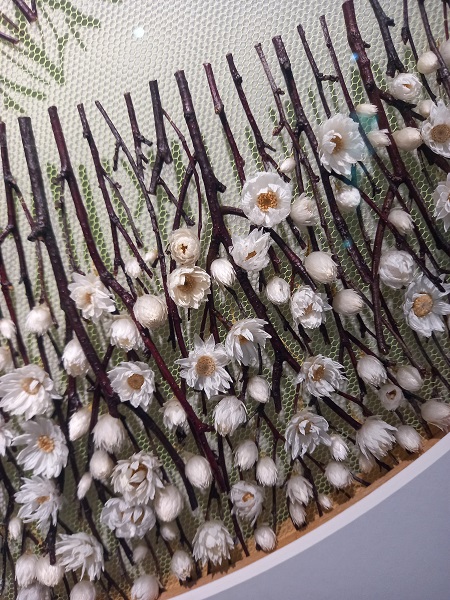
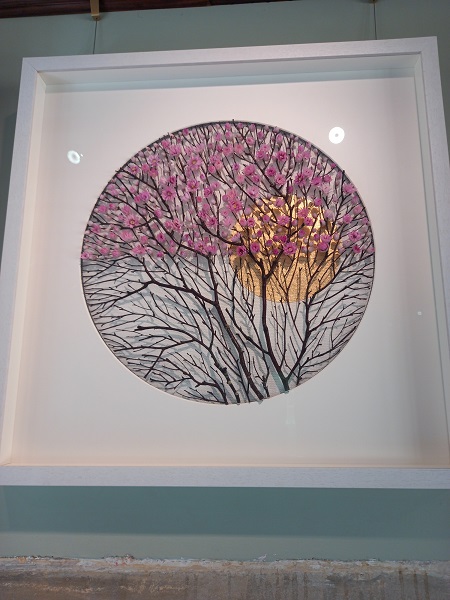
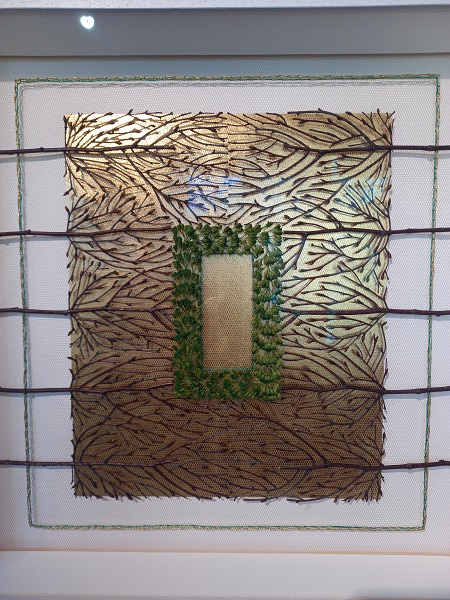
I was especially lucky, as there was a stunning exhibition on by an embroidery artist, Olga Prinku, that was a complete surprise. I usually try to find a special textile treasure at each house I visit, and her work is just amazing. She embroiders on tulle, using found materials and dried flowers. I have never seen anything like this, so beautiful and original.

I especially love these ‘dandelion clocks’.

She had also done some work specifically inspired by the Hidcote garden, one of the box hedges.

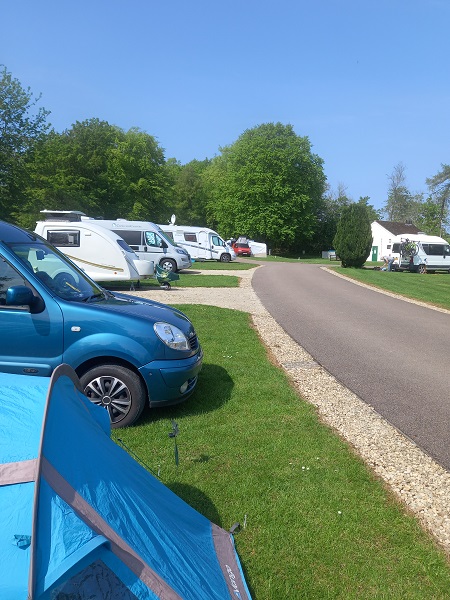
I camped at Chipping Norton, just on the border between Oxfordshire and Gloucestershire, and the campsite was lovely as always, such nice clean facilities and welcoming staff. I love sitting watching new people arrive every day, and admiring all the different sorts of vans, and this visit I had some neighbours who had a very cute little pod caravan.

My second Trust visit was to the village of Bibury. The village is the location of a Trout Farm, and I remember visiting that, and paddling in the stream as a child. It was full of Japanese tourists, as apparently the Emperor of Japan visited once and loved it, so it has become very popular.

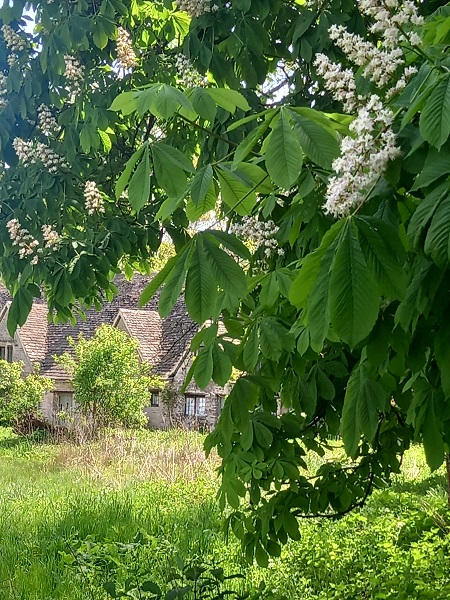
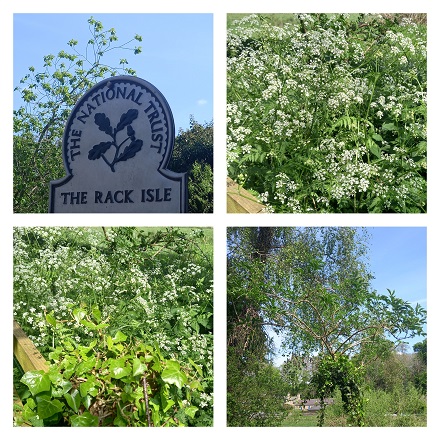
As well as there being many beautiful houses in the village, the Trust looks after a place called Arlington Row, a 17th century terrace of weavers’ cottages near the river, as well as Rack Isle, between the Arlington stream and the main river.

Again there were so many lovely spring flowers, ever the weeds are pretty here.

As it was quite hot, I spent more time at the campsite that week than travelling. I was quite happy after all my long days of driving through France to just sit and read my book and watch life on the camp.

There were a couple more visits later in the week, which I will tell you about in the next post, but it was a lovely relaxing time, and I am so glad I went back to the area. I would definitely recommend it if you are looking for a location that offers some of the very best of the southern English countryside. Until next time, have fun, take care, stay safe and thanks for visiting.

Home is where the needlework is

I had chosen to break up the journey back from the shuttle to my sister’s in Worcester with a brief stay in Surrey, so had to pick from a number of lovely Trust houses in the area, as there are so many there. Its not an area I have ever visited before, but is definitely on my wish list to go back to, along with Sussex, and the rest of Kent that I didn’t have time to visit last autumn. It is just so beautiful in that part of the country, a very different beauty from my lovely Yorkshire, so green and wooded and just so pretty.

The first stop, on the way to my campsite was Polesden Lacy, which is in a stunning location with views across to the neighbouring hills.

I was also thrilled to see some rhododendron, my first for about three years. I used to love seeing them in the spring in Marsden, usually they have all gone when I get back in June. They are such beautiful flowers, and it was brilliant to see cowslips and blossom as well.

This beautiful house was used as a party house, not a home, and this is reflected in the way that the house was decorated. It had very much an art gallery feel, with some gorgeous paintings, and a very well constructed Tudor style corridor and plaster ceiling. The ballroom shows you the kind of opulence that the guests enjoyed.

However it was the little personal touches that I liked best. The writing desk with its set of dictionary and thesaurus, along with the sponge for wetting your stamps, and the seating diagram for dinner. Those give you a real sense of who was there, a sense of the place, which is what the Trust aim to do, rather than just be a collection of beautiful things.

I had one night at the Horsley Camping and Caravan Club site, this used to be a fishing lake for a large house, and was used as a recovery camp after the war, when the soldiers used the lake for swimming as well. I love the way that the Club preserve the history of their sites, many have links with WW2, and have been army camps or hospitals.

I was in a lovely little woodland camping area, and in the morning was able to watch two woodpeckers while I ate my breakfast. There were also lots of ducks and some baby geese had just hatched.

I have recently bought some new plates for my van, I had been looking for some nicer ones since last year, when my friend Sharon joined me in Mablethorpe in a rented van that had lovely plates. When in Yorkshire we found some similar ones and we split the set of four. I am very pleased how well they co-ordinate with the little rug in the van, and the National Trust rhubarb and rosemary scone that I got as a take out from Polesden Lacy was delicious!

The following day was a bit damp as well, so I only stopped at one house on the way to Worcester, but had a lovely drive through Oxfordshire, past Henley and along the River Thames. My chosen house for that day was the Tudor Greys Court, and it was such a contrast to Polesden.

Bought by the Brunner family because they loved the view, the house and outbuildings, along with a walled garden, were just full of personal touches, including some wonderful books in the library.

These aren’t the most beautiful of books but such a lovely eclectic set, with titles such as Nonconformity, The Making of the Earth, and Russian Literature, they look like a wonderful read!

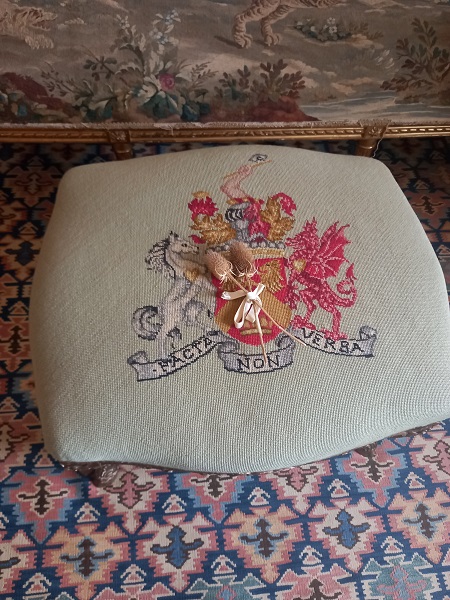
The best thing about the house was the wonderful amount of needlepoint there, done by Lady Brunner. I especially loved the blue and pink rose design that she had clearly taken from the fabric used in the bedroom. There were so many lovely pieces, cushions, rugs and a hat pin pincushion in her bedroom.

It was a really gorgeous property, and also very much a home, full of little treasures such as the quilt made by a volunteer that was on one of the beds, and the cupboards still full of the housekeeping supplies they had used. Although I love visiting the grand stately homes, this one has to one of my favourites, not least because I know who made all of these wonderful things.

I spent the weekend after that at my sister’s, celebrating my great niece’s 2nd birthday, which was lovely. I have never seen a child so excited about candles on a cake! Then it was off for another adventure, and another new campsite, which I will tell you all about next time. Until then take care, have fun, stay safe, and thanks for visiting.

A land of lochs

I spent last week in Scotland, a wonderful place and one that I am so looking forward to returning to this summer. My Instagram feed is full of beautiful views of the country, and it was amazing to be there, especially after a month in Morocco. There is such a huge contrast between the two places, and it was strange being surrounded by so much water, after a month of desert views and palm trees.

I was visiting one of my closest friends. Sue and I met over forty years ago, in the first week at Huddersfield Polytechnic. We have survived motherhood, teaching, and now retirement together and it was brilliant to be able to spend time catching up with her.

She came out to Spain last May to see me, and will be coming again this May with another friend from Polytechnic. Aside from the wonders of travel, the best bit of retirement is being able to spend time with my friends all over the world 😉

Sue has lived in Scotland for the past few years, after many years in Yorkshire, and she has the most gorgeous cottage with views of the mountains. Just look at these! I spent so much time just sitting watching the sun and the clouds from the lounge windows.

There were amazing sunsets as well. I have missed my Spanish sunsets.

We had quite a busy week, even though I was only there for three full days, and I met lots of her friends and neighbours as well as exploring the area a bit more. She lives not far from Loch Lomond and so the countryside is stunning.

We went to Inverarary for lunch one day, and then on to a heritage property, the Auchindrain township.

This is a set of smallholdings, set in the valley just up from Inverary, and it has such a beautiful feel to it. You can really get a sense of what life was like there, getting water from the small burn that runs through it, and the farming that sustained the inhabitants. The township was inhabited from the late 1700s until the 1940s, and although restoration work is ongoing, nature is reclaiming some of the buildings.

It seems very fitting that the local wood, stone and heather was used to build these dwellings, and they are now decaying in a very beautiful way, being covered in mosses and lichens.

We also had a quick visit to Oban, stopping off at Loch Etive on the way for lunch.

I plan to come back here for longer in the summer, as I have about six weeks in Scotland planned between the end of July and September. I can’t believe I will be driving Katy on these roads, so excited!

I loved Scotland when I went two years ago with my sister Jacky, and am going back to Skye as well as meeting with her in the border area early on in the trip.

I also visited St Conan’s Kirk, on the shores of Loch Awe. Although the church looks really old, it was only finally completed in 1930, and was a labour of love for Walter Douglas Campbell, who had bought an island and built a house nearby.

It is such a beautiful build, with its interior arches, mix of architectural styles and Gaelic inspired design everywhere.

I love these two stained glass windows, with the beautifully Arts and Crafts inspired armour designs on the angels.

A quick trip back to Ellen’s, for a quiet weekend, and I am now in Marsden in Yorkshire, where I used to live. I am cat and house sitting again, as I did last year. This time thankfully without the heavy snow that meant Katy and I couldn’t leave the village and go camping as planned.

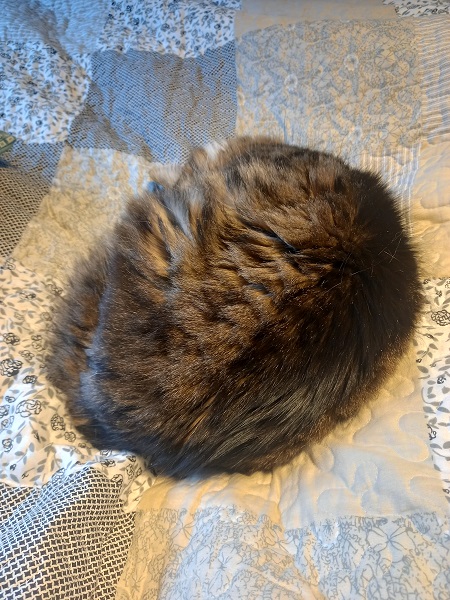
I will be here for the next two weeks with a very cute and furry cat Frankie. I am also spending time catching up with my friends and ex-colleagues here, cuddling new babies, and taking a few trips down memory lane on walks. I also will be finally posting about my visit to Cordoba in November so come back soon for that.

Until then I hope that you have fun, take care, stay safe and thanks for visiting.
Beating my personal best

As you may know I love visiting historic places and on my recent UK trip managed to go to eighteen Trust houses over ten counties of England. In addition I visited six of the Trust’s coastal areas, and six English Heritage properties. There were also seven museums, three cathedrals, two re-enactment events, three festivals, and a re-union, as well as five meet ups with old friends. I think that must count as my busiest time yet.

In one week, coming from Yorkshire after my reunion, via Cambridge to Canterbury, I visited no fewer than five properties in three days, which has to be a record for me. I had planed my route to Cambridge to enable me to see two properties on the way there, two the following day, and then on day three I had an epic drive which also involved the M11, M25, Dartford Crossing and the M2, so was feeling very accomplished by the end of that week. As I mentioned in my last post, there has been some interesting driving this summer, but the M25 and Dartford Crossing were not as scary as I had thought they would be. In fact Katy and I really enjoyed the views from the Dartford Bridge.

The properties really varied, and all had their particular interests for me. The first stop was at Woolsthorpe Manor, the family home of Sir Isaac Newton, and the location of that famous apple tree.

Many years ago I did a course on maths education which included a module on the history of mathematical thought, with a study of Newton’s famous text included in it, so it was very interesting to see one of the earliest editions.

The house was really well interpreted, we had a very knowledgeable volunteer tour guide, and I loved the fact that they had recreated Isaac’s bedroom, putting the drawings on the walls that he did to work out his principles, and recreating his letters and workings out at his desk.

The tour focused a lot on his mother, Hannah, as well, and her life as it was the anniversary of her birth, so that was very interesting, as it was very much about his family life, not just his work. I wonder what she used these beautiful wall cupboards for.

One of the loveliest things there was that the tour started at the tree that inspired his work on gravity, and ended at a sapling that had been grow from a seed taken to space by UK astronaut Tim Peake, neatly linking the story of gravity. The original tree fell after a storm and a new one grew from its trunk.

The next house was very different, the grandeur of Wimpole, and its large estate was a real contrast to the tiny farmhouse.

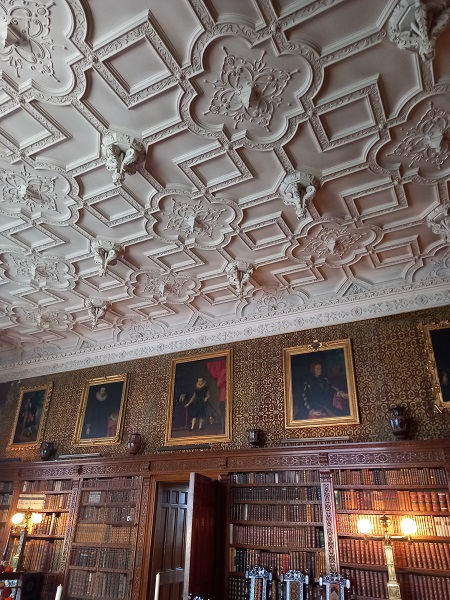
This mansion was beautifully decorated, looking like it could have been another set for the Bridgerton series, with a stunning library which had very unusual décor, and a chapel with a blue and gold painted ceiling.

I came across a very unusual bed hanging set there. Unlike many of the others it wasn’t beautifully embroidered or made of velvet, it looked far more like it had been draped in fishing nets. I can’t say it was a particularly attractive look, but certainly unusual.

There was also a large bath, installed in the basement, alongside one of the early Victorian showers. I would like to imagine people sitting in here sipping champagne maybe, before changing for dinner.

The next day I went to Ickworth, This has been on my wish list for a very long time for its stunning architecture, It is actually in Suffolk, but was nearer the border with Cambridgeshire, so I had left it for this visit, rather than the previous week.

The house was built to be a showcase for the family’s art collection, and again I had a excellent guided tour. It was really splendid, with some very impressive formal rooms. My favourite area was the central part and the floors under the rotunda, which housed a beautiful library.

I also loved this Italian room, its décor reminded me so much of the palaces we visited in Venice earlier this year.

There was a large collection of silver fish containers, the heads being hinged. I am unsure what they were, perhaps for snuff, but they were gorgeous.

That afternoon I visited Anglesey Abbey, it was a gorgeous sunny autumn day which made the visit wonderful, as it has such lovely grounds. The last owner, Lord Fairhaven, spent a lot of his time developing the gardens. This house hadn’t really been on my wish list, I was just really visiting as I was in the area, but it is definitely one of my all time favourite Trust houses.

It is such a beautiful house architecturally, with its original abbey architecture and Jacobean style ceilings, and the collection within it is stunning.

My favourites were the portraits everywhere of Tudor monarchs, many within the wonderful library.

As well as some beautiful embroidery, including some goldwork from royal standards, there was also a very touching textile treasure.

Lord Fairhaven specified that the house was to be kept as it was, his home, after it was given to the Trust, and his donations included his entire wardrobe. This is such a wonderful glimpse into his life, and really personalised the visit for me. I could imagine him choosing a jacket to go and walk the grounds in, or his valet picking out a pair of shoes for a formal dinner.

There is also a wonderful collection of paintings of Windsor Castle in the house, which form a very interesting record of its development.

The final house in Essex was another that had been on my wish list and it was amazing! You enter Audley End and drive past the house to get to the car park, so you get a real sense of what it must have been like to arrive there as a guest.

The story of the house is fascinating as well, it dates from the 1600s and was originally three times as big. Sadly there are no interior pictures allowed but there were incredible plaster ceilings, this has been a theme of the houses that I have visited this summer, and I do so love them. I think Jacobean architecture is my favourite style, I just love the sheer exuberance of it!

This picture of the saloon is from the EH website, the portraits of past kings were also wonderful, but that ceiling is amazing.

It is again very well interpreted, and the current focus is the family who lived there during the Victorian era.

The five properties were all so different, and really highlight the value of preserving these parts of our history. I think my memberships of the National Trust and English Heritage represent exceptional value for money, and I am very pleased to think that I am helping to keep these houses cared for for future visitors.

My next post will be all about my travels in Kent, my final county in England, where I visited so many lovely heritage properties. Kent was probably my favourite county out of all of the South East, and it is so big I hardly scratched the surface of all the lovely places there.

Until next time, have fun, take care, stay safe and thanks for visiting.
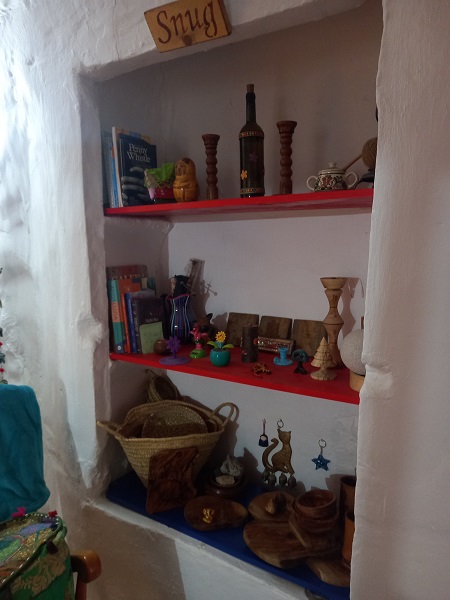
One of my favourite roads in England

Now I have been driving for a while, and have completed about 8,000 miles in Katy I have a few favourite roads, and some that I have added to the, ‘only ever to be driven on once list’ ! The latter category includes the Kirkstone Pass in the Lake District, Porlock Hill in Devon, and a recent off road experience where although following the Sat Nav, we ended up looking like we were driving through the reservoir, rather than round it, on a very rough road that resembled a riverbed in parts! Very Indiana Jones, but as Katy is not a jeep we won’t be doing that again.

However, I have found lots of roads that I love driving on. There is a beautiful route from Ellen’s to Huddersfield that has the most amazing views. That road was also my first inadvertent night driving experience last year, after getting stuck in traffic in Sheffield, good job I know it well as it is very winding, with no street lights!

The roads in Norfolk were also lovely, lots of long straight roads with little traffic. One of the things that I loved about those was all the woodland, I had thought Norfolk would be less wooded and hilly than it was, and loved the scenery, as well as all the cute villages.

However I think one of my favourite roads of this trip has to be the A12 in Suffolk. It was such a pleasure to drive on, beautiful scenery, and some stunning places along the way. I stayed at the Kessingland Caravan and Camping Club site near Lowestoft for a week, and had lots of time to visit the coastal towns and some of the Trust properties in the area.

My first visit was to Sutton Hoo, this has been on my list ever since seeing the treasures about 20 years ago in the British Museum. There are replicas at the visitor centre as well and their beauty is just amazing. However, it is the story of the site that fascinates me, and others, and it was made into a film in recent years, called The Dig. The story of the owner of Tranmer House was really well interpreted within the house, with lots of original material from the time of the dig.

Edith Pretty was very interested in archaeology, partly as she had spent time during her childhood travelling with her family to various excavations. The discovery of the ship burial came about due to her interest in the mounds on her land. It is incredible to think that had another person lived in the house, without that interest, none of this might have been found. One of my favourite rooms was interviews with people who have worked at the site over the years, it really makes the story come to life, as do the recreations of the finds, like this amazing helmet.

The house is in a stunning location as well, it is worth a visit just for the walks and the views of the river. I was lucky that it was a glorious day, and I had a fantastic time. It really was one of my very best days out.

I also visited various of the quiet and unspoilt Suffolk beaches, like in Norfolk, many are nature reserves and are great for a wander, finding smooth pebbles and interesting shells. I could spend ages on beaches just looking at pebbles, I find them fascinating. And lovely clouds, always lovely clouds!

I also went to Aldeburgh for the afternoon, another very warm day. Loved the shell sculpture on the beach just outside the town, the pretty painted cottages, and enjoyed wandering along the shoreline looking at all the cute huts selling fish.

Southwold was my favourite place though, not so much for the beach front, which has another one of the very ugly concrete walkways that seem to be everywhere in this area, but for the beach huts, and the town itself, which was full of gorgeous architecture.

I think these beach huts would make fantastic tiny homes, they are so pretty and I love all the personalisation of them with artwork and colour schemes.

It has got very warm again here this week, it is 25 degrees here today, so I am going to take the opportunity for some beach time here over the next couple of days. I have been doing some jobs around the house, like painting outside, so am well ahead on the ‘tasks to do’ front.

Hope that you are all having a lovely time, see you again very soon with more Suffolk loveliness. Until then, have fun, take care, stay safe and thanks for visiting.
Well worth the twenty year wait!

I am very pleased to tell you that I did get to view the Marian Hangings at Oxburgh Hall, later on in the month that I was in Norfolk. You may recall that I took a trip with my friend from Spain, Linda, when I was camping at Sandringham, only to find a notice at the entrance to the hall saying that they had gone for conservation.

No-one knew at the time when the hangings would be available, as they were waiting to hear from the textile conservation team at the Victoria and Albert Museum in London. The hangings are in their care, but are loaned to Oxburgh.

Later in the month, when I had moved on round the coast, my lovely friends Allison and Alistair, who were one of the reasons that I went to Sandringham, as they are working on the neighbouring site as wardens during the summer, visited the hall, and sent me a photo of the hangings. They were back! Or so I thought. I was able to fit in another visit to Oxburgh on the way back to Huddersfield for my reunion.

When I arrived at the hall, the volunteer greeting me asked if I had been before and told her about how sad I had been about not seeing the hangings the previous visit. It turns out that they had not been removed from the property. There had been an infestation of wasps, who had built a nest inside the glass casing that houses the hangings! The team from the V and A were going to take the hangings away at a later date, but were very busy, and as the damage was thankfully minor, the house staff had been able to open the room again.

It was a very lucky escape for the hangings, and I am so grateful to be able to see them. These are one of the most significant pieces of needlework in the UK, not only because of their age, but because of their provenance.

That they were stitched by Mary Queen of Scots is interesting enough, but that they were stitched during her captivity in England, designed by her and Bess of Hardwick, and that we know so much about these two women, their needlework, and their inspiration for the designs, is hugely significant. Because of their importance, a lot of research has been done about them.

The hangings at Oxburgh are the companion set of embroideries to the needlework at Hardwick. Those at Hardwick are not attached to background fabric. Many of them are framed in screens, and this work was done by Evelyn Cavendish, the last owner of the house before it was given to the Trust. In total there are over 100 embroidered pieces between the two locations, and it is thought that they were originally meant to be assembled on one piece of cloth.

There may have been other people stitching these pieces as well as Mary and Beth, it is known that Mary had embroiders with her, and Bess employed embroiders as well. What is certain is that the overall project is very much about the two women, their lives and experiences. Thus it forms a very significant record of, not only their skills, but their challenges and inspirations.

So many of the pieces are symbolic, and portray both icons that we would recognise, such as animals from illustrations, and tales such as those from Aesop’s Fables. Others are more complex, and textile historians have been left to try and unpick their meaning. Many of the pieces have mottos, or have been designed to portray something specific, particularly in Mary’s work, where recurring themes of imprisonment and loss are evident.

It is thought that this choice of a dolphin or delphin is linked to her marriage to the Dauphin of France, as the words are similar. In the piece she has ‘signed’ herself as MR with a crown, even though at that point she had lost her crown in both France and Scotland.

While she was working on these needleworks during the early years of her guardianship by Bess and her husband, George Talbot, Earl of Shrewsbury, Mary was clearly reflecting on the traumas that had brought her to her current situation, and how she could maybe get back to Scotland, her son, and her throne. Sadly that was never to happen, and after many years imprisoned in England, she was executed at Fotheringhay Castle.

I love this quote from the book.

‘In the sixteenth century, women’s writing and embroidery were seen as interchangeable, each a medium of female thought and emotion, each carrying the ‘hand’ of their author’.

I think that is true of women’s textile work in any era, the pieces we make are chosen to express ourselves in different ways, to convey our favourite colours and designs, to celebrate and to commemorate, and to pass on our love to the recipients.

It is thought that Bess’s granddaughter, Aletha Talbot, stitched the pieces to the bed hangings. This means that they are not in the order that the original stitchers intended them to be in, and does mean some of the cruciform pieces have been cut off to fit the hangings, as you can see here.

The hangings arrived at Oxburgh in 1761, when Mary Browne married Richard Bedingfield, but no-one knows how she got them. It is fascinating to think where they might have been in the years since Mary’s death, and how easily they could have been lost forever. They were used as bed hangings until the sale of the house in 1950.

As you know if you are a regular reader here, I am working on my first novel, which is set around Hardwick Hall and one of Bess’s companion needleworks. So I am particularly interested in these pieces. I have read many articles about them, as well as biographies of Bess, and done some other study online, such as this excellent free course from Future Learn, The Life and Afterlife of Mary Queen of Scots. I can recommend this as being a really good exploration of Mary’s life, if you are interested.

My latest read, which I am absolutely loving for its detail about Mary’s textiles, is by Clare Hunter and is called Embroidering her Truth: Mary Queen of Scots and the language of Power. This is an excellent read, with a wealth of detail about Mary’s life, clothing and needlework.

I also have Clare’s other book, Threads of Life: A History of the World Through the Eye of a Needle which I am looking forward to reading next.

There is also another book about Mary’s embroidery by Michael Bath, called Emblems for a Queen, but at £167 on Amazon, I will have to try and find a library copy somewhere!

We have had a very lovely couple of workshops at my sewing group, I posted about the ribbon flower one last time, and this week I led one using fabric applique before embroidery, based on the wonderful designs by Jenny of Elefantz. It was brilliant to see everyone enjoying themselves, and sharing our skills, I am so lucky to have met this very talented group of women. We have more workshops planned before Christmas as well so I will have to slot in a catch up post with all of the textile happenings in Spain in between the summer catch ups.

I hope that you have all a good week, and are not too cold where you are. Friends are posting snowy pictures from Yorkshire and I am glad not be trying to negotiate getting out of the village to get to work, as I used to have to do at this time of year! See you all again soon, meanwhile have fun, take care, stay safe and thanks for visiting.
More Jacobean splendour, and a crafting update

There are many houses that I have visited that look very similar to each other. Sometimes, as with Hardwick and Wollaton Hall, as well as Gawthorpe, it is because they were designed by the same architect, Smythson. Others are similar as they were built in a style that was fashionable at the time.
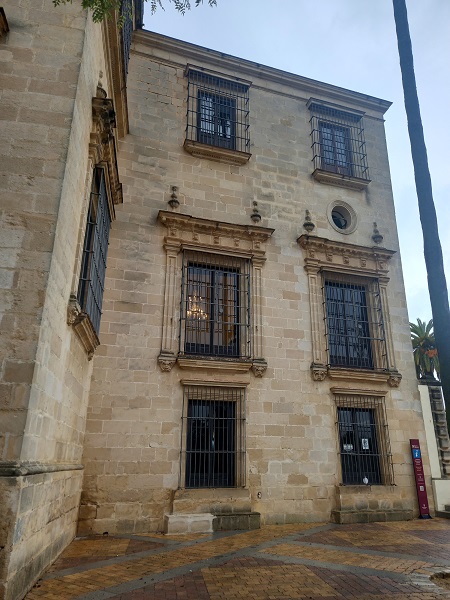
To me, Felbrigg Hall, near Norwich, looks very similar to Hardwick, particularly the top of the original façade.

You may notice, if you are familiar with Latin, that the carving on the top of the hall reads differently to how you might expect it to. We are familiar with, ‘Gloria in Excelsis Deo’, partly from the hymn of that name. The phrase means, ‘Glory to God in the highest’. The carving at the top of the house reads, ‘Gloria Deo in Excelsis’. I am not sure why this is, and neither was the guide. it may be that was a more familiar phrase when the house was built.

The hall was extended, so it has a very different feel at the rear, far more Baroque in style. The original part of the hall was my favourite, partly due to the stunning ceilings again. I am not sure if this one was originally Jacobean, or from the remodel they had later but it it very beautiful.

The hall was full of books, and beautiful works of art, collected by the family on their travels, and they had remodelled rooms to display their collections of stained glass and art, as in this room, specifically decorated to look like an art gallery.

The last squire of Felbrigg, Robert Wyndham Ketton-Cremer was a keen historian, and I thought that one of the loveliest things in the house was his desk.

I particularly love that book with the beautiful cover. I have visited so many fantastic places this summer, but have had to stop myself from buying notebooks at every one, I already have too many unused, but I do love a gorgeous notebook. I can just imaging him sitting in his sunny study writing using that gorgeous inkwell.

I love the human touches in these houses. More than the grand paintings, or the splendid architecture, the thought of someone sitting in the rooms, and appreciating them, is wonderful. As Robert had no heirs, and his younger brother died in WW2, he made sure that the house was safe by passing it on to the Trust in 1941. There are also gorgeous gardens, including a very colourful kitchen garden.

As for textile treasures, I think the prize has to go to these two lovely fire screens in one of the library areas, now sadly faded, but what hours of work must have gone into these.

They look like the sort of thing that would have been bought in kit form, possibly late 1800s, but I am guessing as there was no provenance. They have a look of the kind of paintings people saw on their Grand Tours, then replicated for use in their houses.

I had an amazing time in Cordoba last week, so many things to show you, but I must stick with the timeline and finish the UK posts before I even get to the wonders of France and Spain. It is now probably only little day trips in Katy until end of Jan, so I will have plenty of time for updates on a more regular basis. Katy is loving being in the sunshine, and driving around La Marina, and I am loving the freedom to travel to all those places that are too far for my bike.

I have been busy with some finishes. I have finally put together a set of reindeer for a friend who really loved the ones I did for the fundraiser last year. These I have named Rudy and Ruby.

This year’s fundraiser will be a knitted mouse, I have been knitting dresses while I have been away, so just some shoes to finish and the making up to do.

It has been great to be back at my knitting and sewing groups and catching up with everyone, and practising my Spanish again! We have had the first of a few workshops that we are having this ‘term’, a ribbon embroidery one led by Vivien. I didn’t get it finished, but am pleased with what I did.

I am running another embroidery workshop next week, this time with added bits of fabric applique. The lovely thing is that a couple of people who have never embroidered before the last one really enjoyed it, and have been doing lots more over the summer. These are Lynne’s mandala designs which are fantastic, especially as she had never stitched before. She has used children’s colouring books and traced the designs, as they are a great source of inspiration.

It is still sunny and warm here as well, unseasonably so as it has been around 24 degrees this week. Apologies to all my UK friends and family who are freezing, damp and cold!

I had a very nice, and unexpected visitor last week before going to Cordoba, a fellow van owner, and solo traveller, Debbie, who I met in the summer at a festival in Worcester. She was in my area, on her way to Morocco, so she spent a few days parked up at my house, enjoying, and hiding from, the 29 degrees we had that week. It was brilliant to see her, and I am following her adventures now, as she has just arrived in Morocco. That has been one of the very best things about my travels this summer, meeting so many other people who enjoy van life as I do. Being at home is great, but I still have very itchy feet 😉

I need to stay in one place for a while though, if only to have time to plan the next trips! I will be back soon with more of my textile related adventures in Norfolk. Hope you are all having a good time, wherever you are. Have fun, take care, stay safe and thanks for visiting.