Moral dilemmas

The world of heritage and history is full of dilemmas. What should be displayed, how should stories be told, and how do we deal with the past that doesn’t fit current sensibilities?

I have been to many museums that have tried to address these things, the Pitt-Rivers in Oxford being a particularly good example. Often they will adopt the approach of explaining why these things were popular or acceptable at the time.

Whilst we were in Salamanca we came across a small museum that presented us with small dilemma.  The museum was dedicated to bull fighting. Always a contentious subject, but a very large part of Spanish culture. Should we go?
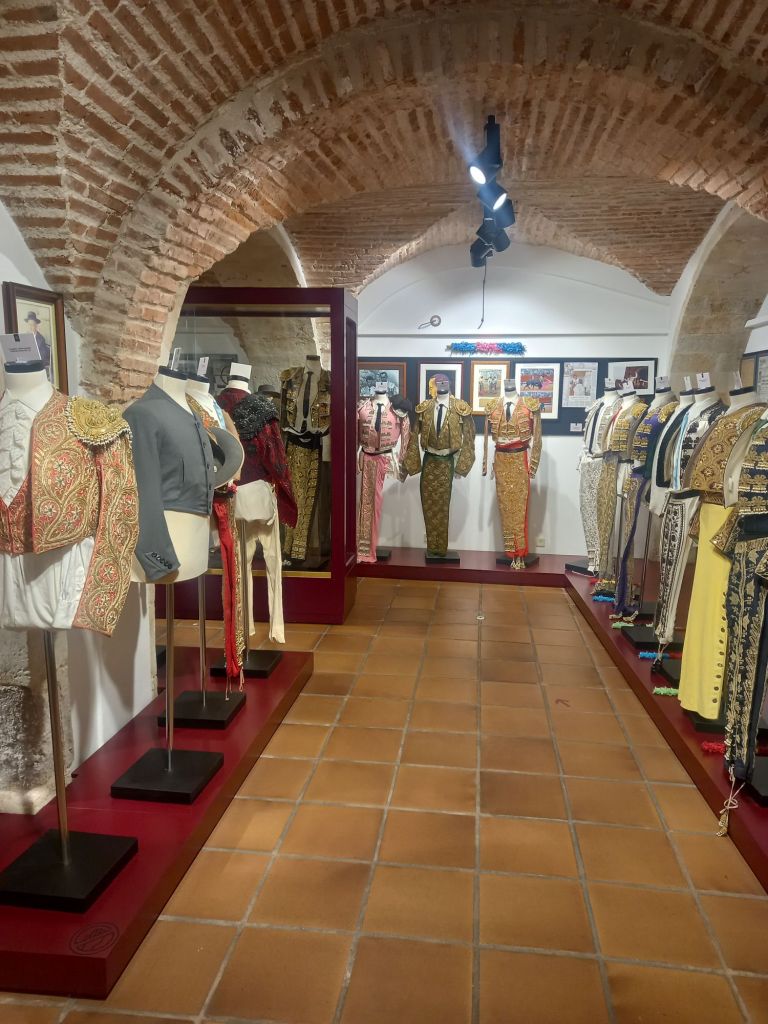
In the end we did, I knew that it would be full of the most amazing embroidery, and I am not of the opinion that things should be ignored because they are difficult. I would never go and watch a bull fight, but was interested to know more.
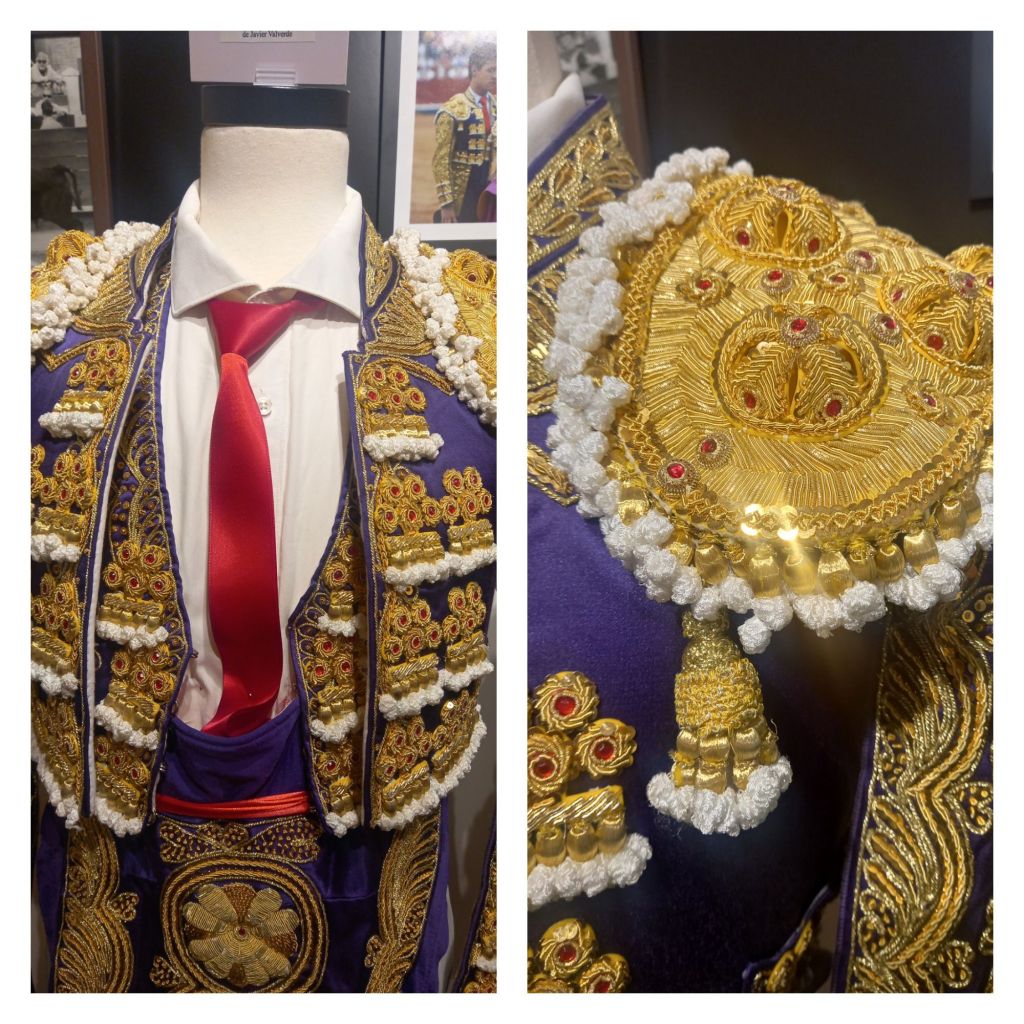
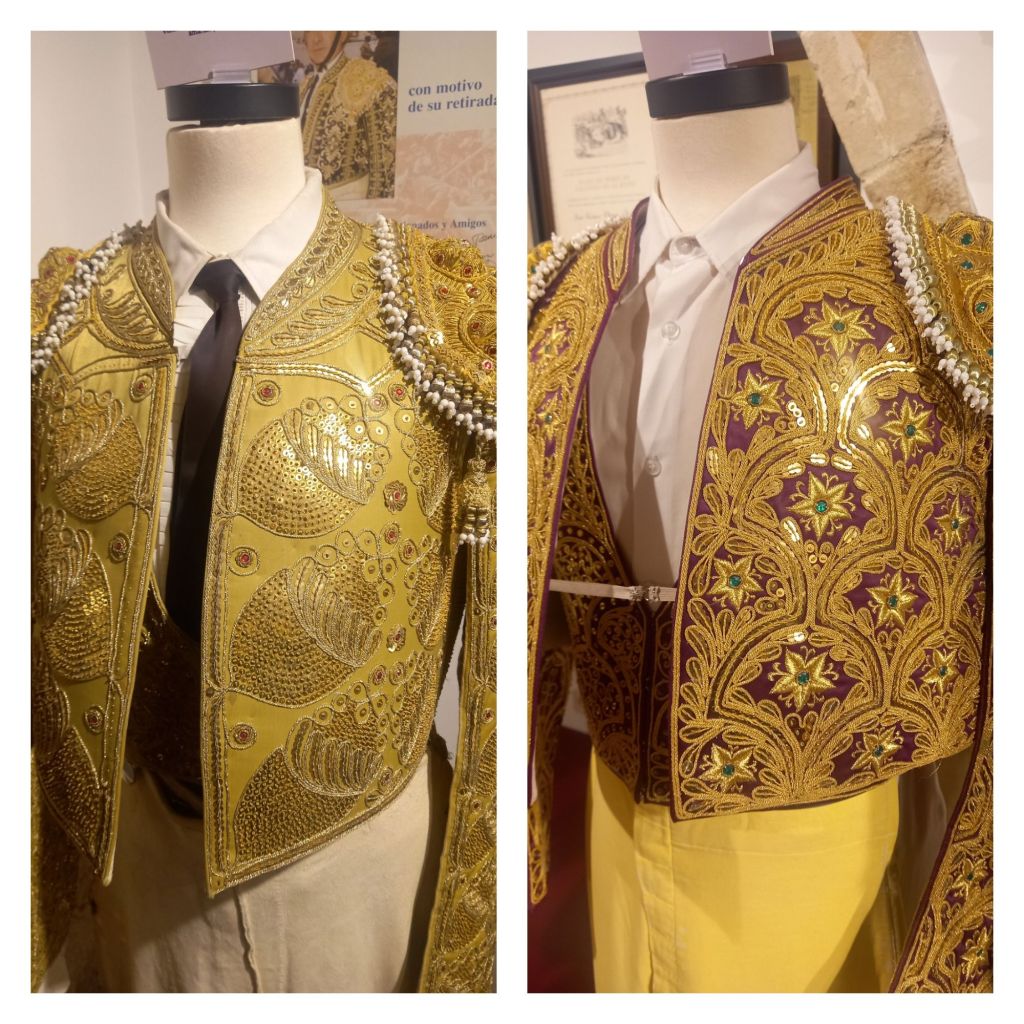
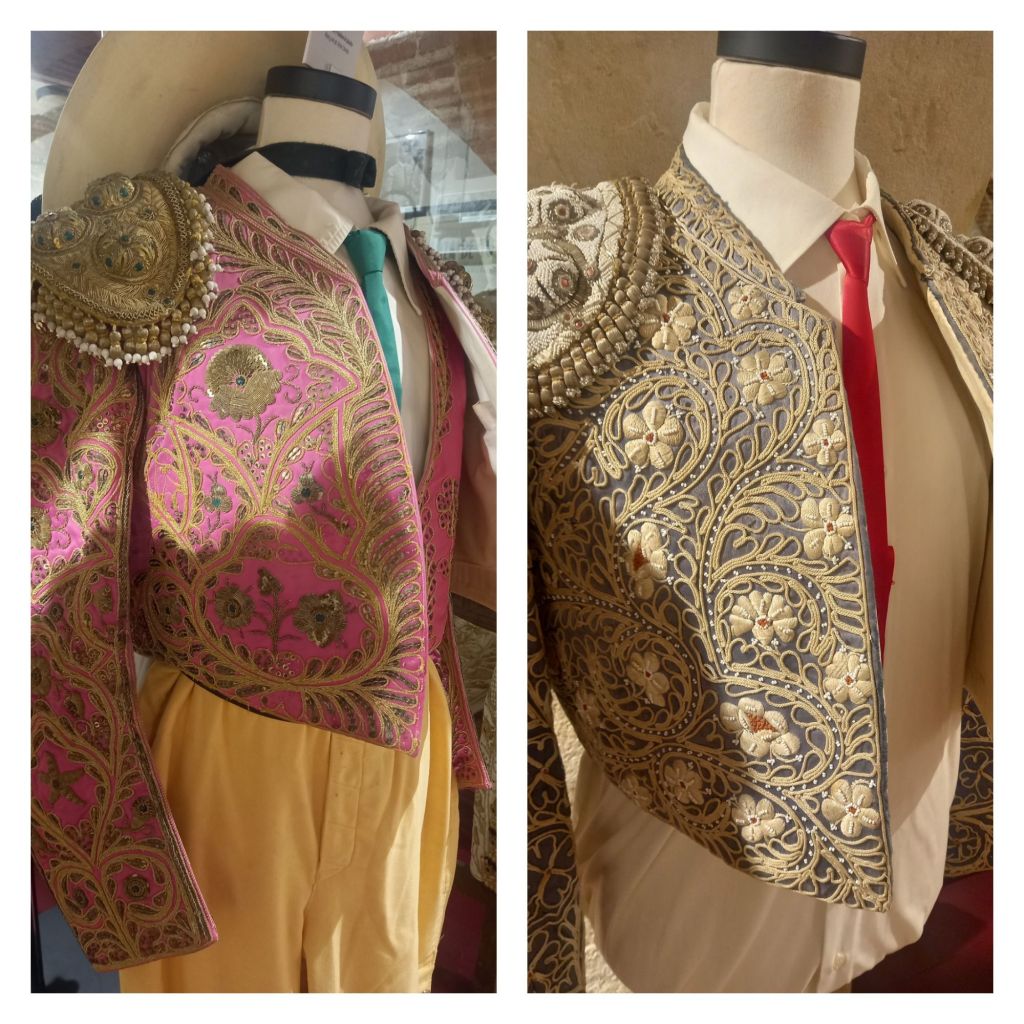
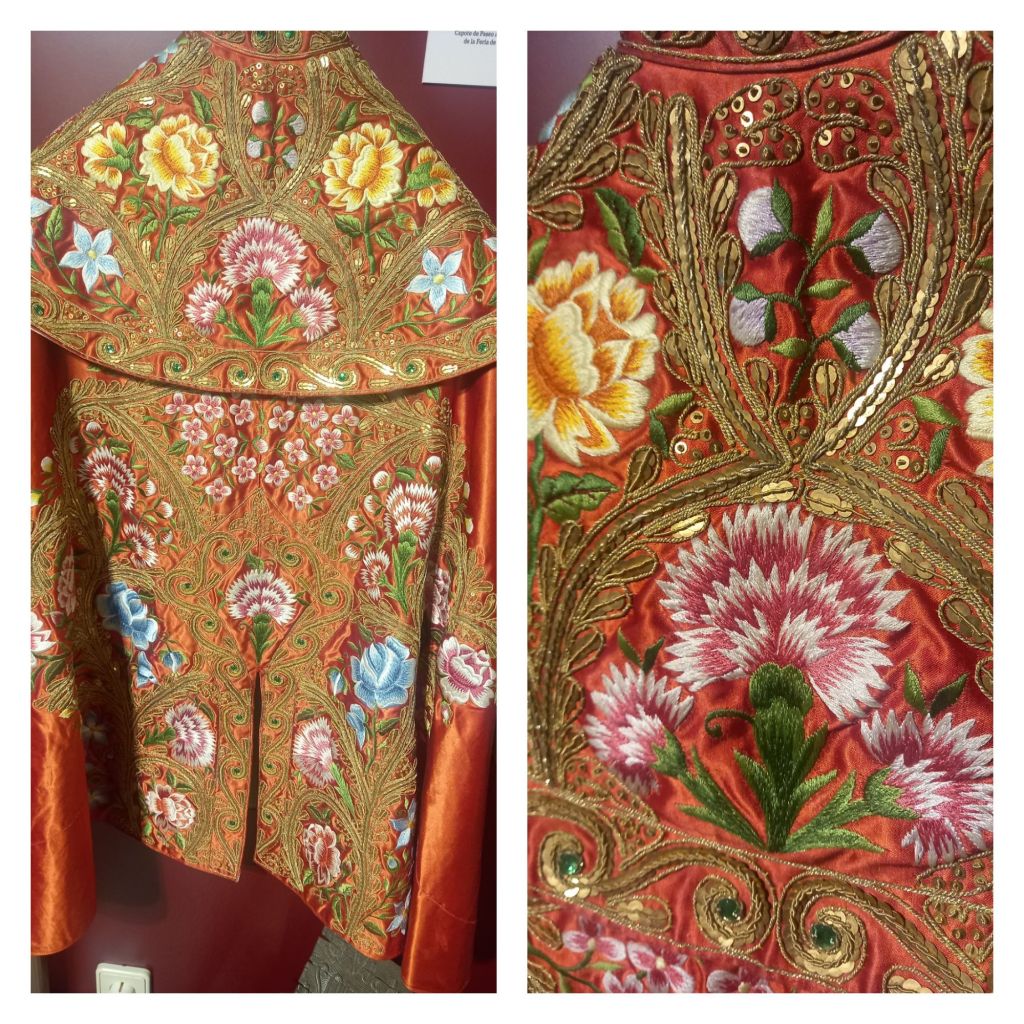
The displays of matador costumes were stunning. Spain does embroidery and gold work for costumes, such as the Moors and Christians, and the Semana Santa festivals, to such a high standard. 
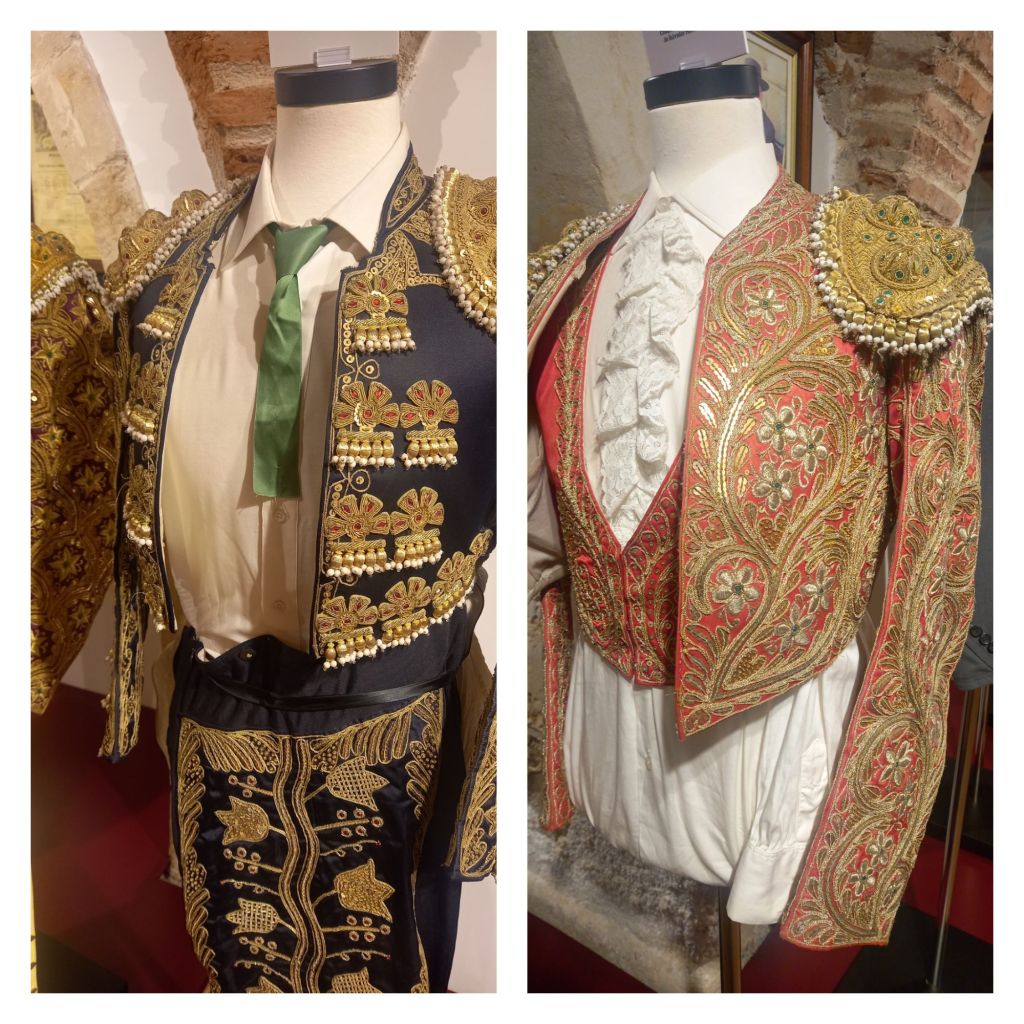
It is particularly impressive as these costumes would be seen from a distance, rather than close up. The level of detail is amazing.
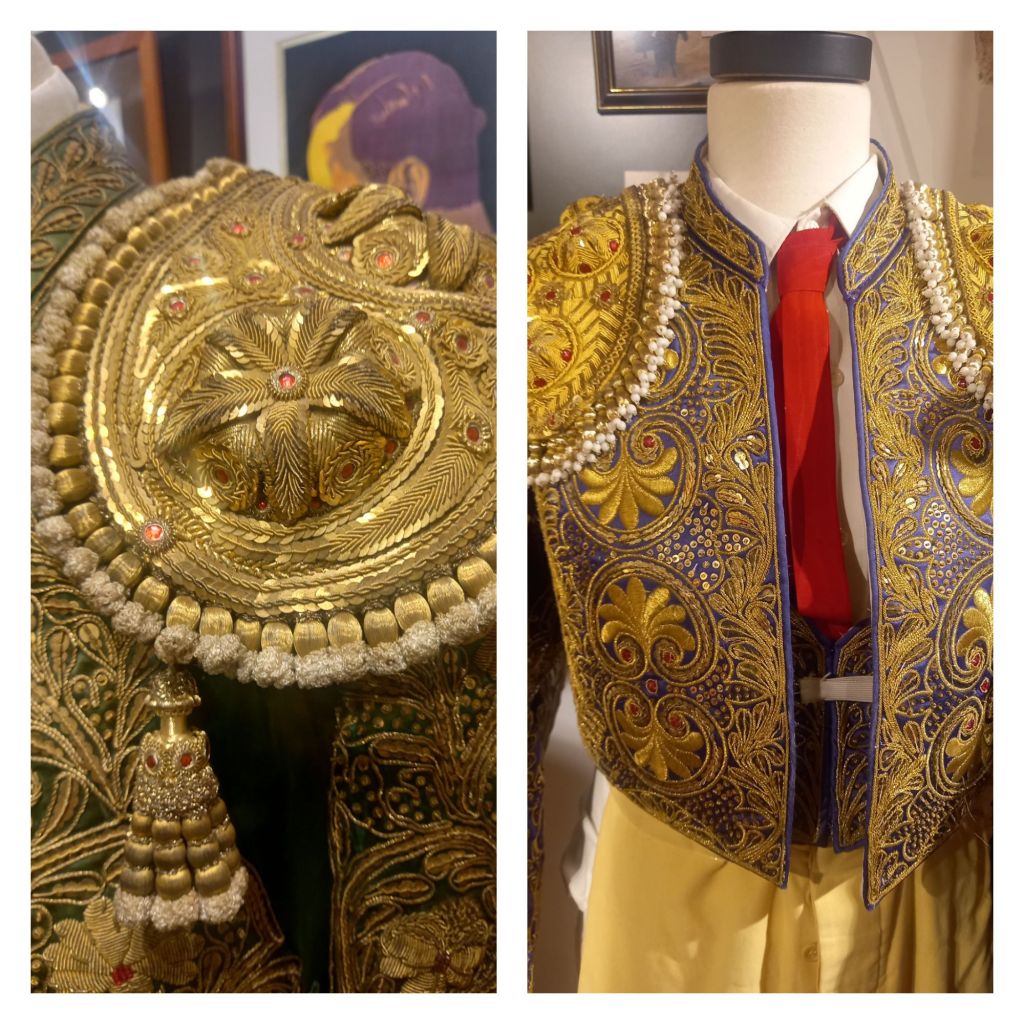
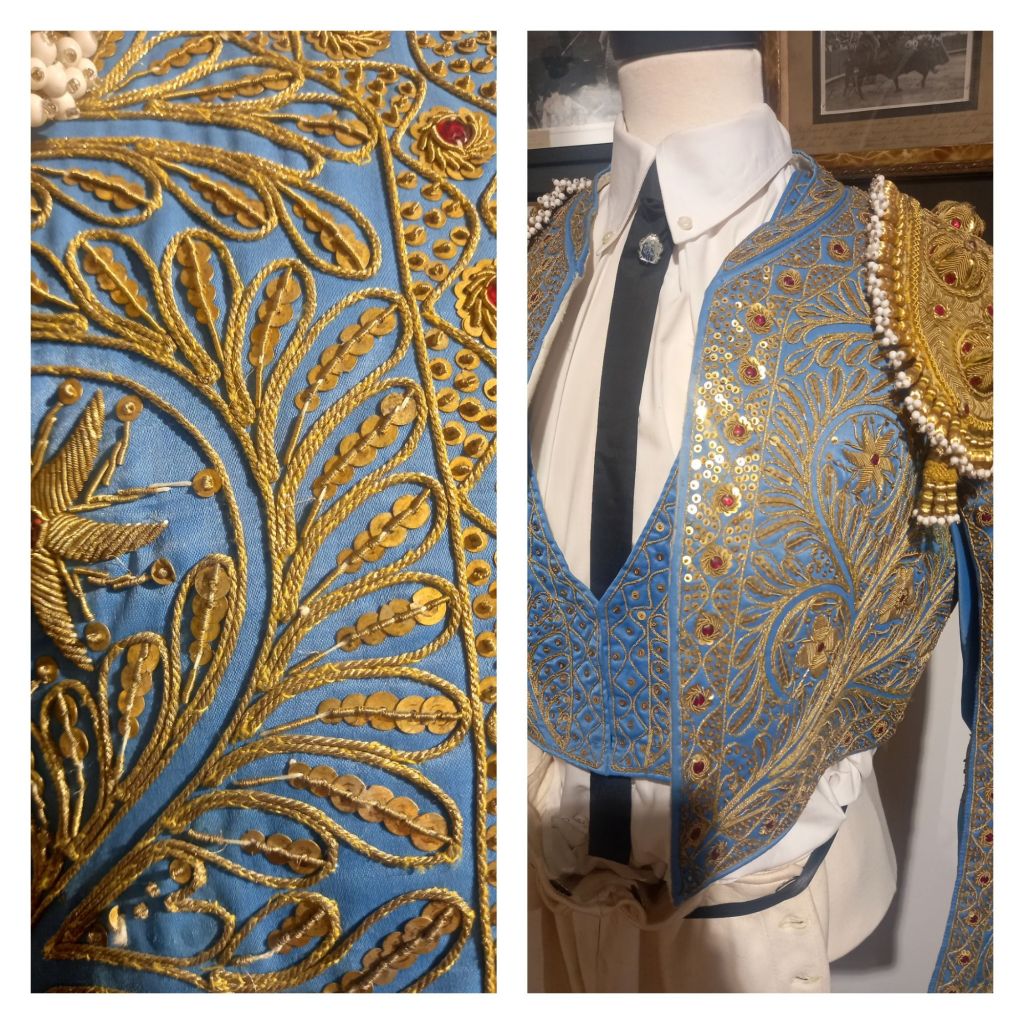
It was also notable that most of them were really small. There were costumes dating back to the 1940s, and they reminded me a lot of the stature of horse racing jockeys.
It was a very unique experience.  As with visiting historic houses and their stags,  the mounted bull heads were sad to see,  but the overall interpretation was very good.

It did address some of the contention around bull fights, and was very interesting in terms of learning more about the history, and the particular role of bull fighting in Salamanca. 

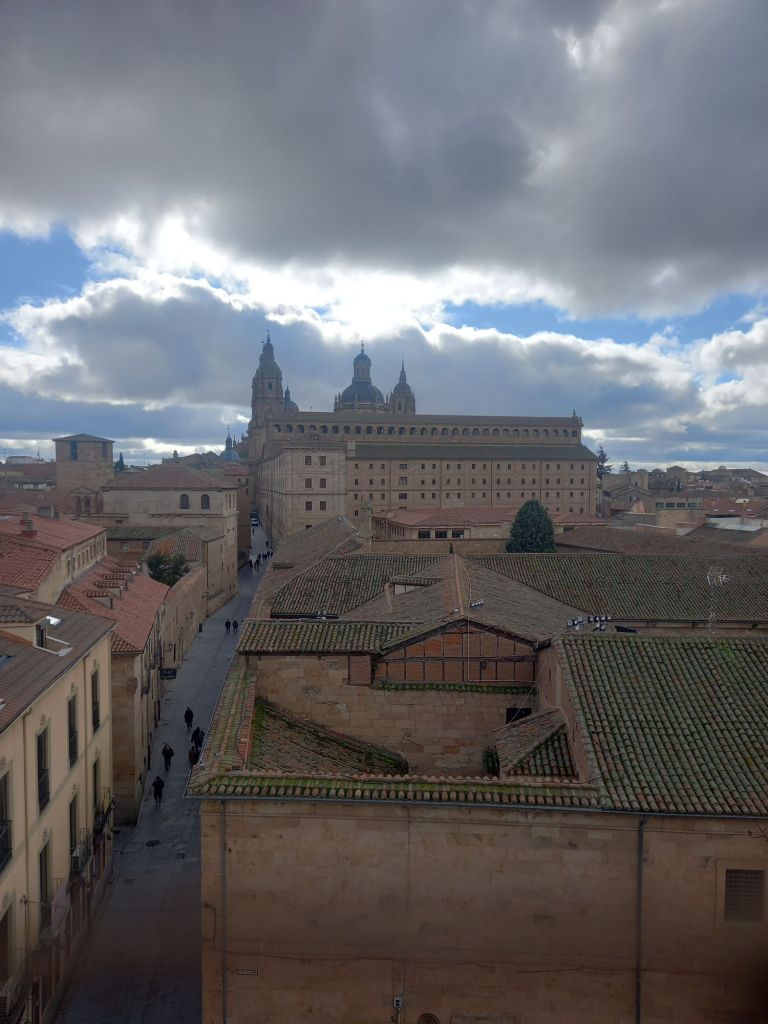
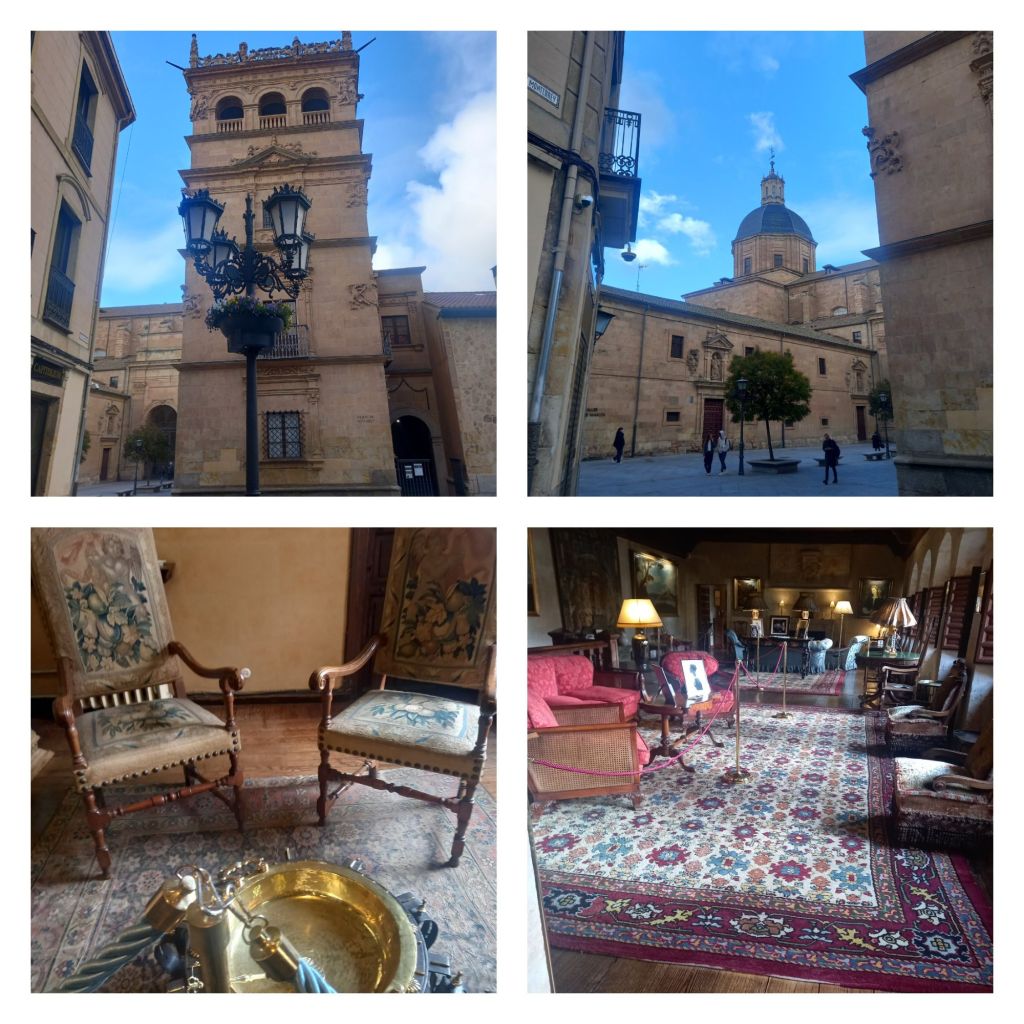
We also visited a nearby palace owned by the Dukes of Alba. As palaces go it was very much a liveable family home, the sort of place you could imagine, or dream about being in. It had beautiful views over the city from the living quarters as well, and a lovely bell tower.
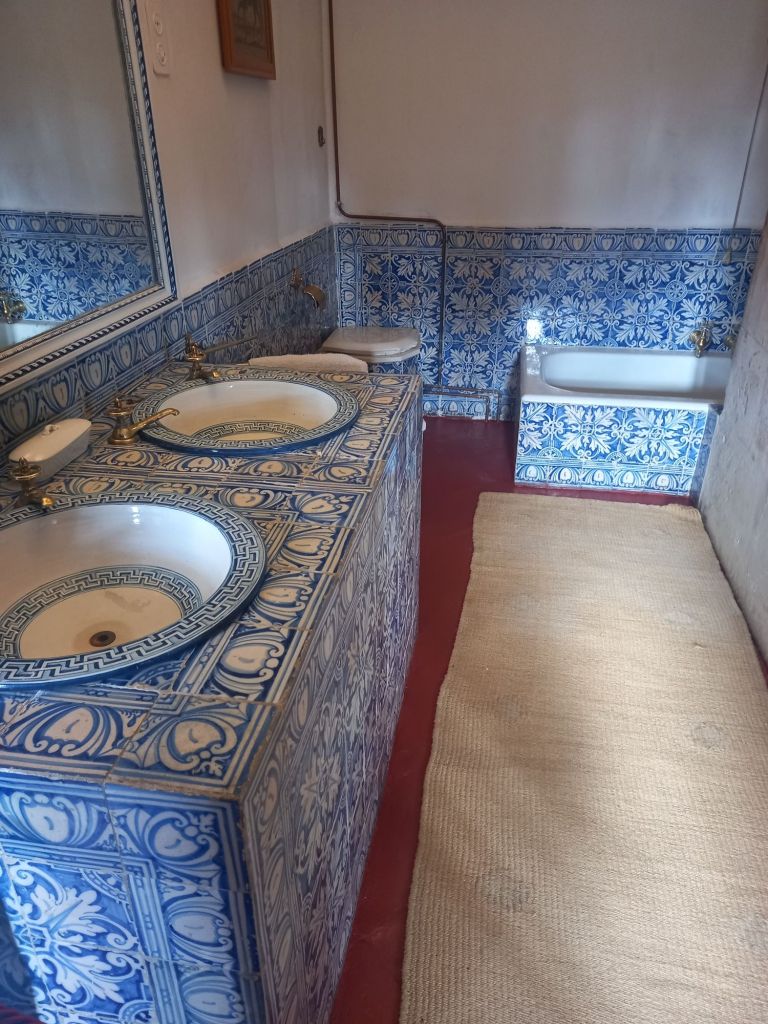
There was also the most gorgeous tiled bathroom, complete with fully tiled toilet!
Salamanca is definitely one of my favourite cities. It has such a quiet charm, with so much to see. I know there are many other stunning Spanish cities to visit, but this one comes highly recommended.

Mum and I will hopefully be doing another city break in December, all will be revealed nearer the time, as this is somewhere we have tried to go before, and failed!

I am now safely installed at my new site for the 2026 season at Glencoe. Have had a fantastic few days working with my new team, and am really looking forward to the campsite opening next week.

I have lots to share about my Scottish adventures so far, but this is a little taste of where I will be spending the summer.
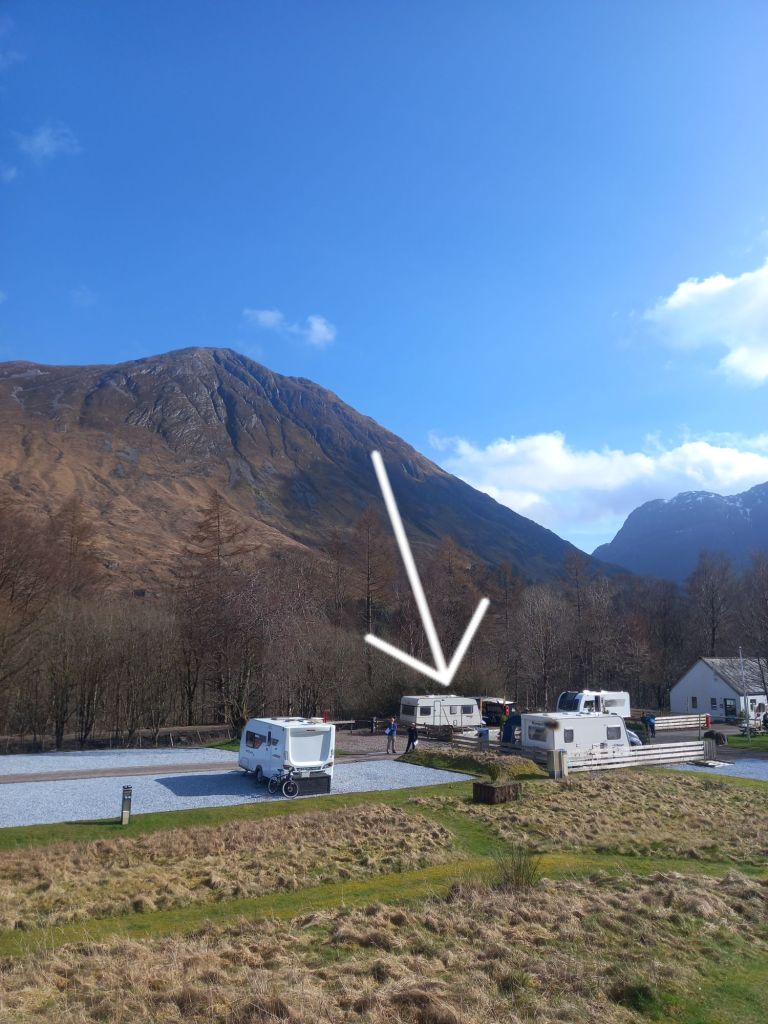
Here is Lotte the caravan in her new home, and this is the view from the campsite. It has been beautiful weather so we having been having lunch on this bench.
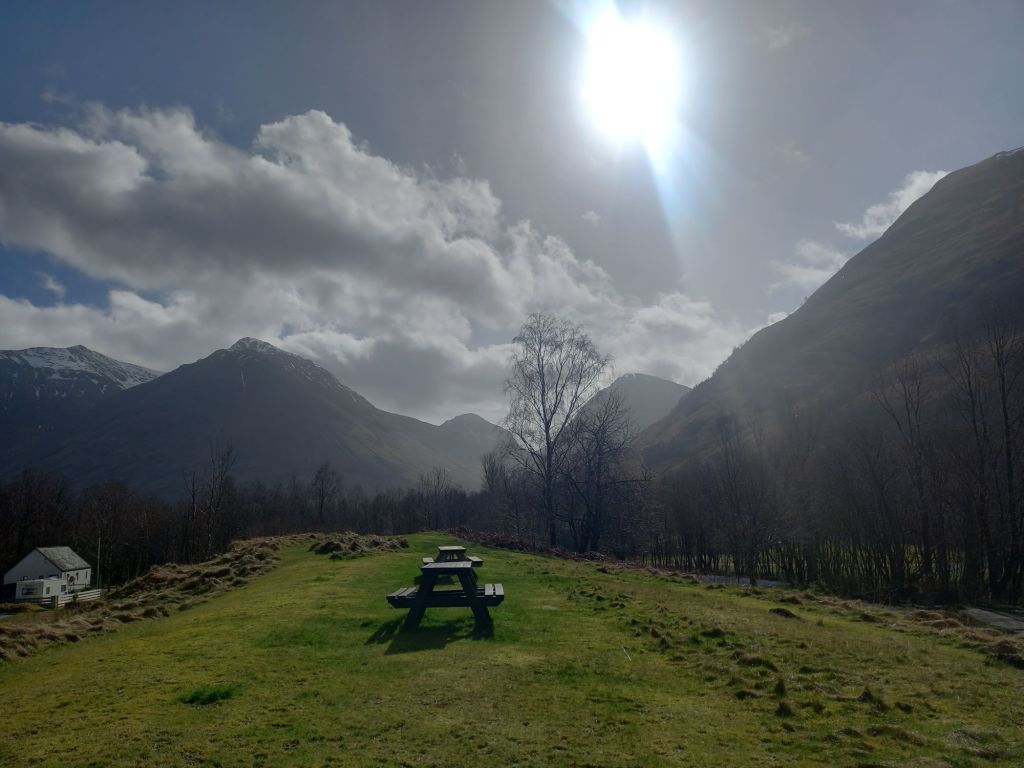
You can understand why I am so happy, given that mountains are my favourite things!

Thanks for visiting, and see you soon.
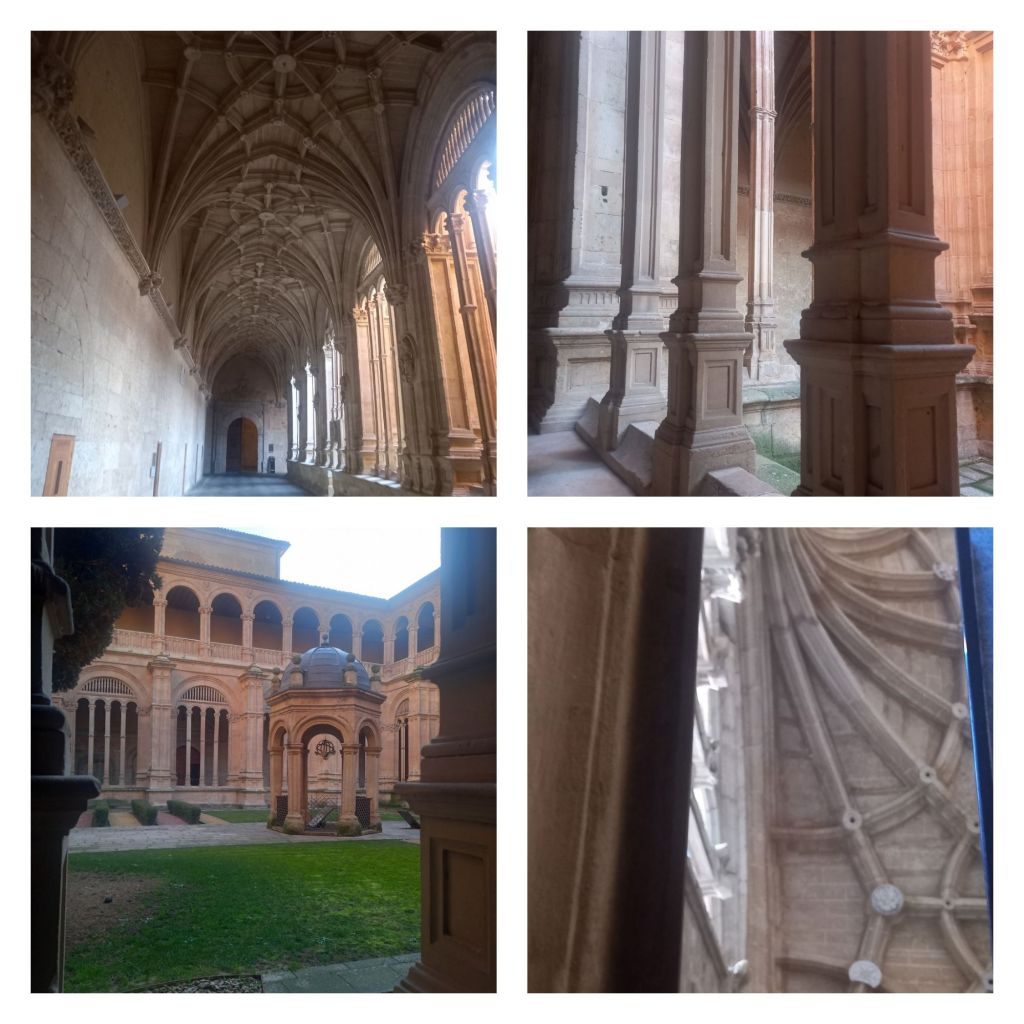
Symmetry and shadows

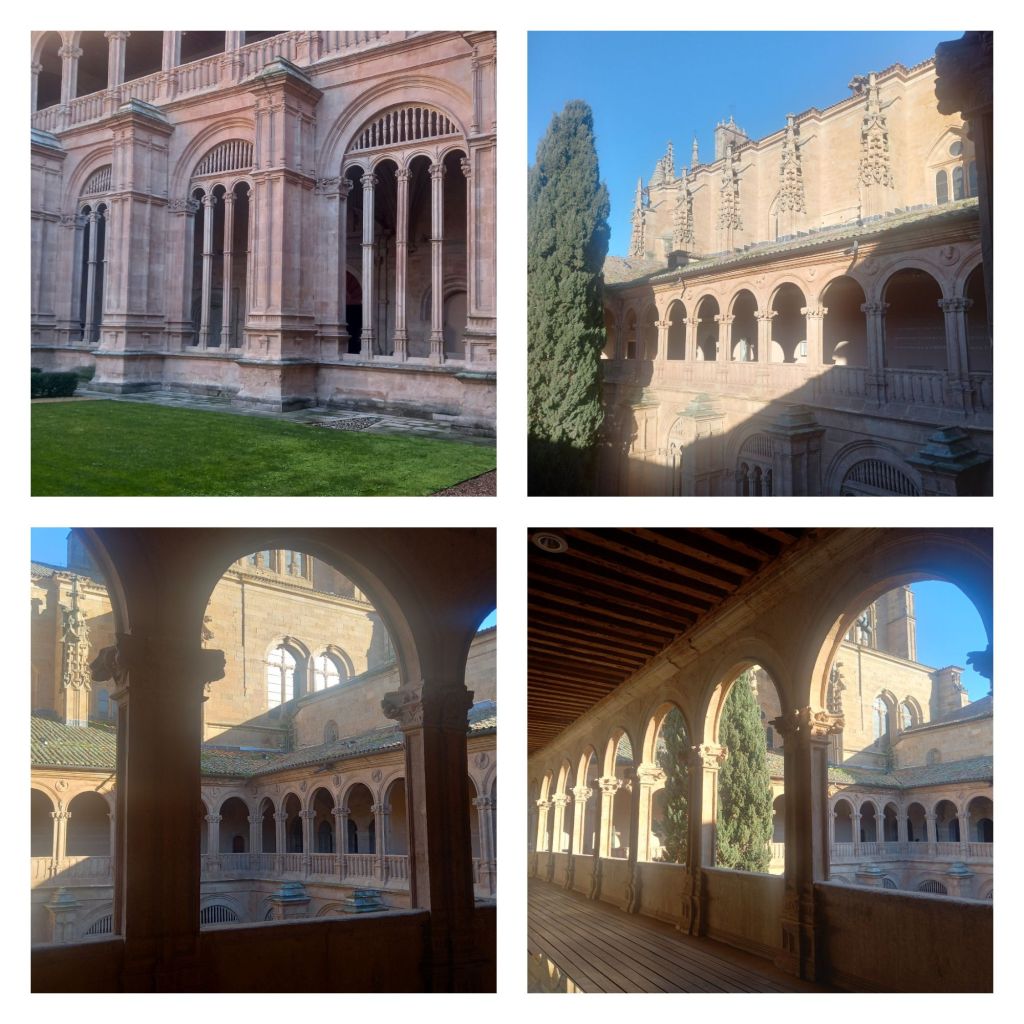
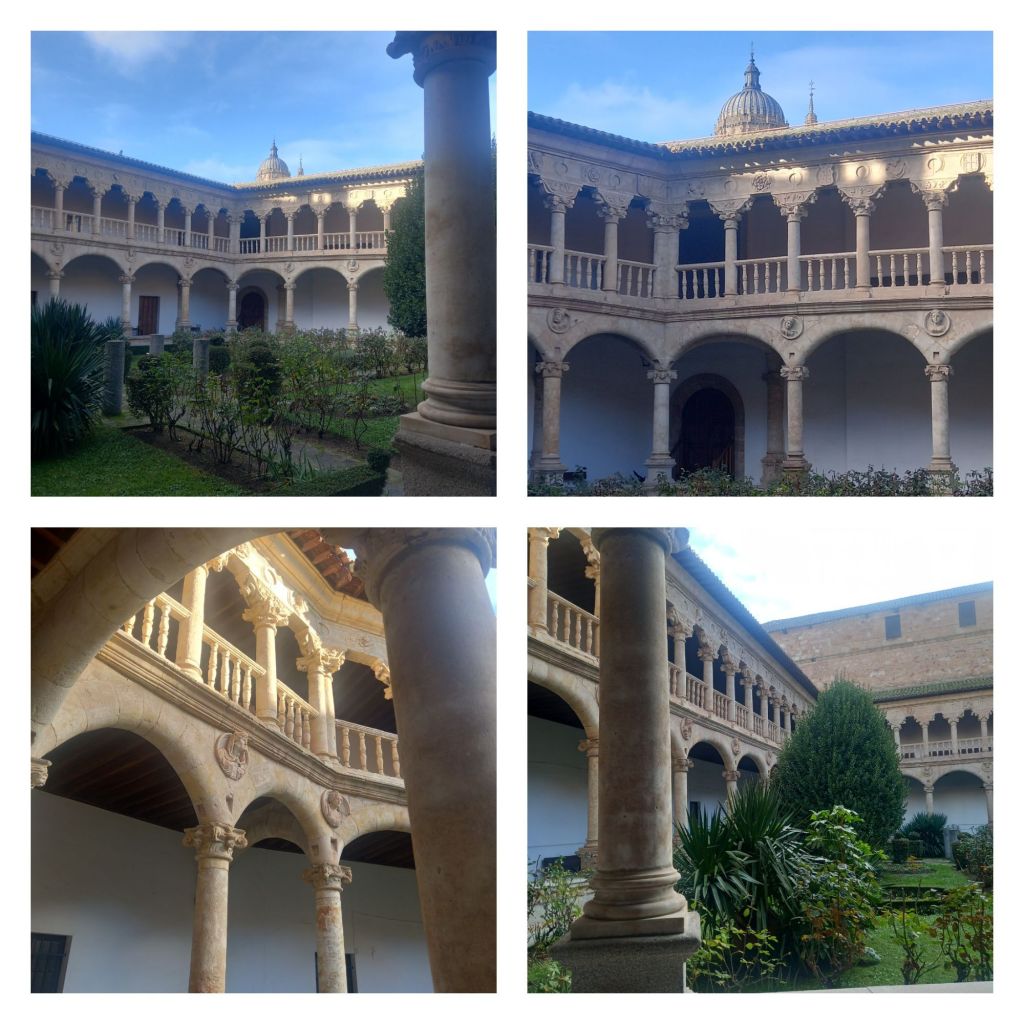
I love cloisters, to me they are one of the most impressive forms of architecture.  The pillars, the ceiling decorations, amazing stonework that looks effortless, but must have been so difficult to achieve.

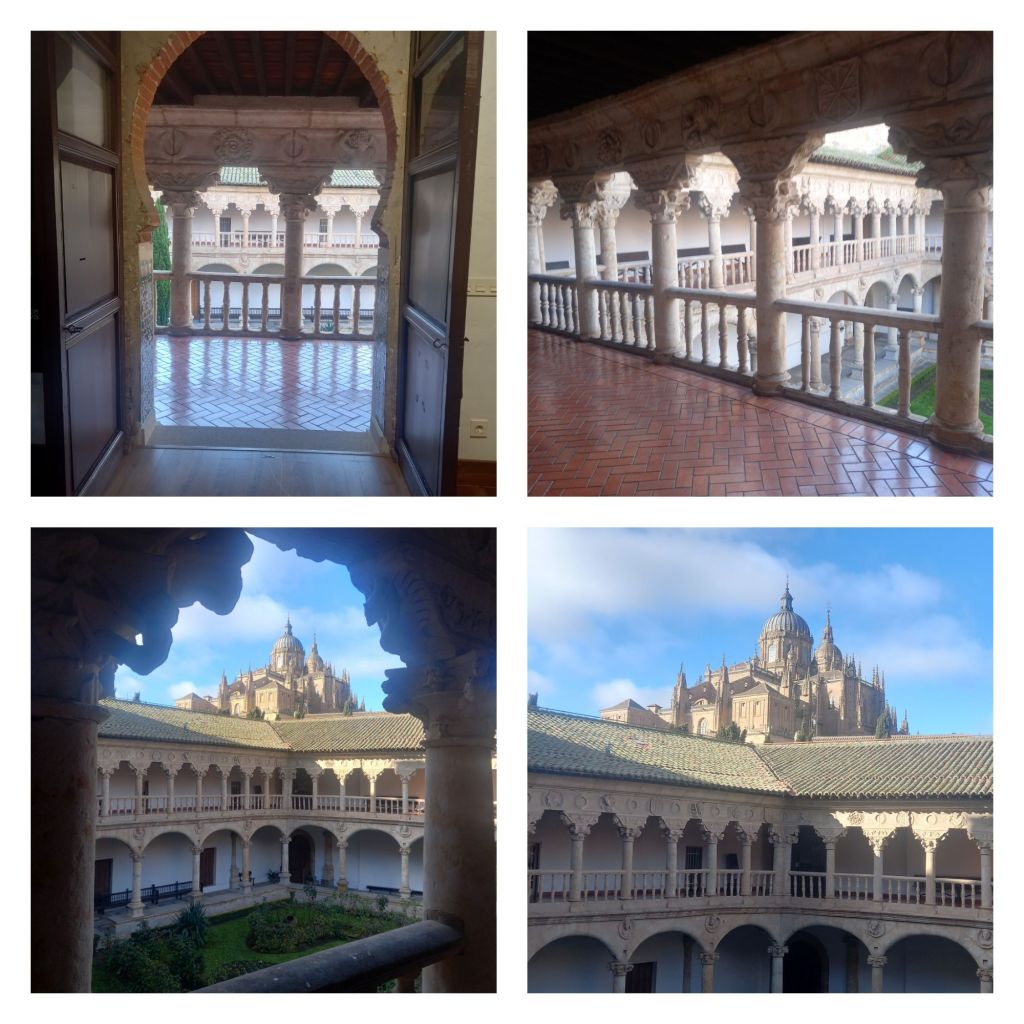
I love the way the light hits the stone, the different perspectives you get as you walk around, and the contrast between sun and shadow.

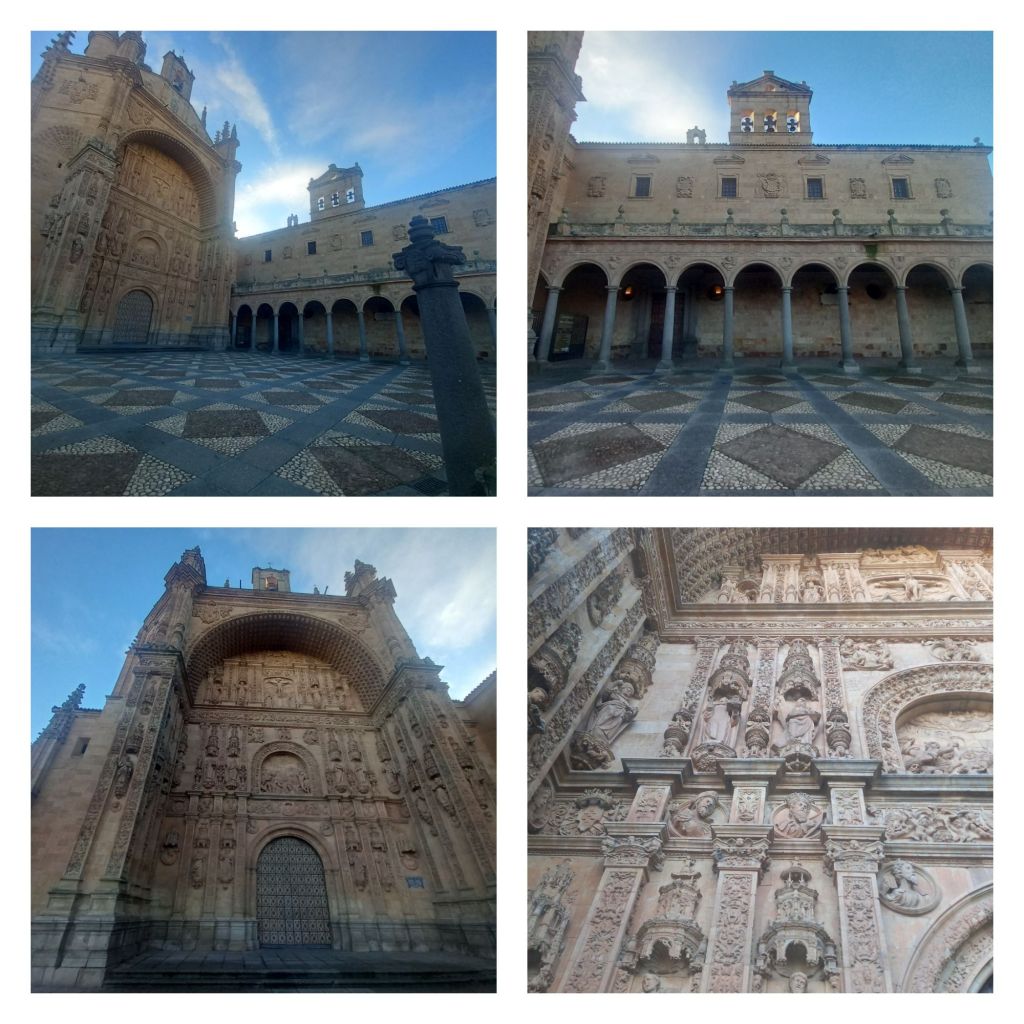
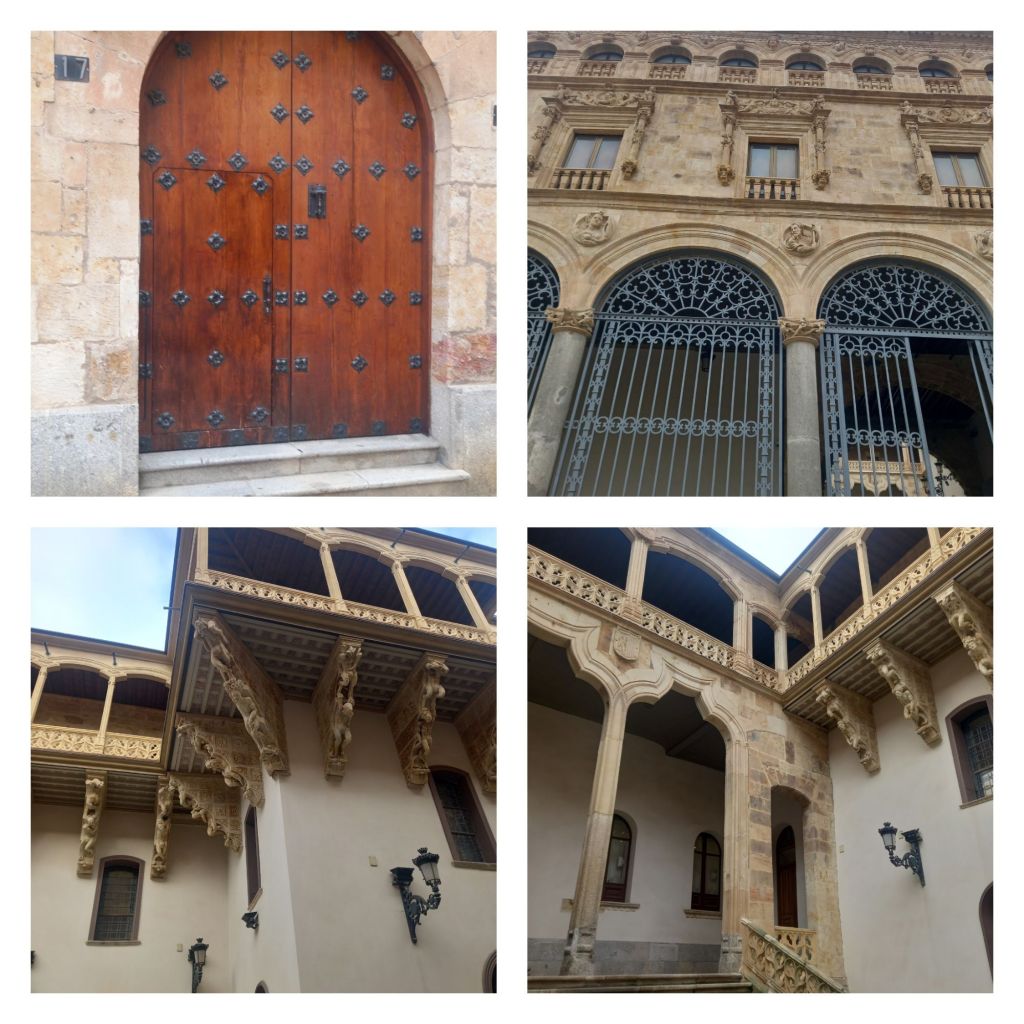
We visited two beautiful cloisters on our second day in Salamanca. The first was in the convent attached to the church of San Estaban, itself an absolutely stunning building. 

The second was the Convent of the Duenas, virtually next door. Not only were the buildings themselves so incredible, the views they gave across to the nearby cathedral were also wonderful.

I spent a lot of time just framing shots, there are definitely some here that I will want to print off and frame in future.

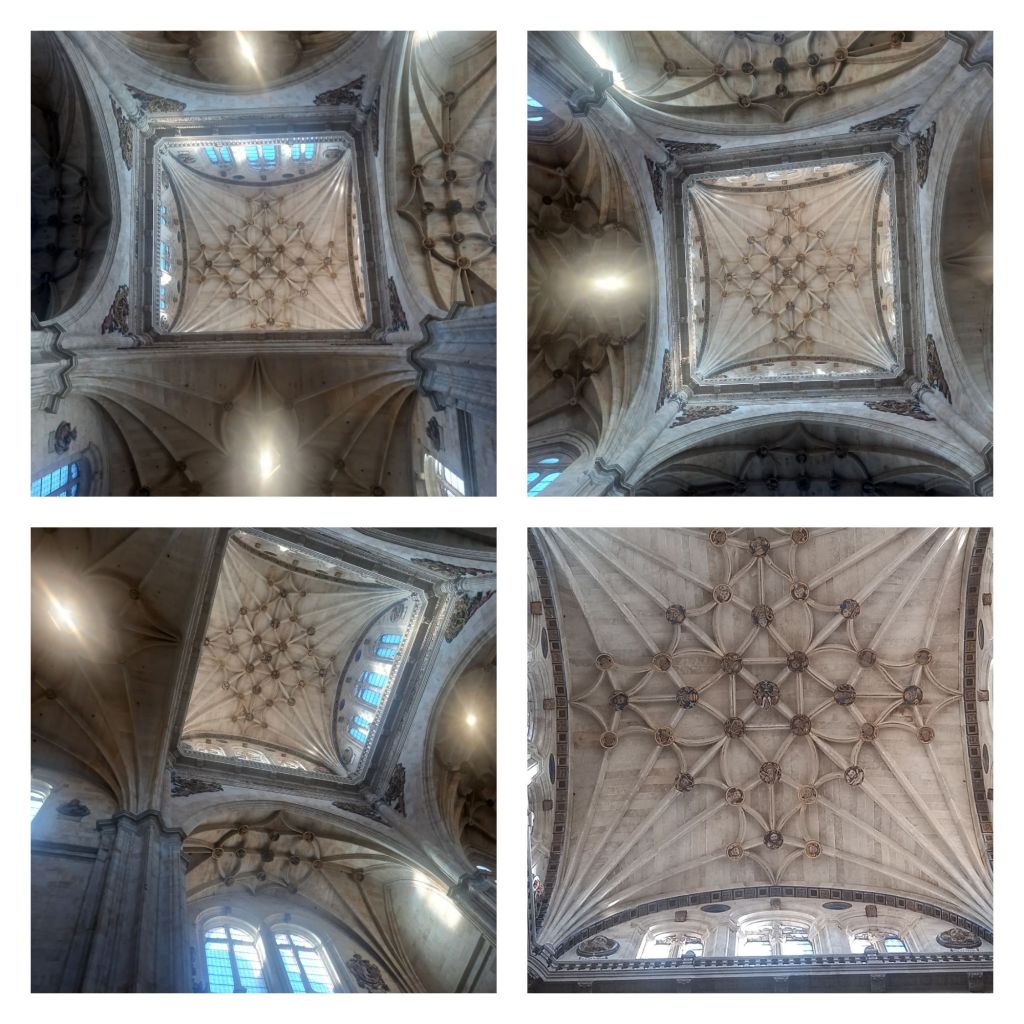
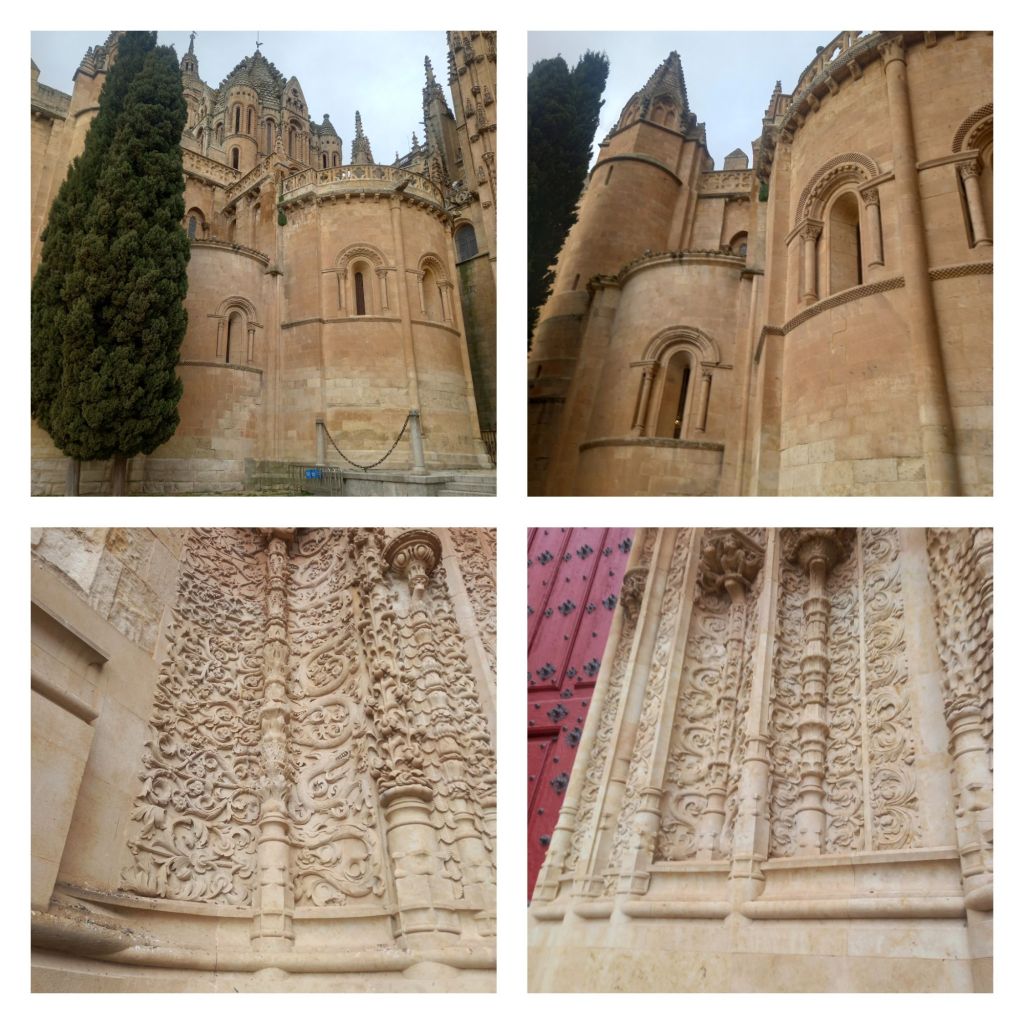
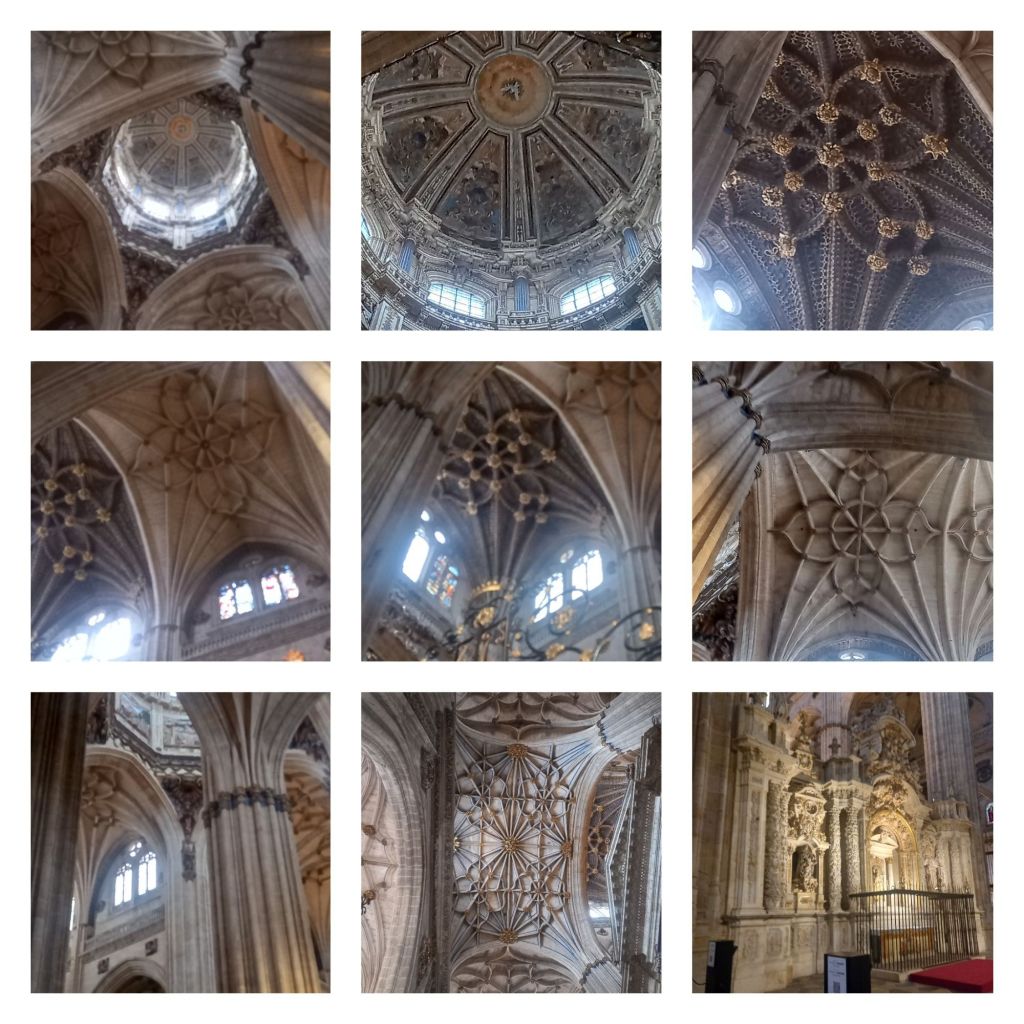
The cathedral dominates the skyline of Salamanca, and it is the most incredible example of the stonemasons’ art. There are actually two cathedrals built next to each other, an older medieval one, and the later gothic building.

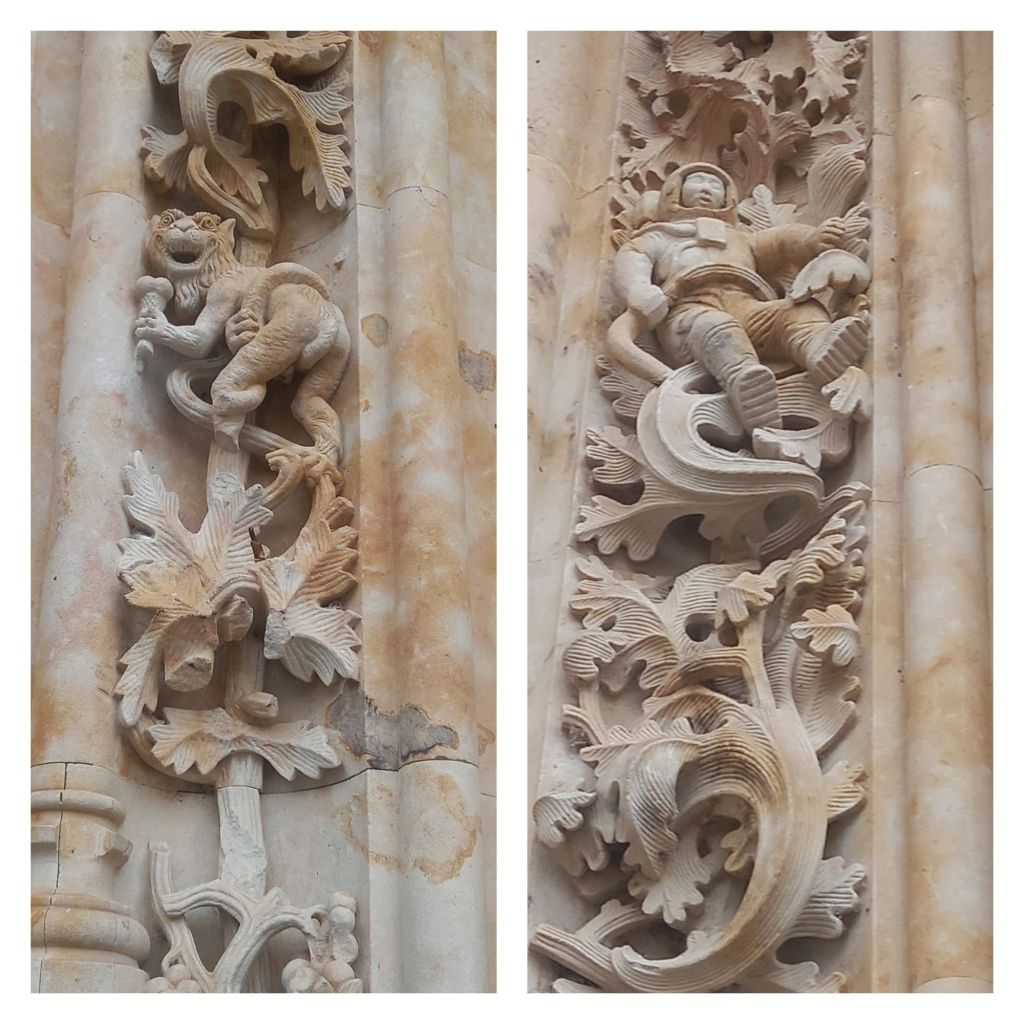
There is something else in the stone work that you have to search for here, an astronaut carved as part of the renovations in the late 1980s. We eventually found it on the fourth door we looked at! I love this little creature on the left as well.

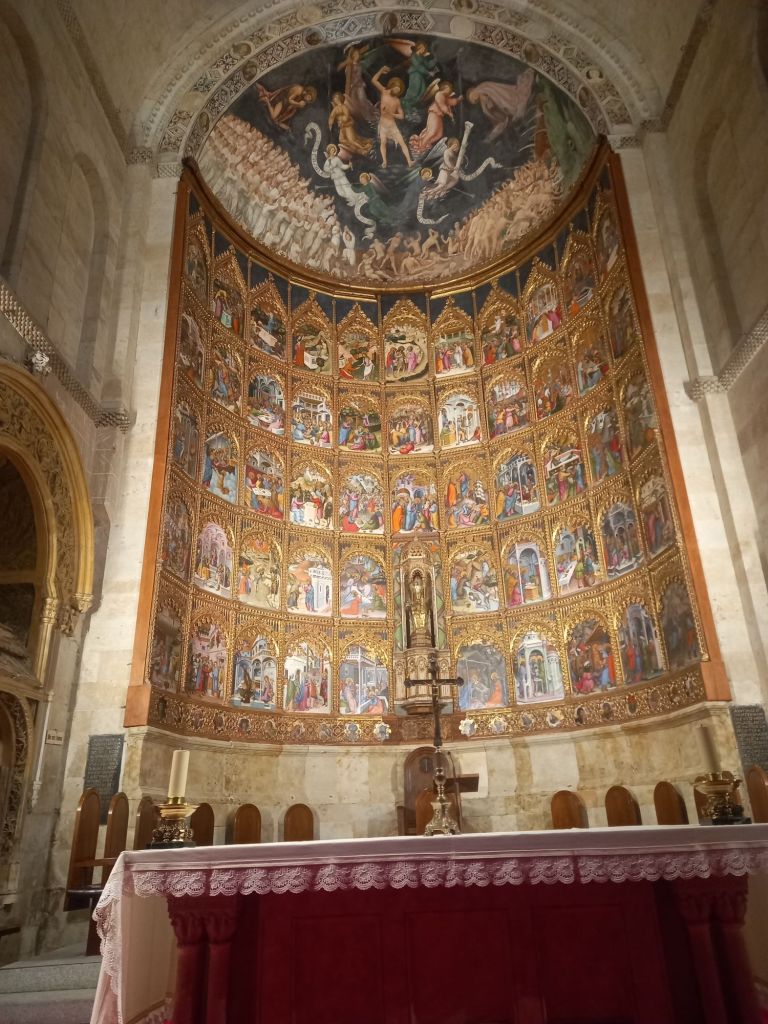
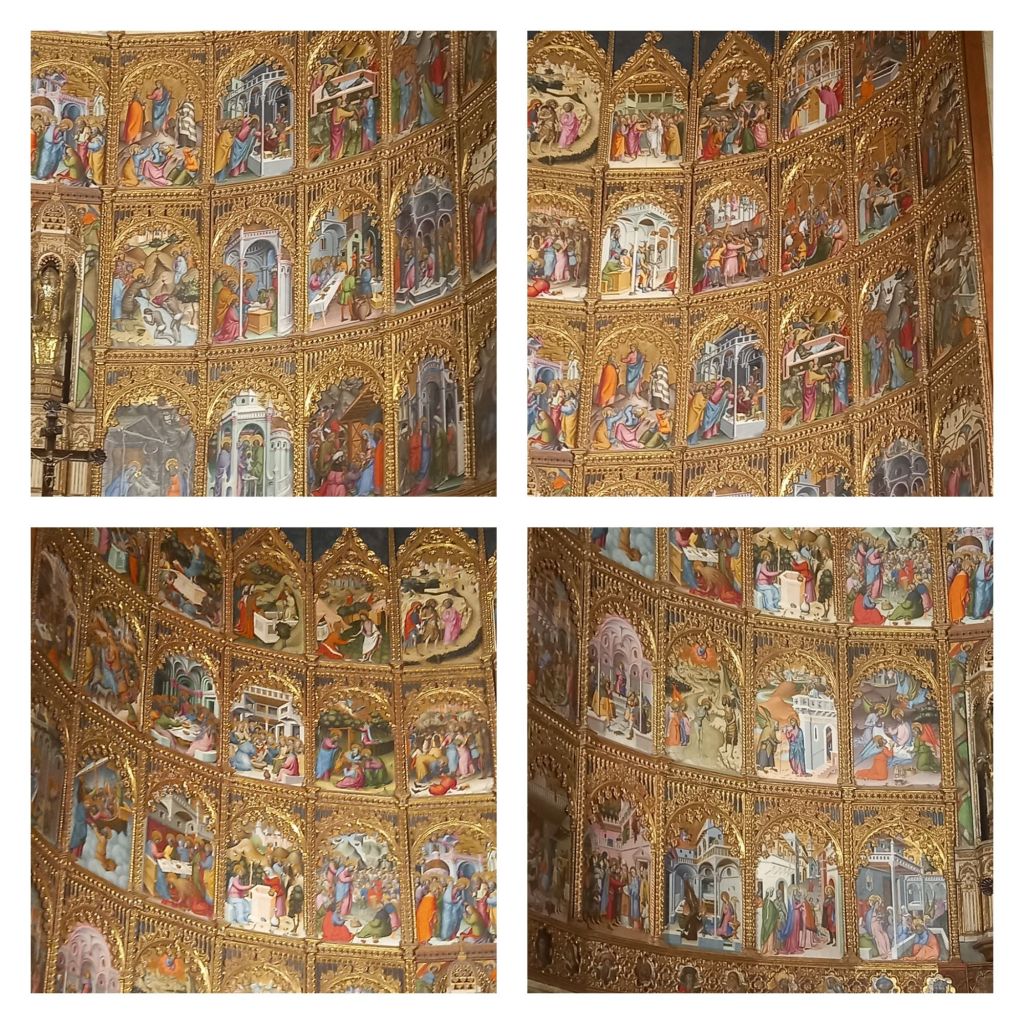
Although the newer cathedral was beautiful, it was the older one that had the best piece of religious architecture.  Probably the most wonderful altar I have ever seen.

I couldn’t get any closer to take more detailed photos but this is an amazing piece of art.

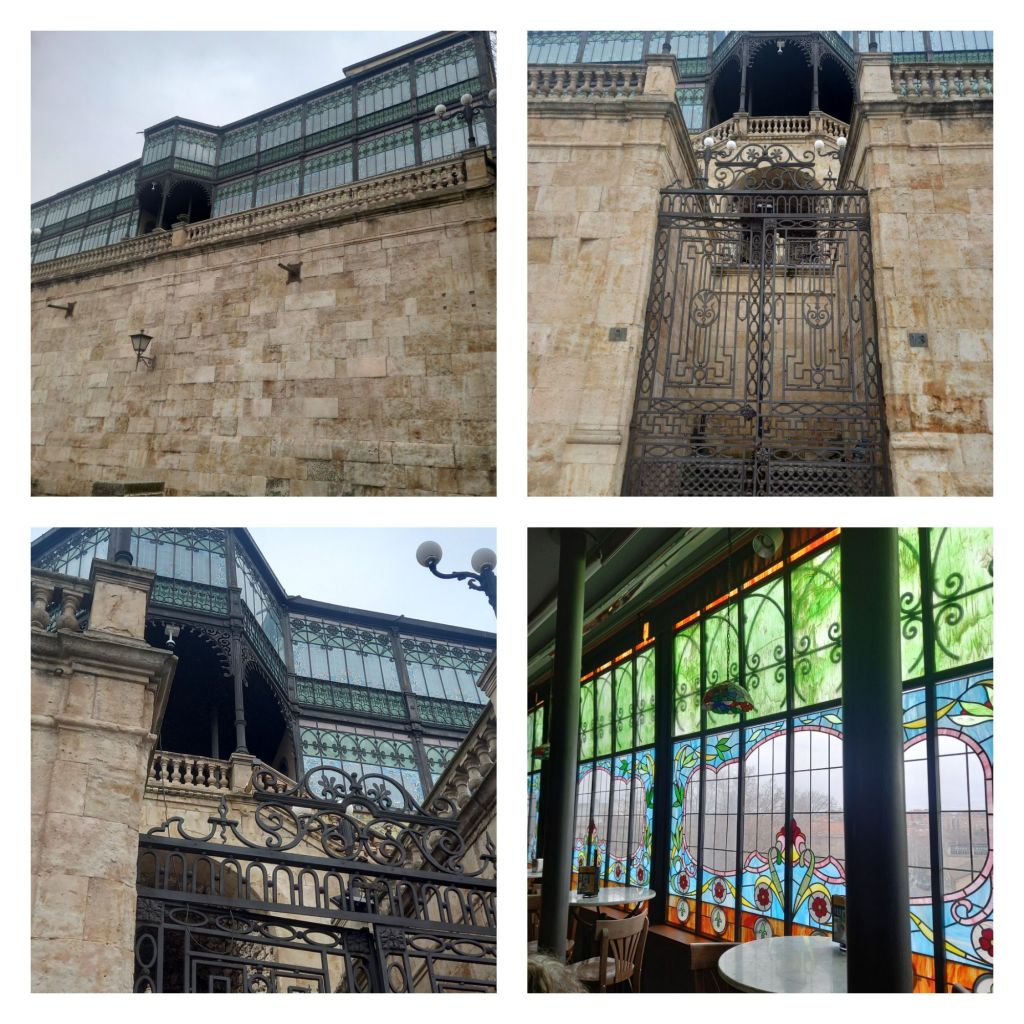
We finished our trip with a visit to the Art Noveau house, once a private dwelling and now an art museum.  No interior photos of the exhibitions allowed, but here is the exterior and the beautiful restaurant. I do keep coming back to this period, as I do so love it.

Medieval will always be one of my favourites for its richness, but there is something so lovely about the lines and form in this period.

I have one more post about Salamanca to share with you, then I can show you some of the wonderful things I have seen since I got back to the UK. It was such an interesting city to visit, full of just so many beautiful places, and of course wonderful doors!

Until then, thanks as always for visiting.

Autumn highlights

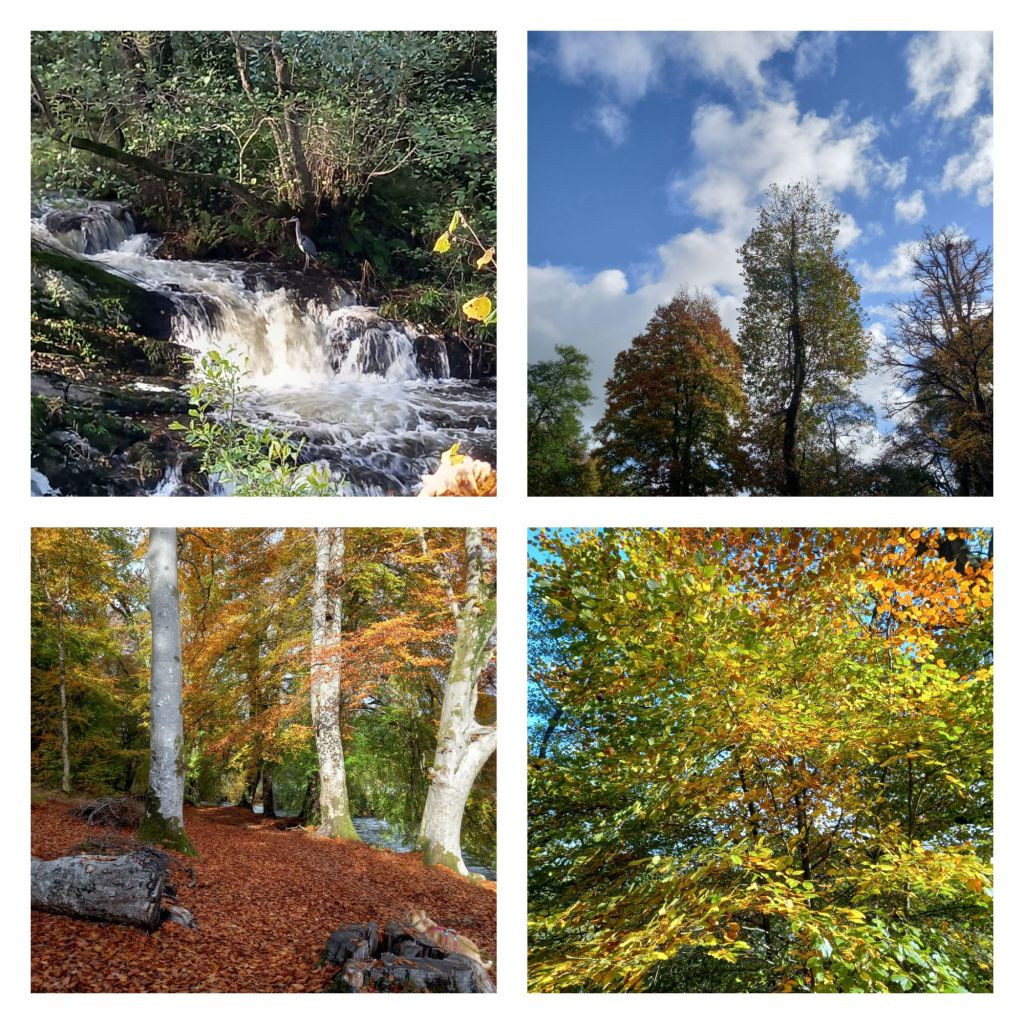
Three posts in one week, this must be a record! Although it may seem a bit strange to be posting about autumn when spring is here, there are a few more places that I wanted to write about from my travels in October. Then I can continue with more recent adventures.

I love autumn, as I have said before here, it always signifies new beginnings to me, being a teacher for so many years. Even now autumn is the beginning of a different life in Spain every year, so still feels like a start.

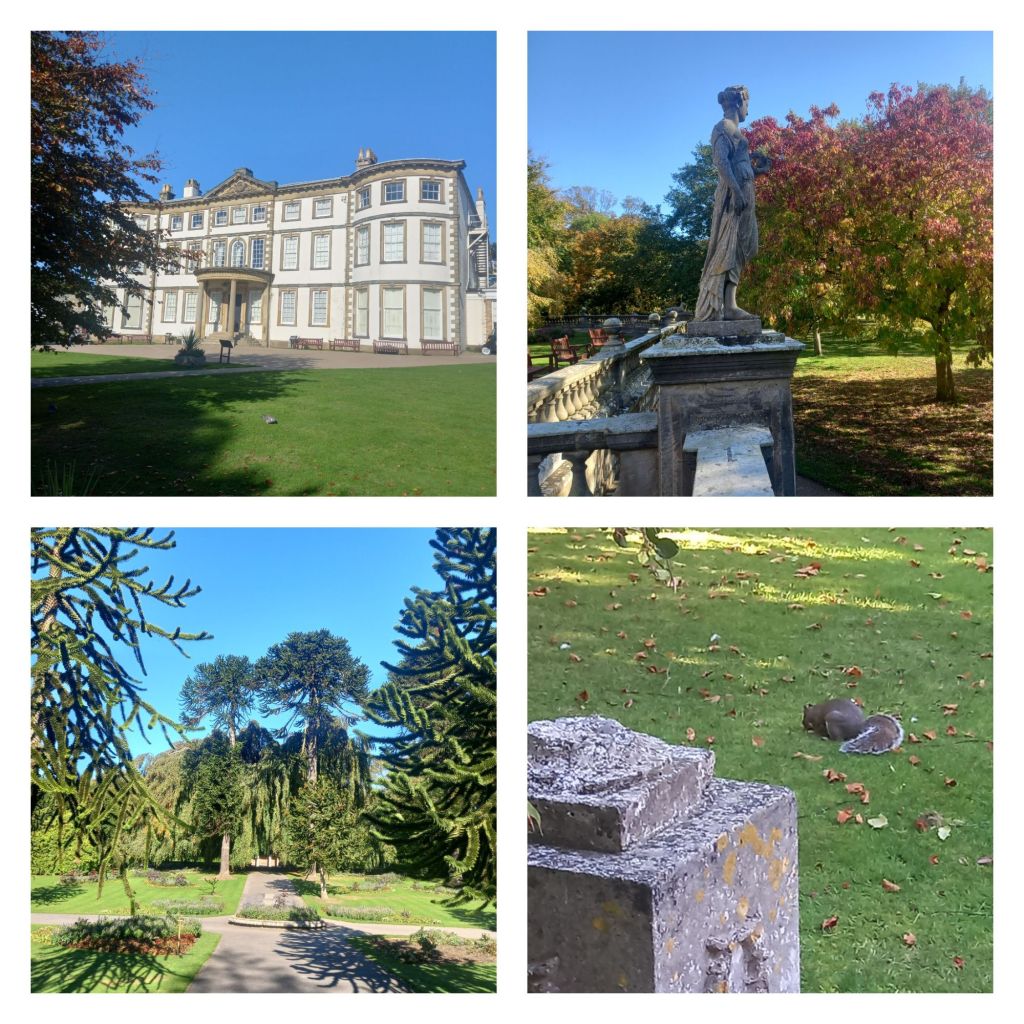
I love the autumn colours as well, and the quality of the light. I visited a beautiful house just outside of Bridlington while I was staying at Flamborough. Sewerby Hall is owned by the local council, and is free to visit. The hall wasn’t open when I was there, but they have a little zoo, and beautiful grounds.

It is also the best season to see squirrels and there were so many there! I am really hoping for more squirrels in my life this year. There have been some very cute rabbits at this caravan park which has been nice.

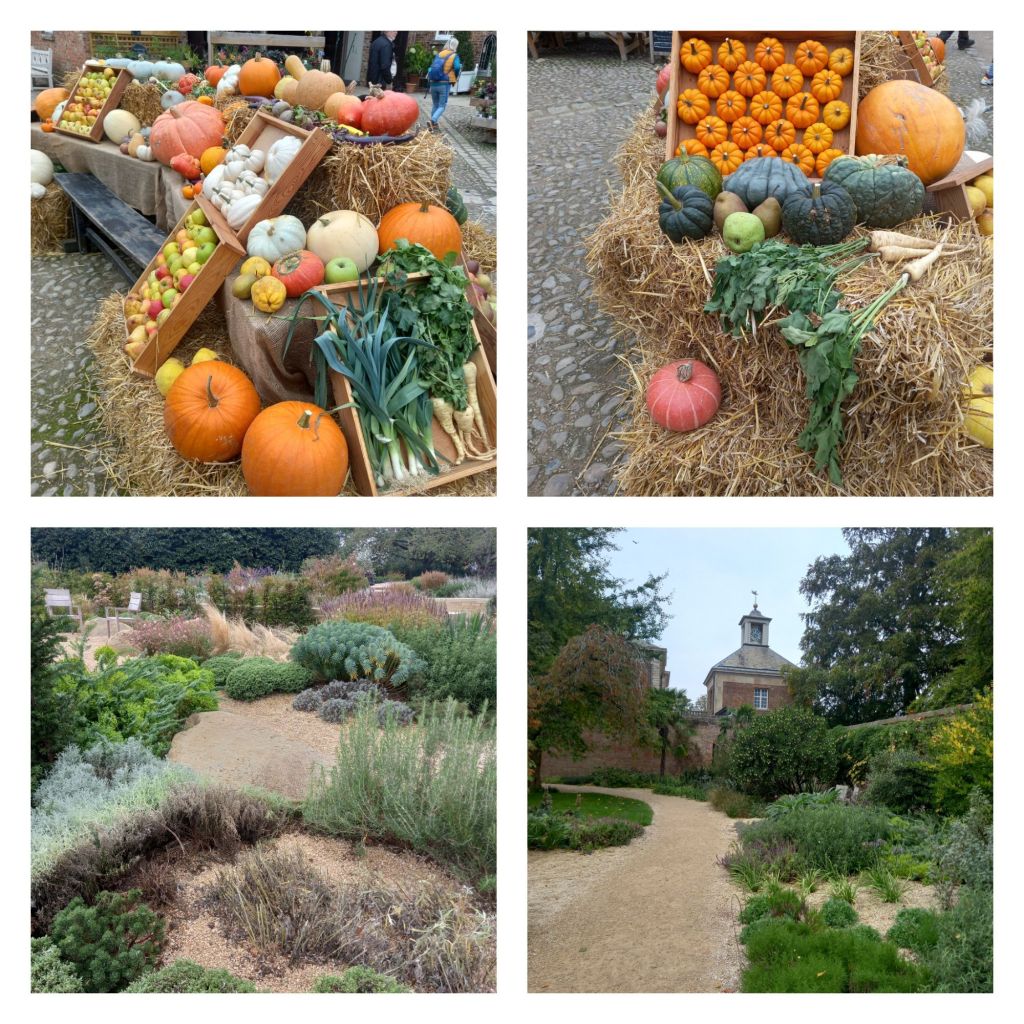
I also visited Beningbrough Hall on my way back down from North Yorkshire. I have been before, but that was a quick stop off during the Covid years, and only the grounds were open then.

The gardens look beautiful, they are very Japanese in style, but it was the wonderful autumn fruit and veg display in the shop are that really made an impression. Such gorgeous colours and textures!

The hall is another mainly empty property, now used for art exhibitions.

When in West Yorkshire I went back to visit my friend Sue, who has recently moved back from Scotland.  I have been to stay with her many times in her beautiful, but remote lodge in Argyll, but she has moved back to where she spent many happy years when her children were young, just over the hills from my old village of Marsden.

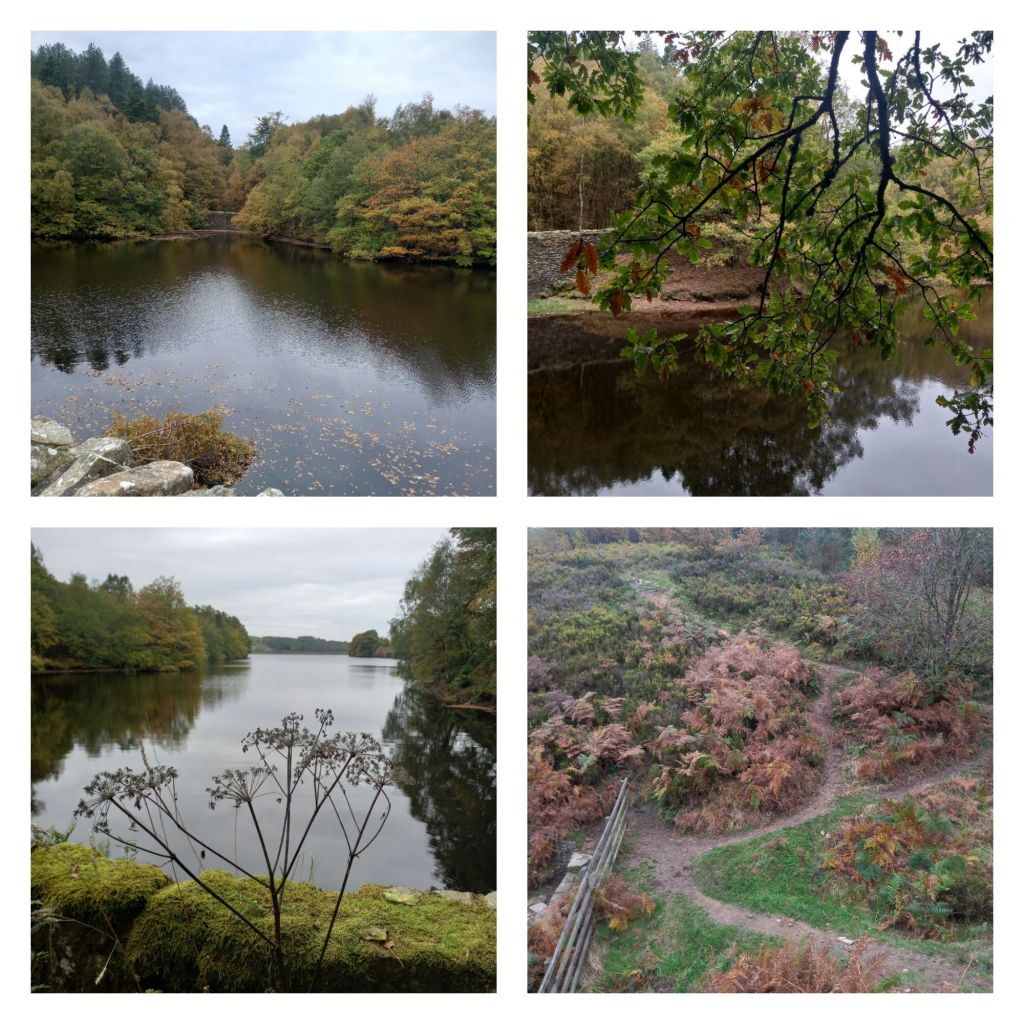
Even though it was dull, we had a really good walk around one of the many reservoirs in the area. I love walking around water, probably why I love Scotland so much, there is just something magical about all the reflections. 

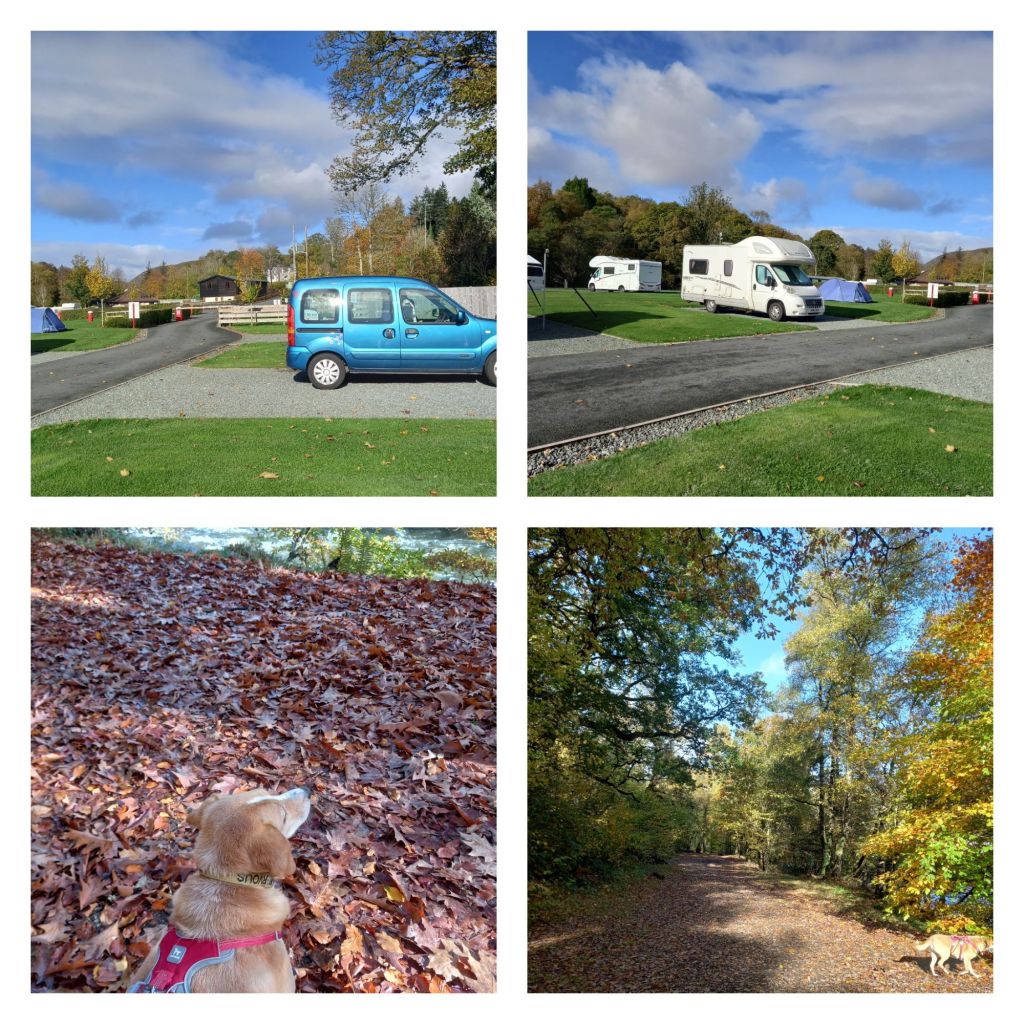
As I was leaving Katy Kangoo at my sister’s for the winter, we thought it would be fun to have one last camping trip, to Wales. We booked the very last few days that the site was open, at the Wyeside Camping and Caravanning Club site at Rhyader in mid Wales.

The drive there was stunning, through Herefordshire, and we were really lucky with the weather. We did get a bit wet on the first day, but had a glorious couple of walks, with Ryan the dog of course, and lots of fun just playing games and catching up.

The site is right next to the River Wye, as the name suggests, and so while I pitched my tent on the grass next to my sister’s motorhome, Katy had her own pitch just across from there, so she didn’t sink in the mud!

It was interesting watching the staff close down the site, thinking about what my lovely colleagues would be doing in Scotland. This year I will be doing both opening and closing down, so am really excited for the start of the season and meeting my new team in a couple of weeks. 

I am going to be moving on from the static caravan tomorrow, I have a mix of camping and aires, and some historic visit activities planned.  The rest will be weather dependent, so I may be able to get a lot more crocheting done!

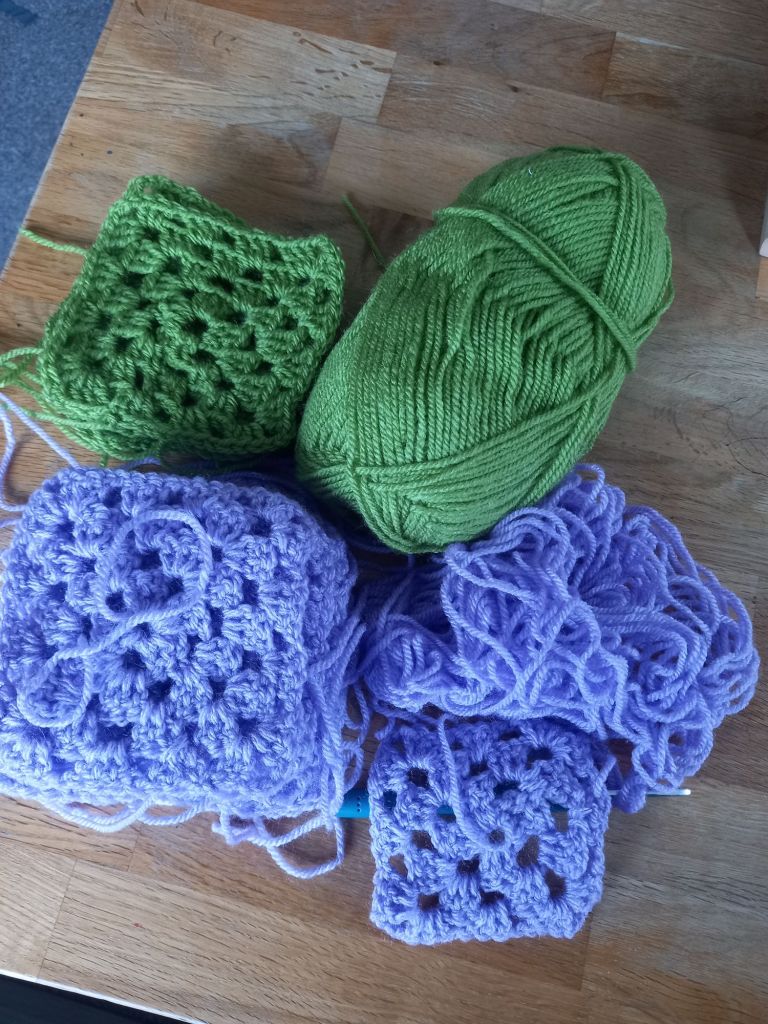
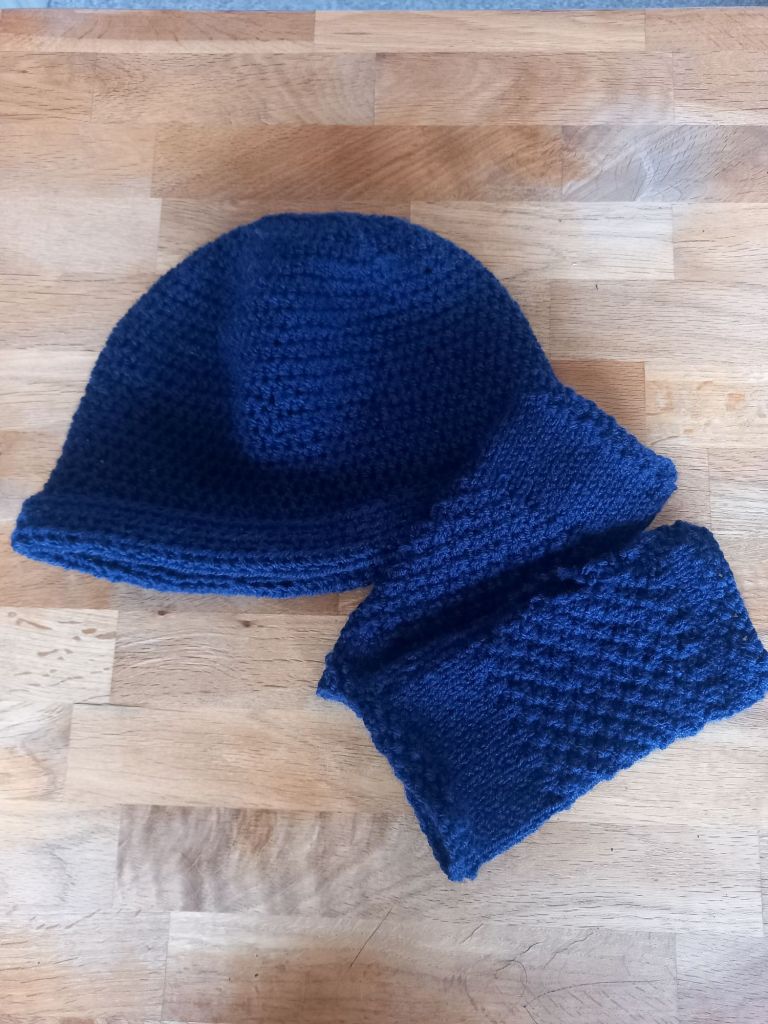
I have brought a large amount of wool with me, and am getting on really well with the granny square blanket.  I have also made myself a warm crochet hat, and matching knitted wrist warmers in uniform colours for work.

I do have WiFi at my next campsite as well, so fingers crossed will be able to keep the posting going. I have so many gorgeous things to show you from our recent city break in northern Spain. 

Until then have fun, and thanks for visiting. 

Writer’s block

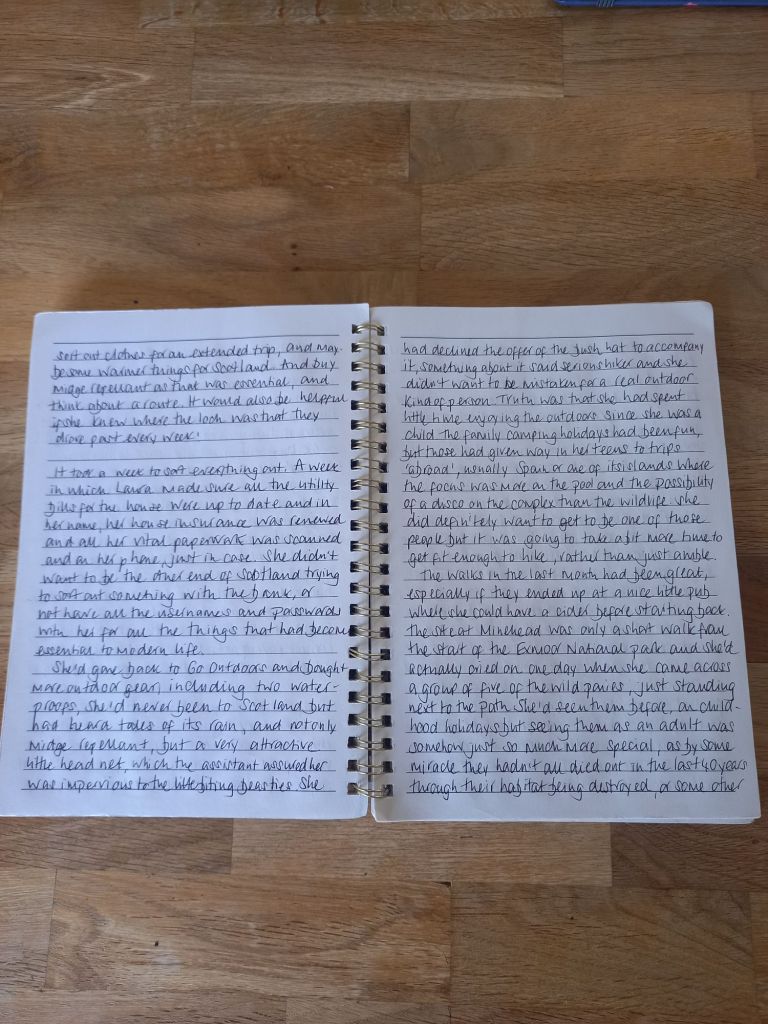
I have been doing a lot of writing over the last few months. As you may know I am currently working on two novels, part of a series that I have intended to write for many years.

There were originally going to be six books, however a couple of years ago I met someone who really inspired me to add another book to my list.

This partly explains why I have been working on two novels at once, as I needed to get all my thoughts down on paper, as they say, before I forgot them. Which I did on a wet day at a Norfolk campsite a couple of years ago. This second novel is partly based on my own recent experiences as well, so I needed to write them while it was fresh in my mind.

However, one of the main reasons that I haven’t finished book one, the one set at Hardwick Hall, the one I have been working on for nearly five years now, was a case of writer’s block.

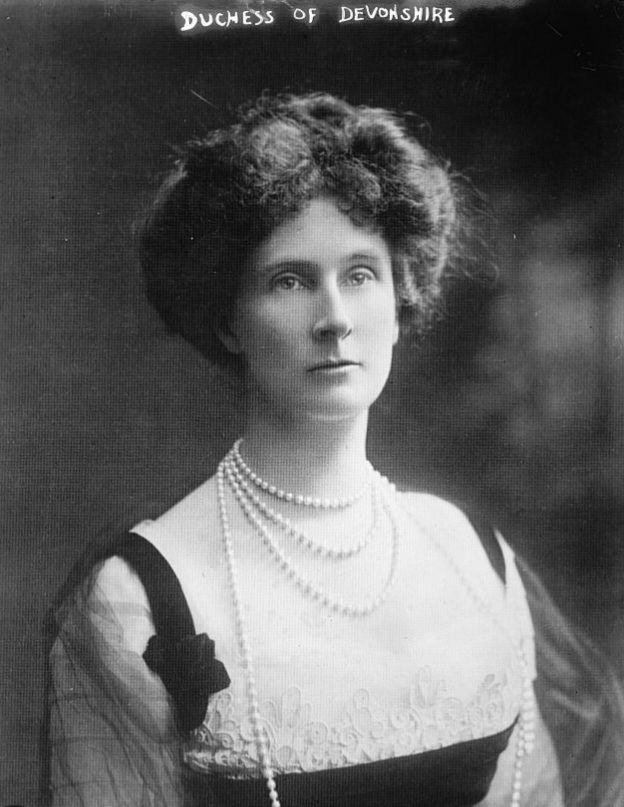
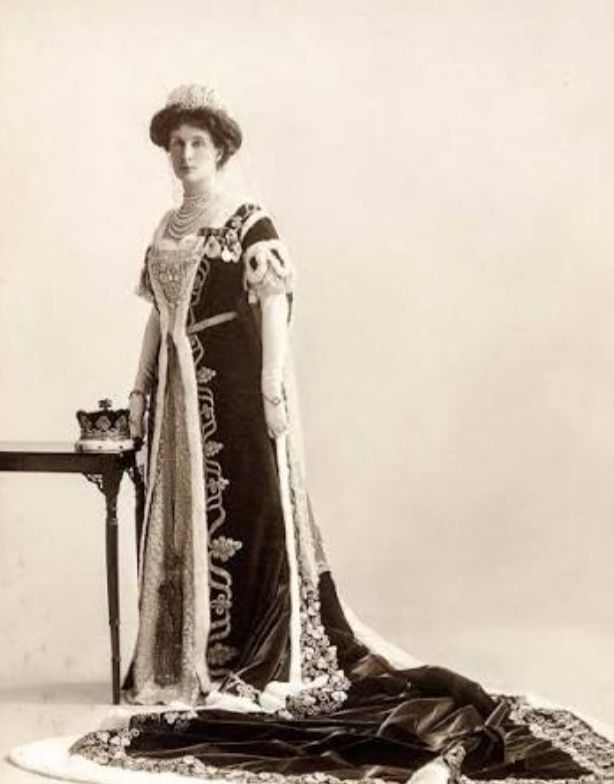
The last person to live at Hardwick, before it was given to the National Trust, was Lady Evelyn Cavendish, born Evelyn Emily Mary Petty Fitzmaurice, second daughter of Lord Landsowne, Viceroy of India.

Evelyn married into the Cavendish family, heirs of Bess of Hardwick, owners of Chatsworth among many other properties, in 1892, when she wed Victor Cavendish.

As a teacher, and a lecturer I have written a lot over the years, even been published, my claim to fame is two chapters in textbooks, and a few journal articles. If you have been here for a while you may remember the doctoral years, when I wrote, (and rewrote!) 80,000 words.

But those were all factual pieces of writing, and writing fiction is very different.  Especially when it is based in fact. I was having real trouble with combining the life of someone who actually lived, with my fictional characters.

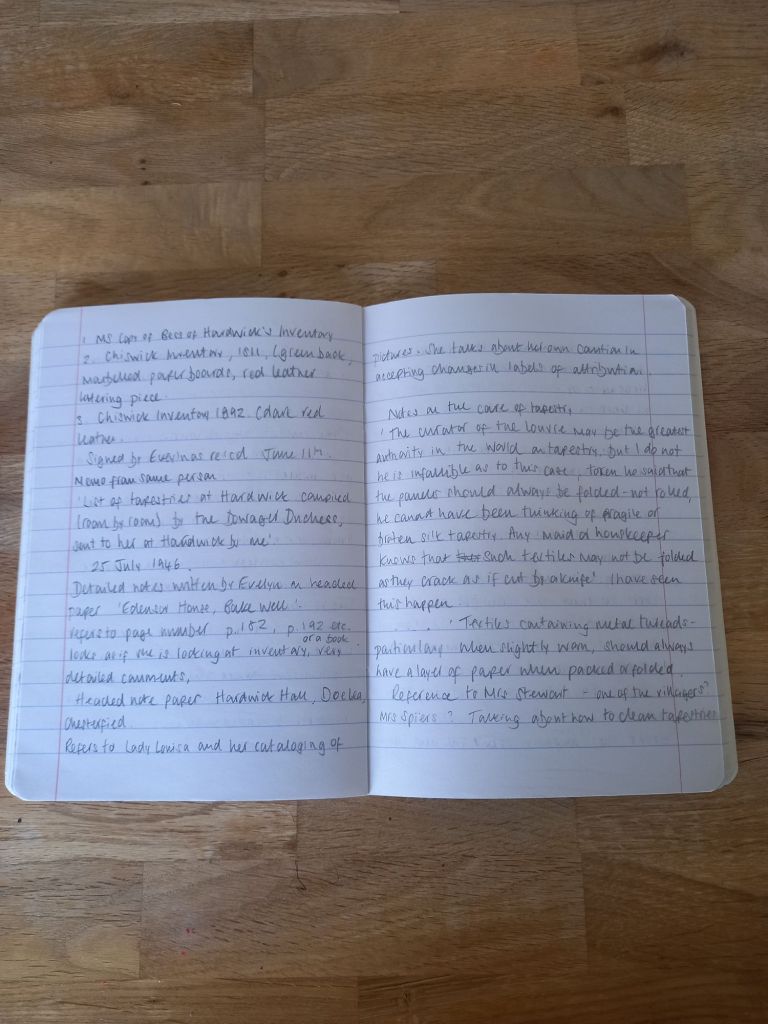
A research visit to Chatsworth a couple of years ago, where I was lucky enough to come across some notes written by Evelyn, really helped. I have still been struggling with how to present them in my writing though, to do justice to her as a person.

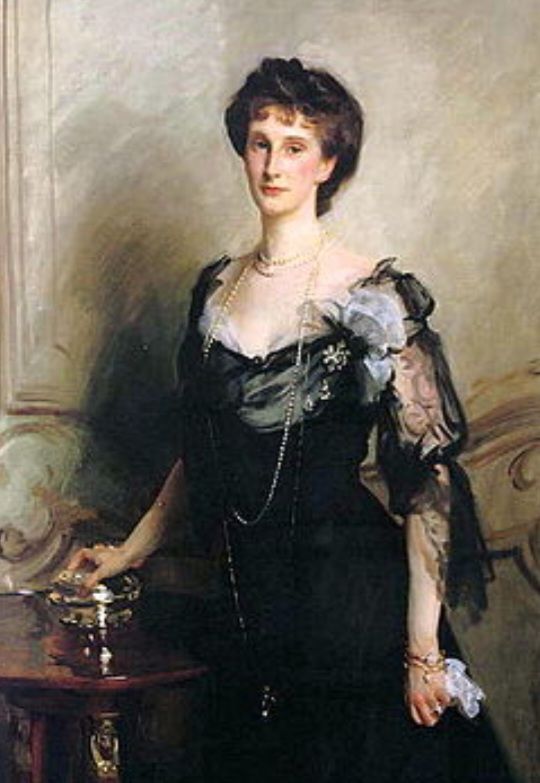
One of my overwhelming issues is that very little has been written about this her, although she was quite famous in her day. Much of what is out there, and this will probably not surprise you, is written about her in the context of her as a daughter, and a wife. An aristocratic woman, beautifully painted here by John Singer Sargent.

It is a familiar story, throughout history, particularly for someone born into an age where women were often referred to solely by their husband’s names, often not even having their first name used. 

There are letters, and diaries, but those are not readily available to me, partly to do with the 100 year rule, which prevents material being available to protect people still living, that the author may have referred to.

I have found some really useful sources though, and am working my way through them.

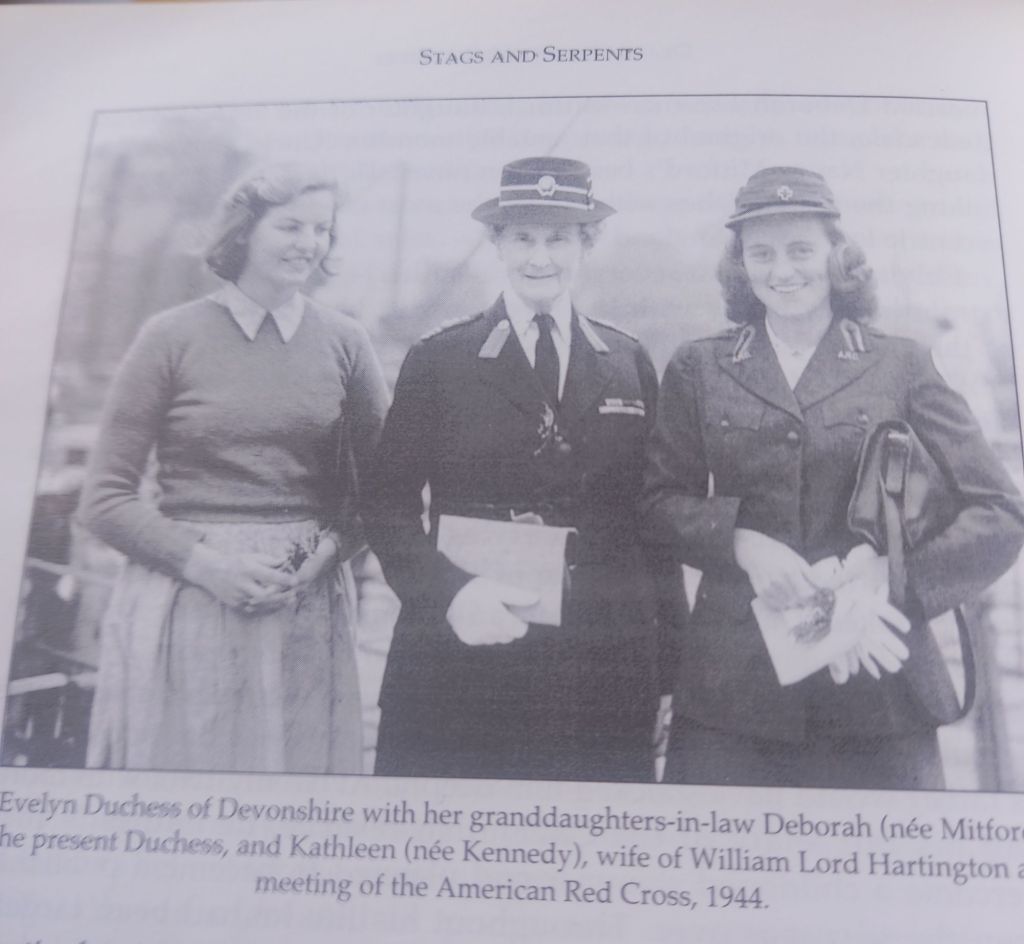
Published biographies, and autobiographies are helpful. I have been reading some by Deborah Cavendish, herself one of the very well known Mitford sisters, and pictured below on the left. She knew Granny Evie, as she was then known, during WW2.

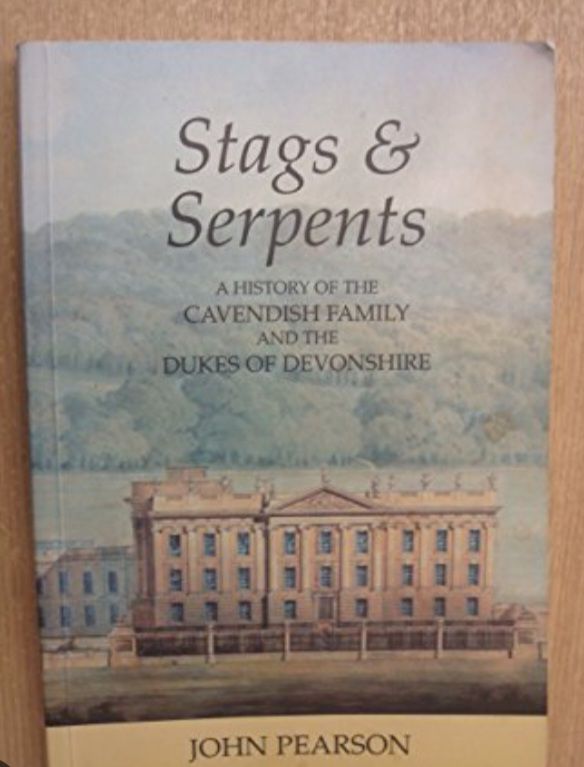
The ‘Stags and Serpents’, book by John Pearson, from which the above photo comes,  has also been very helpful.

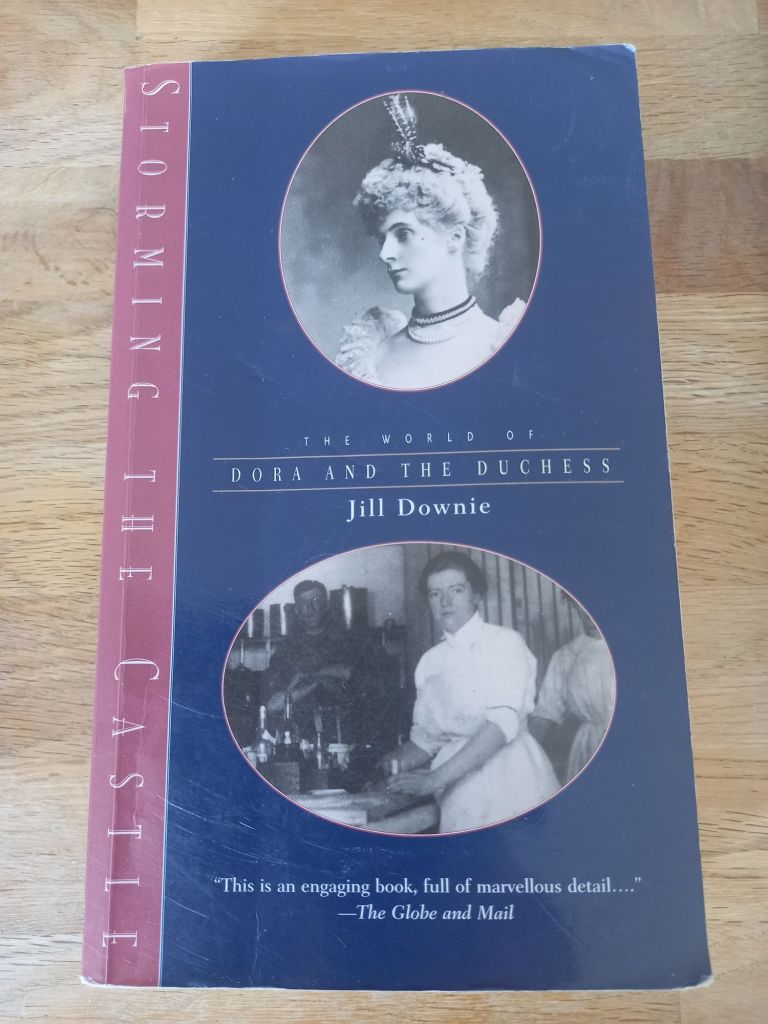
I am also currently reading a really interesting book, ‘Storming the Castle’, by Jill Downie,  written about the time that Evelyn and Victor spent in Canada from 1916.

Victor had been appointed Viceroy of Canada, which must have been really interesting for Evelyn, being the daughter of a former Viceroy. Especially with the contrast between the two countries. 

The book is very much an, ‘Upstairs Downstairs’, if you are old enough to remember that series, or in a contemporary context, ‘Bridgerton’, as it traces the lives of Evelyn, and her cook, Dora.

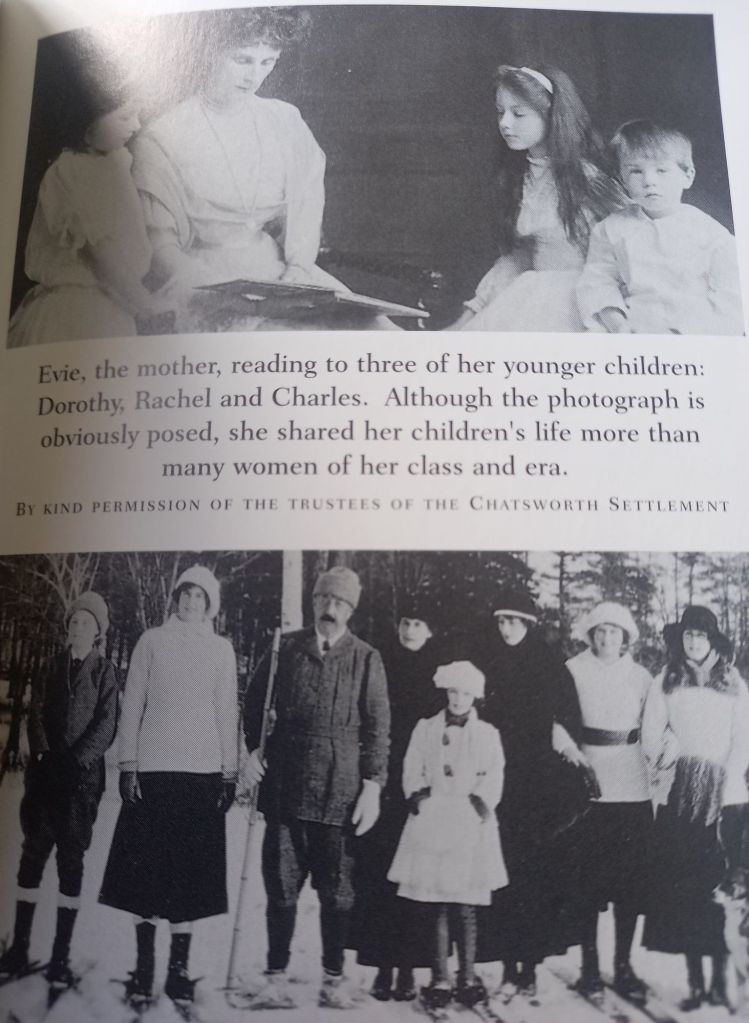
One of the great things about this book is its references to family life, albeit the family life of the Viceroy!

Most of the other things that have been written about Evelyn are her more formal roles, connected with royalty, as she was Mistress of the Robes to Queen Mary for  many years.

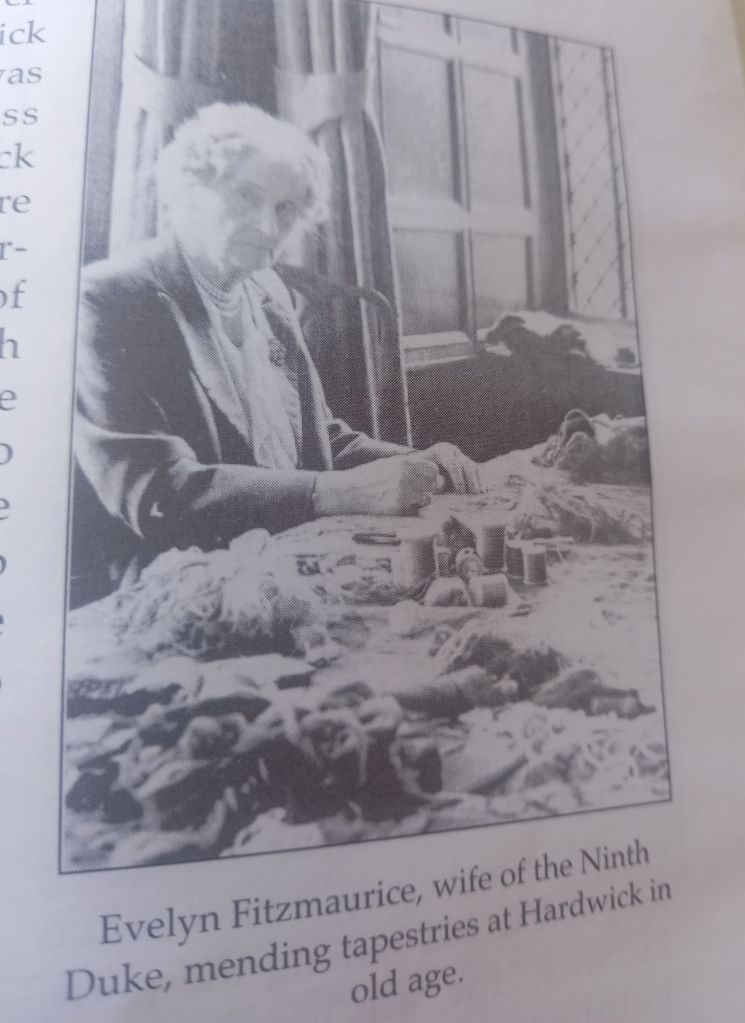
There is some reference to her other roles, during WW2 she was active in the Red Cross, and there is a wonderful photo in the Stags and Serpents book of her mending the tapestries at Hardwick. This is the period that my book is set, so is a very special one for me.

It has been really interesting for me, as a fledgling fiction writing, to reflect on the process of writing. How I feel about it, what I find difficult, and what comes more naturally to me. I have really enjoyed the process, even if at the moment there is no finished product!

I have also found it fascinating to read about other’s thoughts and processes. I have always been an avid reader, but now I am writing I find myself thinking so much more about how and why the writer structured their books that way.

I am sure that my long suffering English teacher would be very pleased to hear that, some 50 years after my very poor performance in my English Literature O level! I got a D in that one, but an A in Language 😉

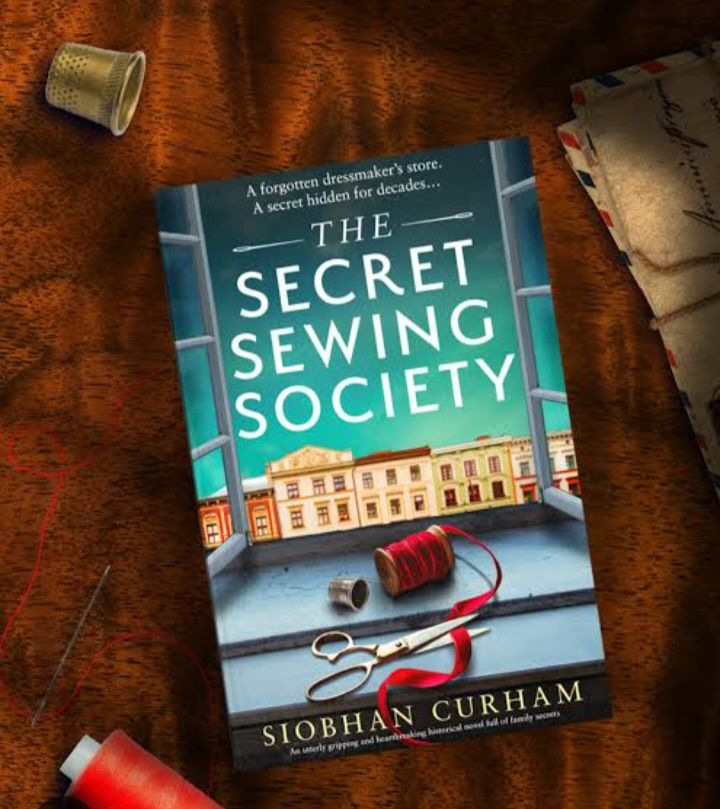
My latest read was the very interesting, ‘The Secret Sewing Society’, a dual timeline story set in Ukraine, by Siobhan Curham.

I will definitely read more of her books, as her subjects are ones that I am really drawn to. She also has a Substack, where she writes about the process of writing, and how she gets ideas, which is really interesting.

So, hopefully I will make good progress with the last few chapters of novel one over the next few months. It would be lovely to be able to let people read it, and my very kind friends have said they will act as beta readers for me.

Whatever happens I have thoroughly enjoyed all bits of this new journey, even the getting stuck bits have been helpful, as they have made me think of other ways to work. After all, as was always mine and my sister’s family motto, ‘no-one ever said it was going to be easy!’

I shall leave you with that thought, it is a beautiful sunny day here in Scotland, so I am going to make the most of it and head for the hills. See you all soon!

Empty places

Although I love visiting historic houses and castles full of textiles, and all of the possessions the owners have accumulated over the centuries, there is something really powerful about visiting those places that are ruined, either though the ravages of time, or single events that destroy the place.

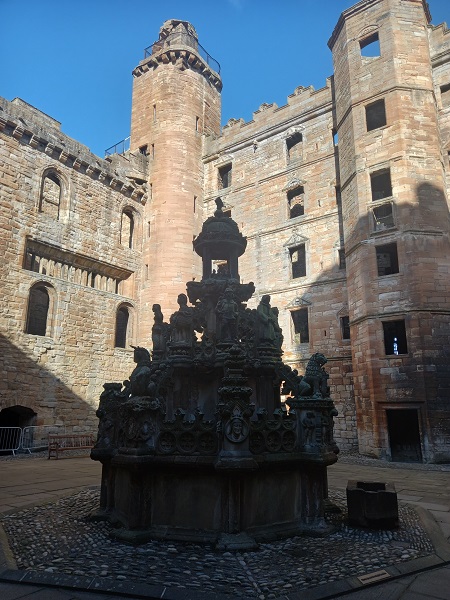
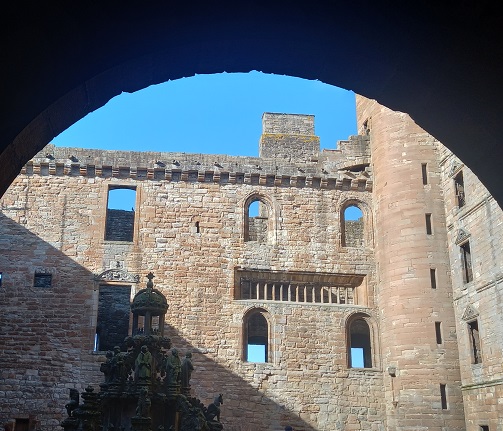
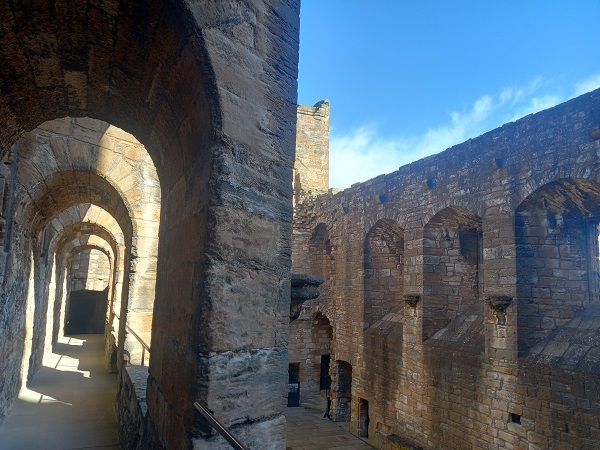
I have visited a few of these in the last few years, and what strikes me about them is the ability to give a glimpse into how these places must have looked as they were being constructed. Bare walls, no roof, the stone or bricks the most important feature, without the distraction of tapestry hangings and wallpaper.

There is also the way that the light works in these buildings, often without windows and curtains to filter it, and the blinds to preserve the delicate fabrics from decay. There is a magical quality to the way the light illustrates the bare bones, the way that you see shadows, rather than wallpaper.

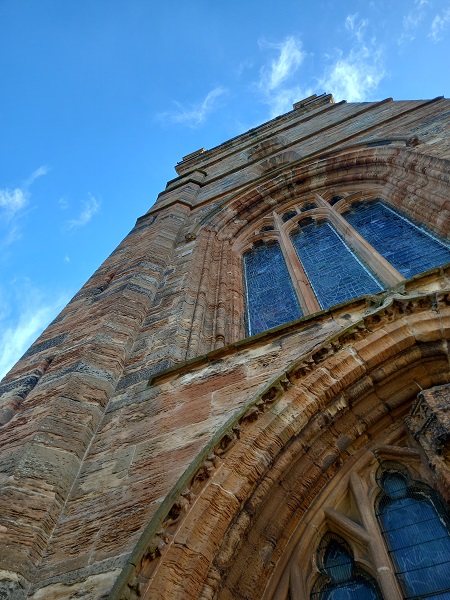
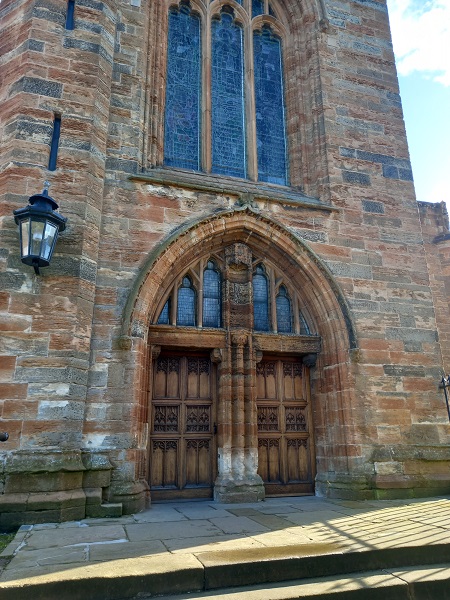
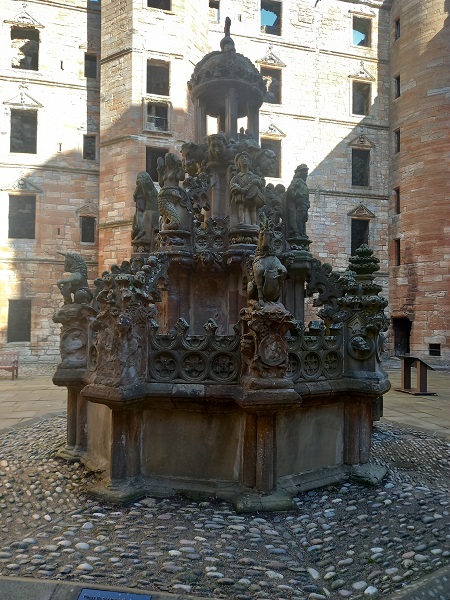
I recently visited somewhere that has been on my wishlist for a very long time. The birthplace of Mary Queen of Scots, Linlithgow Palace, is just one of the many places that I have yet to go to, on my quest to know more about this fascinating woman. If you have been here for a while you may know that I have visited many of the places that Mary stayed, either by plan, or suddenly finding myself there. I have been interested in Mary for so many years, sparked by seeing her needlework at Hardwick Hall.

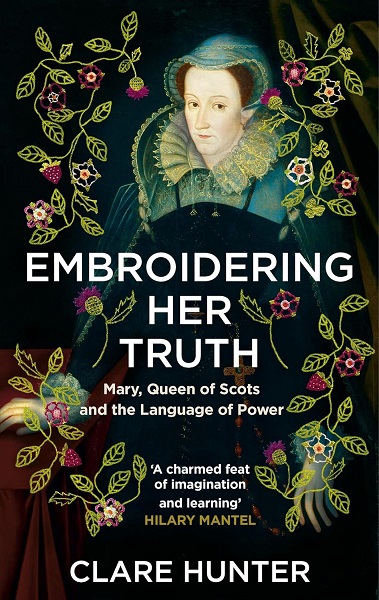
My first novel, which I am hoping to complete sometime this year, is centred around Hardwick, and I have really enjoyed the research for this, including reading more about Mary and her stitching. A couple of years ago I bought this fascinating book, which delves into Mary’s relationship with textiles, both her clothes and her needlework.

This was a different type of visit, to the empty palace where it all begin. Before she became a young widow, an exiled queen, and ultimately a prisoner, stitching alongside her companion Bess of Hardwick, gradually losing hope that Elizabeth would meet with her and grant her freedom.

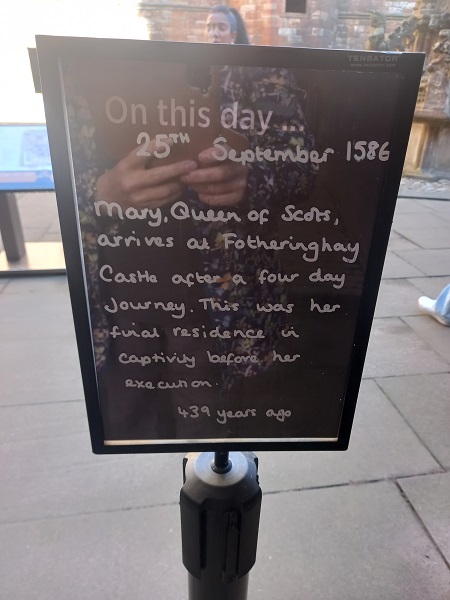
It was a particularly significant day to visit, although I didn’t know when I was planning the trip, but this notice was on display in the entrance of the palace.

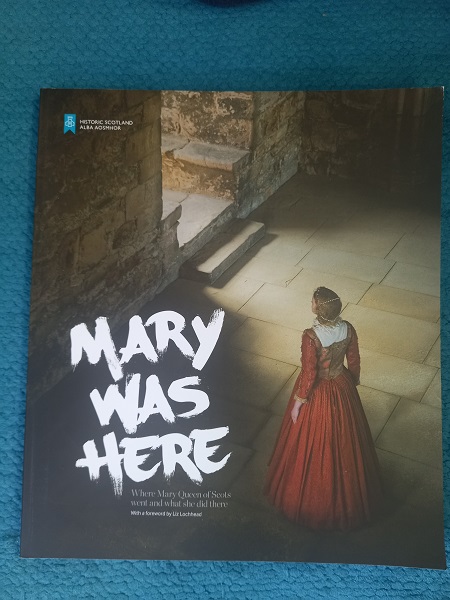
Such a beautiful and atmospheric place to spend a morning, and I am exceptionally glad that I was able to get there on this trip, as in the gift shop I found this wonderful book.

We have often joked as a family that everywhere we went, Mary seemed to have stayed, or slept, and this is going to form a large part of my planning for other Scottish visits this year, as there are many I was not aware of.

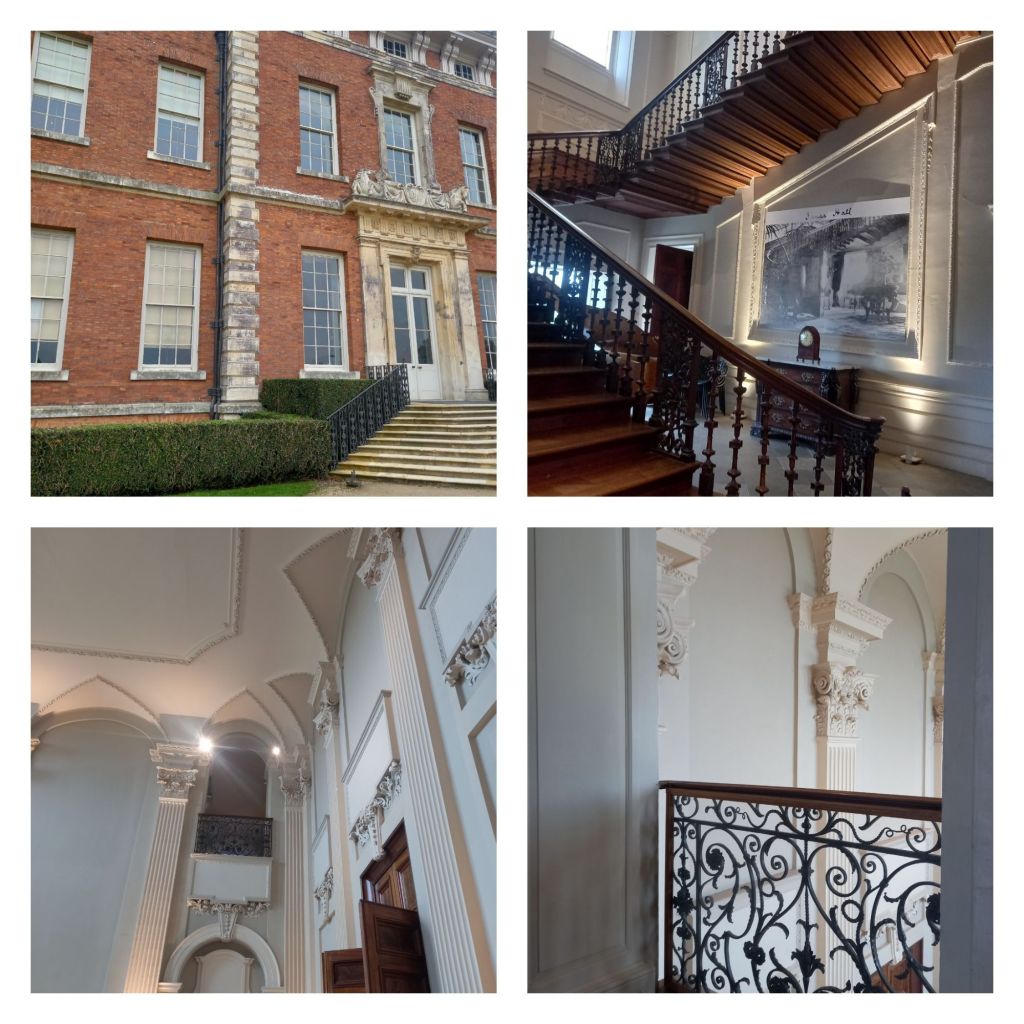
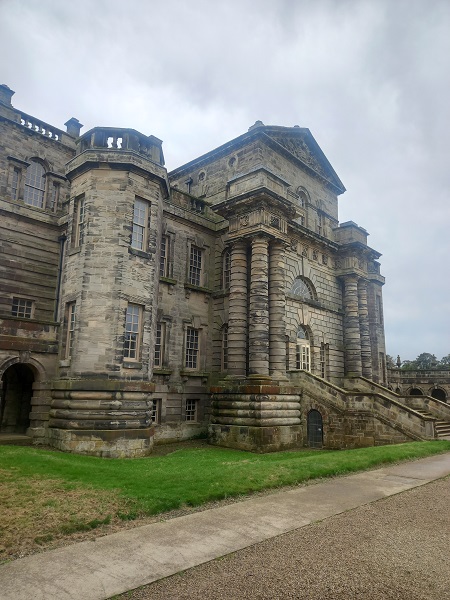
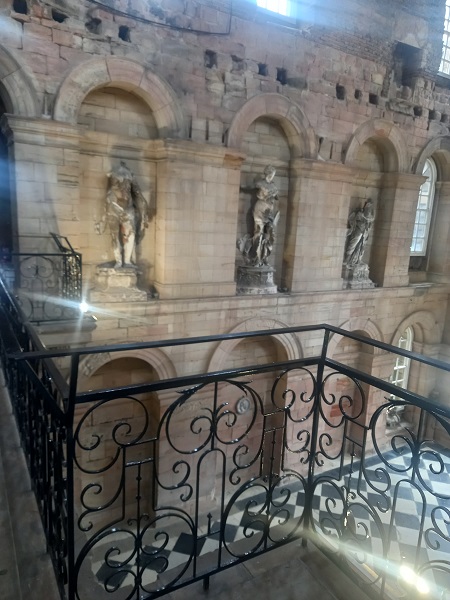
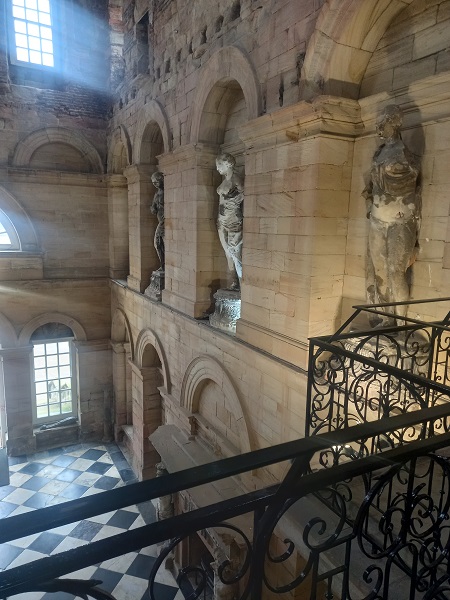
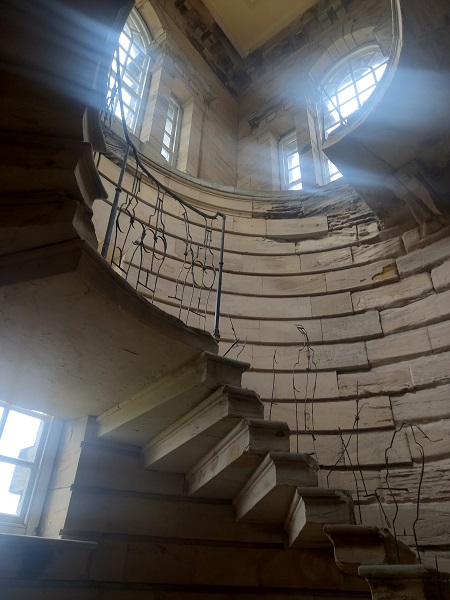
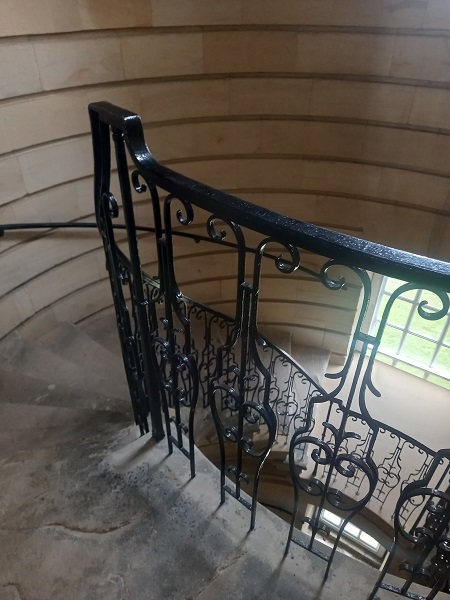
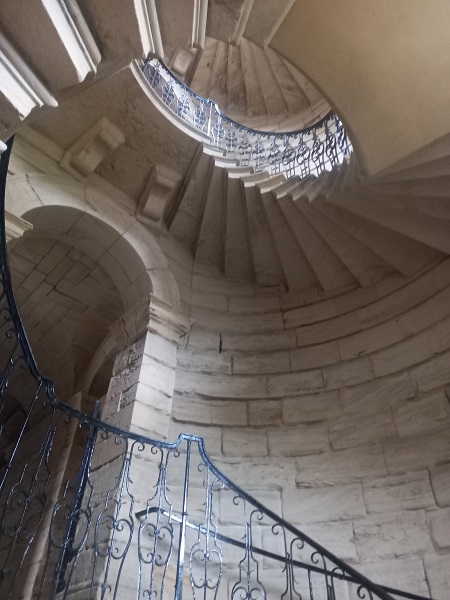
A couple of weeks later I visited Seaton Delavel Hall, on my way back to Yorkshire to catch up with friends. The hall was destroyed by fire around 200 years ago, so what remains to visit is a scarred and empty building, with the most wonderful architectural details to see. I loved the stairwells, the way the light streamed into them, and the fact that you could see the melted railings in the upper floors, recreated to ensure that visitors could access them.

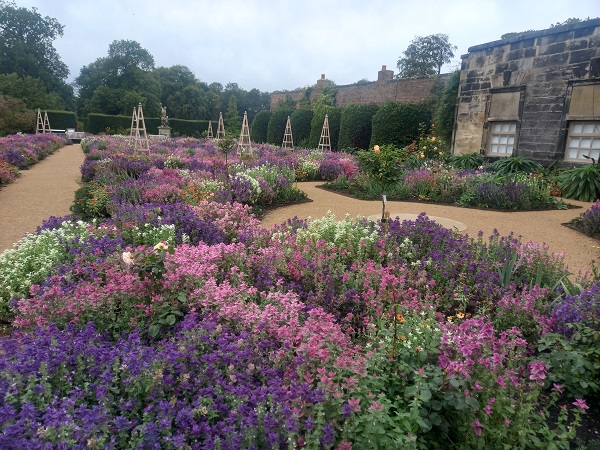
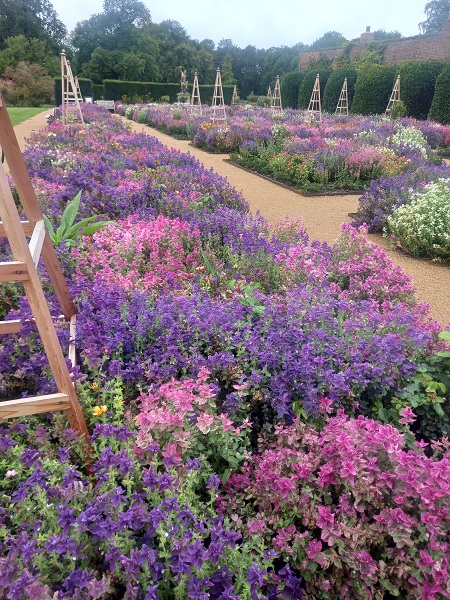
Even though it was a dull day, the light was beautiful, and so were the gardens, with their displays of blossoms in my favourite colours. A beautiful place, and I am so glad it is still cared for and accessible.

I am at the start of my last full week here, so that means lots of last meals out and events with friends. I am very lucky to have such a great social life here in Spain, and this week will be out virtually every night. My poker skills have been improving, I even won a tournament a couple of weeks ago, coming second out of eight people, so am very happy about that, and have enjoyed learning the game a lot. This week also means the all important task of sorting out my projects for the coming year, and deciding which crafting stash is coming with me, based on that.

I will have time for one more post before I leave, have just returned from a marvellous trip here in Spain but will leave that for a while as I need to finish the Scottish and Yorkshire adventures first. So will see you all here next week. Hope you all have a very happy week whatever you are doing, and thanks for visiting.

A pink palace with painted ceilings

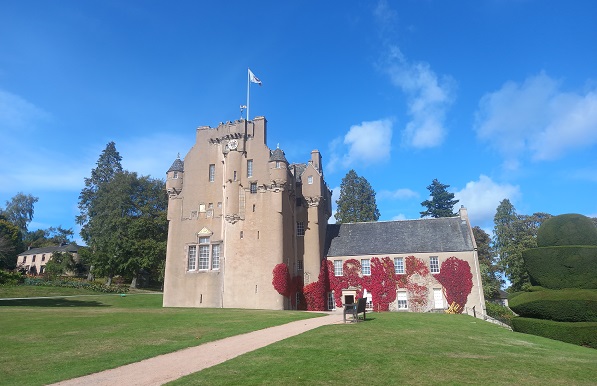
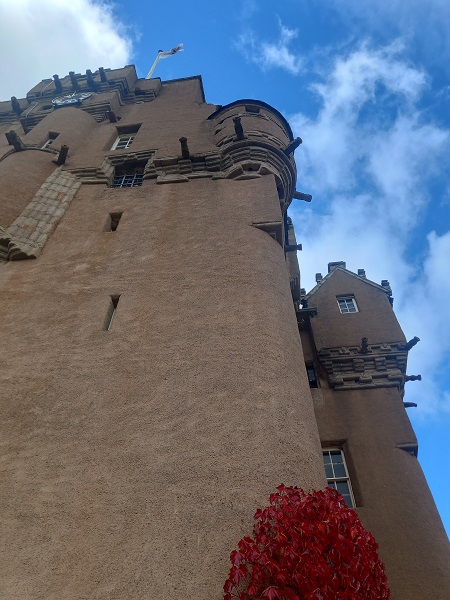
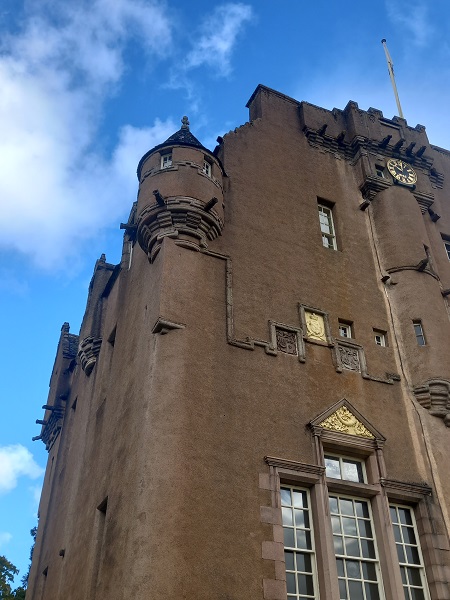
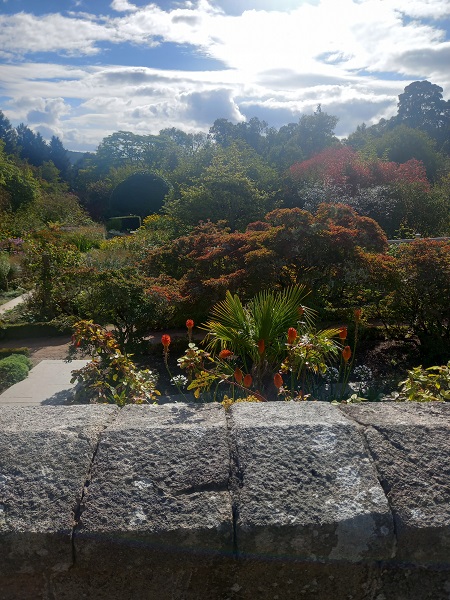
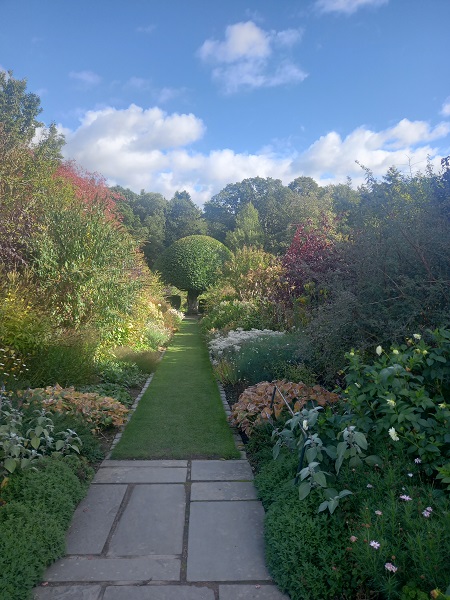
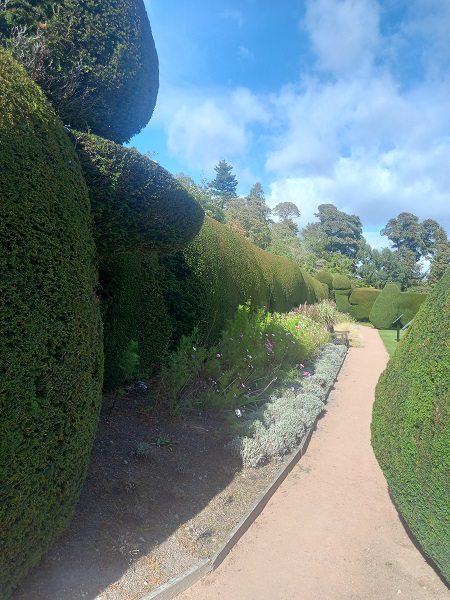
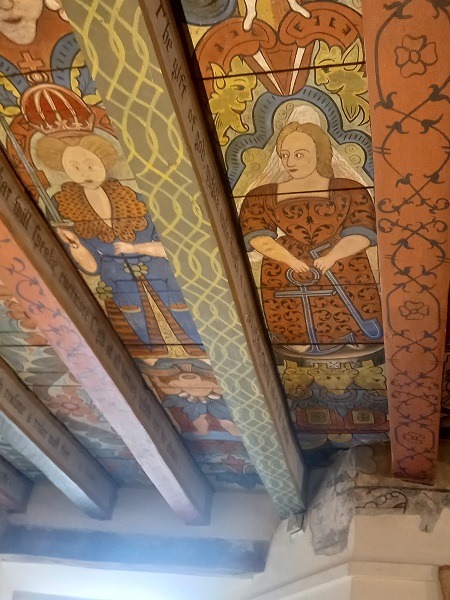
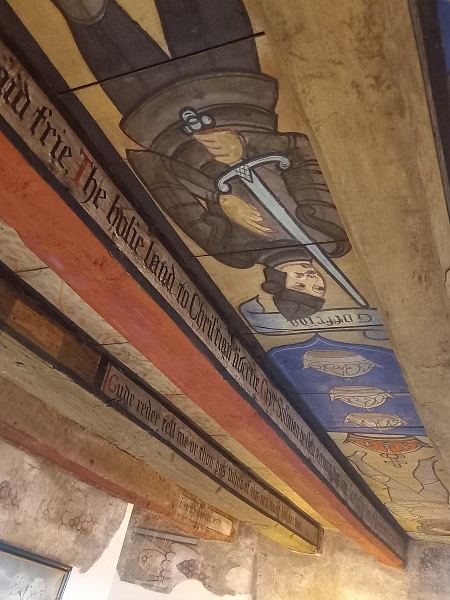
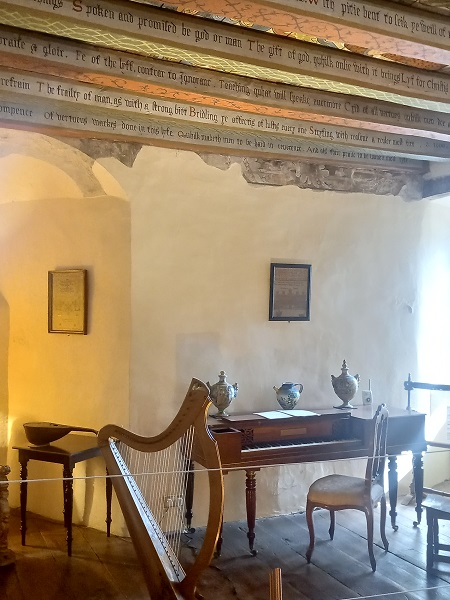
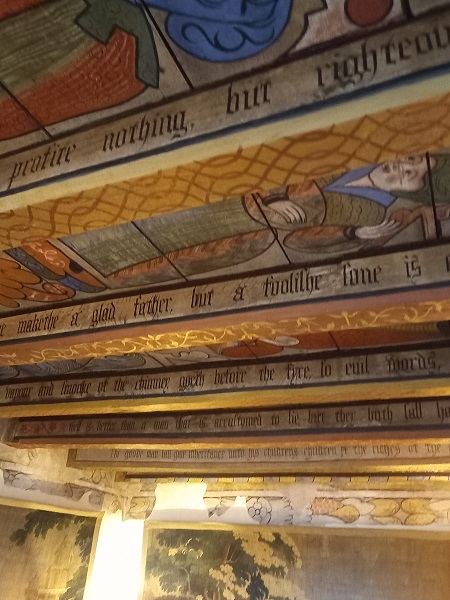
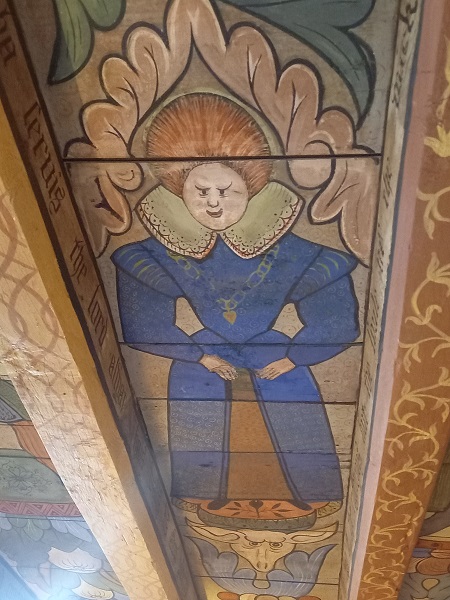
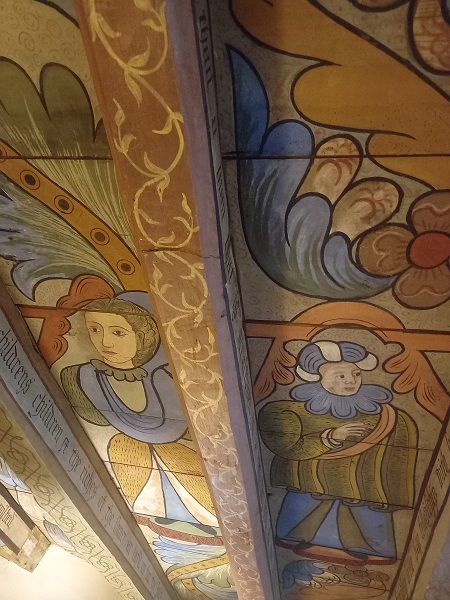
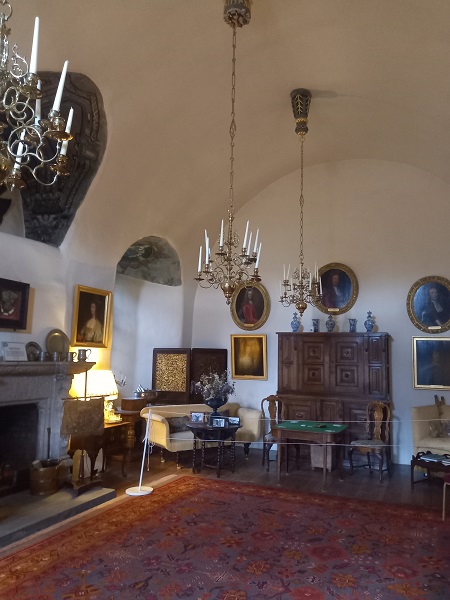
Technically Crathes is a castle, not a palace, however it reminded me so much of all the amazing painted ceilings that I have seen in palaces in Europe, that I definitely think it deserves palatial status. I was lucky enough to visit on a gloriously sunny day as well, which was brilliant as they also have gorgeous gardens and grounds.

This is such a beautiful part of Scotland, a lot quieter than others, but Deeside is just lovely, and the drive to Crathes was beautiful as well. I hope that I get to return sometime soon.
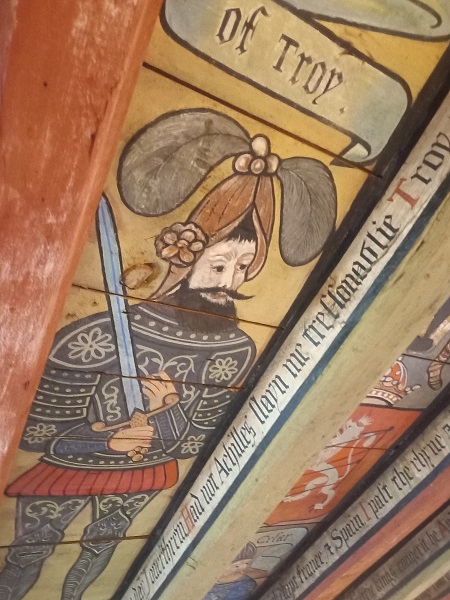
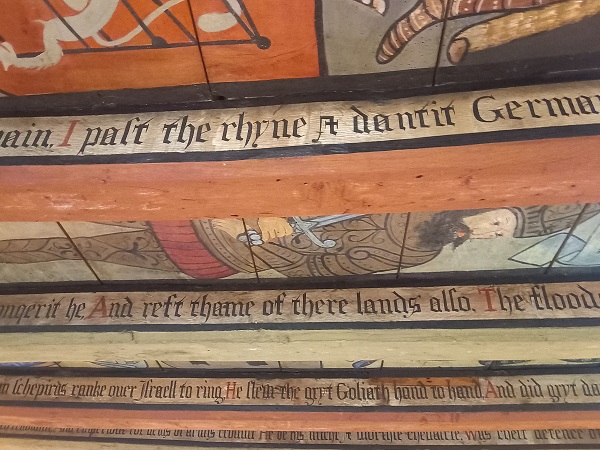
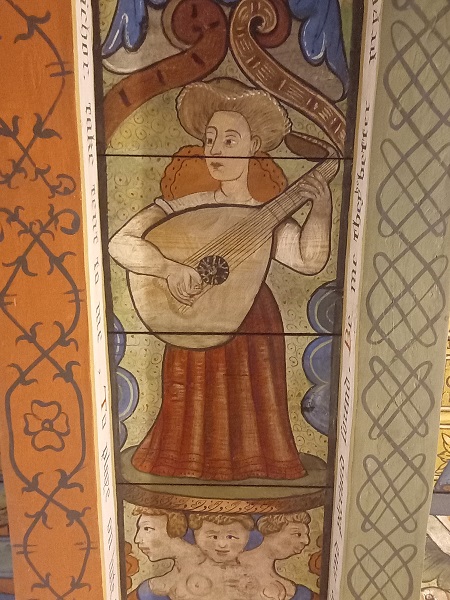
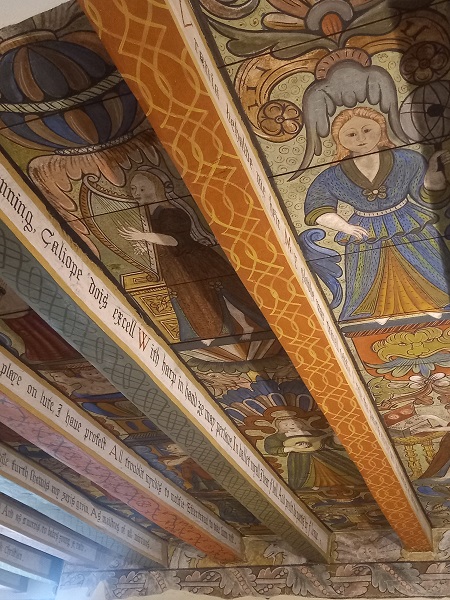
The painted ceilings are amazing, they are themed and there is very good interpretation to tell you about the symbolism, and also some very interesting, for me anyway, textile interpretation.

The Nine Nobles ceiling is self explanatory, representing kings and nobles from different times in history.

The Muses and Virtues ceiling was of particular interest to me, as at Hardwick Hall there are a number of hangings that Bess had commissioned with same themes, and they would have been created at around the same time.

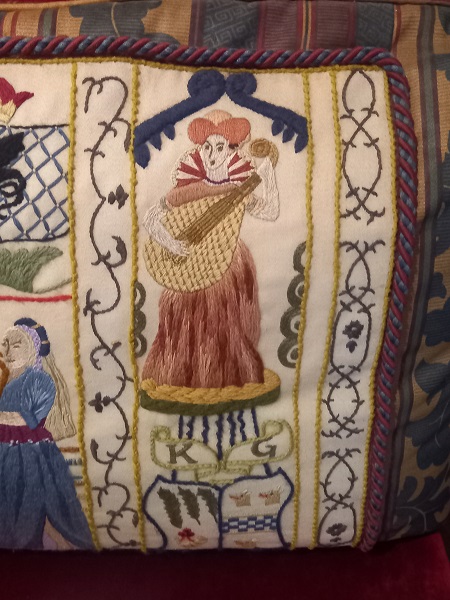
There was a cushion on one of the seats that had used elements from the ceiling as its inspiration, clearly a modern one, and on enquiry at the main desk I found out that it had been stitched by some of the castle volunteers. Just beautiful, and what a great way to add to the furnishings in the castle.

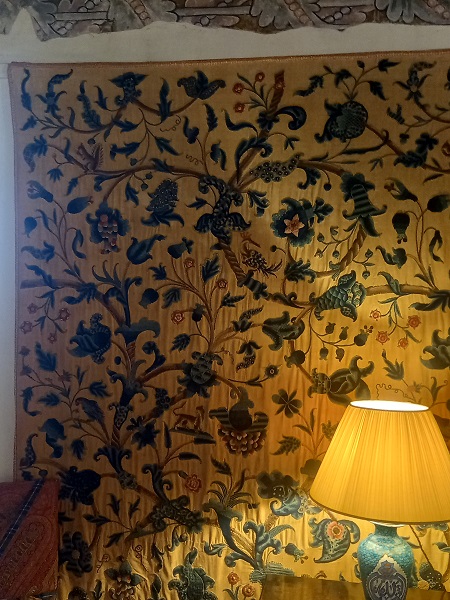
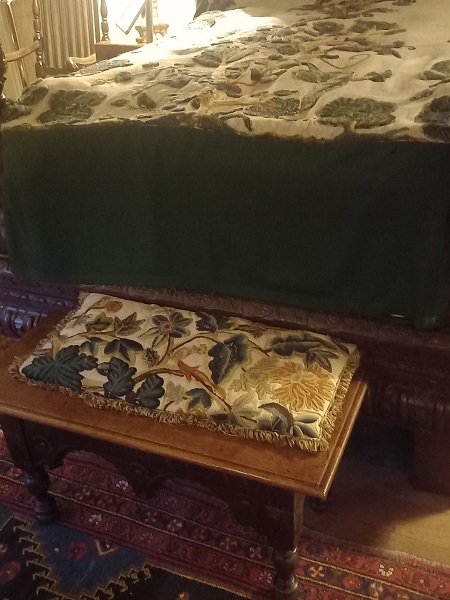
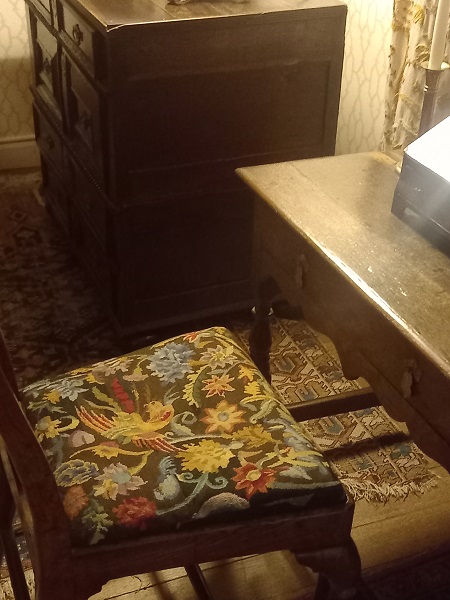
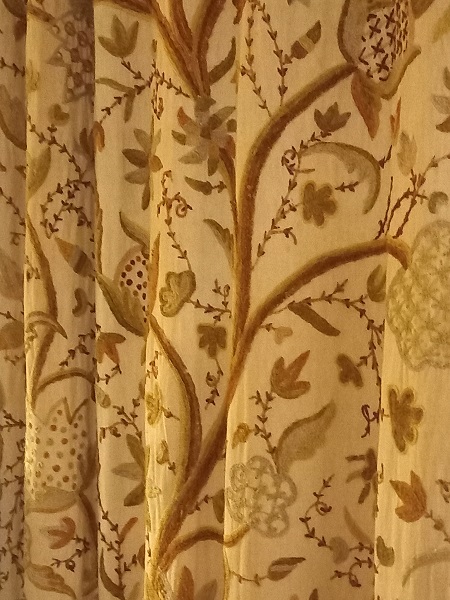
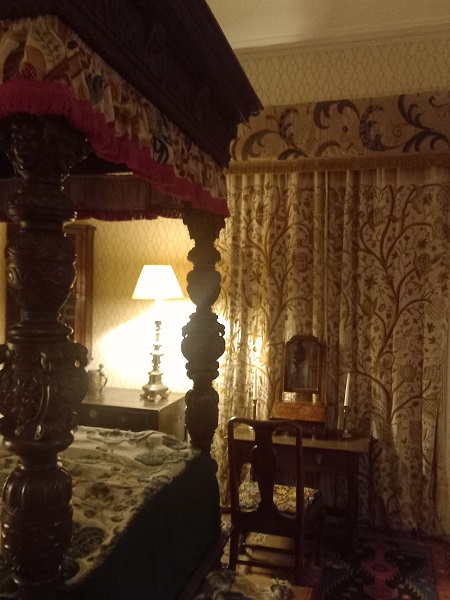
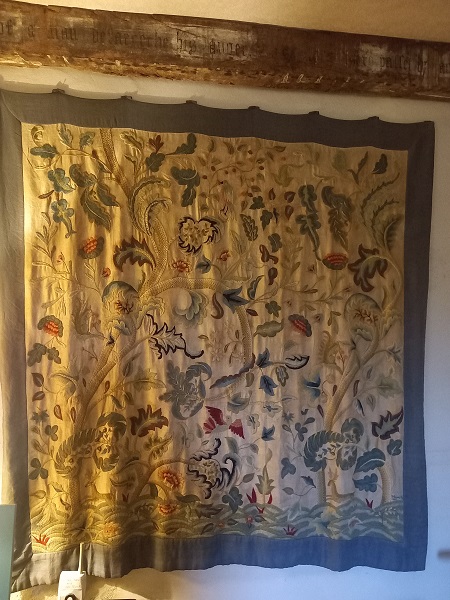
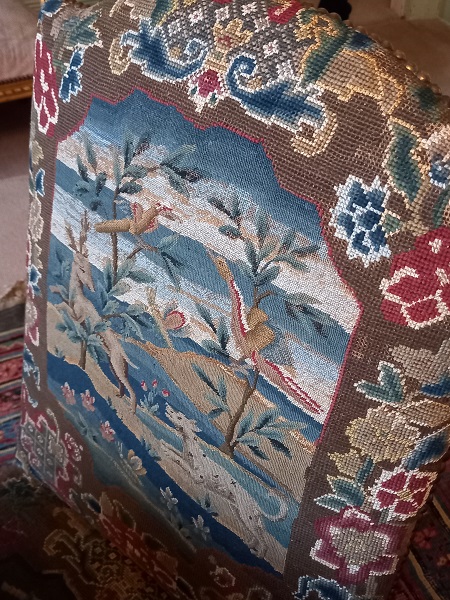
The historic needlework was also in abundance, with a lot of crewel work.

It was very good to see some written interpretation about its date and conservation.

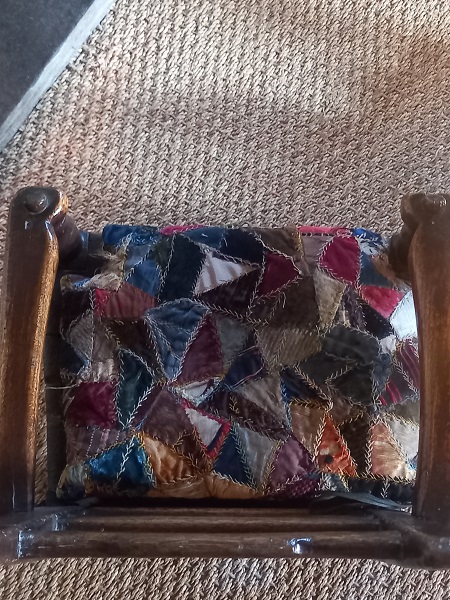
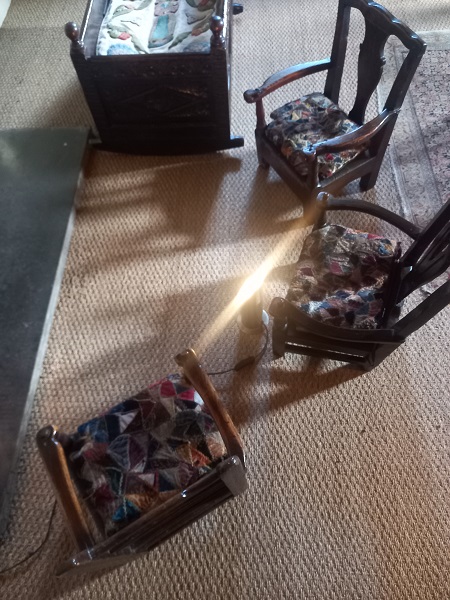
There were also some later dated things of interest, including these lovely Victorian crazy patchwork nursery chairs. I love imagining the gowns that these bits of fabric were offcuts from.

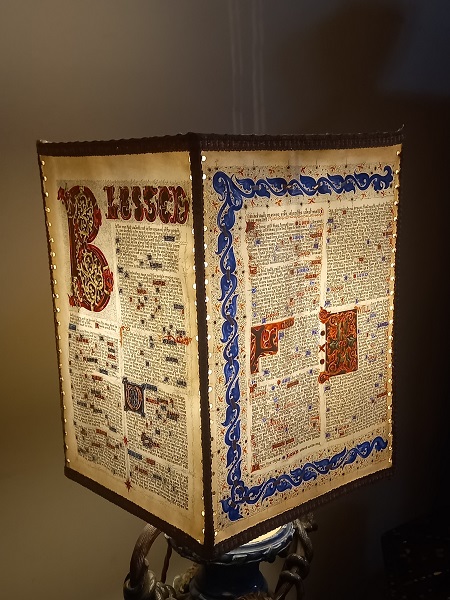
The main living area also had some interesting soft furnishings, and this beautiful manuscript inspired lamp.

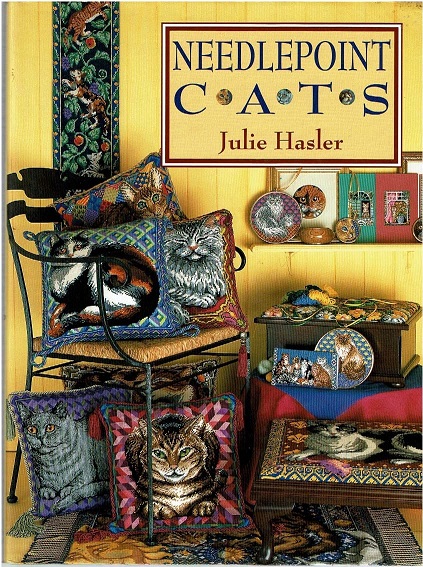
I mentioned in the last post that I was getting very inspired by all of the needlepoint I have seen this summer. I didn’t find a suitable kit, but I did remember that I used to have some great needlepoint books and managed to find this one on Amazon. This is Needlepoint Cats, by Julie Hasler, and I have a copy waiting for me in the UK!

I am almost certain that I used to own this book, but due to having small children never got around to making anything from it. I am planning a cushion for the caravan as a summer season project, but will have a hard time choosing as there are so many lovely designs. I am aiming to have specific UK and Spain projects, to stop me having to transfer stash and tools from one country to another all the time!

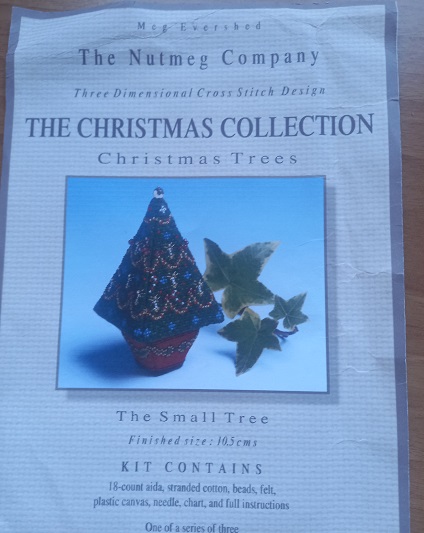
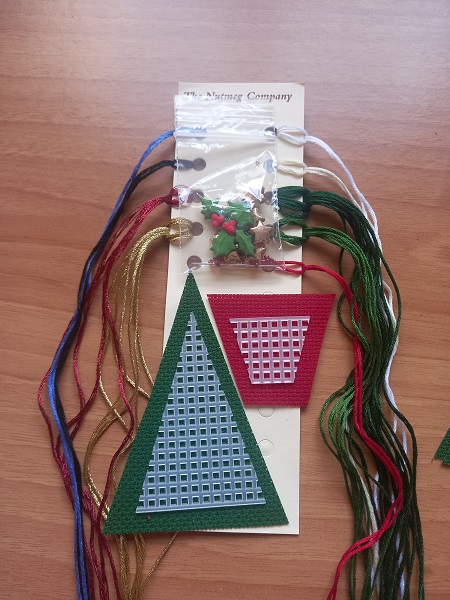
I have completed the very busy week of Christmas trips and dos, and done all of my Christmas gift making, will post about that after Christmas for obvious reasons! I am now working on a couple of projects just for me, versions of cross stitched ornaments that I have given others in the past, to fill up my tiny tree here, and a kit which has been languishing in my stash for more than 10 years.

I started it yesterday, and immediately remembered the joys of stitching on dark fabric, luckily I have a good spotlight, as we lose the light here about 4pm. However today is the start of lighter and brighter days, not that it is bad in Spain compared to the UK, but I am looking forward to my very long summer evenings in Scotland.

I hope that you are all having a good pre-Christmas week if you celebrate, and have a lovely time ahead. I will see you all on the other side, hopefully there will be time for a last post before 2026! Take care and thanks for visiting.

Castles old and new

Google informs me that Scotland has over 2,000 castles, of which 1,500 are still standing, or there are significant remains. Therefore I was never going to do more than scratch the surface on my quest to visit more of them after I left Speyside. I had naively thought that at least I could do most of the ones in the area around the Tarland campsite, there is actually a castle trail in the area as there are so many, but only managed a few in the week I was there. Lots to do when I go back!

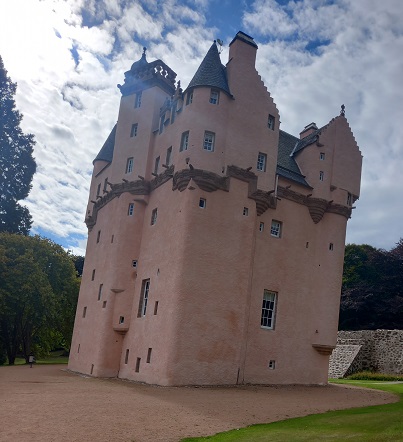
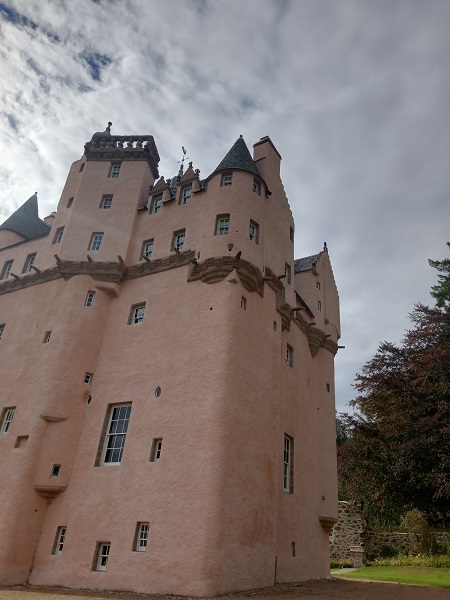
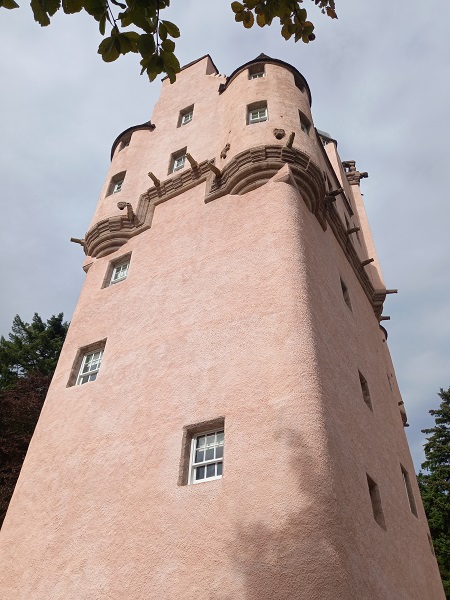
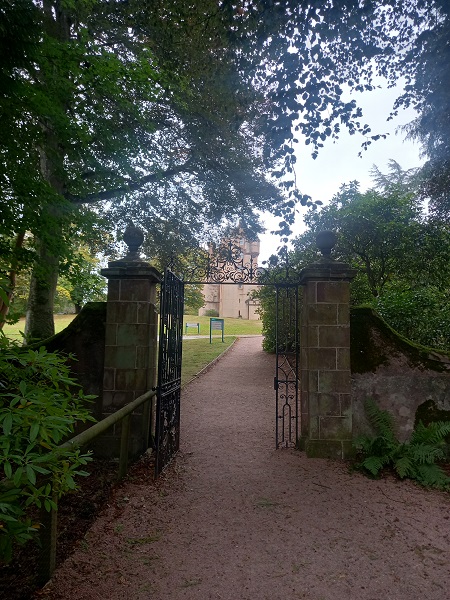
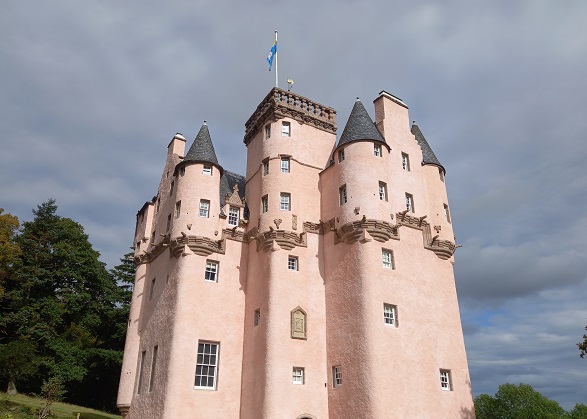
Scottish castles are really unique, as many of them have a very distinctive architectural style, and lots are pink, or greyish pink in hue. They really do have a Disney castle feel, and none more so than the beautiful Craigievar Castle Sadly this was one of the ones that I didn’t get a chance to see inside, as most of them only allow guided tours, and by the time I got there, all were booked up for theafternoon before I had to head to the campsite.

It was a beautiful day for a wander though, and the grounds and surrounding area is just stunning. Not that there are many parts of Scotland that aren’t, except perhaps the motorways around Glasgow, which confused me a lot!

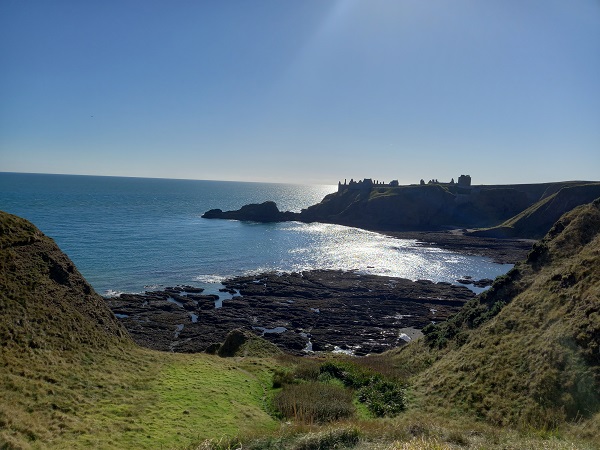
After leaving Tarland I headed back to the coast, to Stonehaven. I mentioned in a previous post that it had been too windy to walk along the coast to Slains Castle, but this was an absolutely gorgeous day, perfect for a walk along the coastal path to see the dramatic ruins of Dunnottar.

I am collecting photos that I particularly love to be printed onto canvas eventually, and I think this will have to be added to that collection. Such an amazing landscape, and I was so lucky to see it in such beautiful weather.

As well as the castles there are so many beautiful baronial houses, and after leaving the Grampian Aire I went to Leith Hall Dating from the mid 1600s, it has been extensively remodelled and is now mainly Georgian inside. Again I had an excellent guided tour of the house, memorable for several curiosities as well as the wealth of textile treasure.

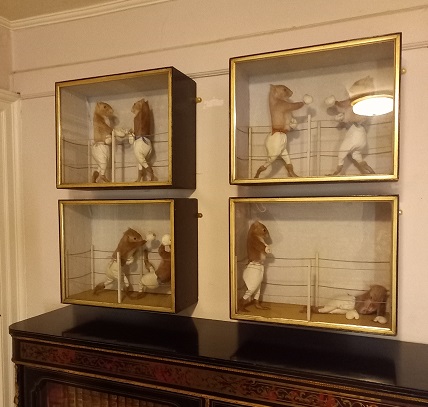
If you visit any heritage house you will come across taxidermy, a favourite pastime of the Victorian collectors, but Leith has a very special display, of boxing squirrels!

This has to rate as the most unusual piece of taxidermy that I have ever seen. No clear idea of the provenance, but I can only assume they were specially commissioned.

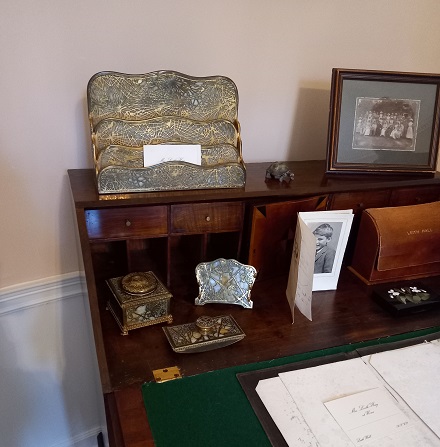
Sometimes there are just little things that really catch your eye as well, not only for their beauty, but imagining how they were acquired, and the recipient using them. I like to imagine that this beautiful desk set was a very special gift, and that happy hours were spent here writing letters and journals.

Another really interesting find was this gift of a photo montage of all of the tenants of the estate, given to General Leith Hay in 1902. A fascinating piece of social history, and one that is great for anyone tracing family history in the area, as many of these people wouldn’t have necessarily have had other photos taken of themselves.

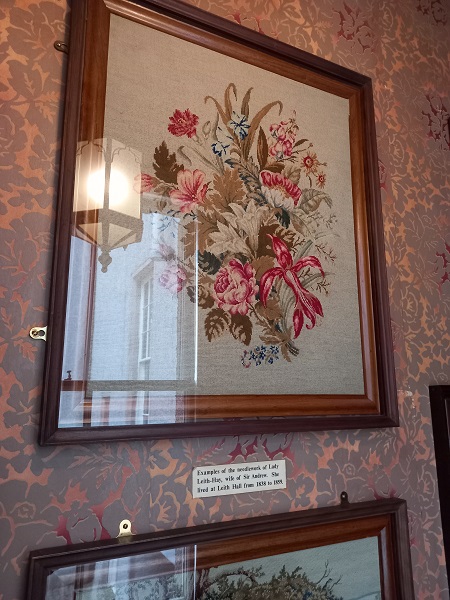
One of the members of the Leith Hay family was a very keen needlewoman, and one of the corridors was lined with needlepoint pictures, all from kits popular in Victorian times. There musty have been at least twenty of these, along with all the fire screens and chairs. I know I have marvelled at this before, but how many hours of work does this represent!

I have been thinking about doing some needlepoint again, not that I need another crafting project ! However I used to love it, so am on the hunt for a nice kit that I can do for the caravan.

Someone was clearly a keen collector of embroidery as well, as there was this display case. Sorry for the poor picture, but there is a Georgian waistcoat, as well as shoes and bags.

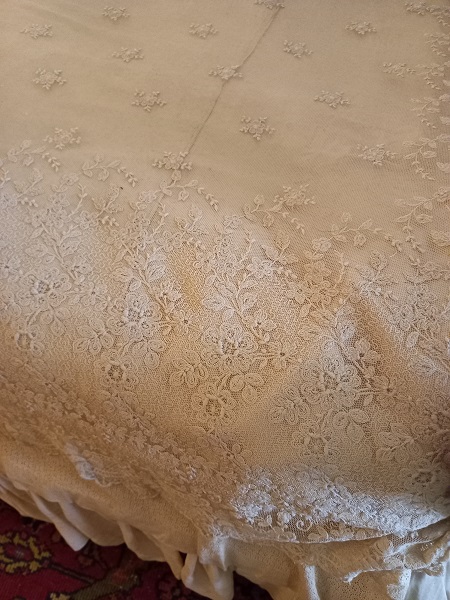
There were also some beautiful bedspreads, in crochet and lace work.

I have been spending some time here working on my crochet skills, and have successfully made my first hat! After so many years of struggling crochet seems to have just clicked in my brain, which I am very happy about. Pictures of that and other recent makes soon. I have also been doing some writing, so feel like I’ve had a very productive week.
It is a balmy 23 degrees this weekend, and I am looking forward to another lovely week of social activities. We have a packed programme of coach trips to visit Christmas lights, and Christmas celebrations starting this Friday, and I had better finish making the Christmas gifts as there are only 18 days to go! My poker skills are coming along nicely as well, I won 9 hands last night and came 4th out of 8 players, so very happy with that.

Until next time, take care, have fun and thanks for visiting.

Scottish, and Spanish, sunshine!

Admittedly not all of my weeks after leaving the campsite were beautifully sunny, but the majority of the time I was still blessed with amazing weather, so I was very lucky. Part of my route planning was trying to visit as many National Trust for Scotland properties as I could. There are so many in the areas around Aberdeen, so I could do the interiors of properties on the less sunny days.

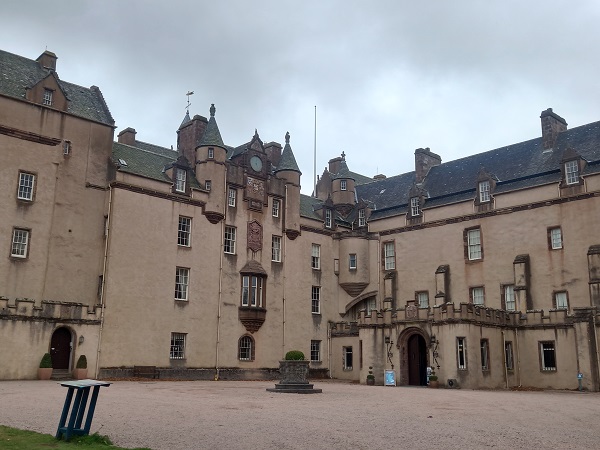
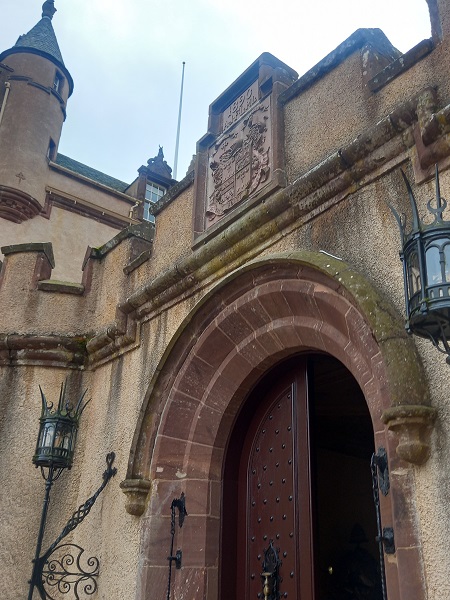
Fyvie Castle visit was on a bit of a grey day, the exterior reflected this, looking very somber. Like many Scottish castles, there are a number of towers that have been added to over the years, which gives them this very distinctive look.

Most of the castles I visited you joined a tour, rather than it being a self guided visit, and while I often prefer to be alone, usually as I need more time to look at the textiles than everyone else 😉 the tour guide was really interesting and knowledgeable, and really made the place come alive.

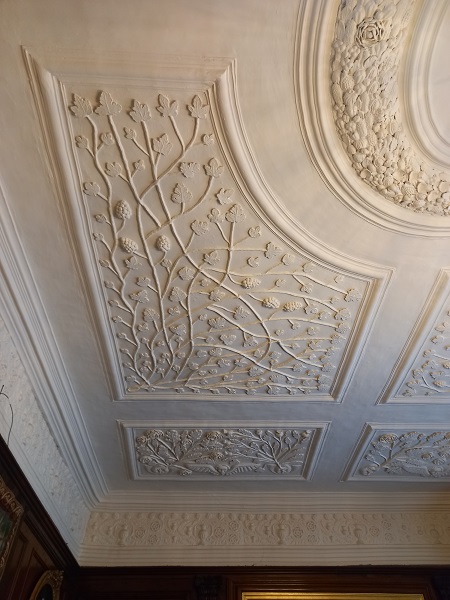
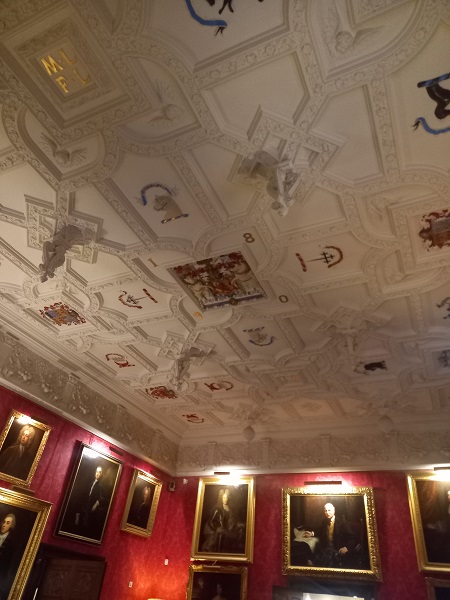
Even though it looks fairly modern from the outside, and the beautiful plaster ceilings are reproduction, rather than original Jacobean, it has a long history. Charles 1st spent time there as a young boy, and Charles 3rd, our current king, had his 70th birthday party there.

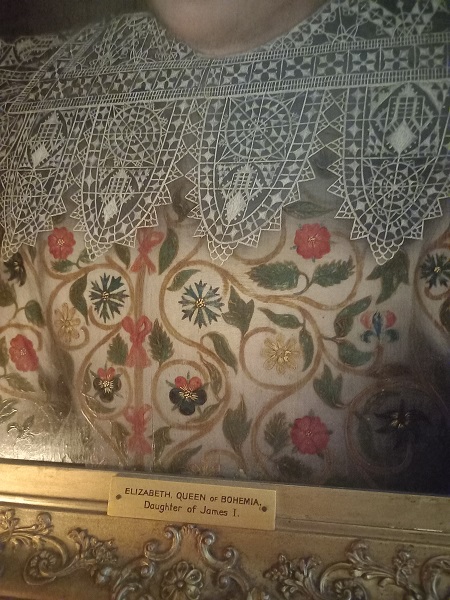
There were some great textile treasures there. I have seen so many different interpretations of this embroidered jacket, there is an original one in the V and A museum in London, known as the Layton Jacket, after its owner. This one belonged to the daughter of James 1st of England, Elizabeth of Bohemia, so dates from the same period.

There was also a gorgeous, and very pristine, whitework bedspread featuring the Scottish thistle, no provenance, but I would imagine a member of the family.

On a more modern note there were a set of co-ordinating needlepoint cushions in one of the lounges which all used the same colourway, and which were so pretty.

There was so much needlepoint on my tours of the castles and houses, and while it is so time consuming, I am really tempted to make a cushion at some point. I gave up needlepoint for cross stitch when my children were small, due to time constraints, but am tempted to try it again!

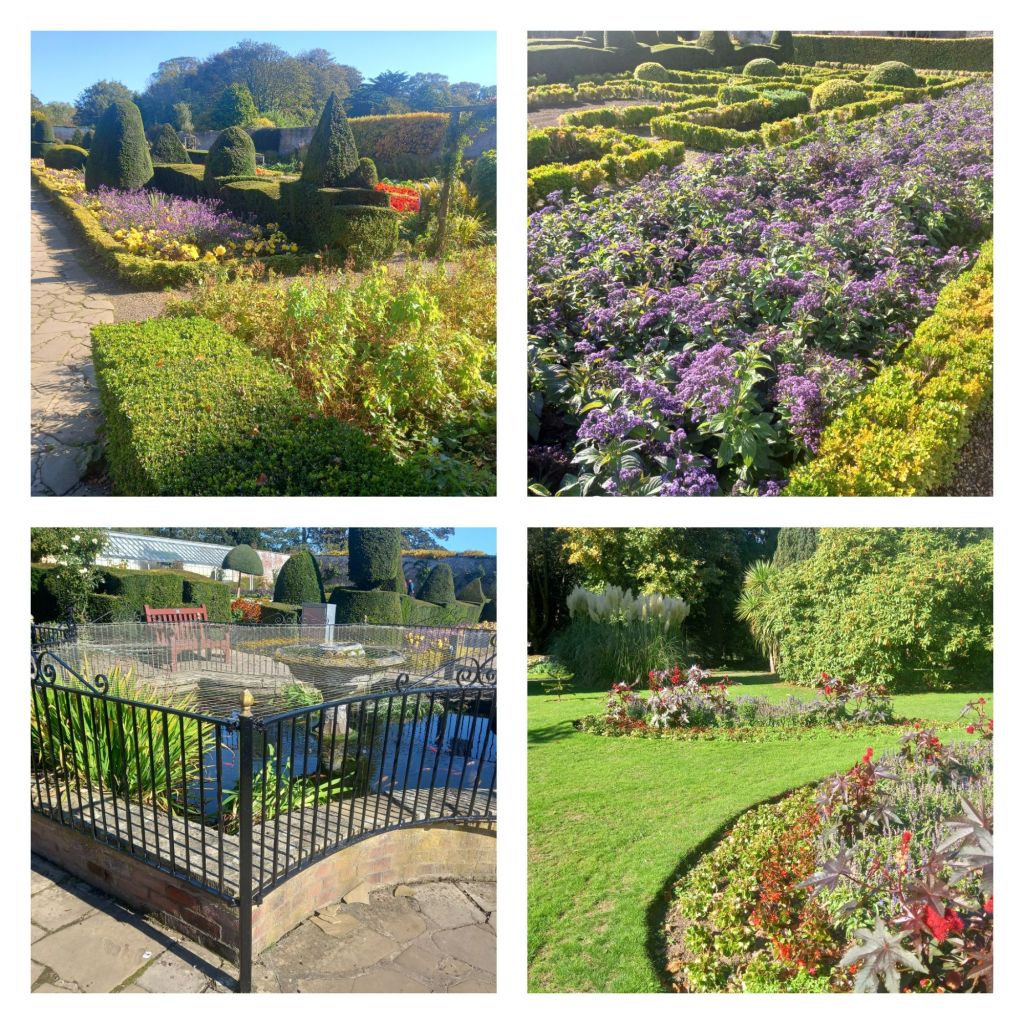
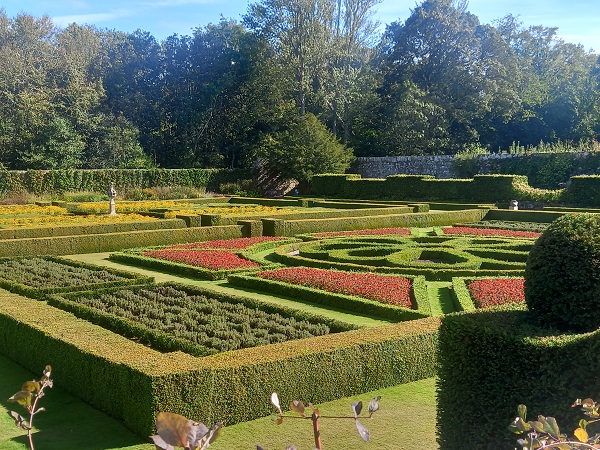
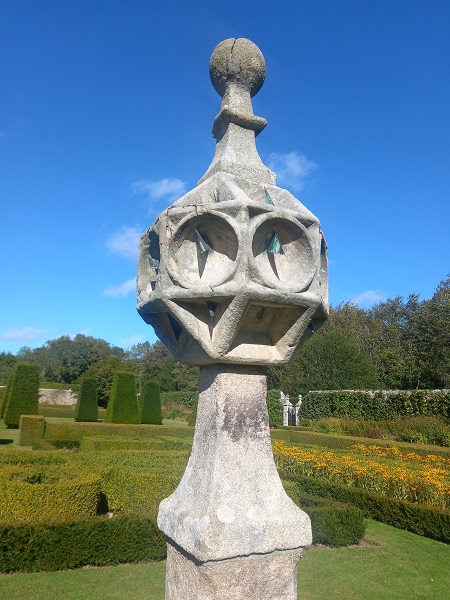
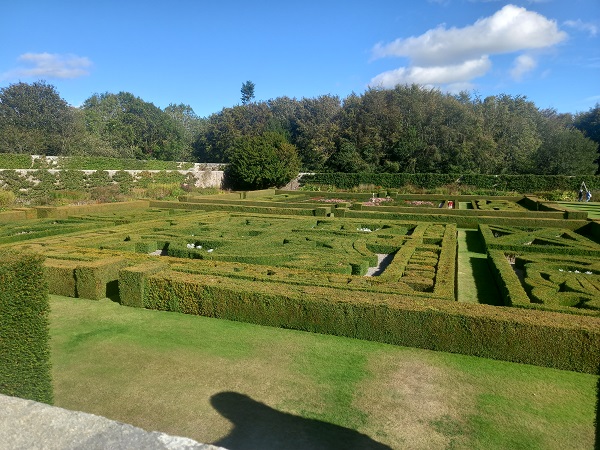
The following day the sunshine was restored so I went to Pitmedden Garden, not only a very good example of different types of planned gardens, but also home to some very interesting sundials. The gardens date from the late 1600s, when the ‘new’ technology of sundials was very popular, and reflects both the historic layout of the parterre gardens, and more modern interpretations featuring less structured planting.

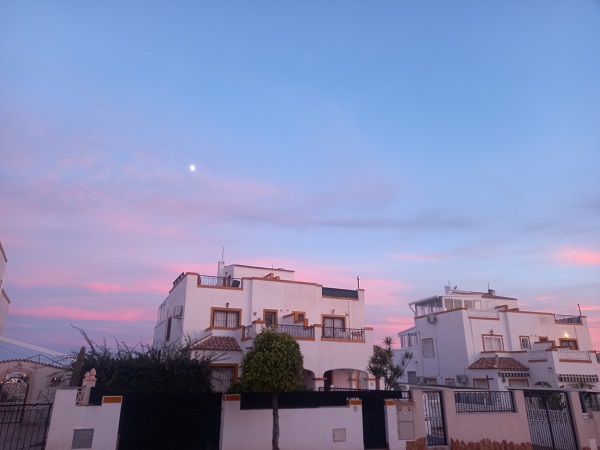
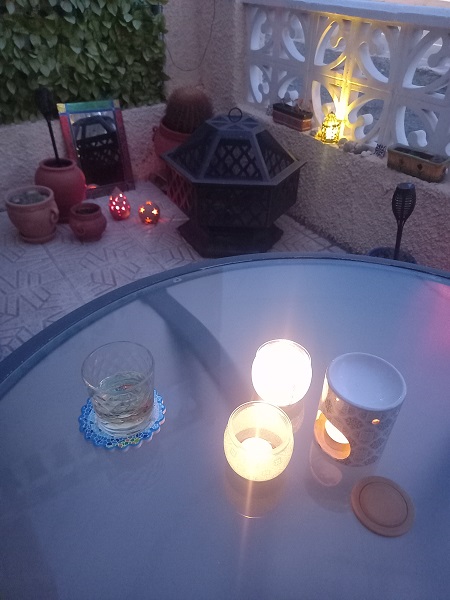
It was a very beautiful and relaxing place to spend the afternoon. I am now back in Spain, so have been enjoying the autumn sunshine here. It is a very nice 22 degrees today, I have replanted all my pots so that I have some colour on the terrace, and am back to my favourite way of spending the early evenings. The sunsets have been so gorgeous this week, such pink skies, and I have been lighting my candles and enjoying a glass or two of wine and a good book.
I have just updated the reading journal that I started when I retired, and I have read 354 books in the last 4 and a bit years, that equates to 88.5 a year, or 1.7 a week, although I read far faster in Spain than I do anywhere else. I just love it, and have so many happy hours of reading on the terrace planned for the next few months.

I will be going on a few day trips with my Mum, but the next few months are all about relaxing, crafting and writing, as well as some cycling. It is lovely to be back, especially after 6 months away. This is the longest that I have spent away from the house since I bought it 19 years ago, and I really appreciate having this lovely place to live. I am looking forward to next year so much, being back in Lotte the caravan, and Katy, but it is lovely to have my own bathroom, and my sewing machine!

Hope you are all having a lovely life, see you next time, and thanks for visiting.

A different kind of history

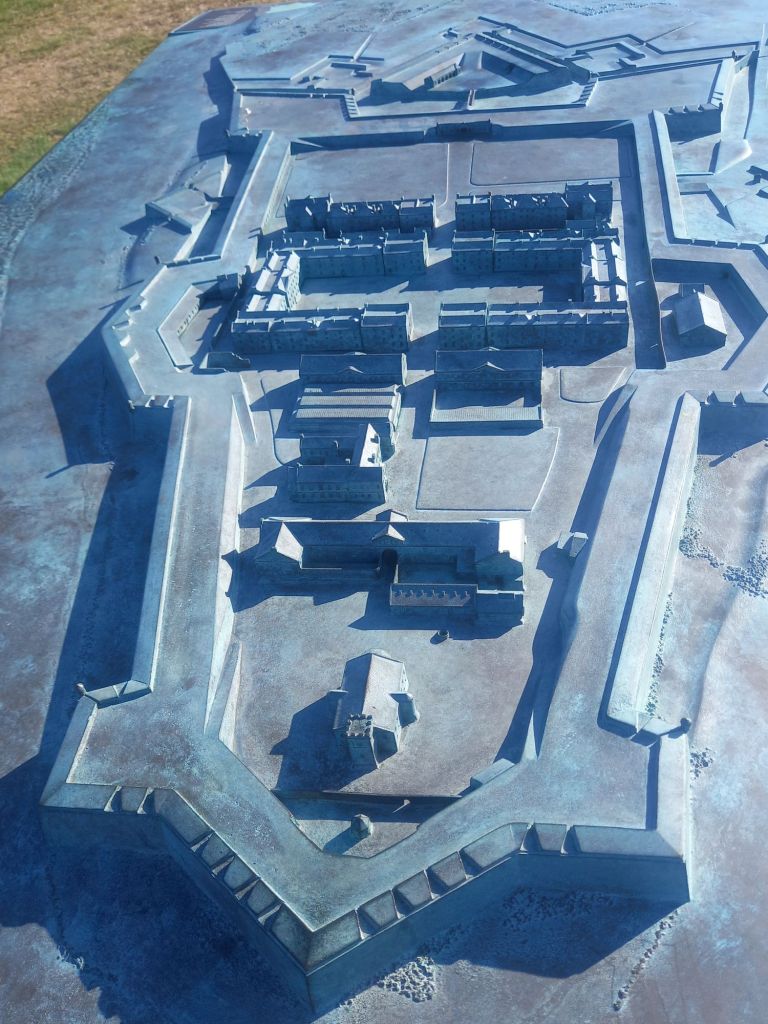
As you know, I love visiting historic houses and castles, preferably with lots of lovely textiles. However I also enjoy different types of historic buildings, and though I wouldn’t consider myself particularly into military history, I do love star forts.

These were popular during the Napoleonic era, as their design makes them able to defend against attack more robustly.

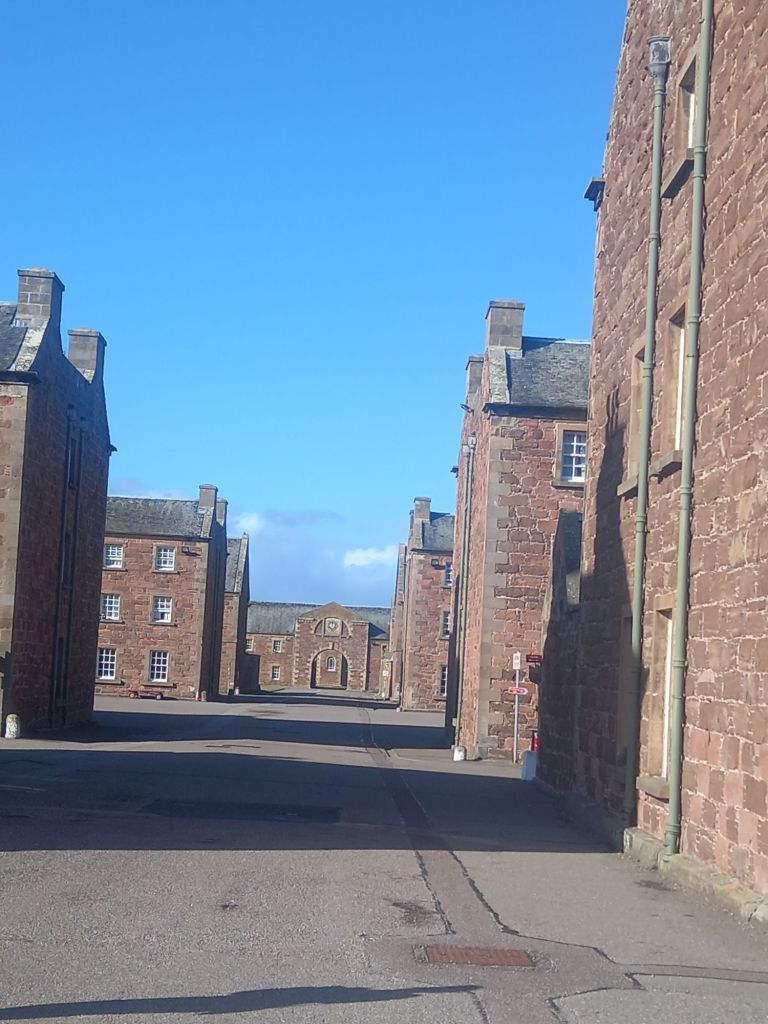
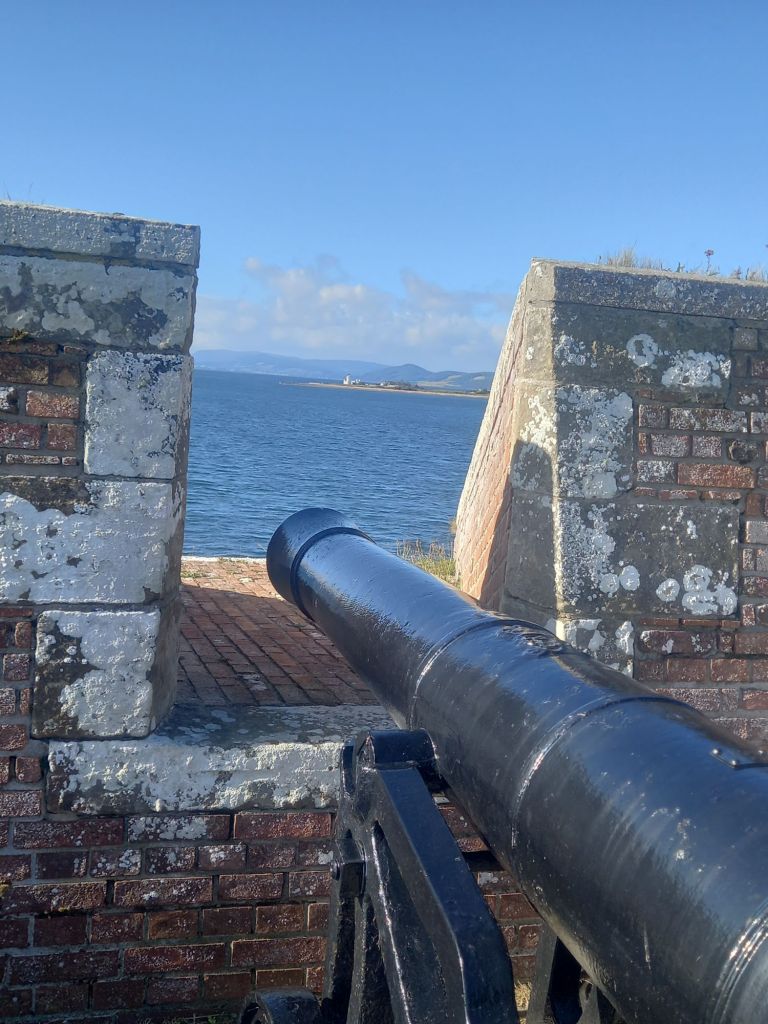
I have visited quite a few in Spain, and on the way back from Rosemarkie went to Fort George, on the Moray Firth not far from Inverness. This is more of an elongated star, but still has the distinctive pointed outer ramparts.

Although it was built in 1746, after the Battle of nearby Culloden, to house troops to suppress the Jacobite Rebellion, by the time it was finished it was no longer needed for that. It9 is still a working army base, as well as being a historic tourism attraction, and the site of the Highlanders Museum.

It was quite strange seeing the modern mess, cars parked outside the barrack blocks, and groups of young recruits doing their morning runs, with backpacks, around the ramparts, in and amongst all the visitors.

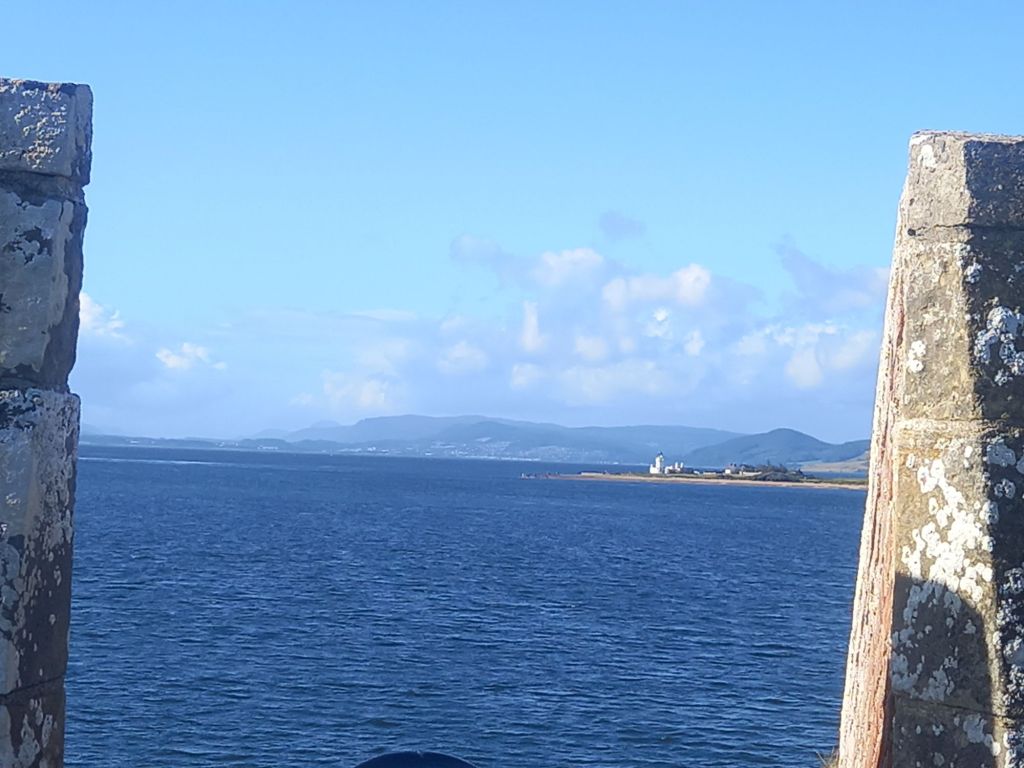
It has an amazing location on the coast, directly opposite the Rosemarkie campsite, in the photo below you can just see the lighthouse I walked to when I was there. It also famous for dolphin spotting.

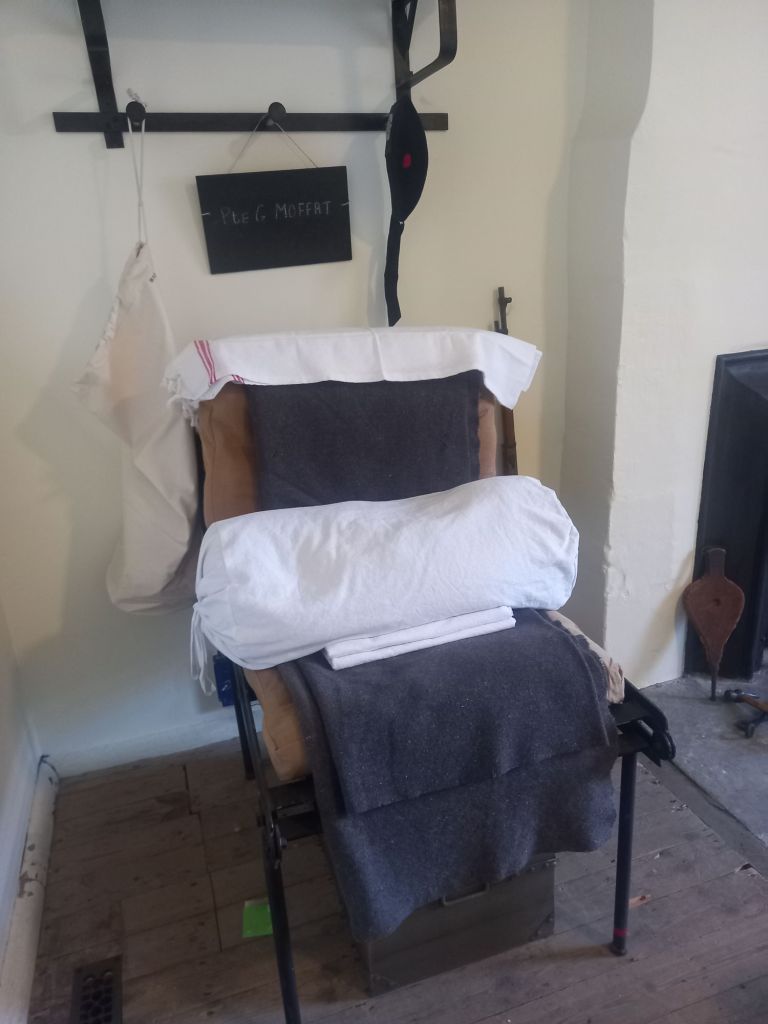
It was a really interesting visit, there is some interpretation in one of the barrack blocks, showing aspects of soldiers’ lives throughout the different eras.

These folding beds were really interesting,  this is from one of the rooms for single men in the early 1900s.

At one point in its early usage, wives and children used to live in the rooms with the men, four families to a room, which was also used for cooking.

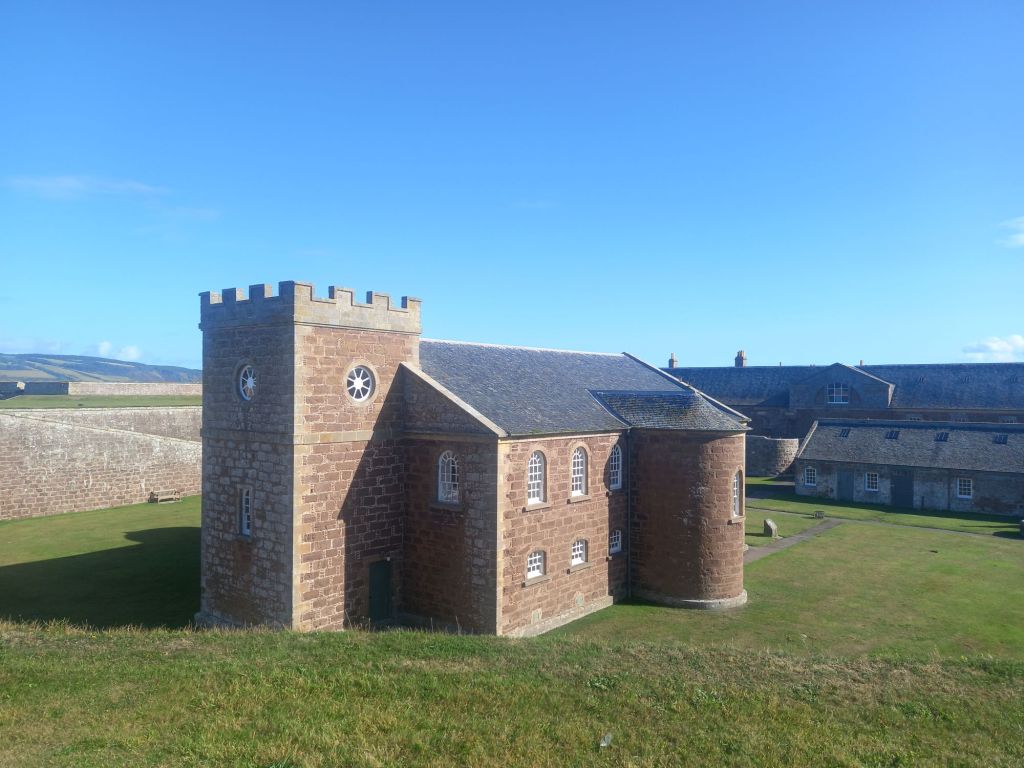
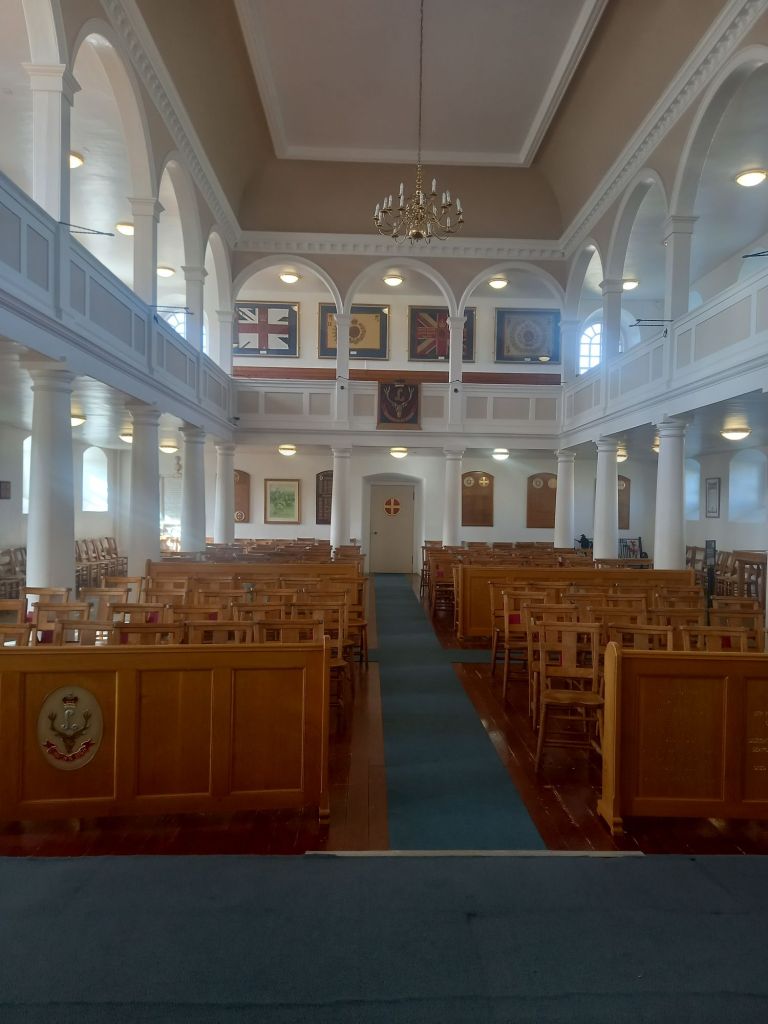
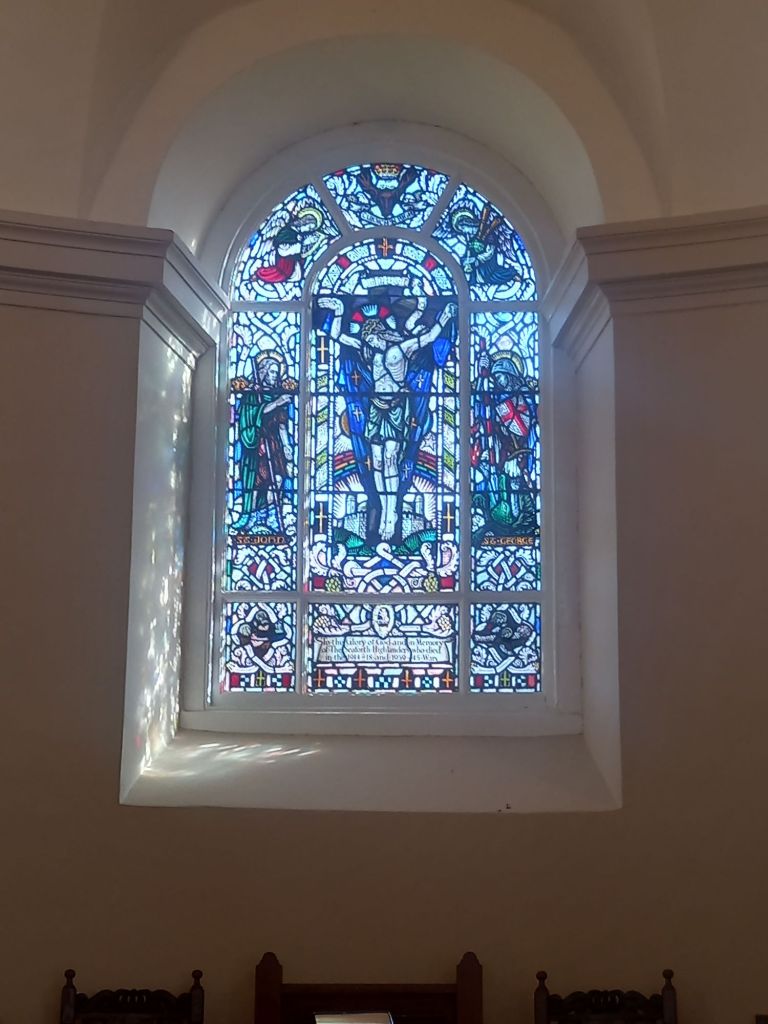
There is also a beautiful Chapel, the last building to be completed, and a nearby exhibition about Scottish gardens.

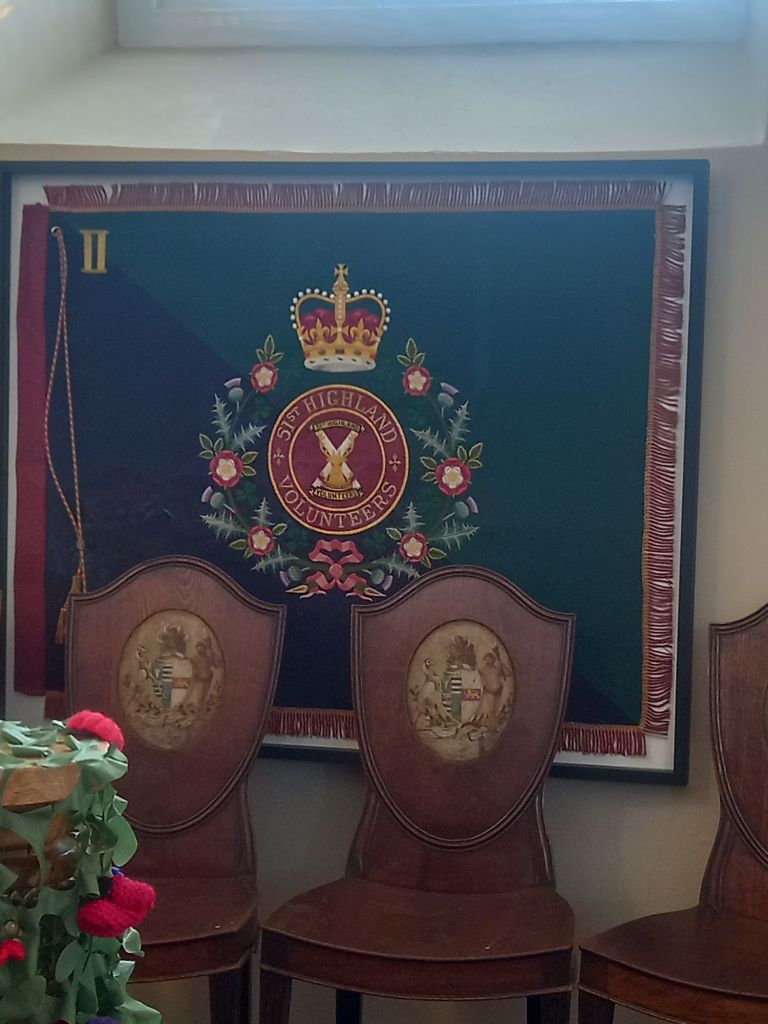
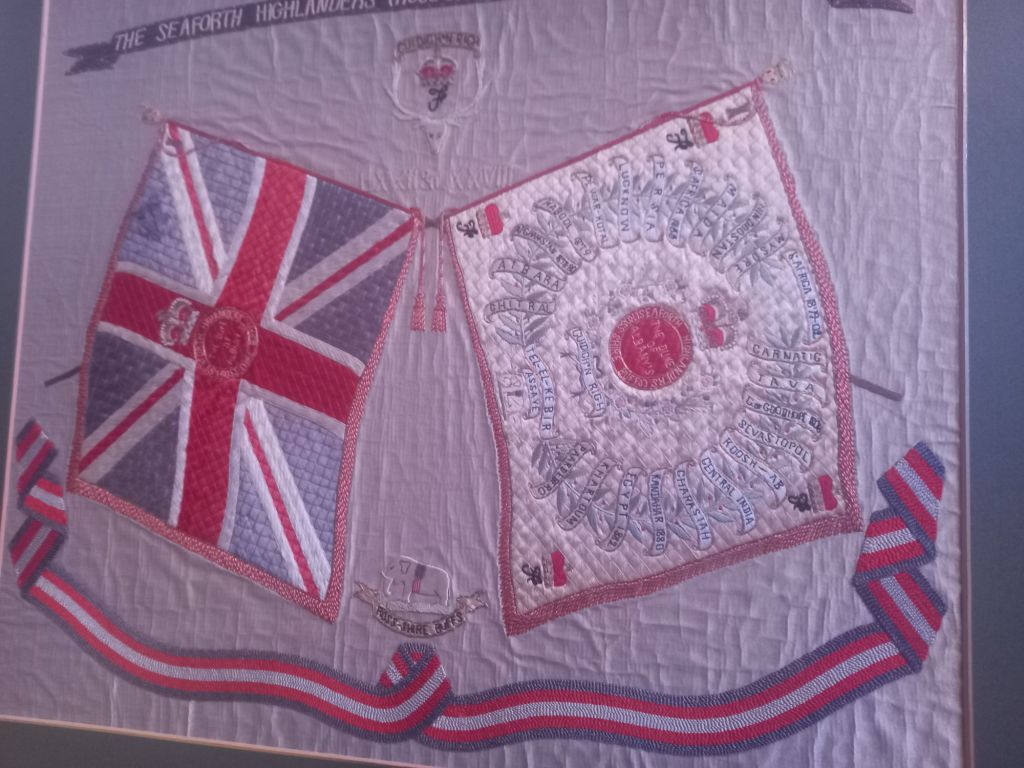
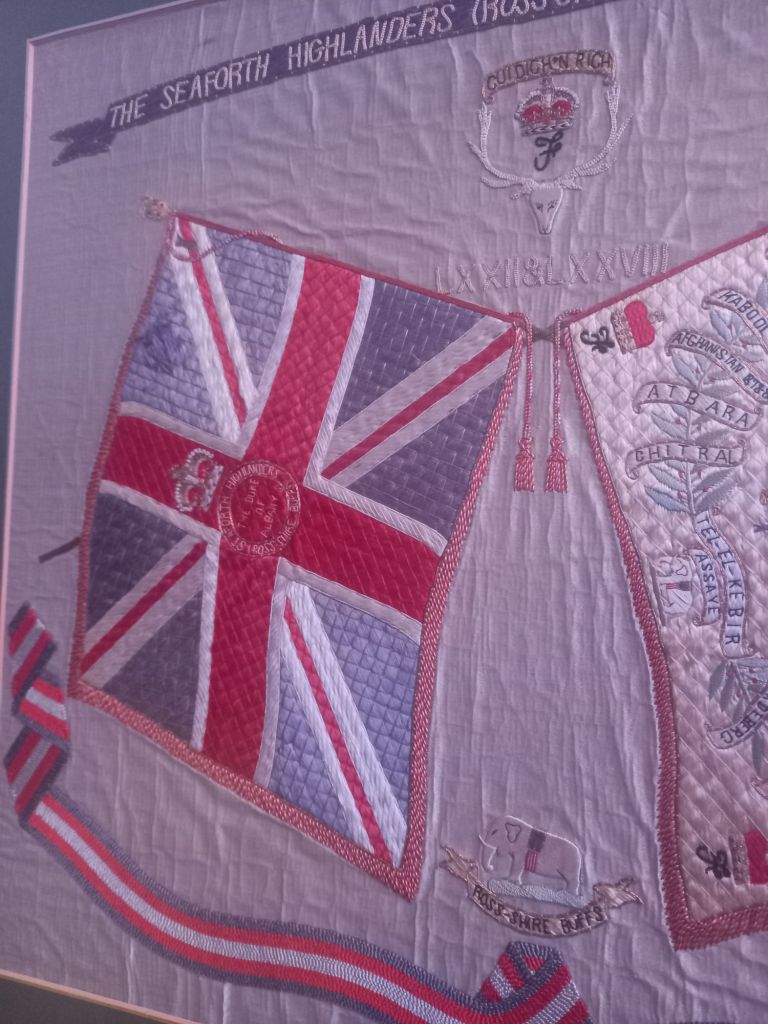
Of course there were textiles as well, the modern poppy tributes in the Chapel, as well as beautiful flags and banners there and in the museum.

A really excellent place to visit, for its location, and the sheer scale of the construction, especially when you consider when it was built. It took 22 years to complete and I can only imagine how that was done in the 1700s without the mechanisation we have now. 

The exterior walls and ramparts are so impressive, and it was fantastic to see a fort in almost the same condition as when it was first built, as the restoration really helps you visualise what it was like for those early soldiers. 

Well worth a visit, if you are ever in the area, sadly no dolphins when I went, but amazing views.

I have been on the Yorkshire coast again, just a little further south than the previous site, and still enjoying the fabulous walks in the area. Such an incredible environment, which I will share in a future post.

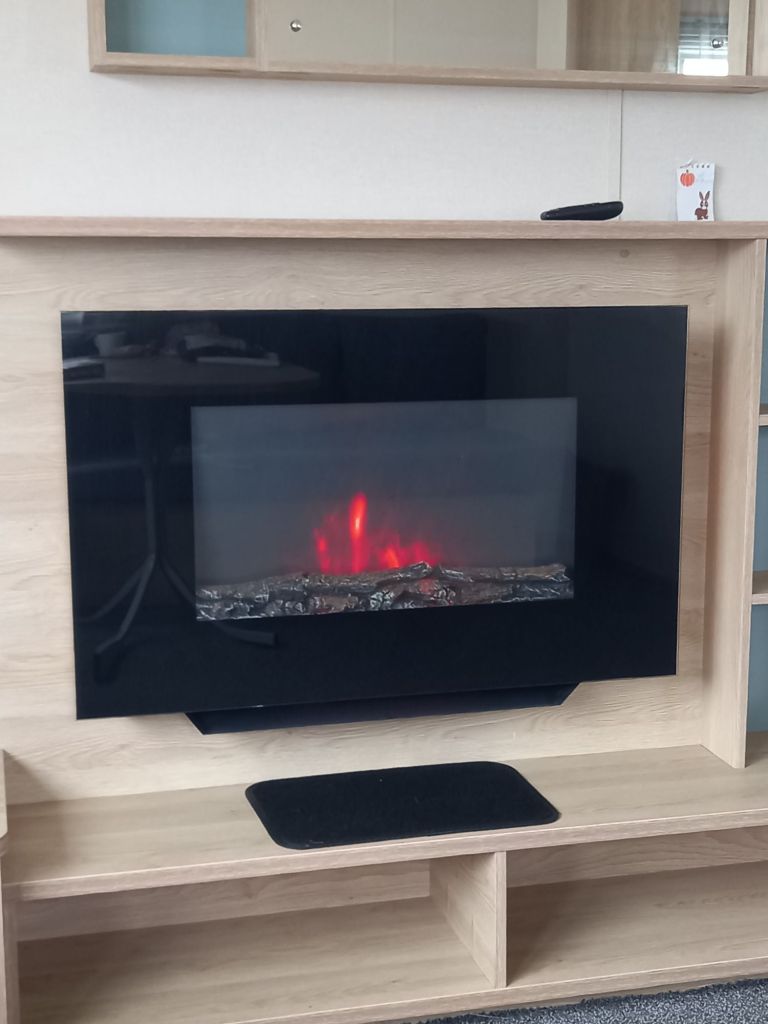
I have also enjoyed being back in the luxury of a static caravan, which is very nice after a few nights in the tent. I have a very lovely fake fire keeping me warm! However I am now in Wales on my final camping trip of the year, with my sister.

Until next time, have fun and thanks for visiting. 

Welsh wanders and wonders

I was so lucky with the weather during my time in Wales. Considering it was March, and the reputation the country has for rain, I saw very little of it in the month that I was there. This allowed me to do so much lovely walking, along more of the coastal path, but also exploring other parts of both the Llyn Peninsula, and inland, near the English border.

As I mentioned in my last post, I had two weeks at the Haven site just outside Criccieth, so was able to explore a lot more of that coast. The Lynn Peninsula is very narrow and it was amazing to be able to see both sides of it, while I was doing the circular walk on the cliff top at LLanbedrog.

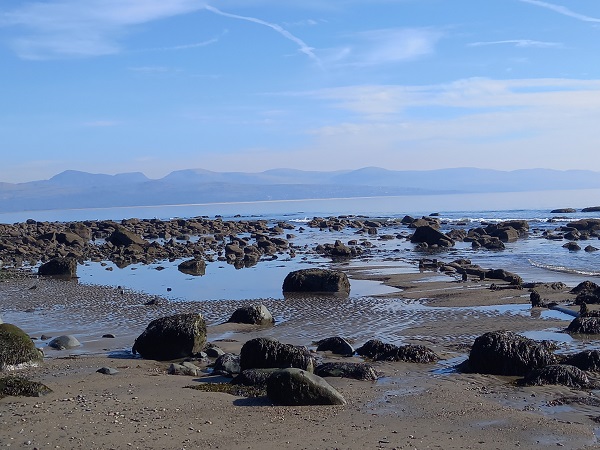
Part of the walk was closed due to previous storm damage, as many trees had been blown over, which gave me chance to walk around the beach. I was admiring the views of Snowdon, which at that point still had snow on the top, and taking lots of shots of the beach.

I really love how this one came out.

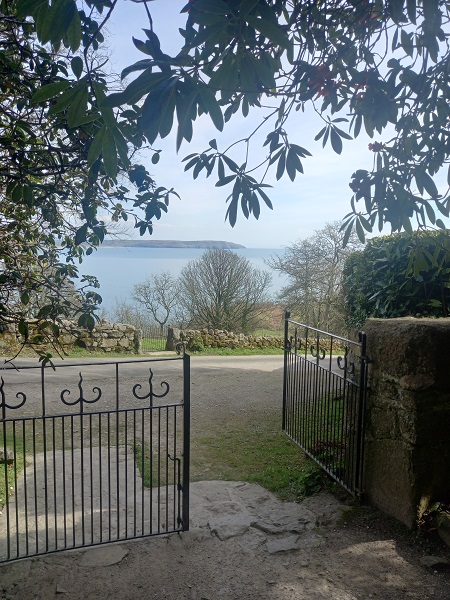
I also visited the beach at Borth Y Gest, which must be one of the most beautiful places that I have ever been. Just such an unspoilt place, with amazing views across to Harlech.
There was also a very warm afternoon at Criccieth, walking along the beach, exploring the town. I had to have an ice cream, it was that hot, 17 degrees that day!
I also got another lovely reflection picture as there was an Airstream caravan, used as a coffee takeaway, next to the beach.
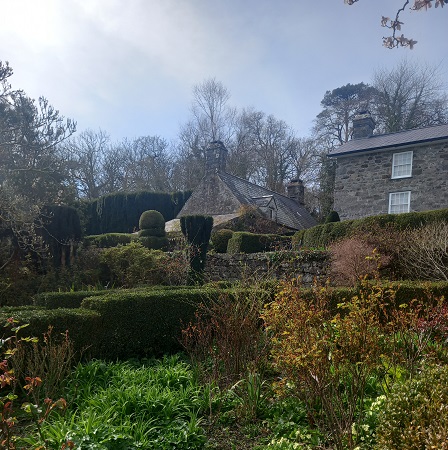
There are lots of National Trust areas in the Llyn Penisula, but only one property. I had a gorgeous day for my visit to Plas yn Rhiw, towards the very end of the land. The property was bought in 1938 by three sisters from Nottingham, Eileen, Lorna and Honora Keating, who restored it to its current state. It was so good to see all of the primroses, daffodils and magnolias, and I had a picnic overlooking the bay. The magnolia tree here was planted by Honora in 1949.

After leaving the Llyn Penisula I spent a brilliant weekend with a friend who I met at Polytechnic, so we have known each other for a mere 42 years! We have met up quite regularly over that time, but not often recently in Wales.

Nia is a Welsh speaker, and passionate and knowledgeable about her country and its heritage. She was very kind and gave me a guided tour of all the canal heritage in her area, including something that has been on my bucket list for a long time, the Pontcysyllte Aqueduct, which is a World Heritage site.

We started at the Chirk Aqudeuct and viaduct, which is nearby.

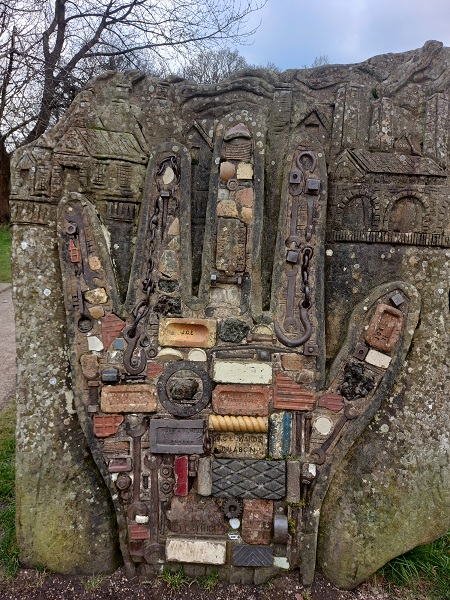
You may remember that I spent a lot of my time in Scotland visiting canals, and there is so much rich heritage in Wales, built to supply the Industrial Revolution with coal, bricks and supplies for cities like Manchester and Liverpool. Nearby Ruabon was the centre of brick making in the area, and this is celebrated in an innovative sculpture at the aqueduct site.

This celebration of the tools and products of the industries is just brilliant, a fantastic way to celebrate these artisans.

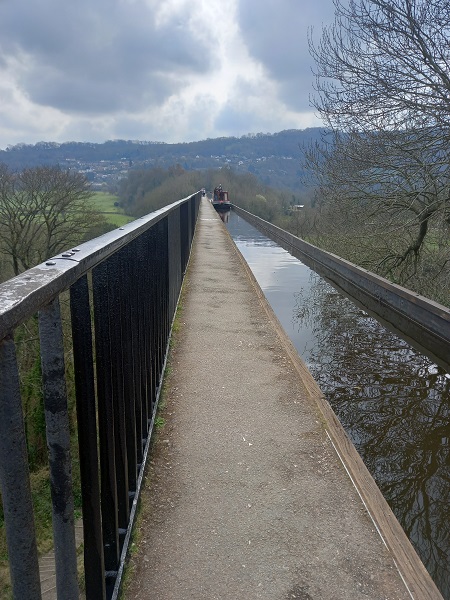
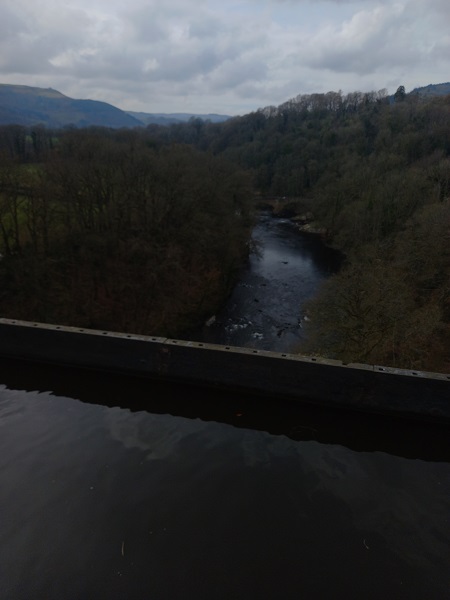
The Pontcysyllte Aqueduct is a very unique structure, a real feeling of being up in the air, and such a marvellous piece of forward thinking and engineering, from Thomas Telford and his colleagues. It must have taken such determination to convince people, and especially investors, that they could build this, ‘stream in the sky’.

It can feel a bit scary walking along, as there is only a rail on one side, but I was assured that the water is only 5 feet deep. However you have to be very careful if you are in a boat. There are the holes for railings on the other side, but they were never fitted!

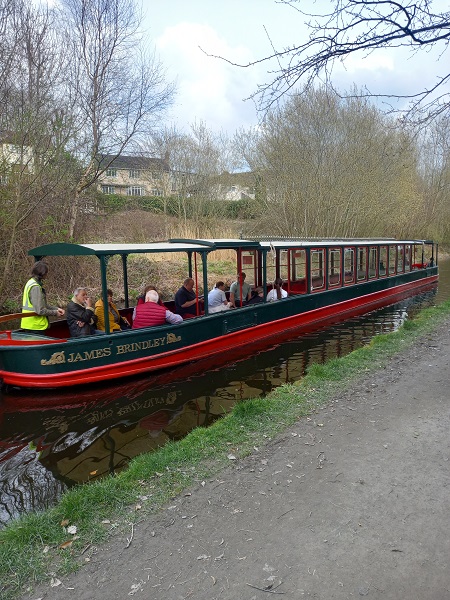
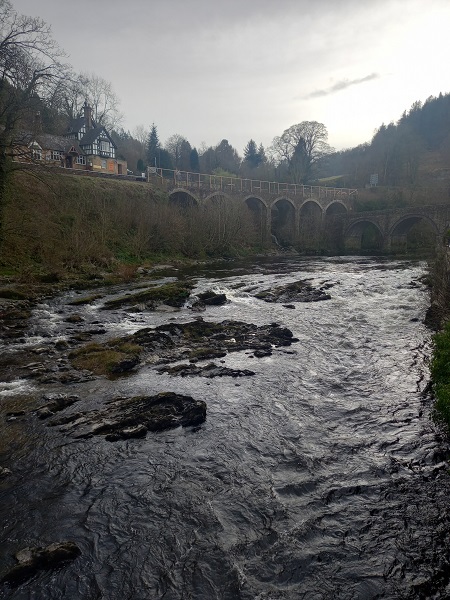
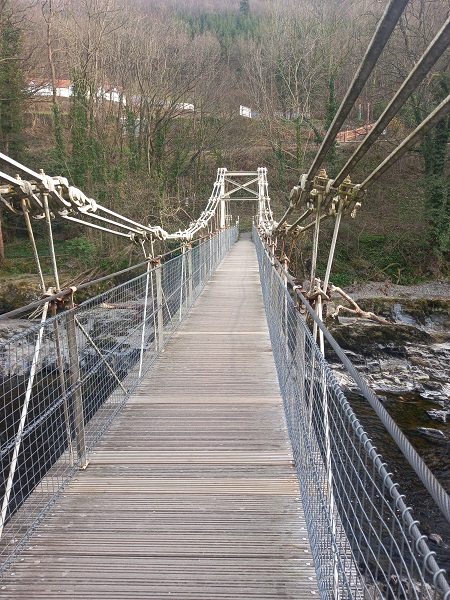
We then went to Llangollen, to do the canal walk down to Horseshoe Falls and the Chain Bridge. You can still experience the horse drawn barges along this part of the canal. This was actually the only real rain I had in the whole of my month in Wales, but that didn’t spoil the day.

There was time for a quick visit to Chirk Castle, another Trust property to cross off my list. Although it was a dull day the gardens were still very impressive, and the parkland is stunning. The castle has a long history, sadly initially of suppressing the Welsh, from the 1300s, but most of the tour was of the Georgian room with their ornate ceilings. One of which has been partly cleaned to show the effects of coal fires on the paint work.

I then continued south, which I will have to tell you about in another post, as I am running out of time and space here. I am now back in Spain, and am off out with my Mum tonight, a belated Mother’s Day meal.

While I have been having gorgeous weather in Wales, they have had four named storms in a month, with another one due this weekend, so they have not been able to enjoy the outdoor life much recently. Hopefully the rest of spring will be better here, and of course summer will be baking!

I will return sooner than a month, lack of Wifi in my last couple of weeks in Wales meant that this post has been much delayed. Thank you as always for visiting, over 1500 of you in March, which is wonderful. Take care of yourselves, enjoy life and I will see you again soon!