Minarets and museums

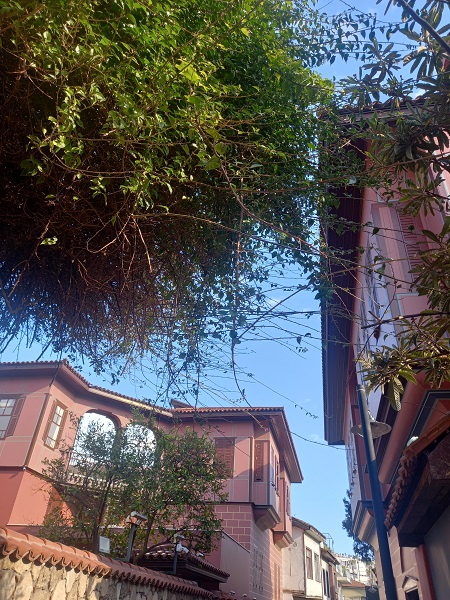
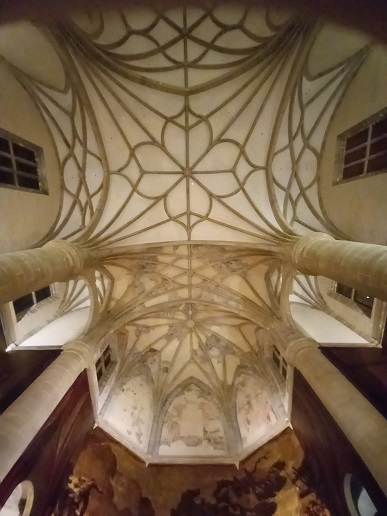
Antalya Old Town is full of the minarets of mosques, and towers dating from pre 20th century development of the city. This gives it is a beautiful skyline, especially against the blue.

I have peeked into most of the mosques, but they are very much working places of worship, rather than for tourists, and although visitors are welcome, I have not wanted to intrude.

Ramadan starts tomorrow, and in the main city park there are lots of stalls being set up, and a funfair. I am not sure if this is for the celebration at the end of Ramadan, or something that happens for the busy spring and summer period, as it is a popular tourist destination.

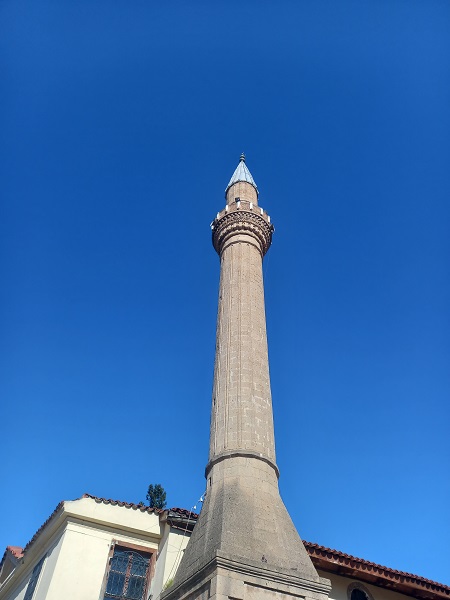
At the back of the Old Town is an area with one of the biggest mosques, with a very large fluted minaret, called the Yivlimnare Mosque, which you can see in the bottom left photo above. There is also a very beautifully restored mosque and tomb complex, which is now a museum about Dervish culture.

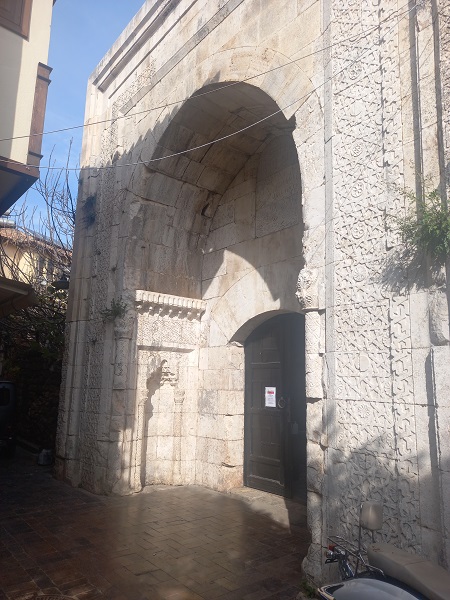
This area is still being redeveloped and also contains the remains of one of the madrassas, or religious schools. All that is left is this carved gateway.

I have spent most of the last few days here visiting museums. Although small, they have been beautifully set out, and have contained lots of my favourite kinds of displays, textiles. They are housed in original mansions within the Old Town, so have been restored to show some of what family life would have been for people who lived here.

The Ethnography Museum is right next to the port. Housed in two buildings there are really interesting displays of crafts such as weaving and woodcarving.

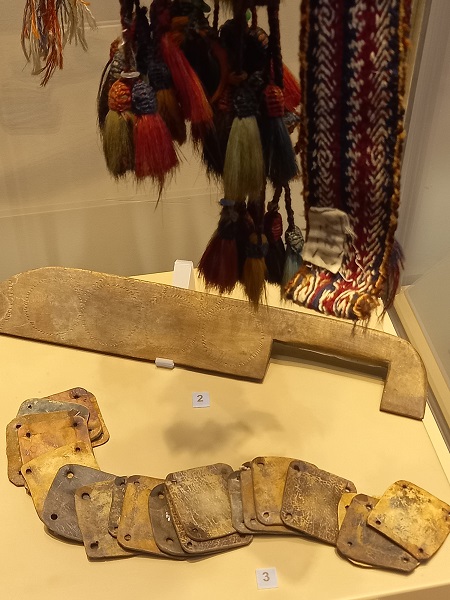
It reminded me seeing the tablet weaving cards in the top left photo below, that I did try and get to grips with this for medieval re-enactment, but never managed. These are useful for weaving strips which can be used for straps, or sewn together to made bags or saddles.

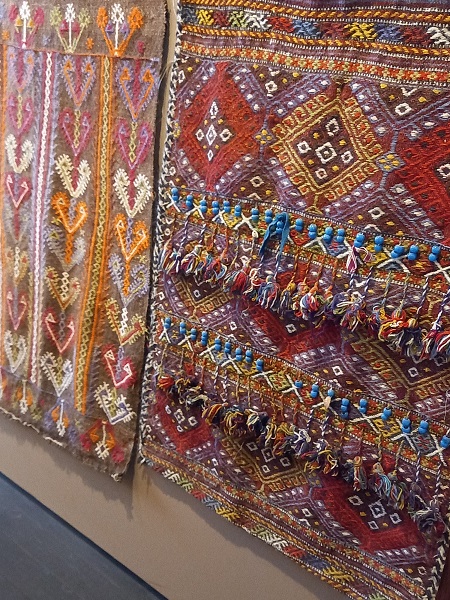
The loom is being used for a tufted carpet rather than a woven one, and you can see the individual knots of different colours on the warp.

These socks, which are knitted on five needles look very much like the ones my Norwegian friend in Spain knits, it must be so tricky doing patterns in the round, I can barely manage rib!

One of my favourite displays was this one showing a house bathroom, with the many different sorts of taps used. The household would also use the public hammams, so would take their soap and loofahs in a tin with them. Its little things like this that really bring daily life home to you, that little container and the old soaps, a simple thing but so relevant.

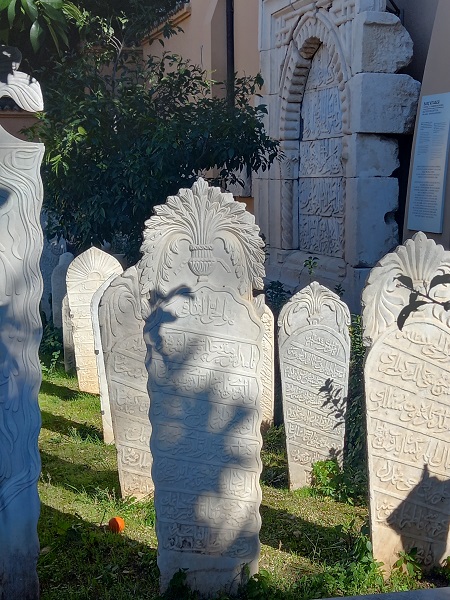
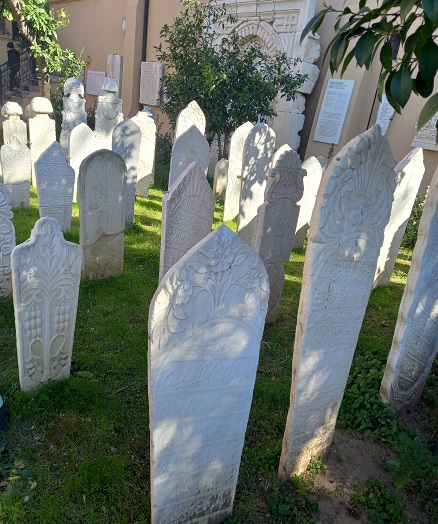
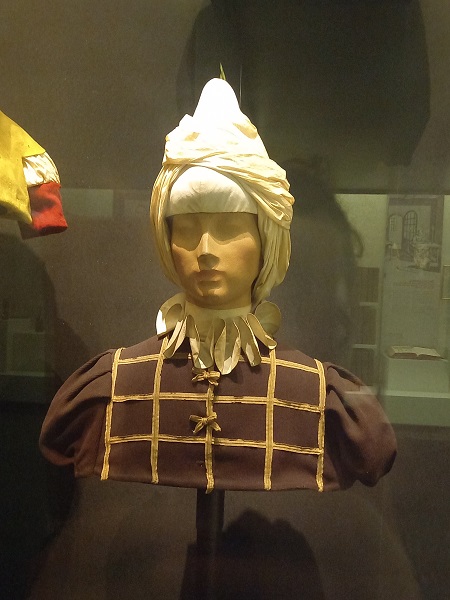
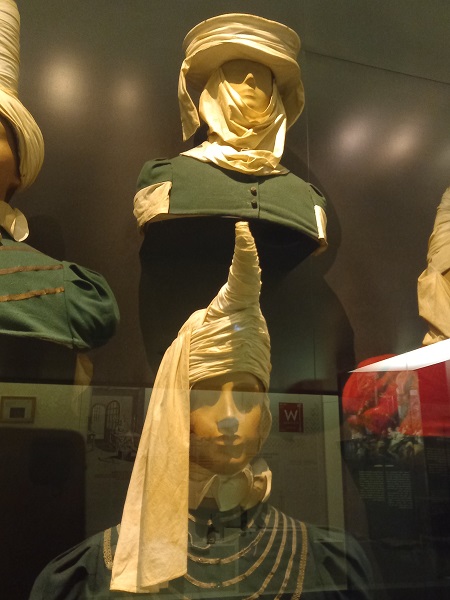
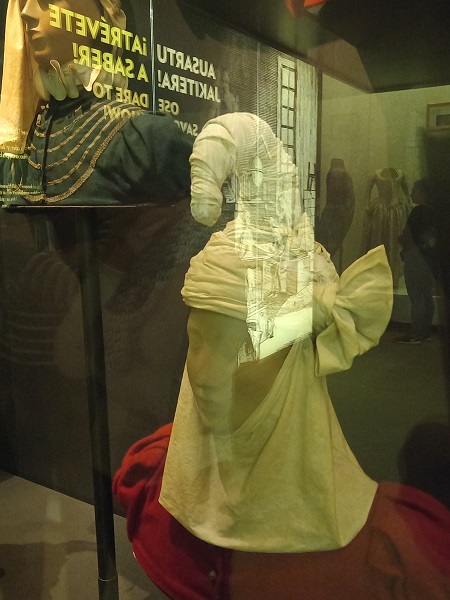
The gardens between the houses had a collection of Ottaman era tombstones. I saw some of the these when I was in Larnaca in Cyprus, at the fort. The men’s ones are those with turbans, and the women’s are decorated with floral shapes. If they died unmarried they were made to look like veils at the top. They are so gorgeously carved with different complex motifs.

The textile display was small but had some goldwork and embroidery displays.

This whitework was really interesting. There appears to be a combination of stitching and pulled work, much like Hardangar, which is very much associated with Northern Europe.

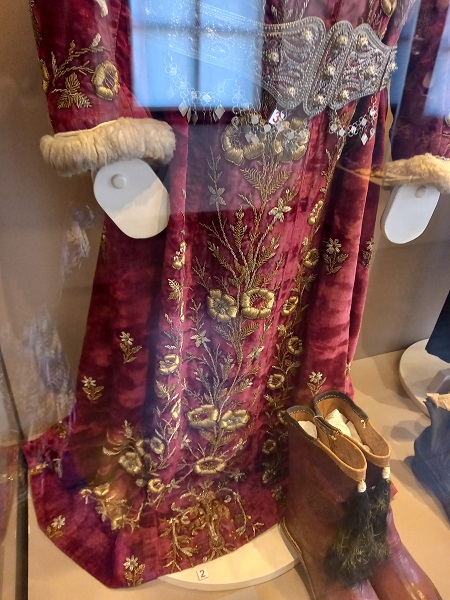
This white and goldwork robe shows so clearly the problems of looking after old textiles.

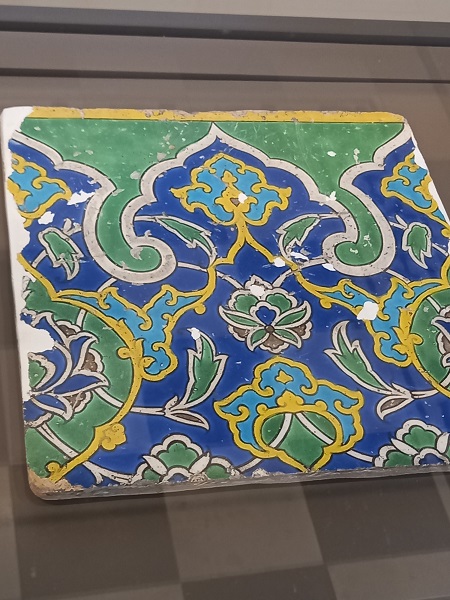
The museum answered the question of why I’ve not seen much in the way of tilework here. Even in the older restored houses it is absent. As it was so much a feature of decoration in other Islamic countries I have visited, I was surprised not to see more of it. The museum’s ceramics display stated that due to the ceramics experts keeping their methods secret, much of the craft had died out here.

There is certainly a lot of beautiful ceramic ware for sale here, but it is very similar to what we have in Spain, so may be made elsewhere. I am trying to resist the urge to buy more of these bowls, just gorgeous!

The other museum belongs to the University here, again really well restored, and displaying life in the courtyard houses of Anatolia.

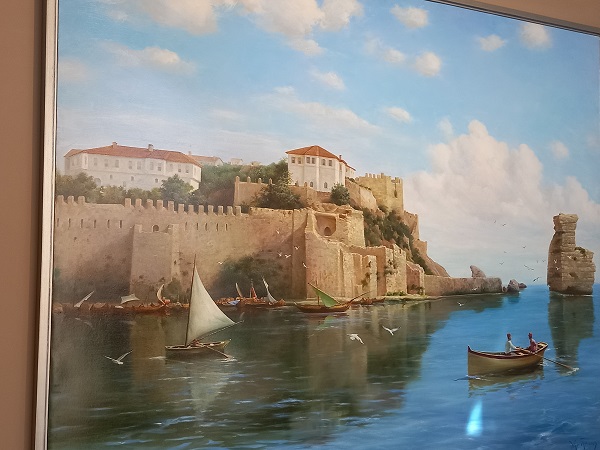
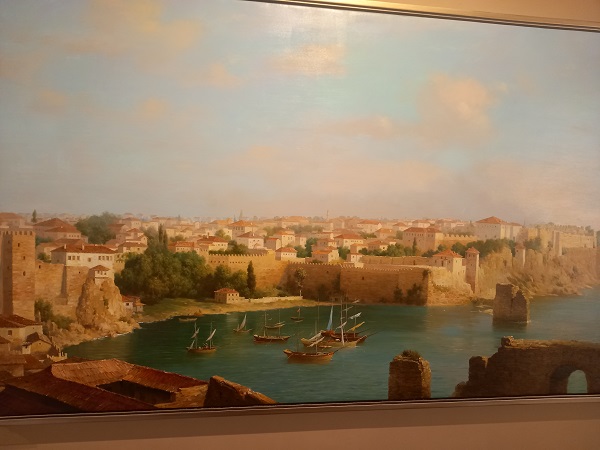
I love these paintings of the port, no date but I am assuming late 1800s, before any modern development.

Although I couldn’t get any very clear pictures, there was a display of an embroidery frame with a box of thread next to it.

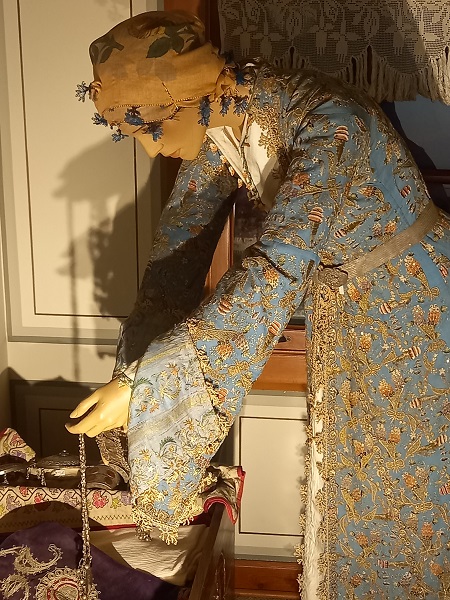
Much of the embroidery I saw was on very fine materials, often gold and metal work on silks and fine linens, such as veils and gowns, so I assume a lot of it was frame based.

This picture is dated 1931, a woman and her friends. Possibly they are dressed for a wedding as the information was about wedding rituals.

There was also quite a lot of regular count work, that looked very reminiscent of cross stitch, but on evenweave, and some vibrant examples of flowers.

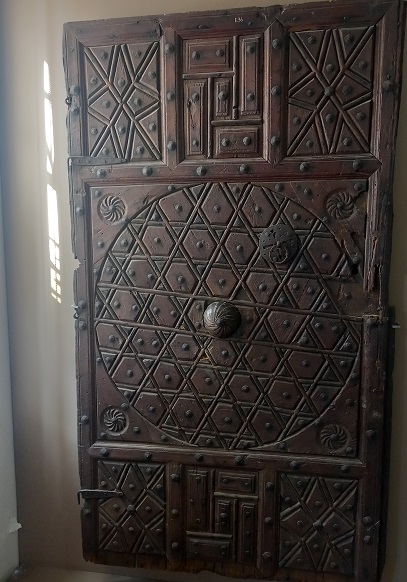
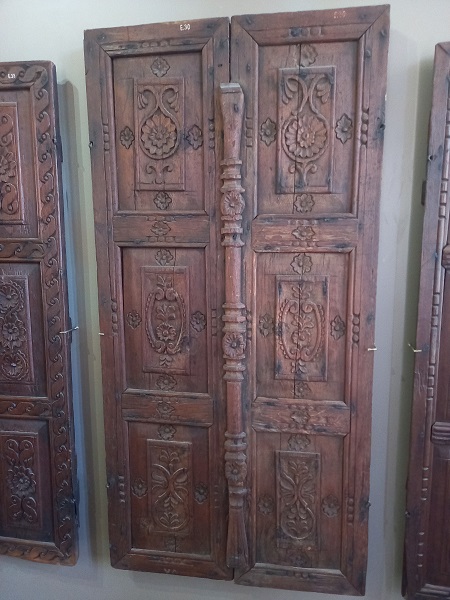
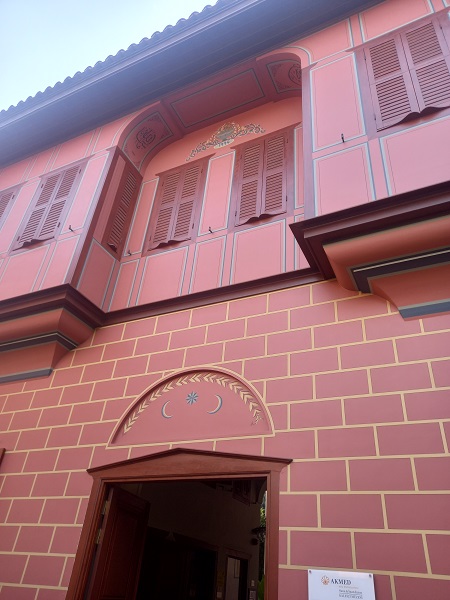
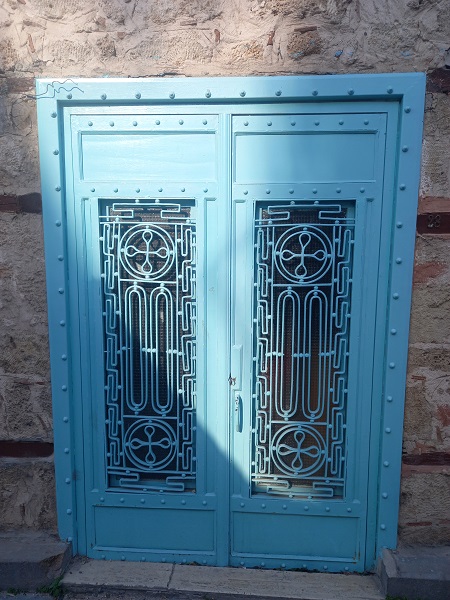
As well as the focused visits much of my time has just been wandering again, noticing little things about the architecture. I have discovered even more lovely windows and doors 😉

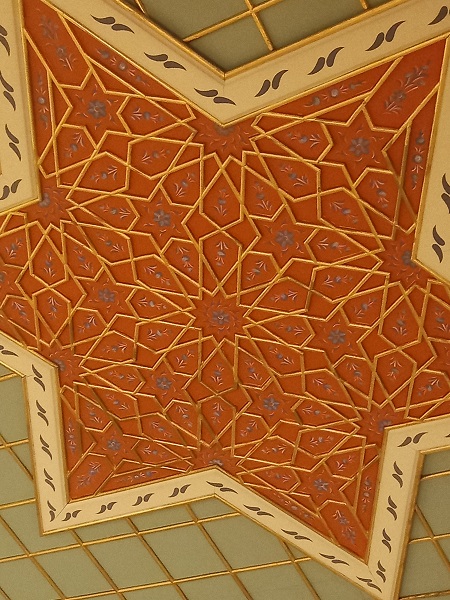
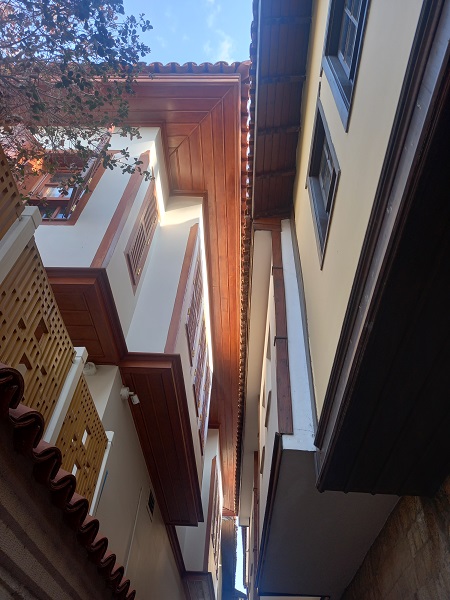
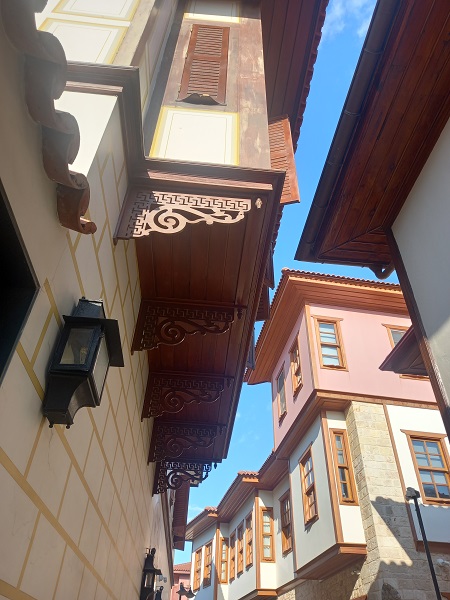
There are so many gorgeous little things that people probably don’t even see unless they look up. Like these carved supports for the windows, and the way that the roofs nearly touch in some places. It must make restoration really tricky here. I thought the same in Morocco, everything must have to be done with such care.

I have also had a little wander around the more tourist focused area, up at the top of the Old Town. Antalya is definitely the place to come if you want jewellery, I have never seen so many jewellery shops, and there are also some amazing sweet shops.

With those, and the incredible bakeries and cake shops you could end up eating something different every day for a month. There are so many varieties of sweet stuff here, baklava, rice puddings, meringues, as well as so much Turkish Delight of all shapes and colours.

I stopped one day for a coffee just because I loved the cups it was being served in, so detailed. I’m not a huge coffee fan, and when I do drink it I have it very milky, so the little cubes of Turkish Delight were much appreciated. It was so strong ;-0

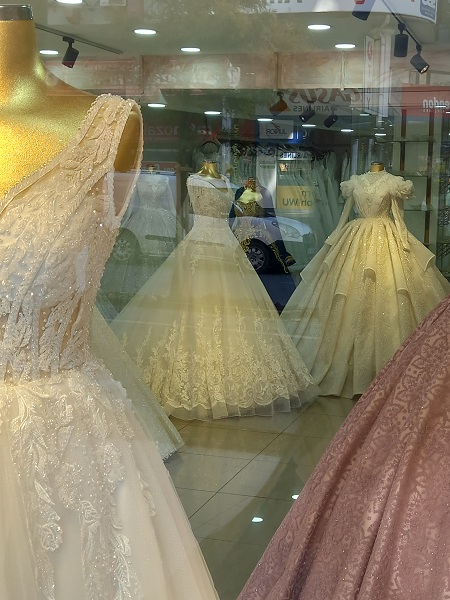
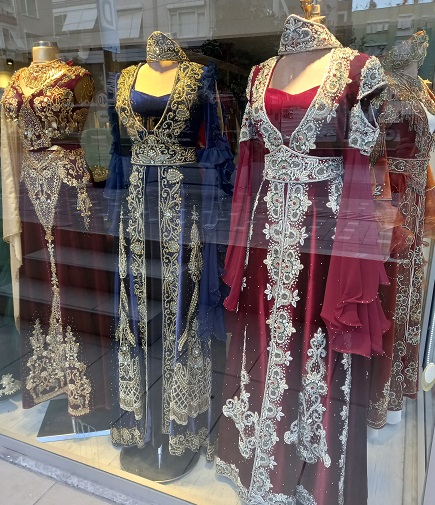
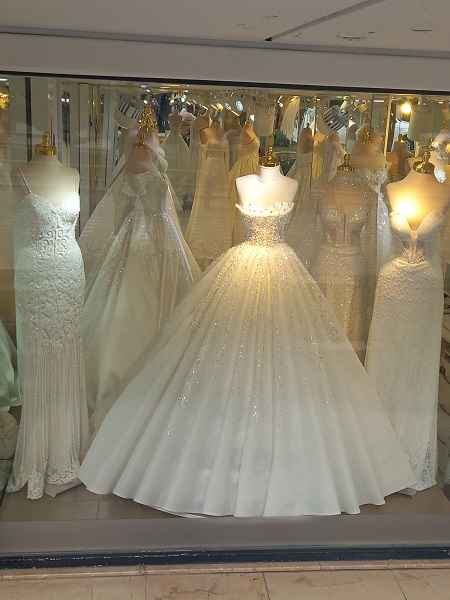
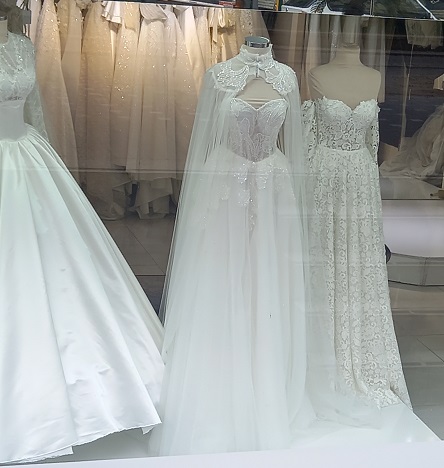
The other thing that has amazed me about Antalya is the sheer amount of bridal shops here, selling the most amazing gowns. There is one street near my hotel with about 30 shops. Most are white or cream dresses, but there are some more traditional colours displayed as well. If you are wedding shopping come and do it here, I saw one shop advertising bride AND groom outfits for £500 in total 😉

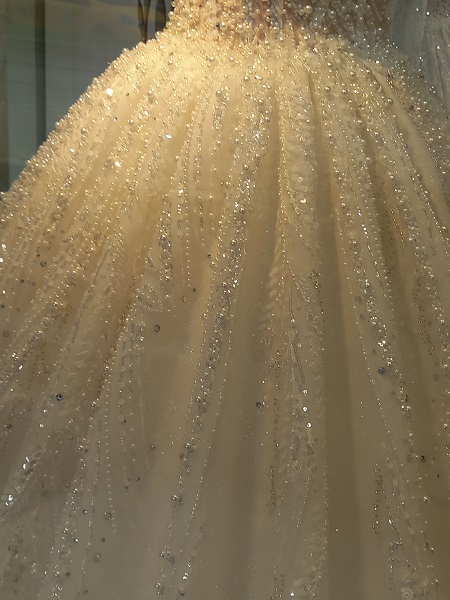
The detail in the beading is amazing, so you can guess what I’m going to be making next for my Barbies!

I only have two days left here. There is one more museum to see, and I shall have a last wander round the port to look at the mountains. The weather is going to be glorious tomorrow, 20 degrees, so you may well find me with a cold beer in a bar overlooking the harbour. I shall really miss these mountains. Turkiye you have been brilliant, and I am looking forward to more of your joys on future visits.

I do have a few more mountains coming up in the next few months though, and am excited that next week I am reunited with Katy, and we are on the road again. It seems forever since we were adventuring, and we are going somewhere that holds a very special place in my heart. I have been before, but not to some of the area, so am very excited. All will be revealed in a couple of weeks!

Until then, as always, have fun, take care, stay safe and thanks for visting.

The work of so many hands

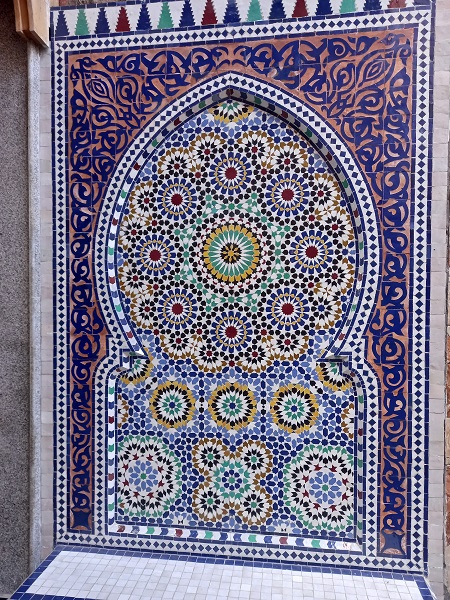
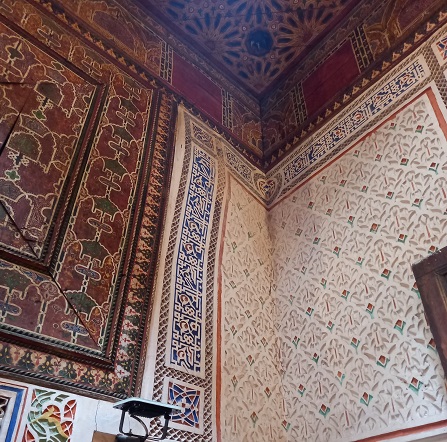
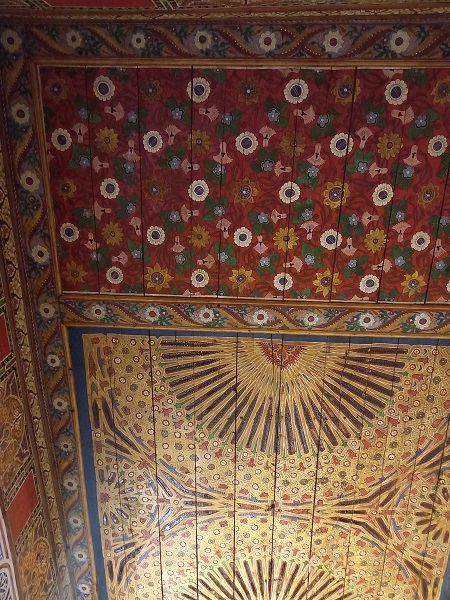
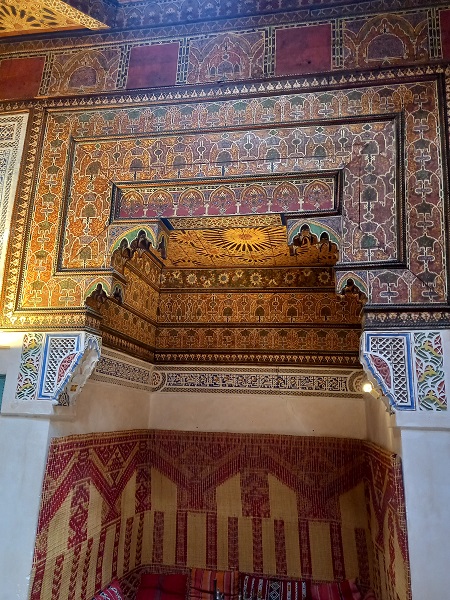
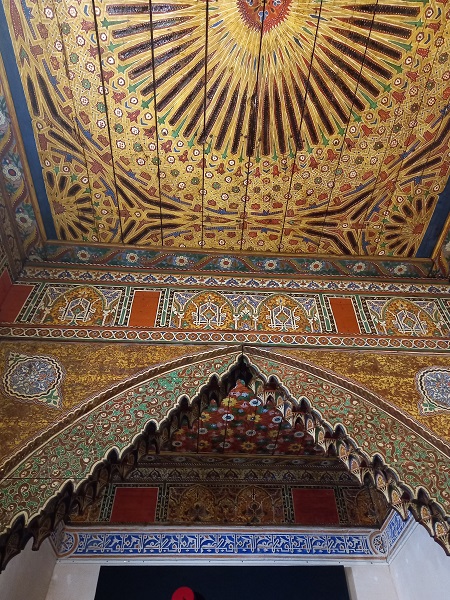
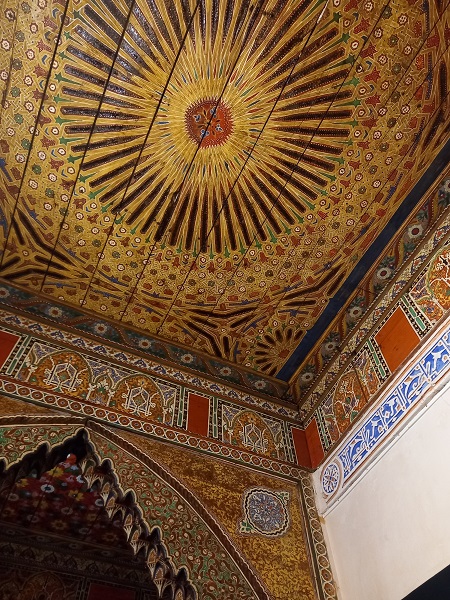
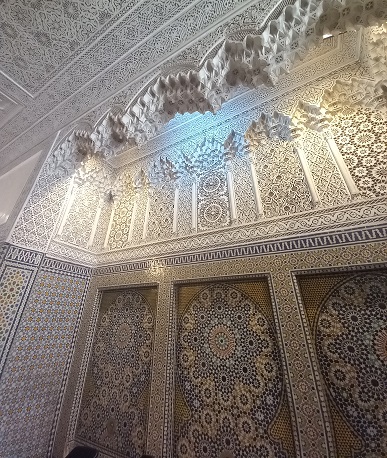
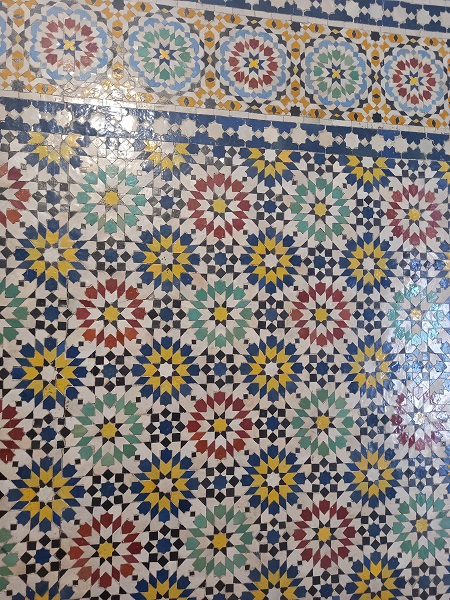
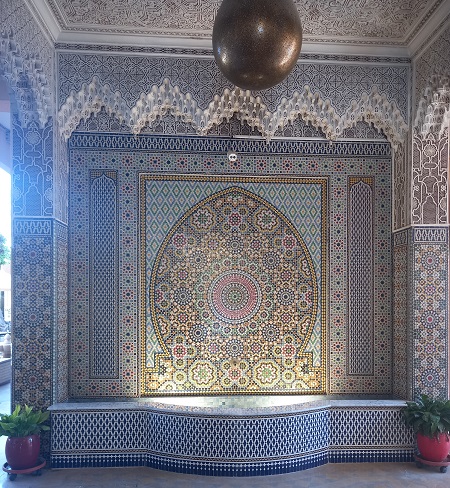
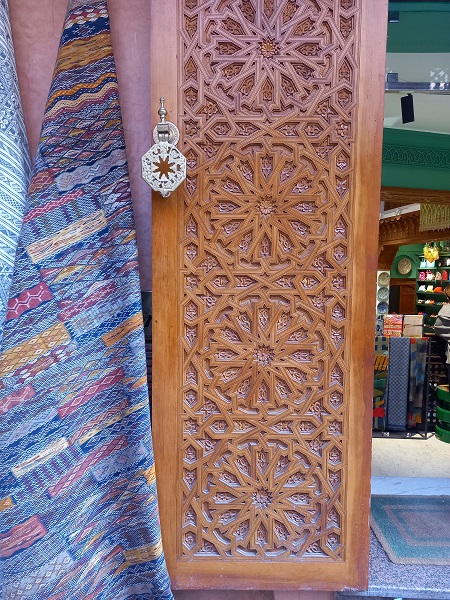
The lasting impression from Morocco is a culture with just so much rich adornment. So many beautiful wood carvings on doors and ceilings, incredible plasterwork, endless mosaics, decorated shoes, beautiful clothes, an absolute riot of colour and pattern that is breath taking and bedazzling. Now back in England it all seems a bit plain in comparison, and although it is lovely to be here, I am missing the tiles and the gorgeousness of it all.

Marrakesh was a great way to end the tour. I did originally wonder if I should have done it the other way round, and ended up at the peaceful seaside resorts of Essouria and Agadir, but on reflection am happy with the way it turned out. Morocco is a place of so much colour, and noise and vibrancy, (and traffic!), that it was probably better to ease into it.

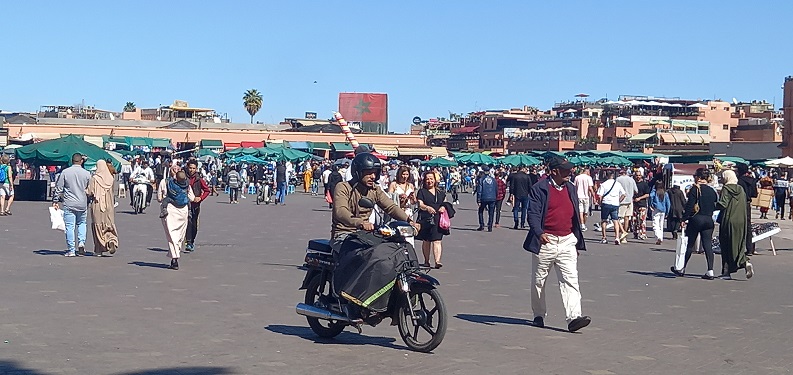
Most days in Marrakesh I visited the Jemaa el – Fnaa Square in the centre of the city. I have been before and knew that it is the lively heart of the medina, with so many stalls, and restaurants, and entertainers of all sorts. It is noisy and chaotic and wonderful!

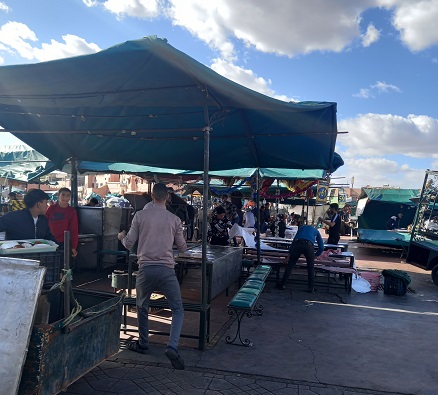
As well as all the daytime offerings, such as the horse carriages and the many cafes and juice bars, every evening from around 4pm a whole extra set of temporary food stalls get built, such a lot of work each day. I sat one of the days with another cup of delicious tea just watching all of the frantic activity.

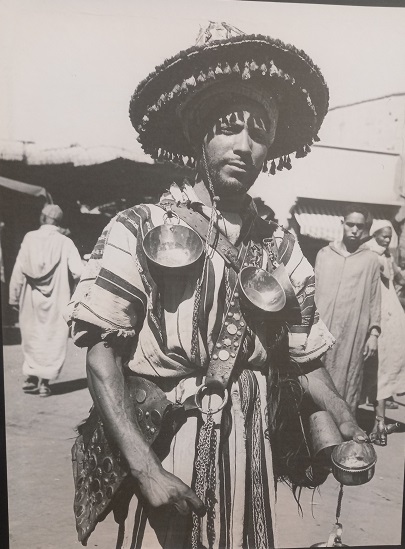
I love the contrast in the last photo above of the traditional water sellers, who pose for pictures, and the silver ‘statue’ performer.

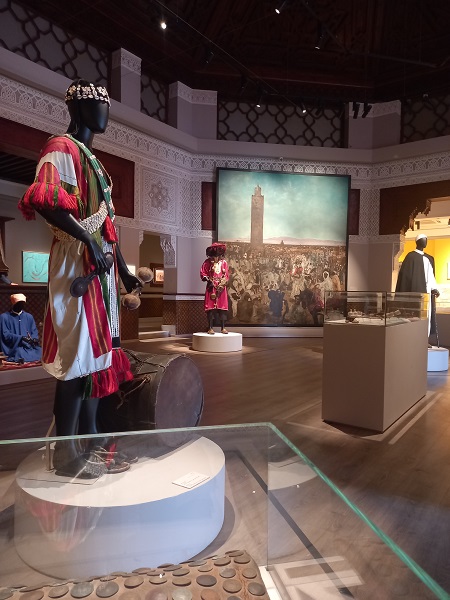
This trip I also went to the museum at one side of the square, which is housed in the old Moroccan National Bank building, constructed in 1927.

I didn’t realise that the square has been in existence since the 1600s, and has always been used as as place for musicians, storytellers and entertainers of all types. It was a lovely museum, mostly using old photos and film to document the life of the square, and really interesting.

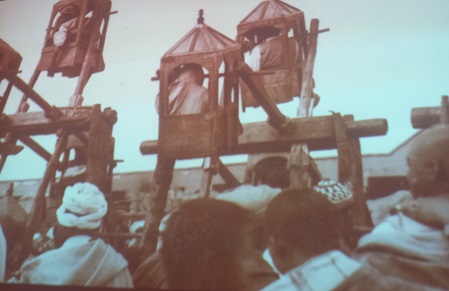
This water seller was photographed in 1966. I also saw these little roundabout seats in the woodwork museum in Fes, but am not sure when they date from.

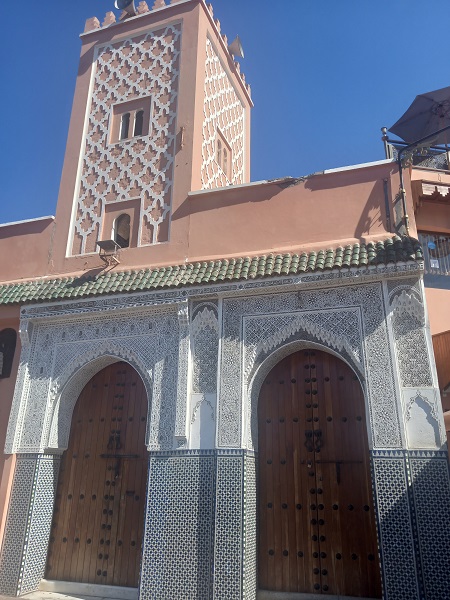
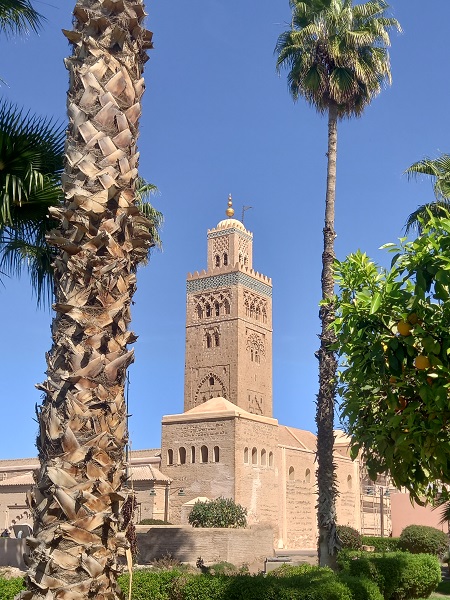
Near the square is the Koutoubia Mosque, thankfully it only sustained minor damage in the 2023 earthquake, and is being restored. It has parks and fountains all around it, so I usually had my lunch there.

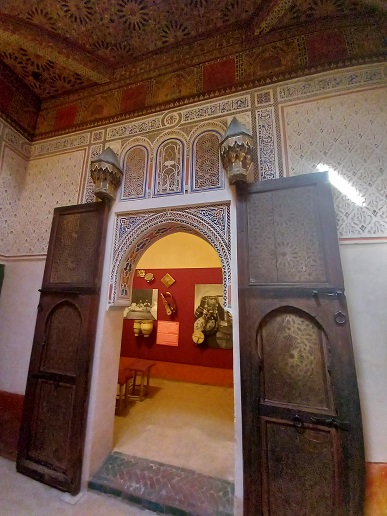
The other museum I visited linked in really well to the Jemma El-Fnaa one, the Mouassine Music Museum is in another beautifully restored mansion, which dates from the 16th century.

If I thought the lower floors were impressive, that was nothing compared to the guest apartment on the upper floor. They hold music sessions here every Monday evening.

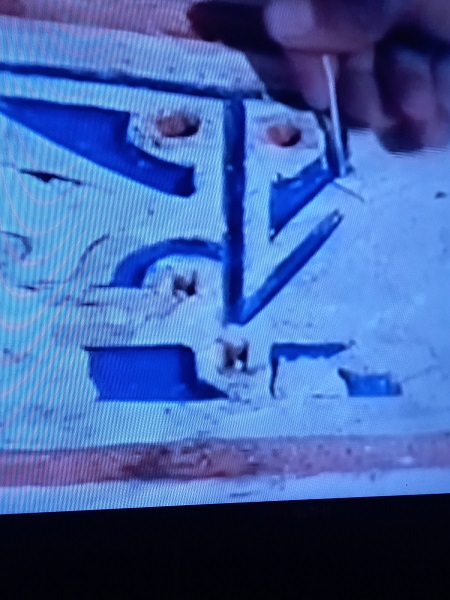
The building has been extensively restored and there were some really good videos showing the work. Apologies for the slightly grainy pictures, but this is when they were scraping off all of the plaster that had been put over the wall frieze, and cleaning the paintwork.

It is so brilliant to see so many skilled people being able to restore the buildings as well, there must be so much to do here, with so many wonderful places that need TLC.

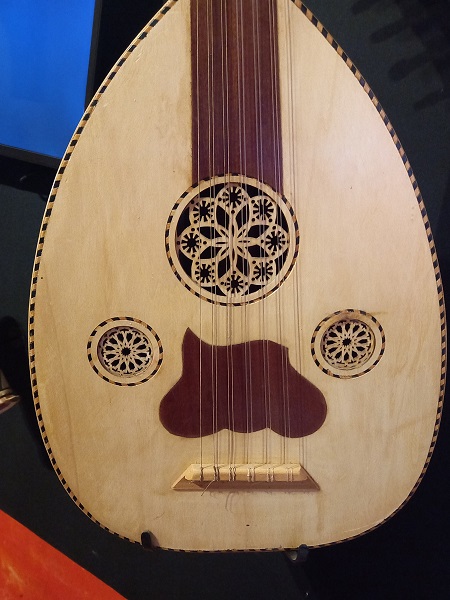
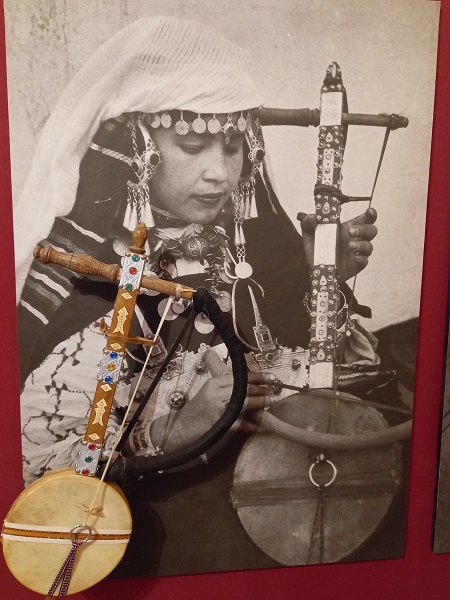
There were excellent displays of instruments, but more importantly for me, lots of videos and photos of people playing them, and dancing and a great focus on the dress of the performers.

These facial tattoos, in the second photo, are fascinating. These are from some of the women in the Atlas hill tribes.

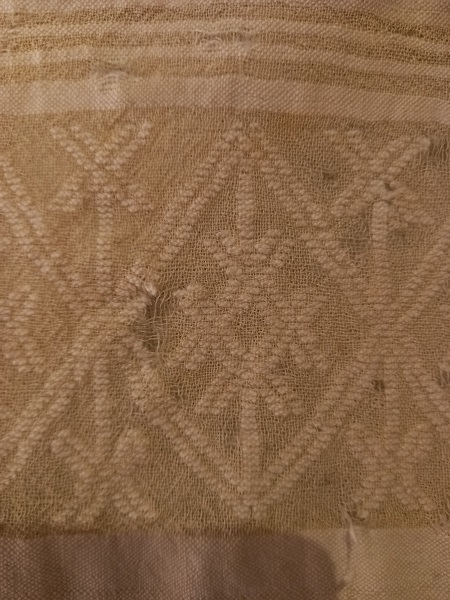
Although there was not much in the way of textiles in either museum, I did find a little bit. This gorgeous shawl had very delicate whitework embroidery. The main history museum is closed at the moment, so I expect there would have been more there.

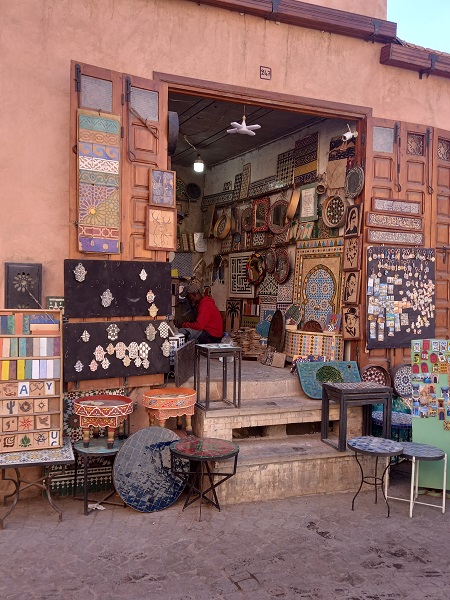
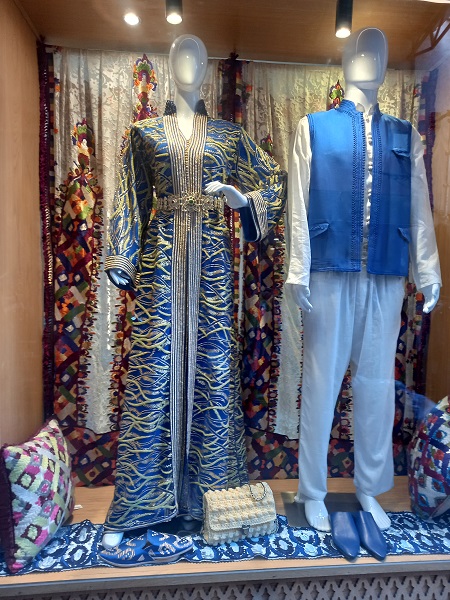
I did see quite a few shops selling traditional embroidery and textile goods as I wandered through the medina, as well as more modern kaftan shops. I was also very excited to see a little zellige workshop in the medina near my riad. I stood and watched the artisan chipping the tiles for a little while.

In the same way that the Hassan 2nd mosque in Casablanca is supporting training of current artisans, there is an artisan’s centre in Marrakesh, just outside the medina. It is an amazing building and contains workshops as well as places to buy the wonderful creations.

Of course I must finish my Moroccan series of blogs posts with revealing the taxi colour for Marrakesh ! It is a creamy yellow.

I think in this city there must be one taxi for every three people, I have never seen so many in my life. That does make it really easy to get around, though most of the time I enjoyed walking. You can’t stop and take door photos as easily from a taxi can you 😉

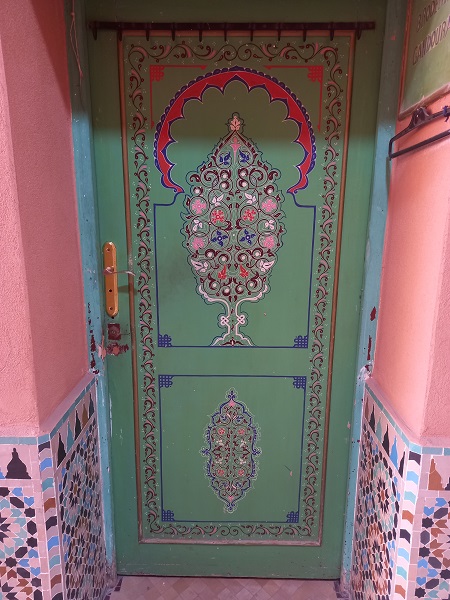
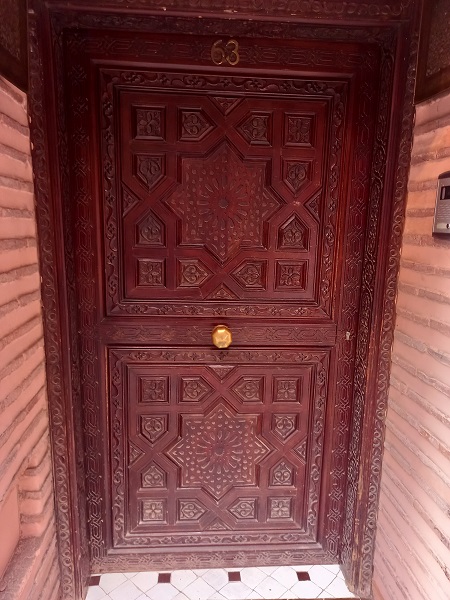
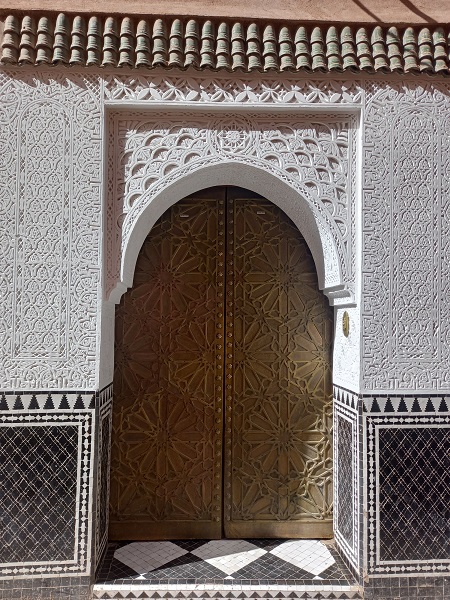
I shall finish this post with some of the wonderful doors from my last few days of wandering in the medina.

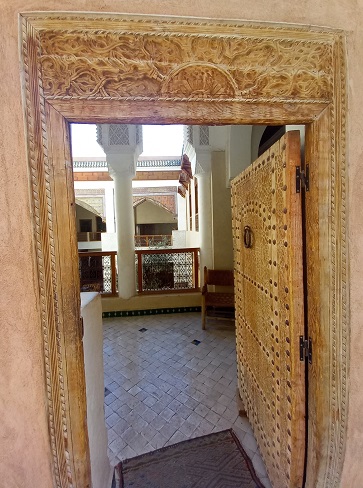
I was really thrilled to find this lovely old door open, and was able to peek inside at an amazing riad. I think it was still being restored, but what a palace!

It has been such a privilege to be able to visit this country, to see where all the inspiration for the places that I love in Spain come from, and to find out more about its history. I have really enjoyed the visit and would love to go back, albeit next time with a bigger suitcase and a lottery win to spend on lamps 😉

I have had a lovely couple of days with Ellen. She came back from her month in Europe the day I left for Morocco. She visited Spain, Switzerland, France, Belgium and The Netherlands in her time away, everything from mountain cable cars, medieval Alsace towns, and chocolate museums, as well as a quick trip to Disneyland Paris where she met up with her friends. She loved everything and is now planning another month in Asia for later in the year. I am so proud of her for being a confident solo traveller and having such amazing adventures.

I am off again tomorrow, to Scotland, to spend a few days with my friend Sue, can’t wait as I am so looking forward to seeing her, and the beauty of Scotland again. I will be back next weekend, so until then, have fun, take care, stay safe, and thanks for visiting.

Crossing the border and a change of plans

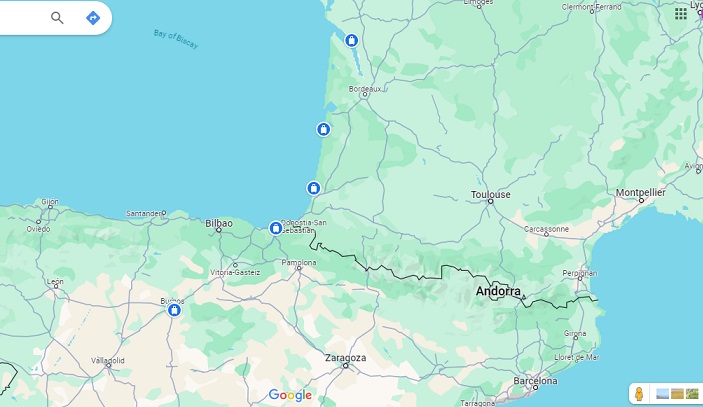
I mentioned to you in the last post that I had been following Billy and Leanne on Instagram. Originally when I was looking at places to stay around the border I couldn’t find anything really useful. Because of this I had decided to stay on the French coast, then head into Spain and just get an overnight park up somewhere, before going to a previously booked campsite near Burgos.

However, Billy and Leanne had stayed at San Sebastian, a city that I had really wanted to visit, and as the weather forecast wasn’t great for the next few days I decided to head for the hills, well the mountains, cross the border a day earlier than planned, and get to the park up in San Sebastian that they had mentioned. Luckily they warned us that it was popular, being the only one in this area. After a brilliant drive on the motorway, where I could see the start of the Pyrenees, and by now having mastered the art of using tolls on my own from the wrong driver’s side 😉 a mere hour and a half later I was in Spain at the park up!

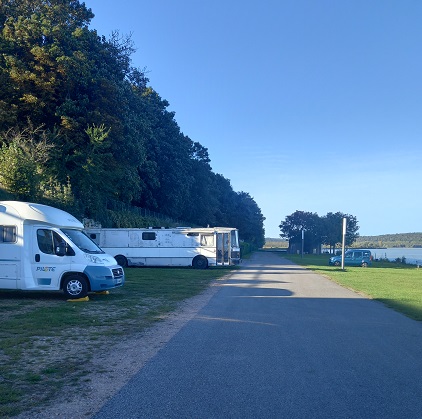
It was a good move to arrive early, as when I got there at 10.30 there were only four places left out of forty five. This is a really cheap aire, only 4 euros a night, and you can stay as long as you want so it gets very busy. It is also very near the Santander ferry, so there are lots of people using it as an overnight stop before or after their trip. I decided to stay two nights here, as there was so much that I wanted to see, and I had the time before the next stop. It was great have another two night stop, when I plan my next trip in Europe I will definitely look at driving further, and staying longer at each place, now I know I can do it.

The police also patrol the aire regularly to check that everything is ok, something which was a very nice feature of all the cheap, or free aires that I stayed in whilst in Spain. None of these places had barriers so it gives a feeling of extra security, particularly if you have an expensive motorhome. I don’t think anyone would want to steal Katy, lovely as she is, but sadly thefts of these are on the increase.

The first people I met were a couple from England, who had just come from the ferry, and I was able to help them and a couple of others with the slightly complex, multilingual payment machine. It was nice to pay back for all the help I have had with barriers and make good use of my Spanish! The aire has water and waste disposal and there are lots of bars and restaurants nearby. It is basically a car park at the back of the University campus, and is 20 minutes walk from the city centre.

In the van next to me on the left in the above photo were a really friendly Irish couple who insisted on giving me some of the stew they had made for tea. Van life people are so kind, and although the places were the focus for the trip, the people I met really made it great.

A lot of people have told me I’m very brave to travel on my own, especially in Europe, but what I have found is that being a solo traveller isn’t lonely. I talk to people every day, and I actually think that people are more likely to speak to you if you are on your own. There is always a chat with others about where you are going, and good tips of places to see or stay, so I never felt isolated, even though I was on the road for four months in total.

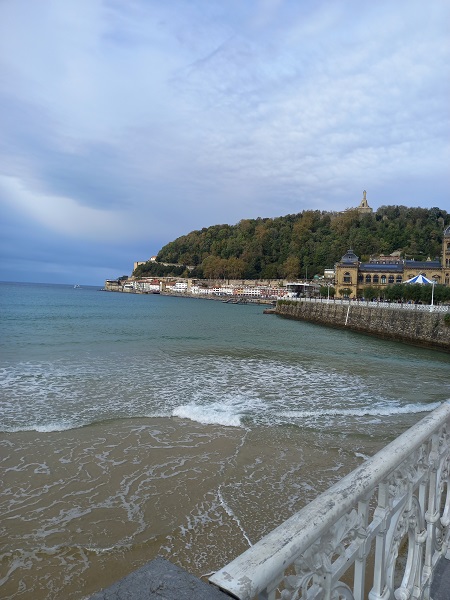
I spent most of the first day just walking to and from the city centre, along the splendid promenade. My Mum came to San Sebastian as a teenager with her family, and came back with my aunt a few years ago. She had always talked about how beautiful it was and it was brilliant to see some more of a very different part of Spain. I really enjoyed my trip to Galicia last June, and would love to come back to this region of Spain.

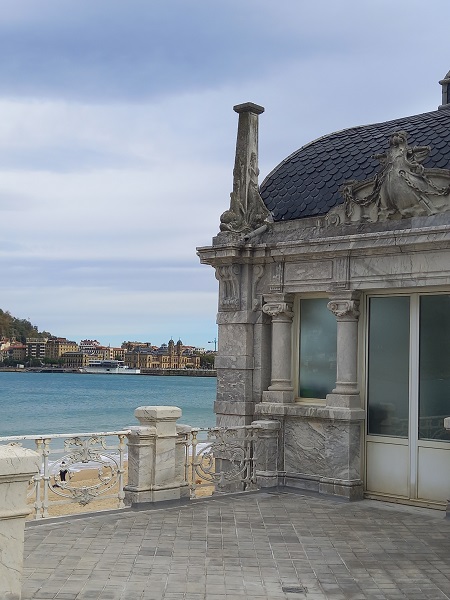
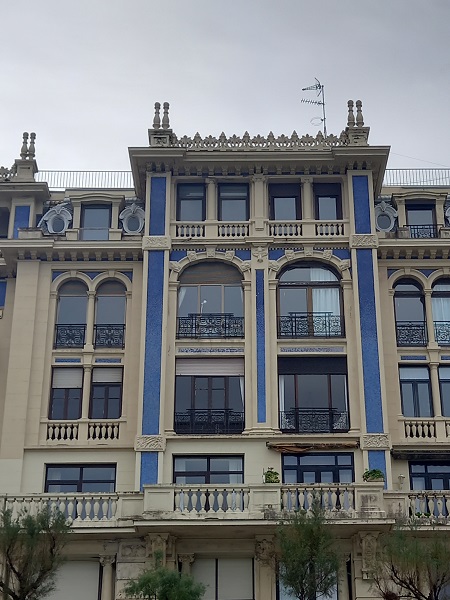
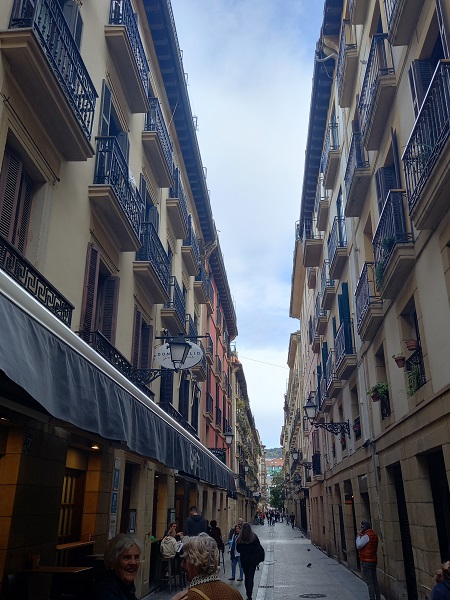
Not only the natural landscape, with the curving bay, the small islands and surrounding hills are stunning, but also the architecture in the city centre. I love these grand Spanish buildings with their balconies and ornamentation. And always such gorgeous streetlamps!

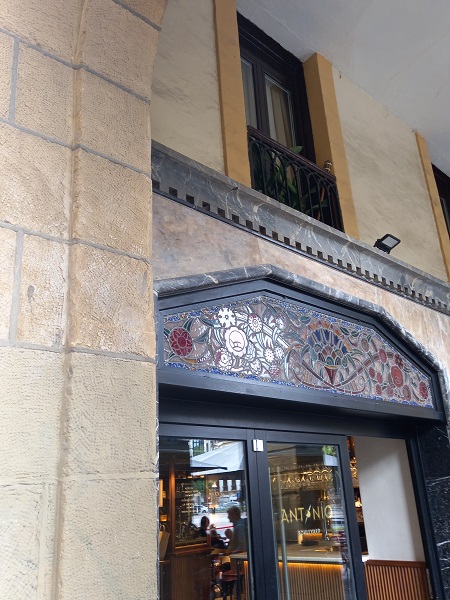
The old town was brilliant, full of little bars and gift shops so I had a happy wander there for a while, and my first tapas for months in a busy little bar, which was delicious. I was particularly fascinated by the signs everywhere. The Basque language is very different to the standard Spanish that I’ve been learning, so much so that I couldn’t understand any of it.

San Sebastian is part of the Basque area of Spain, and there have been many attempts to make it a separate country. It is an autonomous community at present. I remember hearing about these conflicts as a teenager, but there has been a ceasefire since 2011. Basque culture still remains very different to that of the rest of Spain, and, like Galicia, it does feel very different from where I live. It was really interesting to go from France to Spain in a day by road and see the change as you crossed the border, not just little things like speed limits, but architecture and the general feel of the area.

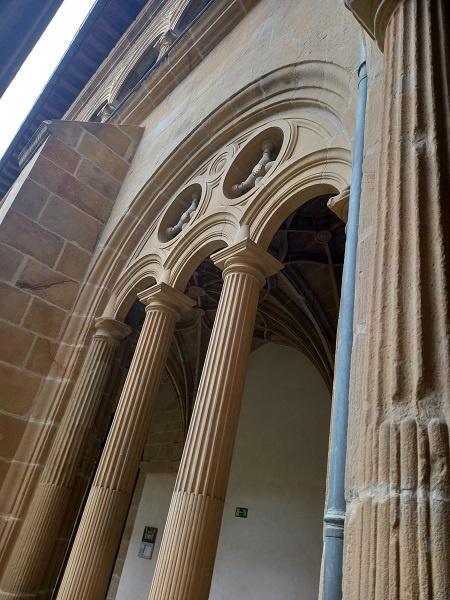
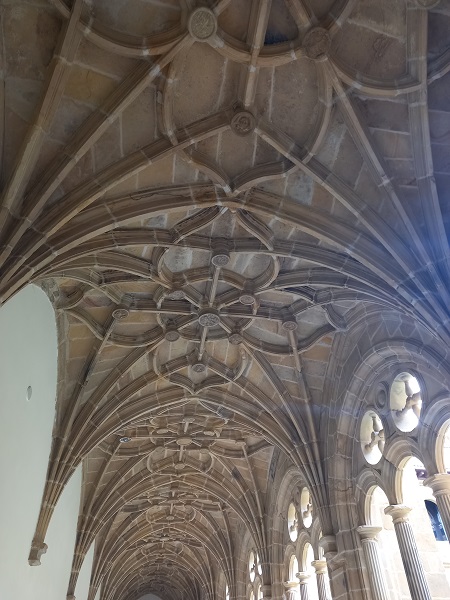
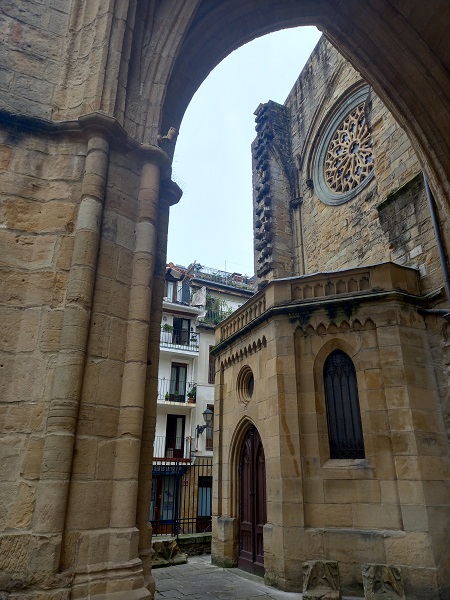
I visited the ethnographic museum on the second day, it is housed in a former monastery, so there were some great cloisters and the original church had been kept as it was, but used as a gallery.

There were some fascinating displays of traditional Basque headwear. As far as I could make out, most of these were just made of twisted linen. There is more information, and some modern recreations at this blog post.

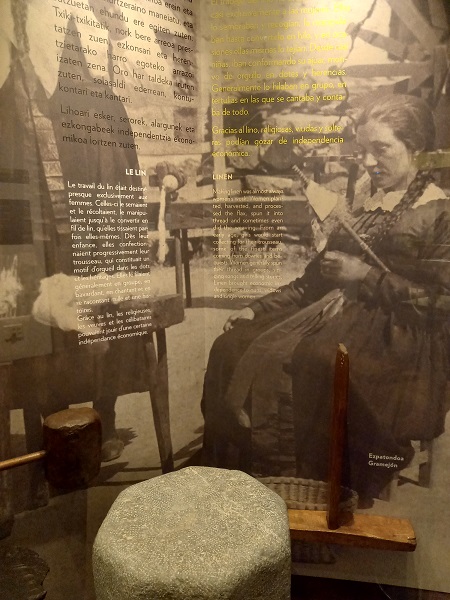
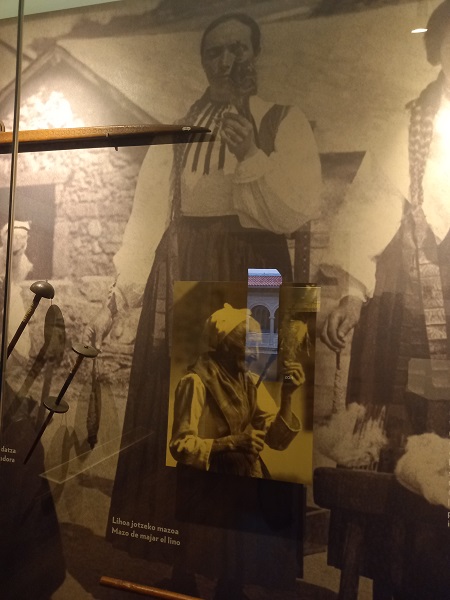
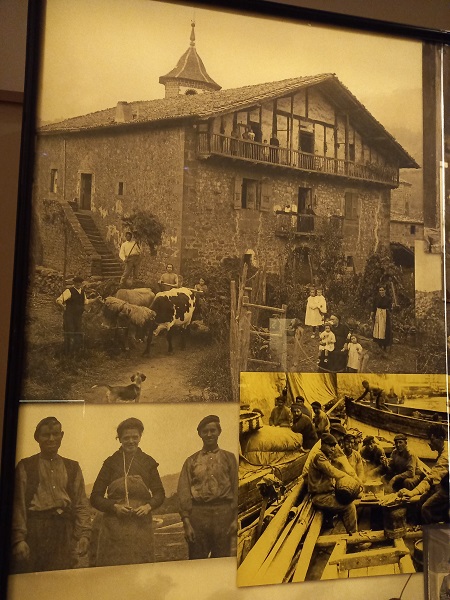
The other thing I really liked was the textiles section. As well as displays of embroidery, and tools, there were some really fascinating photos of the women who spun linen, and the way they lived. I loved this, and think it brings these skills to life so much better than just having a case full of spindles. It gives acknowledgement to the hard work, and the skill of these women, something you know that I am passionate about.

Of course there were some church visits as well, it wouldn’t be me without a few very ornate churches, with their incredible altar pieces. I have lots more very wonderful ecclesiastical art coming in the next few posts as well. The rest of locations in Spain were very much about city visits with amazing cathedrals and castles so come back soon for those.

I really loved San Sebastian, it is probably a place that many people don’t stop at, as there are so many other wonderful places along that coast, but if you are there, do stay, just make sure if you want a space in the aire to get there early!

I have been doing lots of writing and knitting while I am here at Ellen’s, and really enjoying myself just relaxing. I am also spending time planning the next few months of adventures, which start again in just over a week! I am going to attempt to catch up with all the blog posts about the European trip before then. I can then hopefully start sharing my adventures from a very different place! I will have my laptop with me there, and wifi, as I am staying in hotels and apartments, so blogging will be a lot easier than from the road.

I will be back in a few days with the second Spanish city of my trip, until then have fun, take care, stay safe and thanks for visiting.

Fairytale locations

After leaving St Valery – sur – Somme, I spent two days driving through Normandy. I really wished that I had a dash cam installed, as the countryside and the villages were just amazing. It felt like driving through a set for a Beauty and the Beast movie, with gorgeous half timbered cottages and farmhouses everywhere. The roads were fantastic as well, miles of straight roads through woodlands and little villages, and I loved it.

The first day there was a lot of driving along the banks of the Seine, around Rouen. I was aiming for an aire by the side of the lake, but it seemed to be closed for refurbishment so I used Park4Nite to find this paid for aire on the banks of the Seine, in a little village called La Malleraye-sur-Seine. It was 8 euros for the night, and as I had been driving most of that day I didn’t do much when I got there but chill and watch the barges on the river.

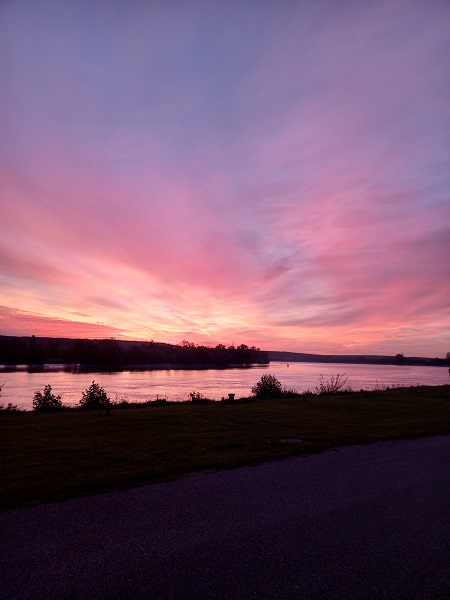
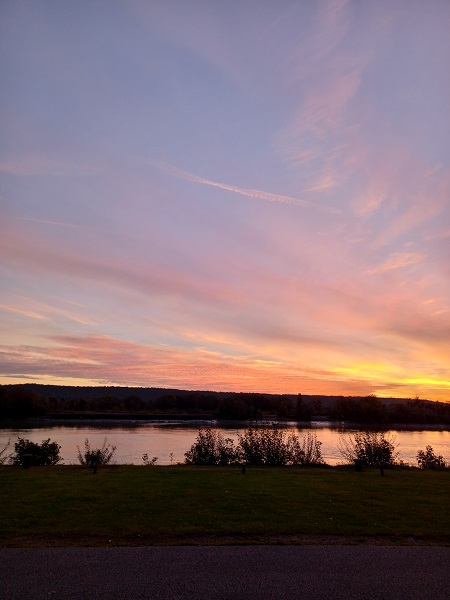
The following morning was definitely one of those wonderful van life moments when I got up early to find the most magical sunrise, so sat with my cup of tea watching the colours change until it was time to leave.

Again I was helped with the barrier by a very kind man who had been walking his dogs, and came back as he saw I was stuck. One of the only issues I had as a solo driver, with the steering wheel on the wrong side, was that sometimes it was tricky to punch in codes or licence plates at the barriers as I couldn’t reach and had no co-pilot! The same was true at the few tolls I used.

The following day I was headed for La Ferte Mace, another paid for aire that I found through Park4Nite before I left the UK, but booked online the night before. This one was 9 euros. I had planned most of my route in advance, but not the stopping points, as I didn’t really know how far I would want to drive on each section.

The previous evening I had identified two castles, using my printed map book, so headed for those, as they were great stopping off points, as well as giving me more lovely rural driving. By this point I had not used any motorways, just minor roads.

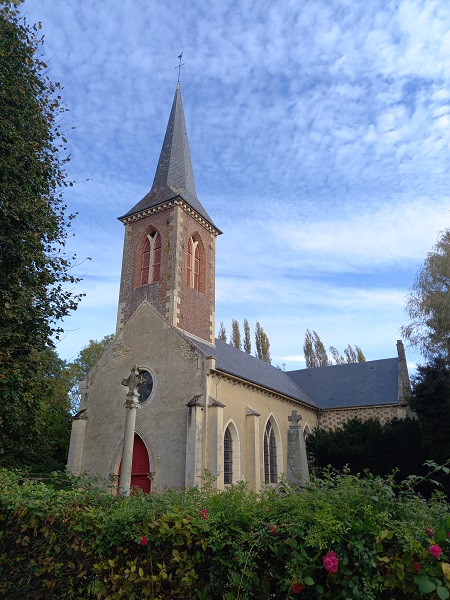
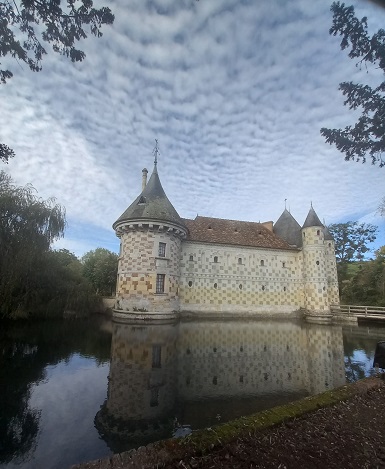
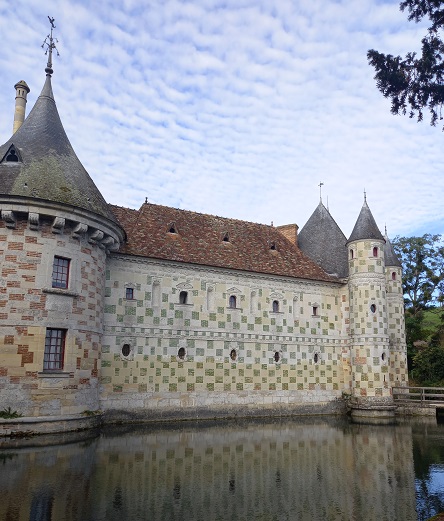
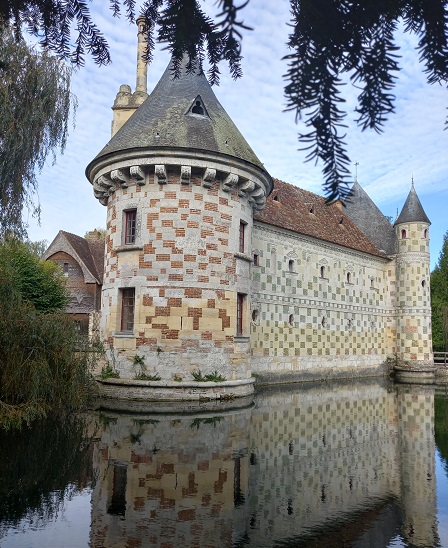
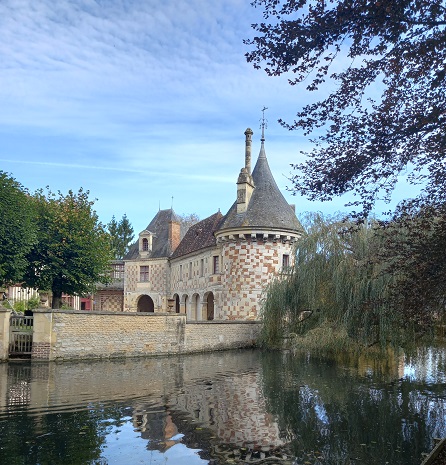
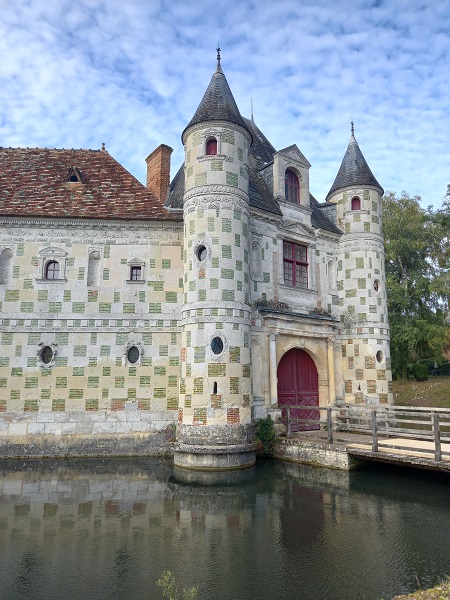
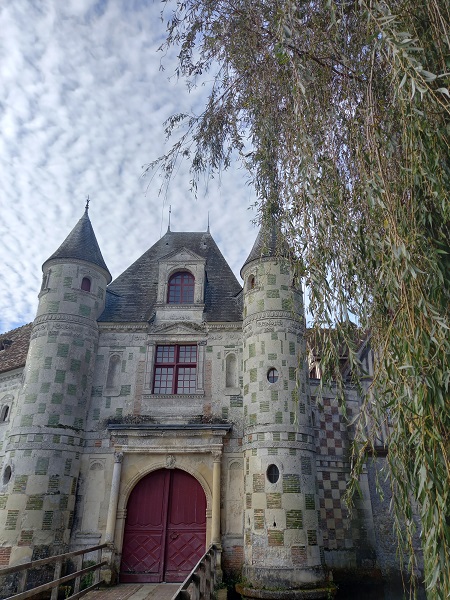
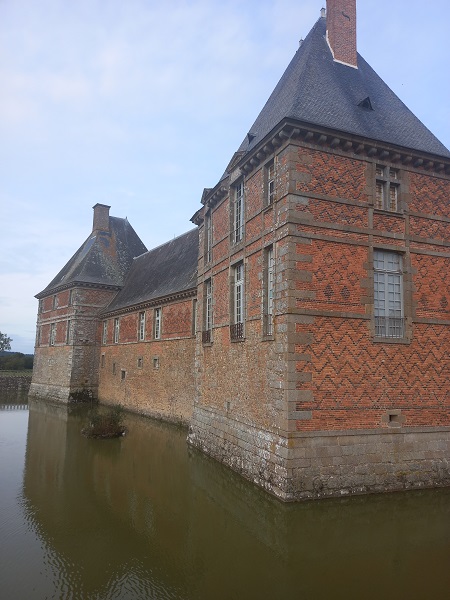
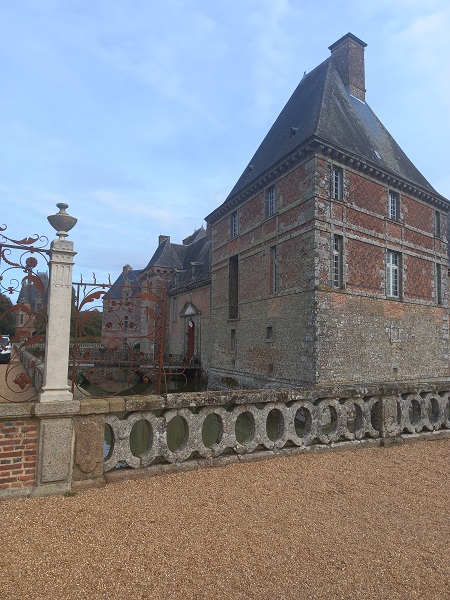
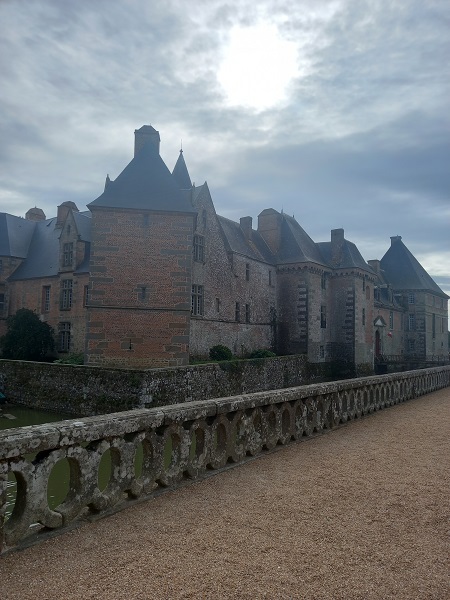
The first castle really was like something from a fairy tale. This is the Chateau Saint – Germain – de – Livet. Sadly the castle is closed for renovation at the moment as its main roof beams have fallen in. This means that you can only tour the grounds, and have a short talk (in French) outside the castle. It does mean that it is free to enter at present. The drive there was beautiful, and I parked up next to this gorgeous little church.

It was such an amazing place, helped by the most beautiful sky, and so I spent the time walking around the moat to take pictures, meeting some friendly peacocks on the way.

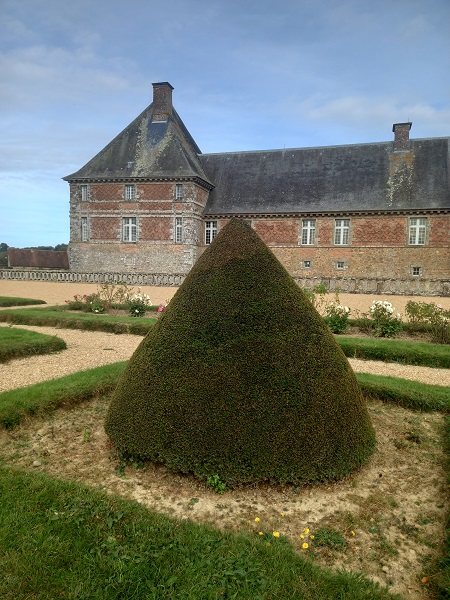
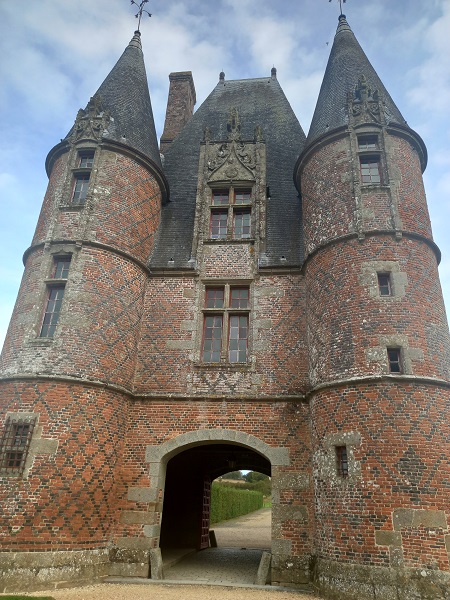
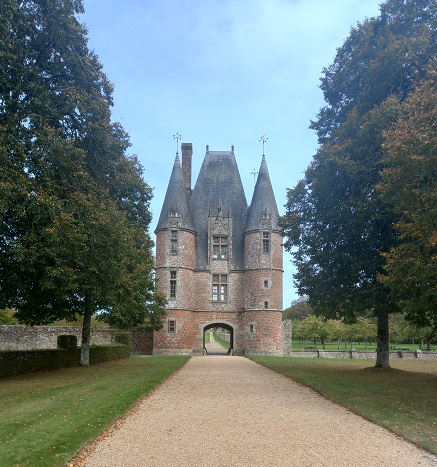
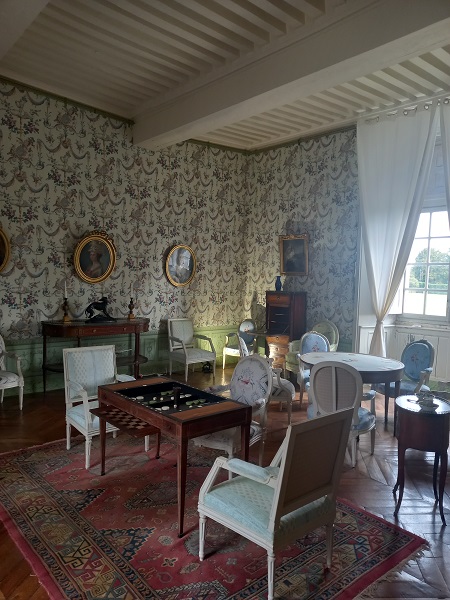
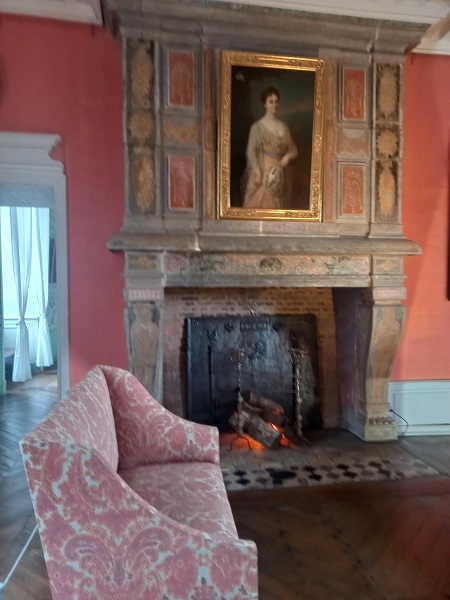
The second castle was a short drive away, so I got there in time for a picnic lunch in the grounds before it opened again at 2pm. This is the Chateau de Carrouges and is well worth a visit as it has beautiful gardens as well. This one was 6 euros for entry.

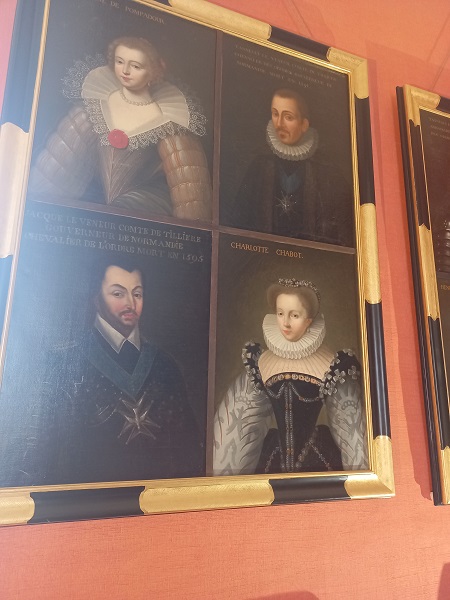
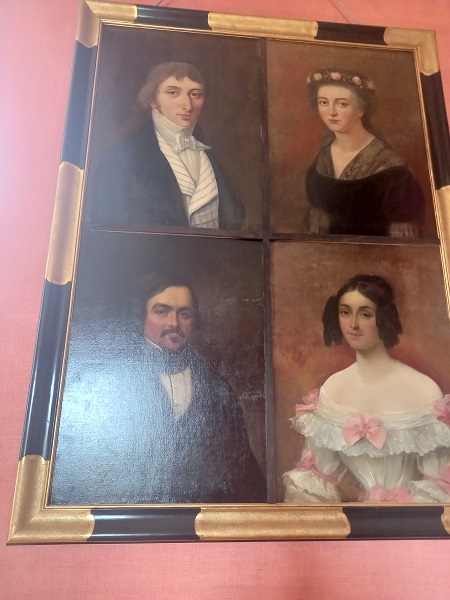
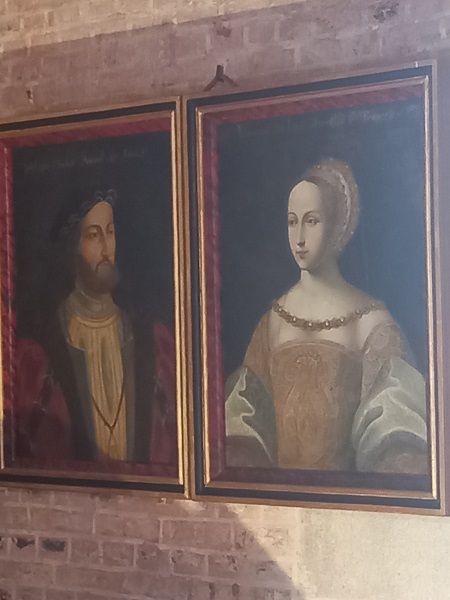
Even though it is a very grand castle, originally defensive and later a family home, inside felt very liveable. I loved the portraits of the family, the owners had commissioned the same style of portrait to capture their ancestors and there was a wealth of gorgeous costume in these portraits.

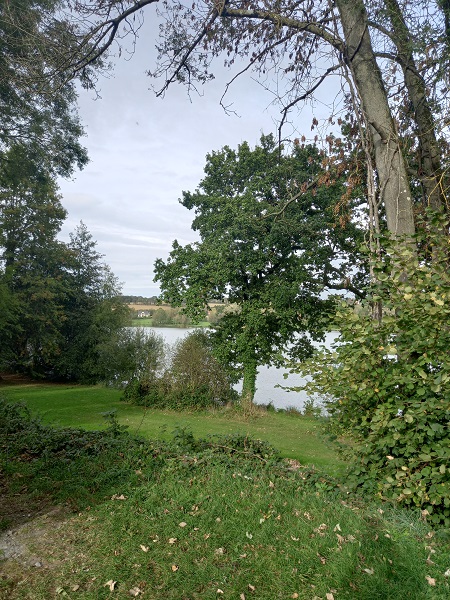
I ended the day at the lakeside at Ferte Mace, again having lovely chats with some of the campers there, in English and using my slightly rusty French. People were always keen to stop and chat, I think the novelty of Katy helped, the first statement was usually along the lines of, ‘c’est un petit car-de- camping’, to which I always agreed 😉 Especially when we were parked next to some huge motor homes!

I am now back in the UK, house sitting for my daughter for the next 3 weeks, so taking the time to catch up with blogs, writing and kitting. Ellen was over in Spain with me last week, she had her first driving in Europe experience as I got her insured for Katy, so she took me and her Granny out for lots of adventures. Like me she loved the driving, and didn’t have any issues with being on the other side of the road. She is now continuing her adventures in Europe for the rest of this month, so I hope she has an amazing time.

I shall be back in a couple of days with more driving through France adventures, this is the bit of the trip that really challenged me, so I will tell you all about it then. Whatever you are doing have fun, take care, stay safe, (and warm, I am so not used to this 7 degree weather!), and thanks for visiting.

I do love a good social history museum!

Although I spend a large amount of my time visiting historic houses, full of very grand furniture and amazing portraiture, I equally love museums that capture ordinary life. I feel that it is a vital part of what museums are there for, not only ordinary life 500 years ago, but also 50 years ago. This vital role means that the visitors can connect with what they say, older people like me recalling childhood experiences, and younger ones appreciating how much life has changed.

I had been really looking forward to visiting Norwich, some years ago I went to a fantastic conference at Leeds University, full of presentations about medieval life, several of which were about places in Norwich. This was in 2019, before the world stopped for so long, and I have been meaning to visit ever since. When I met up with Jules at Sheringham, the van lifer who I first met in the Peak District last year, who has an identical van to mine, she had some great tips for me as well.

The first day I went to the castle museum. Most of this is a traditional museum with lots of glass cases full of stuffed animals, and archaeological finds, although they also had some themed galleries. It was amazing to see the finds from the Snettisham Hoard. To think that they were made about 2000 thousand years ago is incredible, and the craftsmanship is beautiful.

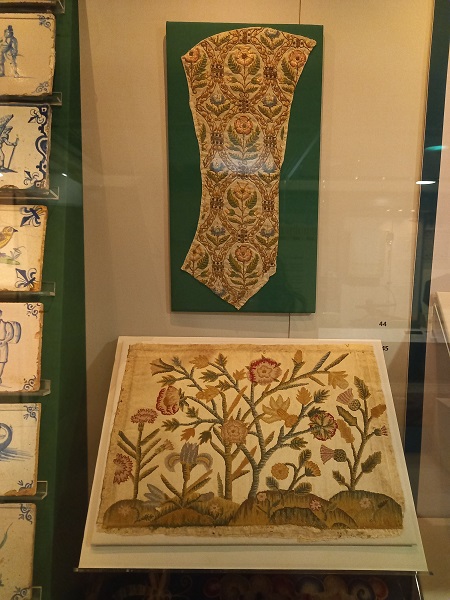
The museum also had some good decorative arts galleries with textile treasures in. I particularly love this Tudor embroidered sleeve.

There were several samplers, and this one was unusual, as it is a darning stitches sampler. Most are representing a variety of stitches but this is the first darning one I have seen.

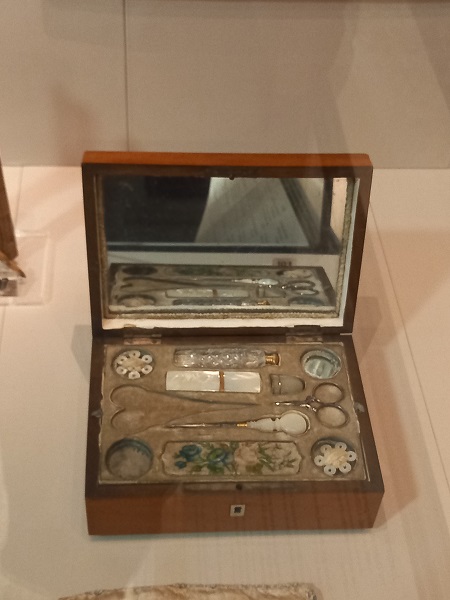
There were some great needlework tools on display, including this beautiful case with mother of pearl thread winders. I love to think of the owner sitting stitching using this and wonder where the other pieces ended up. The knitting needle holders were also really interesting, they are designed to be attached to a belt.

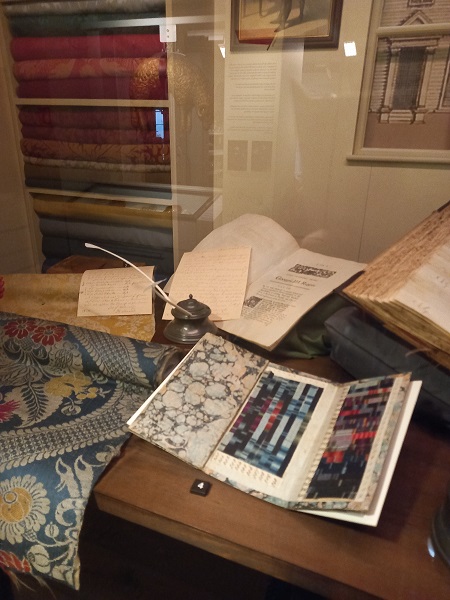
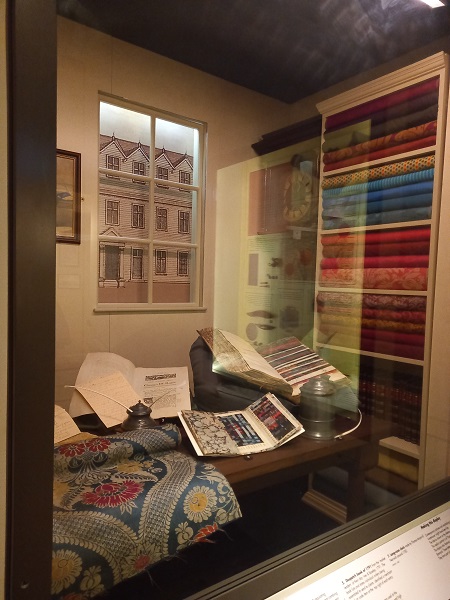
The second museum was the excellent Museum of Norwich, housed in the centre of the city in the Bridewell, a building which has had many uses including workhouse and prison. What I particularly loved about this museum was the themed rooms and the displays. This one below shows a fabric shop from the late 1700s. The original sample books are in the display room, and outside there is a reproduction one , (last photo), that you can study in depth. Absolutely fascinating for a textile nerd like me!

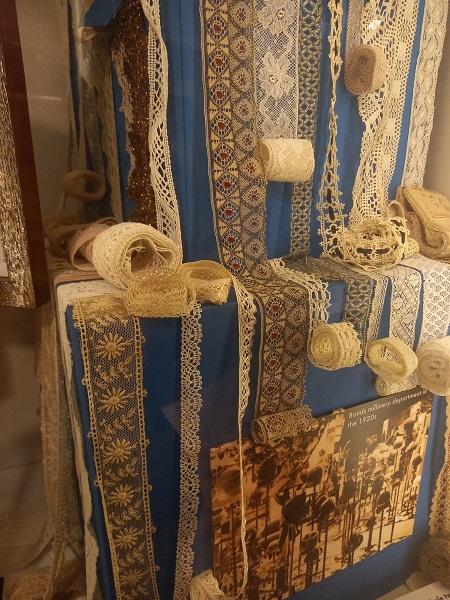
They also had some dressmakers and haberdashery shops set up. The bottom right picture shows the, ‘change card’, from a local department store, that was given in the form of safety pins, rather than coins. An interesting take on the phrase, ‘pin money’.

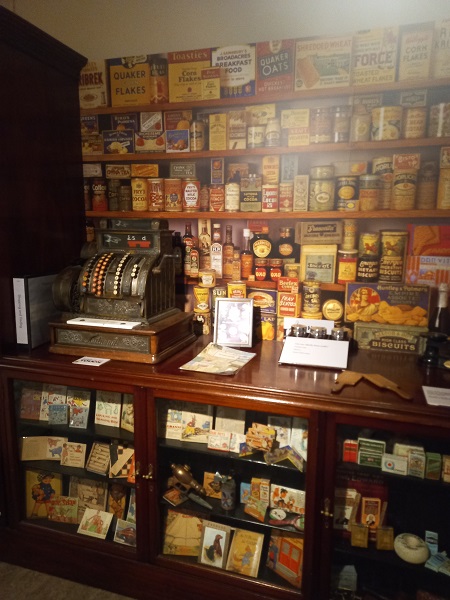
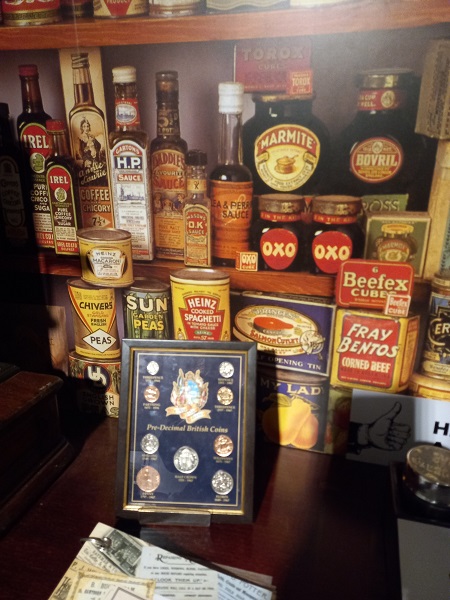
The grocery shop was fascinating, not least to see how much, or how little the packaging had changed for things. They also had a display of pre-decimalisation coins, which I remember very well from my childhood. I used to get sixpence a week pocket money, thruppence to spend on sweets and the rest to save for my annual seaside holiday.

They also had a whole pharmacy set up. This collection was made by a practising pharmacist, John Newstead, over a number of years, as he wanted to preserve the wonderful things such as the jars and drawer labels as shops were modernised from the 1960s. It is accompanied by a really interesting video about how pharmacists would make medicine for people pre the NHS. It is interesting to reflect that pharmacies now have a much wider role, more like they did originally, in healthcare, rather than just dispensing medicine.

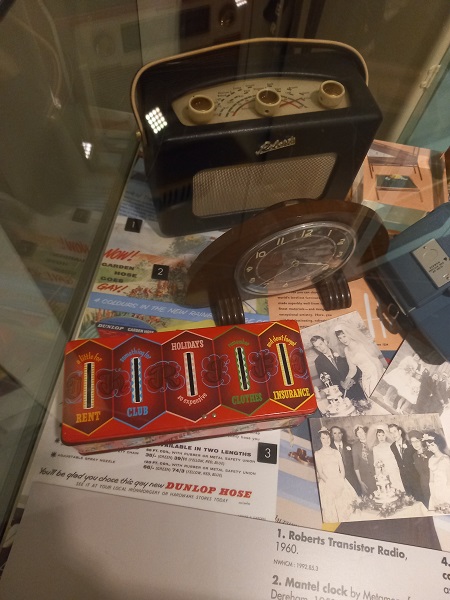
The final section had some great reminders of childhood for me. I used to help my Mum mince meat using a Spong mincer like the one on the right in this first photo, and remember my family allocating money for each aspect of savings, I am not sure we had a tin like this but I’m sure we had something. This must be fascinating for the school children that visit who possibly rarely see cash being used in this way anymore.

There was also a lovely display of sewing related items, I particularly liked the embroidery set in the first case. So many great gifts for future home makers 😉 and a very good summary of what interests were meant to be for girls in the 1950s and 60s.

My third museum was Strangers’ Hall, so named as many refugees lived in the area at one time. This building dates from the 1320s and is now the museum of domestic life. Each of the rooms has a different historical era, and as expected a wealth of wonderful textiles.

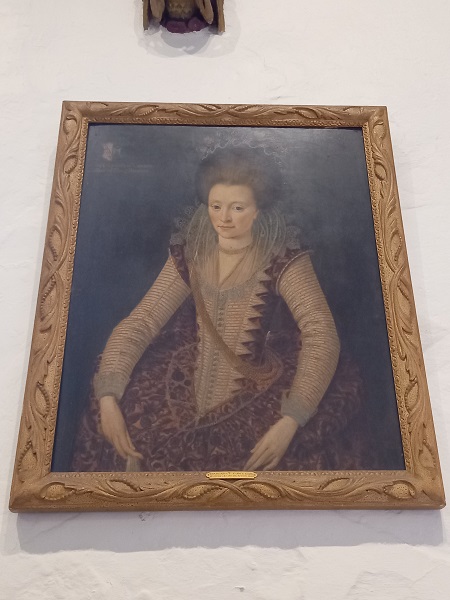
The first part of the house is the Great Hall, with some gorgeous costume portraits.

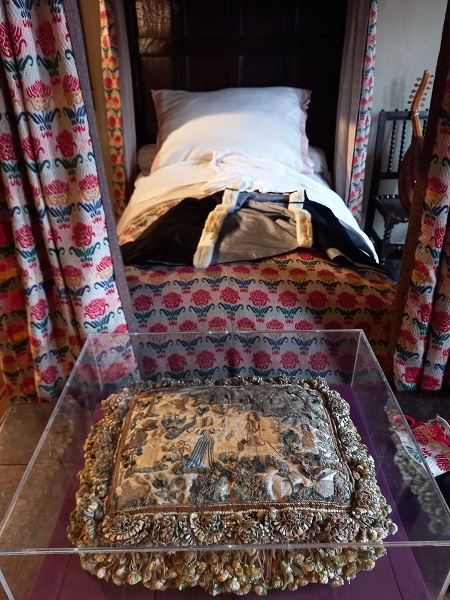
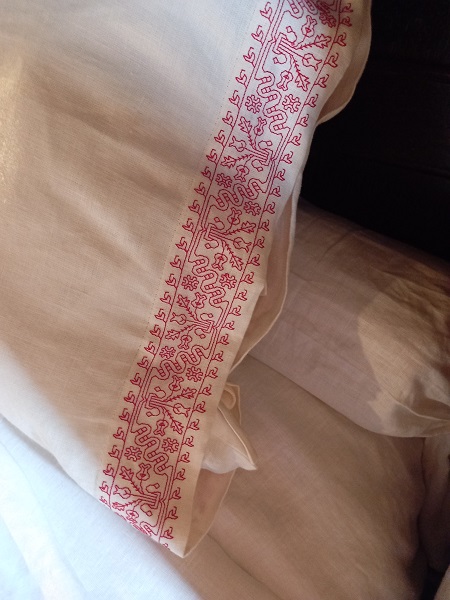
I was particularly impressed with the level of care taken in the interpretation and reproduction of the textile displays, as in this 17th century bedroom, where reproduction bed hangings and a redwork pillowcase complement the historic pieces.

I had a very interesting talk with the head curator at the end of my visit, and she showed me the detailed files of research they have on everything they do. I think what makes this museum so fascinating is that as you move through the different rooms you get a real sense of how people lived in them. The contrast between the dark wood and table carpets of the Jacobean era, and the Georgian decor is really evident.

It reminds me of when IKEA stores first opened in the UK and we were all encouraged to ,’chuck out our chintz’, and go for the very simple clean lines of Scandi style. I did have a house that was almost completely furnished by IKEA at one point, before I went back to my love of colour and lots of different textures.

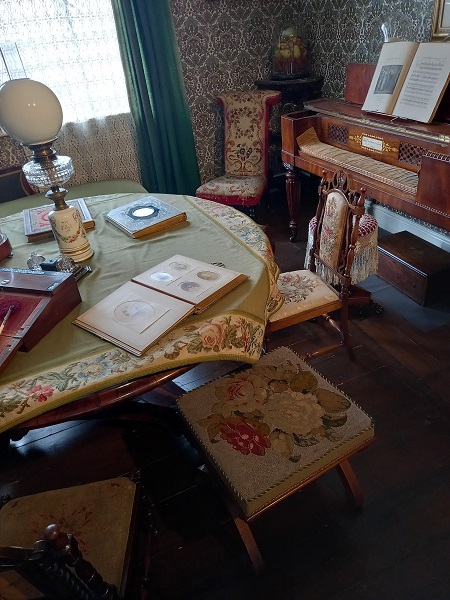
My favourite room was the Victorian parlour, partly because of the sheer amount of needlepoint in there 🙂 So many wonderful pieces all crammed together. I particularly loved the embroidered book covers. I can just imagine groups of stitchers sitting around a table like this, sharing needlepoint patterns and deciding on their next projects.

I appreciate why some things have to be kept in glass cases, it must be a conservation nightmare to cope with all the dust in these rooms, but it so nice to see things in situ and get a sense of people’s lives with these objects. As proved in my previous post, there is no guarantee that the glass case is going to be safe from things like pesky wasps anyway!

I stayed at the Norwich Caravan and Camping Club site, partly chosen as it was within walking distance of a bus stop into the city. By coincidence, as I drove into the site, I spotted another almost identical van to mine, and the owner Terri, came to say hello the next day and gave me a quick tour of her van. She has a modified boot jump and uses curtains so it was very interesting to see her set up. Her van is on the right below.

I am starting to finalise my plans for next year’s travel. I am leaving Spain in 5 weeks, and am going to be doing a combination of UK visiting friends and family and warmer weather destinations. One of the things that I have just booked though is a ticket for another van life show, next September. I couldn’t make it this year, but am really looking forward to meeting many more micro camper owners and sharing designs and stories. I have had such an amazing year of travel, and meeting lots of different people in all types of vans, tents and caravans. It has been brilliant, everything I dreamed of for my retirement. I am so lucky to be able to have this life.

I have also made a list of all of the blog posts I am going to do about the summer’s adventures and there are another 19 to go. That should take me nicely up to when my adventures start again! Thanks to everyone who follows me, likes, and comments, it is very, very much appreciated.

Although I have missed the date, (again!), I have just had my 16th blogaversay. It is appropriate that my very first post, as to be expected from the 2nd Dec 2007 was about Christmas ornaments, as that is what I am going to be stitching this afternoon, before going on a coach trip to see the Christmas lights in Alicante. I now have around 1700 visitors every month and 437 subscribers! This is my 938th post, so we will have to have a big celebration when I get to 1000 sometime next year.

Meanwhile I hope that you are all well and enjoying life, whatever you are doing have fun, take care, stay safe, and thanks a million for visiting!

Herefordshire heritage

I had a lovely time a few weeks back when I was staying at the Hereford Caravan and Camping Club site.

There are lots of Trust properties in that area so I was pleased that I managed to visit two as well as Leominster for the embroidery exhibition.

The first of two that I went to in one day was Croft Castle. Like Dunster, in Somerset, this started life as a castle and was then modified into a family home.

The family had close links with the court of Elizabeth 1st, so there were some wonderful portraits in the entrance hall.

One of the exhibits was a, ‘Croft Cloth’, that was made in 2018 to celebrate the centenary of the Representation of the People Act, which gave more people the vote.

The cloth has oak leaves with the names of staff, volunteers and visitors, this being the symbol of the Trust. I love collaborative projects like these, reminiscent of the signature quilts from Victorian era fundraisers.

There was also some interesting embroidery in the form of a collage featuring the castle done in 1960 by Frances Kay.

There were some stunning ceiling and wall decorations that I will add to my possible future designs for needlework, these would look amazing in white work.

The other visit was to Berrington Hall, a Georgian property with a surprise textile treasure.

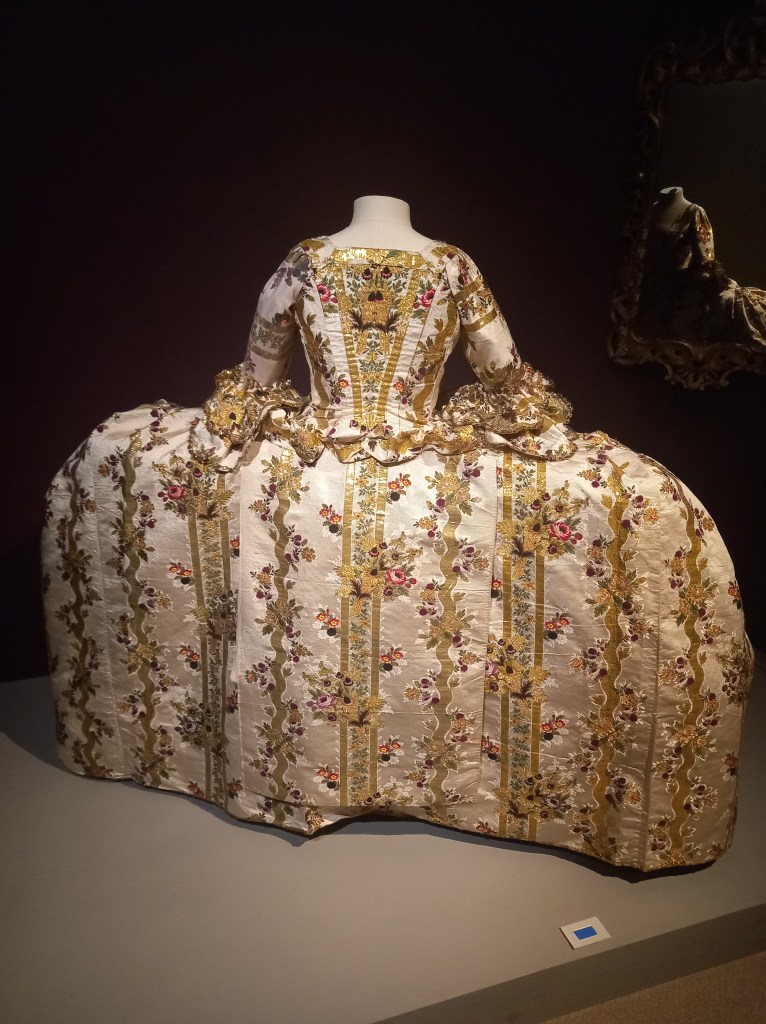
A dress owned by one of the Georgian occupants of the house, Ann Bangham, was acquired at auction and there is a display of the dress and its construction.

The dress consists of many parts so the textile historians had to reconstruct it. It dates from the late 1700s.

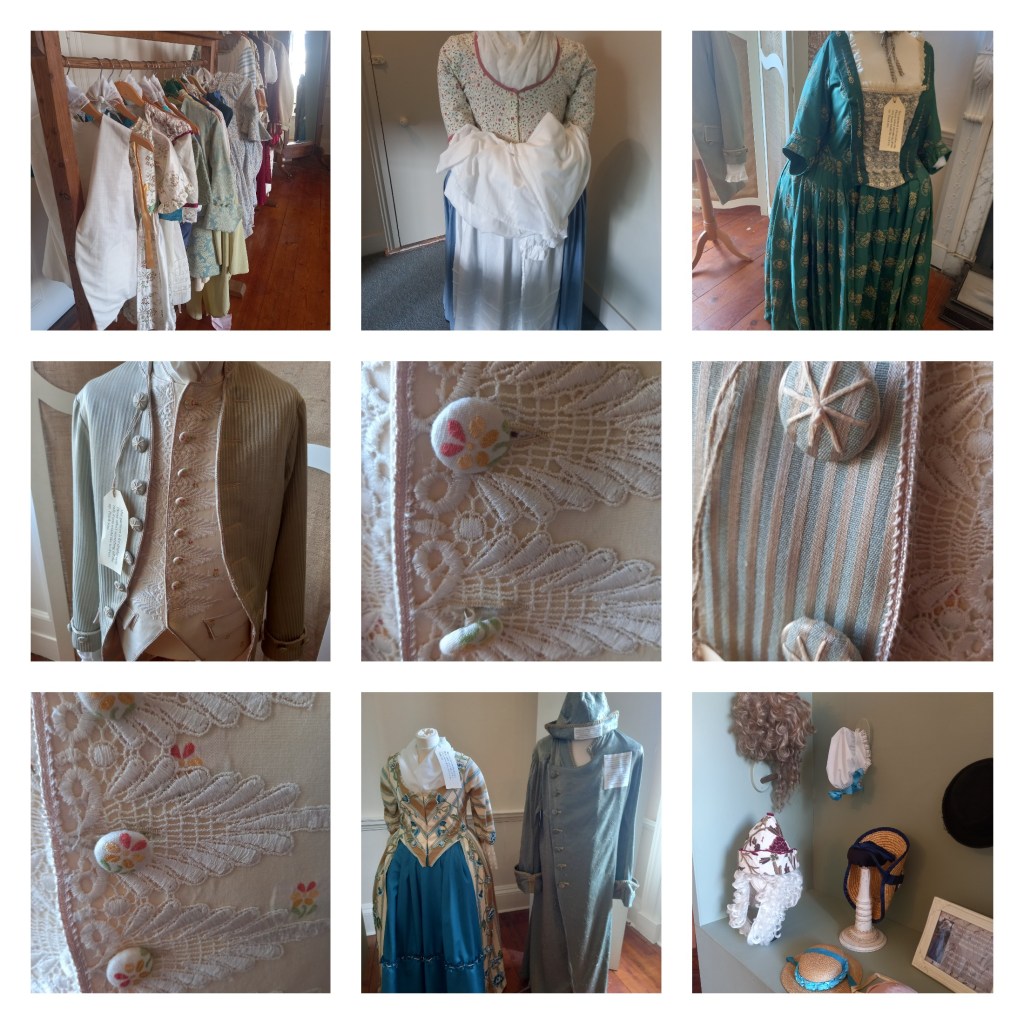
As well as this very good interpretation there is a room devoted to a display by the needlework volunteers who each created their own version of the missing stomacher.

It is brilliant to see so much information about these wonderful people. Often there is no information and little credit given to the volunteers who also produce such high quality garments for visitors to dress in at the house.

The detail on the embroidered jacket here is wonderful, well done to all who contributed to this collection.

I shall be back as soon as I can as I have lots more to share with you. The app for mobile is very slow and as I have only limited WiFi as well posts take a long time to do. Meanwhile I hope that you have fun, take care, stay safe and thanks for visiting.

Lesser known Venice, and floor to ceiling awe

As I mentioned in my previous posts we were able to see lots of things that people maybe miss in Venice, including some of the lesser known museums.

Our museum pass included the gorgeous Palazzo Mocenigo, which houses The Study Centre for the History of Textiles, as you can imagine a prime location for me! The palace itself was beautiful with some wonderful paintings of scenes from Venetian life with such a focus on costume.

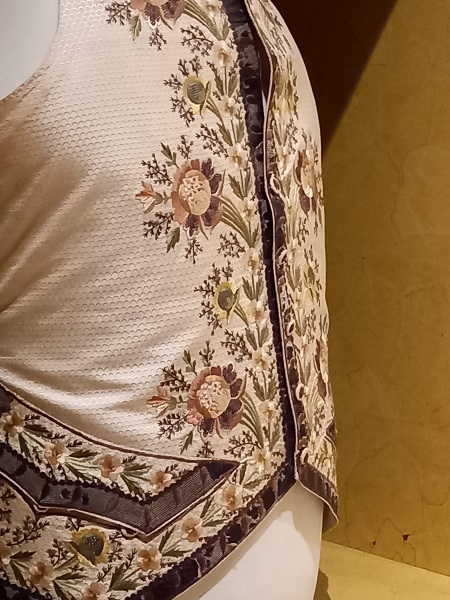
However, the most amazing thing was the small room with 18th century embroidered waistcoats. We just came round a corner to see all of this splendour!

These are just incredible, especially when you consider the hours that each must have taken to embroider.

They also had a small display of kimonos, proving again that culture spreads so rapidly through fashion. These were in a section about casual wear around the house.

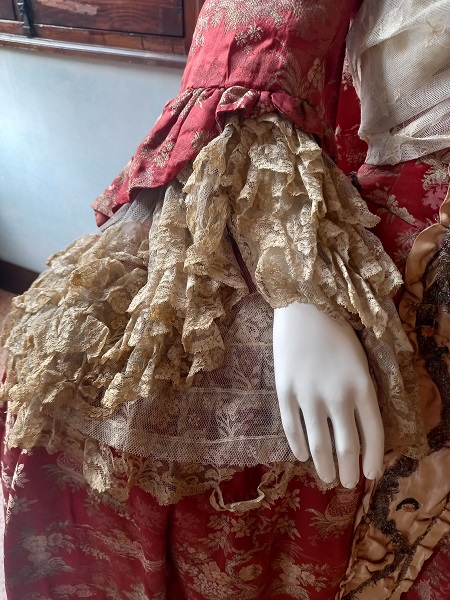
We also visited Casa Goldoni, which is the house of one of the most famous 19th century playwrights, Carlo Goldoni. This was a small museum but very interesting, including this sack back dress, particularly the lace on the dress which referenced back to our previous museum visit at Burano. Goldoni wrote about fashion in some of his plays which makes him a great source for textile historians and he was referenced in the Burano Lace Museum’s interpretation.

It was also great to see inside what is a fairly typical Venetian house with its internal ground floor courtyard and stairs leading to the living area.

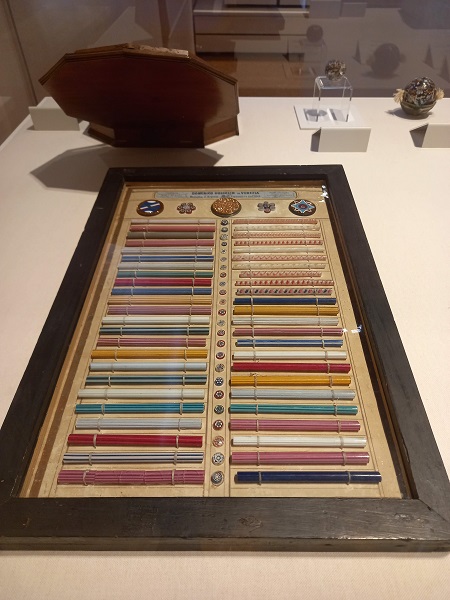
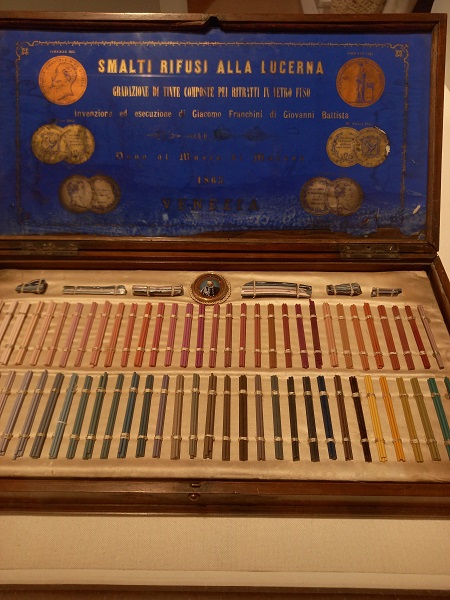
As well as Burano we visited the island of Murano, which is famous for glass making. The museum there was excellent, with fascinating displays of how they make the millefiori glass, using tiny tubes of individual colours. Again there was very good use of video in the museum’s interpretation.

There was also an art exhibition, by Simon Berger, called Shattering Beauty. I am not usually a fan of modern art but this was absolutely stunning, not only in the technique used of carefully breaking glass to create faces, but also in the inspiration for the technique, which came when he saw a shattered windscreen from a car accident. I loved the way he had thought about the images and the use of the cubes and reflection, so you got to see yourself at the same time.

Other wanders included a trip to the Arsenale, which takes up a large proportion of the island. This was the old shipyard, which is still in operation today as a naval base.

Many of the paintings that we saw earlier in the week featured this area, and the incredible amount of ship building that was done here, which made Venice such an important naval power. This is a painting done by one of my favourite artists, Canaletto, that I found on Wikipedia, which shows you how it would have looked in 1793.

Although you can’t go inside, you can wander all around the walls and appreciate the scale of the place. This map from All About Learn, dated 1797, is wonderful for its detail of all of the vessels being built there.

On our last day we took the number 1 vaporetto out to its final stop, the island of Lido. We had seen this from across the bay all week, and I really wanted to go and visit.

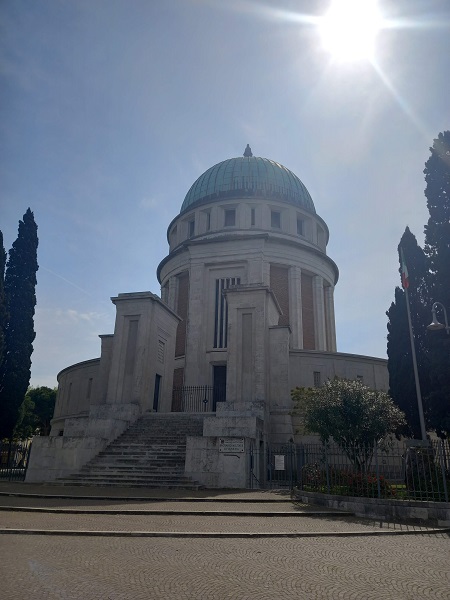
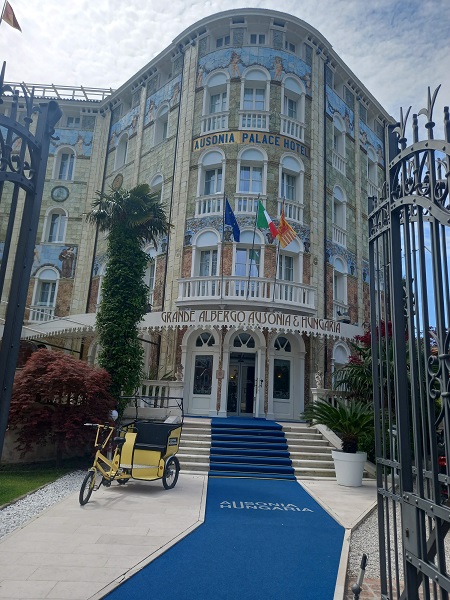
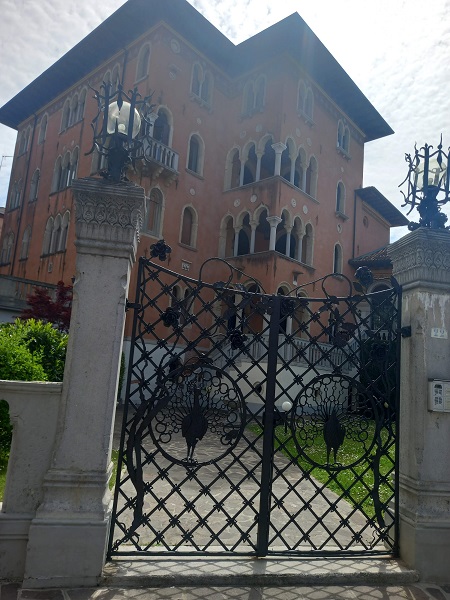
It has a completely different feel to the other islands of Venice, there are long sandy beaches and lots of gorgeous hotels and houses on wide streets. We loved it and would encourage you to go if you can to see a different side of the city.

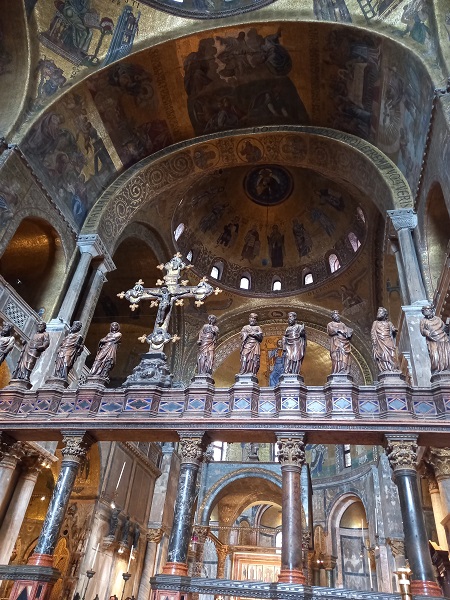
Our final visit was to the very famous, and much visited, St Peter’s Basilica. It is a truly remarkable building, the scale of the gold mosaics and architecture just incomparable.

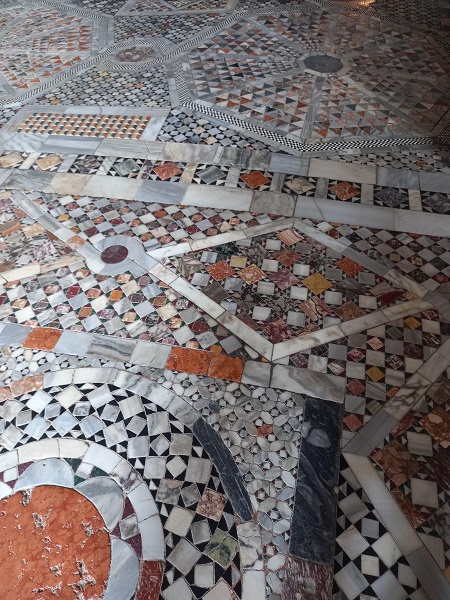
The floors also fascinated me, their sheer complexity and attention to detail was stunning, so much inspiration as well for textile creation!
Venice, you were wonderful, thank you. I probably will not go back, just because there are about a million other cities I need to visit, but you are beautiful and unique, and I hope that going forward tourism does not have too a severe impact on your future.

I shall be back in a few days hopefully, with an update on what I have been doing here. It has been a very busy, but lovely week, temperatures are around 30 degrees so there have been plenty of visits to the pool in and amongst my textile endeavours. Until then have fun, take care, stay safe and thanks for visiting.

The beauty of Spring

We were lucky enough to be in Japan during spring, landing in fact when the cherry blossoms were at their peak. This time of year is very significant in Japanese culture, not only are there drinks, ice cream and cakes flavoured with the ‘sakura’ or blossom, but also the season has a spiritual significance, signifying the new year.

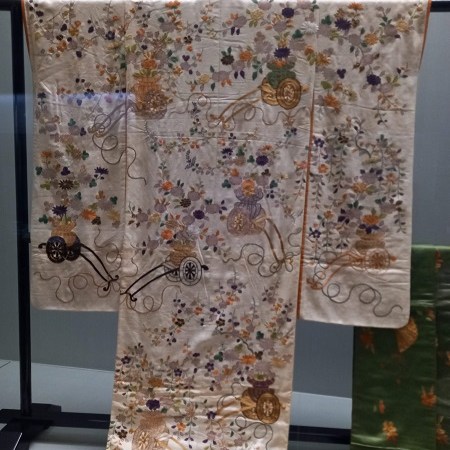
This is very much reflected in art and we saw some beautiful examples of art and textiles honouring nature and blooms at the Tokyo National Museum. The museum is located in Ueno Park, which is one of the main places that the Japanese visit to see the blossoms and the exhibits are themed seasonally.

There were some stunning robes on display here. We had seen an exhibition about the kimono in New York, which looked at how it has influenced Western fashion, and how Japanese fashion changed in the early 20th century as more Western fashion began to be worn.

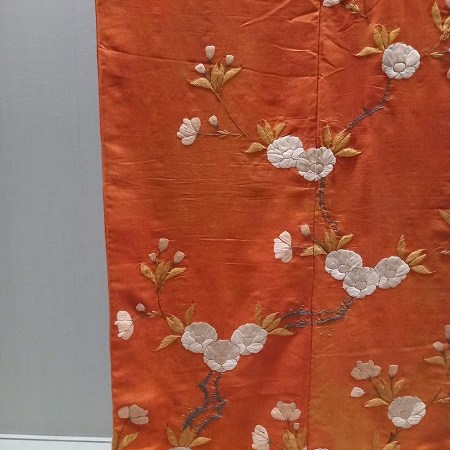
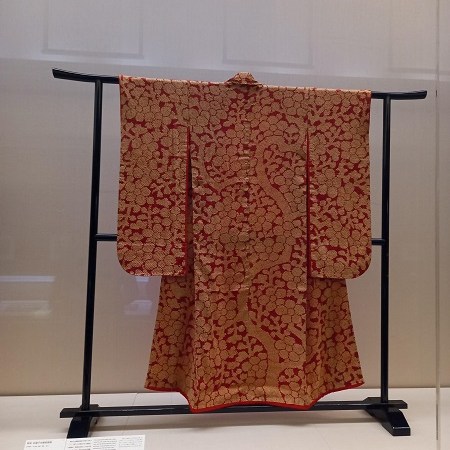
So it was brilliant to see the different types of kimono, from the early kosode seen here in the red and gold embroidered examples from the Edo period of the early 1600s above, to the later furisode below which is dyed using the shibori technique. You can read more about the history of the kimono here in this article by the Victoria and Albert Museum.

What is also very interesting is the parallels with costume in Europe at this time, the long sleeves of this kimono signified an unmarried women.

Similar long sleeves with yards of excess fabric are common in medieval dress, signifying in this case that you have the wealth to afford excess material and servants to do the menial tasks.

There was also legislation banning excessively decorated kimonos, as there was legislation about who should wear certain colours and fabrics in medieval Europe, the sumptuary laws.

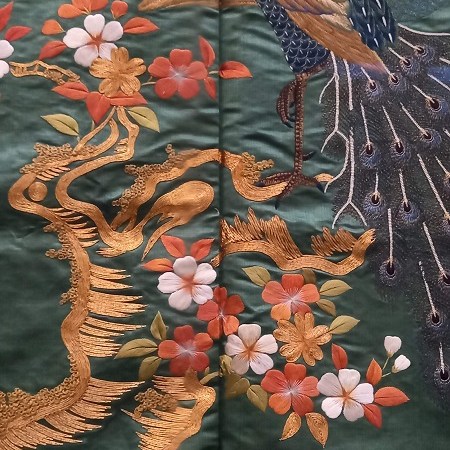
The garments are stunning in the sheer amount of embroidery and goldwork on them. This peacock was one of my favourites, the work that has gone into this is amazing.

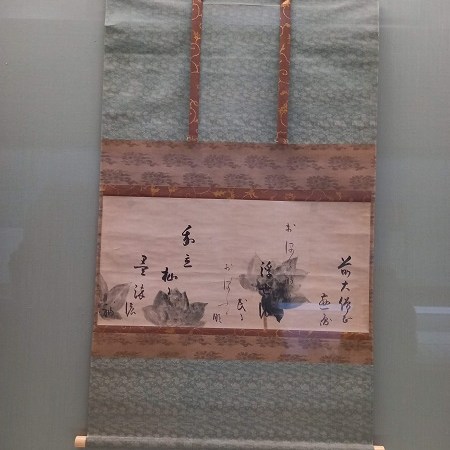
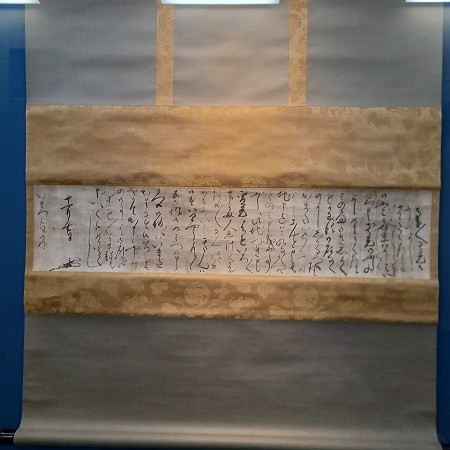
There were also many examples of delicate art and calligraphy, all framed with silks and brocade.

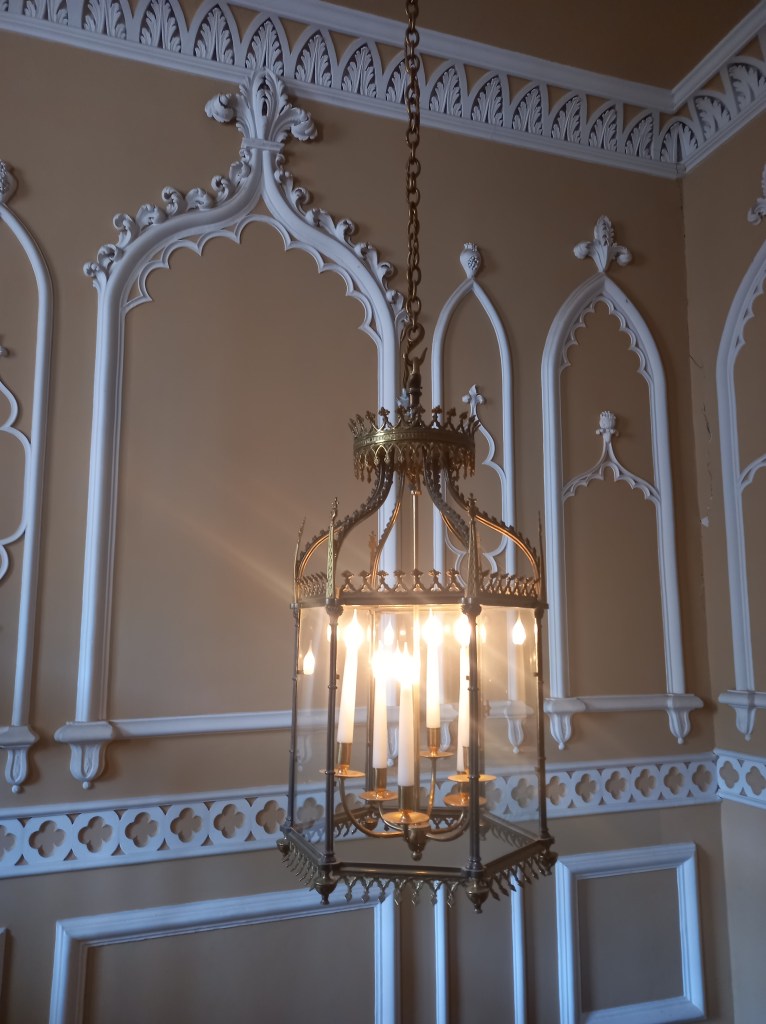
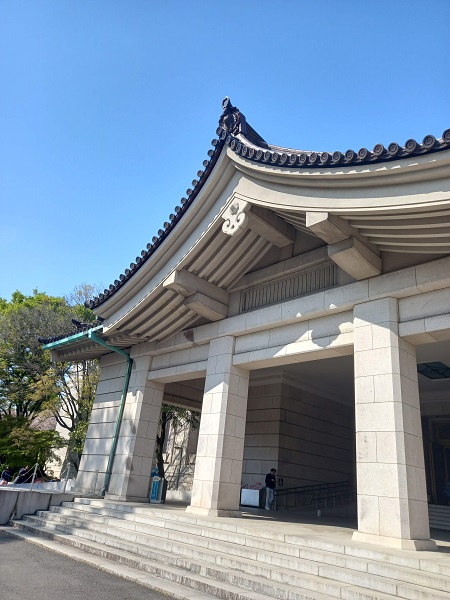
The museum itself was a very gorgeous building, full of decorative doors and lamps, it dates from the early 1930s. As with many of Tokyo’s buildings, an earlier one was destroyed in an earthquake.

A really beautiful collection and I loved seeing all the detail of the gowns. Sadly the other museum we wanted to visit, covering the Edo period, was closed for refurbishment, so this was our only museum trip while in Japan.

I only have one more post for you about the Japan trip and that covers something that I didn’t really expect to find, but was great fun! More on that later. I have friends coming to stay for the next two weeks so I will be out and about with them, showing them what Spain has to offer.

I will pop back later in the week as I have been hard at work in the craft space. I am actually ahead of myself in terms of targets for this block of time here so have been spending some time with my machine. More of that next time, meanwhile, have fun, take care, stay safe and thanks for visiting.

A tale of two museums

I visited both the archaeological and the ethnographic museum in Paphos which were both excellent, but very different.

The archaeological one, like its counterpart in Larnaca, was really well interpreted. The various displays were informative, and there was very clear signage, with illustrations and some great mock ups of things like burial pits and kitchens.

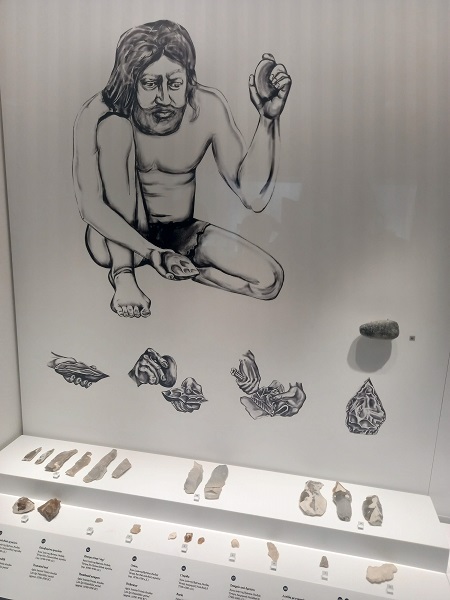
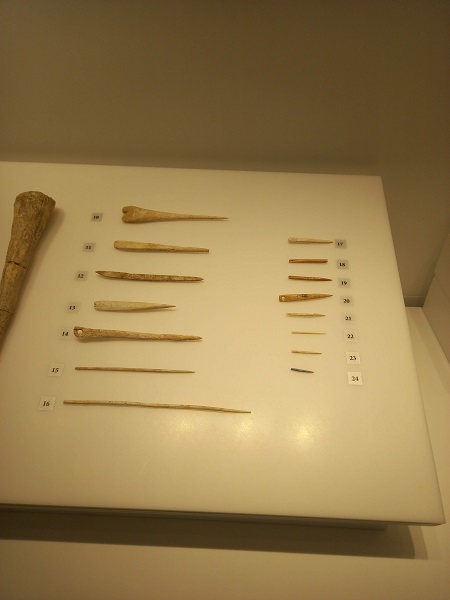
It made the whole of the experience really interesting, something I have not really found with previous Neolithic collections. I loved this display of different sized needles, the smallest was about an inch long.

One of the most interesting, and unique, was this set of terracotta hot water bottles, shaped to fit various parts of the body. They dated from the Roman era and were fascinating. Not so very different from what I do now when I’ve got a bad back!

The timeline display made it easy to follow the development of things like the pottery, and the way that devotional figures were used, and it made it a very interesting experience. You really got a sense of the people who had made these things.

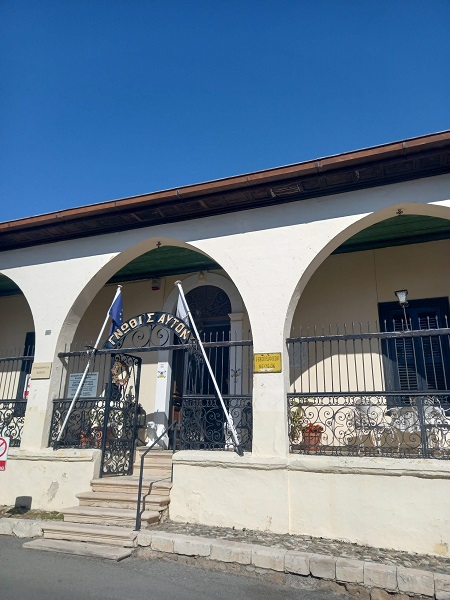
The second museum was the Ethnographic Museum, which is in the centre of the town. It is the collection of one man, George Eliades, who in 1958 opened his home to show off his collection to the public.

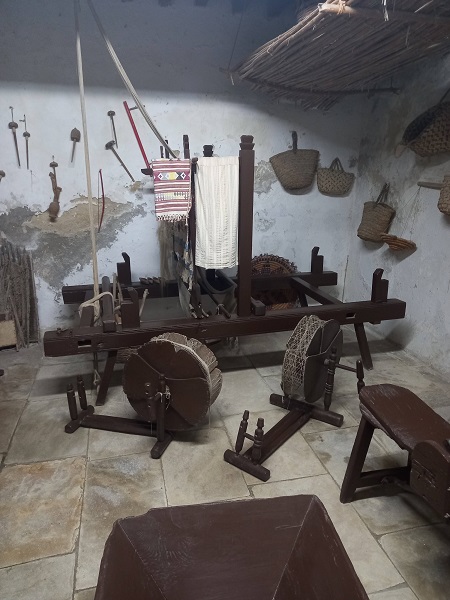
It is an amazing place to visit, not only to look around a traditional house, with room underneath to store wagons, and I assume stable horses. There is also space for workshops, one of the rooms was set up as a weaving workshop.

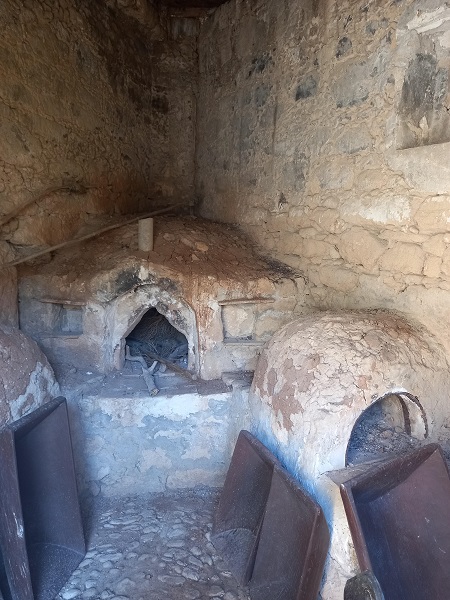
Outside there is a millstone, and a bread oven, water troughs and underground storage.

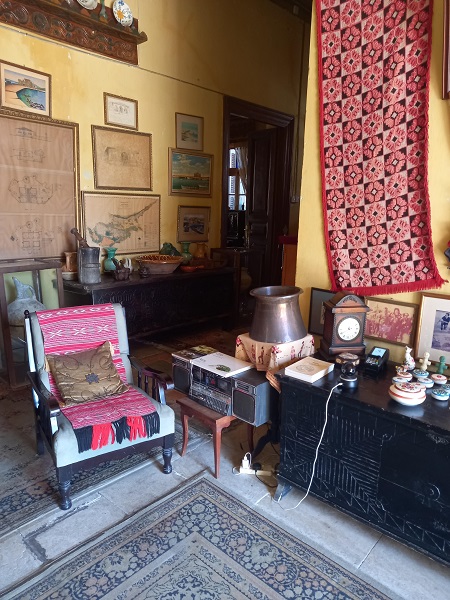
Three of the upstairs rooms are open, the library, dining room and entrance hall, all crammed with textiles and collections.

It is a beautifully eclectic place, a huge contrast to the carefully displayed and interpreted archaeological museum, but what a fascinating place.

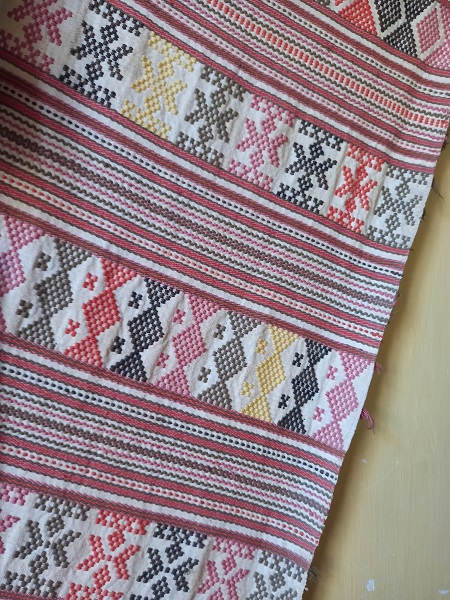
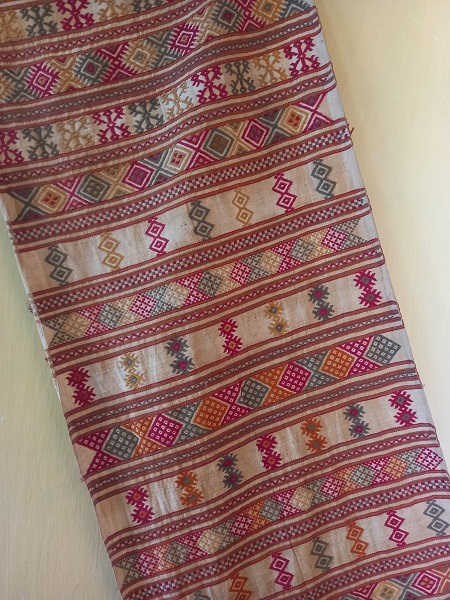
As always my favourite part was the textile collection. There were some gorgeous woven hangings in the upper rooms.

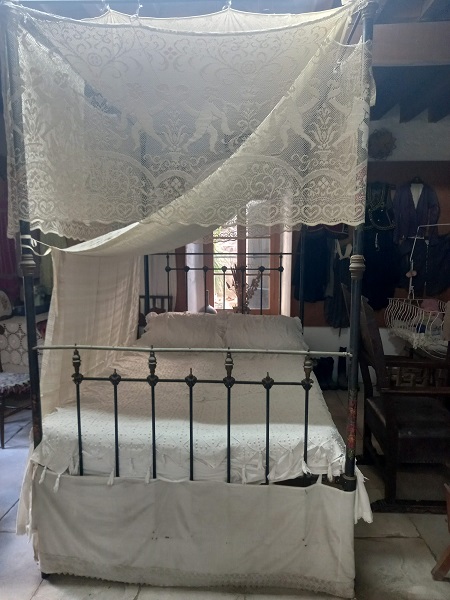
One of the lower ground floor rooms was set out as a bedroom, with hanging garments and some splendid and unusual seat covers made of pointed scraps.

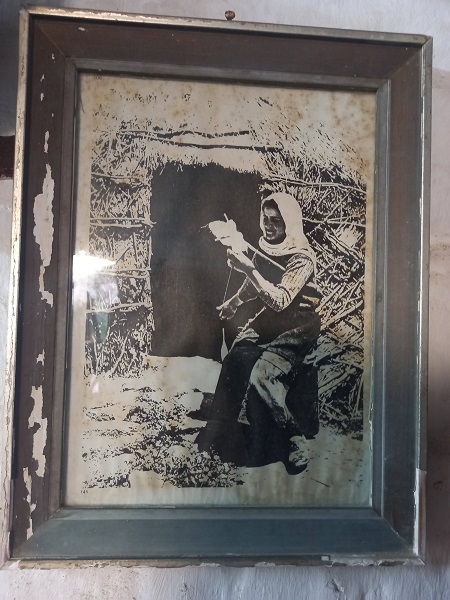
The interpretation was limited to framed information taken from reference books, and some photos like this one of a woman spinning.

However, it was the sheer enthusiasm of the original collector, and his family in keeping his collection, that was the real star of the place. It was an amazing collection and I am so glad that it has been preserved by them.

Both types of museums have a place to play in heritage, they represent very different aspects, and both have their merits and disadvantages. I am so glad that I have the chance to visit all of these wonderful places.

I am now back at Ellen’s for a little while, leaving Katy behind at my sister’s until July. I have been spending a lovely afternoon booking my campsites for the summer, and my channel tunnel crossing 🙂

I am so excited for that, and for all the lovely adventures yet to come. It will be great to get back to Spain, especially as I am going to do lots of research on my trip through France and Spain in October when I return to Spain.

I hope that you all are looking forward to the rest of the year, it really doesn’t seem possible that it is another season here in the UK, time is going so fast. I hope you are enjoying whatever you are doing, and are able to plan nice things for the months ahead. Have fun, take care, stay safe and thanks for visiting.

Nicosia part 2 – more doors, and more textiles!
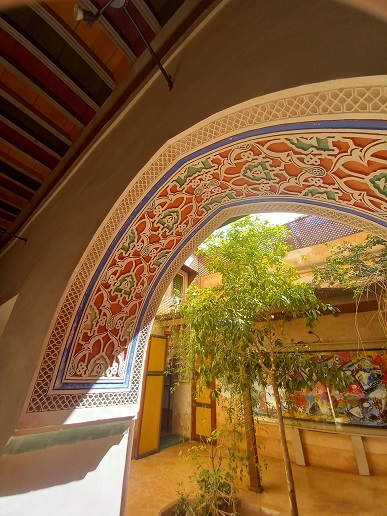
I am definitely loving the Cypriot doors, and balconies. Again most in Nicosia had the dates on, and all seemed to be from around the same era as in Larnaca, which I found very interesting.

I did find one dated to 1718, and part of the city walls with a gate, but all the others are a very similar style and from the early 1900s.

Being an amateur building historian I can only assume that they was a lot of building in all of Cyprus at this time, and that possibly a lot of older buildings were destroyed to make way for these ones.

Unlike other cities that I have visited there seems to be no specific medieval area, though the Venetian walls do date from the 1570s which is the later medieval period. I did see a medieval hall near the walls as well.

I can only assume that when the British occupied Cyprus from the 1870s there was a lot of building from that point, which may explain the lack of older buildings apart from things such as the forts and castles.

I visited three museums on my second trip. The first was the main Museum of Cyprus ,which had lots of pottery and statues. I am not normally that interested in the different types of ceramics, they just don’t get me as excited as textiles do. However, there was an amazing display that was all found together.

These 2000 figurines were found displayed like this in the sanctuary of Aiya Irini, and date from the 7th and 6th centuries BC. There are mainly soldiers, waggons and horses, and there are only two female figurines.

I love the face on the bigger bull at the front of this picture above, he looks as if he is smiling!

The other really interesting thing was this jewellery display, dating from the Byzantine period of the 6th century. As well as being beautifully detailed it was interesting to see how the designs have not really changed at all, even down to the way we fasten earrings all these centuries later.

My favourites were the winged creatures in the top left picture, they were so detailed at only about one inch tall.

The second place was, The Shacolas Tower , which has a panoramic view over the city and a small exhibition and video about the history of the city. It is well worth a visit as it so interesting to see some of the landmarks from above.

I spotted the church and archbishop’s palace that I had visited in this first photo.

The one below looks towards the occupied part of the city where you can see the towers of the Selimiye Camii mosque that was once a cathedral, at the back right of the photo in front of the mountains. It has been a mosque since the Ottomans came to the city in the late 1500s so is very much part of the very diverse history of this city.

The final museum was the Leventis Museum, which is housed in three restored buildings within the city centre. This was a great museum for giving you a timeline of all of the different cultures that have lived in Cyprus, showcasing Venetian glass, Ottoman jewellery, and having some excellent examples of textiles.

There was a whole display devoted to maps and books written by the many people that had travelled to Cyprus, often on their way to the Middle East. I love old maps and the history that they represent so colourfully.

There was a costume display, and also some excellent examples of Cypriot embroidery and lace.

I think the motifs on this beautiful piece below are pomegranates, which reminds me that I really must get started on my pomegranate goldwork that I have been promising to make for about 20 years!

The lace is described as crochet lace on the label, so I am not sure how some of it was made, although they do show bobbins as well. I think there may be a mix of techniques used.

The embroidery examples were very interesting as well, Cypriot embroidery takes many forms, there is heavy influence from the geometry of cross stitch, but also flower motifs.

This top piece seems to use gold thread as well, as far as I could see through the case.

The final section of the museum looked at the influence of the British occupation from the late 1870s. There were some of the magazines published at the time, and this very interesting book. I would love to have read this to see what the impression was of Cyprus at this time by the British public.

The cross over of fashions was also mentioned, contrasting the traditional dress of the Nicosian people, with that of the Victorians who came to live there.

As with the kimono exhibition we saw recently in New York, it was interesting to see pictures of how the dress became adopted by the Cypriot people. There are few differences between the garments really, in terms of style, but dress was very much linked to social status and religion, so at first there was little mixing of fashions.

I just had time for a short wander before getting the bus back, and found another church, not hard when Nicosia is full of them!

This one was particular interesting for a mosaic of Mary, (I assume), with a distaff spindle in her hand.

Images of Mary spinning are knitting are quite common and I found this interesting blog post with more information and additional pictures.

I will be travelling over the next few days and settling into my next accommodation, so I will return soon with more adventures. I am loving this nomadic lifestyle and really looking forward to the last couple of weeks in Cyprus. I will then be reunited with my beloved Katy Kangoo for further adventures in the UK.

Until I see you next have fun, take care, stay safe and thanks for visiting.