
Although I love visiting historic houses such as the many castles in Scotland, I also really enjoy industrial textile heritage as well. I have posted before about some of the textile heritage that is represented in the Great Tapestry of Scotland, and mentioned Dundee in particular, celebrating the city’s nickname of, ‘Juteopolis’.
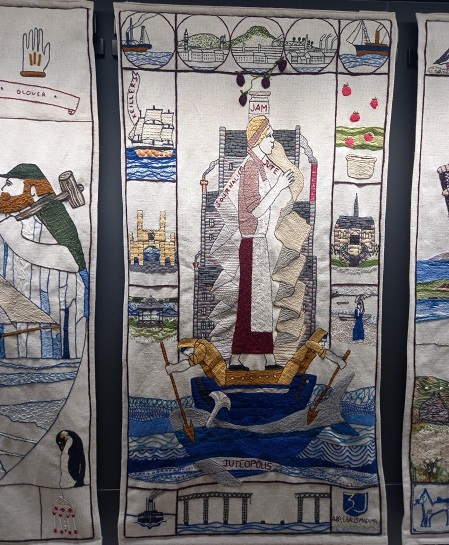
I have friends from Yorkshire who have lived near Dundee for many years, and on my second visit to them this summer I took the chance to see some more of the things that they had been telling me about. Dundee was famous for three Js, Jam, Journalism and Jute, and on my last visit we went to Arbroath and saw the many strawberry greenhouses there, that go to make the famous jams. This time it was the turn of the jute production.
The Verdant Works is a fascinating museum, in the heart of the city, it is housed in an old jute factory. The name suggests greenery, somewhere lush and beautiful, and this is anything but. A beautifully restored building, but you can only imagine how dirty and dusty it was when production was at its peak.
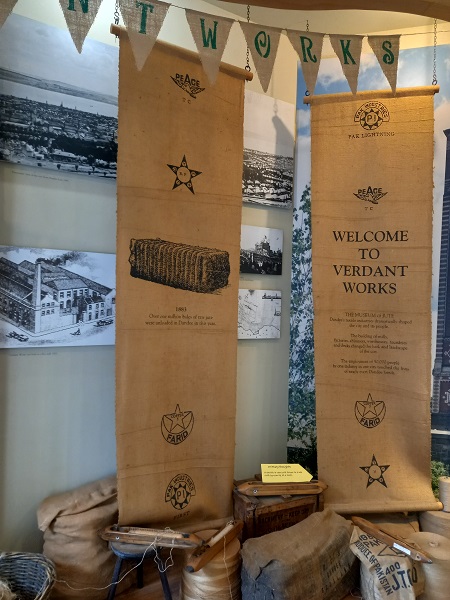
What I love about textile heritage, is that it permeates every aspect of our lives. You’ve probably never thought about jute, but it was once one of the most important materials for making the bags that transported everything. At its height in the late 1800s the industry employed 50,000 people, and brought many migrant workers to live in the city.
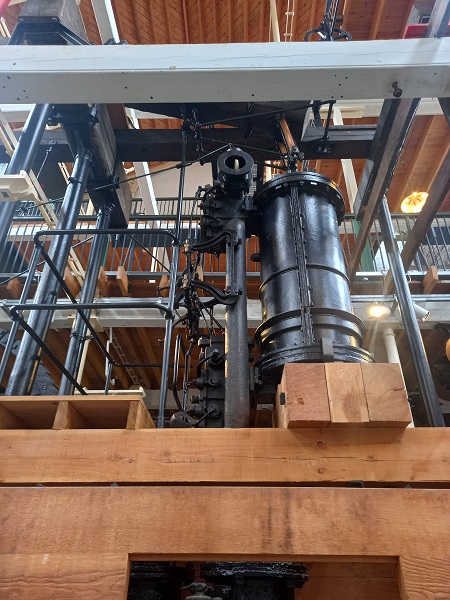
What was particularly interesting about the museum was the focus on the engineering. A lot of the displays are video based, so I don’t have much in the way of photos, but it was fascinating seeing all of the stages of jute production, and thinking about the many engineers that were needed to build and maintain these machines. The main hall is given over to reproductions of some of the earliest engines that helped shape the Industrial Revolution.
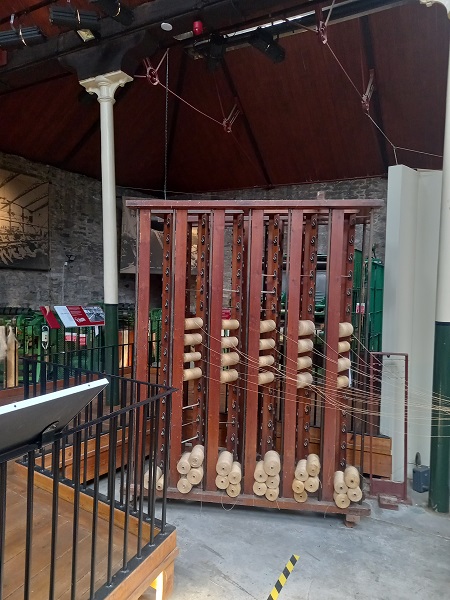
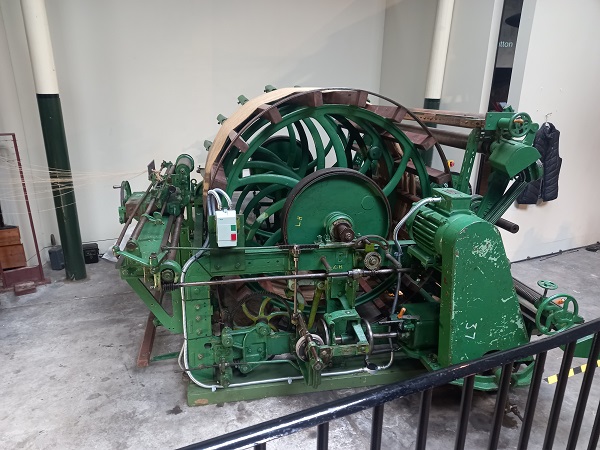
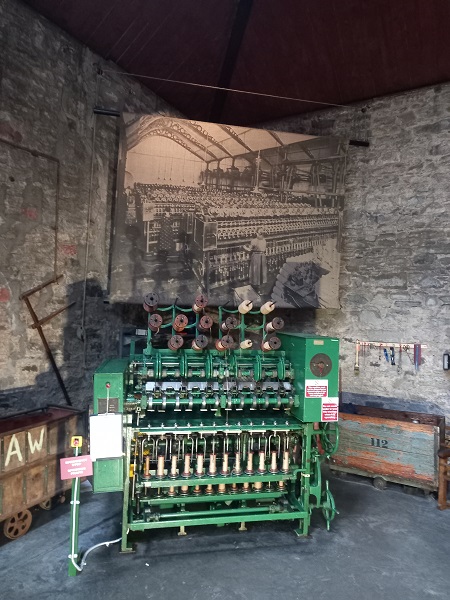
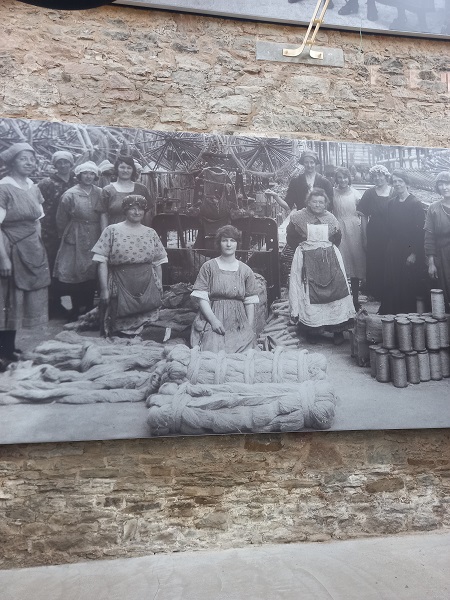
As with most industrialised textile production, it was a female dominated workforce in terms of the labour handling the many bobbins and weaving machines needed to produce the jute, and male dominated for the engineering and foremen. This led to Dundee having a reputation for being led by strong women, with lots of links to early equality campaigns.
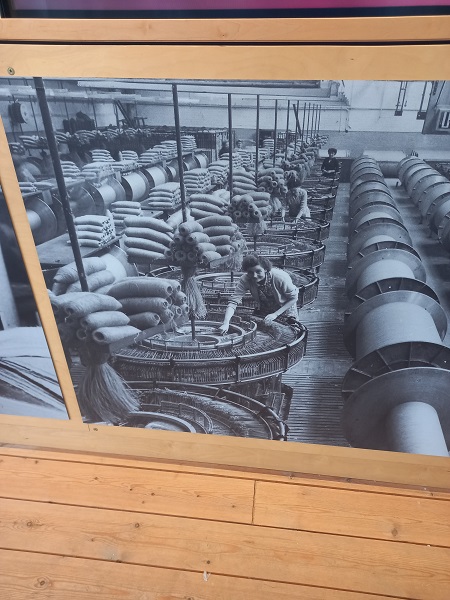
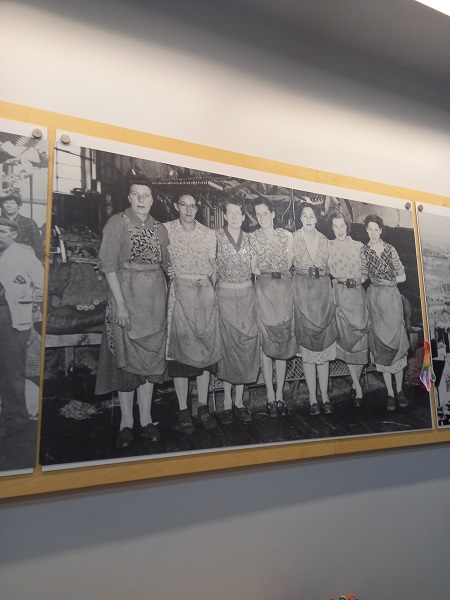
I loved the many pictures of the women who worked there, in their jute aprons and flowered overalls. Just sobering to think about the very hard lives that they had, a world away from the women embroidering the gorgeous needlepoint cushions at Fyvie Castle!
There were also links with the Empire, as the jute was imported from India, and you may remember this beautiful panel from The Great Tapestry celebrating those links as well. A really fascinating museum for anyone interested in social history, and I would really recommend a visit.
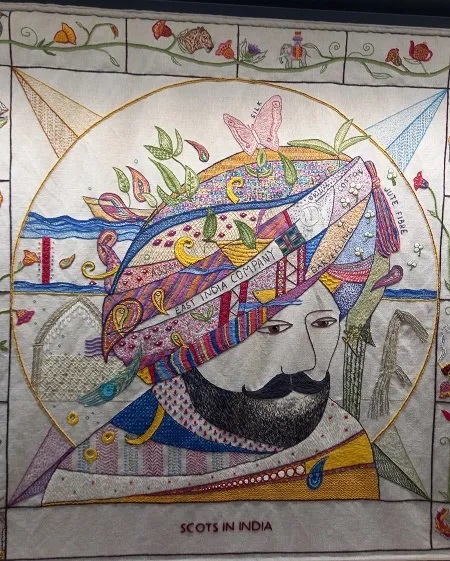
While looking for background information for this post I came across another tapestry, this time just concentrating on the history of Dundee, the exhibition was at the V and A in the city, and has sadly finished, however there is another fantastic representation of the industry in stitches here.
Being the first post of 2026, and having missed my blogaversary in December, and my all important 1,000 post celebration as well, I thought I would end with a little reflection on Stitches of Time. This is post number 1,024, over the last just over 18 years. My 1,000 post was actually one about travels in Spain, published in Feb 2025. The very first post, as I think I have mentioned before, was about Christmas ornaments, published in Dec 2007.
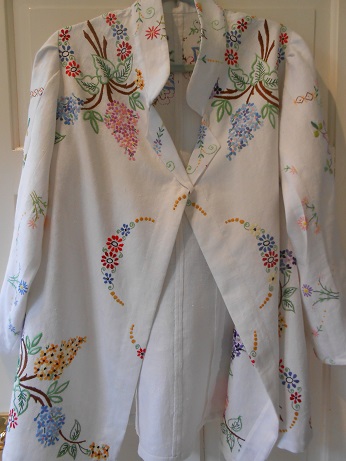
My most viewed post every month is usually the one about my tablecloth jacket, which is lovely as it is one of my all time favourite makes, and has been worn so many times.
It is difficult to gives stats for how many people have visited my blog since it started, as there was a change in the way the figures were collected in 2021, but since then I have had 89,100 visitors, which is absolutely amazing! My top three countries that visitors come from are the USA, UK and Australia, but I actually have had visitors in that time from 165 countries, which is incredible :-0
So a huge thank you to all of you for your visits, likes, comments, and general appreciation of my sharing my life and loves. Hope that you have a very good 2026 and that you and your loved ones are safe, well and happy.
Until next time, thanks for visiting, each and every one of you lovely people!
 Stitches of Time
The engineering of the textile related industries is always so fascinating, isn’t it!
Yes, I am especially fascinated by weaving as I’ve never really done that, especially the jacquard looms.