
Welcome to my first post from Turkiye! I actually left England last week for my first visit to this beautiful country. I scheduled my last post for a couple of days ago, as I wasn’t certain how much I would be able to post from here. Thankfully I have excellent wifi so all is good.
I have wanted to visit for so many years, especially after watching Chris and Marianne from Tread the Globe, who were here far longer than they intended after Covid found them stuck in a car park in Istanbul for 93 days. They later spent a year touring here, and gave me so many ideas for places that I wanted to see.
I had a really hard time deciding where to come to, there are so many beautiful places, and it is such a big country. Thankfully there looks to be no sign of them joining the EU just yet, so I am allowed to come here for my winter exiles on and off for the next few years I hope. Therefore I decided to just pick one location for this year, and to explore it thoroughly.

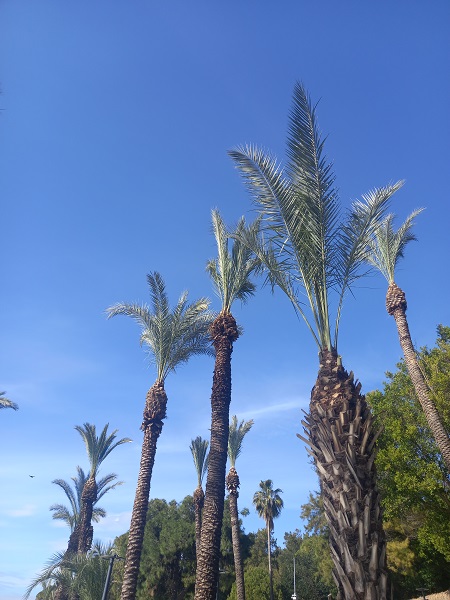
I chose to come to Antalya for various practical reasons, such as easy flights from Manchester, but also because of what I had seen of its location. It is such an amazing place, and I can’t stop taking pictures of the mountains that surround the city. It is located on the south coast, and so is on the Mediterranean Sea. Just look at all these gorgeous blues, and the snow capped mountains.

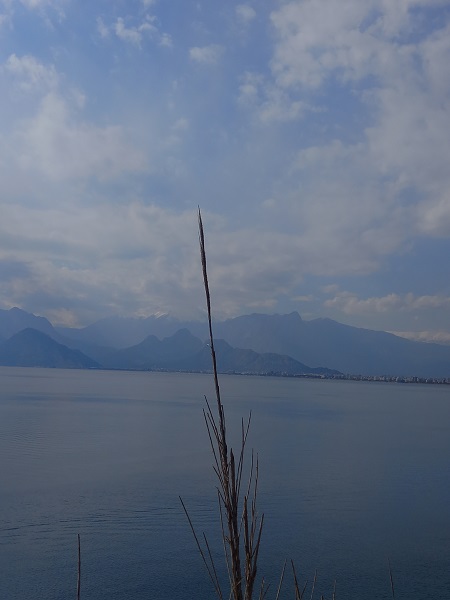
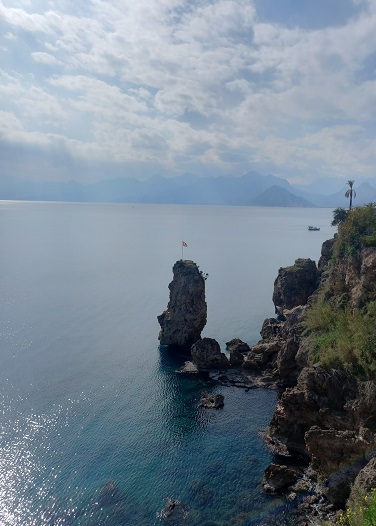

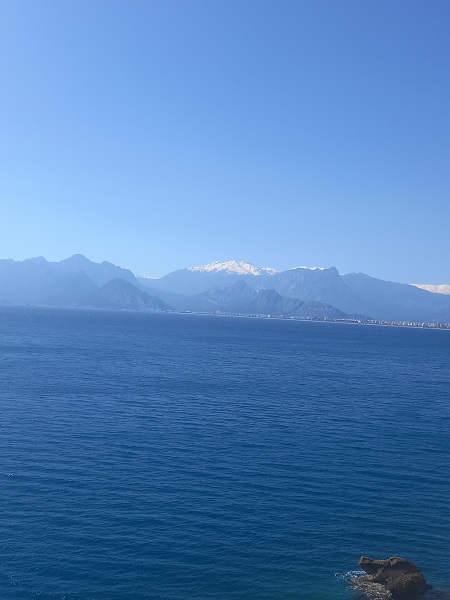

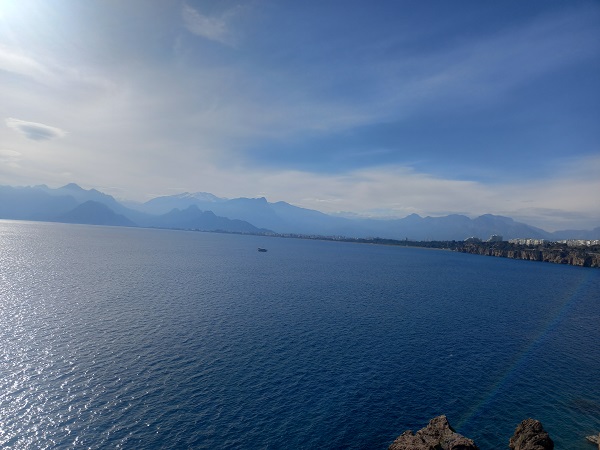
Much of the city is perched on rocky cliffs, so there are only a few beaches, especially the side that I am on. There are lots of little steps down the cliff, and platform bathing areas that I’m sure must be amazing in the summer, the sea is so clear and a wonderful turquoise.
All along the coastline are parks with lots of picnic areas, and nearer the city, restaurants and bars, as well as lots of viewpoints for the mountains. Up until yesterday the weather has been excellent, so I spent most of the first few days just walking along the coast. I have started to explore some of the old town and some museums, which I will post about next time.



I am staying in a really nice hotel, still very much within budget, but very modern and sophisticated compared to some of the accommodation I stayed in last year. I really loved the riads in Morocco, but this is very gorgeous.
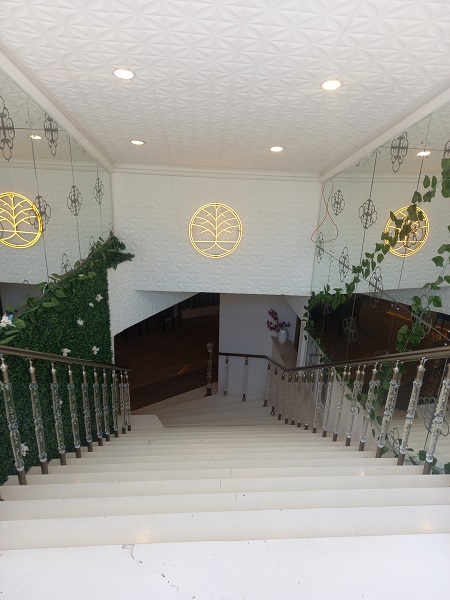

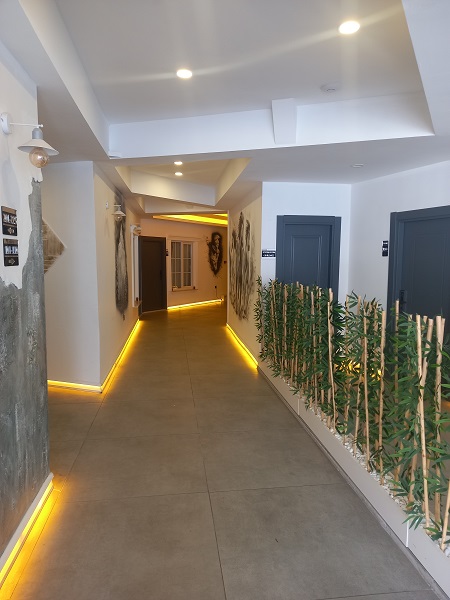


It is called Mi Hotel Boutique, and is about 20 minutes walk from the centre of the old town, right next to the coast, and in an area well supplied with supermarkets etc. Since I am here for three weeks I choose somewhere with a kettle and fridge, and a little bit of ‘office space’, as I am doing lots of writing while I’m here.
It is also a great location to see the sunset over the mountains.

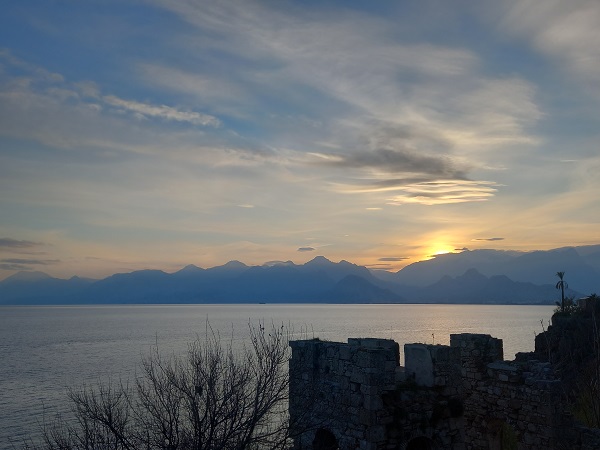
The old town here is beautifully restored, but apart from a few buildings, most of Antalaya is very modern, with low rise apartment blocks.
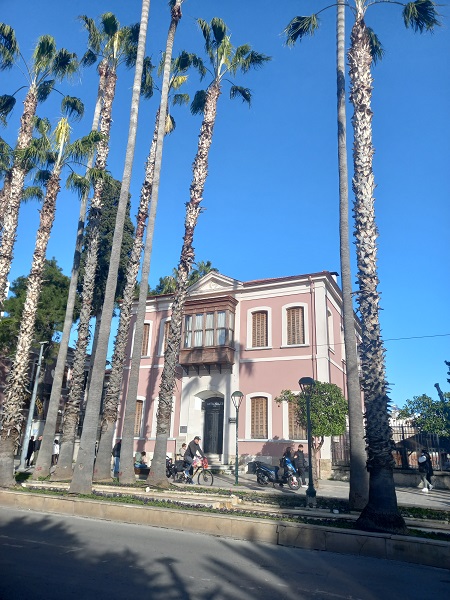

I did wonder why there was nothing much from earlier in the 20th century and after a bit of research found that it is because the city grew from 27,000 people before WW2, to 2 and a half million now, so quickly that it created a housing crisis. Many of these people were migrants, coming here due to the effects of war, and there were at one time lots of shanty towns. These were then replaced by the current housing from the 1970s. As you probably know I find architectural history really interesting, and this explains why everything is so modern here.
Turkish is not really a language that I had looked at before. It is a very interesting situation to be somewhere trying to learn a language that is very unrelated to anything you’ve learnt before. Spanish, French and English share so much in terms of word, and structure, but Turkish is all very new to me.
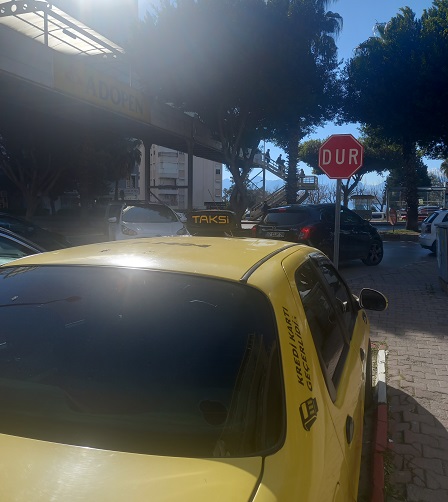
So far I’m not doing too badly, social signs help a lot as always. You can probably guess what this red road sign says just from its colour and position and lots of words are similar such as ‘taksi’.
Others take some more working out, which is where supermarket shopping comes in handy. It took me a while to work out ,’tea’, after I realised that the ‘c’ is pronounced as ,’ch’, making the word çay sound as ,’chai’, which is very familiar to me from my favourite chai latte drinks. It’s clearly very popular from the size of these bags in the supermarket.

It also helps that restaurants here have lots of pictures of food, so I have learnt ,’peynir’, and ,’tavuk’, which is cheese and chicken, quite easily. I have already had one of the delicious pide, a form of Turkish pizza, with those ingredients.

I was also wondering about why Turkish isn’t written in a different script, but uses the Latin script that most other European languages use. It turns out that this is the result of a deliberate government policy from 1928. This was to modernise the language from the previous Ottoman, which used a combination of Arabic, Turkish and Persian words, and whose alphabet did not reflect some of the sounds needed. Modern Turkish has 29 letters, 8 vowels and 21 consonants. Some of these letters have been modified to better enable the sounds of Turkish to be represented, such as Ç, Ş, Ğ, I, İ, Ö, Ü. This means you have some letters with and without modifications, so you have to look carefully at which form is being used.

This modernisation took place swiftly, and the new language and script replaced the old. It must have been a major undertaking, it brings to mind decimalisation in the UK in 1971, which I still remember clearly as a 9 year old. This article, by a Turkish/British journalist, reflecting on the impact of the language change for scholars of pre 1928 texts, is really interesting and really makes you think about the links between language and culture.
And yes, as Antalya is a major tourist resort, a lot of people speak English, but half the fun of travelling for me is trying to explain what I want in the language of the country, and everyone I’ve met has been really kind while I mangle their language! I have learnt the words for various lovely flavours of ice cream as well. This is ,’nar’, or pomegranate and it was delicious.
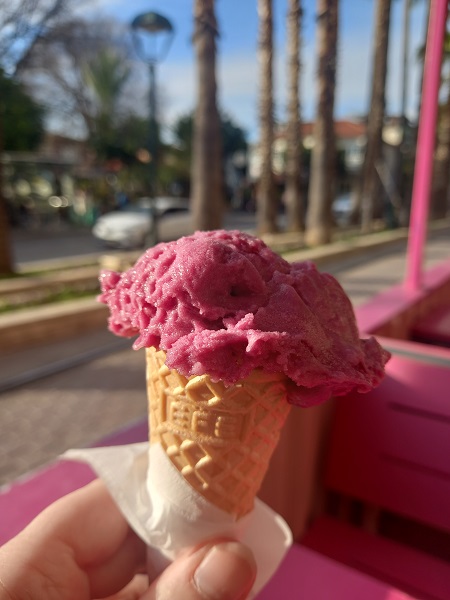
I have also been getting to grips with a new currency and exchange rate. Having all the lira makes you feel very rich, that ice cream cost 30 lira, which is about 66p, and the notes are very beautifully designed. I have not come across any other coins than the 1 lira, worth about 2p. Thankfully I have a conversion app on my phone which saves me having to do complex maths in the supermarket.
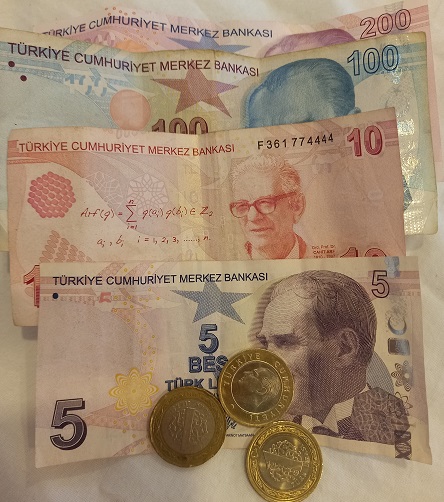
When I was visiting Nepal, many years ago with the Scout project, the currency all contained pictures of different animals, so we would work out the costs of our food by saying things like, ‘three elephants and a tiger’, which helped us remember the denominations.
I have been having a quiet couple of days, as it has been a bit wet, which has allowed me lots of time to write up the research I did for the novel, in Alnwick, and at Chatsworth. Tomorrow will be dry and sunny again, so I will continue exploring the old town, and the coast. I have been saving lots of lovely door photos for you, and there are also some beautiful textiles coming up!
Until then, have fun, take care, stay safe and thanks for visiting.
 Stitches of Time
People really are remarkably kind when you mangle their language, aren’t they!