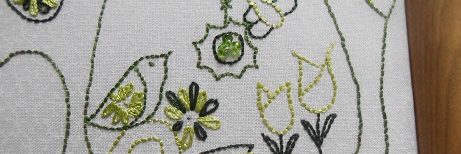
The textile treasure that was my last trip out in Scotland was The Great Tapestry of Scotland, now sited in Galashiels, about an hour away from my Dunbar campsite, a beautiful drive through pine forests and small towns. I hadn’t actually heard of the tapestry before, although it was completed in 2013, but found it by accident while looking for something else on Google Maps. Much of my planning is like that, either I just explore an area to visit on Google maps and pin things in advance, or I am inspired by other’s posts on Instagram.
Although the tapestry was completed in 2013, it went on tour, and so was not in its present location, in a purpose built exhibition centre, until 2021. It is also not a tapestry, but in the great tradition of other tapestries, such as the famous Bayeux one, it is referred to as a tapestry, rather than a crewel work embroidery. I like to think that is has all the elements of a tapestry, as it is a textile based weaving in of Scotland’s history, told over 160 stitched panels, all created by over 1,000 volunteer stitchers, whose names are recorded at the entrance to the exhibition.

As I was going through the very many photos I took, trying to edit them down for this post, and trying to think of what title I would give it, the words, ‘skill and scale’, came into my mind. The sheer scale of this community stitching project is immense, as those 1,000 stitchers came from all across Scotland, some working in groups, and some alone. Therefore there was a huge logistical task in sending out all the materials for each panel, and in passing the work between stitchers.
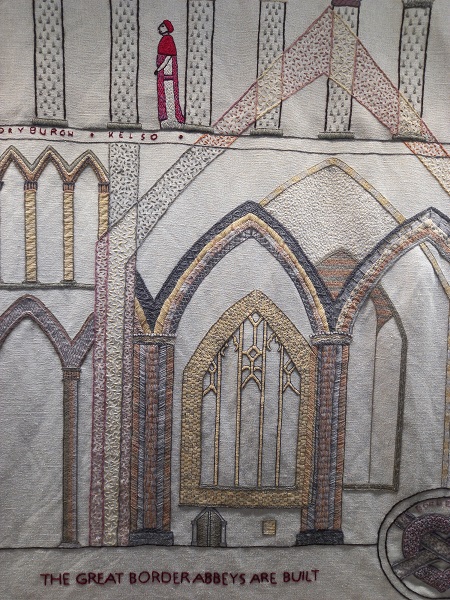
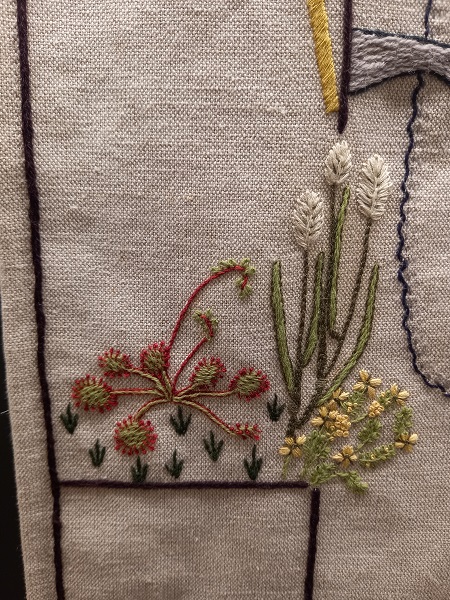
Not all of the stitchers were experienced, so many had to learn new skills. Some were very used to other methods of working, such as cross stitch, or silk embroidery, but not to crewel work, done in wool on linen. Although the stitchers were given panels that already had the outline drawings, done by community artist Andrew Crummy, they had to decide how to fill in the blanks and interpret flowers, natural landscapes, fish, horse armour and stone work, as well as a wide variety of textiles.


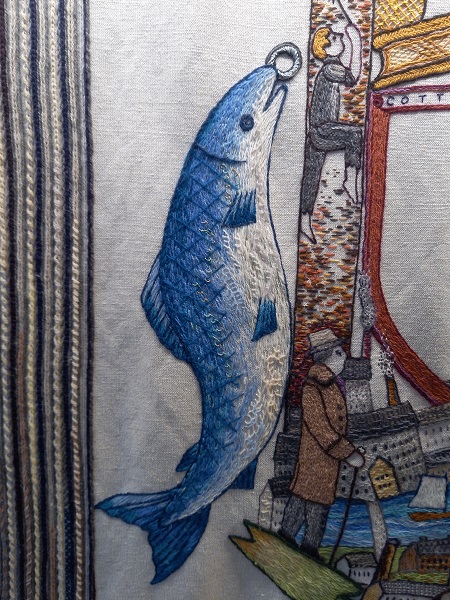
I love this stitched fish, such amazing detail and colour.
I also got to see my only red squirrels in all seven weeks in Scotland! Despite my best efforts, and many visits to pine forests, they kept eluding me.


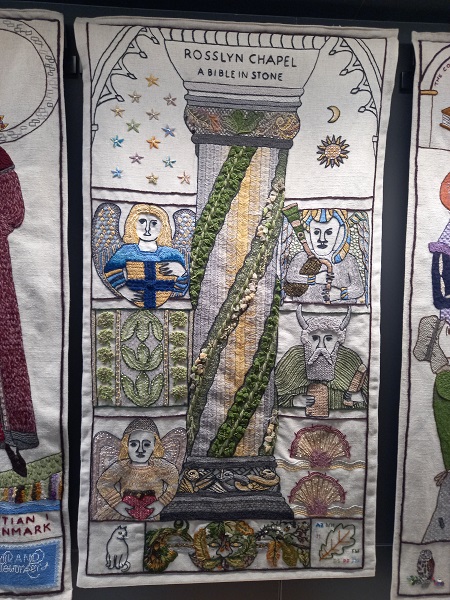
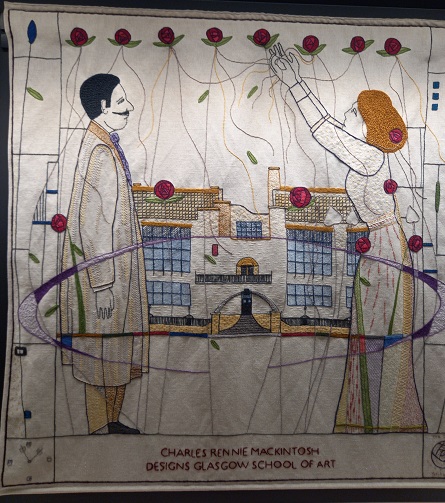
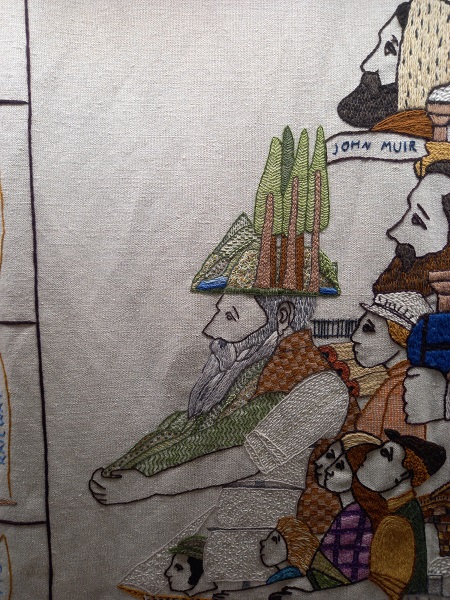
I have selected a few panels to share with you, there are so many I just didn’t have space to include, and also I would strongly encourage you to go and see it for yourself, it is amazing. It was lovely for me to see things represented that I already knew about, places that I had visited, such as Rennie Mackintosh’s design work, and John Muir.
I was also amused to see a panel representing the start of the Ordnance Survey mapping, which was inspired by the army’s need to find the fleeing Scots after the Jacobite Rebellion. Some years ago I read, and thoroughly enjoyed, (much to my children’s bewilderment), the story of how the Ordnance Survey map was created, written by Rachel Hewitt.

There was of course a panel on Mary, Queen of Scots, my ever present muse. What I particularly loved about her panel was that she is portrayed with her stitching, and in the borders are many of the pieces she stitched while with Bess of Hardwick.
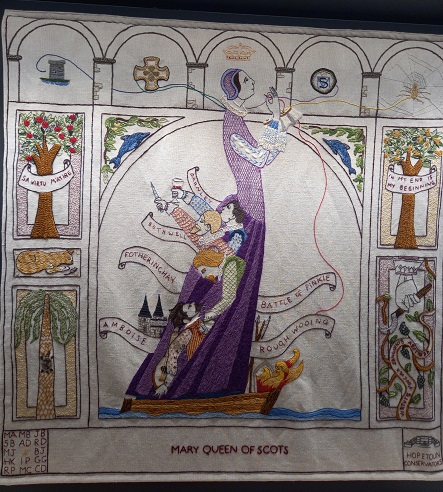
Some of these are said to have hidden meanings, such as the cat and mouse picture, which is said to portray Elizabeth 1st as a ginger cat, toying with poor Mary mouse while she decides what her fate will be.


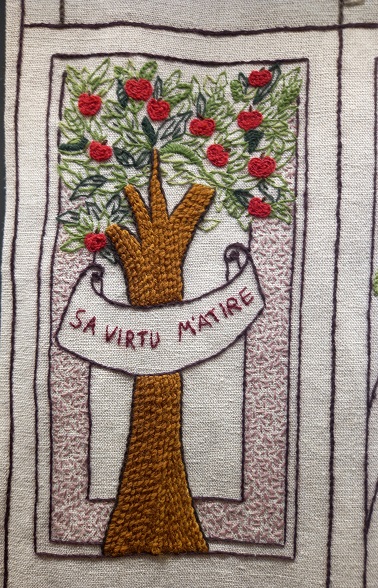

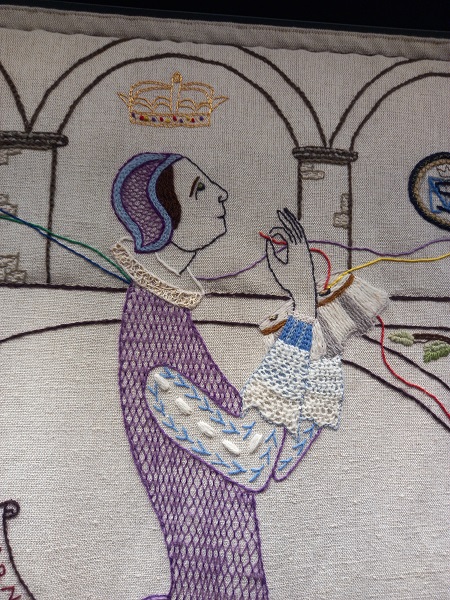
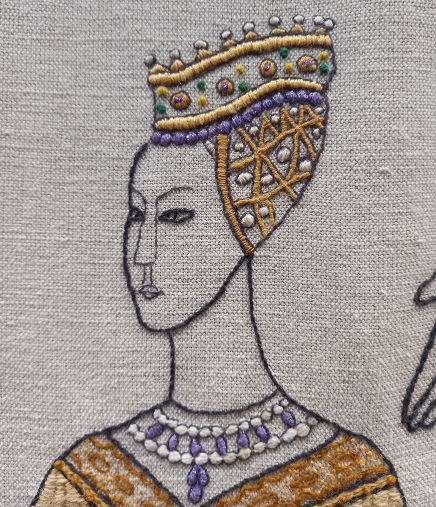
There were also representations of other royalty, and I loved the skills of the stitchers at representing them and their clothes with such detail.



There were also some beautiful panels on natural history, and early archaeological finds.


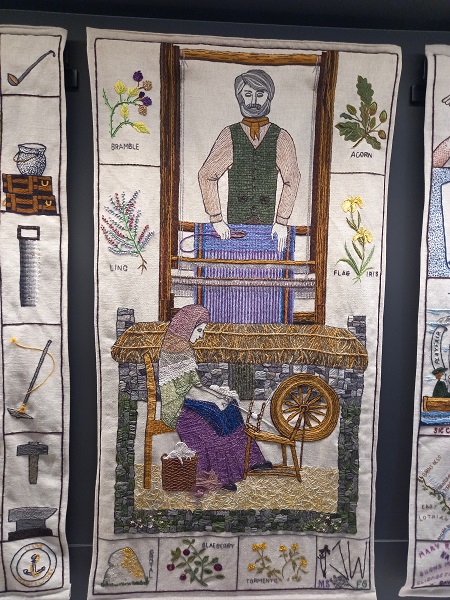
My favourite panels were the ones representing Scotland’s textile heritage, a dazzling array of different embroidery techniques used to portray the weaving, knitting, production of Paisley shawls, and Fair Isle jumpers. The skills of the stitchers in these panels are astounding.


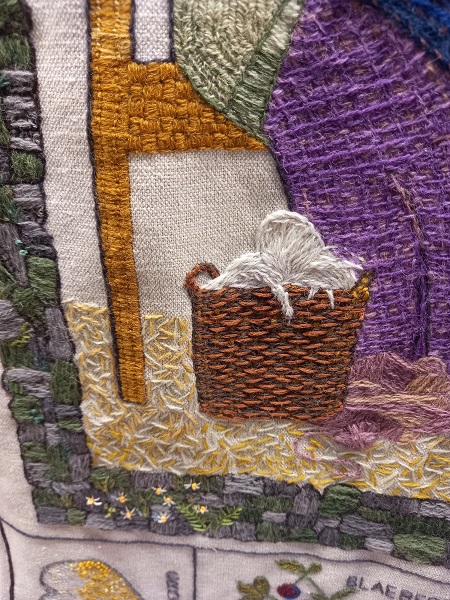


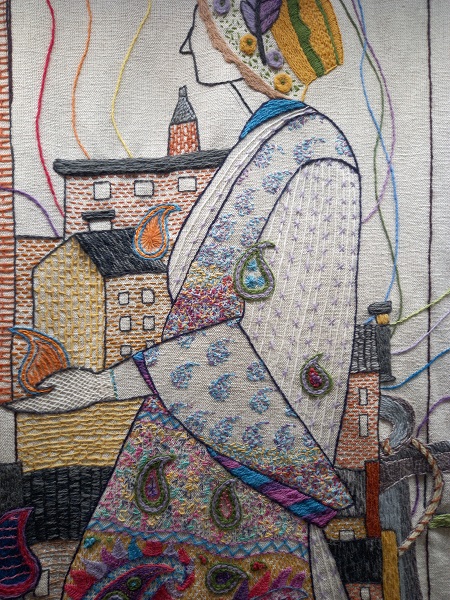
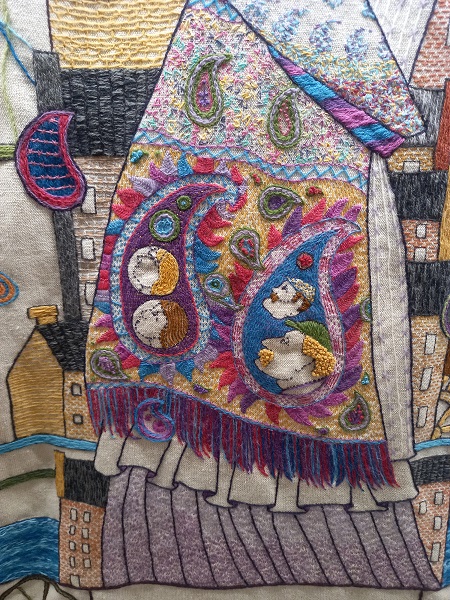


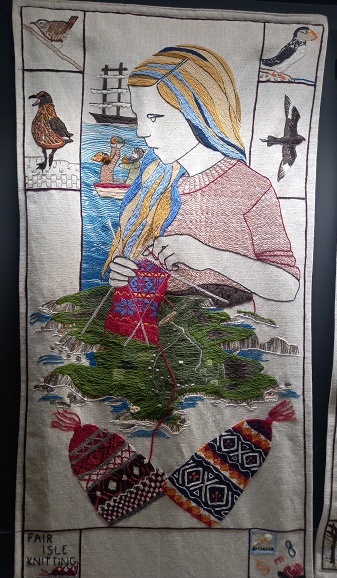


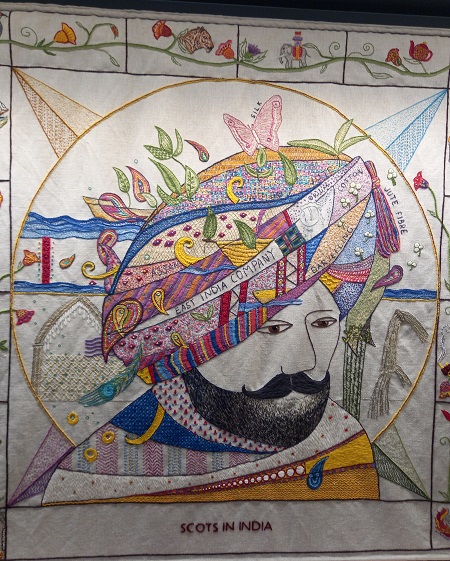
I also loved the different design elements, in representing complex themes, such as Scotland’s involvement in India. This panel is such a beautiful piece of art.

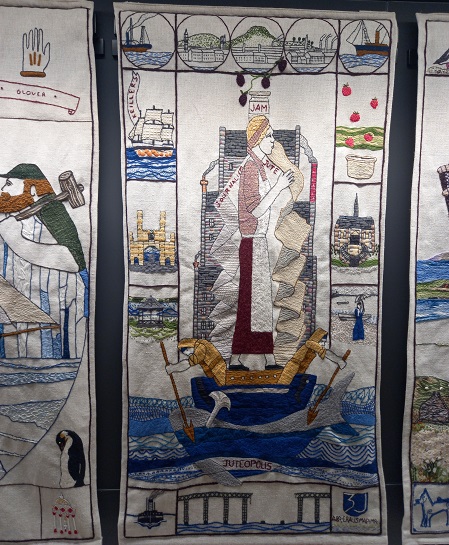
I had visited my friends who moved to near Dundee earlier in the trip, and they told me all about the 3 Js that Dundee is famous for, journalism, jute and jam.
I haven’t done any embroidery for a long time, but this exhibition has definitely inspired me. I bought the book about the making of the panels as well, and loved reading about all the people involved. It just spoke so much to me, and it is brilliant knowing that their names are recorded. Thank you to all involved, it is an amazing piece of textile art.

By coincidence I have just finished reading a book that I have had on my shelf for a long time, by an author who writes so wonderful about historic textiles. This is the fictionalised account of how one of my favourite actual tapestries, The Lady and The Unicorn series, was made, and is an excellent read if you like lots of detail about historical textiles, as you know I do. I have yet to visit the tapestries in real life, however the book brought back lots of memories of my visit to Abusson in France in May, a great centre of tapestry making, and an excellent museum.

Although there has been no embroidery done here, there has been a whole week of intensive work in the atelier, and I am pleased to report that six couture outfits have been made for Barbie. I have so enjoyed this, despite the odd complexity of working at that scale, and have definitely developed my skills this week.
I will post about them next, before I return to telling you about the English part of the summer travels and our recent trips. We have been very fortunate to avoid the worst of the storms and floods, but as you may know, there has been dreadful devastation and loss of life in Spain, so the local communities here have been trying to help out with donations.
I hope that you are all ok wherever you are, and enjoying life. I will be back as soon as possible, in between my hectic creating schedule 😉 Why does Christmas always seem to come a month too soon, even though I start stitching for it in January?
Have fun, take care, stay safe and thanks for visiting.
 Stitches of Time