Butterflies and bees

One of the stickers on Katy is a quote from one of my favourite poems, I have mentioned it before, but is has the lines, ‘ What is this life, if full of care, we have no time to stand and stare’. It comes from the poem, Leisure’, by a Welsh poet, William Henry Davies, and was published in 1922. A time when leisure was, as I mentioned in my last post, rare for many working people.

One of my greatest joys these days is being able to take time to really notice things, to stop and watch the butterflies and bees, to look closely at rocks on the beach, and just generally to be more aware and mindful about where I am, what I am feeling and seeing.

Much of this comes with having more time, but it is also about spending most of out outside. I have also had chance to read more widely, and some of those books recently have been about bees, or have included information about beekeeping.

Peter May’s, ‘Coffin Road’, set on Harris, and Sue Monk Kidd’s, ‘The Secret Life of Bees’, set in Southern USA, are both really interesting reads that I have picked up at charity shops, or the book exchanges on my campsites. I love getting books from these places, as it really broadens what I read, rather than the Kindle Unlimited suggestions. 

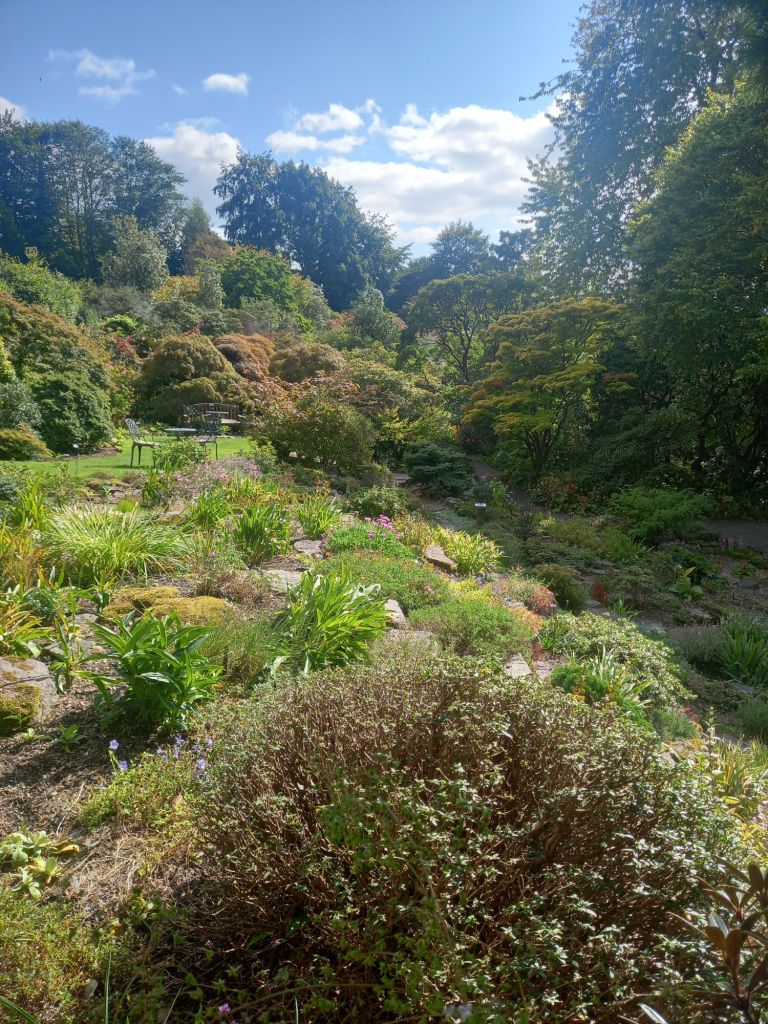
I have always known that there are many different bees  but a recent visit to Branklyn Gardens, a National Trust for Scotland property in Perth, meant I got to see some in action.
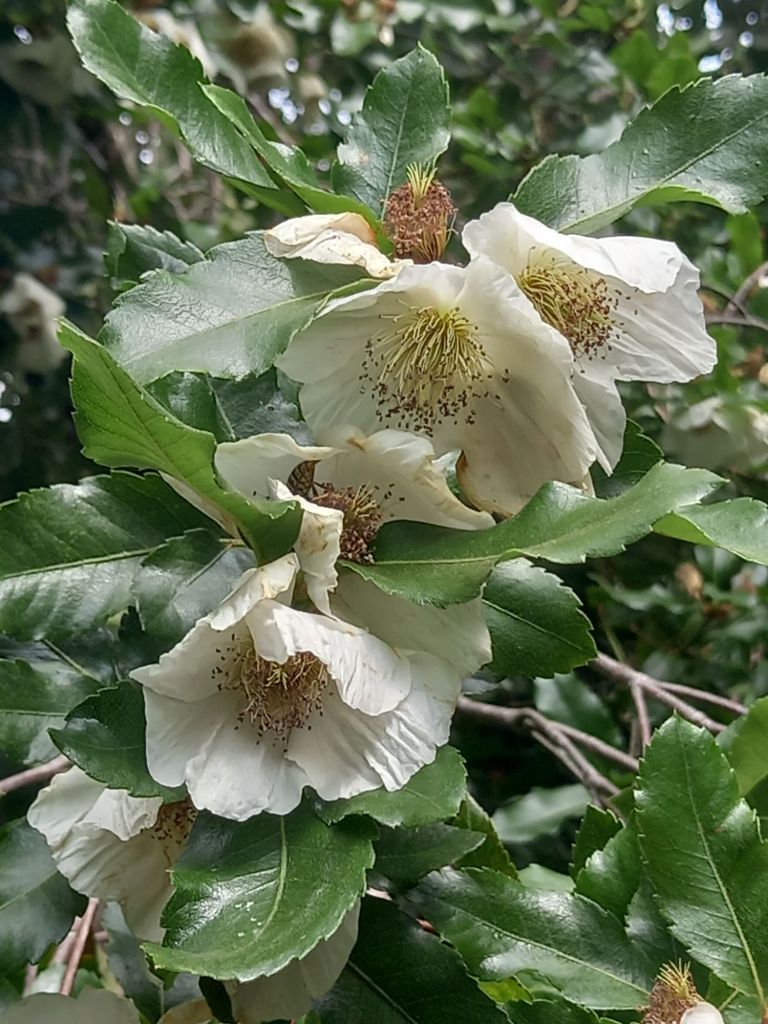
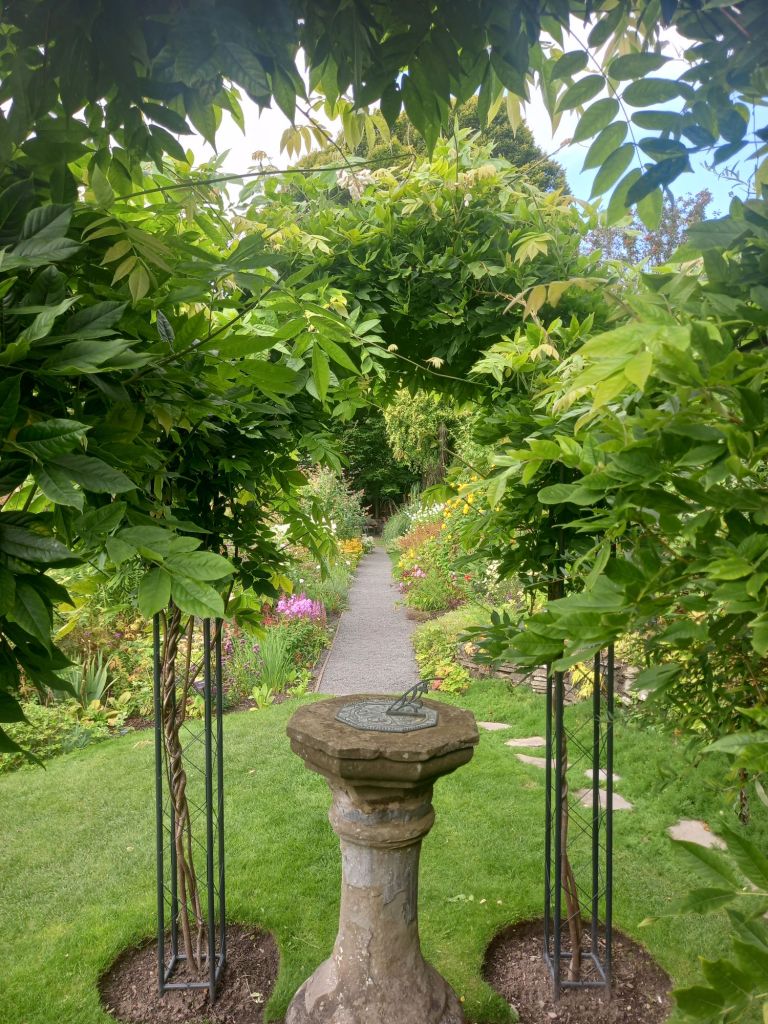
The gardens were looking amazing, it was a really hot day, so I had spent the morning just relaxing and reading at the campsite. I would love to revisit in spring, as they have an extensive collection of rhododendrons, one of my favourite plants.

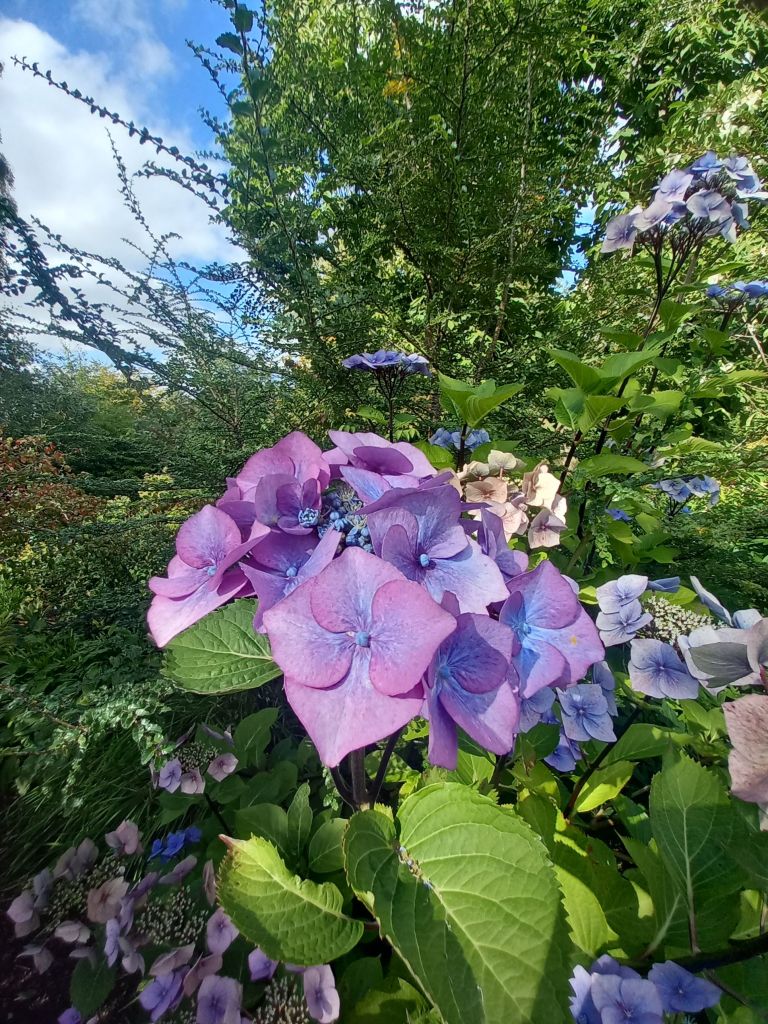
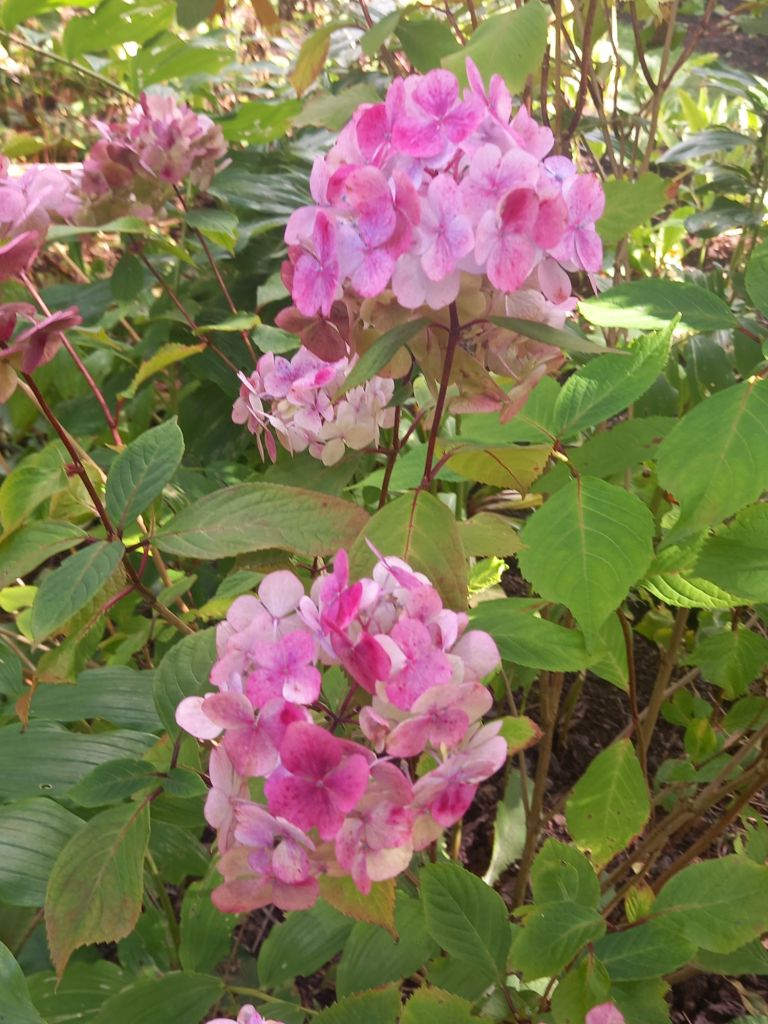
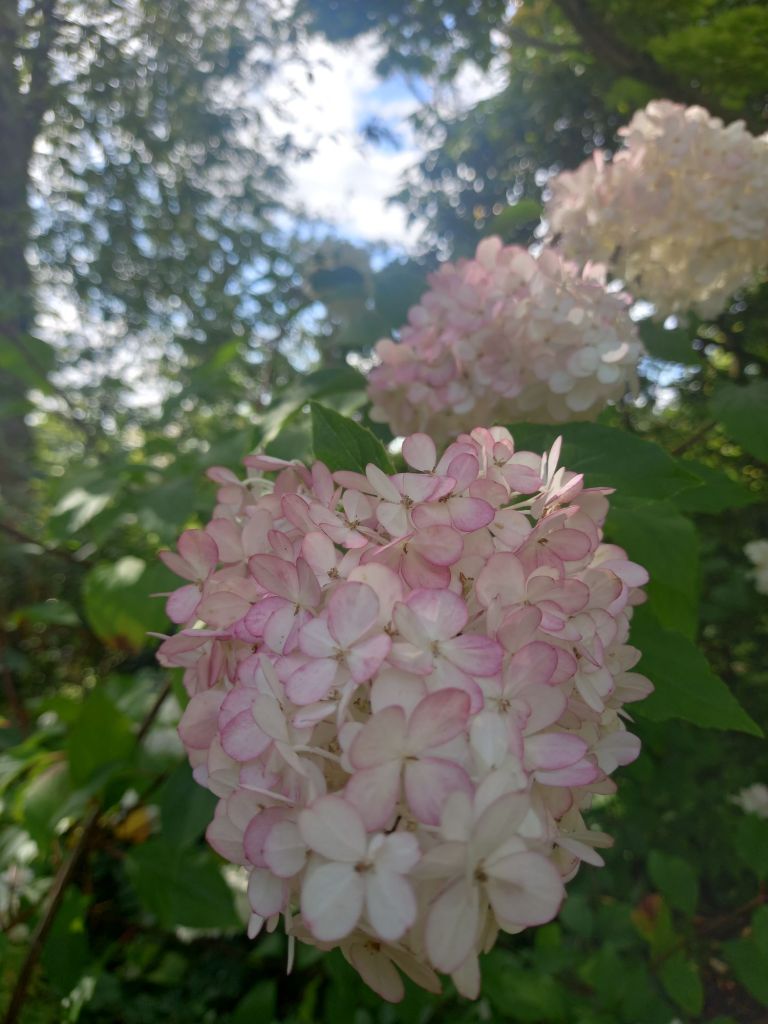
Another of my favourites are hydrangeas, I love the fact that often they look like butterflies landing on flowers, and there were so many different varieties here.
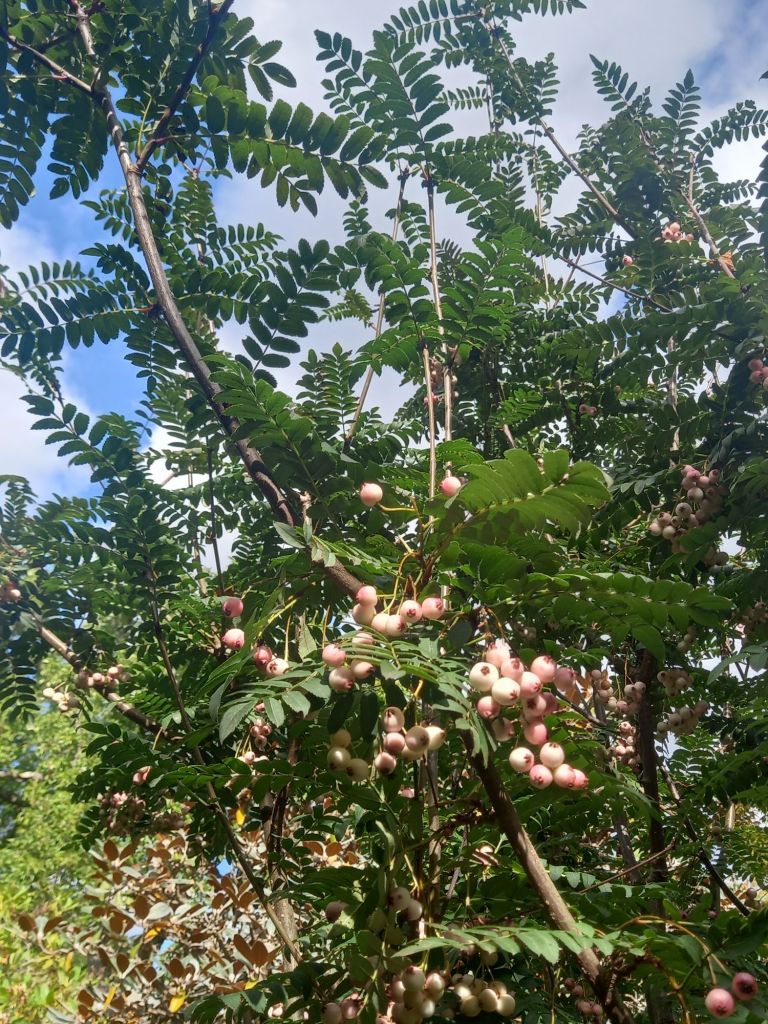
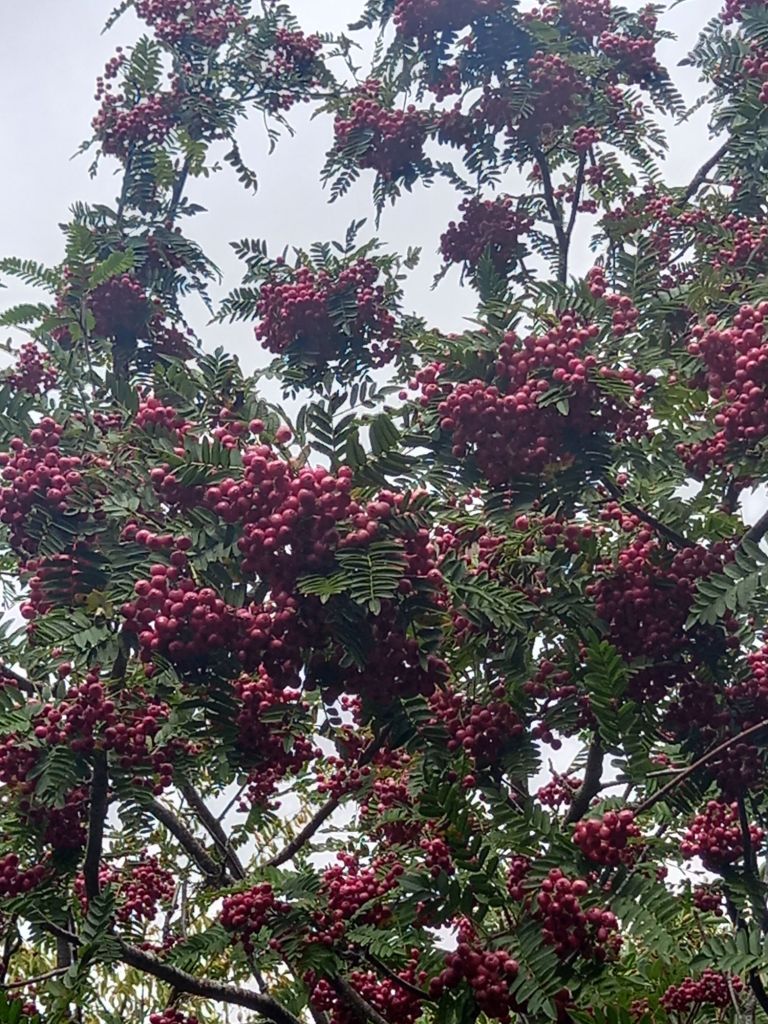
There were also some fabulous berries. I love autumn for all the variety of these you see.

I had a few nights at the Scone Caravan and Camping Club site, as a stopping point to southern Scotland, but also so that I could go and visit some old friends, who left Yorkshire 29 years ago, for just outside Dundee.

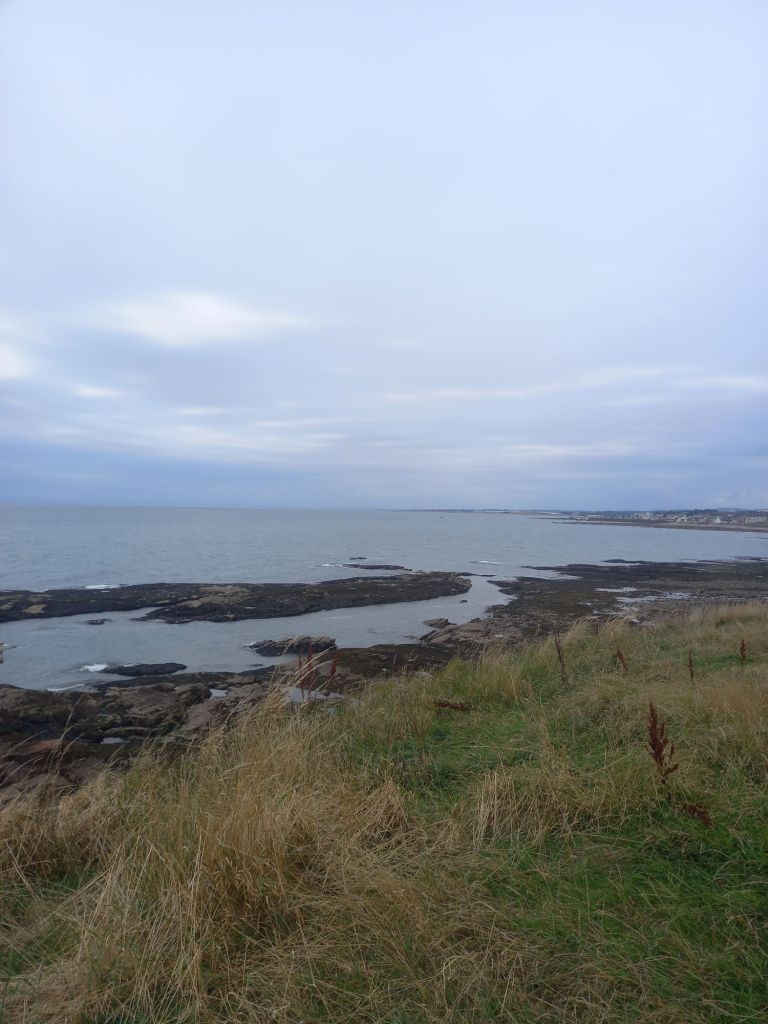
It was a lovely catch up, and we had a quick trip to Arbroath for a walk along the cliffs before I headed back to Scone and then further south to Falkirk. 

I specifically wanted to visit two locations in the city, both connected with canal history and had planned to do both in one day.

However the weather was appalling, the worst I have had, with really heavy rain, so much so that driving felt more like water skiing!

A quick change of plans led to two interesting historical locations, connected with Mary Queen of Scots, which I will share next time. As you may remember, my novel mentions some of the needlework she did with Bess of Hardwick, so it is always interesting finding out more about her story.

More on that, and Falkirk next time. As often the way here, all horrible weather had gone by the evening  leaving a beautiful sunset and blue sky next day.

Until then, have fun, take care, stay safe and thanks for visiting.

Time travelling with textiles

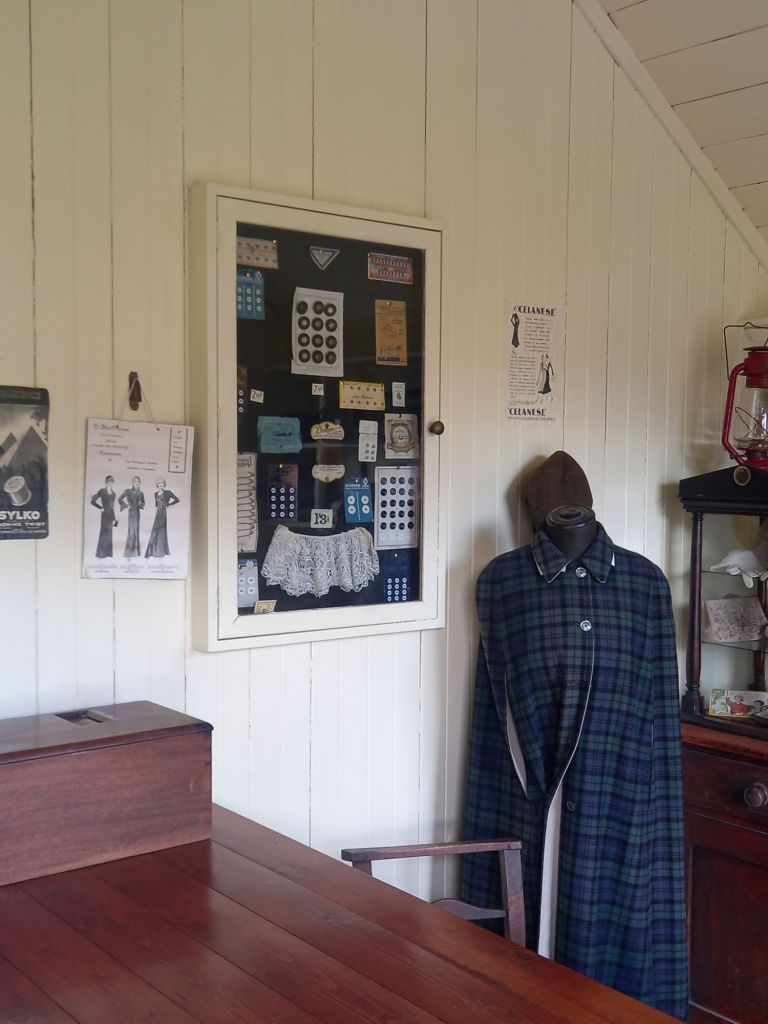
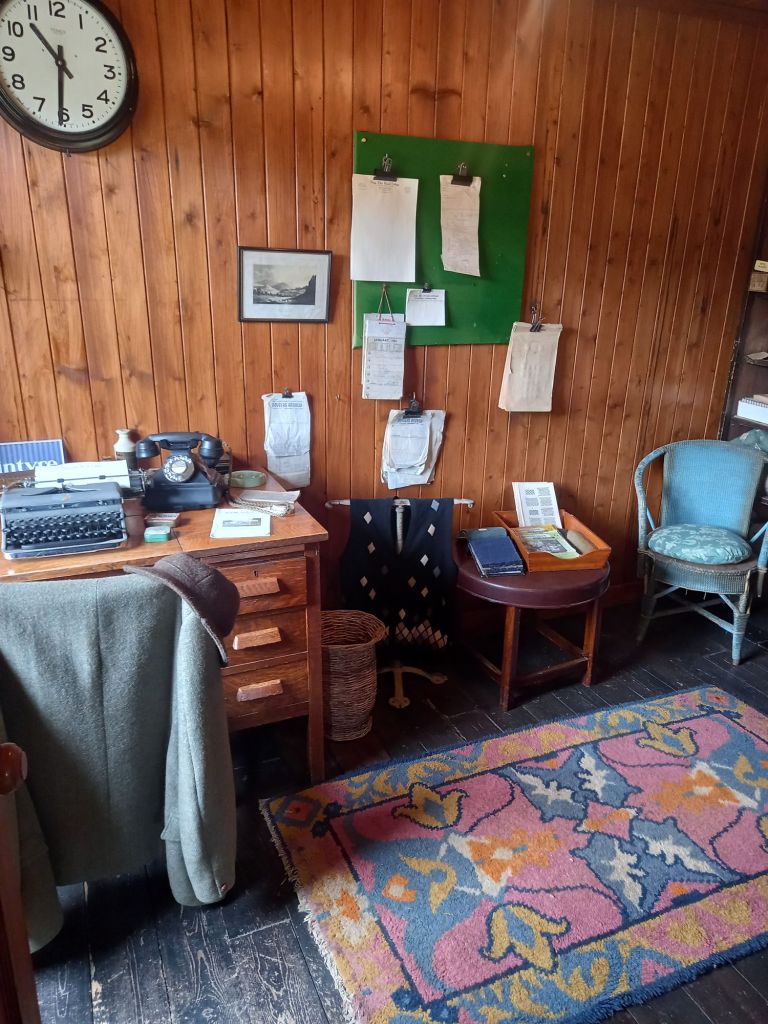
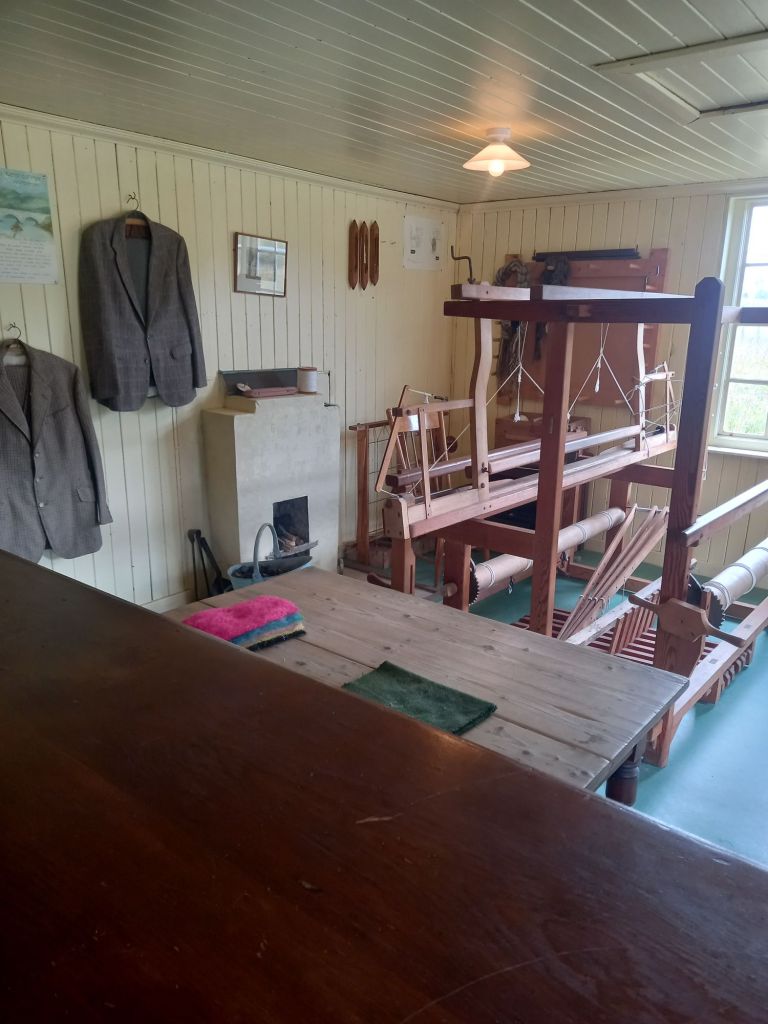
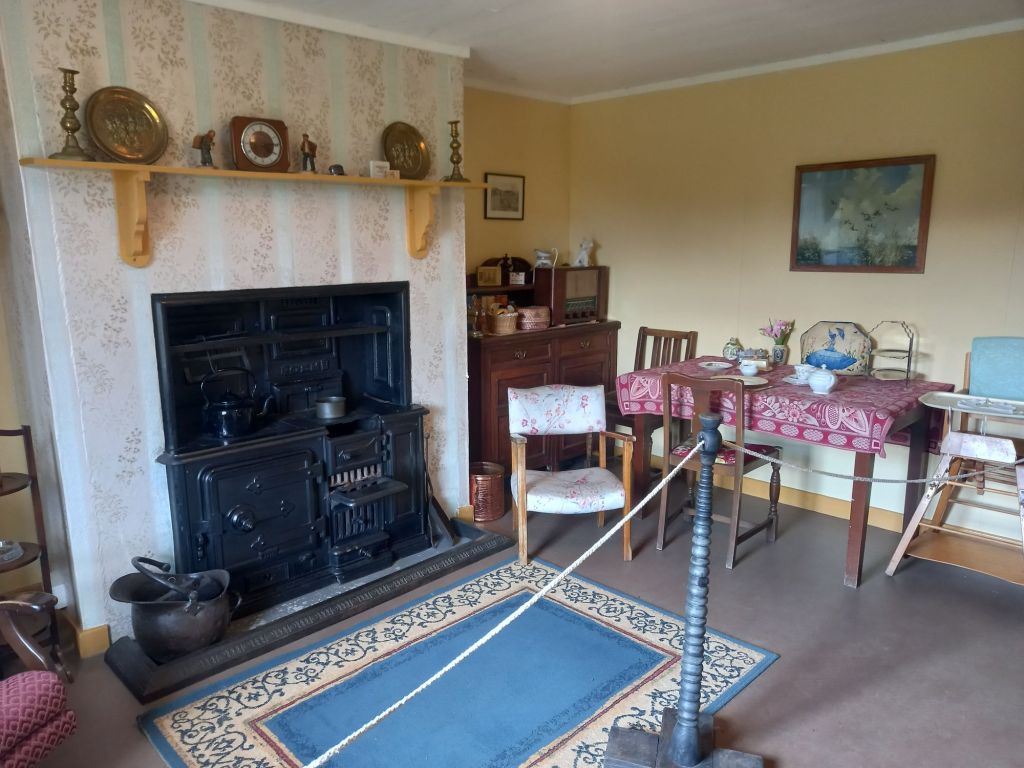
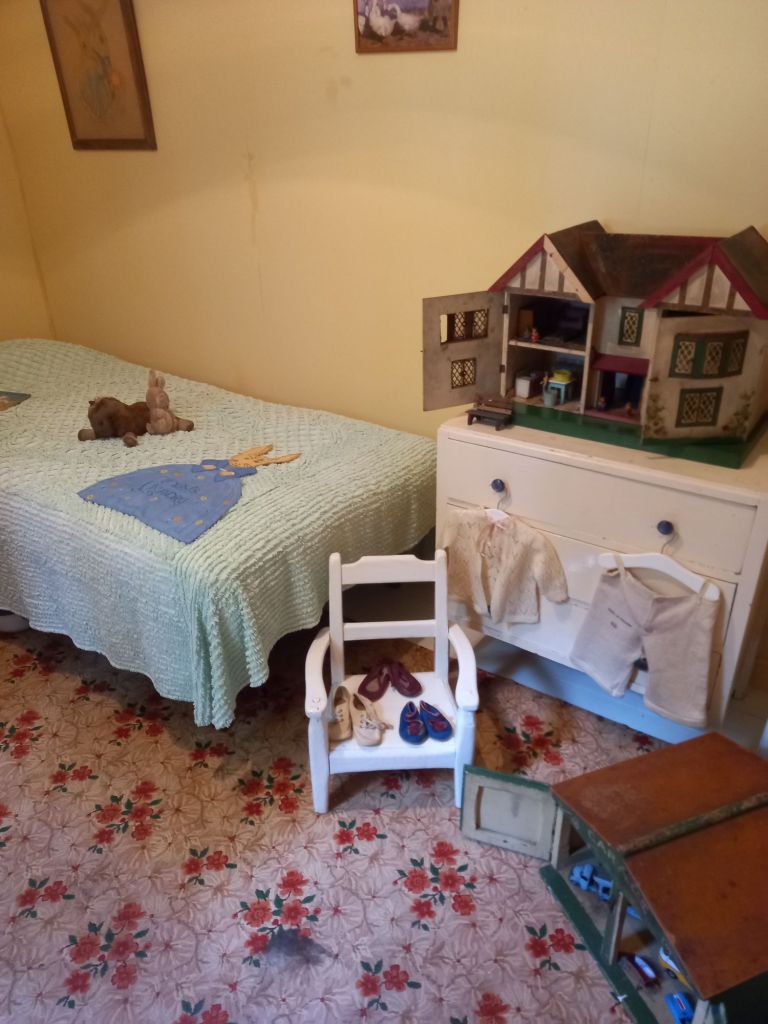
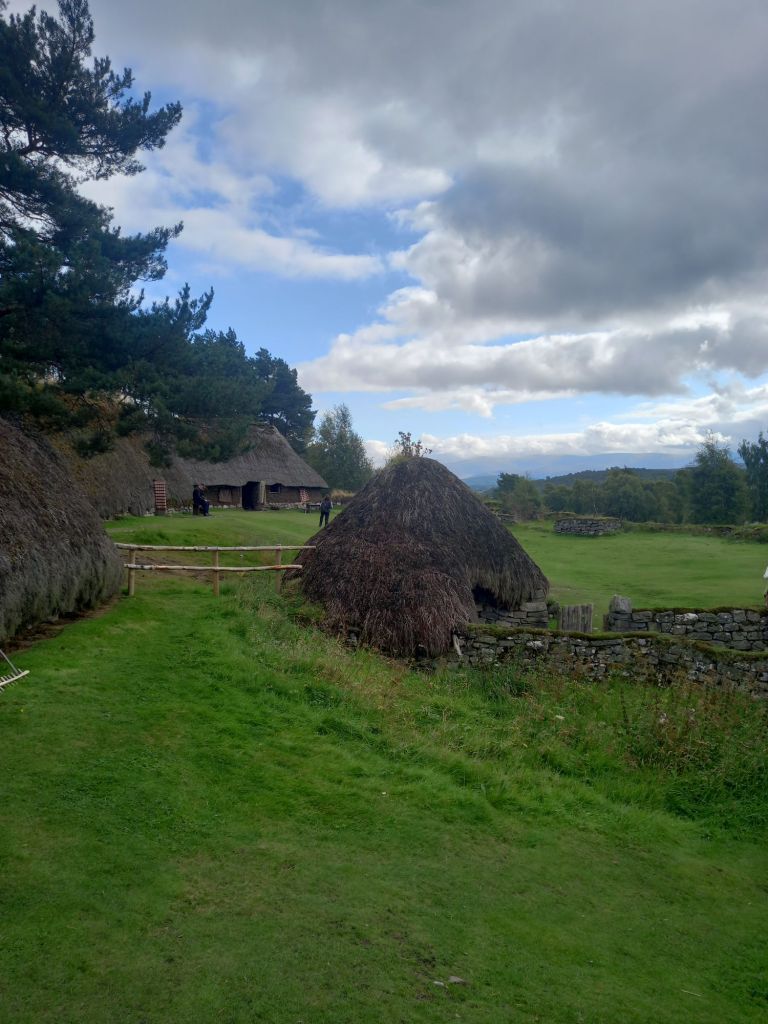
For me, one of the most exciting things about my recent visit to the Highland Life Folk Museum was the way that the textile heritage of the area was represented.

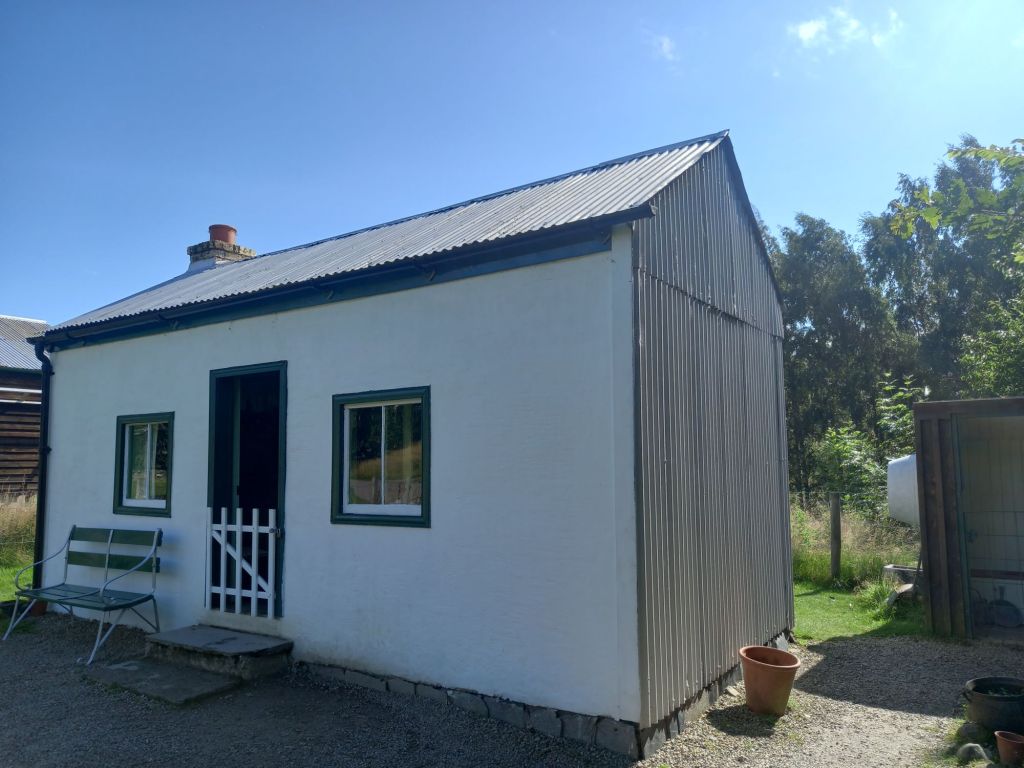
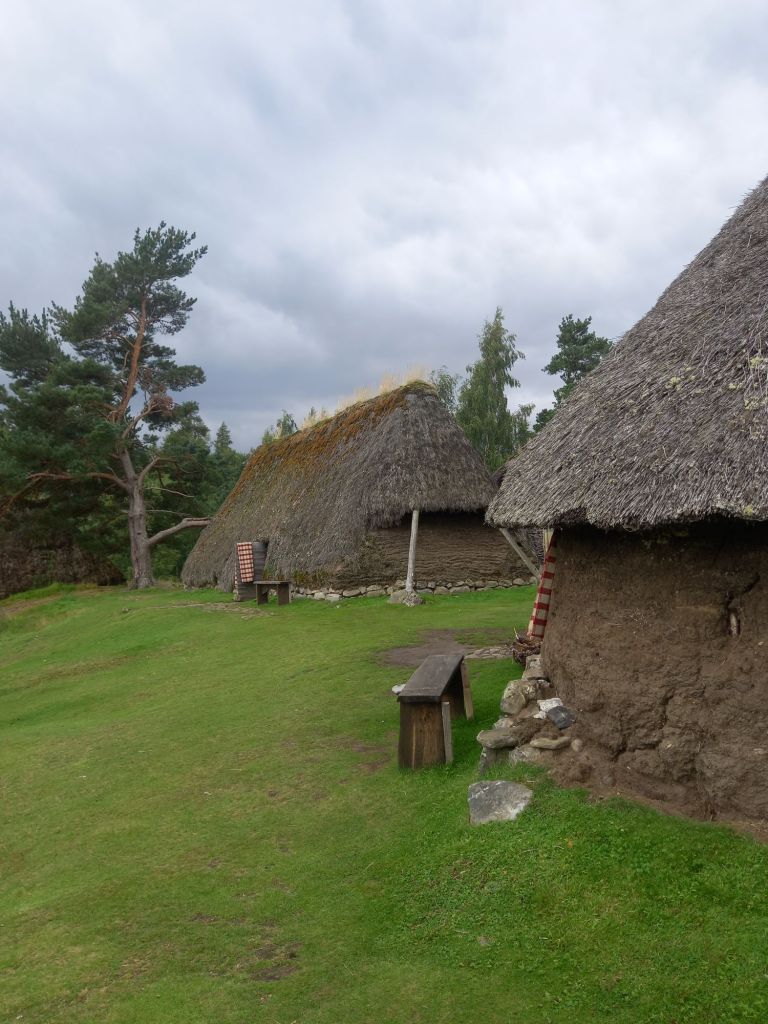
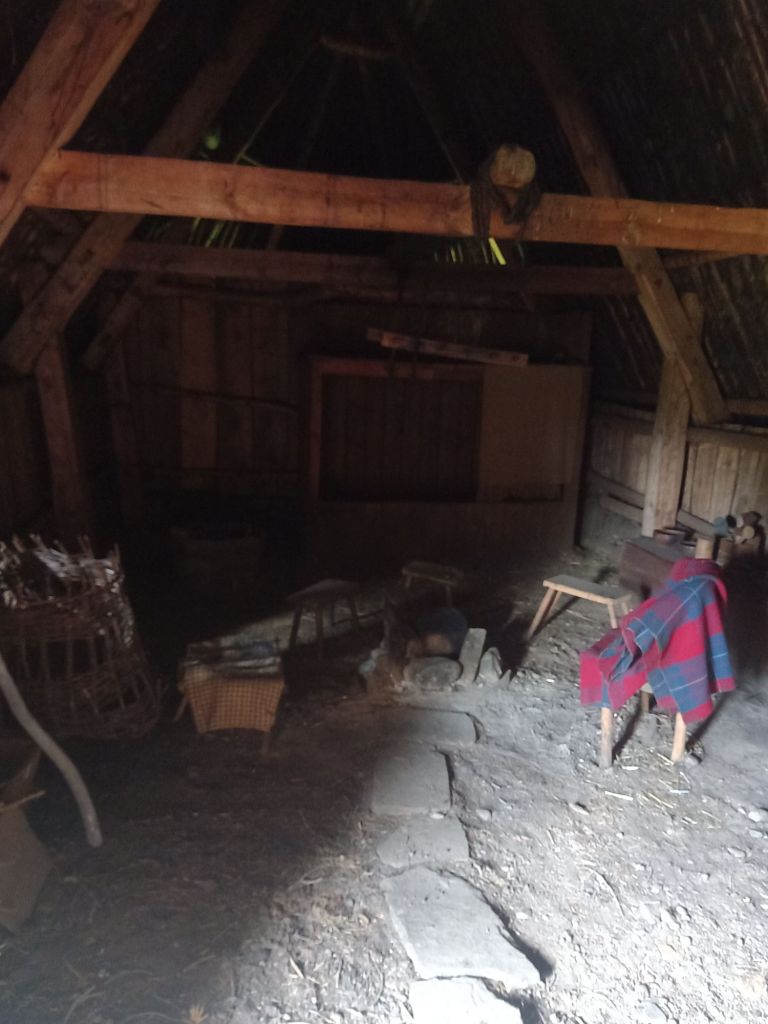
The museum extends for about a mile, and consists of a reconstruction of a 1730s township, and then existing buildings dating from the 1800s to the 1940s that have been moved and rebuilt.

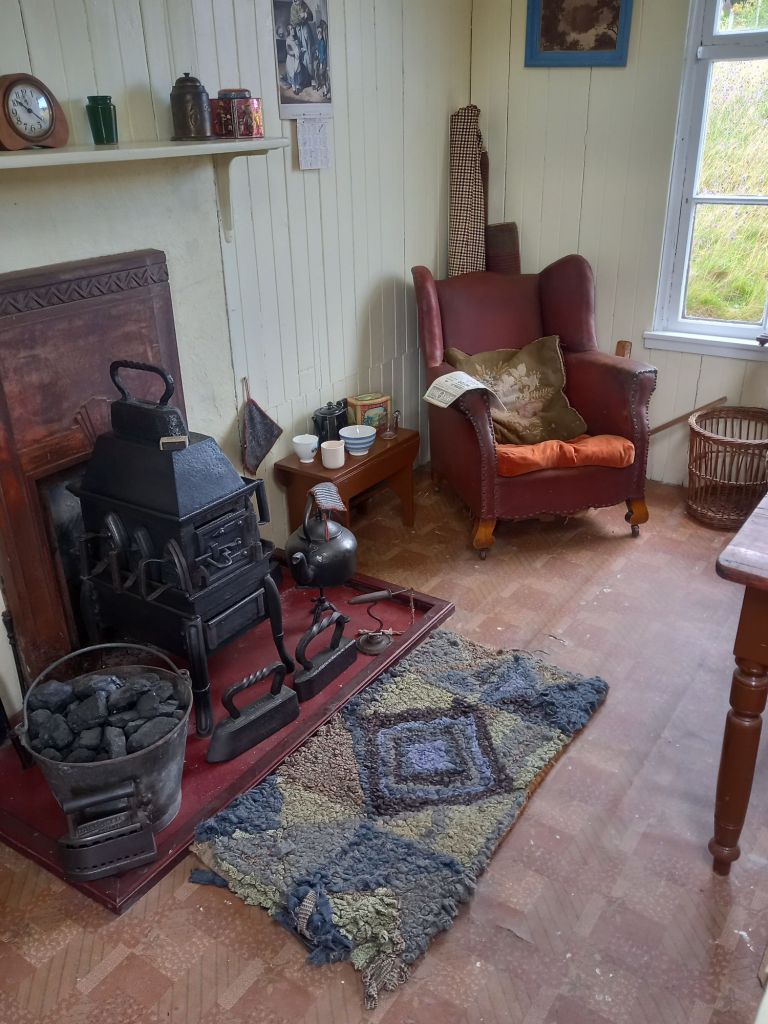
This means that unlike a standard museum, or a Trust property, the houses and contents are a snapshot of one particular period, rather than an accumulation of artifacts over the family’s ownership of the house.

I’m not sure if all of the textiles in each house originally belonged to it  but each gives a unique insight into the life, and textiles of the era.

I have talked before about the importance of textiles in portraying aspects of daily life, and it is really obvious here. The 1730s houses are about survival, keeping the people, and animals who shared them, safe and warm, especially in the winter days.

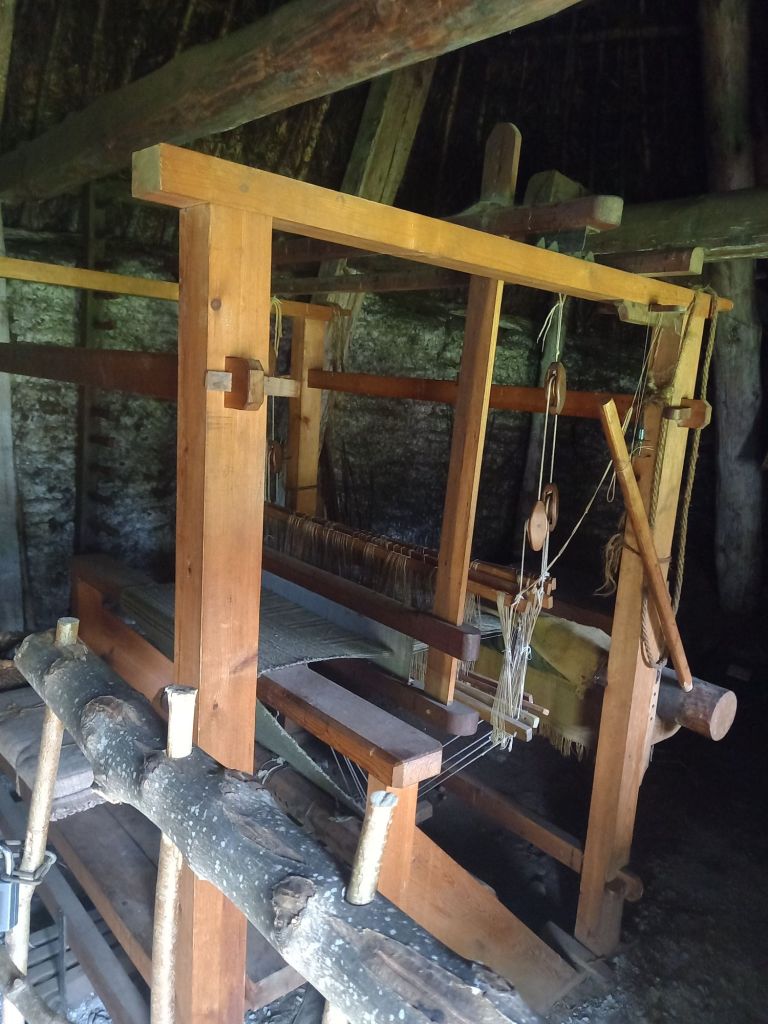
Textiles here are functional, spinning and weaving them yourself the only way to get them, and a continual set of tasks within the community. 

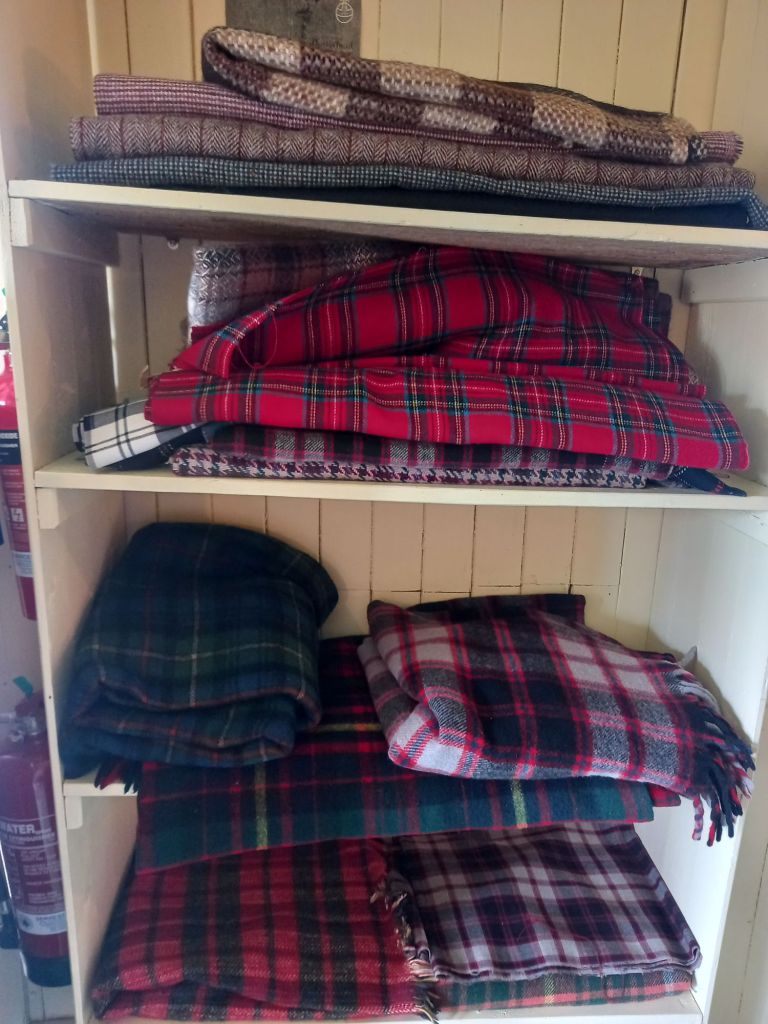
One of the displays showed the multifunctionality of the original tartan cloth, garment, cloak and blanket, all in one handy length.

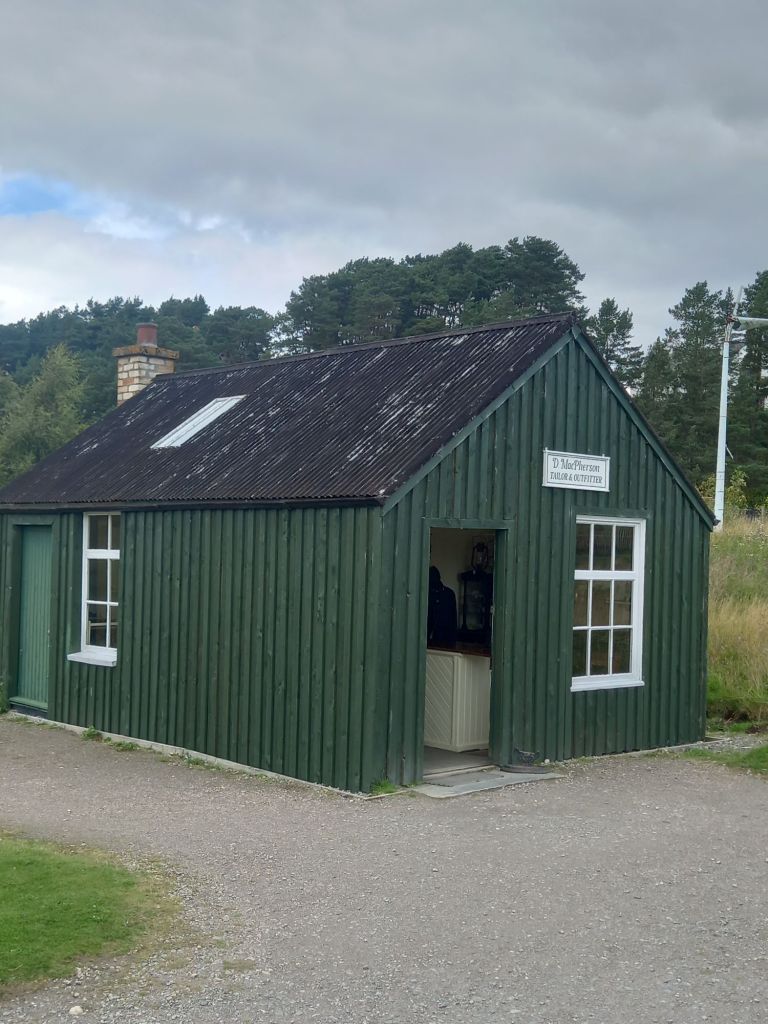
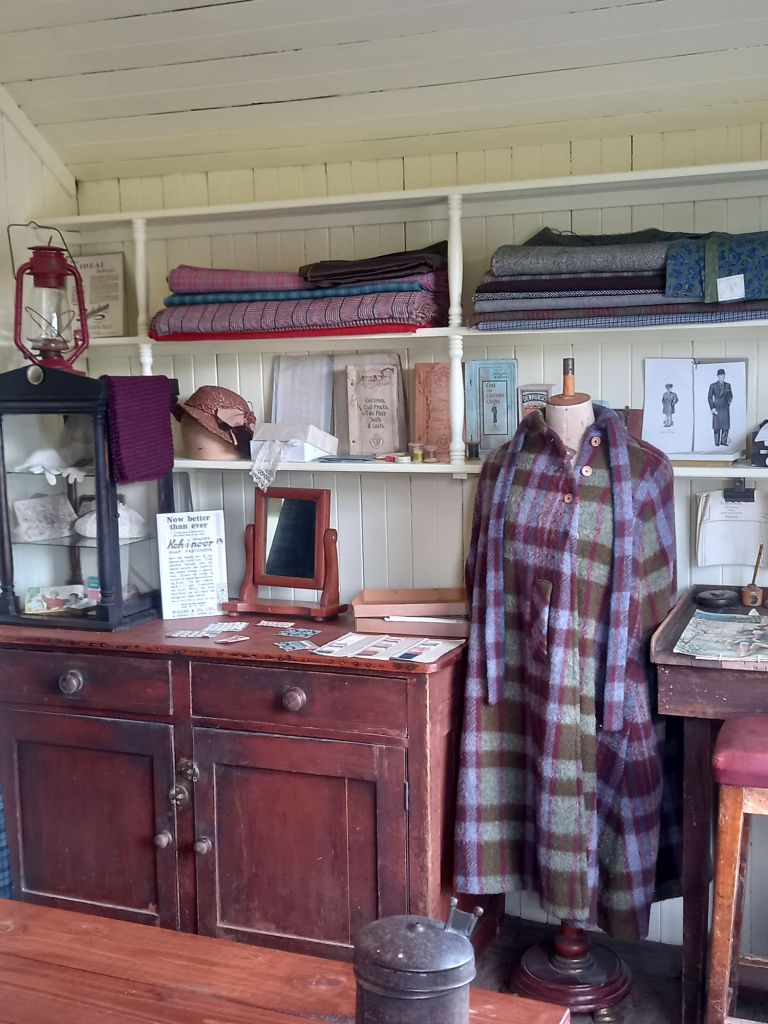
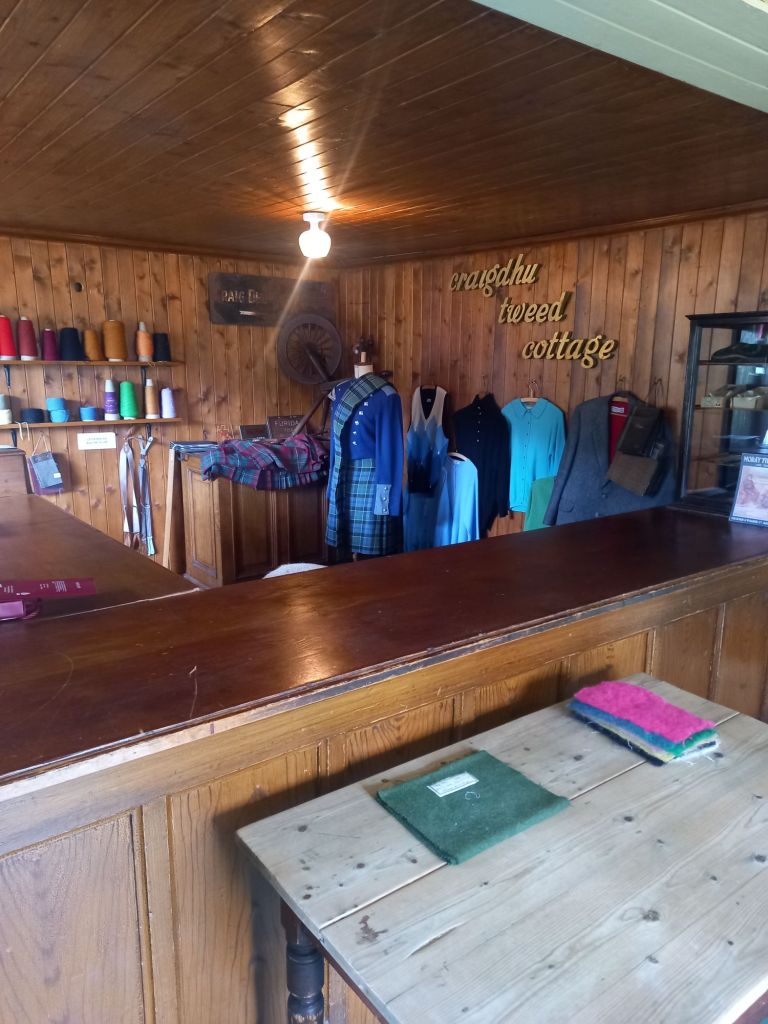
As life starts to get less pressured, and as job roles diversify, you have the separate businesses devoted to clothing.These buildings originally stood in the nearby town of Newtonmore.

The tailors and dressmakers, aided by the invention of the sewing machine. The idea of having lots of clothes for different purposes,  the ability to own more than one of things, and the luxury of not having to make it yourself.

Clothing as status, the well tailored tweed suit, the modern kilt in clan tartans, all things uniquely associated with Scotland, and exported all over the world.

In the later period houses, those of the leisure classes, with time to spend on the ‘decorative arts’, textiles to show your skill, to make your home look nice.

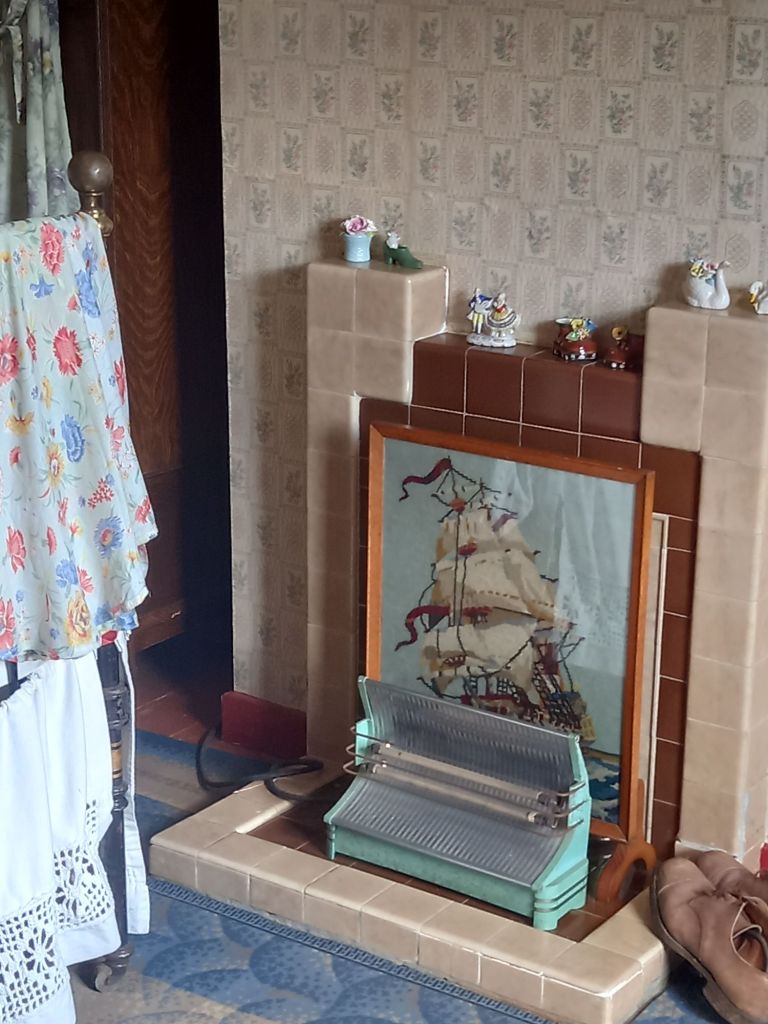
An endless succession of tablecloths, tray covers, anti maccassars, fire screens and cushions. All created in the home with materials bought from specialist suppliers. A way to pass time with friends, or while listening to the radio.

It was marvellous place to visit, and one of my very favourite ways to spend the day. I was also exceptionally lucky that the weather was gorgeous, and the scenery stunning. Loved the three varieties of Highland Cow, just enjoying the sun and their grass.

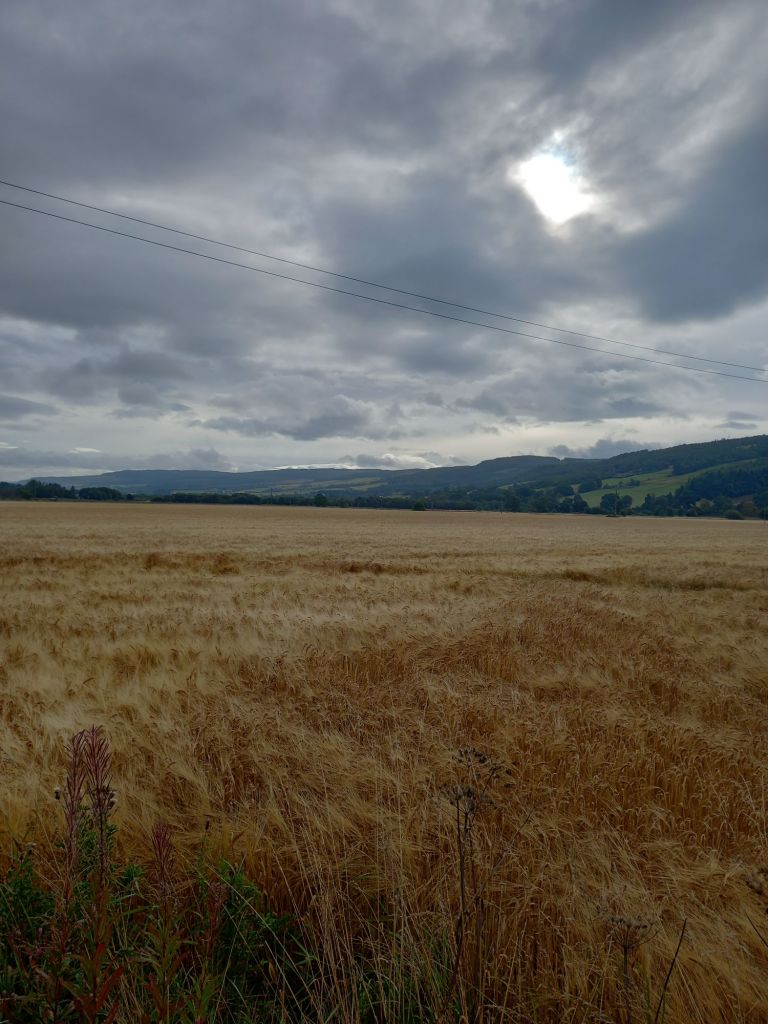
I ended the day at a new aire, in Aberfeldy, just sitting watching the clouds as usual, and listening to the birds flying over the fields.

I have a few more posts to share with you about Scotland, it seems such a long time ago that I left, although it’s only a week. Hopefully,  good WiFi allowing, I can share more next week, as I am making my way to the final few campsites of this trip.

In the meantime, have fun, take care, stay safe and thanks for visiting.
Lots and lots of locks and lochs!

I have wanted to visit the Cairngorms for a very long time, and it is definitely an area to return to as I only had a glimpse at its beauty.
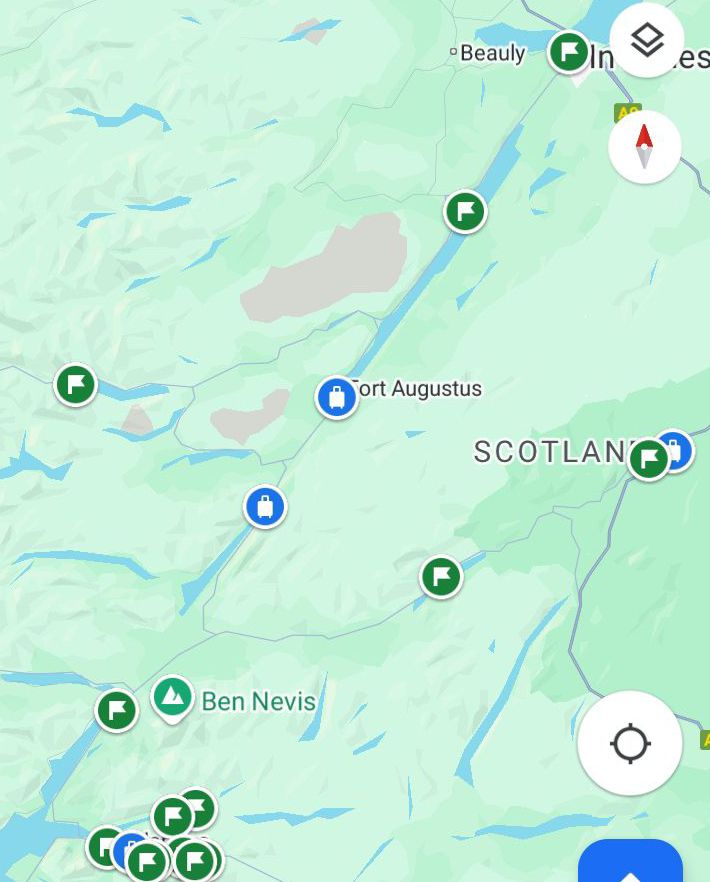
The trip from Skye westwards took me first to Fort Augustus, at the end of Loch Ness. I had been there before, briefly with Jacky two years ago, but wanted to revisit, partly to stay at a new aire just outside the town.

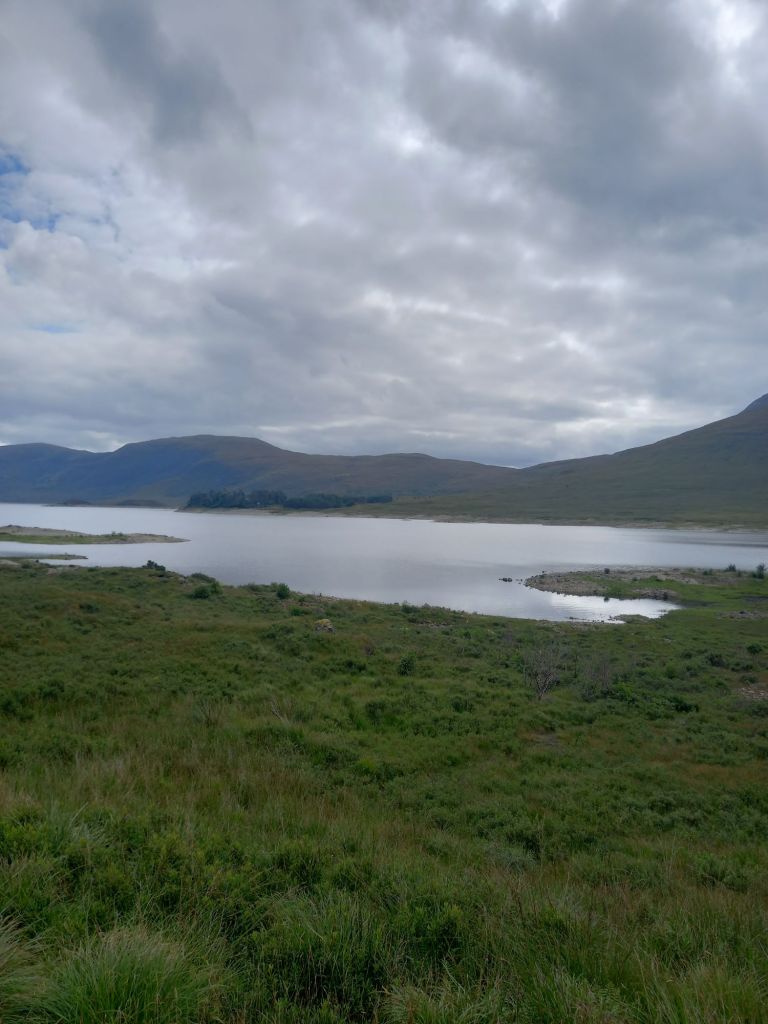
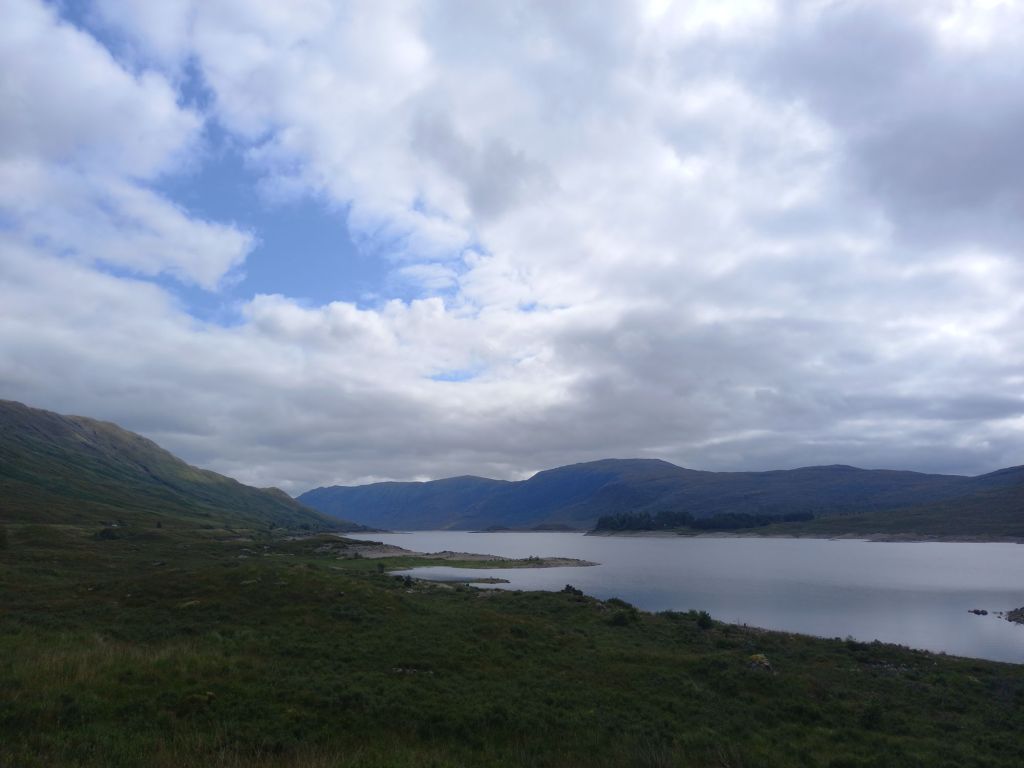
The journey was so beautiful, passing through Glenshiel and past Loch Cluanie.

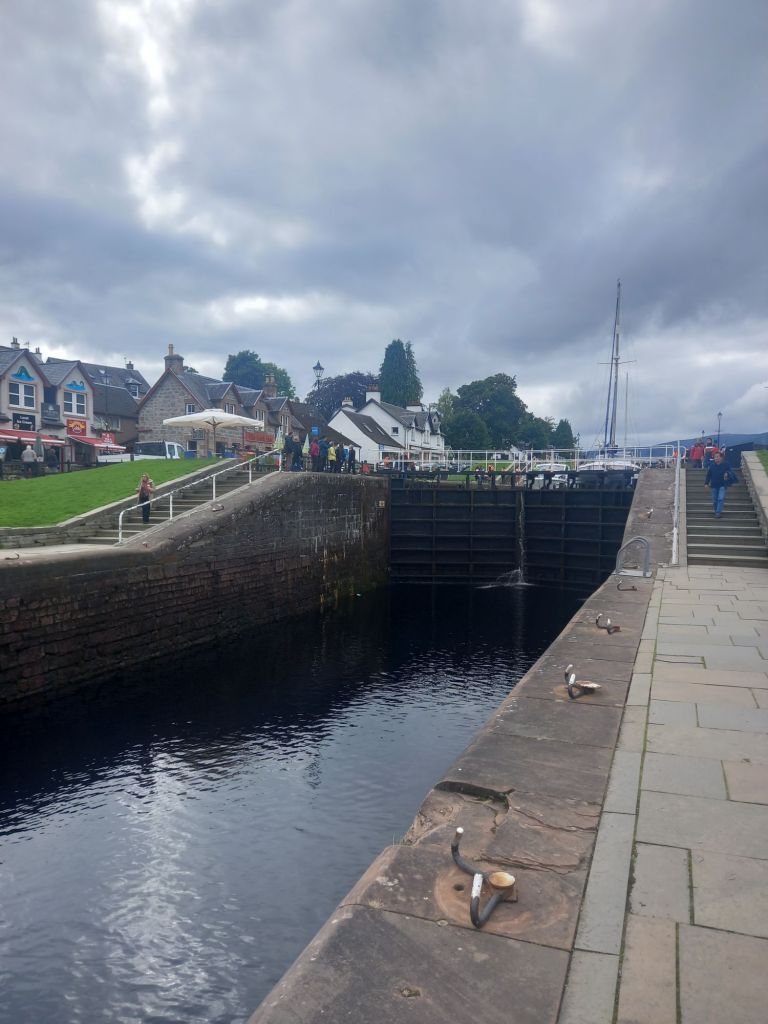
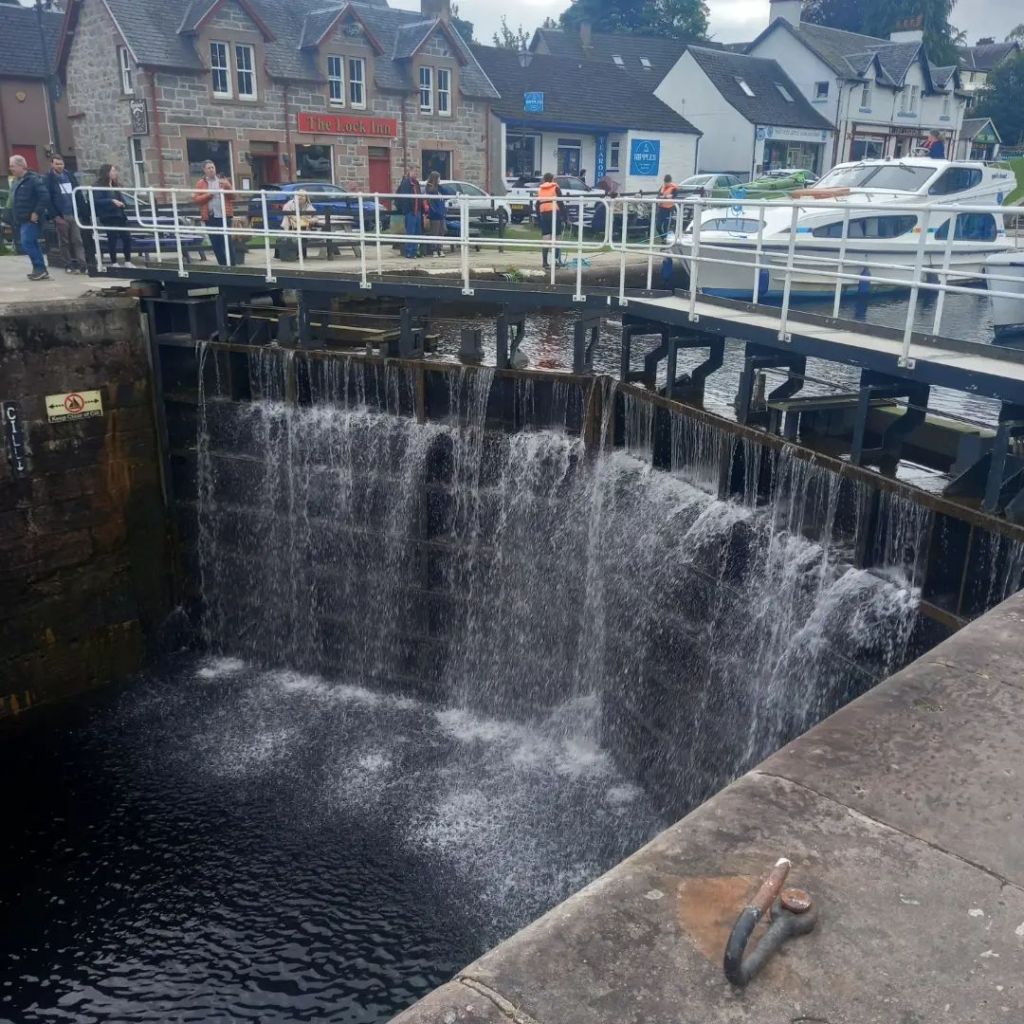
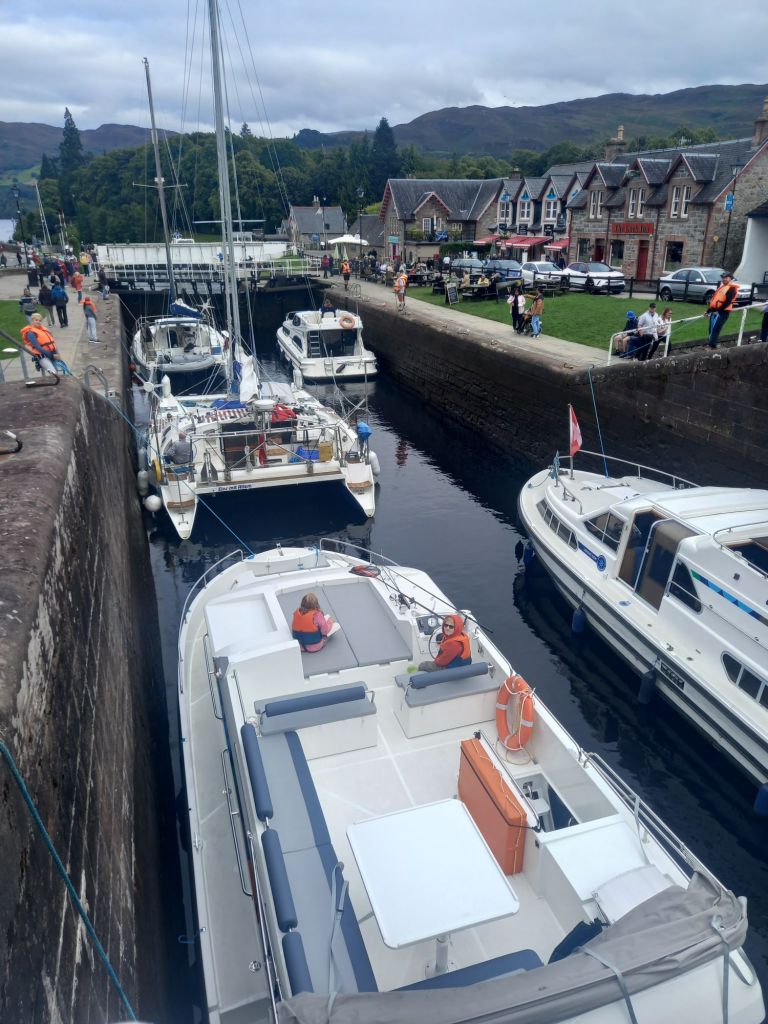
Fort Augustus is famous for being the other end of the Caledonian Canal, I visited Neptune’s Staircase a couple of weeks ago, and here are the five locks that complete the journey, allowing boats to enter Loch Ness, and travel to Inverness and the sea.

There is a great information centre about the canal, and also lots of lovely shops and cafés. I was lucky enough to see another group of boats go through, both the locks and the swing bridge into Loch Ness.

If you look at the map of Scotland, this is where it nearly spilts in half, a fault line known as the Great Glen. The canals allowed ships to cross Scotland without having to follow the often dangerous northern coastline.

This was an enormous undertaking, these canals were dug by hand and it took 19 years to complete, overseen by Thomas Telford. There are a total of 29 locks along outside length. It is just amazing that this has been preserved and restored so it can still be used.

I stayed overnight at the very nice Loch Ness caravan park. Like many aires this has been set up by a farming family and is a quiet site, a short walk from the town.

I really enjoy supporting small businesses like these, and it has been great to have so many options in Scotland, as well as the Caravan and Camping Club sites.

The following day I went over to the edge of the Cairngorm National Park, with a quick stop at Aviemore for supplies. I ended up at the Rothiemurchus Estate.

The estate offers lots of different activities, such as bike hire, horse riding, fishing, but also has brilliant hiking trails.

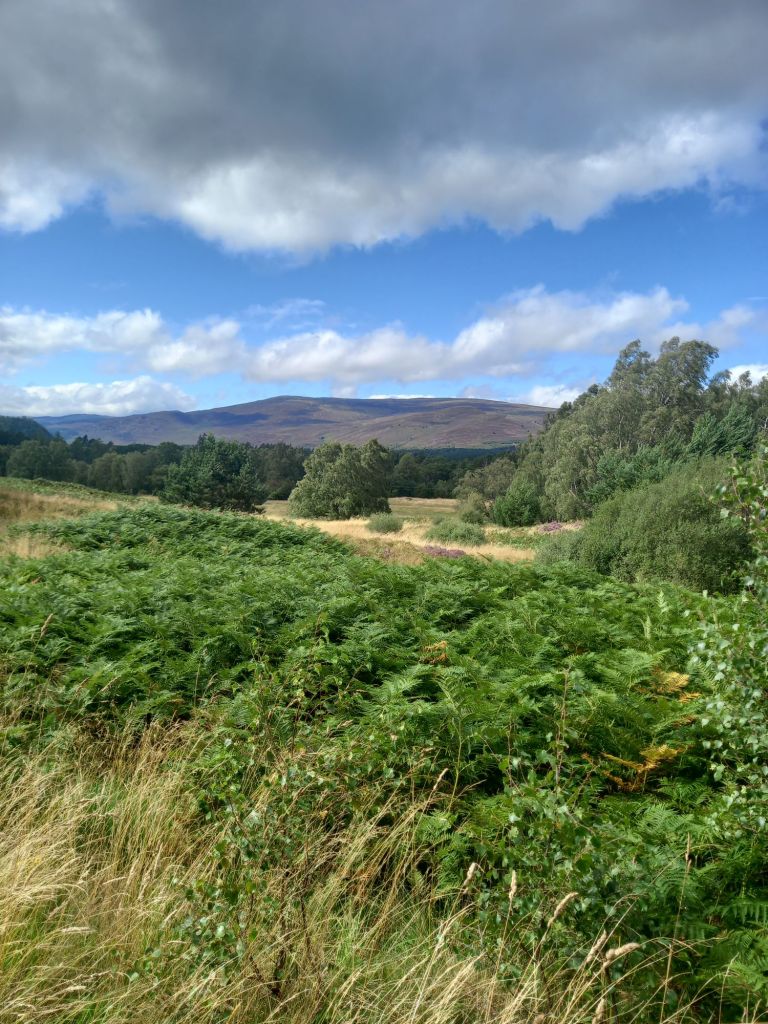
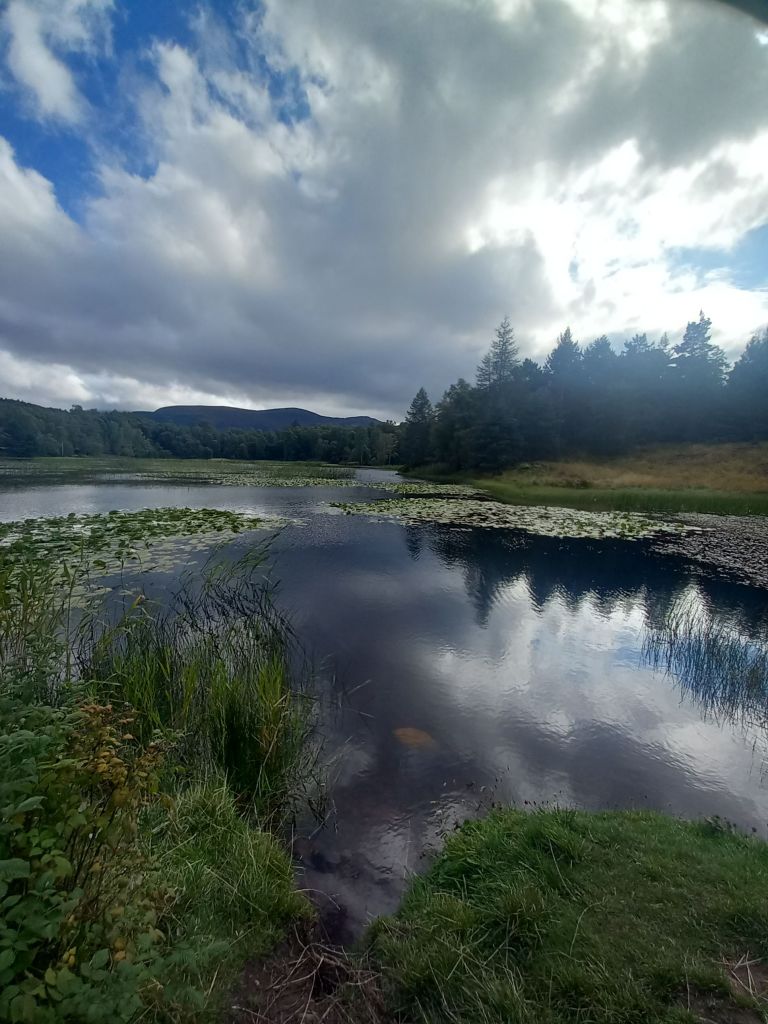
It was a beautiful sunny day, so I did 8km circular route to Loch an Eilein, passing Loch Mor with so many water lilies, and through stunning forests and heathland. 

There were also deer on the estate, a little far away for good photos.

Despite all my walks, I still haven’t seen a single red squirrel, the only disappointment about my trip to Scotland! Lots signs saying look out for them, but none to be seen 😔

I had a choice of aires and park ups in this area, because it was such a beautiful evening, I opted for staying at the Loch Insh watersports centre. 

It was such a lovely way to end such a fantastic day, sitting with a G and T in the sun, watching the wild swimmers in the loch.

My final day in the area I will tell you about next time, as I need a whole post to share all the things at one of my favourite types of museum, the open air Highland Life Folk Museum. 

I am now in my last campsite in Scotland, I can’t believe I have been here for 6 weeks. It is the most beautiful place, and I will have to come back. I also can’t believe this is my fourth September of not having to deal with the start of term 🙃 Still so, so lucky to be living this life!

Until next time, have fun, take care, stay safe and thanks for visiting.