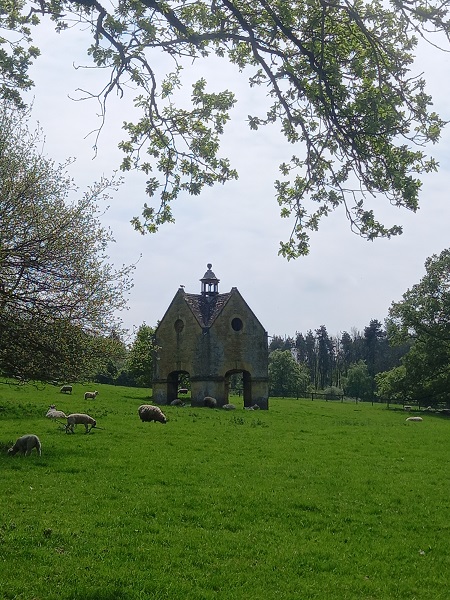
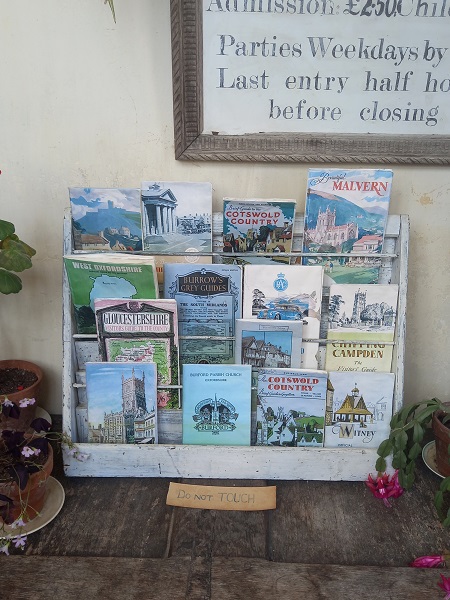
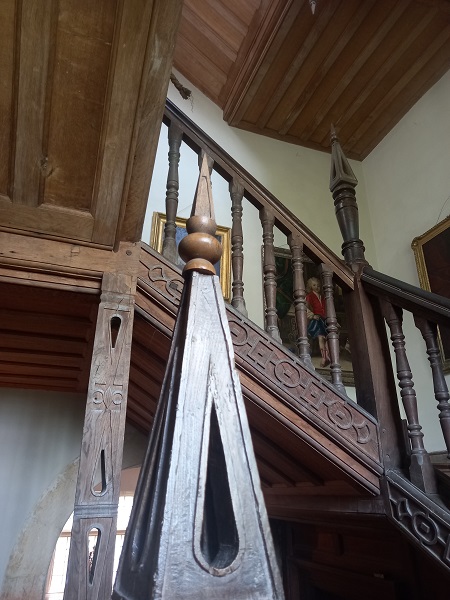
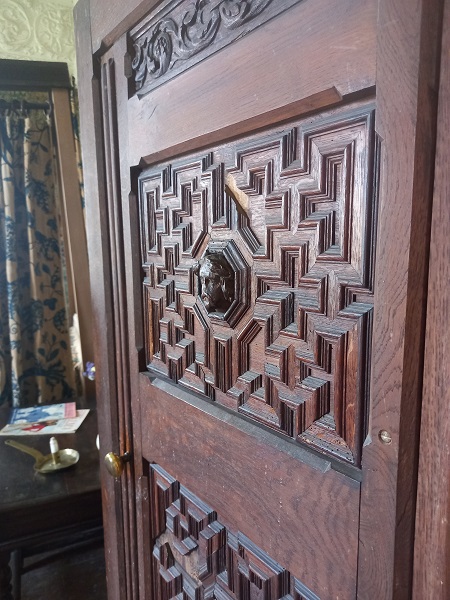
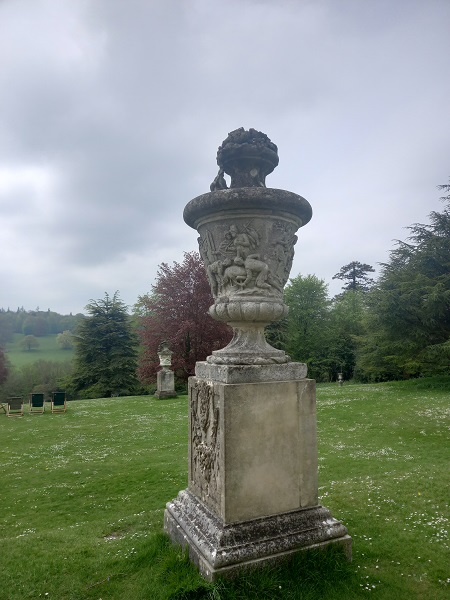
Cordoba, palaces and patios

Cordoba is famous for many things, the mosque of course, but also for its many patios, decorated with potted plants. They hold a patio festival each year, in May, where you can wander round and see all of the displays in bloom, but there were still many around when we visited in November. I think this was a perfect time for a visit, as it was not too hot, or too crowded as it can be during the festivals.

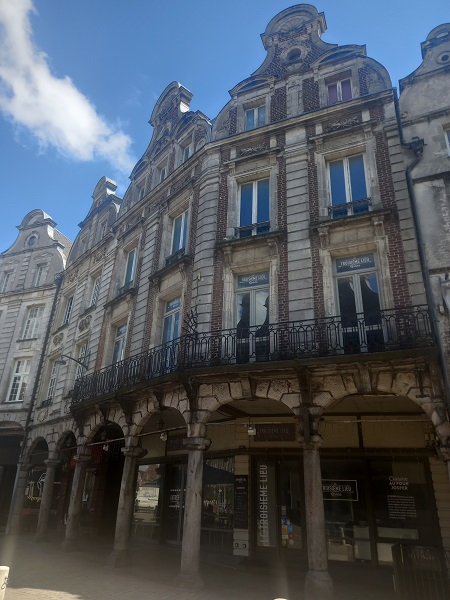
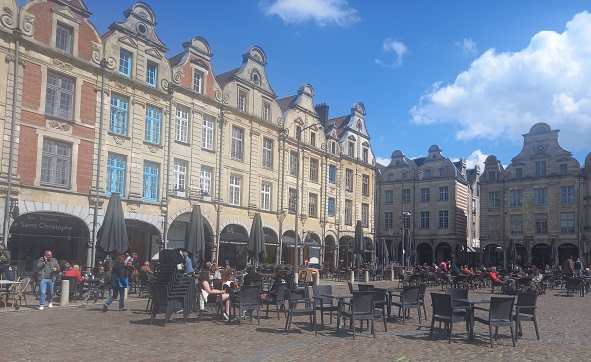
We spent a lot of time, as always, just wandering looking at the gorgeous architecture.

As with architecture designed for use in hot countries, the enclosed patio is an all important feature. As I mentioned in my posts about Morocco, the interior patio functions as a cool space to enjoy water features, and as a garden. We tend to think of a patio as an outside space, a bit of the garden in the UK, usually just paved, but in Cordoba the patio is an art form, with its own unique architecture and decoration.

One of the many palaces we visited was the Palacio Viana, famous for having 11 patios of different sizes, from the grand entertaining space, to small quiet ones full of beautiful blooms and little fountains or wells. In addition to the patios, you can also tour the house, no pictures allowed, but it was a wonderful insight into the life of the wealthy family who owned the palace.

We also visited the Alcazar, or palace of the Christian Monarchs, not only a palace filled with mosaics that have been excavated locally, but also the wonderful gardens that Spain is famous for, complete with a statue of Isabel and Ferdinand meeting with Christopher Columbus.

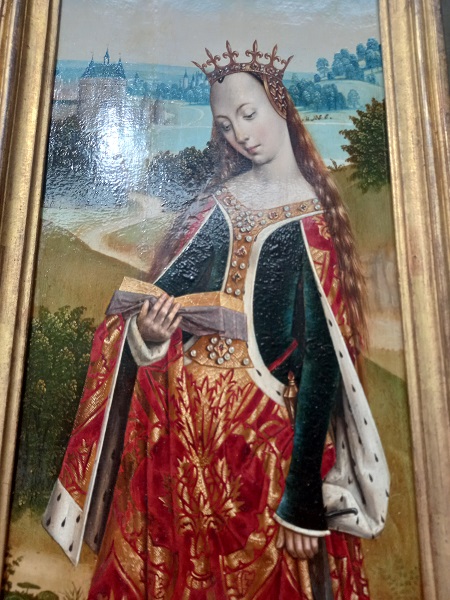
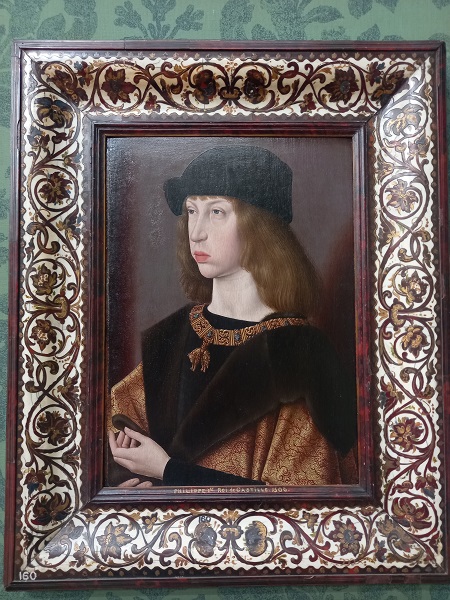
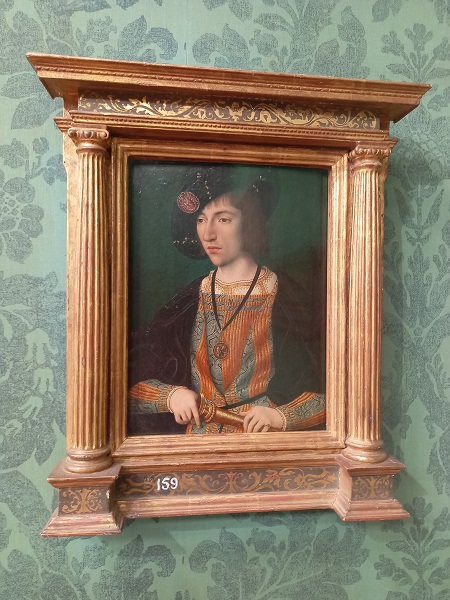
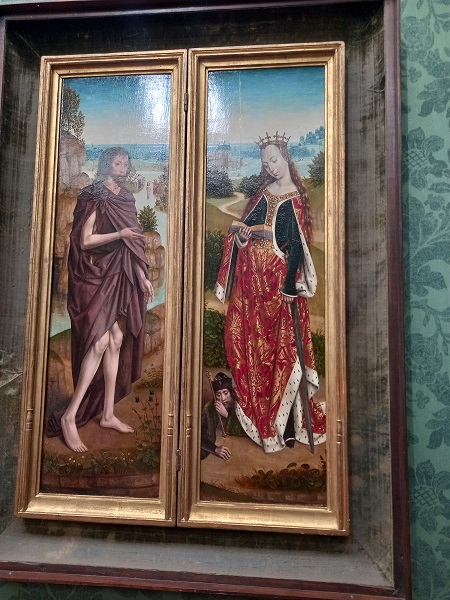
Many of the palaces are now museums, and we had a very enjoyable last afternoon in the art museum. The paintings were full of such amazing detail, I love the way that the artists can represent the drape of textiles, and the light on buildings in these paintings, such talent!

It was there we discovered a brilliant artist who we had never heard of before, Julio Romero de Torres, who has a whole museum dedicated to his art. There were no photos allowed, but I found these two on Google.

He was born, and worked, in Cordoba, painting mainly women in the 1920s and his work is stunning it its detail. I love the sense of life in Cordoba that you get from his work. The painting on the left, La Fuensanta, was once on the Spanish 100 peseta note.

We also visited a small museum devoted to Arab culture, which was the place that inspired me to choose Morocco as my destination for this winter. It was full of the most beautiful artwork, and as you know from my posts about Morocco, it is one of my favourite decorative forms.

There was a stunning flower display in the small courtyard water feature as well.

There was also a quick visit to the Jewish museum nearby, housed in another beautiful patio house and lovingly restored, with a very informative exhibition about Jewish life in Cordoba. This included some gorgeous goldwork on dresses, similar to that we had seen on the painting in the art museum.

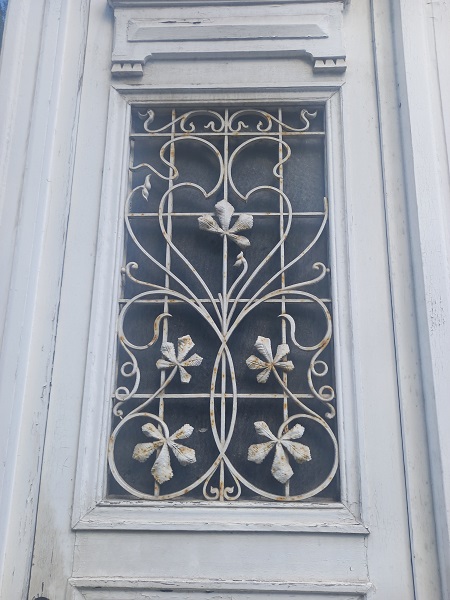
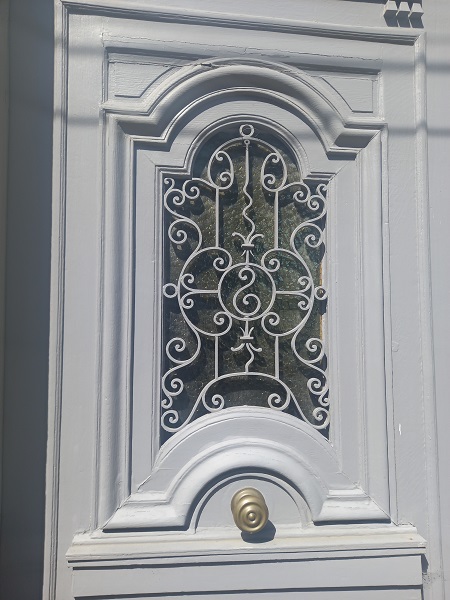
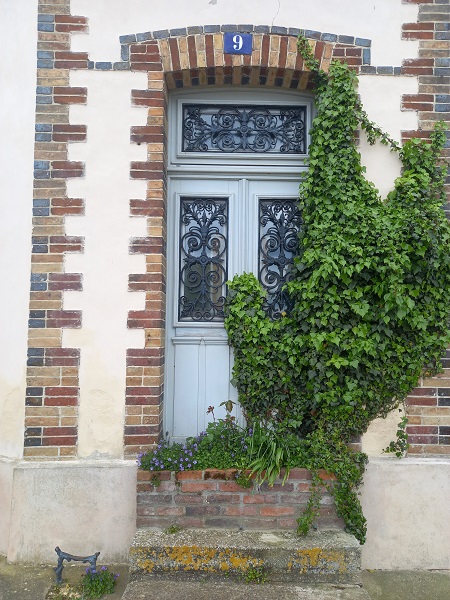
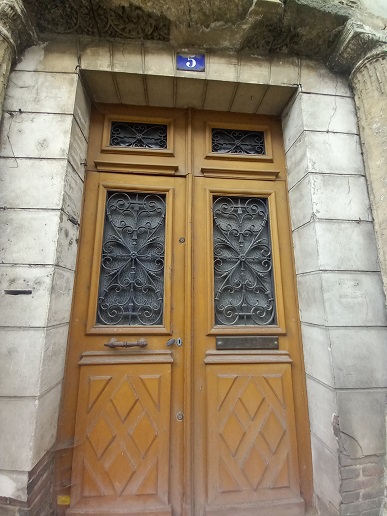
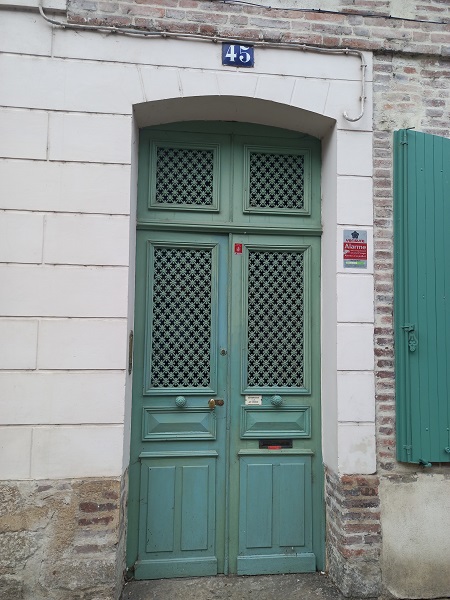
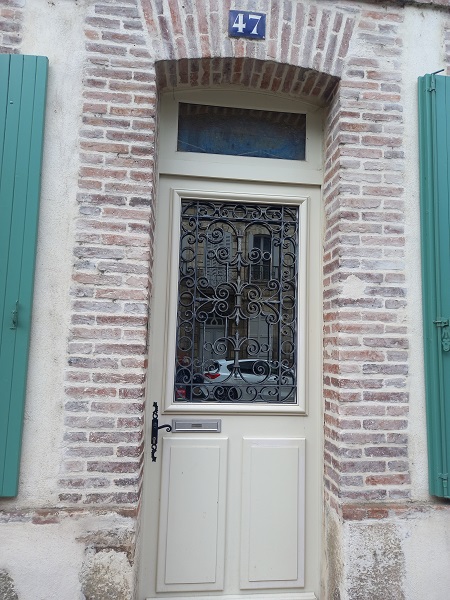
As always there were amazing doors, but what struck me about Cordoba was how heavy and defensive they looked, all were solid wood, many were studded and looked very much like the sort of thing that was built to withstand invasion, rather than the more decorative ones that are in other cities.

A wonderful city, and I am so glad we made it, a year after the original trip was planned. We have just booked another trip for this autumn, to visit the last of the great cities of the south, Jerez and Cadiz, so I am very much looking forward to that.

There is less than a week now until I return to the UK, so my next post will be my last from here, and will be a quick catch up on all my crafting, with some very exciting, in personal crafting terms, things to show you! Until then have fun, take care, stay safe and thanks for visiting.
The joys of England

It is definitely true that often we need to go away, or step back, to really understand and appreciate things. My life now gives me much more time, and distance, and as I travel more, I get to really think about all of the similarities and differences in each place.

One of the exercises I used to do with my teacher trainee students, many of whom were migrants to the UK, was to get them to think about things that define being British, and within that specific things for each country within the UK. Many of them would be teaching migrants, and often teaching them how to pass the UK citizenship test, which contains lots of questions about life in the UK. They used to come up with all sorts of answers, like fish and chips, the Union flag, bulldog spirit etc, and it was always a fun and useful exercise to get them talking about their home, and how it differed from where they grew up.

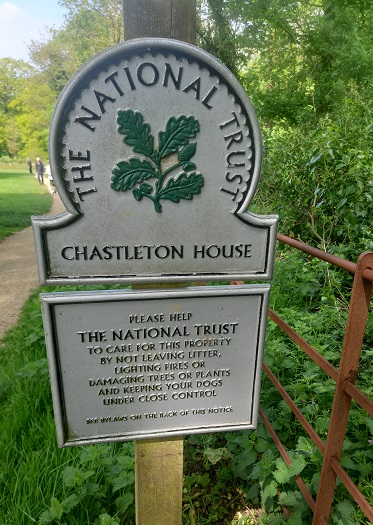
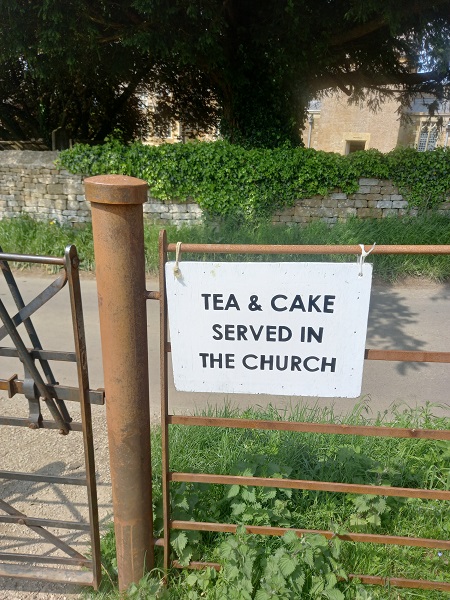
As I mentioned in my last post, the Cotswolds is an area that many people feel exemplifies England, the cottages, the farmland etc. It was while I was visiting one of the Trust houses there that I came across this sign, which to me just typifies one of the joys of English life.

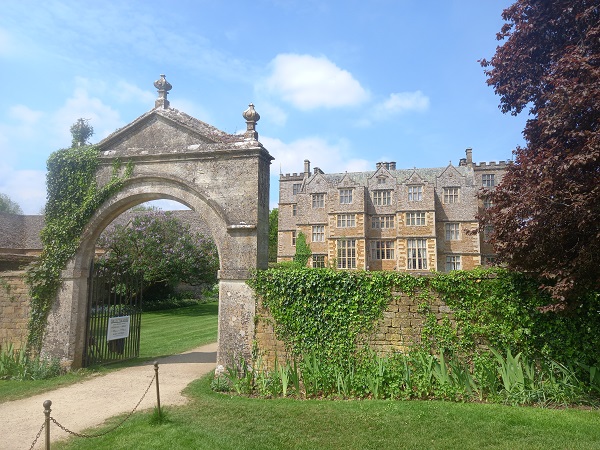
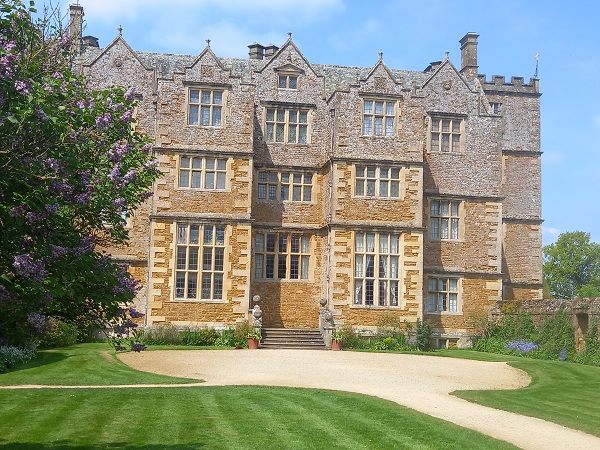
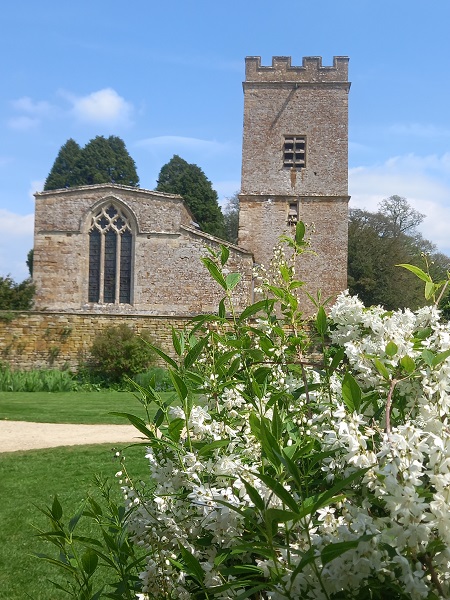
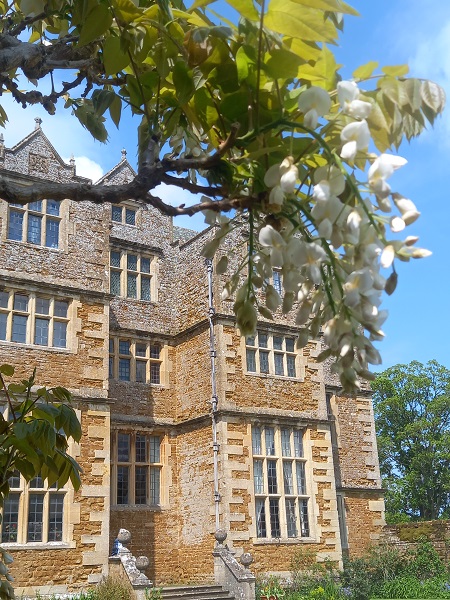
It conjures up a whole host of images, the parish church, flower festivals, the UK’s love of a good cuppa, our habit of, ‘putting the kettle on’, whenever there is a crisis or an awkward situation to deal with. The tea and cake in question was served from the church next to Chastleton, arguably one of the most beautiful houses I have ever visited, just stunning.

I love the old Trust property signs as well, so glad that so many of them have been kept.

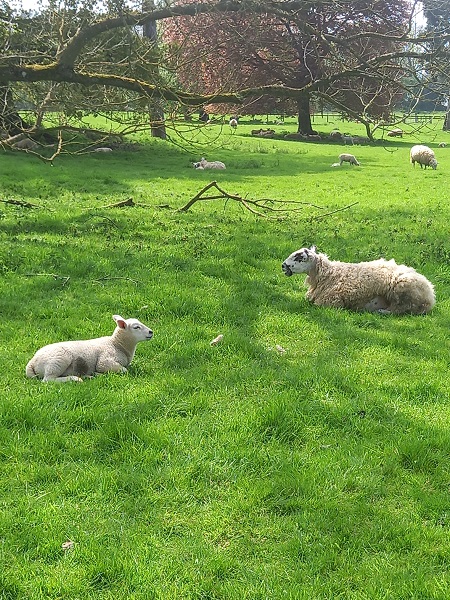
There was a lovely walk through the grounds down from the car park, with lots of cute lambs sunning themselves.

The refreshments were being organised by volunteers from the local primary school, and all profits went to the school, so it was a lovely way of meeting the need for a tea room, and supporting a good cause. I do usually partake of tea and a scone at Trust properties, but this time had an excellent coffee and walnut cake.

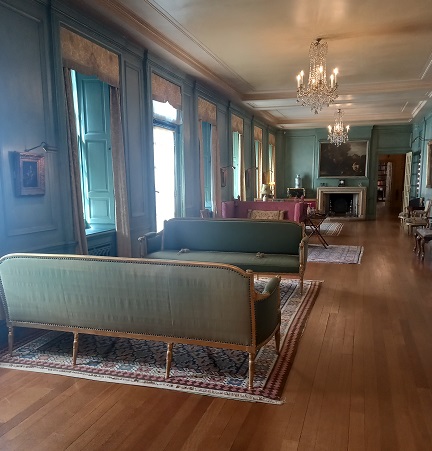
Chastleton is one of the Trust properties that has not been restored, things have been fixed to stop further damage, but like Calke Abbey and other places, the property was in too much of a state of decay when it passed to the Trust in 1991. It was owned by branches of the same family throughout its history, although it was rented out at times, and thus refurbished a little. It is portrayed as it was when the last owner lived there, Barbara Clutton – Brock, who after her husband died in 1976, spent 15 years living there, alone apart from her 20 cats and a parrot.

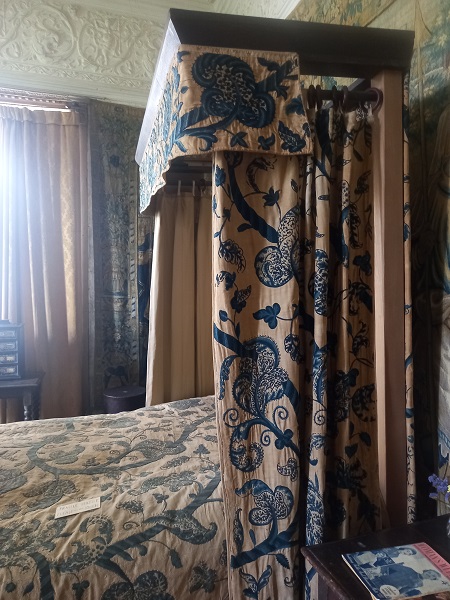
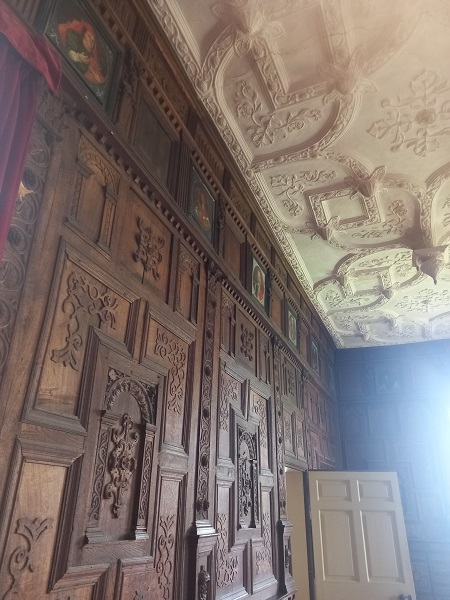
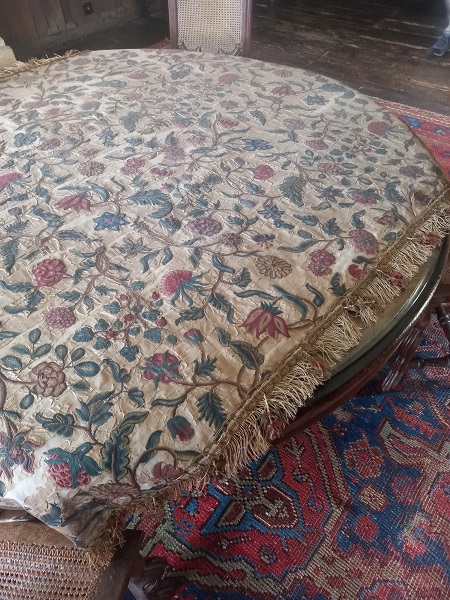
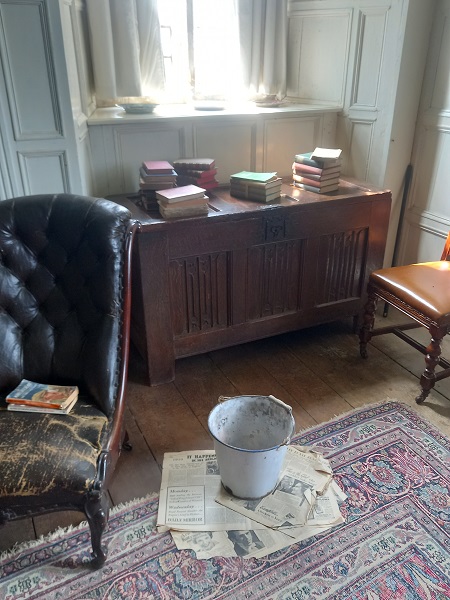
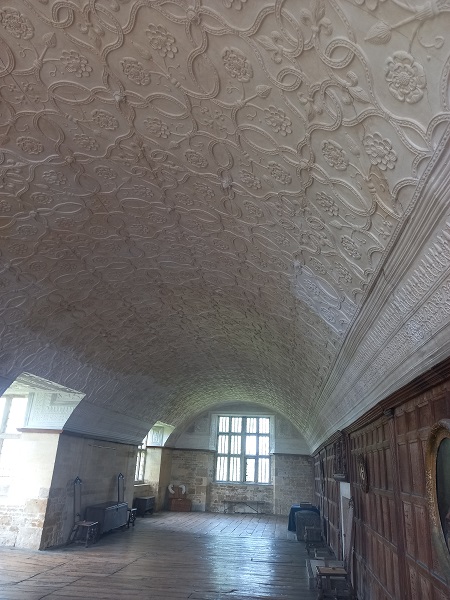
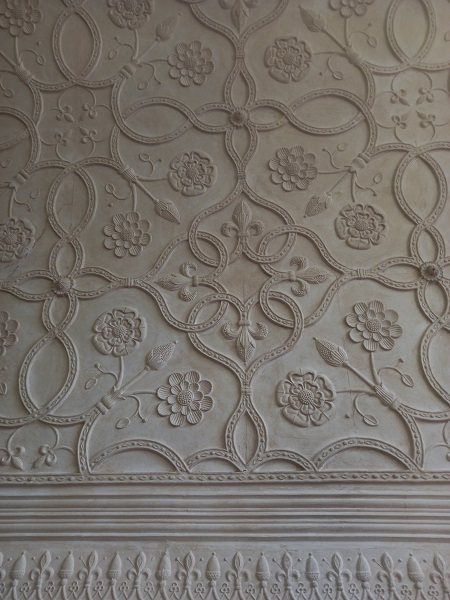
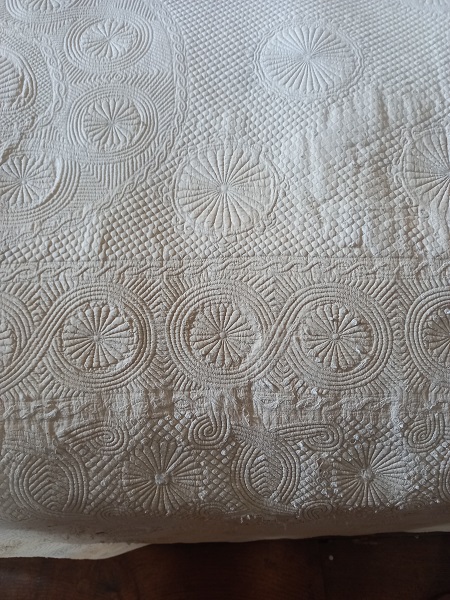
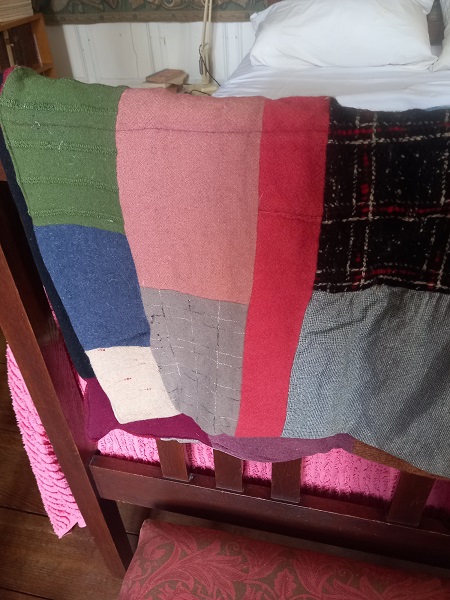
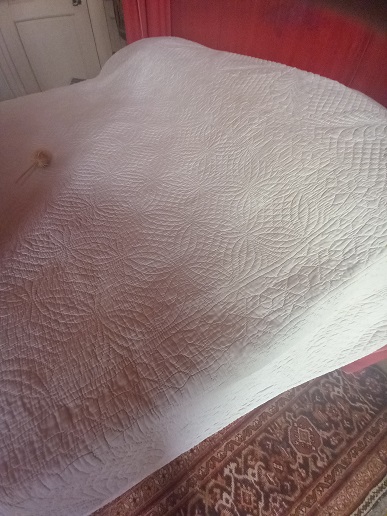
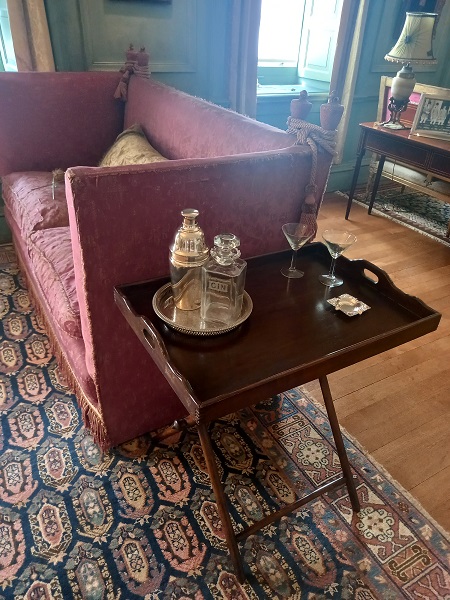
The house dates from the early 1600s, so is full of wonderful Tudor architecture, including a barrel ceilinged upper chamber. However, again, it is the touches like the wool quilt, made of scraps to keep the occupant of the bedroom hung with fine tapestries warm, and the bucket to collect the drips from the leaking ceiling, that bring life in the house to reality.

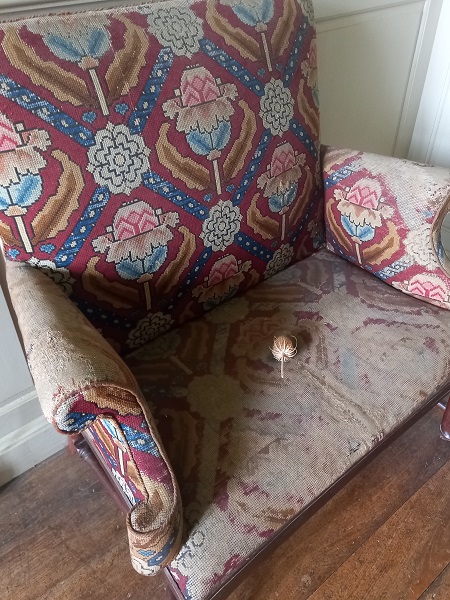
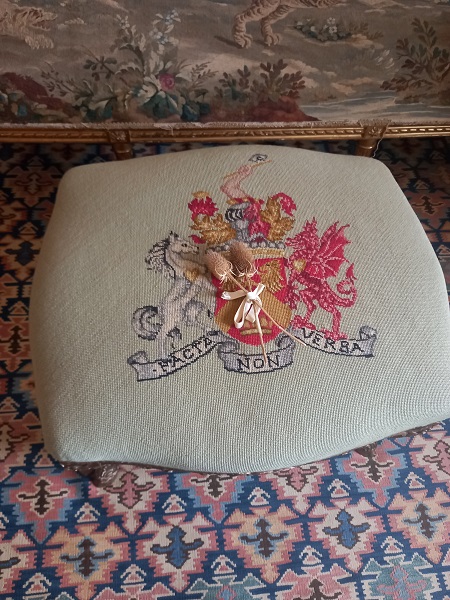
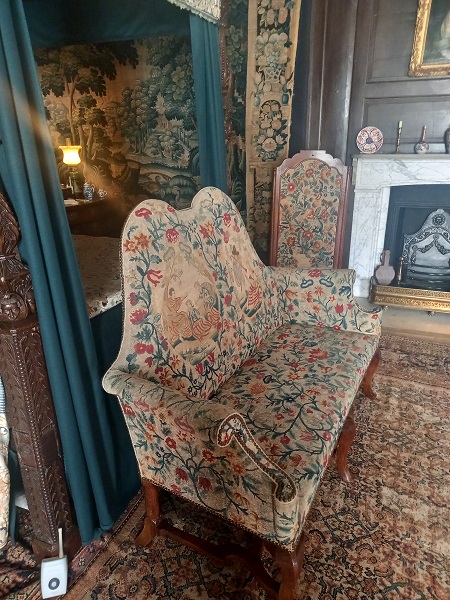
I love the fact that this chair was so well used that most of the needlepoint has worn away.

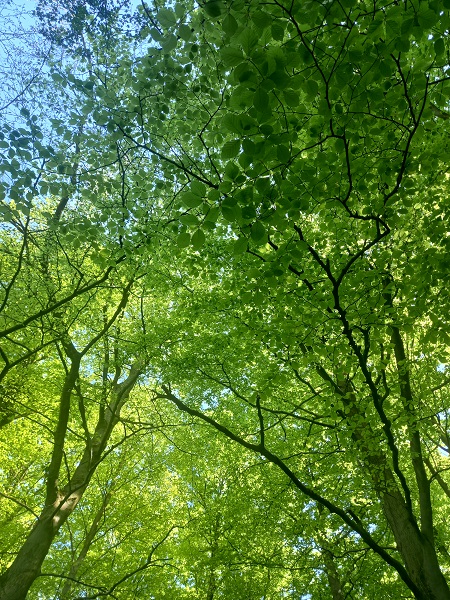
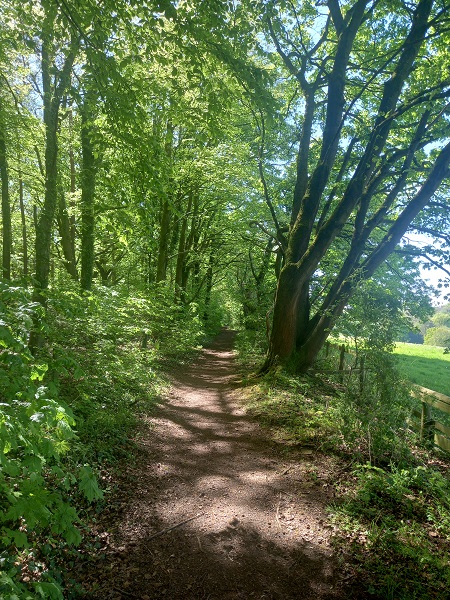
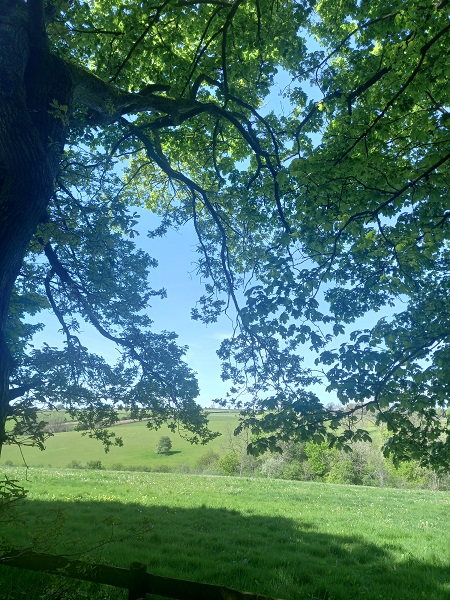
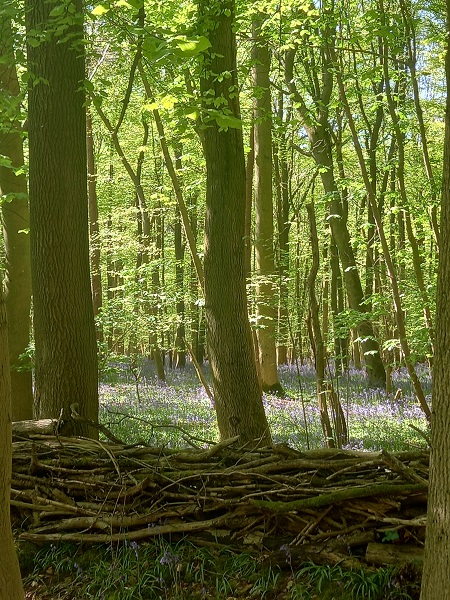
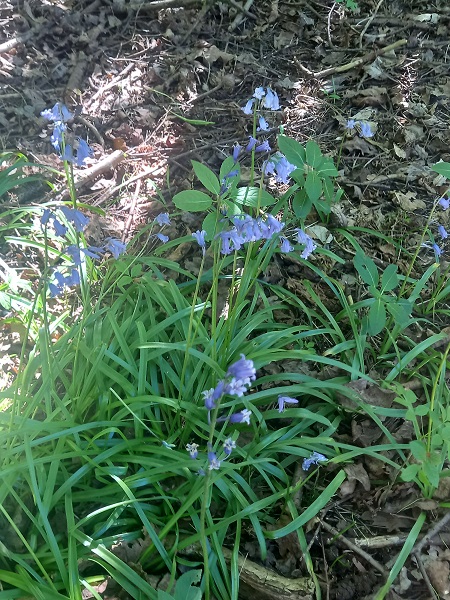
The rest of the week was very warm, as I have previously mentioned, so I spent some time just going for shady walks to admire the beautiful countryside, and the carpets of bluebells throughout the woods. Despite the fact that I have so many other places to visit, I would love to come back to this area again, there are still so many lovely things to see here.

On the journey back to Ellen’s, before my flight home to Spain, I was able to stop off at two further Trust Properties. Upton House, in Warwickshire, is a Georgian house, which was extended and remodelled in the 1930s by a member of the Shell Oil family, Walter Samuel. It was one of many houses that the family owned, and was used to house his extensive collection of art.

One of the interesting facts I found out here, was that the Shell Oil company started out as a curios business, importing shells and decorative objects that the Victorians loved. Apologies for the poor picture, but you can see one of these in a cabinet in the photos below.

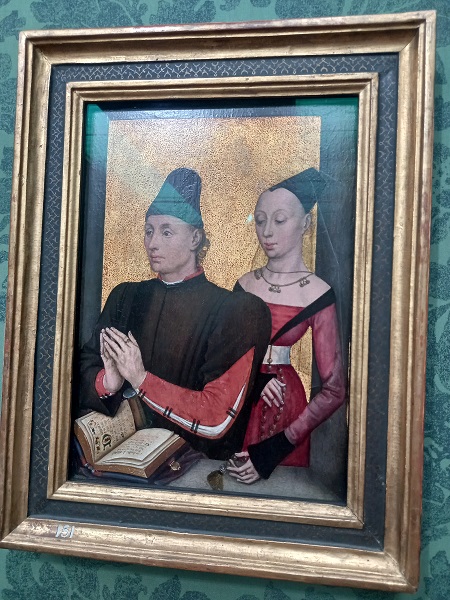
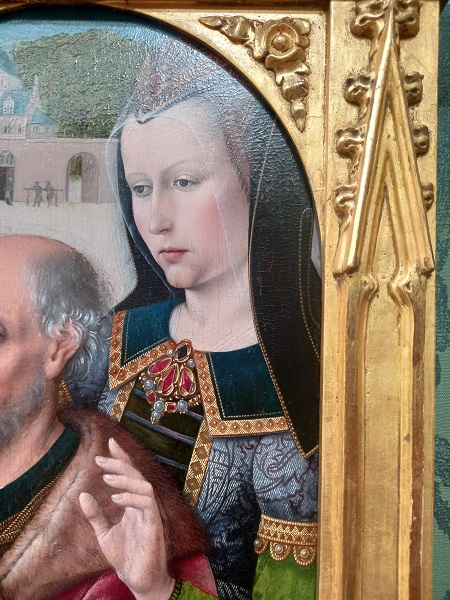
Of particular interest to me were all of the gorgeous medieval and Tudor era pictures in one of the galleries. I was talking to one of the volunteers about how we use these for costume research for re-enactment.

This dress in particular has a really unusual neckline and jewellery. The painting dates from the late 1400s.

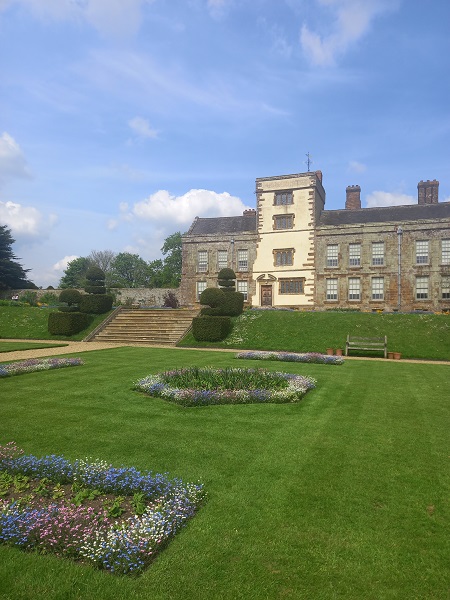
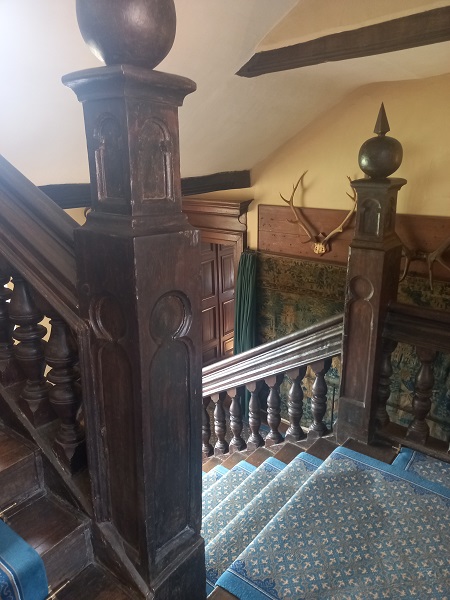
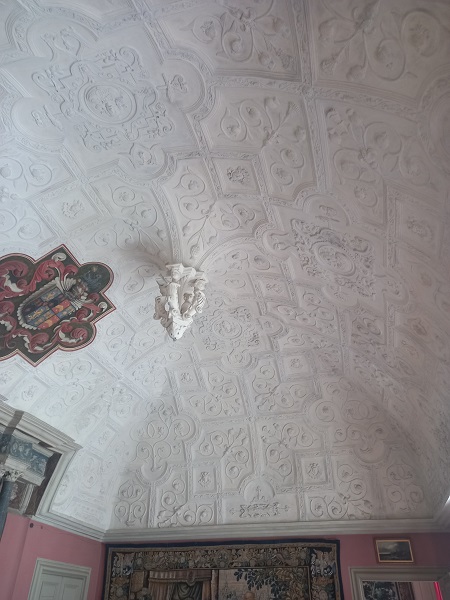
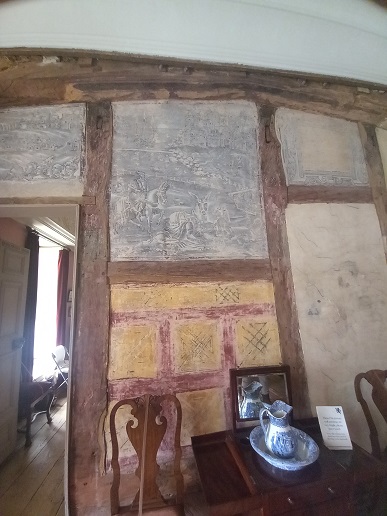
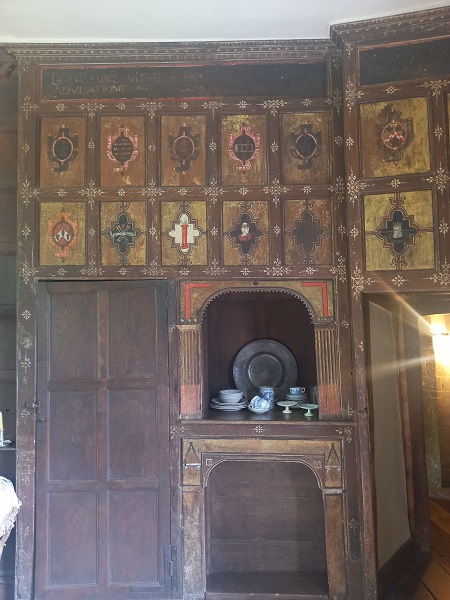
My last house of the week was another gorgeous Tudor one, that has remained in the same family for all of its 400 years. Canons Ashby in Northamptonshire was built by the Drydens, and has one of best plaster ceilings I have ever seen, especially for small house. There were also some really unusual wall painting in one of the bedrooms, and restored heraldic painting in the servants hall.

I have made a list of all the Trust properties that I have ever visited, I am now up to 95, out of over 500, so it will take me a while to see them all. These include the nature reserves and coastal areas as well. I believe that I get excellent value from my membership, and absolutely love exploring all of these places. There is always something unexpected at every property, whether it be needlework or some fascinating fact.

I have now caught up with all of the travel posts from 2024, so now it is time to catch up with the last of Cordoba, and life here in Spain, before my travels start again in a couple of weeks. Until next time then, have fun, take care, stay safe and thanks for visiting.
The green, green grass of home

My next stop was to revisit some of the places that I used to go as a child. I grew up in the south west of England, in a town called Cheltenham, famous for its Regency architecture, (think Bridgerton sets), and for holding the Gold Cup horse race. Like most children, I didn’t really appreciate the place very much, I never really felt as if I fitted in very well, moving to Yorkshire definitely felt more ‘me’.

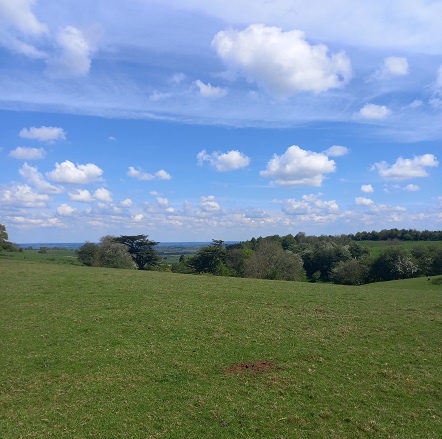
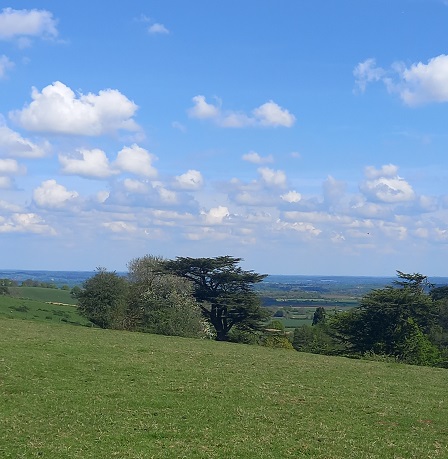
However the area is very beautiful, and as the Cotswolds kept coming up on my Instagram feed, I decided to spend my camping time there, before coming back to Spain. I was very lucky with the weather, the week was mostly very sunny, so much so that I got sunburnt, and I was able to visit some stunning places. The Cotswolds have a lot of natural beauty, quintessentially English with rolling hills and lots of farmland.

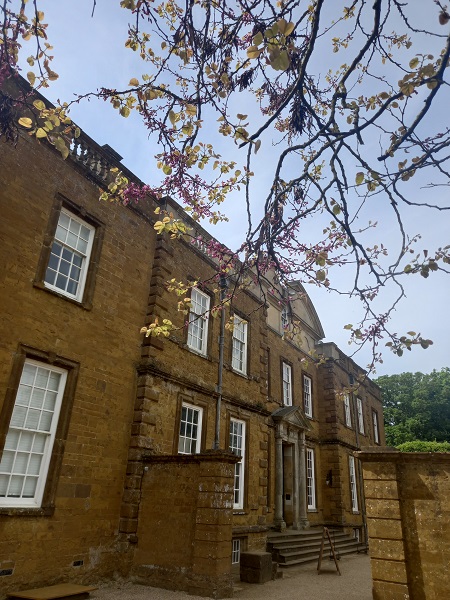
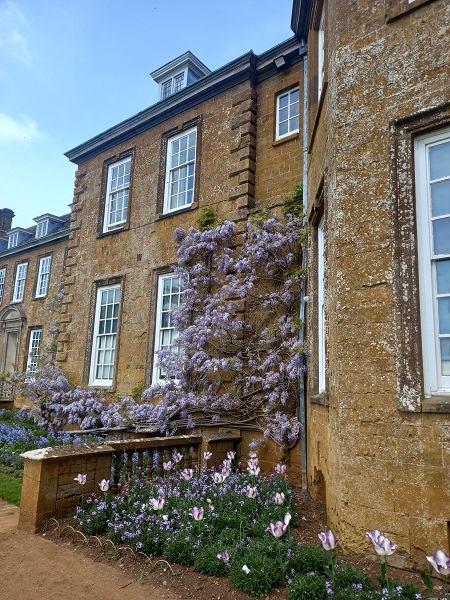
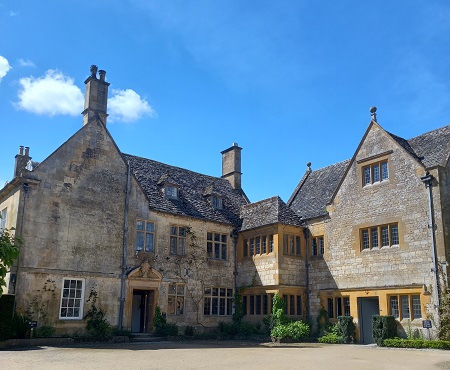
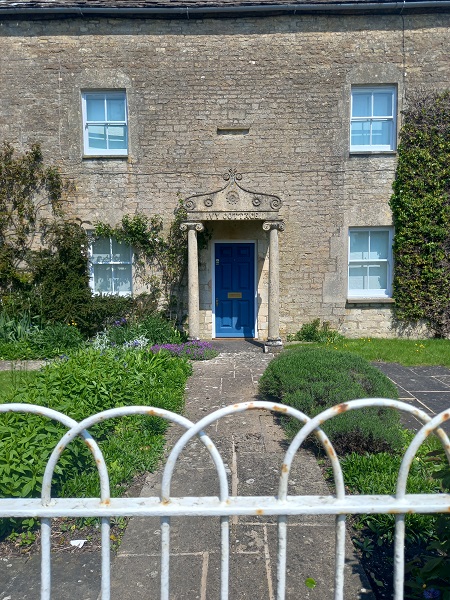
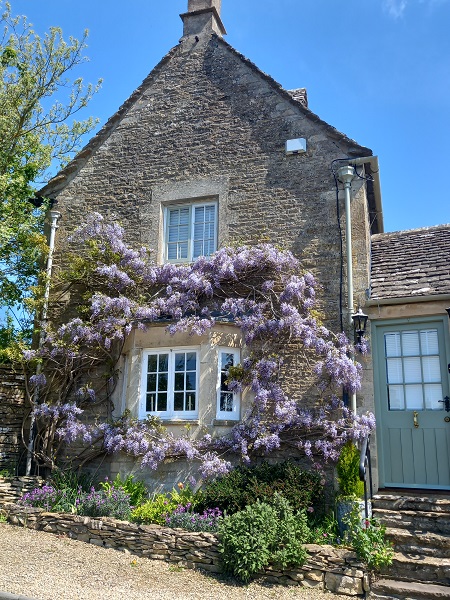
However, the area is also famous for the beautiful houses built of the local stone, which is a gorgeous honey colour. There are so many cute villages here, it was hard to chose where to visit. The Trust has so many properties in the area, and I tried to see as many as I could in the week.

My first stop was Hidcote, famous for its garden more than the house.

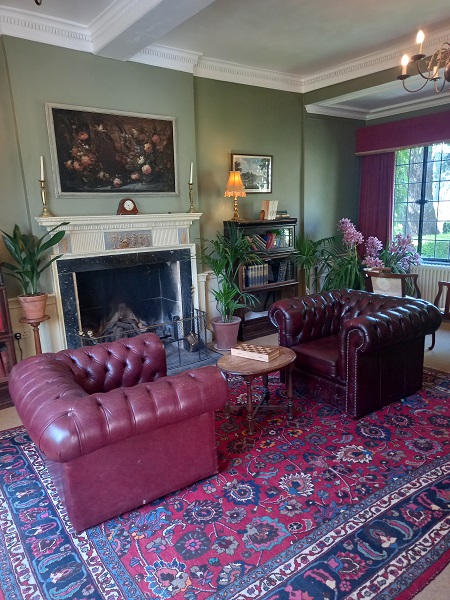
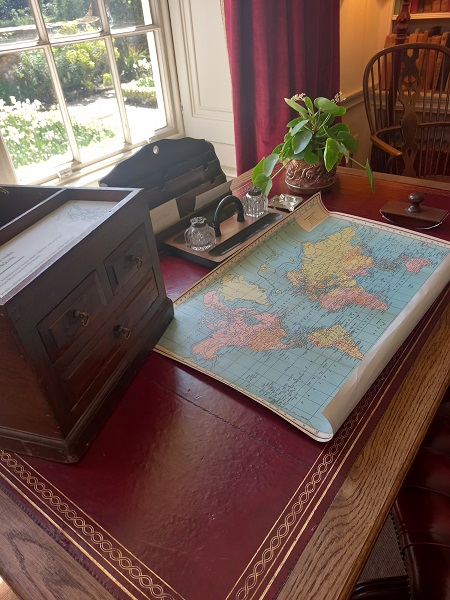
Lawrence Johnston, who created it in the early 1900s, was a passionate gardener and plant collector, who travelled widely to collect specimens. There are only a few rooms open in the house, but it looks like a gorgeous place to sit and plan your travels, aided by your map of the world, complete with the Empire in red!

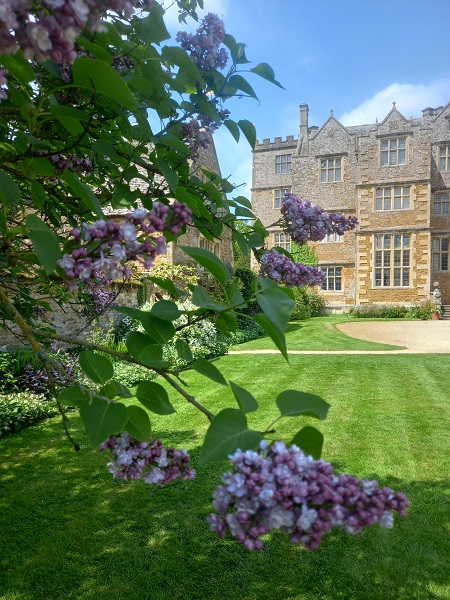
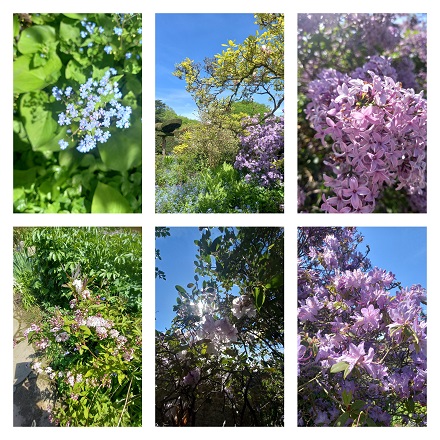
It was such a brilliant day to visit, the garden looked stunning, and I just loved all the delicate rhododendrons and lilacs everywhere.

Even though I love living in Spain, one of the things I do miss are the seasonal plants you get in England. We have the most wonderful cactuses, and bougainvillea year round, but there is something very special about spring plants that only have a short life.

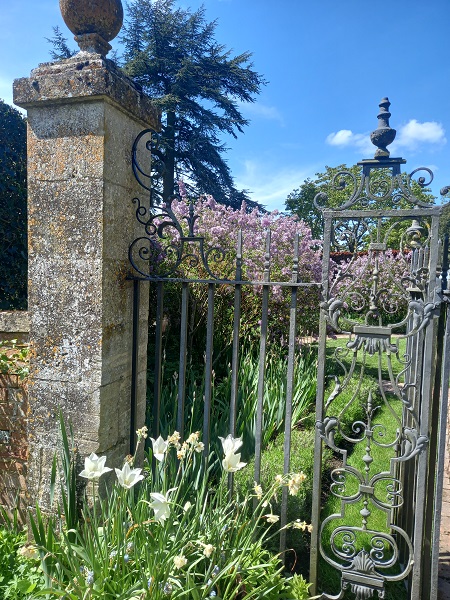
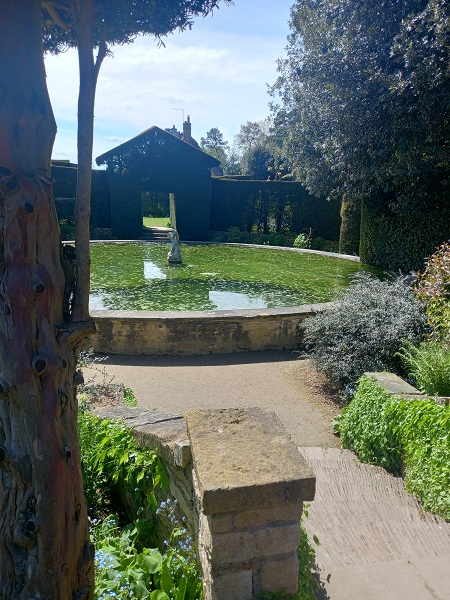
Like many gardens, Hidcote has a series of different areas, with gorgeous walls, gates and architectural features.

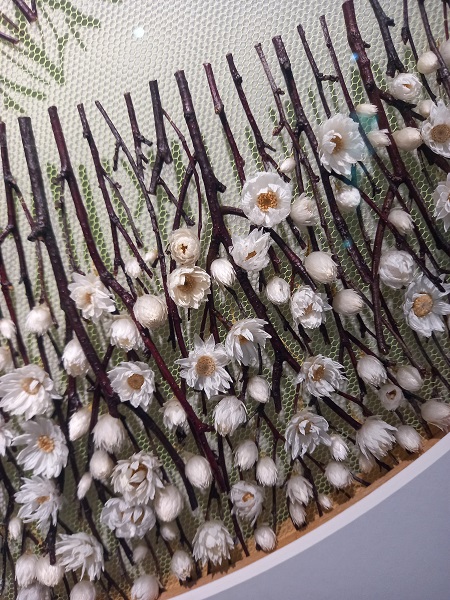
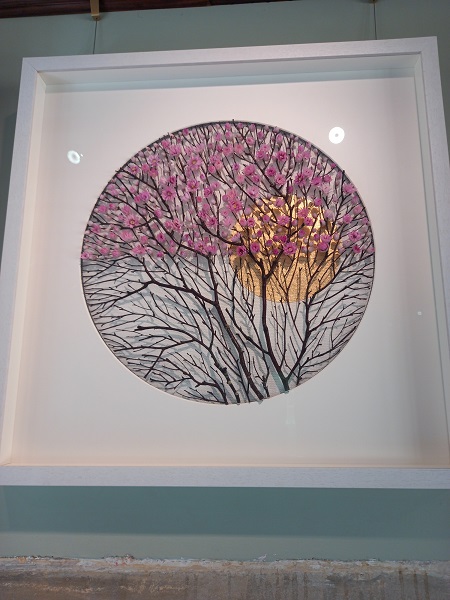
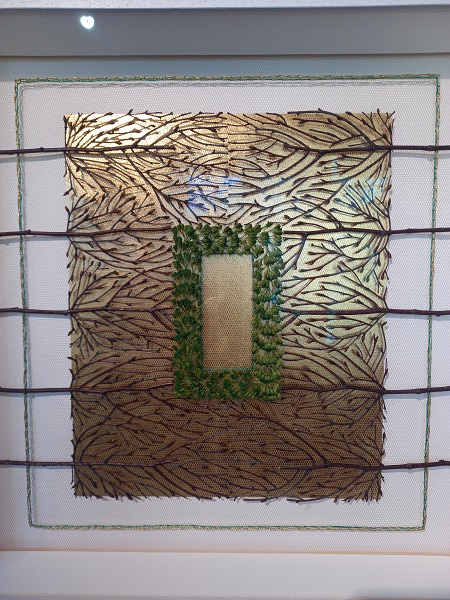
I was especially lucky, as there was a stunning exhibition on by an embroidery artist, Olga Prinku, that was a complete surprise. I usually try to find a special textile treasure at each house I visit, and her work is just amazing. She embroiders on tulle, using found materials and dried flowers. I have never seen anything like this, so beautiful and original.

I especially love these ‘dandelion clocks’.

She had also done some work specifically inspired by the Hidcote garden, one of the box hedges.

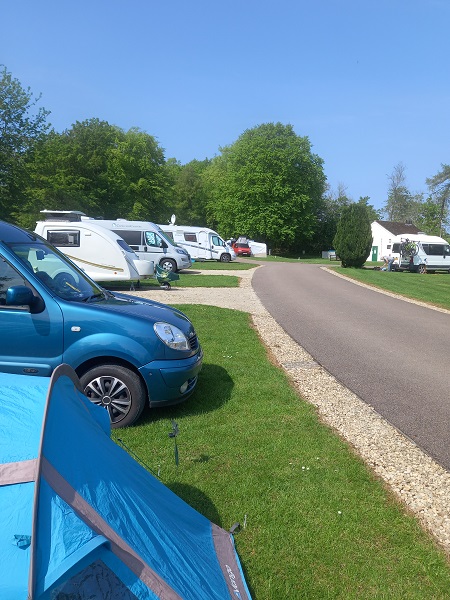
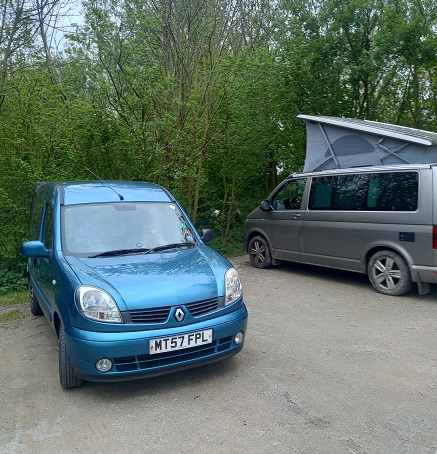
I camped at Chipping Norton, just on the border between Oxfordshire and Gloucestershire, and the campsite was lovely as always, such nice clean facilities and welcoming staff. I love sitting watching new people arrive every day, and admiring all the different sorts of vans, and this visit I had some neighbours who had a very cute little pod caravan.

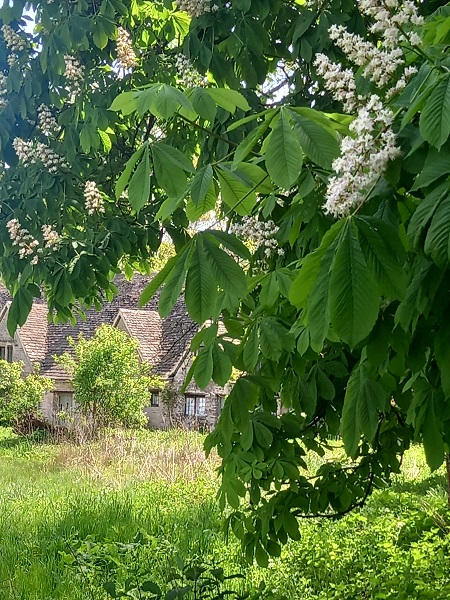
My second Trust visit was to the village of Bibury. The village is the location of a Trout Farm, and I remember visiting that, and paddling in the stream as a child. It was full of Japanese tourists, as apparently the Emperor of Japan visited once and loved it, so it has become very popular.

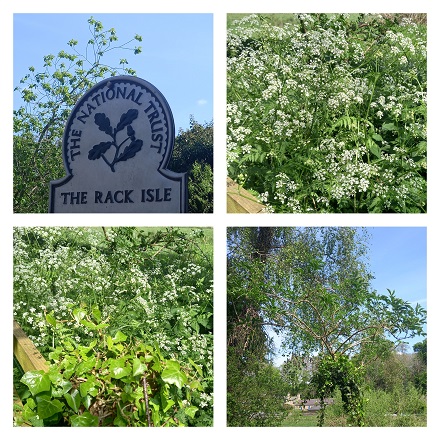
As well as there being many beautiful houses in the village, the Trust looks after a place called Arlington Row, a 17th century terrace of weavers’ cottages near the river, as well as Rack Isle, between the Arlington stream and the main river.

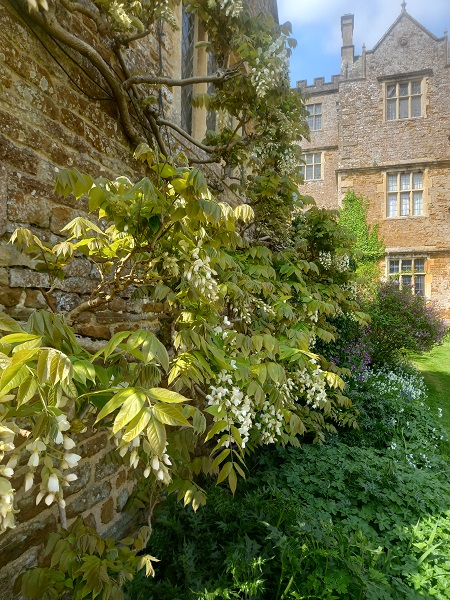
Again there were so many lovely spring flowers, ever the weeds are pretty here.

As it was quite hot, I spent more time at the campsite that week than travelling. I was quite happy after all my long days of driving through France to just sit and read my book and watch life on the camp.

There were a couple more visits later in the week, which I will tell you about in the next post, but it was a lovely relaxing time, and I am so glad I went back to the area. I would definitely recommend it if you are looking for a location that offers some of the very best of the southern English countryside. Until next time, have fun, take care, stay safe and thanks for visiting.
Home is where the needlework is

I had chosen to break up the journey back from the shuttle to my sister’s in Worcester with a brief stay in Surrey, so had to pick from a number of lovely Trust houses in the area, as there are so many there. Its not an area I have ever visited before, but is definitely on my wish list to go back to, along with Sussex, and the rest of Kent that I didn’t have time to visit last autumn. It is just so beautiful in that part of the country, a very different beauty from my lovely Yorkshire, so green and wooded and just so pretty.

The first stop, on the way to my campsite was Polesden Lacy, which is in a stunning location with views across to the neighbouring hills.

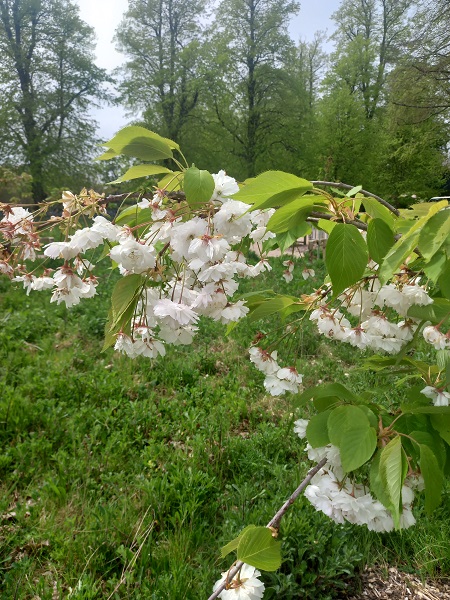
I was also thrilled to see some rhododendron, my first for about three years. I used to love seeing them in the spring in Marsden, usually they have all gone when I get back in June. They are such beautiful flowers, and it was brilliant to see cowslips and blossom as well.

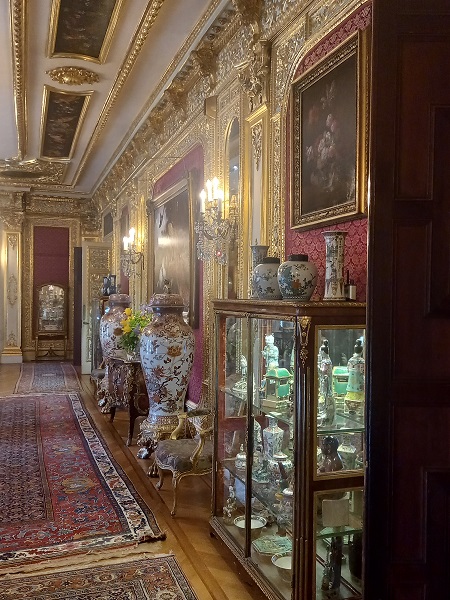
This beautiful house was used as a party house, not a home, and this is reflected in the way that the house was decorated. It had very much an art gallery feel, with some gorgeous paintings, and a very well constructed Tudor style corridor and plaster ceiling. The ballroom shows you the kind of opulence that the guests enjoyed.

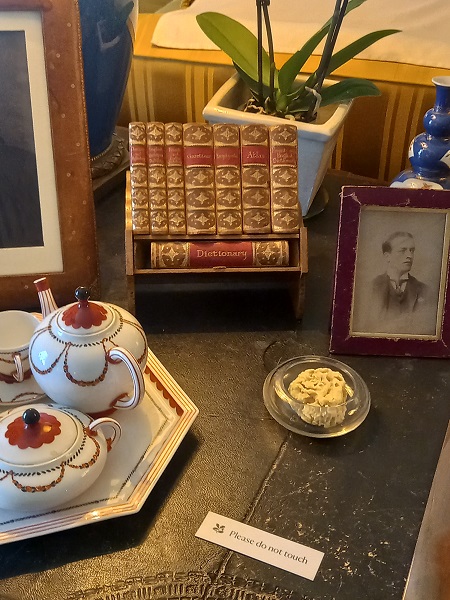
However it was the little personal touches that I liked best. The writing desk with its set of dictionary and thesaurus, along with the sponge for wetting your stamps, and the seating diagram for dinner. Those give you a real sense of who was there, a sense of the place, which is what the Trust aim to do, rather than just be a collection of beautiful things.

I had one night at the Horsley Camping and Caravan Club site, this used to be a fishing lake for a large house, and was used as a recovery camp after the war, when the soldiers used the lake for swimming as well. I love the way that the Club preserve the history of their sites, many have links with WW2, and have been army camps or hospitals.

I was in a lovely little woodland camping area, and in the morning was able to watch two woodpeckers while I ate my breakfast. There were also lots of ducks and some baby geese had just hatched.

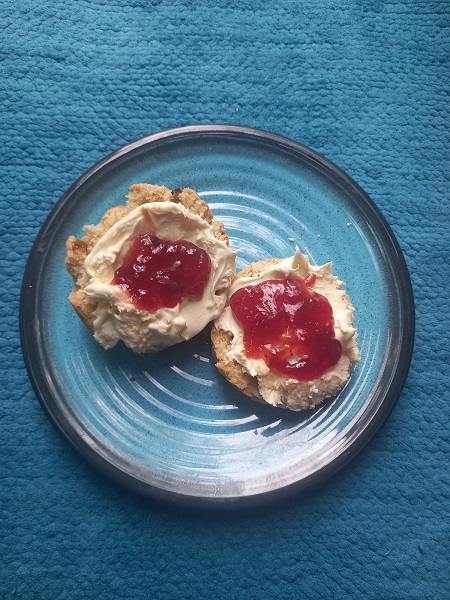
I have recently bought some new plates for my van, I had been looking for some nicer ones since last year, when my friend Sharon joined me in Mablethorpe in a rented van that had lovely plates. When in Yorkshire we found some similar ones and we split the set of four. I am very pleased how well they co-ordinate with the little rug in the van, and the National Trust rhubarb and rosemary scone that I got as a take out from Polesden Lacy was delicious!

The following day was a bit damp as well, so I only stopped at one house on the way to Worcester, but had a lovely drive through Oxfordshire, past Henley and along the River Thames. My chosen house for that day was the Tudor Greys Court, and it was such a contrast to Polesden.

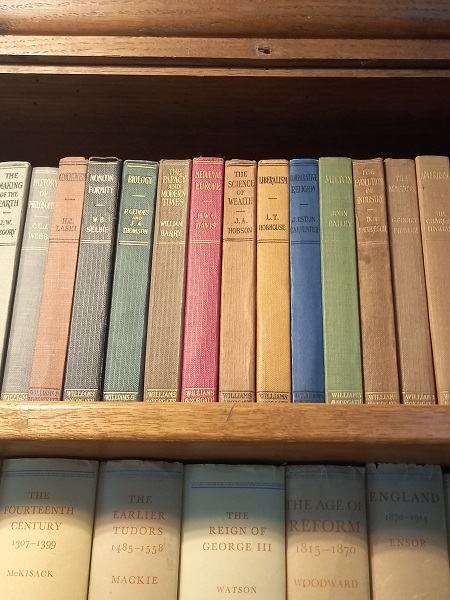
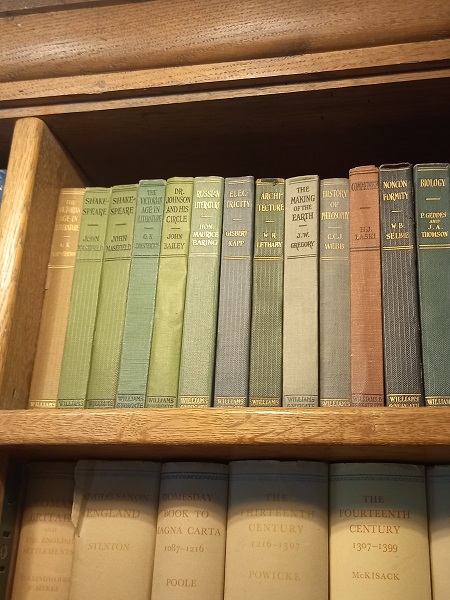
Bought by the Brunner family because they loved the view, the house and outbuildings, along with a walled garden, were just full of personal touches, including some wonderful books in the library.

These aren’t the most beautiful of books but such a lovely eclectic set, with titles such as Nonconformity, The Making of the Earth, and Russian Literature, they look like a wonderful read!

The best thing about the house was the wonderful amount of needlepoint there, done by Lady Brunner. I especially loved the blue and pink rose design that she had clearly taken from the fabric used in the bedroom. There were so many lovely pieces, cushions, rugs and a hat pin pincushion in her bedroom.

It was a really gorgeous property, and also very much a home, full of little treasures such as the quilt made by a volunteer that was on one of the beds, and the cupboards still full of the housekeeping supplies they had used. Although I love visiting the grand stately homes, this one has to one of my favourites, not least because I know who made all of these wonderful things.

I spent the weekend after that at my sister’s, celebrating my great niece’s 2nd birthday, which was lovely. I have never seen a child so excited about candles on a cake! Then it was off for another adventure, and another new campsite, which I will tell you all about next time. Until then take care, have fun, stay safe, and thanks for visiting.

The best aire of the trip.. with bonus goats!

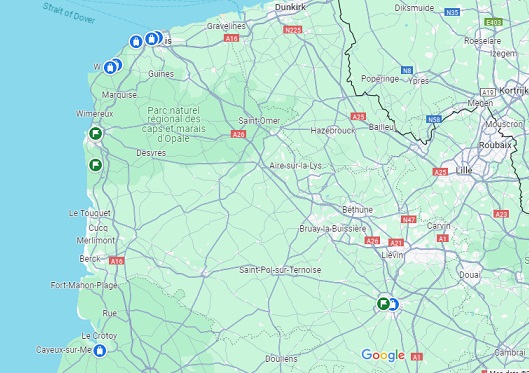
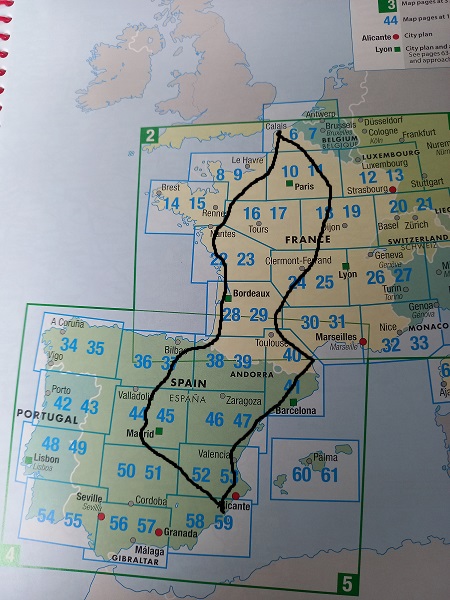
My final two nights in France took me north to the shuttle at Calais. I had wanted to revisit Arras, about 1 and a half hours from Calais for many years as we stopped there briefly on the way to Disneyland with the children about 25 years ago. Arras is where the green flag is at the bottom of this map.

I remembered that it was a very beautiful city, full of Flemish influences, as it is near the border with Belgium, and there was a lot of trade between the two countries in the medieval era. Arras was actually briefly part of the County of Flanders in the 1400s, and was also at one time part of the Spanish Netherlands, until it became part of France again in 1640. Much of the town was sadly destroyed during Word War 1 so has been rebuilt, and there are a series of medieval tunnels under it that were used to help defend the city.

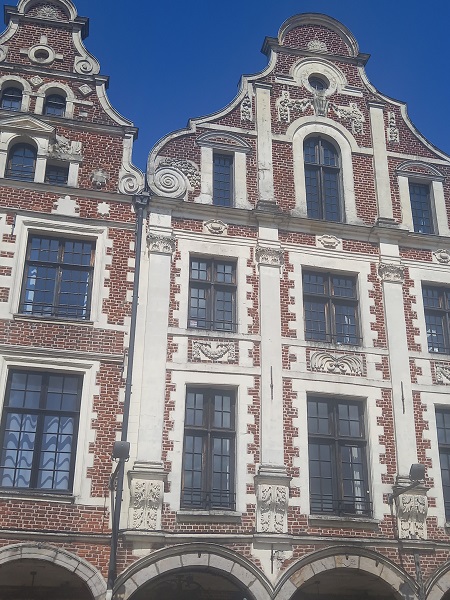
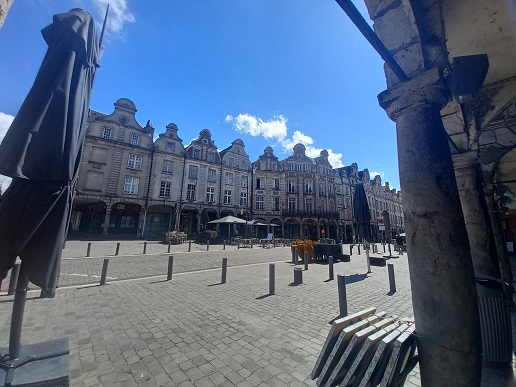
It did not disappoint, and neither did the lovely aire that I found in advance, more on that later. I arrived just before lunch and then it was just a short walk though to the Place de Heros. This, and the neighbouring square, La Grand Place, show European architecture and culture at its best. The beautiful buildings, all the little shops and bars looked so lovely in the afternoon sun.

There was even a fab patisserie, sadly I was so full from lunch I didn’t have any room for the delicious cakes they had there.

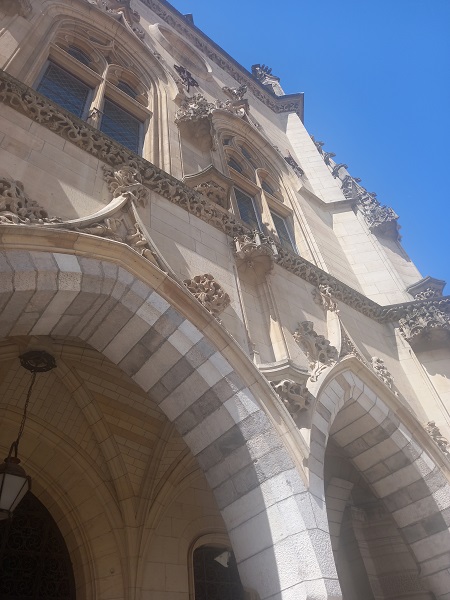
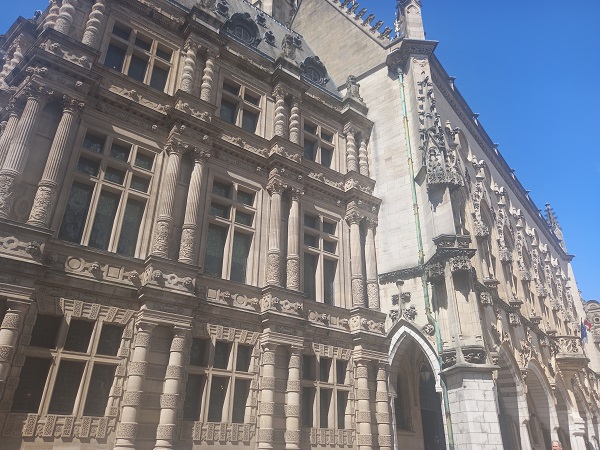
At the end of the second square, there is the stunning town hall and belfry, topped with a golden lion, which is a UNESCO World Heritage site. It was originally built starting in 1463, but had to be repaired after war damage. It is such a gorgeous building, resembling a cathedral, and you can go up the tower of the belfry if you want to.

It was a wonderful afternoon, and I’m so glad I got to visit again and have a wander. I had noticed that it was on my route back to Calais when planning, and when I saw it had a very nice aire thought it would be a perfect stop.

The aire was within a short walk of the town, just off the ring road and although it was in a busy location, the place itself was beautiful and peaceful, bordered one side by some small holdings, I could see turkeys and geese from my park up, and on the other by the River Scarpe.

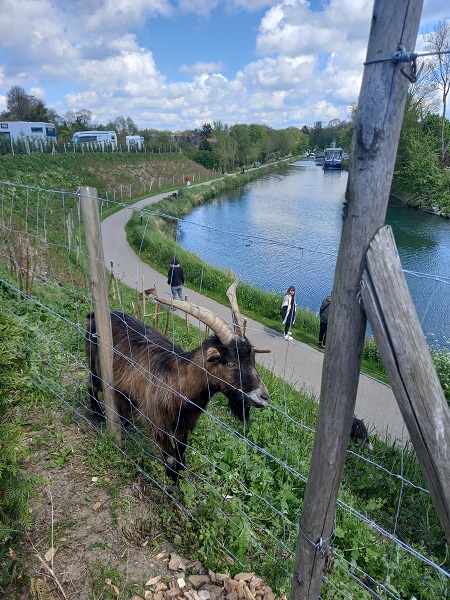
On the banks of the river path there was a small herd of goats, fenced in between the aire and the path, who were having great fun talking to visitors. The aire had lots of space, toilet and shower, and was only 13 euros without electricity. It really was a wonderful stopping point and I would recommend it if you are in the area.

The following day it was just a short drive to Calais, I was aiming for an aire in Calais itself, but it was closed for renovation, so found myself back at the one I originally stayed in last October, the very first stop of the trip, at Wissant, just 20 mins drive from Calais. This aire is still free at the moment, although they are installing electricity and other services. It is quite large and backs onto a small area of woodland so is very sheltered.

It was a bit damp at that point, so after having a nice chat with my neighbour, from Belgium, who was on her way to where I had been near Barcelona, I had a quiet afternoon in the van. I was sorting my visits for when I got back to the UK, and while looking at the map book realised just what an epic adventure this had been.

You don’t sometimes realise what you are doing, until you have done it, but looking at the map I have travelled so many wonderful miles and seen so many amazing things. I have drawn my route in on the photo below, starting in October last year with the French coast part, and coming back via the Spanish one.

Thank you Katy, who is now fully rested and has had a good service, for being the best little vanlife van. I love her to bits, and can’t wait to be reunited with her soon.

Looking at the map as well, I think I’ll go for Belgium and Northern Germany for the next Europe trip, look how tiny Belgium is compared to how far I have driven in the last 6 months! Might even be able to pop into Luxembourg as well 😉

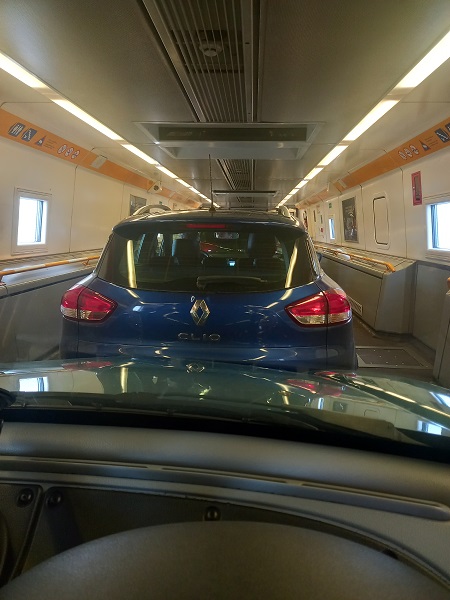
Then it was an early night, and an early start for my last sunny drive on French roads, onto the shuttle and voila England! Here is the now obligatory shuttle selfie!

The journey back in the UK started with the M25 with roadworks, which was a bit of a shock after all those lovely empty French motorways. However I had a brilliant week visiting family, and going to some of the areas we used to travel to when I was a child living in the Cotswolds. I will tell you more about that next time.

We have had some very unseasonal weather here, high winds and torrential rain, which have caused serious floods, so I have been mainly in getting house admin, and lots of knitting done. I have also added to my wool stash, with persuasion, and for a good cause, as the knitting group had a large donation from the husband of a knitter who had died, so I am putting that to good use with more charity hats.

Until next time, have fun, take care, stay safe and thanks for visiting, over 1800 people last month, so a huge thanks to you all, it means a lot.

Stops by the river

After leaving the park up near Guedelon I had quite a long drive to my next park up area, near Reims. At this point I was only a couple of days away from my shuttle booking, so had long driving days, with not much opportunity for sightseeing.

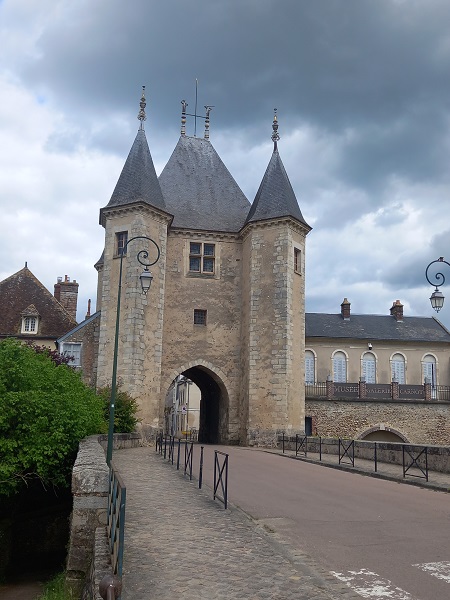
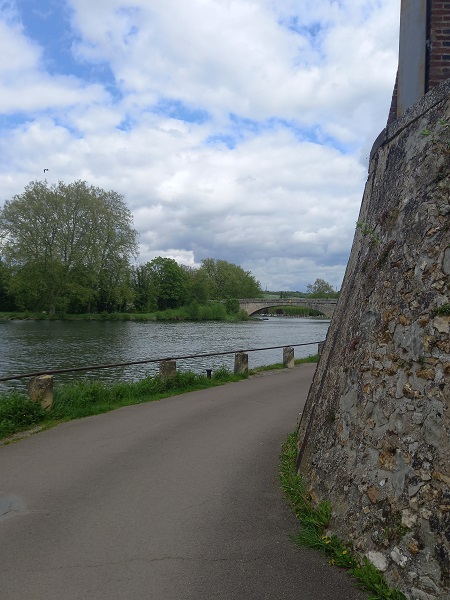
I had chosen a stopping point about halfway for lunch, almost at random, as there were some nice lakes and a river. I was planning to stop further on at a wildlife area but then spotted a wonderful medieval gateway, so parked up and had a wander.

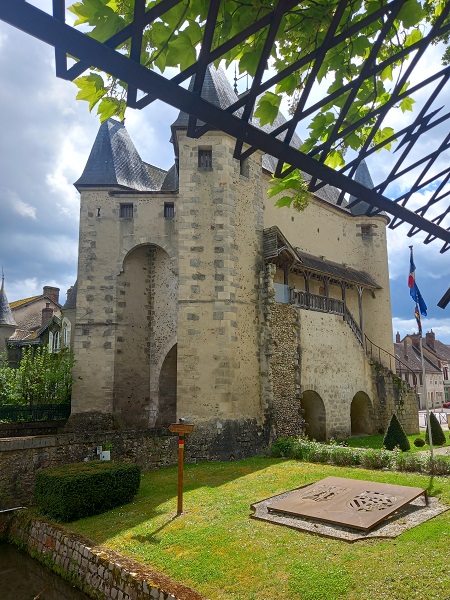
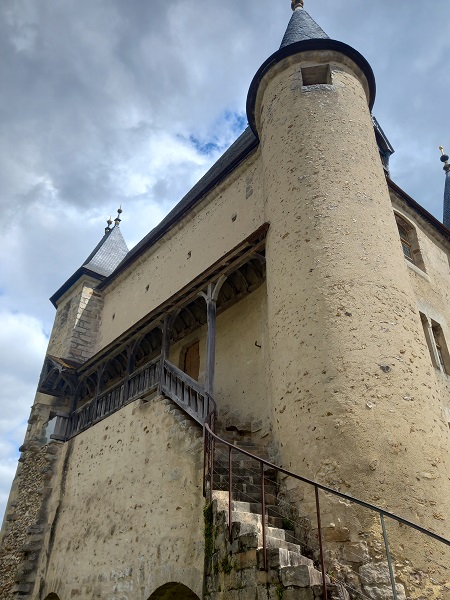
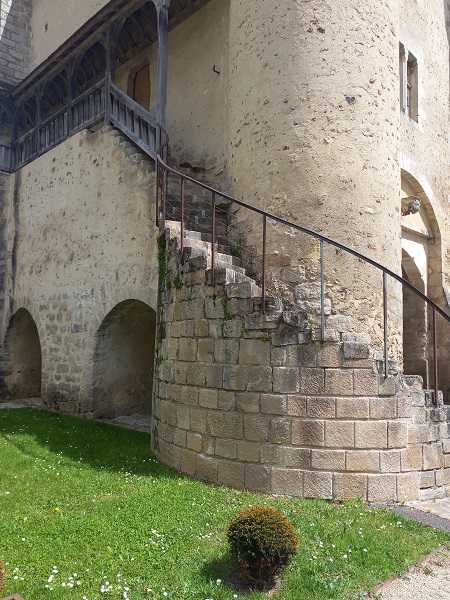
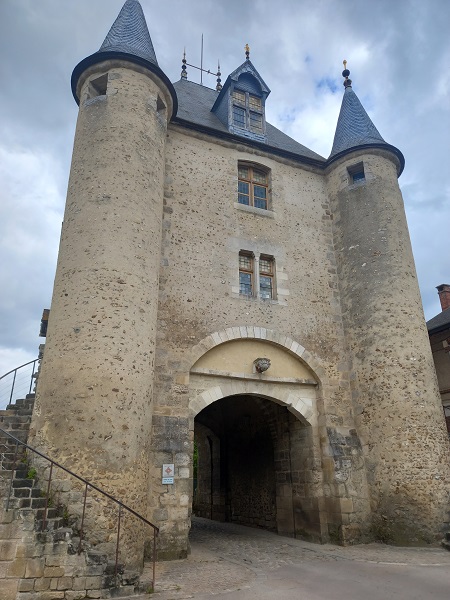
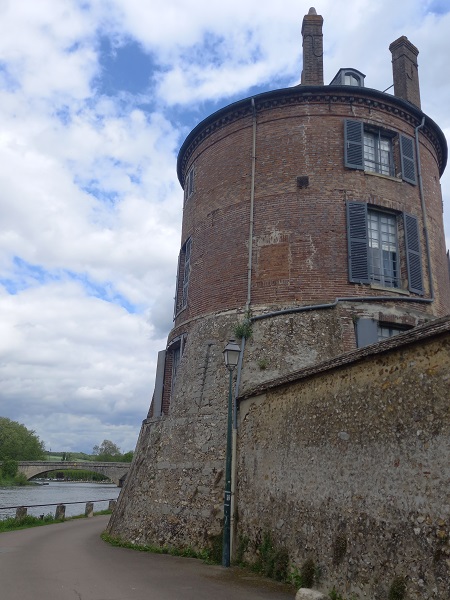
I was in the small city of Villeneuve-sur-Yonne, a popular area for boating, and water activities, and with some of the most impressive city gates that I have seen. They date from the 13th century, although one was rebuilt in the 16th century, and are set each end of the main road through the city. The city had a long history of being a defensive position for the kings of France in the early medieval period.

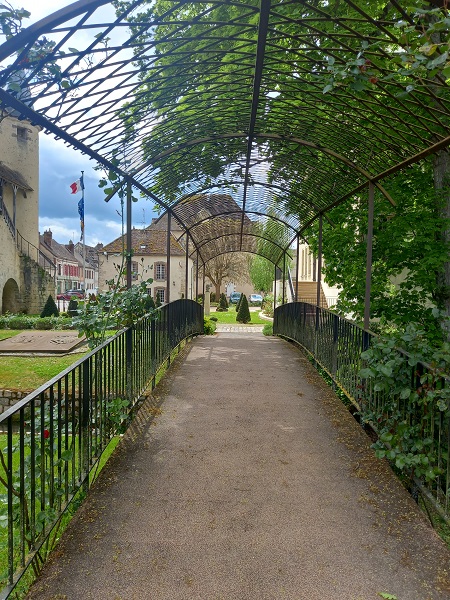
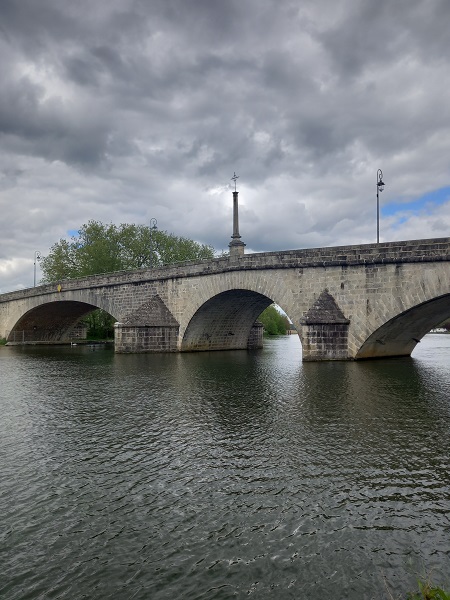
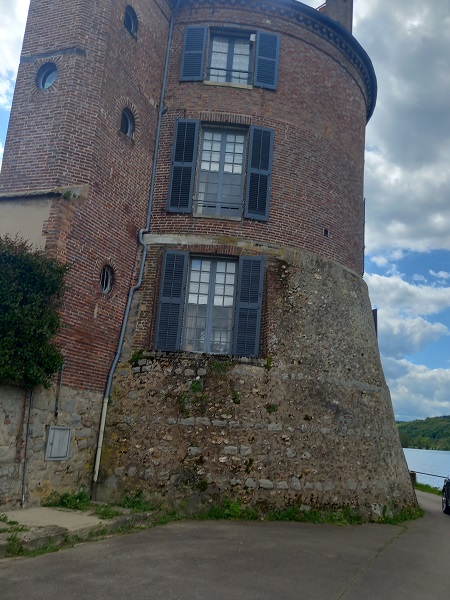
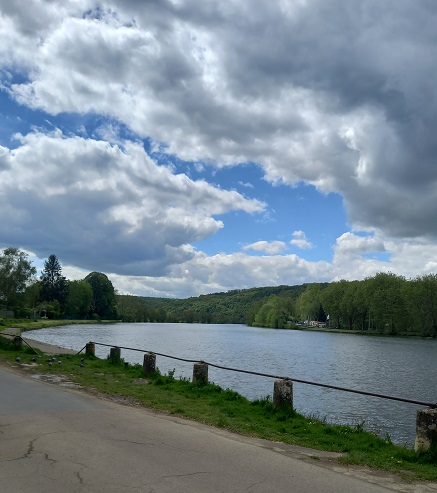
It was a beautiful walk along the river Yonne, not only were the gates very impressive, but there was a fortified tower next to the river as well.

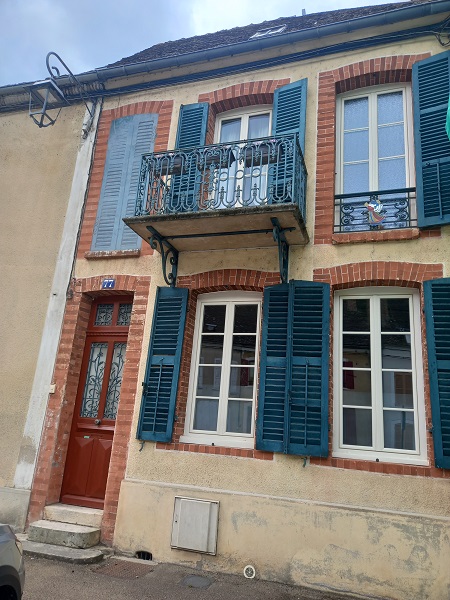
As always there were some lovely buildings, with fabulous doors.

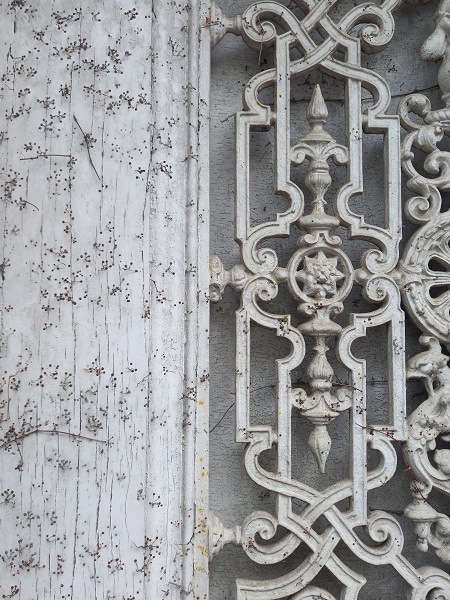
I love the detail on this old door, where the plants have grown over it and fallen off, leaving just the residue of their seed heads.

This is what I most enjoy about travel, especially the trips that I have been doing in Europe, so many unexpected lovely things en route. It has been such an adventure, one that I will remember forever.

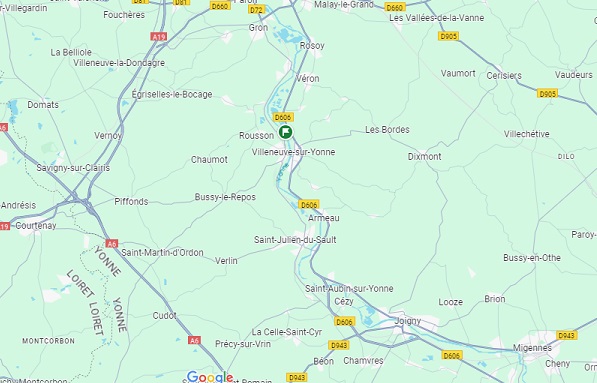
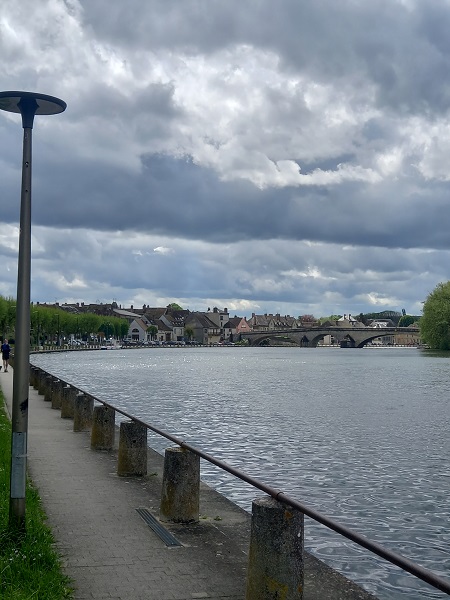
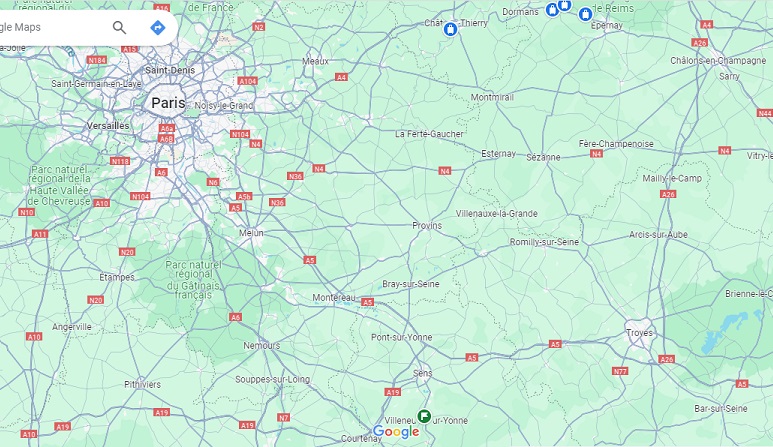
As usual I had a choice of park ups identified for the night, but chose to go to a paid aire at a small town called Chateau-Thierry, on the banks of the River Marne. You can see the location just at the top of the map below.

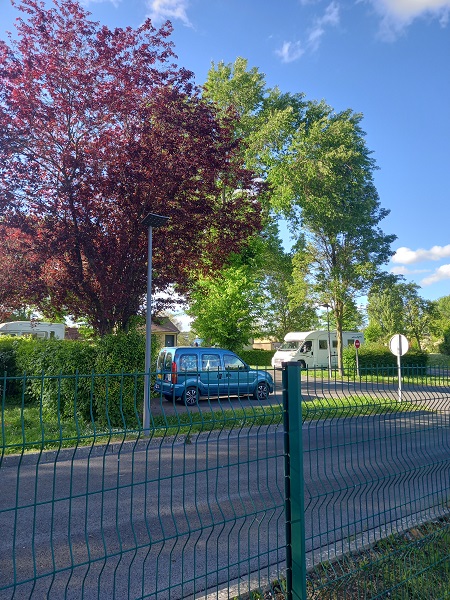
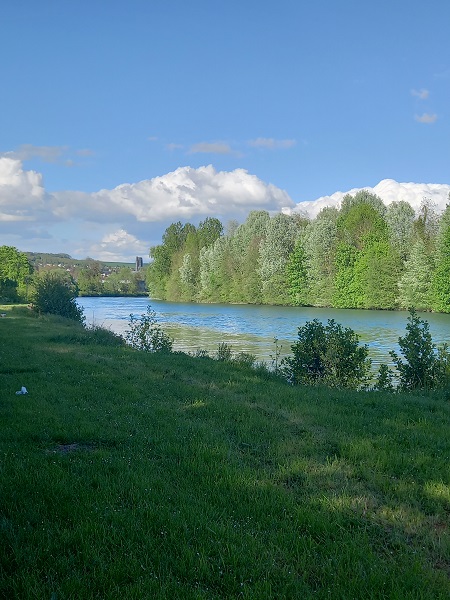
It was a beautiful little place, with showers and toilet, as well as a washing up area, for only 8 euros a night. I spent a very peaceful night there, after a walk along the river.

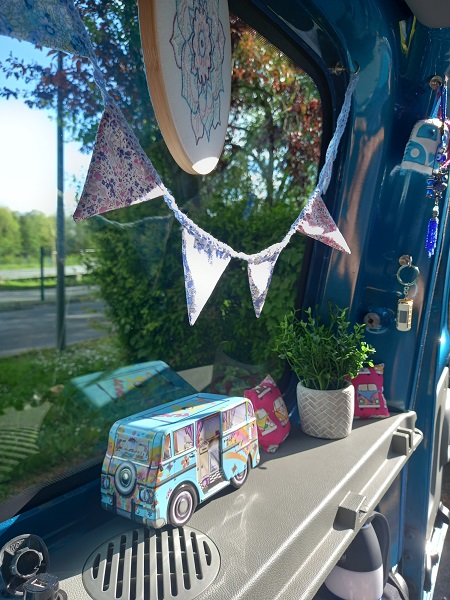
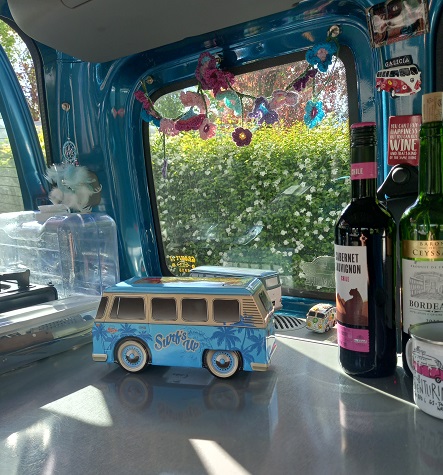
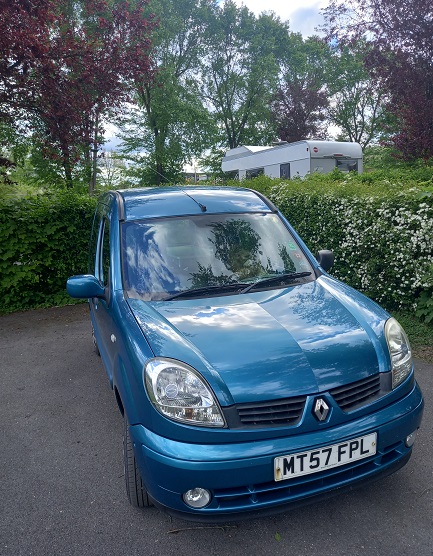
I do so love spending time in Katy, she is looking wonderful now, with her new crochet bunting and new tins. I need to take a photo of my latest tin, and the last one, as I am now completely out of space, but in the pictures above you can see the new one that my friend Linda, in Spain, gave me last year, just below the fabric bunting. She collects vintage tins but passed that one on to me as she thought it was perfect for Katy.

It was so lovely, just sitting in the sun, reading and knitting. I am really enjoying my time here in Spain, but am so excited to get back to travelling in a few weeks, I have so many wonderful places to explore this summer.

Life here has been nice and quiet, with lots of crafting time. I am knitting quite a lot for charity donations, mainly premature baby hats, and in preparation for our Christmas fair for the food bank charity here. I shall be back at the weekend, with the last of the posts from France, of the final days of the trip.

Until then have fun, take care, stay safe and thanks for visiting.
The old and the new, the stone edition

As you may know, I have been a medieval re-enactor for the past 21 years. In that time I have visited many, many castles, in various states of repair, and been privileged to camp at some of the most beautiful ones in the UK as part of our events.

For us as re-enactors we spend a lot of time in what is know as experimental archaeology, which is taking the archaeological evidence that exists, and in our case evidence from written accounts and paintings, and trying to recreate garments, weapons, fighting techniques, encampments and battles. One of the places that has been on my wishlist, and that of I think every other re-enactor I know, is the castle of Guedelon in France.

Guedelon was started in 1997, as an experimental archaeology project, to try and build a castle, using only 13th century techniques. It is impossible to describe the scale of the project, I have watched documentaries on it, and seen lots of pictures, but visiting was a dream come true, and I am so glad that I realised that my route would take me near enough to visit. The castle is located near to Orleans, at the lower green flag on this map below.

Seeing it was amazing, from the nearby quarry, where all the stone is cut and moved, to the scaffolding and pulleys needed to work on the higher levels, just absolutely mindblowing.

There is no end date for the castle, as there is no idea when it will be completed. It was fascinating to see how they were working on the higher levels of the towers.

Aside from the castle itself, which is a feat of engineering like nothing else that I have ever seen, there is a whole village surrounding it, full of the craftspeople needed to support the stonemasons. Basket weavers, carpenters and blacksmiths, work as they would have done, making and mending tools and equipment to support the stonemasons.

There are a few concessions to modern heath and safety, such as face masks, eye protection and sturdy boots, but otherwise it is how it would have been circa 1315. In this photo below the blacksmith is using the giant bellows on the left to enhance the flames, that was fascinating.
My favourite part of the village was where the painters and dyers work. They are using only natural dyes and available minerals, to produce all of the colours needed.

The paint workshop had fantastic displays of how they grind all of the minerals to make the 15 pigments they are using. They are currently painting panels to cover the windows, and one of the finished rooms inside the castle had already been painted.
It was a very emotional experience for me, not only seeing the work that all these hugely dedicated people are doing, but also thinking about the many cultures that still use these methods of construction, for whom this is daily life, not some experiment.

Nearly 16 years ago I was lucky enough to be part of Project Nepal, a Scout led initiative, where after two years of planning and construction training, a group of 40 of us flew out to a Nepalese village and built a school hostel, using many of the methods that these craftspeople were using.
The quarry reminded me very much of the pile of stone that faced us when we arrived, that we sorted into size, and we used wooden scaffolding and mud mortar. We were working with the local people, and every day women from the village came to teach us how to use the mud mortar, and build the walls, while the local stonemason trimmed the blocks.
Due to time constraints we did have access to one modern stone saw, but as the fuel for that also had to be brought from the nearest road, five hours walk away, we could only use it sparingly. It was one of the most amazing experiences of my life, and the two weeks I spent living in the village some of the best times I have ever had. Definitely a life changing experience. If you would like to read more about this, I have two pages on this blog, one on the project itself, and one on the time in Nepal, which you can access from the top of the main page.

The above picture shows the 8 women from the Scout group, and the local women we worked with, just before we left the village.

For my overnight stop after the wonderful trip to Guedelon, I drove a few miles so a very lovely little village, to another Park4Nite find, in the village of Triegny.

This was a brilliant park up, with a bonus toilet which I wasn’t expecting, in a very quiet, peaceful, and very pretty village. Although the park up is free, they ask for donations to help fund trips for the local school, and that you use the local facilities, which I was very happy to do. After a lovely restful night, and a trip to the village shop the next day, I continued on my travels.

I am coming to the end of blogging about my trip back through France, just a couple more posts and then I can get back to all the ones I need to catch up on. There may actually be some crafting posts sometime soon, as I have been spending some lovely time knitting, and at my sewing machine. I can’t remember when I last posted anything that I have made! I also have some fab Trust houses to show you from my time in Surrey and the Cotswolds.

I will be back soon with more French medieval gorgeousness. Until then, have fun, take care, stay safe, and thanks for visiting.