Semana Santa – part two

Our second glorious fiesta was on Good Friday, in the town of Lorca. We have visited Lorca twice before, once to see the goldwork museums there, and once for the fiesta.

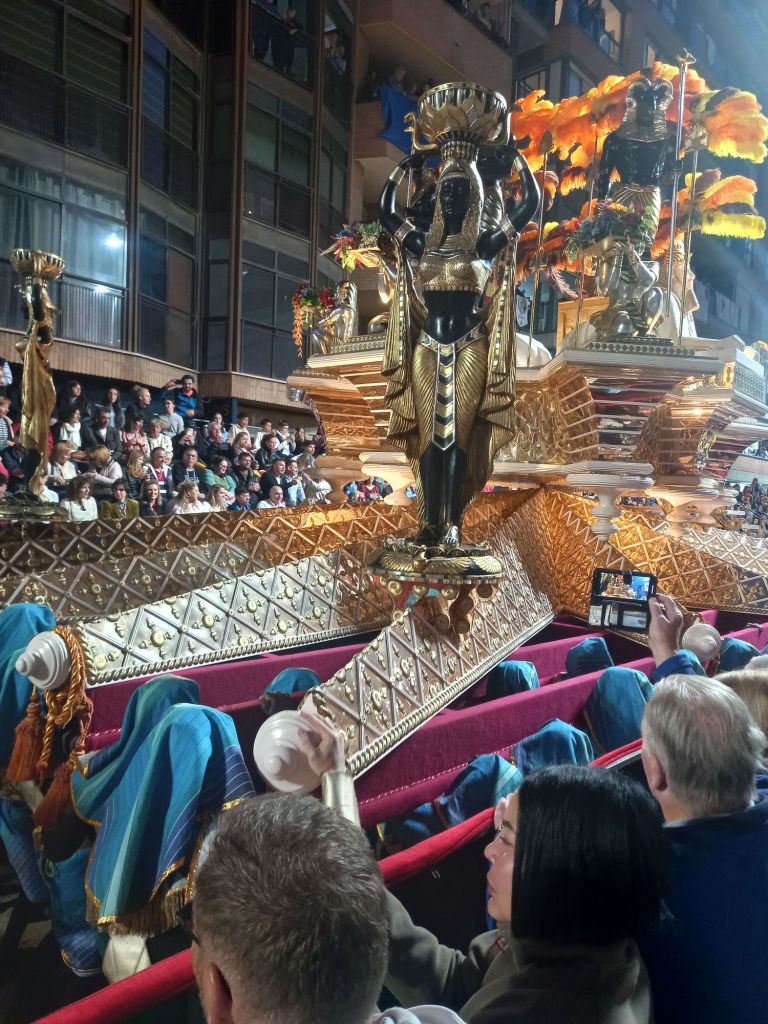
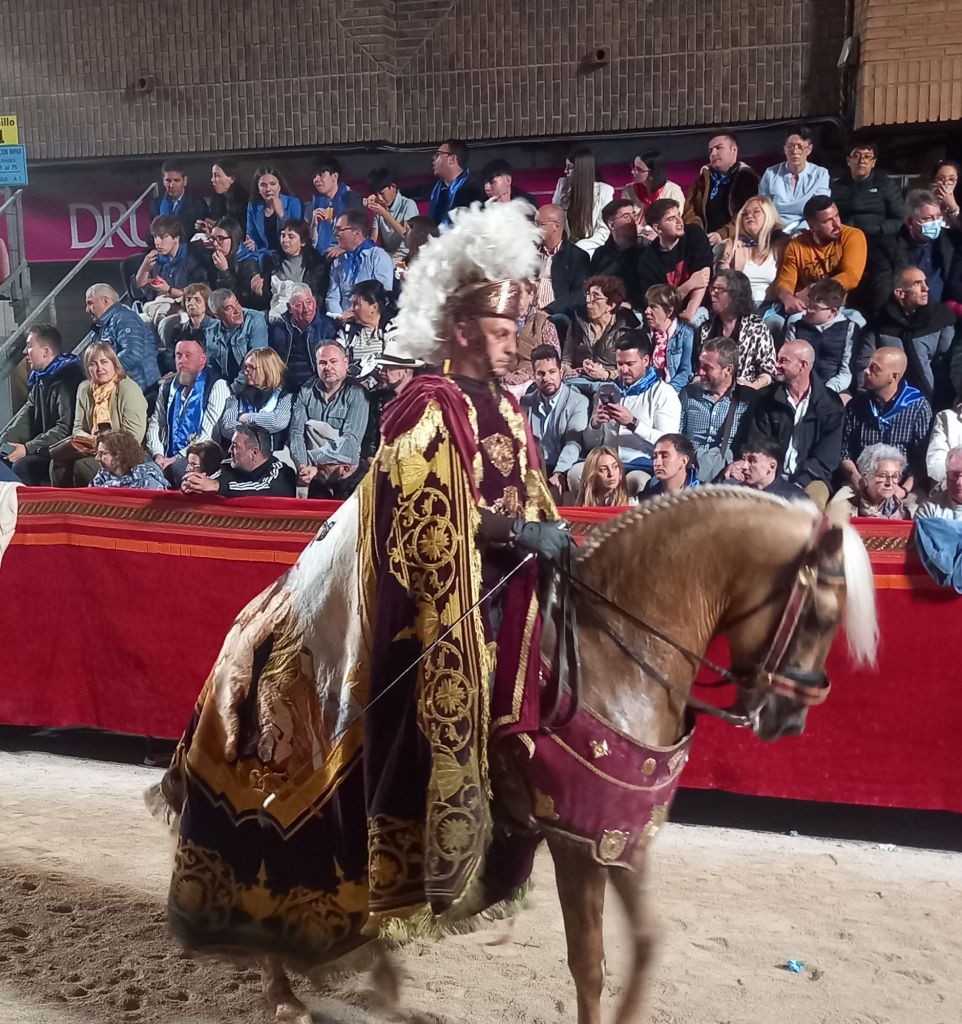
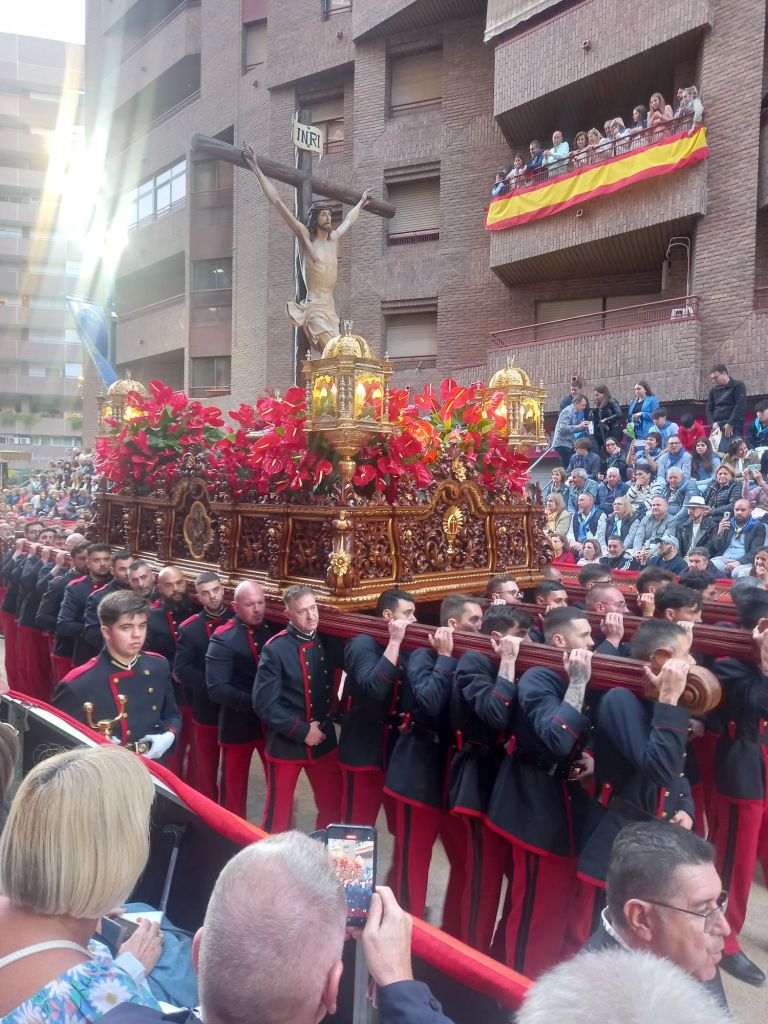
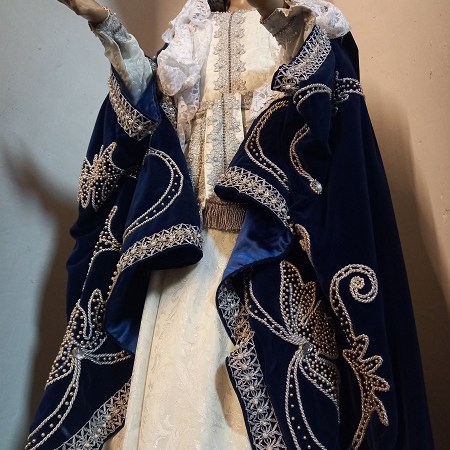
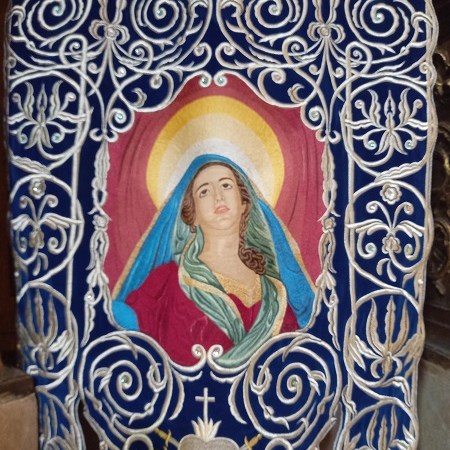
This time we had seats, in a fabulous position near the start of the parade. This fiesta is one of the most amazing celebrations I have ever seen. Not only are there all of the stunning icons, but also floats with Ceasar, Cleopatra, various other Roman and Egyptian nobles, a Byzantine queen and the Pope!

The scale of this is hard to take in, and also includes chariots, incredible horse displays and groups of the iconic Semana Santa headdresses. It takes three hours to pass and just gets better and better.

This year, we had time for a good wander round before everything started, and a close up look at the floats.

They are even more incredible when you consider some are carried for three hours, on the shoulders of both men and women, particularly women for the icons of the Virgen Mary.

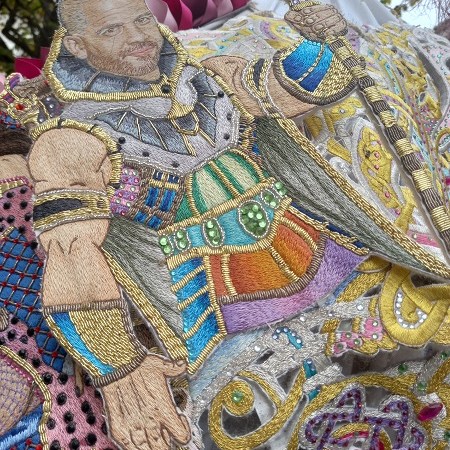
The costumes are just mind blowing, from the opulence of Cleopatra, to the detail of her companions. The embroidery on the charioteer’s cloaks, details different parts of the Bible story.

It is all just magical, and a testament to the many hours of work by the very talented embroiderers who made this possible, some of whom we met on our first visit. 

Life here in Scotland continues to be very good. We have been busy getting the campsite to look its best after the long

Meanwhile I hope you are all having as much fun as I am, and thanks for visiting. 

Semana Santa – part one

Being a Catholic country, Spain celebrates Semana Santa, or Holy Week, in the most wonderful ways. I have shown you some of the fiestas before, however this year I got to visit a new one.

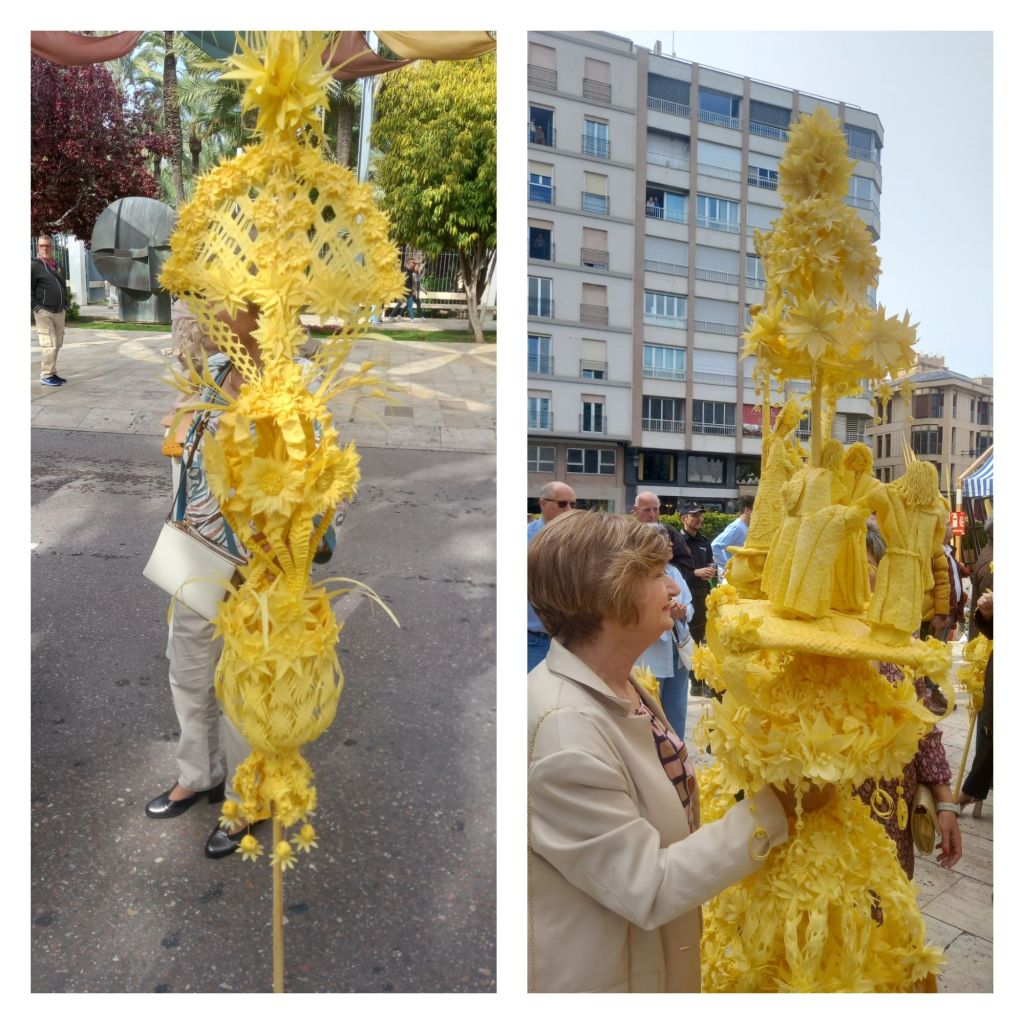
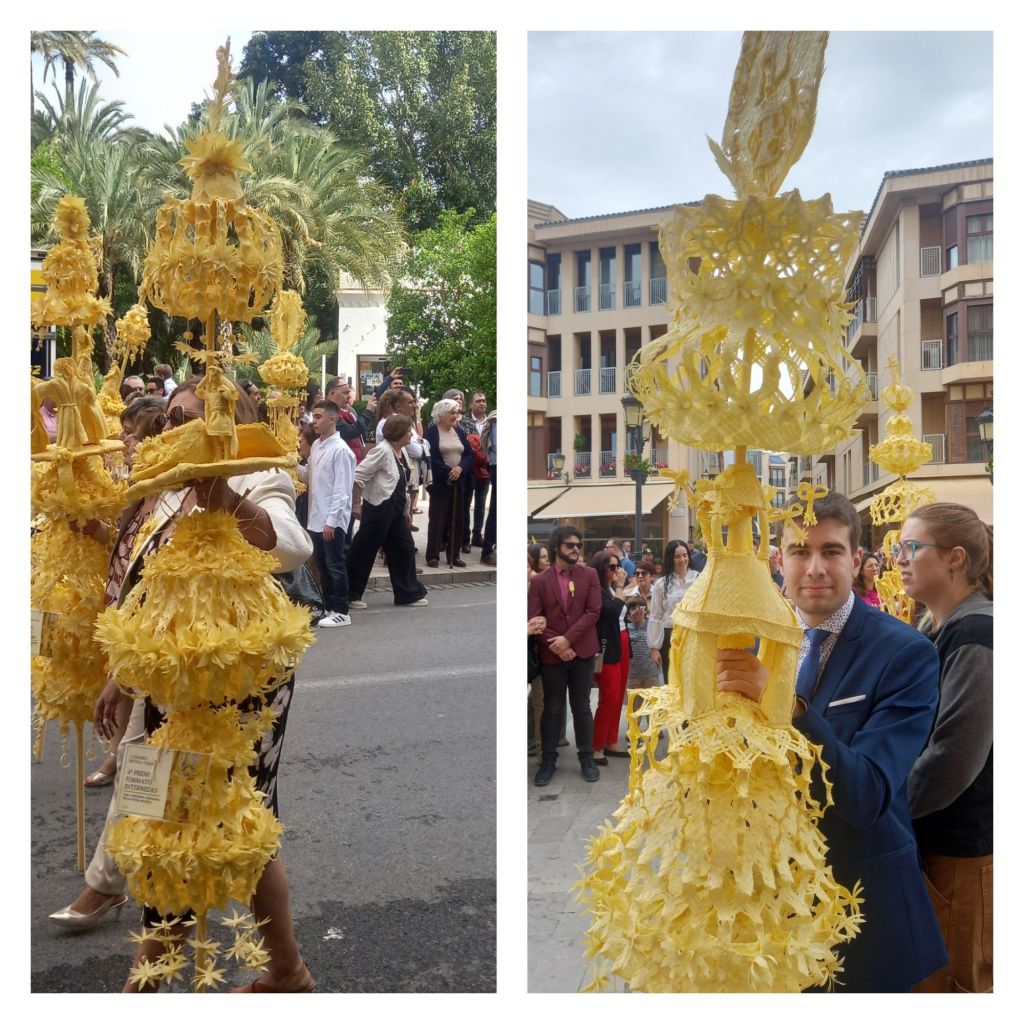
Palm Sunday is celebrated very uniquely in the nearby city of Elche, with a procession of palm sculptures.  The palms are wrapped in bags for month beforehand, to bleach the fronds, then woven into the most incredible tall sculptures.

Some are abstract patterns, some represent scenes from the Bible, but all are detailed, taking around two weeks to make.

The slow procession is accompanied by bands, and an icon of Jesus, around the centre of the city, before finishing in the cathedral. 

A wonderful morning, and well worth seeing, the sheer dedication of the weavers is incredible. 

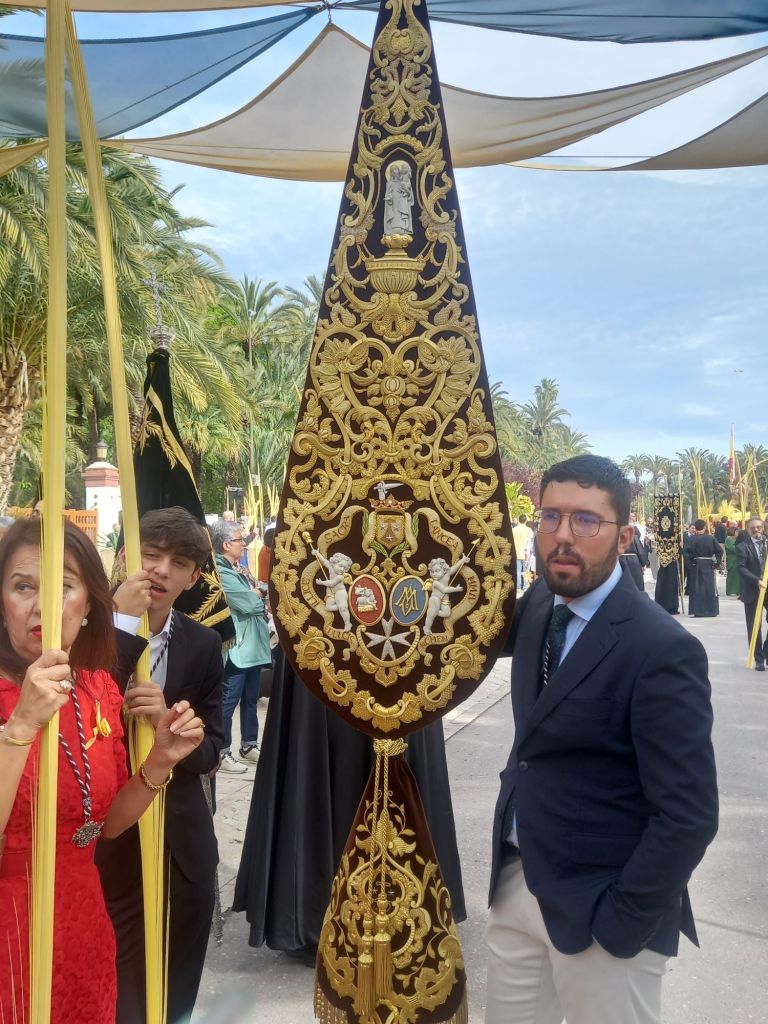
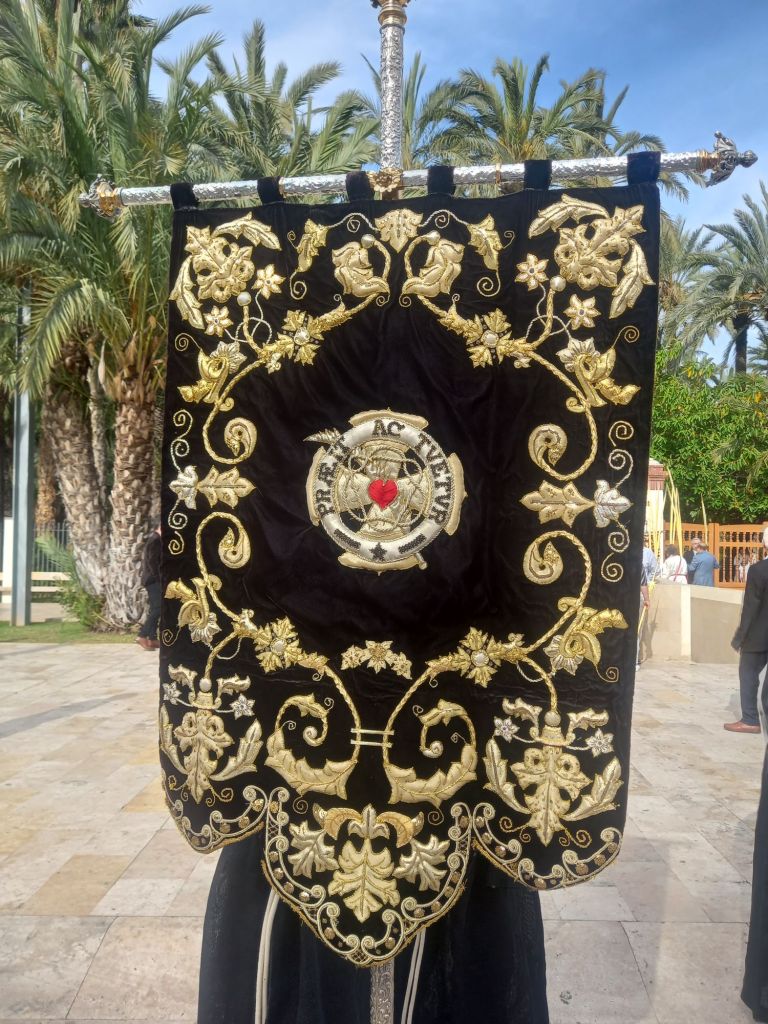
There are of course many magnificent gold work banners to accompany the parade.

Hope you are all having a lovely time whatever you are doing, and thanks as always for visiting.

Minarets and museums

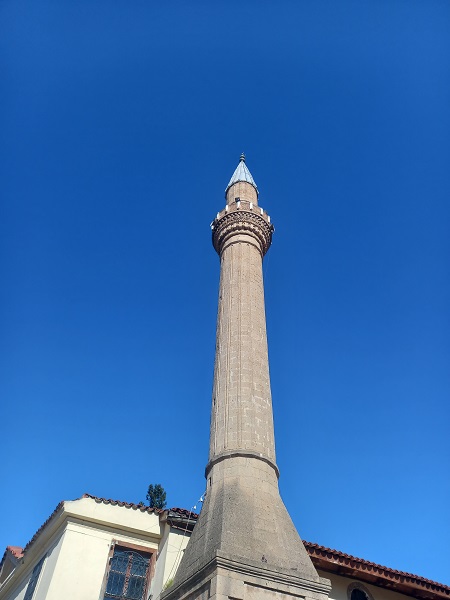
Antalya Old Town is full of the minarets of mosques, and towers dating from pre 20th century development of the city. This gives it is a beautiful skyline, especially against the blue.

I have peeked into most of the mosques, but they are very much working places of worship, rather than for tourists, and although visitors are welcome, I have not wanted to intrude.

Ramadan starts tomorrow, and in the main city park there are lots of stalls being set up, and a funfair. I am not sure if this is for the celebration at the end of Ramadan, or something that happens for the busy spring and summer period, as it is a popular tourist destination.

At the back of the Old Town is an area with one of the biggest mosques, with a very large fluted minaret, called the Yivlimnare Mosque, which you can see in the bottom left photo above. There is also a very beautifully restored mosque and tomb complex, which is now a museum about Dervish culture.

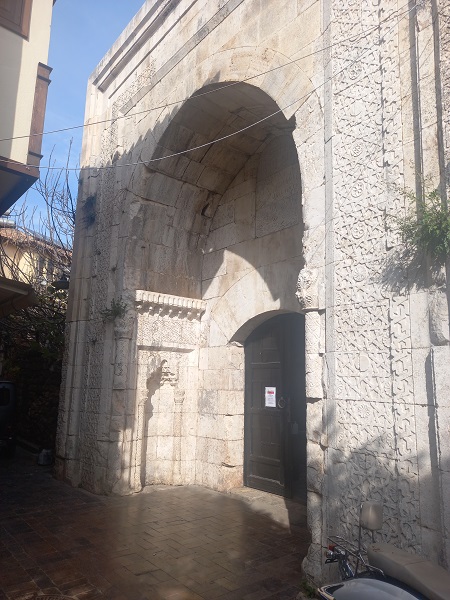
This area is still being redeveloped and also contains the remains of one of the madrassas, or religious schools. All that is left is this carved gateway.

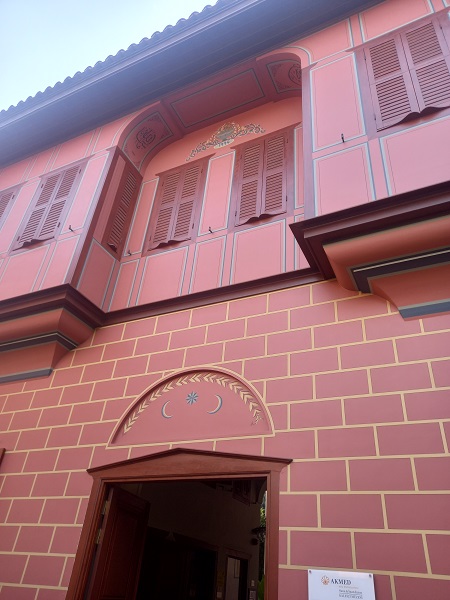
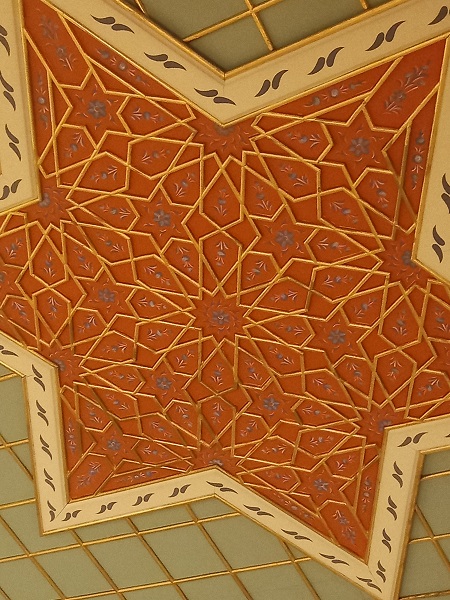
I have spent most of the last few days here visiting museums. Although small, they have been beautifully set out, and have contained lots of my favourite kinds of displays, textiles. They are housed in original mansions within the Old Town, so have been restored to show some of what family life would have been for people who lived here.

The Ethnography Museum is right next to the port. Housed in two buildings there are really interesting displays of crafts such as weaving and woodcarving.

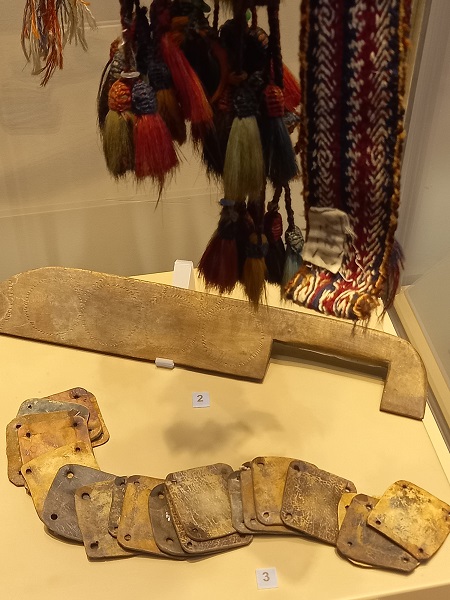
It reminded me seeing the tablet weaving cards in the top left photo below, that I did try and get to grips with this for medieval re-enactment, but never managed. These are useful for weaving strips which can be used for straps, or sewn together to made bags or saddles.

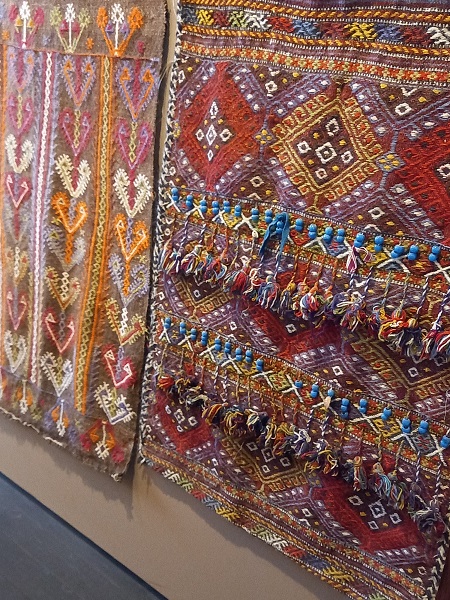
The loom is being used for a tufted carpet rather than a woven one, and you can see the individual knots of different colours on the warp.

These socks, which are knitted on five needles look very much like the ones my Norwegian friend in Spain knits, it must be so tricky doing patterns in the round, I can barely manage rib!

One of my favourite displays was this one showing a house bathroom, with the many different sorts of taps used. The household would also use the public hammams, so would take their soap and loofahs in a tin with them. Its little things like this that really bring daily life home to you, that little container and the old soaps, a simple thing but so relevant.

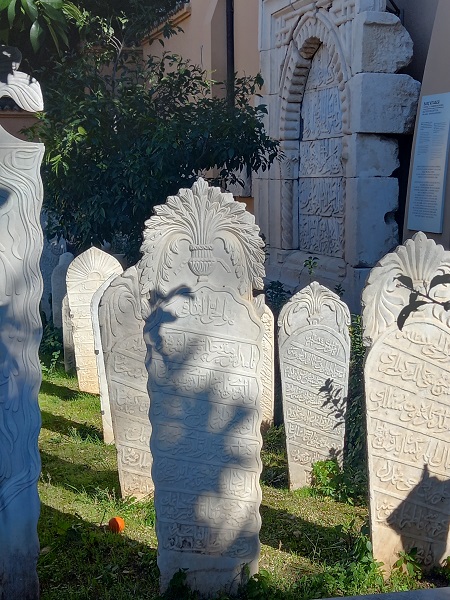
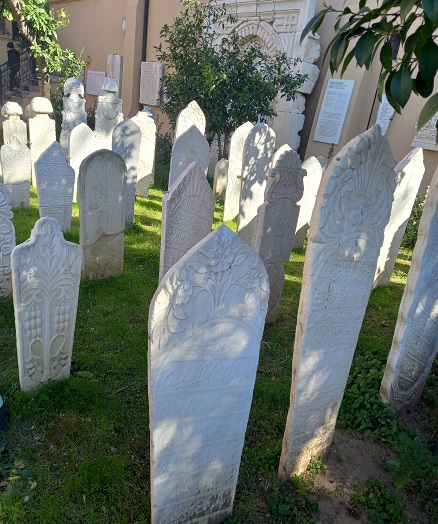
The gardens between the houses had a collection of Ottaman era tombstones. I saw some of the these when I was in Larnaca in Cyprus, at the fort. The men’s ones are those with turbans, and the women’s are decorated with floral shapes. If they died unmarried they were made to look like veils at the top. They are so gorgeously carved with different complex motifs.

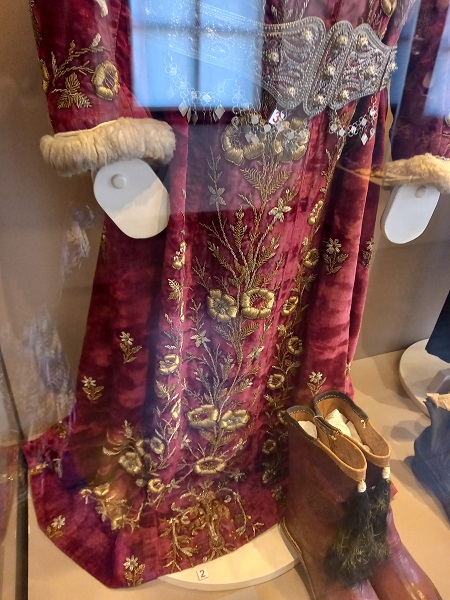
The textile display was small but had some goldwork and embroidery displays.

This whitework was really interesting. There appears to be a combination of stitching and pulled work, much like Hardangar, which is very much associated with Northern Europe.

This white and goldwork robe shows so clearly the problems of looking after old textiles.

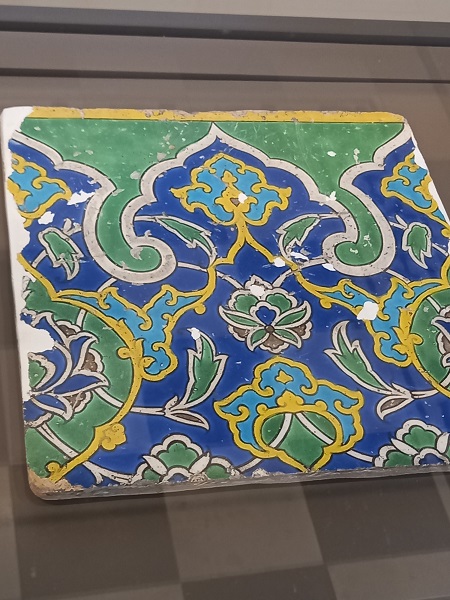
The museum answered the question of why I’ve not seen much in the way of tilework here. Even in the older restored houses it is absent. As it was so much a feature of decoration in other Islamic countries I have visited, I was surprised not to see more of it. The museum’s ceramics display stated that due to the ceramics experts keeping their methods secret, much of the craft had died out here.

There is certainly a lot of beautiful ceramic ware for sale here, but it is very similar to what we have in Spain, so may be made elsewhere. I am trying to resist the urge to buy more of these bowls, just gorgeous!

The other museum belongs to the University here, again really well restored, and displaying life in the courtyard houses of Anatolia.

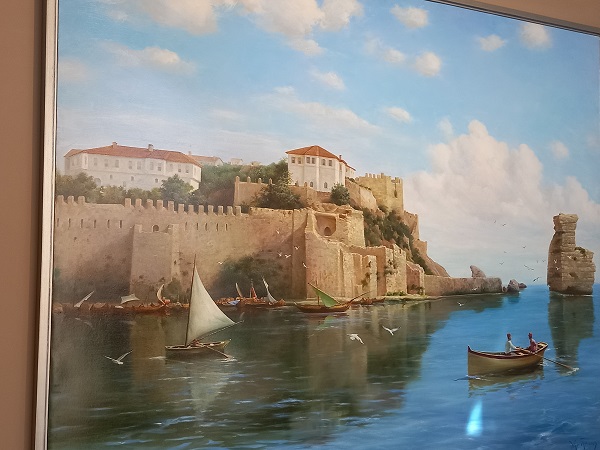
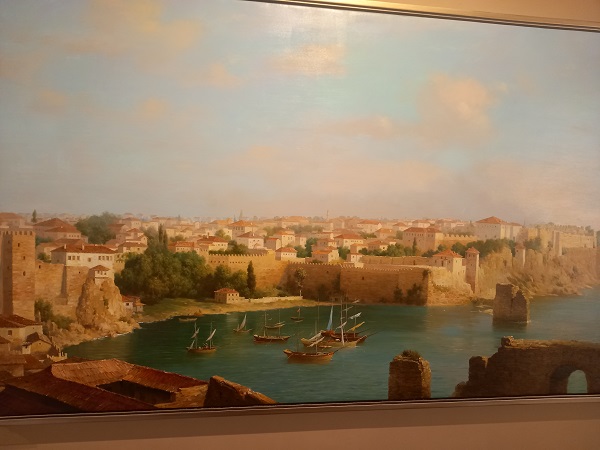
I love these paintings of the port, no date but I am assuming late 1800s, before any modern development.

Although I couldn’t get any very clear pictures, there was a display of an embroidery frame with a box of thread next to it.

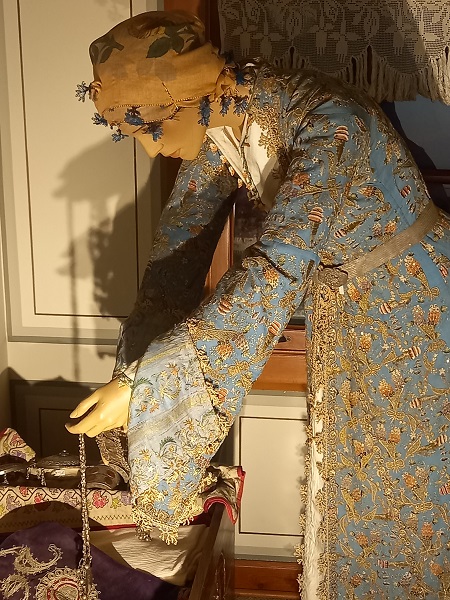
Much of the embroidery I saw was on very fine materials, often gold and metal work on silks and fine linens, such as veils and gowns, so I assume a lot of it was frame based.

This picture is dated 1931, a woman and her friends. Possibly they are dressed for a wedding as the information was about wedding rituals.

There was also quite a lot of regular count work, that looked very reminiscent of cross stitch, but on evenweave, and some vibrant examples of flowers.

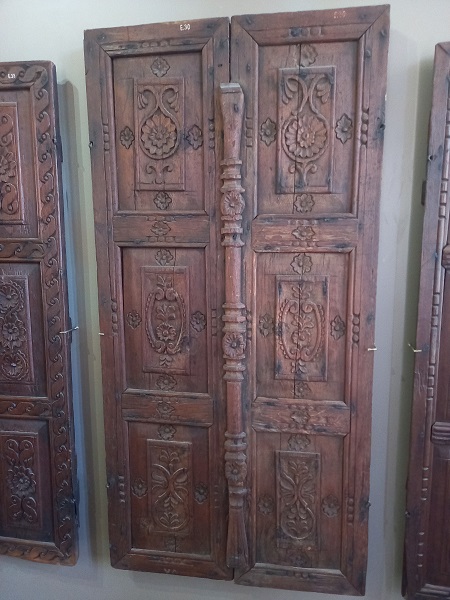
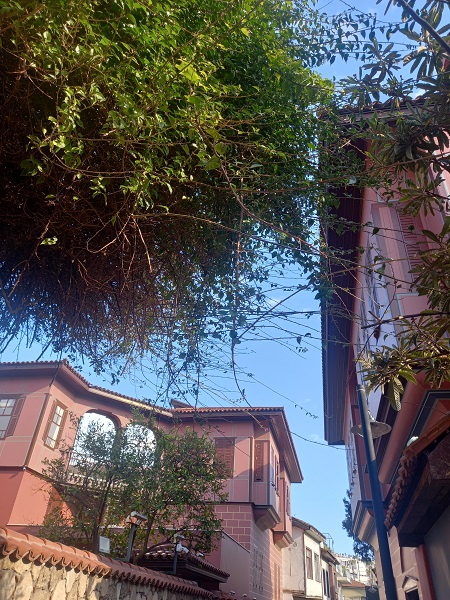
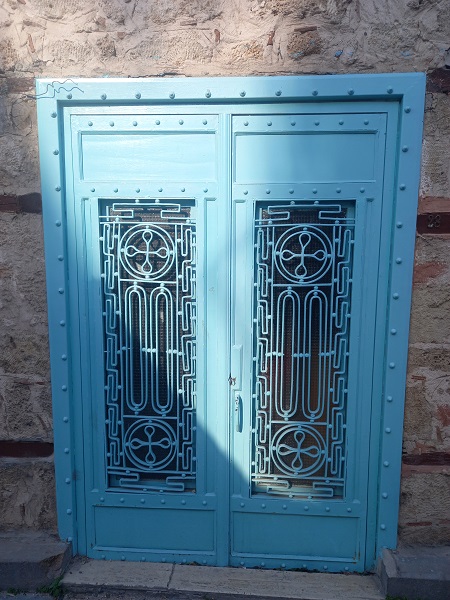
As well as the focused visits much of my time has just been wandering again, noticing little things about the architecture. I have discovered even more lovely windows and doors 😉

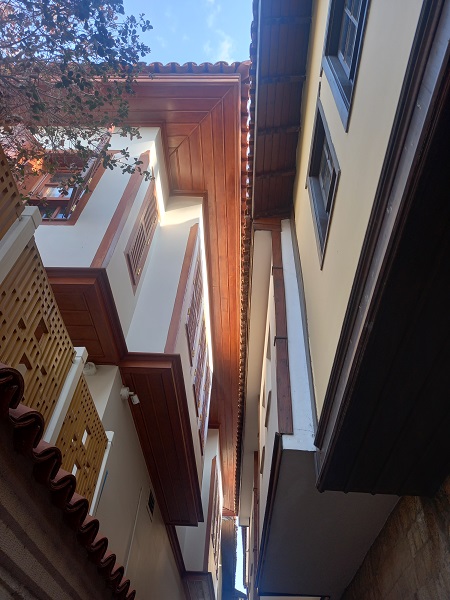
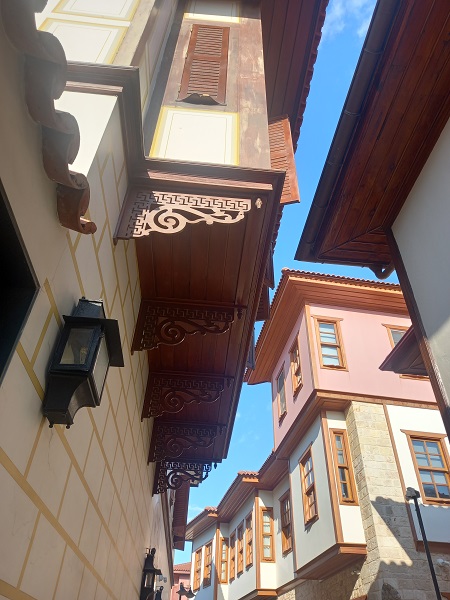
There are so many gorgeous little things that people probably don’t even see unless they look up. Like these carved supports for the windows, and the way that the roofs nearly touch in some places. It must make restoration really tricky here. I thought the same in Morocco, everything must have to be done with such care.

I have also had a little wander around the more tourist focused area, up at the top of the Old Town. Antalya is definitely the place to come if you want jewellery, I have never seen so many jewellery shops, and there are also some amazing sweet shops.

With those, and the incredible bakeries and cake shops you could end up eating something different every day for a month. There are so many varieties of sweet stuff here, baklava, rice puddings, meringues, as well as so much Turkish Delight of all shapes and colours.

I stopped one day for a coffee just because I loved the cups it was being served in, so detailed. I’m not a huge coffee fan, and when I do drink it I have it very milky, so the little cubes of Turkish Delight were much appreciated. It was so strong ;-0

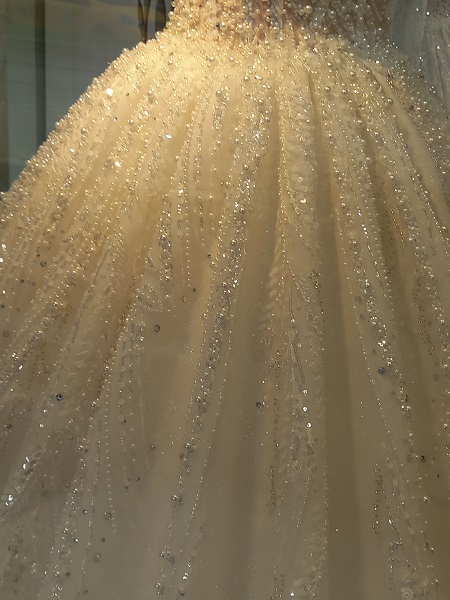
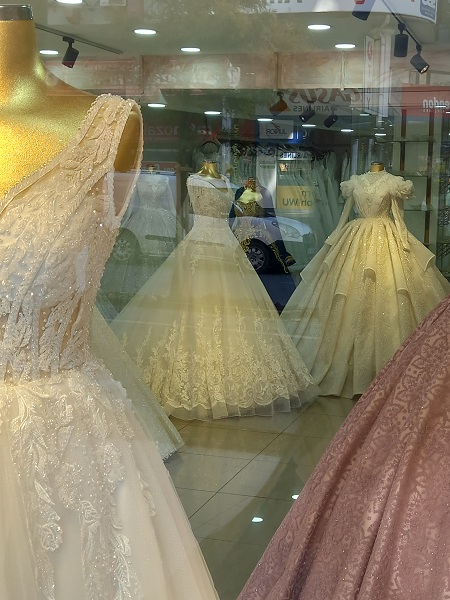
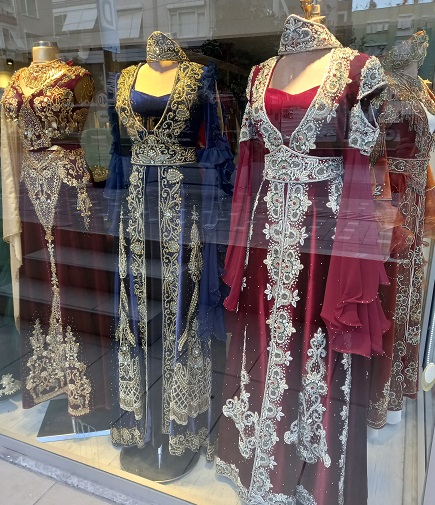
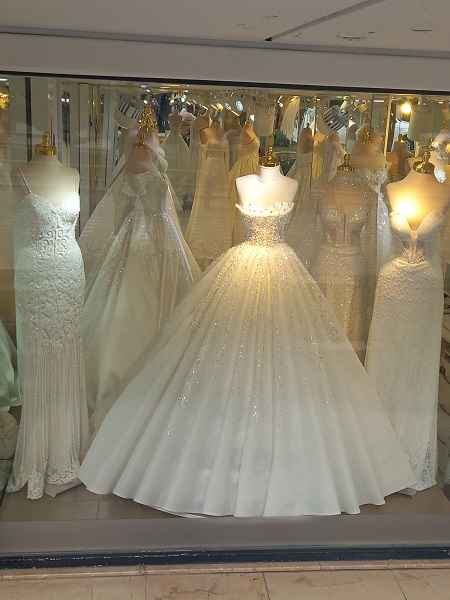
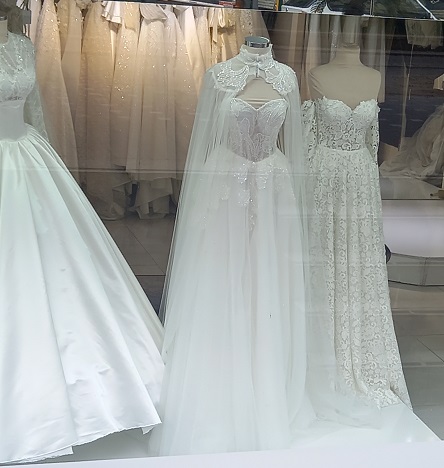
The other thing that has amazed me about Antalya is the sheer amount of bridal shops here, selling the most amazing gowns. There is one street near my hotel with about 30 shops. Most are white or cream dresses, but there are some more traditional colours displayed as well. If you are wedding shopping come and do it here, I saw one shop advertising bride AND groom outfits for £500 in total 😉

The detail in the beading is amazing, so you can guess what I’m going to be making next for my Barbies!

I only have two days left here. There is one more museum to see, and I shall have a last wander round the port to look at the mountains. The weather is going to be glorious tomorrow, 20 degrees, so you may well find me with a cold beer in a bar overlooking the harbour. I shall really miss these mountains. Turkiye you have been brilliant, and I am looking forward to more of your joys on future visits.

I do have a few more mountains coming up in the next few months though, and am excited that next week I am reunited with Katy, and we are on the road again. It seems forever since we were adventuring, and we are going somewhere that holds a very special place in my heart. I have been before, but not to some of the area, so am very excited. All will be revealed in a couple of weeks!

Until then, as always, have fun, take care, stay safe and thanks for visting.

Exploring Andalucía

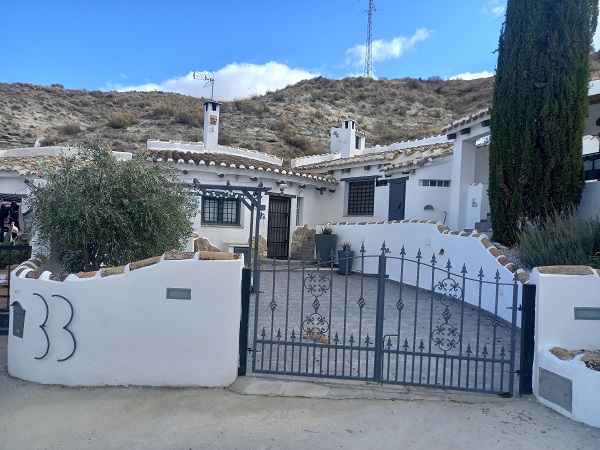
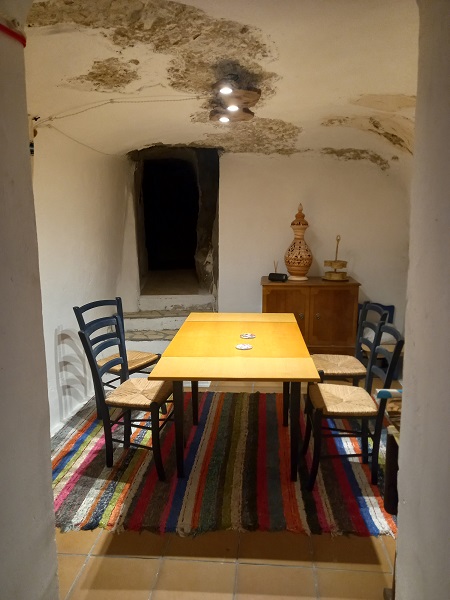
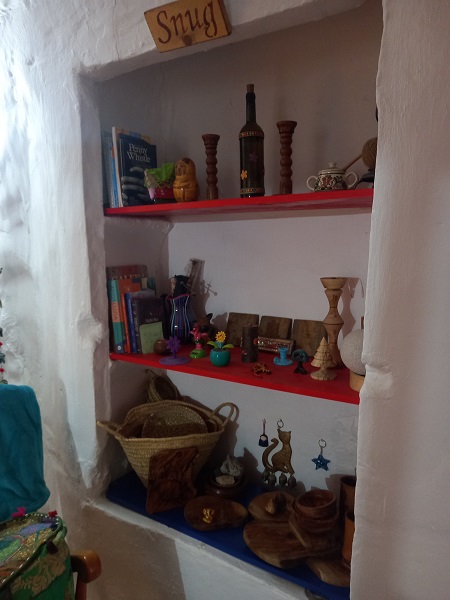
On my return to Spain in October I had two trips to Andalucía in the first two weeks, firstly to visit my brother Ben, and sister-in-law Amanda, at their cave house in Galera. I have been to visit once before, three years ago when I first retired, but they have done a lot to the house since, literally creating new rooms at the back of the cave. Their dining room is now just about completed, and they have some steps up to the first floor, which is still a work in progress. The first two pictures below show some of the other cave houses in the town.

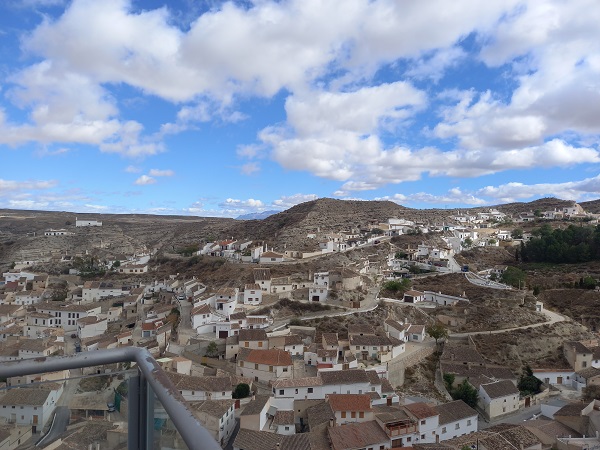
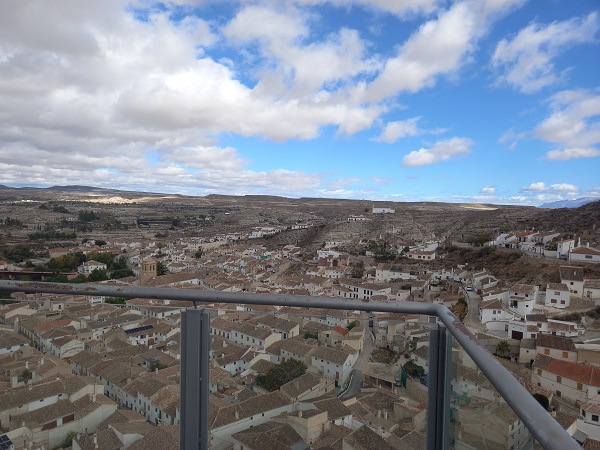
The town is so beautiful, with its houses snaking up the ravines of the valley. There are so many cave houses here, due to the rock being soft enough to dig into, and so many different varieties of house to admire. This visit the mirador, or look out point, had been completed, so Ben drove us up the winding tracks to the start of the path. Such amazing views, like looking at a living map of the centre of the town, and the stunning mountains and cloud formations all around.

We had a visit to the nearby town of Huescar, for the weekly market. This is still a very traditional area of Spain, although there are quite a lot of people of different nationalities in Galera who have bought cave houses, the surrounding towns are very much rural Spain, with tiny traditional shops, and most of the weekly shopping done at the market. It is a gorgeous place.

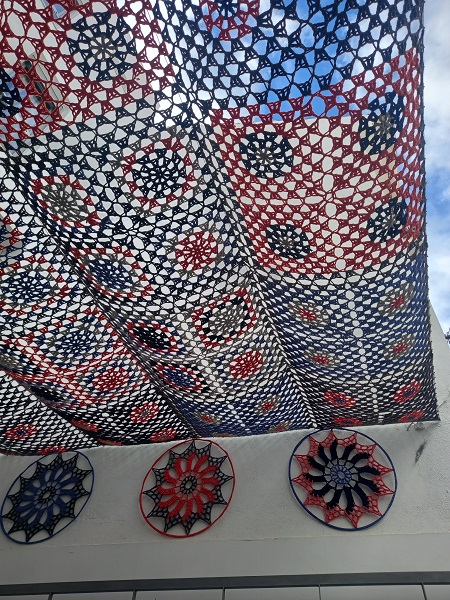
There was one area, next to a wool shop that I was very good and didn’t go into 😉 that was decorated, both with a crochet sunshade, and a painted wall, celebrating local women in different occupations.

Lots of lovely food, and one of my brother’s famous bbqs, as well as drinks at the bar and hotel, and we were back to La Marina, four hours on the coach for a week at home before our next trip.

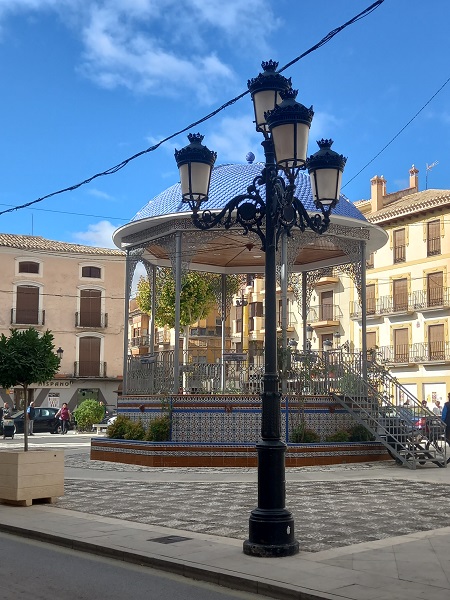
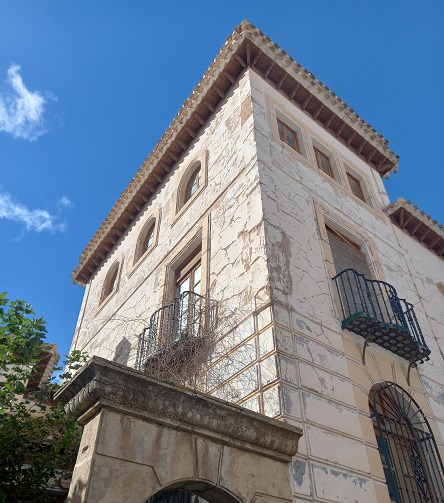
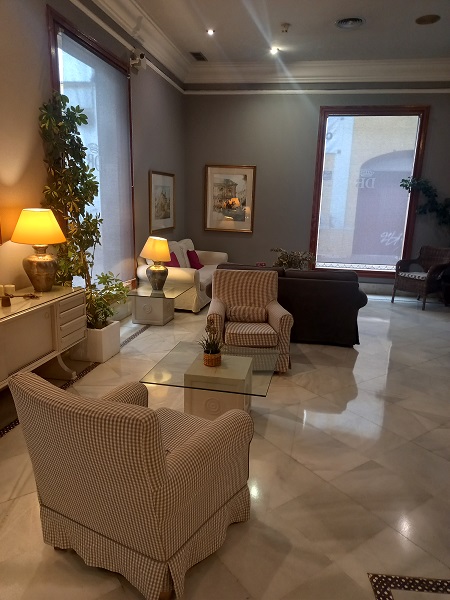
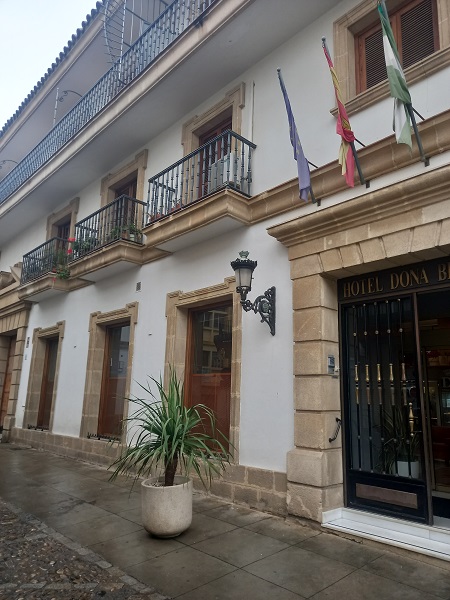
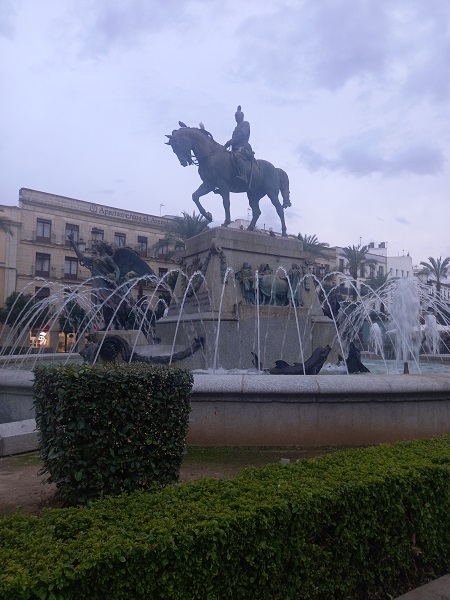
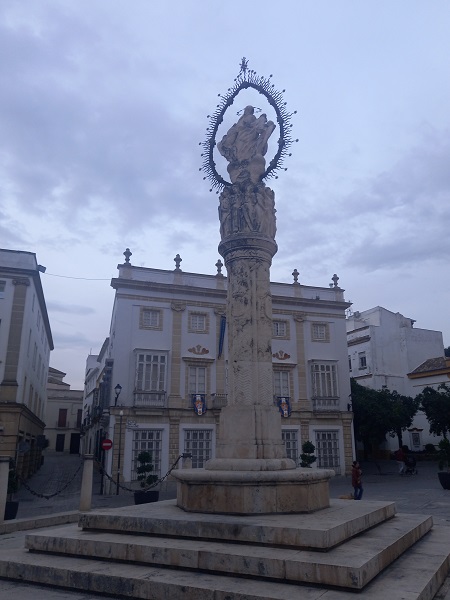
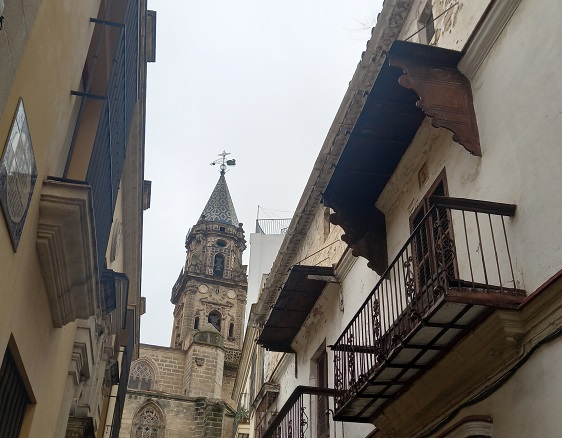
Jerez and Cadiz have been on my wishlist for a long time, to complete my exploration of the southern cities of Spain. This time we went on an organised coach trip, which meant another ten hours there, through the gorgeous Sierra Neveda, to Jerez where we were based for the three nights. The hotel Dona Blanca was beautiful, and situated right in the middle of Jerez.

We spent the first day visiting Jerez on our own, while the rest of the group went to Seville, as we had been there a few years ago. It was quite wet, but luckily we were able to see most of the things that we wanted to see.

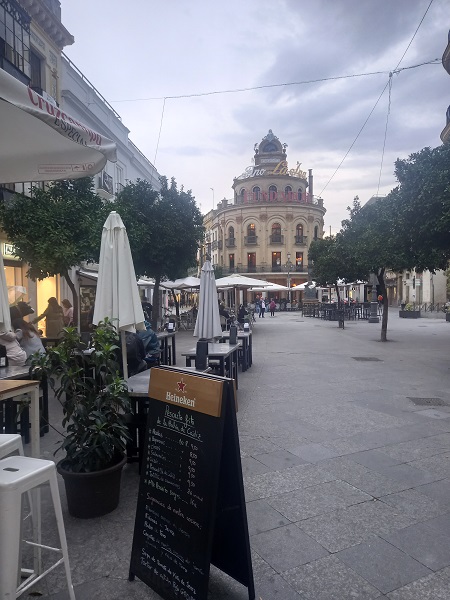
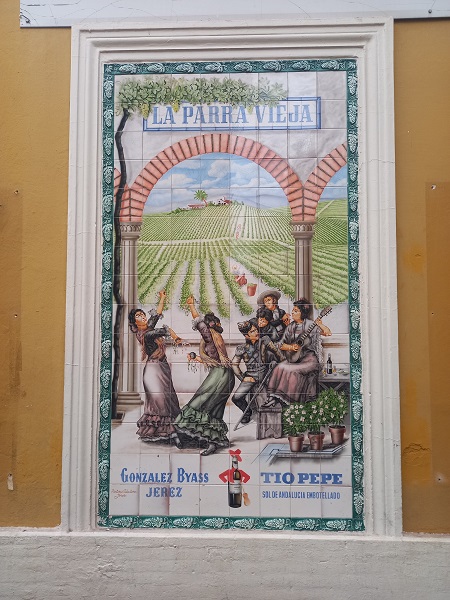
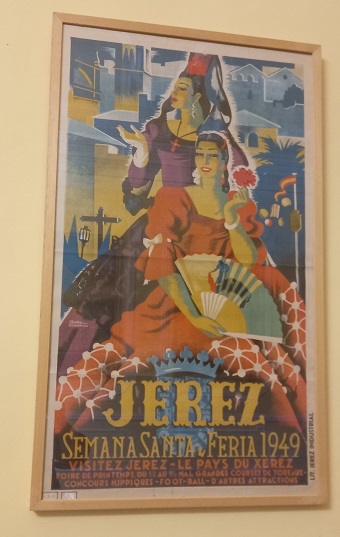
It has such grace as a city, very small, but famous for the production of sherry. I loved the old tiled adverts that were still on many of the buildings. We did end our day sipping sherry at that gorgeous bar that you can see in the photos in the middle of the top row above, while people watching in the main square.

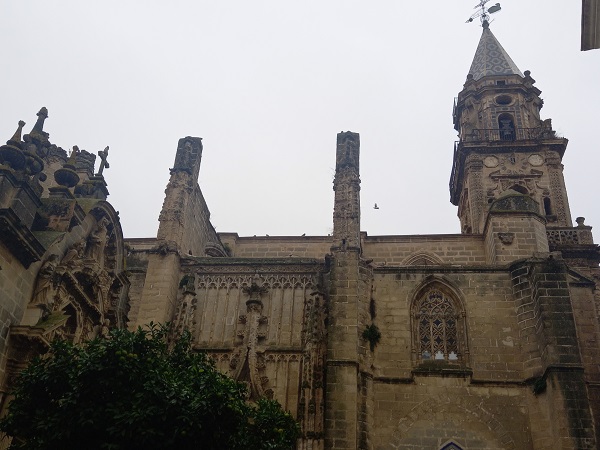
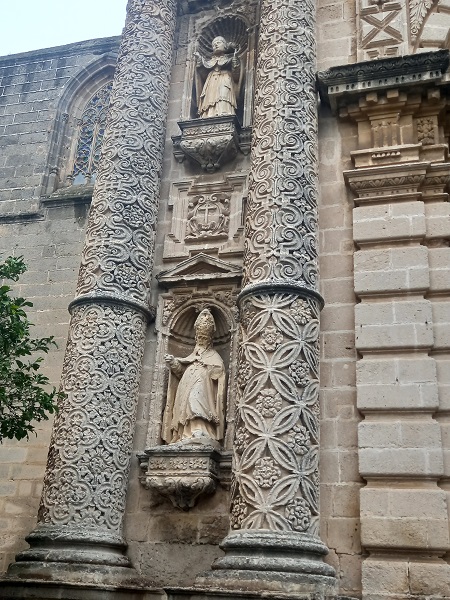
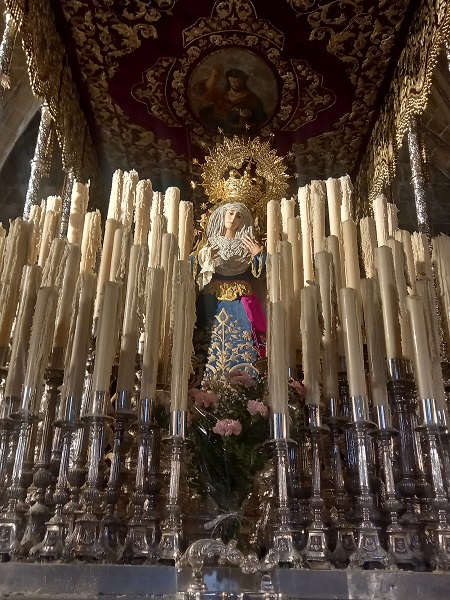
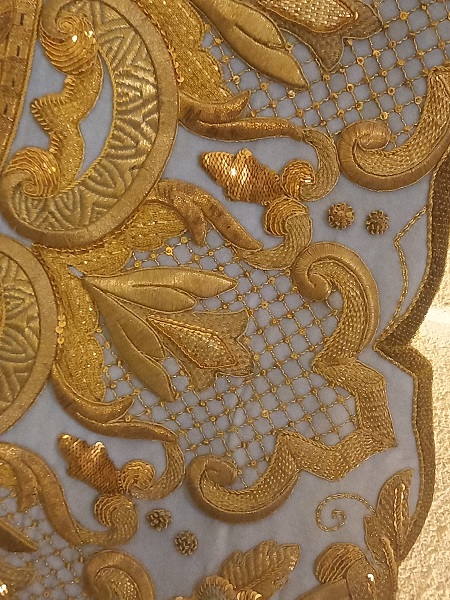
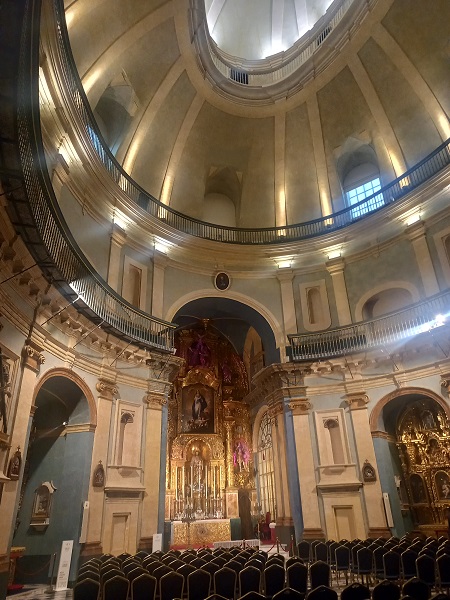
I have never seen as many candles surrounding an icon as the one in the cathedral, and there was some exceptional goldwork as well.

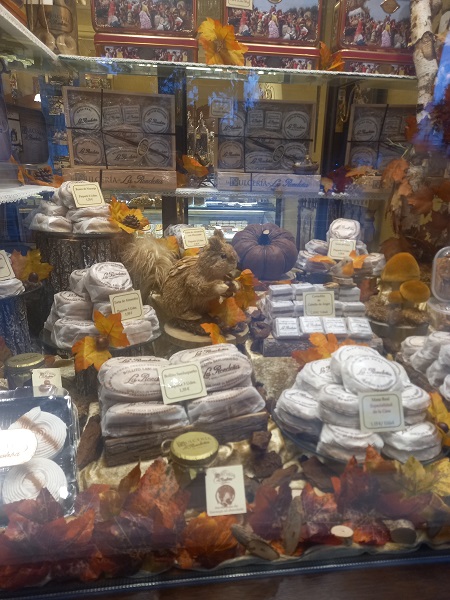
Another notable aspect was the number of speciality shops for sweets and biscuits, this one had the best autumn themed display.

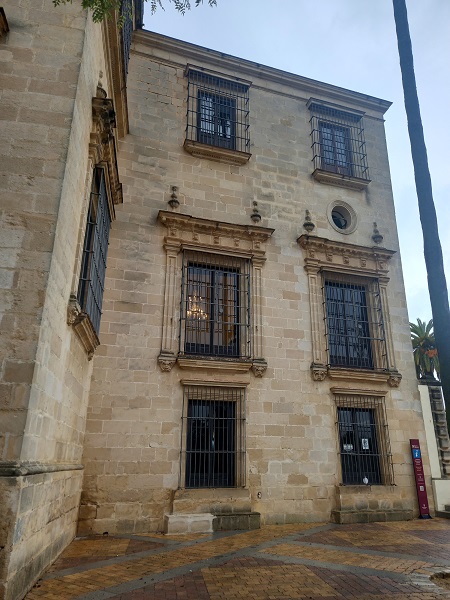
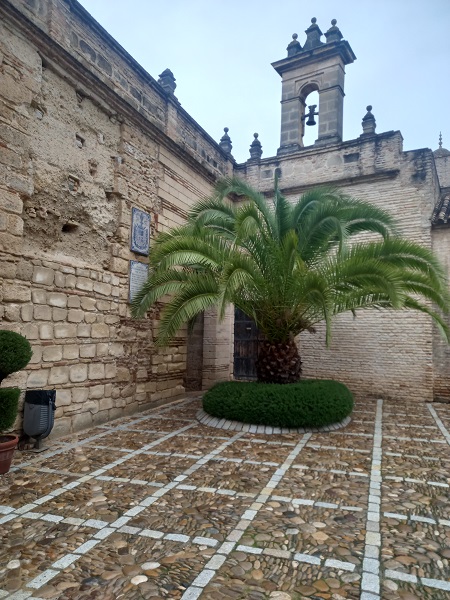
The Alcazar, the Moorish fort with added 17th century palace, was beautiful. The original mosque has been restored, and it is a brilliant blend of the different cultures that have lived in the city. There was an olive press there that must have been at least thirty feet long, it was incredible.

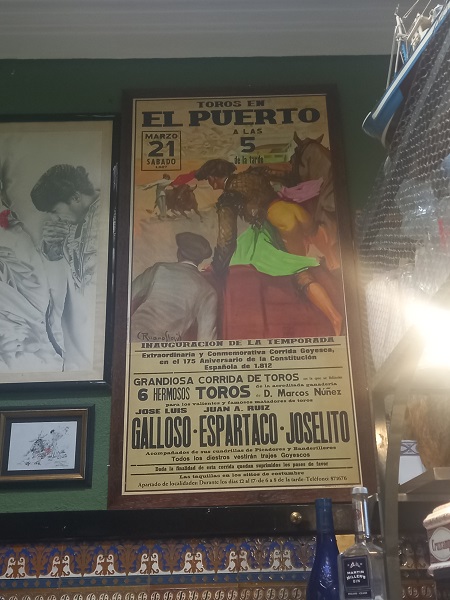
One of my favourite things was the display of fiesta posters in the palace, such wonderful examples of the development of graphic design and art.

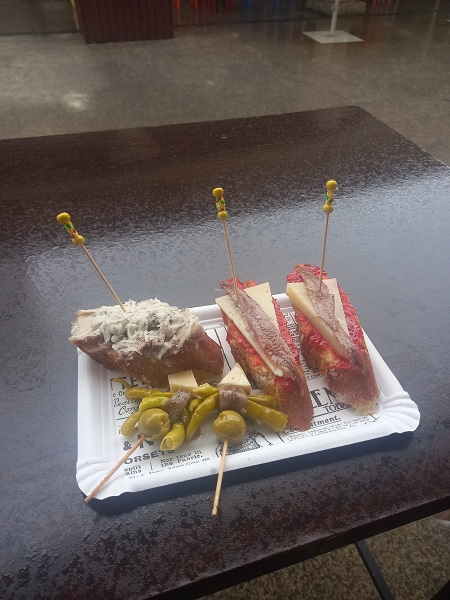
Sadly the second day, the trip to Cadiz, was very, very wet. We weren’t able to do much sightseeing, as the rain was torrential, but we did see the cathedral, a beautiful chapel, and have a lovely tapas at the market, which has now become a food hall.

We didn’t realise at the time, but this was the edge of the terrible Storm Dana, which killed so many people in our region of Valencia. While we were in Cadiz, the centre of Jerez flooded, and on our return the city centre was closed. We cut the trip short the next day, due to flooding and more storm warnings, and came straight back rather than visit a mountain village as intended. We were very, very lucky as our area avoided severe damage, and were able to help with fundraising efforts through our local charities when we got back.

I would love to return to Cadiz one day. I am already provisionally planning a return to Spain in Katy, and possibly to Portugal as well, inspired by so many You Tube and Instagram accounts that I follow that are there now. I loved the previous trip I did, and have collected so many more pins on my Google map of places to visit. It won’t be this year though but 2026 is looking promising!

For now though I will concentrate on this year’s adventures, but it doesn’t hurt to plan, it is half the fun if not more, and I have spent some of this week doing the final planning for the next two months. Hopefully there will be one more blog post before I can share that, as I need to show you all of the things I spent the rest of my three months in Spain doing. It was a lovely quiet time, and there was actual crafting going on, a miracle!

Until then, have fun, take care, stay safe and thanks for visiting.
Cordoba, palaces and patios

Cordoba is famous for many things, the mosque of course, but also for its many patios, decorated with potted plants. They hold a patio festival each year, in May, where you can wander round and see all of the displays in bloom, but there were still many around when we visited in November. I think this was a perfect time for a visit, as it was not too hot, or too crowded as it can be during the festivals.

We spent a lot of time, as always, just wandering looking at the gorgeous architecture.

As with architecture designed for use in hot countries, the enclosed patio is an all important feature. As I mentioned in my posts about Morocco, the interior patio functions as a cool space to enjoy water features, and as a garden. We tend to think of a patio as an outside space, a bit of the garden in the UK, usually just paved, but in Cordoba the patio is an art form, with its own unique architecture and decoration.

One of the many palaces we visited was the Palacio Viana, famous for having 11 patios of different sizes, from the grand entertaining space, to small quiet ones full of beautiful blooms and little fountains or wells. In addition to the patios, you can also tour the house, no pictures allowed, but it was a wonderful insight into the life of the wealthy family who owned the palace.

We also visited the Alcazar, or palace of the Christian Monarchs, not only a palace filled with mosaics that have been excavated locally, but also the wonderful gardens that Spain is famous for, complete with a statue of Isabel and Ferdinand meeting with Christopher Columbus.

Many of the palaces are now museums, and we had a very enjoyable last afternoon in the art museum. The paintings were full of such amazing detail, I love the way that the artists can represent the drape of textiles, and the light on buildings in these paintings, such talent!

It was there we discovered a brilliant artist who we had never heard of before, Julio Romero de Torres, who has a whole museum dedicated to his art. There were no photos allowed, but I found these two on Google.

He was born, and worked, in Cordoba, painting mainly women in the 1920s and his work is stunning it its detail. I love the sense of life in Cordoba that you get from his work. The painting on the left, La Fuensanta, was once on the Spanish 100 peseta note.

We also visited a small museum devoted to Arab culture, which was the place that inspired me to choose Morocco as my destination for this winter. It was full of the most beautiful artwork, and as you know from my posts about Morocco, it is one of my favourite decorative forms.

There was a stunning flower display in the small courtyard water feature as well.

There was also a quick visit to the Jewish museum nearby, housed in another beautiful patio house and lovingly restored, with a very informative exhibition about Jewish life in Cordoba. This included some gorgeous goldwork on dresses, similar to that we had seen on the painting in the art museum.

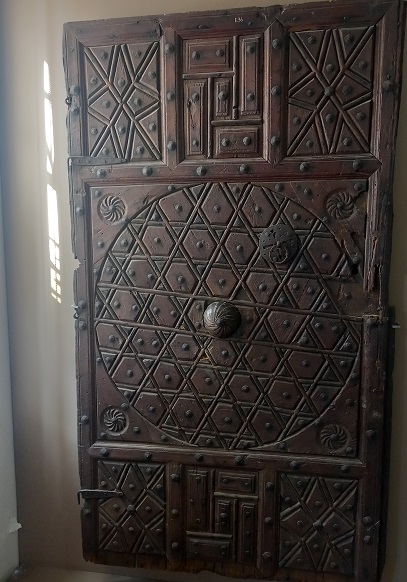
As always there were amazing doors, but what struck me about Cordoba was how heavy and defensive they looked, all were solid wood, many were studded and looked very much like the sort of thing that was built to withstand invasion, rather than the more decorative ones that are in other cities.

A wonderful city, and I am so glad we made it, a year after the original trip was planned. We have just booked another trip for this autumn, to visit the last of the great cities of the south, Jerez and Cadiz, so I am very much looking forward to that.

There is less than a week now until I return to the UK, so my next post will be my last from here, and will be a quick catch up on all my crafting, with some very exciting, in personal crafting terms, things to show you! Until then have fun, take care, stay safe and thanks for visiting.

Apologies to all of the other amazing Spanish cities ….

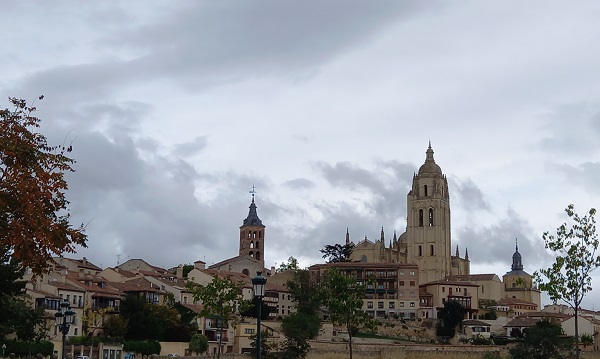
I have visited so many beautiful and amazing cities in Spain, Seville and Granada being two of the most famous, and completely stunning. There are so many others as well, almost too numerous to mention. However, the next stop on my trip, Segovia, might just be my favourite city yet. I had added it to the list partly as the location was good, being on a route back to La Marina. There are many other cities in that area that I could have visited, and it wasn’t until the last minute that I decided I would definitely go there and I am so glad that I did.

The journey there from Burgos was brilliant, so sunny and the clouds on the top of the mountains were beautiful. I had to stop at a café for breakfast so I could take some pictures, and they really don’t do the scenery justice. This was one of my favourite drives, so stunning.

I was aiming for a free park up near the bullring, but sometimes I get a little confused with Sat Nav instructions, and a wrong turn at a roundabout meant that I actually drove right into the city centre, up the cobbled road, past all the tourist coaches, and back out again, which was a little nerve wracking 😉 However I found the park up shortly after, and it was all good. This park up was another car park, with water, bins and waste, and can be used every day except Saturday, when the market takes place here.

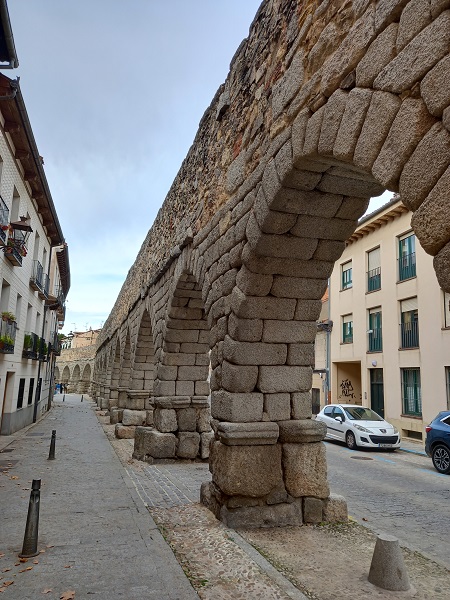
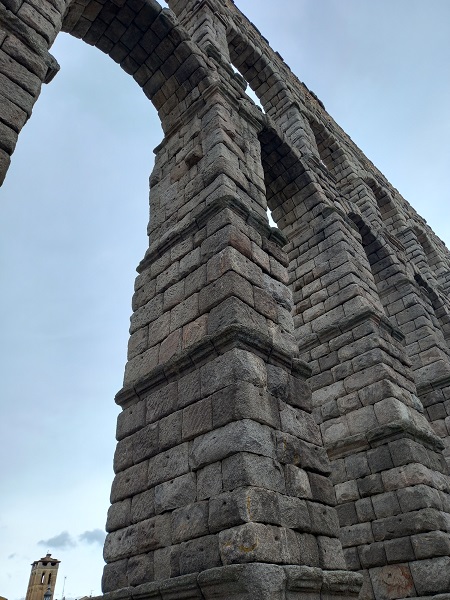
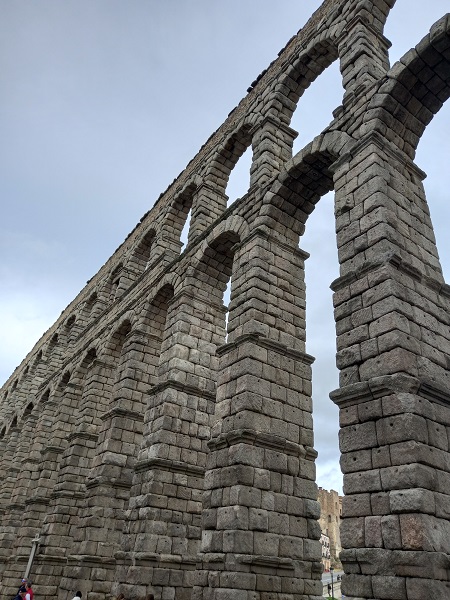
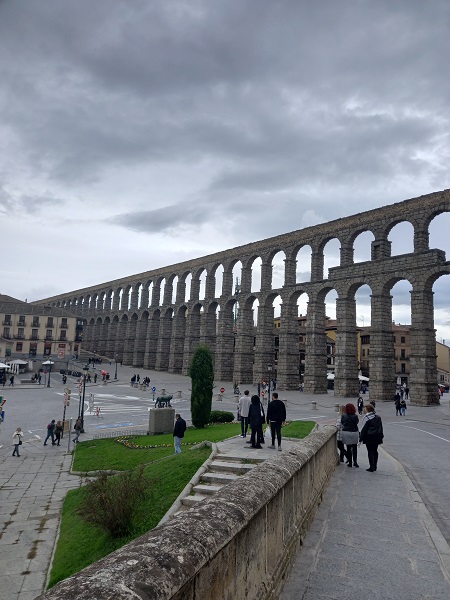
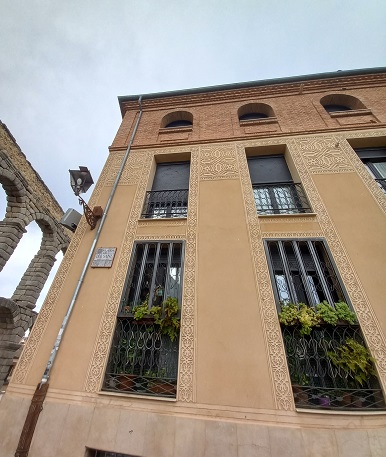
It was only a short walk into the city, and I was following what I thought were the city walls, until it turned into the aqueduct! This marvel of Roman engineering is 14km long, was built without mortar, and the city was built around it. It was truly incredible, one of the most impressive things that I have ever seen. I think that is part of what made Segovia so special.

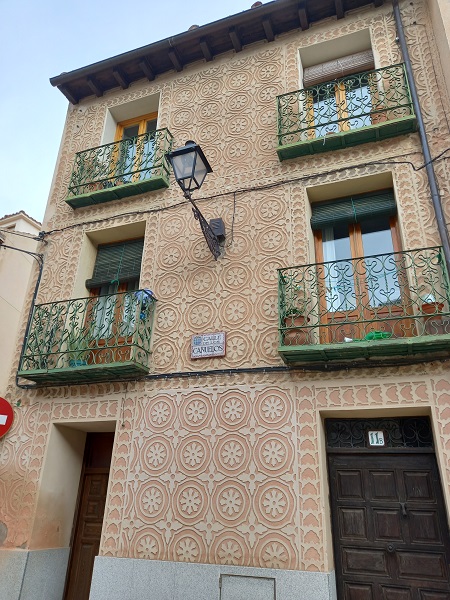
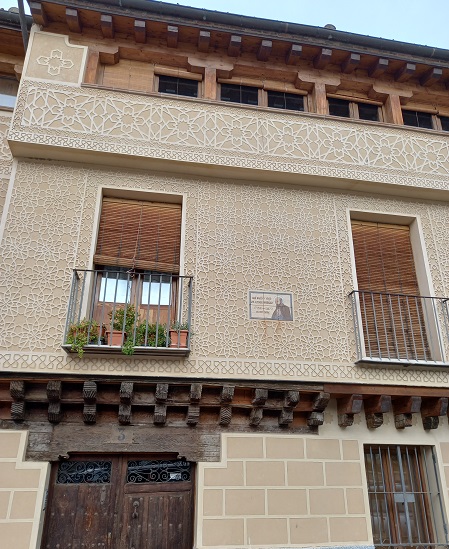
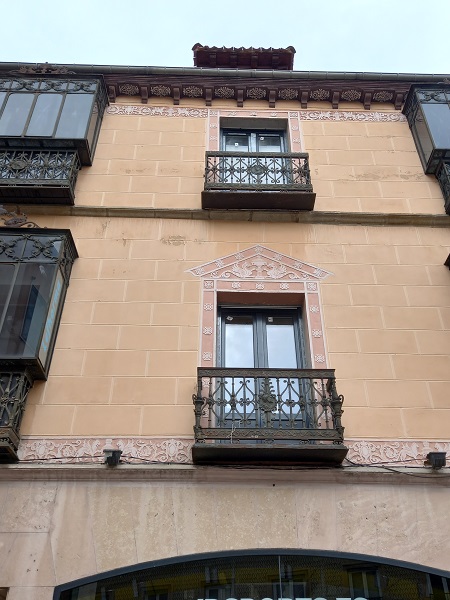
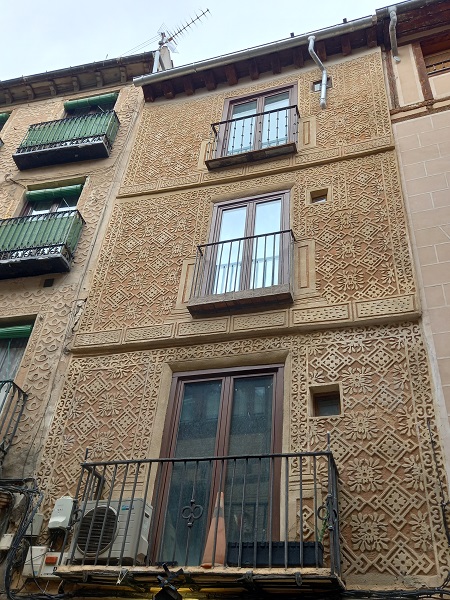
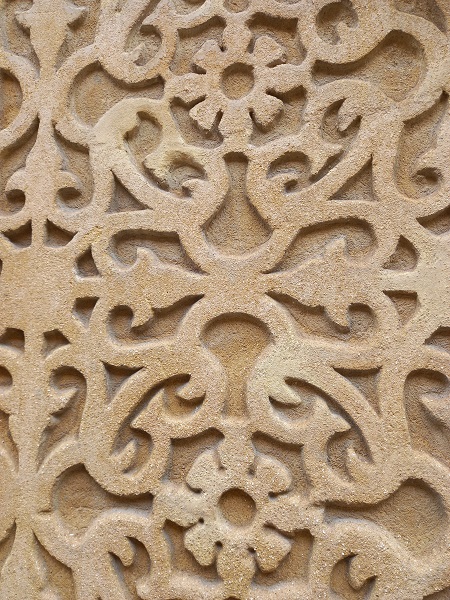
The other thing was the very unique decoration on the houses here. It is also used in some other Northern cities and is known as sgrafitto. It originates in Italy and is made up of layers of plaster. It was amazing to see all of the different designs.

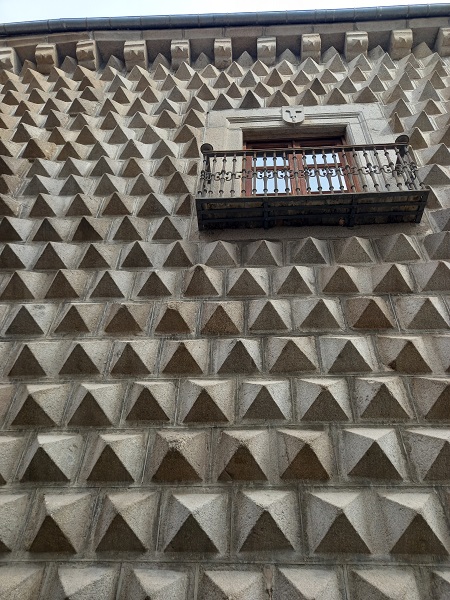
There was also a very unusual building with points all over it, that now houses the School of Art.

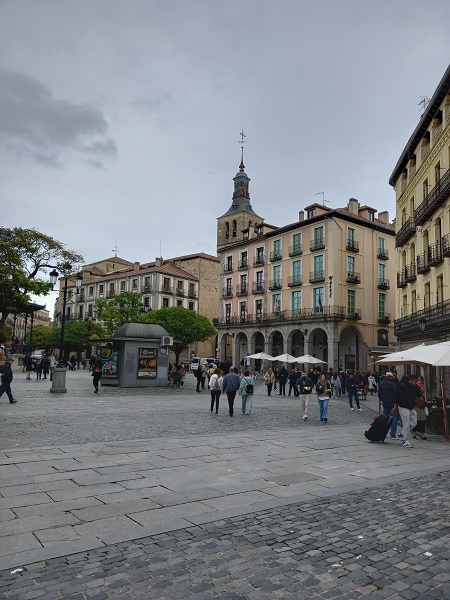
I had a slow wander up through the city with the views getting more and more amazing, until I reached the city square.

There were lots of shops selling regional produce, the area is known for its meat products and pork crackling is very popular here.

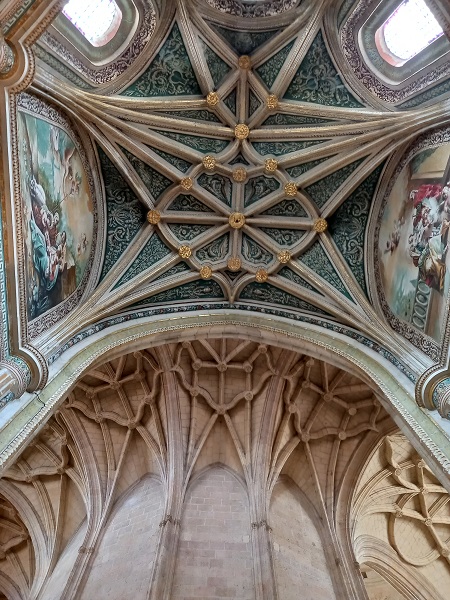
The cathedral was very beautiful, not as ornate as the one at Burgos inside, but with wonderful painted ceilings in all of the side chapels.

I love the shapes that are carved into the ceilings, and the contrast of the bare and painted stone.

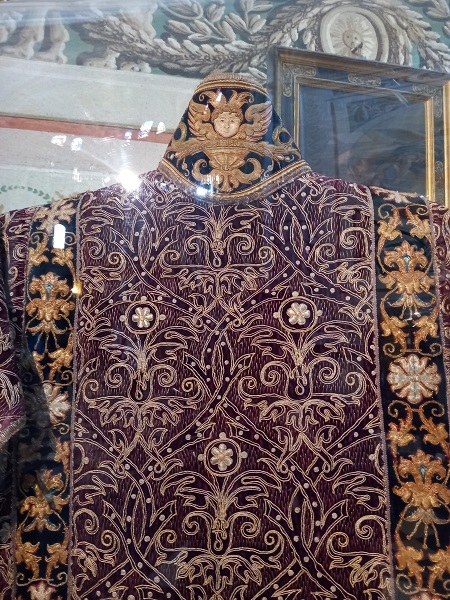
As with all Spanish cathedrals, there was a lot of ecclesiastical goldwork. I particularly like the red and gold combinations on these vestments.

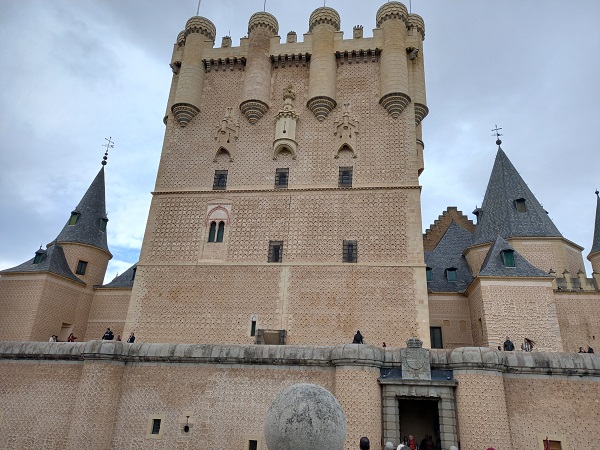
After the cathedral I made my way through the narrow streets to visit the castle, which stands at the edge of the old city, overlooking the valley. This was another reason that Segovia is so different to other cities, this castle, which dates from the 12th century, looks like something from a fairy tale. It has the same kind of plasterwork on the exterior as the other buildings.

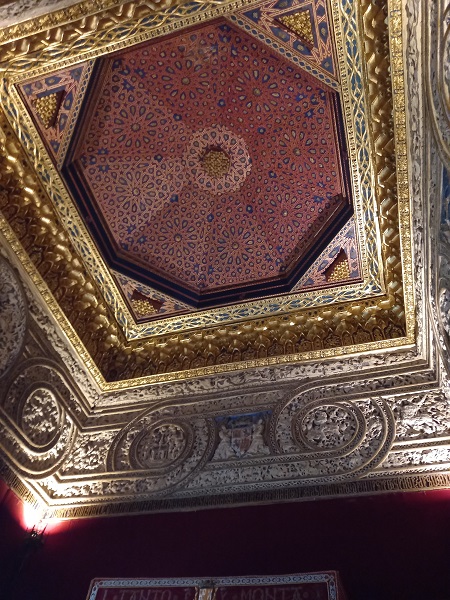
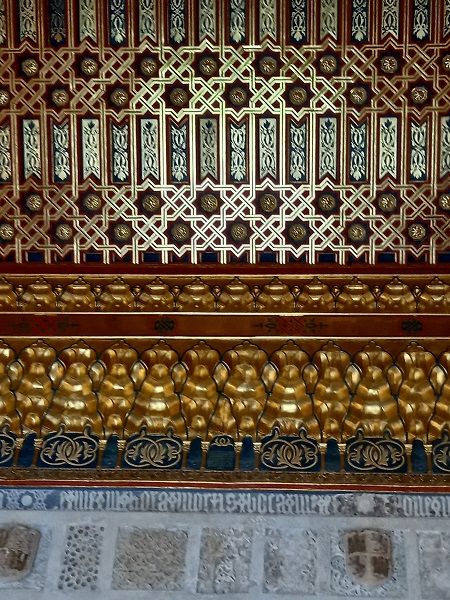
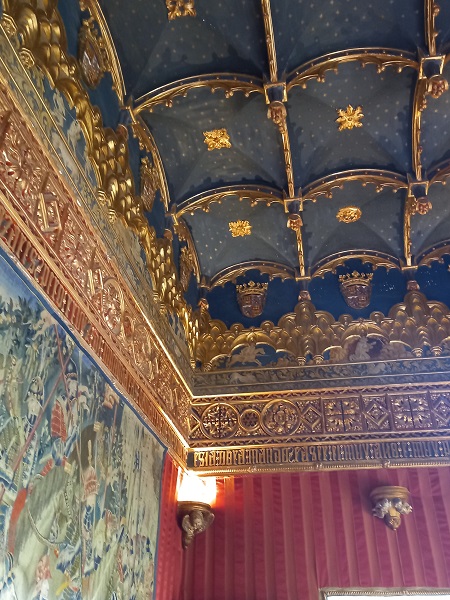
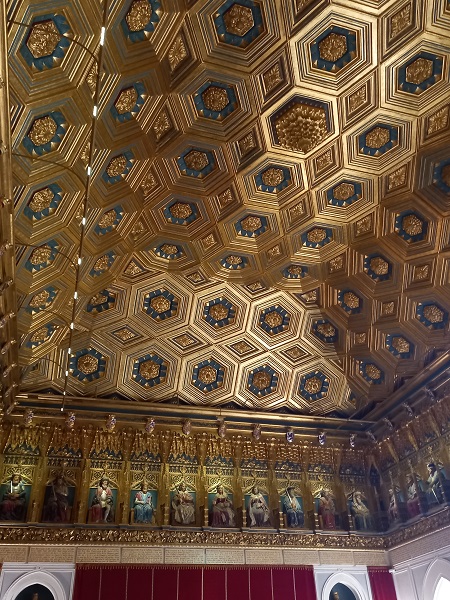
Inside it is full of the most gorgeous Islamic inspired architecture, rivalling the Alhambra in the complexity of the ceiling designs. Although it has always been a Catholic stronghold, the decoration reflects the Muslim conquest of the south of Spain, with their ornate carved ceilings. One of the rooms, the picture top right, has a ceiling made of 392 carved wooden pine cones, and was built to celebrate the birth of the King John the second’s first son in 1452.

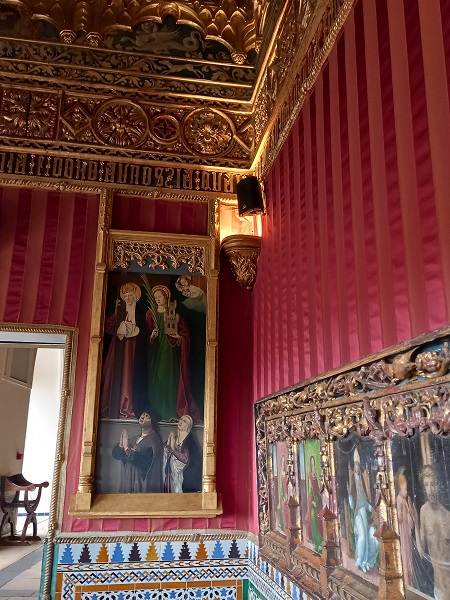
Another incredible room has an English connection. The Gallery, or Ambassadors Room, was created by Catherine of Lancaster. She was the daughter of John of Gaunt, who was son of Edward 3rd, and became Queen of Castile when she married Henry 3rd in 1388. At the time she was 15 and her husband was 9, it was very much a political alliance, as her father wanted to secure his alliances in Spain.

I found this painting of Catherine at this website. I don’t know if it was painted during her lifetime but it is a beautiful depiction of her. Her great-granddaughter, Catherine of Aragon, one of my all time favourite historical people, was named after her. As I have mentioned before I love filling in the gaps in my historical knowledge and making links with English and Spanish history.

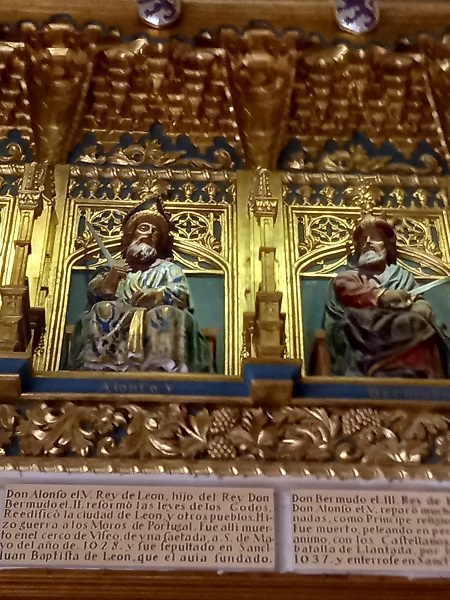
The room was deigned to impress visiting ambassadors, as there are statues of all of the kings and queens of all the different regions of Spain placed underneath the very beautiful ceiling.

I think it was the combination of the aqueduct, the unusual buildings and the fairy tale castle that combined to make Segovia one of the most fascinating places that I have visited. You could really get a sense of what it was like in the 14th century, a real piece of time travel.

I ended my visit sat in the city square near the cathedral, with a glass of wine and some tapas, thinking about all of the amazing places that I had been. A magical day and one I will remember forever. That was to be almost my last visit on the European tour, and the next city was equally amazing for very different reasons.

We have had some sunny days here, which is good as I went to the nearby town of Chesterfield to get currency and supplies for the next adventure. I have less than a week now until I leave here, so am on a mission to get the last few posts done before I leave. I shall see you again here very soon hopefully. Until then have fun, take care, stay safe and thanks for visiting.
A cluster of cloisters

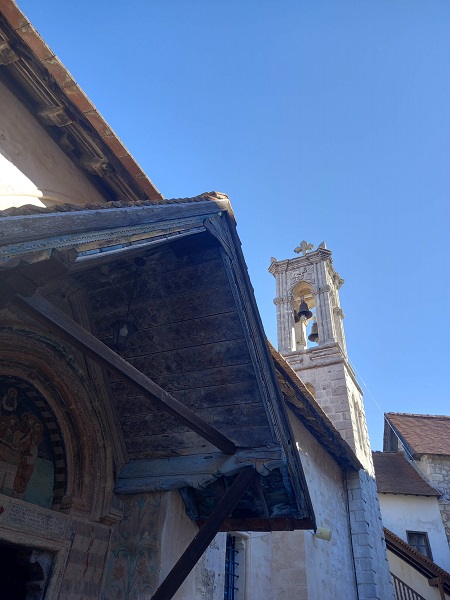
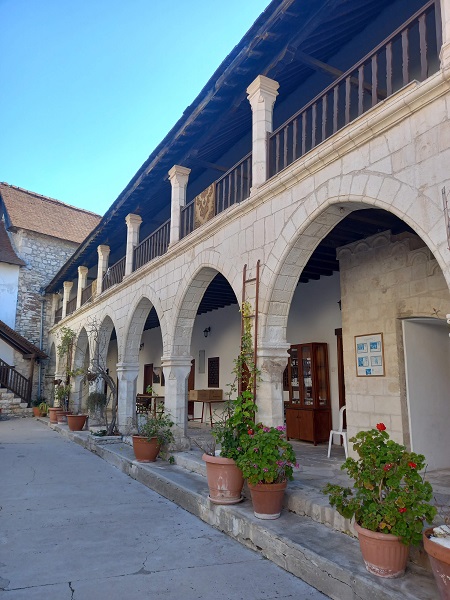
I don’t know what the collective term for cloisters really is, but I saw so many on my trip to the Troodos mountains. The trip specifically exists to visit three of the many monasteries in the Troodos mountains here in Cyprus, and was an excellent day out, combining two of my favourite things, mountains and religious architecture.

As you may know if you are a regular reader, I love going on coach trips. Even though I now have the van, being on a coach trip with a knowledgeable guide, and a driver who can cope with the endless, very twisty mountain roads, is an excellent way to see the area and the trip was brilliant.

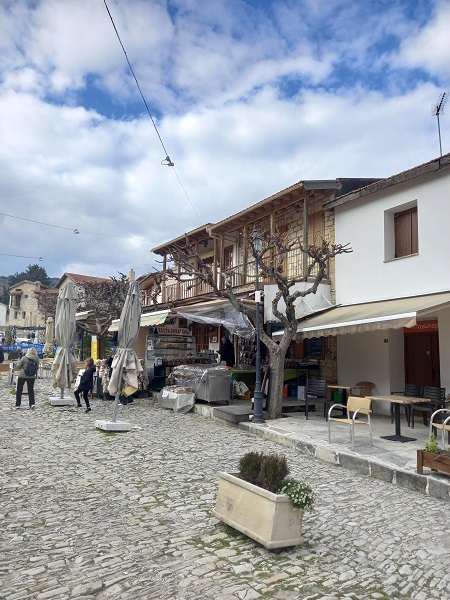
I was picked up at one of the local hotels just 10 minutes walk away, and we also got to stop for a delicious buffet lunch, and visit one of the mountain villages as well. A very worthwhile day out that I highly recommend if you come here.

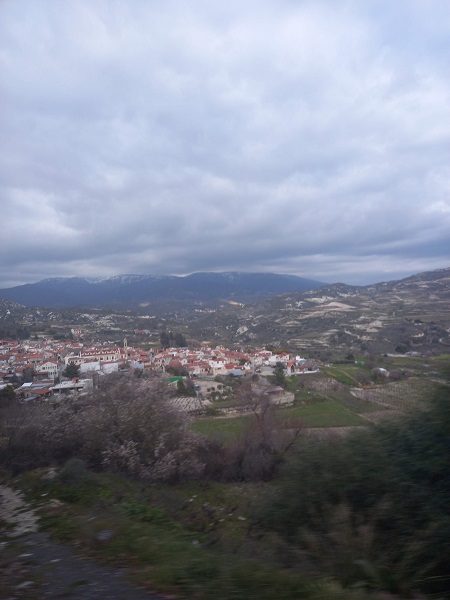
The drive through the mountains was well worth the trip alone, it was brilliant to see such a different side of Cyprus, including quite a lot of snow.

They have actually had less snow here than previous years, however there are four ski resorts in these mountains. We drove all the way around Mount Olympus, the highest mountain in Cyprus.

The first monastery was the very small Chrysorrogiatissa Monastery, in a beautiful location overlooking one of the dams.

This monastery is dedicated to the Virgin Mary and the legend of finding an icon in a golden pomegranate tree.

The monastery was a beautifully kept stone structure, and you can see how life there would have been peaceful and allowed for lots of contemplation.

The second visit was to the Kykos monastery, where the icon in the church is said to have been painted by St Luke.

There are lots of representations of this icon, in mosaic and wall paintings. I bought a small version to bring home with me as well.

This is one of the largest, richest and most famous of the Cypriot monasteries, as it is where the first president of Cyprus, Archbishop Makarios 3rd, was educated and was a monk. Our guide told us a lot about his life and filled in some of the gaps in Cypriot history for me.

The archbishop was heavily involved in the fight for Cypriot independence from the British and in the later invasion by the Turkish army.

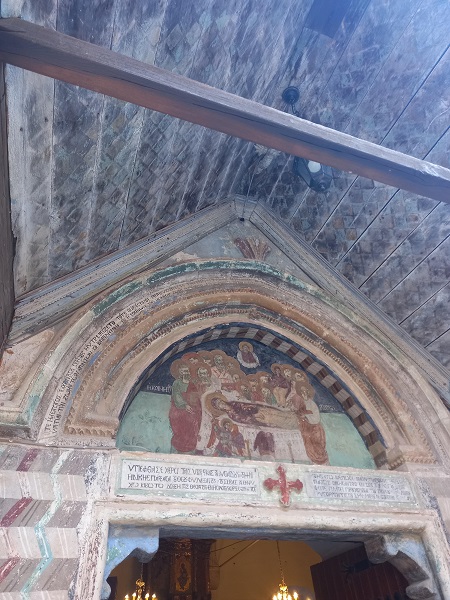
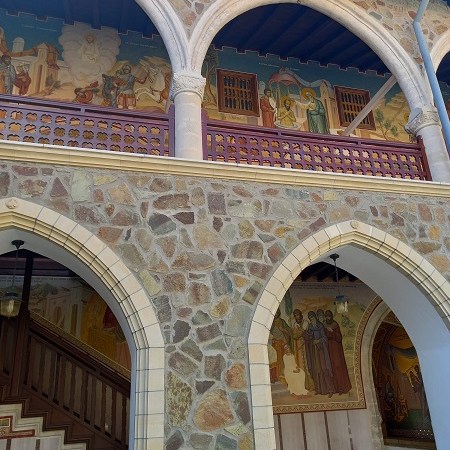
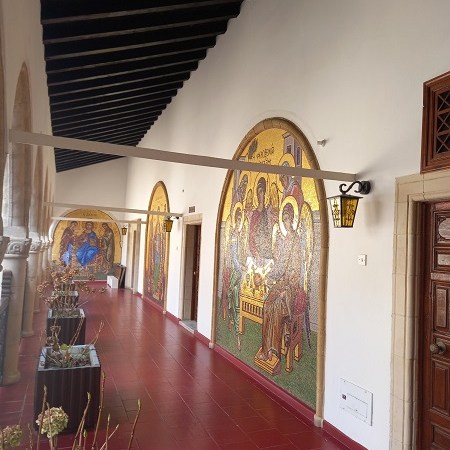
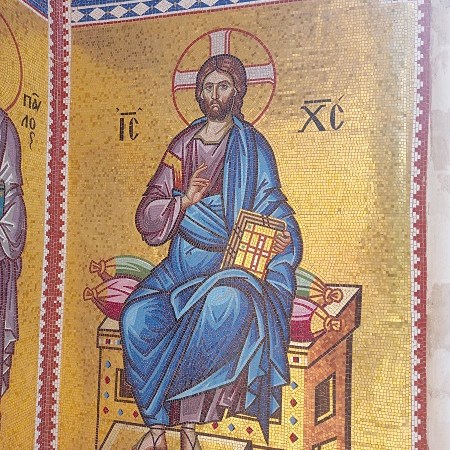
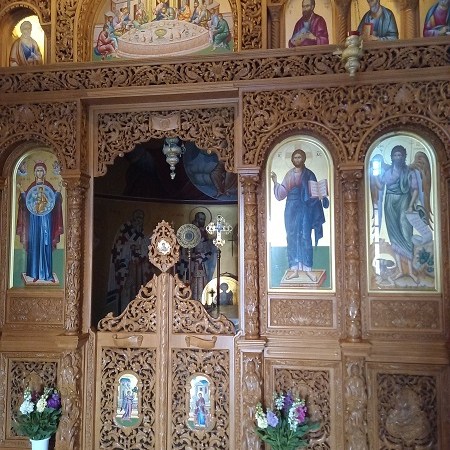
It is a stunningly beautiful place, everywhere you look there are courtyards and wall paintings and the most incredible mosaics.

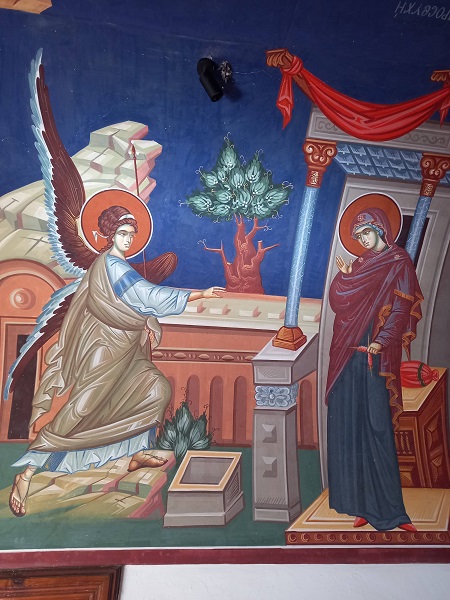
I think these are my two favourite paintings, the Annunciation and the Nativity, both from this painted ceiling.
There is just so much to see and take in.

Cypriot monasteries, and churches, are not without turbulent histories. Many have been damaged by earthquakes, the last large one here was in 1953.

There have also been long periods, such as during the Ottoman Empire, when the dominant religion has changed, so monasteries have been abandoned or heavily taxed. This monastery is the fourth rebuilding on the site and dates from the mid 1700s.

There were no pictures allowed inside the church so I found this one on the internet.

It doesn’t really do justice to the absolutely stunning ceiling, which was painted in the most gorgeous shade of blue. There was also an amazing reliquary display next to the church. Many items have been donated to the monastery by visiting officials, and there are multiple saints’ bones in decorated caskets here.

The final monastery was in the village of Odomos, a wine region village which has been restored.

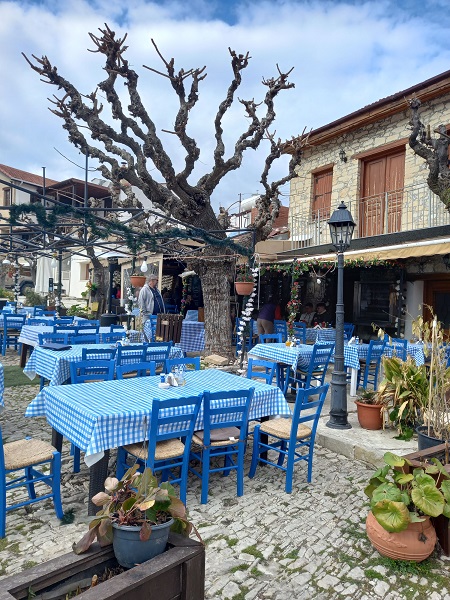
The village houses around the monastery square now host cafes and shops, as the area is very popular with tourists.

It was lovely to see some of the traditional old buildings, as I have not had the opportunity to do that before now.

This monastery is now closed, though its church still remains open. Here there is a piece of rope which is said to have come from when Jesus was tied to the cross.

This was reportedly given to the village by Queen Helena, mother of Constantine the Great, while she was travelling through Cyprus from Jerusalem. There is also a piece of the cross that she gave them as well, both relics encased in silver crosses within the church.

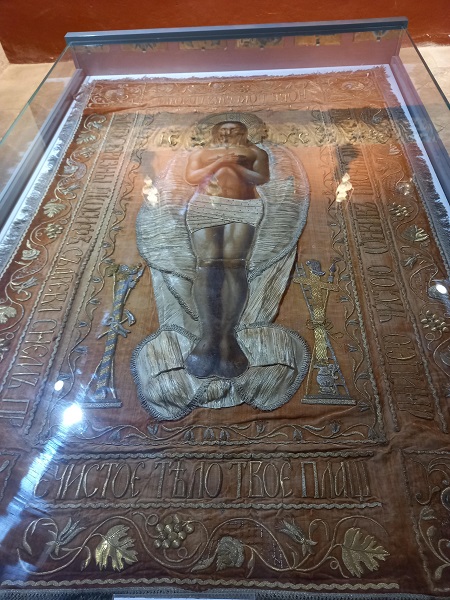
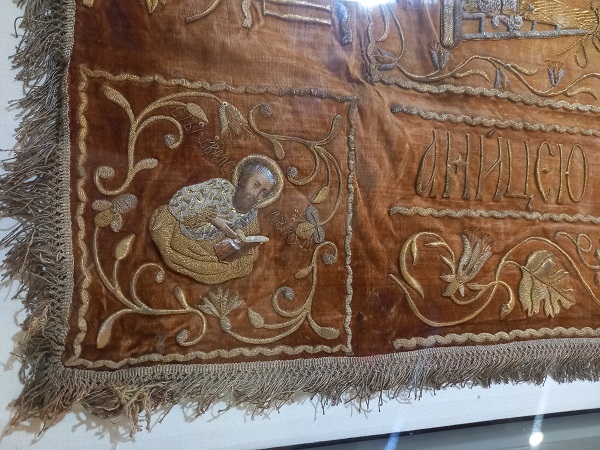
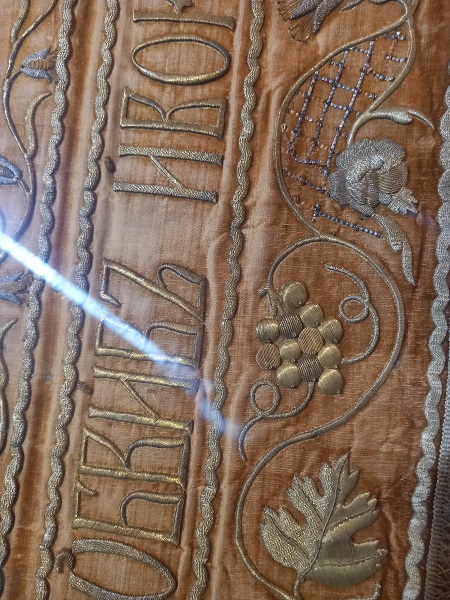
They also had a great little museum with some 18th century Russian goldwork.

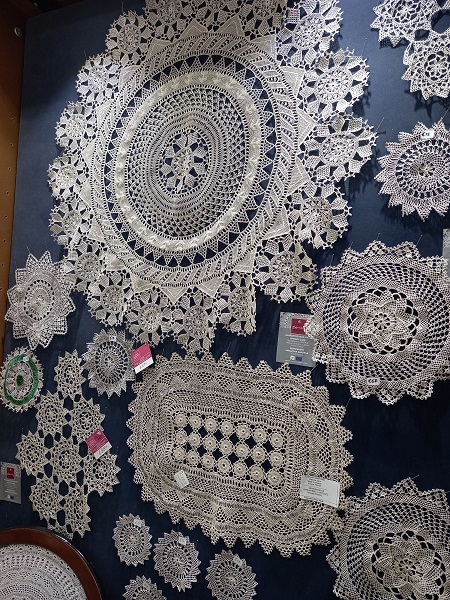
I found a lovely shop selling actual traditional lace so bought a little doily. I plan to frame it for the craft space at home. Truly a wonderful day with lots of my favourite things 😉

I have been to see the Roman sites here over the last few days as well, and visited two very different museums. I’m hoping to squeeze another couple in before my return to the UK the middle of next week.

I have also spent time with my friends from Spain and we are having a Cyprus branch of our Knit and Natter group on Monday afternoon. Lynne has promised to teach me how to finally crochet flowers, so I am very excited about that!

Will return with some more loveliness for you soon. Have fun, take care, stay safe and thanks for visiting.

The beauty of Byzantine art

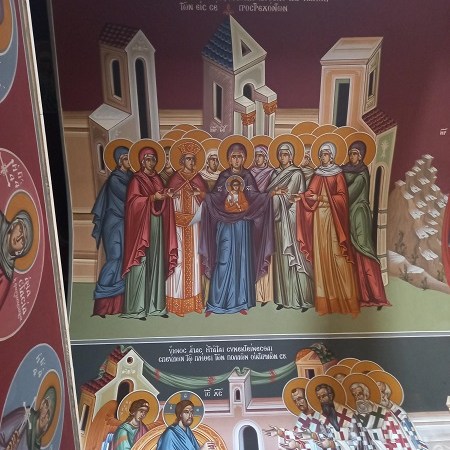
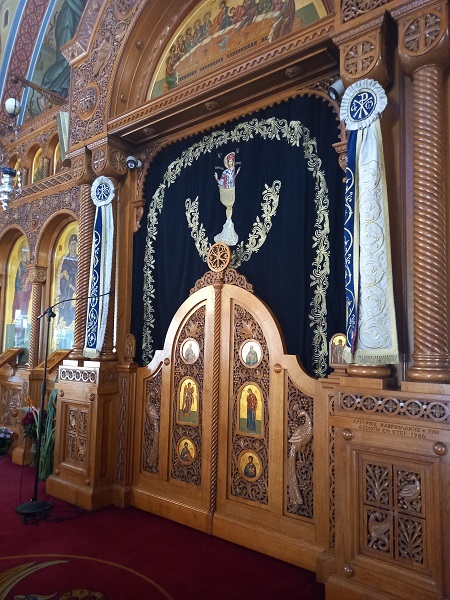
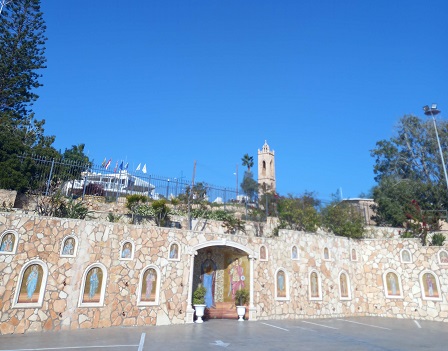
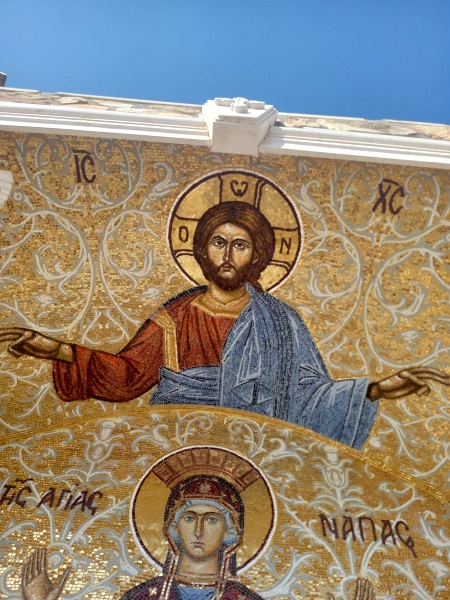
I suspect I may be posting more pictures like this later on, if the churches in Aiya Napa are anything to go by, but have been truly overwhelmed by the beauty of the decoration of the places here.

I have not seen much art like this outside of museums and art galleries, where the icons and paintings have always been beautiful but to see them in real life is just brilliant. What is particularly amazing is that the exterior of the buildings have been very plain. Unlike the ones in Peiya that I posted about previously, these were simple white painted structures.

The first was down by the harbour, a tiny little church which many people were visiting, and kissing the painting of St George and the Dragon that you can see bottom left. We British may claim him as our patron saint but he is actually Greek and his picture is in many places here, and lots of places are named after him.

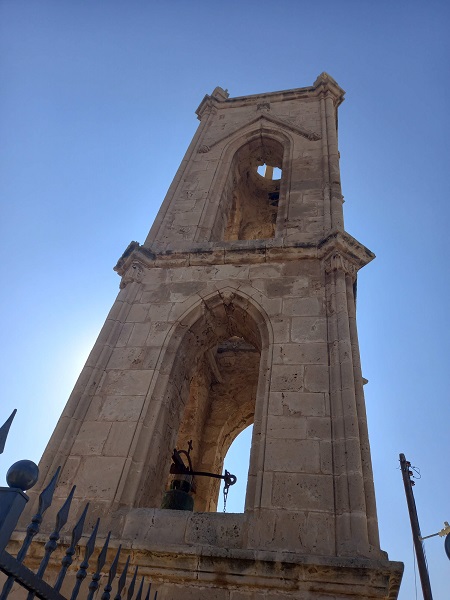
There is not much left of the old part of Aiya Napa, and the monastery is sadly closed at the moment. There was a lovely bell tower however, next to the knight sculpture that I posted about previously.

I was a little disappointed that the main church near the monastery didn’t look very impressive. After seeing the beautiful stone ones previously I was expecting something similar. However, the outside did not do justice to what was within.

This is what Catholic churches must have looked like before Henry 8th and his break from Rome, so many incredible wall paintings.

This church was built in 1990 so is only 33 years old. Sadly some of the paintings, like these wonderful images of soldiers, are showing water damage.

There was some lovely gold work as well around the icons, one of which was very old.

There was a reference to an icon being found and placed in the monastery, so I am not sure if this is the same one, but she is beautiful, even being worn away now. I bought a small version of her to take home with me.

There were other icons and pieces of goldwork as well.

I think most of the goldwork is on the first two pieces is machine embroidered, rather than by hand, but still wonderful.

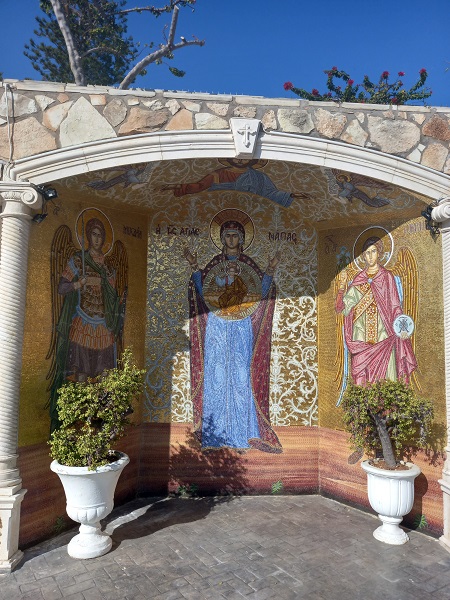
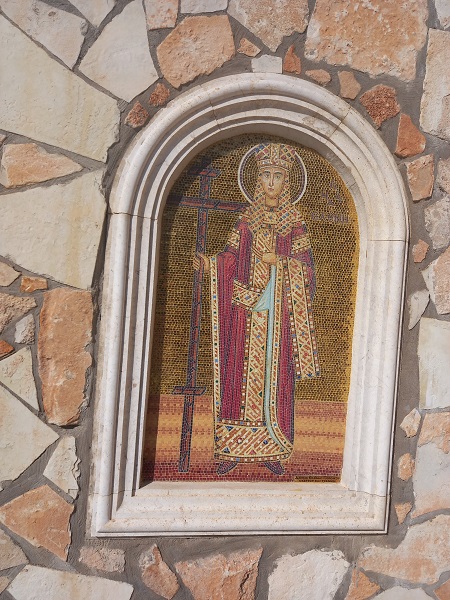
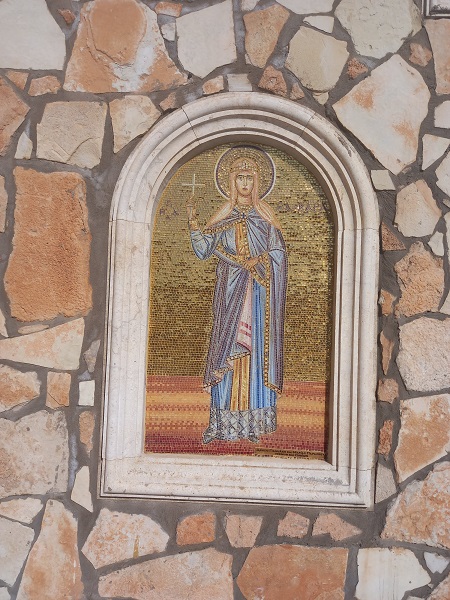
Outside the church were some mosaics in a large walled area which led to a little park above the church.

These are something that I haven’t seen before, and they are even more stunning than the paintings in lots of ways, as it so much more difficult to represent people in mosaic. Just look at the detail of the folds on the angel’s robe below.

I love the clothes they are wearing. At one of the earlier period re-enactment events we go to, the Battle of Evesham which is set in 1265, a lot of the re-enactors wear the most wonderful Byzantine costumes like the ones seen here and they are so beautiful.
I have now moved on from Aiya Napa, and am in Larnaca for a couple of weeks, which was another great bus trip. Rather than the inter-city buses, I caught the local one which went through a couple of little towns on the way, which was lovely as I got to see more of inland Cyprus.

As well as more churches, lots more museums and walks by the sea, I am hoping to do some trips to other cities, such as Limassol and Nicosia.

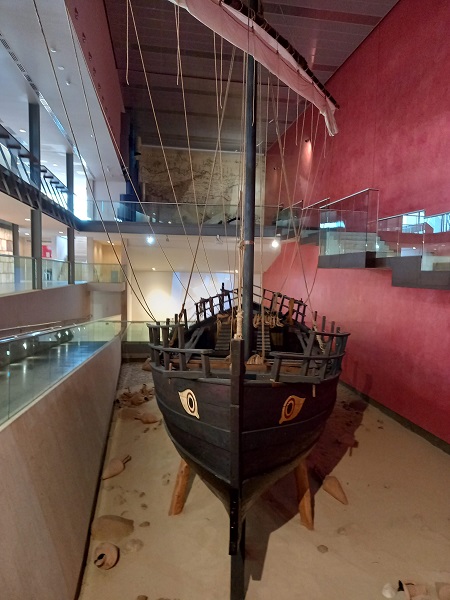
The little museum in Aiya Napa had some fascinating information about the history of Cyprus, as well as some interesting experimental archaeology reproductions of ancient ships.

I have now got some more books on Cyprus, so I am going to be doing more reading during my trip. This little island really does have a fascinating, and complex history, and I am really enjoying finding out more about it.

I hope you are all having a good week whatever you are doing. Have fun, take care, stay safe and thanks for visiting.

Caravaca, close up

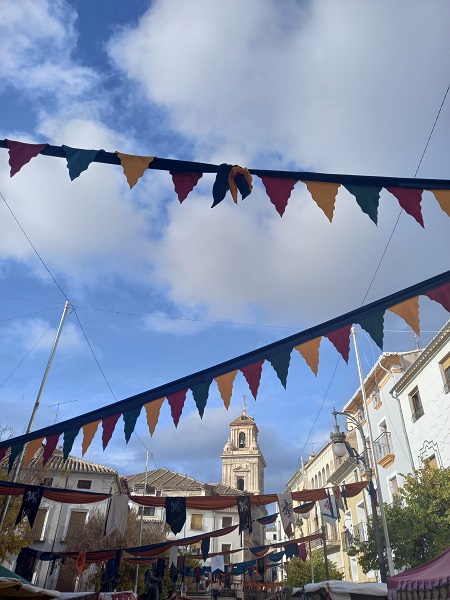
The trip we made to Caravaca on Monday was brilliant for getting to see more of the town without the many people that there were for the fiesta in May. Although it was a medieval market, we went the day before a public holiday, so it was lovely and quiet and we had great weather for wandering round. The town looked so beautiful with all of the flags and bunting for the market.

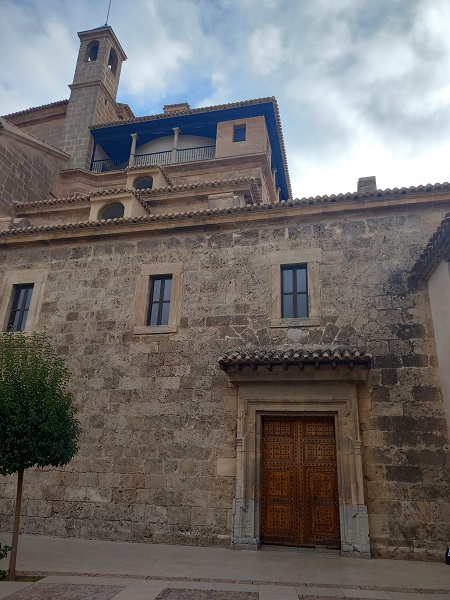
We went up to the citadel and the cathedral first of all, meeting some very cute kittens on the way.

This is where the famous cross is located, in a tiny chapel at the side of the cathedral. There were no pictures allowed inside but there is a large model of the cross outside.

The cross itself is tiny, only about 8 inches high and was said to have been delivered by angels during one of the sieges in early 13th century It may also have been brought back from the Holy Land by the Knights Templar. However the original apparently disappeared in 1934 so the one currently on display is a replica. Whatever the origin the cross has meant that Caravaca is considered a holy site.

After visiting the citadel we had a wander down through the medieval barrio surrounding the area. There are beautiful views across to the mountains and you can see the old bull ring from here.

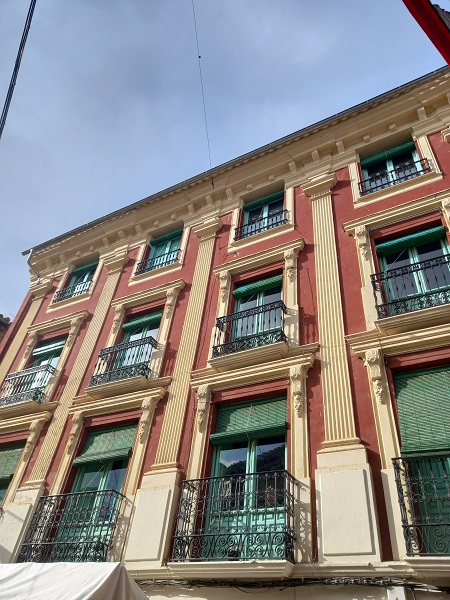
I love old Spanish cities, the stonework on the buildings and pavements is just gorgeous.

There were some derelict houses but thankfully some newly restored. It must be very difficult to do this as the streets are so narrow with no vehicle access and all the houses are on top of each other.

We were also able to visit one of the churches, with some very impressive embroidery and icons, unusually some in silver which I don’t often see.

The other great thing about the trip was getting to see some of the horse barding they wear for the running of the wine horses festival up close. There were two on display in the main square.

The above photo shows the tail decoration, which I think is made in the same way I make my Christmas ornaments, using polystyrene balls as the base.

The detail of the stitching is fantastic, not only abstract designs but wonderfully executed faces and detailed costume.

I think this one below was my favourite, it reminds me of all the Tudor costume I have been looking at recently.

Today is a little cooler and damp, after a very lovely sunny and warm week so I am going to spend the rest of the afternoon knitting on the sofa.

I have had two very enjoyable cycle rides this week, totalling 40km. I went down to the beach yesterday, where there were some wonderful cloud formations over the sea and the mountains.

I will hopefully be able to share my new knitted doll with you next week, it has been a really quick knit though doing the hair took a very long time. I re-did the plaits about 10 times! Until then I hope you are all enjoying life, have fun, take care, stay safe and thanks for visiting.

Spiritual stitching

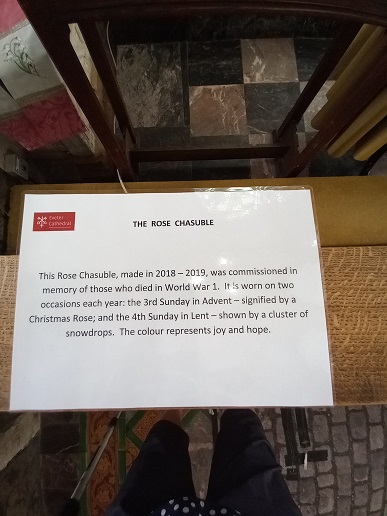
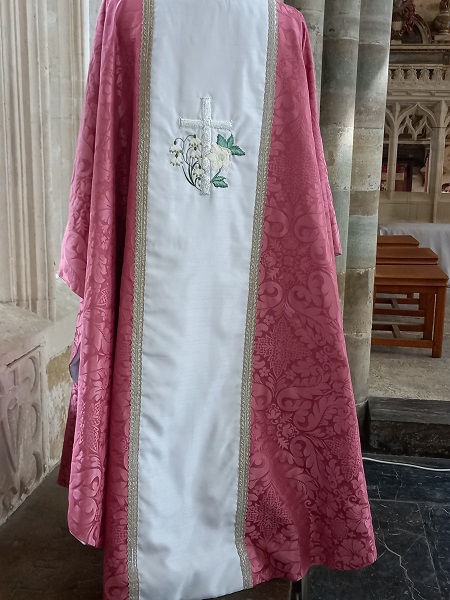
One of the things that was so brilliant at Exeter was the level of information given about all of the textiles on display. As well as a dedicated display of ecclesiastical garments in the centre of the cathedral there was information all around the site about the work.

The Company of Tapisers was formed in 1933 and although the individuals are anonymous there was a real sense when visiting of the human hand behind the work.

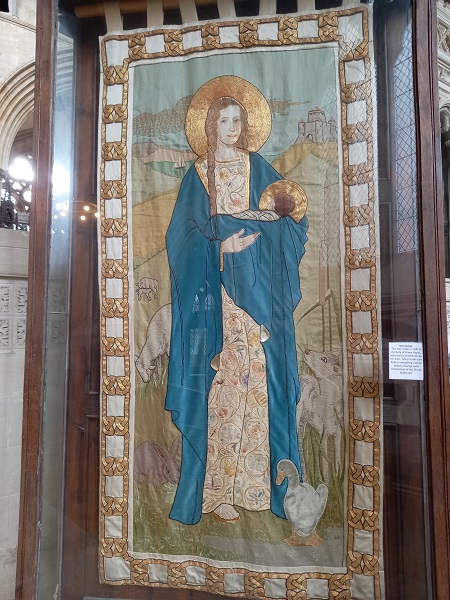
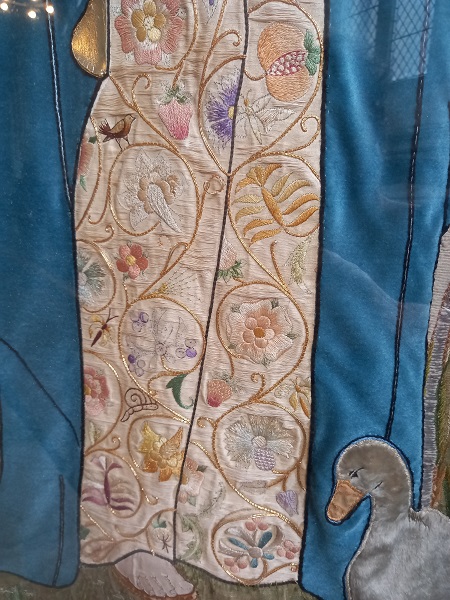
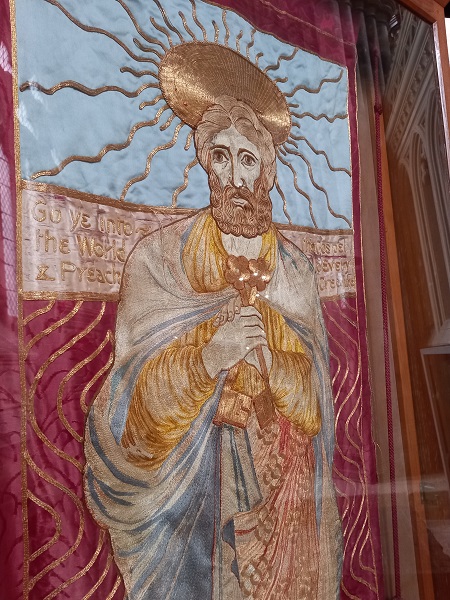
Some of the interpretation was very poignant as with this beautiful banner piece of the Virgin Mary.

This was a stunning and very unusual piece, seating along the length of the chapel telling the history of Exeter.

Everywhere there was so much lovely work, from kneelers to altar frontals. It really enhanced the experience for me to be able to read the additional information and I gave my thanks to the staff after the visit.

One thing that I am passionate about is the human story behind textile creation. The novels that I am writing are all based around individual pieces of textiles and the women involved with them. The history of textiles is the history of people, whether it be to celebrate, or simply to keep us warm. It is just so fascinating to me how all of these things are made, and why they are made.

I am so pleased that I have so many friends that share my passion for textiles, and that Ellen is so keen. She has made some stunning things recently, one being a very lovely crochet cushion cover that I am keen to learn how to make as I think it would look great in my new van.

I went to her crochet group last night and that was lovely. She is helping to run workshops with a friend of hers, Vic, who is a very talented creator so are you are in the Nottinghamshire area I can thoroughly recommend Made by Torty B. Her workshops can be found here and are great for beginners or more experienced crafters.

It will have to have a very good sort out of all of my new craft space soon as the machine will have to be found a new home and there might just have been a few purchases made while I have been in the UK. Some storage shopping is on the cards I think!

I hope that you are all enjoying life. I am so looking forward to the next few months of beautiful spring and summer weather. I have promised myself that there will be a new outfit for Whitby and a new dress for Tewksbury so need to get organised and fit all that in.

Have fun, take care, stay safe and thanks for visiting and commenting, it is always lovely to meet my readers!