I have created this blog to share my interest in all forms of stitching, quilting, sewing, knitting, medieval re-enactment and costume making – particularly my love of historical embroidery. I also love travelling,especially when it also involves any of my other interests.
Three posts in one week, this must be a record! Although it may seem a bit strange to be posting about autumn when spring is here, there are a few more places that I wanted to write about from my travels in October. Then I can continue with more recent adventures.
I love autumn, as I have said before here, it always signifies new beginnings to me, being a teacher for so many years. Even now autumn is the beginning of a different life in Spain every year, so still feels like a start.
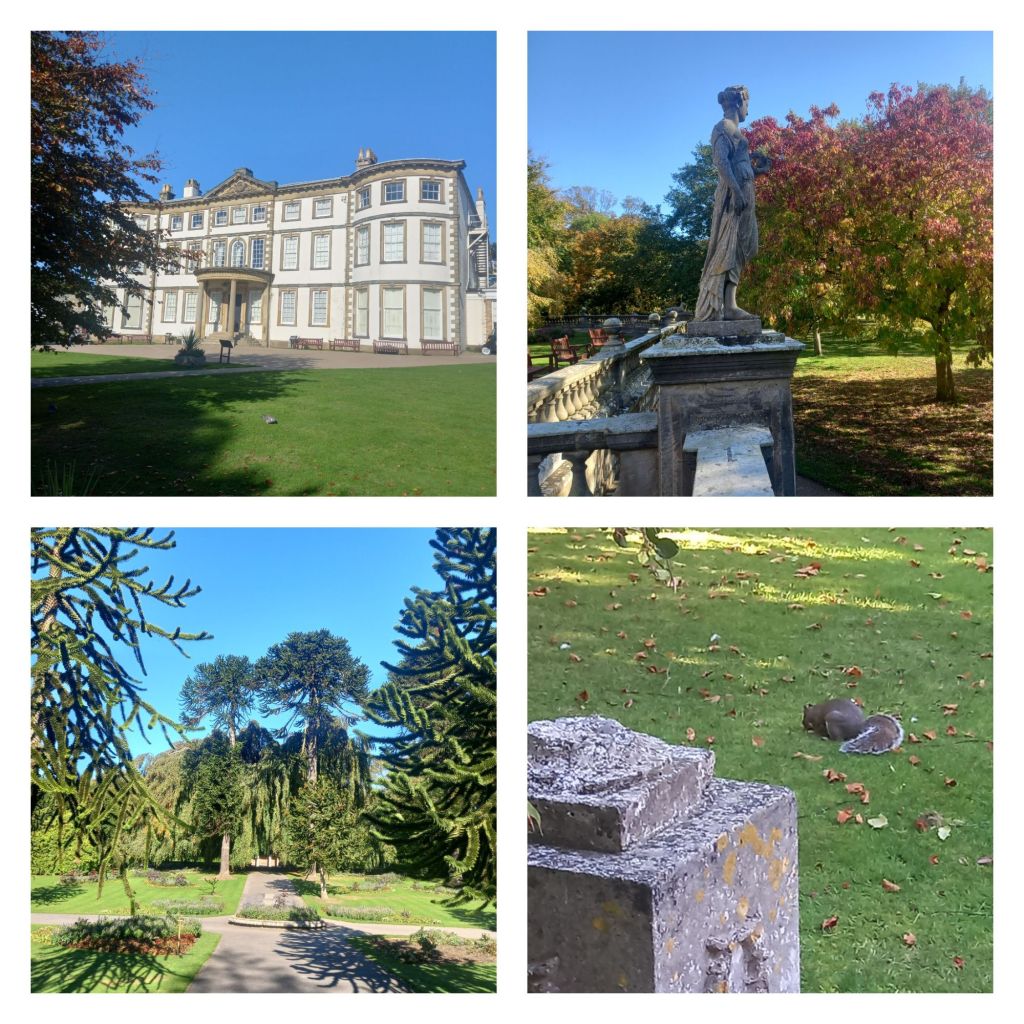
I love the autumn colours as well, and the quality of the light. I visited a beautiful house just outside of Bridlington while I was staying at Flamborough. Sewerby Hall is owned by the local council, and is free to visit. The hall wasn’t open when I was there, but they have a little zoo, and beautiful grounds.
It is also the best season to see squirrels and there were so many there! I am really hoping for more squirrels in my life this year. There have been some very cute rabbits at this caravan park which has been nice.
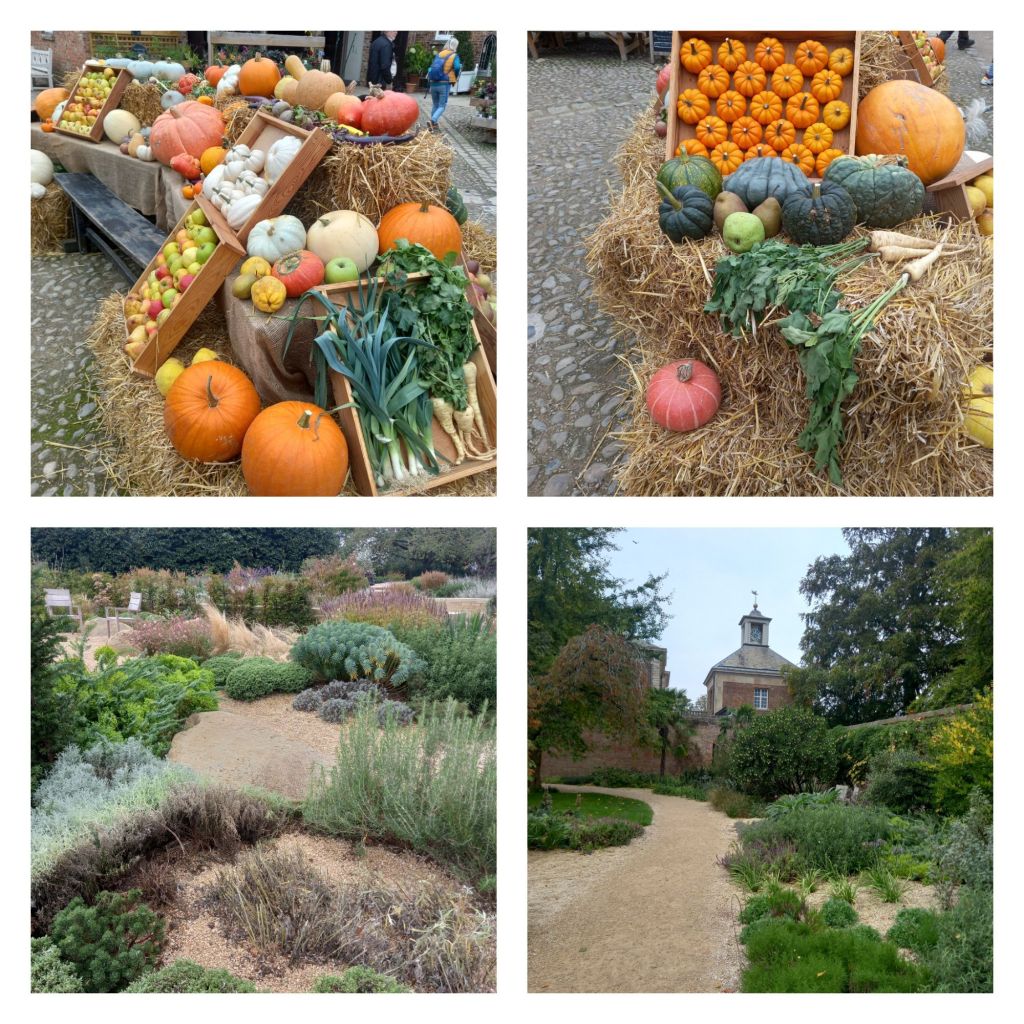
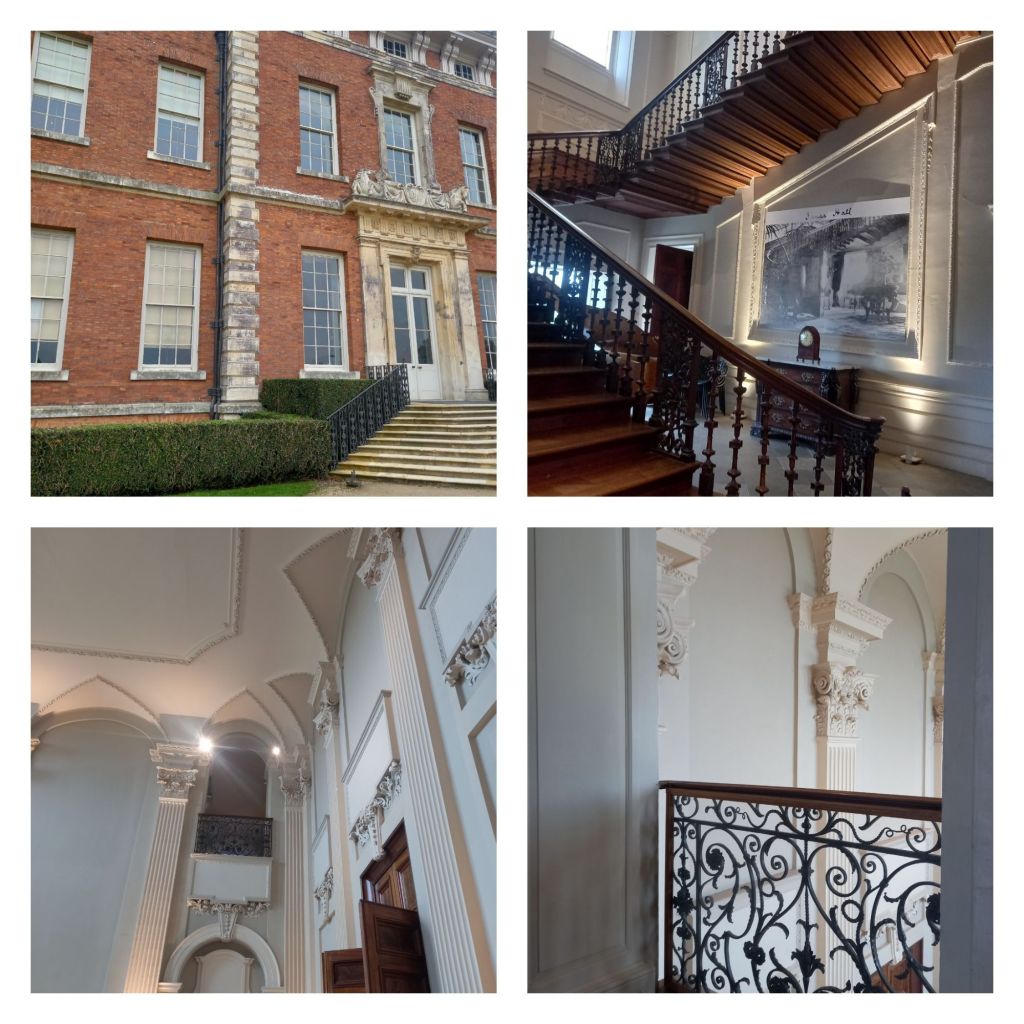
I also visited Beningbrough Hall on my way back down from North Yorkshire. I have been before, but that was a quick stop off during the Covid years, and only the grounds were open then.
The gardens look beautiful, they are very Japanese in style, but it was the wonderful autumn fruit and veg display in the shop are that really made an impression. Such gorgeous colours and textures!
The hall is another mainly empty property, now used for art exhibitions.
When in West Yorkshire I went back to visit my friend Sue, who has recently moved back from Scotland. I have been to stay with her many times in her beautiful, but remote lodge in Argyll, but she has moved back to where she spent many happy years when her children were young, just over the hills from my old village of Marsden.
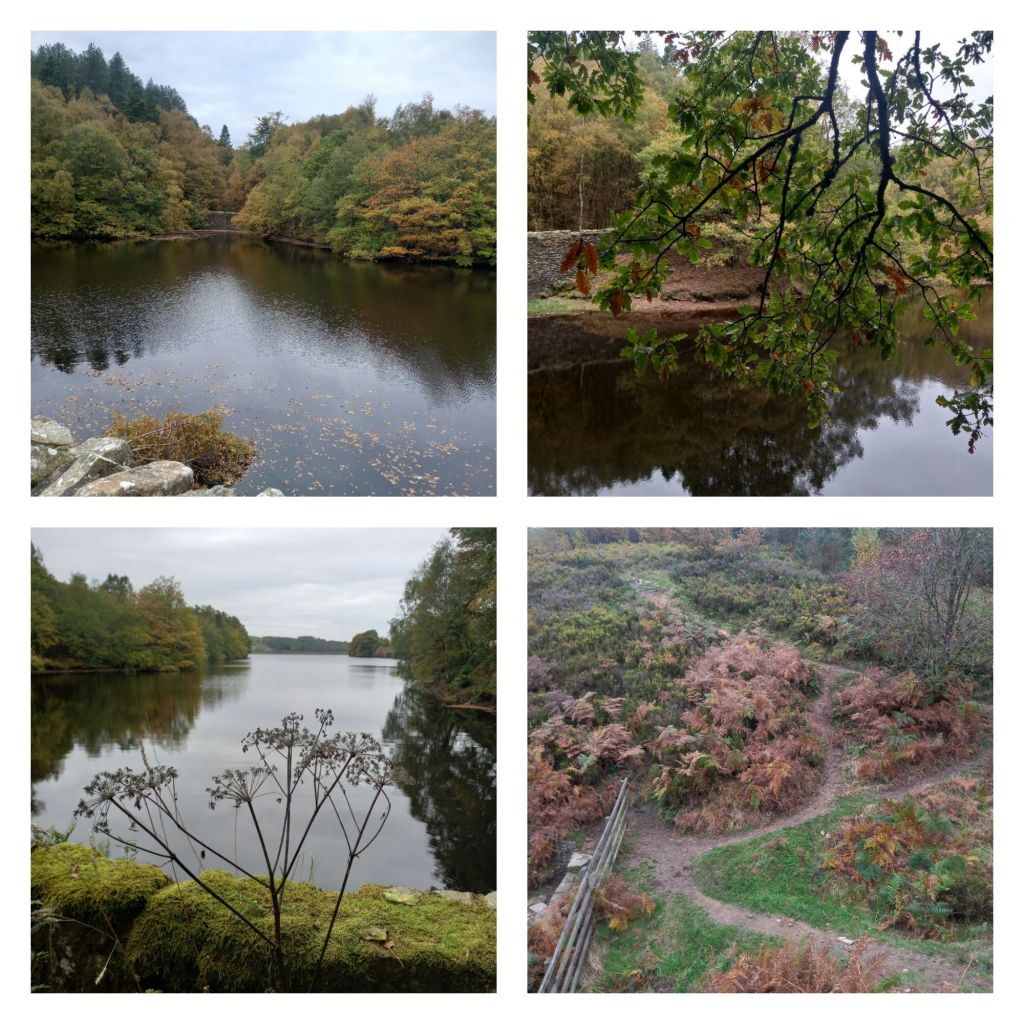
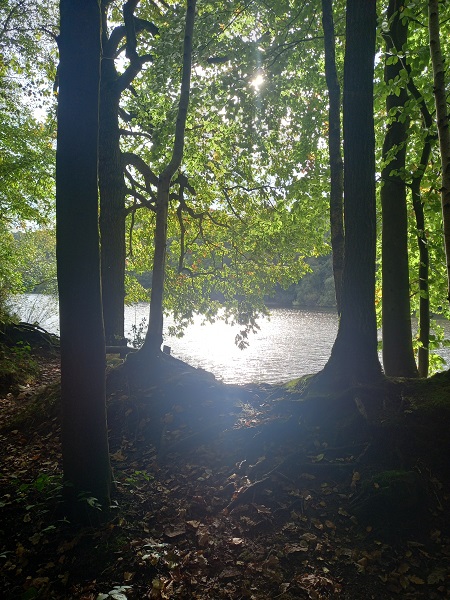
Even though it was dull, we had a really good walk around one of the many reservoirs in the area. I love walking around water, probably why I love Scotland so much, there is just something magical about all the reflections.
As I was leaving Katy Kangoo at my sister’s for the winter, we thought it would be fun to have one last camping trip, to Wales. We booked the very last few days that the site was open, at the Wyeside Camping and Caravanning Club site at Rhyader in mid Wales.
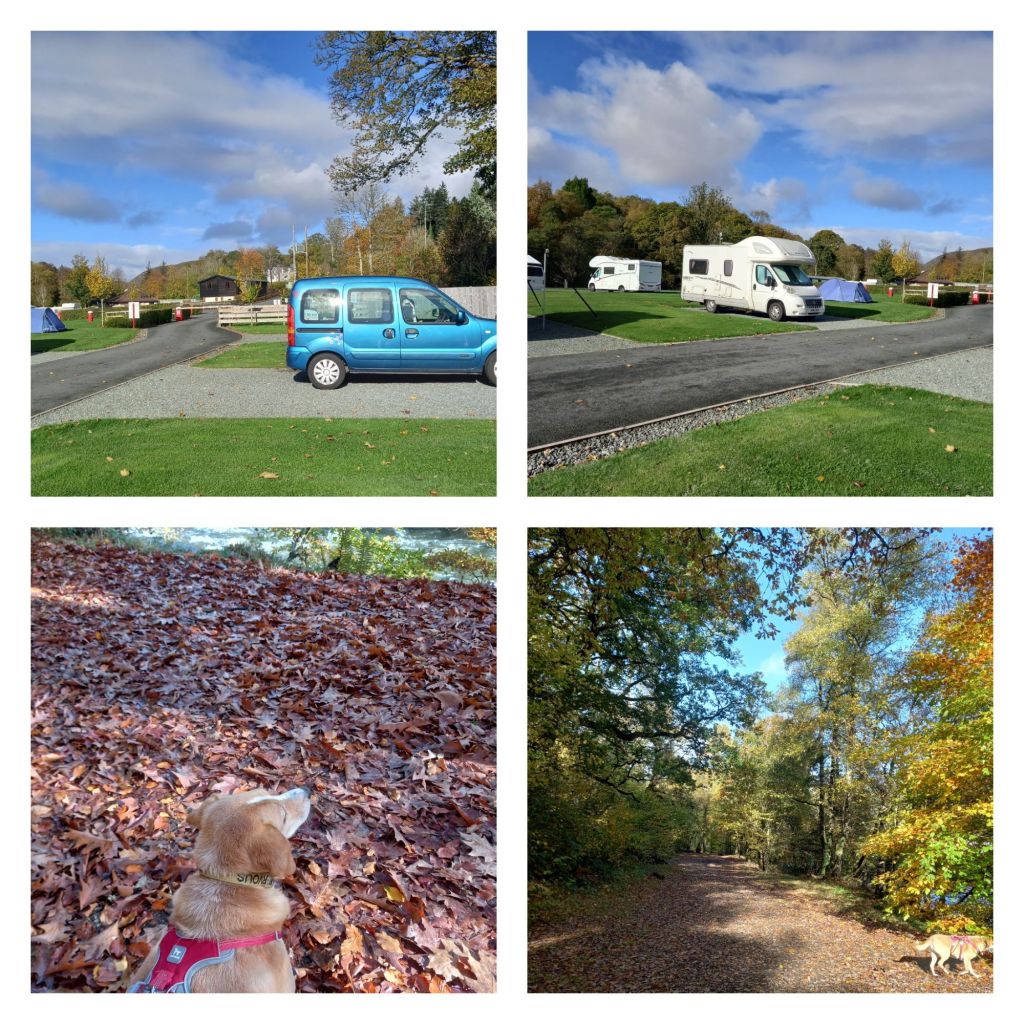
The drive there was stunning, through Herefordshire, and we were really lucky with the weather. We did get a bit wet on the first day, but had a glorious couple of walks, with Ryan the dog of course, and lots of fun just playing games and catching up.
The site is right next to the River Wye, as the name suggests, and so while I pitched my tent on the grass next to my sister’s motorhome, Katy had her own pitch just across from there, so she didn’t sink in the mud!
It was interesting watching the staff close down the site, thinking about what my lovely colleagues would be doing in Scotland. This year I will be doing both opening and closing down, so am really excited for the start of the season and meeting my new team in a couple of weeks.
I am going to be moving on from the static caravan tomorrow, I have a mix of camping and aires, and some historic visit activities planned. The rest will be weather dependent, so I may be able to get a lot more crocheting done!
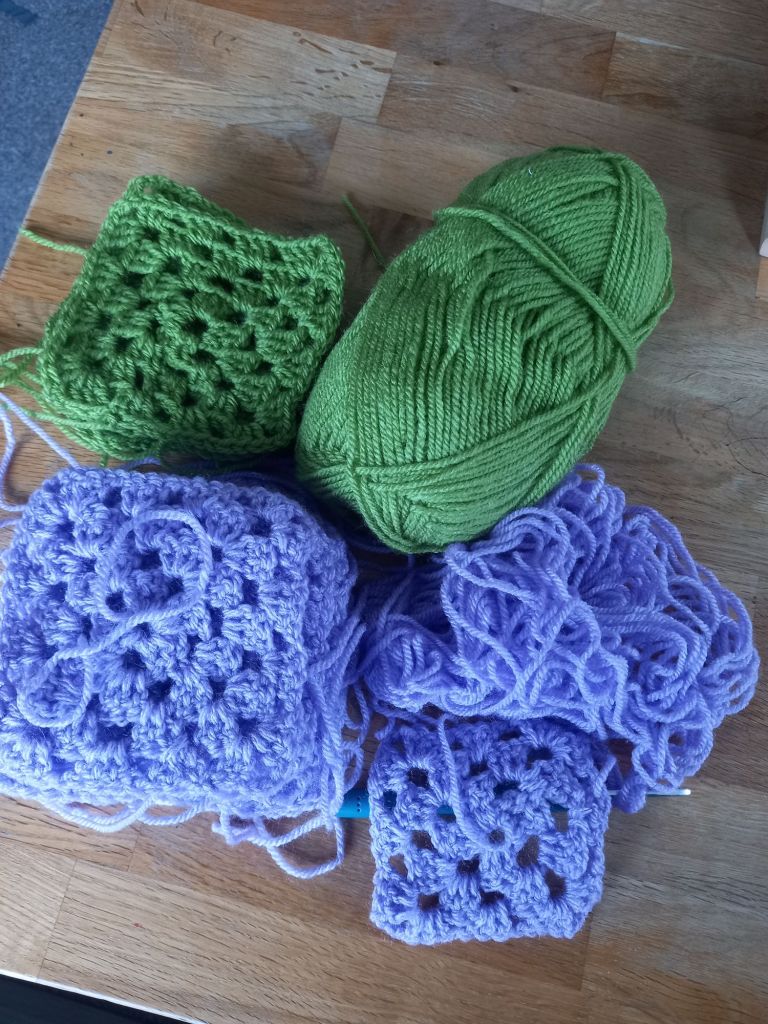
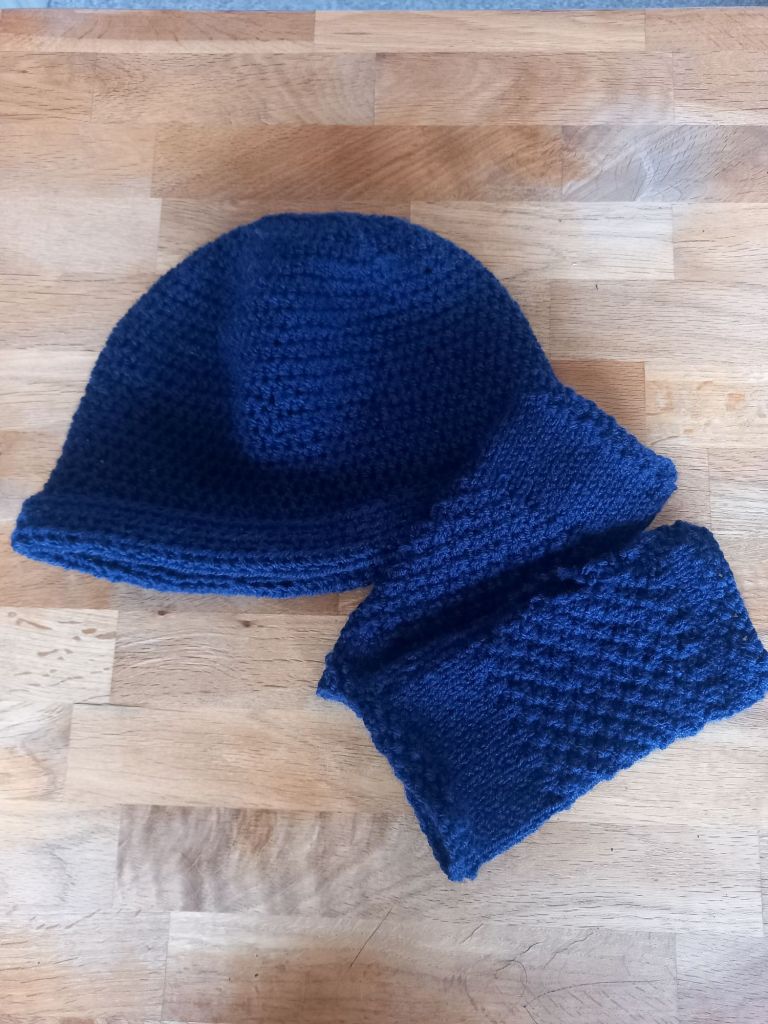
I have brought a large amount of wool with me, and am getting on really well with the granny square blanket. I have also made myself a warm crochet hat, and matching knitted wrist warmers in uniform colours for work.
I do have WiFi at my next campsite as well, so fingers crossed will be able to keep the posting going. I have so many gorgeous things to show you from our recent city break in northern Spain.
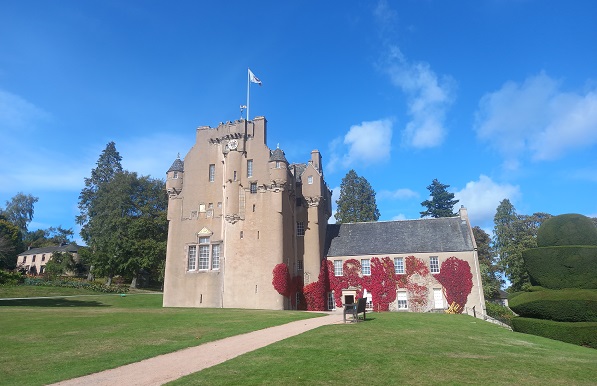
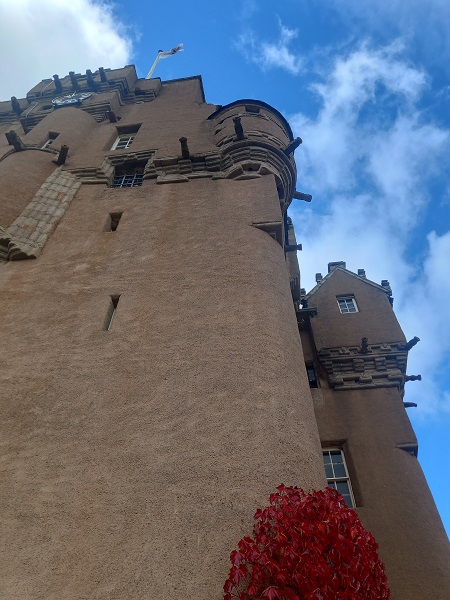
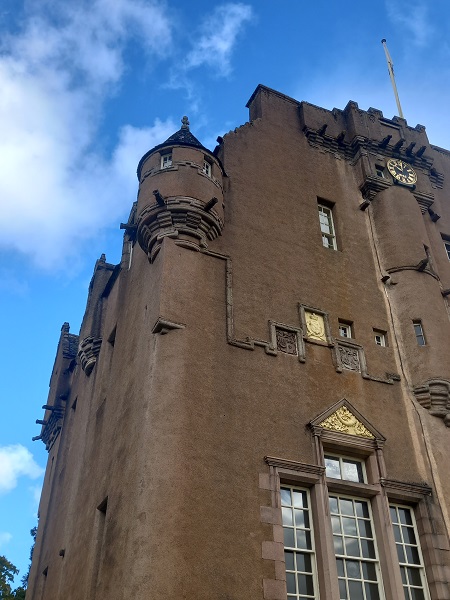
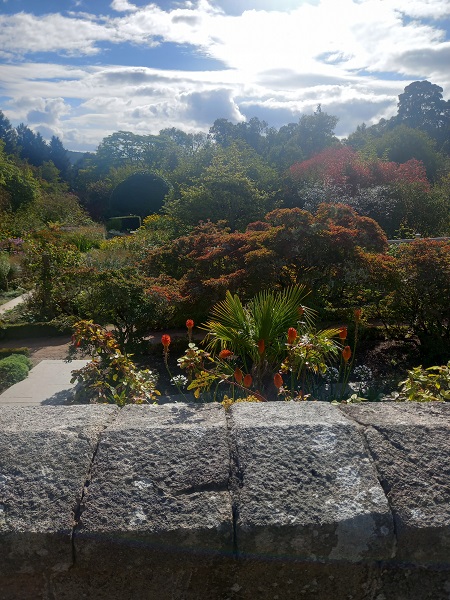
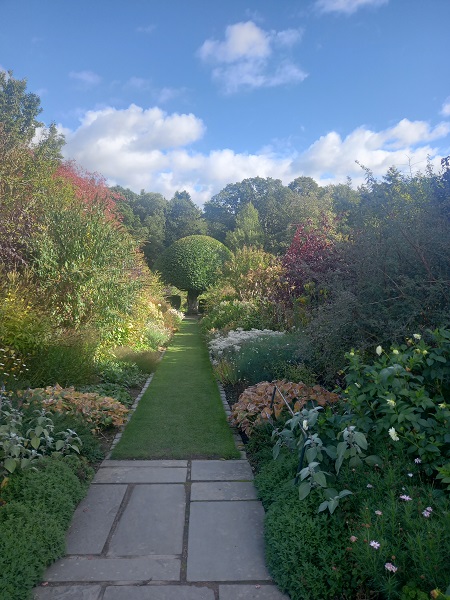
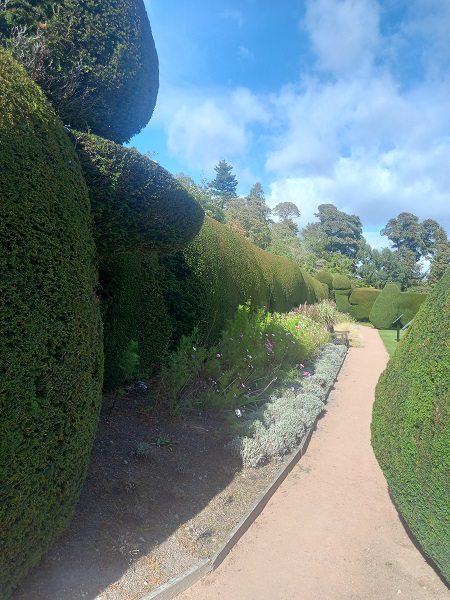
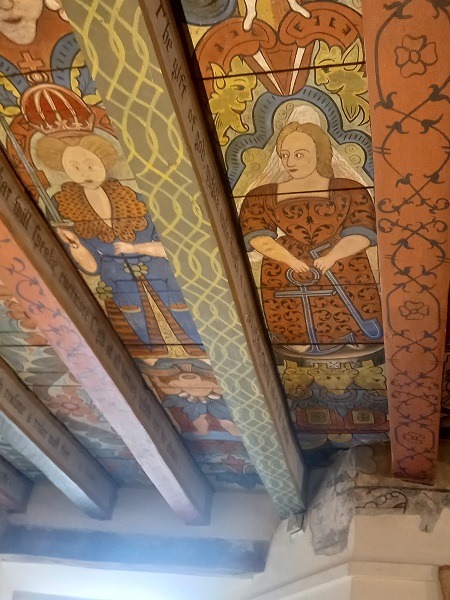
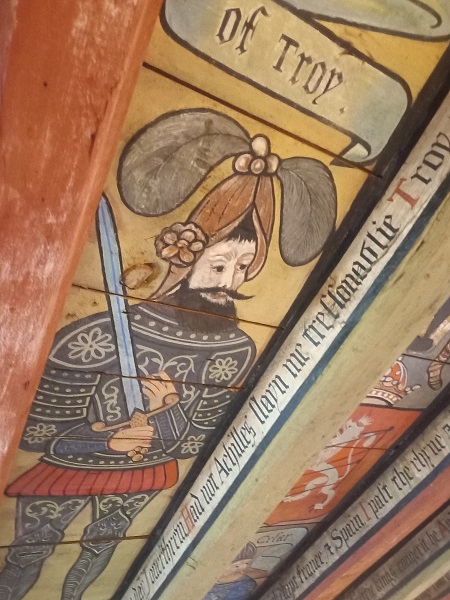
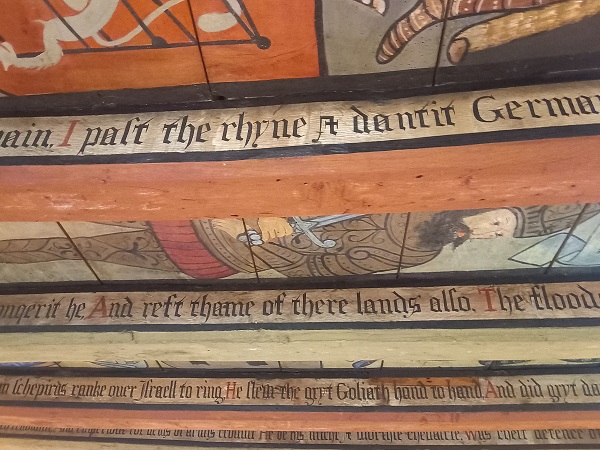
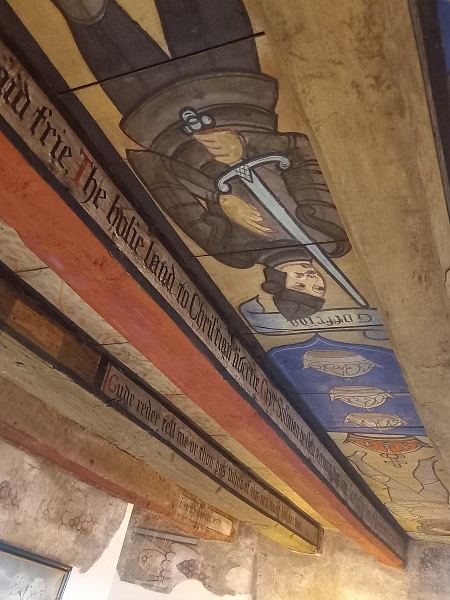
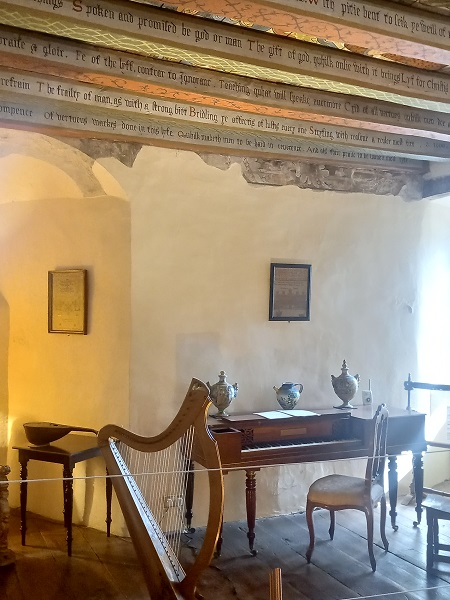
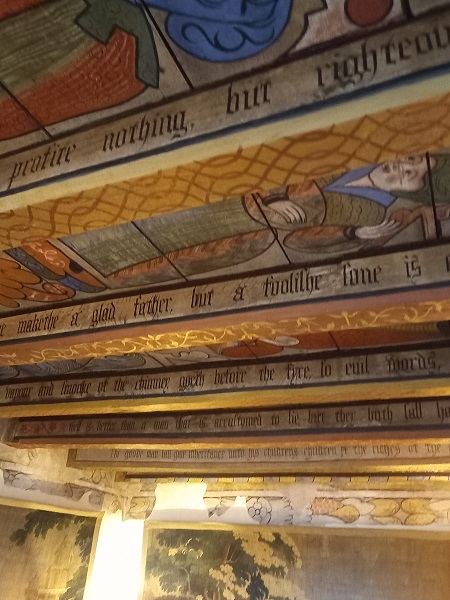
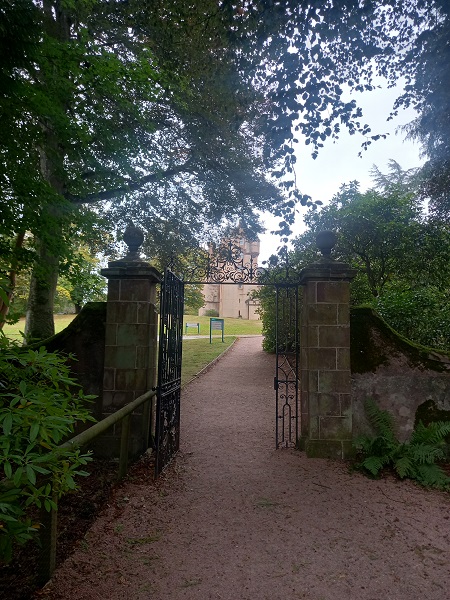
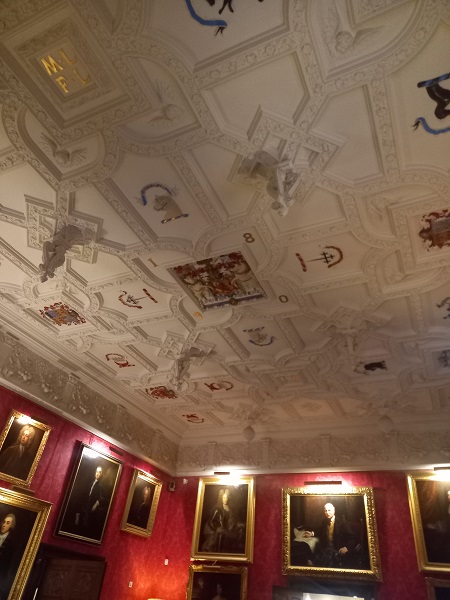
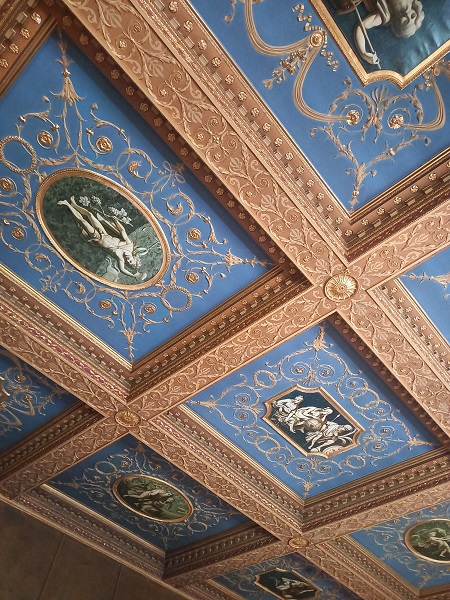
Technically Crathes is a castle, not a palace, however it reminded me so much of all the amazing painted ceilings that I have seen in palaces in Europe, that I definitely think it deserves palatial status. I was lucky enough to visit on a gloriously sunny day as well, which was brilliant as they also have gorgeous gardens and grounds.
This is such a beautiful part of Scotland, a lot quieter than others, but Deeside is just lovely, and the drive to Crathes was beautiful as well. I hope that I get to return sometime soon.
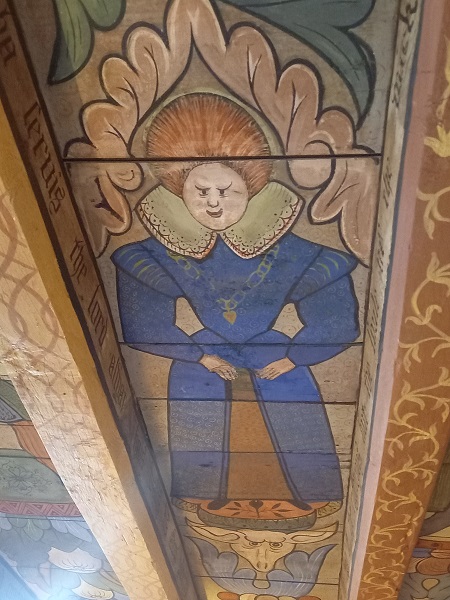
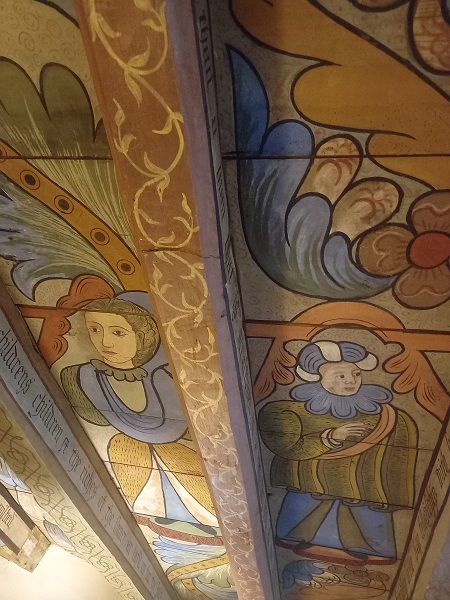
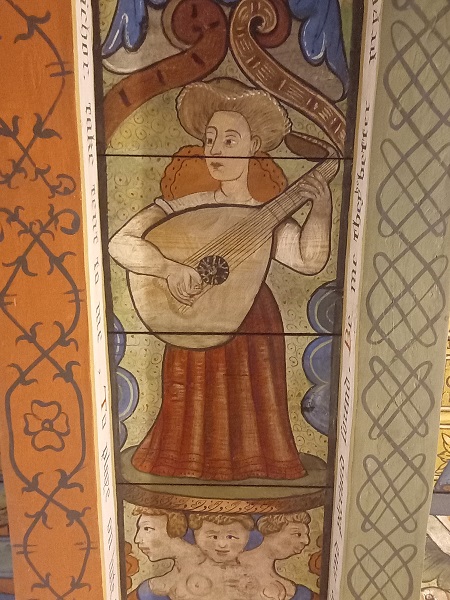
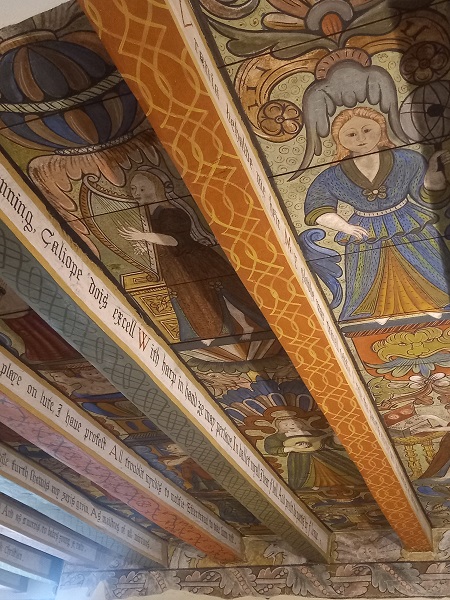
The painted ceilings are amazing, they are themed and there is very good interpretation to tell you about the symbolism, and also some very interesting, for me anyway, textile interpretation.
The Nine Nobles ceiling is self explanatory, representing kings and nobles from different times in history.
The Muses and Virtues ceiling was of particular interest to me, as at Hardwick Hall there are a number of hangings that Bess had commissioned with same themes, and they would have been created at around the same time.
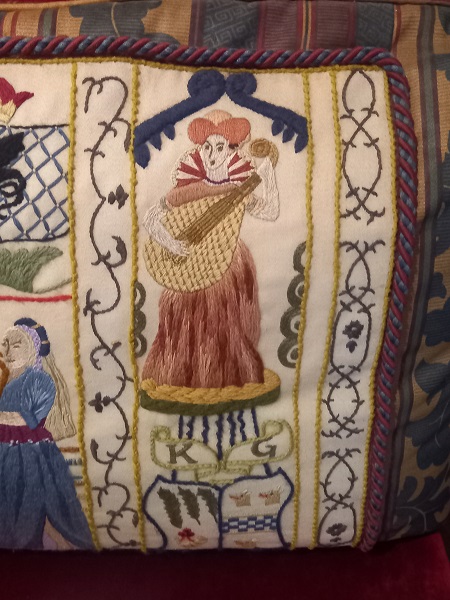
There was a cushion on one of the seats that had used elements from the ceiling as its inspiration, clearly a modern one, and on enquiry at the main desk I found out that it had been stitched by some of the castle volunteers. Just beautiful, and what a great way to add to the furnishings in the castle.
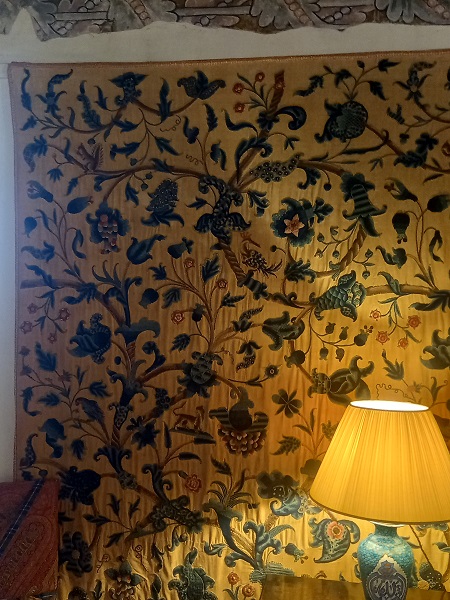
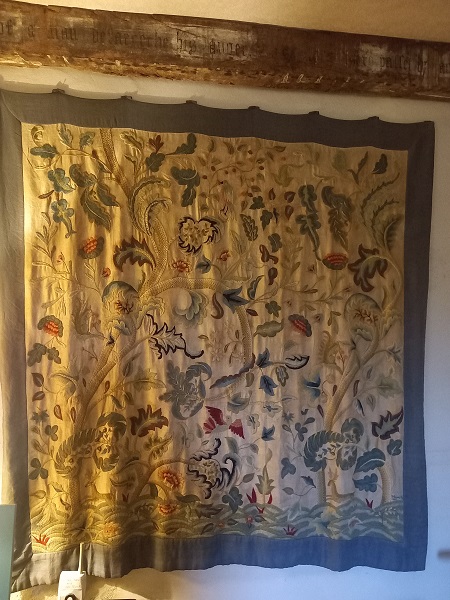
The historic needlework was also in abundance, with a lot of crewel work.
It was very good to see some written interpretation about its date and conservation.
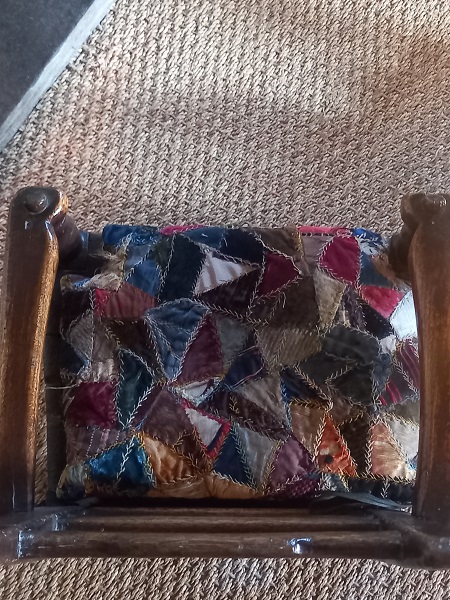
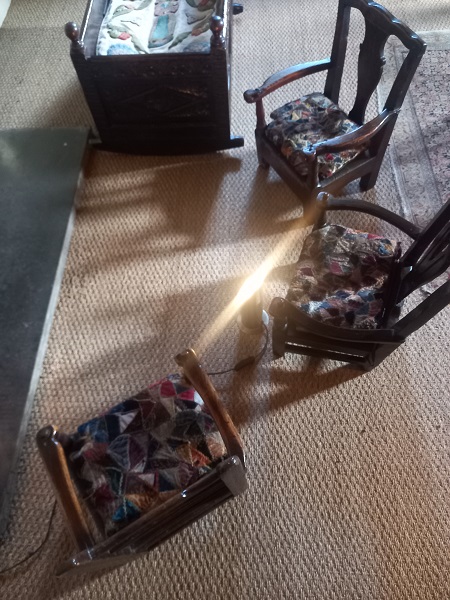
There were also some later dated things of interest, including these lovely Victorian crazy patchwork nursery chairs. I love imagining the gowns that these bits of fabric were offcuts from.
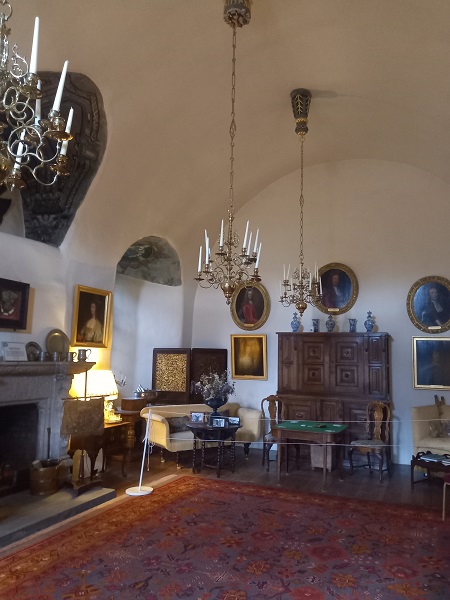
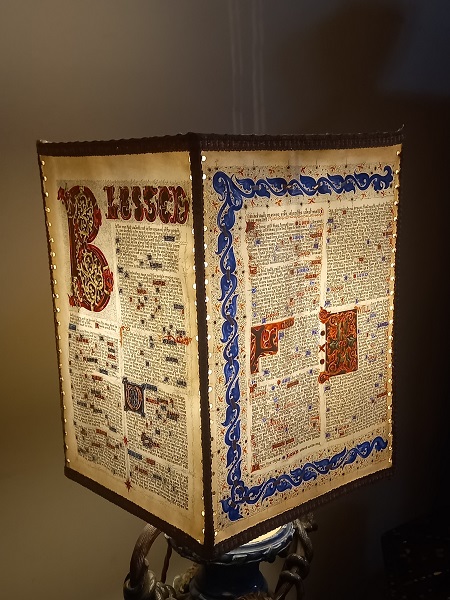
The main living area also had some interesting soft furnishings, and this beautiful manuscript inspired lamp.
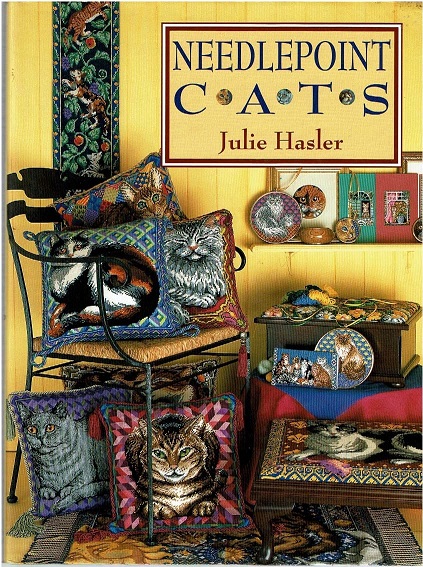
I mentioned in the last post that I was getting very inspired by all of the needlepoint I have seen this summer. I didn’t find a suitable kit, but I did remember that I used to have some great needlepoint books and managed to find this one on Amazon. This is Needlepoint Cats, by Julie Hasler, and I have a copy waiting for me in the UK!
I am almost certain that I used to own this book, but due to having small children never got around to making anything from it. I am planning a cushion for the caravan as a summer season project, but will have a hard time choosing as there are so many lovely designs. I am aiming to have specific UK and Spain projects, to stop me having to transfer stash and tools from one country to another all the time!
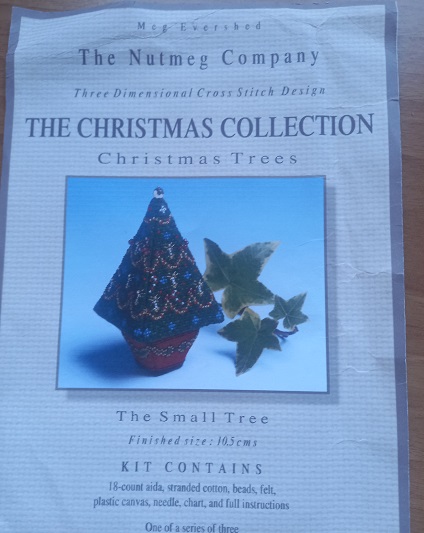
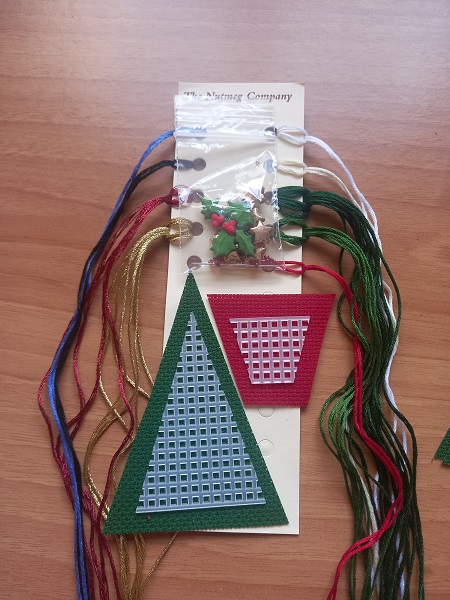
I have completed the very busy week of Christmas trips and dos, and done all of my Christmas gift making, will post about that after Christmas for obvious reasons! I am now working on a couple of projects just for me, versions of cross stitched ornaments that I have given others in the past, to fill up my tiny tree here, and a kit which has been languishing in my stash for more than 10 years.
I started it yesterday, and immediately remembered the joys of stitching on dark fabric, luckily I have a good spotlight, as we lose the light here about 4pm. However today is the start of lighter and brighter days, not that it is bad in Spain compared to the UK, but I am looking forward to my very long summer evenings in Scotland.
I hope that you are all having a good pre-Christmas week if you celebrate, and have a lovely time ahead. I will see you all on the other side, hopefully there will be time for a last post before 2026! Take care and thanks for visiting.
Admittedly not all of my weeks after leaving the campsite were beautifully sunny, but the majority of the time I was still blessed with amazing weather, so I was very lucky. Part of my route planning was trying to visit as many National Trust for Scotland properties as I could. There are so many in the areas around Aberdeen, so I could do the interiors of properties on the less sunny days.
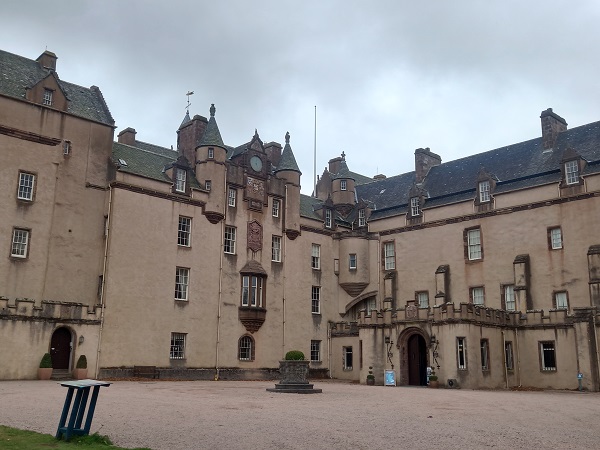
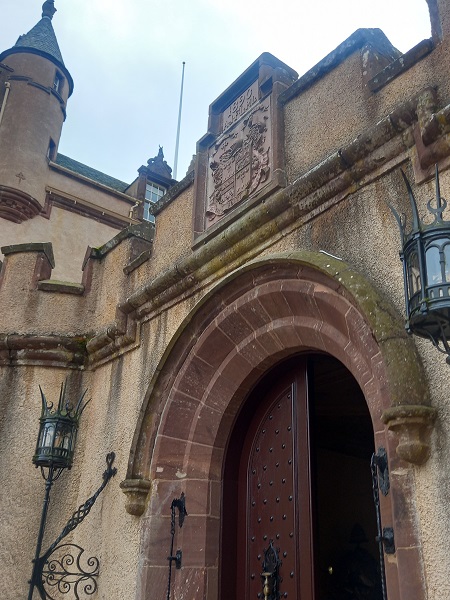
Fyvie Castle visit was on a bit of a grey day, the exterior reflected this, looking very somber. Like many Scottish castles, there are a number of towers that have been added to over the years, which gives them this very distinctive look.
Most of the castles I visited you joined a tour, rather than it being a self guided visit, and while I often prefer to be alone, usually as I need more time to look at the textiles than everyone else 😉 the tour guide was really interesting and knowledgeable, and really made the place come alive.
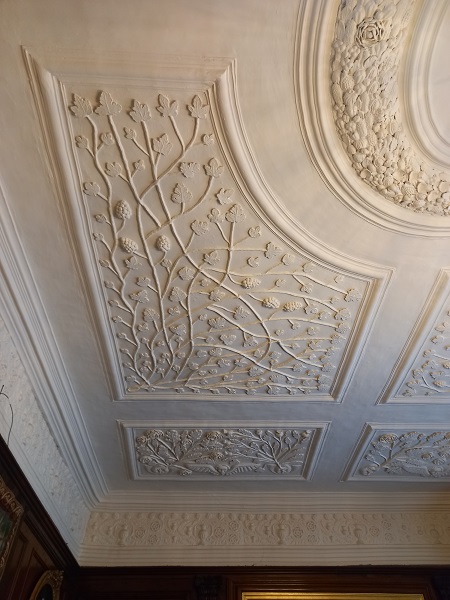
Even though it looks fairly modern from the outside, and the beautiful plaster ceilings are reproduction, rather than original Jacobean, it has a long history. Charles 1st spent time there as a young boy, and Charles 3rd, our current king, had his 70th birthday party there.
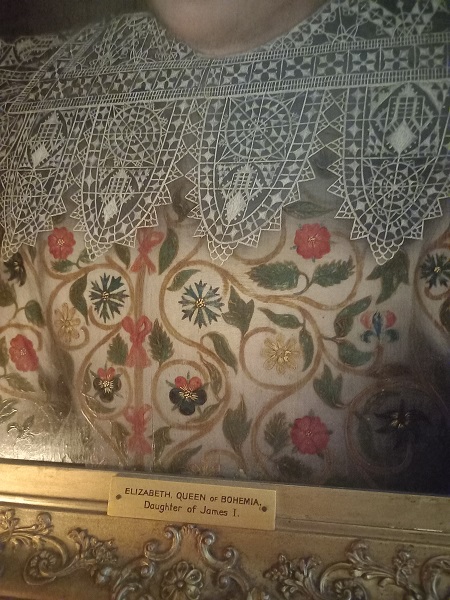
There were some great textile treasures there. I have seen so many different interpretations of this embroidered jacket, there is an original one in the V and A museum in London, known as the Layton Jacket, after its owner. This one belonged to the daughter of James 1st of England, Elizabeth of Bohemia, so dates from the same period.
There was also a gorgeous, and very pristine, whitework bedspread featuring the Scottish thistle, no provenance, but I would imagine a member of the family.
On a more modern note there were a set of co-ordinating needlepoint cushions in one of the lounges which all used the same colourway, and which were so pretty.
There was so much needlepoint on my tours of the castles and houses, and while it is so time consuming, I am really tempted to make a cushion at some point. I gave up needlepoint for cross stitch when my children were small, due to time constraints, but am tempted to try it again!
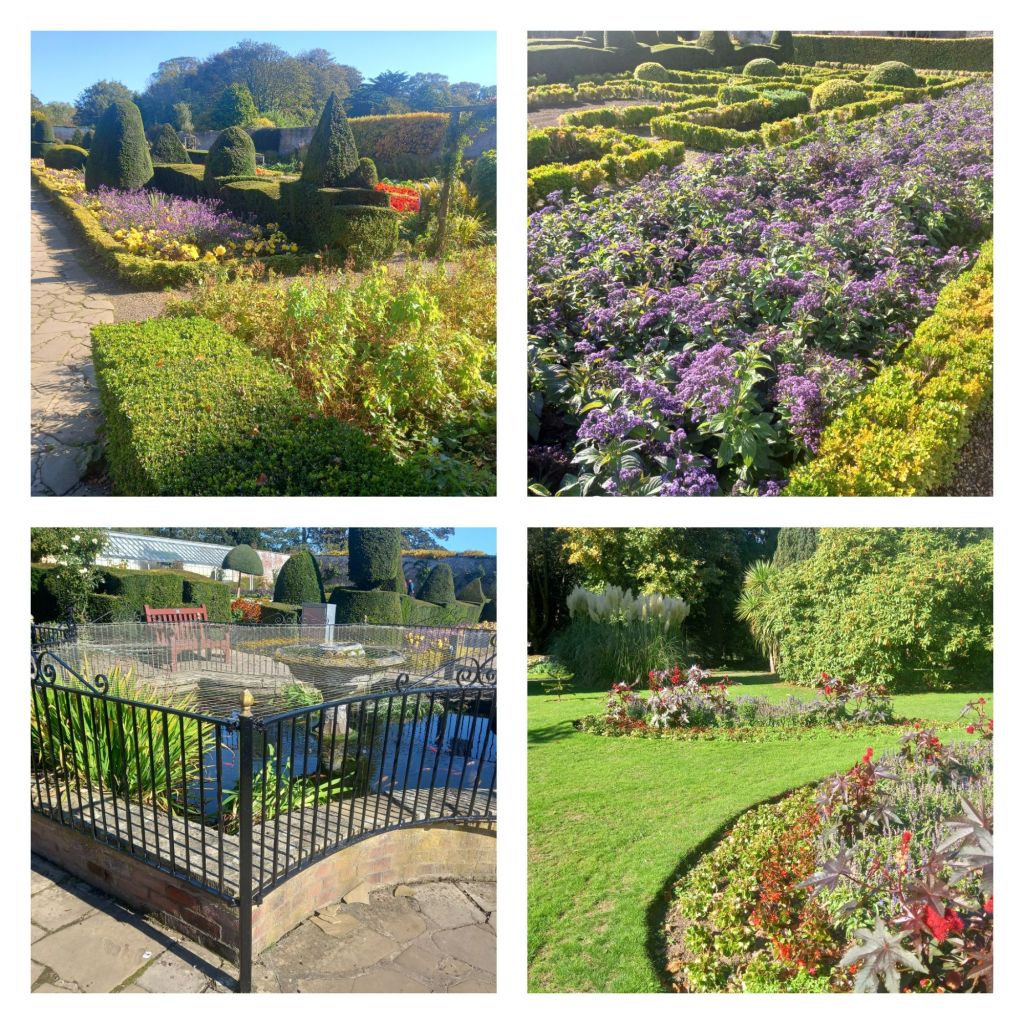
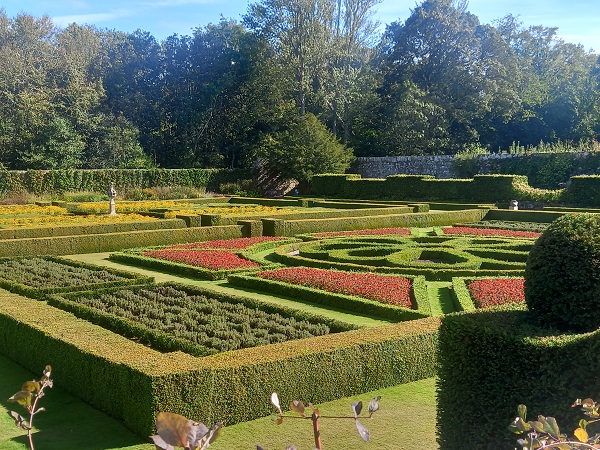
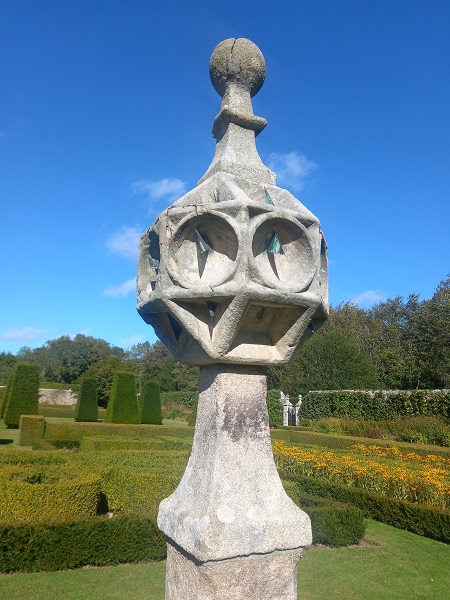
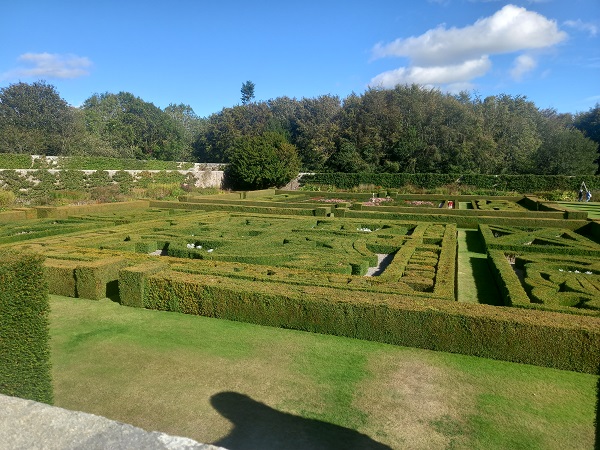
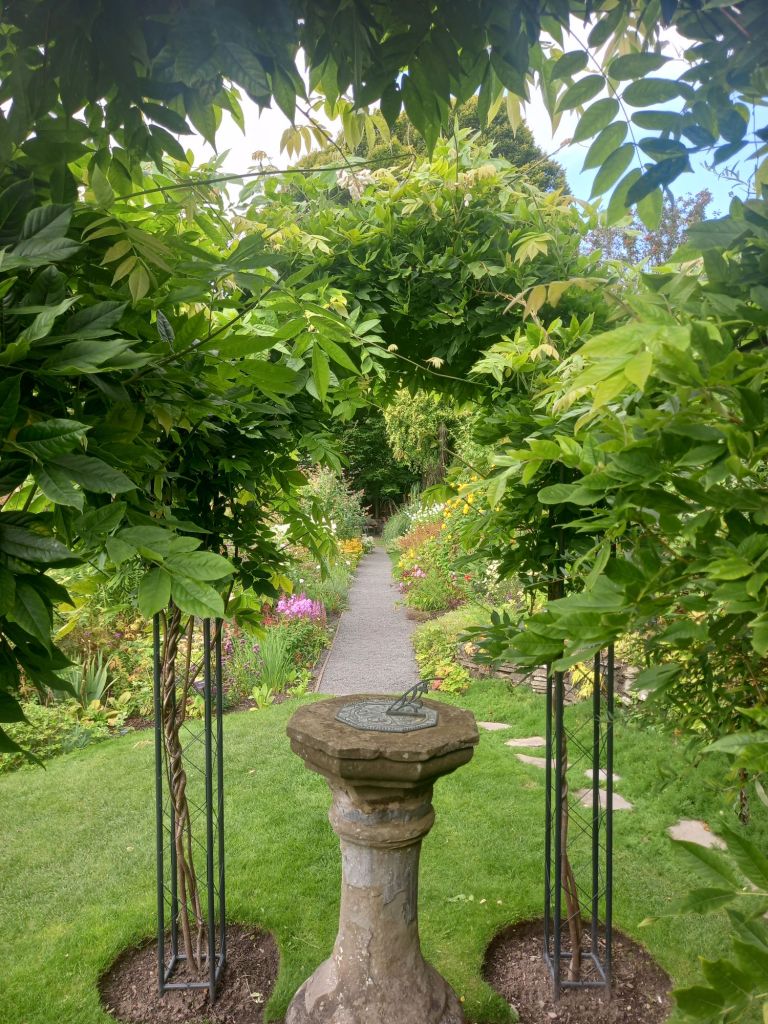
The following day the sunshine was restored so I went to Pitmedden Garden, not only a very good example of different types of planned gardens, but also home to some very interesting sundials. The gardens date from the late 1600s, when the ‘new’ technology of sundials was very popular, and reflects both the historic layout of the parterre gardens, and more modern interpretations featuring less structured planting.
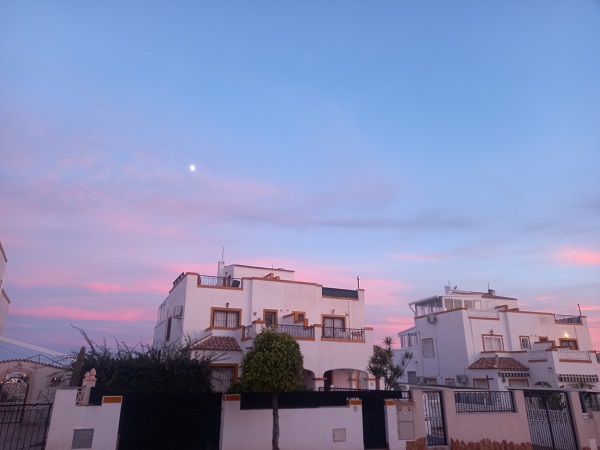
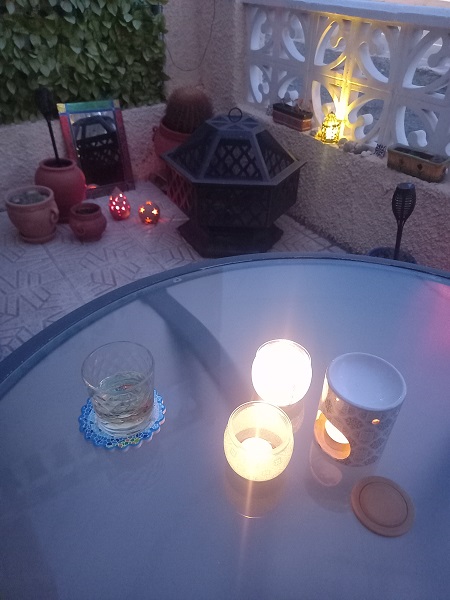
It was a very beautiful and relaxing place to spend the afternoon. I am now back in Spain, so have been enjoying the autumn sunshine here. It is a very nice 22 degrees today, I have replanted all my pots so that I have some colour on the terrace, and am back to my favourite way of spending the early evenings. The sunsets have been so gorgeous this week, such pink skies, and I have been lighting my candles and enjoying a glass or two of wine and a good book.
I have just updated the reading journal that I started when I retired, and I have read 354 books in the last 4 and a bit years, that equates to 88.5 a year, or 1.7 a week, although I read far faster in Spain than I do anywhere else. I just love it, and have so many happy hours of reading on the terrace planned for the next few months.
I will be going on a few day trips with my Mum, but the next few months are all about relaxing, crafting and writing, as well as some cycling. It is lovely to be back, especially after 6 months away. This is the longest that I have spent away from the house since I bought it 19 years ago, and I really appreciate having this lovely place to live. I am looking forward to next year so much, being back in Lotte the caravan, and Katy, but it is lovely to have my own bathroom, and my sewing machine!
Hope you are all having a lovely life, see you next time, and thanks for visiting.
I was so lucky with the weather during my time in Wales. Considering it was March, and the reputation the country has for rain, I saw very little of it in the month that I was there. This allowed me to do so much lovely walking, along more of the coastal path, but also exploring other parts of both the Llyn Peninsula, and inland, near the English border.
As I mentioned in my last post, I had two weeks at the Haven site just outside Criccieth, so was able to explore a lot more of that coast. The Lynn Peninsula is very narrow and it was amazing to be able to see both sides of it, while I was doing the circular walk on the cliff top at LLanbedrog.
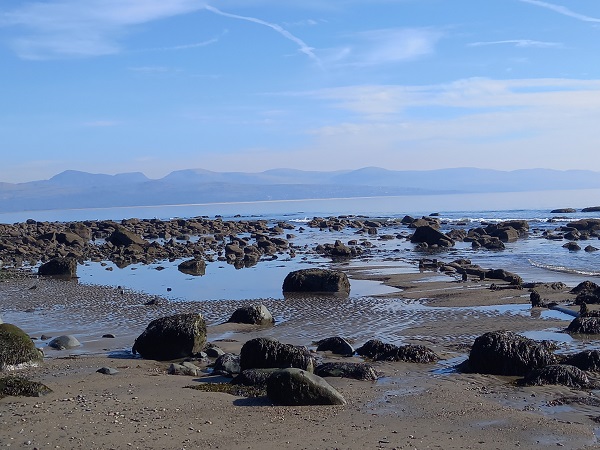
Part of the walk was closed due to previous storm damage, as many trees had been blown over, which gave me chance to walk around the beach. I was admiring the views of Snowdon, which at that point still had snow on the top, and taking lots of shots of the beach.
I really love how this one came out.
I also visited the beach at Borth Y Gest, which must be one of the most beautiful places that I have ever been. Just such an unspoilt place, with amazing views across to Harlech.
There was also a very warm afternoon at Criccieth, walking along the beach, exploring the town. I had to have an ice cream, it was that hot, 17 degrees that day!
I also got another lovely reflection picture as there was an Airstream caravan, used as a coffee takeaway, next to the beach.
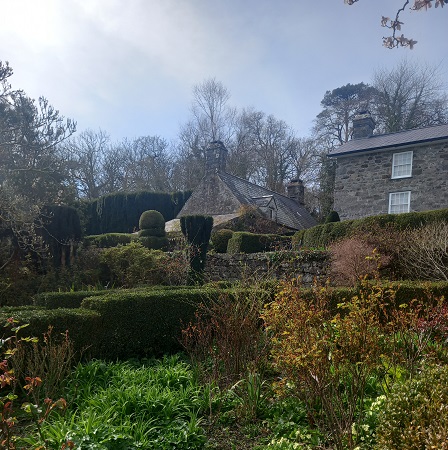
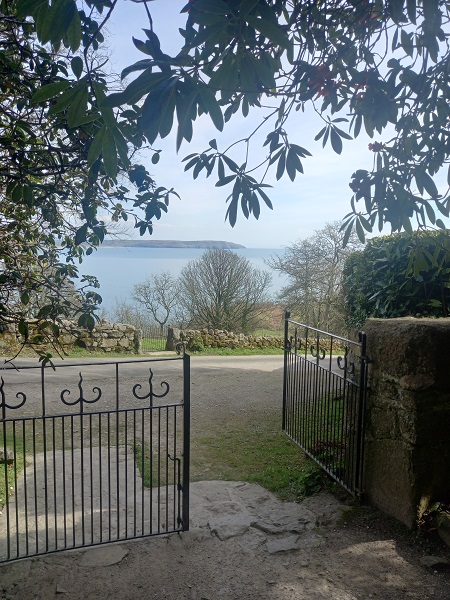
There are lots of National Trust areas in the Llyn Penisula, but only one property. I had a gorgeous day for my visit to Plas yn Rhiw, towards the very end of the land. The property was bought in 1938 by three sisters from Nottingham, Eileen, Lorna and Honora Keating, who restored it to its current state. It was so good to see all of the primroses, daffodils and magnolias, and I had a picnic overlooking the bay. The magnolia tree here was planted by Honora in 1949.
After leaving the Llyn Penisula I spent a brilliant weekend with a friend who I met at Polytechnic, so we have known each other for a mere 42 years! We have met up quite regularly over that time, but not often recently in Wales.
Nia is a Welsh speaker, and passionate and knowledgeable about her country and its heritage. She was very kind and gave me a guided tour of all the canal heritage in her area, including something that has been on my bucket list for a long time, the Pontcysyllte Aqueduct, which is a World Heritage site.
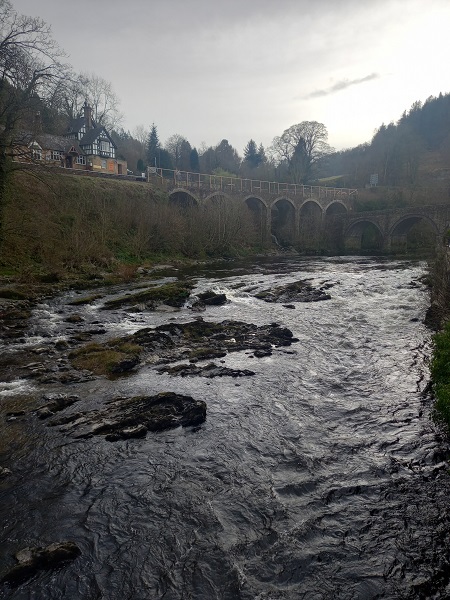
We started at the Chirk Aqudeuct and viaduct, which is nearby.
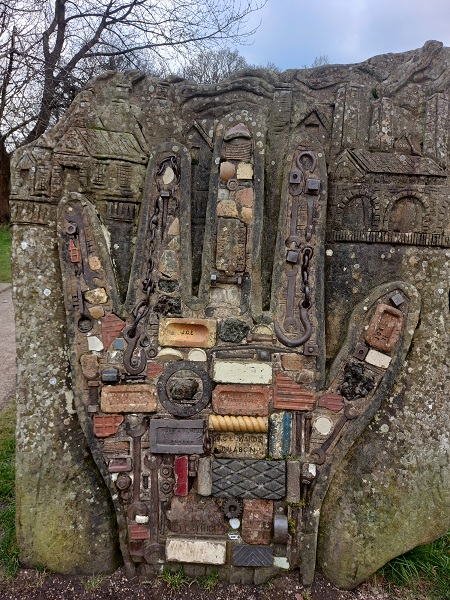
You may remember that I spent a lot of my time in Scotland visiting canals, and there is so much rich heritage in Wales, built to supply the Industrial Revolution with coal, bricks and supplies for cities like Manchester and Liverpool. Nearby Ruabon was the centre of brick making in the area, and this is celebrated in an innovative sculpture at the aqueduct site.
This celebration of the tools and products of the industries is just brilliant, a fantastic way to celebrate these artisans.
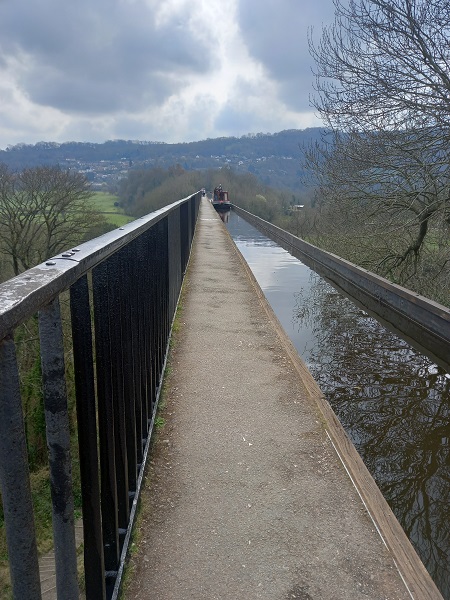
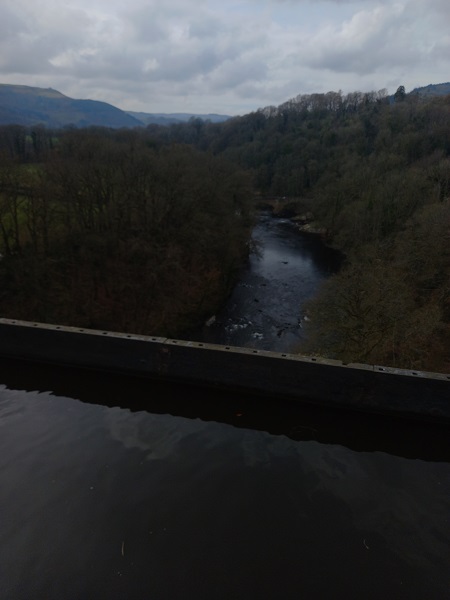
The Pontcysyllte Aqueduct is a very unique structure, a real feeling of being up in the air, and such a marvellous piece of forward thinking and engineering, from Thomas Telford and his colleagues. It must have taken such determination to convince people, and especially investors, that they could build this, ‘stream in the sky’.
It can feel a bit scary walking along, as there is only a rail on one side, but I was assured that the water is only 5 feet deep. However you have to be very careful if you are in a boat. There are the holes for railings on the other side, but they were never fitted!
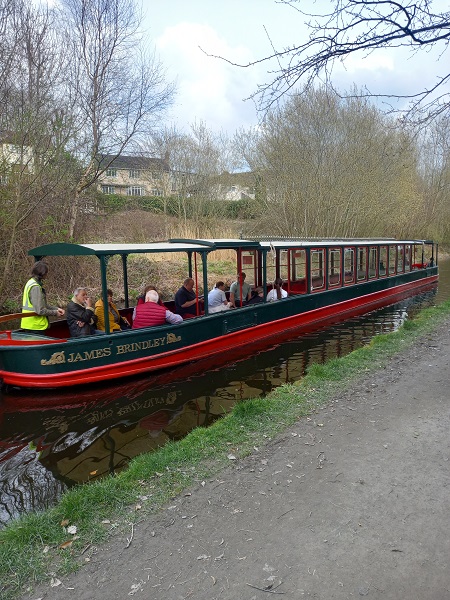
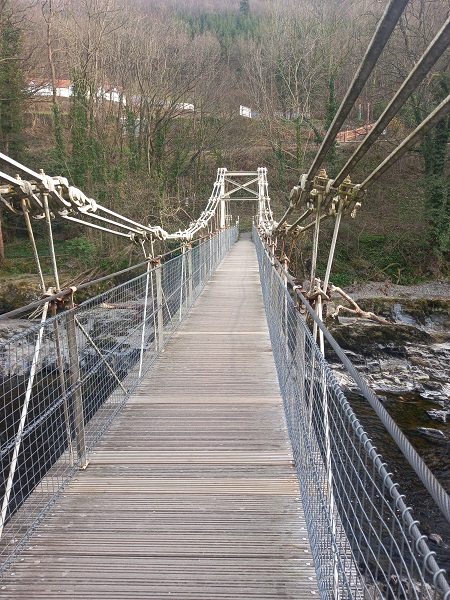
We then went to Llangollen, to do the canal walk down to Horseshoe Falls and the Chain Bridge. You can still experience the horse drawn barges along this part of the canal. This was actually the only real rain I had in the whole of my month in Wales, but that didn’t spoil the day.
There was time for a quick visit to Chirk Castle, another Trust property to cross off my list. Although it was a dull day the gardens were still very impressive, and the parkland is stunning. The castle has a long history, sadly initially of suppressing the Welsh, from the 1300s, but most of the tour was of the Georgian room with their ornate ceilings. One of which has been partly cleaned to show the effects of coal fires on the paint work.
I then continued south, which I will have to tell you about in another post, as I am running out of time and space here. I am now back in Spain, and am off out with my Mum tonight, a belated Mother’s Day meal.
While I have been having gorgeous weather in Wales, they have had four named storms in a month, with another one due this weekend, so they have not been able to enjoy the outdoor life much recently. Hopefully the rest of spring will be better here, and of course summer will be baking!
I will return sooner than a month, lack of Wifi in my last couple of weeks in Wales meant that this post has been much delayed. Thank you as always for visiting, over 1500 of you in March, which is wonderful. Take care of yourselves, enjoy life and I will see you again soon!
Welcome to my first post from Turkiye! I actually left England last week for my first visit to this beautiful country. I scheduled my last post for a couple of days ago, as I wasn’t certain how much I would be able to post from here. Thankfully I have excellent wifi so all is good.
I have wanted to visit for so many years, especially after watching Chris and Marianne from Tread the Globe, who were here far longer than they intended after Covid found them stuck in a car park in Istanbul for 93 days. They later spent a year touring here, and gave me so many ideas for places that I wanted to see.
I had a really hard time deciding where to come to, there are so many beautiful places, and it is such a big country. Thankfully there looks to be no sign of them joining the EU just yet, so I am allowed to come here for my winter exiles on and off for the next few years I hope. Therefore I decided to just pick one location for this year, and to explore it thoroughly.
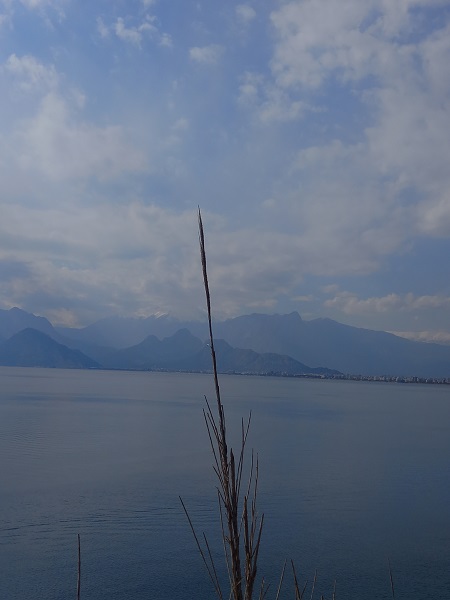
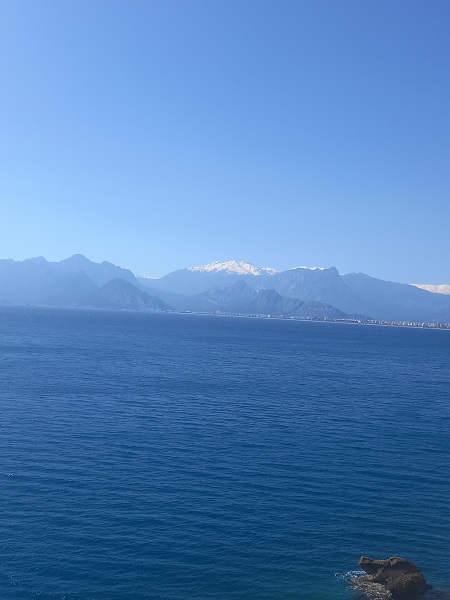
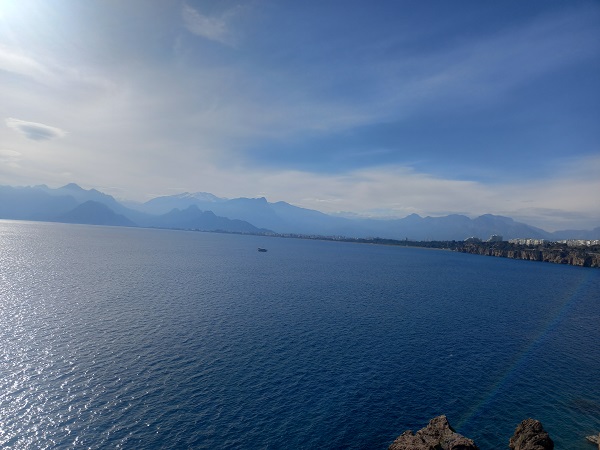
I chose to come to Antalya for various practical reasons, such as easy flights from Manchester, but also because of what I had seen of its location. It is such an amazing place, and I can’t stop taking pictures of the mountains that surround the city. It is located on the south coast, and so is on the Mediterranean Sea. Just look at all these gorgeous blues, and the snow capped mountains.
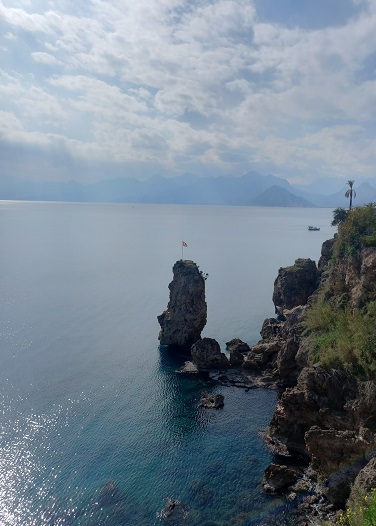
Much of the city is perched on rocky cliffs, so there are only a few beaches, especially the side that I am on. There are lots of little steps down the cliff, and platform bathing areas that I’m sure must be amazing in the summer, the sea is so clear and a wonderful turquoise.
All along the coastline are parks with lots of picnic areas, and nearer the city, restaurants and bars, as well as lots of viewpoints for the mountains. Up until yesterday the weather has been excellent, so I spent most of the first few days just walking along the coast. I have started to explore some of the old town and some museums, which I will post about next time.
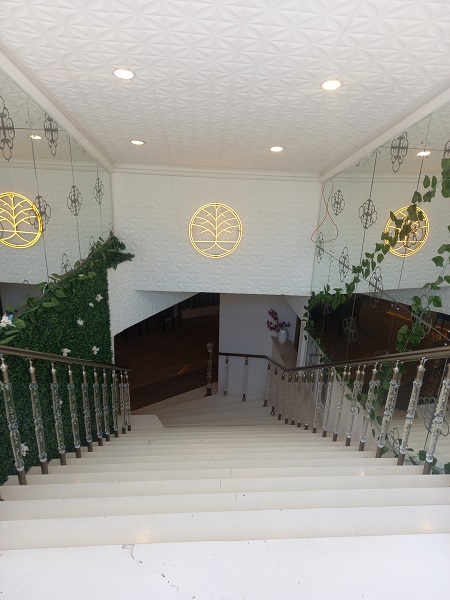
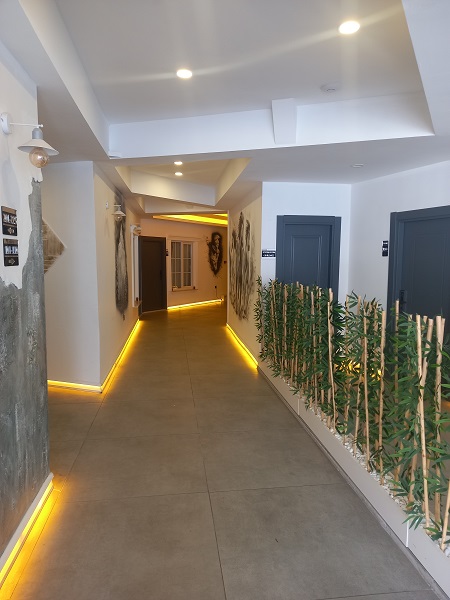
I am staying in a really nice hotel, still very much within budget, but very modern and sophisticated compared to some of the accommodation I stayed in last year. I really loved the riads in Morocco, but this is very gorgeous.
It is called Mi Hotel Boutique, and is about 20 minutes walk from the centre of the old town, right next to the coast, and in an area well supplied with supermarkets etc. Since I am here for three weeks I choose somewhere with a kettle and fridge, and a little bit of ‘office space’, as I am doing lots of writing while I’m here.
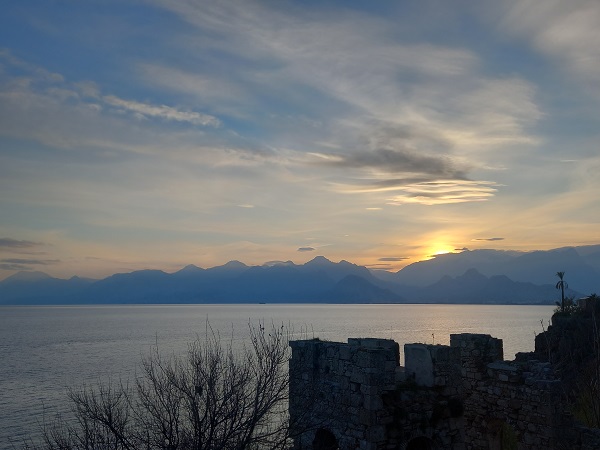
It is also a great location to see the sunset over the mountains.
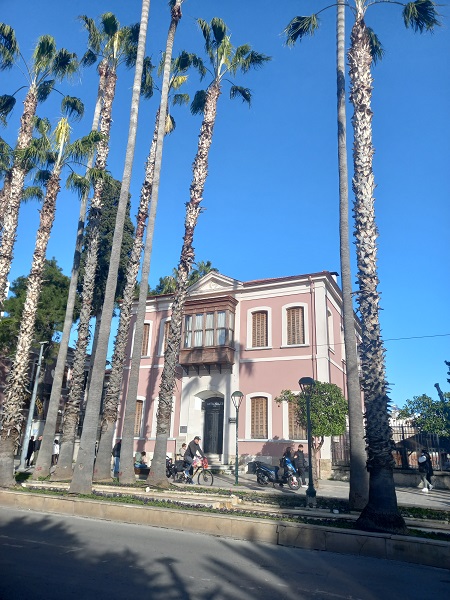
The old town here is beautifully restored, but apart from a few buildings, most of Antalaya is very modern, with low rise apartment blocks.
I did wonder why there was nothing much from earlier in the 20th century and after a bit of research found that it is because the city grew from 27,000 people before WW2, to 2 and a half million now, so quickly that it created a housing crisis. Many of these people were migrants, coming here due to the effects of war, and there were at one time lots of shanty towns. These were then replaced by the current housing from the 1970s. As you probably know I find architectural history really interesting, and this explains why everything is so modern here.
Turkish is not really a language that I had looked at before. It is a very interesting situation to be somewhere trying to learn a language that is very unrelated to anything you’ve learnt before. Spanish, French and English share so much in terms of word, and structure, but Turkish is all very new to me.
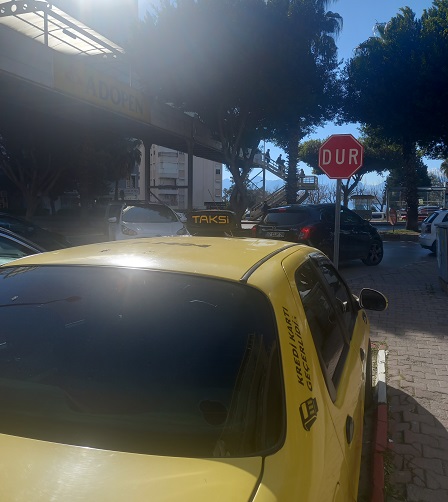
So far I’m not doing too badly, social signs help a lot as always. You can probably guess what this red road sign says just from its colour and position and lots of words are similar such as ‘taksi’.
Others take some more working out, which is where supermarket shopping comes in handy. It took me a while to work out ,’tea’, after I realised that the ‘c’ is pronounced as ,’ch’, making the word çay sound as ,’chai’, which is very familiar to me from my favourite chai latte drinks. It’s clearly very popular from the size of these bags in the supermarket.
It also helps that restaurants here have lots of pictures of food, so I have learnt ,’peynir’, and ,’tavuk’, which is cheese and chicken, quite easily. I have already had one of the delicious pide, a form of Turkish pizza, with those ingredients.
I was also wondering about why Turkish isn’t written in a different script, but uses the Latin script that most other European languages use. It turns out that this is the result of a deliberate government policy from 1928. This was to modernise the language from the previous Ottoman, which used a combination of Arabic, Turkish and Persian words, and whose alphabet did not reflect some of the sounds needed. Modern Turkish has 29 letters, 8 vowels and 21 consonants. Some of these letters have been modified to better enable the sounds of Turkish to be represented, such as Ç, Ş, Ğ, I, İ, Ö, Ü. This means you have some letters with and without modifications, so you have to look carefully at which form is being used.
This modernisation took place swiftly, and the new language and script replaced the old. It must have been a major undertaking, it brings to mind decimalisation in the UK in 1971, which I still remember clearly as a 9 year old. This article, by a Turkish/British journalist, reflecting on the impact of the language change for scholars of pre 1928 texts, is really interesting and really makes you think about the links between language and culture.
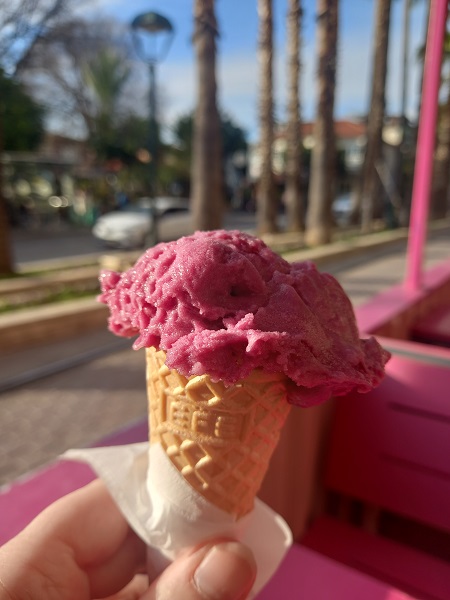
And yes, as Antalya is a major tourist resort, a lot of people speak English, but half the fun of travelling for me is trying to explain what I want in the language of the country, and everyone I’ve met has been really kind while I mangle their language! I have learnt the words for various lovely flavours of ice cream as well. This is ,’nar’, or pomegranate and it was delicious.
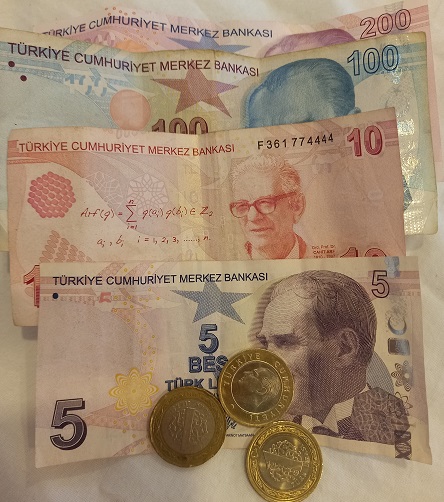
I have also been getting to grips with a new currency and exchange rate. Having all the lira makes you feel very rich, that ice cream cost 30 lira, which is about 66p, and the notes are very beautifully designed. I have not come across any other coins than the 1 lira, worth about 2p. Thankfully I have a conversion app on my phone which saves me having to do complex maths in the supermarket.
When I was visiting Nepal, many years ago with the Scout project, the currency all contained pictures of different animals, so we would work out the costs of our food by saying things like, ‘three elephants and a tiger’, which helped us remember the denominations.
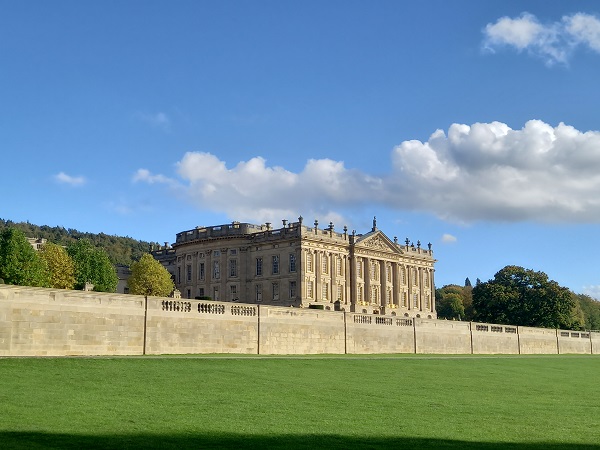
I have been having a quiet couple of days, as it has been a bit wet, which has allowed me lots of time to write up the research I did for the novel, in Alnwick, and at Chatsworth. Tomorrow will be dry and sunny again, so I will continue exploring the old town, and the coast. I have been saving lots of lovely door photos for you, and there are also some beautiful textiles coming up!
Until then, have fun, take care, stay safe and thanks for visiting.
Even though I no longer live in the area, I still consider Yorkshire, and the Peak District home. It is the place that I have spent the most time in, and I just love the countryside. It is also so nice to return to catch up with friends. At the end of the summer I chose to spend my last two weeks camping in the Yorkshire Dales, and the Staffordshire Peak District, between Buxton and Leek.
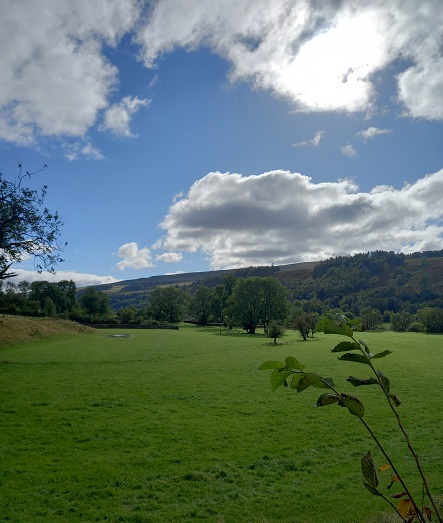
The first site was a Camping and Caravanning Club certified location, one of the smaller sites, for usually up to 5 vans. They are privately owned, often farm sites and I wanted to try one out. It was a stunning location, in the village of Buckden, not far from Kettlewell, and right in the middle of the Yorkshire Dales National Park. The park celebrated its 70th anniversary in November 2024, and has always been one of my favourite places to camp. When my children were younger we used to come here all the time.
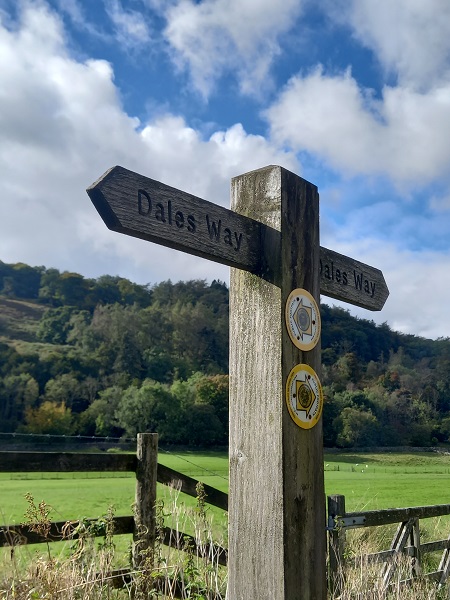
The certified location was on Heber Farm, with some very cute animals and a friendly cat host. As it was very quiet in the out of season October week that I was there I ended up on the farm campsite section, rather than the certified location in another field a few minutes away, so I could be near the facilities. The owners, Gill and Gary, were really welcoming and I loved staying there. Not only was it a fantastic campsite, with a facilities pod, and a few glamping pods as well, it is right on the Dales Way.
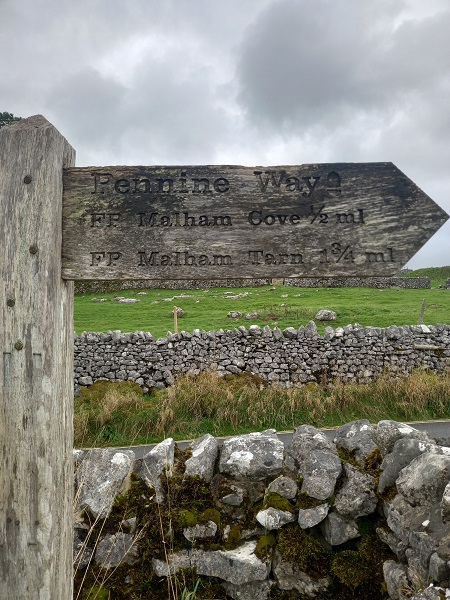
As always it was lovely to meet with other campers, a few walkers and mountain bikers were still around, and I met some lovely fellow outdoor enthusiasts. As I mentioned in my last post, I needed a quiet couple of weeks, and as the weather was variable enjoyed lots of time just reading and stitching my final Christmas ornaments, as well as some walks. I love the walk signs along the routes, both old and new.
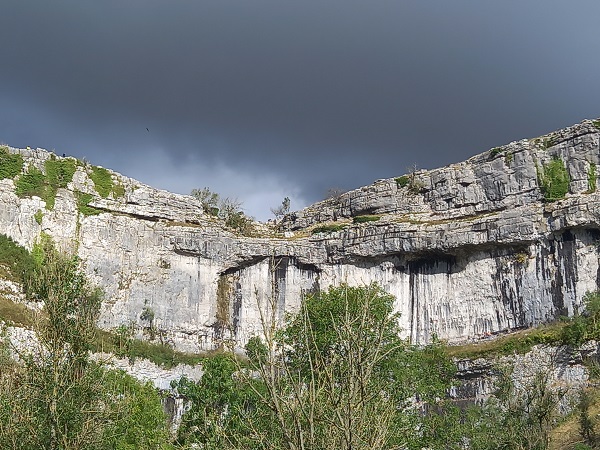
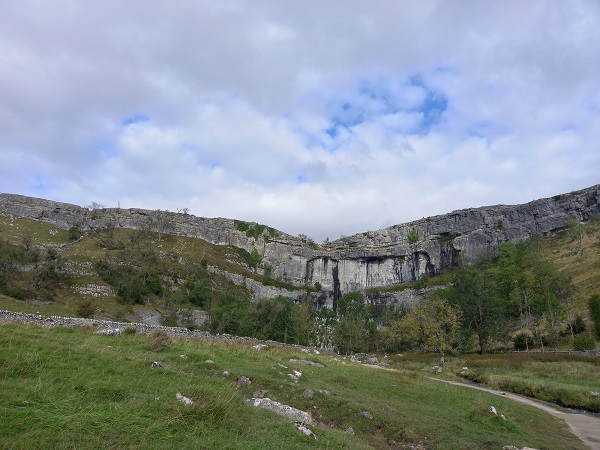
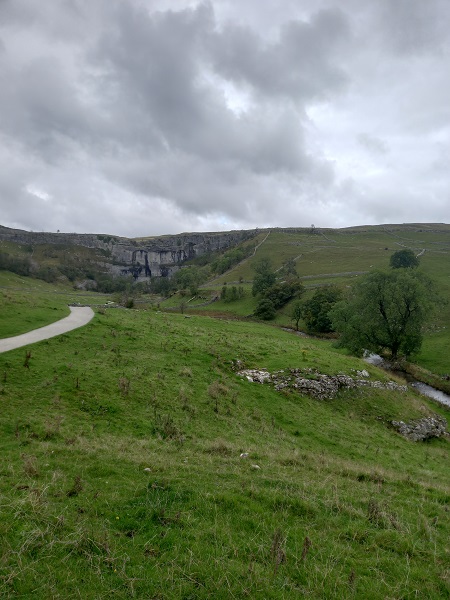
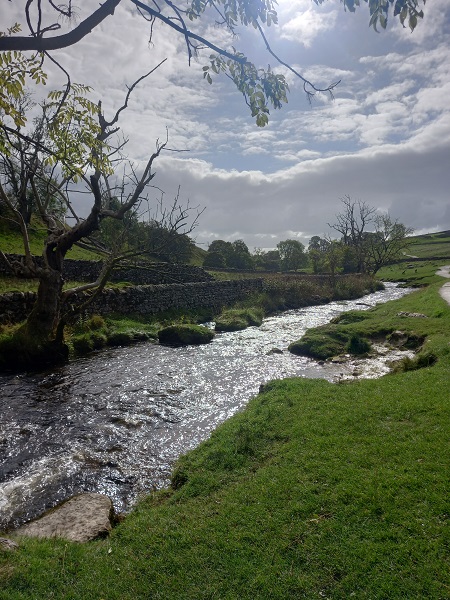
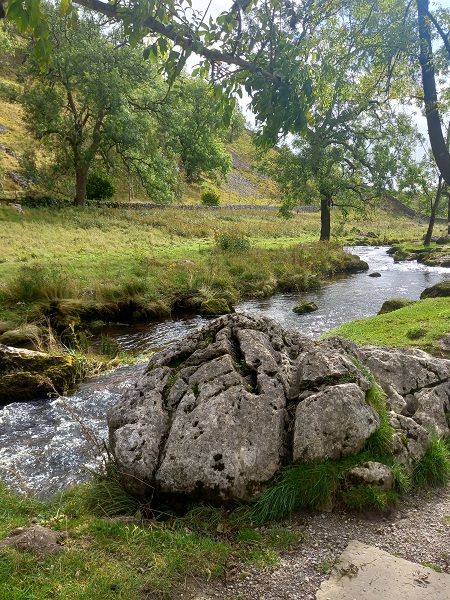
I did go to Malham Cove on a beautiful sunny day, the drive there was so gorgeous and I am getting much more used to single track roads now! By the time I got there it had got a little duller, but I didn’t mind. I spent far too much time taking photos of the clouds, and just watching the weather change. I love the contrasts within a few minutes when you are walking, sparkling water to thundery skies, just magic!
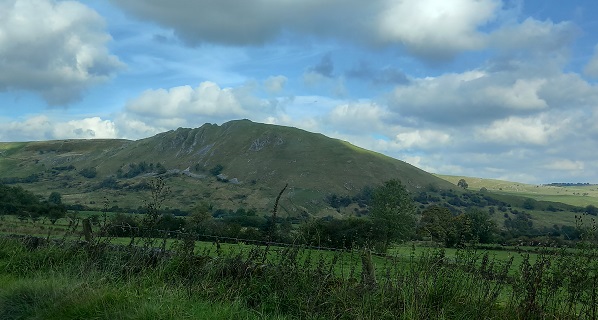
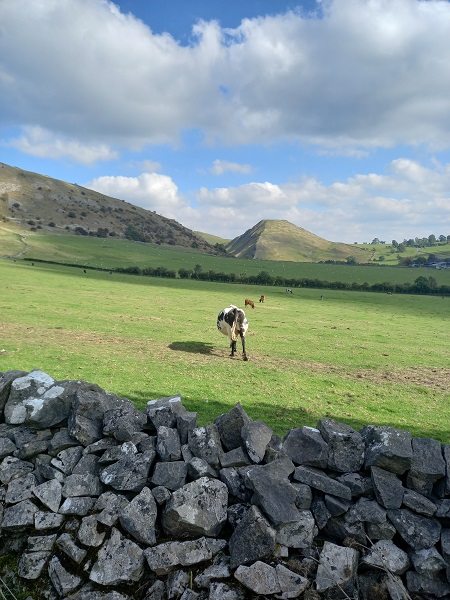
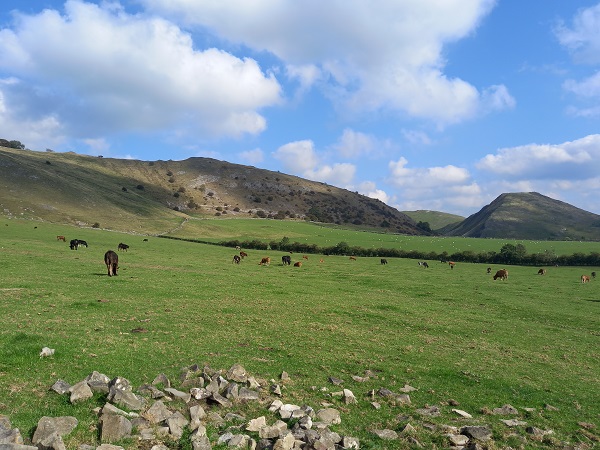
My last site was one of the first that I ever stayed at in 2022, Leek Caravanning and Camping Club. This has to be one of my favourite sites, situated on one of my favourite roads for driving, the A53, from Buxton to Leek. Just stunning views, particularly the first stretch when you can see across to Chrome and Parkhouse Hills, known as the Dragon’s Back due to their unusual shape.
That week was spent looking at the clouds a lot. I remember that this site had the most beautiful clouds and sunsets last time, and it didn’t disappoint this time.
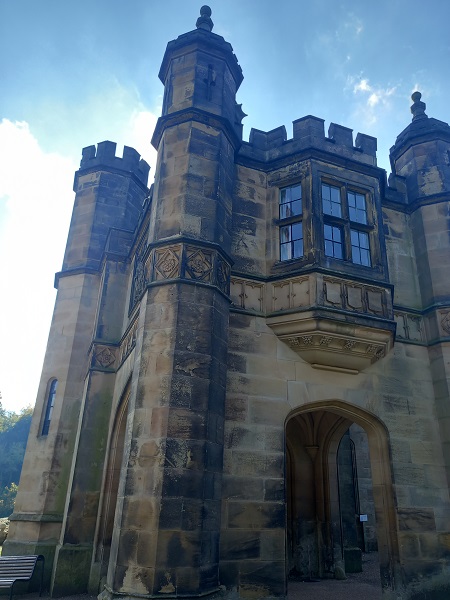
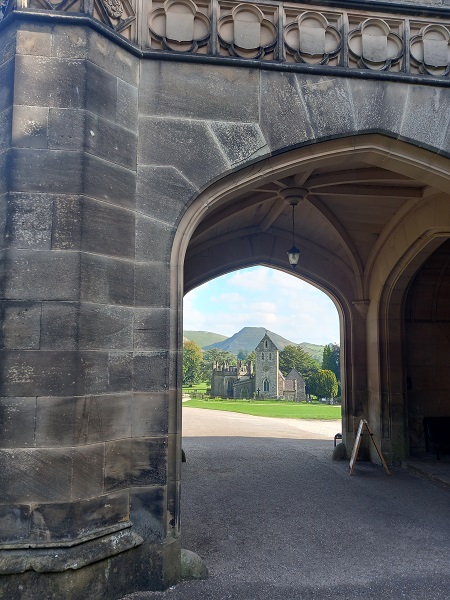
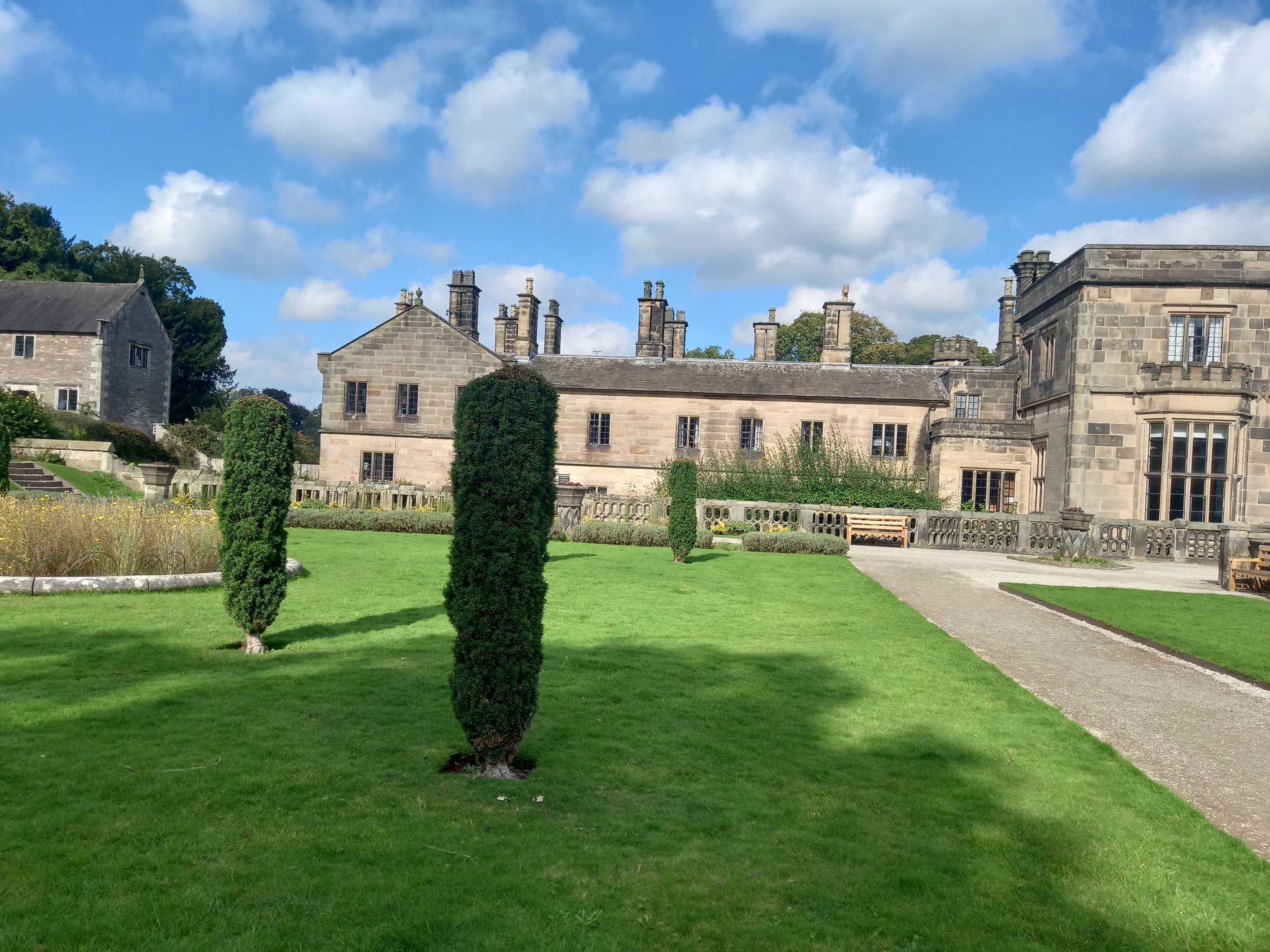
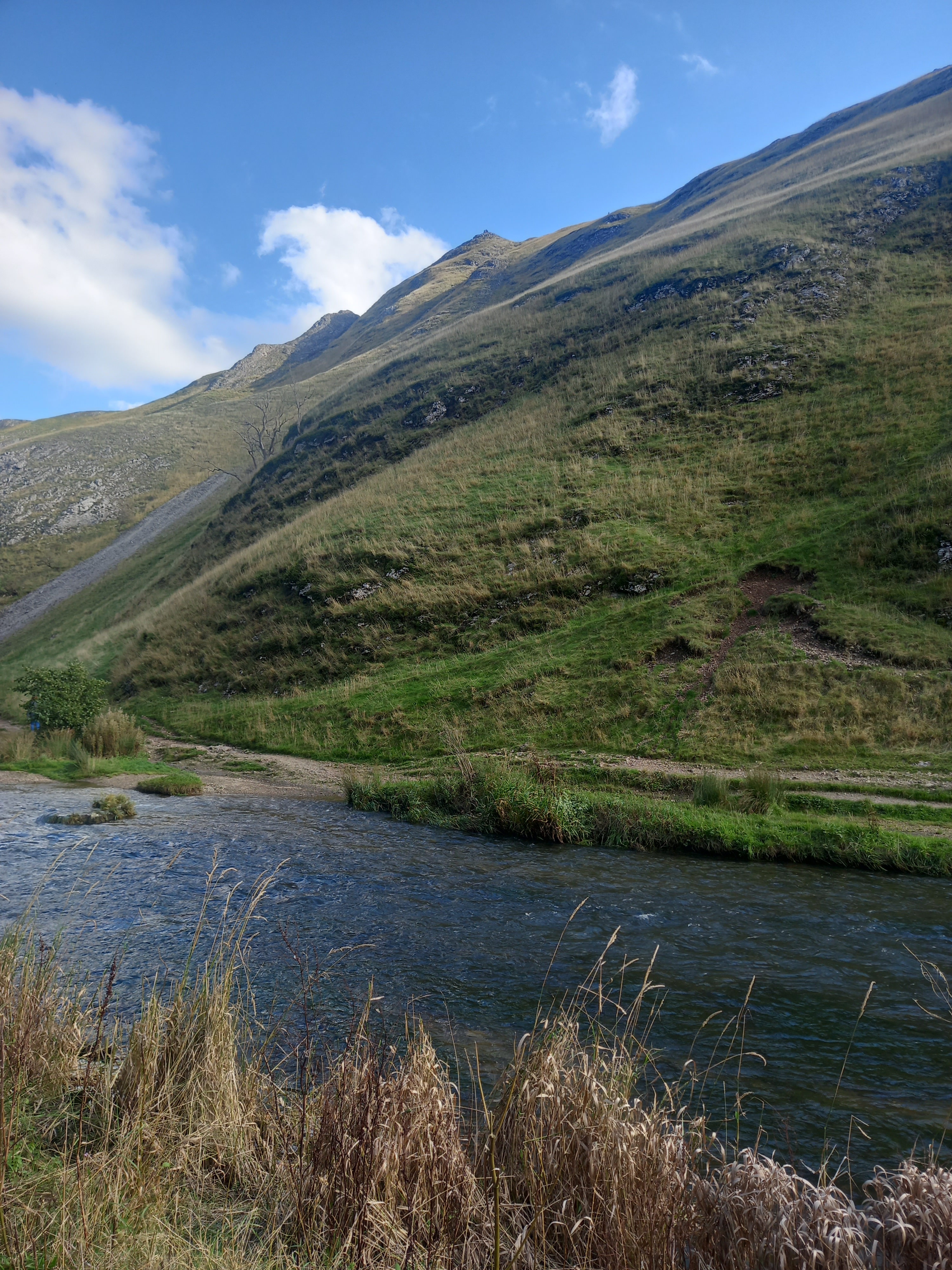
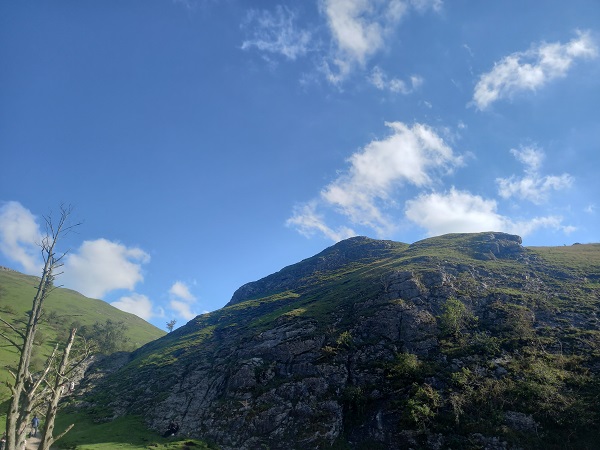
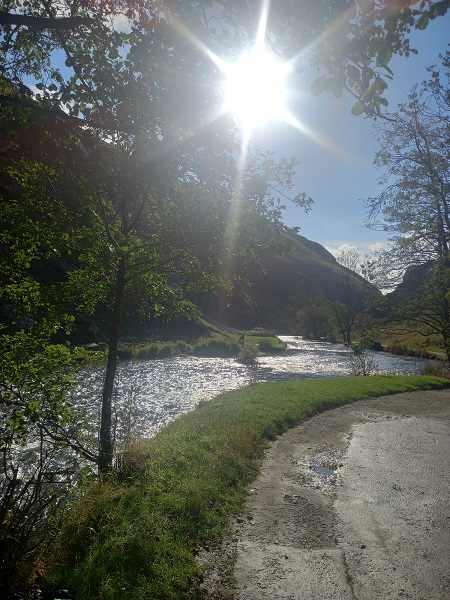
I was able to visit a few of the places that I have had on my wishlist for a while, such as Ilam and Dovedale. It was the most stunning autumn day, really warm and the walk was just brilliant, one my best days of 2024. I was just so happy to have been spending another summer doing what I love, and still enjoying living out of a Renault Kangoo and travelling. I can’t wait to get back to this life in March.
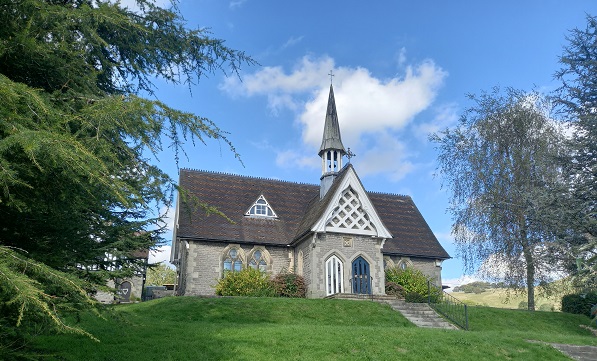
Ilam Hall is now a Youth Hostel, but the grounds are open and there is an excellent National Trust tea room or two, so I treated myself to a cream tea after the hike over to Dovestones.
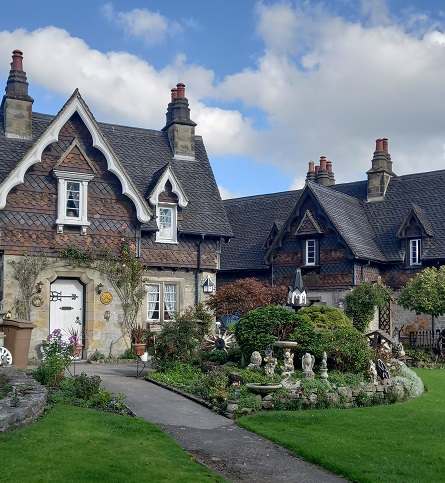
The houses in Ilam village are just gorgeous, it was rebuilt as a model village styling itself on a Swiss village.
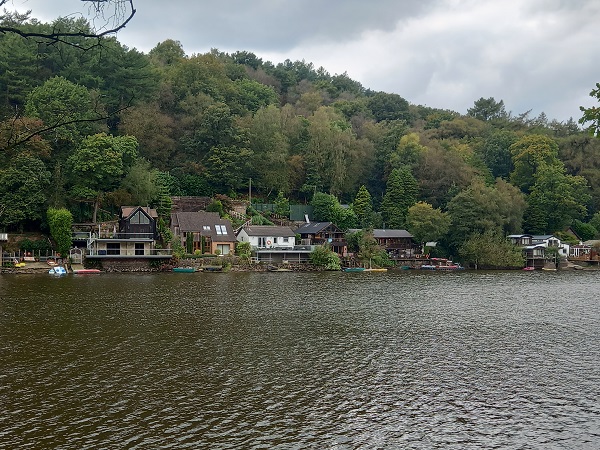
Another trip was to Rudyard Lake. Rudyard Kipling’s parents met there, and so he was named after the location. The lake is a reservoir built to serve the canals, but has been used for pleasure trips since the Victorian era, and there was some really good interpretation about the history, as well as some very friendly squirrels!
I also had a very exciting research trip to the Chatsworth House archives. I had contacted them earlier in the year to see if I could access some diaries that I know Evelyn, Duchess of Devonshire, the last owner of Hardwick Hall, kept when she was restoring the tapestries. I was told I wasn’t able to access the diaries, due to the 100 year privacy rule, but there was a small notebook they had listed detailing some of her textiles.
When I got there I was told that when they opened the archive box with the notebook in, they found two folders that they hadn’t known about. They were full of Evelyn’s notes about her restoration work at Hardwick, detailing visits from museum conservators, and the compromises that she was having to make trying to care for all the textiles there with little money.
It was absolutely amazing, and the best thing was that it fits perfectly into the timeline I am writing about. It was such a magical moment, and I am so thrilled that I found them. I haven’t done much writing recently but hopefully can catch up over the next couple of months with some writing retreats whilst travelling.
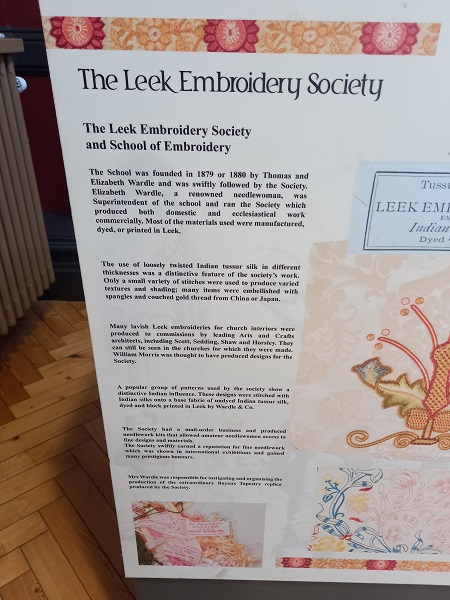
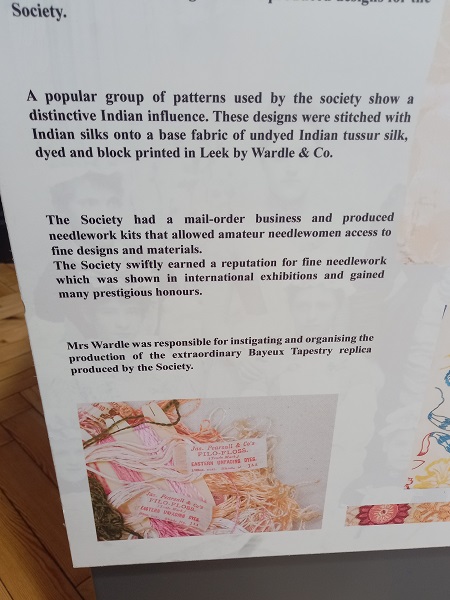
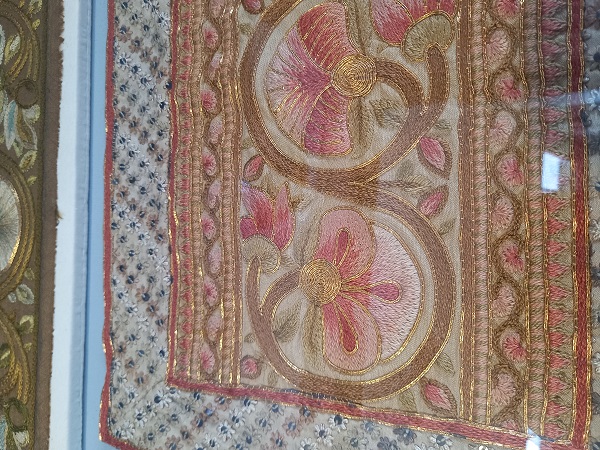
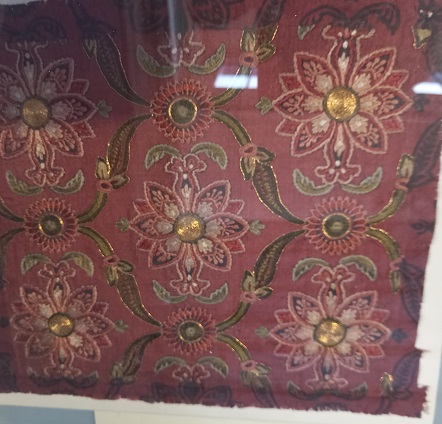
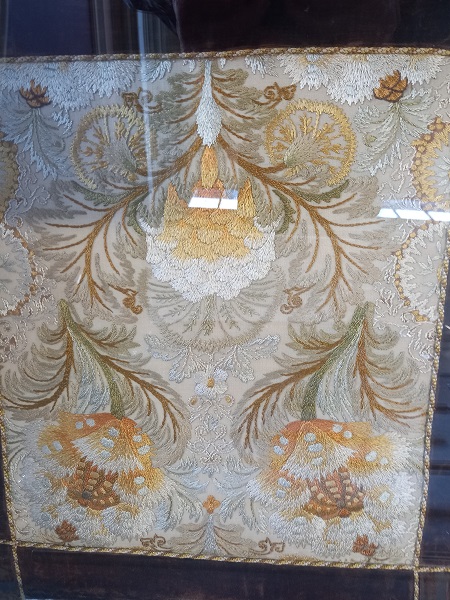
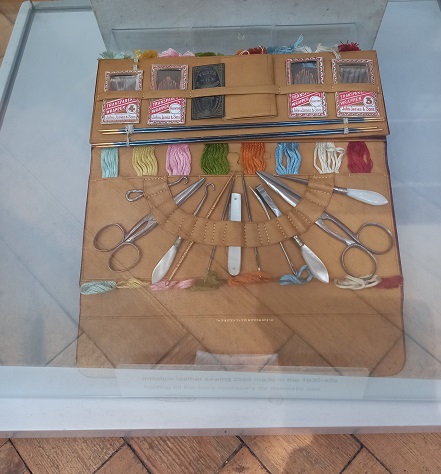
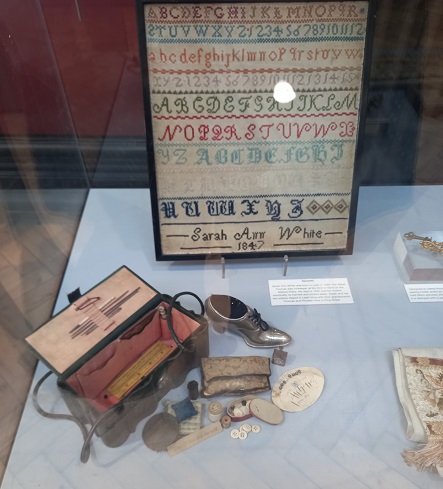
My final trip that week was into the town of Leek, as I had spotted that the local museum had an embroidery exhibition. Although only small, it was a fascinating display. Leek was at one point famous for silk production, like its neighbour Macclesfield. There were many silk mills in the town, and the wife of the owner of one of them, Elizabeth Wardle, as well as being the mother of 14 children, 9 of whom survived infancy, also set up the Leek Embroidery Society.
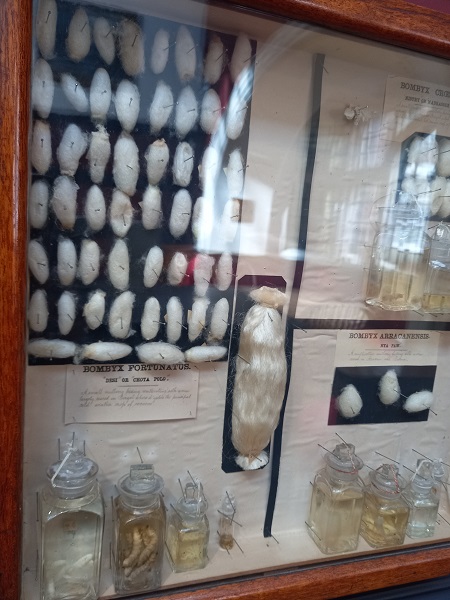
The organisation produced embroidery for clients, and designed and sold kits. They had some examples of the work, which was stunning, excuse the reflections from the glass cases.
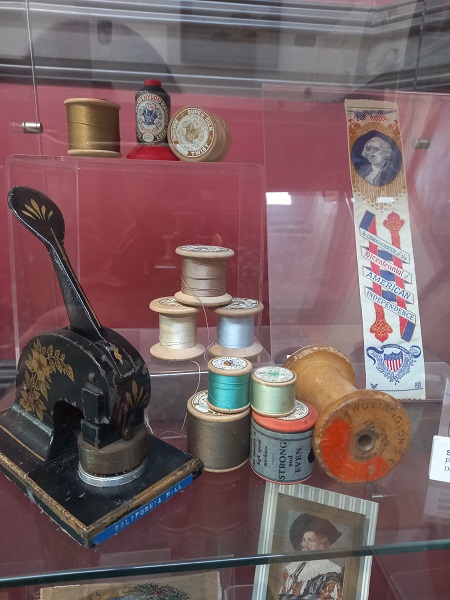
The Leek silk mills specialised in the production of Tusser silk, which is made from the cocoons of the moths, and is a much coarser silk. It was a really fascinating display, and the museum is well a worth a visit, for that and its other textile treasures.
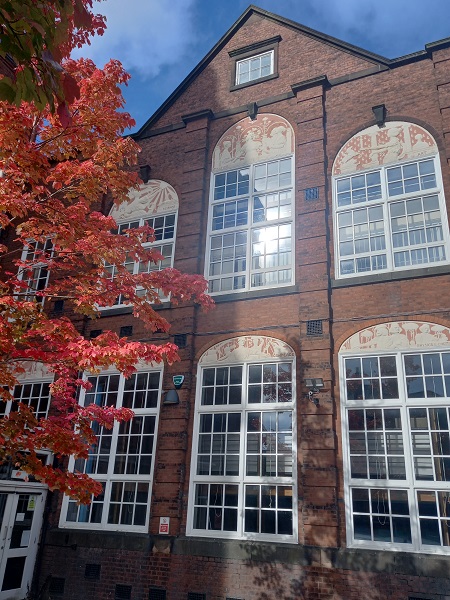
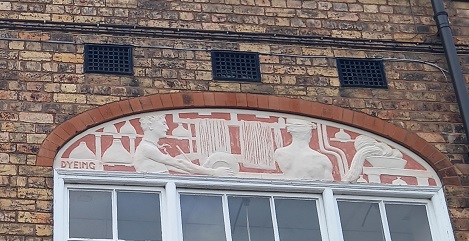
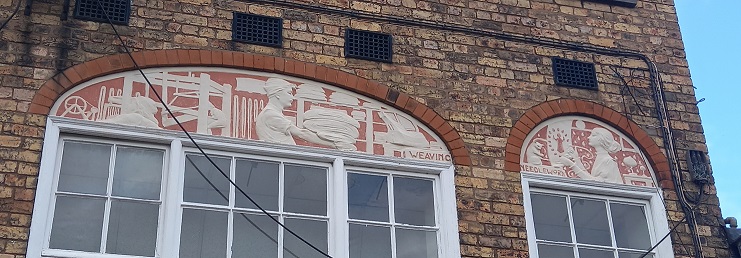
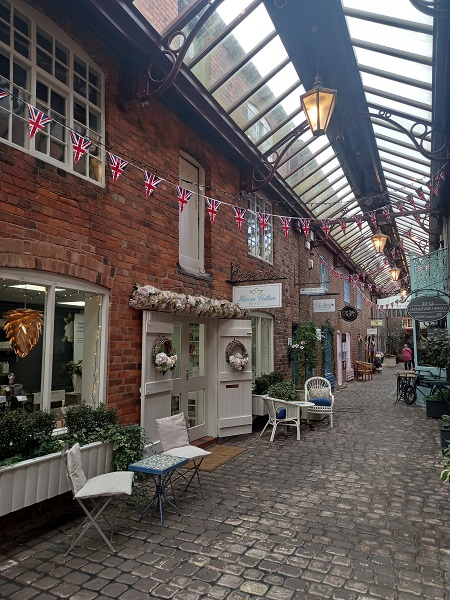
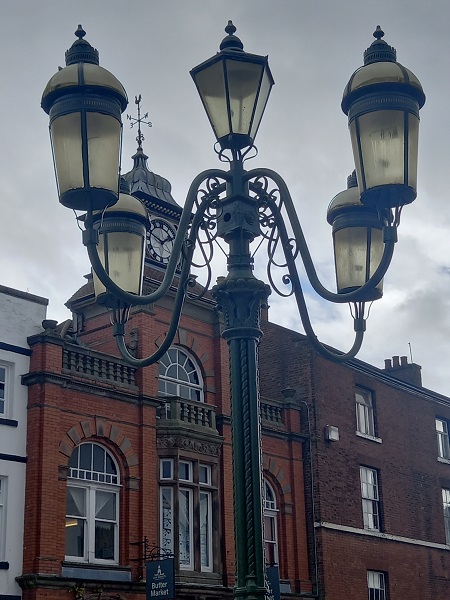
There was also an architectural trail through the town, celebrating the Victorian heritage of buildings such as the Nicholson Institute. This was built to house a library, and training school for textile workers, with friezes above the windows celebrating the various skills. The town has links with William Morris, who worked with many local mill owners. One of the original rows of weavers’ cottages has been turned into a covered arcade with craft shops, cafes and galleries. A really lovely textile filled afternoon.
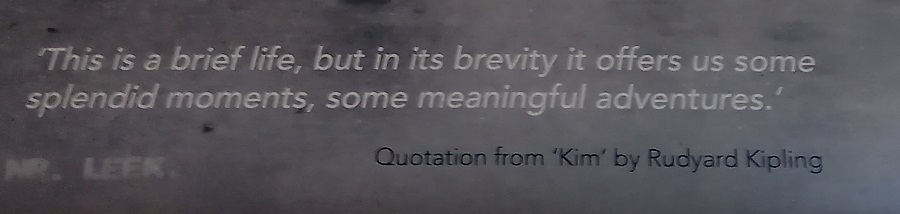
I will leave you with a quote from one of the displays at Rudyard Lake. One of my favourite poems is by Rudyard Kipling, and it is one which has inspired my love of travel and meeting people from other cultures. It is called, ‘In the Neolithic Age’, and contains the lines, ‘Still the world is wondrous large, seven seas from marge to marge, and it holds a vast of various kinds of man. And the wildest dreams of Kew, are the facts of Kathmandu, and the crimes of Clapham chaste in Martaban.’ I remember having that on my bedroom wall, and vowing that one day I would visit those places. Not got to Martaban, which is in Mayanmar, yet, but maybe someday.
This quote really sums up the way I live my life now. I am so looking forward to more adventures in 2025, the first of which start next week. I am going to visit somewhere that has been on my wish list for a very long time, and am very excited to tell you all about it. There will be mountains, sea, and definitely textiles, which I know doesn’t narrow it down much for me, but all will be revealed in a couple of weeks 😉
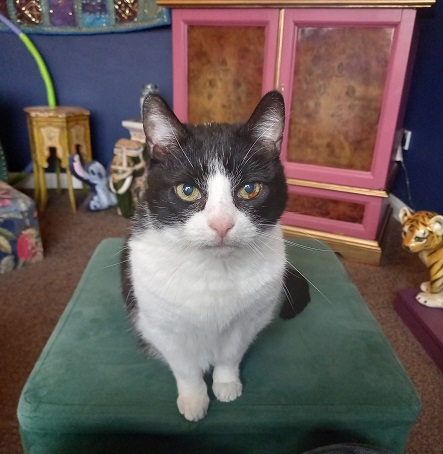
Meanwhile I am finishing my second cat sit of the year, poor Dave the cat has been desperate to sit on my lap this afternoon, and keeps giving me upset stares, so will have to go and give him a cuddle now.
See you all again soon. Until then have fun, take care, stay safe and thanks for visiting.
One of the stickers on Katy is a quote from one of my favourite poems, I have mentioned it before, but is has the lines, ‘ What is this life, if full of care, we have no time to stand and stare’. It comes from the poem, Leisure’, by a Welsh poet, William Henry Davies, and was published in 1922. A time when leisure was, as I mentioned in my last post, rare for many working people.
One of my greatest joys these days is being able to take time to really notice things, to stop and watch the butterflies and bees, to look closely at rocks on the beach, and just generally to be more aware and mindful about where I am, what I am feeling and seeing.
Much of this comes with having more time, but it is also about spending most of out outside. I have also had chance to read more widely, and some of those books recently have been about bees, or have included information about beekeeping.
Peter May’s, ‘Coffin Road’, set on Harris, and Sue Monk Kidd’s, ‘The Secret Life of Bees’, set in Southern USA, are both really interesting reads that I have picked up at charity shops, or the book exchanges on my campsites. I love getting books from these places, as it really broadens what I read, rather than the Kindle Unlimited suggestions.
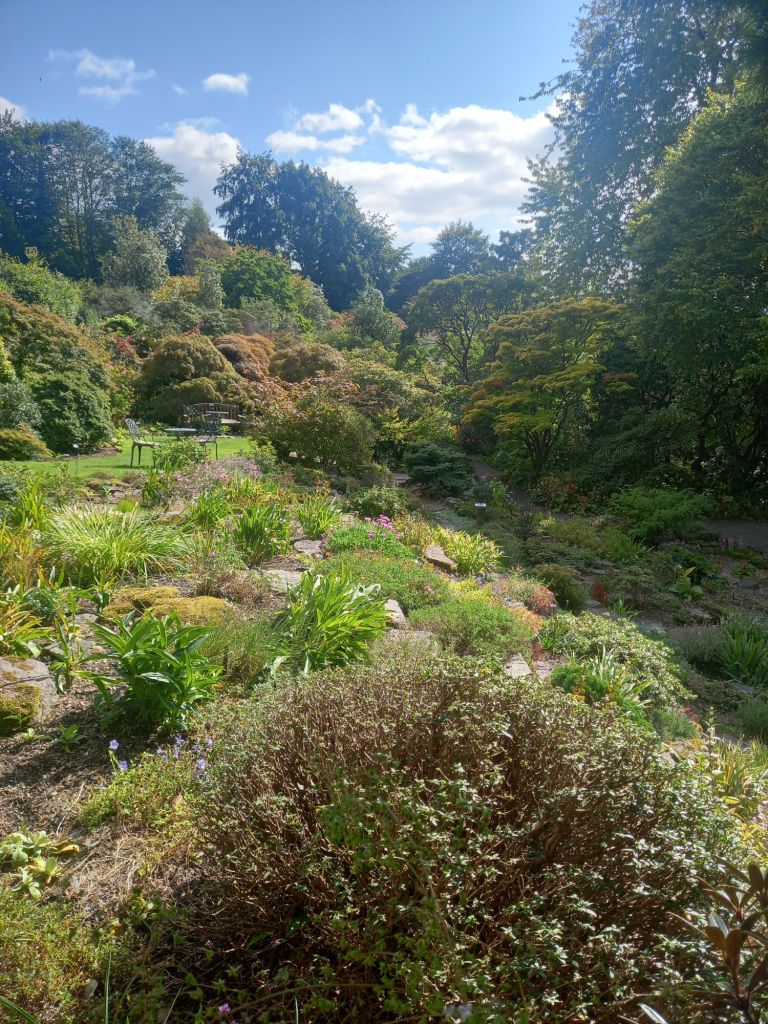
I have always known that there are many different bees but a recent visit to Branklyn Gardens, a National Trust for Scotland property in Perth, meant I got to see some in action.
The gardens were looking amazing, it was a really hot day, so I had spent the morning just relaxing and reading at the campsite. I would love to revisit in spring, as they have an extensive collection of rhododendrons, one of my favourite plants.
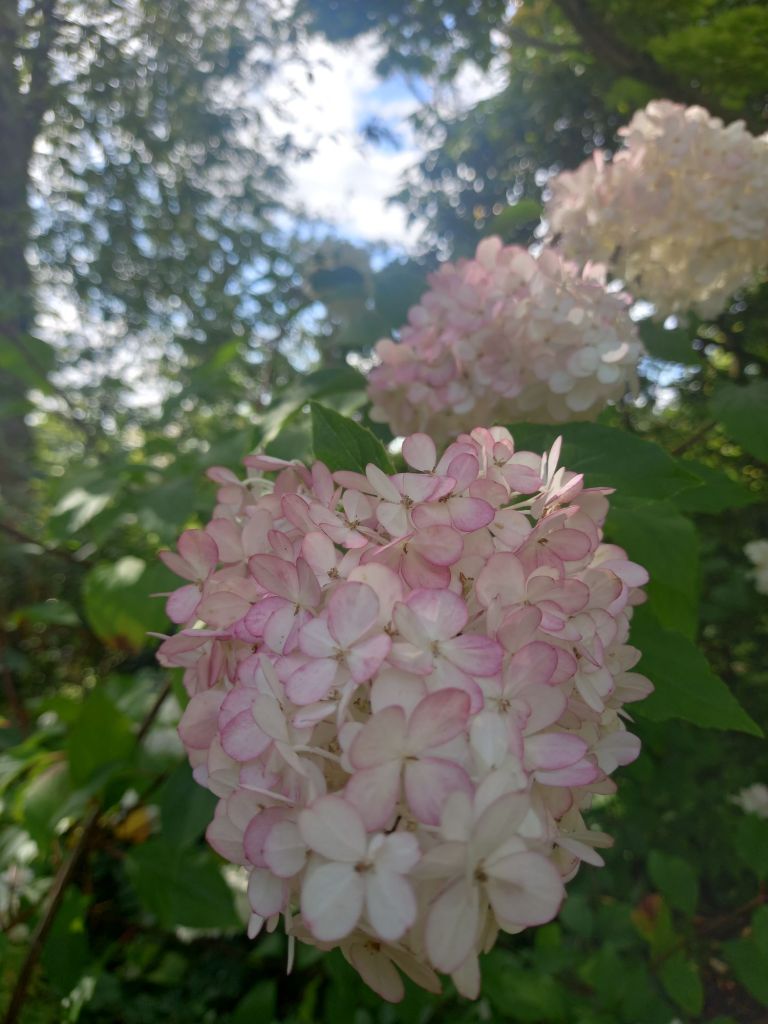
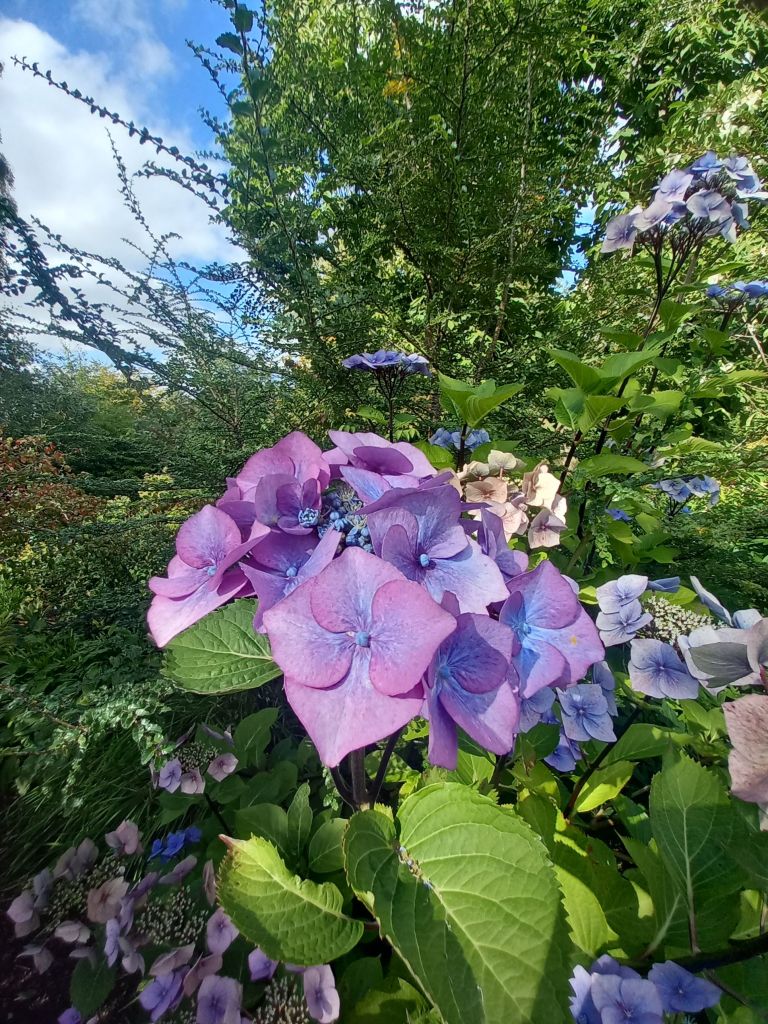
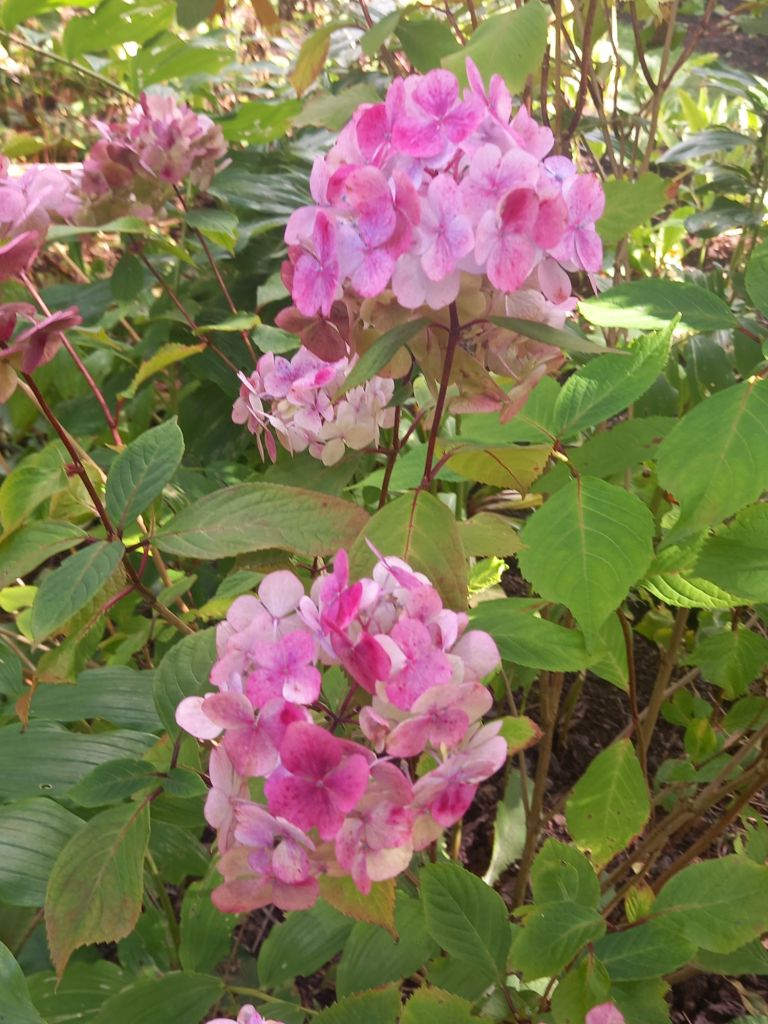
Another of my favourites are hydrangeas, I love the fact that often they look like butterflies landing on flowers, and there were so many different varieties here.
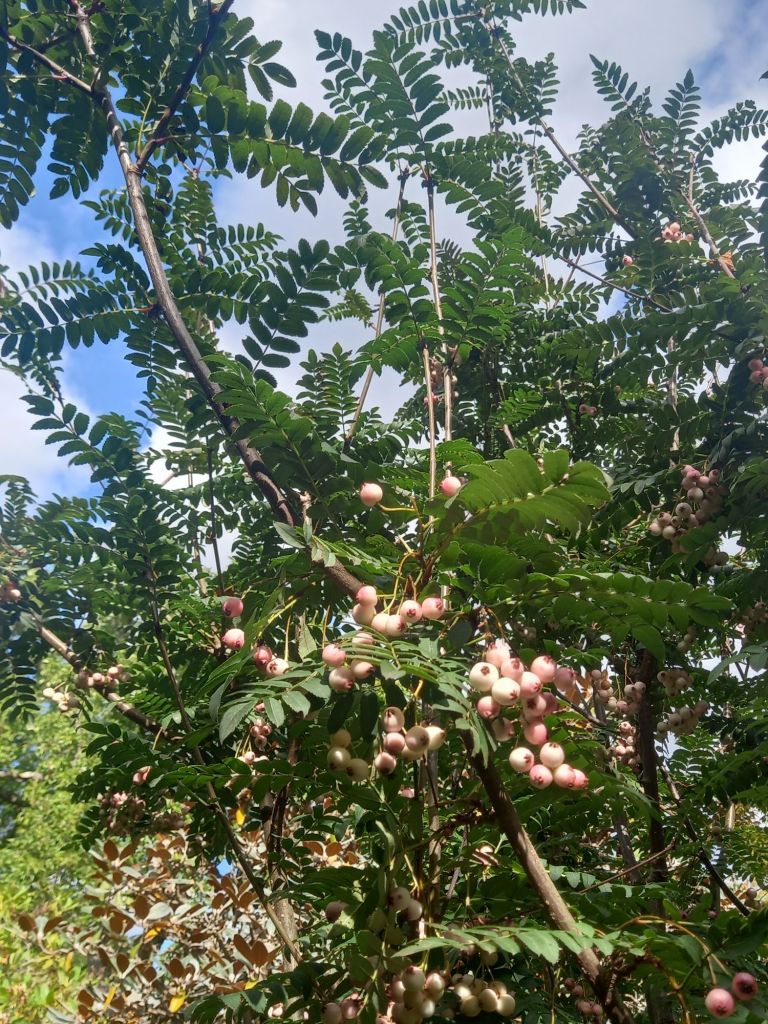
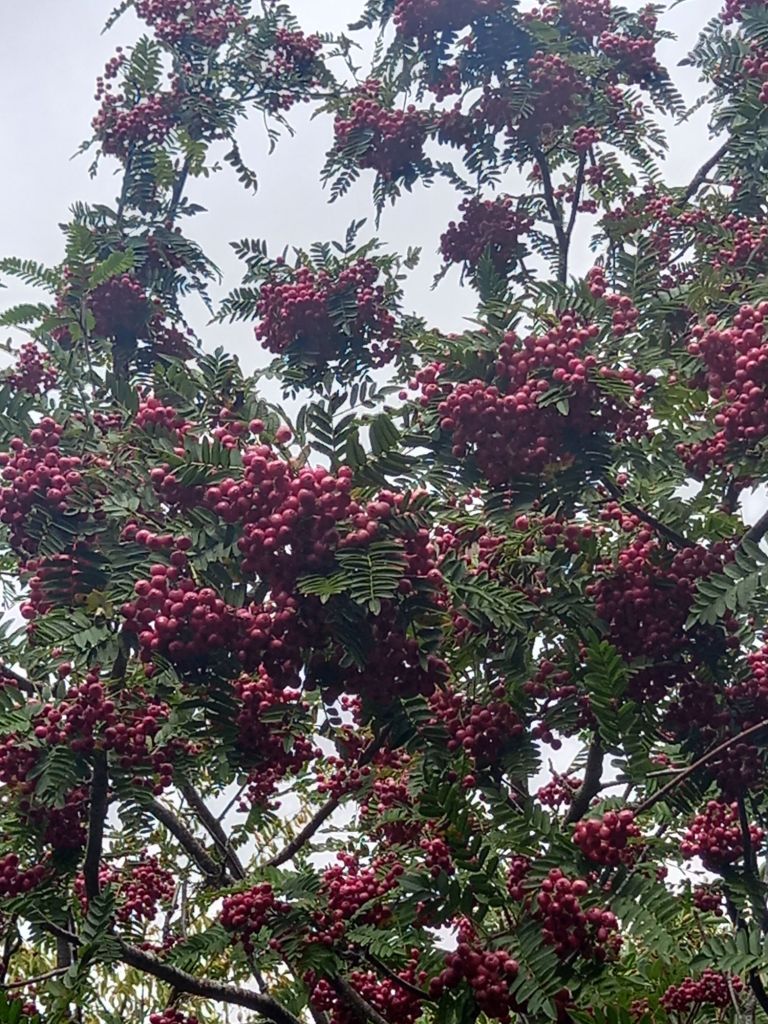
There were also some fabulous berries. I love autumn for all the variety of these you see.
I had a few nights at the Scone Caravan and Camping Club site, as a stopping point to southern Scotland, but also so that I could go and visit some old friends, who left Yorkshire 29 years ago, for just outside Dundee.
It was a lovely catch up, and we had a quick trip to Arbroath for a walk along the cliffs before I headed back to Scone and then further south to Falkirk.
I specifically wanted to visit two locations in the city, both connected with canal history and had planned to do both in one day.
However the weather was appalling, the worst I have had, with really heavy rain, so much so that driving felt more like water skiing!
A quick change of plans led to two interesting historical locations, connected with Mary Queen of Scots, which I will share next time. As you may remember, my novel mentions some of the needlework she did with Bess of Hardwick, so it is always interesting finding out more about her story.
More on that, and Falkirk next time. As often the way here, all horrible weather had gone by the evening leaving a beautiful sunset and blue sky next day.
Until then, have fun, take care, stay safe and thanks for visiting.
Cordoba is famous for many things, the mosque of course, but also for its many patios, decorated with potted plants. They hold a patio festival each year, in May, where you can wander round and see all of the displays in bloom, but there were still many around when we visited in November. I think this was a perfect time for a visit, as it was not too hot, or too crowded as it can be during the festivals.
We spent a lot of time, as always, just wandering looking at the gorgeous architecture.
As with architecture designed for use in hot countries, the enclosed patio is an all important feature. As I mentioned in my posts about Morocco, the interior patio functions as a cool space to enjoy water features, and as a garden. We tend to think of a patio as an outside space, a bit of the garden in the UK, usually just paved, but in Cordoba the patio is an art form, with its own unique architecture and decoration.
One of the many palaces we visited was the Palacio Viana, famous for having 11 patios of different sizes, from the grand entertaining space, to small quiet ones full of beautiful blooms and little fountains or wells. In addition to the patios, you can also tour the house, no pictures allowed, but it was a wonderful insight into the life of the wealthy family who owned the palace.
We also visited the Alcazar, or palace of the Christian Monarchs, not only a palace filled with mosaics that have been excavated locally, but also the wonderful gardens that Spain is famous for, complete with a statue of Isabel and Ferdinand meeting with Christopher Columbus.
Many of the palaces are now museums, and we had a very enjoyable last afternoon in the art museum. The paintings were full of such amazing detail, I love the way that the artists can represent the drape of textiles, and the light on buildings in these paintings, such talent!
It was there we discovered a brilliant artist who we had never heard of before, Julio Romero de Torres, who has a whole museum dedicated to his art. There were no photos allowed, but I found these two on Google.
He was born, and worked, in Cordoba, painting mainly women in the 1920s and his work is stunning it its detail. I love the sense of life in Cordoba that you get from his work. The painting on the left, La Fuensanta, was once on the Spanish 100 peseta note.
We also visited a small museum devoted to Arab culture, which was the place that inspired me to choose Morocco as my destination for this winter. It was full of the most beautiful artwork, and as you know from my posts about Morocco, it is one of my favourite decorative forms.
There was a stunning flower display in the small courtyard water feature as well.
There was also a quick visit to the Jewish museum nearby, housed in another beautiful patio house and lovingly restored, with a very informative exhibition about Jewish life in Cordoba. This included some gorgeous goldwork on dresses, similar to that we had seen on the painting in the art museum.
As always there were amazing doors, but what struck me about Cordoba was how heavy and defensive they looked, all were solid wood, many were studded and looked very much like the sort of thing that was built to withstand invasion, rather than the more decorative ones that are in other cities.
A wonderful city, and I am so glad we made it, a year after the original trip was planned. We have just booked another trip for this autumn, to visit the last of the great cities of the south, Jerez and Cadiz, so I am very much looking forward to that.
There is less than a week now until I return to the UK, so my next post will be my last from here, and will be a quick catch up on all my crafting, with some very exciting, in personal crafting terms, things to show you! Until then have fun, take care, stay safe and thanks for visiting.
My next stop was to revisit some of the places that I used to go as a child. I grew up in the south west of England, in a town called Cheltenham, famous for its Regency architecture, (think Bridgerton sets), and for holding the Gold Cup horse race. Like most children, I didn’t really appreciate the place very much, I never really felt as if I fitted in very well, moving to Yorkshire definitely felt more ‘me’.
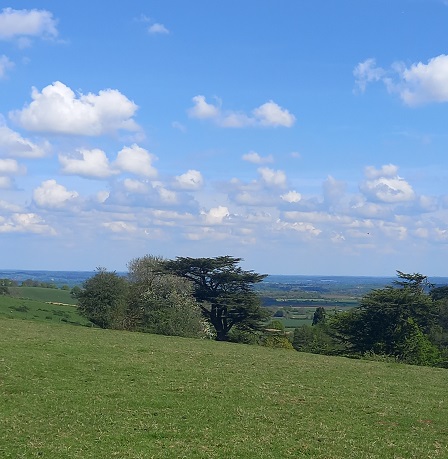
However the area is very beautiful, and as the Cotswolds kept coming up on my Instagram feed, I decided to spend my camping time there, before coming back to Spain. I was very lucky with the weather, the week was mostly very sunny, so much so that I got sunburnt, and I was able to visit some stunning places. The Cotswolds have a lot of natural beauty, quintessentially English with rolling hills and lots of farmland.
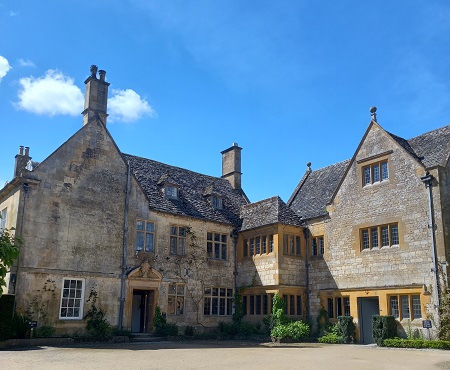
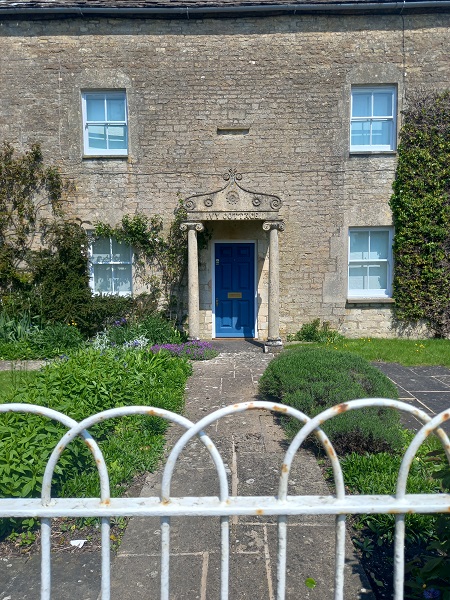
However, the area is also famous for the beautiful houses built of the local stone, which is a gorgeous honey colour. There are so many cute villages here, it was hard to chose where to visit. The Trust has so many properties in the area, and I tried to see as many as I could in the week.
My first stop was Hidcote, famous for its garden more than the house.
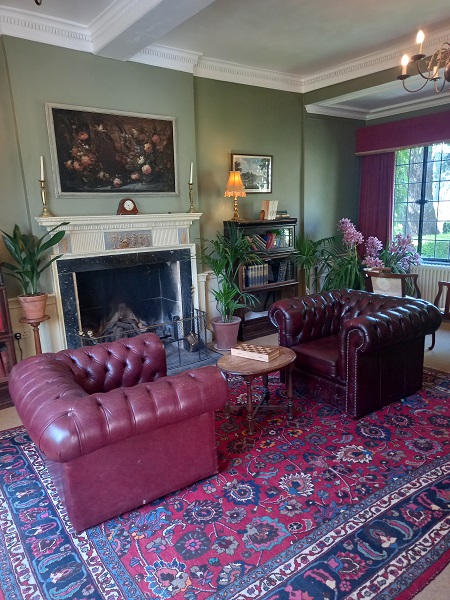
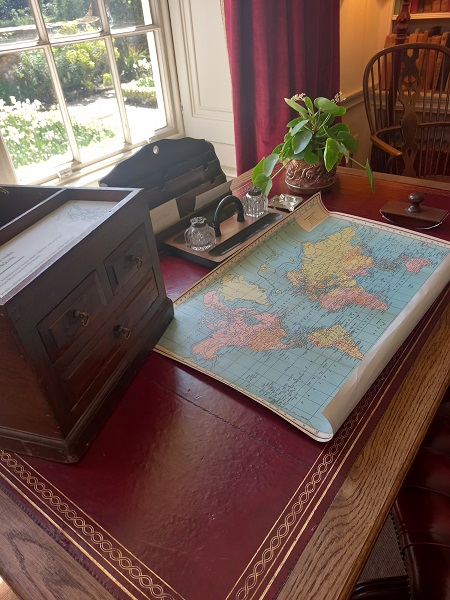
Lawrence Johnston, who created it in the early 1900s, was a passionate gardener and plant collector, who travelled widely to collect specimens. There are only a few rooms open in the house, but it looks like a gorgeous place to sit and plan your travels, aided by your map of the world, complete with the Empire in red!
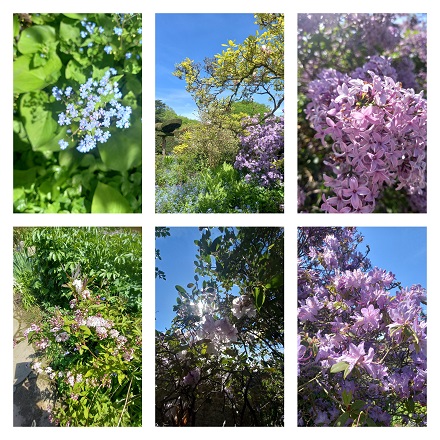
It was such a brilliant day to visit, the garden looked stunning, and I just loved all the delicate rhododendrons and lilacs everywhere.
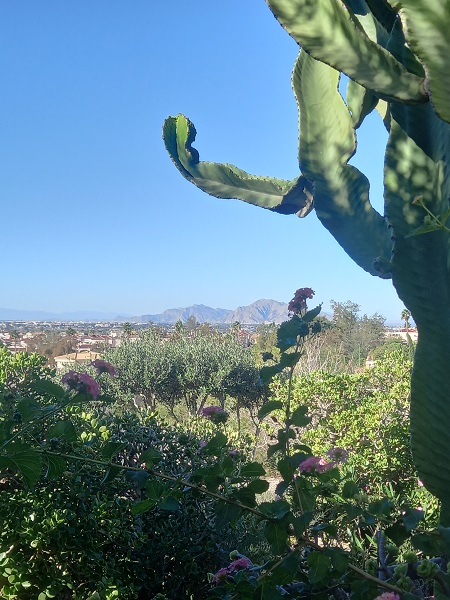
Even though I love living in Spain, one of the things I do miss are the seasonal plants you get in England. We have the most wonderful cactuses, and bougainvillea year round, but there is something very special about spring plants that only have a short life.
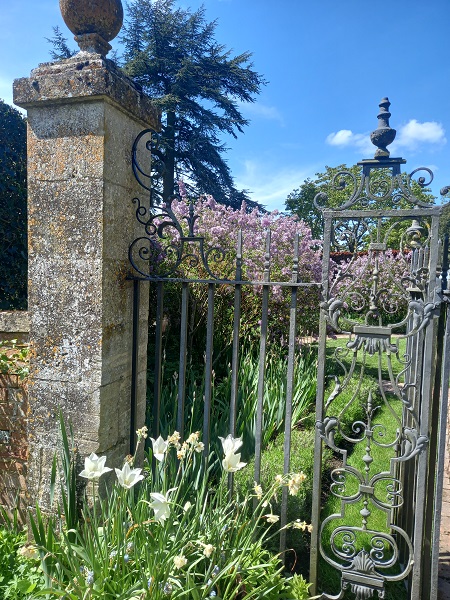
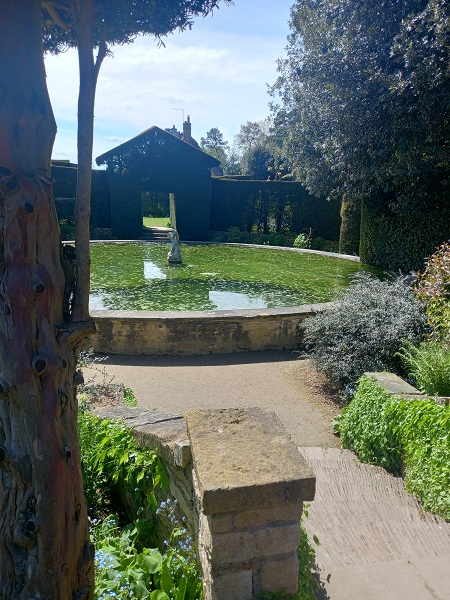
Like many gardens, Hidcote has a series of different areas, with gorgeous walls, gates and architectural features.
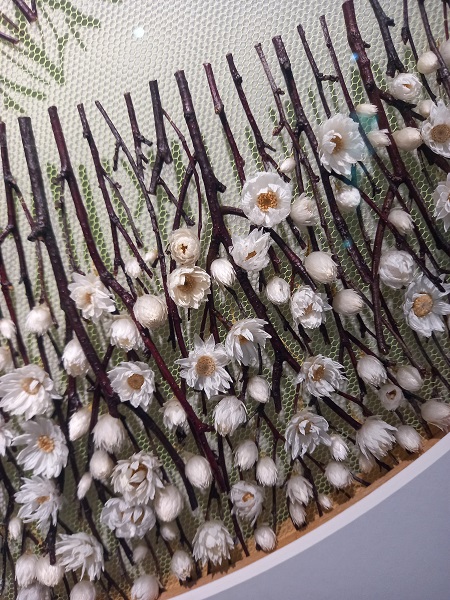
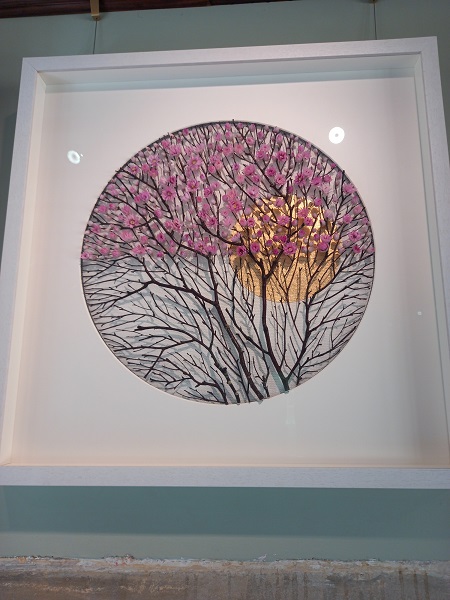
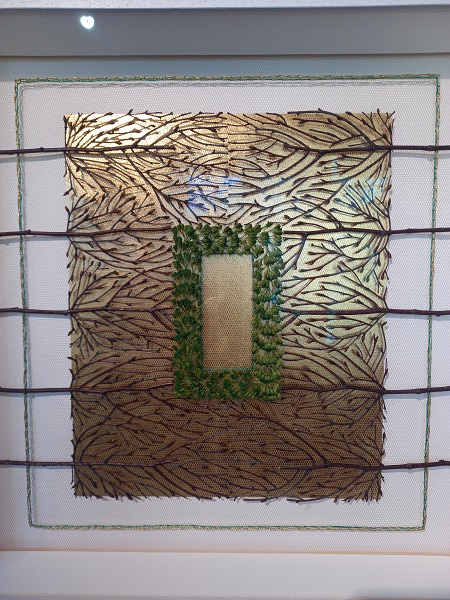
I was especially lucky, as there was a stunning exhibition on by an embroidery artist, Olga Prinku, that was a complete surprise. I usually try to find a special textile treasure at each house I visit, and her work is just amazing. She embroiders on tulle, using found materials and dried flowers. I have never seen anything like this, so beautiful and original.
I especially love these ‘dandelion clocks’.
She had also done some work specifically inspired by the Hidcote garden, one of the box hedges.
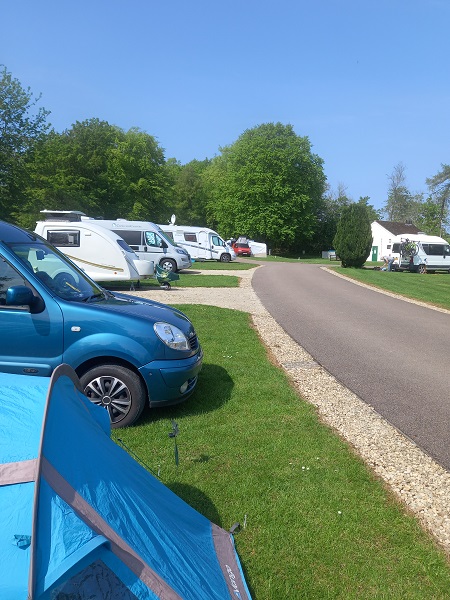
I camped at Chipping Norton, just on the border between Oxfordshire and Gloucestershire, and the campsite was lovely as always, such nice clean facilities and welcoming staff. I love sitting watching new people arrive every day, and admiring all the different sorts of vans, and this visit I had some neighbours who had a very cute little pod caravan.
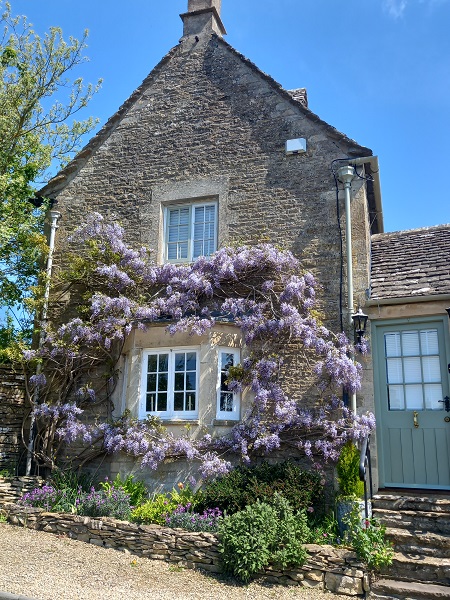
My second Trust visit was to the village of Bibury. The village is the location of a Trout Farm, and I remember visiting that, and paddling in the stream as a child. It was full of Japanese tourists, as apparently the Emperor of Japan visited once and loved it, so it has become very popular.
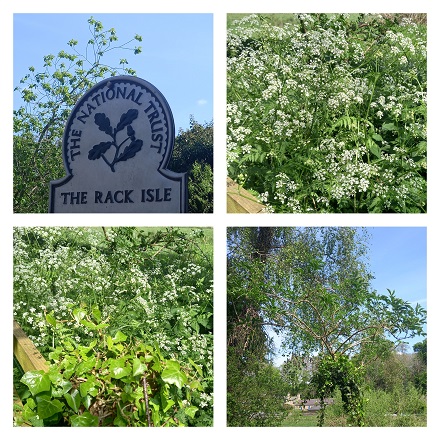
As well as there being many beautiful houses in the village, the Trust looks after a place called Arlington Row, a 17th century terrace of weavers’ cottages near the river, as well as Rack Isle, between the Arlington stream and the main river.
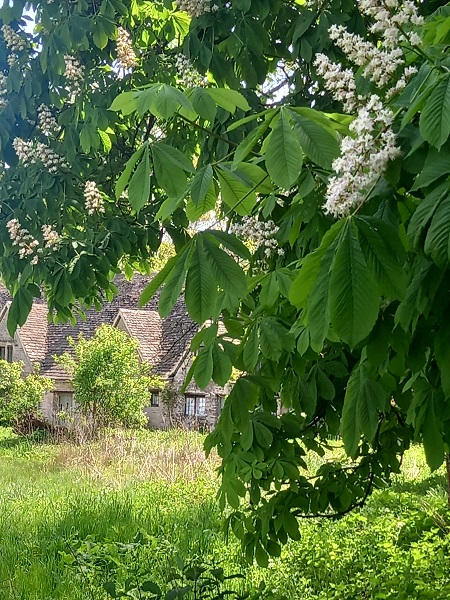
Again there were so many lovely spring flowers, ever the weeds are pretty here.
As it was quite hot, I spent more time at the campsite that week than travelling. I was quite happy after all my long days of driving through France to just sit and read my book and watch life on the camp.
There were a couple more visits later in the week, which I will tell you about in the next post, but it was a lovely relaxing time, and I am so glad I went back to the area. I would definitely recommend it if you are looking for a location that offers some of the very best of the southern English countryside. Until next time, have fun, take care, stay safe and thanks for visiting.
Although it’s not something I think I will ever be able to say more than a few words in, I am learning a little Arabic while I am here. As I mentioned in a previous post, I cannot really make sense of things, but am starting to see some repeated patterns.
When I used to teach language and literacy, particularly to adults, we would talk about the importance of social signs, the things that you see around you, the labels on food and the different standardised signs that are not only common to one country, but are also worldwide. For example, I know that this means STOP. I have no idea how to say the word, but I know from the position of the sign, the colour and the shape, what it signifies.
I have been able to say some basic greetings as well, I was chatting to a young waiter in the medina a few days ago and we were talking about learning languages, and he clarified for me that you do use ‘shukran’ to say thank you, which I did think it was. I have also learnt, ‘salaam alykum’, which is hello.
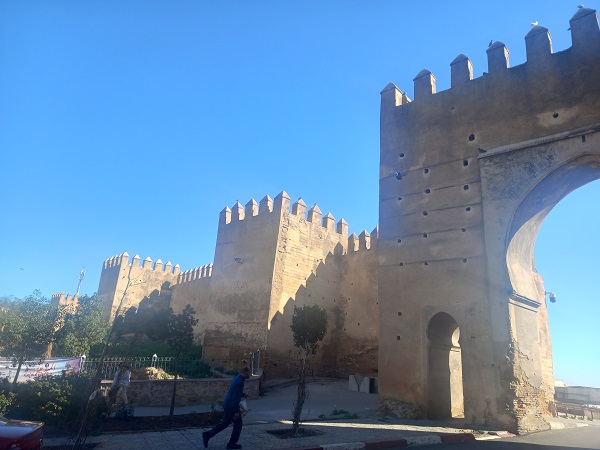
As always I am picking up things from maps as I travel around. Although many of the roads here are called rue, reflecting the French influence, there are also ‘derbs’, which are the smaller streets in the medina. My favourite thing though are the ‘babs’. These are the enormous gates that I have seen in other places, but which are especially gorgeous here in Fes.
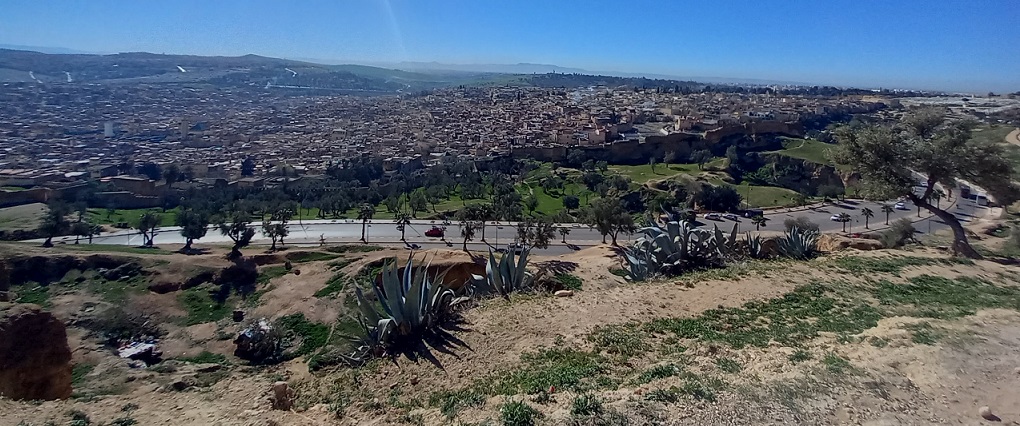
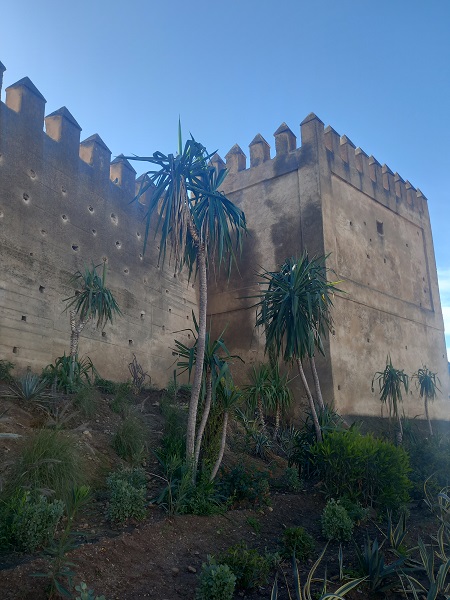
This place has the most incredible walls around the medina. The medina itself is the largest in Morocco, and one of the best preserved in the Arab world, so it has been designated a Unesco World Heritage site.
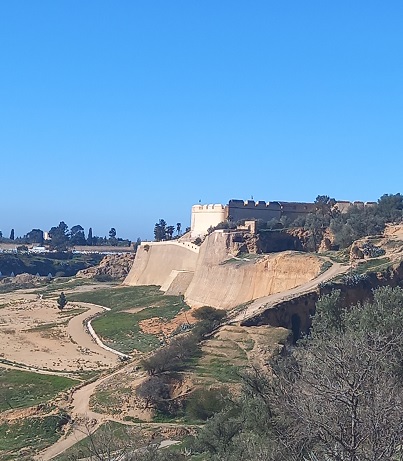
All around it are very large walls, with towers and gates. As well as the walls around the medina there are also extensive walls around the rest of the city, some which are now ruined.
Originally these would have been defensive, and are also aided by forts, such as this one Borj Nord, overlooking the medina. I walked up here a couple of days ago, unfortunately the museum that the fort now houses was closed for restoration, but I was able to walk on to the Marinad tombs that I can see from my riad, and have amazing views over the city.
My riad is very near to Bab Bou Jloud, which is known as the Blue Gate, although it is actually green on the inside. This displays the same gorgeous zellige tile work as other sites.
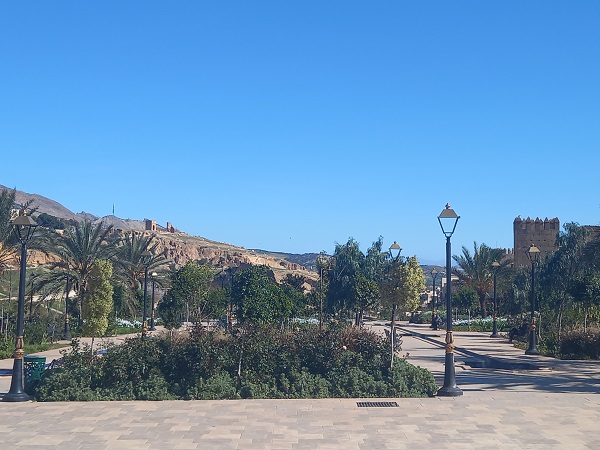
There are lots of gardens surrounding the walls, that are mostly very new additions to the landscape. As in all hot countries it is lovely to able to sit and listen to the sound of water, and have some shade.
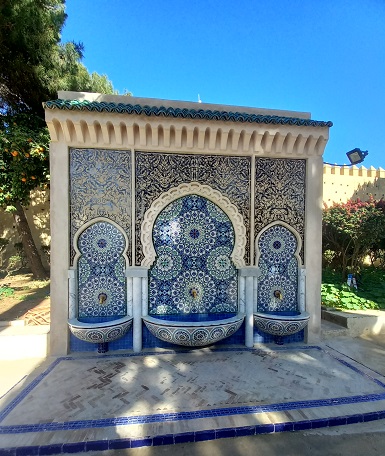
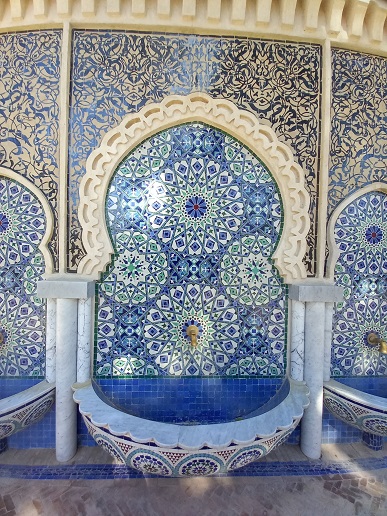
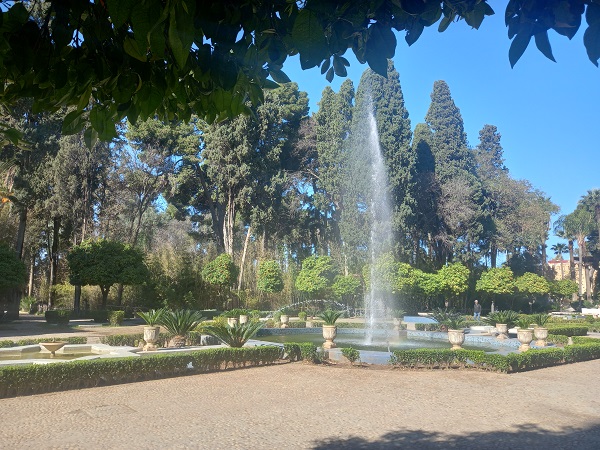
One of the gardens that I found on my way into the newer parts of the city, Jnan Sibil, is a much larger one, with the most stunning public and decorative fountains. The gardens have recently been refurbished and have specific areas for different types of native plant.
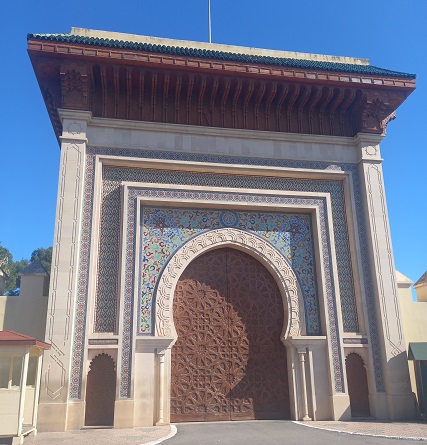
As well as the walls of the old city, I also walked down to see the palace. It was built in the 1960s, and at the end of the very plain walls and guard huts you come to a plaza with the very ornate golden doors. As you know I love doors and these are some of the most gorgeous modern ones that I have seen here.
Just at the side of the palace walls is a street of restored shops, that sell bridal favours and these incredibly beautiful containers to serve them from.
You can choose glass pyramid ones, embroidered conical ones, and the bags of almond dragees all come in their own little embroidered bags or cases. They are also given as gifts for births.
Sadly the main textile and heritage museum here has been close for renovation for a while, but I did manage to visit one craft museum here, and have a good wander around the medina, so I will post about that next. There is so much amazing craftsmanship here in this country, it is just wonderful to see.
I leave Fes for Marrakesh today. I have visited that city before, 13 years ago, but have few photos from that visit, as at the time I was using slideshows in my blog posts that are no longer available. I am looking forward to being able to visit some of the places that I did last time, as well as a few new ones. Until then, as always, have fun, take care, stay safe and thanks for visiting.









































































































 Stitches of Time