
It may sound like a cliché, but the medina here in Fes is like going into a wonderful world of treasures. The first part of the street that I am on is mainly food, with piles of sticky sweets, all wrapped in cling film to stop them toppling over, stalls selling spiced olives, and lots and lots of sweets and nuts.
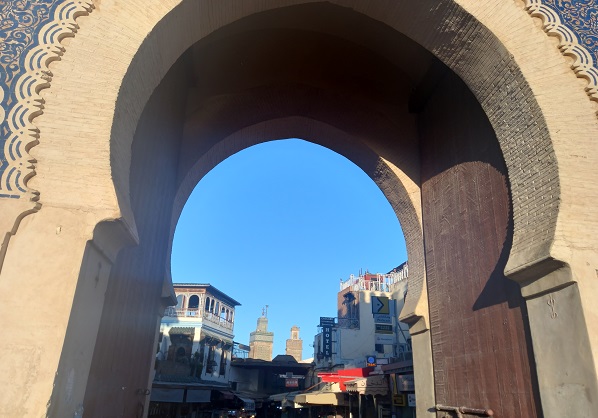
There are also many butchers, and you can tell the chicken is fresh as there are live ones in cages at the back of the stalls. It’s not a place for those who don’t like to think about where their food comes from!
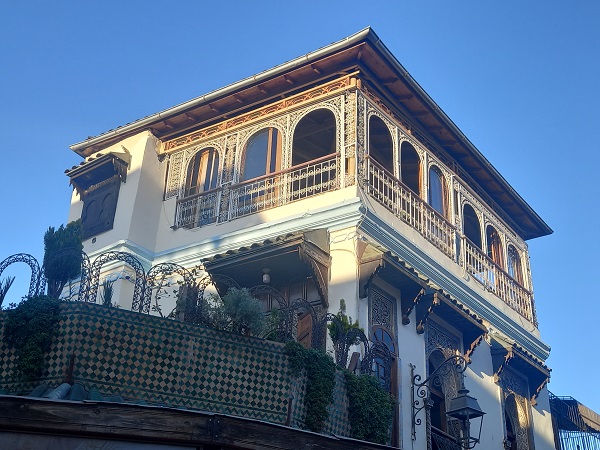
Further in and you start to see the leatherwork, the pottery and carpet stalls, and the shoe stalls. I have never seen so many pairs of decorated slippers ever, they are beautiful with crystals and embroidery.

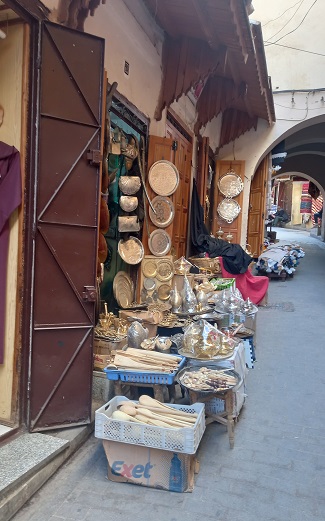

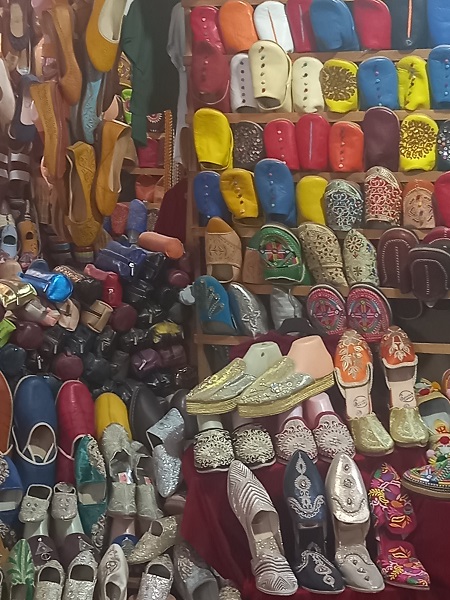
Luckily I have such poor feet I haven’t been tempted. With my dodgy knees and tendon issues I need to wear things that feel like slippers and have support at the back, but I can dream about lounging around in palaces on couches looking as if I am from an Arabian Nights’ tale.
There are so many little food and drink places as well, and on every wander I have to stop for a mint tea, usually served in a gorgeous little teapot here, rather than by the glass as in Tangier.


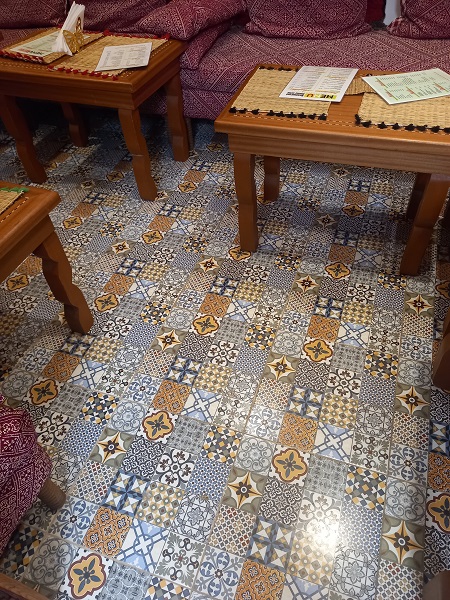
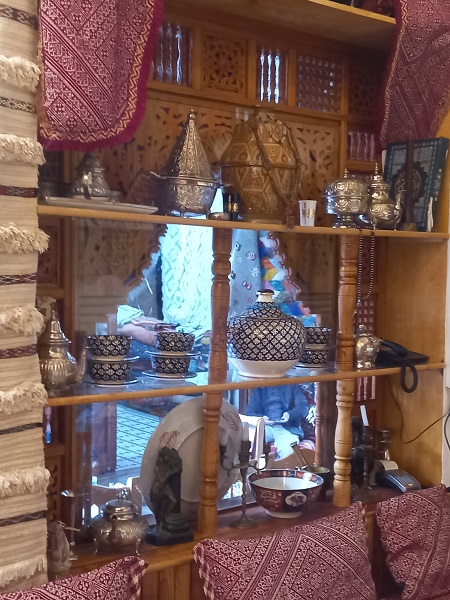


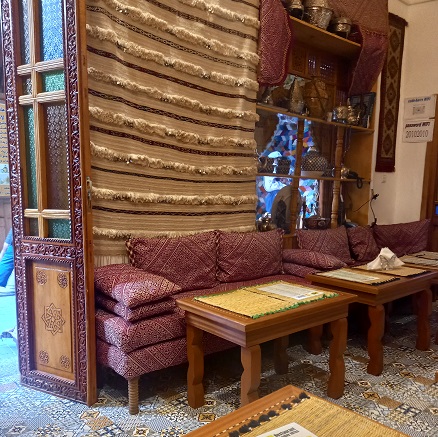
I have eaten twice in this restaurant with views overlooking the tops of the medina, a jumble of towers and walls, and buildings with terraces which are other restaurants and riads. There are lots of cats living on the roofs, and this one was very interested in my chicken skewers!


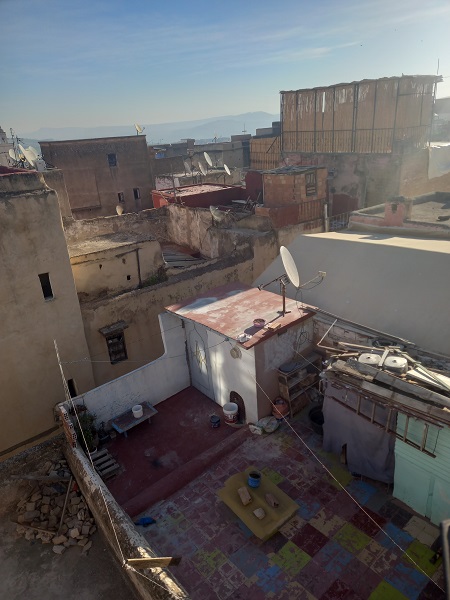
From my riad terrace I can see the buildings at all different heights, some restored, some crumbling. Working in town planning must be a nightmare here, especially as the World Heritage Site designation will limit what can be done. As with all the other cities that I have visited there is so much restoration taking place here.

I managed to have a peek into this doorway where there are some amazing pillars, it looks as if another one of the palaces here are being restored.

On one of my wanders I managed, eventually, to find my way to the Museum of Woodwork, housed in an old trading inn. The wonderful tiled and decorated public water fountain outside was provided by the inn.
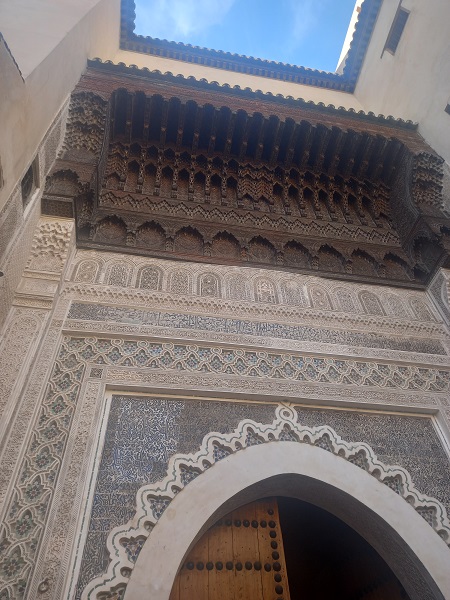
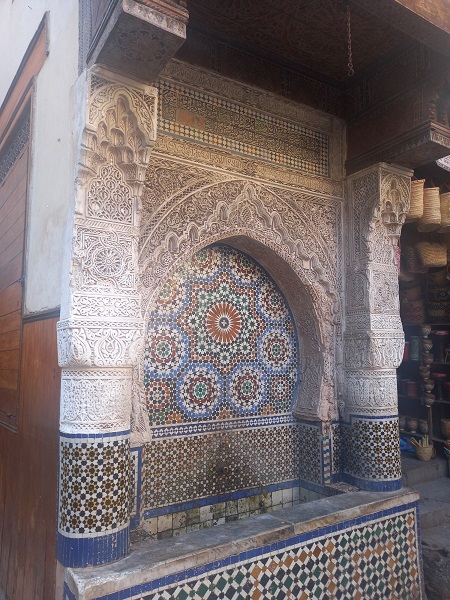
The Nejjarine Museum is in the carpenters’ area, and houses displays of both functional and decorative woodwork. I wasn’t able to take pictures of the exhibits, such as the highly decorated doors, windows and chests, but as you can imagine they were stunning. The museum itself showcases the balconies made with ‘mouchearabie’ woodwork, which is formed of geometric patterns and is used for window shutters and room partitions.


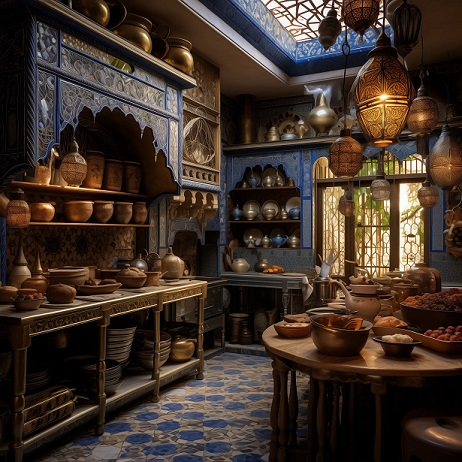
I did find this picture of a modern kitchen shelf for spices, there were lots of these in the museum and they were so beautiful.

While searching I also came across this Moroccan inspired kitchen, if only I had a bigger house I would love this, the woodwork is so gorgeous.
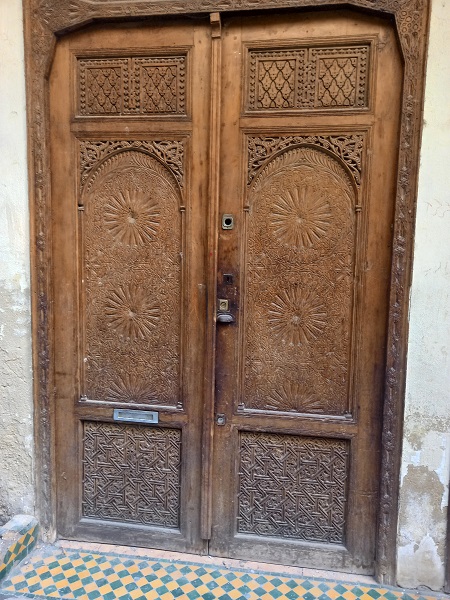
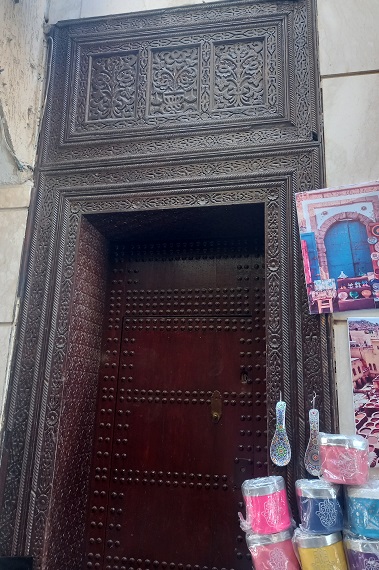
There were a few ornate wooden doors as well. Much of the wall space beside the little shops is covered with goods so the doors aren’t visible, but I found these in a side street.


As this is very much a place where local people live and work there are mosques along the small streets and two madrassas, Islamic schools, and one of the oldest universities in the world, founded in the 9th century by a woman.


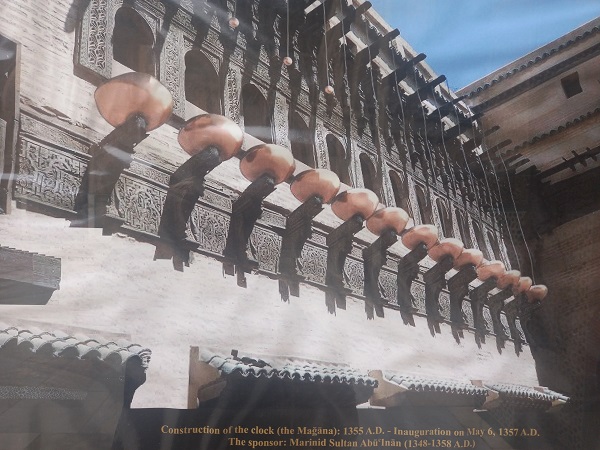
My riad was next door to a 14th century water clock. It was built to drop metal balls into bowls below on the hour, and is part of the nearby madrassa. It is not currently working but may be restored at some point if the historians can work out exactly how to do that.


This picture in the madrassa shows the clock with the bowls and the balls suspended from their chains. When they dropped into the bowl the noise indicated another hour.
The madrassa was beautiful, I remember going to to see the one in Marrakesh which is similar. It was built in the mid 1300s, and has been restored, but even so it is looking marvellous considering all the wood and gypsum plasterwork is exposed to the elements.

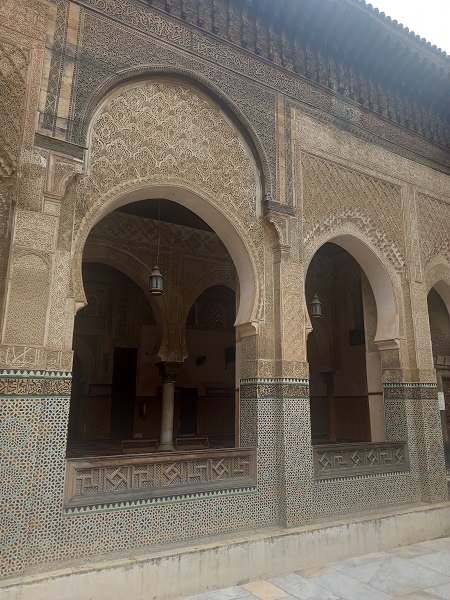


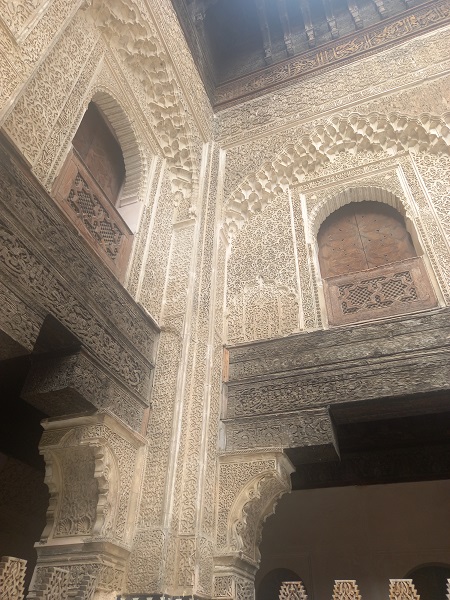
There were some good examples of the ‘mouchearabie’ screens here on the passageways. Such incredible work by those craftspeople, I am in awe of their skills.
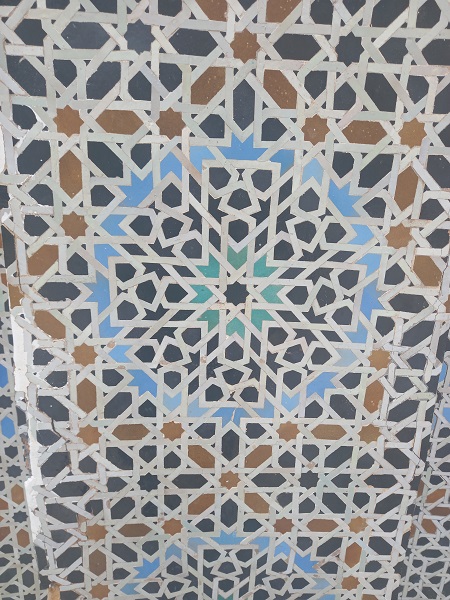


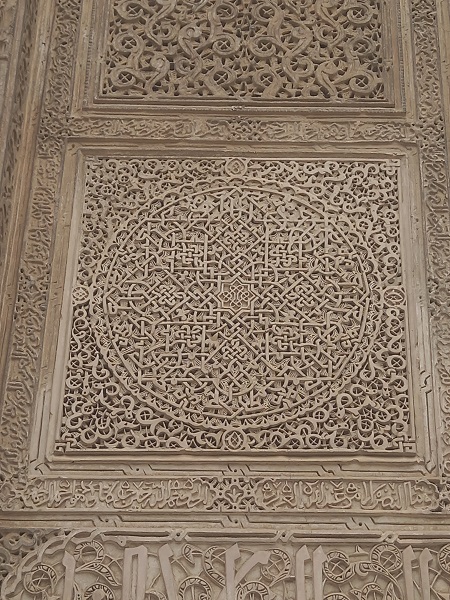
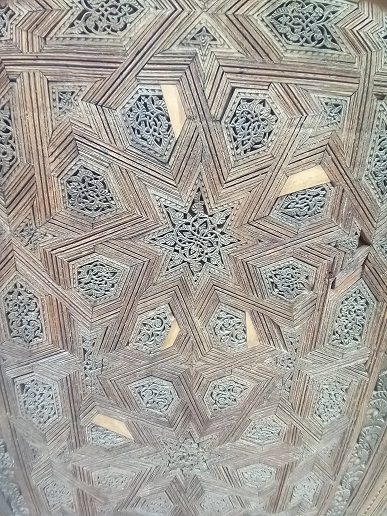
I am so glad that I was able to stay here in the medina, it was lovely walking back and forth every day and seeing this amazing place, definitely one of the most wonderfully colourful and interesting places that I have visited in Morocco.
Oh, and the answer to the question everyone wants to know, the petit taxis here are red, as they are in Casablanca. That may well be because Casablanca and Fes were both considered as capitals of Morocco, before Rabat was designated as the official capital. That leaves only Marrakesh to go and from my vague recollections from 13 years ago, they may have been green. All will be revealed soon!

I will see you soon with the other delights of Marrakesh! Until then have fun, take care, stay safe and thanks for visiting.
 Stitches of Time