Moments in history

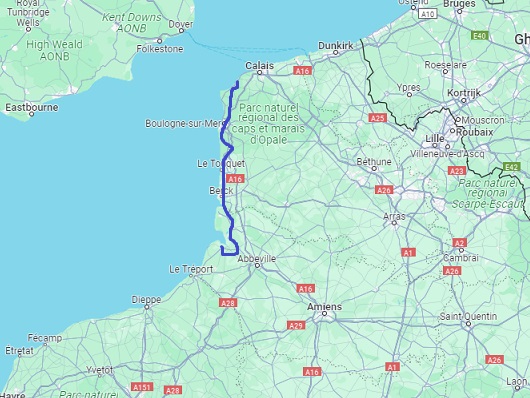
My second stop in France was at the little town of St Valery sur Somme. I had already planned to stop at the aire there, which was a paid for one that had very good reviews, as it was only a short drive from Wissant. This was my route, avoiding toll roads and motorways.
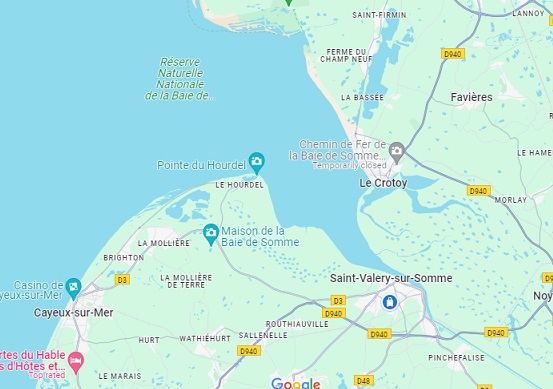
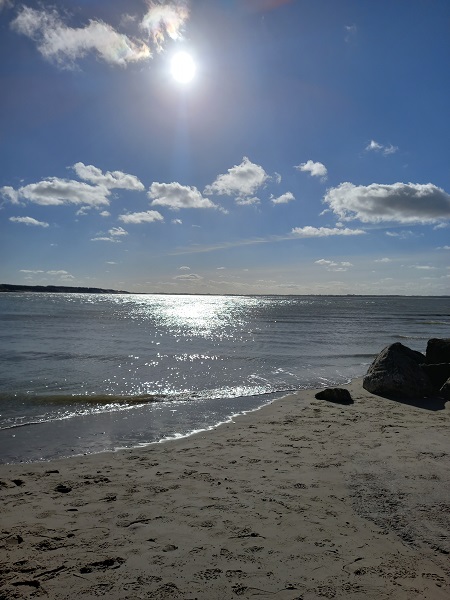
I had a quick lunch stop en route, at the Plage du Ploques (Seals). There weren’t any there but it was a gorgeous place for a picnic.
I was so glad that I did visit St Valery as the town was absolutely gorgeous, and gave me an unexpected glimpse into a period of history that I don’t know much about. It always interests me how easily things can change, and what would have happened if certain events had never take place, and this little town certainly played a major part in England’s history. More about that in a bit.

The aire cost me 12 euros for the night, and was a large, nicely laid out area, accomodating about 100 vans, with trees between each parking zone. There were some facilities such as electric in some areas, bins, water and waste disposal, and access was controlled by a barrier.
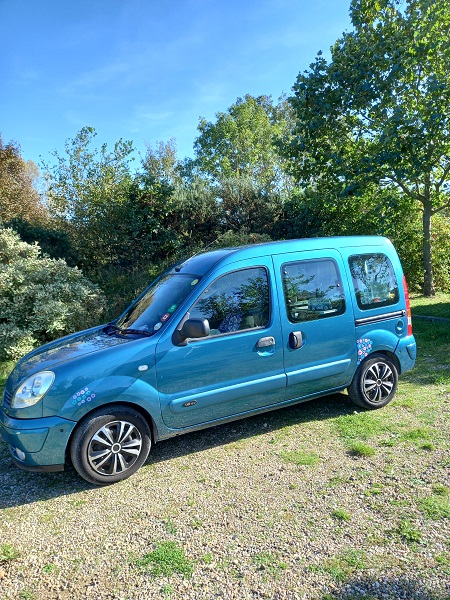
You paid on the way out, and unfortunately the barrier came down too quickly as I was coming from the payment machine, so I was helped by a very kind French council worker who was there with the bin men, who opened the barrier for me. Barrier issues were to become a bit of a feature of the next few days and I was constantly helped by very kind French campers!

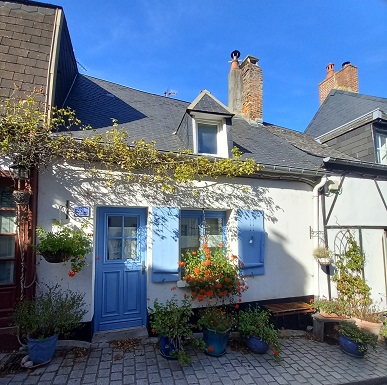
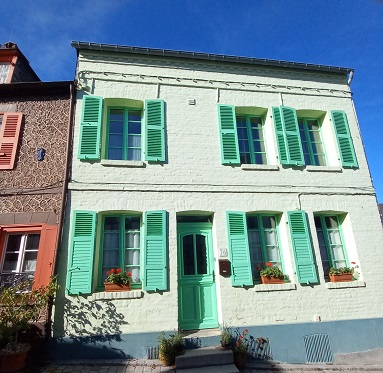
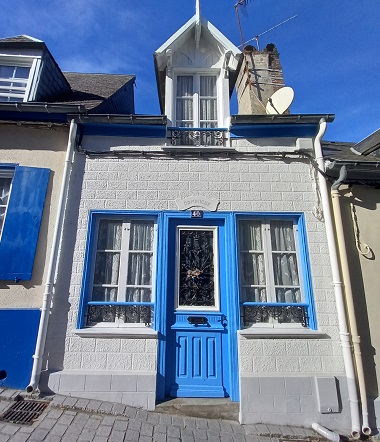
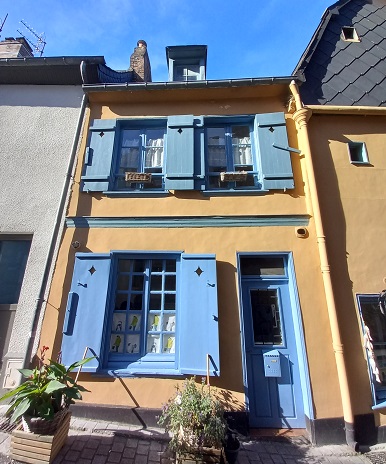
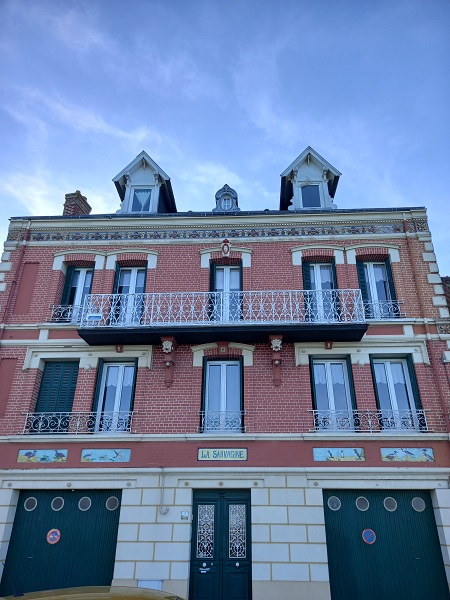
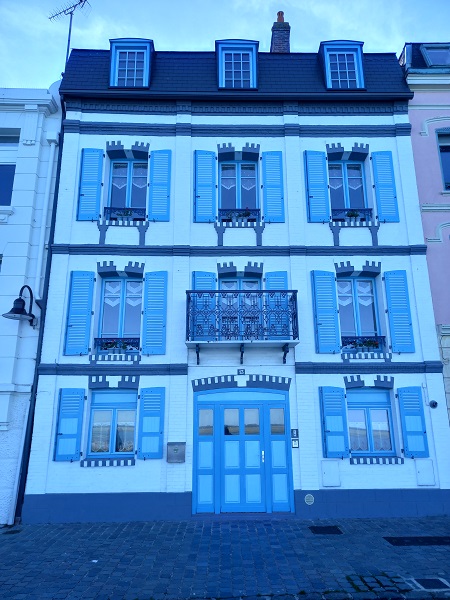
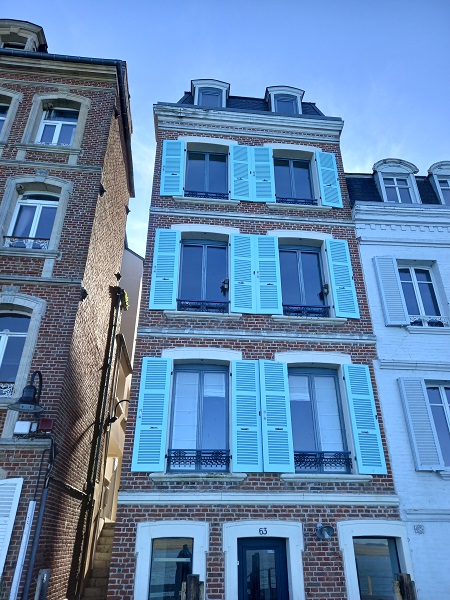
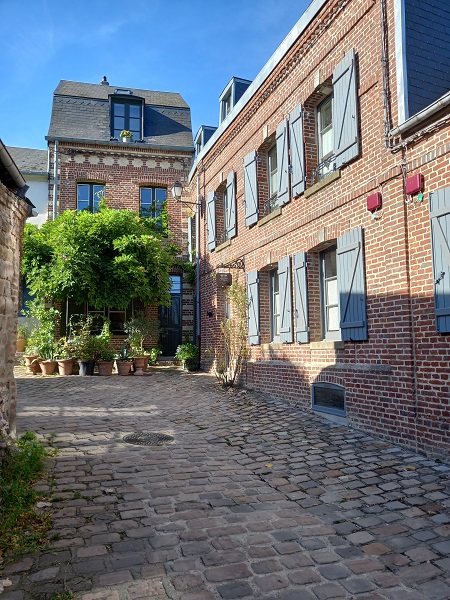
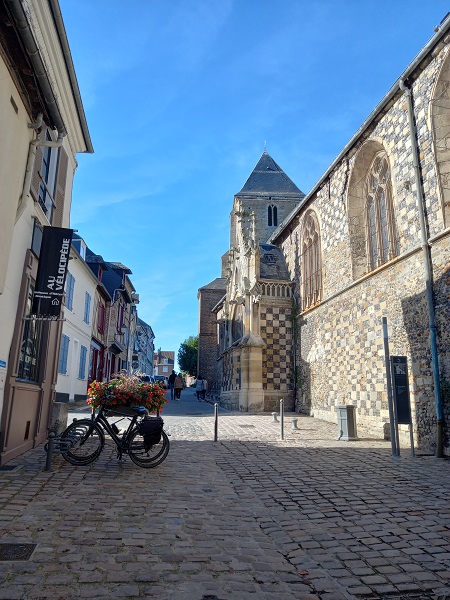
It was only a short walk into the very pretty town, down some tiny cobbled streets with very cute cottages. I loved all the shutters, and you will see lots of pictures like this in the coming posts!

The town is on the banks of the river, and as such was an important port. There were lots of people out enjoying the beautiful weather, and taking boat trips. Such stunning skies for October 15th.

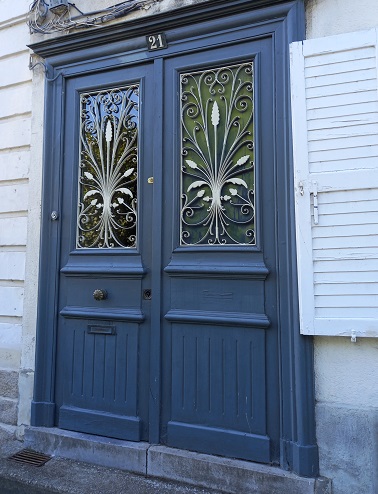
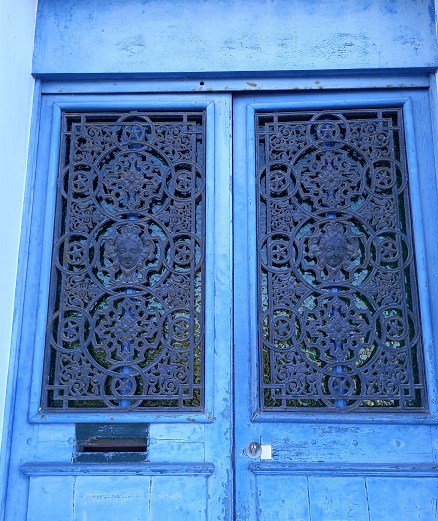
The town houses were beautiful, so many beautiful details in stonework and balconies. And of course some all important lovely doors!
I went for a little wander and found an information board that told me that this place was where William the Conqueror took shelter after a storm destroyed his fleet, while he was on his way to invade England. He managed to get the fleet repaired, and took the relics of St Valery from the abbey in a procession to ensure a favourable outcome for his second attempt.

The rest as they say, is history, and he was crowned King of England on Christmas Day 1066. How things might have been different if this trip had failed, or the saint’s blessing had not worked. Thus for the next few hundred years the town was involved in many battles between the French and English, and changed hands several times. Joan of Arc was also imprisoned there, before being taken to Rouen.

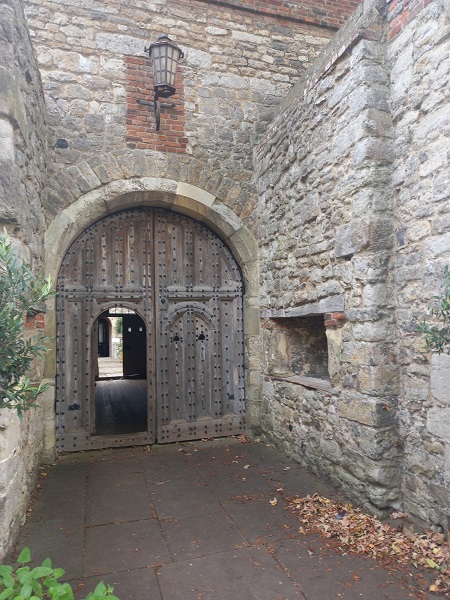
I walked from the port area along the river and up to the old medieval part of the town, the gate and some of the walls are still there. The church has a very unusual checkerboard design in the stonework.
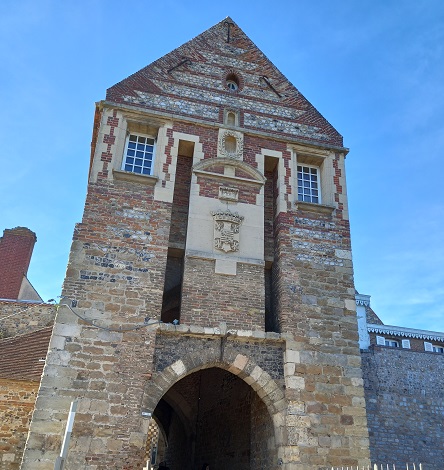
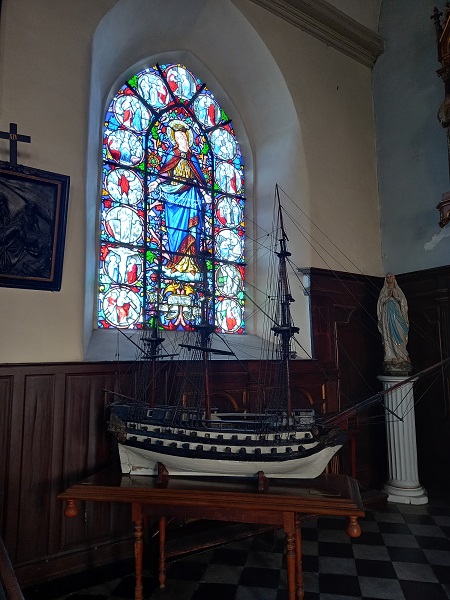
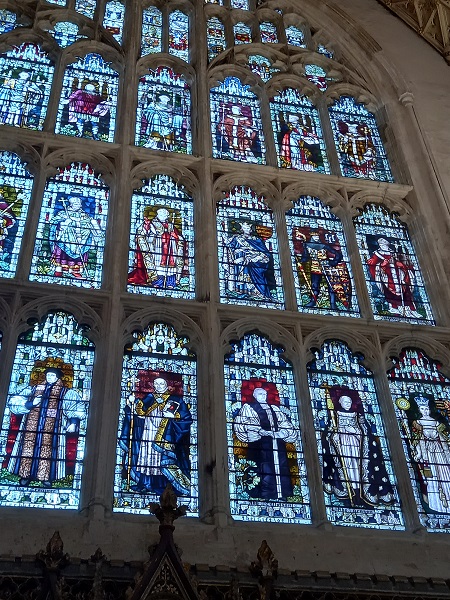
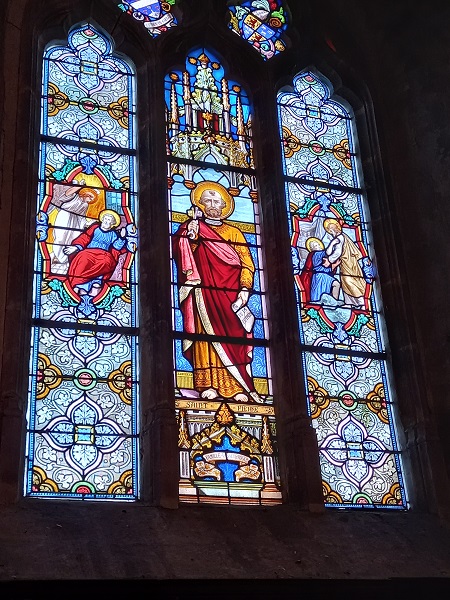
The church was beautiful inside, lots of gorgeous windows and models of ships, as the place has always been heavily connected to shipping.
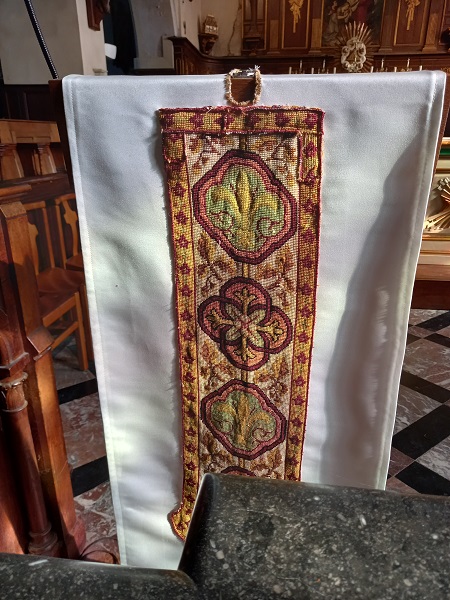
There was some lovely needlework as well, these beautiful stitcheries near the altar were gorgeous.

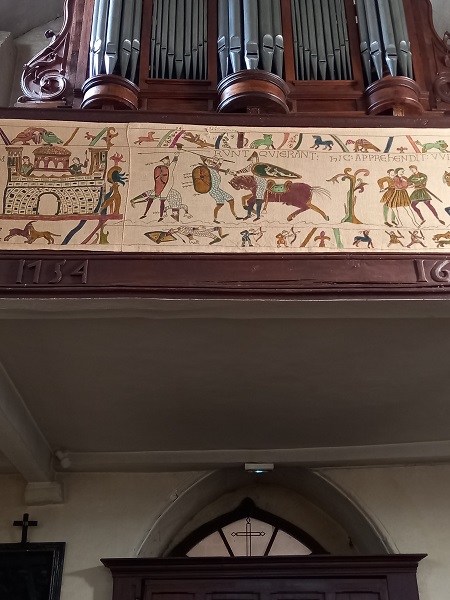
There was also a recreation of the Bayeux Tapestry above the doors, this commemorates the story of the invasion, and William’s battle with Harold at Hastings.

A beautiful place, and such a great introduction to travelling through France, the countryside was so lovely, and the roads so quiet. Absolutely loved it.

I hope you have all had a good Christmas if you celebrate. We had a very quiet but enjoyable time. Unfortunately I got a horrible cold just before it, which has now turned into a persistent cough, so I am having a very quiet few days in, with lots of duvet and fleece time, and hot water bottles. I am not too sad as it gives me lots of excuse to sit and write and stitch.

We will be busy again next week, with more trips out planned for my very last week here before I return to the UK. It has gone so fast. I will try and get back for another post before I leave, but if not will next be writing from the UK. See you all as soon as I can. In the meantime, have fun, take care, stay safe and thanks for visiting.

So close I could almost touch it!

My final campsite was just outside Folkestone, on the edge of the cliffs, with beautiful views of the white cliffs, not the really famous ones, just some smaller ones. It was a fantastic location, you could hear the waves from the campsite, and the views were stunning.

The access road was a little steep and narrow, but once I got used to it that was fine. I have no idea how people get their large motorhomes down places like this, so glad that Katy is tiny!

This is where I started to get really excited, especially when on a couple of days it was so clear that I could see France. I was watching the ferries go over every day, and counting down the days until I left.

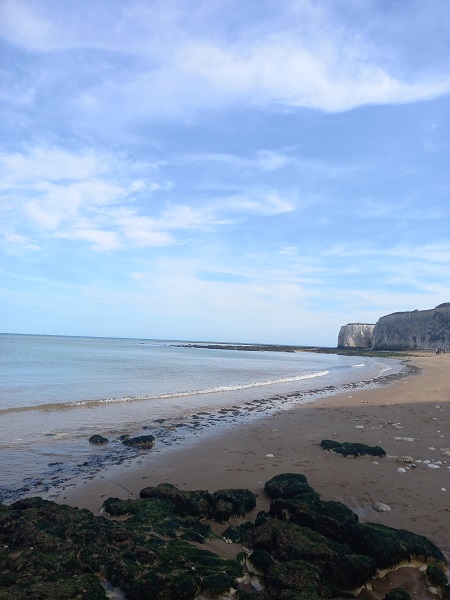
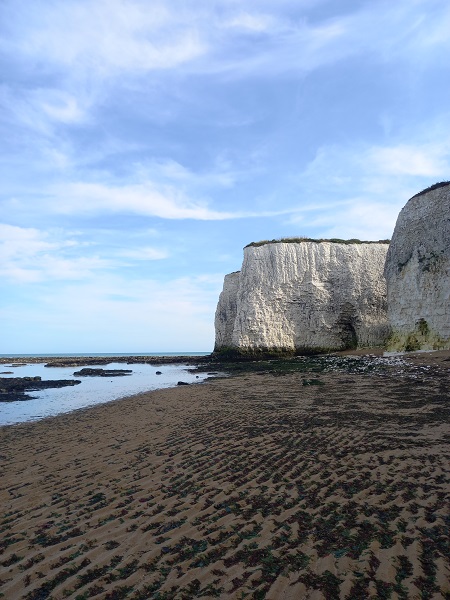
Aside from the lovely castles I did visit quite a few other places in Kent and I really loved the beaches. From the previous Canterbury campsite I had driven to the coast near Whitstable as I had seen this beach Botany Bay, on Google Maps.

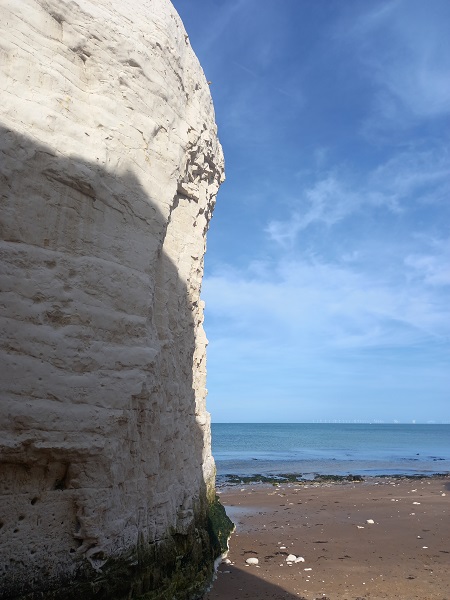
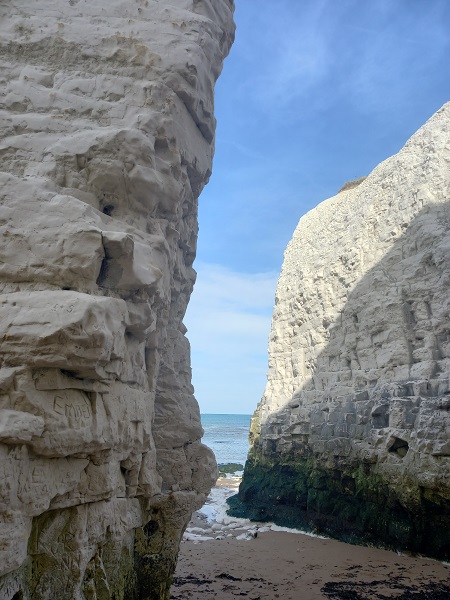
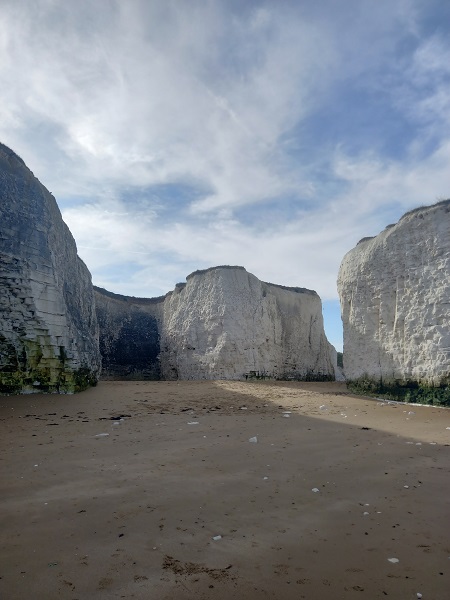
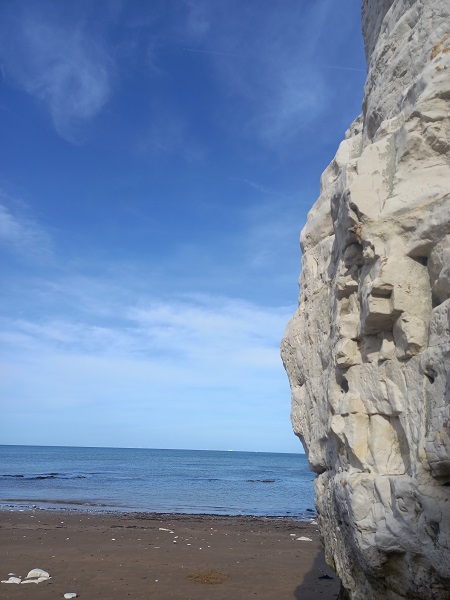
It was stunning, the erosion has left these amazing chalk pillars and they looked wonderful against the blue sky and sea. I had a brilliant afternoon at this beach, even having a little paddle as it was that warm.

I also went to the official site of the White Cliffs of Dover, another Trust property. There is an excellent café and interpretation centre, as well as three second hand bookshops! By that point I had emptied one of my footwell storage boxes in the van, so was able to bring back lots of books to Spain, so I bought 6 from their bookshops.

It was a lovely walk along the cliff path, to the particular section of the cliffs that are the iconic White Cliffs. The whole of this stretch of coastline is beautiful and I will return at some point to go further west as I know there are some other amazing places to visit. For now it was a little picnic, watching the ferries leave for France.

I had opted for the tunnel, as it was faster. The advantage of only having a little van is that it is cheap to take her on the tunnel. I was so excited about the whole thing and it was so simple, I actually got there in time for the previous shuttle so from arrival to being in France was about an hour. Here is me being very excited waiting to set off.

A bumpy 35 minute ride later and we were in France. I had opted for an aire just 30 minutes down the coast at Wissant, a little village that has been used often as a embarkation point for England.

Most of the aires that I used I found through the Park4Nite site and app so here is the link for this one if anyone is interested. I parked up, and went for a wander, and when I came back was talking to my neighbours, who had recognised Katy from one of the campervan groups I am in on Facebook!

This was a free aire with some services, and only a short walk to the village. I celebrated my arrival with a glass of wine next to the beach, and enjoyed watching the ferries from the other side. I could also see the White Cliffs from here, you can’t tell from the photo but they were very clear.

In terms of the driving I can honestly say that the change to driving on the right came really naturally. I think because I do spend a lot of time in Spain cycling, and navigating for family I am very used to it.

As many people told me, French and Spanish roads are brilliant to drive on, there is much less traffic, and I had some beautiful routes, especially in Normandy. I wish I had a dash cam to show you all of the beautiful places that I drove through, as there was some stunning scenery.

I will be back soon to show you the adventures of day two in France, it is still lovely and sunny here so I went for another cycle ride earlier, with views of my beloved mountains. Whatever you are doing have fun, take care, stay safe, and thanks for visiting.

The many castles of Kent, with a brief side trip into Sussex

One of the very interesting things for me about travelling around the UK is filling in the gaps in my knowledge of history, as well as geography. For me visiting Kent was realising how much of its history is composed of defence, being so close to Europe, and threats over the years from invading forces.

Spending much of my life in Yorkshire, the history has a very different focus, and so it was really interesting to see so many different types of castles, and to learn more about why they were built.

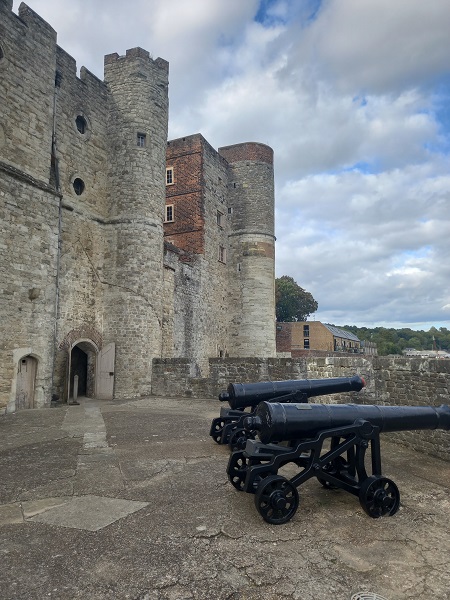
My first stop, after that trip via the M25 and Dartford Bridge, was to Upnor Castle, a Tudor artillery fort. I visited the nearby Rochester Castle many years ago, so I was interested to see this one. Its scale can only really be appreciated from the water, as it is right on the coast, opposite the docks, so this first picture is from Google.

There was a lot of really interesting interpretation about the castle’s role in various battles against all our European neighbours, a vital point of defence when warfare was conducted at sea.

The castle was controlled by the Ordnance Board, who managed stocks of weapons, particularly for cannons. This sign reminded me that some years ago I read a fascinating book on the history of maps in the UK, which originated from this ordnance survey, and we still use the name today.

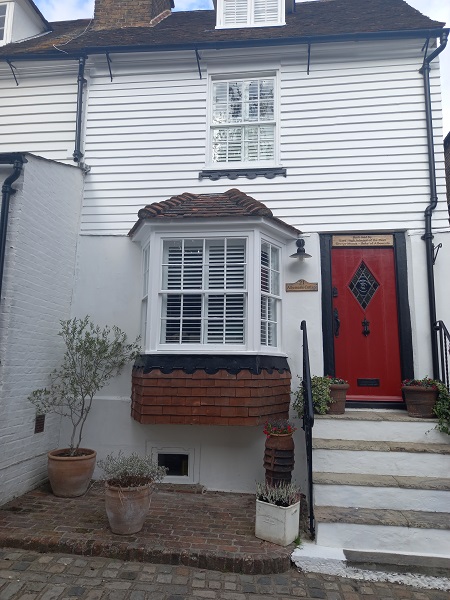
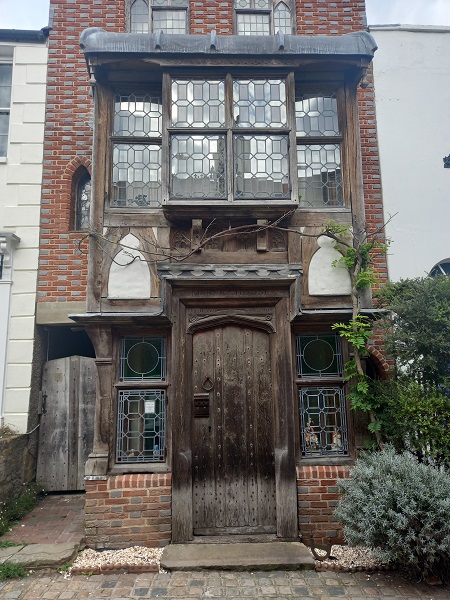
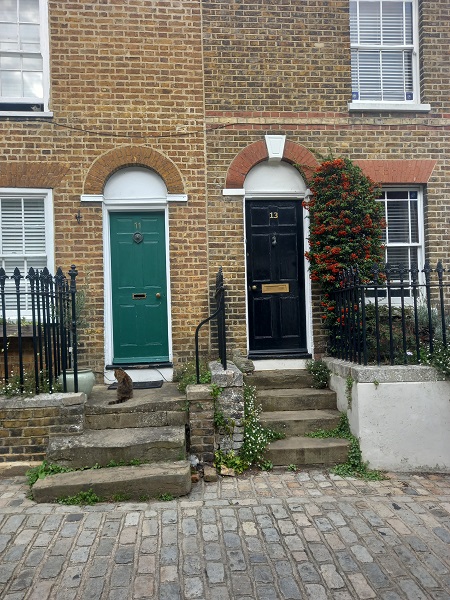
The streets leading to the castle were full of beautiful little houses, with clapboard siding and some seriously stunning windows. I loved the little lookout at the end of the street.

I stayed on the coast, which I will post more about next time, but went inland for one day to visit three very stunning, and very different castles.

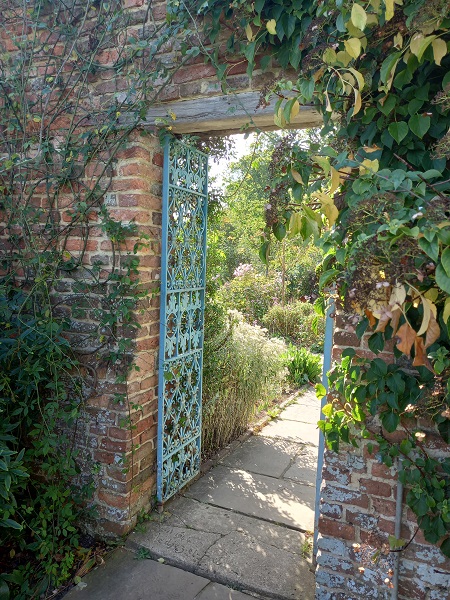
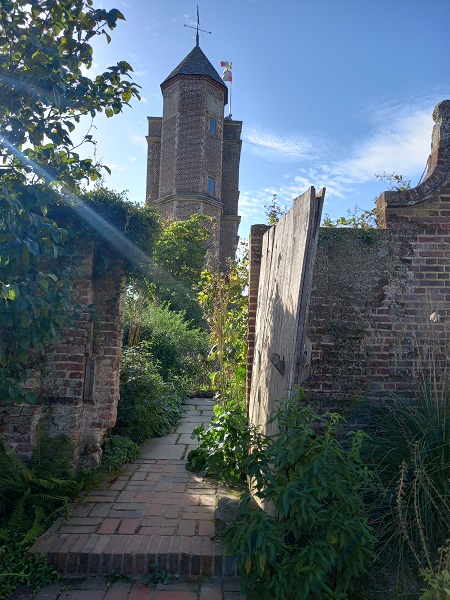
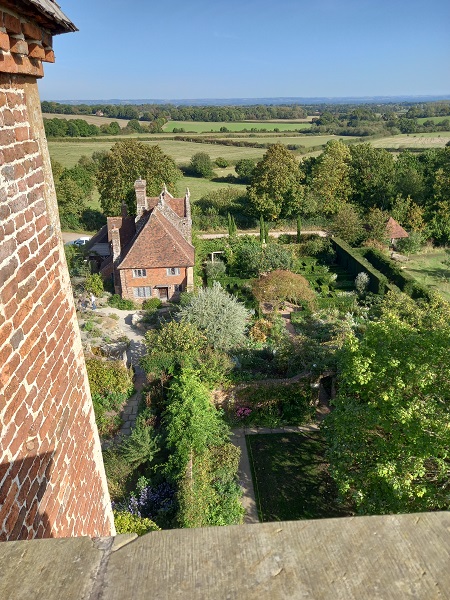
Sissinghurst is in part a Tudor building, and is not strictly a castle. It does have a tower though, and seems to have been called a castle since the late 1700s when French prisoners of war were held there. It was restored in the 1930s by Vita Sackville- West and her husband Harold Nicholson, who created the beautiful gardens.

Vita was a writer, and it was brilliant to see her study, within the tower, that has been preserved. As a fledging writer I love to see where other people have worked.

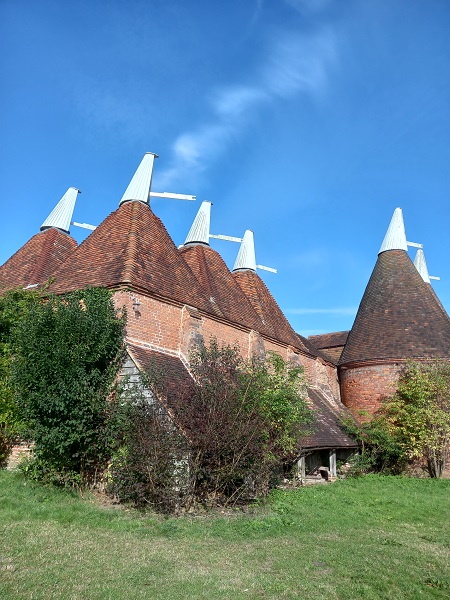
The oast house was also fascinating, I saw so many of these on my travels in Kent. They were used to dry the hops that Kent grew for the beer industry.

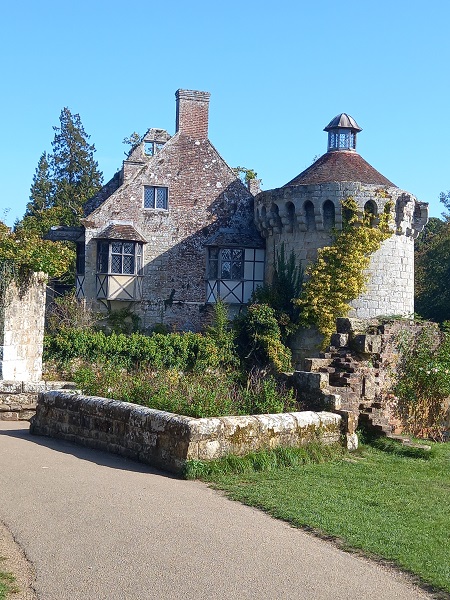
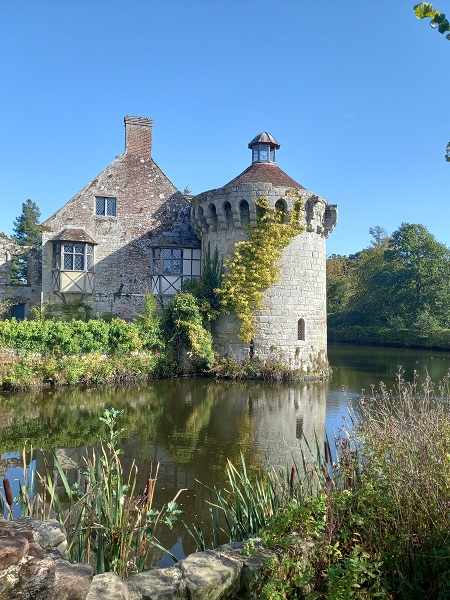
My second castle of the day, Scotney, is a beautiful place. The original moated castle, which dates from the 14th century, is set in gorgeous grounds, great for taking arty photos.

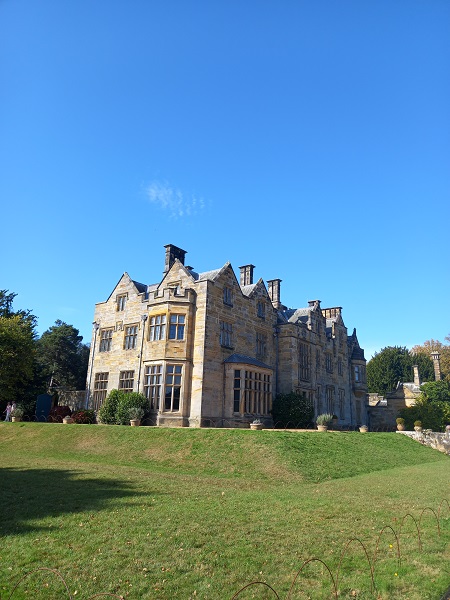
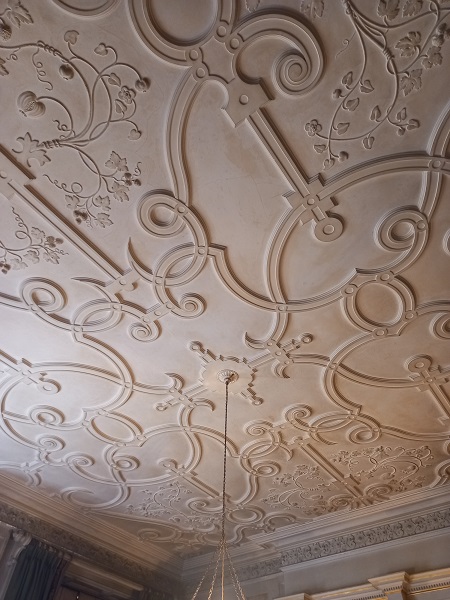
Then there is the more modern Victorian house which has nods to the Jacobean splendour that I love.

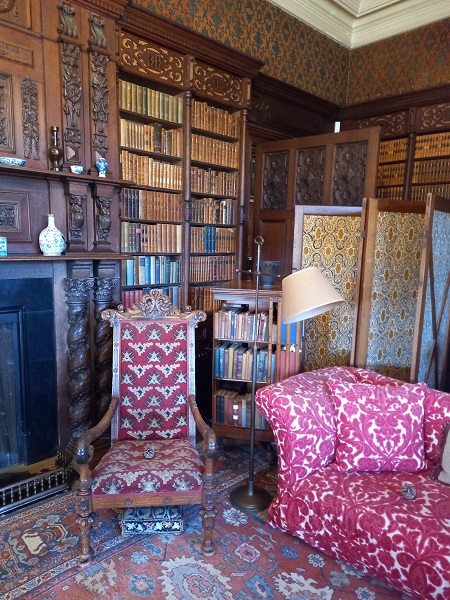
The library in the house was again beautiful, and I loved the glimpses into the study with the archaeology tools. Like many Victorians, the builders of the house were avid collectors.

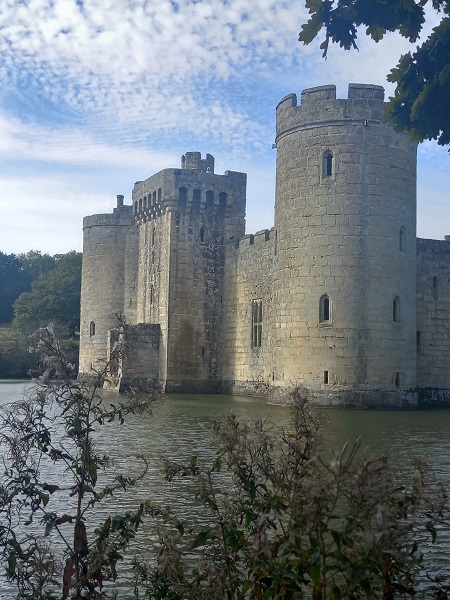
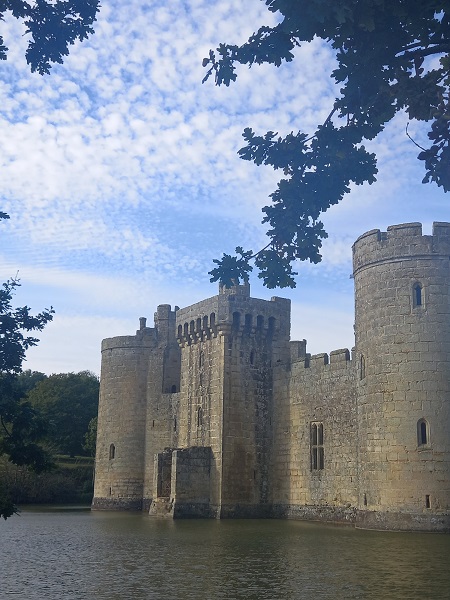
The third castle of the day was in Sussex, the amazing Bodiam. This really is a fairy tale castle and I loved the contrast between stone and sky. Again I amused myself with taking arty shots including foliage.

Altogether a beautiful day out, and I was so lucky with the weather, as this was the second week of October.

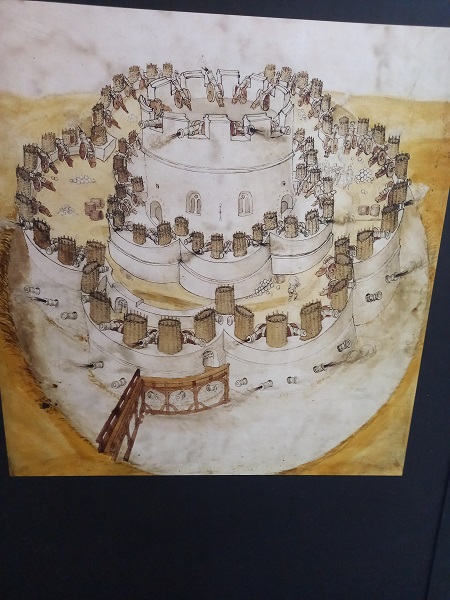
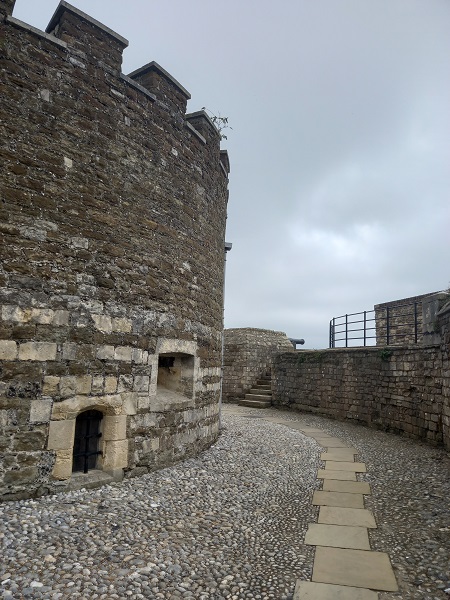
The last set of castles were the defensive ones built by Henry 8th along the Kent coastline. I have been fascinated by these, with their unique concentric circle design, for a long time, and it was great to finally get to visit them. I love looking at the original designs, many years ago I visited the artillery at Barcelona and they had the plans of the star shaped castles. They are all such marvellous feats of engineering.

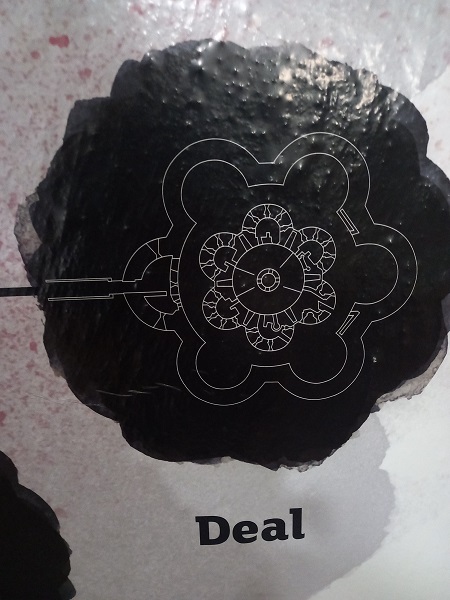
Deal Castle has illustrations of the designs of the castles, not all of which are still standing, that were built to protect the Cinque Ports of Kent.

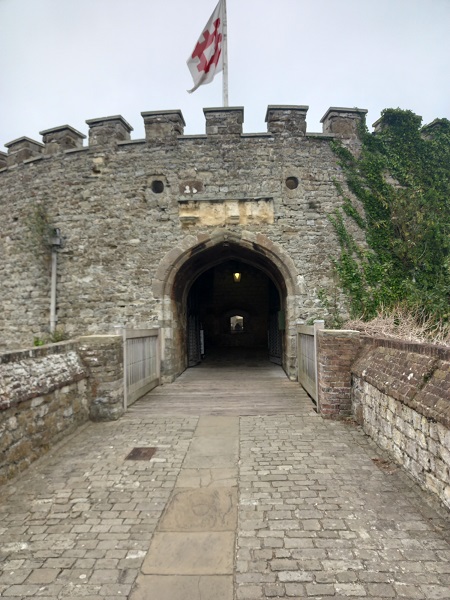
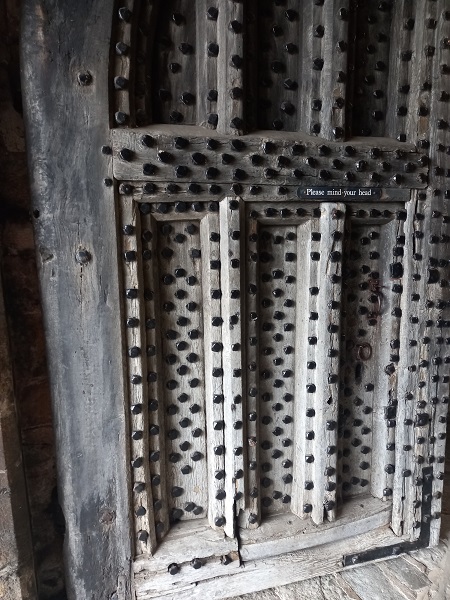
This castle was very much a defensive one and you can tell how effectively it would have withstood attack, just look at this door!

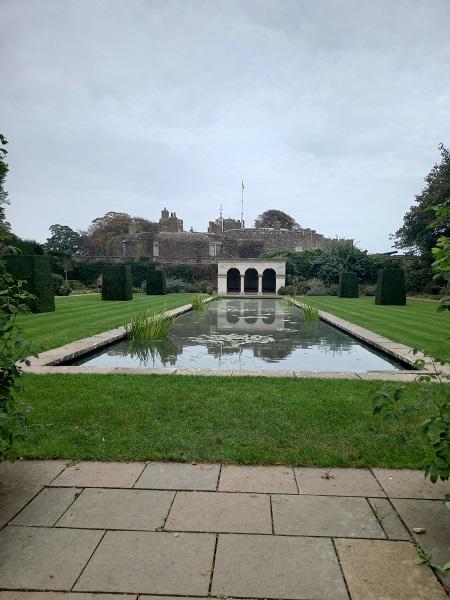
A little further down the coast is Walmer Castle. This is a real contrast as it was the residence of the Warden of the ports, so was modified extensively to provide living quarters, and also has beautiful gardens.

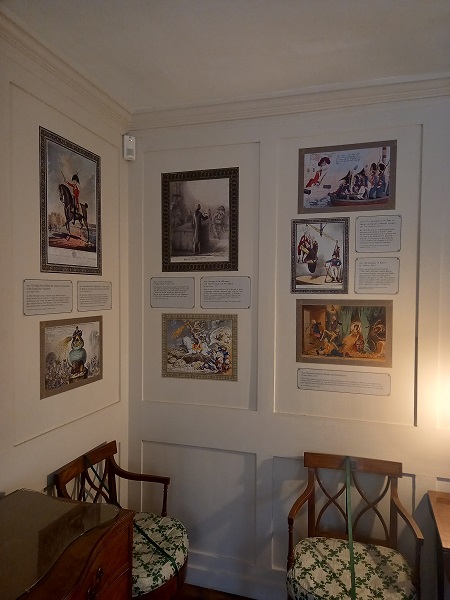
There are some very interesting exhibitions in the castle as well. The Duke of Wellington was one of the wardens, so spent many years here, and died in one of the rooms. William Pitt the Younger also served in that role, and one room in the castle has a fascinating display of cartoons from magazines of the time about his political career.

A very interesting week, which I really enjoyed. It has been so nice exploring more of the UK this summer, and I am really enjoying planning my trips for next summer now.

My next post will be all about my coastal trips in Kent, my first journey into France, and the excitement of driving on the ‘wrong side of the road’, or as the Europeans call it, ‘the right’ 😉

Until next time, have fun, take care, stay safe and thanks for visiting.

Beating my personal best

As you may know I love visiting historic places and on my recent UK trip managed to go to eighteen Trust houses over ten counties of England. In addition I visited six of the Trust’s coastal areas, and six English Heritage properties. There were also seven museums, three cathedrals, two re-enactment events, three festivals, and a re-union, as well as five meet ups with old friends. I think that must count as my busiest time yet.

In one week, coming from Yorkshire after my reunion, via Cambridge to Canterbury, I visited no fewer than five properties in three days, which has to be a record for me. I had planed my route to Cambridge to enable me to see two properties on the way there, two the following day, and then on day three I had an epic drive which also involved the M11, M25, Dartford Crossing and the M2, so was feeling very accomplished by the end of that week. As I mentioned in my last post, there has been some interesting driving this summer, but the M25 and Dartford Crossing were not as scary as I had thought they would be. In fact Katy and I really enjoyed the views from the Dartford Bridge.

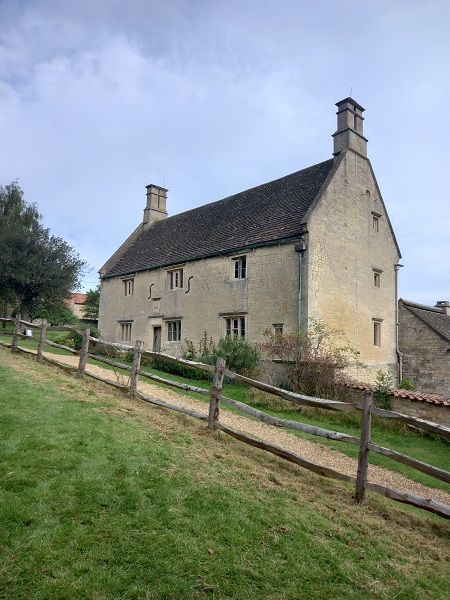
The properties really varied, and all had their particular interests for me. The first stop was at Woolsthorpe Manor, the family home of Sir Isaac Newton, and the location of that famous apple tree.

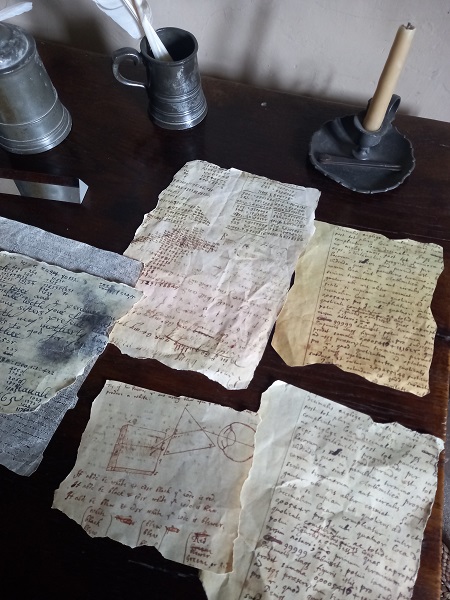
Many years ago I did a course on maths education which included a module on the history of mathematical thought, with a study of Newton’s famous text included in it, so it was very interesting to see one of the earliest editions.

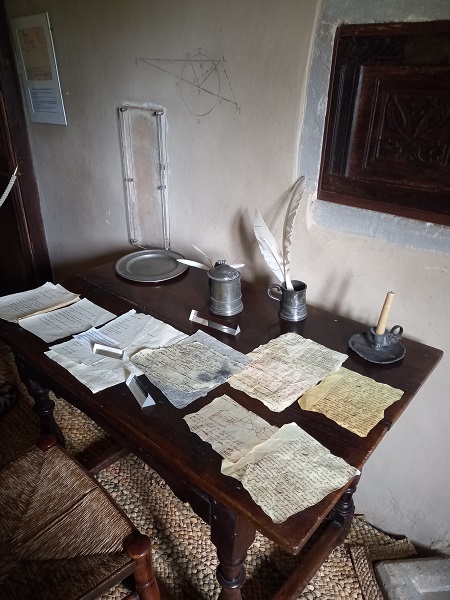
The house was really well interpreted, we had a very knowledgeable volunteer tour guide, and I loved the fact that they had recreated Isaac’s bedroom, putting the drawings on the walls that he did to work out his principles, and recreating his letters and workings out at his desk.

The tour focused a lot on his mother, Hannah, as well, and her life as it was the anniversary of her birth, so that was very interesting, as it was very much about his family life, not just his work. I wonder what she used these beautiful wall cupboards for.

One of the loveliest things there was that the tour started at the tree that inspired his work on gravity, and ended at a sapling that had been grow from a seed taken to space by UK astronaut Tim Peake, neatly linking the story of gravity. The original tree fell after a storm and a new one grew from its trunk.

The next house was very different, the grandeur of Wimpole, and its large estate was a real contrast to the tiny farmhouse.

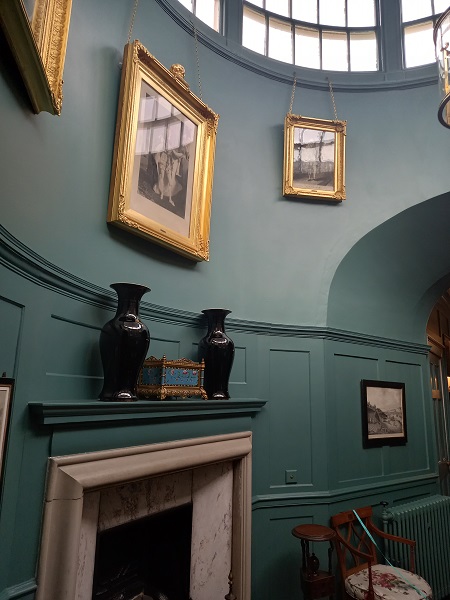
This mansion was beautifully decorated, looking like it could have been another set for the Bridgerton series, with a stunning library which had very unusual décor, and a chapel with a blue and gold painted ceiling.

I came across a very unusual bed hanging set there. Unlike many of the others it wasn’t beautifully embroidered or made of velvet, it looked far more like it had been draped in fishing nets. I can’t say it was a particularly attractive look, but certainly unusual.

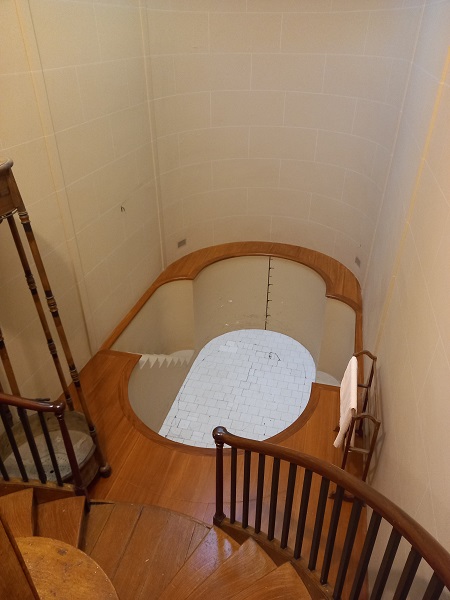
There was also a large bath, installed in the basement, alongside one of the early Victorian showers. I would like to imagine people sitting in here sipping champagne maybe, before changing for dinner.

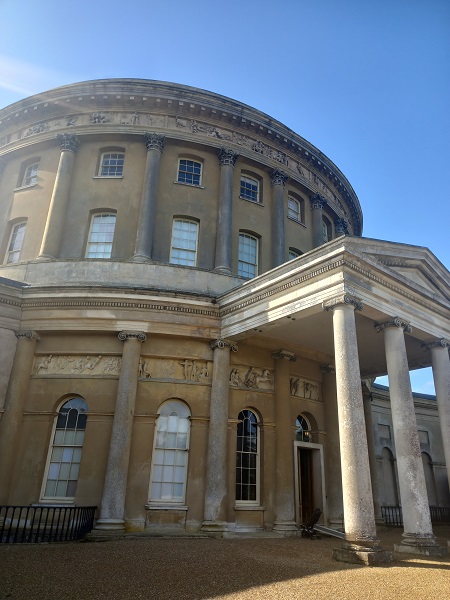
The next day I went to Ickworth, This has been on my wish list for a very long time for its stunning architecture, It is actually in Suffolk, but was nearer the border with Cambridgeshire, so I had left it for this visit, rather than the previous week.

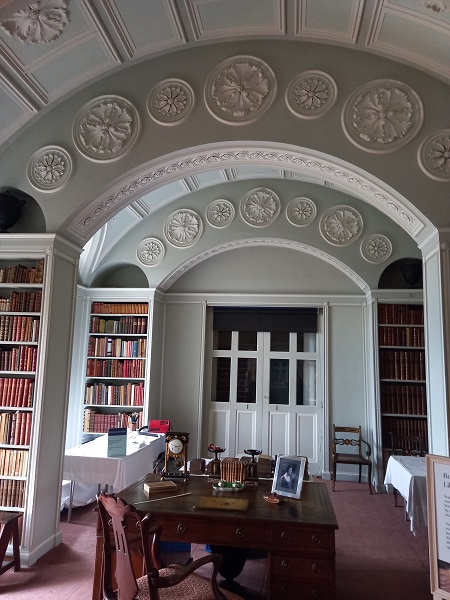
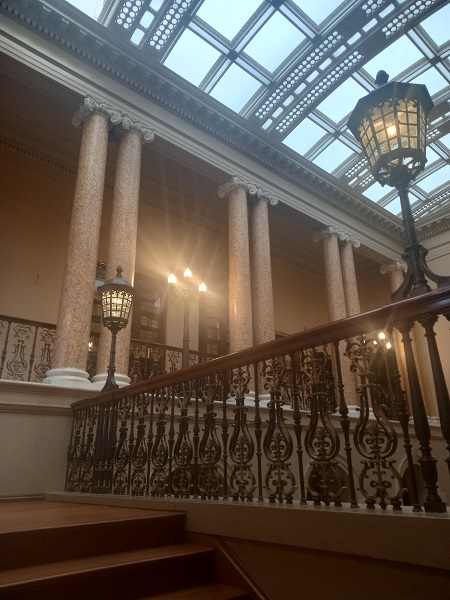
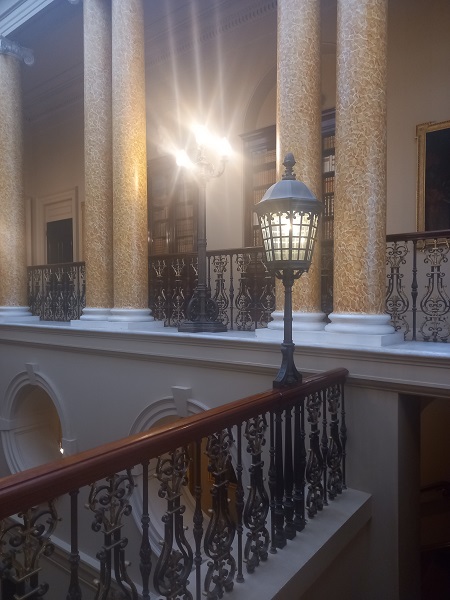
The house was built to be a showcase for the family’s art collection, and again I had a excellent guided tour. It was really splendid, with some very impressive formal rooms. My favourite area was the central part and the floors under the rotunda, which housed a beautiful library.

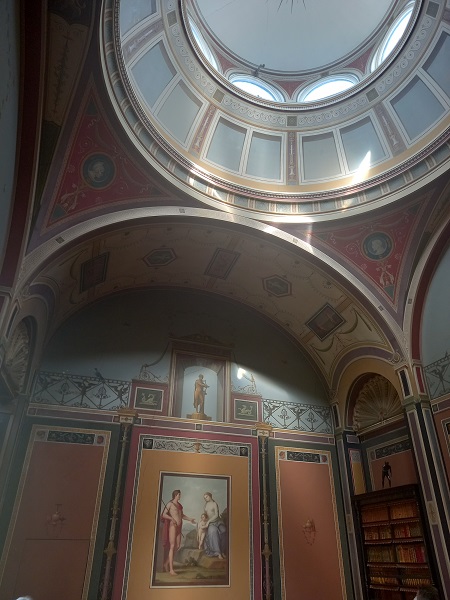
I also loved this Italian room, its décor reminded me so much of the palaces we visited in Venice earlier this year.

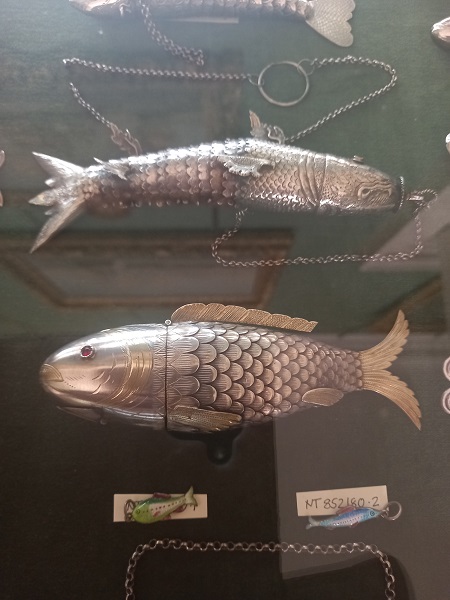
There was a large collection of silver fish containers, the heads being hinged. I am unsure what they were, perhaps for snuff, but they were gorgeous.

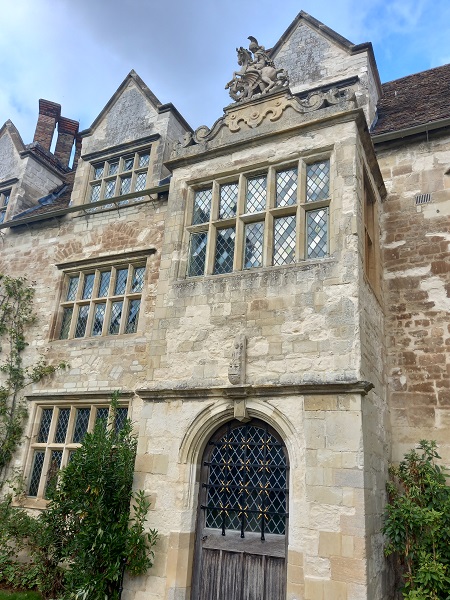
That afternoon I visited Anglesey Abbey, it was a gorgeous sunny autumn day which made the visit wonderful, as it has such lovely grounds. The last owner, Lord Fairhaven, spent a lot of his time developing the gardens. This house hadn’t really been on my wish list, I was just really visiting as I was in the area, but it is definitely one of my all time favourite Trust houses.

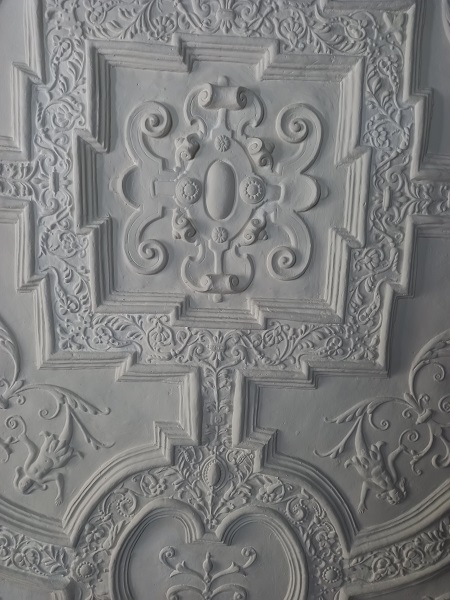
It is such a beautiful house architecturally, with its original abbey architecture and Jacobean style ceilings, and the collection within it is stunning.

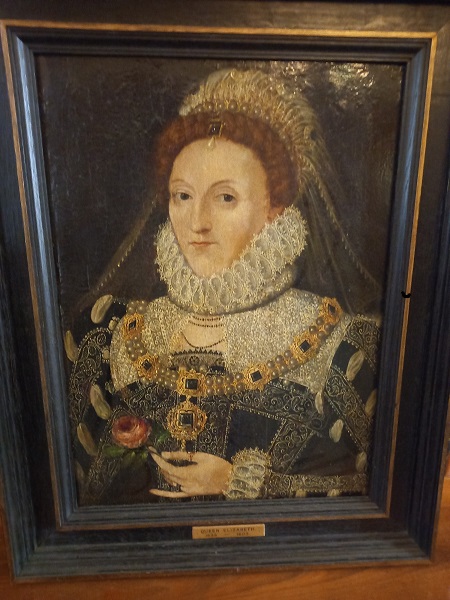
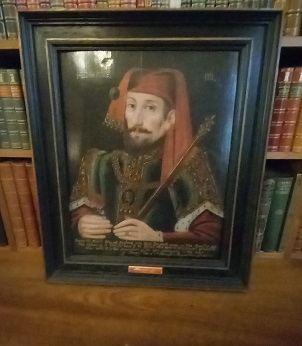
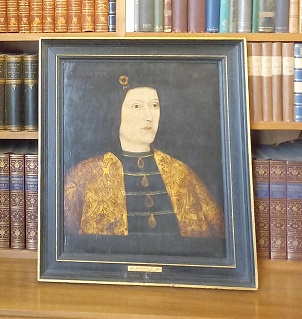
My favourites were the portraits everywhere of Tudor monarchs, many within the wonderful library.

As well as some beautiful embroidery, including some goldwork from royal standards, there was also a very touching textile treasure.

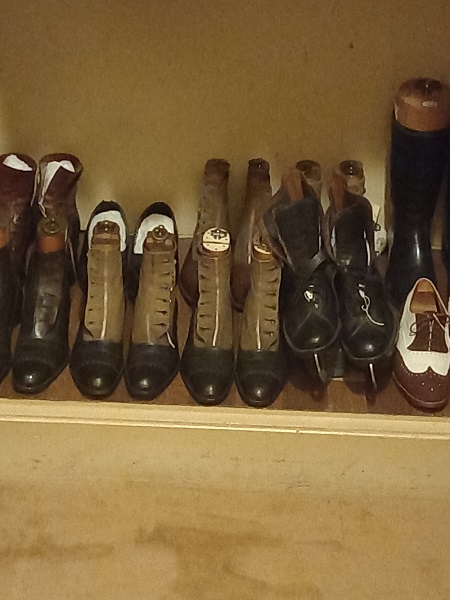
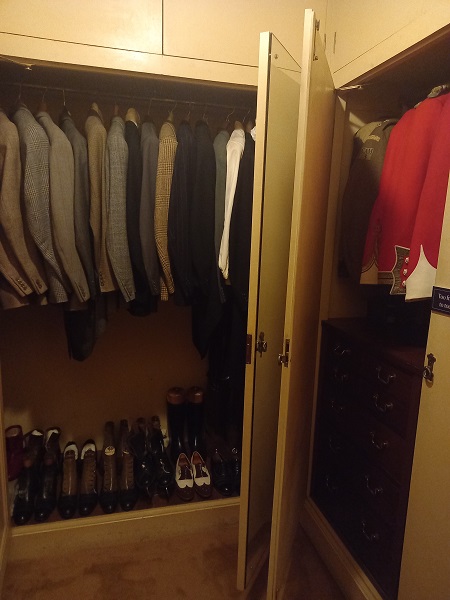
Lord Fairhaven specified that the house was to be kept as it was, his home, after it was given to the Trust, and his donations included his entire wardrobe. This is such a wonderful glimpse into his life, and really personalised the visit for me. I could imagine him choosing a jacket to go and walk the grounds in, or his valet picking out a pair of shoes for a formal dinner.

There is also a wonderful collection of paintings of Windsor Castle in the house, which form a very interesting record of its development.

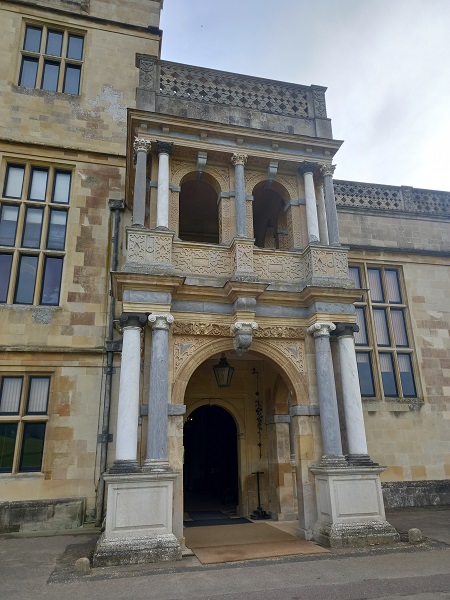
The final house in Essex was another that had been on my wish list and it was amazing! You enter Audley End and drive past the house to get to the car park, so you get a real sense of what it must have been like to arrive there as a guest.

The story of the house is fascinating as well, it dates from the 1600s and was originally three times as big. Sadly there are no interior pictures allowed but there were incredible plaster ceilings, this has been a theme of the houses that I have visited this summer, and I do so love them. I think Jacobean architecture is my favourite style, I just love the sheer exuberance of it!

This picture of the saloon is from the EH website, the portraits of past kings were also wonderful, but that ceiling is amazing.

It is again very well interpreted, and the current focus is the family who lived there during the Victorian era.

The five properties were all so different, and really highlight the value of preserving these parts of our history. I think my memberships of the National Trust and English Heritage represent exceptional value for money, and I am very pleased to think that I am helping to keep these houses cared for for future visitors.

My next post will be all about my travels in Kent, my final county in England, where I visited so many lovely heritage properties. Kent was probably my favourite county out of all of the South East, and it is so big I hardly scratched the surface of all the lovely places there.

Until next time, have fun, take care, stay safe and thanks for visiting.

One of my favourite roads in England

Now I have been driving for a while, and have completed about 8,000 miles in Katy I have a few favourite roads, and some that I have added to the, ‘only ever to be driven on once list’ ! The latter category includes the Kirkstone Pass in the Lake District, Porlock Hill in Devon, and a recent off road experience where although following the Sat Nav, we ended up looking like we were driving through the reservoir, rather than round it, on a very rough road that resembled a riverbed in parts! Very Indiana Jones, but as Katy is not a jeep we won’t be doing that again.

However, I have found lots of roads that I love driving on. There is a beautiful route from Ellen’s to Huddersfield that has the most amazing views. That road was also my first inadvertent night driving experience last year, after getting stuck in traffic in Sheffield, good job I know it well as it is very winding, with no street lights!

The roads in Norfolk were also lovely, lots of long straight roads with little traffic. One of the things that I loved about those was all the woodland, I had thought Norfolk would be less wooded and hilly than it was, and loved the scenery, as well as all the cute villages.

However I think one of my favourite roads of this trip has to be the A12 in Suffolk. It was such a pleasure to drive on, beautiful scenery, and some stunning places along the way. I stayed at the Kessingland Caravan and Camping Club site near Lowestoft for a week, and had lots of time to visit the coastal towns and some of the Trust properties in the area.

My first visit was to Sutton Hoo, this has been on my list ever since seeing the treasures about 20 years ago in the British Museum. There are replicas at the visitor centre as well and their beauty is just amazing. However, it is the story of the site that fascinates me, and others, and it was made into a film in recent years, called The Dig. The story of the owner of Tranmer House was really well interpreted within the house, with lots of original material from the time of the dig.

Edith Pretty was very interested in archaeology, partly as she had spent time during her childhood travelling with her family to various excavations. The discovery of the ship burial came about due to her interest in the mounds on her land. It is incredible to think that had another person lived in the house, without that interest, none of this might have been found. One of my favourite rooms was interviews with people who have worked at the site over the years, it really makes the story come to life, as do the recreations of the finds, like this amazing helmet.

The house is in a stunning location as well, it is worth a visit just for the walks and the views of the river. I was lucky that it was a glorious day, and I had a fantastic time. It really was one of my very best days out.

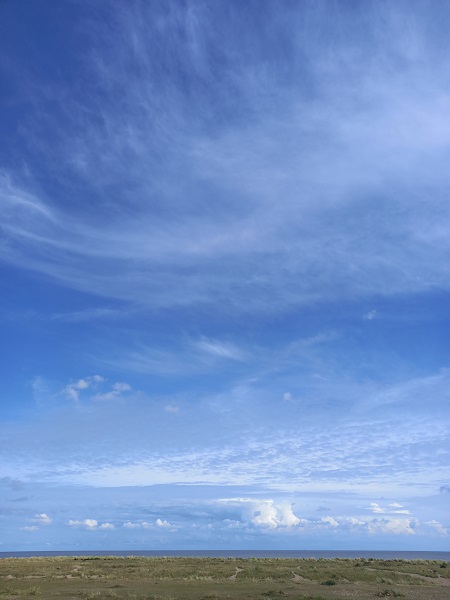
I also visited various of the quiet and unspoilt Suffolk beaches, like in Norfolk, many are nature reserves and are great for a wander, finding smooth pebbles and interesting shells. I could spend ages on beaches just looking at pebbles, I find them fascinating. And lovely clouds, always lovely clouds!

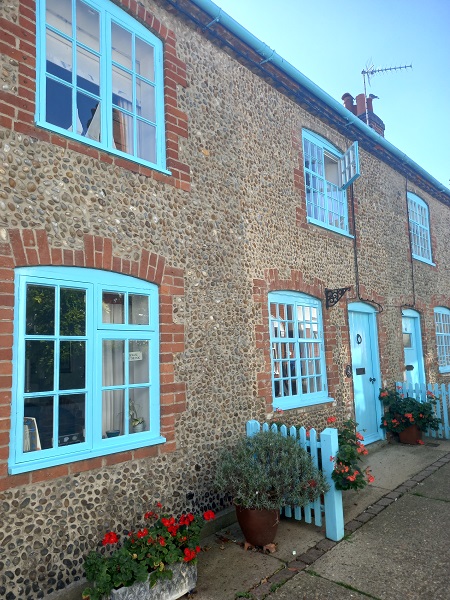
I also went to Aldeburgh for the afternoon, another very warm day. Loved the shell sculpture on the beach just outside the town, the pretty painted cottages, and enjoyed wandering along the shoreline looking at all the cute huts selling fish.

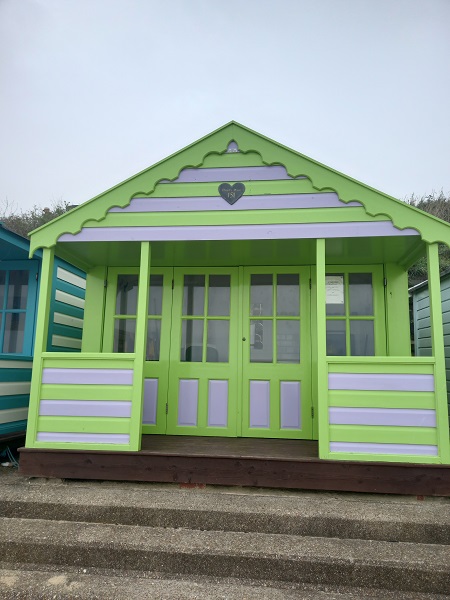
Southwold was my favourite place though, not so much for the beach front, which has another one of the very ugly concrete walkways that seem to be everywhere in this area, but for the beach huts, and the town itself, which was full of gorgeous architecture.

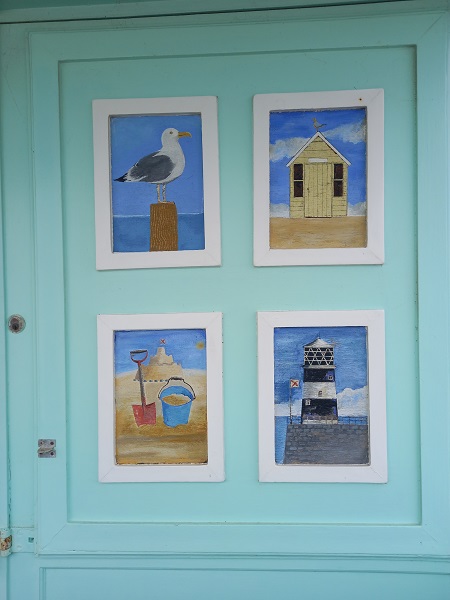
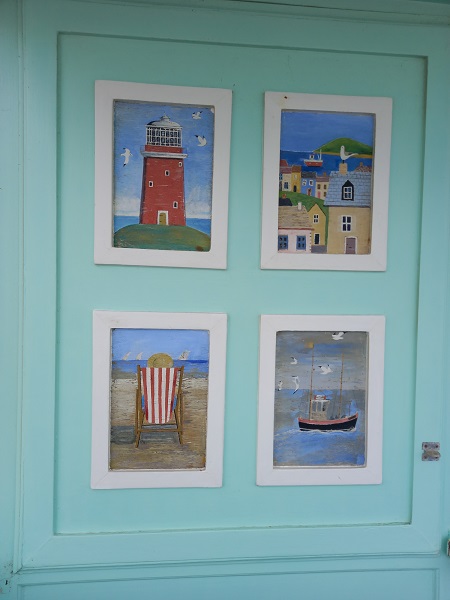
I think these beach huts would make fantastic tiny homes, they are so pretty and I love all the personalisation of them with artwork and colour schemes.

It has got very warm again here this week, it is 25 degrees here today, so I am going to take the opportunity for some beach time here over the next couple of days. I have been doing some jobs around the house, like painting outside, so am well ahead on the ‘tasks to do’ front.

Hope that you are all having a lovely time, see you again very soon with more Suffolk loveliness. Until then, have fun, take care, stay safe and thanks for visiting.

A tale of two cathedrals

I visited many wonderful cathedrals on my recent trip, both in the UK and Spain. Two that struck me as very similar, in terms of their history and location were Norwich and Canterbury. Both are particularly famous as religious centres, and both have cathedral schools attached, so during my visit there were lots of children around.

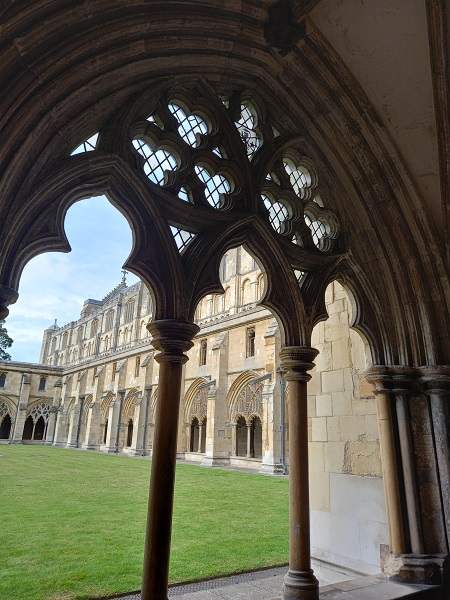
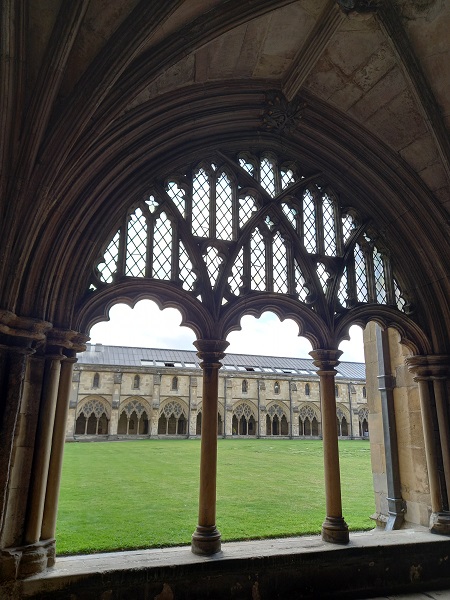
Norwich had the most gorgeous cloisters, I spent so much time wandering round and looking at them from different angles, and the way that they framed the tower. There is something fascinating to me about the combination of stonework, arches and fans, and the light and dark between the cloister walls and the courtyard spaces they enclose.

On one of the pillars was this, I am not sure whether it is a mason’s mark, or just graffiti, but it is a little touch of human involvement in all this splendour. Whoever EA was, I’m sure they were just as amazed by the place in 1630, as we are now, maybe more so given that we are able to build tall and magnificent structures all the time now.

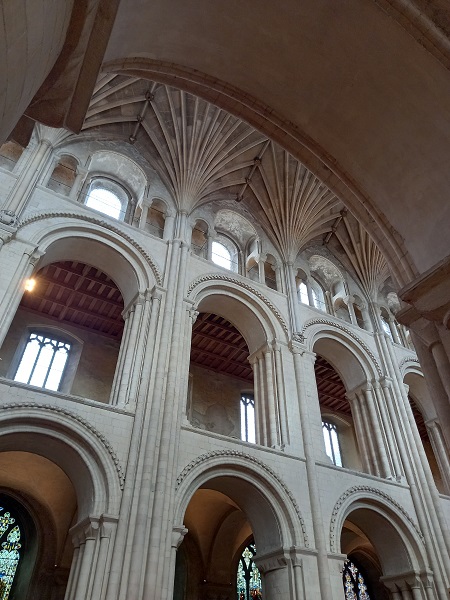
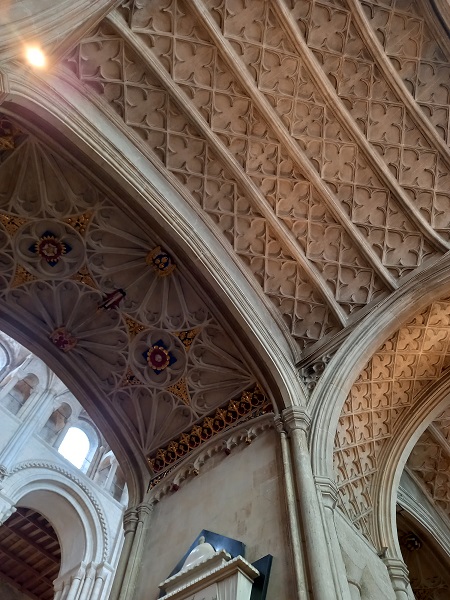
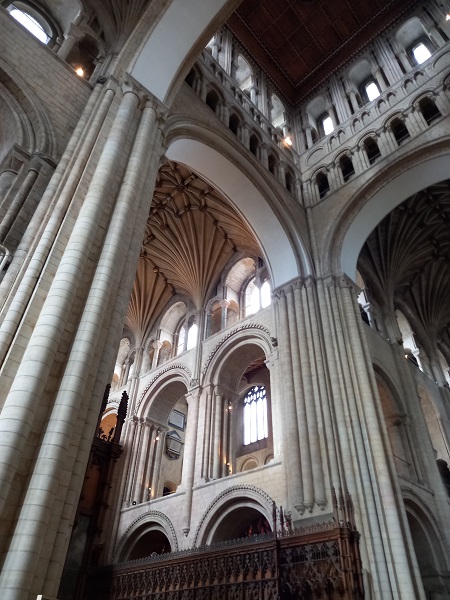
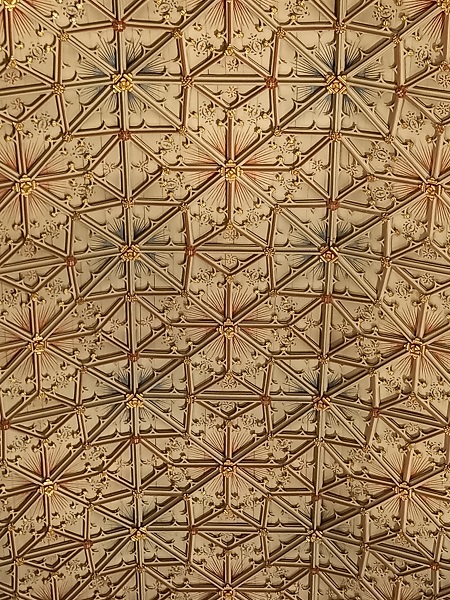
The inside of the cathedral is also wonderful, so many beautiful windows, and the fan vaulting on the ceiling is just stunning.

Two of the windows celebrate one of Norwich’s most famous religious figures, Julian of Norwich. She was a a nun, and anchoress, who lived in seclusion in Norwich in the mid 1300s and is credited with writing the first English language works by a woman, ‘Revelations of Divine Love’, though as we know there may have been other women writing under male names.

I read this many book years ago, as part of my research for my role as a nun within re-enactment, and her most famous saying ‘all shall be well, and all shall be well. and all manner of things shall be well’, is one that has stayed with me since I first read it, and something I have often said to myself when things got stressful. I couldn’t get a good photo of my favourite window, showing her and her cat, so this is via Google.

Canterbury is famous as a site of pilgrimage, and the cathedral precinct is stunning. You enter through this amazing gate.

I was lucky as I was visiting on a beautiful sunny day, so the contrast between the stone and the sky was amazing.

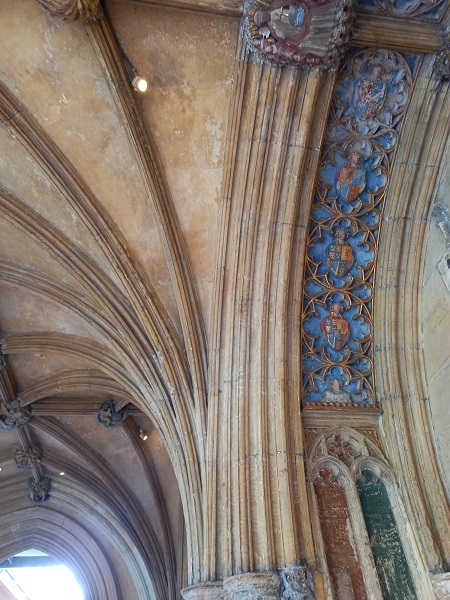
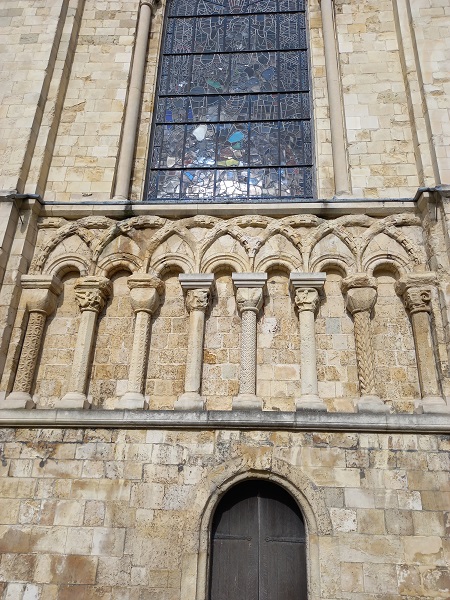
The inside contains some incredibly detailed stonework, the picture below is unlike anything I have even seen, such a wealth beautiful detail in the carvings.

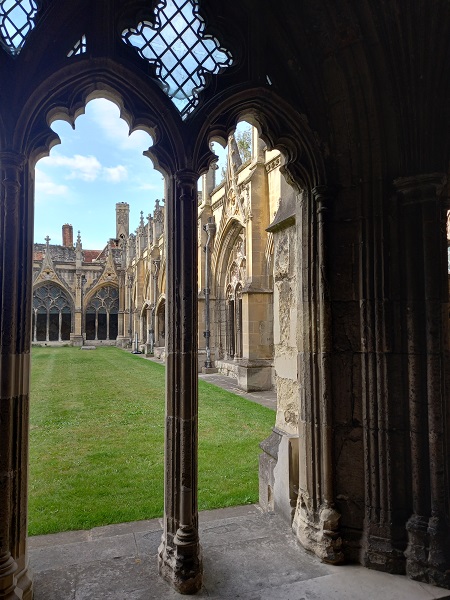
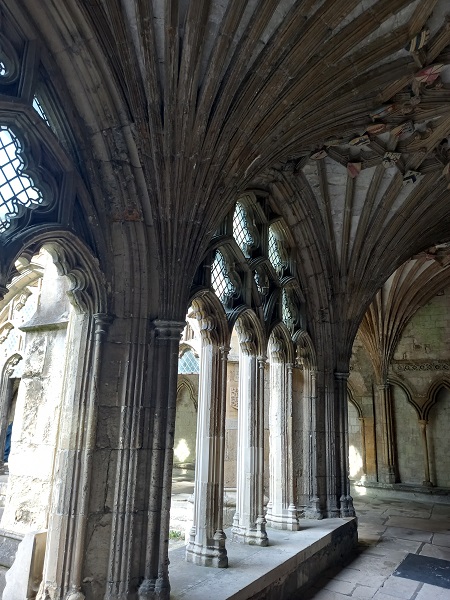
There are also beautiful cloisters, though I think Norwich’s have the edge for sheer scale.

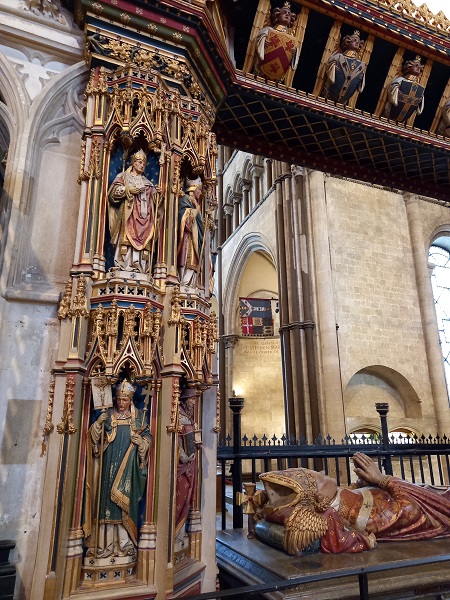
As Canterbury is so famous it has many significant tombs. This one is the tomb of Henry Chichele, archbishop in the early 1400s. The carvings on this tomb are some of the best that I have ever seen.

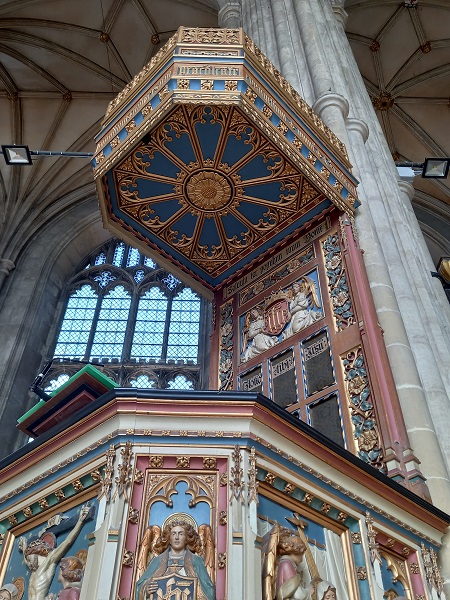
There were similar carvings around the priest’s lectern as well.

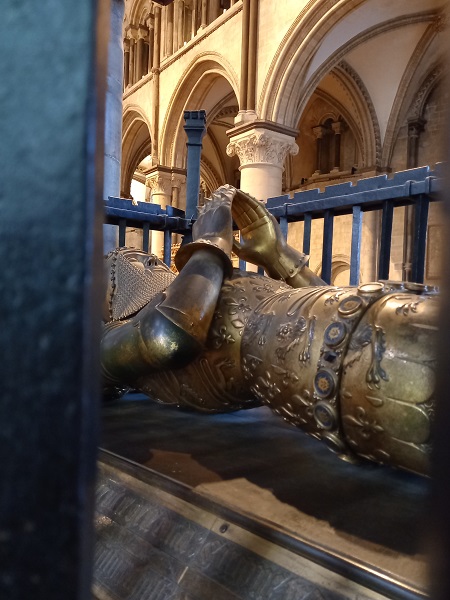
The most famous tomb is that of the Edward, The Black Prince This was of particular interest to me for several reasons. One of which is that Edward’s heraldic coat is in the cathedral, in the lower level, (no pictures allowed), and a reproduction of it hangs over the tomb, along with his helmet.

I remember watching one of the Amber Buchart series, ‘A Stitch in Time’ where she recreates this garment with other fashion historians. One of my re-enactment friends, Richard, portrays the Black Prince, and his very talented partner Kat, who I have mentioned many times before here, has also made the garment. I had a very interesting chat with the volunteer who was near the tomb, and told her about our costume making for re-enactment.

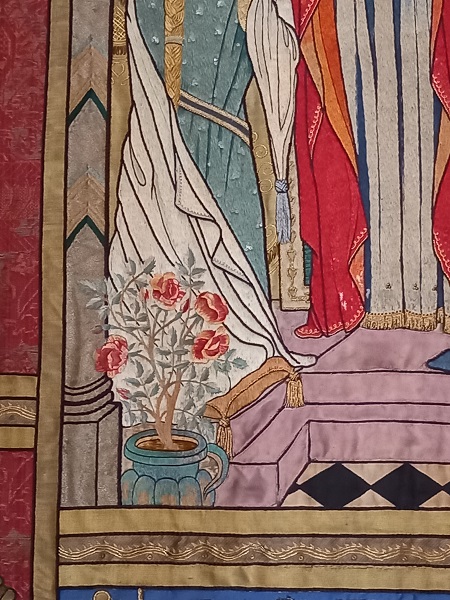
The other thing I loved was another version of the Mothers’ Union banner of the Virgin Mary, this time accompanied by two saints. The stitching on this was exquisite.

If you are a regular reader you will know that I have been fascinated by these, which appear regularly in churches and cathedrals in the UK, often of a similar design. I decided to do some research about them, and while I didn’t find any answers to my questions about whether they promoted as projects nationally, and where the designs came from, I did find an interesting booklet, written by Bob Trubshaw, with a history of the Mothers’ Union. In the booklet Bob asks many of the same questions, and like me, mourns the lack of information about who made all these banners.

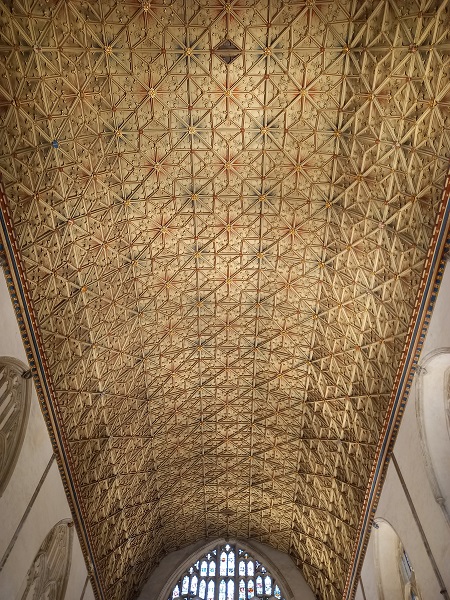
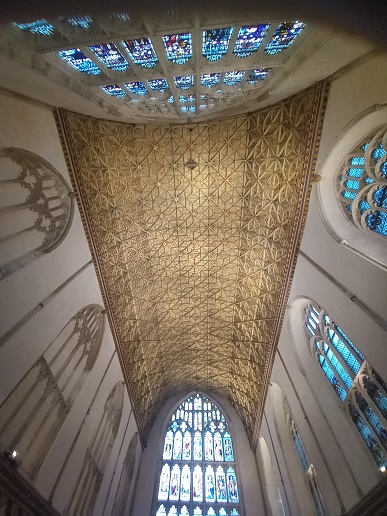
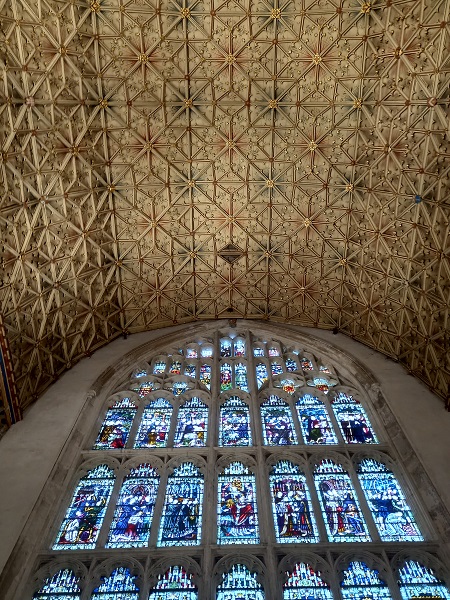
The chapterhouse at the cathedral was one of the most stunning, I have ever seen, the ceiling was incredible.

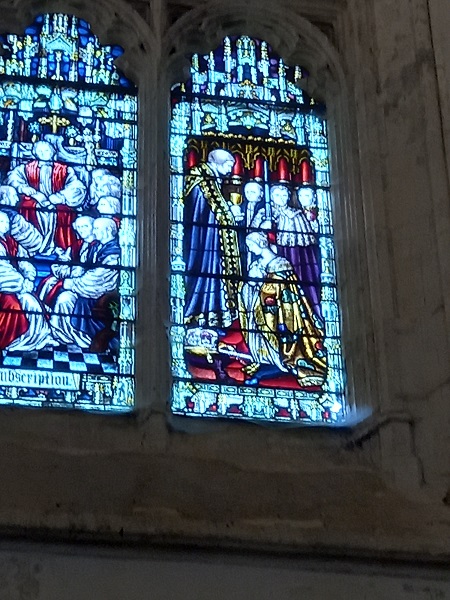
There was also this beautiful window, depicting monarchs and notable religious figures from British history. I loved this representation of Queen Victoria.

Truly stunning places, and an amazing testament to all of the people who worked on them originally, and now care for, and volunteer in them.

I will be back soon with the next post, where I will share with you my trips in Suffolk. I am so glad that I was able to spend so much time exploring these parts of England, it was a brilliant way to spend the summer. I am already starting to plan next summer, which is very exciting. Even though it is great to be in Spain in my little house, I am already looking forward to life back on the road next year.

Meanwhile there is Christmas crafting to be done, those last few ornaments won’t make themselves so I had better get stitching! See you all next time, until then have fun, take care, stay safe and thanks for visiting.
I do love a good social history museum!

Although I spend a large amount of my time visiting historic houses, full of very grand furniture and amazing portraiture, I equally love museums that capture ordinary life. I feel that it is a vital part of what museums are there for, not only ordinary life 500 years ago, but also 50 years ago. This vital role means that the visitors can connect with what they say, older people like me recalling childhood experiences, and younger ones appreciating how much life has changed.

I had been really looking forward to visiting Norwich, some years ago I went to a fantastic conference at Leeds University, full of presentations about medieval life, several of which were about places in Norwich. This was in 2019, before the world stopped for so long, and I have been meaning to visit ever since. When I met up with Jules at Sheringham, the van lifer who I first met in the Peak District last year, who has an identical van to mine, she had some great tips for me as well.

The first day I went to the castle museum. Most of this is a traditional museum with lots of glass cases full of stuffed animals, and archaeological finds, although they also had some themed galleries. It was amazing to see the finds from the Snettisham Hoard. To think that they were made about 2000 thousand years ago is incredible, and the craftsmanship is beautiful.

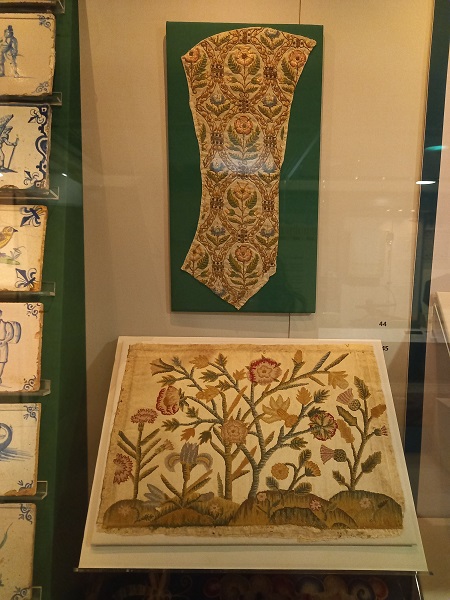
The museum also had some good decorative arts galleries with textile treasures in. I particularly love this Tudor embroidered sleeve.

There were several samplers, and this one was unusual, as it is a darning stitches sampler. Most are representing a variety of stitches but this is the first darning one I have seen.

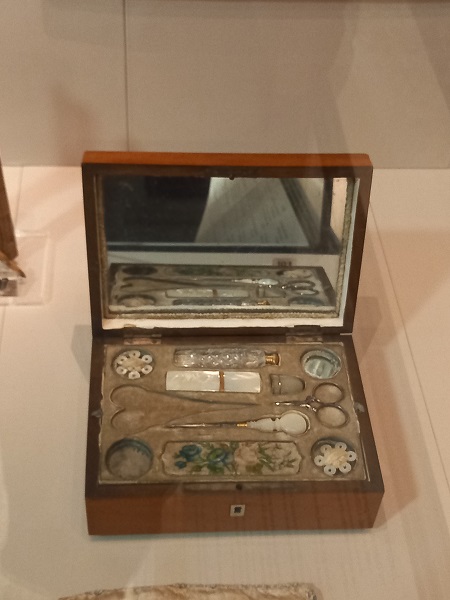
There were some great needlework tools on display, including this beautiful case with mother of pearl thread winders. I love to think of the owner sitting stitching using this and wonder where the other pieces ended up. The knitting needle holders were also really interesting, they are designed to be attached to a belt.

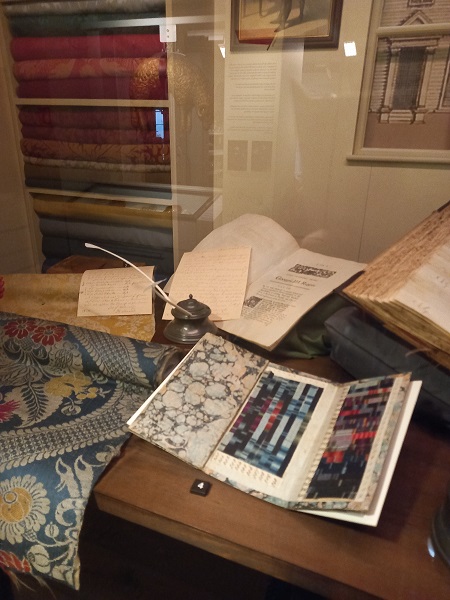
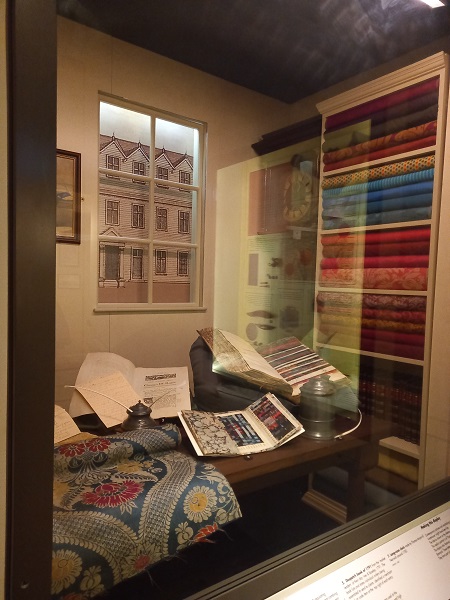
The second museum was the excellent Museum of Norwich, housed in the centre of the city in the Bridewell, a building which has had many uses including workhouse and prison. What I particularly loved about this museum was the themed rooms and the displays. This one below shows a fabric shop from the late 1700s. The original sample books are in the display room, and outside there is a reproduction one , (last photo), that you can study in depth. Absolutely fascinating for a textile nerd like me!

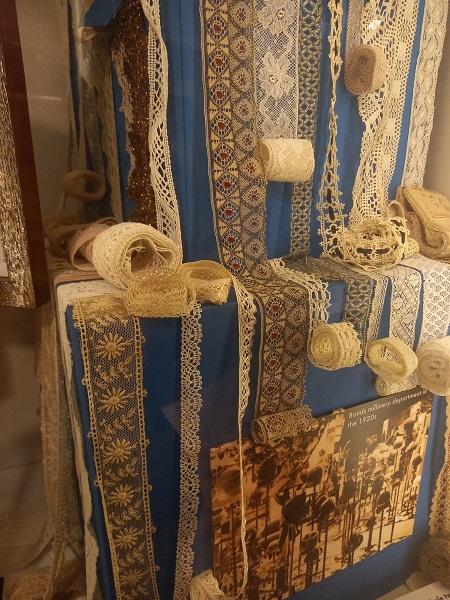
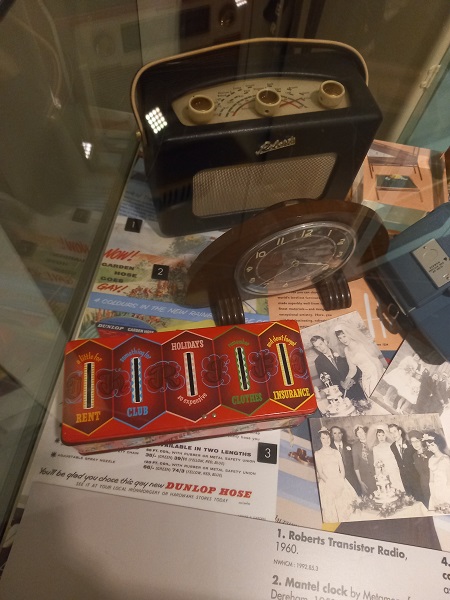
They also had some dressmakers and haberdashery shops set up. The bottom right picture shows the, ‘change card’, from a local department store, that was given in the form of safety pins, rather than coins. An interesting take on the phrase, ‘pin money’.

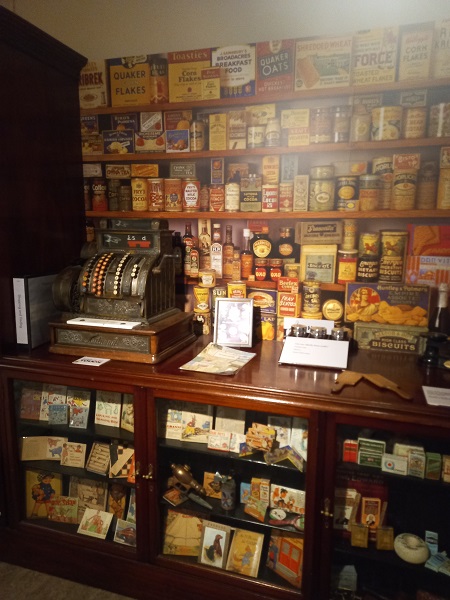
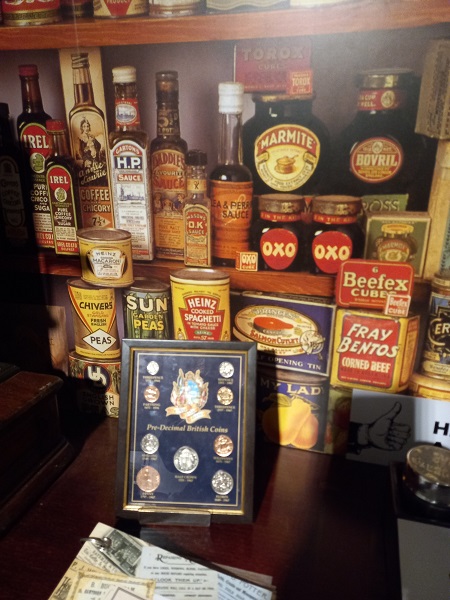
The grocery shop was fascinating, not least to see how much, or how little the packaging had changed for things. They also had a display of pre-decimalisation coins, which I remember very well from my childhood. I used to get sixpence a week pocket money, thruppence to spend on sweets and the rest to save for my annual seaside holiday.

They also had a whole pharmacy set up. This collection was made by a practising pharmacist, John Newstead, over a number of years, as he wanted to preserve the wonderful things such as the jars and drawer labels as shops were modernised from the 1960s. It is accompanied by a really interesting video about how pharmacists would make medicine for people pre the NHS. It is interesting to reflect that pharmacies now have a much wider role, more like they did originally, in healthcare, rather than just dispensing medicine.

The final section had some great reminders of childhood for me. I used to help my Mum mince meat using a Spong mincer like the one on the right in this first photo, and remember my family allocating money for each aspect of savings, I am not sure we had a tin like this but I’m sure we had something. This must be fascinating for the school children that visit who possibly rarely see cash being used in this way anymore.
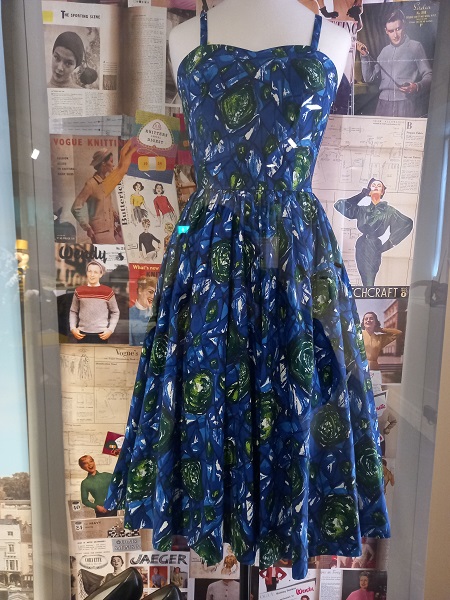
There was also a lovely display of sewing related items, I particularly liked the embroidery set in the first case. So many great gifts for future home makers 😉 and a very good summary of what interests were meant to be for girls in the 1950s and 60s.

My third museum was Strangers’ Hall, so named as many refugees lived in the area at one time. This building dates from the 1320s and is now the museum of domestic life. Each of the rooms has a different historical era, and as expected a wealth of wonderful textiles.

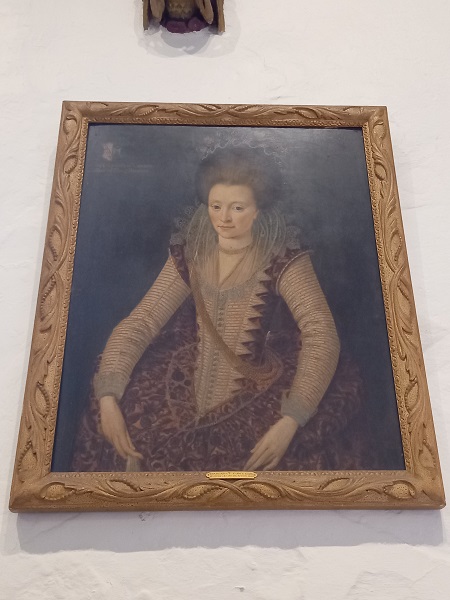
The first part of the house is the Great Hall, with some gorgeous costume portraits.

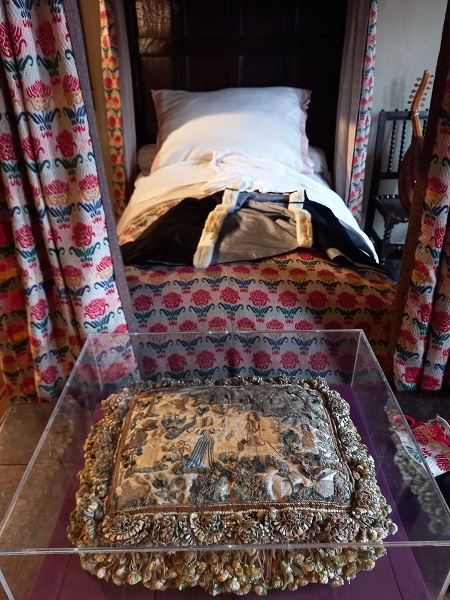
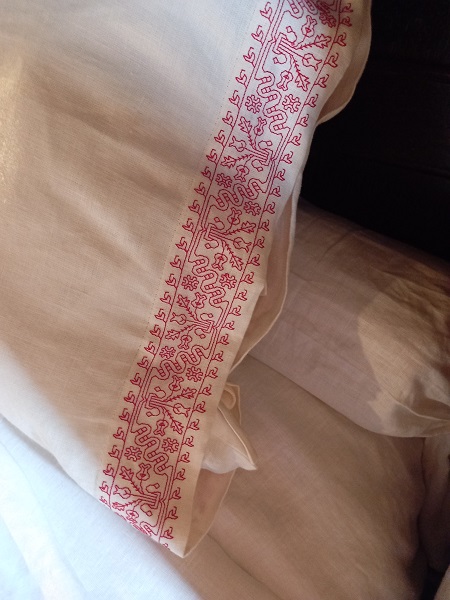
I was particularly impressed with the level of care taken in the interpretation and reproduction of the textile displays, as in this 17th century bedroom, where reproduction bed hangings and a redwork pillowcase complement the historic pieces.

I had a very interesting talk with the head curator at the end of my visit, and she showed me the detailed files of research they have on everything they do. I think what makes this museum so fascinating is that as you move through the different rooms you get a real sense of how people lived in them. The contrast between the dark wood and table carpets of the Jacobean era, and the Georgian decor is really evident.

It reminds me of when IKEA stores first opened in the UK and we were all encouraged to ,’chuck out our chintz’, and go for the very simple clean lines of Scandi style. I did have a house that was almost completely furnished by IKEA at one point, before I went back to my love of colour and lots of different textures.

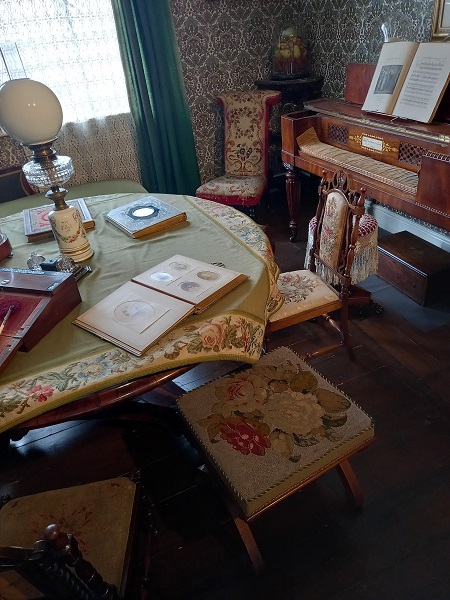
My favourite room was the Victorian parlour, partly because of the sheer amount of needlepoint in there 🙂 So many wonderful pieces all crammed together. I particularly loved the embroidered book covers. I can just imagine groups of stitchers sitting around a table like this, sharing needlepoint patterns and deciding on their next projects.

I appreciate why some things have to be kept in glass cases, it must be a conservation nightmare to cope with all the dust in these rooms, but it so nice to see things in situ and get a sense of people’s lives with these objects. As proved in my previous post, there is no guarantee that the glass case is going to be safe from things like pesky wasps anyway!

I stayed at the Norwich Caravan and Camping Club site, partly chosen as it was within walking distance of a bus stop into the city. By coincidence, as I drove into the site, I spotted another almost identical van to mine, and the owner Terri, came to say hello the next day and gave me a quick tour of her van. She has a modified boot jump and uses curtains so it was very interesting to see her set up. Her van is on the right below.

I am starting to finalise my plans for next year’s travel. I am leaving Spain in 5 weeks, and am going to be doing a combination of UK visiting friends and family and warmer weather destinations. One of the things that I have just booked though is a ticket for another van life show, next September. I couldn’t make it this year, but am really looking forward to meeting many more micro camper owners and sharing designs and stories. I have had such an amazing year of travel, and meeting lots of different people in all types of vans, tents and caravans. It has been brilliant, everything I dreamed of for my retirement. I am so lucky to be able to have this life.

I have also made a list of all of the blog posts I am going to do about the summer’s adventures and there are another 19 to go. That should take me nicely up to when my adventures start again! Thanks to everyone who follows me, likes, and comments, it is very, very much appreciated.

Although I have missed the date, (again!), I have just had my 16th blogaversay. It is appropriate that my very first post, as to be expected from the 2nd Dec 2007 was about Christmas ornaments, as that is what I am going to be stitching this afternoon, before going on a coach trip to see the Christmas lights in Alicante. I now have around 1700 visitors every month and 437 subscribers! This is my 938th post, so we will have to have a big celebration when I get to 1000 sometime next year.

Meanwhile I hope that you are all well and enjoying life, whatever you are doing have fun, take care, stay safe, and thanks a million for visiting!

Well worth the twenty year wait!

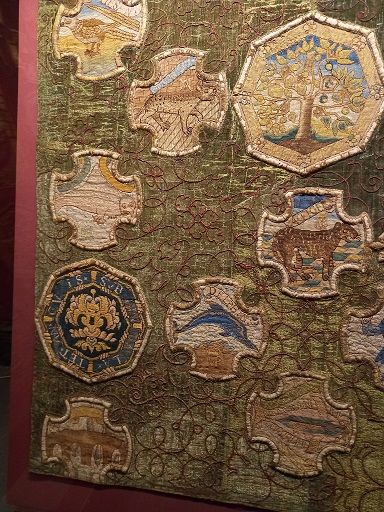
I am very pleased to tell you that I did get to view the Marian Hangings at Oxburgh Hall, later on in the month that I was in Norfolk. You may recall that I took a trip with my friend from Spain, Linda, when I was camping at Sandringham, only to find a notice at the entrance to the hall saying that they had gone for conservation.

No-one knew at the time when the hangings would be available, as they were waiting to hear from the textile conservation team at the Victoria and Albert Museum in London. The hangings are in their care, but are loaned to Oxburgh.

Later in the month, when I had moved on round the coast, my lovely friends Allison and Alistair, who were one of the reasons that I went to Sandringham, as they are working on the neighbouring site as wardens during the summer, visited the hall, and sent me a photo of the hangings. They were back! Or so I thought. I was able to fit in another visit to Oxburgh on the way back to Huddersfield for my reunion.

When I arrived at the hall, the volunteer greeting me asked if I had been before and told her about how sad I had been about not seeing the hangings the previous visit. It turns out that they had not been removed from the property. There had been an infestation of wasps, who had built a nest inside the glass casing that houses the hangings! The team from the V and A were going to take the hangings away at a later date, but were very busy, and as the damage was thankfully minor, the house staff had been able to open the room again.

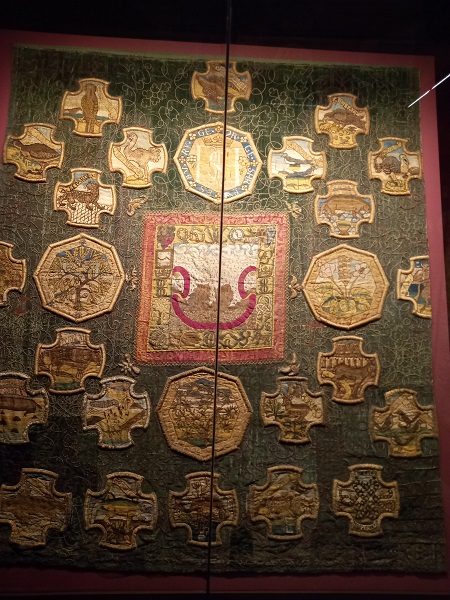
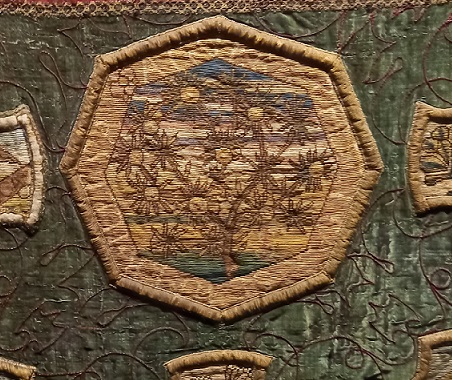
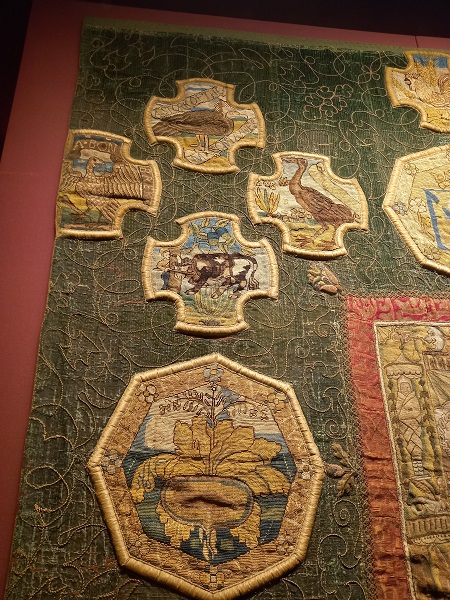
It was a very lucky escape for the hangings, and I am so grateful to be able to see them. These are one of the most significant pieces of needlework in the UK, not only because of their age, but because of their provenance.

That they were stitched by Mary Queen of Scots is interesting enough, but that they were stitched during her captivity in England, designed by her and Bess of Hardwick, and that we know so much about these two women, their needlework, and their inspiration for the designs, is hugely significant. Because of their importance, a lot of research has been done about them.

The hangings at Oxburgh are the companion set of embroideries to the needlework at Hardwick. Those at Hardwick are not attached to background fabric. Many of them are framed in screens, and this work was done by Evelyn Cavendish, the last owner of the house before it was given to the Trust. In total there are over 100 embroidered pieces between the two locations, and it is thought that they were originally meant to be assembled on one piece of cloth.

There may have been other people stitching these pieces as well as Mary and Beth, it is known that Mary had embroiders with her, and Bess employed embroiders as well. What is certain is that the overall project is very much about the two women, their lives and experiences. Thus it forms a very significant record of, not only their skills, but their challenges and inspirations.

So many of the pieces are symbolic, and portray both icons that we would recognise, such as animals from illustrations, and tales such as those from Aesop’s Fables. Others are more complex, and textile historians have been left to try and unpick their meaning. Many of the pieces have mottos, or have been designed to portray something specific, particularly in Mary’s work, where recurring themes of imprisonment and loss are evident.
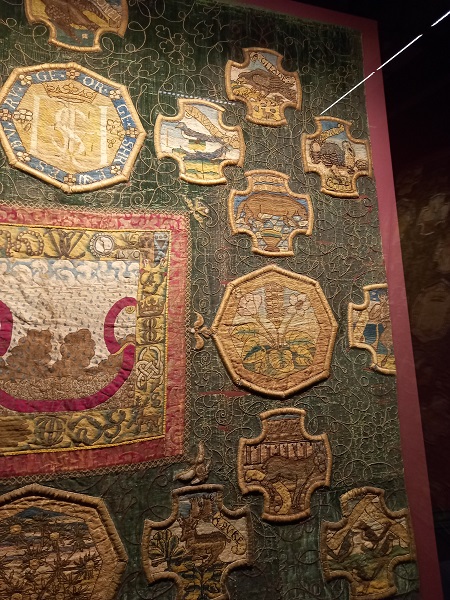
It is thought that this choice of a dolphin or delphin is linked to her marriage to the Dauphin of France, as the words are similar. In the piece she has ‘signed’ herself as MR with a crown, even though at that point she had lost her crown in both France and Scotland.

While she was working on these needleworks during the early years of her guardianship by Bess and her husband, George Talbot, Earl of Shrewsbury, Mary was clearly reflecting on the traumas that had brought her to her current situation, and how she could maybe get back to Scotland, her son, and her throne. Sadly that was never to happen, and after many years imprisoned in England, she was executed at Fotheringhay Castle.

I love this quote from the book.

‘In the sixteenth century, women’s writing and embroidery were seen as interchangeable, each a medium of female thought and emotion, each carrying the ‘hand’ of their author’.

I think that is true of women’s textile work in any era, the pieces we make are chosen to express ourselves in different ways, to convey our favourite colours and designs, to celebrate and to commemorate, and to pass on our love to the recipients.

It is thought that Bess’s granddaughter, Aletha Talbot, stitched the pieces to the bed hangings. This means that they are not in the order that the original stitchers intended them to be in, and does mean some of the cruciform pieces have been cut off to fit the hangings, as you can see here.

The hangings arrived at Oxburgh in 1761, when Mary Browne married Richard Bedingfield, but no-one knows how she got them. It is fascinating to think where they might have been in the years since Mary’s death, and how easily they could have been lost forever. They were used as bed hangings until the sale of the house in 1950.

As you know if you are a regular reader here, I am working on my first novel, which is set around Hardwick Hall and one of Bess’s companion needleworks. So I am particularly interested in these pieces. I have read many articles about them, as well as biographies of Bess, and done some other study online, such as this excellent free course from Future Learn, The Life and Afterlife of Mary Queen of Scots. I can recommend this as being a really good exploration of Mary’s life, if you are interested.

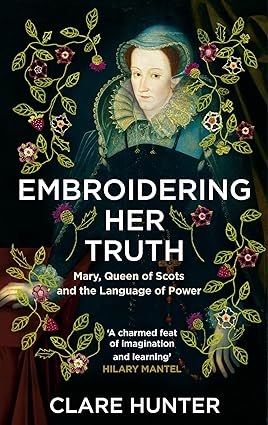
My latest read, which I am absolutely loving for its detail about Mary’s textiles, is by Clare Hunter and is called Embroidering her Truth: Mary Queen of Scots and the language of Power. This is an excellent read, with a wealth of detail about Mary’s life, clothing and needlework.

I also have Clare’s other book, Threads of Life: A History of the World Through the Eye of a Needle which I am looking forward to reading next.

There is also another book about Mary’s embroidery by Michael Bath, called Emblems for a Queen, but at £167 on Amazon, I will have to try and find a library copy somewhere!

We have had a very lovely couple of workshops at my sewing group, I posted about the ribbon flower one last time, and this week I led one using fabric applique before embroidery, based on the wonderful designs by Jenny of Elefantz. It was brilliant to see everyone enjoying themselves, and sharing our skills, I am so lucky to have met this very talented group of women. We have more workshops planned before Christmas as well so I will have to slot in a catch up post with all of the textile happenings in Spain in between the summer catch ups.

I hope that you have all a good week, and are not too cold where you are. Friends are posting snowy pictures from Yorkshire and I am glad not be trying to negotiate getting out of the village to get to work, as I used to have to do at this time of year! See you all again soon, meanwhile have fun, take care, stay safe and thanks for visiting.